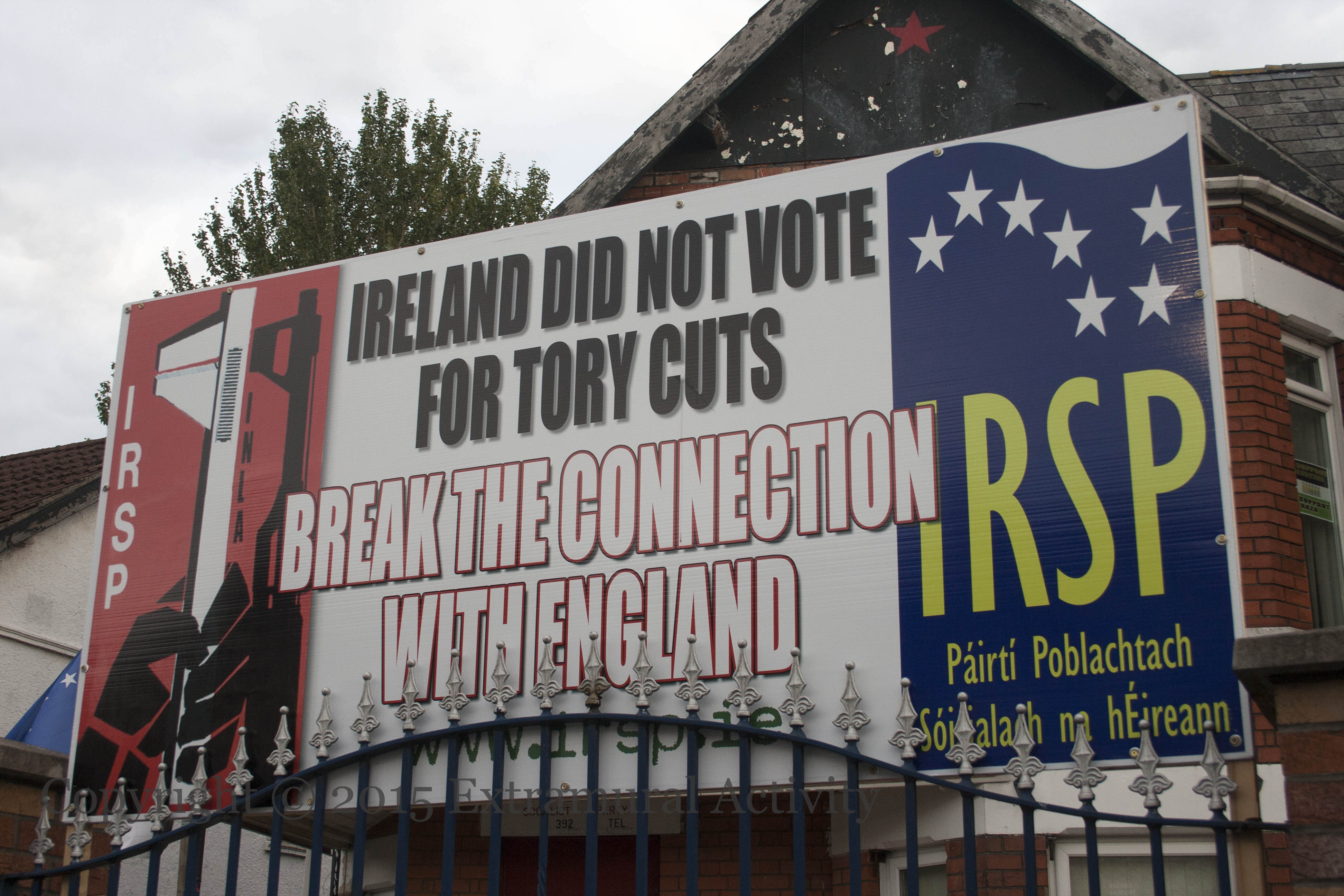
“Ireland did not vote for Tory cuts. Break the connection with England. www.irsp.ie. Páırtí poblachtach sóısıalaıgh na hÉireann.”
This IRSP/INLA board outside the party offices on the Falls Road protests policies coming from the Westminster parliament and specifically the Conservatives. On the left-hand side of the board are an adjustable pipe-wrench (for IRSP) and a rifle (for INLA). The sticker on a post-box is in Cavendish Street.
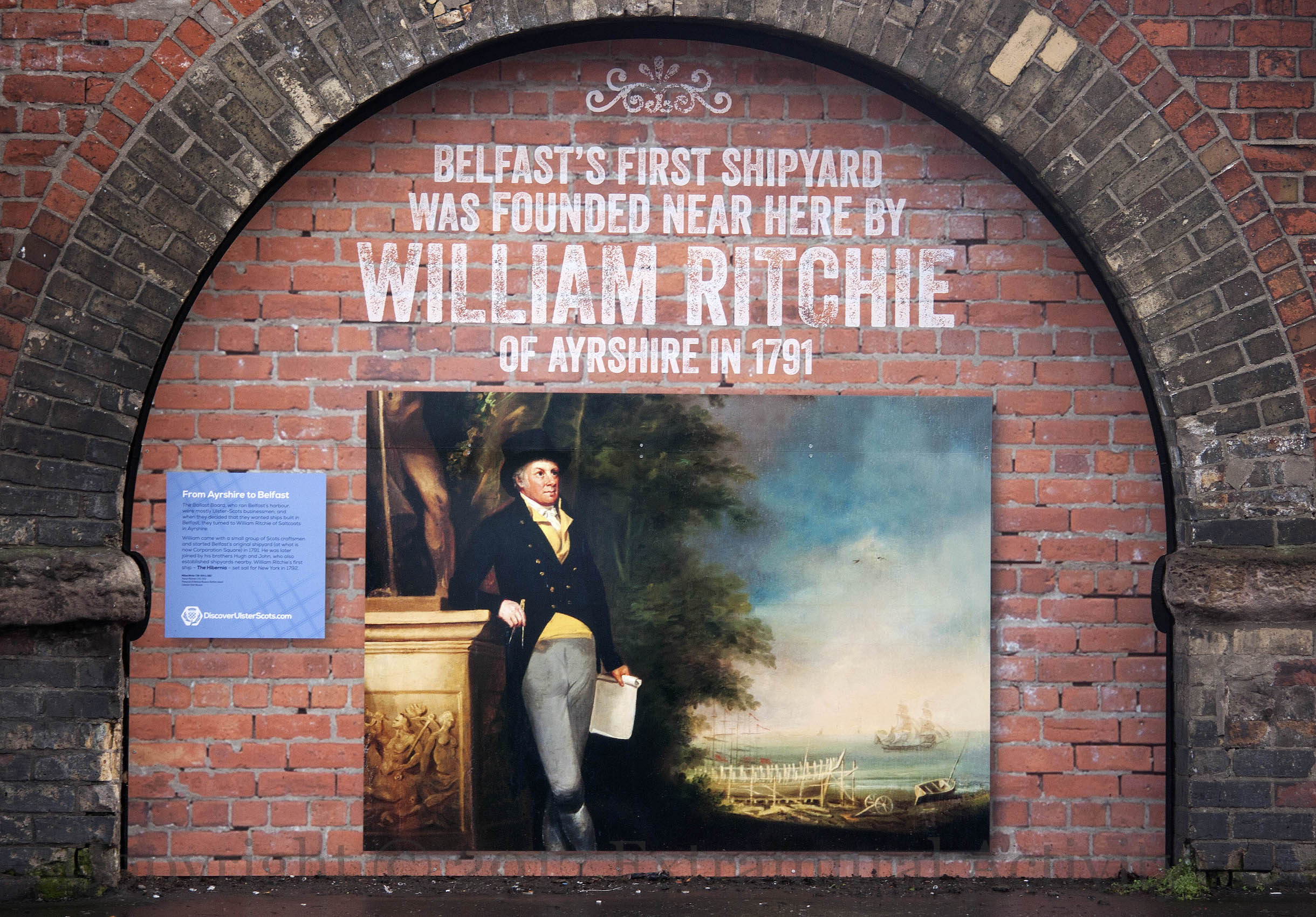
A history of shipbuilding and its role in Belfast’s industrial life is told in the first five panels of a 13-panel installation along York Road (“The harbour made York Street Belfast’s global gateway”) and in particular its connection with Scotland. (It is sponsored by Discover Ulster Scots.) Two Scots, William Ritchie (whose 1802 portrait by Thomas Robinson is shown) and Charles Connell (who oversaw the construction of the first wooden steamboat in Belfast – Aurora, pictured below) along with another Scot, Alexander MacLaine, were the leading shipbuilders in Belfast from 1791 until the 1860s, when Englishman Edward Harland (soon joined by German Gustav Wolff, and then in 1874 by William Pirrie and Wilson brothers Walter and Alexander) took over the rival Hickson yard (which included land on Queen’s Island and on the south side of the Lagan) and became dominant. Their connection to York Street is that all of them except Pirrie lived on or near York Street.
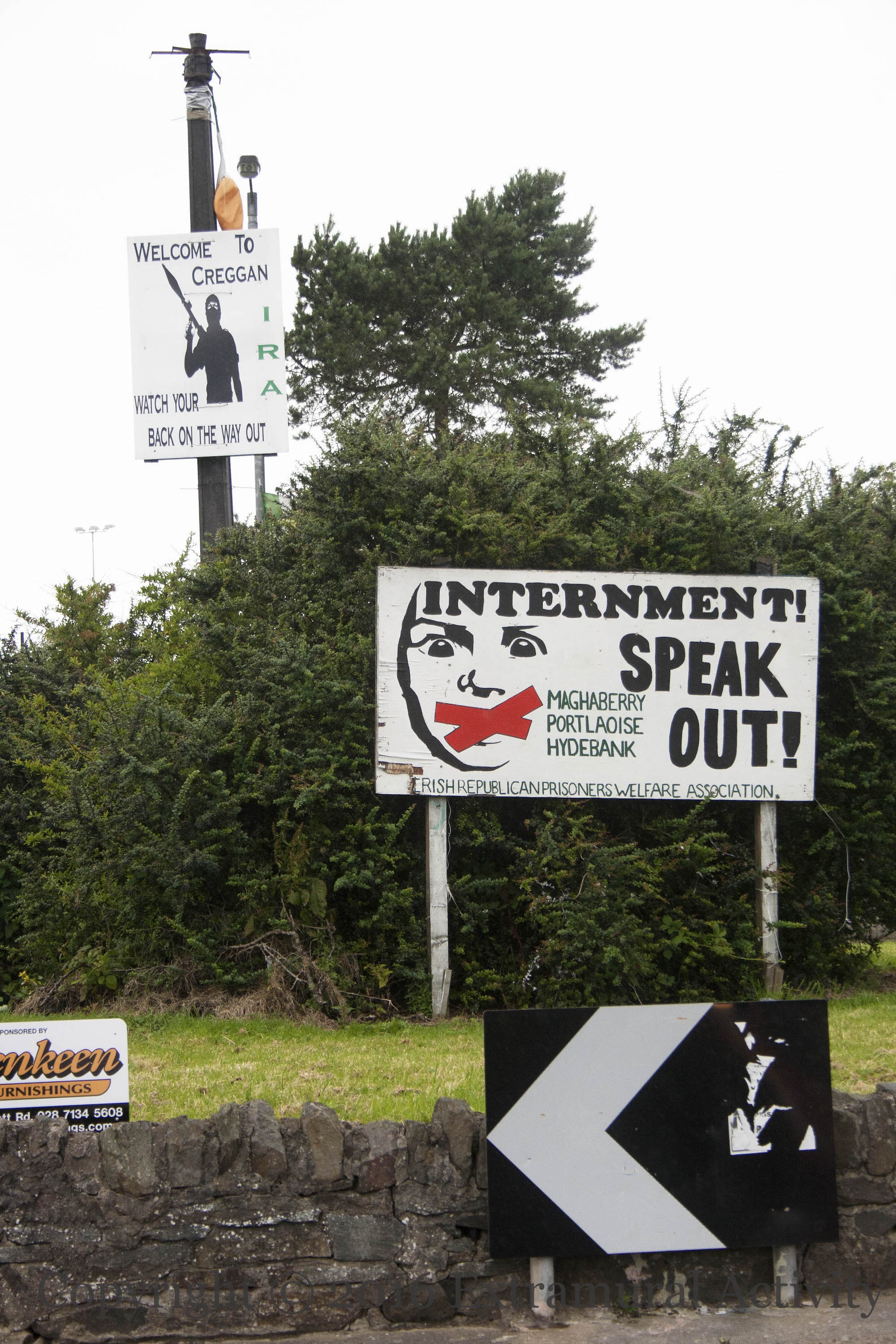
Two republican boards at the Eastway roundabout on the eastern side of Creggan estate. The upper board shows an IRA volunteer with RPG-luancher – “Welcome to Creggan. Watch your back on the way out.” – the other is an IRPWA board urging people to speak out against internment of republicans in Maghaberry, Portlaoise, and Hydebank.
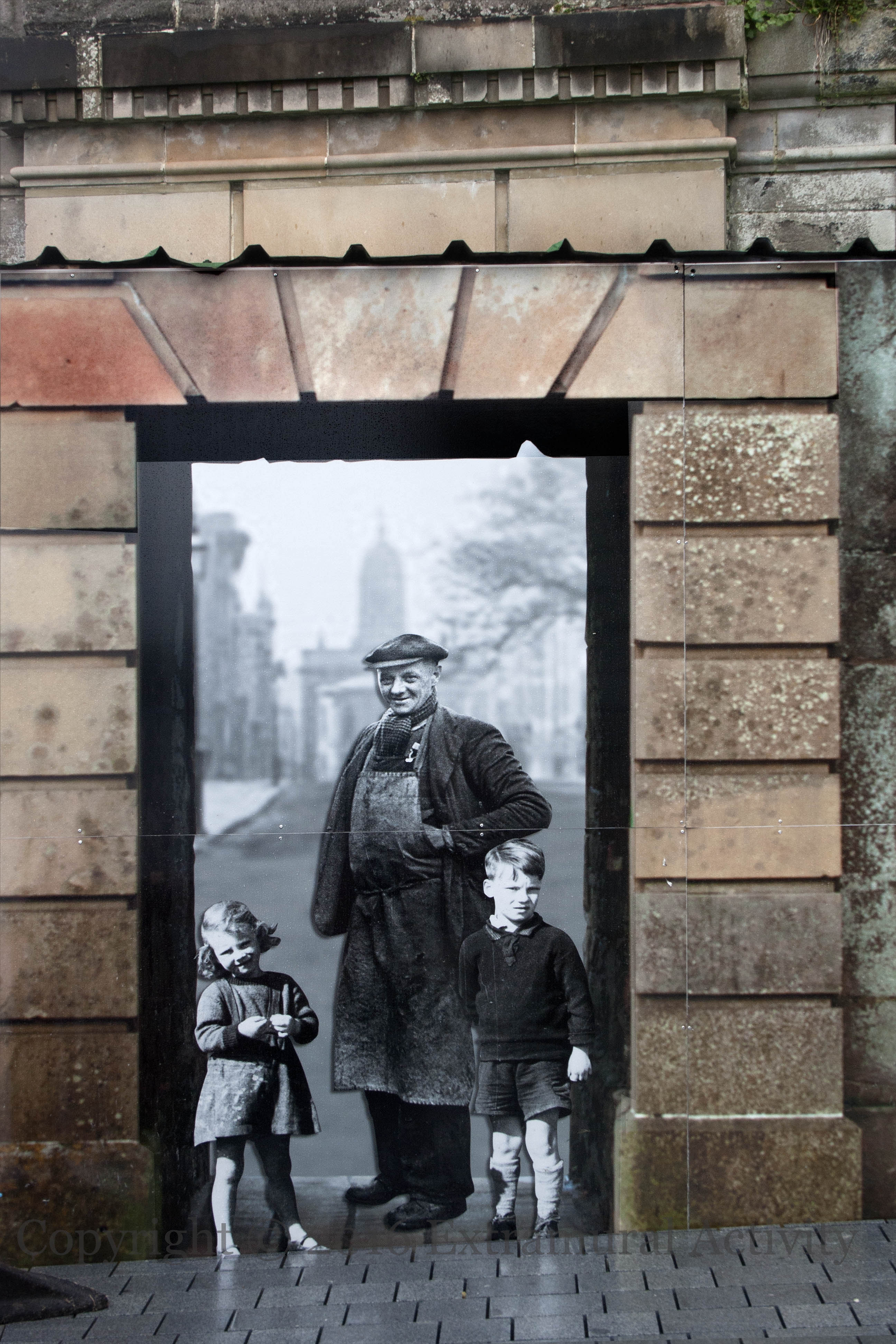
This image of London-/Derry in days-gone-by is on the outside of the walls of Derry, looking in. The brickwork of which it appears to be the portal is also fake; in fact, this is a covered walkway leading from Bishop Street to the Fountain.
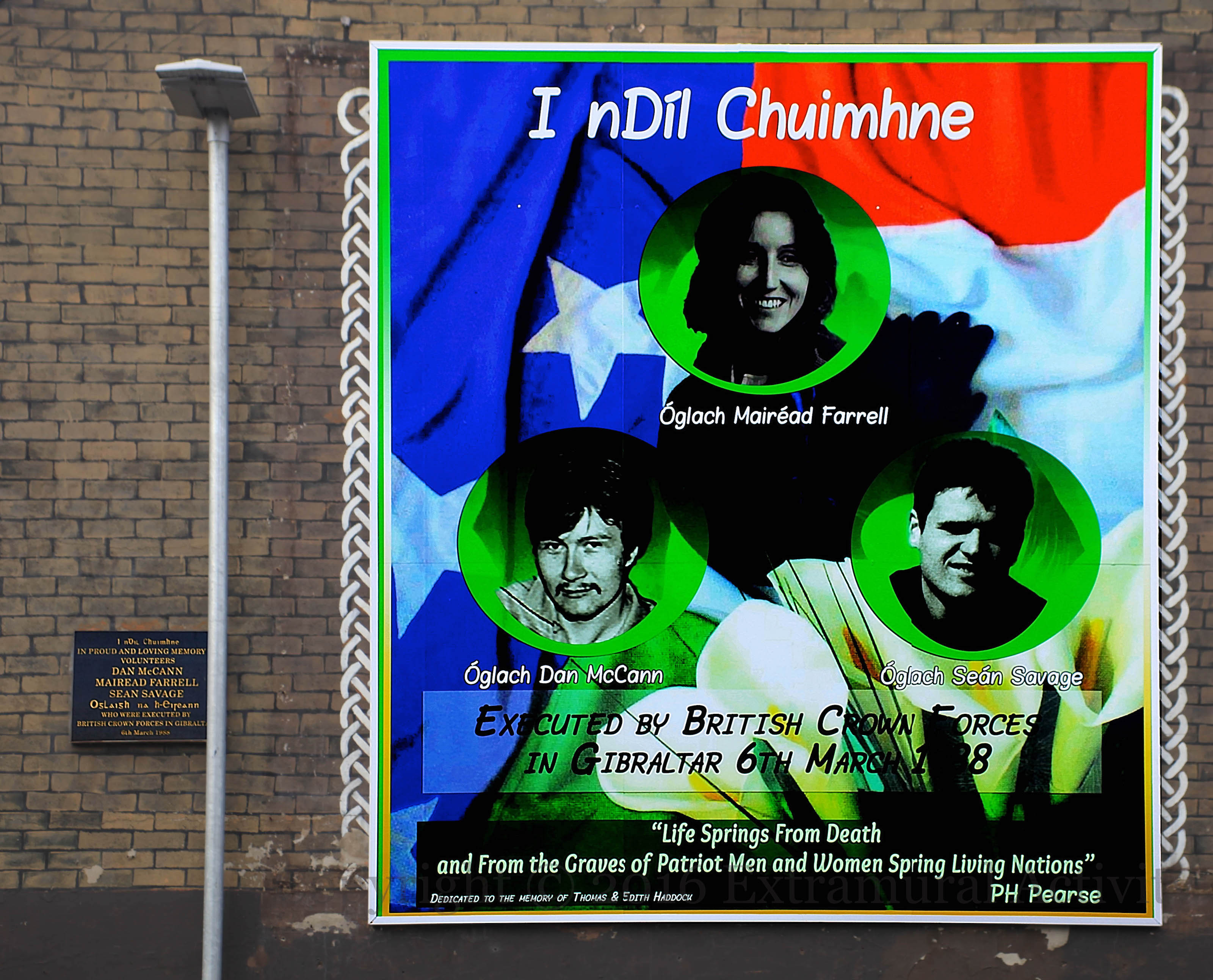
The new replacement board commemorating the Gibraltar 3 (Maıréad Farrell, Dan McCann, and Seán Savage “executed by British crown forces 6th March 1988) uses words from Pearse’s oration at the funeral of O’Donovan Rossa. Not the more common “the fools, the fools …” but “Life springs from death and from the graves of patriot men and women spring living nations” (used previously in Strabane in 1990 – M00860). The board is “dedicated to the memory of Thomas and Edith Haddock”.
The recently-refurbished Ballymac Friendship Centre (Fb) was re-opened in August this year, with a new paste-on mural of local schoolchildren with books and backpacks on the front.
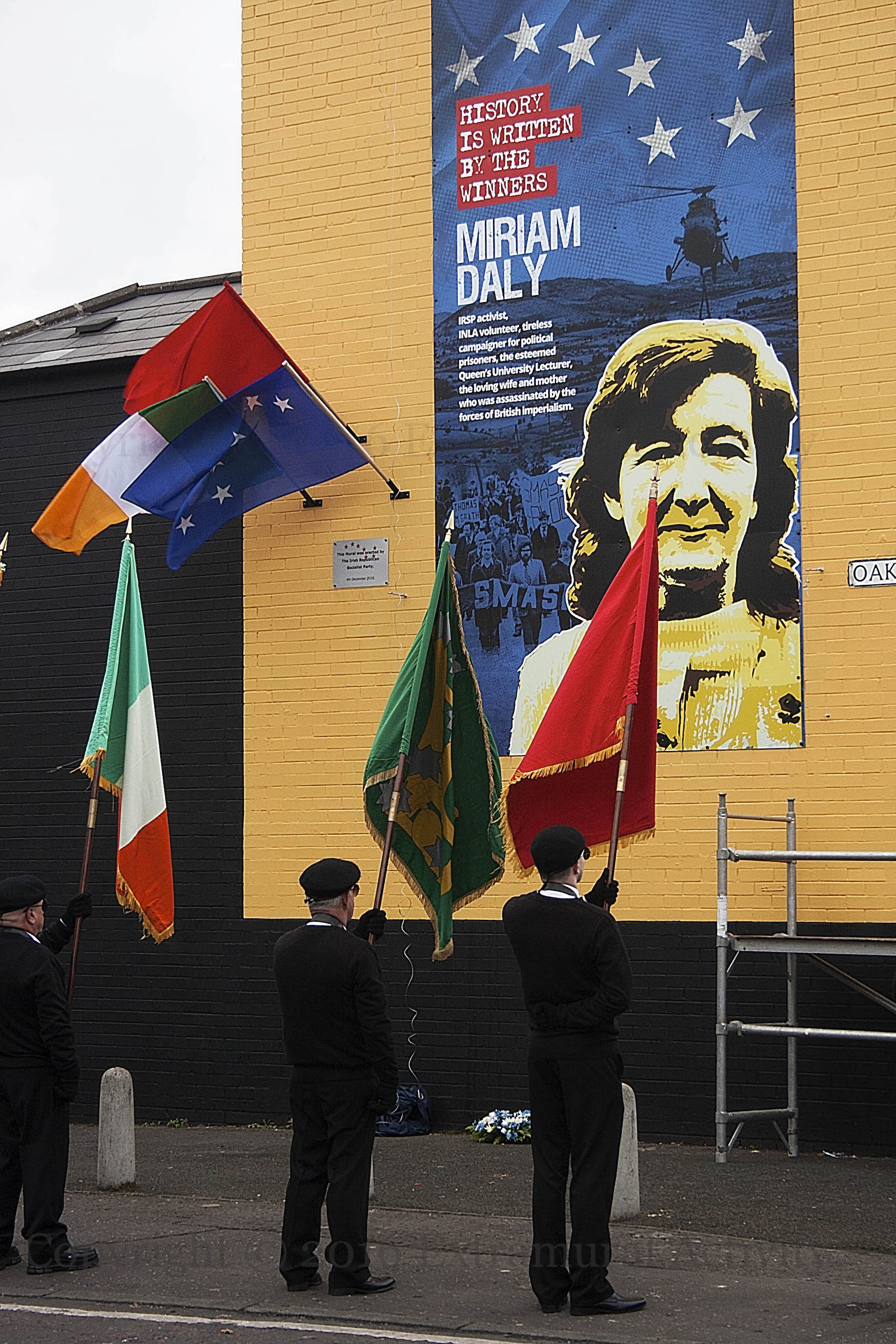
Queen’s University lecturer in economic history Miriam Daly took over as chairwoman of the IRSP (Irish Republican Socialist Party) after founder Seamus Costello was killed in a feud with the IRA. Daly was shot dead in 1980 by the UDA/UFF in her Andersonstown home in 1980. (Interview with husband Jim Daly.)
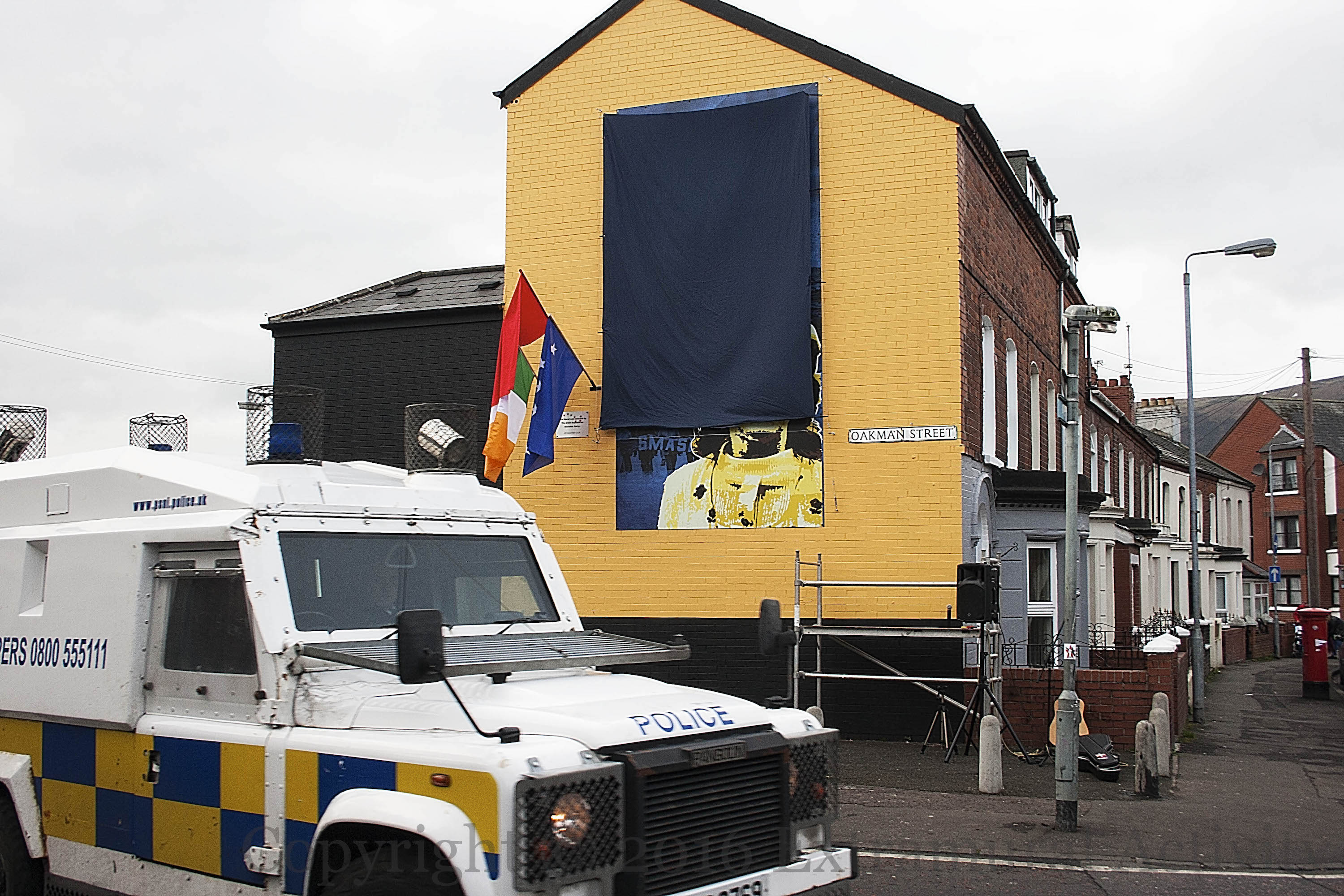
A long-standing and much-graffitied 1996 mural, History Is Written By The Winner (painted by son Donal Daly among others) was replaced in 2014 by a Joey Ramone mural for a U2 video competition (Murals Of Innocence). The new board shown in today’s images was launched yesterday (Sunday 2016-12-04) to a crowd of about 200. As the final image shows, the PSNI were also “in attendance”.
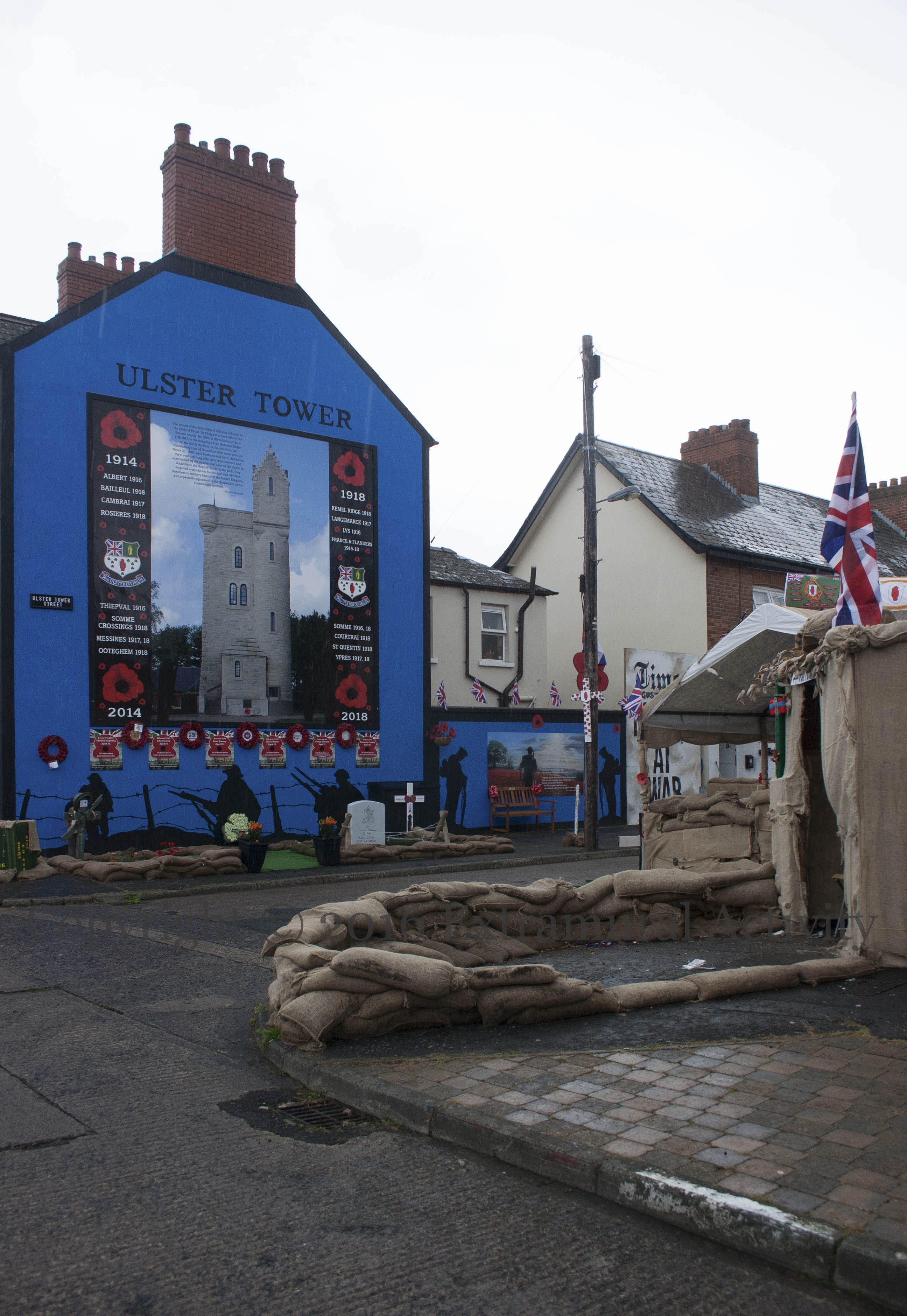
Complementing the images from Ulster Tower Street, here are images of the new commemorative boards and their blue backgrounds. The main board features Ulster Tower at Thiepval with a list of battles that the 36th (Ulster) Division was involved in.
The smaller board on the side-wall features a poem from local children: “The Great War took a lot of Pray/It’s hard to say w[h]ere all these brave men lay/A lot of souls still waiting to be found/Buried deep below the ground.//In the fields w[h]ere the bright red poppies grow/Stood men so brave of fight and foe/Some men so young they just didn’t know/A journey with friends they all wanted to go.// When they got there what a different tail [tale] they did tell/Many letters home describing it as hell/Young men put to front to fight/We can only imagine the awful sight.//Fighting beside their mate to keep Britain great/And we still remember them till this date/Nearly one hundred years on/A lot of these great men have gone/Forget them we will not as a thought is not a lot.”
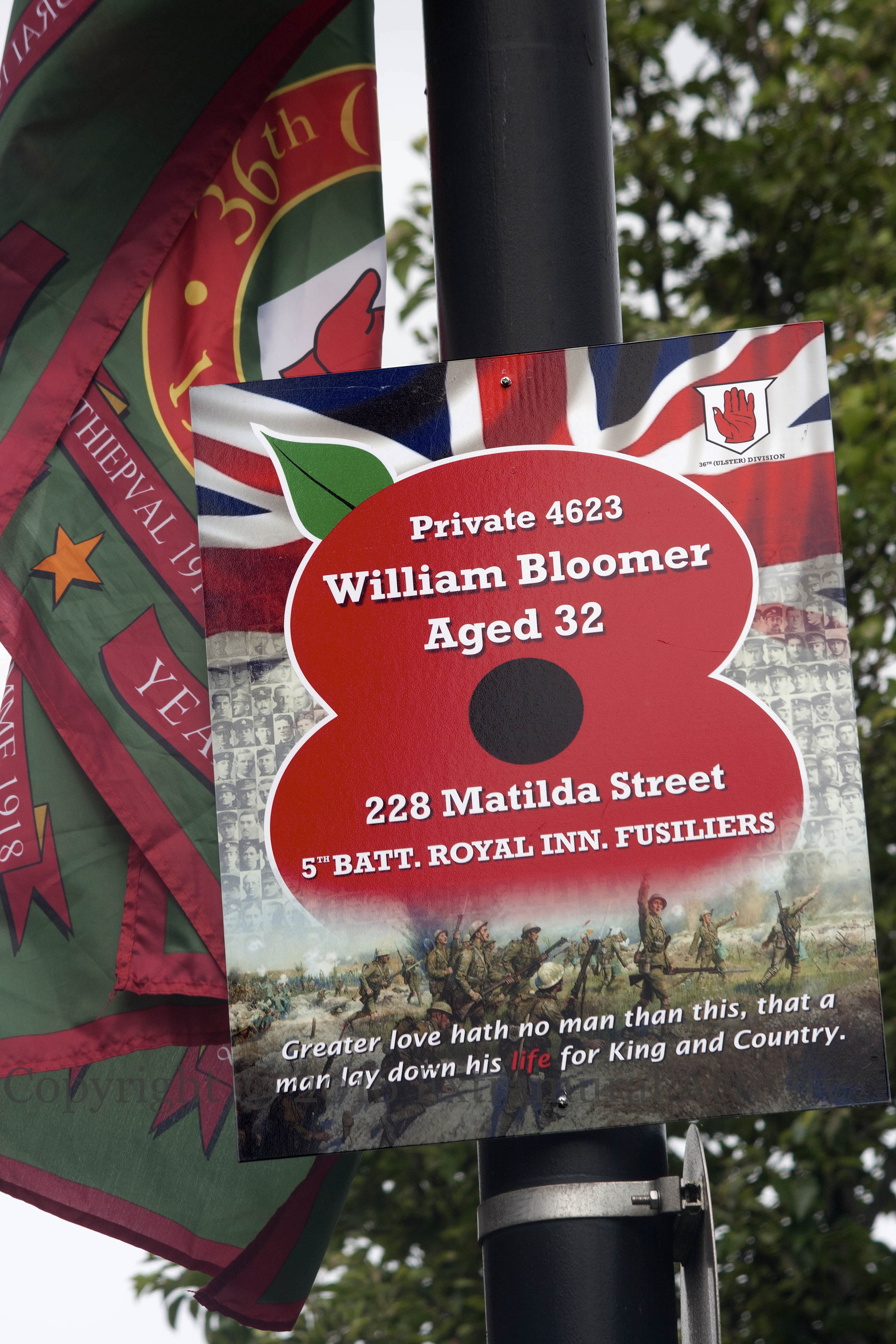
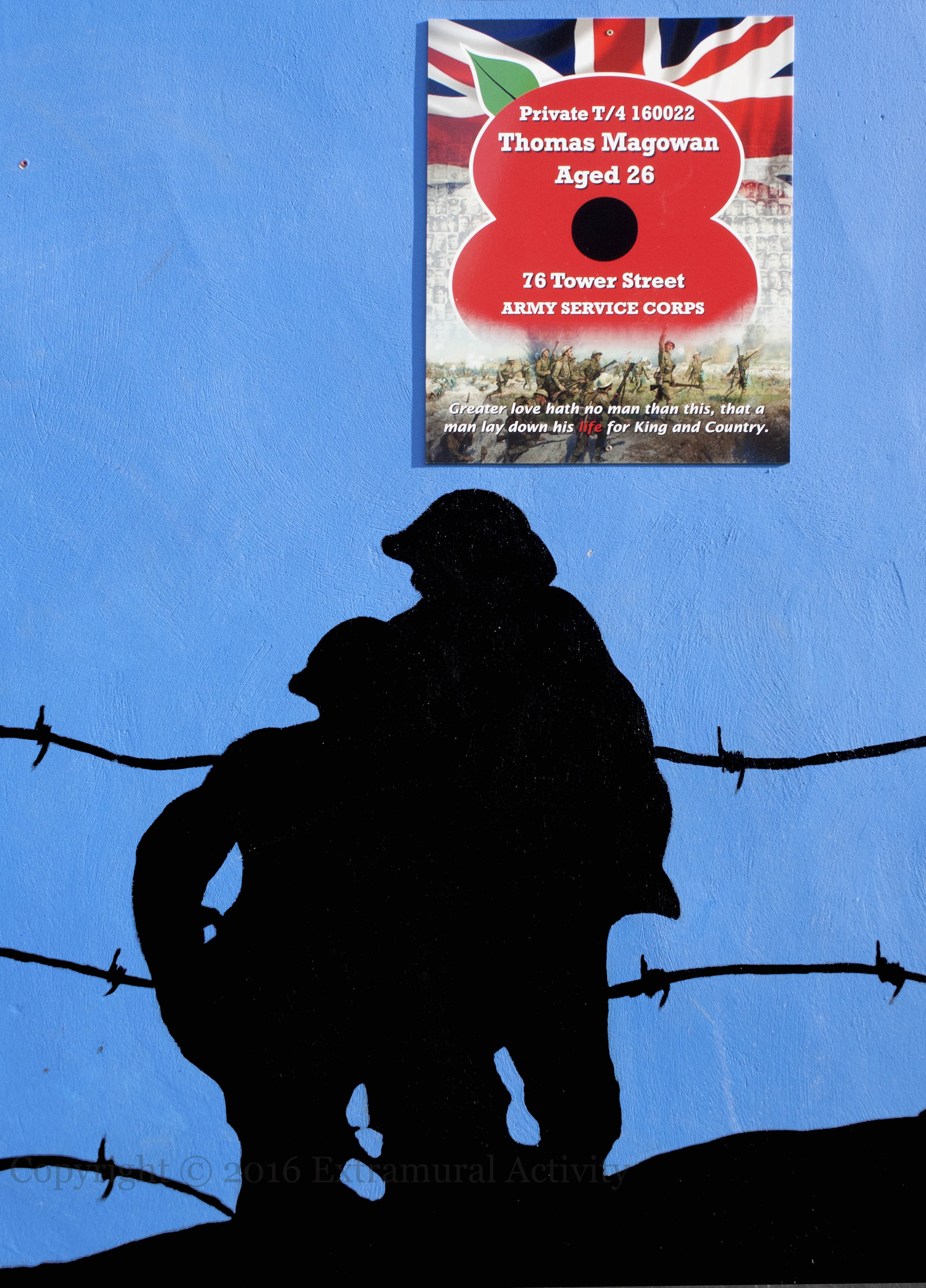
As part of the Poppy Trail, boards bearing the names, ages, addresses, and service units of Belfast casualties during WWI have been erected on walls and lampposts near their homes. Above: William Bloomer from Matilda Street in south Belfast. Below: Thomas Magowan from Tower Street in east Belfast.
Instead of three monkeys, this IRPWA board in London-/Derry/Doire shows three skeletons in denial of the ‘strip searching’, ‘controlled movement’ and ‘internment’ happening at HM Prison Maghaberry (with an enlarged “H” to make an association with Long Kesh/Maze).









 Extramural Activity