Here are four republican boards from Derry/Doıre and Dungiven/Dún Geımhın, from Cogús (republican prisoners’ welfare), 1916 Societies, IRSP, and the campaign for Justice For The Craigavon Two (Brendan McConville and John-Paul Wootton). The title comes from the last image: “There may be times when we are powerless to prevent injustice, but there must never be a time when we fail to protest.”
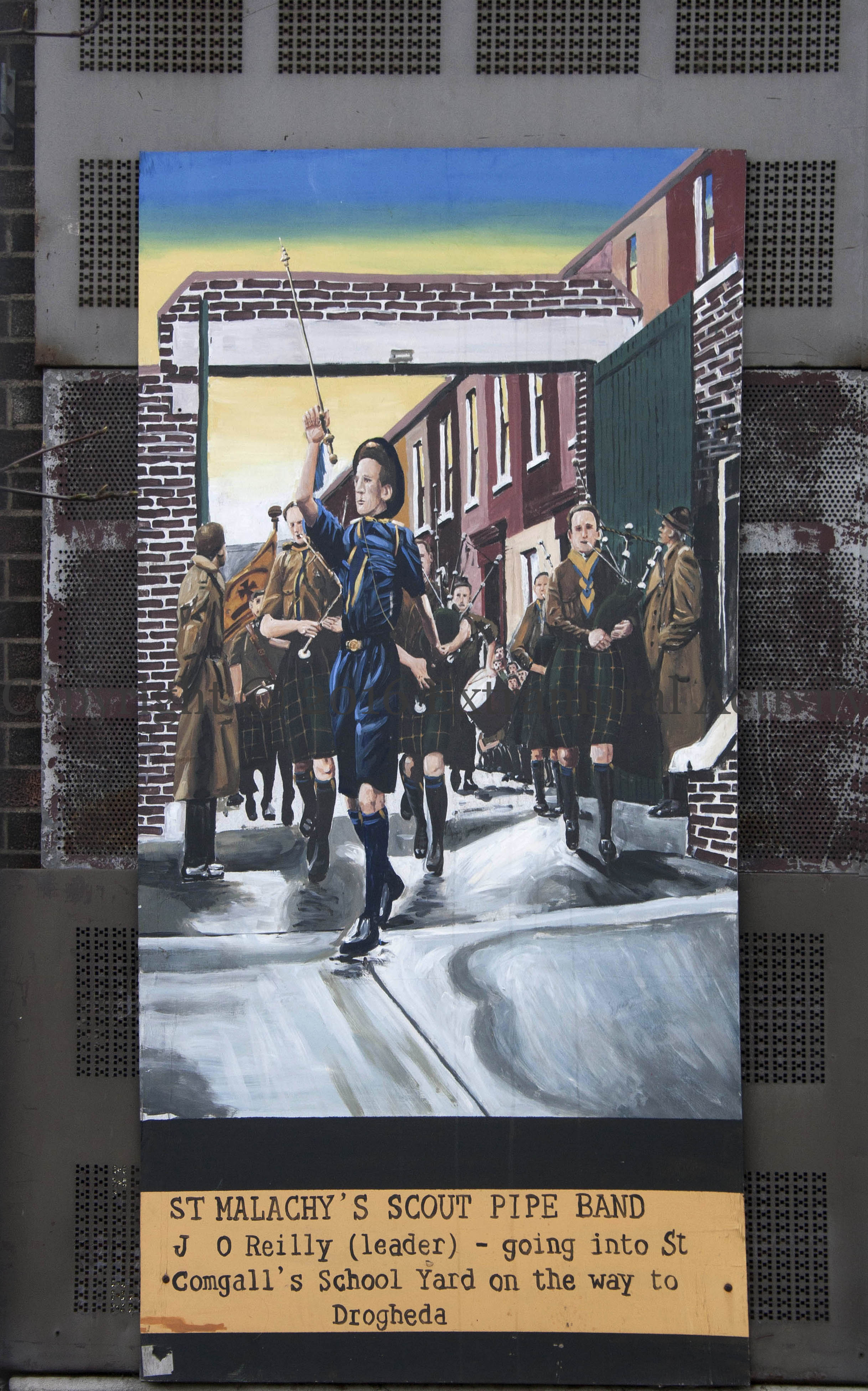
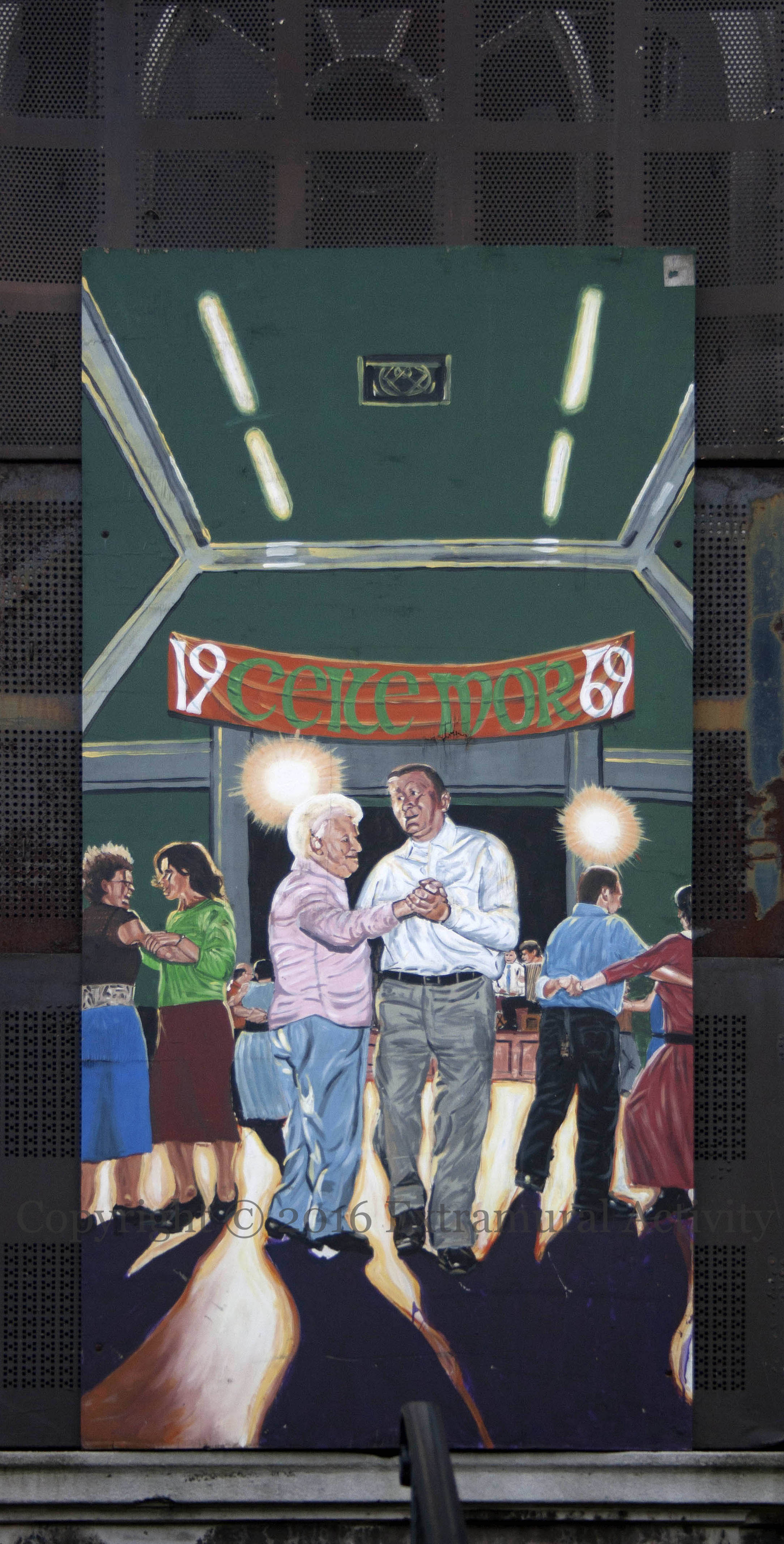
St. Comgall’s Primary school on Divis Street opened in 1932 and closed in 1988. Here are two of the boards which currently decorate its boarded-up front windows. Above, St. Malachy’s Scout Pipe Band parades its way through the school yard. (If you know anything about the pipe band or the competition it is going to, please leave a comment.) Below, a céılí mór from 1969 is taking place. The school’s location at the bottom of Percy Street put it at the centre of events in 1969 as west Belfast tore itself apart.
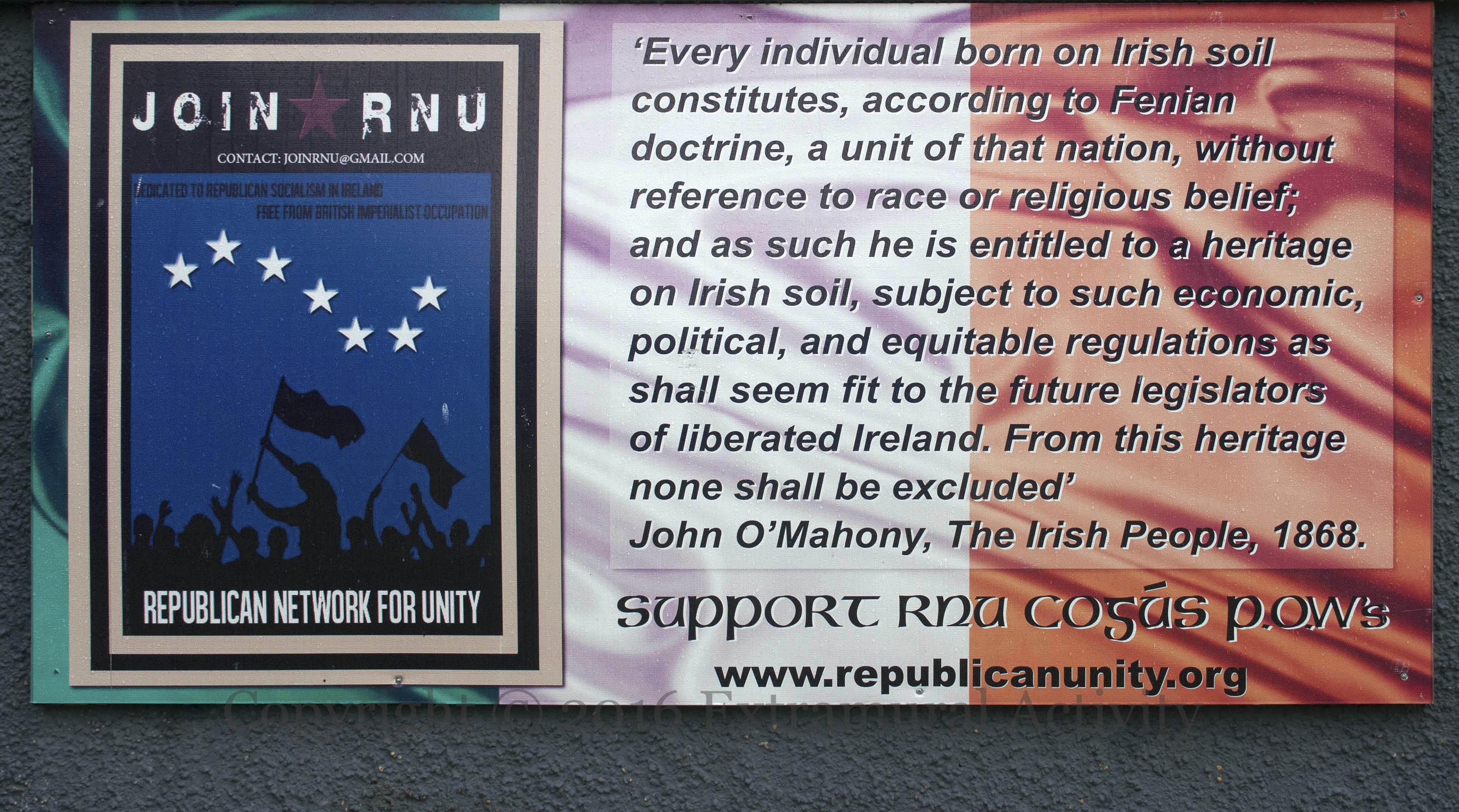
John O’Mahony was an Irish-born but American-based republican who founded the Fenian Brotherhood, whose goal was to send arms and financial support to the Irish Republican Brotherhood in Ireland (Brittanica).
His words from the IRB newspaper The Irish People are used in this RNU [“www.republicanunity.org“] board in Derry: “Every individual born on Irish soil constitutes, according to Fenian doctrine, a unit of that nation, without reference to race or religious belief; and as such he is entitled to a heritage on Irish soil, subject to such economic, political and equitable regulations as shall seem fit to the future legislators of liberated Ireland. From this heritage none shall be excluded.”
The date given is 1868, but the paper closed in 1865 when its offices were raided and its executives, including manager O’Donovan Rossa, were arrested.
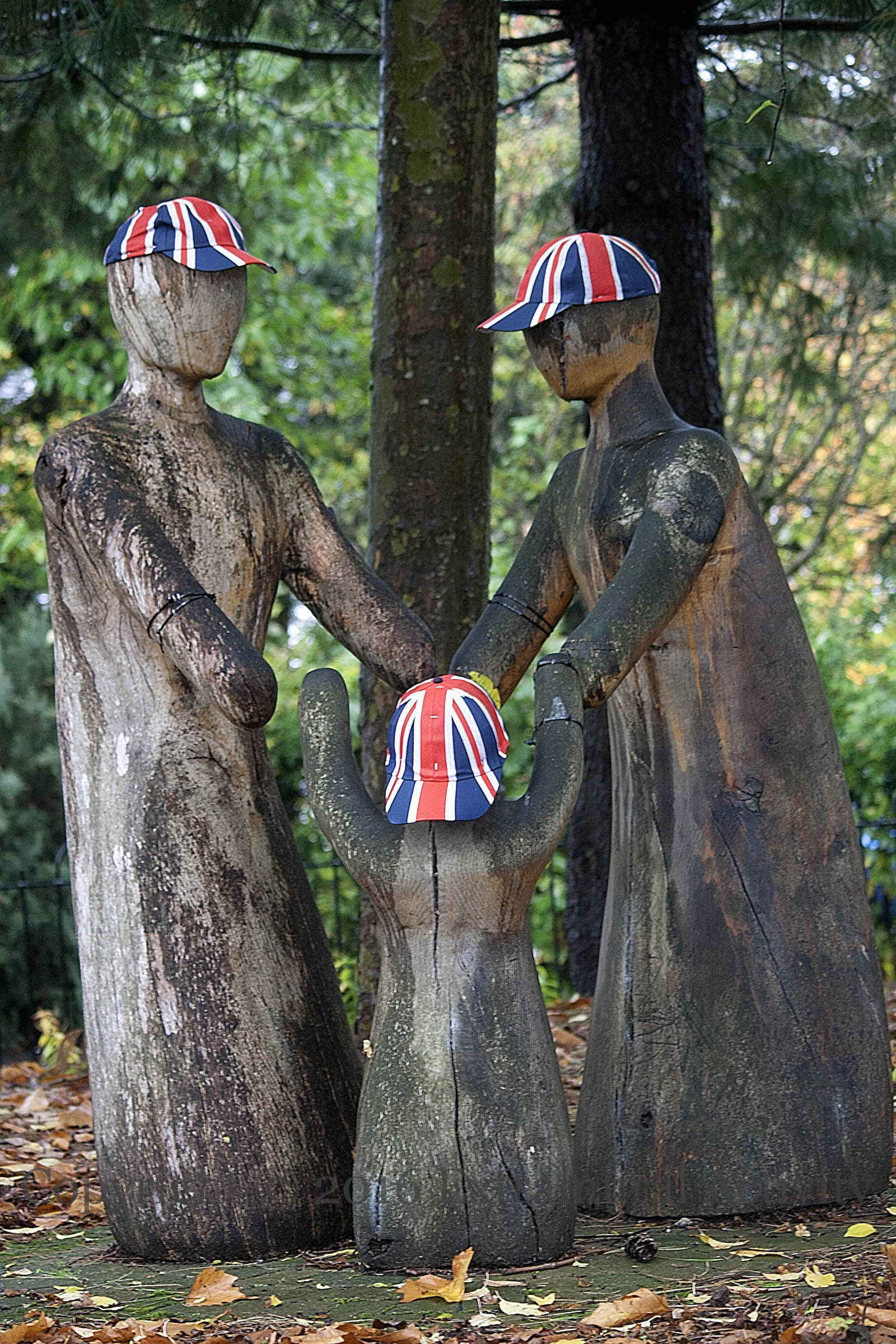
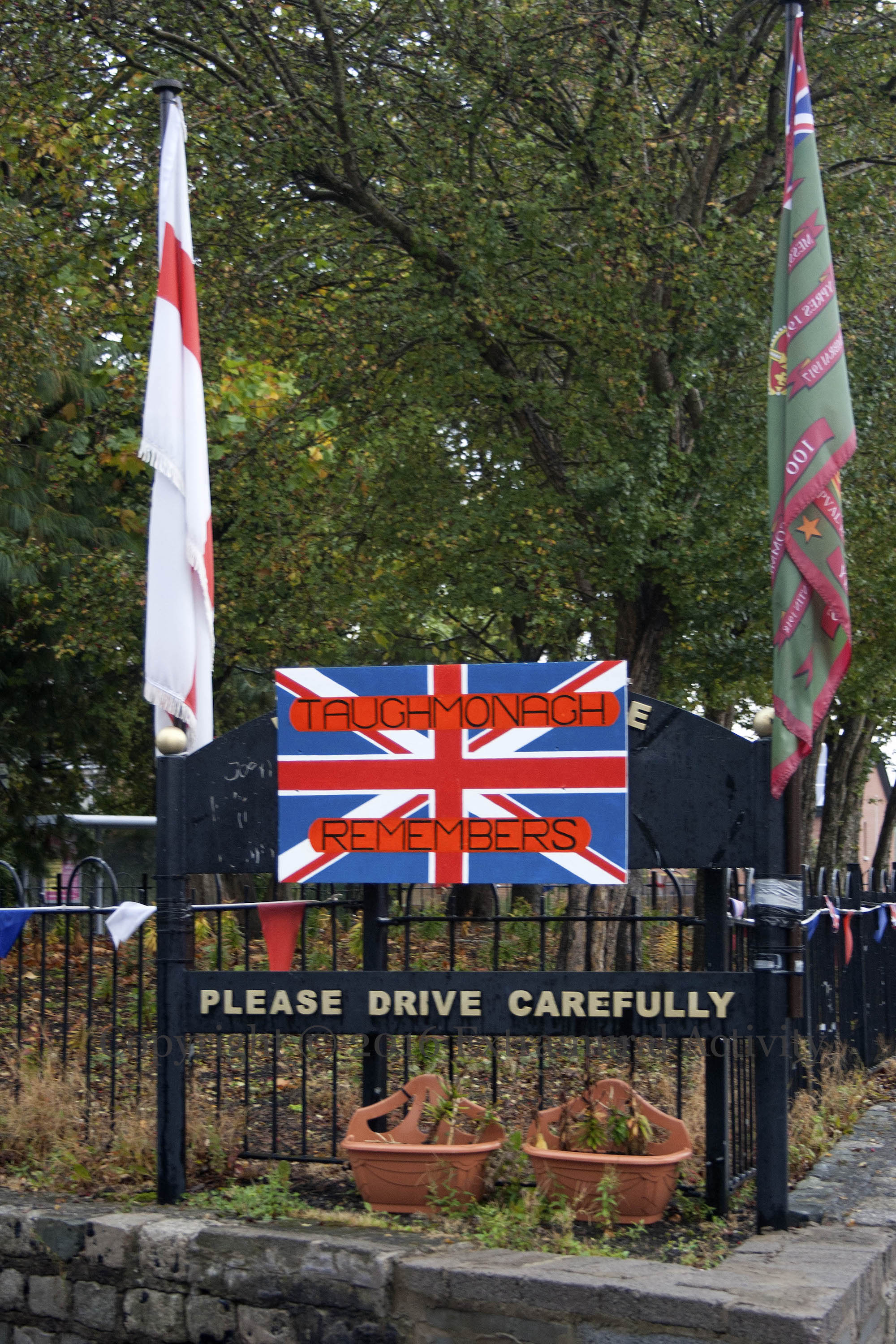
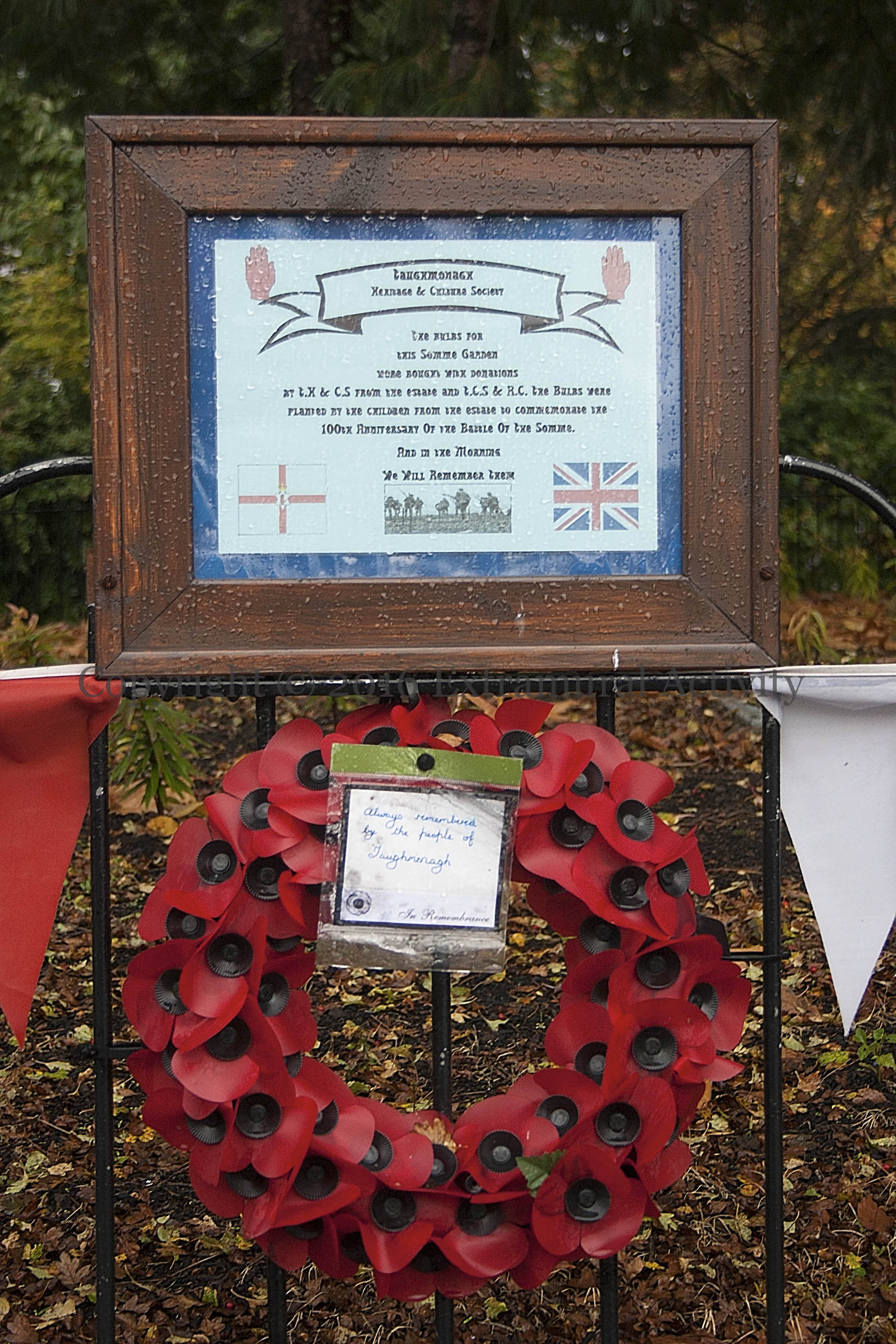
The bus turnaround at the entrance to Taughmonagh estate has been turned into a Somme Garden (see the third image, below). The “Welcome to Taughmonagh” sign at entrance has been covered over with a Union flag board with “Taughmonagh remembers” and the three figures in the sculpture in the middle have each been given a union jack cap.
On the side of the hair salon on the lower Shankill: an array of flags and a board “in glorious memory” to the 36th (XXVI) Ulster division: Somme, Messines, ypres, Cambrai, Thiepval, Somme (1918), St Quentin, Lys, Courtrai
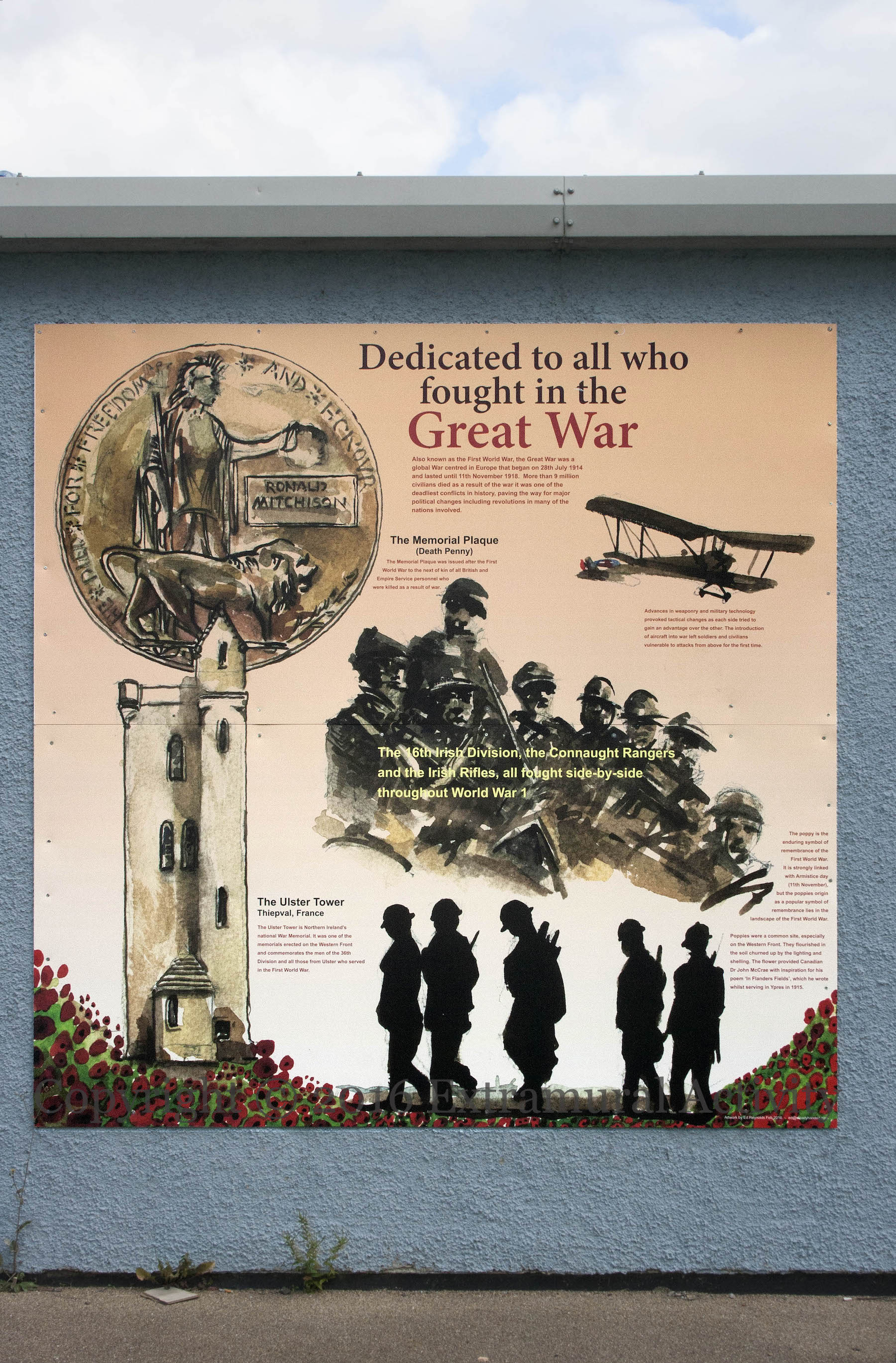
“The Memorial Plaque (Death Penny [or Dead Man’s Penny]) was issued after the First World War to the next of kin of all British and Empire Service personnel who were killed as a result of the war.” The “penny” was in fact five inches in diameter and cast in bronze. It showed Britannia with a trident and two dolphins swimming around her, and a lion on oak, along with the name of the deceased (here, Ronald Mitchison) without indication of rank. (Here is a close-up of a plaque from WP.) The board shown above contains other information about WWI, centrally including the statement that “The 16th Irish Division, the Connaught Rangers [7th battalion] and the Irish Rifles [7th battalion], all fought side-by-side throughout World War I.”
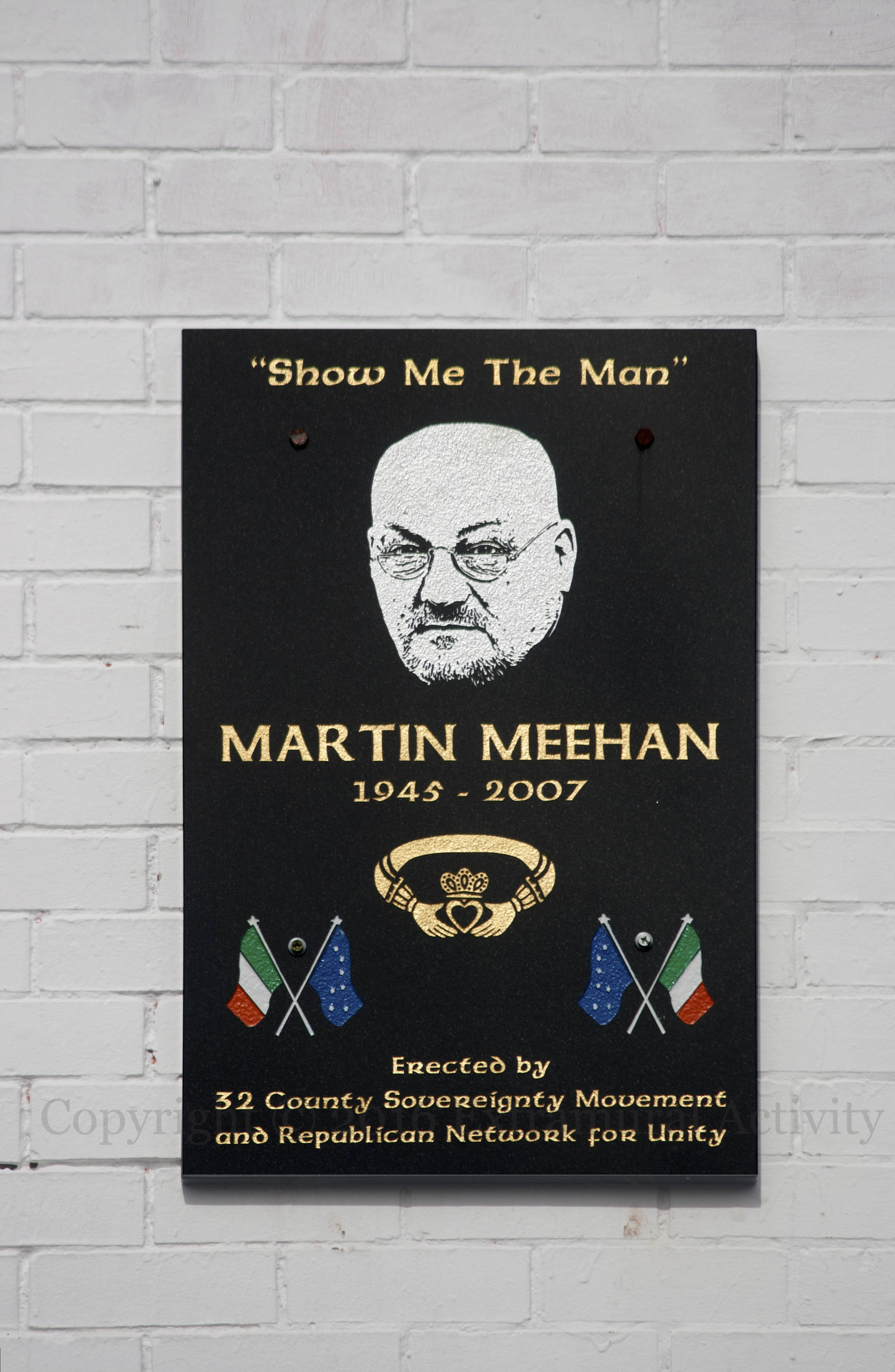
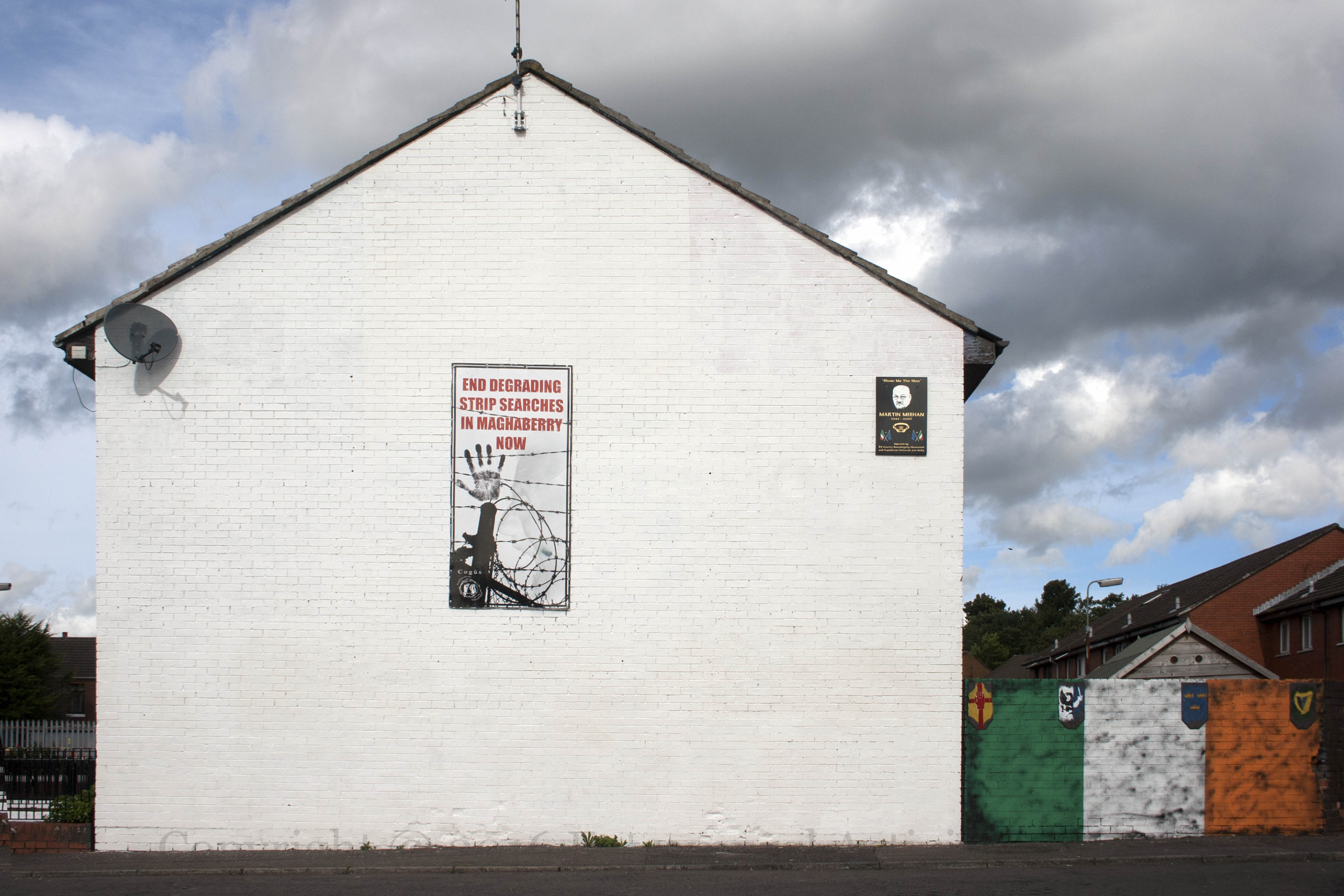
The Martin Meehan tarp in Ardoyne Avenue has been removed and the wall whitewashed. At the moment, all there is to be seen is the plaque shown above – Show Me The Man, Martin Meehan 1945 – 2007 – and a Cogús board – “End strip searching in Maghaberry now”.
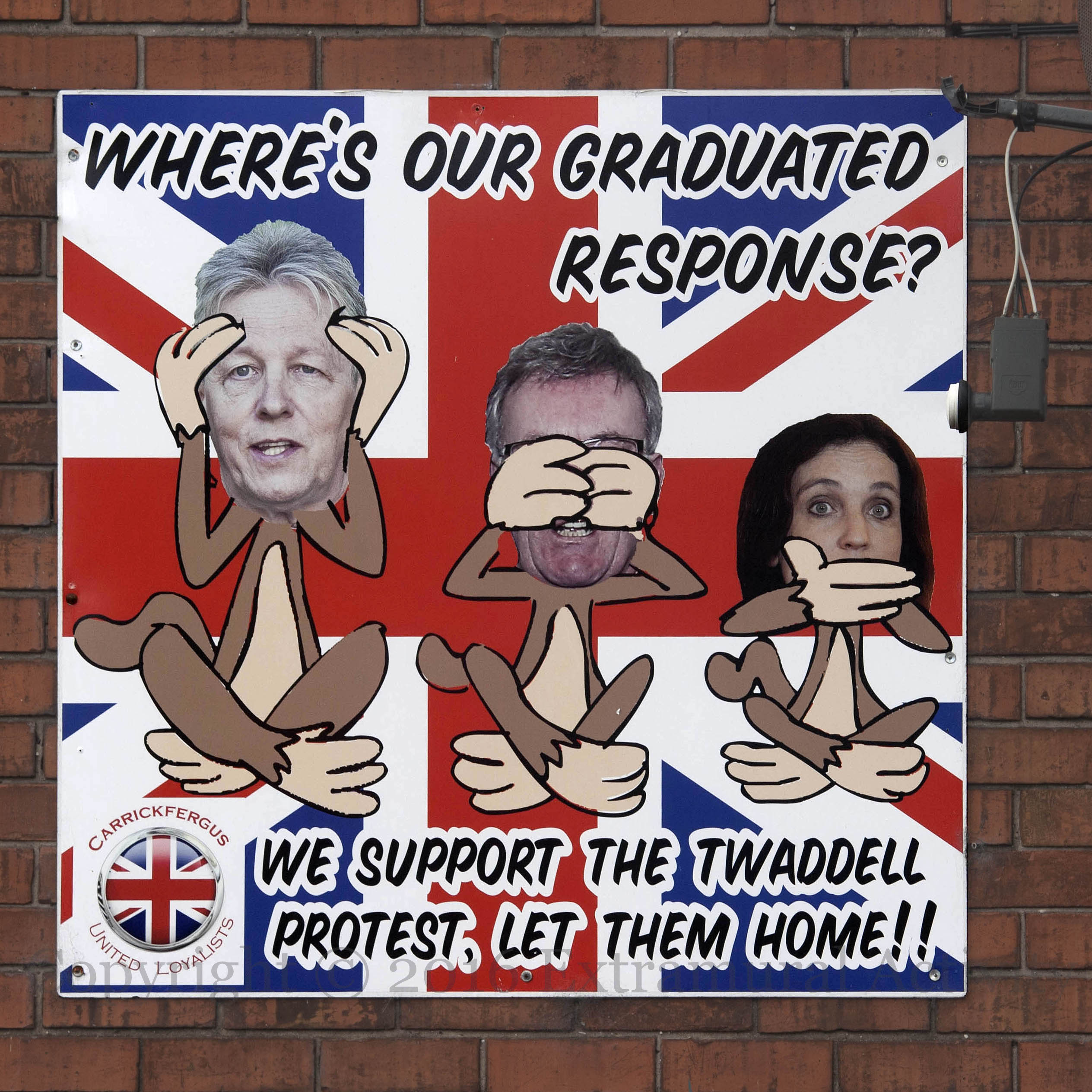
Carrickfergus United Loyalists portray Peter Robinson, Mike Nesbitt, and Theresa Villiers as the three monkeys who “hear no evil, see no evil, speak no evil”. The evil that they fail to recognize is the oppression of Orange culture in the form of the blocked 2013 parade at the Ardoyne shops. The march was completed and the protest camp dismantled on October 1st. (NewsLetter) The phrase “graduated response” comes from the Unionist response to the collapse of 2014 talks. (Irish News)





 Extramural Activity