Two boards about collusion in Beechmount Avenue. The first chronicles (both in words and images) alleged instances of collusion between the RUC and loyalist paramilitaries, citing John Stevens, Peter Cory, and Nuala O’Loan – pages from the 2007 O’Loan report are shown in the second, below.
The British soldiers on the right of the board above are given red berets to indicate the Paratroop Regiment, which was the regiment involved in Derry’s Bloody Sunday.
“Springhill–Westrock massacre. Belfast’s Bloody Sunday. Time for truth! On the 9th July 1972 a team of British Army snipers took up firing positions in Corry’s timber yard overlooking the nationalist Springhill/Westrock estates. Within less than an hour five civilians lay dead and two critically wounded. Among the dead were three teenagers, a father of six and a priest on his way to administer the last rites to the dead and injured. There has never been a proper police investigation, and not one solider has spent a single day in prison in connection with their deaths. The families deserve, and demand the comprehensive facts be told by the British establishment. The truth costs nothing.”
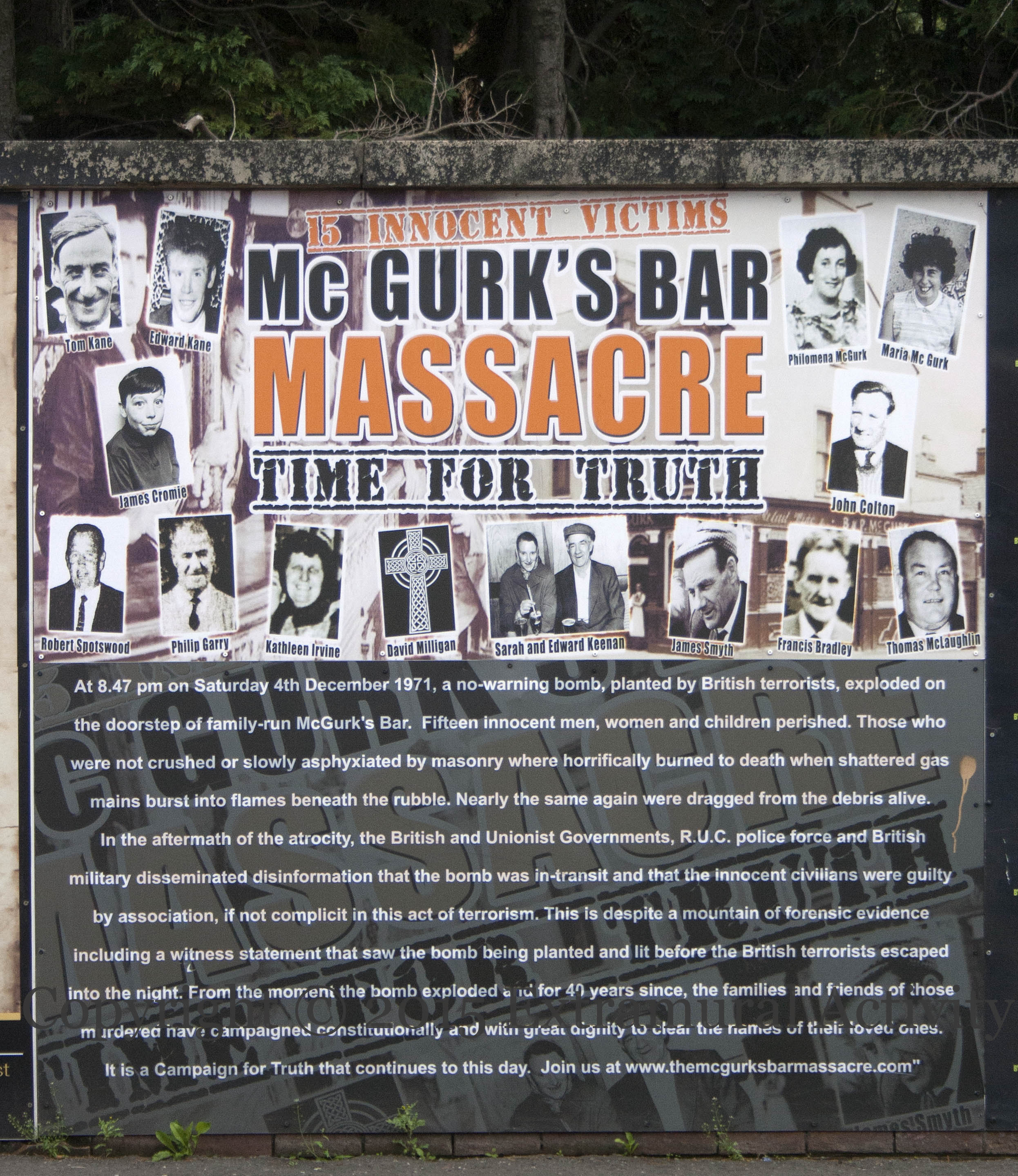
The McGurk’s Bar bombing of December, 1971 killed fifteen people – the most in a single incident during the troubles – capping what had already been a bloody year, including the “Ballymurphy Massacre” of July, in which 11 died, and starting another round of killings that would spread into the new year. Campaigners for an inquiry were busy this week in both Dublin and Belfast (Irish News).
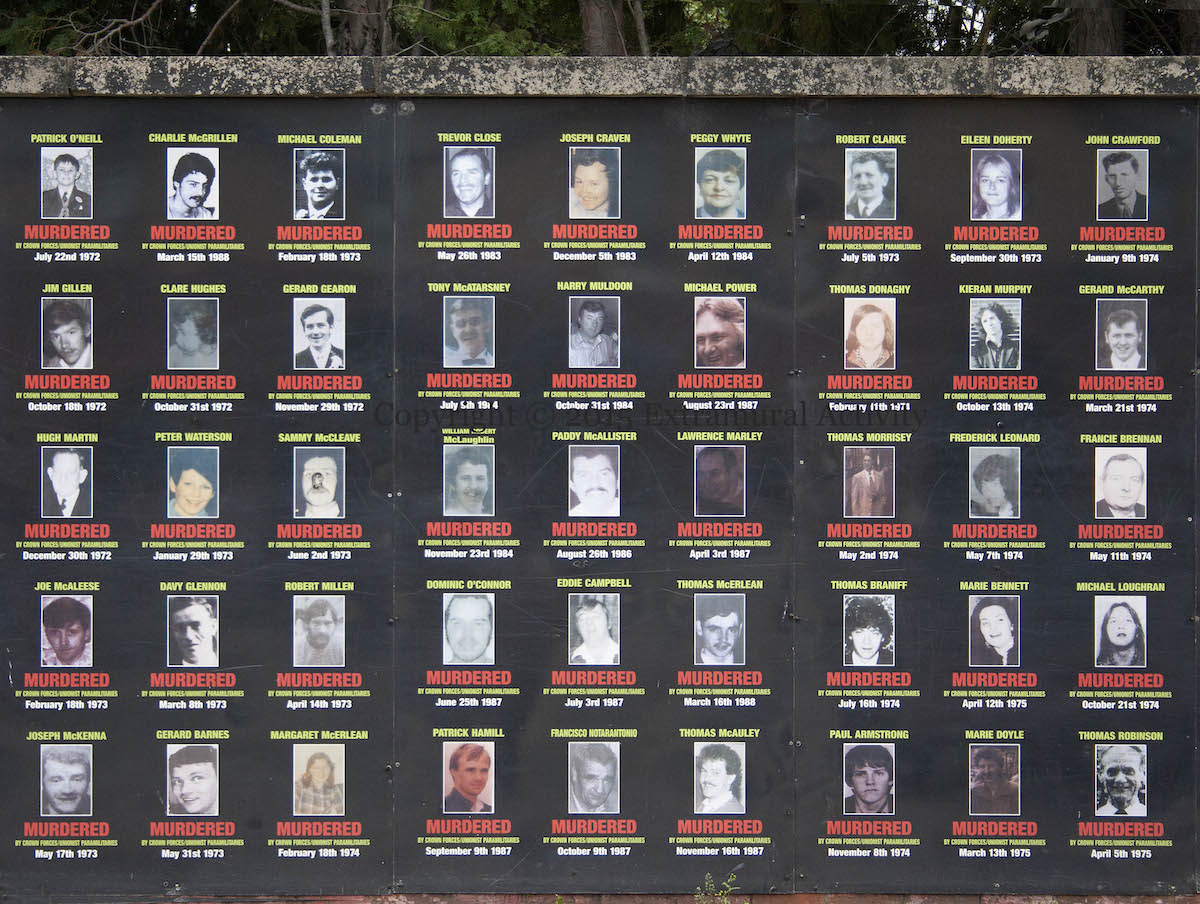
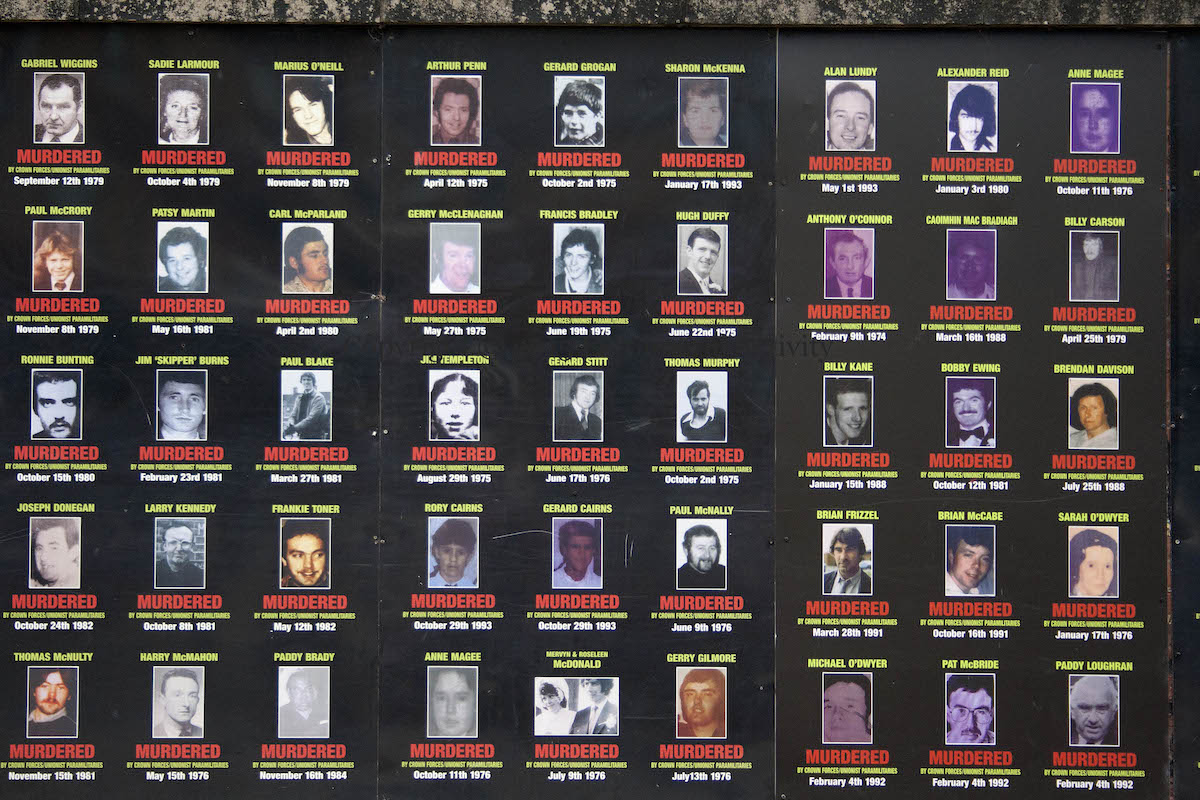
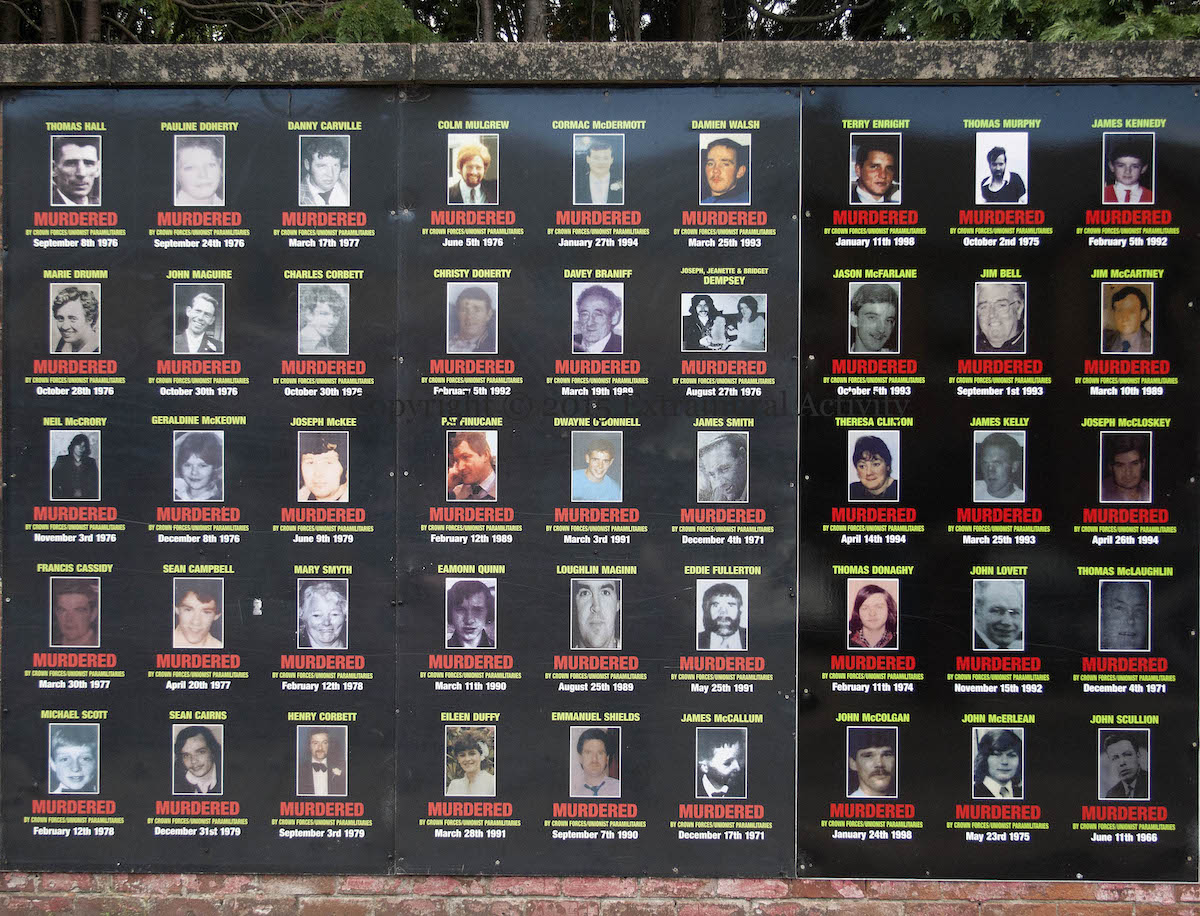
The first nine panels of the ‘murdered’ follow to the right of the McGurk’s Bar board, presented here three-at-a-time. Note that the ninth panel (with Terry Enright in the top left) was previously the 11th panel; it is not clear why it has been moved left.
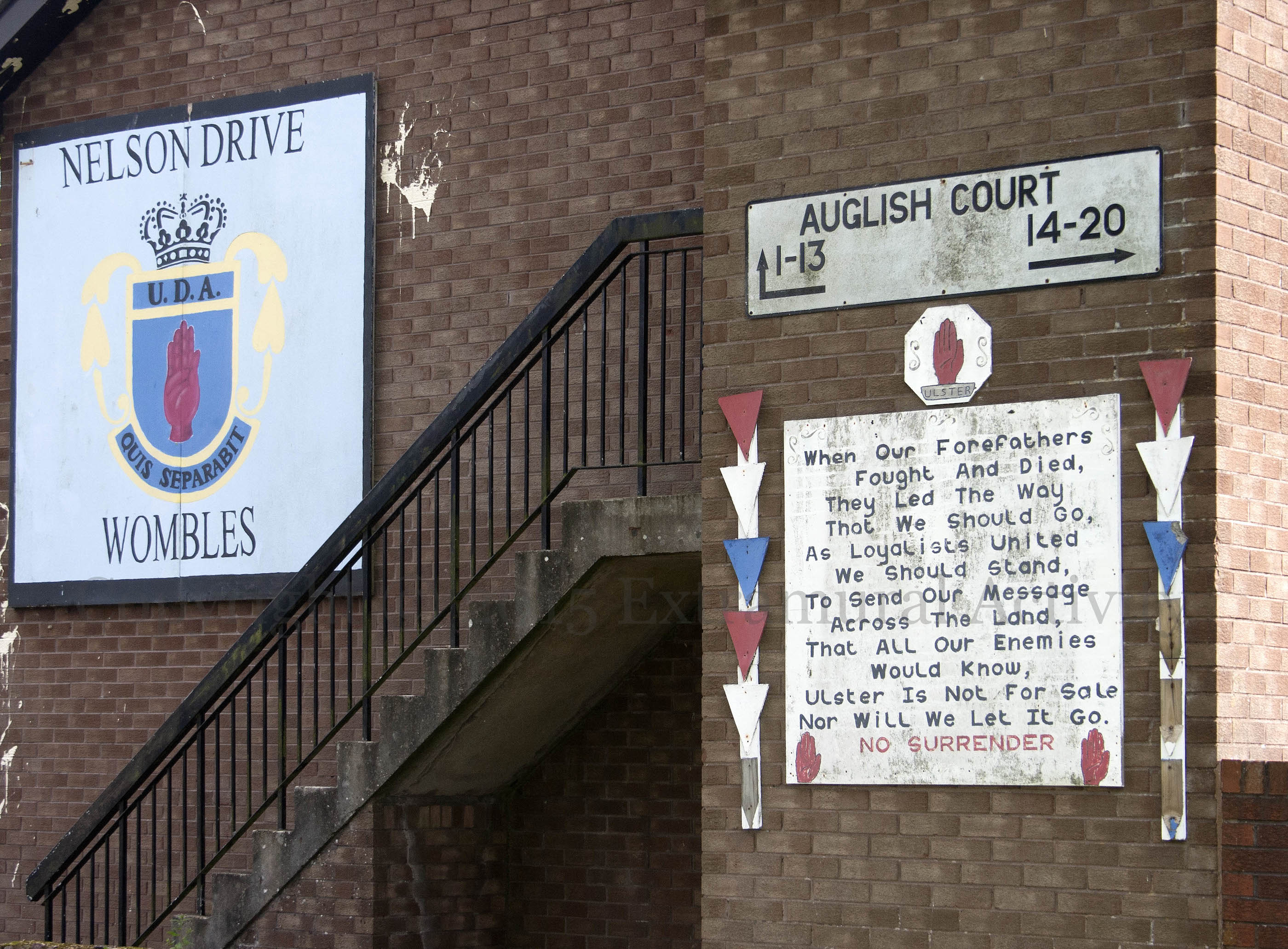
Quiz: The UDA are called “Wombles” because they resemble the stop-motion characters of the BBC children’s show in (a) their fur-lined parkas, (b) their parading, or (c) their ability to acquire anything? You can find all three explanations on-line. Originally the name seems to have been a derogatory one, used by their UVF rivals, but it was adopted by the group itself. A close-up of the text on the right is below.
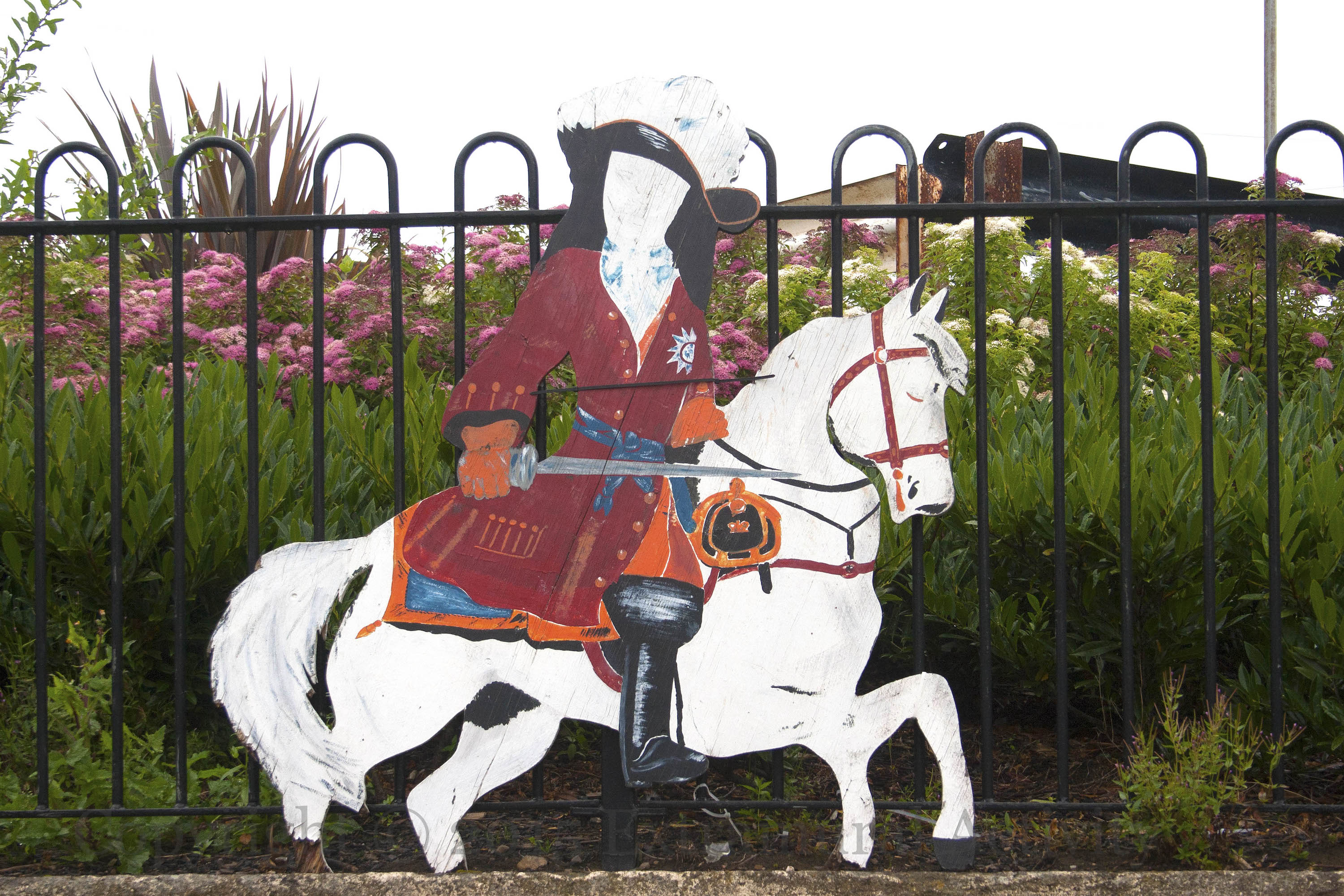
Cut-out boards in the shapes of the red hand of Ulster (both left and right hands!), the five-pointed orange star (usually purple) of the Williamites, the crown of the British monarch, and King Billy on his steed line the fence along Bute Park in Ballybeen.
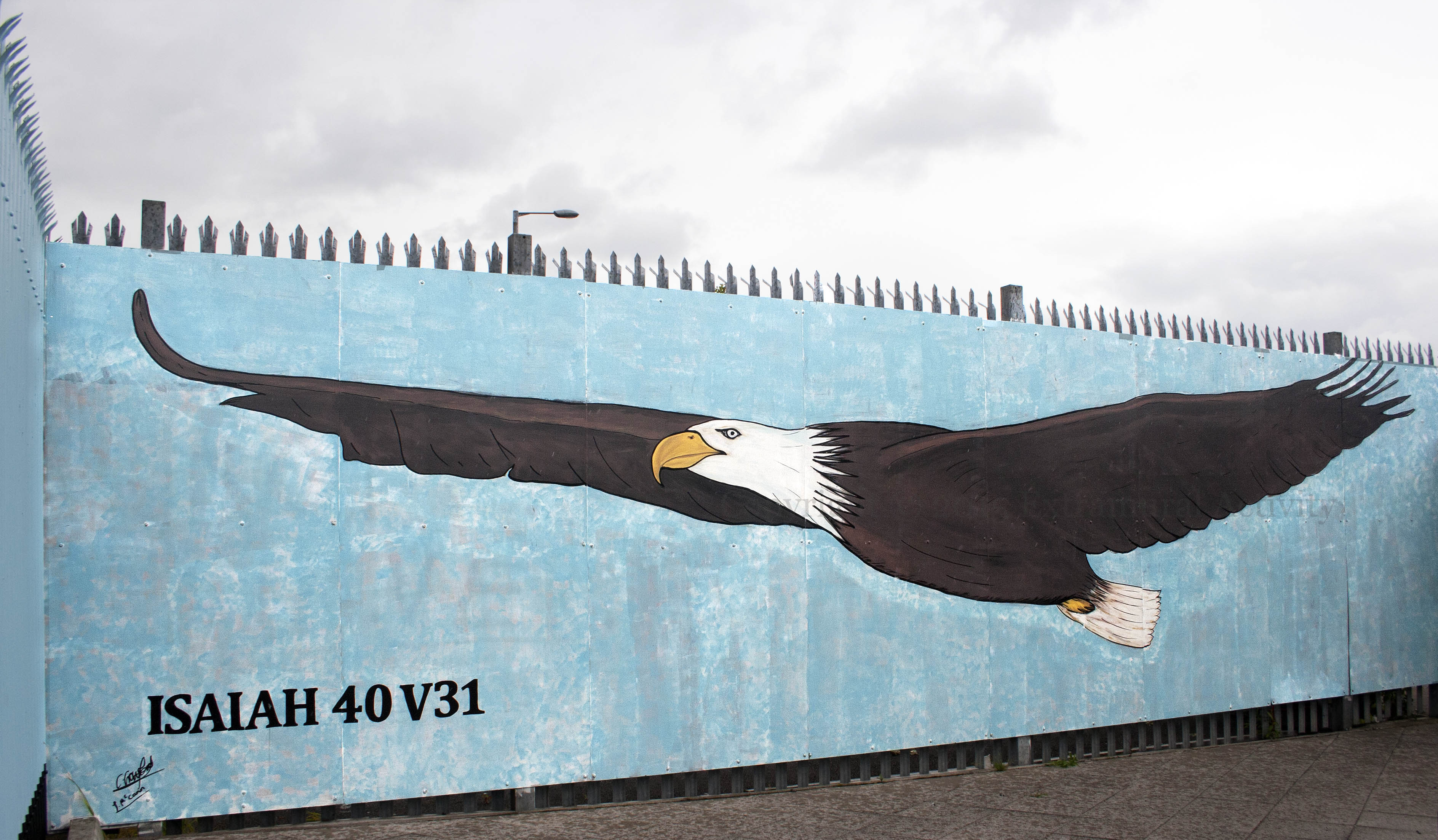
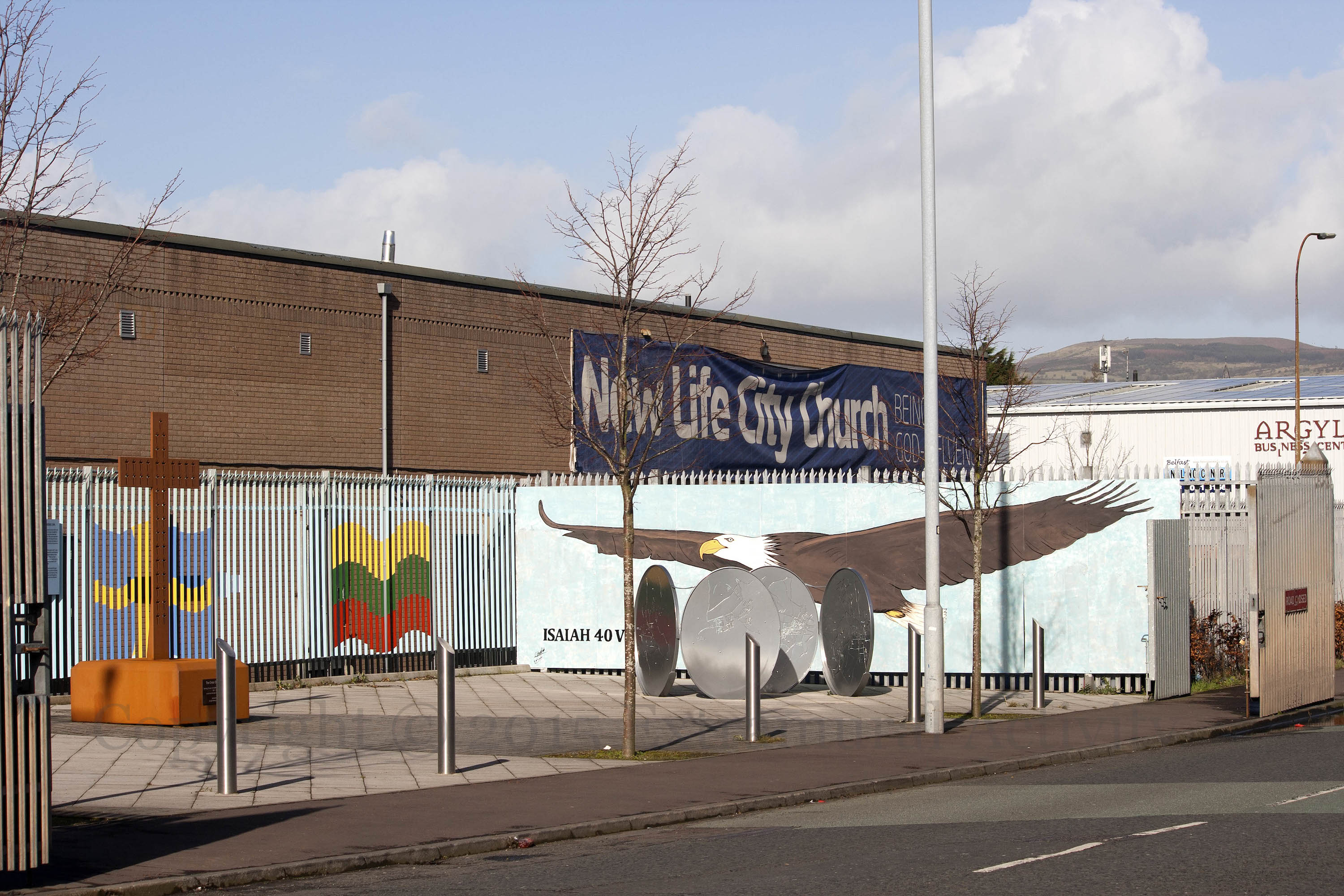
The eagle of Isaiah 40:31 flies outside the New Life church in the no-man’s land between the security gates on Northumberland Street: “Those who hope in the Lord will renew their strength. They will soar on wings like eagles; they will run and not grow weary, they will walk and not be faint.” (BibleHub)
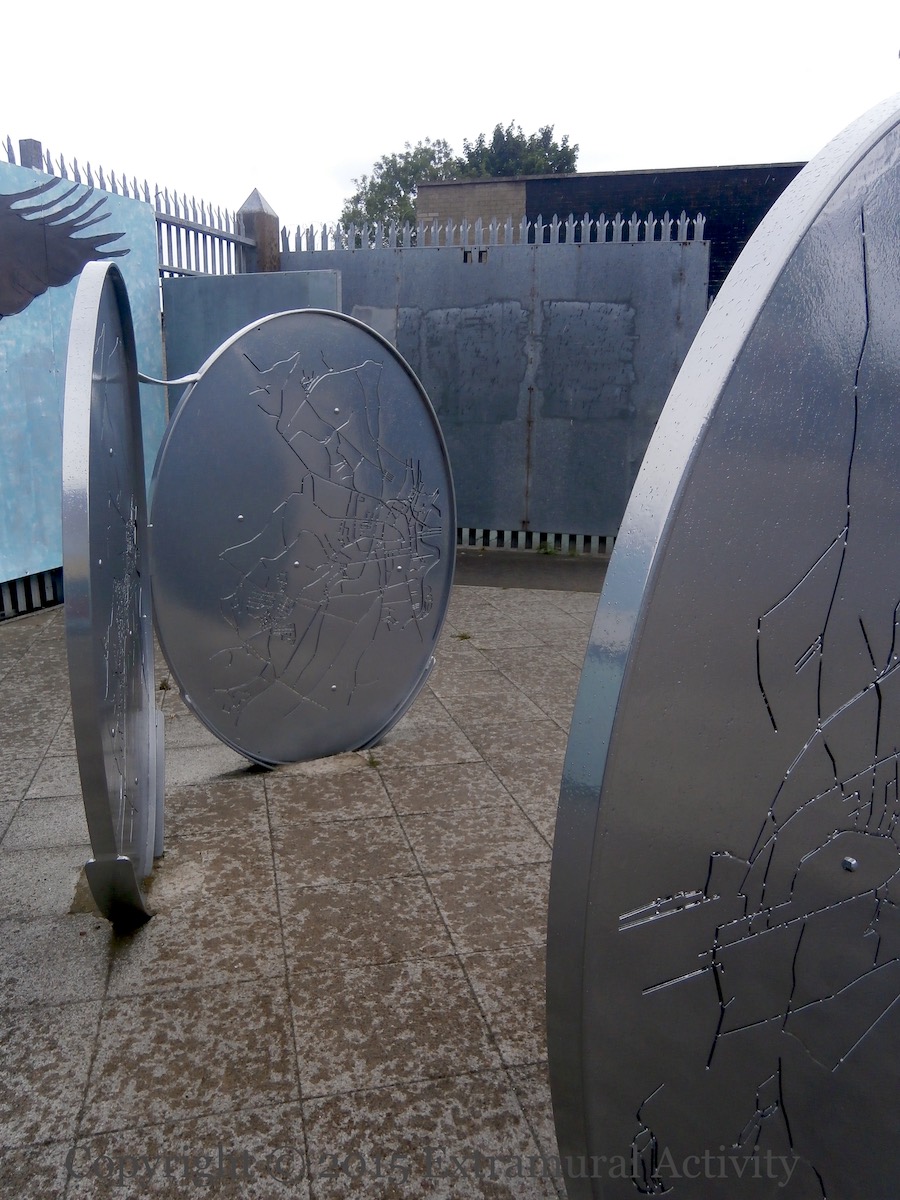
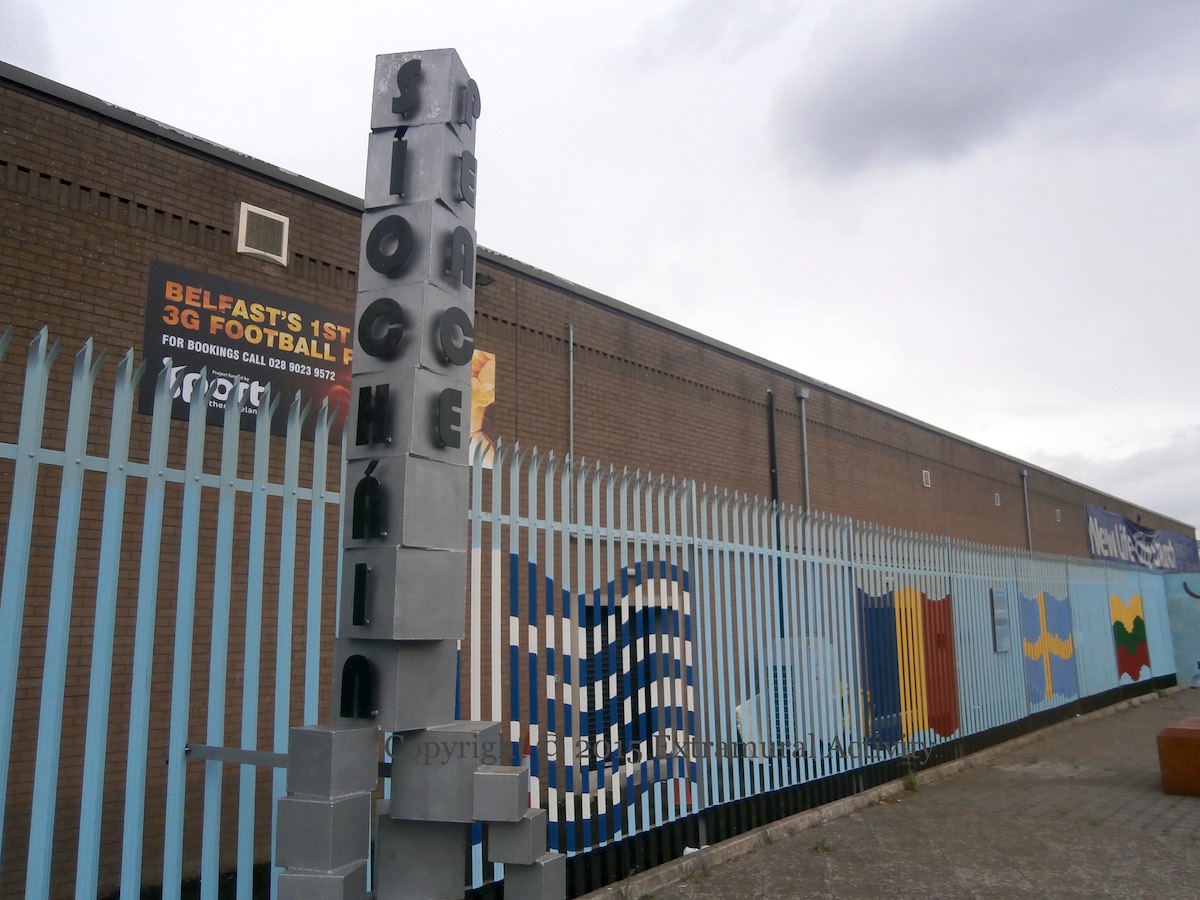
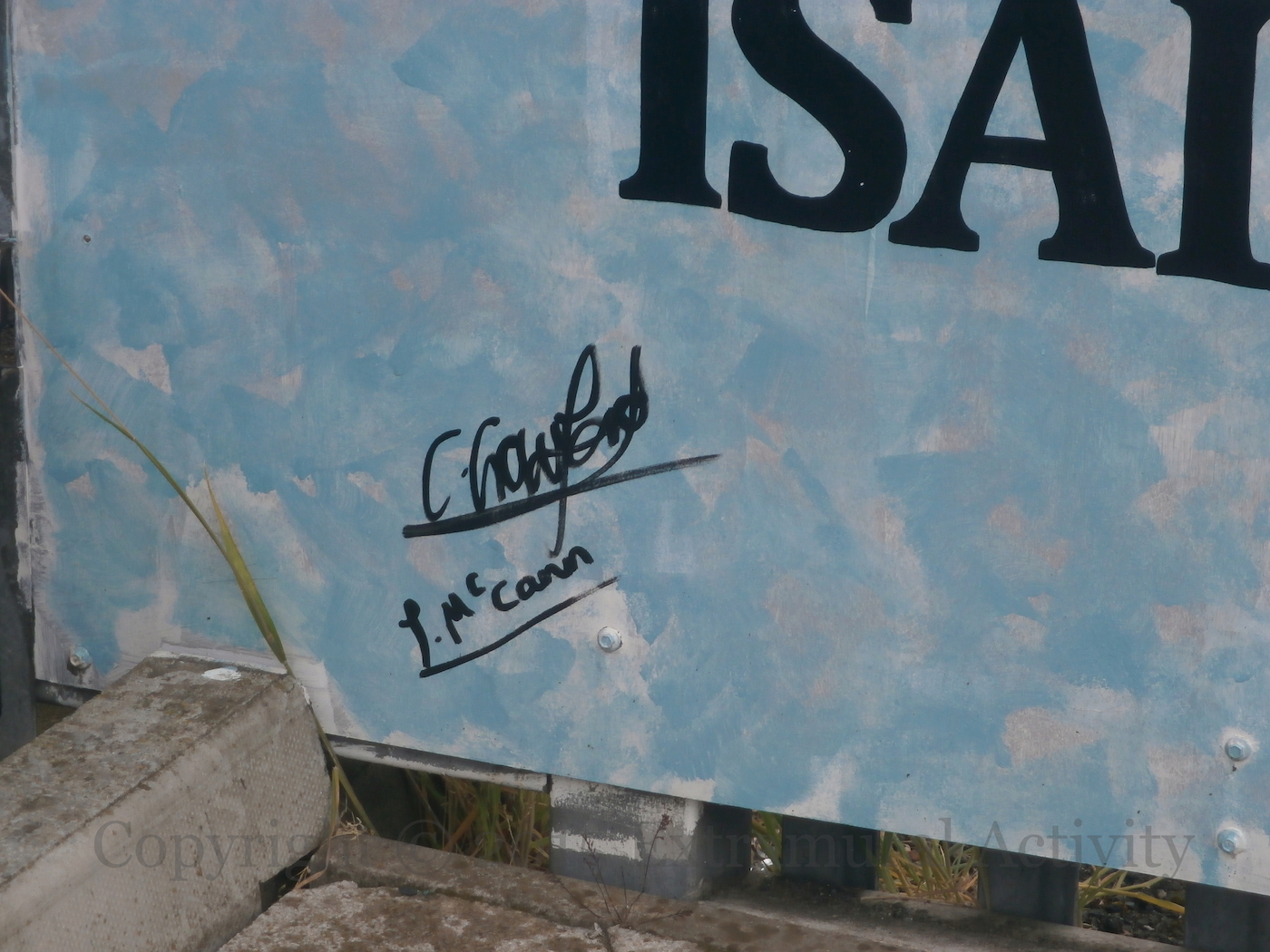
The signature and the giant “coins” in front of it are shown below, along with the Síocháın/Peace tower. The (brown) cross in the middle of the area is shown in Cross Of Crosses.
The IRPWA (tw | Fb) placed the names of prisoners currently held in Maghaberry in the barbed wire above the so-called “international” wall. Barbed wire is the symbol of republican prisoners though this barbed wire is used to protect Andrews Flour. Above, you can see the boards for Harkin, Mellon and McGilloway.
The full list, from left to right: Seamus Kearney, Gerard McManus, Nathan Hastings, Mark McGuigan, Sean Kelly, Barry Concannon, Damien Harkin, Thomas Mellon, Martin McGilloway, Jason Ceulemans, Gavin Coney, Liam O’Donnell, Neil Hegarty, Jon Paul Wooton, Martin Kelly, Colin Duffy, Harry Fitzsimons, Christopher O’Kane, Tarlach MacDhomhnaill, Seamus McLaughlin, Gavin Coyle, Brendan McConville, Kevin Barry Nolan.
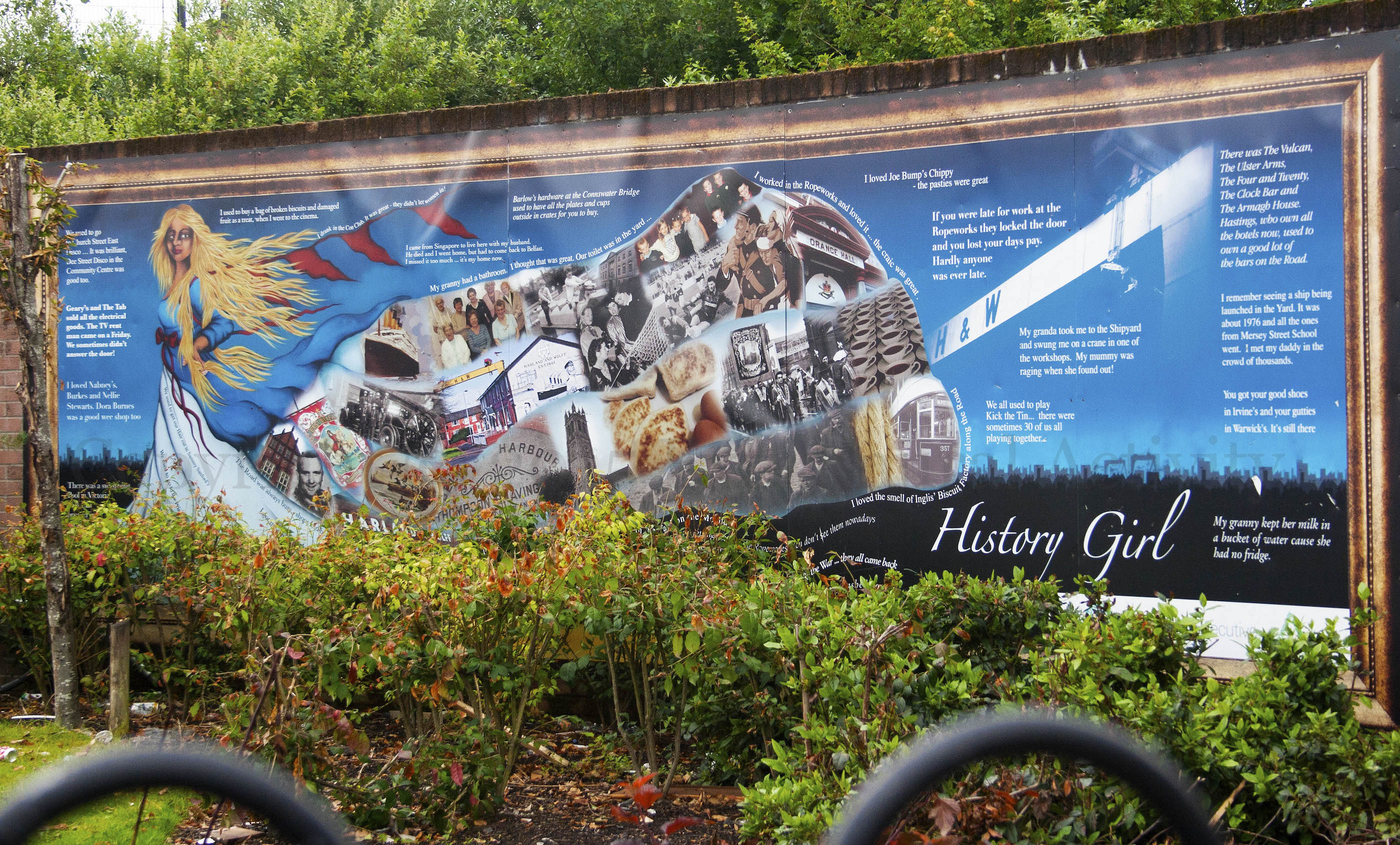
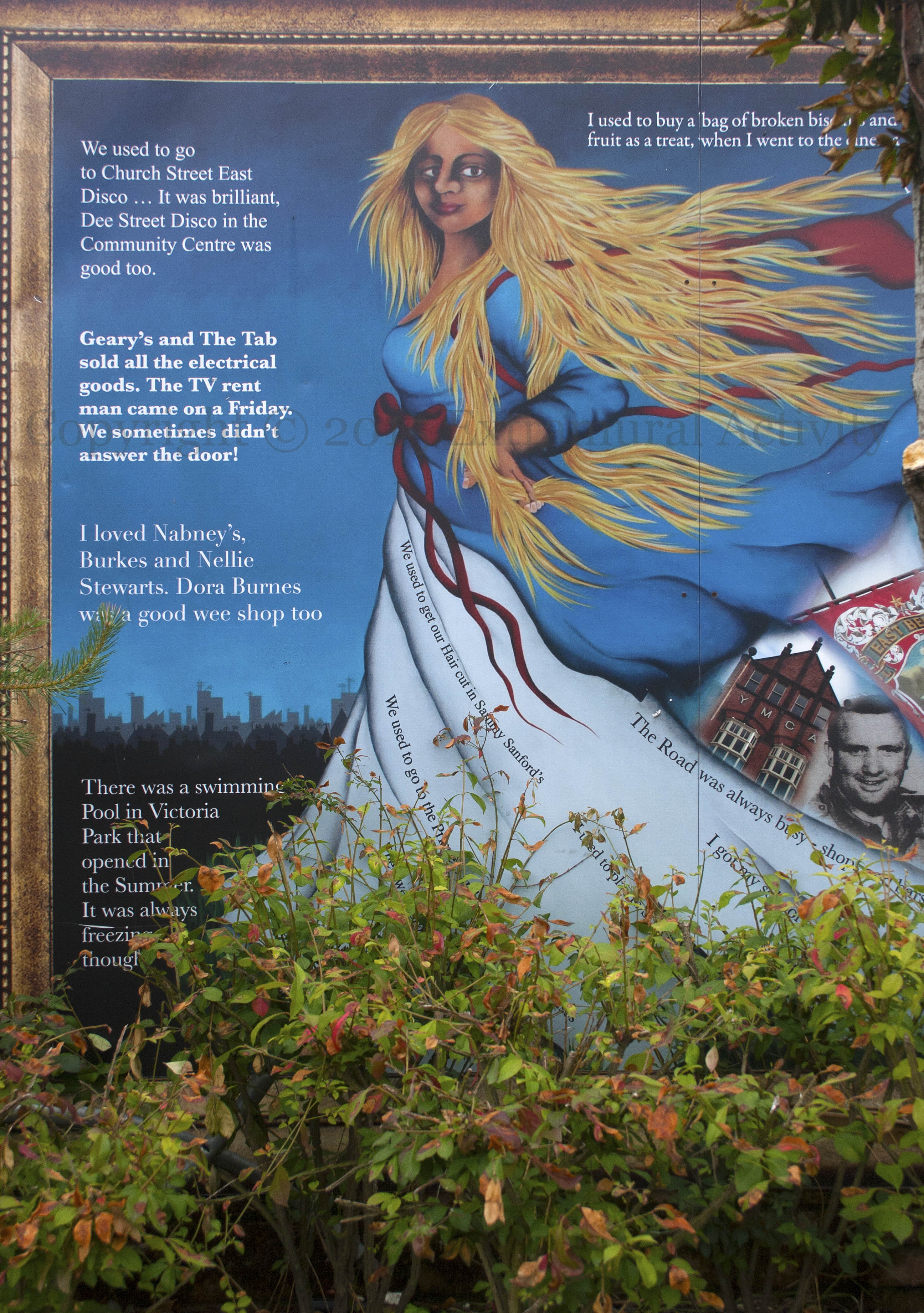
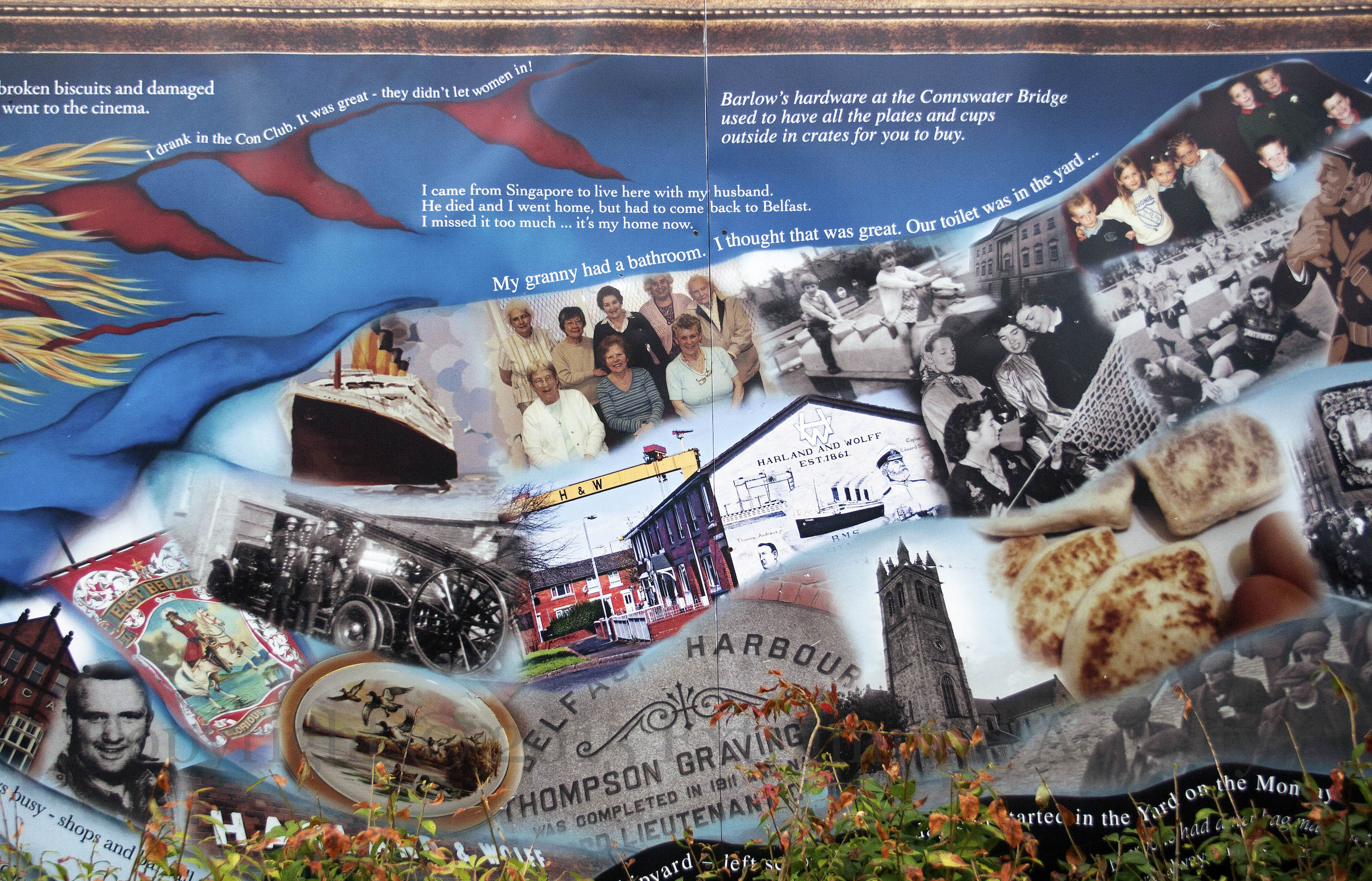
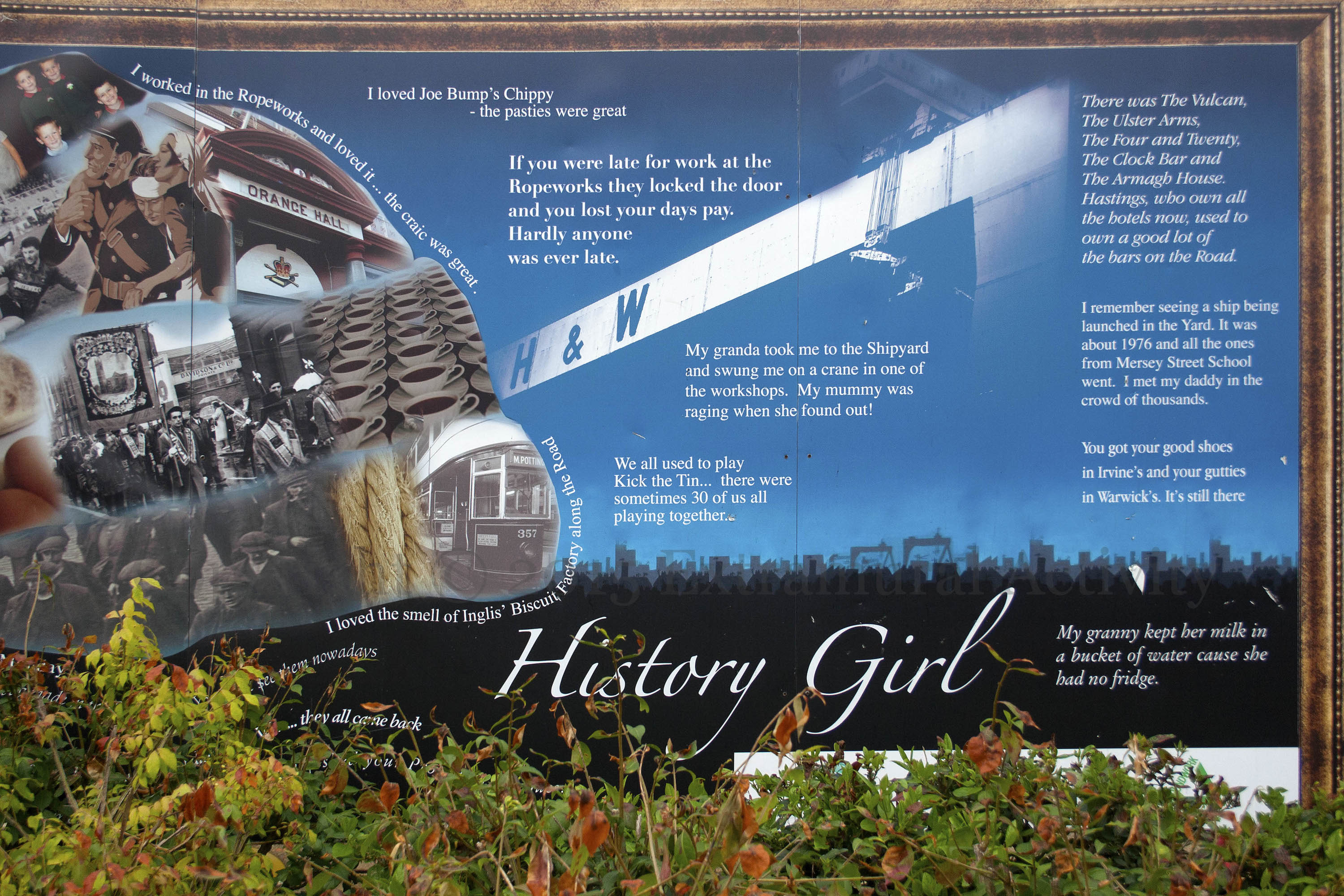
Memories from the History Girl mural in east Belfast’s Thistle Court. (Close-ups below.)
We used to go to Church Street East Disco … It was brilliant. Dee Street Disco in the Community Centre was good too.
Geary’s and The Tab sold all the electrical goods. The TV rent man came on a Friday. We sometimes didn’t answer the door!
I loved Nabney’s, Burkes and Nellie Stewarts. Dora Burnes was a good wee shop too.
There was a swimming pool in Victoria Park that opened in the summer. It was always freezing though!
I used to buy a bag of broken biscuits and and damaged fruit as a treat, when I went to the cinema.
We used to get our hair cut in Sammy Sanford’s.
The Road was always busy – shops and bars all the way along.
Barlow’s hardware at the Conswater Bridge used to have all the plates and cups outside in crates for you to buy.
I drank in the Con Club. It was great – they didn’t let women in!
I came from Singapore to live here with my husband. He died and I went home, but had to come back to Belfast. I missed it too much … it’s my home now.
My granny had a bathroom. I thought that was great. Our toilet was in the yard …
I worked in the Ropeworks and love it … the craic was great.
I loved Joe Bump’s chippy – the pasties were great.
If you were late for work at the Ropeworks they locked the door and you lost your pay. Hardly anyone was ever late.
My grandpa took me to the shipyard and swung me on a crane in one of the workshops. My mummy was raging when she found out!
We used to play Kick the Tin … there were sometimes 30 of us all playing together …
I loved the smell of Inglis’ Biscuit Factory along the Road.
The was The Vulcan, The Ulster Arms, The Four and Twenty, The Clock Bar and The Armagh House. Hastings, who own all the hotels now, used to own a good lot of the bars on the Road.
I remember seeing a ship being launched in the yard. It was about 1976 and all the ones from Mersey Street School went. I met my daddy in the crowd of thousands.
You got your good shoes in Irvine’s and your gutties in Warwick’s. It’s still there.
My granny kept her milk in a bucket of water because she had no fridge.
I worked in the shipyard – left school on a Friday and started in the Yard on Monday.
Everyone had a net bag made in the Ropeworks. You don’t see them nowadays.
We followed the Glens everywhere, but a home match in the Oval was always the best craic.
All my mummy’s brothers were in the Army or Navy during the War … they all came back.
I remember Stanley Brookes. They cashed your Providence Cheques.
We used to go to the cinema on a Saturday morning for the Kids Club. It was always bunged!!
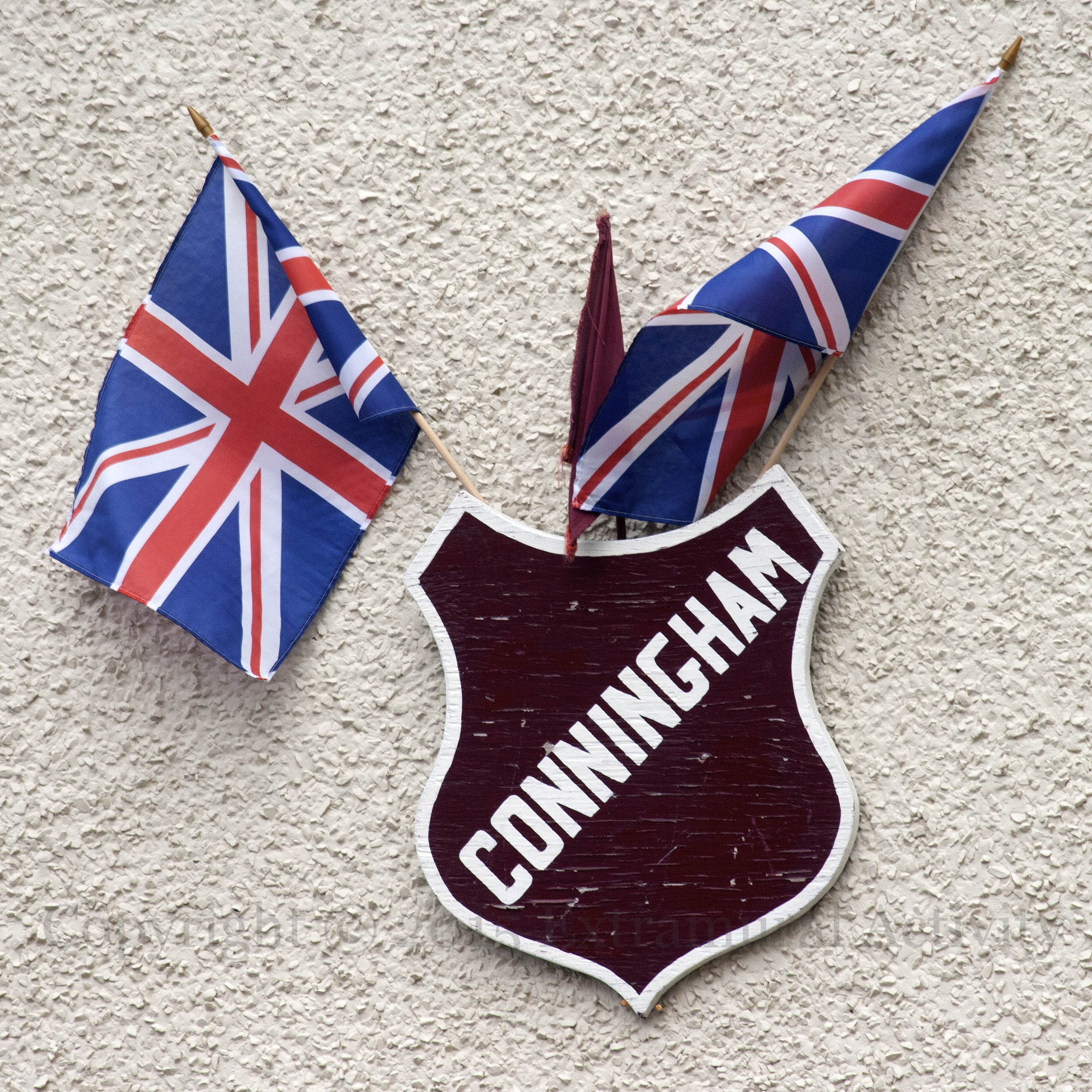
On December 7th, 1688, thirteen apprentice boys grabbed the keys to Derry city and locked the gates against the on-coming Jacobite Redshanks. Their names were William Cairnes, Henry Campsie, John Conningham (also given as Coningham), Alexander Cunningham, William Crookshanks, Samuel Harvy, Samuel Hunt, Alexander Irwin, Robert Morison, Robert Sherrard, Daniel Sherrard, James Spike, James Steward and they each have a small plaque in the Fountain area.
Above is a local interpretation of Robert Ballagh’s 1970 rendering of Goya’s The Third Of May 1808 in Glenfada Park, Derry/Doıre, site of four deaths on Bloody Sunday, 1972.
The original commemorates Spanish resistance to the forces of Napoleon (WP). For this Derry version, features from the city’s skyline – the Guildhall, St. Columb’s Cathedral, and an intact Governor Walker column – have replaced the original’s outline of Madrid, as well as an insignia of the Paras on the arm of a soldier.






 Extramural Activity