Remembering The Hunger Strikers

2015-07-24 RemHungerStrikers+

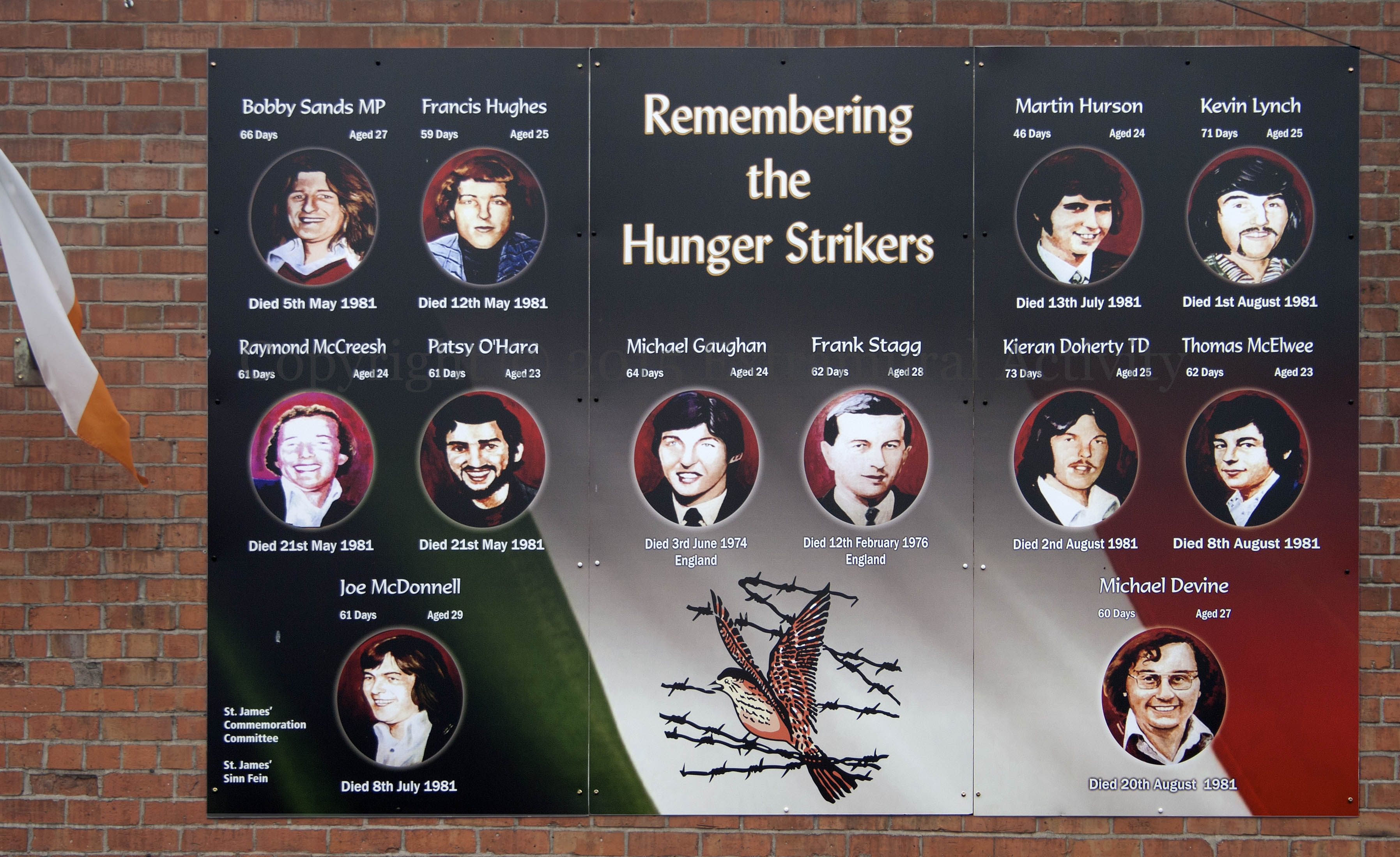
The six weeks from July 8th to August 20th 1981 saw the death of six hunger strikers – McDonnell, Hurson, Lynch, Doherty, McElwee, and Devine – adding to the four who began in March and died in May. All ten, along with Michael Gaughan and Frank Stagg from 1974 and 1976, are remembered in this recent (spring 2015?) board in Rockmore Road, west Belfast.

This is the fourth iteration of this board, which goes back (at least) to 1995. For two of the previous versions, see the Peter Moloney collection: third | first.

Click image to enlarge
Copyright © 2015 Seosamh Mac Coılle
X02696 lark barbed wire bobby sands mp 5th may francis hughes 12th may raymond mccreesh 21st may patsy o’hara 21st may joe mcdonnell 8th july michael gaughan 3rd june 1974 frank stagg 12th february 1976 martin hurson 13th july kevin lynch 1st august kieran doherty 2nd august thomas mcelwee 8th august michael devine 20th august st james commemoration committee sınn féın

To Bathe The Sharp Sword Of My Word In Heaven

2015-06-29 Bradford+

South Belfast MP Robert Bradford was assassinated by the Provisional IRA in Finaghy at a meeting with constituents; the caretaker of the community centre, Ken Campbell, was also killed by the fleeing attackers. Taking place in late 1981, with the hunger strikes having ended only a month before, the killing was noted around the world and raised fears of broad civil unrest (BBC | NYTimes). The board above serves as a substitute for an earlier mural to Bradford on the adjacent gable wall. See below for a wide shot of Oak Street with the Bradford board between the repainted Cemented With Love and No Surrender Club.

2015-06-29 OakStWide+

Click image to enlarge
Copyright © 2015 Seosamh Mac Coılle
X02673 X02677 my role is to say harsh things oft-times, but to bathe the sharp sword of my word in heaven, to temper what I say with love and lead people from their folly to a life of fuller service with their king for seven violent year from 1974 to 1981 unionist mp for south belfast an outspoken champion for liberty in ulster unafraid to speak his mind despite the danger he faced daily from terrorist death threats finally they murdered him while he was on constituency duty doing the special work god had called him to do one of the worst political assassinations in recent british history sent shockwave around the world

No Surrender Club

2015-06-29 OakStSiegeBoard+

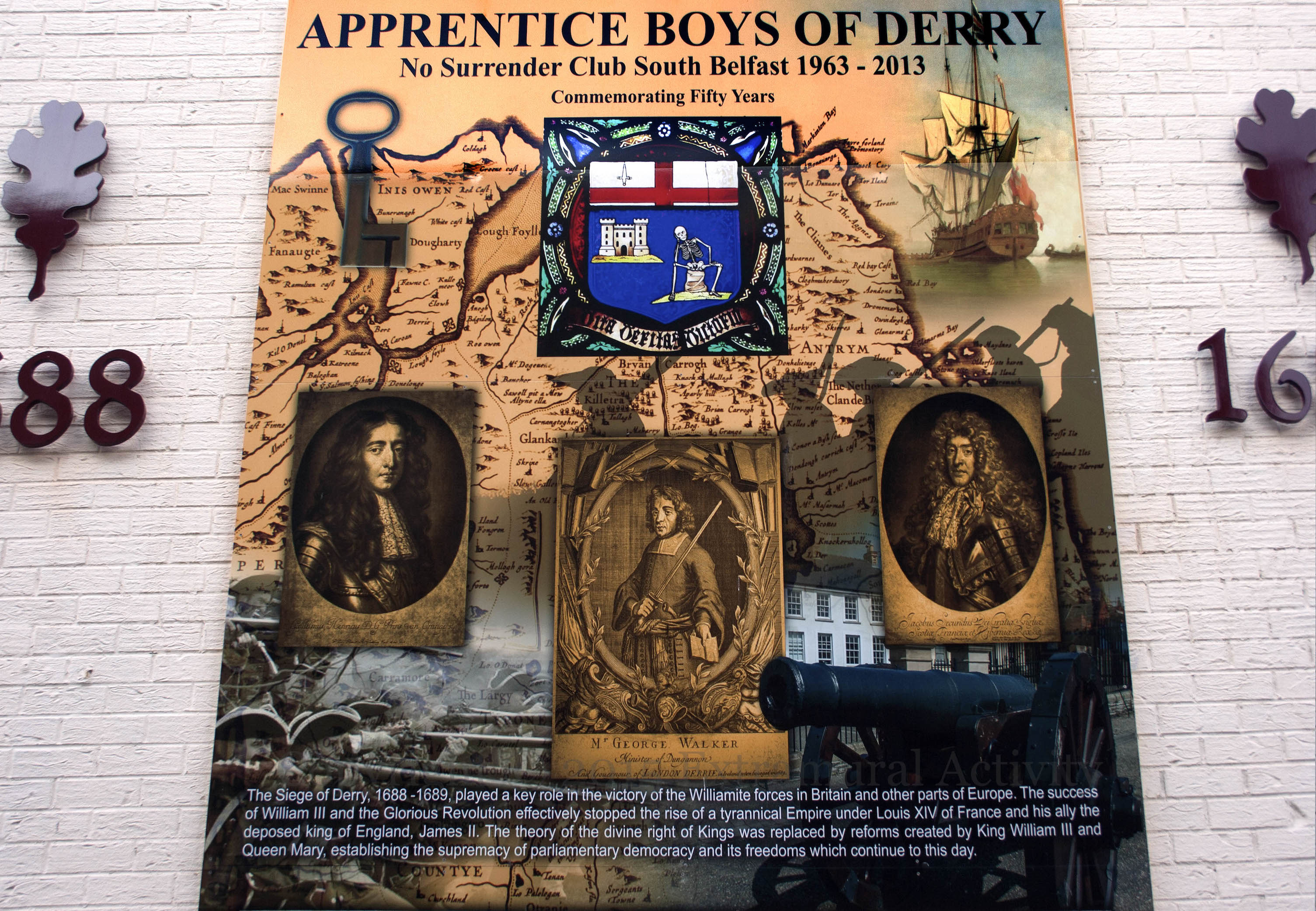
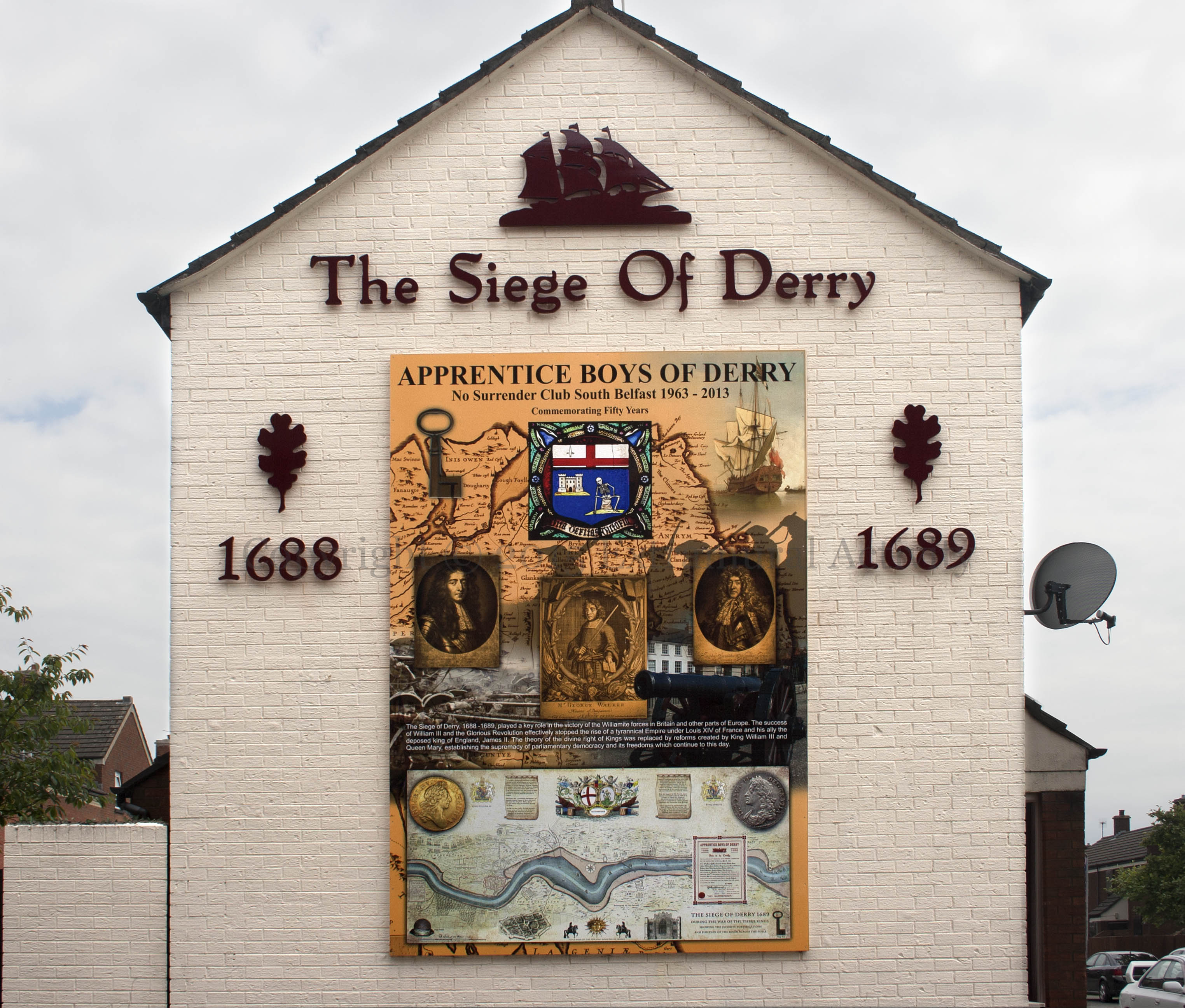
Oak Street is a fitting place for a mural about the Siege of Derry, as the oak leaf, shown to the left and right of the board above (and in the wide shot, below) is a symbol of the town, “doire” meaning an oak grove. The gates to the city were locked by thirteen apprentices, against the wishes of Governor Robert Lundy who wised to surrender the city. When the deposed king James II and his army arrived and demanded the surrender of the city of Derry, the cry from within was “No surrender!” The city was then besieged for 105 days until relief arrived in the form of ships of the navy of the newly crowned William & Mary.

The board shown above celebrates 50 years of the No Surrender Club South Belfast (1963-2013) a club affiliated with the Apprentice Boys Of Derry.

2015-06-29 OakStSiege+

2015-06-29 OakStSiegeInfoBoard+

Click image to enlarge
Copyright © 2015 Seosamh Mac Coılle
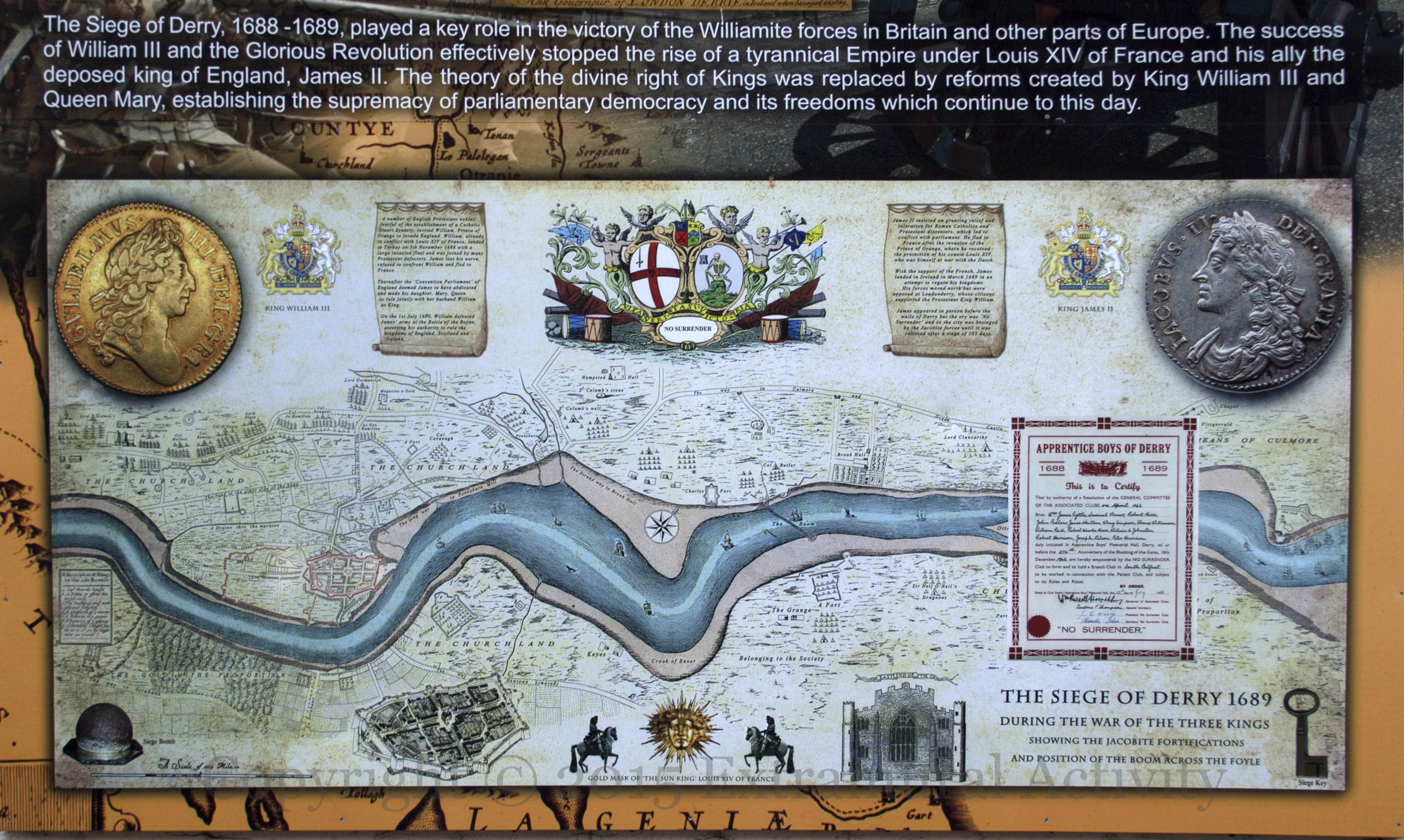
X02674 X02675 X02676  The Siege of Derry, 1688 – 1689, April 18 to July 28 played a key role in the victory of the Williamite forces in Britain and other parts of Europe. The success of William III and the Glorious Revolution effectively stopped the rise of a tyrannical Empire under Louis XIV of France and his ally the deposed king of England, James II. The theory of the divine right of Kings was replaced by reforms created by King William III and Queen Mary, establishing the supremacy of parliamentary democracy and its freedoms which continue to this day. during the war of the three kings showing the jacobite fortifications and position of the boom across the foyle gold mask of the sun king vita veritas victoria protestant nobles stewart dynasty prince of orange convention parliament abdicated battle of the boyne kingdom of england scotland ireland londonderry toleration of roman catholics dissenters cousin dutch citizens walls of derry but the cry was siege of 105 days duly initiated in apprentice boys’ memorial hall shutting of the gates rules and ritual roaring meg siege key

With Matching Barbs

2015-06-22 YouthCentre+

The New Lodge youth centre has received a make-over, with kids’ drawings of purple pencils, yellow flowers, pink buses, and red circles. Even the security wire at the top has been included in the gaiety.

Click image to enlarge
Copyright © 2015 Seosamh Mac Coılle
X02667

Harbour Schooling

2015-06-22 BelfastDockers+

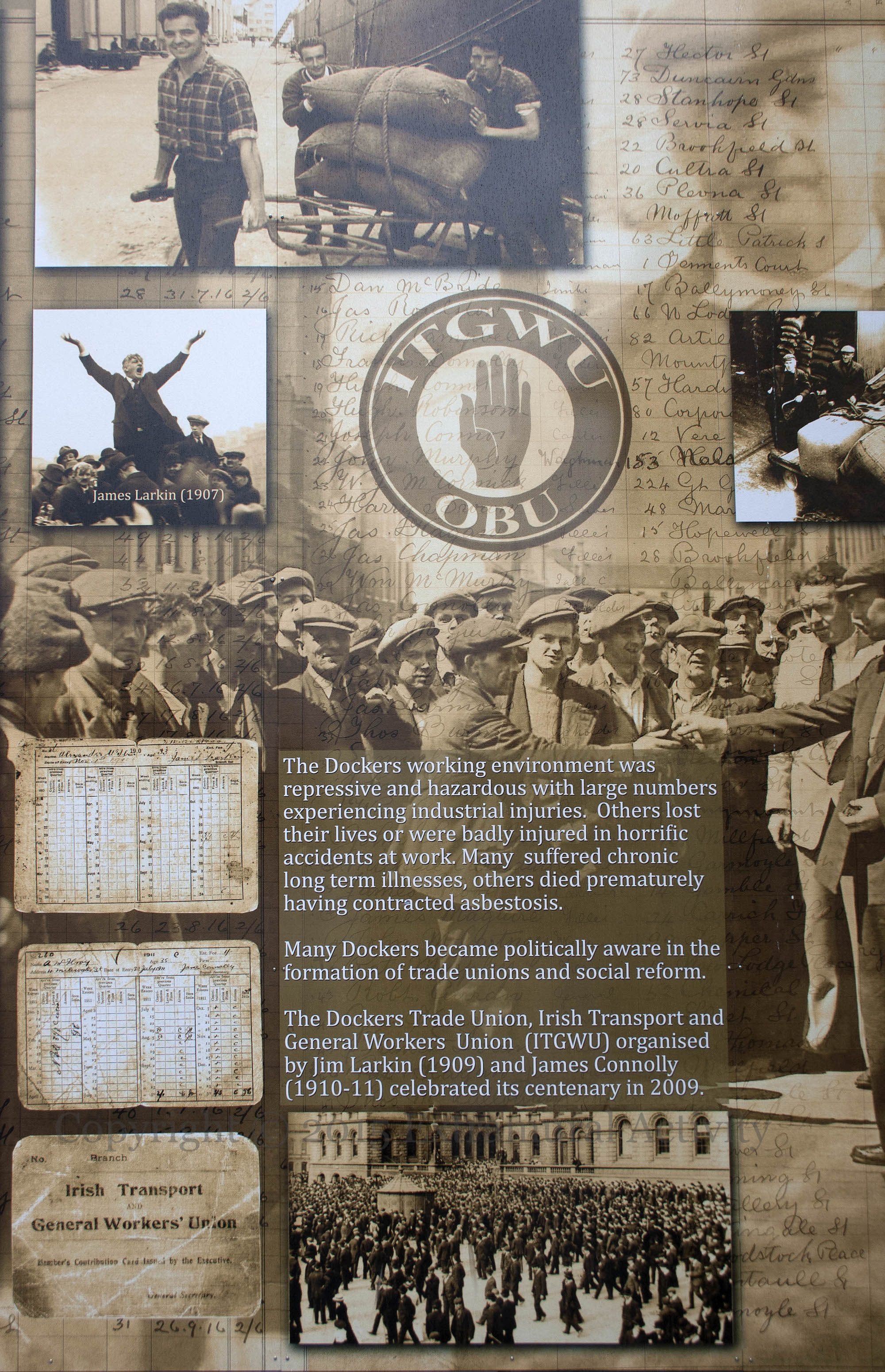
Every day, men would line up in schooling pens on the various docks of the port of Belfast to be hired by foremen. As mentioned on the left-hand side of the board above (recently erected on the New Lodge side of the Duncairn “peace” line) the rise of the shipping container in the 1970s spelled the end of the docker: “from 3000 listed dockers in 1970, the number had fallen to 280 by 1985.” Author and poet John Campbell recalls his first day on the docks in 1952, unloading cement, in this NVTv video.

See previously: Unite The Union | OBU | International Workers’ Day

Lepper Street, New Lodge, north Belfast

2015-06-22 BelfastDockersDetail+

2015-06-22 BelfastDockersWide+

Click image to enlarge
Copyright © 2015 Seosamh Mac Coılle
X02664 X02665 X02666

“This artwork celebrates the unique contribution that generations of dockers have made to the port and City of Belfast.”

“It was a physically demanding job, the hours were long, the conditions were tough and the availability of work was not constant. Without the Dockers, however, the Port of Belfast would not have been able to grow. / Transportation of goods by containers led to a revolution in working practices at Belfast Docks and the number of dockers decreased dramatically. From 3000 listed dockers in 1970, the number had fallen to 280 by 1985. Behind these figures lay the human story of vast social changes in the harbour area as well as the gradual dissappearance [sic] of an entire community who had earned their living from the sea and also through the loading and unloading of ships. These were the Dockers and their families, many of whom lived in Sailortown. / The workforce of dockers spanned both traditions. Red button and Blue button. Dockers had a common allegiance to the Port of Belfast which provided a living for men and families from both communities. / The work was backbreaking, yet the Docks educated us about life, integrity, discipline, about standing up for our rights, about having pride in our identity as working men, as Dockers. / The Dockers[‘] working environment was repressive and hazardous with large numbers experiencing industrial injuries. Others lost their lives or were badly injured in horrific accidents at work. Many suffered chronic long term illnesses, others died prematurely having contracted asbestosis. Many Dockers became politically aware in the formation of trade unions and social reforms. The Dockers Trade Union, Irish Transport and General Workers[‘] Union (ITGWU) organised by Jim Larkin (1909) and James Connolly (1910-11) celebrated its centenary in 2009.” OBU one big union

End Degrading Strip Searches

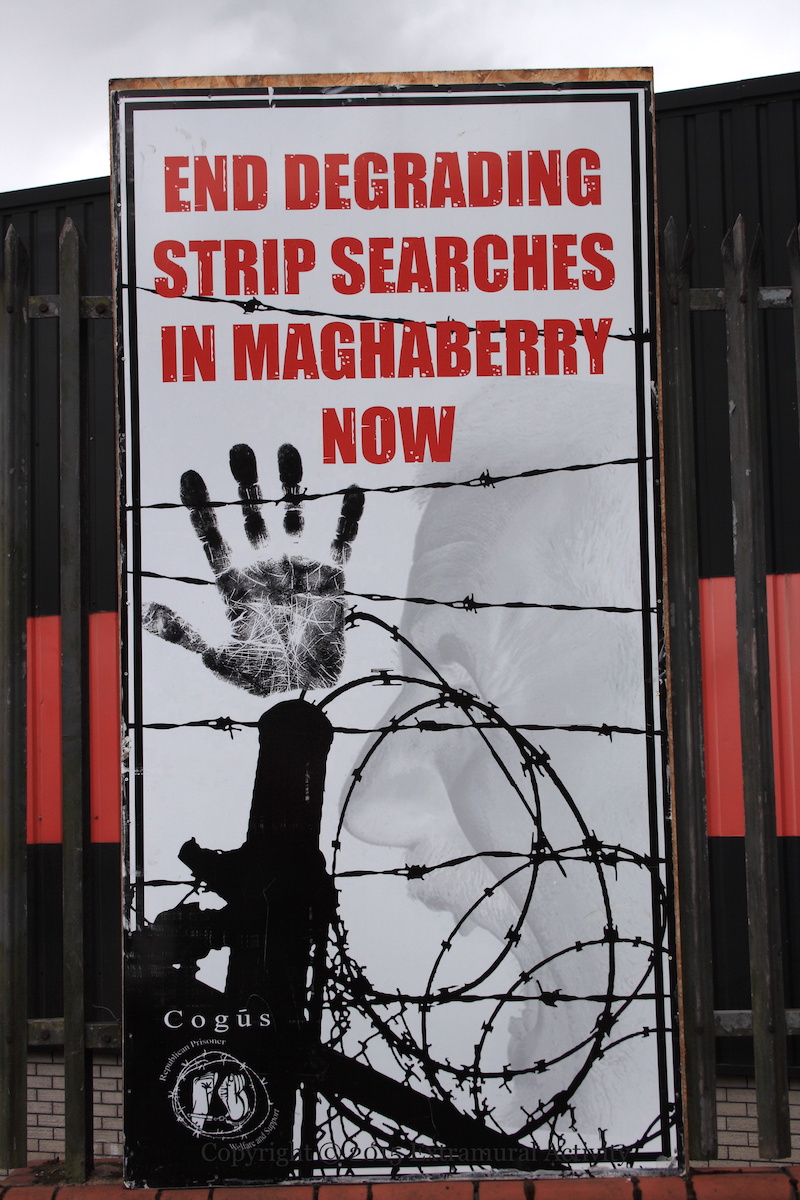
“End degrading strip searches in Maghaberry now”. Cogús (Fb) is the RNU’s ‘Republican Prisoner Welfare And Support’ association.

The board on the Oldpark Road, north Belfast.

Click image to enlarge
Copyright © 2015 Seosamh Mac Coılle
X02463

Godfather Of The Israeli Army

2015-05-15 Patterson8+

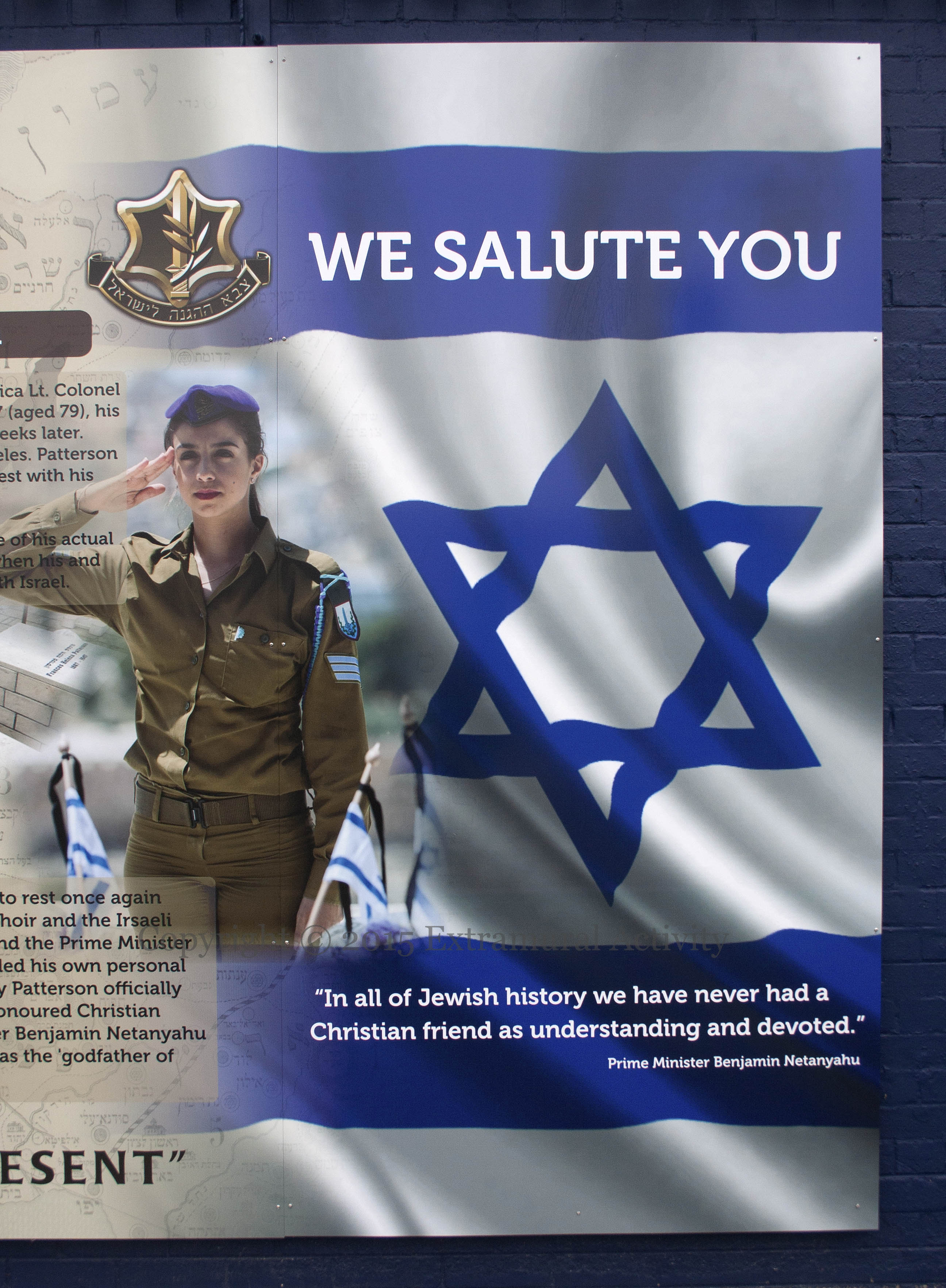
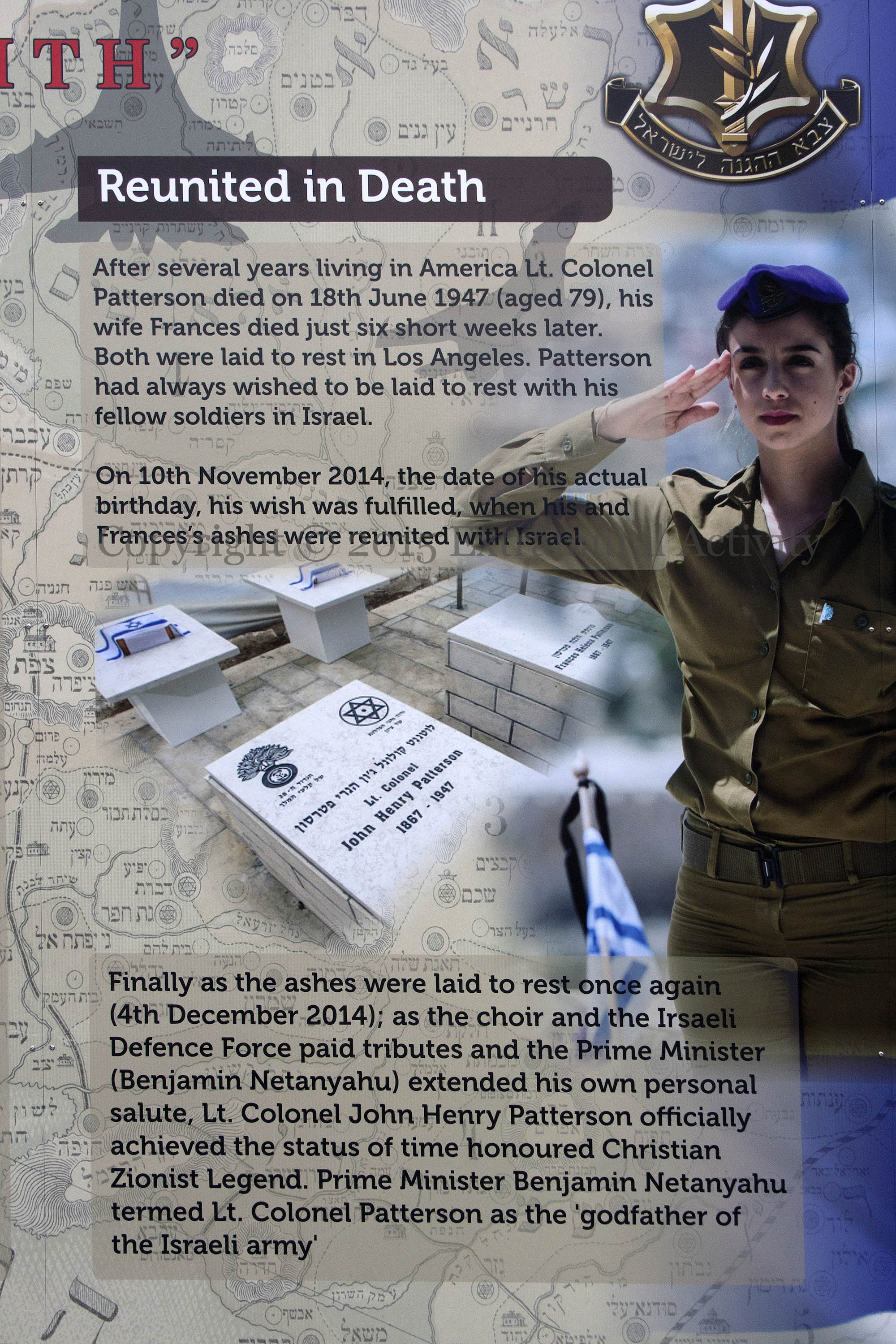
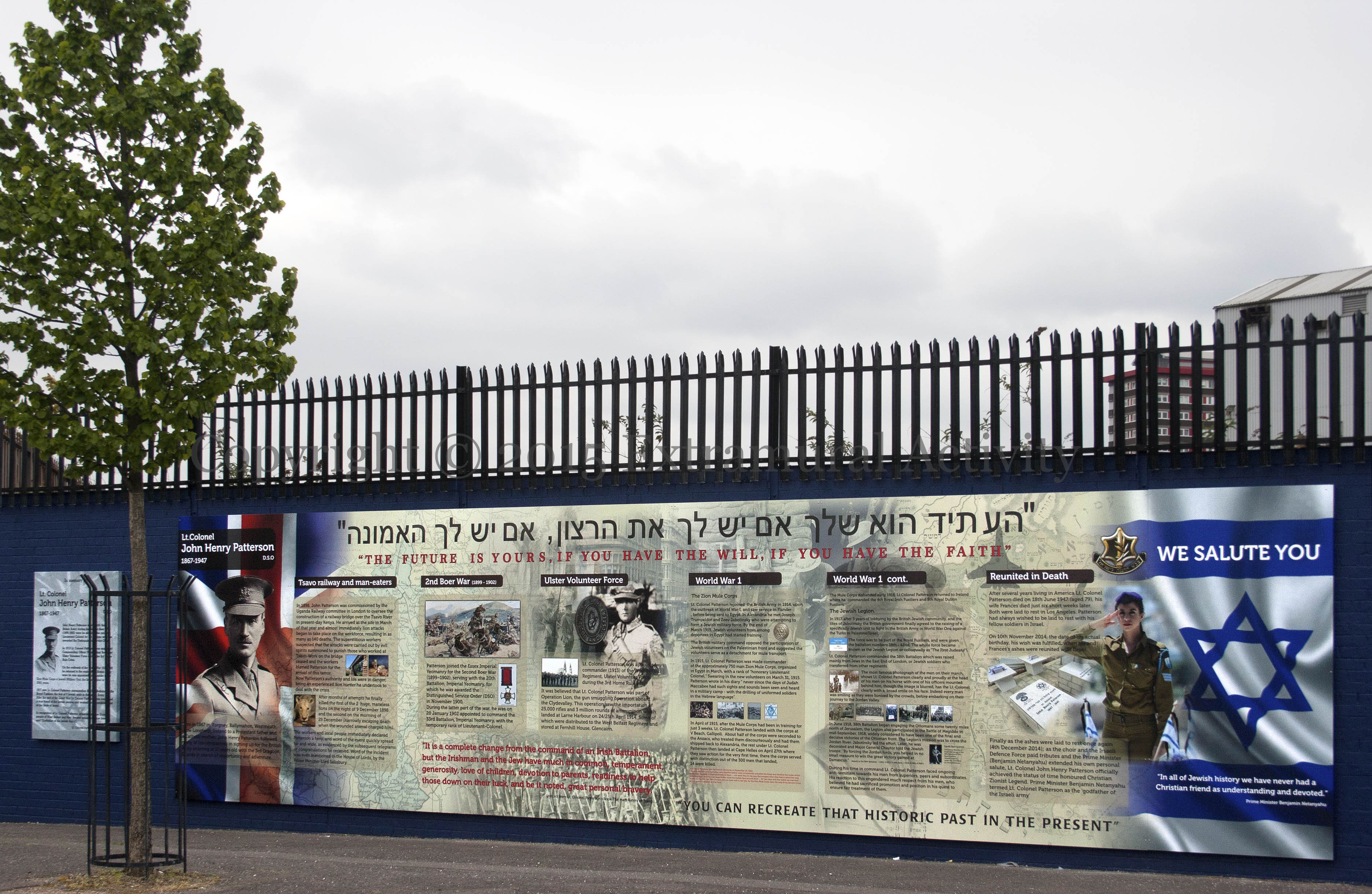
Here are panels 8, 5, 6, and 7 from the Patterson board featured yesterday. The final panel shows the star of David and a quote from Prime Minister Benjamin Netanyahu: “In all of Jewish history we have never had a Christian friend as understanding and devoted.” The interim panels described Patterson’s raising and leading of the Jewish battalions of the Royal Fusiliers in WWI. After dying in obscurity in Los Angeles in 1947, his remains were transported to Israel in December 2014 and reinterred (video). For more, including a recording of Patterson’s voice, see this BBC Magazine article.

Video of the launch:

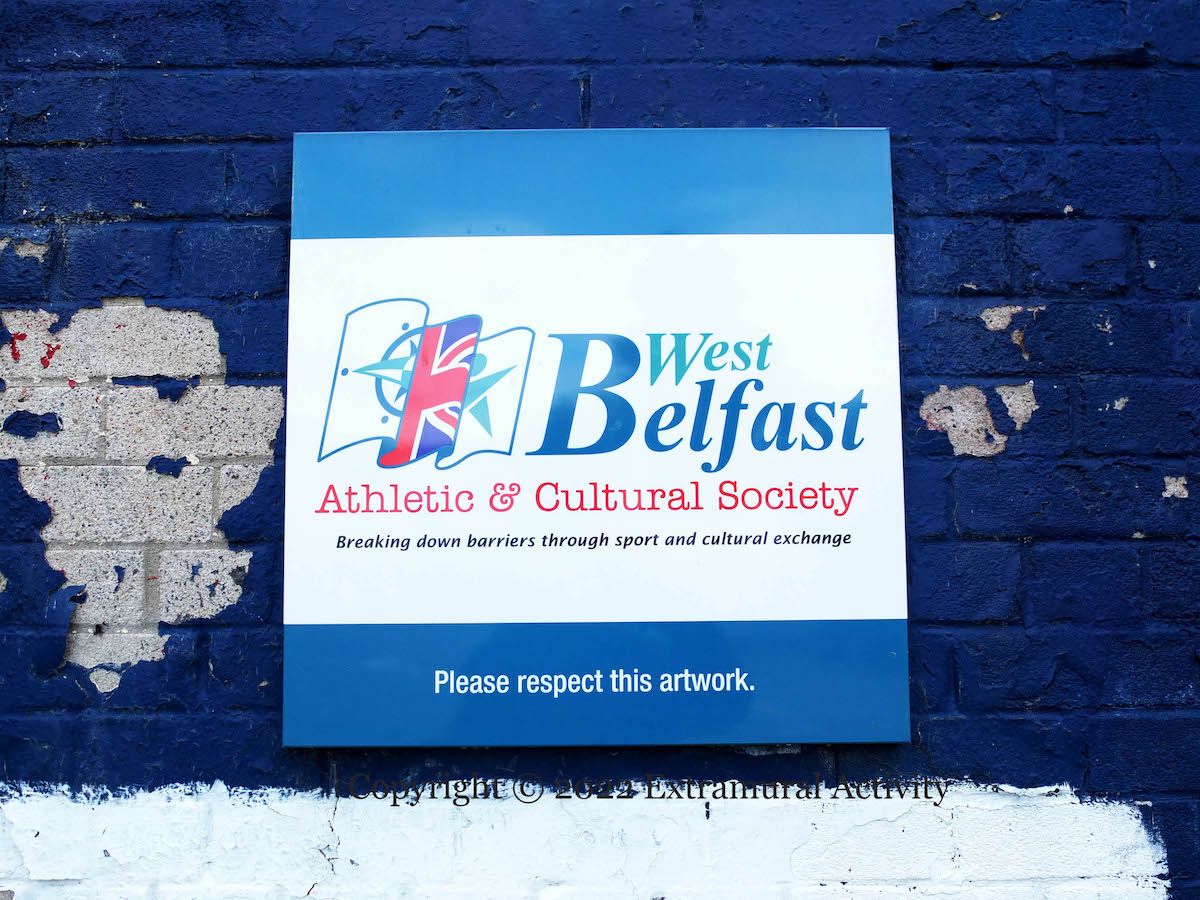
The plaque to the right asks viewers to “please respect this artwork” but a fire was set below it in 2016; see Where Is The Reconciliation?

2015-05-15 Patterson5+

2015-05-15 Patterson6+

2015-05-15 Patterson7+

2015-05-15 PattersonFull+

X11329 2022-08-06 Patterson WBACS info+

Click image to enlarge
Copyright © 2015 Seosamh Mac Coılle
X02621 X02618 X02619 X02620 X02622
Copyright © 2022 Extramural Activity
X11329
“The Zion Mule Corps. Lt. Colonel Patterson rejoined the British Army in 1914, upon the outbreak of World War I, and saw service in Flander[s] before being sent to Egypt. In Alexandria he met Joseph Trumpeldor and Zeev Jabotinsky who were attempting to form a Jewish military force. By the end March 1915, Jewish volunteers from among deportees in Egypt had started training. The British military command opposed to participation of Jewish volunteers on the Palestinian front and suggested the volunteers serve as a detachment for mule transport. In 1915, Lt. Colonel Patterson was made commander of the approximately 750 man Zion Mule Corps, organized in Egypt in March, with a rank of “honorary Lieutenant Colonel.” Swearing in the new volunteers on March 31, 1915. Patterson wrote in his diary “never since the days of Judah Maccabee had such sights and sounds been seen and heard in a military camp – with the drilling of uniformed soldiers in the Hebrew language”. In April of 1915, after the Mule Corps had been in training for just 3 weeks, Lt. Colonel Patterson  landed with the corps at V Beach, Gallipoli. About half of the corps were seconded to the Anzacs, who treated them discourteously and had them shipped back to Alexandria, the rest under Lt. Colonel Patterson then landed at Cape Helles on April 27th where they saw action for the very first time, there the corps served with distinction out of the 300 men that landed, 14 were killed.” 
“The Mule Corps disbanded in early 1916, Lt. Colonel Patterson returned to Ireland where he commanded the 4th Royal Irish Fusiliers and 5th Royal Dublin Fusiliers. In 1917, after 3 years of lobbying by the British Jewish community, and the likes Jabotinsky the British government finally agreed to the raising of a specifically Jewish unit to fight in the British Army in World War One against the Turks in Palestine/Israel. The force was to be part of the Royal Fusiliers and were given the battalion numbers 38th-42nd. The whole force became known as the Jewish Legion or colloquially as “The First Judeans” The most famous photograph of the men on their march shows Lt. Colonel Patterson clearly and proudly at the head of his men on his horse with one of his offices mounted behind him though the image is blurred has the Lt. Colonel clearly with a broad smile on his face. Indeed every man was smiling as they were lionised by the crowds before embarking on their journey to the Jordan Valley. In June 1918 38th Battalion began engaging the Ottomans some twenty miles north of Jerusalem the Legion also participated in the Battle of Megiddo in mid-September  1918 widely considered to have been one of the final and decisive victories of the Ottoman front. The legion’s mission was to cross the Jordan river. Jabotinsky led the effort. Later he was decorated and Major General Chaytor told the Jewish troops “By forcing the Jordan fords, you helped in no small measure to win the great victory gained at Damascus. During his time in command Lt. Colonel Patterson faced ongoing anti-semitism from superiors, peers and subordinates. His reaction to this engendered much respect from his men, who believed he had sacrificed promotion and position in his quest to ensure fair treatment of them.”
“After several years living in American Lt Colonel Patterson died on 18th June 1947 (aged 79), his wife Frances died just six short weeks later. Both were laid to rest in Los Angeles. Patterson had always wished to be laid to rest with his with fellow soldiers in Israel. On 10th November 2014, the date of his actual birthday, his wish was fulfilled, when his and Frances’s ashes were reunited with Israel. Finally as the ashes were laid to rest once again (4th December 2014); as the choir and the Israeli Defence Force paid tributes and the Prime Minister (Benjamin Netanyahu) extended his own personal salute, Lt. Colonel John Henry Patterson officially achieved the status of time honoured Christian Zionist Legend. Prime Minister Benjamin Netanyahu termed Lt. Colonel Patterson as the ‘godfather of the Israeli army’. 
historic past in the present future is yours if you have the will faith david ben-gurion we salute you

Operation Lion

2015-05-15 Patterson1+

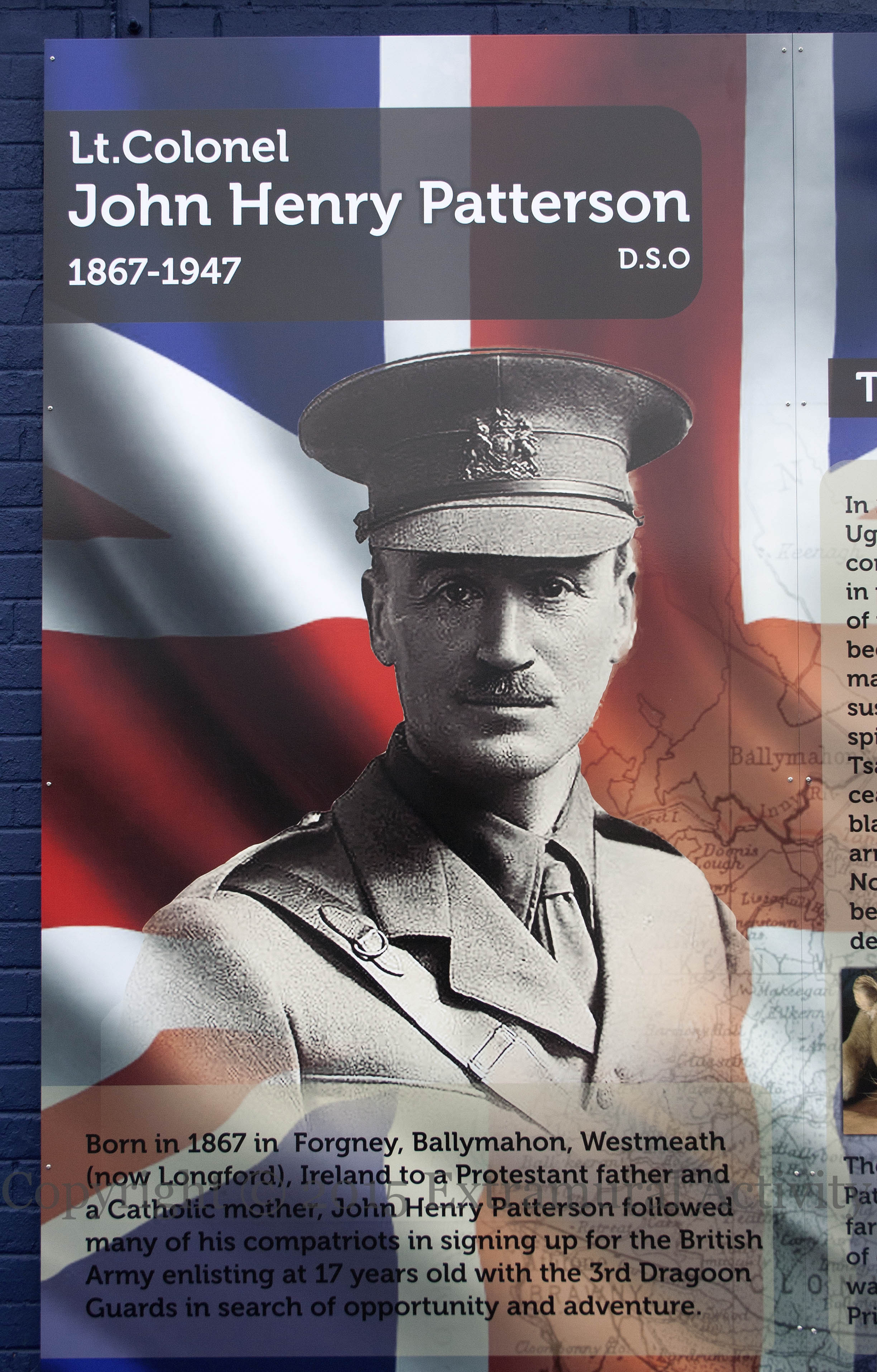
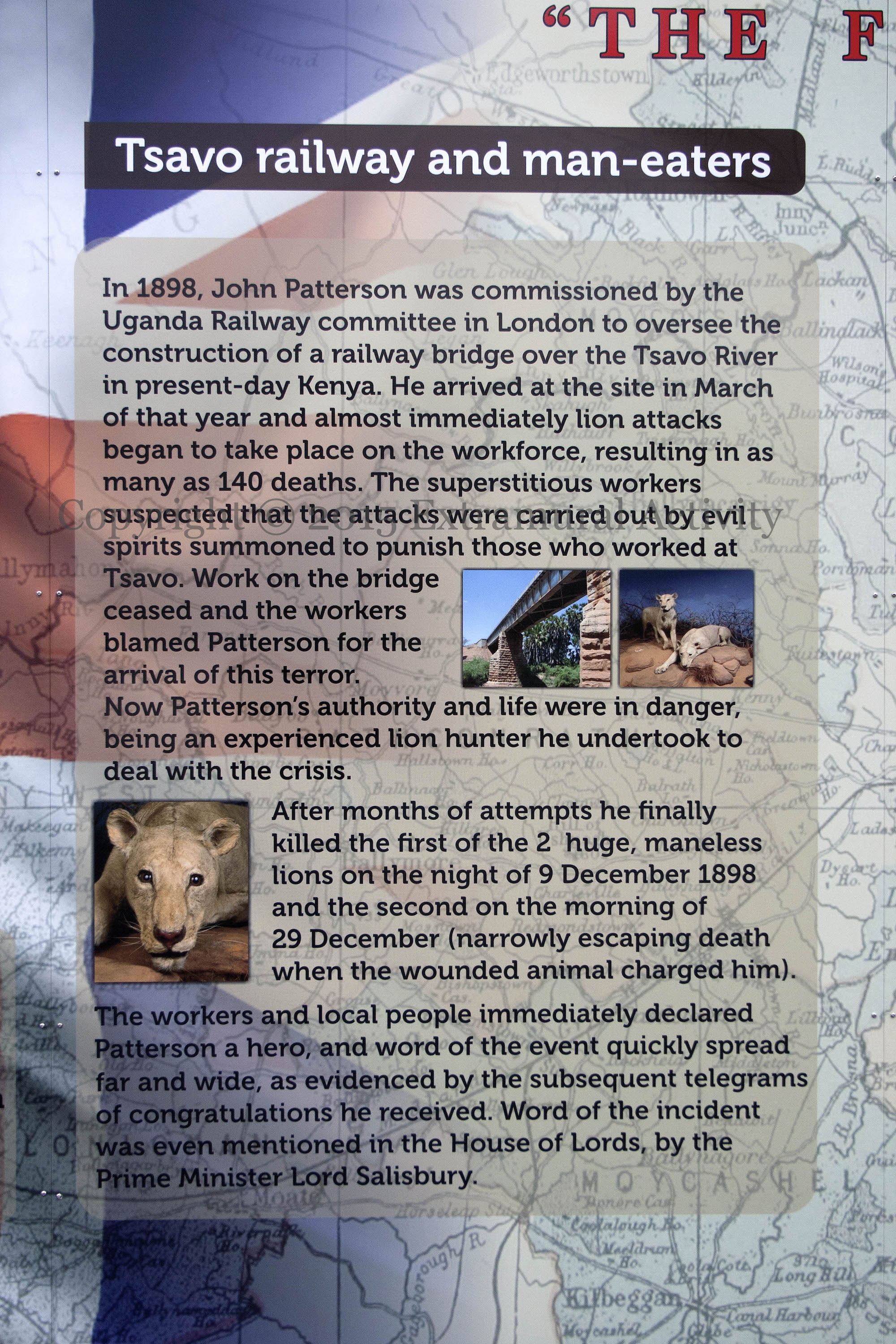
Here are the first four of eight images (plus one wide shot) of the new Patterson memorial at the junction of Northumberland and Beverly Streets. As the text on the board describes, Patterson went from Ireland to Kenya, where he killed several lions after months of hunting. He wrote an account of the hunt ‘The Man-Eaters of Tsavo’ which has inspired three movies; the lions, named The Ghost and The Darkness, were both over nine feet in length. Back in Ireland he commanded a battalion of the UVF and was involved in the Larne gun-running of 1914: Operation Lion.
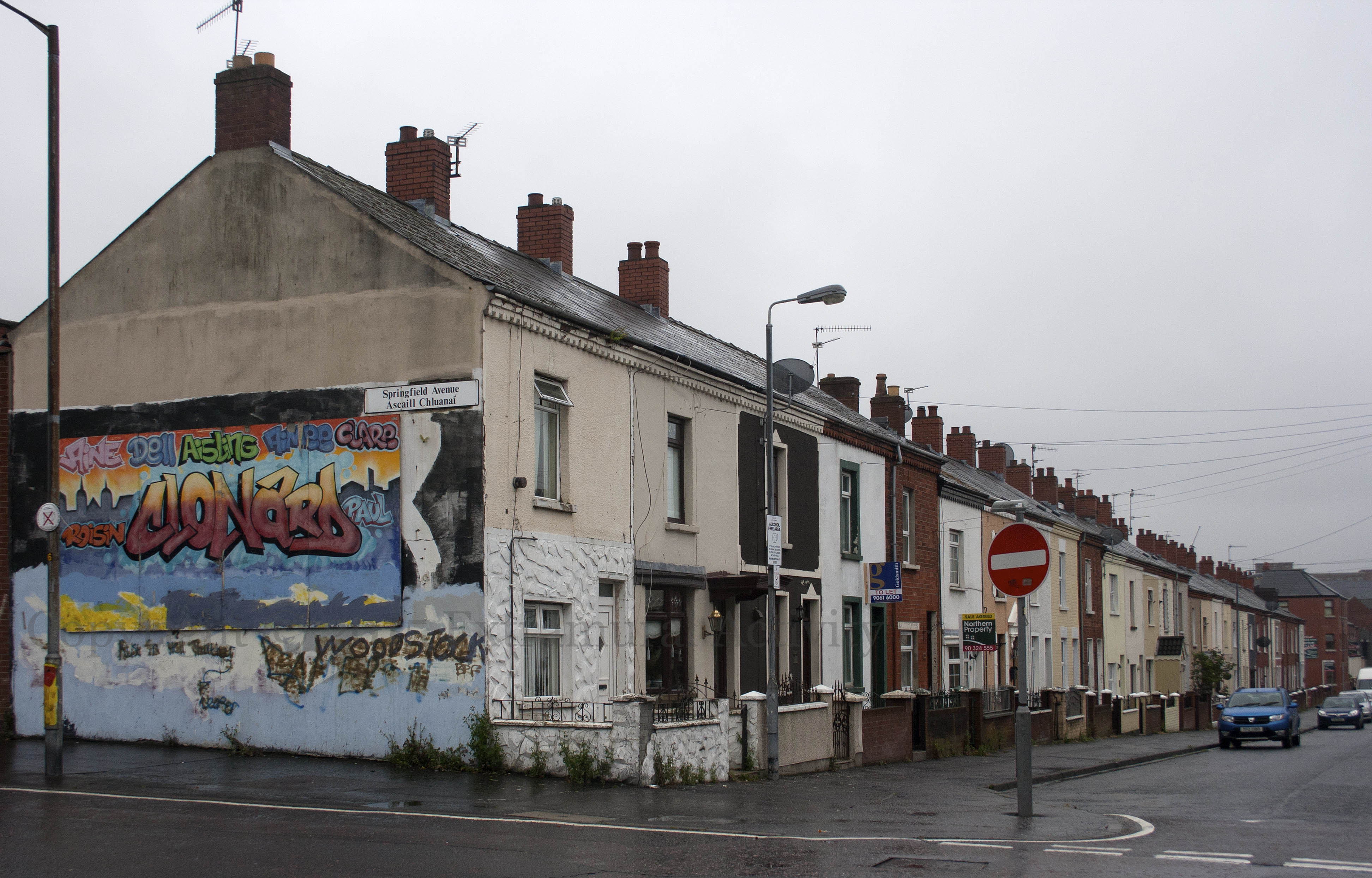
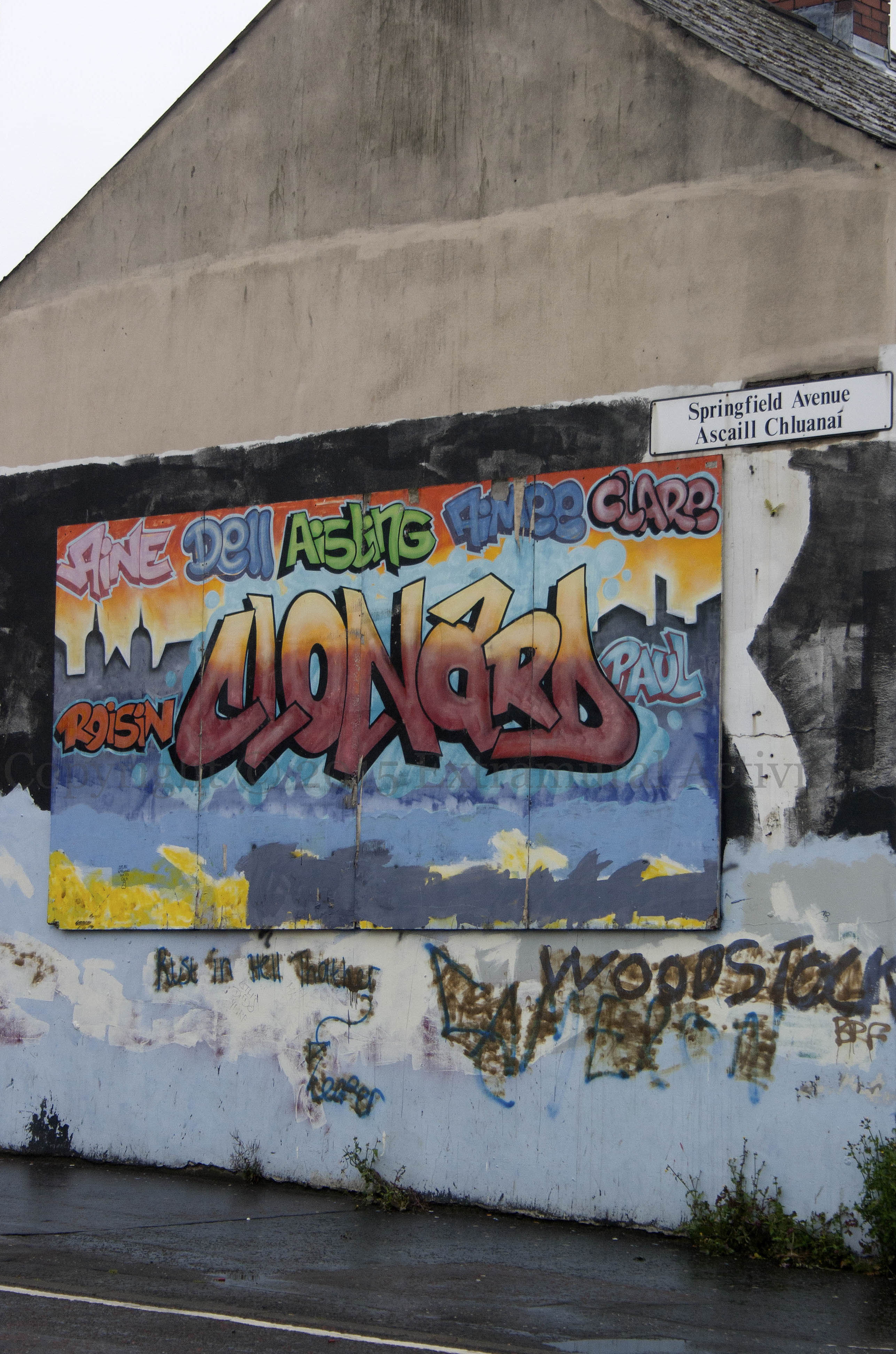
Updated with an image of the info board about the board, with Polish colours (see previously Dumnie Pamiętane I Nigdy Nie Zapomniane)

2015-05-15 Patterson2+

2015-05-15 Patterson3+

2015-05-15 Patterson4+

2015-05-15 PattersonWide+

X11330 2022-08-06 Patterson Polish+

Click image to enlarge
Copyright © 2015 Seosamh Mac Coılle
X02614 X02615 X02616 X02617 X02623
2022 X11330
“John Henry Patterson DSO 1867-1947. Born in 1867 in Forgney, Ballymahon, Westmeath (now Longford), Ireland to a Protestant father and a Catholic mother, John Henry Patterson followed many of his compatriots in signing up for the British Army enlisting at 17 years old with the 3rd Dragoon Guards in search of opportunity and adventure.” 
“In 1898, John Patterson was commissioned by the Uganda Railway committee in London to oversee the construction of a railway bridge of the Tsavo River in present-day Kenya. He arrived at the site in March of that year and almost immediately lion attacks began to take place on the workforce, resulting in as many as 140 deaths. The superstitious workers suspected that the attacks were carried out by evil spirits summoned to punish those who worked at Tsavo. Work on the bridge ceased and the workers blamed Patterson for the arrival of this terror. Now Patterson’s authority and life were in danger, being an experienced lion hunter he undertook to deal with the crisis. After months of attempts he finally killed the first of the 2 huge, maneless lions on the night of 9 December 1898 and the second on the morning of 29 December (narrowly escaping death when the wounded animal charged him). The workers and local people immediately declared Patterson a hero, and word of the event quickly spread far and wide, as evidenced by the subsequent telegrams of congratulations he received. Word of the incident was even mentioned in the House of Lords, by the Prime Minister Lord Salisbury.” 
“Patterson joined the Essex Imperial Yeomanry for the Second Boer War (1899-1902), serving with the 20th Battalion, Imperial Yeomanry, for which he was awarded the Distinguished Service Order (DSO) in November 1900. During the latter part of the war, he was on 20 January 1902 appointed to command the 33rd Battalion, Imperial Yeomanry, with the temporary rank of Lieutenant-Colonel. Lt. Colonel Patterson was appointed commander (1913) of the West Belfast Regiment, Ulster Volunteer Force during the 3rd Home Rule Bill. It was believed that Lt. Colonel Patterson was part of Operation Lion, the gun smuggling operation aboard the Clydevalley. This operation saw the importation of 25,000 rifles and 3 million rounds of ammunition which landed at Larne Harbour on 24/25th April 1914. Some of which were distributed to the West Belfast Regiment and stored at Fernhill House, Glencairn.”

Roads Through Life

14 05 06 North7Children+

“Pathways through childhood – Sweet childish that were as long as twenty days are now.” The good old days in south Belfast and its streets are remembered in these three panels from the Donegall Road railway bridge.

“Sam Boyd, 1907-1984 – the man with poetry in his soul.” “South Belfast folk poet.”

The “Streets of dreams”, some of them no longer in existence, are: Coolderry, Coolbeg, Coolfin, Fortuna, Egeria, Daphine, Pandora, Euterpe, Thalia, Coolmore, Abingdon, Colchester, Barrington, Empire, Maldon, Utility, Rydalmere, Rockland, Kitchener, Nubia, Soudan, Kilburn, Benburb, Ebor, Lecale, Moltke, Roden, Tavanagh, Rockview, Monarch Parade, Donegall Avenue.

These are seventh, eighth, and tenth panels on the north side of the bridge; for the other panels on this (north) side of the road, see also:

The Harvest of Love (1 & 9)
Those Days Are Over (2)
A Woman’s Place Is Everywhere (3)
The Thread Of History (4)
For Me There Will Be No More War (5)
In The Wars (6)
Roads Through Life (7, 8, 10)

X01842 2014-05-06 North8SamBoyd+

14 05 06 North10Streets+

Click image to enlarge
Copyright © 2014 Seosamh Mac Coılle
X01841 X01834 X01842

Operation Banner

2015-05-21 CharlesVisit1+

Charles, Prince Of Wales, Duke Of Rothesay, Duke Of Cornwall, and heir to the British throne, concludes a four-day visit to Ireland north and south today with a tour of Corrymeela peace and reconciliation centre. He is also colonel-in-chief of the Parachute Regiment (the Paras) which served in Northern Ireland from 1969 to 2007. Flyers have appeared protesting the visit (see the two images below), and The Rebels Rest on the Falls road is flying the banner shown above: “Fund communities, not royal visits – éırígí.org”. Éırígí also produced a video in memory of some of those killed by the Regiment during its time in Northern Ireland.

The Sınn Féın board to the left is from their campaign to extend voting in the Irish Presidential election to the north: “Vótaí do gach saoránach Éireannach”, “Paul Maskey supports #pres4all – Uachtarán do chách/President for all”

2015-05-21 CharlesVisit2+

2015-05-21 CharlesVisit3+

Click image to enlarge
Copyright © 2015 Seosamh Mac Coılle
X02629 X02630 X02631 votes remember the real victims oppose vigil wed 20th may 2015 7.15 pm