The Dividing Wall Between Us

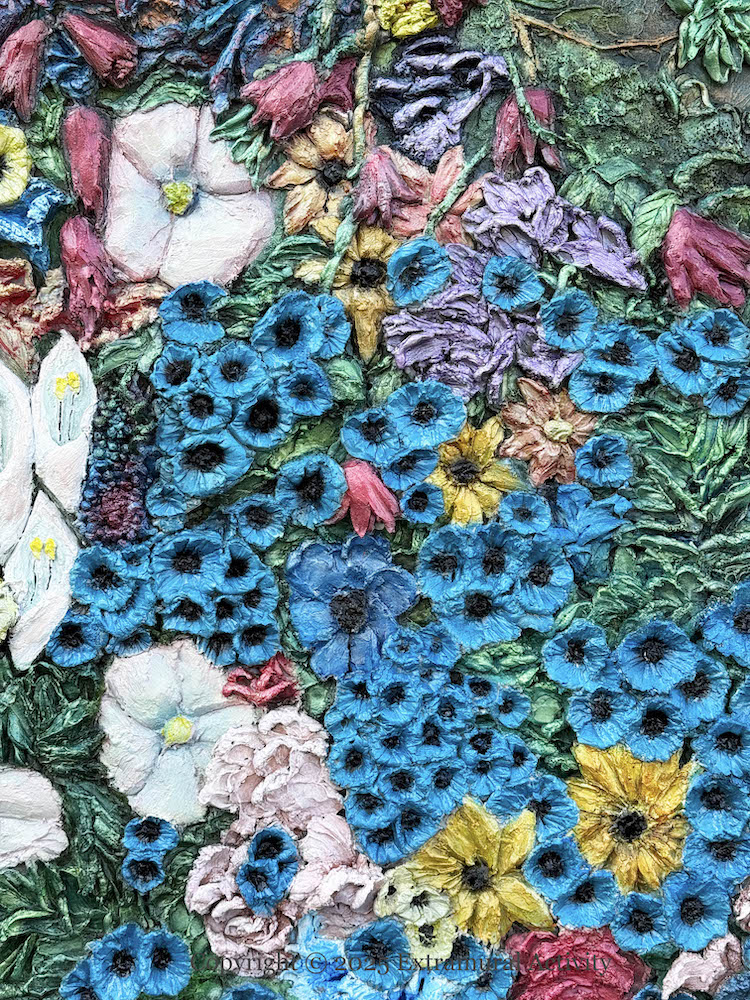
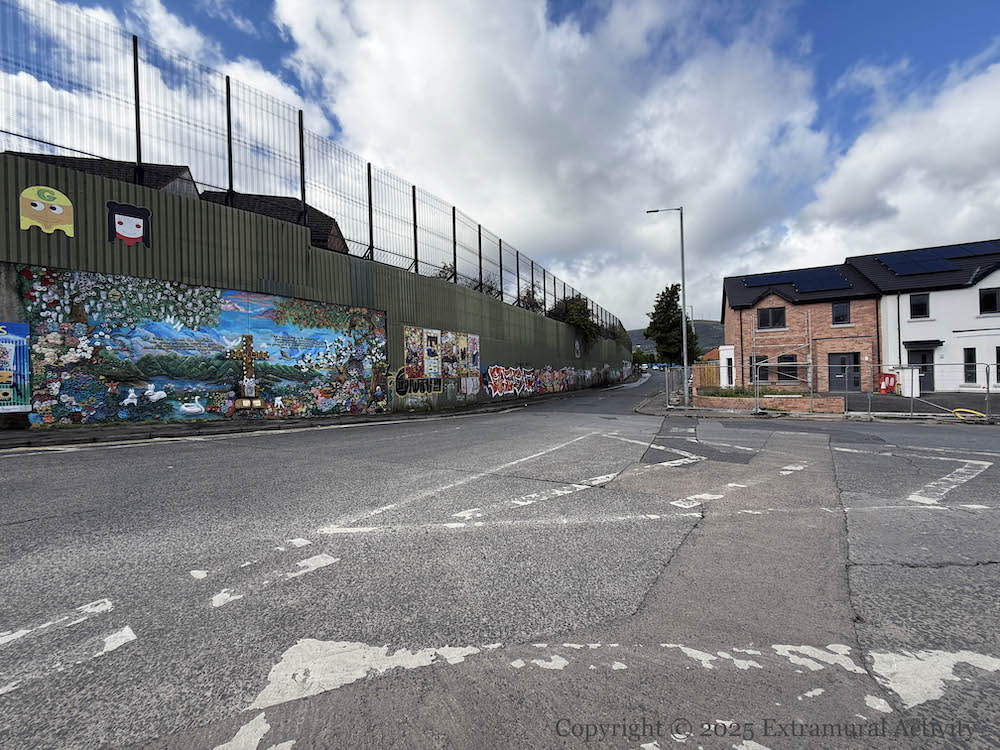
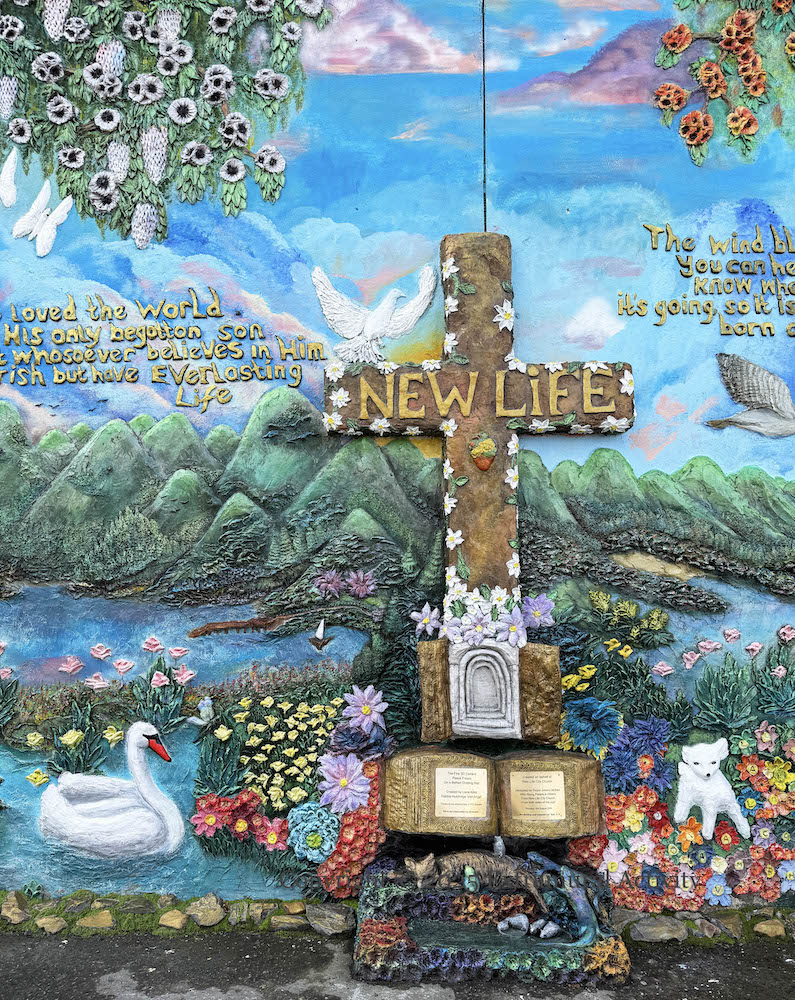
Work on the “New Life” (New Life City church – Fb) concrete relief on the Cupar Way “peace” line (war wall) at the North Howard Street gates has been completed – with brightly coloured paints and a pair of plaques below the cross that read “The first 3D cement peace fresco on a Belfast dividing wall. Created by local artist Debbie Hutchings ‘Irish Angel’. The for the amazing help of ECC Builders. Created on behalf of New Life City Church. Dedicated by Pastor Johnny McKee with young people & others from New Life City Church from both sides of the wall. Thursday 14th August 2025. ‘He is our peace who has destroyed the dividing wall between us’ Eph. 2.14.”

The creator is Debbie Hutchings, a member of the New Life City church (Fb) (Belfast Media); the piece is on top of the ‘repent’ version of the New Life mural, and it contains scriptural quotations from John 3:16: “For God so loved the world He gave His only begotton [begotten] son so that whosoever believes in Him should not perish but have everlasting life.” and John 3:8: “The wind blows as it chooses, you can hear it’s [its] sound but you do not know where it came from or where it is going; so it is with the hearts of those born of the spirit”. There is video of Hutchings at work in this Irish News video on Fb and at the BelTel.

Work began at the beginning of April; there are in-progress images below from July 1st and May 1st.

For the board to the left, see Hope Unlocking Friendships.
July 1st:

May 1st:

Click image to enlarge
Copyright © 2025 Seosamh Mac Coılle
X15750c X15751 X15752 X15753 X15754 X15755 X15756 X15757 X15758
[X15650] X15651
X15391 [X15392] X15393

Óglach Bobby Sands

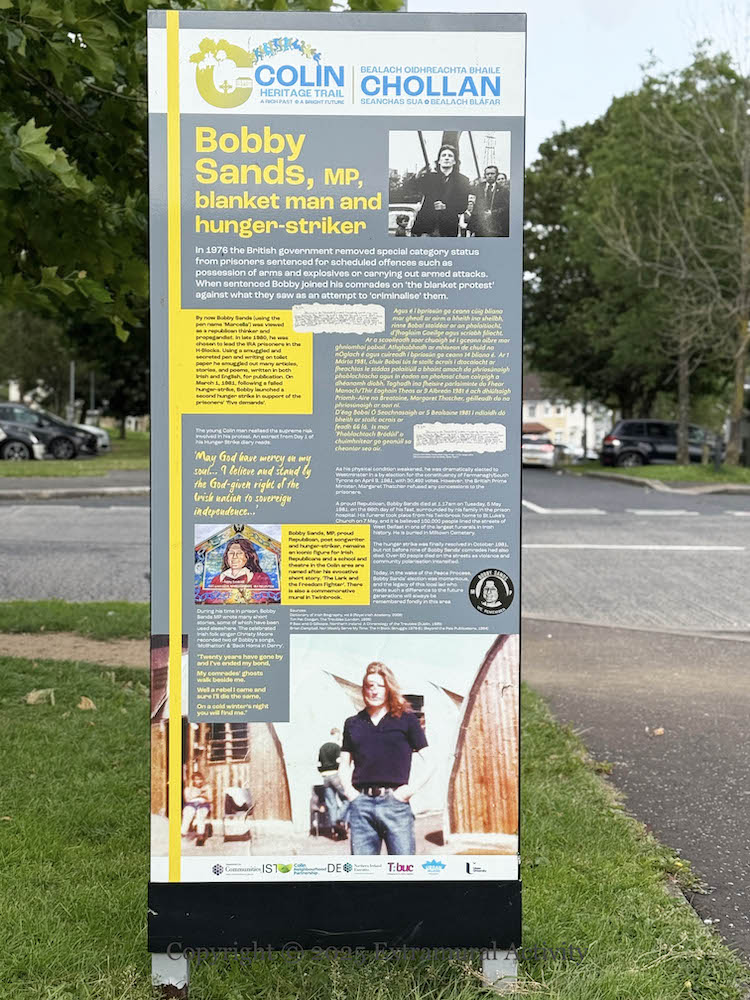
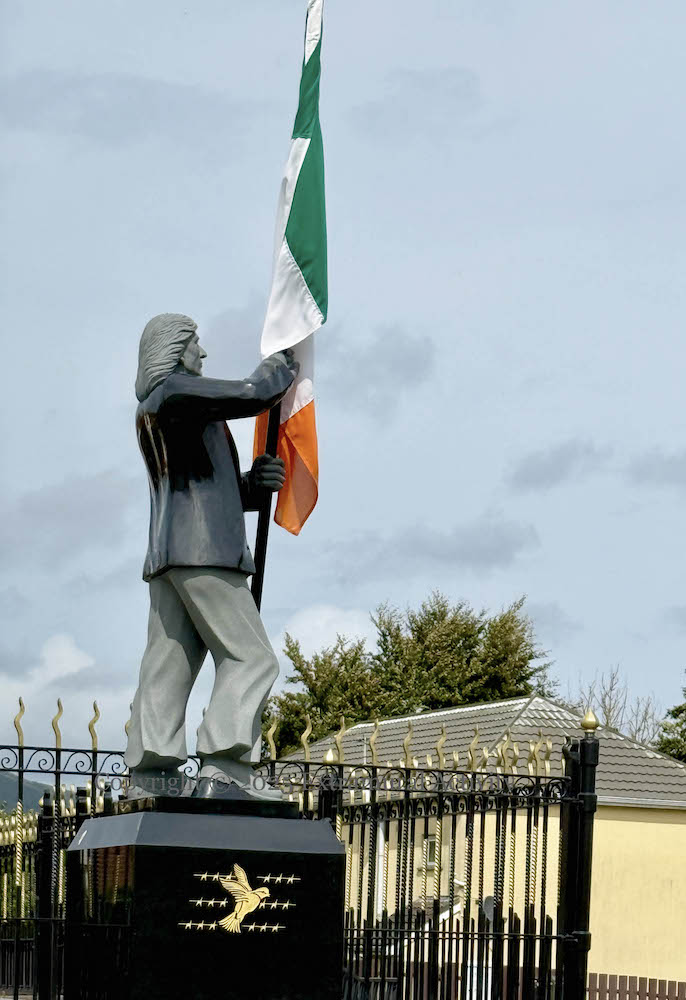
“Óglach Bobby Sands 9th March 1954 – 5th May 1981”. Sands was the first of the ten IRA and INLA prisoners to die in the second hunger strike. For the 44th anniversary of his death, a statue was unveiled in Twinbrook, near the Sands family home and next to the memorial garden in Gardenmore Road (Peter Moloney Collection).

The statue was created by Packy Adams (Belfast Media | Irish News) and appears to be based on the photographs by Gérard Harlay – discovered in 2019 – of Sands carrying a United Irishmen flag in a march that took place a few months before his (final) arrest in 1976 (Bobby Sands Trust). The hair is also reminiscent of Wolfe Tone. The new statue (which does not have planning permission) has a built-in flag-pole, to which an Irish Tricolour was added for the launch on May 4th.

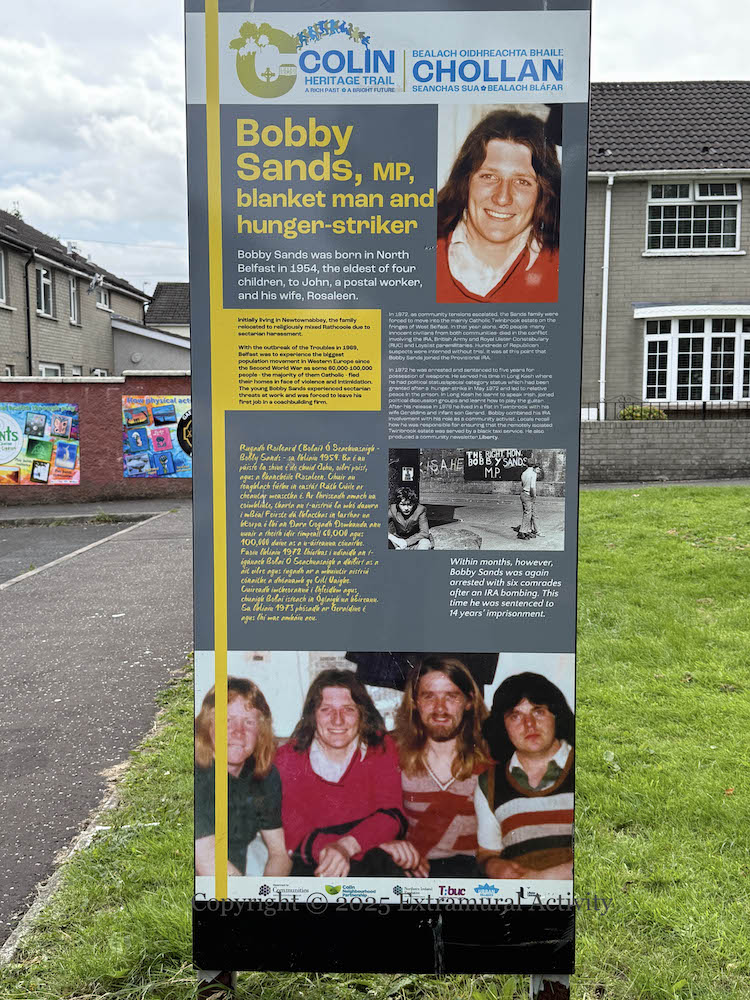
There is also a free-standing information board about Sands at the other end of Jasmine Corner, part of the Colin Heritage Trail.

Click image to enlarge
Copyright © 2025 Seosamh Mac Coılle
X15679 X15677 X15678 X15385
X15687 X15688

My Lady Of Chimney Corner

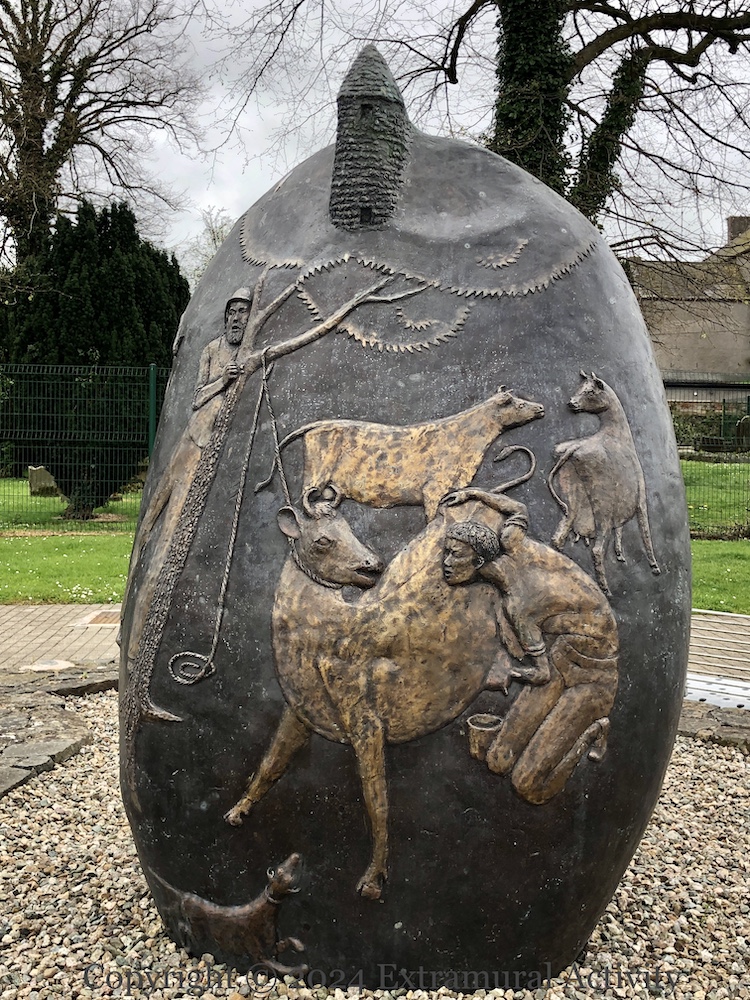
Sculptor Anna Cheyne (WP) produced the piece ‘My Lady Of The Chimney-Corner’ for Antrim Council in 1998, inspired by the domestic and farming scenes in the 1913 book of the same name by Antrim native Alexander Irvine. The book is subtitled “A story of love and poverty in Irish peasant life” – Irvine’s parents were in a mixed marriage. (You can read the book at Project Gutenberg or at Google Books).

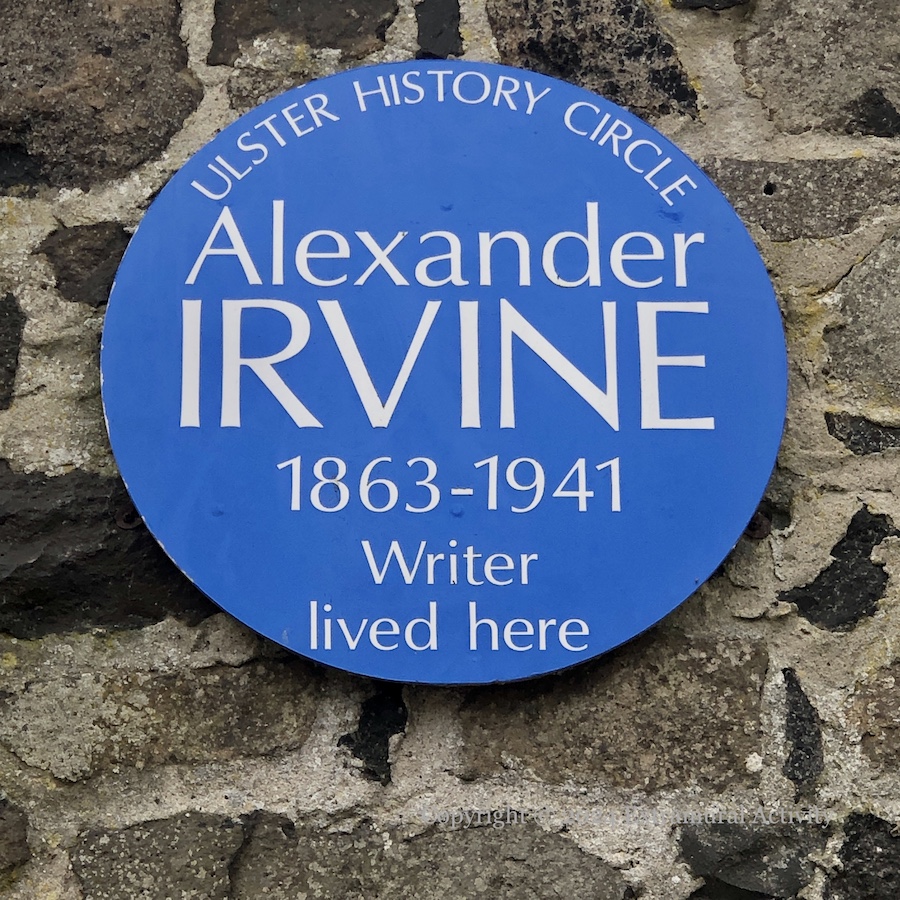
For more information on Irvine and the mural next to his Pogue’s Entry home (which is also the location of the blue plaque, below), see A Tale Of Ireland.

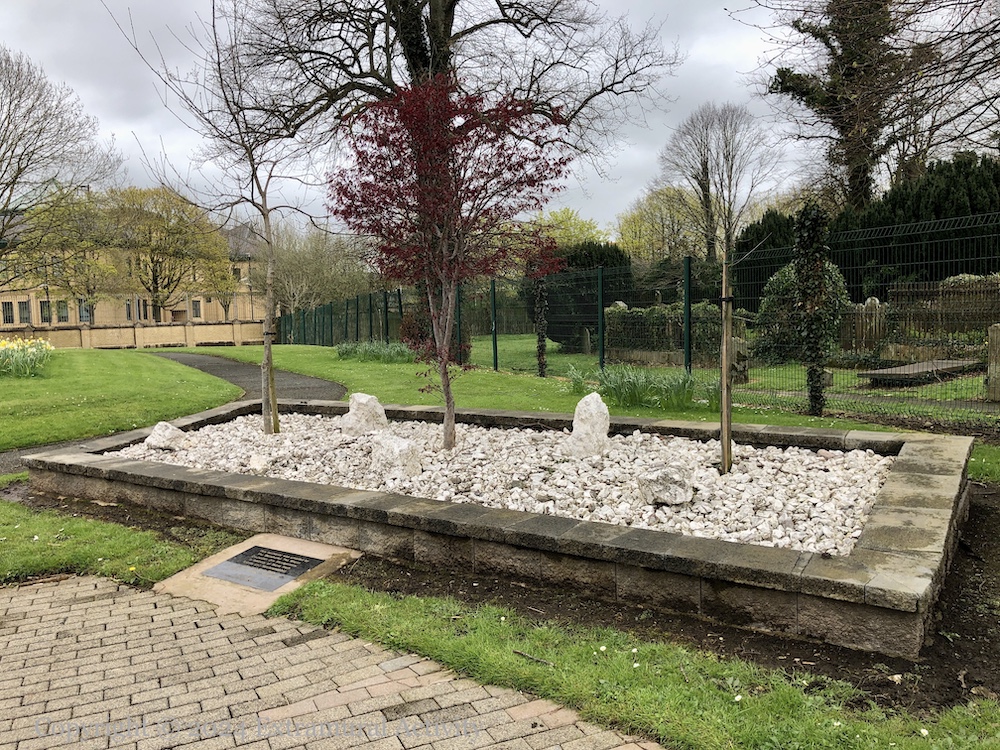
The two sides of Cheyne’s sculpture are shown above and immediately below. ‘Alexander Irvine Park’ is also home to a memorial garden to the victims of the covid-19 pandemic in the park – see the final two images, below. (A similar garden was installed at the Whiteabbey/Jordanstown foreshore.)

Click image to enlarge
Copyright © 2024 Seosamh Mac Coılle
X014967 X14966 X14968 X14969

Am I Not A Woman And A Sister?

In this new statue in the grounds of Belfast city hall, Mary Ann McCracken is shown handing out abolitionist leaflets with a pleading enslaved woman above the words “Am I not a woman and a sister?” The same supplicant image is on the medallion (perhaps made by Wedgwood for the Society For The Abolition Of The Slave Trade – WP) worn at her throat. See also: The Blots On The Page Are So Black and The World Affords No Enjoyment Equal To That Of Promoting The Happiness Of Others.

“Mary Ann McCracken’s feminist ideals and commitment to the principles of Equality, Liberty, Fraternity applying equally to the Rights of Woman defined her participation in the United Irish Movement.” For McCracken’s connection to the 1798 Rebellion, see These Are Times That Try Men’s Souls.

“Mary Ann McCracken (1770-1866) Abolitionist, educator, social reformer and businesswoman. Sheas Mary Ann an fód ar son na mbocht, na mban, na bpáıstí agus ar son sıúd a bhí faoi dhaoırse. [Mary Ann stood up for the poor, women, children, and for those who were enslaved.]”

The statue was unveiled together with a statue to Winifred Carney on International Women’s Day (March 8th); they were produced by Ralf and Naomi Sander (BCC).

Click image to enlarge
Copyright © 2024 Seosamh Mac Coılle
X14876 [X14877] X14878 X14879

Our Toiling Sisters

A statue to Winifred Carney was unveiled, along with another to Mary Ann McCracken, in the grounds of Belfast City Hall on Friday, March 8th (BCC). At her left hand is a typewriter. Carney was a qualified secretary and typist, and became secretary of the Irish Textile Workers’ Union in 1912, in which position she met James Connolly, who was secretary of the Belfast branch of the ITGWU. The 1913 manifesto addressed ‘To The Linen Slaves Of Belfast’ (marxists.org), exhorting “our toiling sisters” in the mills to join the organisation, was signed by Carney, Connolly, and Ellen Gordon.

Her uniform, and the amorphous pistol (or holster?) in her right hand, refer to her membership of Cumann Na mBan and participation in the Easter Rising of 1916. Carney was in the GPO when it was taken over and was among those who surrendered at the end; during the occupation she typed up dispatches from the Moore Street headquarters. A News Letter editorial described the statue as smuggling terrorists onto the grounds of city hall.

(DIB | Ulster Biography). (A Century Of Women | BBC | WP)

In the final image, Carney’s statue is shown with the statue of Unionist MP and lord mayor of Belfast Sir James Haslett in the background.

Carney is at the centre of the Ireland Of Equals mural in north Belfast. Antrim Road was renamed in her honour in 2015.

“Winifred Carney, born in Bangor, was a suffragist and a committed trade unionist. She was an organiser in the Irish Textile Workers’ Union and became James Connolly’s personal secretary, political confidante and friend. In 1913, She and Connolly wrote the Irish Textile Workers’ Union manifesto entitled ‘To the Linen Slaves of Belfast’. It was a time when Belfast workers, mostly women and children, were working long hours in horrific conditions, barefoot and hungry. “D’oıbrıgh Winnie ar son oıbrıthe Bhéal Feırste, go háırıthe ar son na mban agus na bpáıstí a bhíodh ag obaır sna muılte ar fud na cathrach. “Many Belfast mills are slaughterhouses for the women and penitentiaries for the children.” Chomh maıth leıs an obaır a rınne sí ar son na gceardchumann, ba Phoblachtánach í Winnie a bhí ına ball de Chumann na mBan agus d’Arm Cathartha na hÉıreann. As an officer in the Irish Citizen Army, Winnie was present with Connolly in the Dublin General Post Office during the 1916 Easter Rising and has since become known as ‘the typist with the Webley’. Carney stood as a Sınn Féın candidate in the 1918 elections, but in an ‘unwinnable’ seat. She retained her commitment to socialism and in 1924, Winifred joined the Northern Ireland Labour Party. Here she met her future husband, George McBride, like her a committed socialist. George was a Protestant from Shankill Road who fought at The Battle of the Somme with the 36th (Ulster) Division. Tá Winnie curtha ı Reılıg Bhaıle an Mhuılınn ar Bhóthar na bhFál ın ıarthar Bhéal Feırste.”

Click image to enlarge
Copyright © 2024 Seosamh Mac Coılle
X14884 [X14881]
X14880
X14882 [X14883]
X14885

For The Football

Before he died (in 2005), George Best asked that people “remember me for my football” and the phrase became the title of a Best retrospective. It is also inspired the life-size title of the statue of created by Tony Currie and funded by fans (Belfast Live) in front of Windsor Park (and the Glen Molly (ig) mural in Hill Street). When it was launched, the statue drew criticism for not looking like its subject (BBC | Newsletter). Soccer star sculptures are perhaps hard to do: here’s a list of ten questionable statues of soccer stars, including Maradona in Kolkata (Guardian) and Ronaldo in Madeira (BBC), but missing Mo Salah in Sharm al-Sheikh (BBC).

For an awkward painting of Best, see The Best A Man Can Get in Newtownards.

See also the new Best mural in Cregagh: Maradona Good, Pelé Better, George Best

Click image to enlarge
Copyright © 2022 Seosamh Mac Coılle
X09767 [X09765] X09770 X09768 X09769 X09763 X09941 X09764 [X09766]

Christmas In Prison

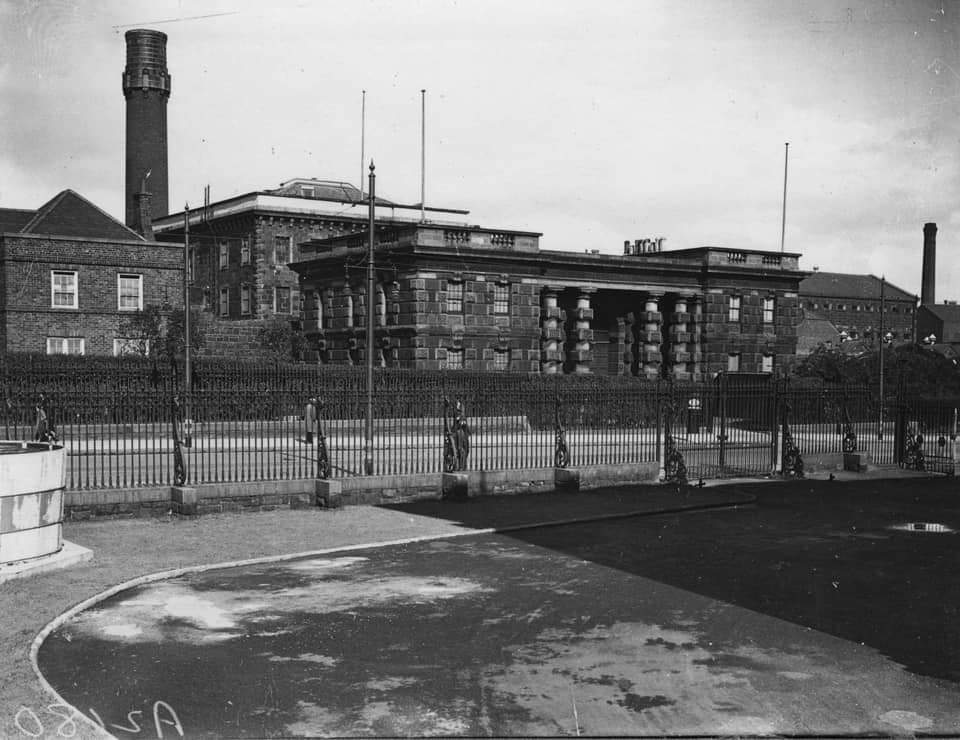
A crude engraving about the size of your hand found on the wall of the B-wing yard in Crumlin Road Gaol (now a tourist attraction and conference centre): a Celtic cross with knot-work and “Jim Keenan – Xmas 1942”.

Below is a picture of the gaol from September 15th, 1942, thirteen days after Tom Williams was hanged (see the plaque to his memory in Bombay Street).

Click image to enlarge
Copyright © 2022 Seosamh Mac Coılle
X10041

Rumbeke

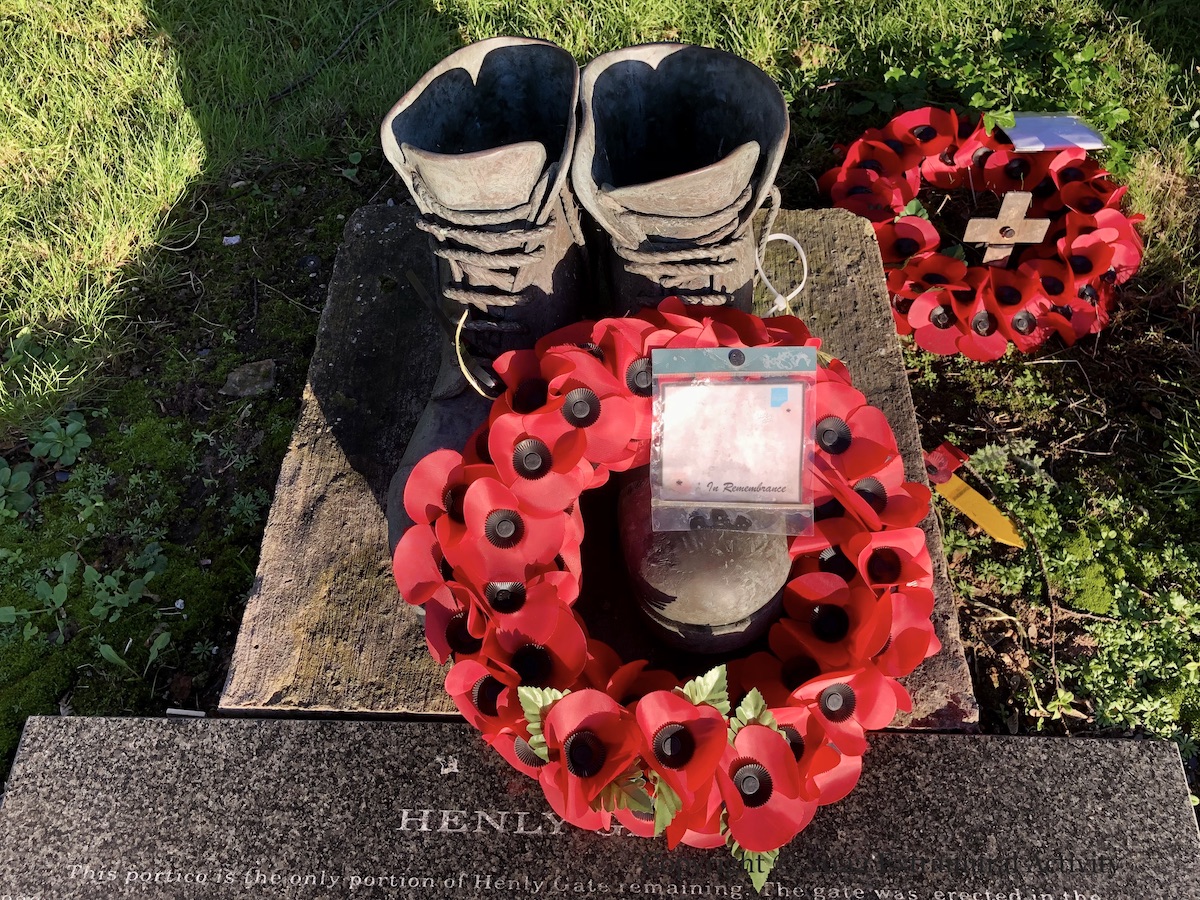
Five Belgian brigades trained in Northern Ireland towards the end of WWII, as the Belgian Army rebuilt itself after the liberation of Belgium in 1944 (WarTimeNI). The 3rd or ‘Rumbeke’ brigade was raised in March 1945 and trained in six south-east Antrim towns, including Carrickfergus, where they were stationed at Henly House. After training, it took part in the occupation of Germany for about six months (BE Brigades). The boots and plaque are beneath the arch of what was once Prospect House.

The text on the plaque reads in full: “Henly Gate. This portico is the only portion of the Henly Gate remaining. The gate was erected in the 1920s as a 21st birthday present to Gwen Henly who was the last owner of Prospect House Estate. Belgian 3rd Infantry Brigade “Rumbeke”. During WWII the Estate was commandeered for military purposes. Following the liberation in late 1944 it was agreed that Belgium would raise 5 Infantry Brigades which were to be trained in Northern Ireland. The 3rd Infantry Brigade “Rumbeke” was posted to Northern Ireland from March 1945. It was billeted around the Northern shore of Belfast Lough. The 2nd Battalion was located here at Prospect House. The Brigade trained for almost 6 months in this area before going on to take part in the occupation of Germany. Dedicated 5th November 2006 by the Borough of Carrickfergus.”

At the junction of Woodburn Road and Prospect Road, Carrickfergus.

Click image to enlarge
Copyright © 2022 Seosamh Mac Coılle
X08922 X08923 [X08924] X08925

The World Affords No Enjoyment Equal To That Of Promoting The Happiness Of Others

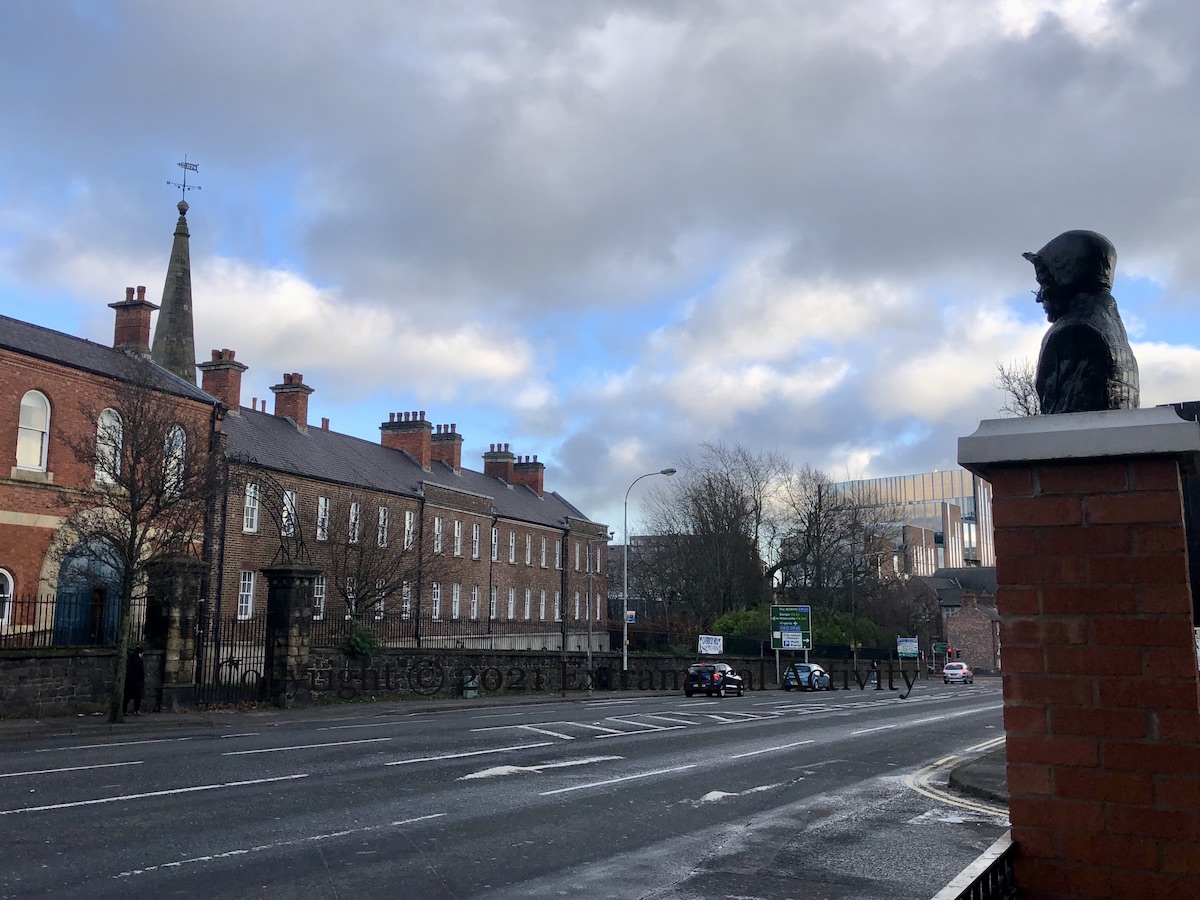
Mary Ann McCracken lived to the age of 96 (1770-1866) and over the course of that long life used her family prosperity and the success of her own muslin business to support various causes: these included the United Irishmen and her brother Henry Joy McCracken – whose illegitimate daughter Maria was taken in by Mary Ann after he was executed – and a long list of ‘social justice’ causes, including the abolition of slavery, the protection of working children, education for young children both male and female, women’s rights, and care for the destitute in Belfast – her uncles Henry and Robert had founded the Belfast Charitable Society and built a poorhouse on Clifton Street and Mary Ann served on the Ladies Committee (WP | NICVA). This new bust of Mary Ann McCracken looks towards Clifton House from Stanhope Street in Carrick Hill. (The bust was designed by Anto Brennan (Irish News), who also did the No Pasarán bust in Writer’s Square.) In the other direction, as shown below, can be seen the Divis tower block.

Click image to enlarge
Copyright © 2021 Seosamh Mac Coılle
X08810 [X08811] [X08812] [X08813] [X08814] X08815 [X08816] X08823

Be Not Afraid

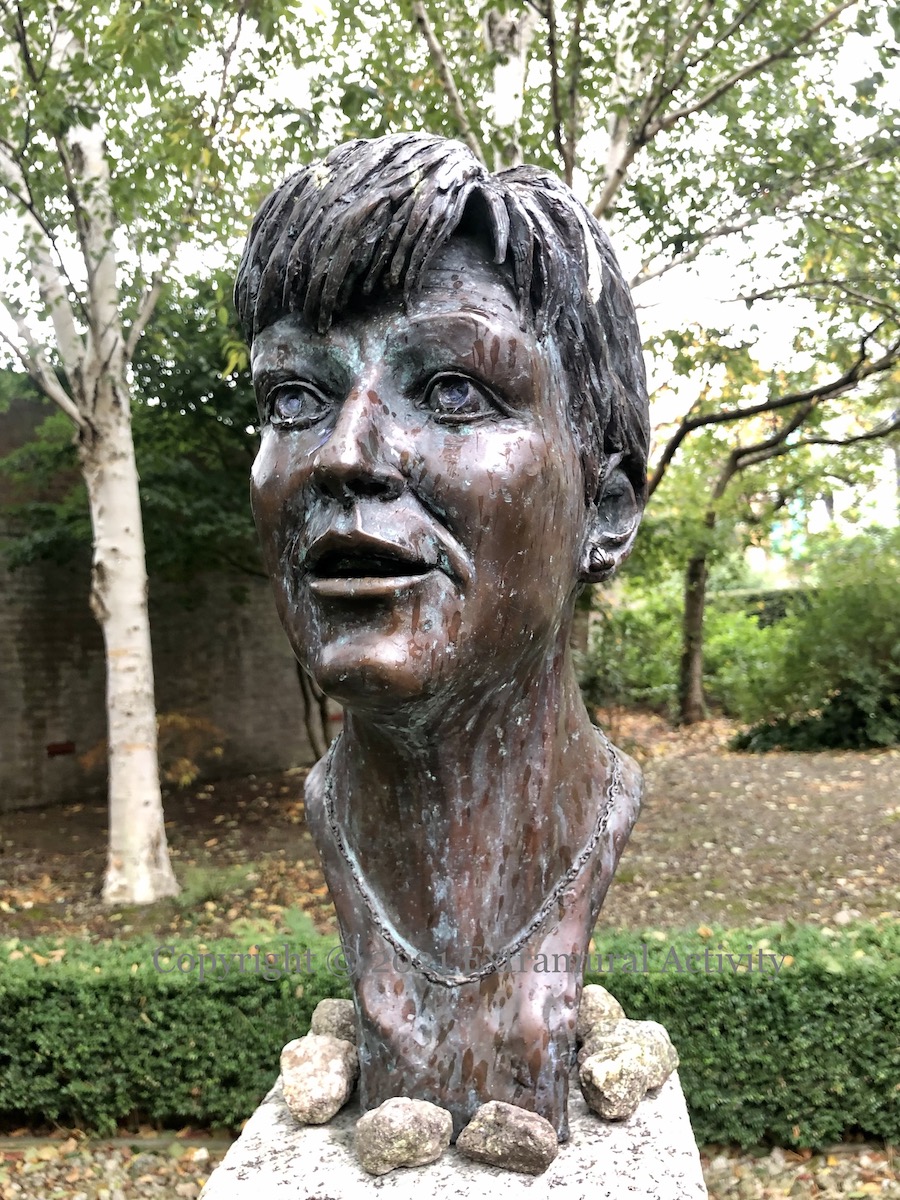
“Greater justice was her ideal and it was her ultimate achievement. Her courage and sacrifice saved many from the scourge of drugs and other crime. Her death has not been in vain.” Veronica Guerin was a Sunday Independent journalist who investigated drug trafficking in Ireland. She was shot and killed in 1996 while sitting at a traffic light on the Naas dual carriage-way by members of John Gilligan’s gang riding a motorcycle (WP).

The bronze bust, by sculptor John Coll, is in the grounds of Dublin Castle (Statues). “Unveiled by the Taoiseach, Mr Bernie Ahern, TD, 22nd June, 2001.”

Click image to enlarge
Copyright © 2021 Seosamh Mac Coılle
X08611 X08610