Derry swimmer Liam Ball represented Ireland at the 1968 and 1972 Olympics in Mexico and Munich. He died in 1984 at age 33 and is remembered on the wall of local heroes at Creggan shops. There are five other portraits – of James McLean, Tony O’Doherty, David McAuley, Charlie Nash, and Aileen Reid – painted by Karl Porter and Donal O’Doherty from UV Arts.
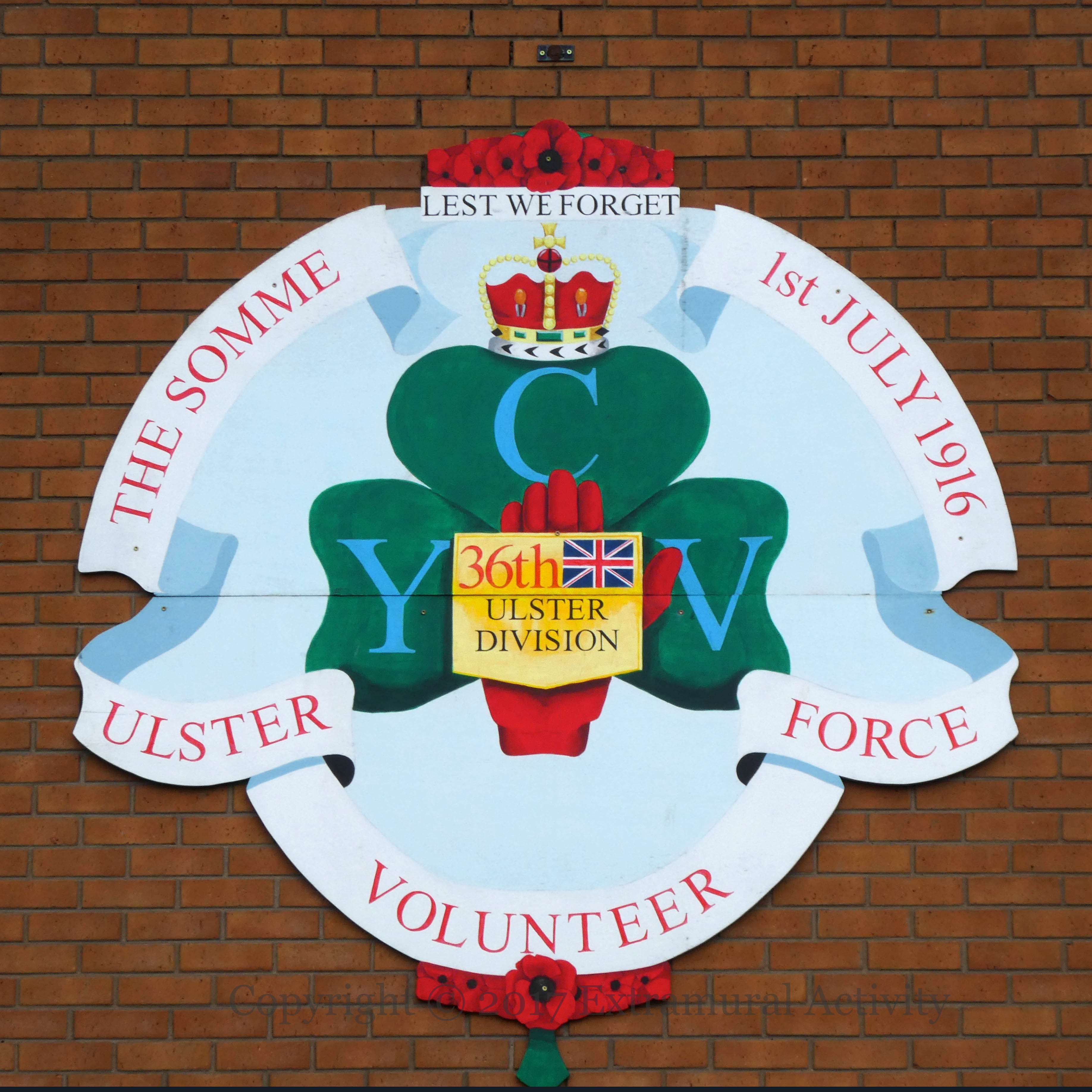
The Young Citizen Volunteers began as a civic organisation and domestic reserve force in 1912 but by the time of the first World War had become a battalion of the Ulster Volunteers and went to the Western Front as the fourteenth battalion of the Royal Irish Rifles, part of the 36th (Ulster) Division, landing at Boulogne in October, 1915. The force was mainly Protestant but History Hub Ulster has a page on the 42 Ulster Catholics who served in the 14th (YCV) RIR.
Here is a final small board from Derry/Doıre reproducing or at least hearkening back classic images of the armed republican campaign. This one shows a hooded volunteer brandishing an assault rifle. Previously: Sniper At Work | Join The People’s Army | Beır Bua | Behind Bars | éıstıgí | IRA
In the background is an “End internment” IRPWA (prisoner welfare) board.
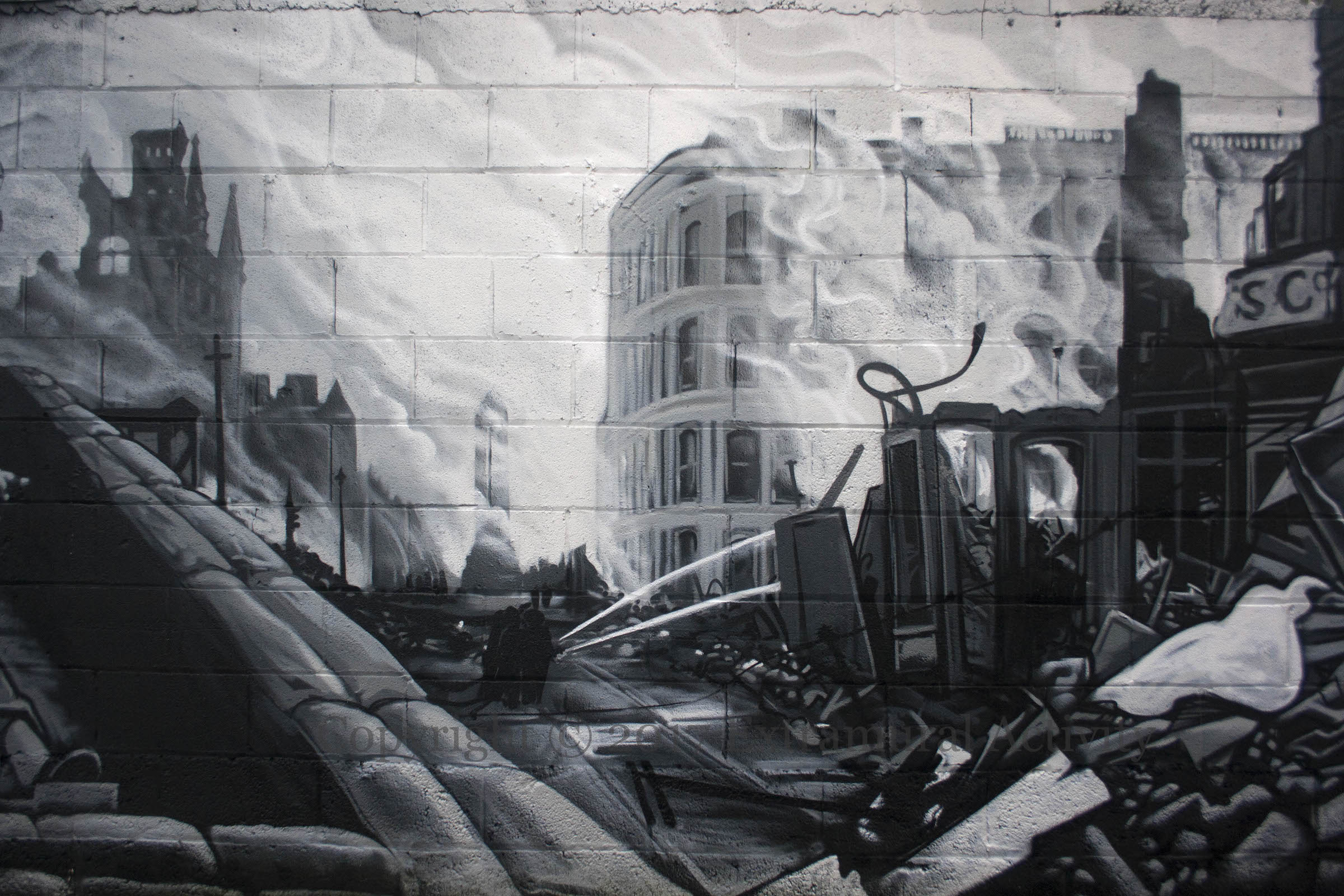
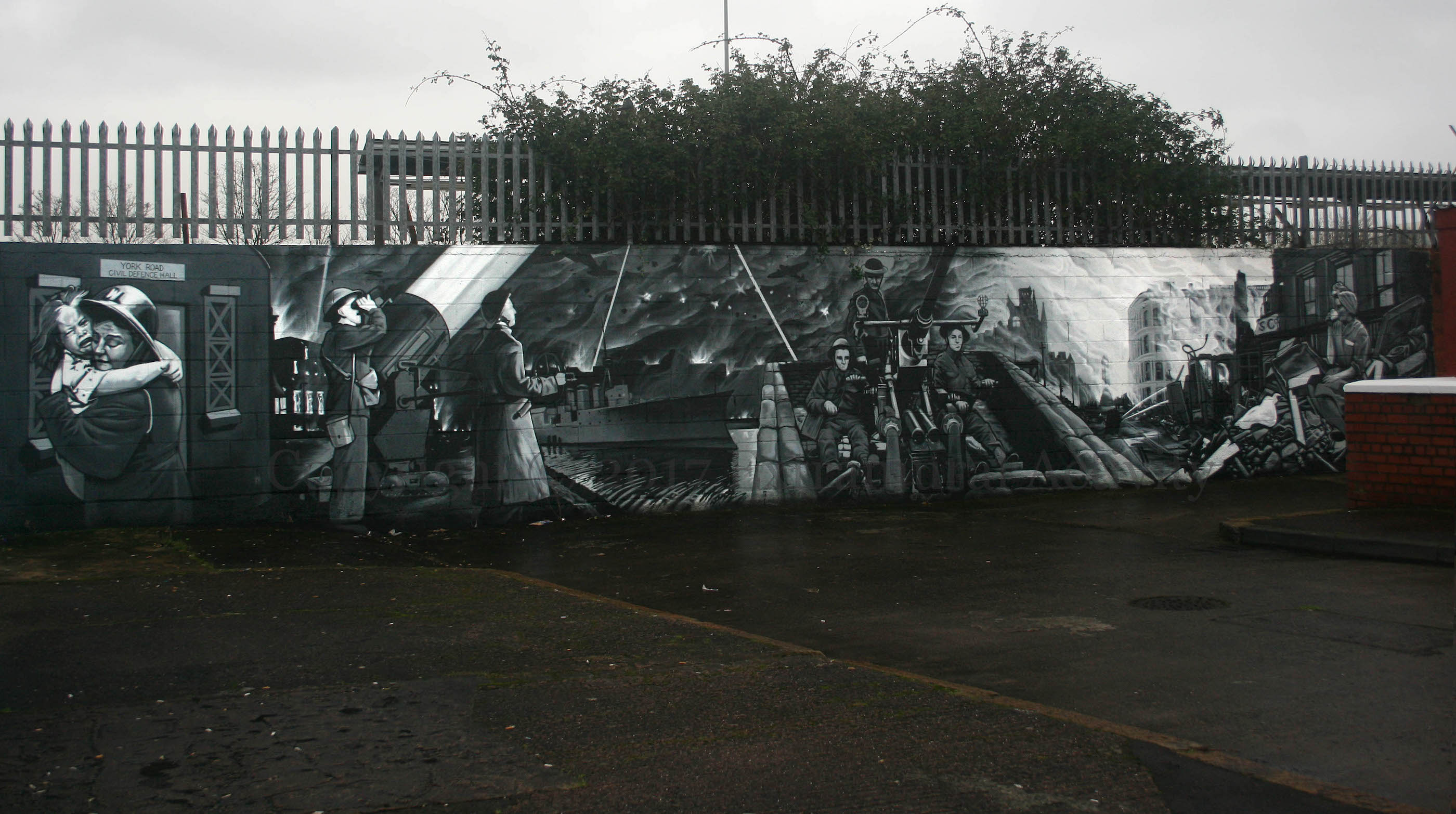
As mentioned in an entry about Dalaradia, the HUBB community centre (web | Fb) in north Belfast has, since 2010, been based in what used to be a World War II Civil Defence air-raid shelter, which it cleaned and renovated (Tele). The original hall is depicted in this mural on the side of the HUBB. Belfast was bombed by the Germans four times in April and May of 1941.
In 1940, Belfast was protected by thirty-eight anti-aircraft guns. The German Luftwaffe flew a reconnaissance flight over Belfast on November 30th, 1940 and a test mission of eight planes on April 7th, 1941 concluded that Belfast’s defences were, “inferior in quality, scanty and insufficient” (Elaine Hogg/Glenravel History). 150 bombers would blitz Belfast the following week, on Easter Tuesday, April 15th, and the seven guns that had been in operation ceased firing, believing, falsely, that RAF planes were also in the sky (WP).
In the blitz of Easter Tuesday, 1941, more than 900 people died, 1,500 were injured, and half the houses in Belfast were damaged (WP). According to Elaine Hogg’s research in the ‘Darker Side Of Belfast’ series, 100,000 people left the city in the remainder of the month, due to shock, fear, and the squalid conditions and unruly behaviour that followed the bombing.
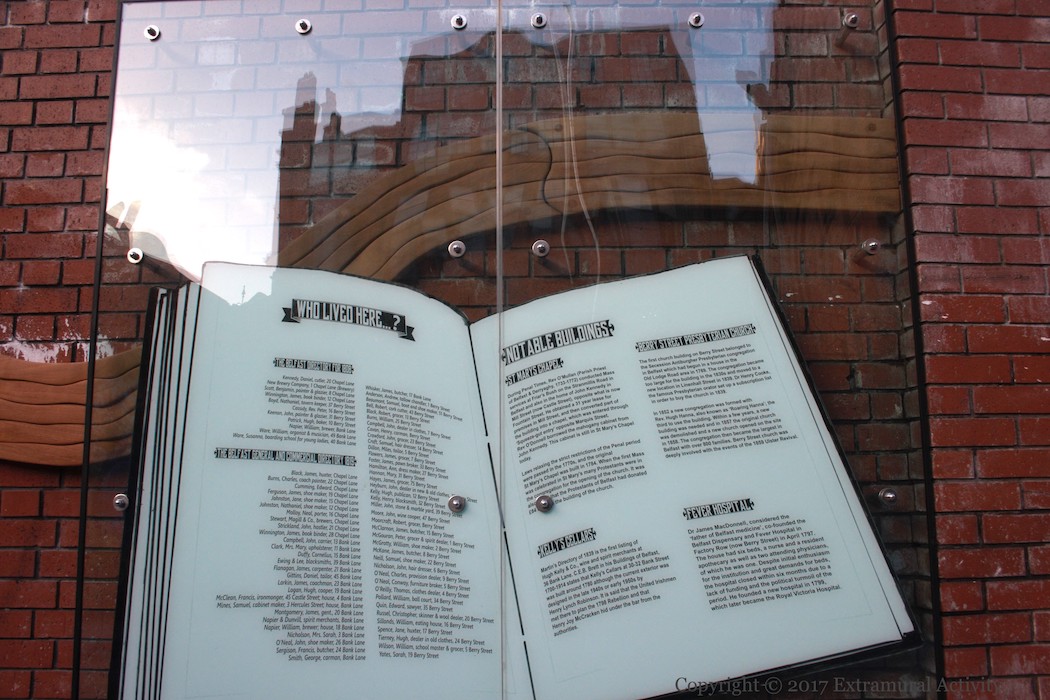
The river in question is the Farset, which in the late 1700s was still open in what was then the Back-Of-The-River area and is now Bank Square. It was all covered over by 1804.
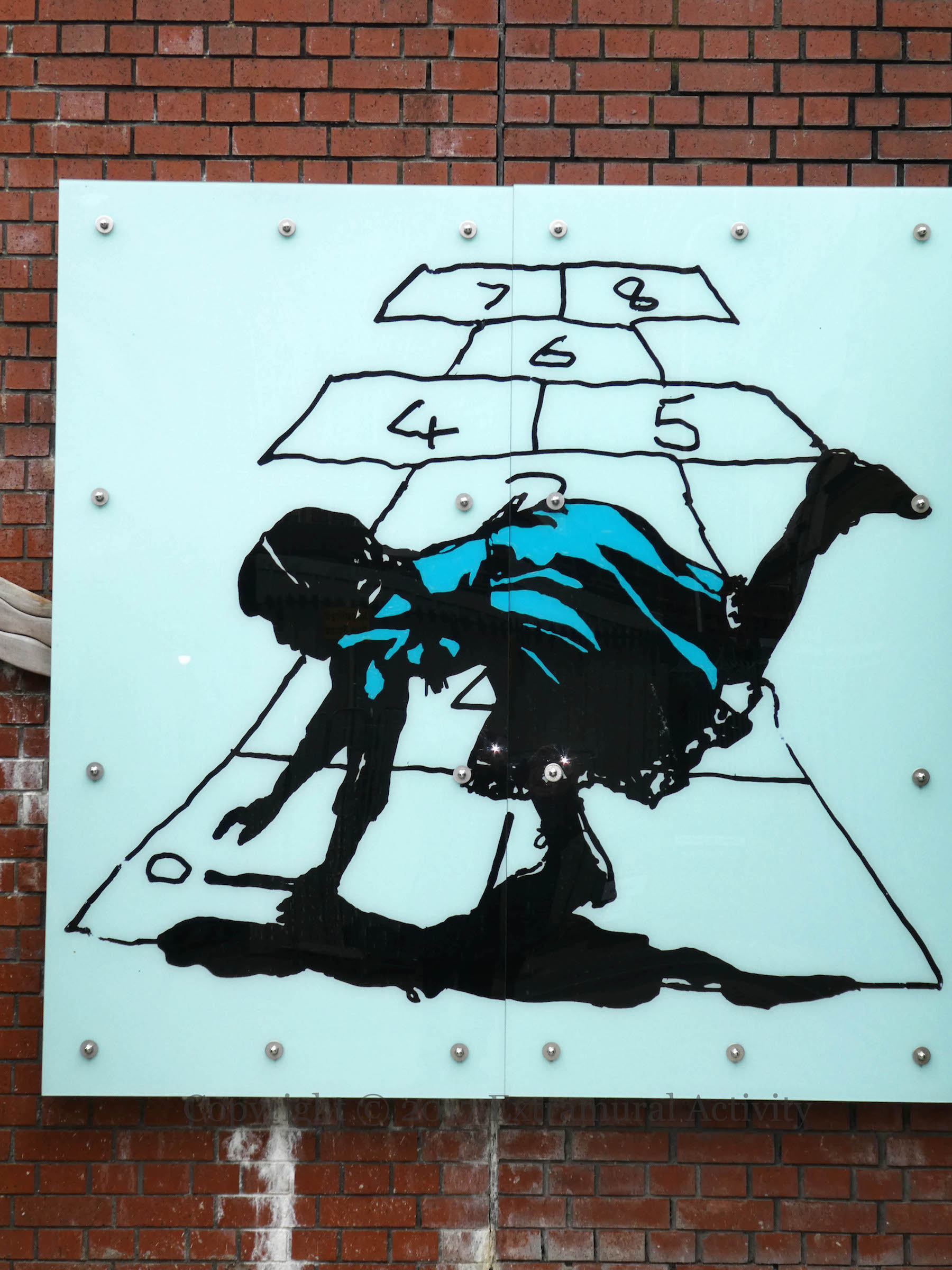
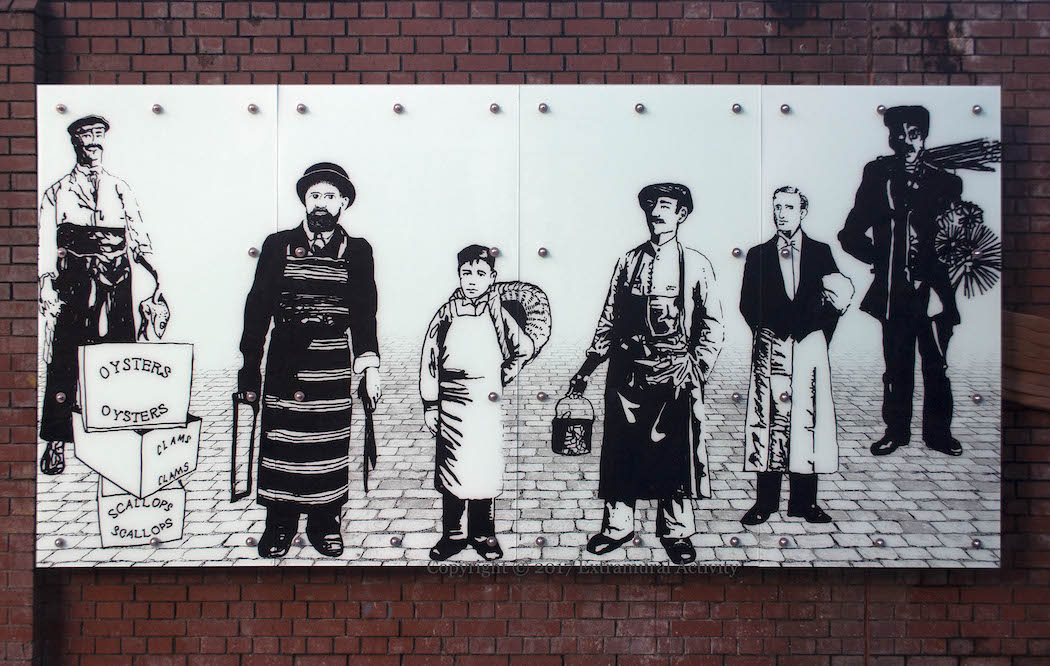
The 2015 installation of ‘life in the old days’ panels is by Annemarie Mullan, Stephen Mackey, and King Street Arts, presenting street scenes inspired by “information from the 1898 census” (CultureNI | Love Belfast).
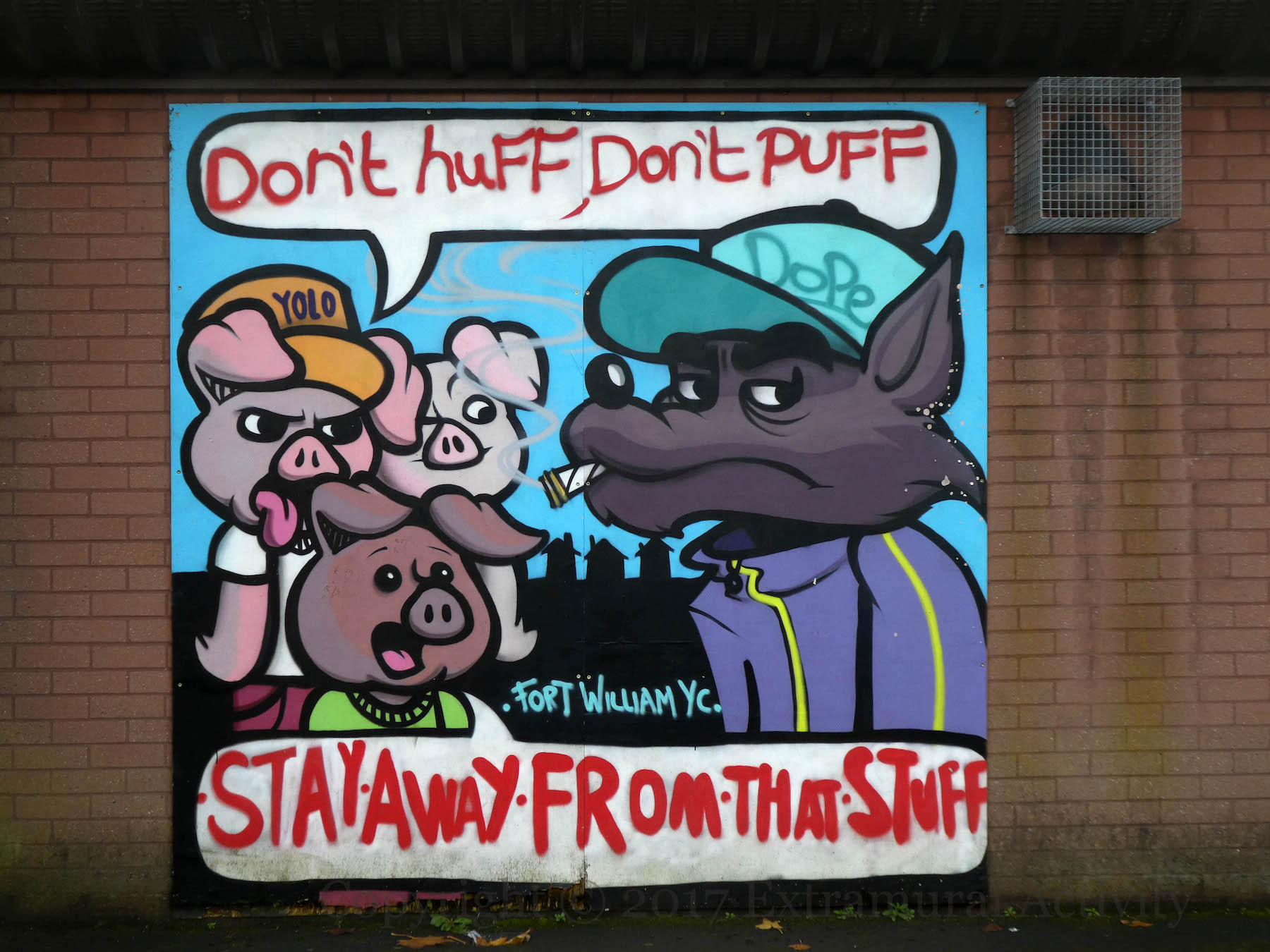
“Don’t huff, don’t puff – stay away from that stuff.” The three little piggies give the big bad wolf some grief for his “dope” habit. The message is directed at the kids in the Fortwilliam Youth Centre in Mount Vernon. “You only live once.”
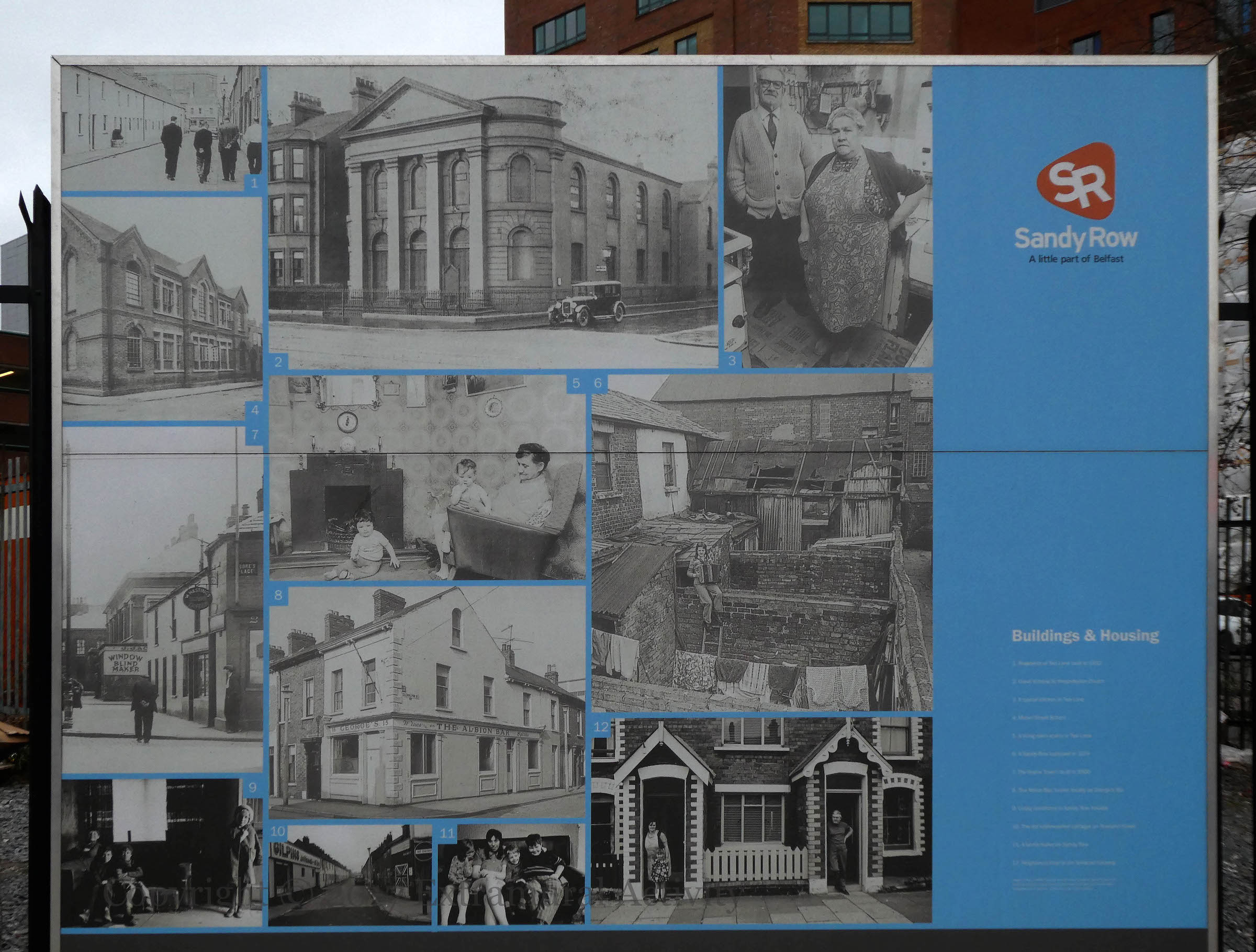
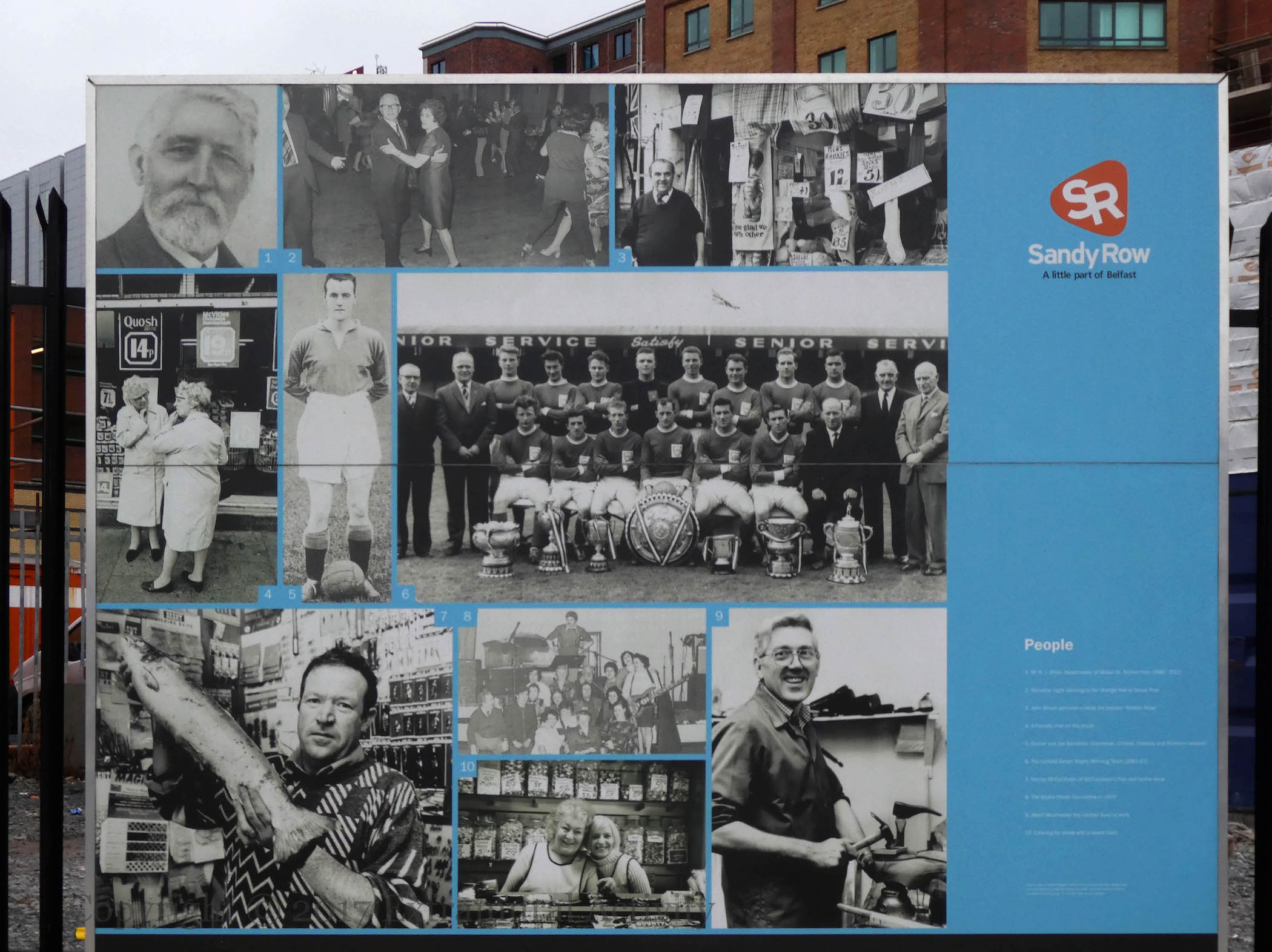
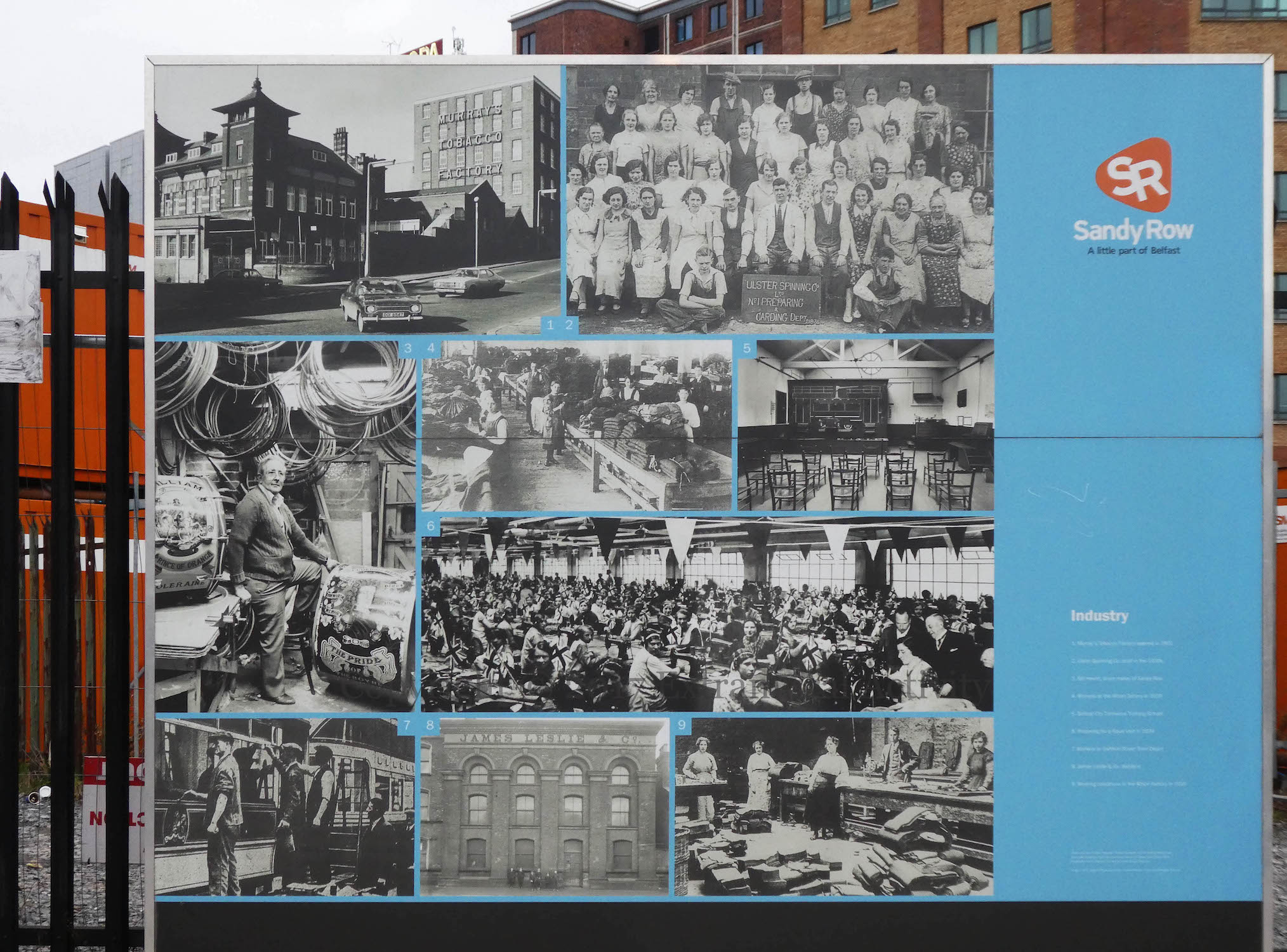
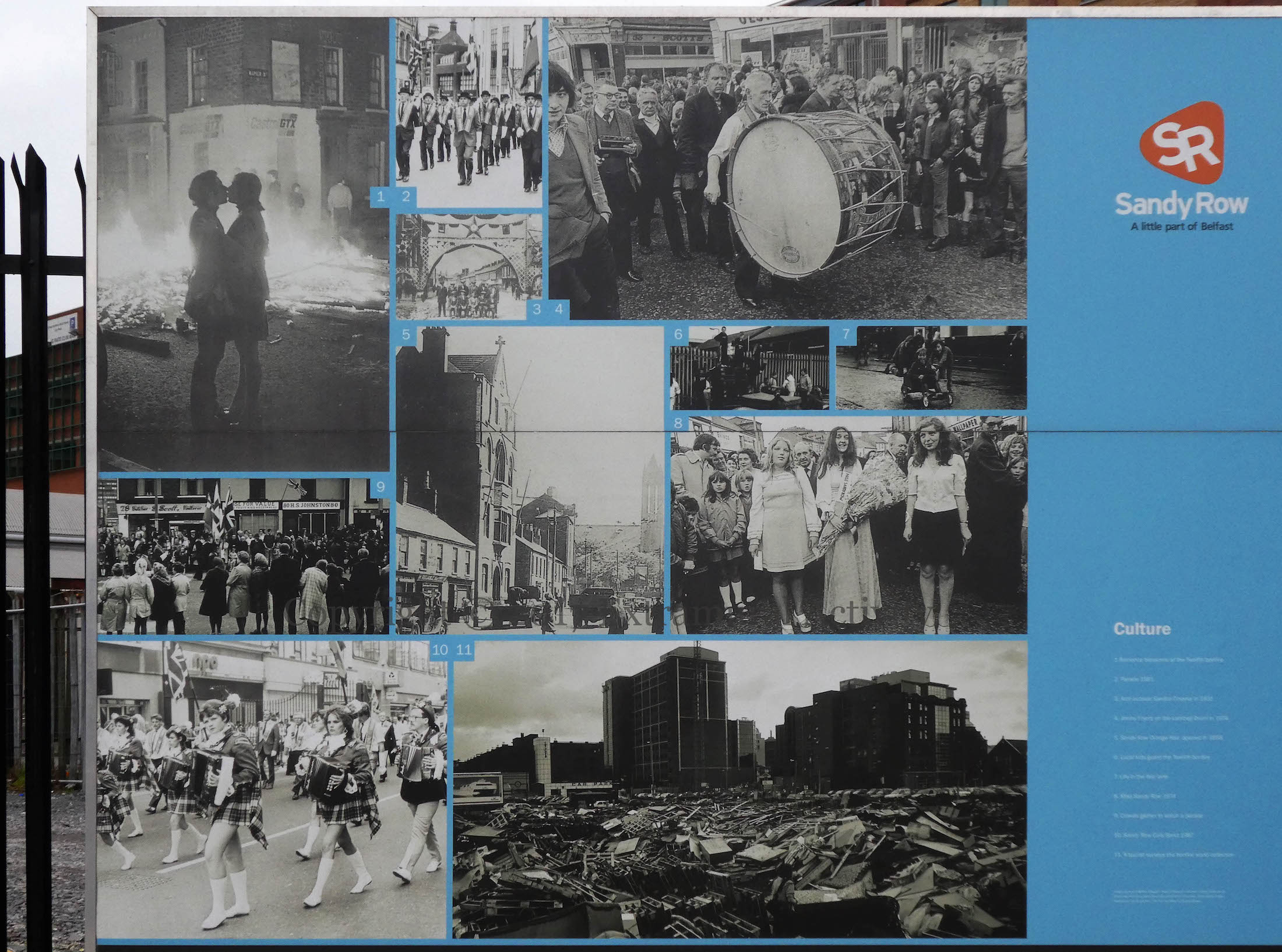
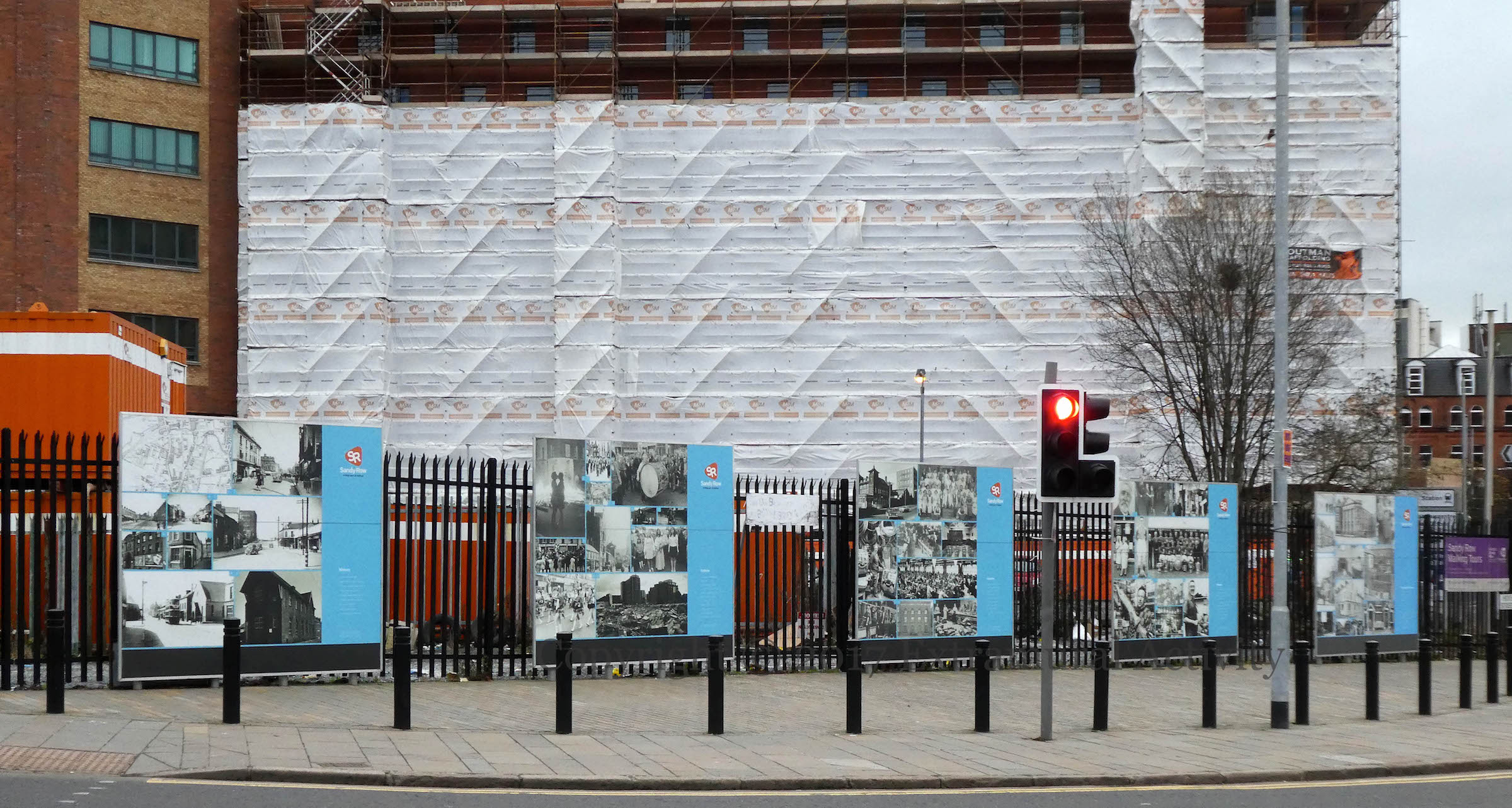
Sandy Row is “steeped in 400 years of tradition”, according to Historic Sandy Row (and sister site Sandy Row Community Forum which has developed a “growth strategy” for the area). Some of that history is presented at the junction with Hope Street, one each for Buildings & Housing, People, Industry, Culture, and History.
These five images show the remains of an Ulster Special Service Force (USSF) mural in Drumahoe Gardens, Millbrook. In addition to the union flag and emblem of the unit, the mural showed the Covenant and Carson, the gunrunning ship Clyde Valley which landed at Larne (not shown here), the garlanded red hand shown above, a memorial lamp post(?) not shown, soldiers from the 36th Division going over the top(fourth), the Ulster Tower and a helmet on a cross (not shown).
British Army soldiers from four streets are commemorated in a plaque in Barrington Gardens. All four streets – Abingdon, Barrington, Colchester, and Dorchester – have changed their names or disappeared entirely (Dorchester) since 1914. “Erected by 1st Belfast Rangers Friends Of The Somme Society” – the supporters club is right next door.
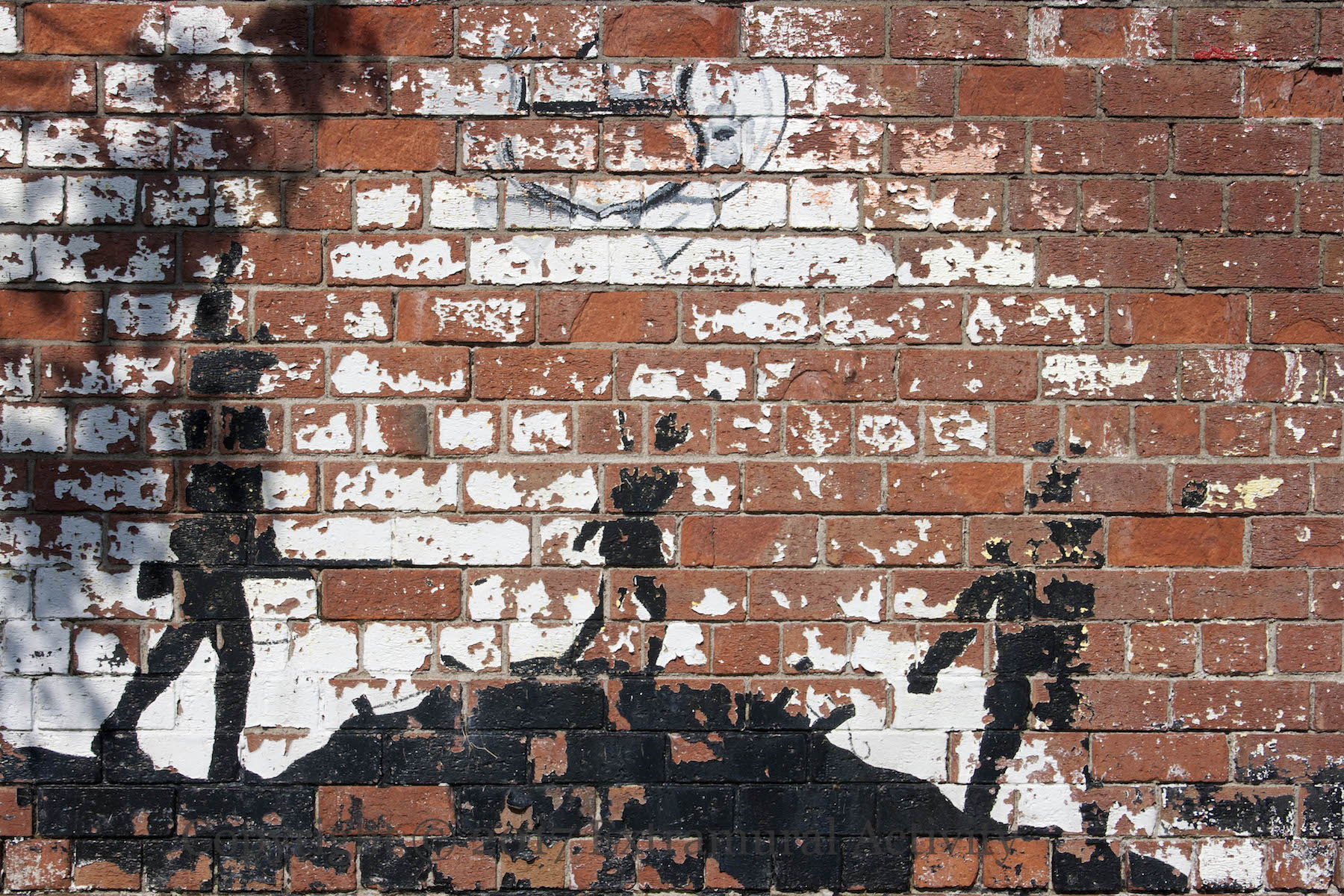
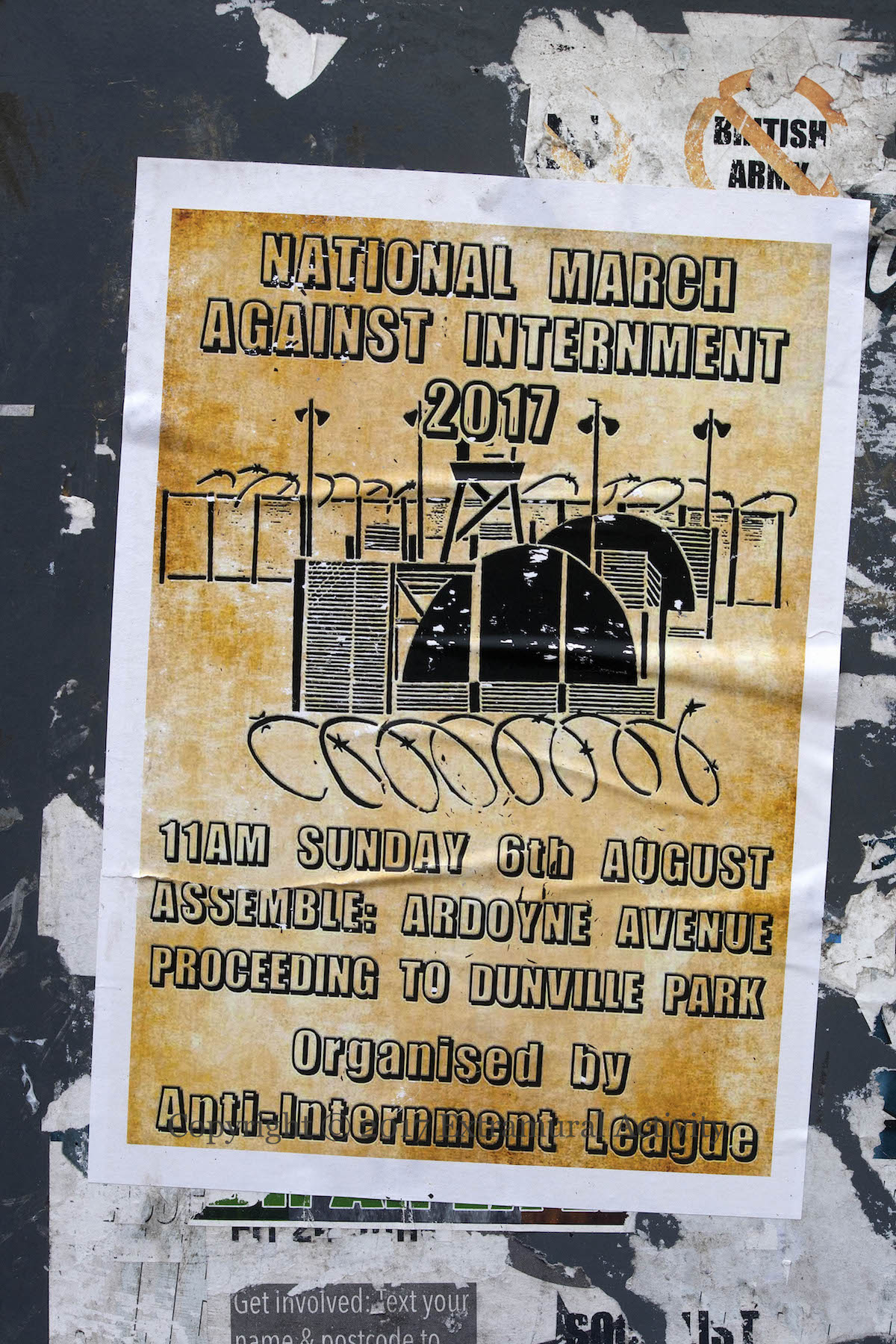
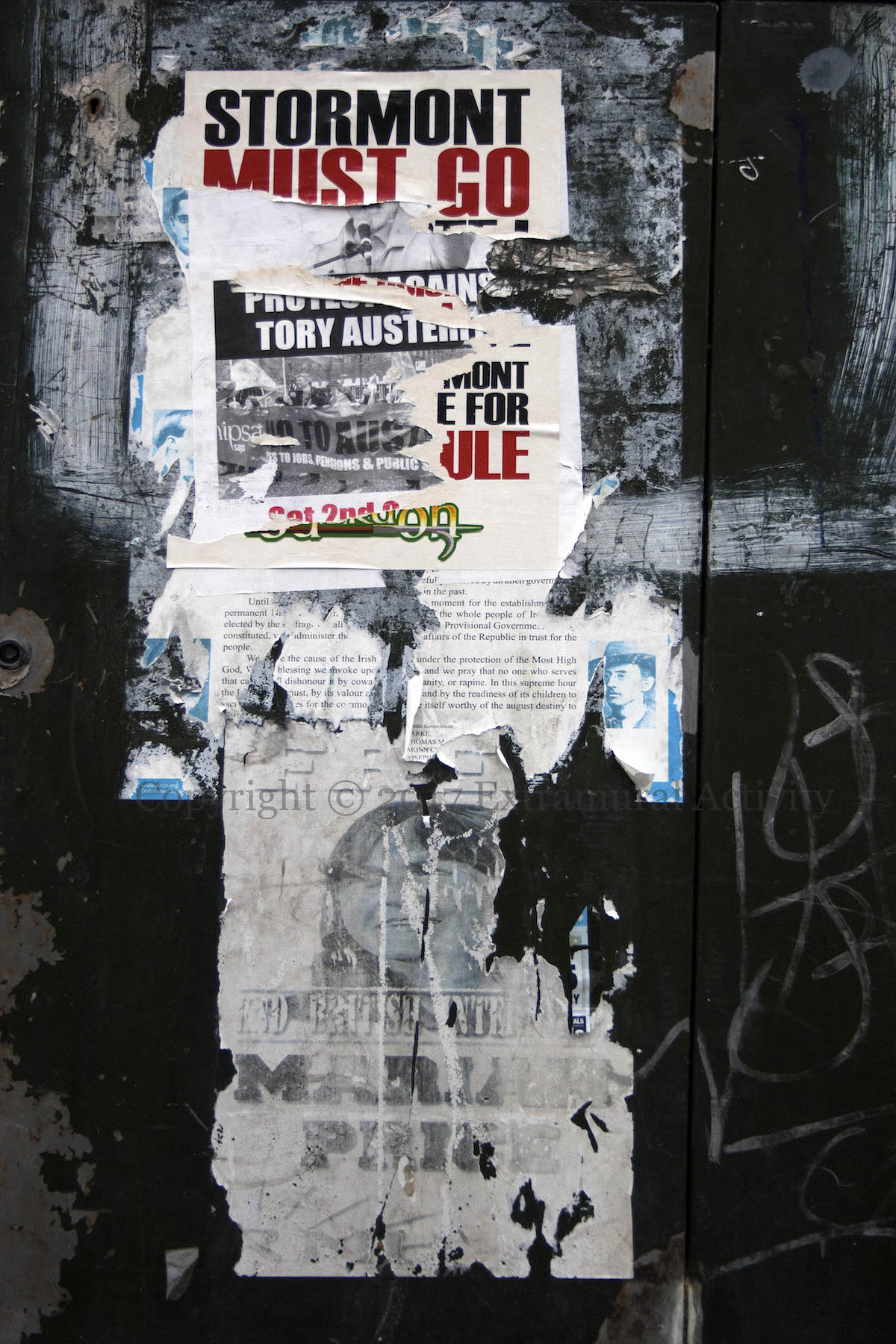
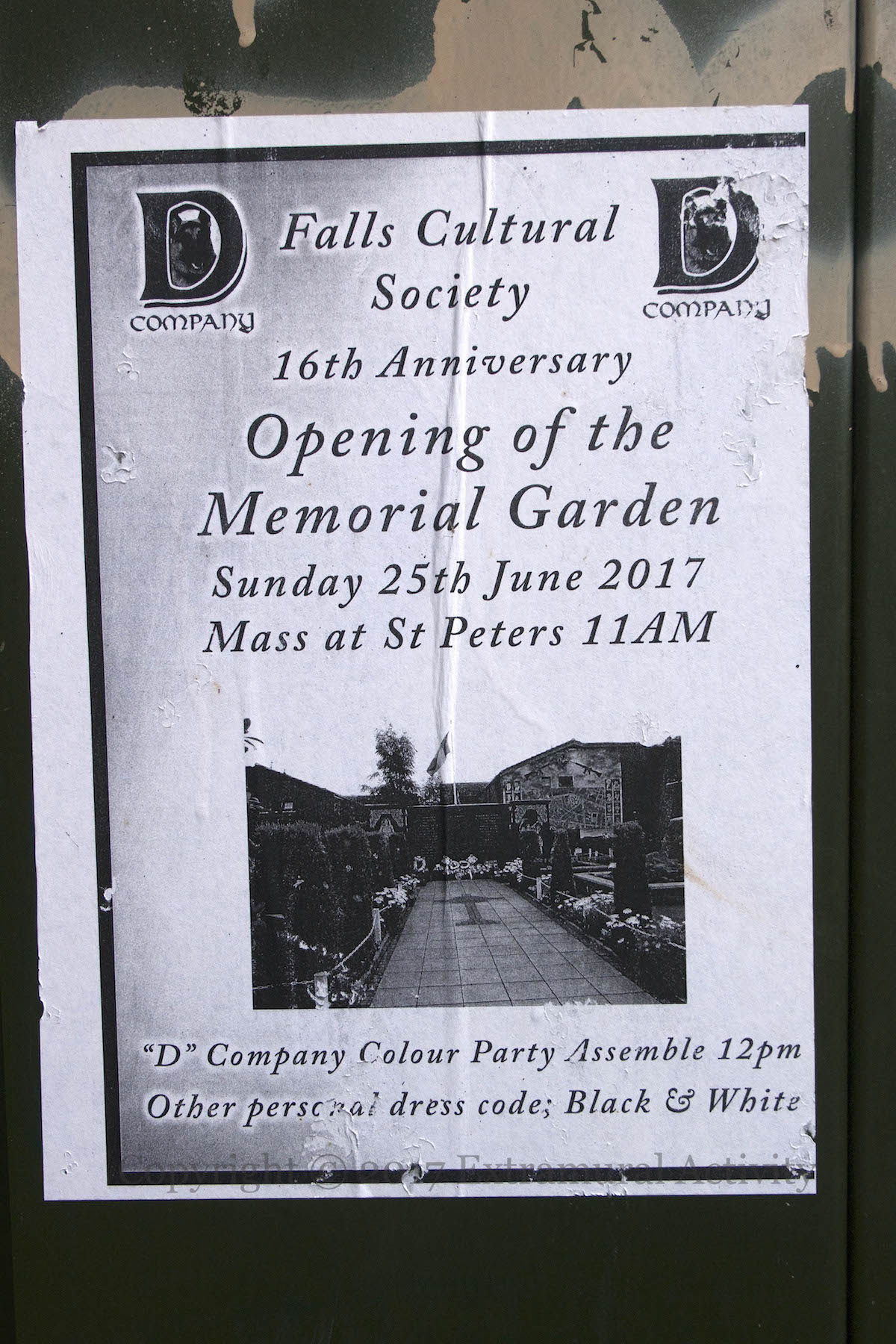
Here is a selection of posters from throughout the past year (2017) from Belfast and London-/Derry. Above is an Anarchists In Ireland poster welcoming refugees, while the second image is of a passenger and parcel service to Romania from Dublin. The others are for republican marches and causes.

















 Extramural Activity