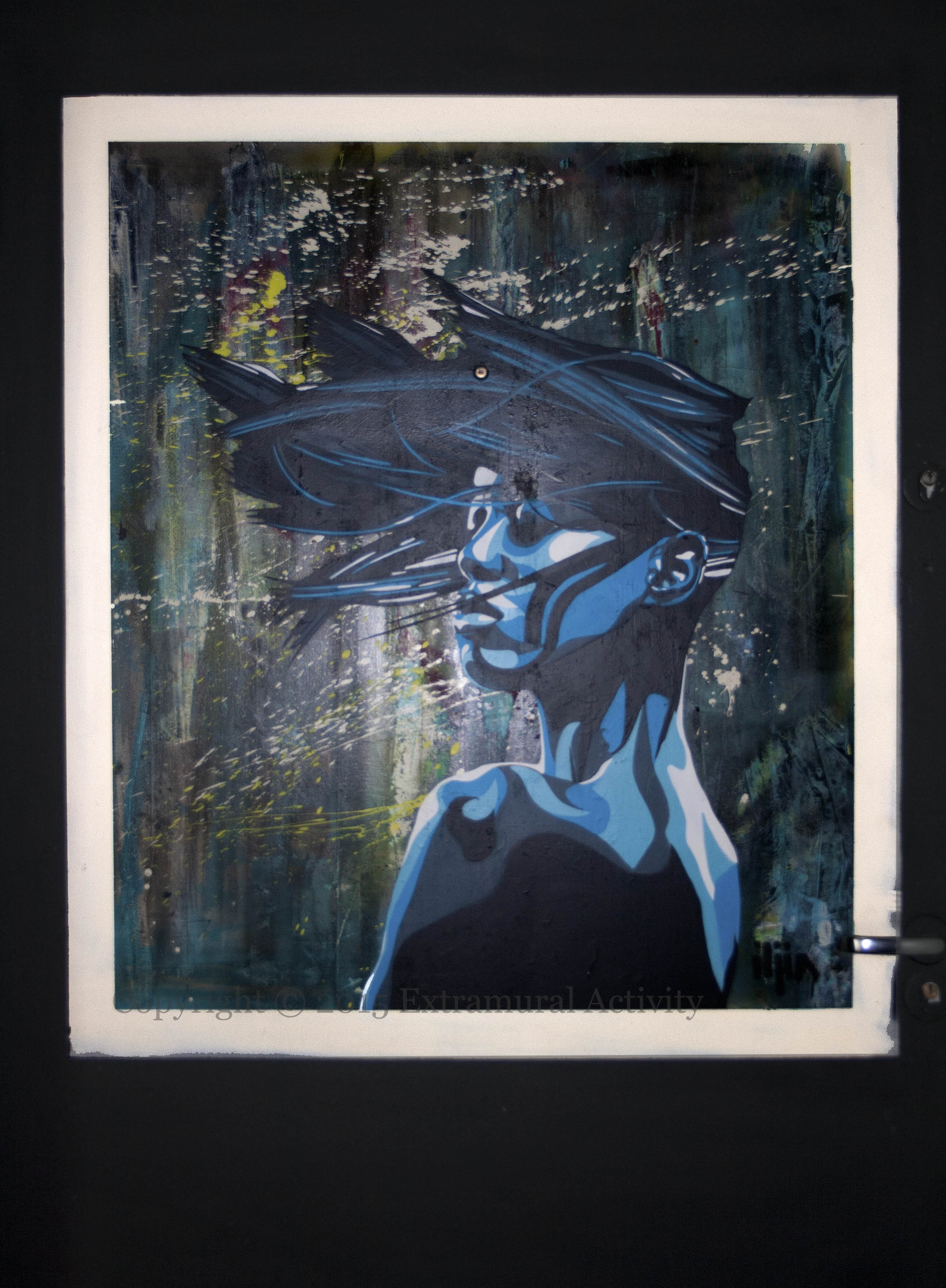
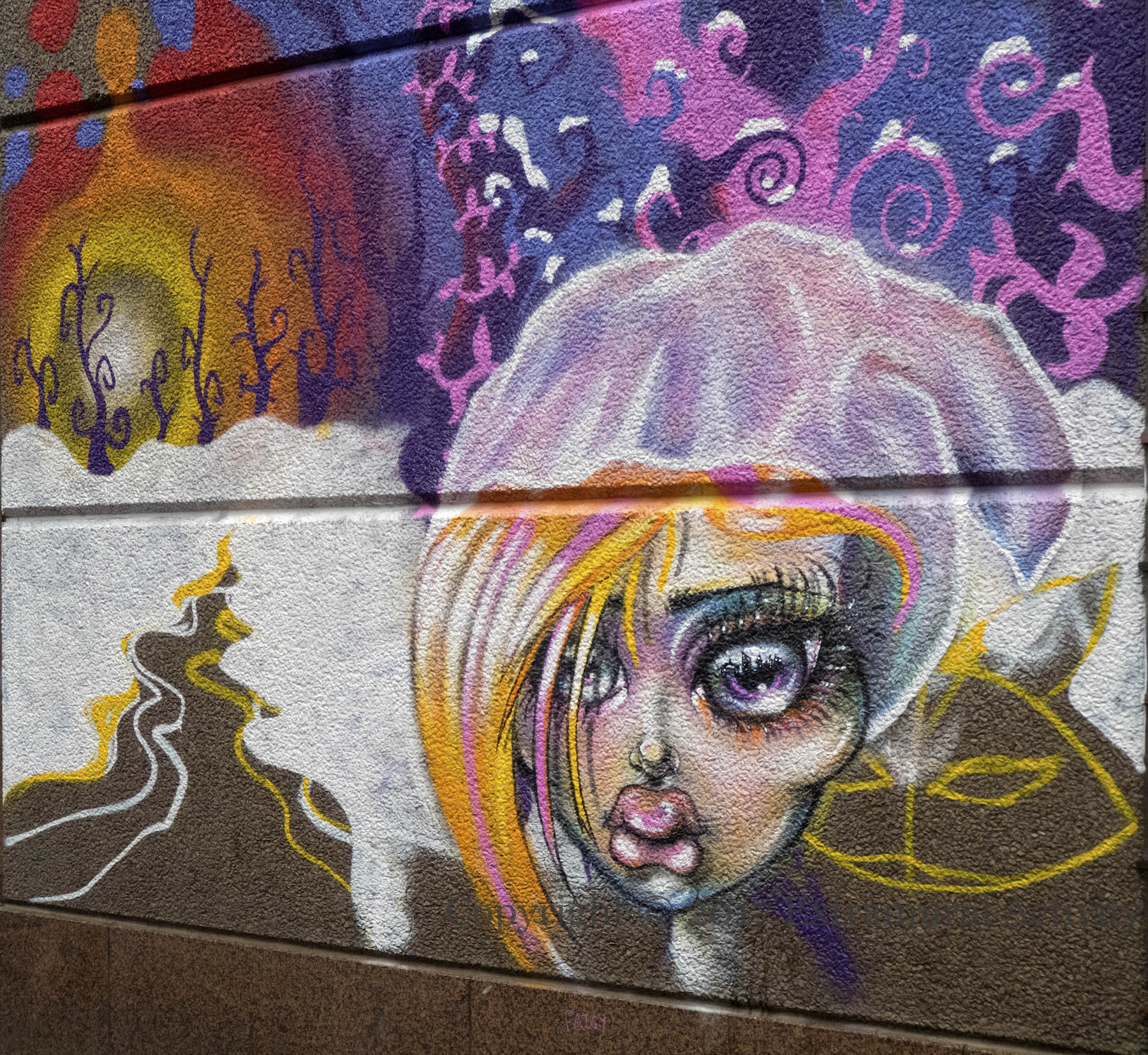
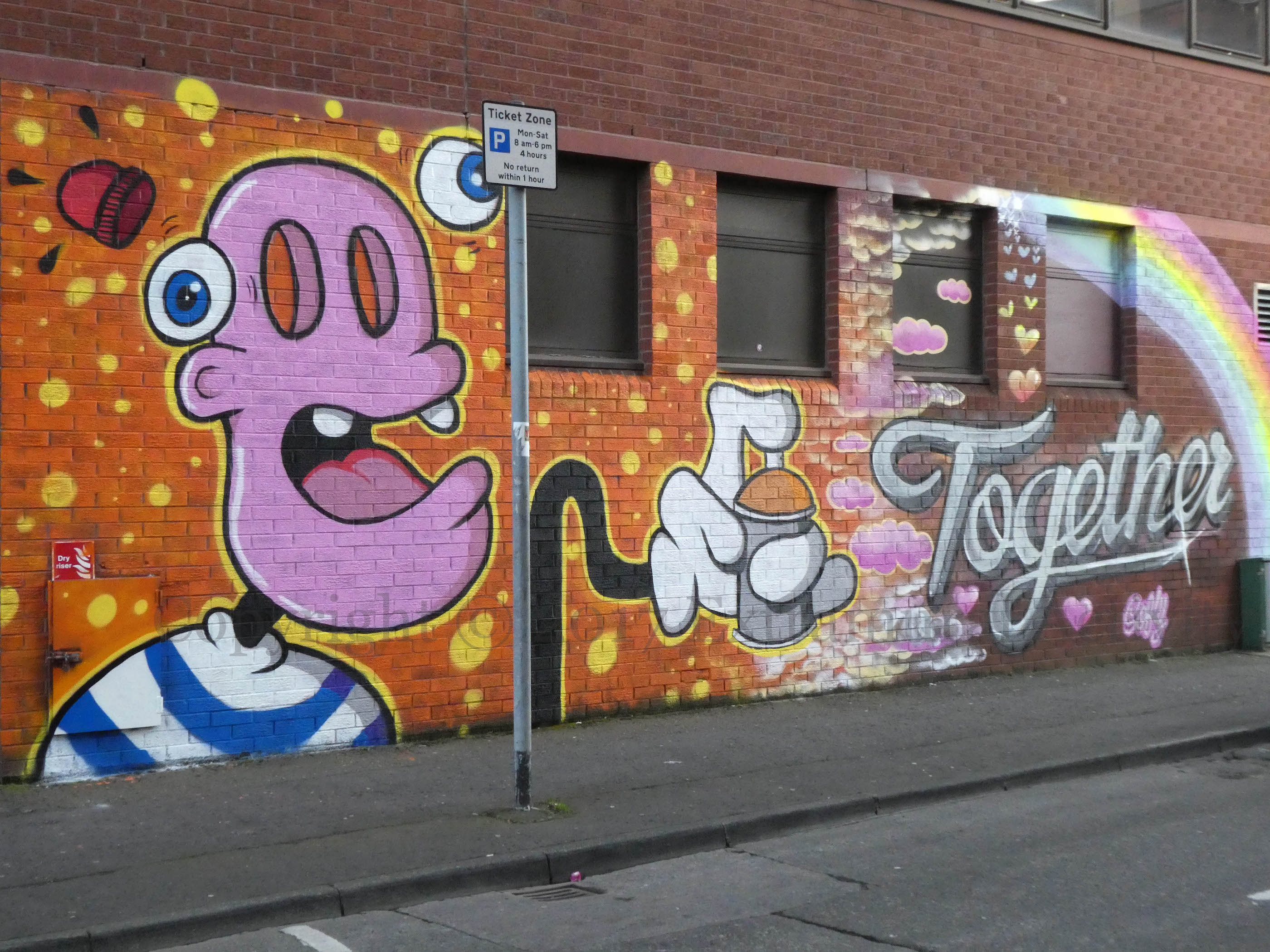
Dublin-based artist Pawel Iljin (Fb | Pinterest) was in Belfast for Culture Night/Hit The North and pained this piece in Library Street. As a bonus, his 2015 piece is included below.
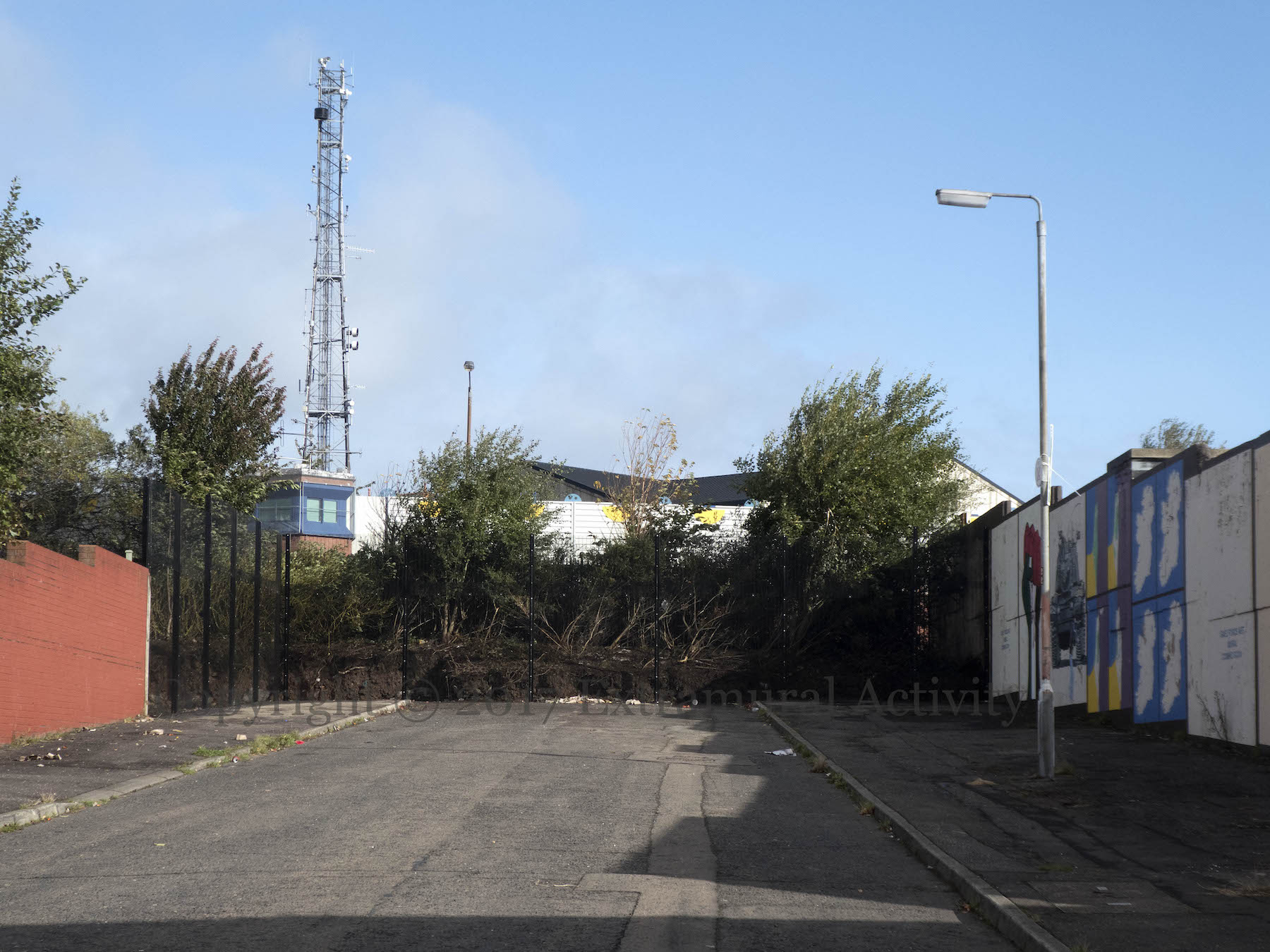
A good deal of attention was recently paid to the removal of a “peace” wall at the top of Springhill Avenue (e.g. Guardian | Irish Times). As can be seen from the image above, however, a high fence has been put in its place and the dense shrubbery left intact, so that it is impossible to enter or exit the area this way. The new “transparency” is similar to the see-through gate in Workman Avenue in 2015 and in Howard Street in 2013. The immediate impact has been to remove a large wall used for muraling: Palestine Abú | Man Against Machine | Apache Hellfire.
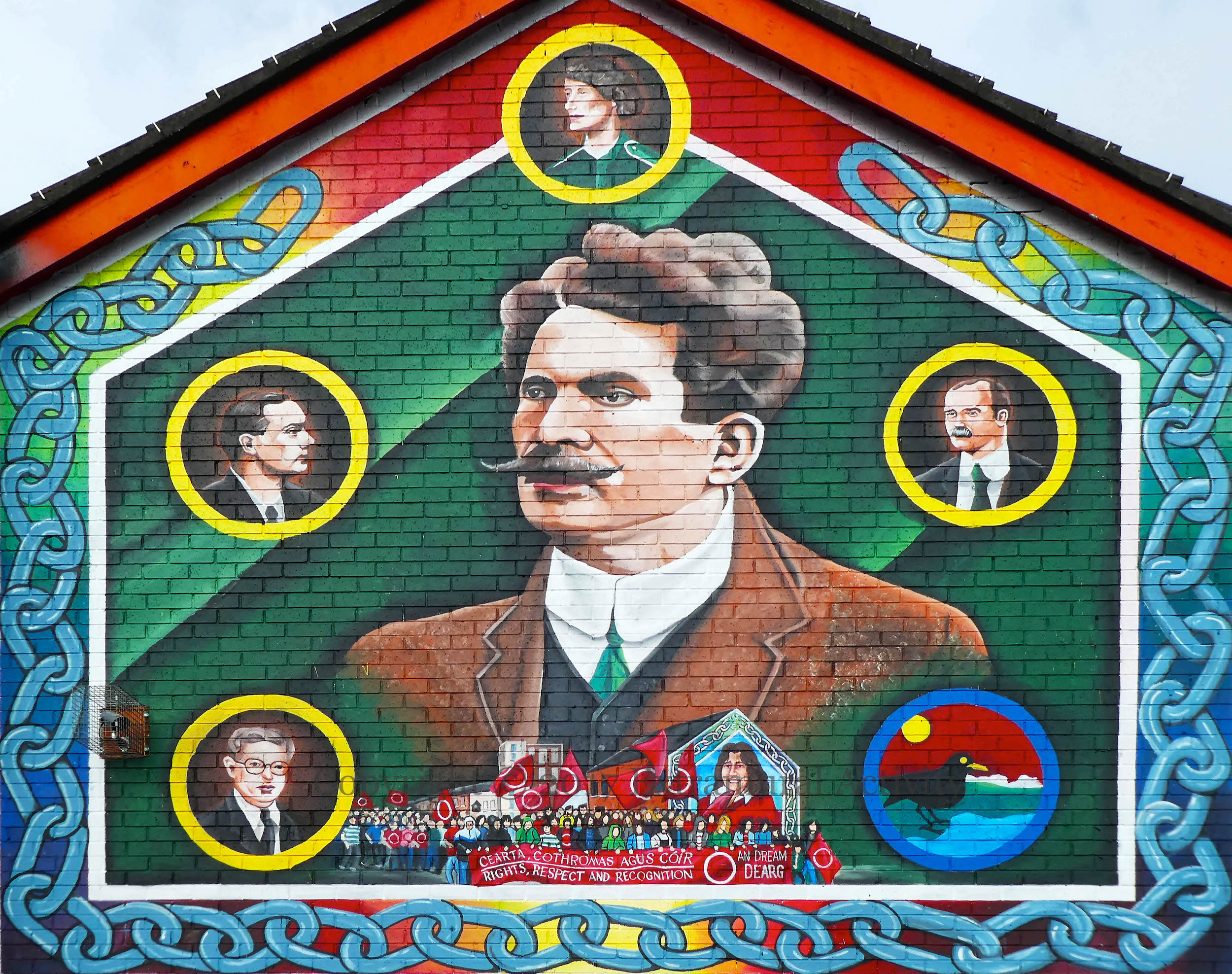
Nozzle & Brush worked with the young people of Clonduff Youth in a project to change the image of the estate. In years past, this wall was “UVF reserved”.
Here are three images of the Dan Kitchener piece for this year’s Culture Night Belfast/Hit The North. According to Dan’s web site, it took about 11 hours to complete and is inspired by Ayumi LaNoire.
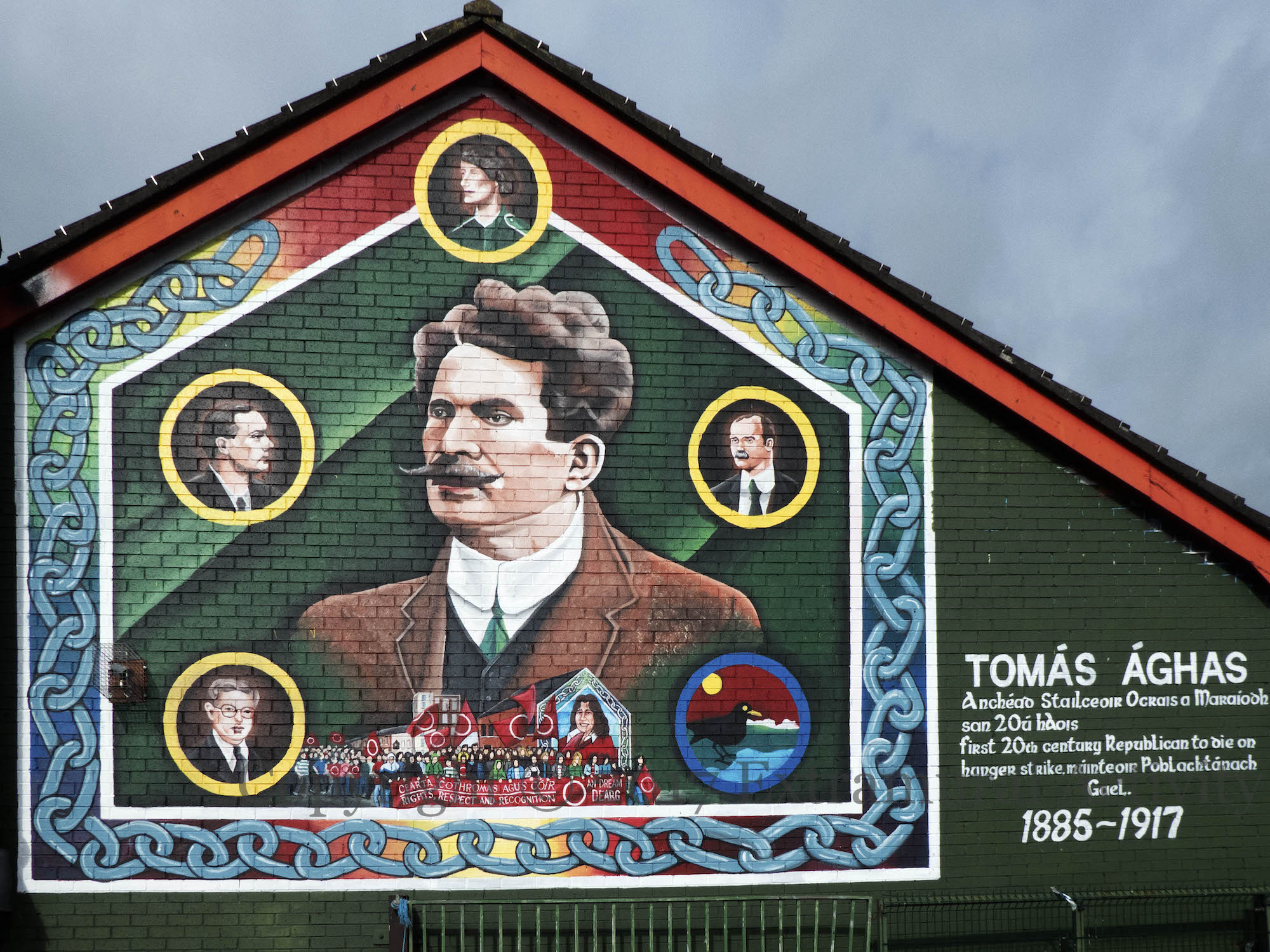
Thomas Ashe was working as an Irish teacher in Dublin when he joined the Irish Volunteers and in 1916 served as a battalion commander in the Easter Rising, for which he was sentenced to penal servitude for life. He went on hunger strike in May 1917 and again in September when he was rearrested by the British authorities for a “seditious” speech. He died on September 25th, one hundred years ago, becoming “an chéad staılceoır ocraıs a maraíodh san 20ú haoıs” (“first hunger striker to die in the 20th century”).
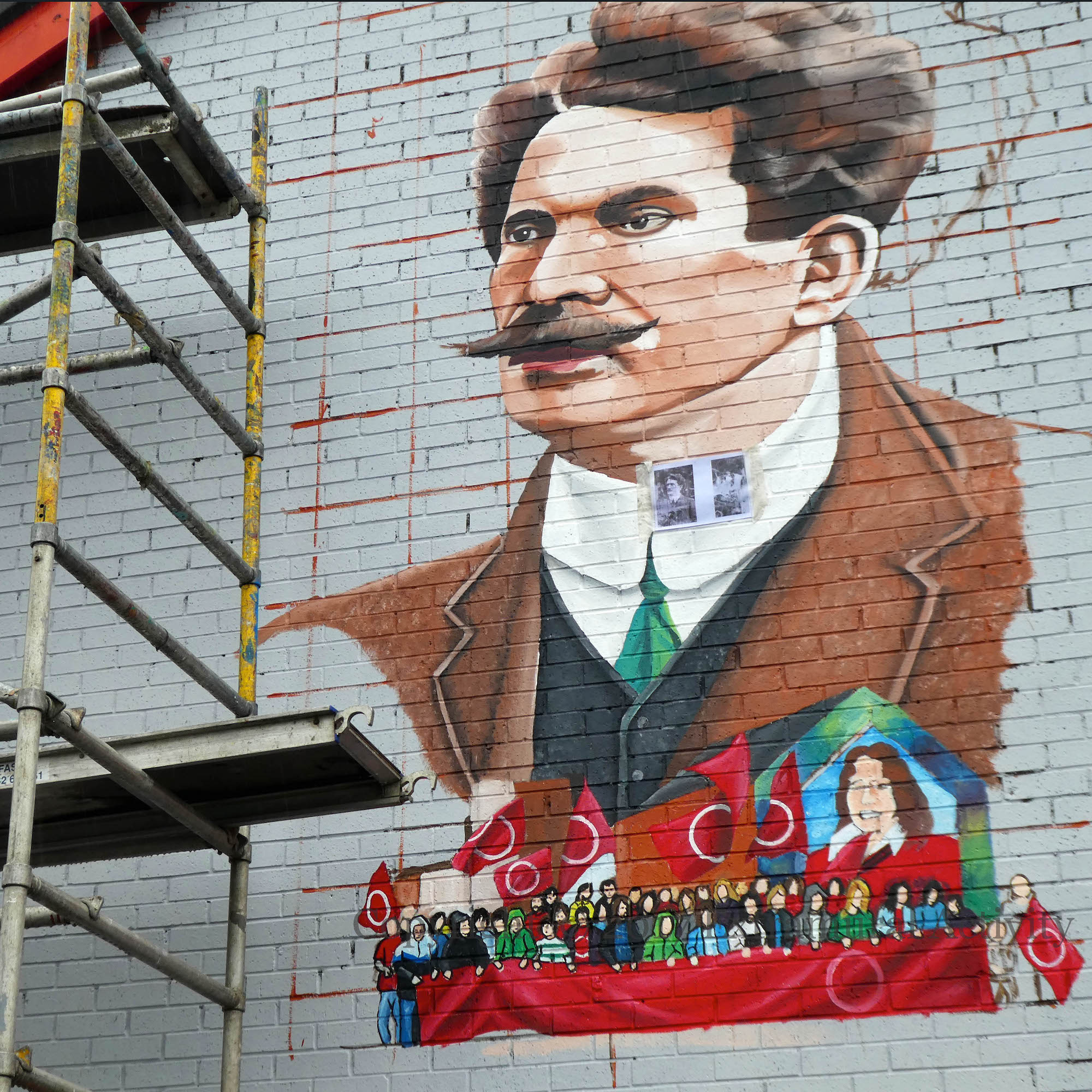
In the five circles around his portrait are Countess Markievicz, Pádraig Pearse, and James Connolly – fellow fighters in the Rising – and Máırtín Ó Cadhaın (author of Cré Na Cılle and IRA member interned during WWII), and the symbol of Laochra Loch Lao and more generally of An Ceathrú Gaeltachta/Gaeltacht Quarter (see previously The Big Plan and Onwards). In the middle (shown in detail below), An Dream Dearg march in support of Acht Na Gaeılge (an Irish language Act) past the Bobby Sands mural on Sevastopol Street.
“I am not an Ulsterman but yesterday, the First of July, as I followed their amazing attack, I felt that I would rather be an Ulsterman than anything else in the world. My pen cannot describe adequately the hundreds of heroic acts I witnessed, the Ulster Volunteer Force, from which the Division was made, has won a name that equals any in history. Their devotion deserves the gratitude of the British empire.”
The words of Wilfrid Spender, Plymouth-born newspaper manager, quartermaster of the Ulster Volunteers, general staff officer of the 36th (Ulster) Division, winner of the Military Cross for actions at Thiepval, and Cabinet Secretary of the new “Northern Ireland” in 1921.
Kilburn St; later moved to Broadway/Donegall Ave, south Belfast
“By my calculations a cart wheel takes about 4 metres to do. It is 50 miles to the Dark Hedges from here. There are 1609 metres in a mile, so it is 80,450 metres to the dark hedges from here. If travelling from here to the Dark hedges via cart wheels it would take 20,112 and a half cart wheels to get there.
A tumble over is roughly 2 metres long. Its 330 miles to Skellig Michael from here. There are 1609 metres in 1 mile. 1609 x 330 ÷ 2 = 265,485. Therefore, it would take 265,485 tumble overs to Skellig Michael. For some strange unknown reason this essential tourist travel information isn’t available in Belfast so I’ll just have to add a sign post to this piece I’m about to finish to help people out …”
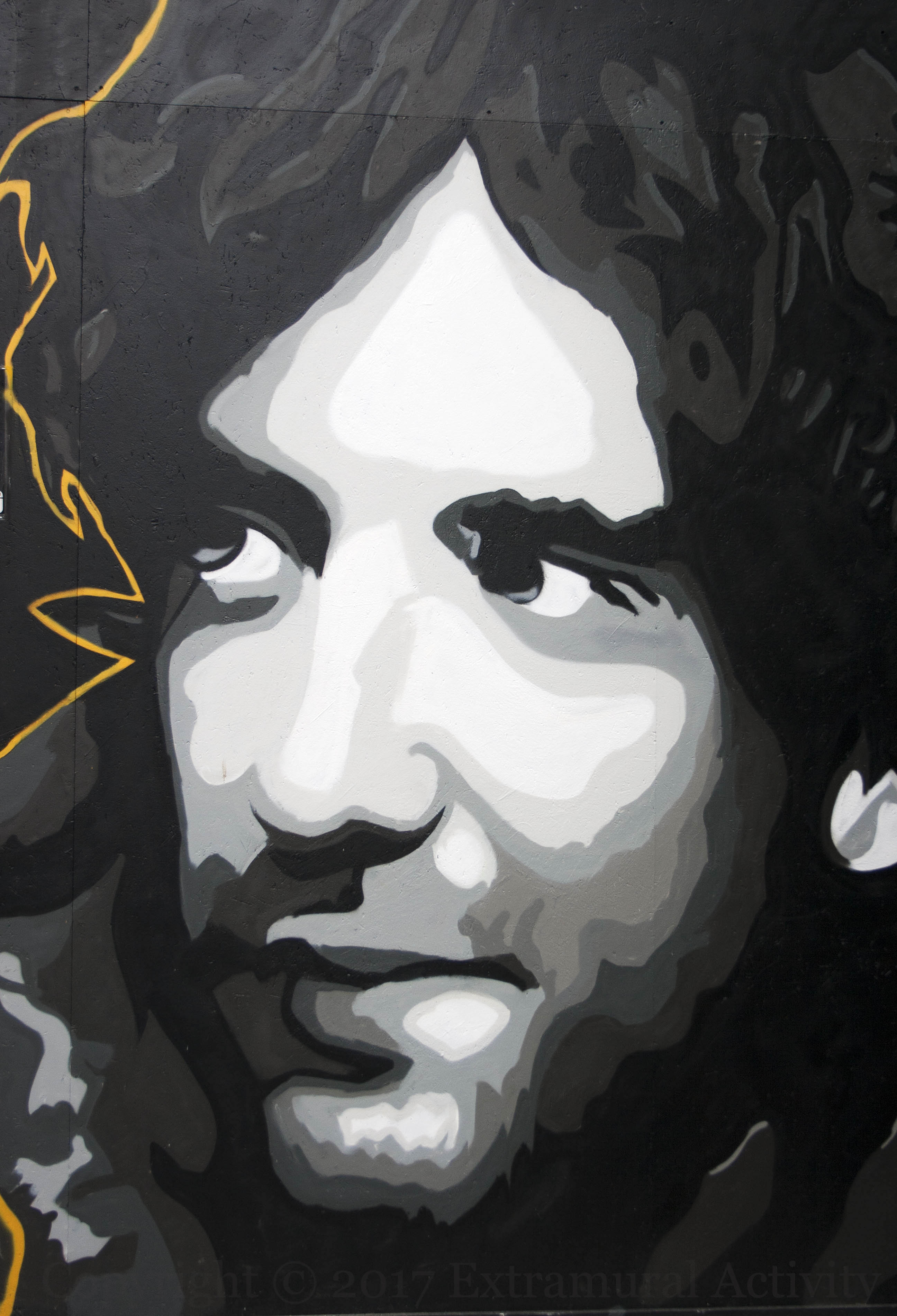
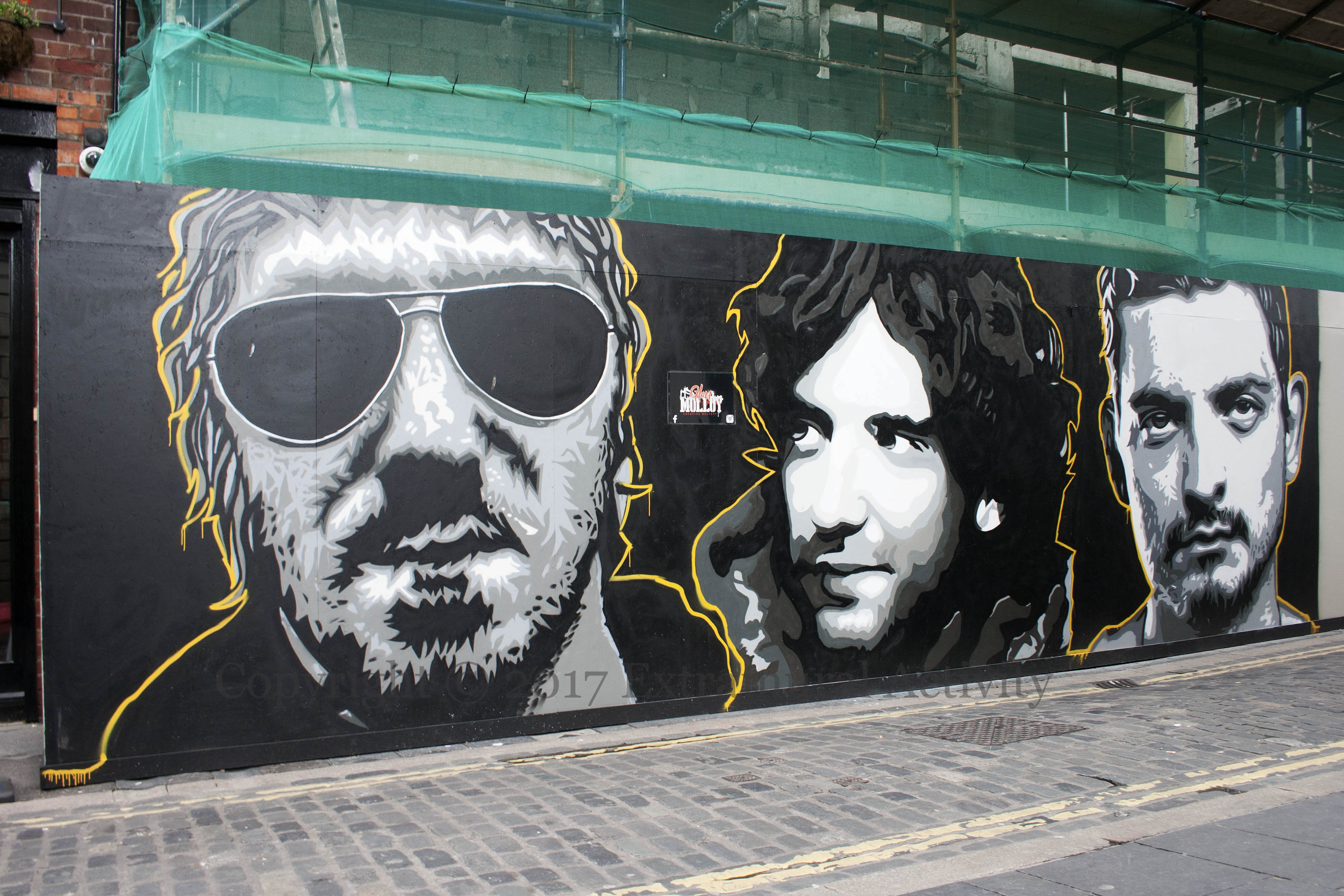
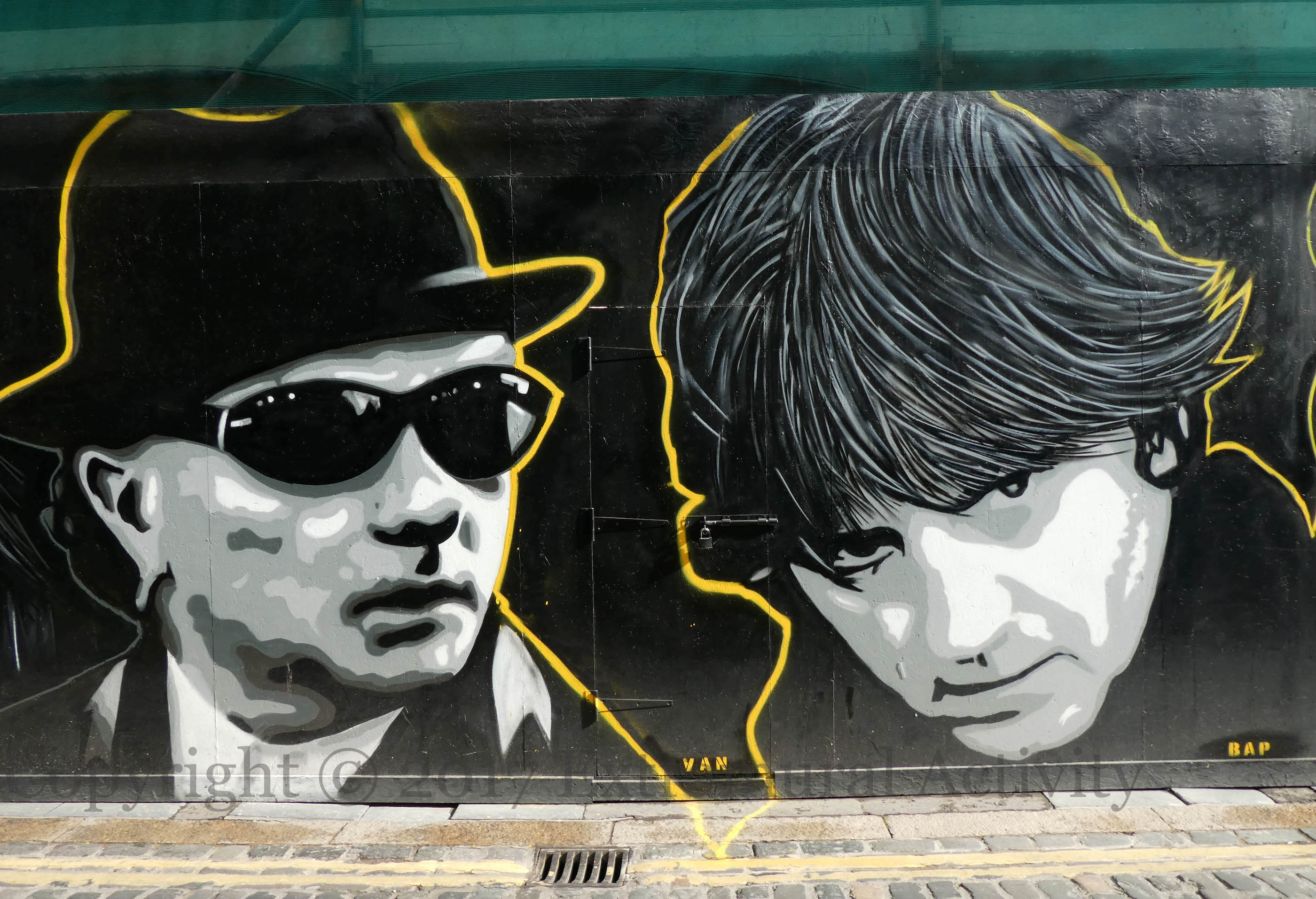
Over the course of May, June, and July, Glen Molloy (Fb) painted eight portraits of local musicians on the hoarding in front of the Harp Bar in Hill Street: (l-r) David Holmes, Gary Lightbody, Nathan Connolly, Una Healy, Van Morrison, Bap Kennedy, Brian Kennedy, Fatboy Slim.
Above and immediately below are close-ups of Fatboy Slim and Gary Lightbody, followed by some group shots and a wide shot.
This is a 32 County Sovereignty Movement (32CSM) poster from west Belfast, asking people to “Dismantle partition – reject British rule”. The organisation describes itself as “a republican pressure group”. The Belfast cumann (Fb | web) is named after Wolfe Tone and Henry Joy McCracken (of the 1798 Rebellion).












 Extramural Activity