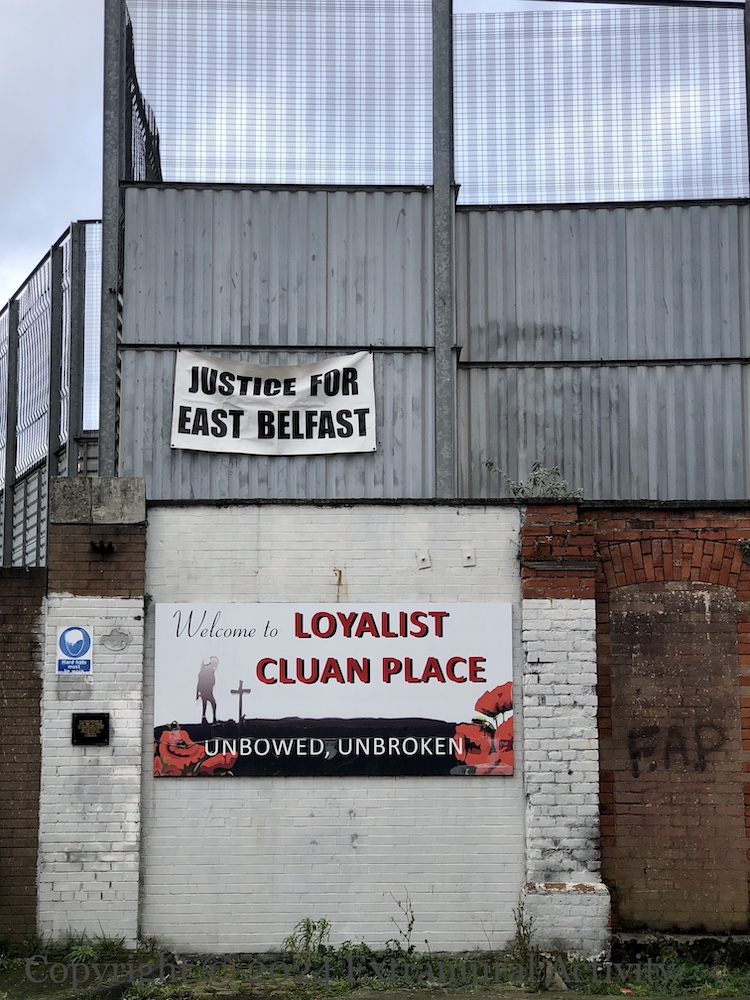
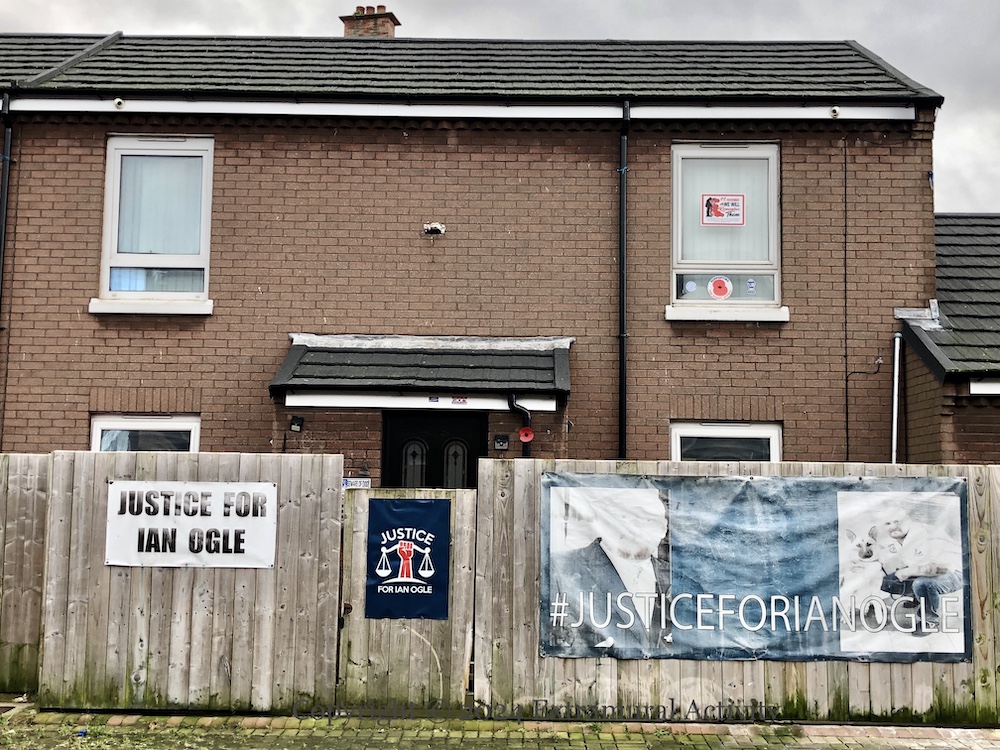
Two men were given life sentences on Thursday for the murder of Ian Ogle in 2019, pleading guilty but on the basis of intent to cause serious harm rather than to kill. The trial of three others on a murder charge will begin on Tuesday (iTV | BBC).
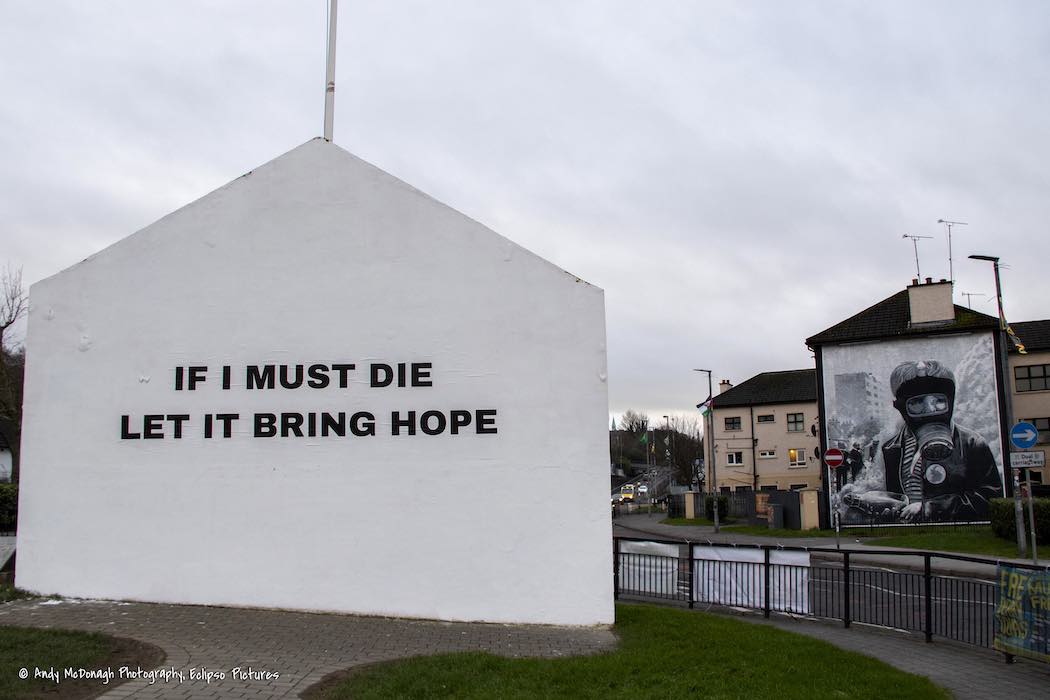
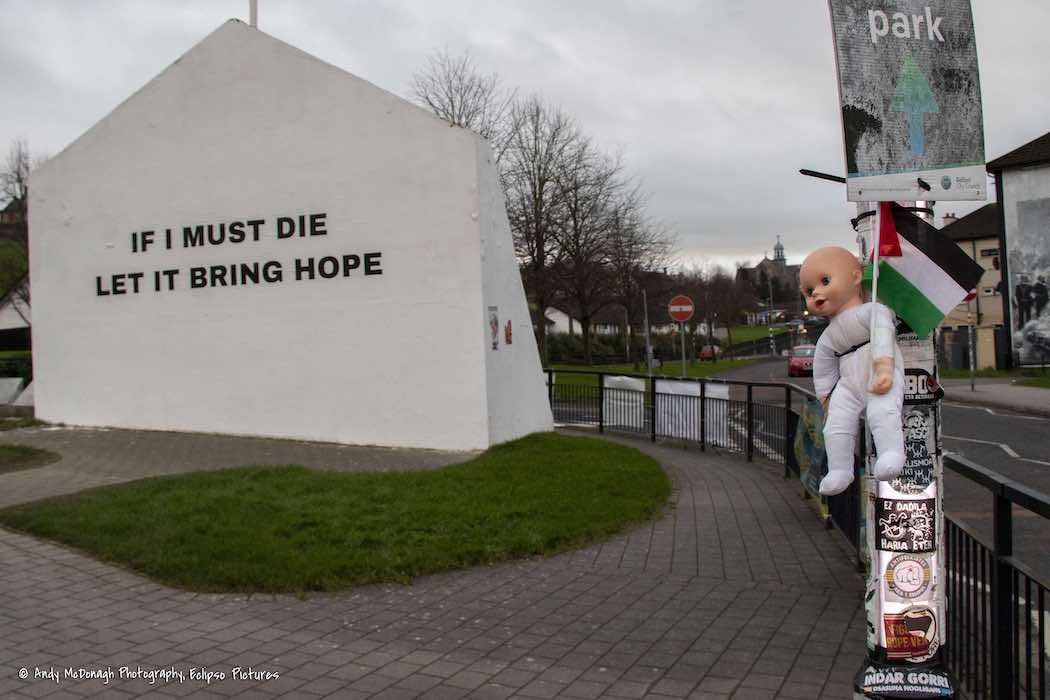
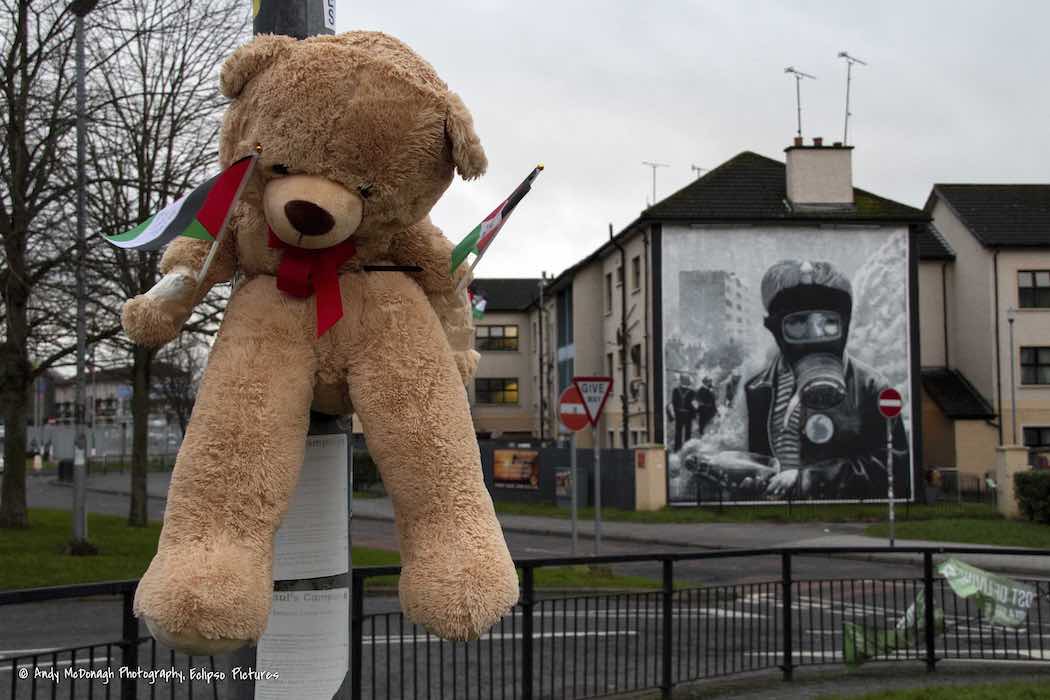
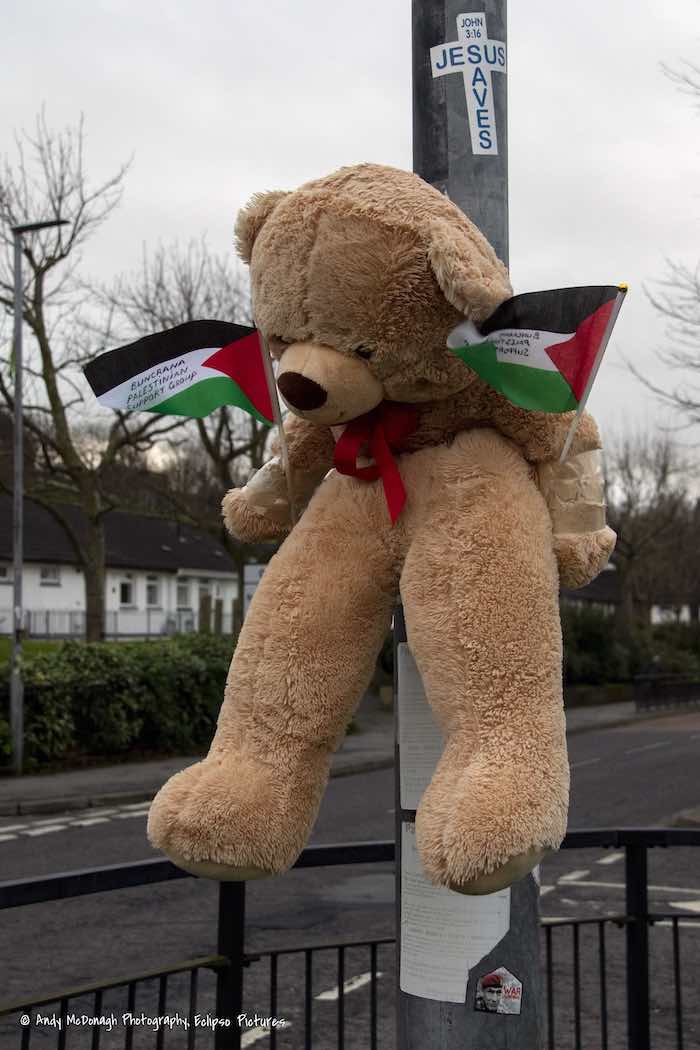
“If I must die/Let it bring hope.” The annual march in remembrance of the victims of Bloody Sunday, 1972, was this year dedicated to the victims of the on-going attack by Israel on the Gaza Strip (Irish News). For the occasion, Free Derry Corner was papered over (by Adam “Spicebag” Doyle – RN | Irish Times) with words from a poem (Xitter) of Palestinian writer Refaat Alareer, who was killed by Israeli forces on December 7th (Al Jazeera | WP).
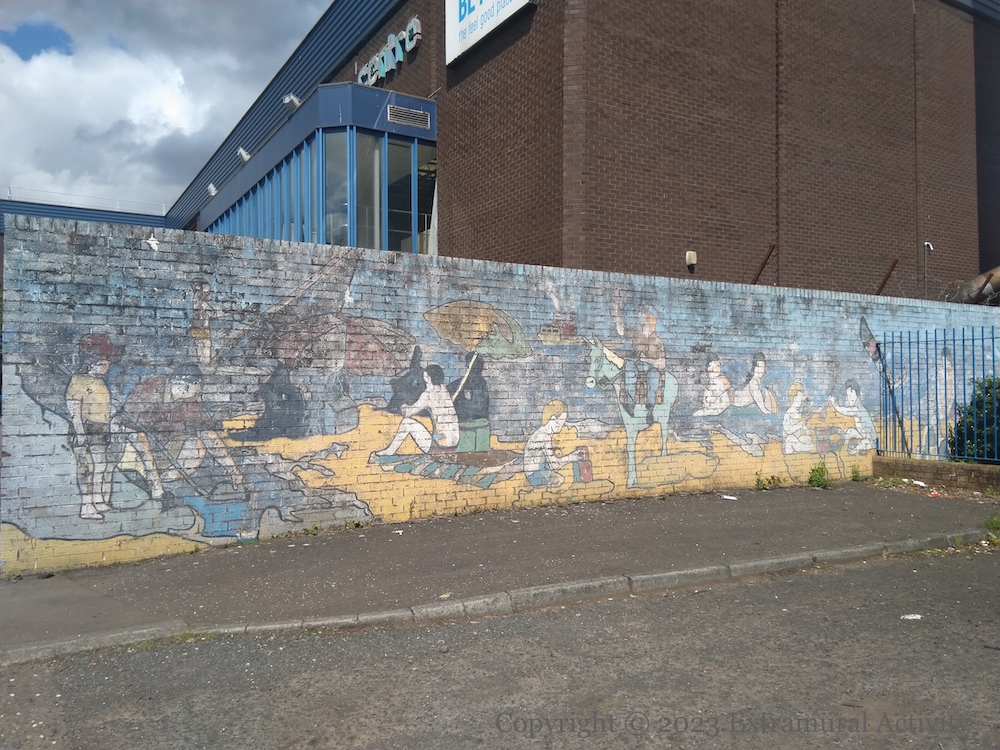
The beach scene at the back of the Shankill leisure centre has existed since at least 2002 (J1439) and perhaps 1996 (C04937). The activities of the holiday-makers are (from left to right) crabbing in a tidal pool, wind-surfing, sandcastle-building, donkey-riding, and swimming; on the far right a dolphin is leaping.
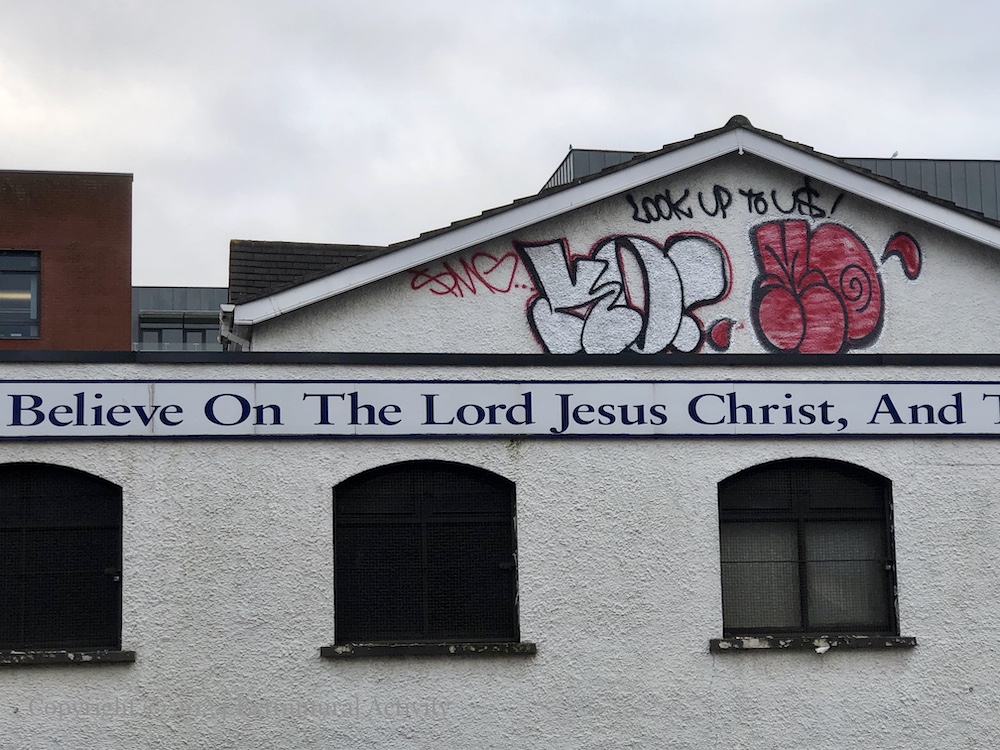
Sale has been agreed on the Shankill Gospel Hall (according to PropertyPal though not agents Frazer Kidd). High on the to-do list of the new owners will be removing the false gods in the apex on the Shankill Parade side.
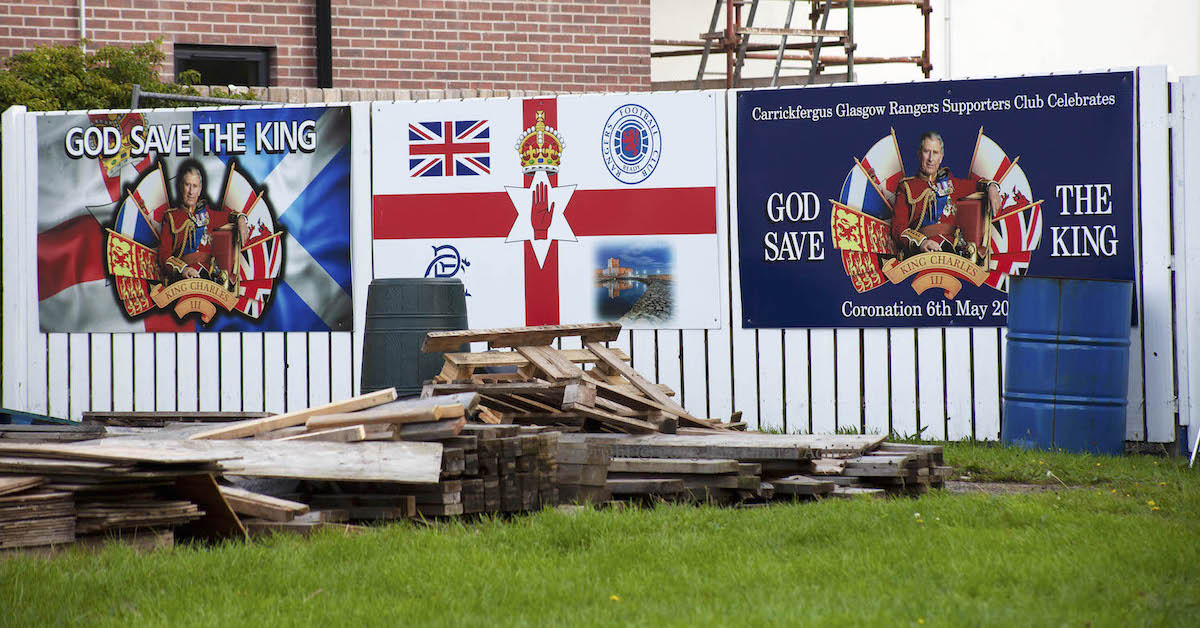
“Rangers ’til I die.” Here are images from the courtyard of the Carrickfergus Rangers Supporters Club, (Fb) and the approach to the clubhouse.
First, a pair of UVF boards above the courtyard listing both local (Carrickfergus, Ballyduff, Ballyclare, Greenisland, Glengormley, Monkstown, Rathcoole, Larne, Whitehead) and affiliated British units (Drumchapel (Glasgow, Scotland), Springburn (Glasgow) Possilpark (Glasgow), Paisley (Scotland), Falkirk (Scotland), Liverpool (England), Blackpool (England), Corby (England), and Blairgowrie (Scotland)) of the 1st East Antrim Battalion, “The people’s army”.
Second, the tarp on the back of the Men’s Shed.
Third and fourth, the boards on the lawn and the painted columns of the railway bridge on St Bride’s Street/North Road.
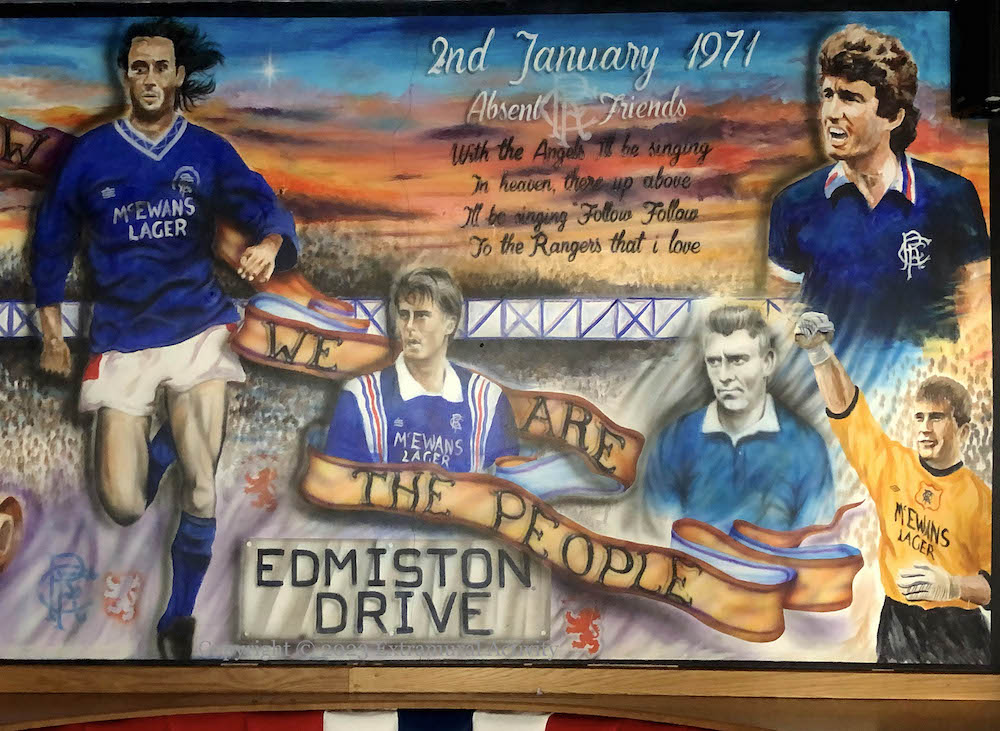
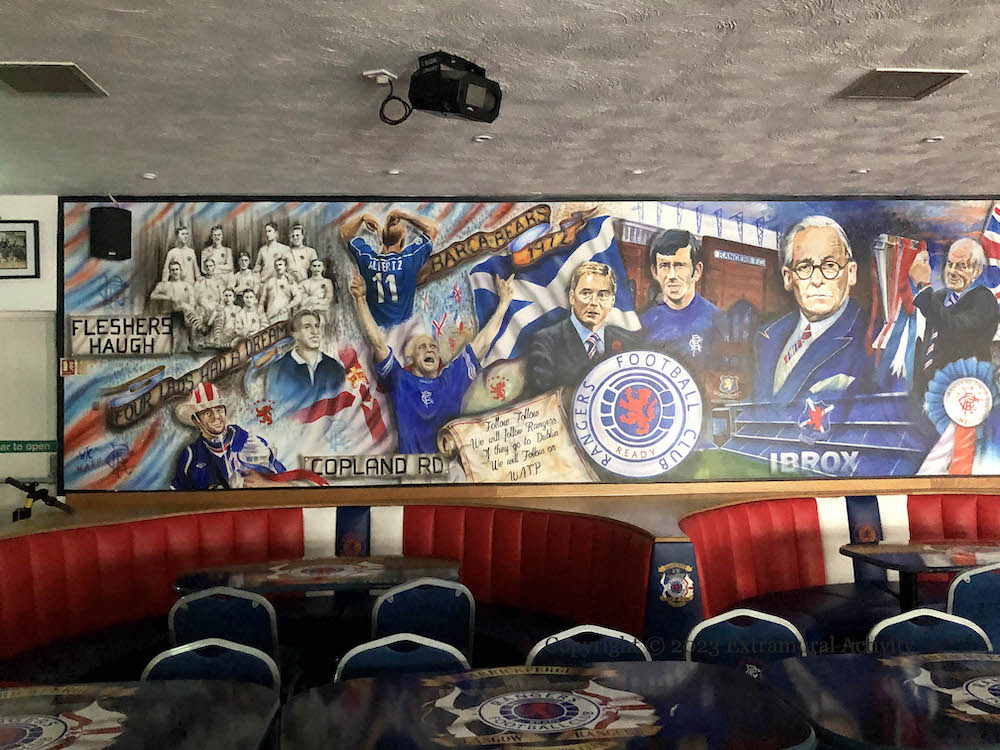
Here are images of murals from the interior and the outside patio of the Rangers Supporters Club (Fb) in Carrickfergus. January 2nd, 1971 – included in the panel above – is the date of the Ibrox disaster, in which 66 people died (WP). “Fleshers’ Haugh” [Butchers’ Low-Lying Meadow] – included in the panel below – is the part of Glasgow Green where Rangers played their games in the first three years of the club’s existence (Scotland Guide). Edmiston Drive (above) and Copland Road (third image) are streets adjacent to the stadium.
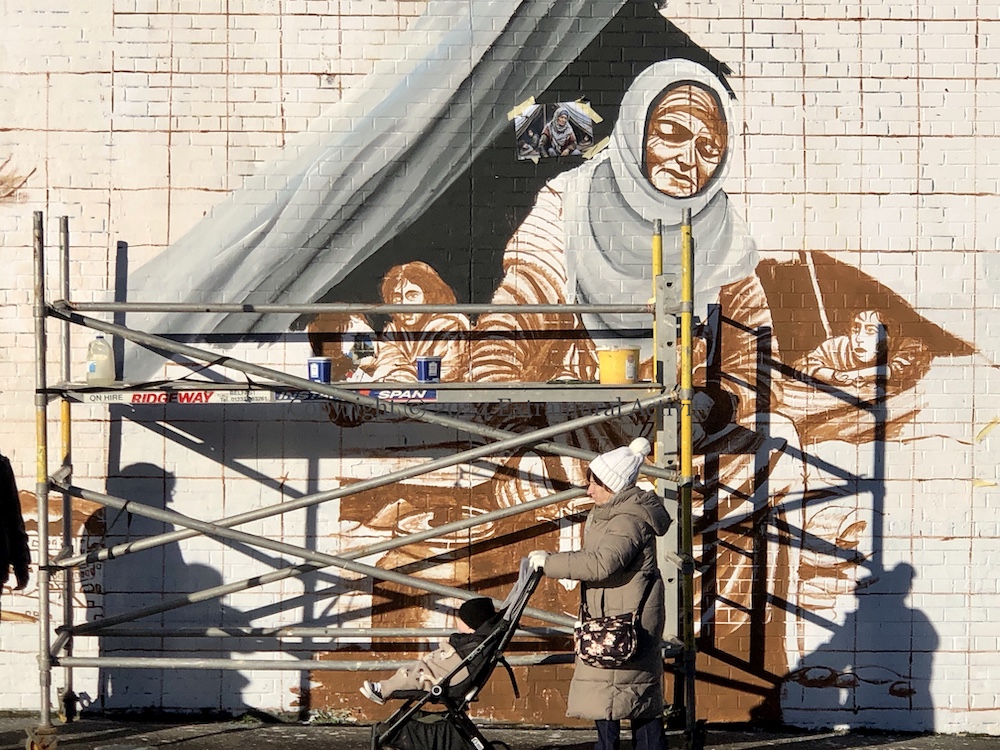
In January 2024, in response to the prolonged Israeli attack on Gaza, many murals on the “International Wall” on Divis Street were painted out and work began on reproductions of artworks by artists from Palestine and elsewhere in the region. The project was called Painting For Palestine and a Facebook page and GoFundMe page were launched.
According to Bill Rolston (Fb) (who can be seen in the second image, below), there was a plan last Autumn that Palestinian artists would create their own “international wall” and include murals designed by CNR artists. The Hamas attack on October 7 and the subsequent Israeli invasion on Gaza – now ongoing for 108 days – put paid to that project, and instead art by Palestinian painters is being painted in Belfast in support of Palestine. (Here is an NVTv segment on the project.)
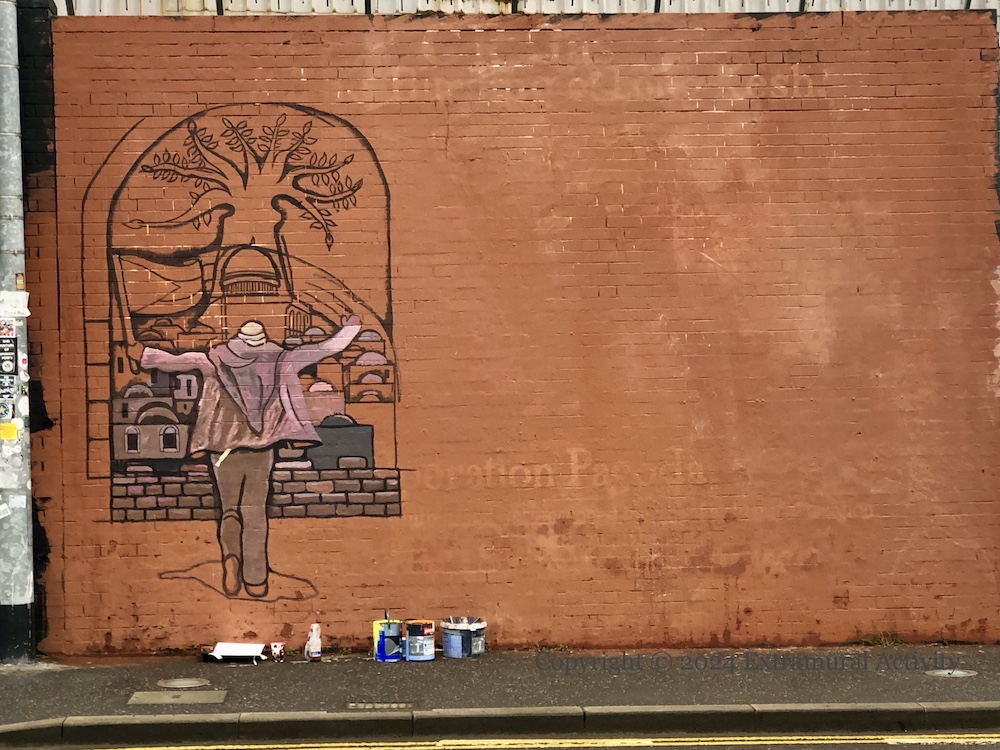
The first (left-most) panel will reproduce a mural called ‘The Land Is Ours’ by Mohammed Alhaj, Abdullah Al Najar, Rami Al Safadi, and Abdel Hamid Fares that once stood in a Gaza school; the second, next to the first, is currently blank (see the image above).
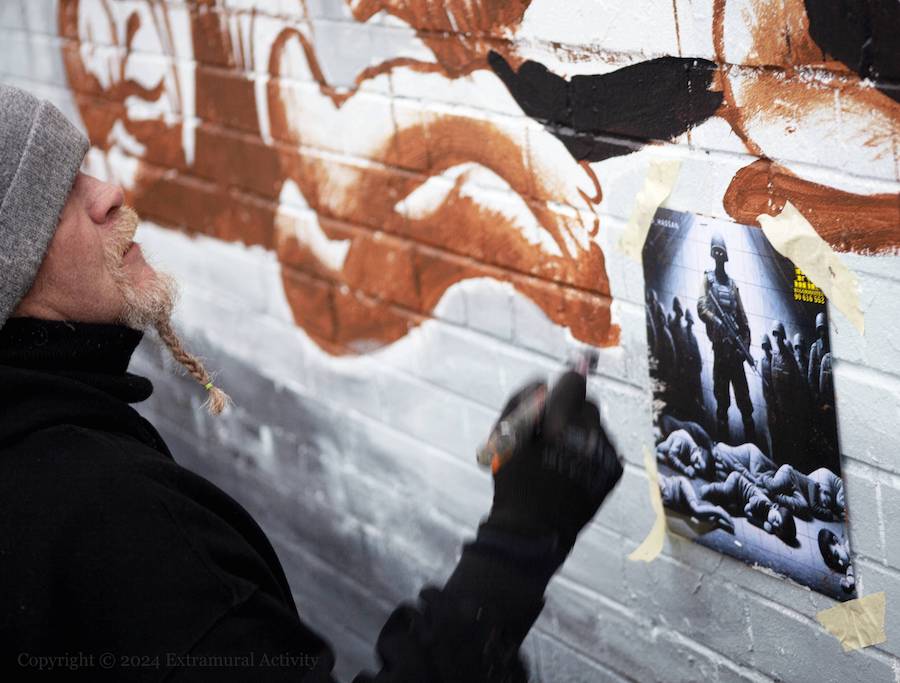
Bill Rolston working on The Land Is Ours:
The source image for The Land Is Ours:
The grid and cartoon for a mural from digital artist Saïd Hassan (web):
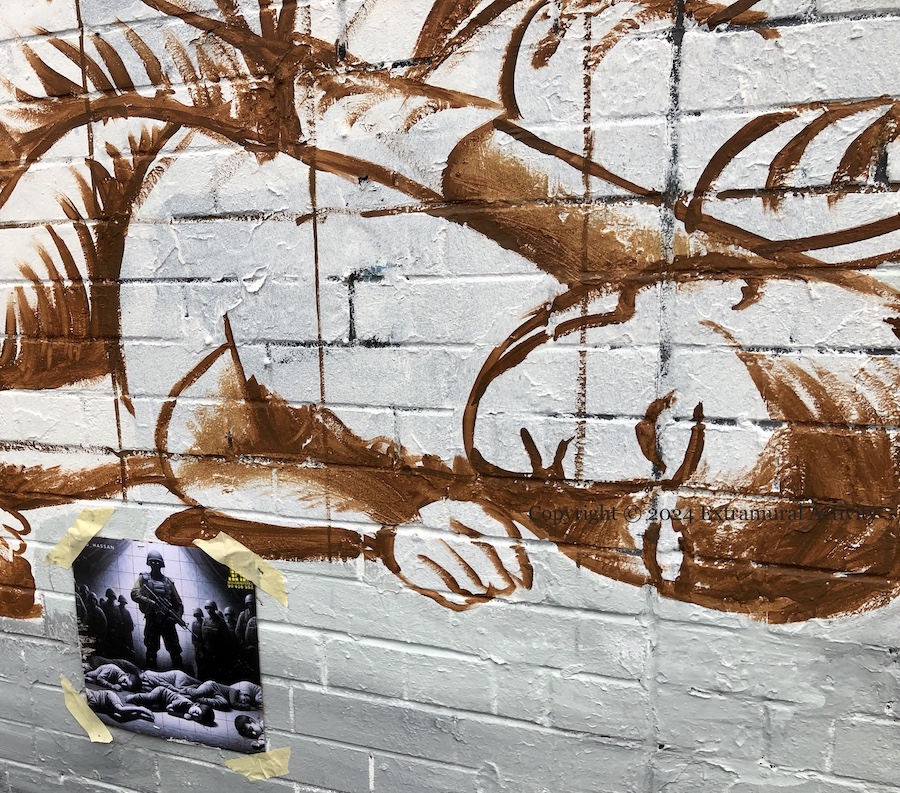
Another image by digital artist Saïd Hassan, showing soldiers standing over dead children:
Marty Lyons at work on the mural:
A wide shot with the left-hand side of the wall in the foreground:
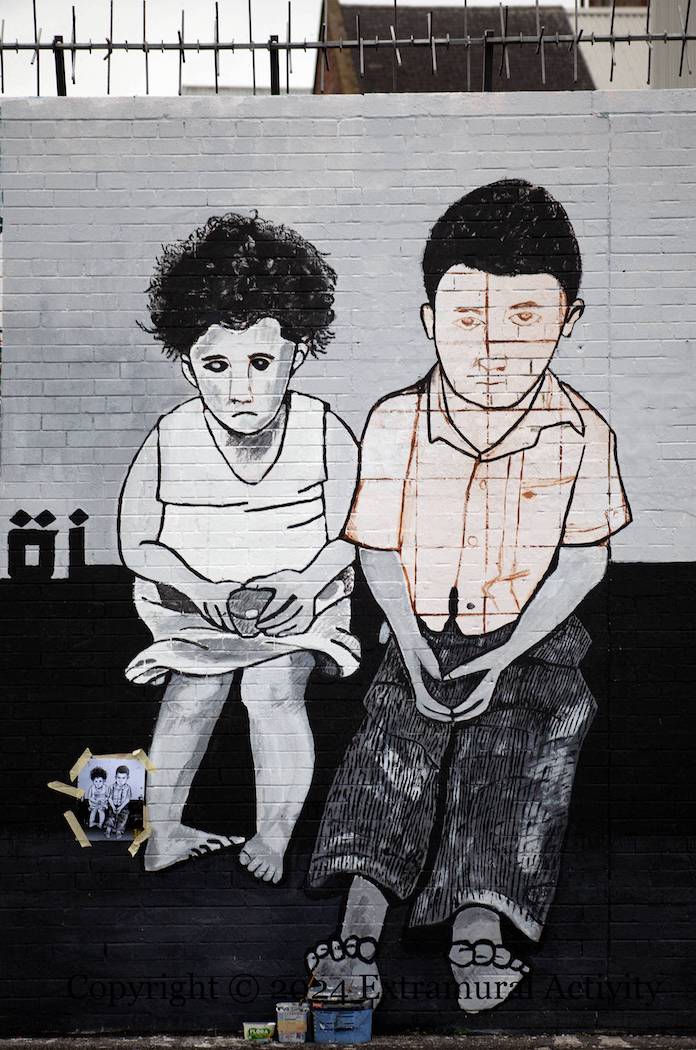
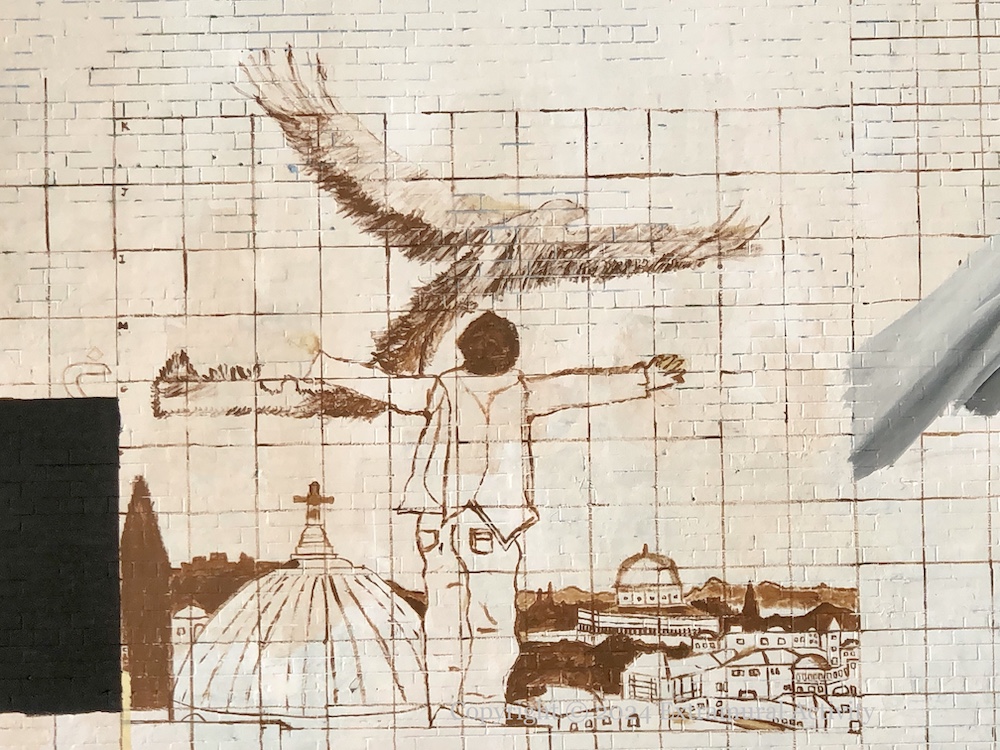
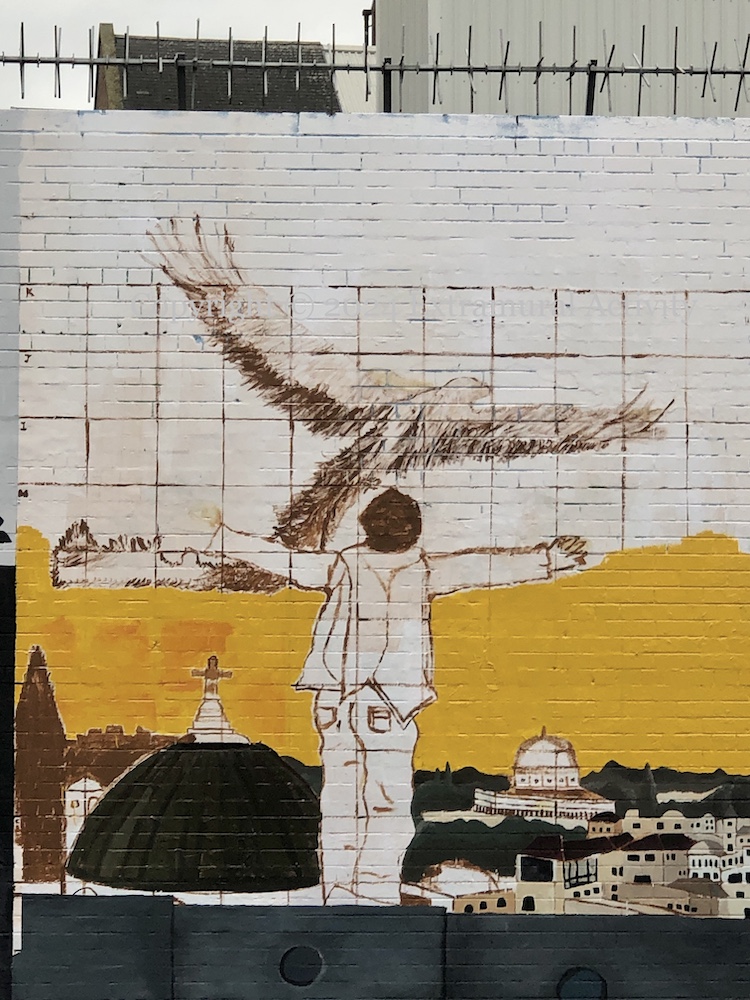
Four murals are being painted over what were previously Lenár Linn and Hunger Strikers (1916). The originals for these were designed by Ahmad Shaweesh (ig), Raed Qatanani (ig), ? [please get in touch], and Saïd Hassan (web).
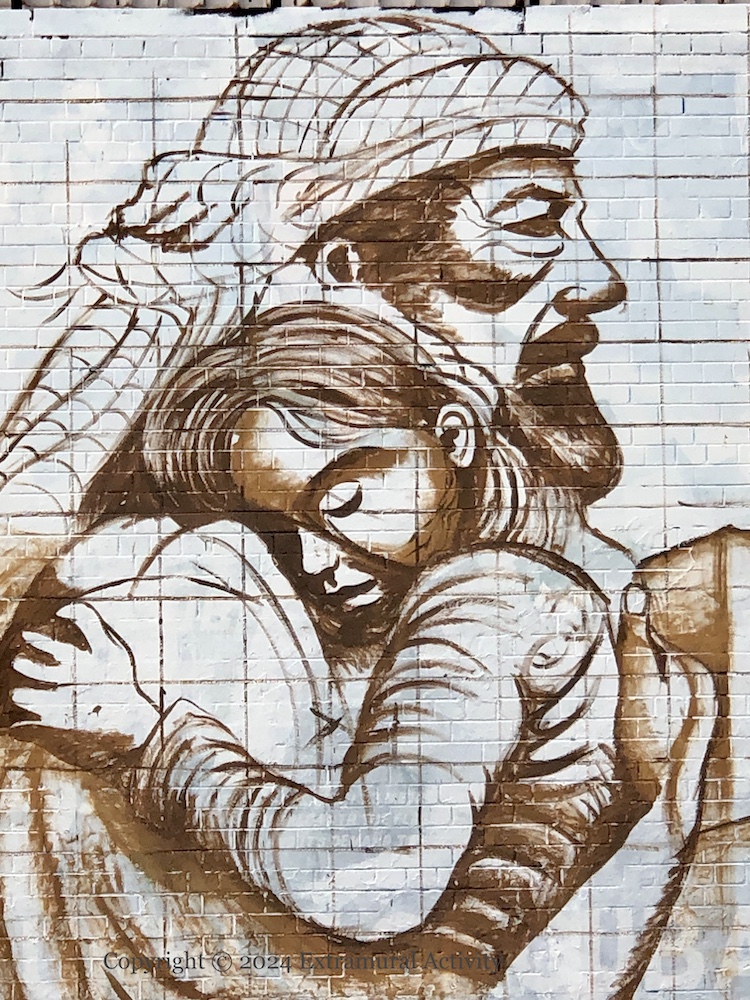
Shaweesh’s piece is a deliberately unfinished image of a group of people, perhaps a family, in distress.
Qatanani’s image is a portrait of Soso and Omar Ashour as they sat in a Gaza hospital during the first week of the Israeli invasion.
The original artist of this figure with a phoenix is unknown.
The last of these four murals is by Hassan and shows a woman cooking over an open fire in front of a tent in a refugee camp.
January 17th:
January 20th:
Wide shot of the four pieces on the right-hand side:
“All gave some; some gave all.” During its twenty-two years of operation, 197 UDR soldiers were killed. The scroll on the left gives the dates of the regiment’s operation: 1970 (April 1) was the year it replaced the Special Constabulary, and 1992 (May 31) was the year seven of the nine battalions were amalgamated with the Royal Irish Rangers’ two battalions to form the (modern) Royal Irish Regiment (WP) – the piper in the top right is carrying a flag of the Royal Irish Regiment.
The inscription on the plaque reads: “Ulster Defence Regiment mural, dedicated on the 19th March 2016 by Chairman Roy Burton, Carrickfergus Glasgow Rangers Supporters Club [and] Chairman Stephen Weir, Carrickfergus Ulster Defence Regiment Association CGC. Lest we forget.”
“Behold, the dwelling place of God is with man, and He will dwell with them. They will be His people, and God Himself will be with them as their God. He will wipe away every tear from their eyes, and there will be no more death or mourning or crying or pain, for the former things have passed away. He will wipe every tear from their eyes.” (Revelations 21:4)
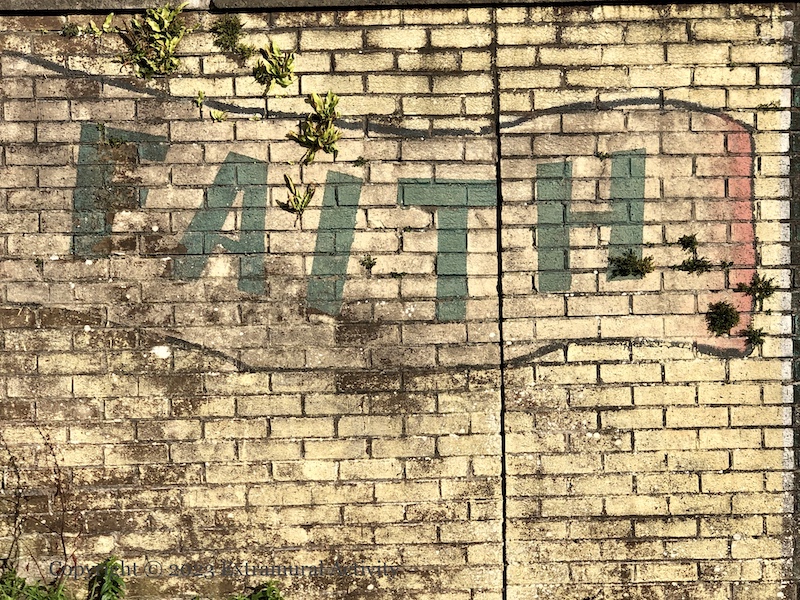
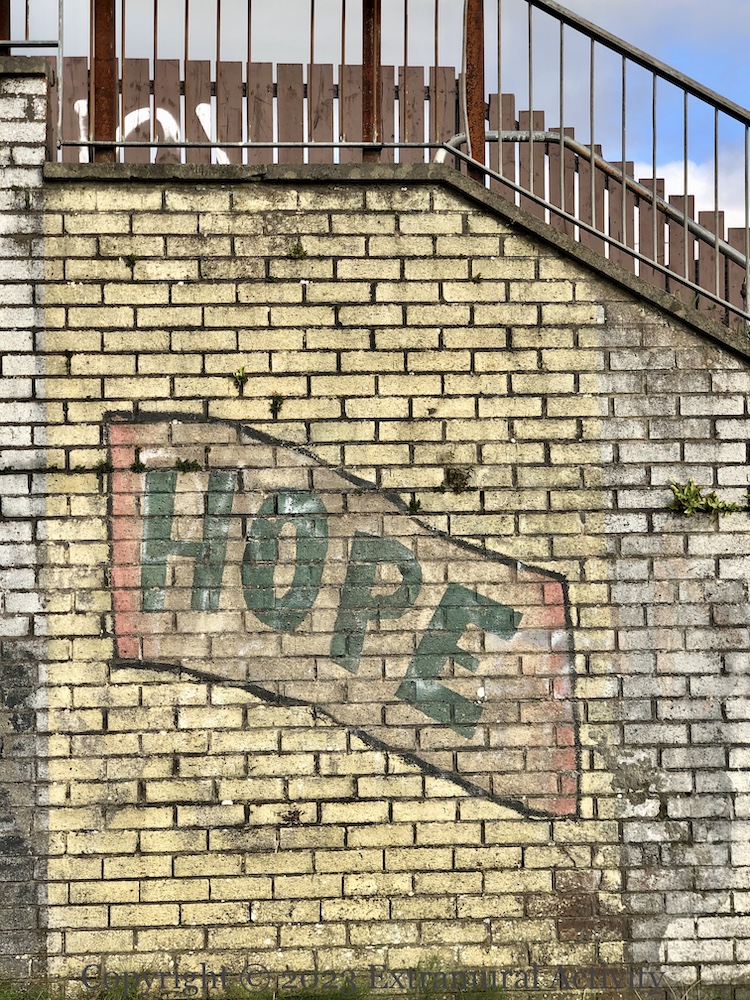
In addition to the image of a tear being wiped away there is a burning heart with the words “In the name of love” and panels reading “faith”, “hope”, and “forgiveness”. And also “Team Syracuse, NY, USA 2004”.
Across the street from St Andrew’s church in Forthriver (on the right of the widest image).
A fine of 500 pounds and eternal damnation. Belfast City Council first made various Belfast street “alcohol-free” areas in 2007. A full list of streets can be found in this 2012 pdf. The placard shown in the image above is on the Falls Road, outside the Royal. The grounds of the hospital are also included in the list of areas. About 50 people a year receive a summons (2016 minutes). How many of us, annually, are refused entry at the pearly gates is unknown.






















 Extramural Activity