Paris street artist KASHINK was in Belfast for Culture Night 2016, working on the fencing in Union Street behind the Sunflower. According to this article, she paints “hairy four-eyed men to examine gender assumptions.”
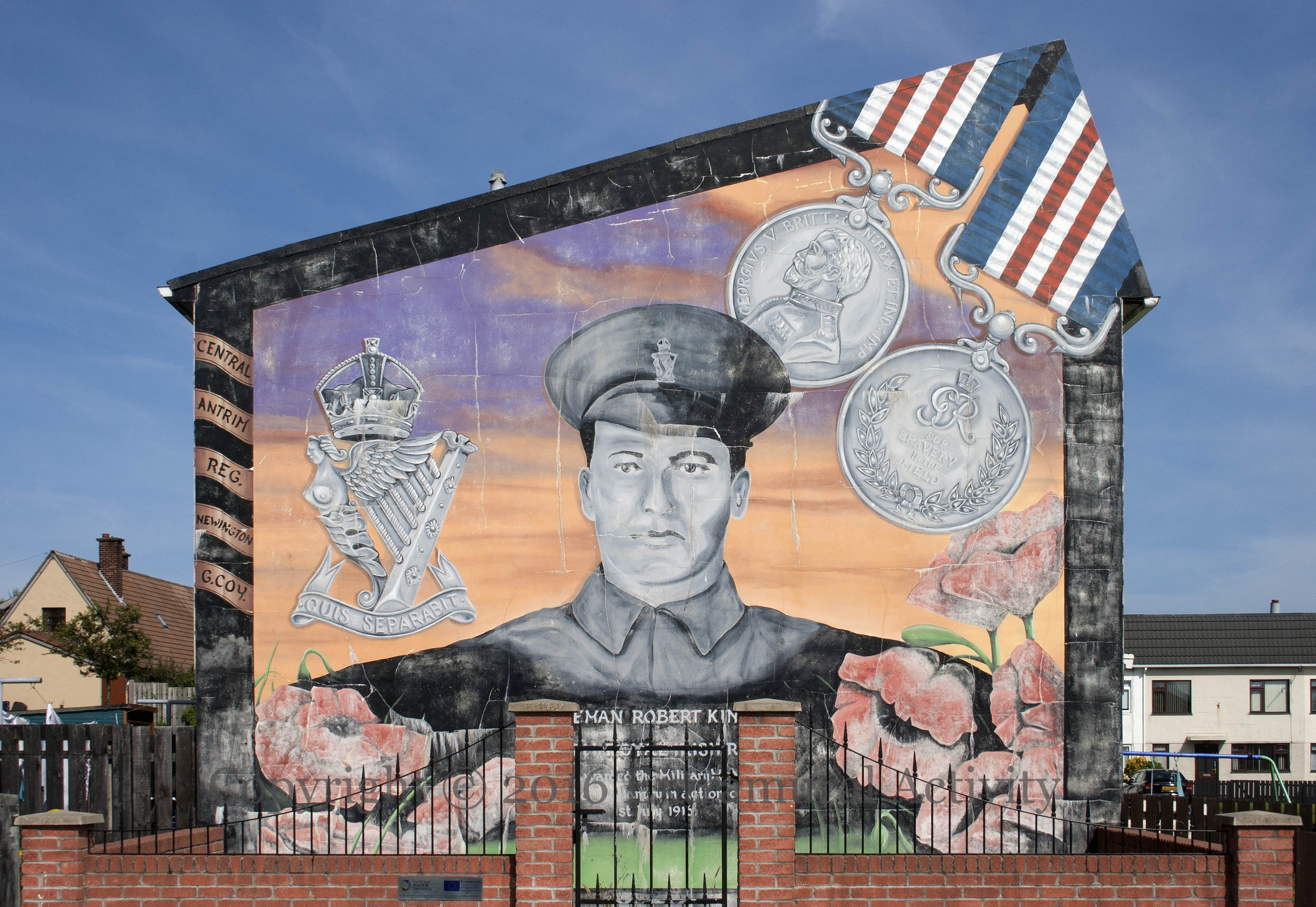
Robert King, of the 12th Royal Irish Rifles, who joined the army from the Ulster Volunteers, was “awarded the Military Medal for gallantry in action on 1st July 1916” at the Somme. The two sides of the medal are shown in the top right, with George V on one side and “for bravery in the field”. The 12th Rifles were drawn from the Central Antrim regiment of the Ulster Volunteers including the Newington area of Larne; King, however, was from Ship Street.
A stencilled phoenix in the Bogside, Derry’s, Meenan Square. The phoenix dies in flames and from its ashes rises another; a symbol of Irish republicanism.
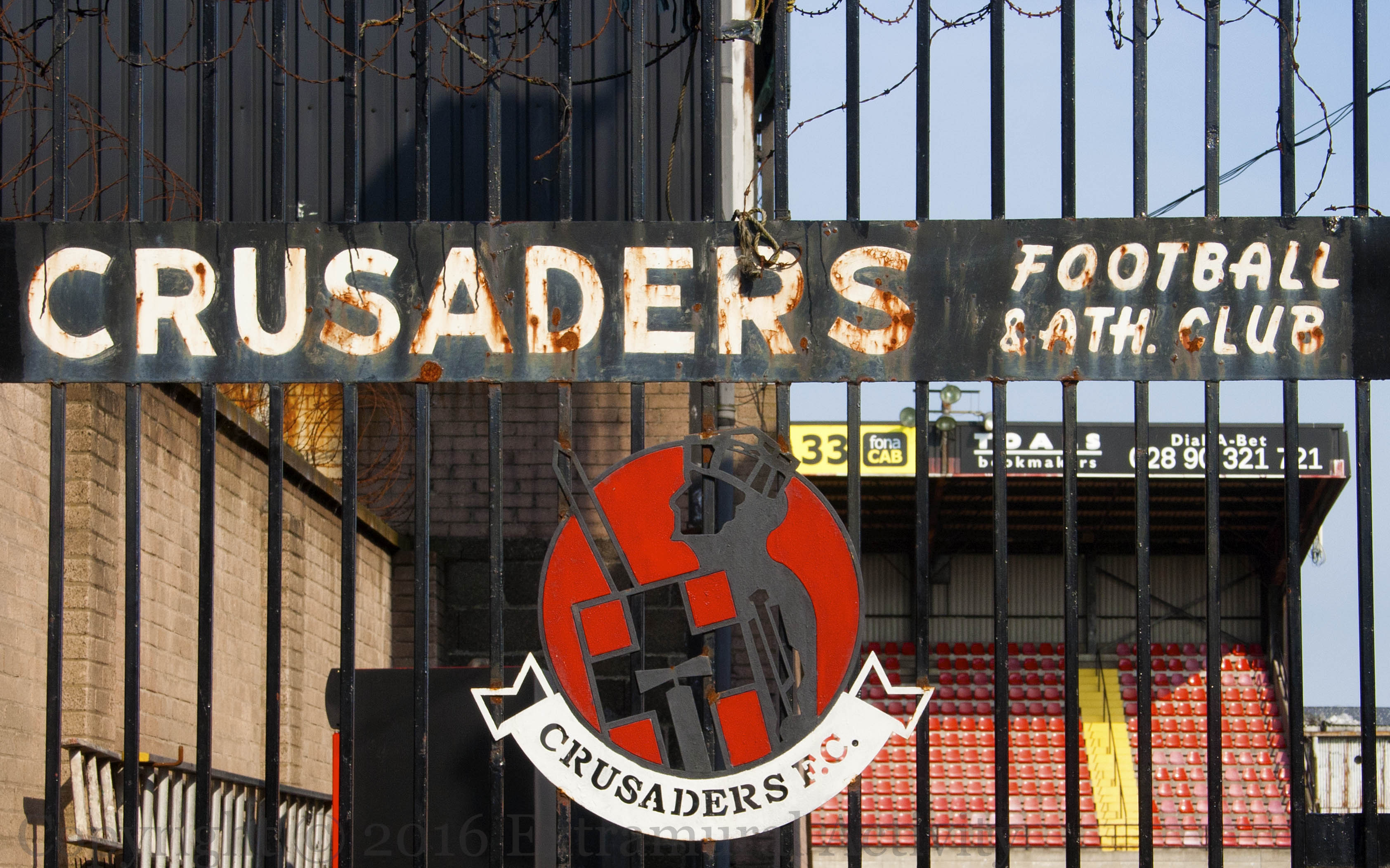
This past Saturday saw the north Belfast derby between Crusaders and Cliftonville, with the League-Champion and league-leading Crues coming out on top 4-3. Today’s images are from their Seaview home ground: above are the railings and below a mural on a side wall. The newspaper The Express employs the same emblem of a Christian knight.
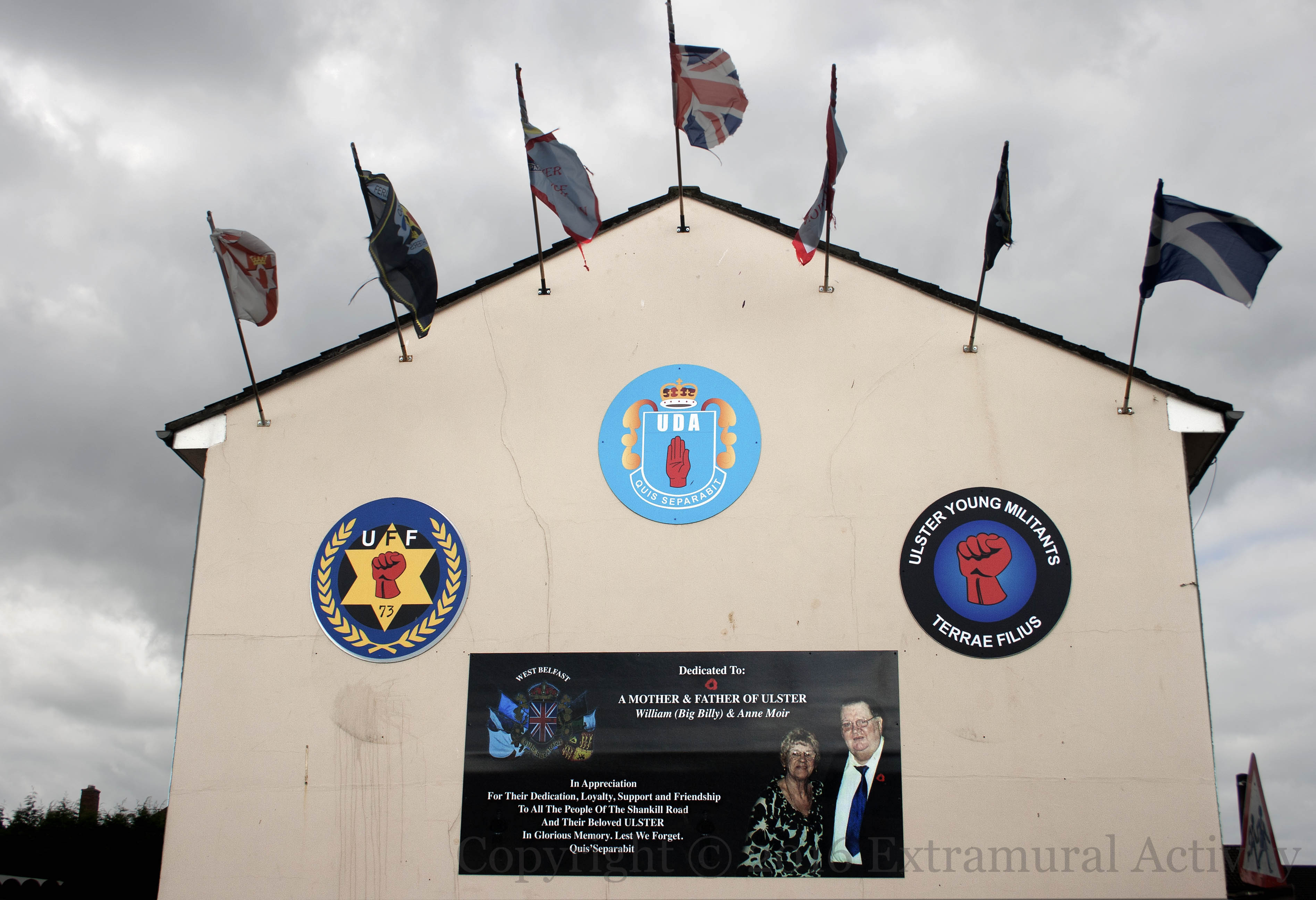
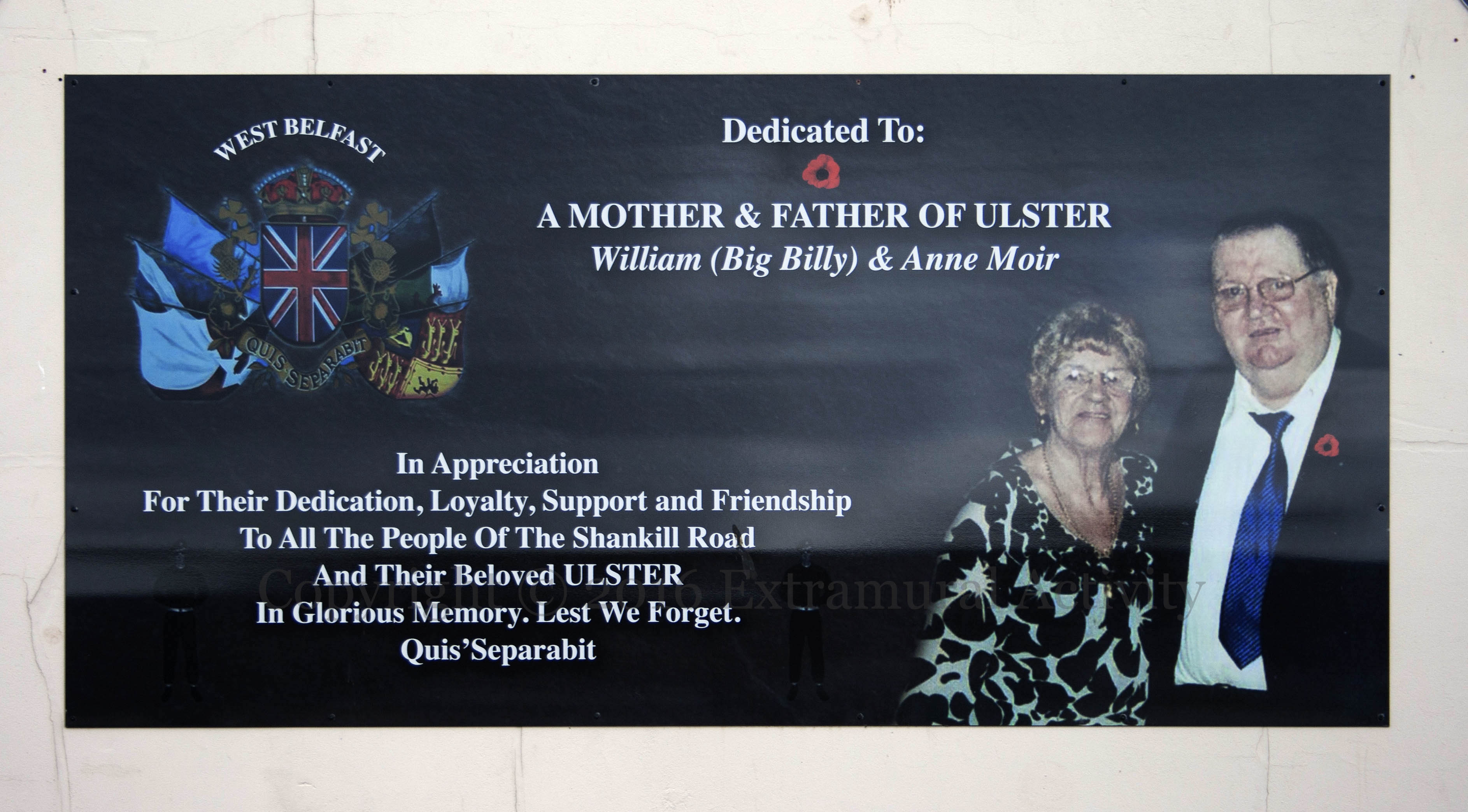
Billy Moir, who died this past May (2016) was a central figure in the Glasgow flute-band scene. The board above, dedicated to Billy and his wife Anne, is in the lower Shankill estate. “Dedicated to a mother & father of Ulster: William (Big Billy) & Anne Moir, in appreciation for their Dedication, Loyalty, Support and Friendship to all the people of the Shankill Road and their beloved ULSTER. In Glorious Memory, Lest We Forget, Quis Separabit.”
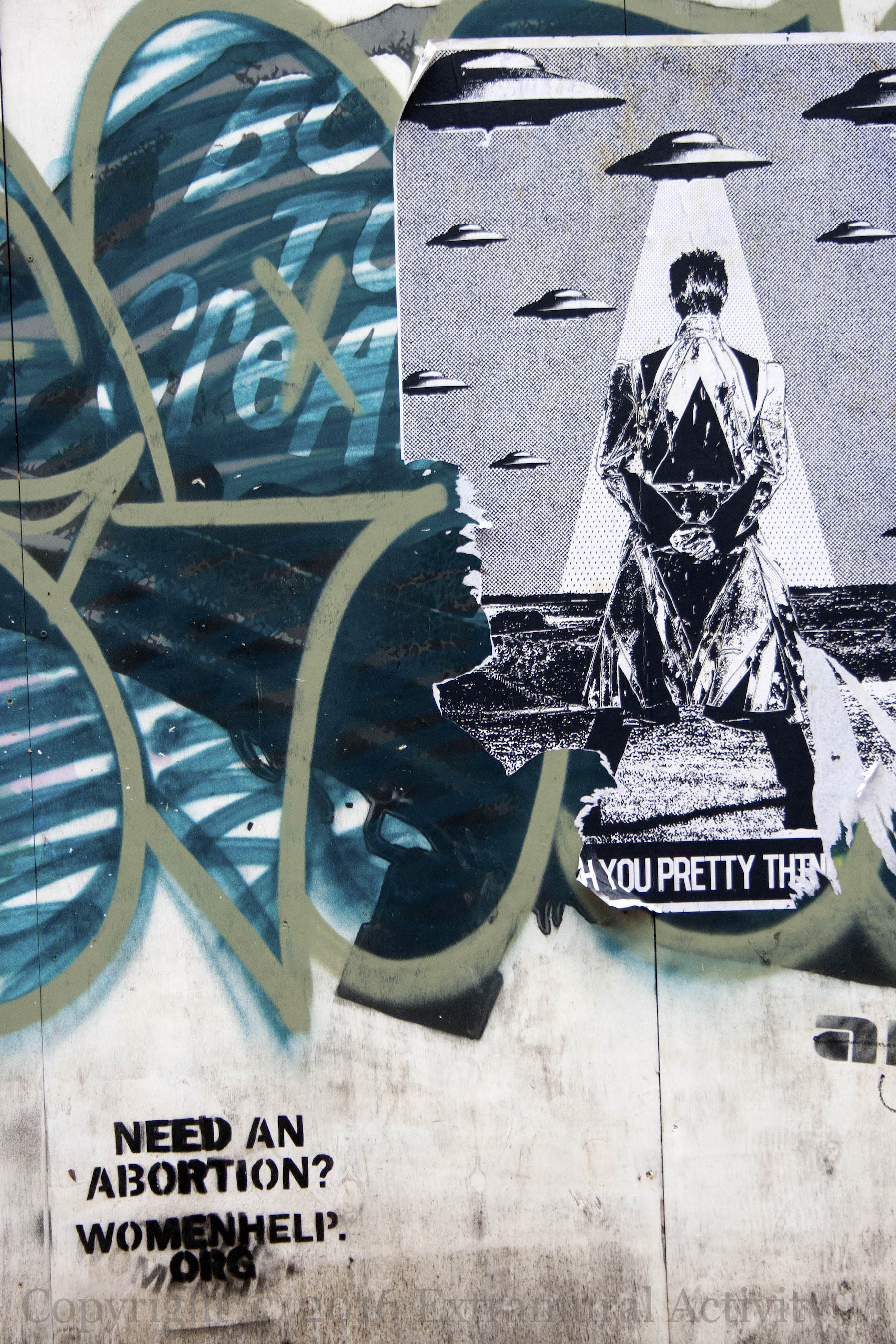
Two pieces relating to abortion rights. The first is a piece of Irish-language graffiti in North Street, below Andy Council’s CNB14 Phoenix, signed by “Mısneach” (“courage”). The second is a stencil in Garfield Street below Leo Boyd’s Bowie tribute Oh You Pretty Thing: “Need an abortion? Womenhelp.org.”
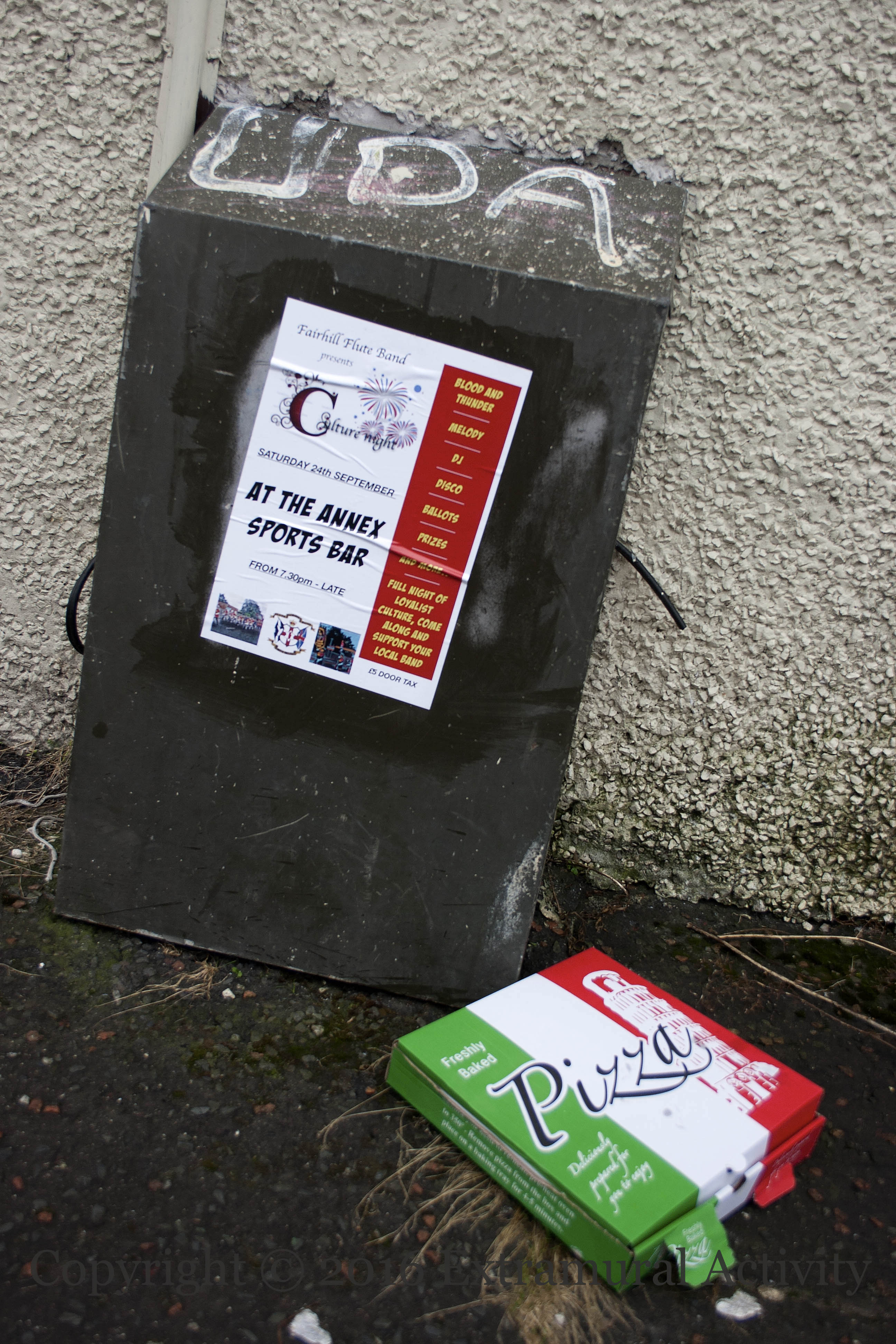
Pay the £5 “door tax” and you can attend the Fernhill Flute Band’s “Full night of loyalist culture” including “Blood And Thunder, Melody, DJ, disco, ballots, prizes, and more”.
(We’ll start posting images from that other culture night — #CNB16 — tomorrow.)
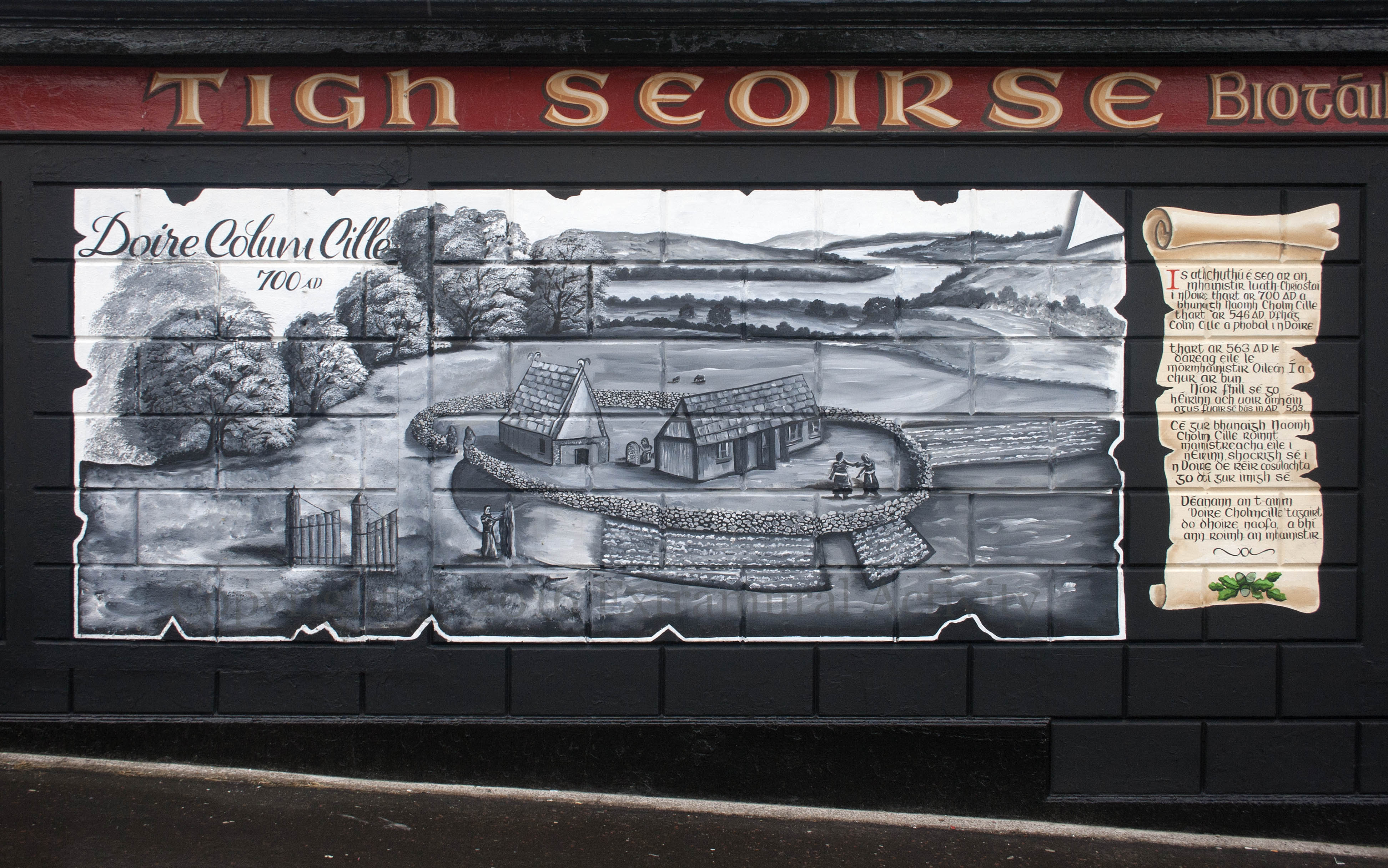
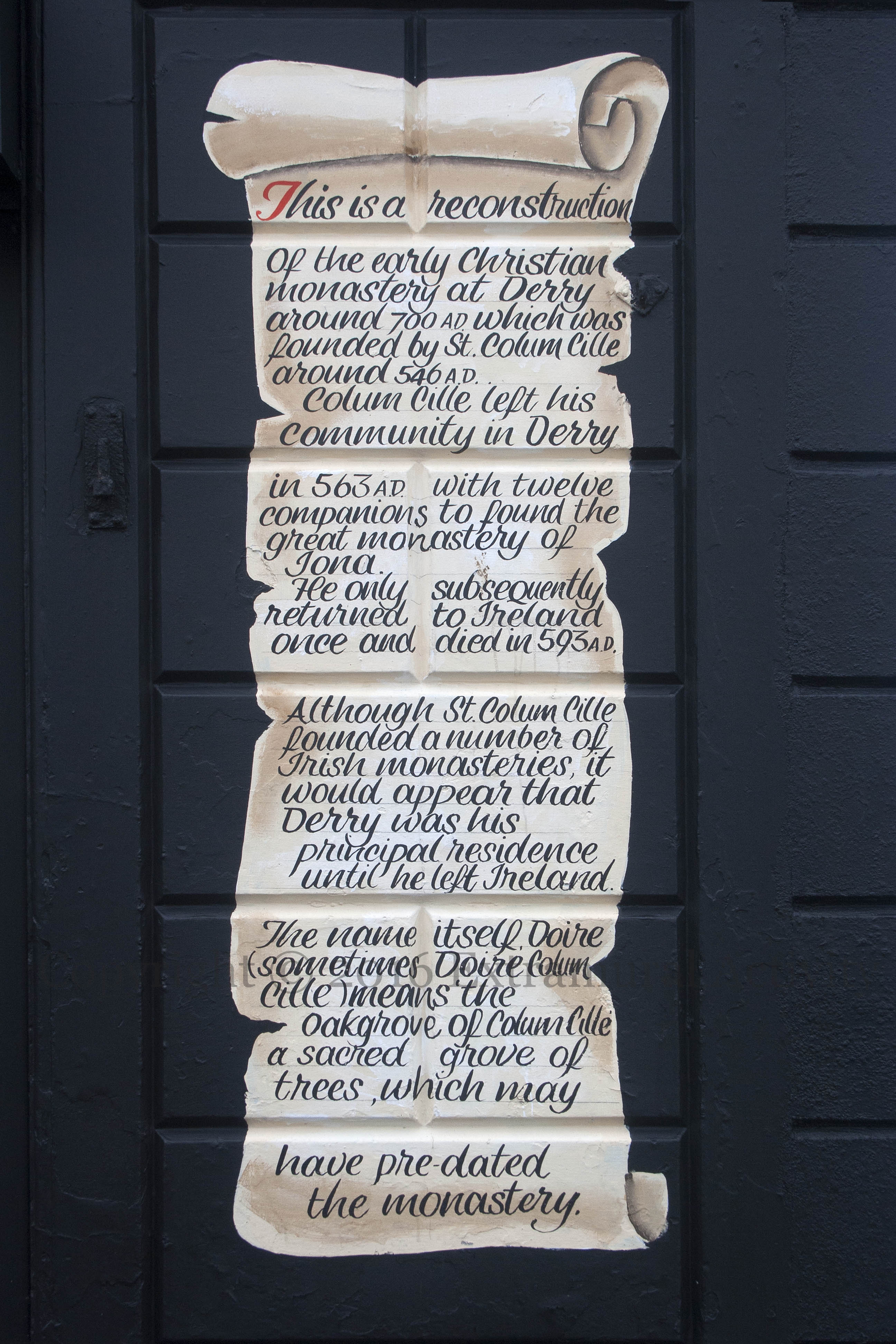
The Christian missionary Colm Cılle (in Latin, Columba), born in Donegal, founded a monastic settlement on the banks of the Foyle (then still part of Donegal) around 540 AD. The “Doıre” part of the name means “oak grove” and perhaps refers (as the information panel suggests) to “a sacred grove of trees, which may have pre-dated the monastery.” The mural above shows a reconstruction of the Derry monastery c. 700 AD. The name “Londonderry” dates to 1662.
Columba moved on to Scotland circa 563 and founded an abbey on the island of Iona. Among his reputed miracles is the banishment of a great water beast from the River Ness in 565.
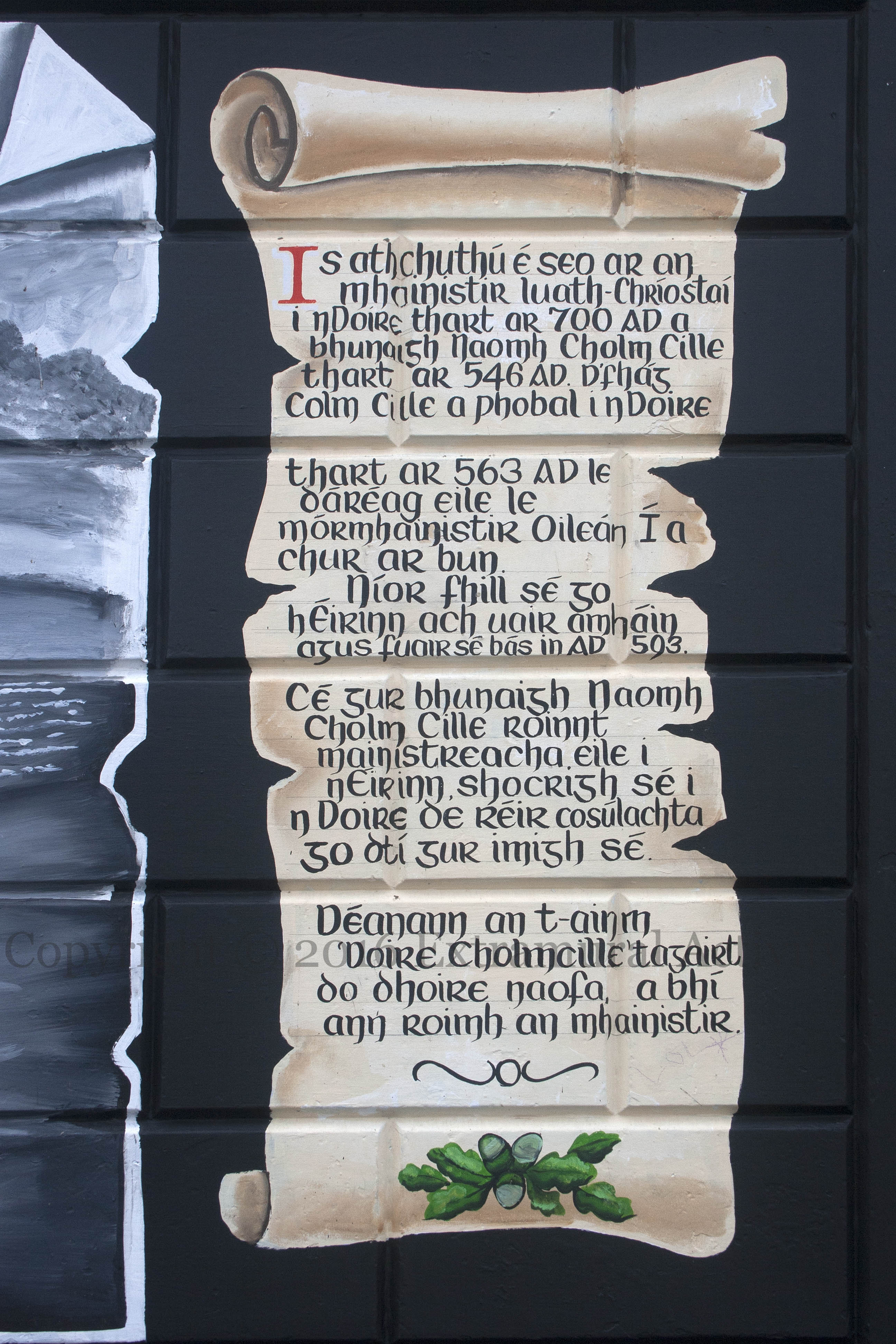
“Is athchuthú é seo ar an mhainistir luath-Chríostaí i nDoıre thart ar 700 AD a bhunaigh Naomh Cholm Cıille thart ar 546 AD. D’fhág Colm Cille a phobal ı nDoıre thart ar 563 AD le dáréag eıle le mómhaınıstır oıleán Í a chur ar bun. Níor fhill sé go hÉıreann ach uaır amháın agus fuaır sé bás in AD 593. Cé gur bhunaigh Naomh Cholm Cille roınnt maınıstreacha eıle ı nÉırınn, shocrıgh sé ı nDoıre de réır cosúlachta go dtí gut ımıgh sé. Déanann an t-aınm ‘Doıre Cholmcılle’ tagaırt do dhoıre naofa, a bhí ann roımh an mhaınıstir.”









 Extramural Activity