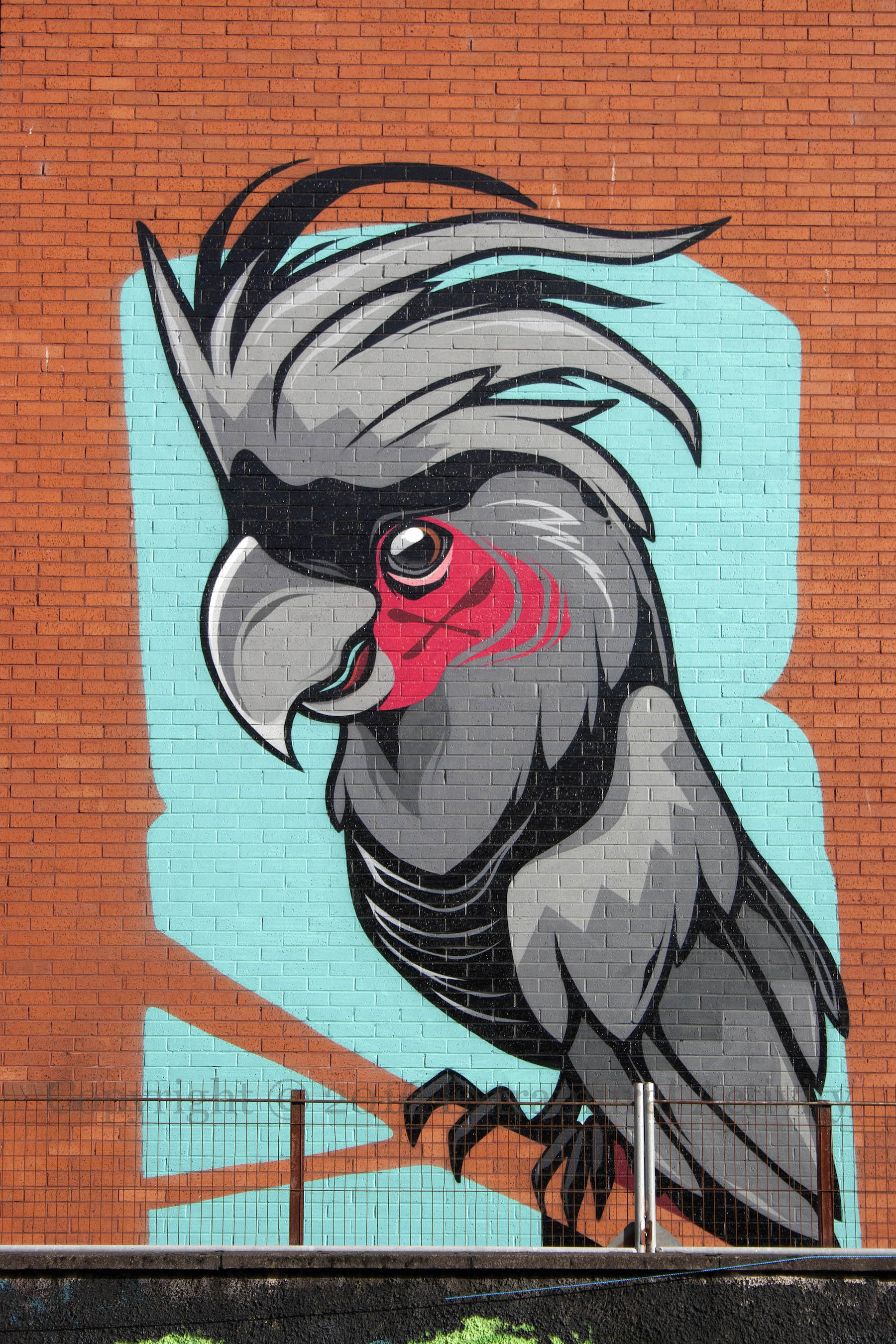
Multi-storey work by DanLeo (Fb | Instagram) for CNB16/Hit The North.
Click image to enlarge
Copyright © 2016 Seosamh Mac Coılle
X03838 kent st

The Royal Ulster Academy Of Art’s Art In The City exhibition, which runs through October and November, puts (reproductions of) 12 works of art on the Belfast streets. The work shown above is Dan Dowling’s Big Daddy’s Funeral – the funeral is happening just left of the bus, outside St Patrick’s Cathedral in Donegall Street, which is where the painting itself can be found.
Click image to enlarge
Copyright © 2016 Seosamh Mac Coılle
X03914
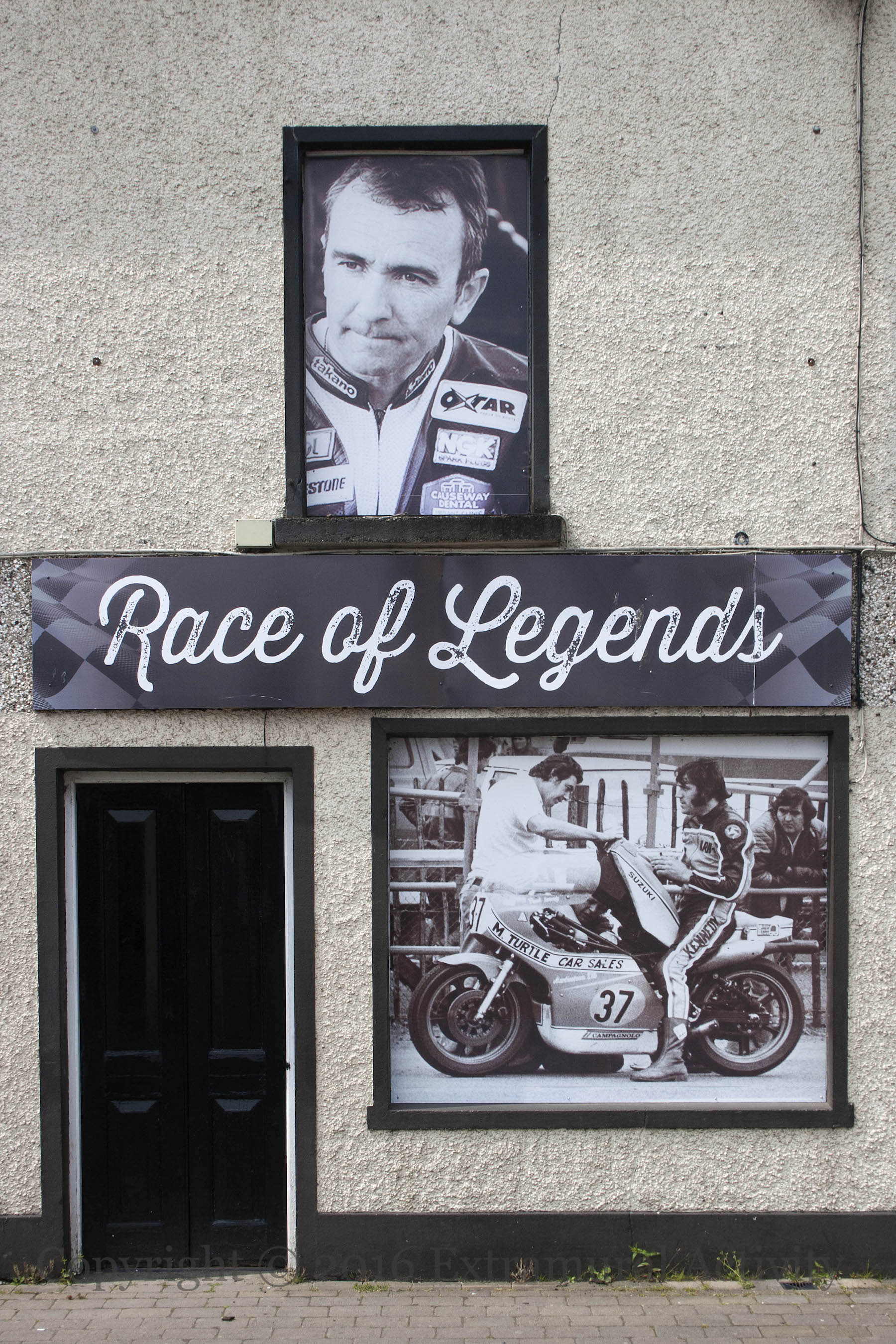
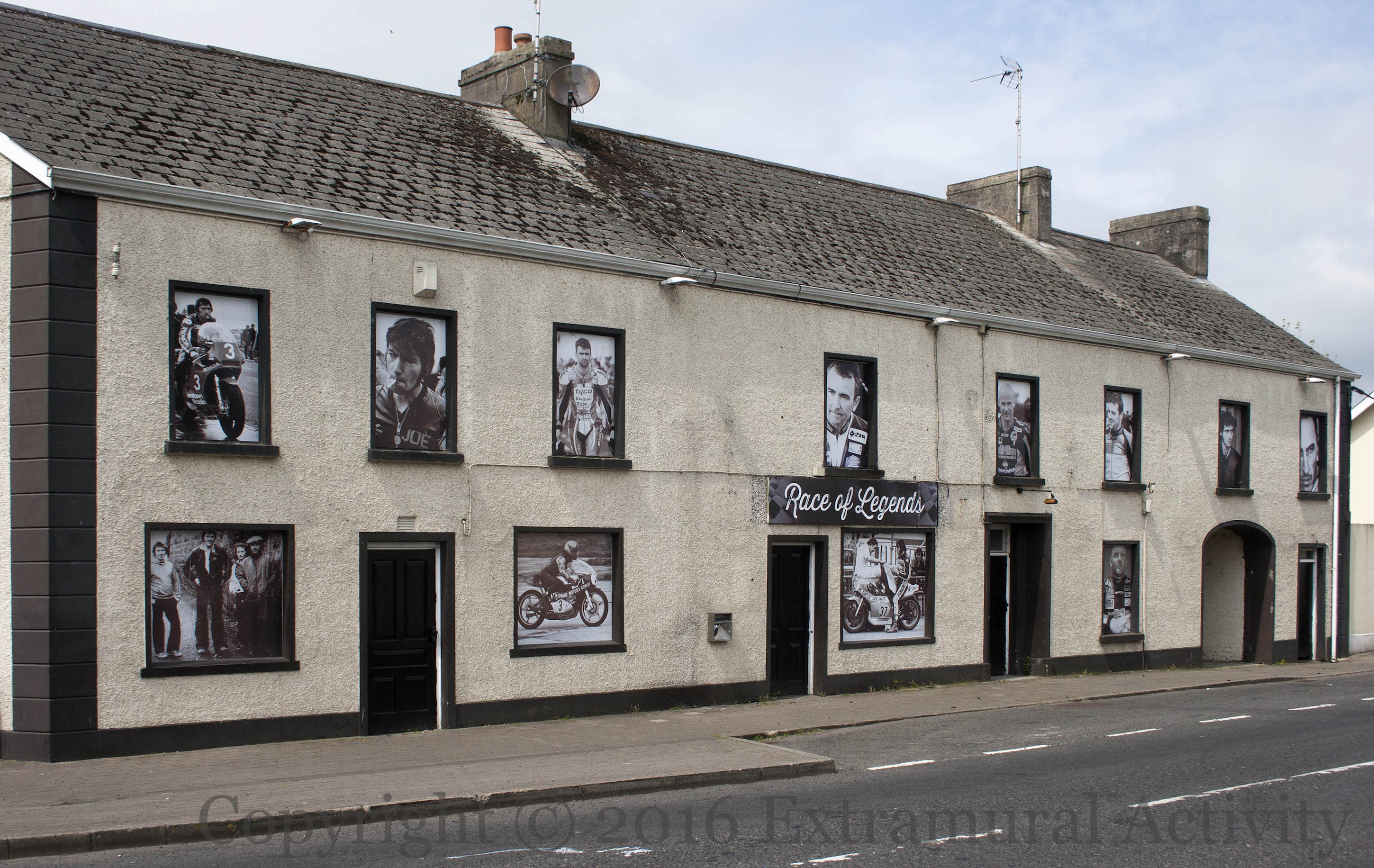
The town of Armoy, County Antrim, hosts an annual motorcycling road race, the Race Of Legends. The windows of the (closed) Victory Bar is filled with images of motorcyclists. Robert Dunlop is shown above and brother Joey is two windows to the left. Both brothers died as a result of racing accidents. Sons William and Michael are also featured.
Click image to enlarge
Copyright © 2016 Seosamh Mac Coılle
X03812 X03813 hillside rd mervyn robinson frank kennedy

Work by Spanish artist Sabek in Belfast city centre for Culture Night/Hit The North.
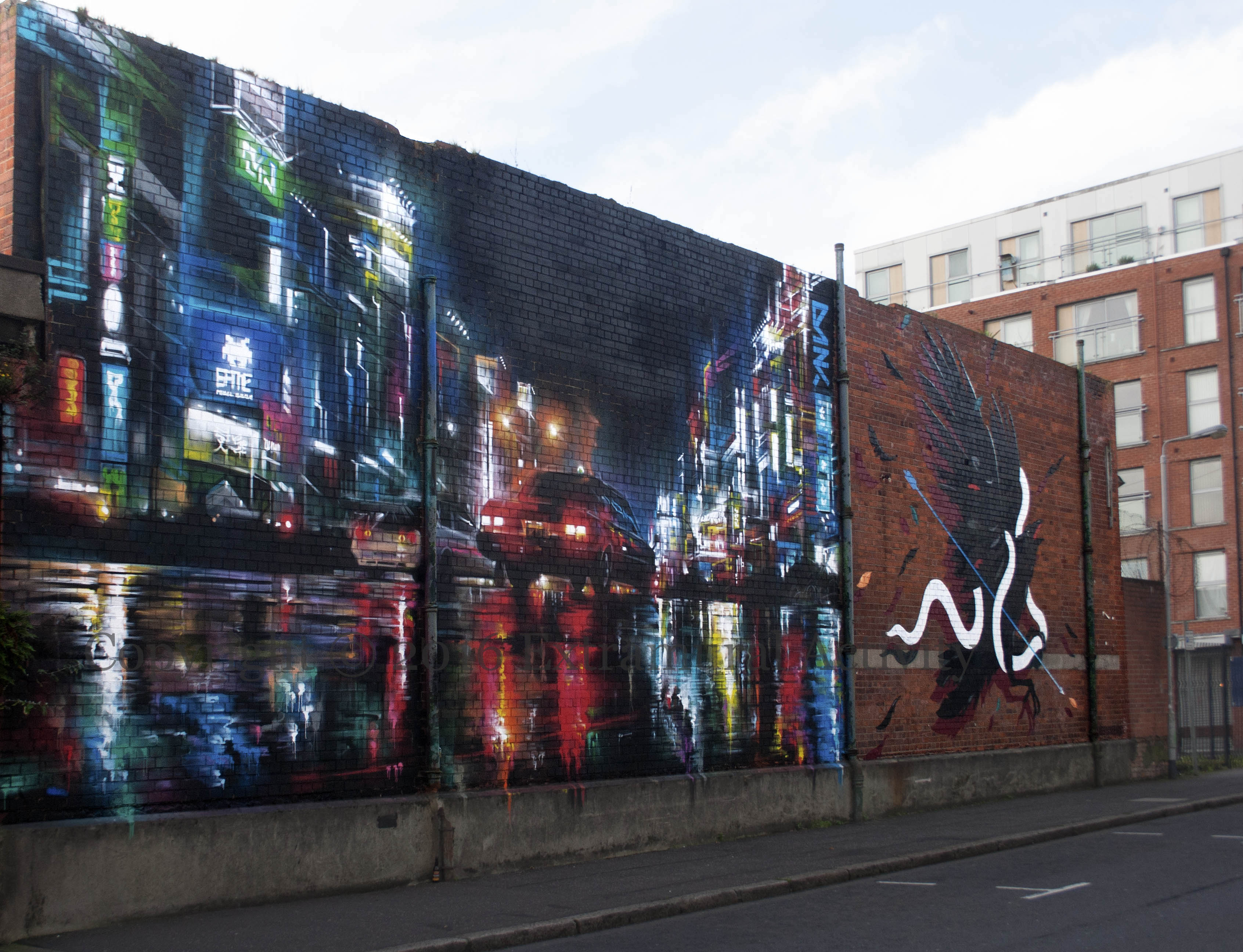
Last year for CNB15 he painted a spear and a snake. The wide shot below shows his piece next to Dan Kitchener’s Blurry Eyed.
Click image to enlarge
Copyright © 2016 Seosamh Mac Coılle
X03898 X03896 talbot st
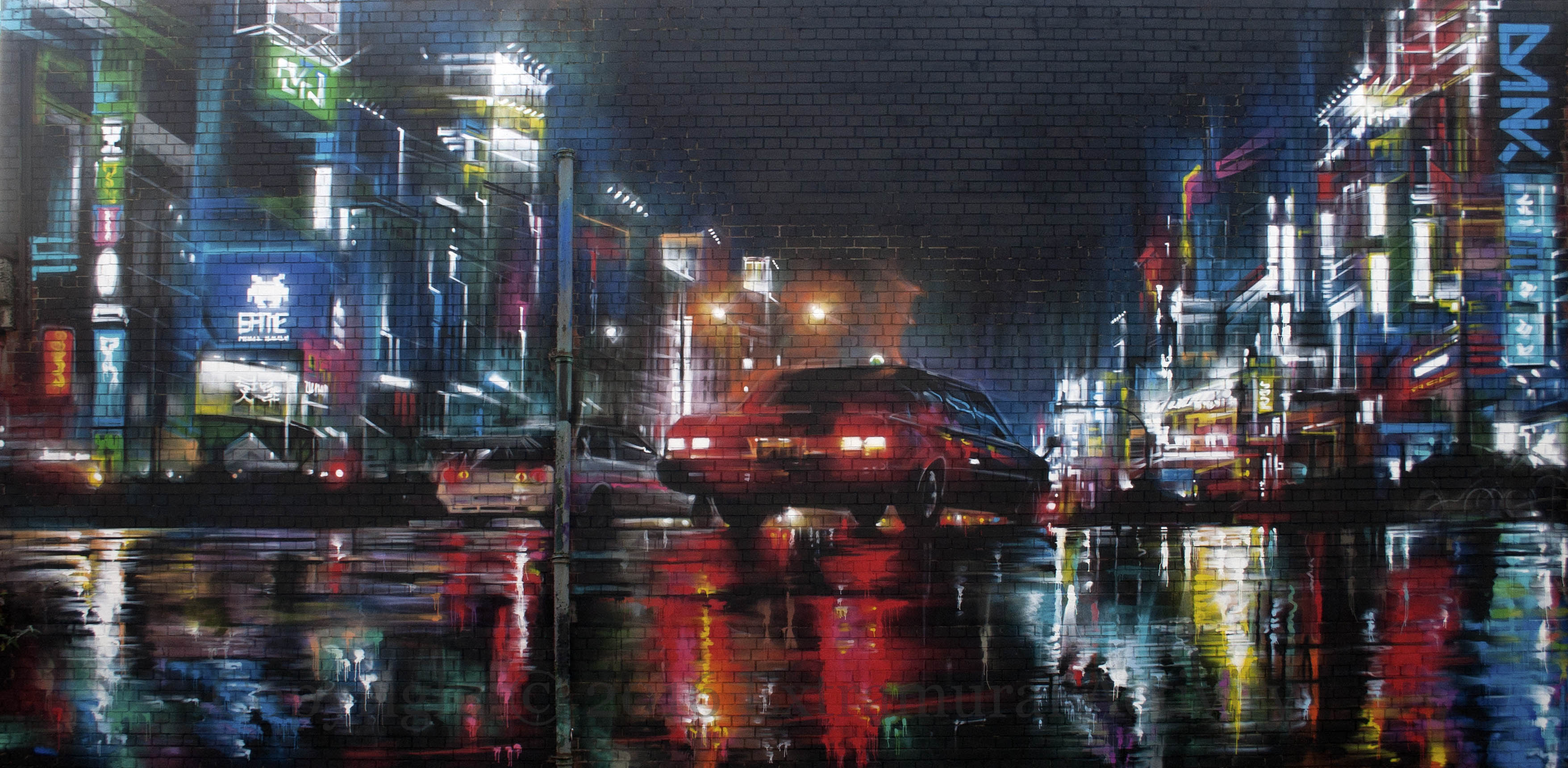
Street art by English artist Dan Kitchener for CNB16. Streets are already blurry at night in the rain, but the title perhaps come from the fact that Dan started the mural at night right after flying in from London.
Click image to enlarge
Copyright © 2016 Seosamh Mac Coılle
X03897 talbot st
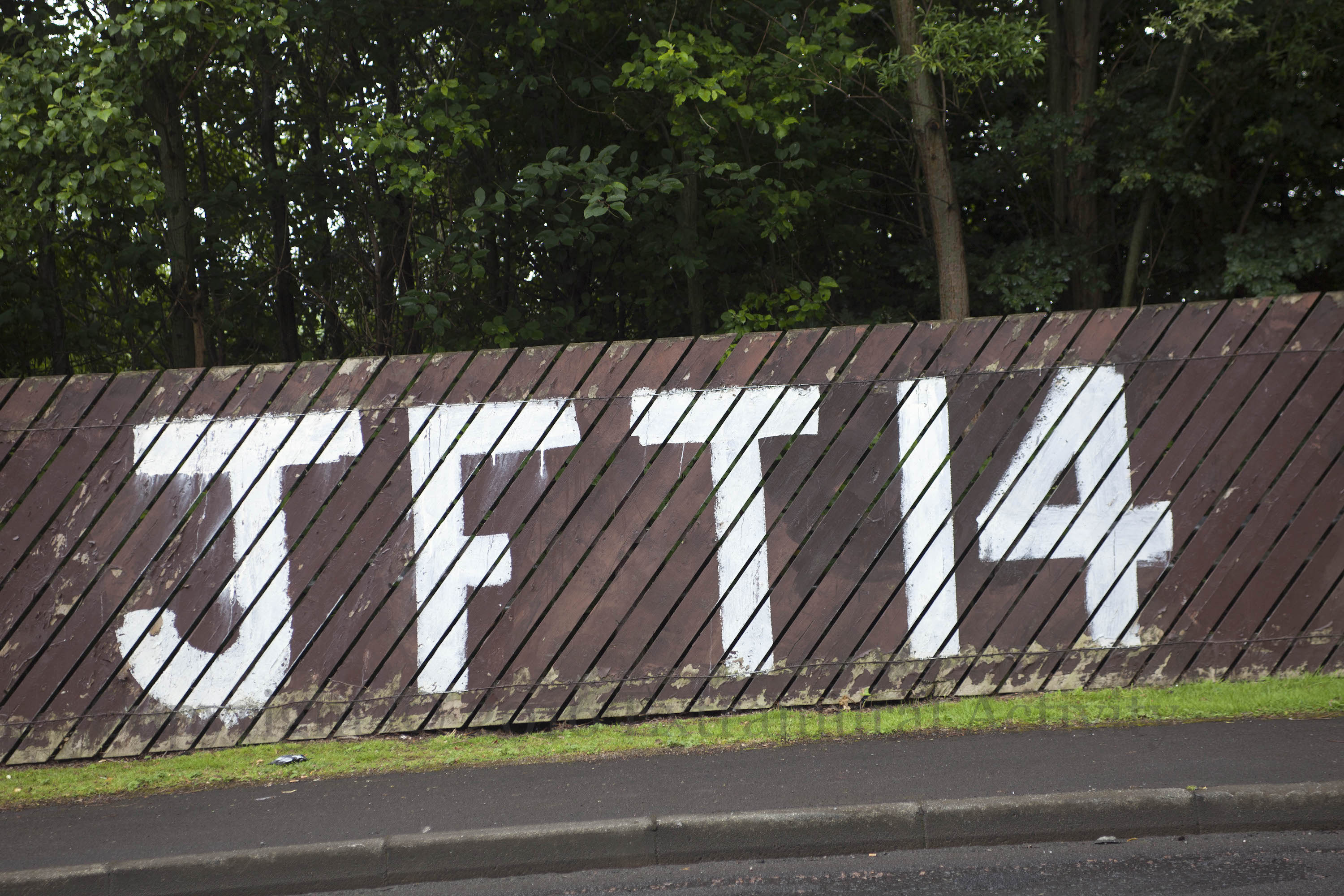
These republican slogans are on the fencing along Southway, Derry. “End internment”, “1916 – 2016 Unfinished business”, “IRA”, “JFT14” = “Justice for the 14 [Bloody Sunday victims]”, and “Brits out”.


Click image to enlarge
Copyright © 2016 Seosamh Mac Coılle
X03586 X03588 X03587

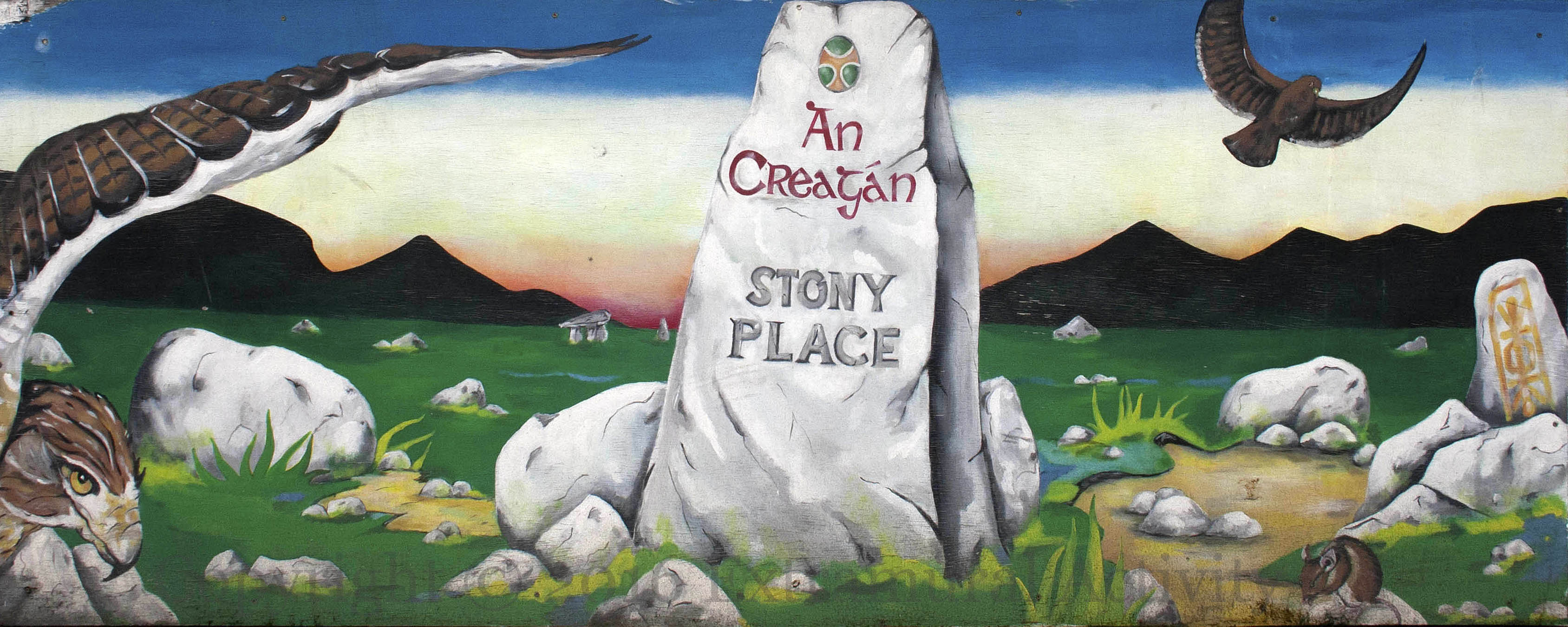
Step-mother Aoıfe resents the bonds between her husband Lear and his children and their love for their lost mother and turns them into singing swans for 900 years, by the end of which time Christianity had come to Ireland. A monk heard their song and recognised them. At his touch, they are restored to human form. Being 900 years old, they die immediately but not before being baptised.
For another ‘baptised before death’ story, see the story of the mermaid Lí Ban in Sea-Born.
This is the third of three Celtic mythology boards in Creggan/An Creagán, Derry. See previously: Tír Na nÓg and Cú Chulaınn.
Click image to enlarge
Copyright © 2016 Seosamh Mac Coılle
X03630 X03629 central dr stony place

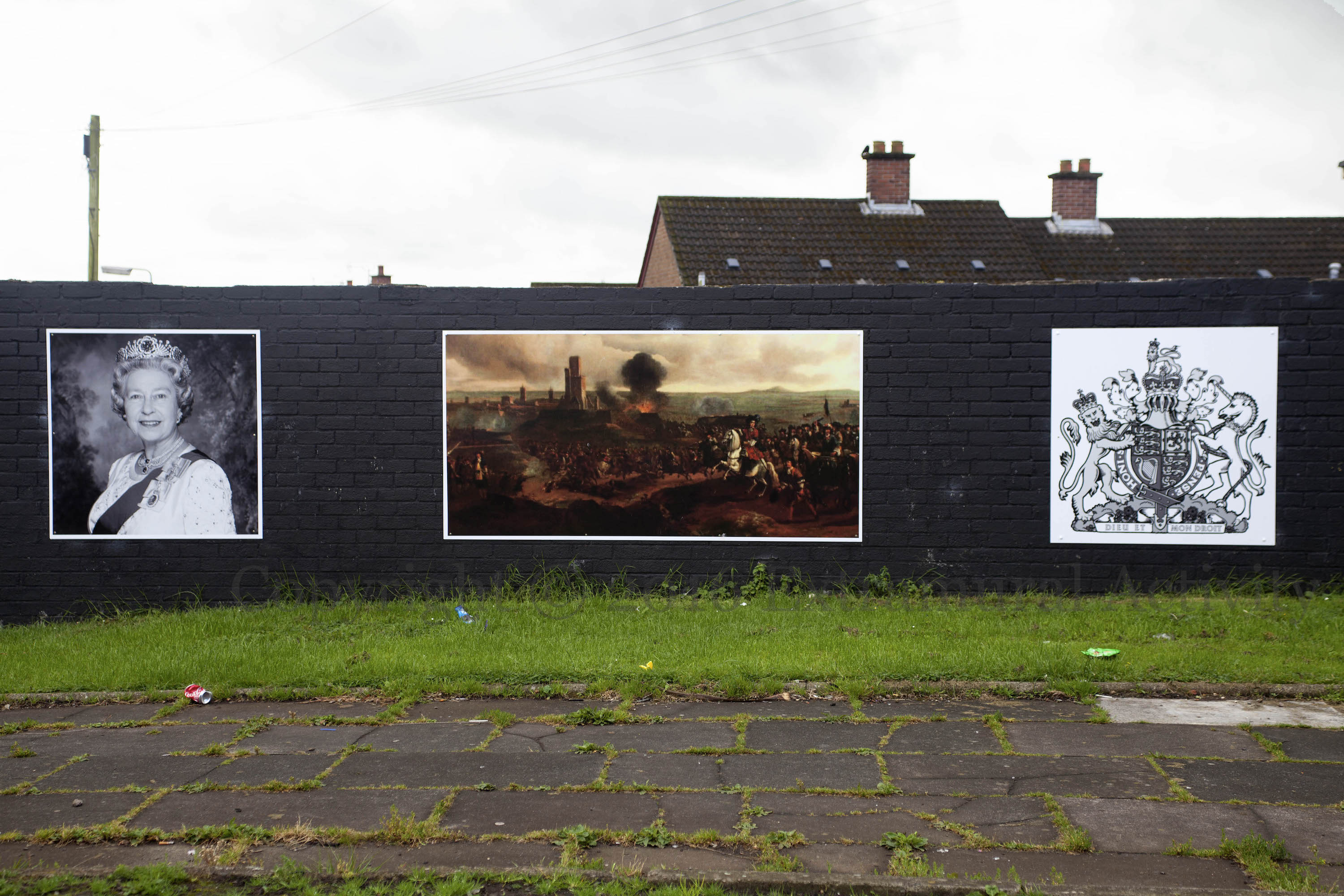
The experts’ best guess is that the gentleman on the white horse (on the right of the painting) is James Scott, Duke of Monmouth, at the siege of Maastricht in 1673. Scott was commander of the English forces fighting with the French during the Franco-Dutch war. It’s not clear, thus, what the connection is to the Antiville area of Larne or the wars fought in Ireland over the English crown. It was painted by Jan Wyck, who also did a painting of the Battle of the Boyne. On either side (as shown below) are a portrait of Queen Elizabeth II and the English version of the Royal coat of arms of the United Kingdom.
This trio of boards has been added to a wall behind the Antiville community centre, softening (somewhat) a very aggressive set of six UDA boards (seen in UDA Flag Bearer and Secret Army Silhouettes.)
Click image to enlarge
Copyright © 2016 Seosamh Mac Coılle
X03792 X03791

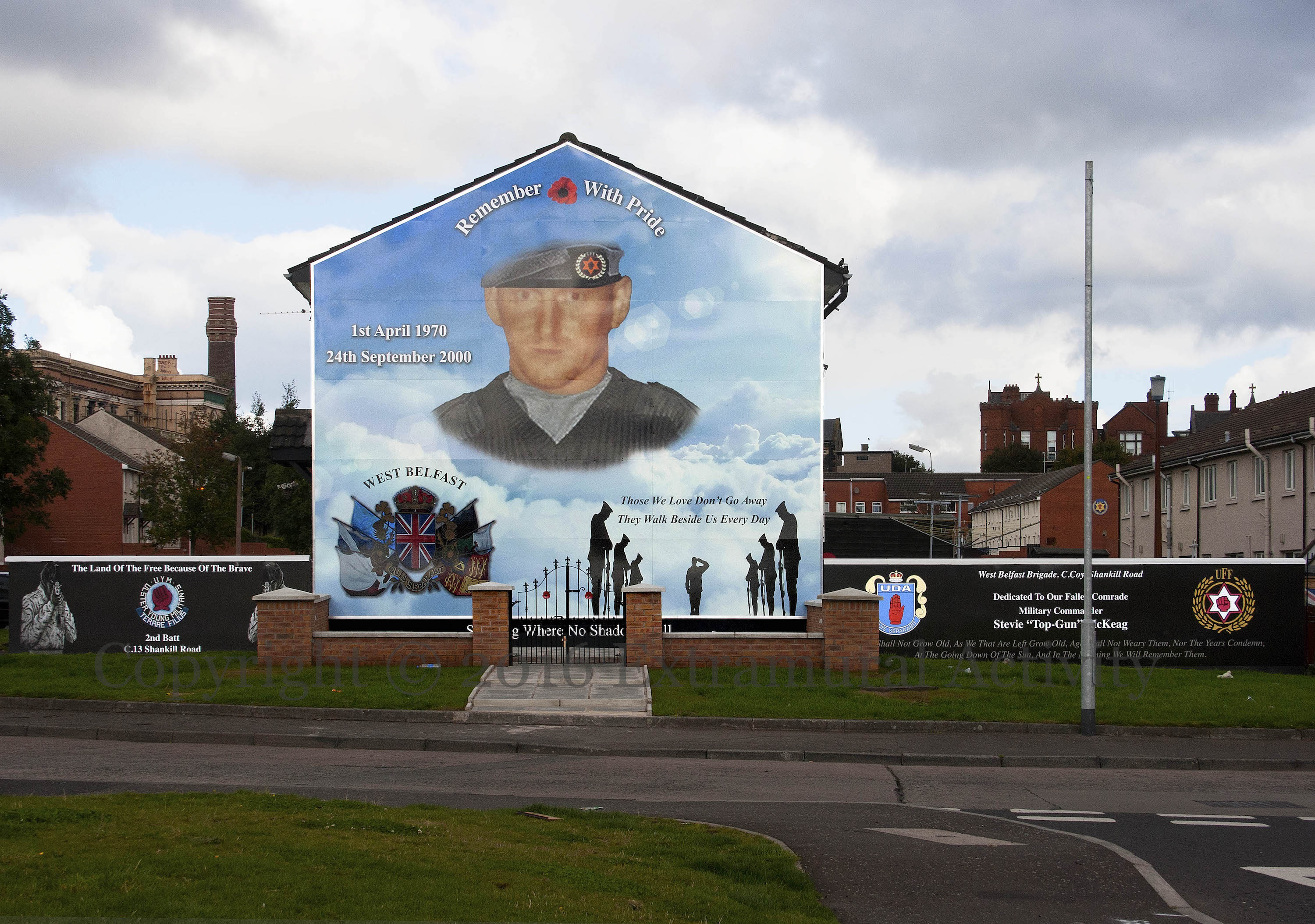
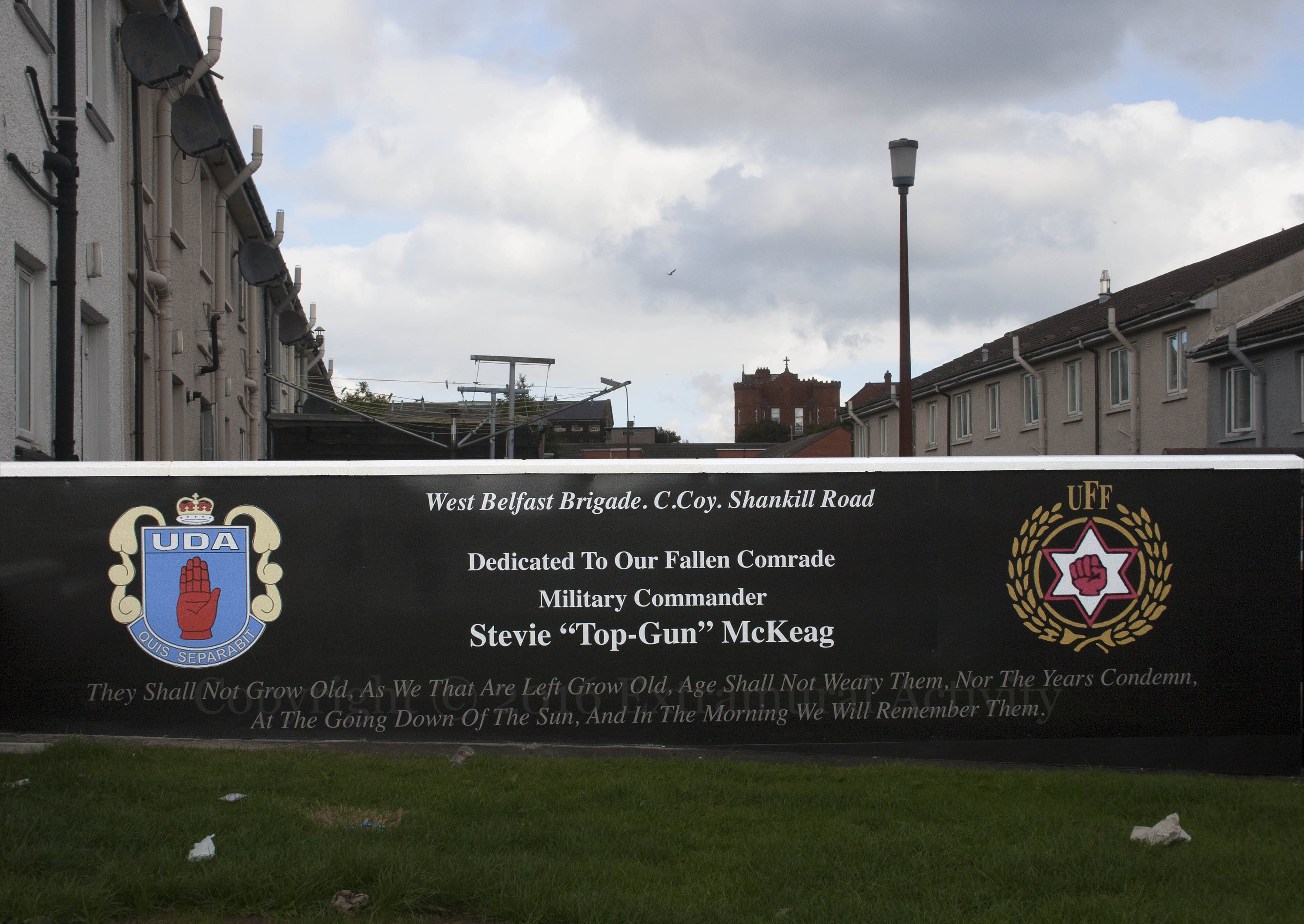
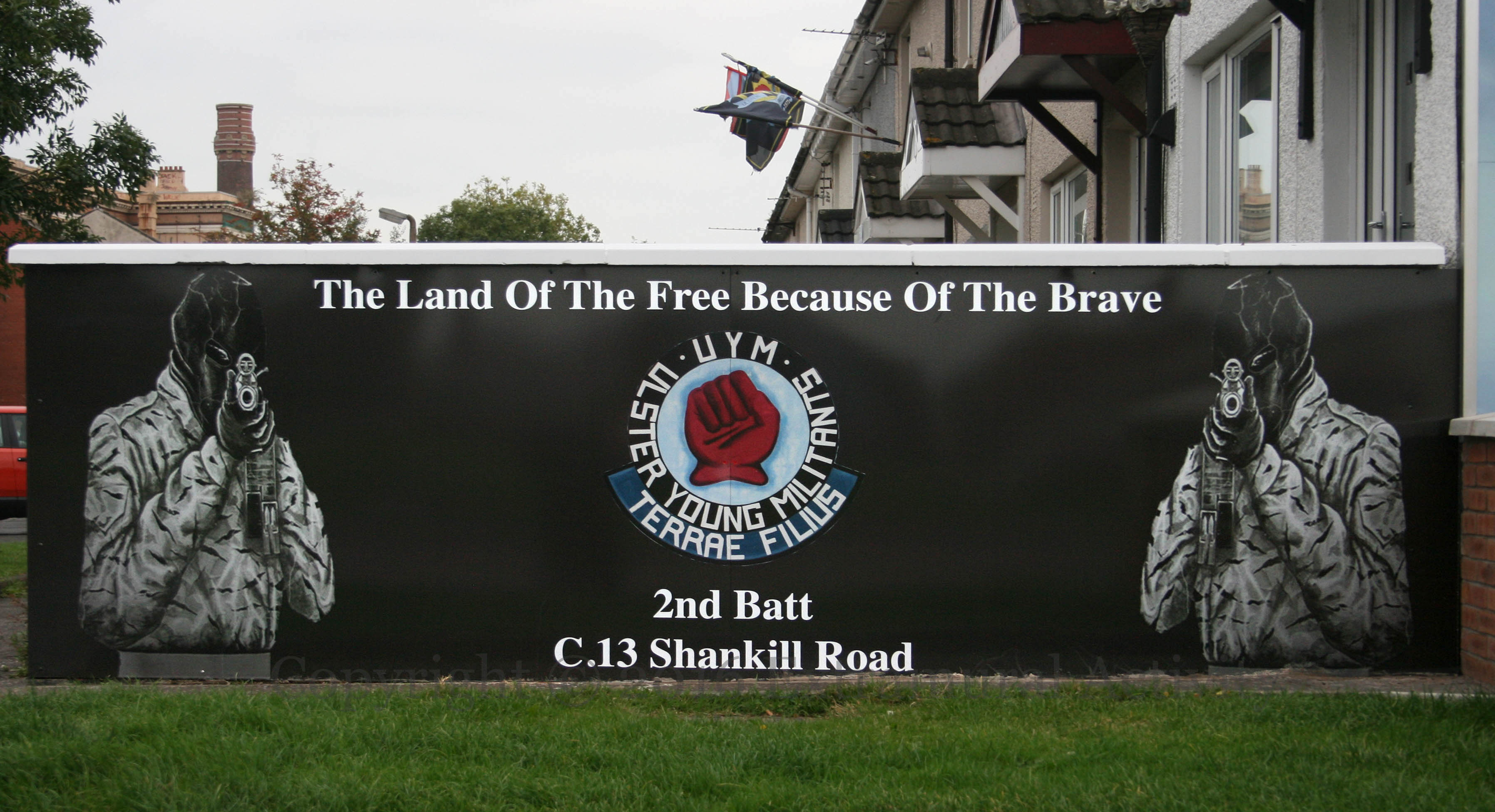
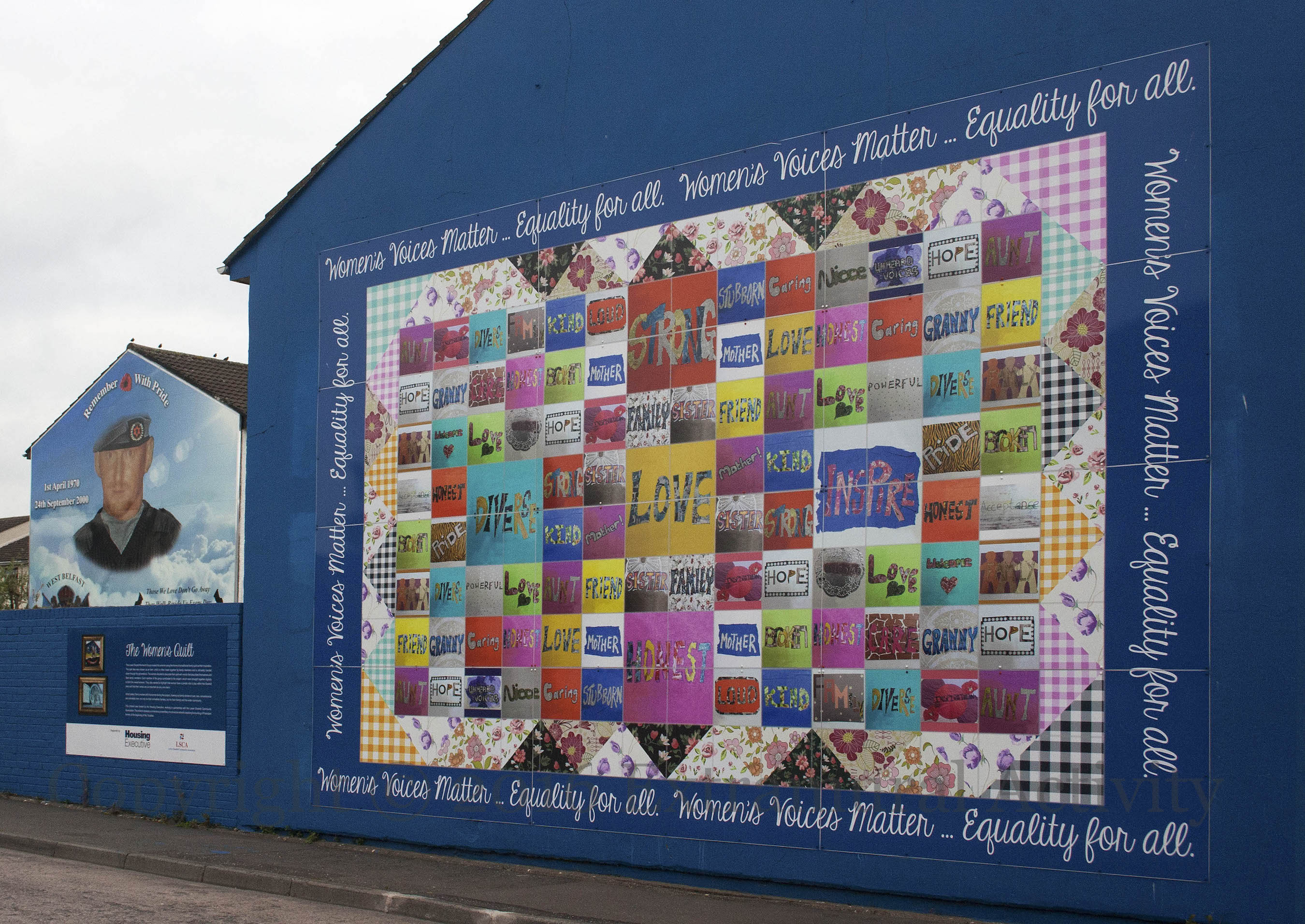
“Remember With Pride” (with a poppy). Although the dates of his birth and death are given, Stevie “Top Gun” McKeag’s name appears only on the side-wall of this new mural in the Lower Shankill estate. McKeag was the top assassin in the UDA during the 1990s, claiming at least 12 victims. Both his WP page and this Guardian article describe his career and preeminent standing within the UDA.

Click image to enlarge
Copyright © 2016 Seosamh Mac Coılle
X03892 X03888 X03890 X03889 X03891 X03893 1st april 1970 24th september 2000 ulster young militants terrae filius 2nd batt c.13 shankill road military commander they shall not grow old those we love don’t go away they walk beside us every day sleeping where no shadows fall at the going down of the sun and in the morning remember with pride

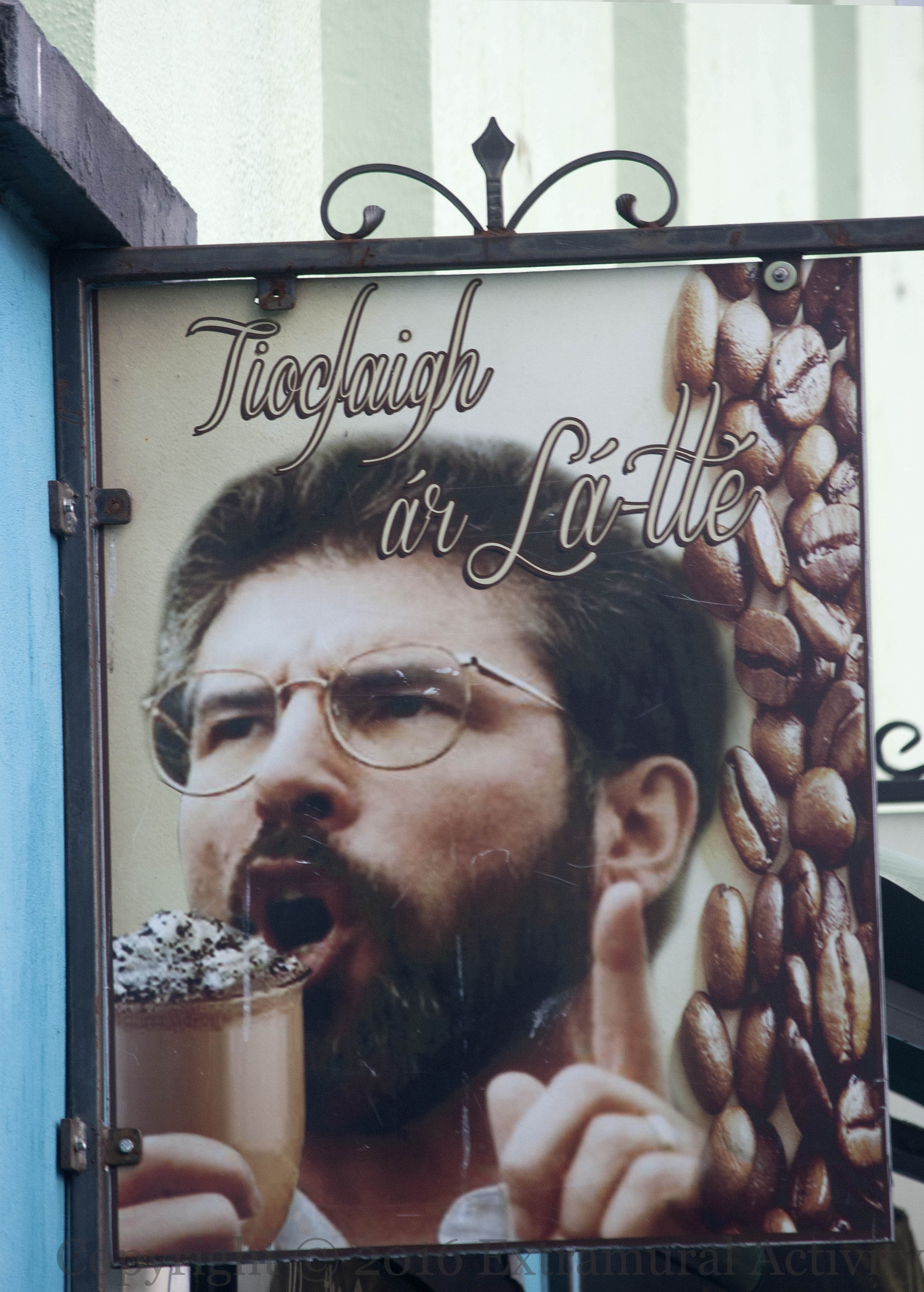
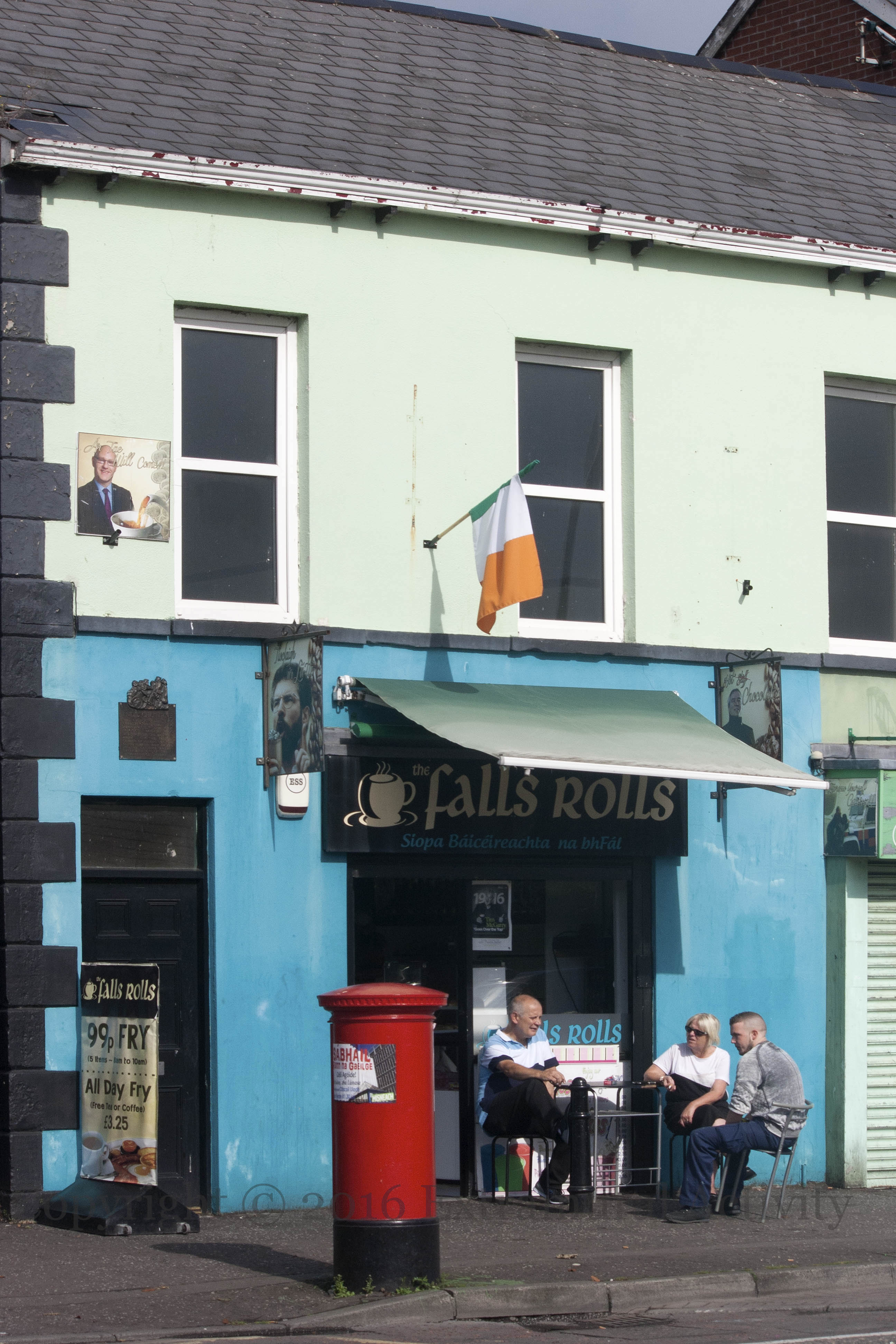
Sınn Féın representatives Paul Maskey (above), Gerry Adams, and Martin McGuinness are photoshopped into these beverage-themed, Irish-language puns outside the ‘Falls Rolls’ bakery: Ár tae will come, Tıocfaıgh [sic] ár látte, and Mocha-ra.

Click image to enlarge
Copyright © 2016 Seosamh Mac Coılle
X03829 X03830 X03831 X03832 falls rd sıopa báıceareachta na bhfál
 Extramural Activity