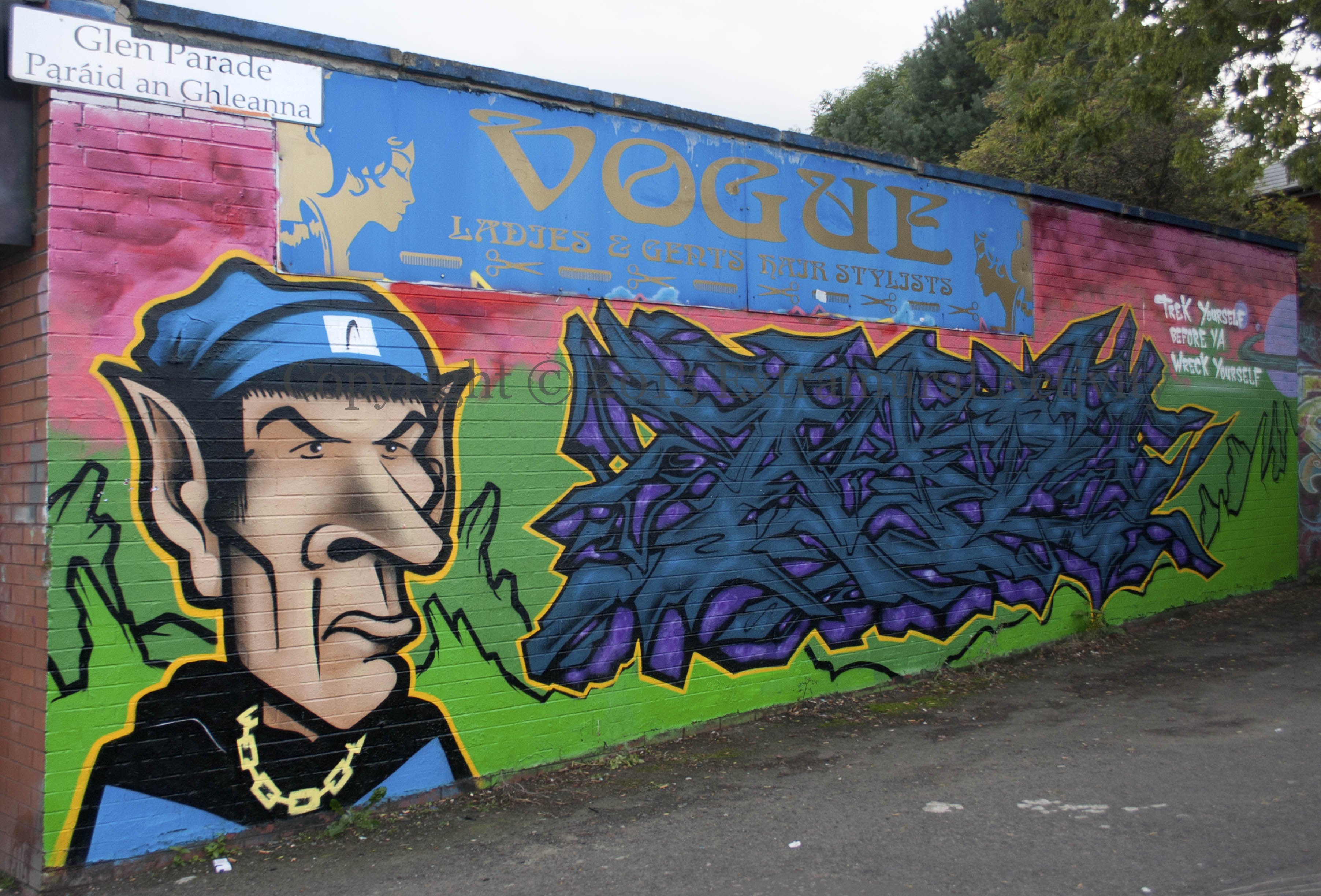
Actor Leonard Nimoy died on February 27th, 2015. He is best known for the role of Star Trek‘s Spock, a part he played for 49 years. The mural above brings the character from space to the streets, with gold chain and skull hat. “Trek yourself before ya wreck yourself.”
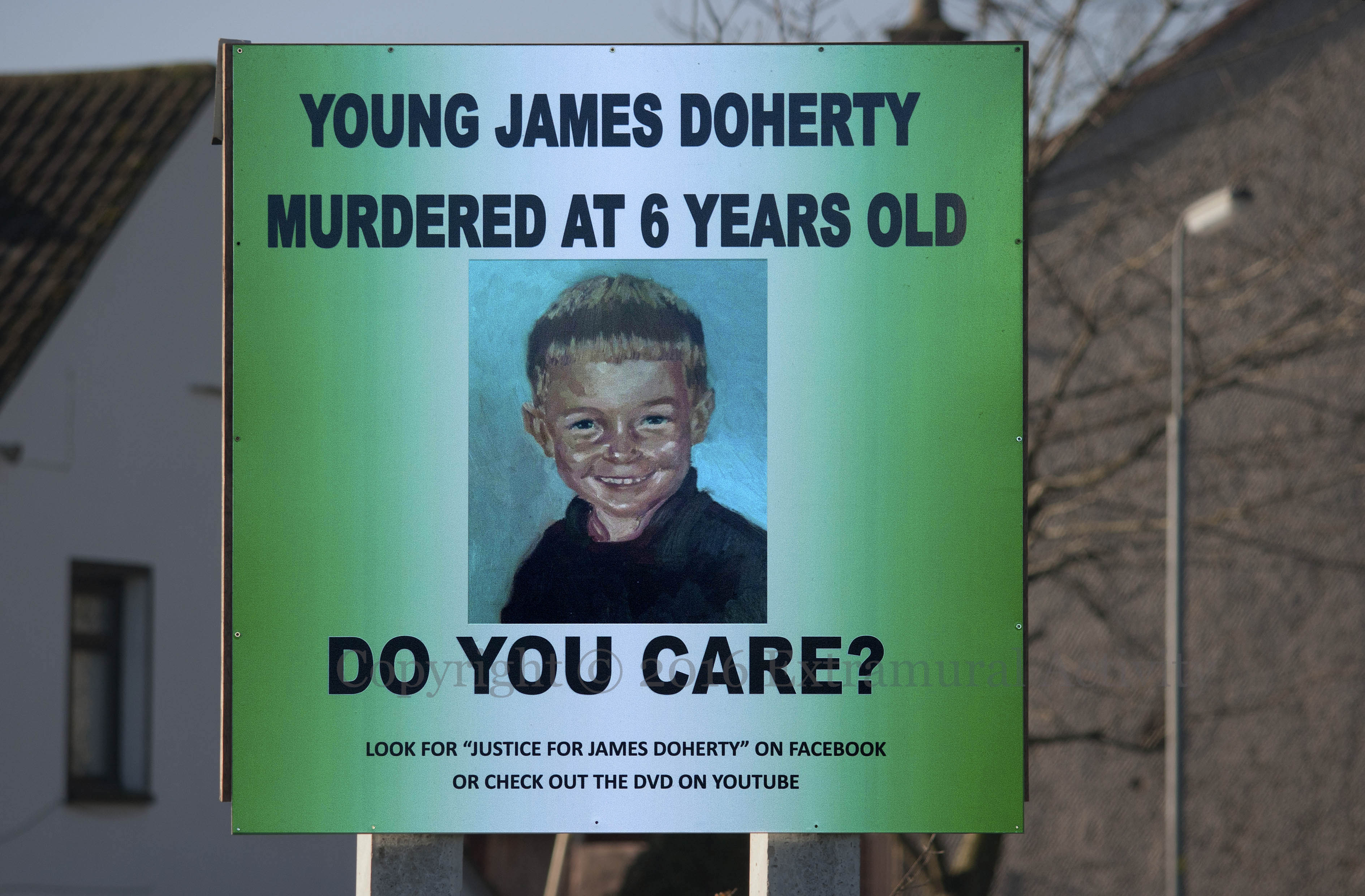
James “Jim” Doherty was six years old when he was shot while playing in the front garden of his Turf Lodge home in 1972. Relatives For Justice and the family launched the board shown above at the entrance to the estate last October in order to push for a new inquiry into the death due to the insufficiency of the original investigation and the disappearance of the bullet taken from the body. (Belfast Media Group)
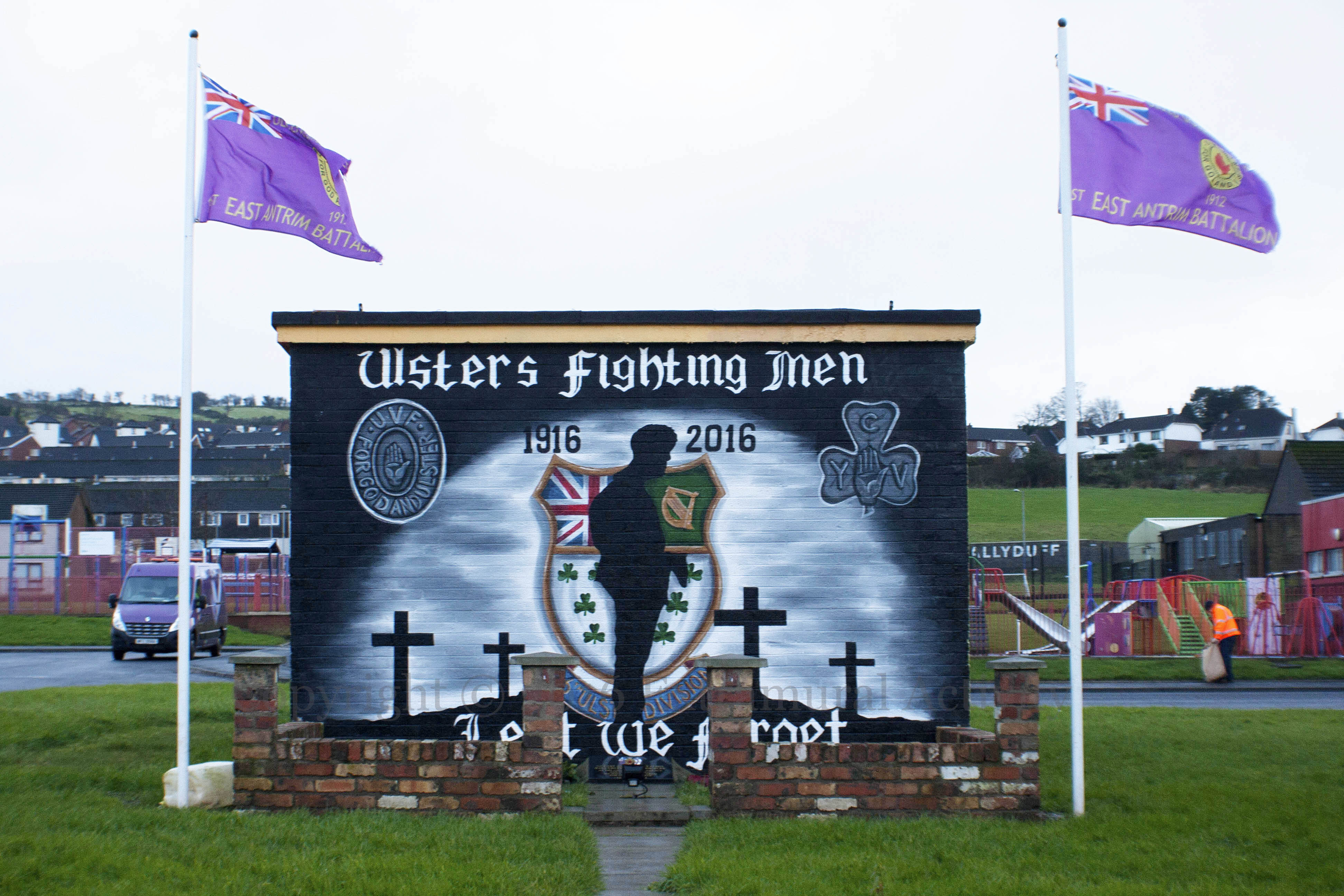
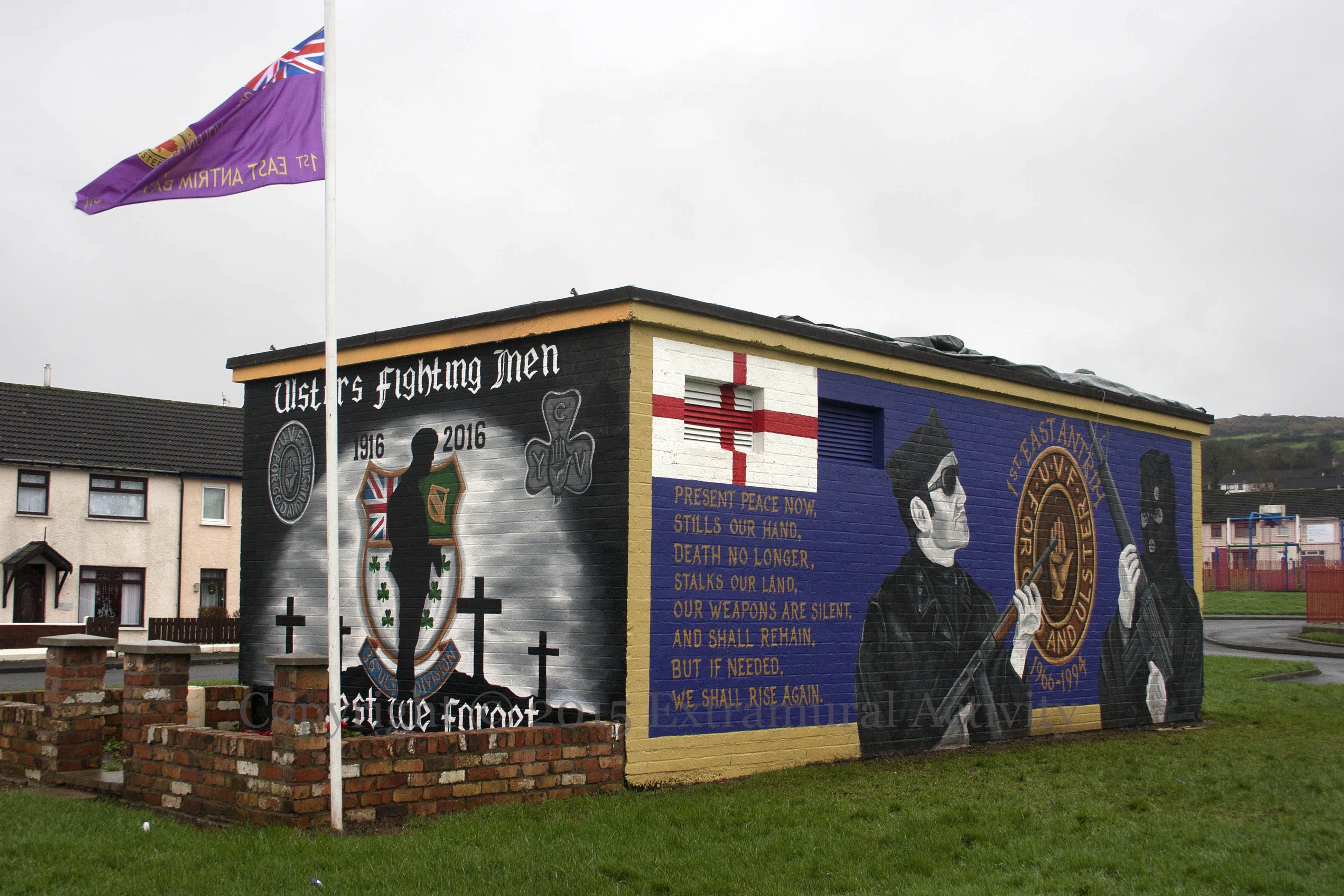
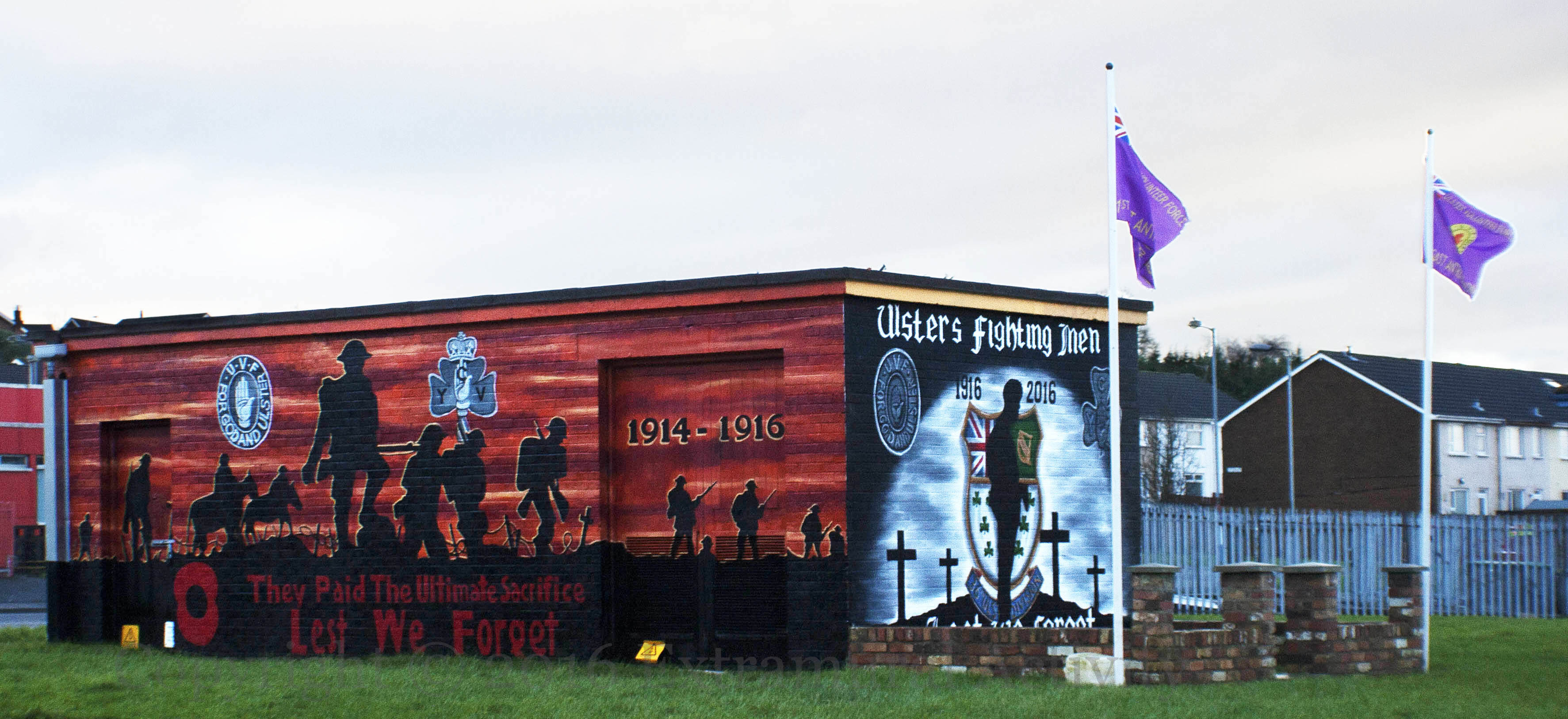
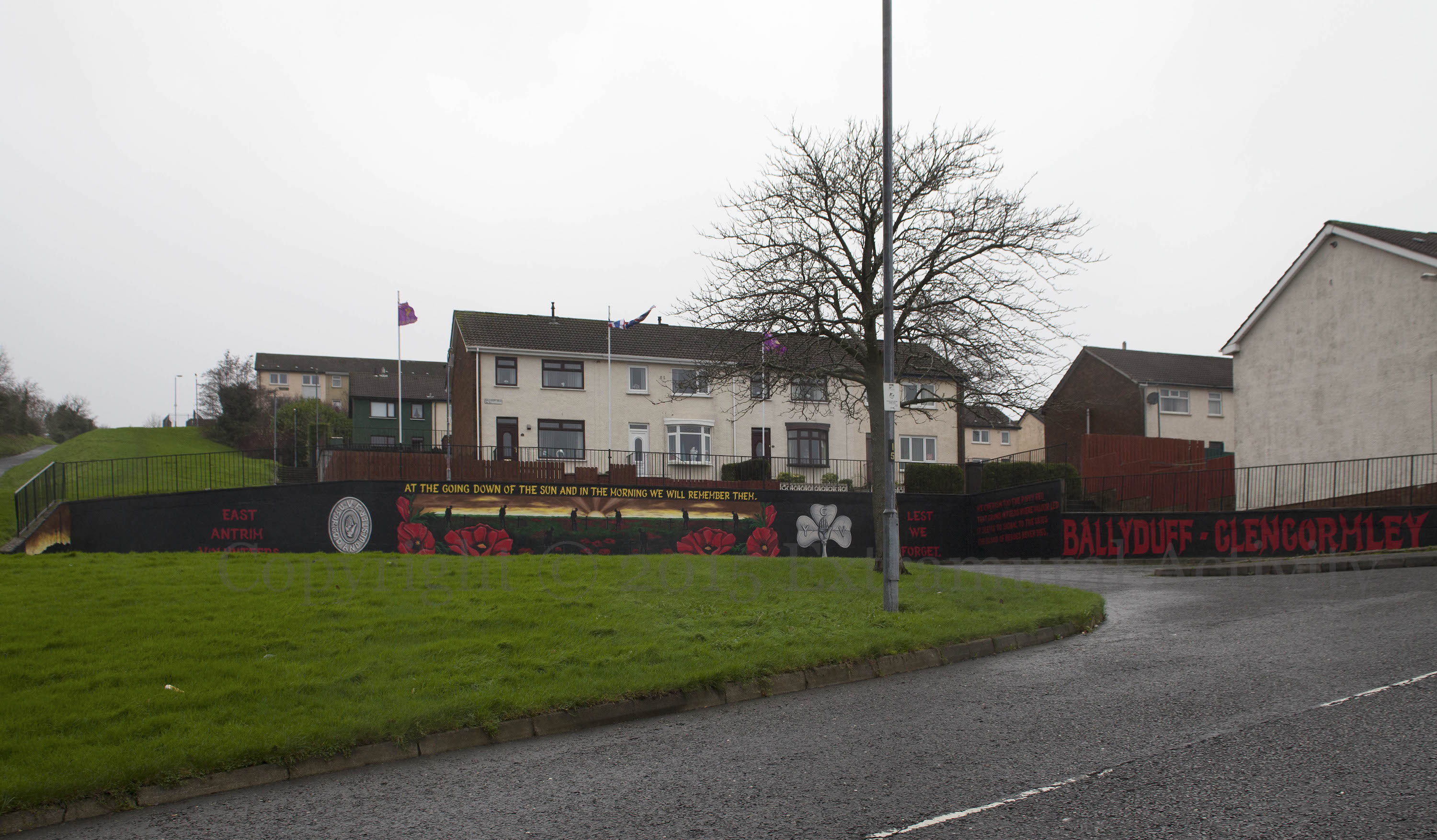
This new mural in Ballyduff commemorates the sacrifice of the Ulster Volunteers and Young Citizen Volunteers who fought in WWI and in particular their action in 1916; 2016 is the centenary of the Battle Of The Somme. The flag of (modern) UVF 1st East Antrim battalion flies on either side of the mural.
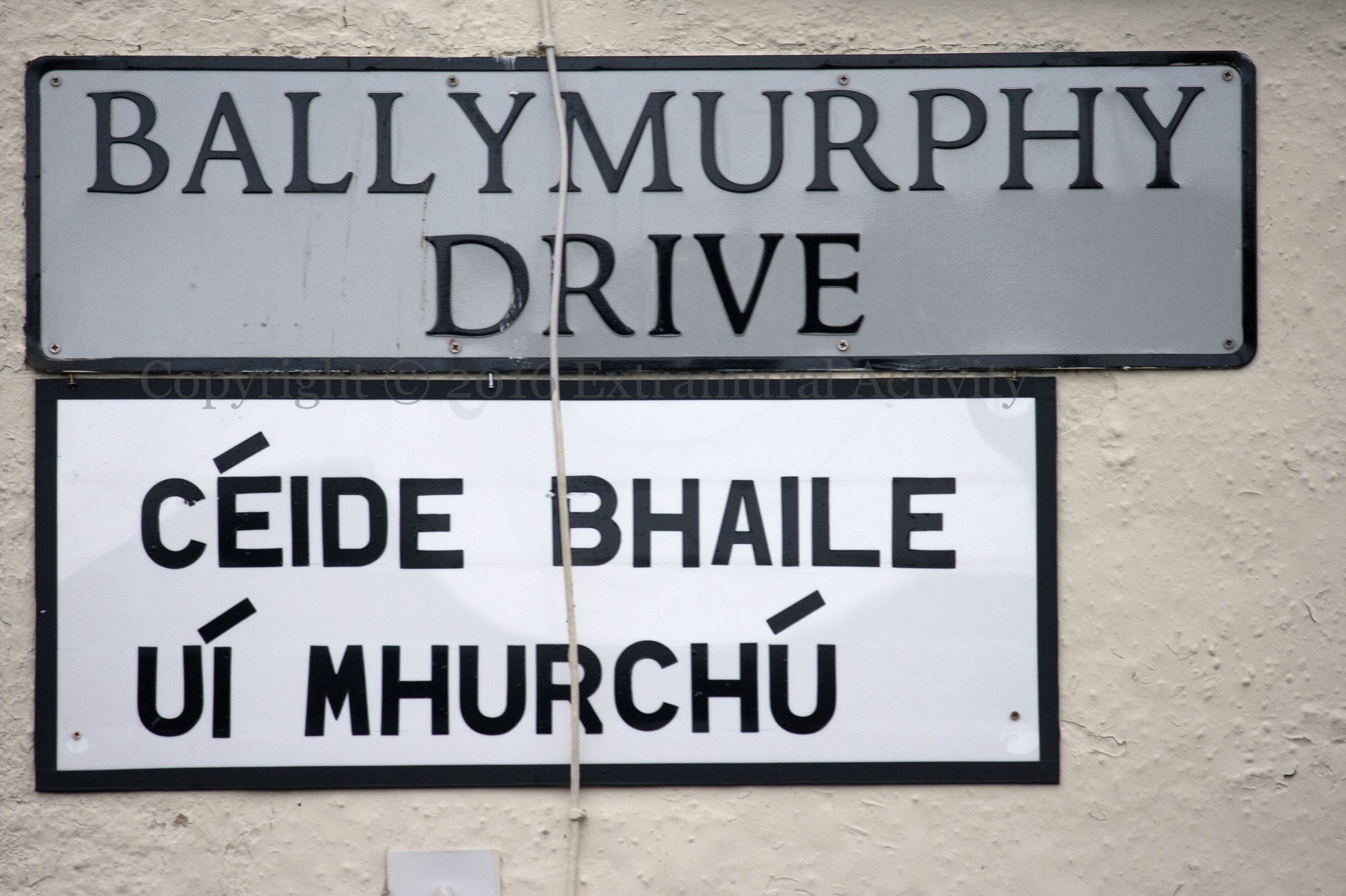
Some residents of Ballymuprhy Drive have erected their own Irish-language street sign. The council has not erected one because a substantial number of residents did not respond to a survey. The primary resident behind the move, Eileen Reid, contends that the 2/3rds is unreasonable. (Irish Times | Belfast Live | Irish News)
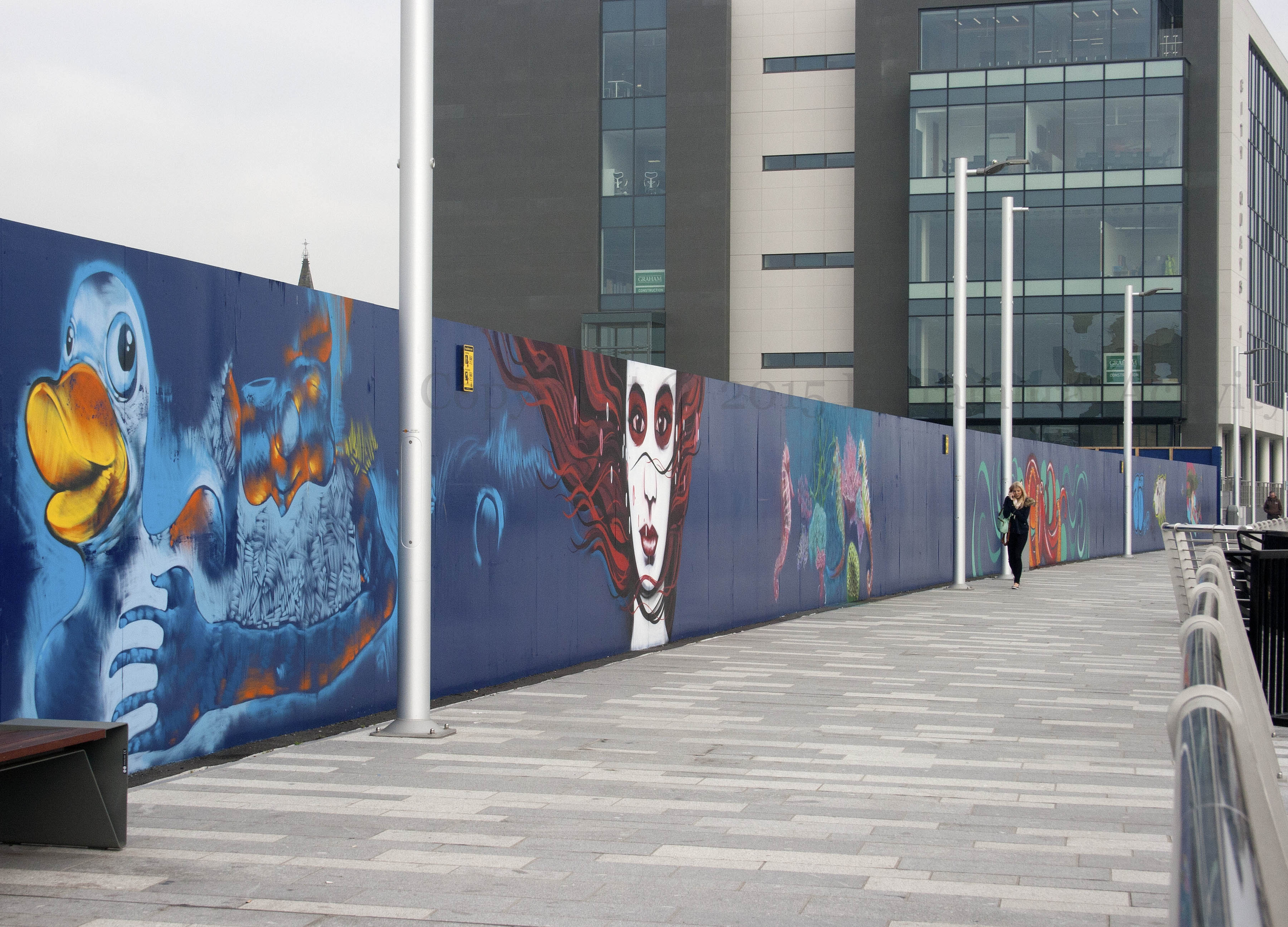
As a companion for Emic’s Laganside seahorses, here’s Friz’s (Web | Fb | Tw) bright red octopus, painted for last September’s Culture Night celebrations.
Five images of a new, multi-wall, mural in Ballyduff. The main panel shows WWI soldiers bowed over graves in Flanders surrounded by poppies. This is accompanied by the red-hand emblem of the Ulster Volunteers and the shamrock of the YCV.
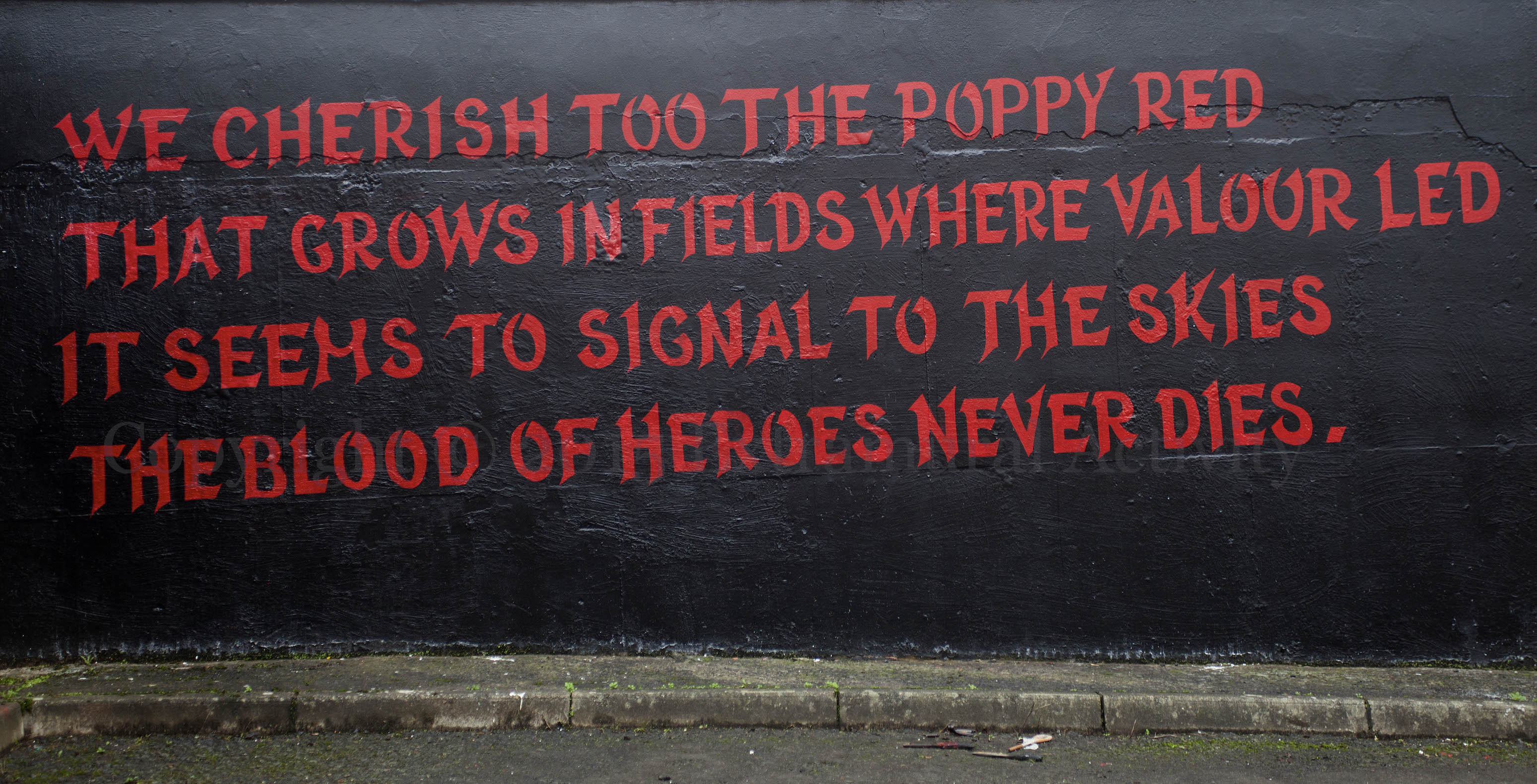
On a side wall (see the fourth image) is a verse from American professor Moina Michael’s poem We Shall Keep The Faith: “We cherish too the poppy red that grows in fields where valour led; it seems to signal to the skies the blood of heroes never dies”. It was Michael who began to raise funds for servicemen by selling (silk) poppies, also adopted by the British Legion in 1921 (WP).
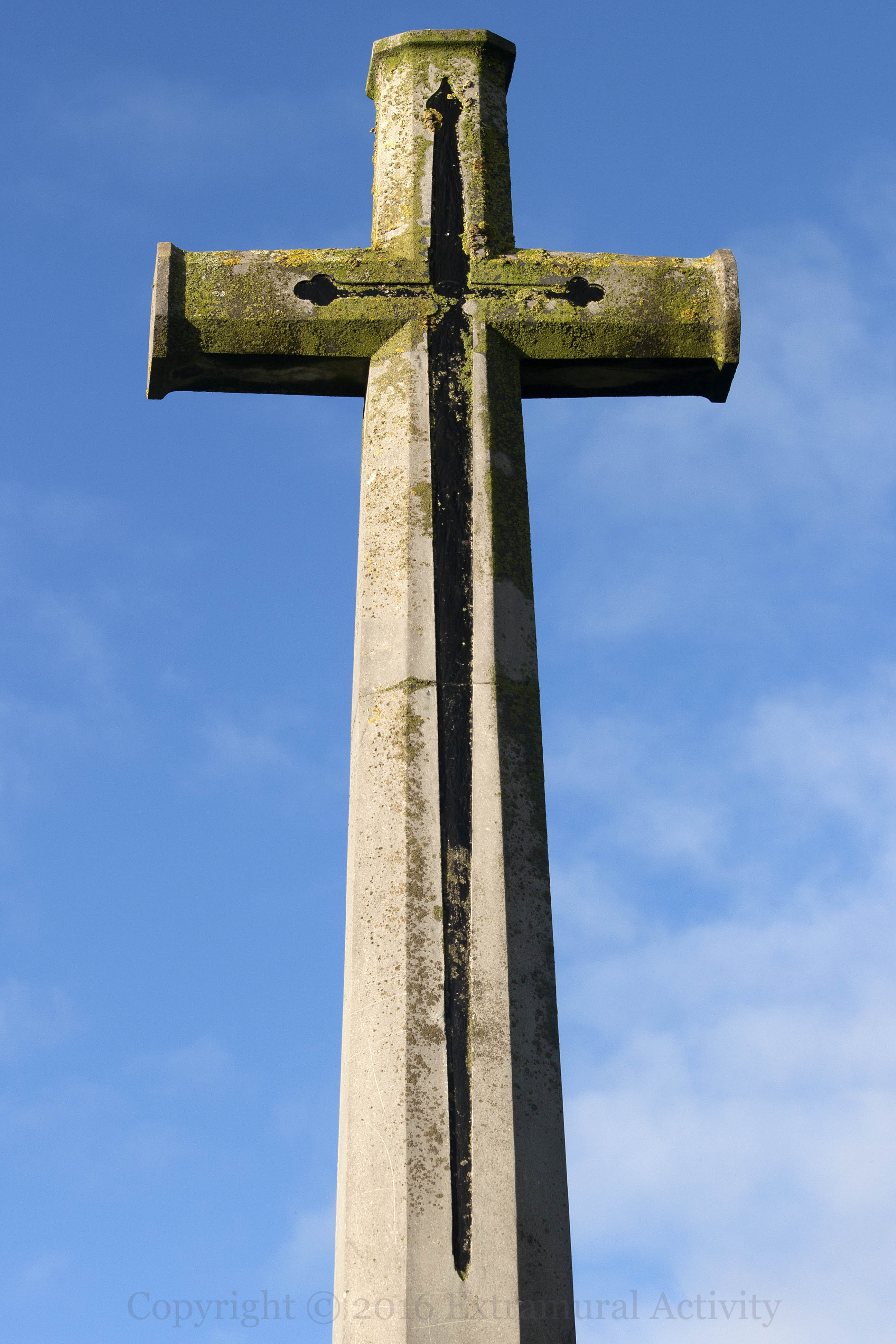
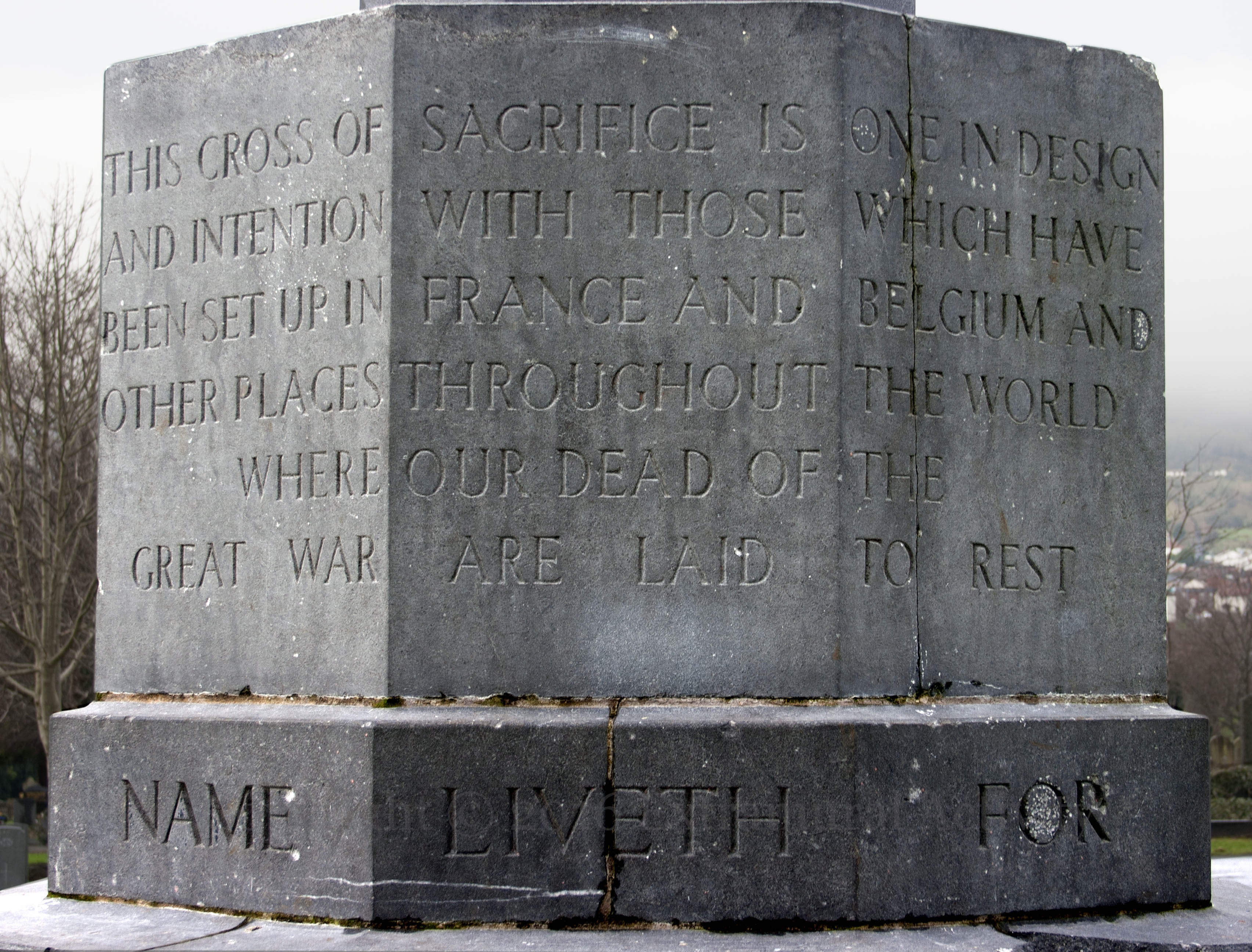
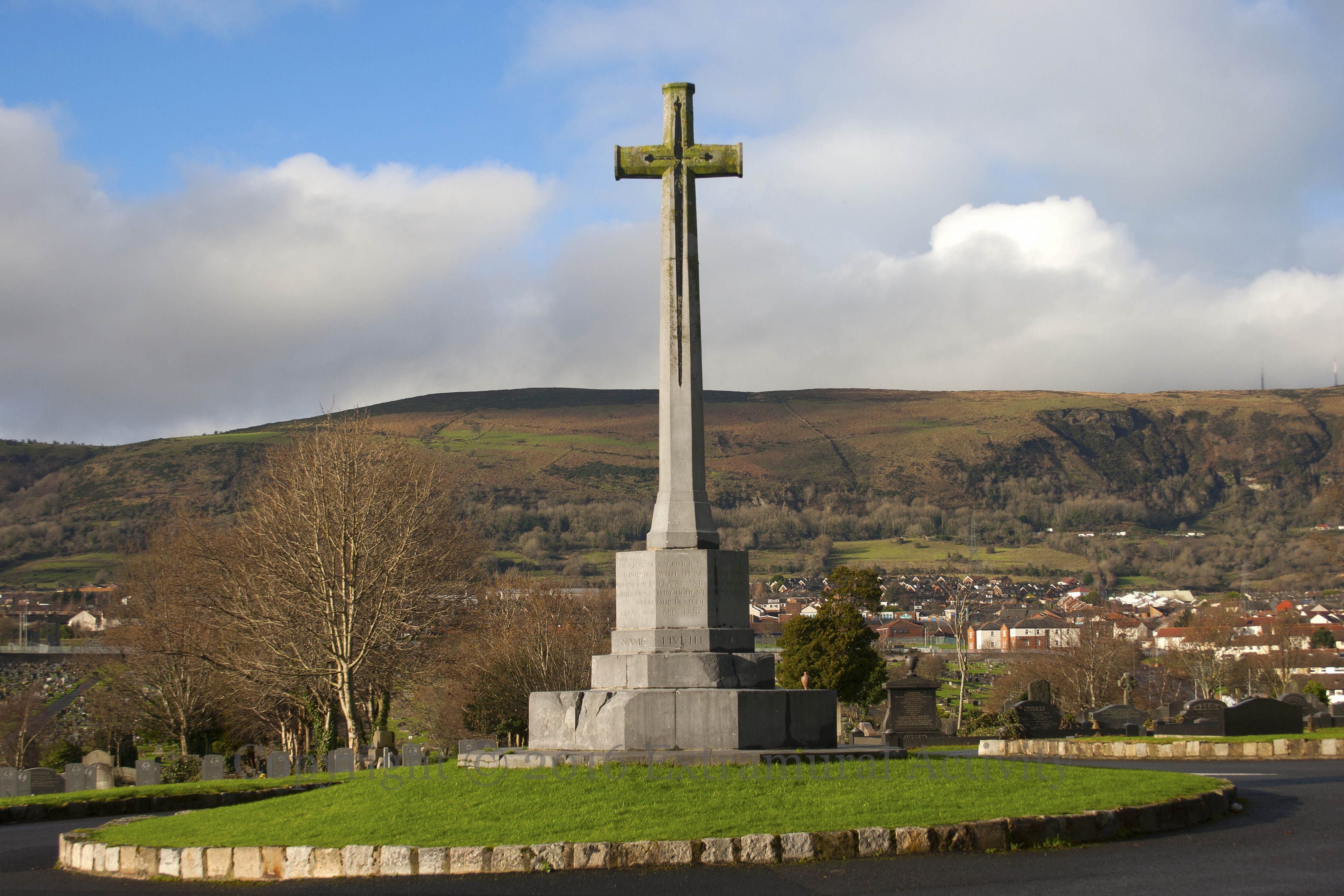
Religion and military might are one in this giant (see the wide shot, below) cross in Belfast’s City Cemetery, which commemorates the dead of World War I. The base (shown below) reads: The cross of sacrifice is one in design and intention with those which have been set up in France and Belgium and other places throughout the world where our dead of this great war are laid to rest. Their name liveth for ever more.” There is a similar memorial in Dundonald Cemetery. According to the Commonwealth War Graves Commission, “There are now 296 Commonwealth burials of the 1914-1918 war and 274 of the 1939-1945 war commemorated here.”
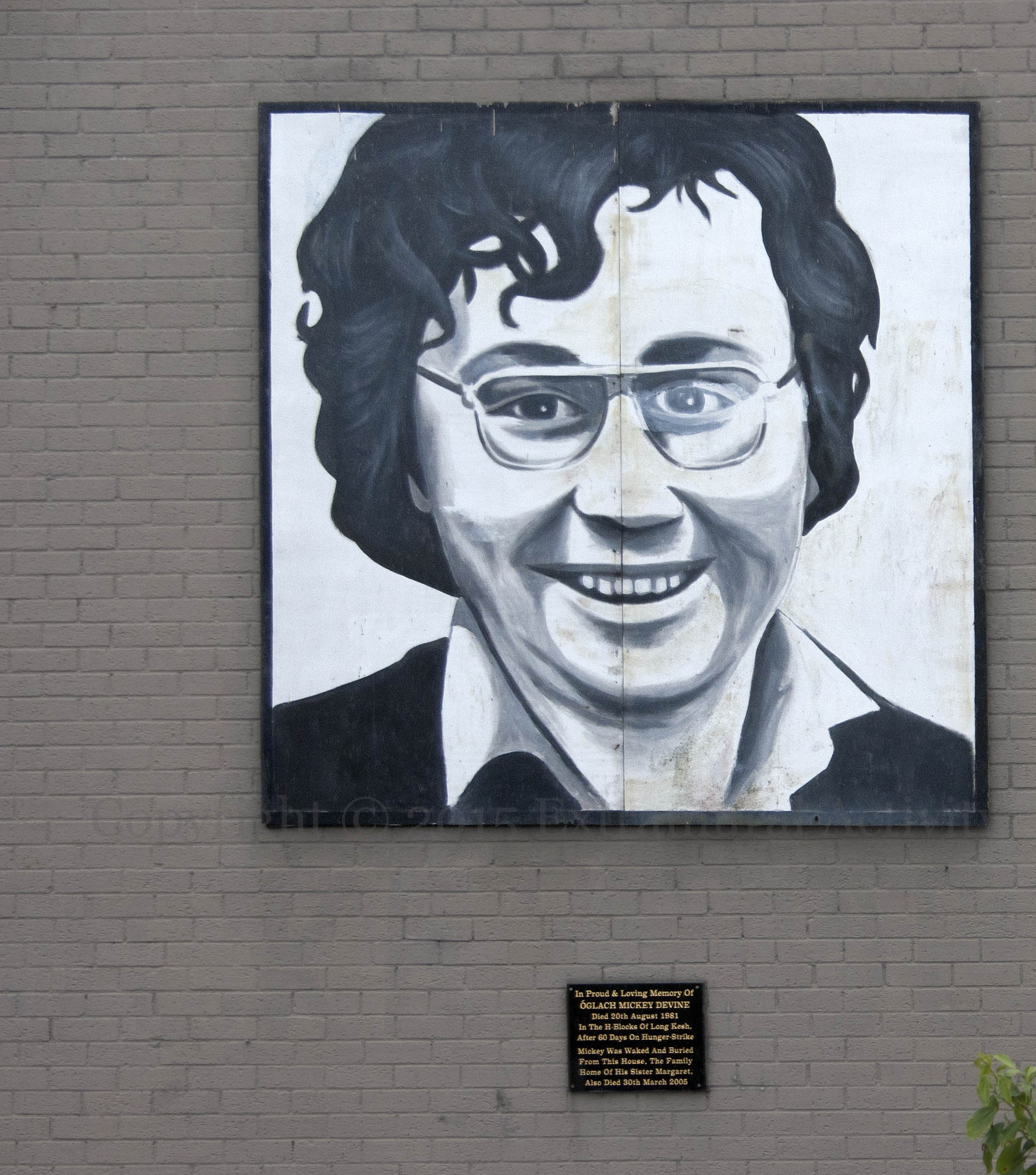
“In proud and loving memory of Óglach Mickey Devine. Died 20th August 1981 in the H-Blocks of Long Kesh after 60 days on hunger-strike. Mickey was waked and buried from this house [in Rathkeele Way, Derry], the family home of his sister Margaret. Also died 30th March 2005.” For an image of the open coffin within the house, see this An Phoblacht article. Here is a Guardian interview with Margaret (Devine) McCauley.




 Extramural Activity