On Saturday morning at about 6:30 local time, Hamas launched thousands of rockets against Israeli targets and then followed this up by breaking out of Gaza by land, air, and sea, and attacking two-dozen or more locations, killing about 700 (including 270 at a music festival near Re’im) and abducting about 100 people. In response, Israeli Prime Minister Benyamin Netanyahu declared, “We are at war” and retaliatory air-strikes against Gaza killed more than 400 people. (WP | BBC | France 24 | WaPo)
Gael Force Art took to Slıabh Dubh (Visual History) to place a large Palestinian flag on the mountain (seen in The United Nations and UN 194), and posted a statement in support of the Palestinians on Facebook.
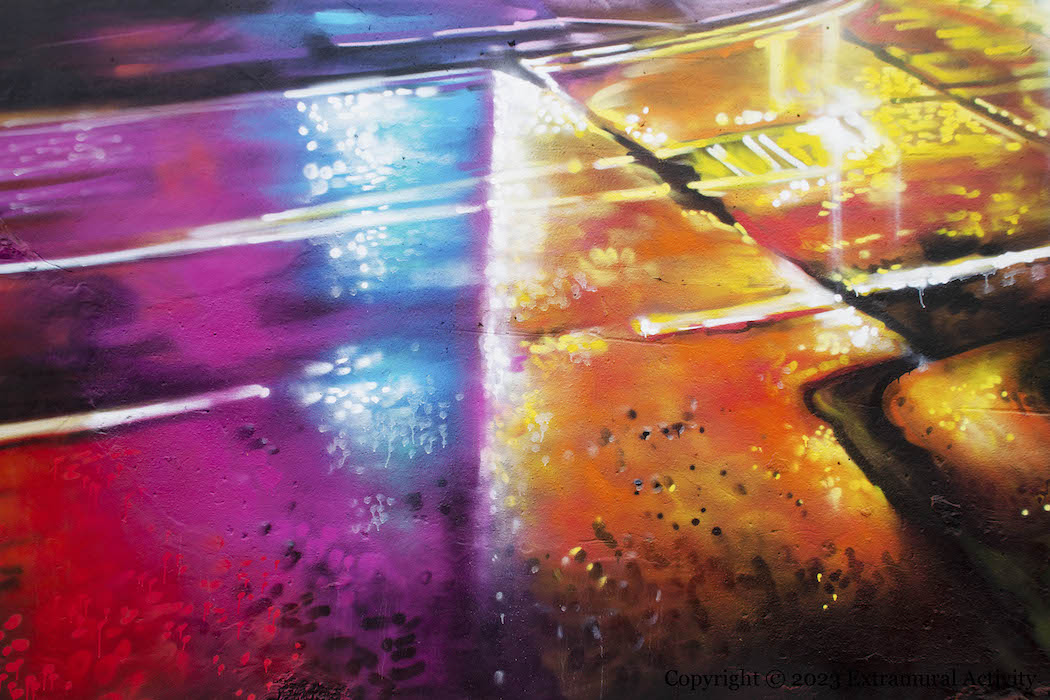
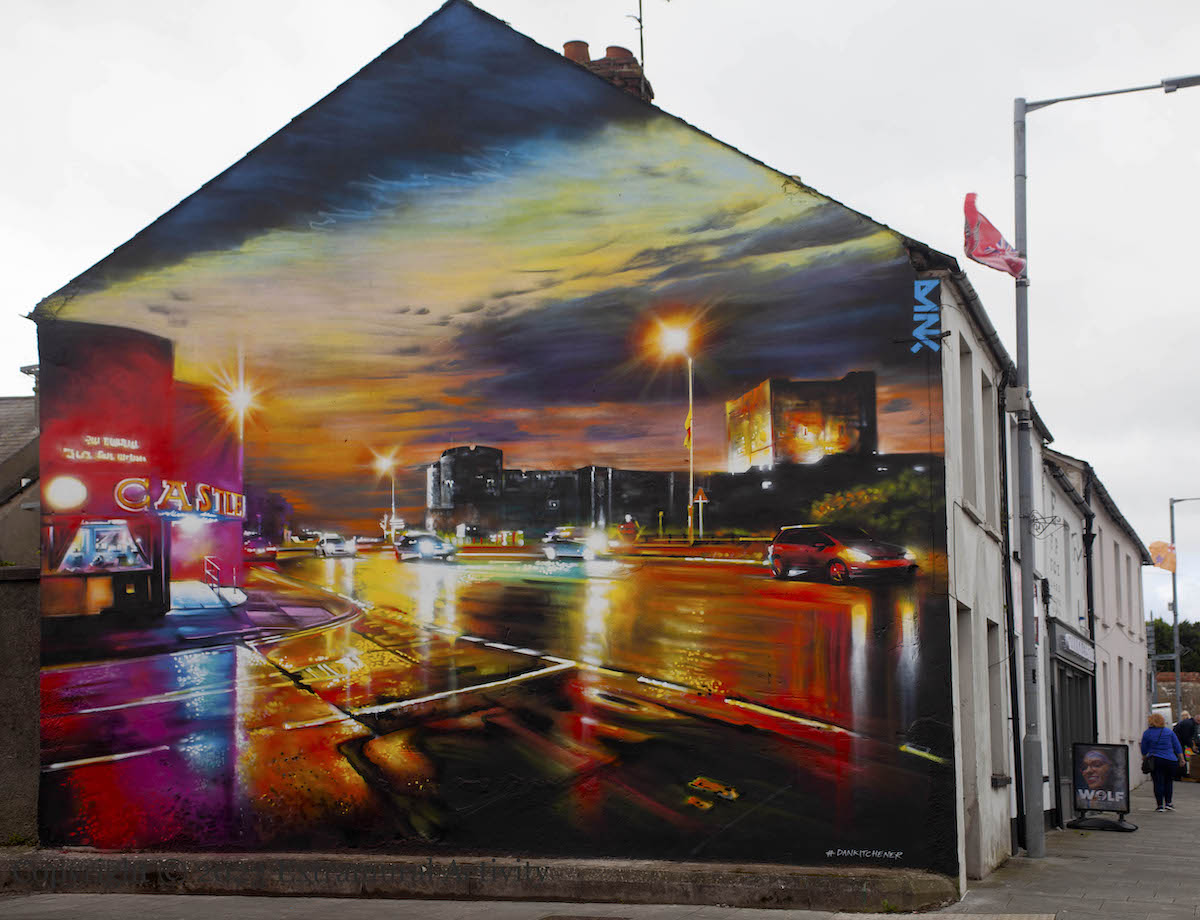
Here is Carrickfergus castle by Dan Kitcherner (ig), painted on a wall in the town centre that had a piece of “RIP GFA protocol” graffiti on it (Street View). The mural is based on the actual scene, though the shopfront marked “castle” is actually Mayur Indian restaurant.
Funded by the International Fund for Ireland’s Peace Impact Programme (BelTel).
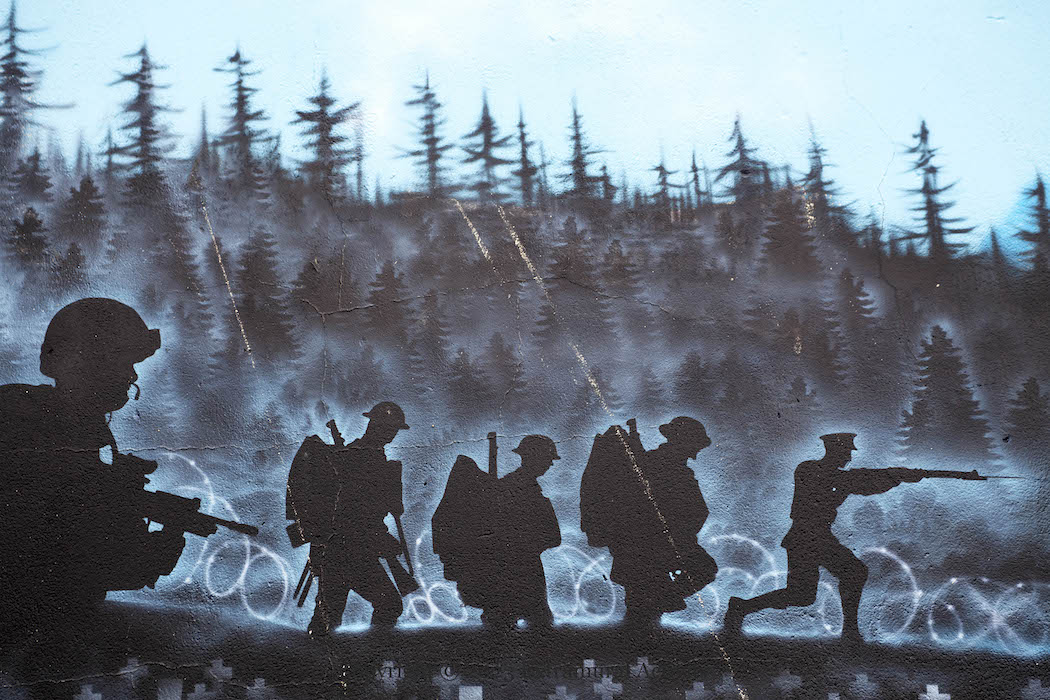
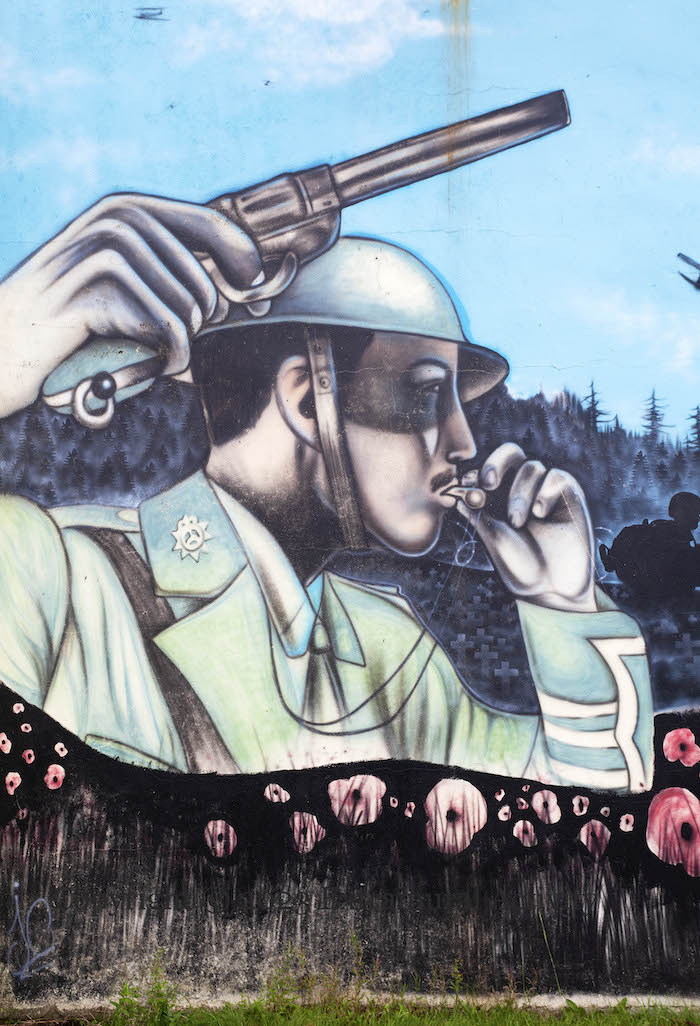
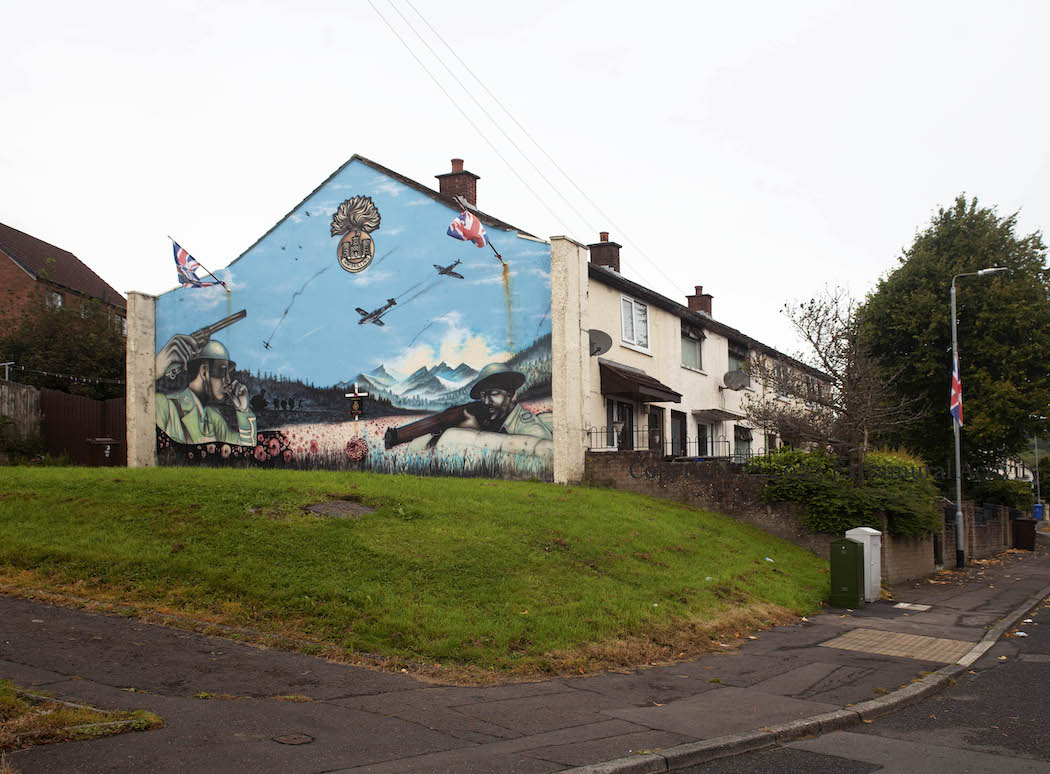
The Inniskilling Fusiliers were recruited from the four Ulster counties of Fermanagh, Tyrone, Derry, and Donegal. In WWI, battalions also served in the 4th, 29th, and 10th Divisions, as well as the 109 Brigade of the 36th Division. In WWII (represented here by the Spitfire in pursuit of the Messerschmitt) the Fusiliers served in France, India, and Italy. (Ciroca | Long Trail | WP)
(For a broader history, from the Williamite campaign to modern Afghanistan, see Inniskilling.)
This Tyndale mural appears to have be painted without fanfare in 2022.
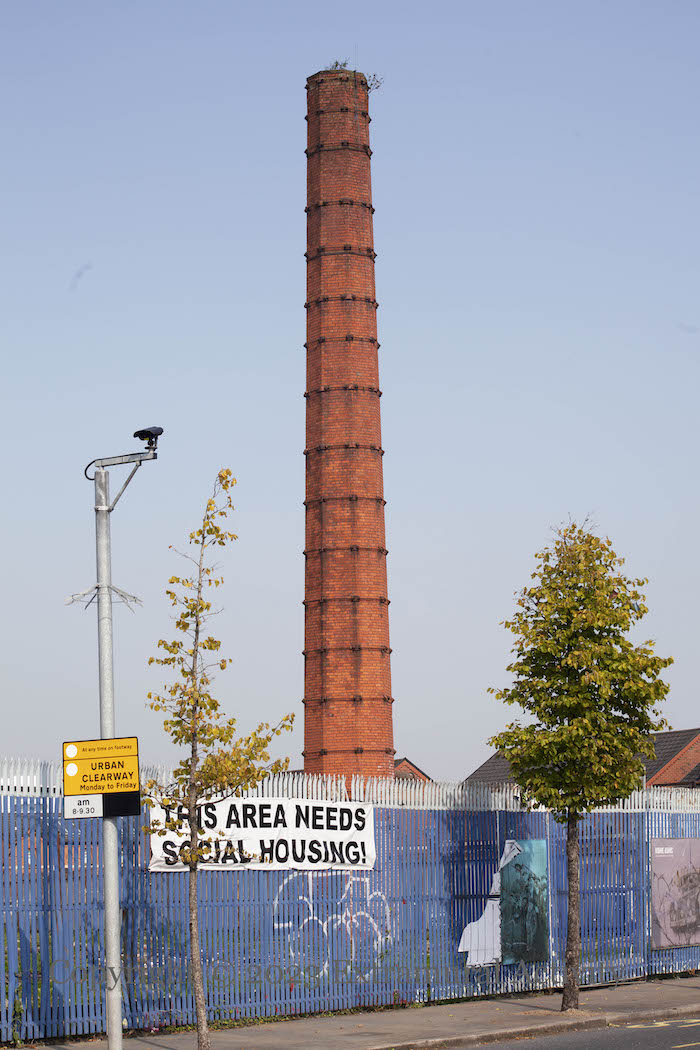
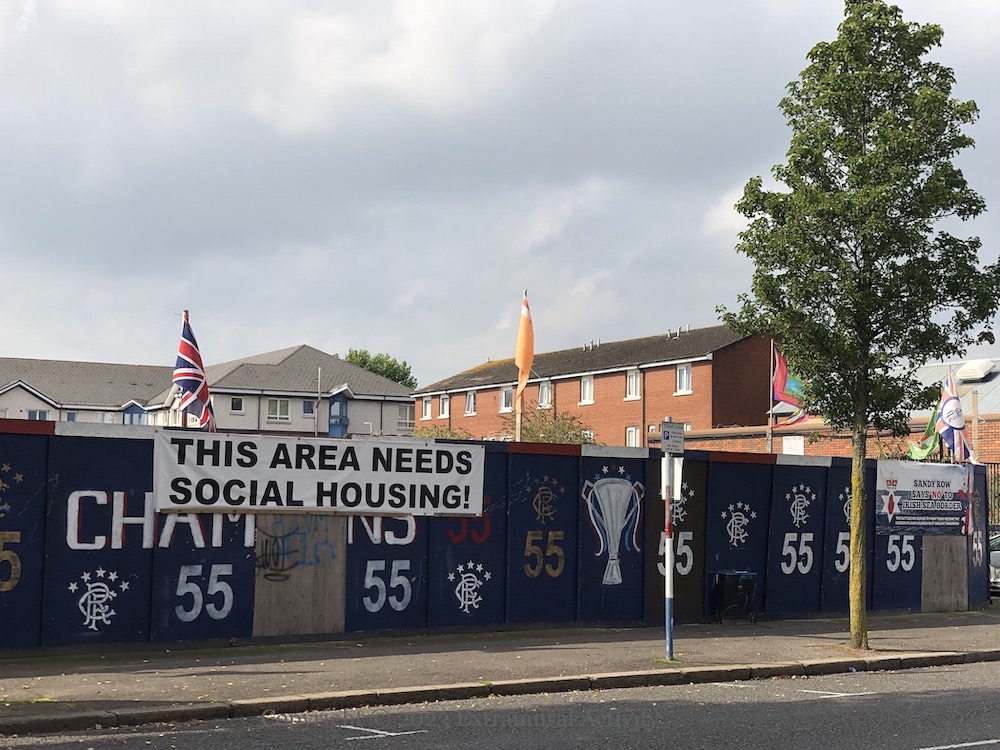
According to Housing Executive figures, only 405 social houses were built in 2022-2023, compared to a projected a need of more than 24,000 homes (ITV). Belfast City Council’s ‘Local Development Plan’ has set a quota of 20% social and affordable housing for developers (Inside Housing).
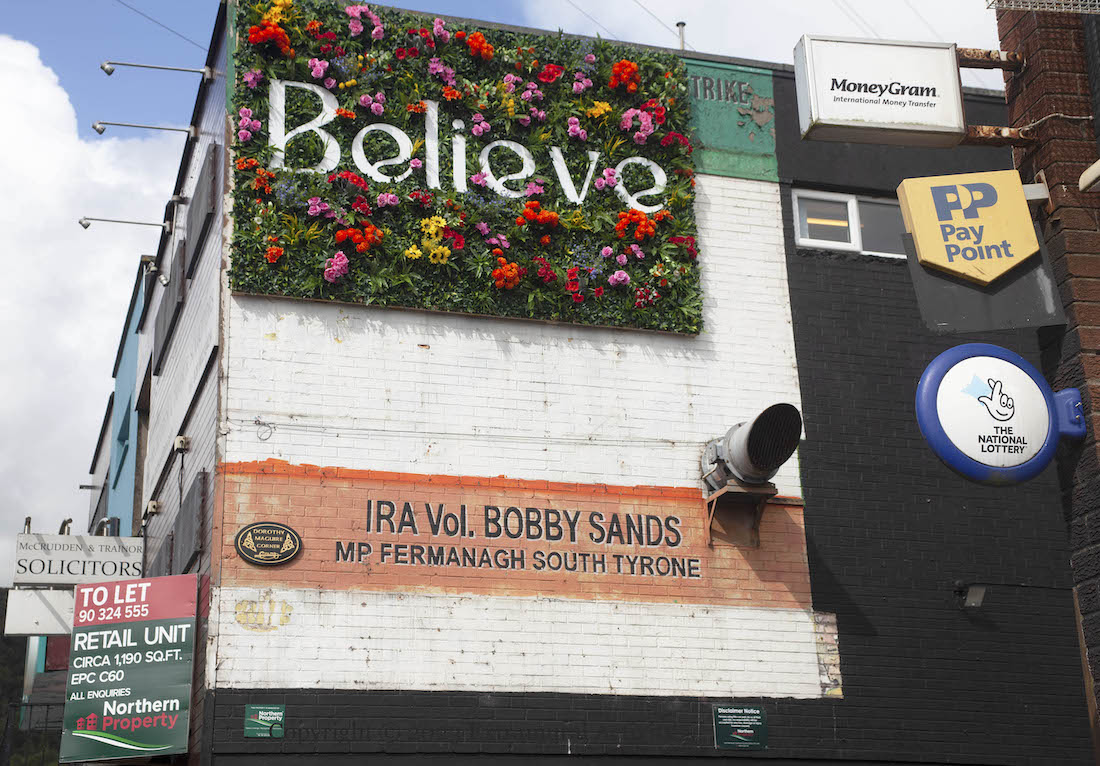
The replacement board – the word “believe” among flowers – is innocuous, but the replacing itself is remarkable, for a number of reasons.
The “Final Salute” board/mural at the top of the Rock (that ‘Believe’ replaces) depicted an iconic scene from the hunger strike period, of the funeral volley being fired over the Sands’s coffin on May 7th (reproducing the photograph seen previously in IRA Final Salute). More than 100,000 people came out onto the streets of west Belfast for the procession and images of the event were beamed to scores of countries by news crews from all corners of the globe which had flocked to west Belfast.
Further, the board has been in place since 2011, put in place for the 30 anniversary of the strike and Sands’s death on May 5th, and it was painted by Lucas Quigley, an IRA volunteer and brother of Jimmy Quigley (see M08864), who died on September 25th, last year (youtube). Being 12 years old, the board was not in good condition. It has been removed and is going to the Ulster Museum for its ‘Troubles And Beyond’ collection.
Finally, as far as its replacement goes, we would not have expected a non-sectarian replacement. This wall has had a CNR mural on it since Beıdh An Bua Agaınn in 1989. Even the USDT piece from 1996 onward featured an Irish dancer and an Irish inscription: “mol an óıge agus tıocfaıdh sí”. In general, we are not aware of any murals or boards depicting the 1981 hunger strike that have been re-imaged.
In this case, the new piece came from the children of John Paul II primary school, using the same style of ‘flower bed’ as at the entrance to the Felons’ Club. The work was funded by a grant from the Housing Executive to the Falls Community Council (Belfast Media) with support from the Resource Centre and USDT.
The task of repainting the wall, including the (painted) green head and orange foot for the previous board — and thus of removing Bobby Sands’s name from the wall — has been delegated to the owner of the building (News Letter). It is possible that something sectarian could be added to the lower space after that.
“Is your private or social landlord failing to finish repairs in your home? Don’t stand alone, stand together – join the Tenants’ Union in Ardoyne. CATU Belfast. beflast@catuireland.org”
CATU – “community action tenants’ union” – was formed in 2019 and its slogan – “we only want the earth” – comes from James Connolly’s poem of the same name.
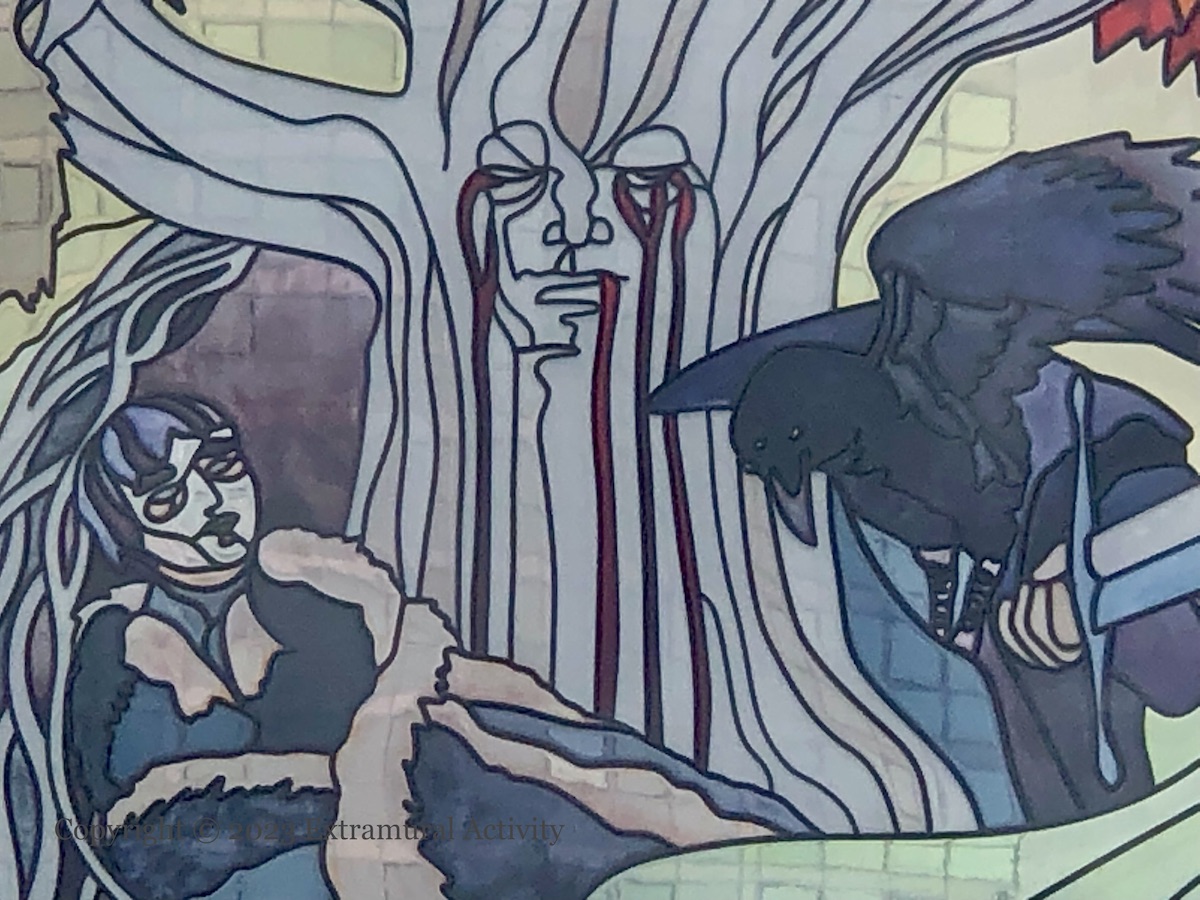
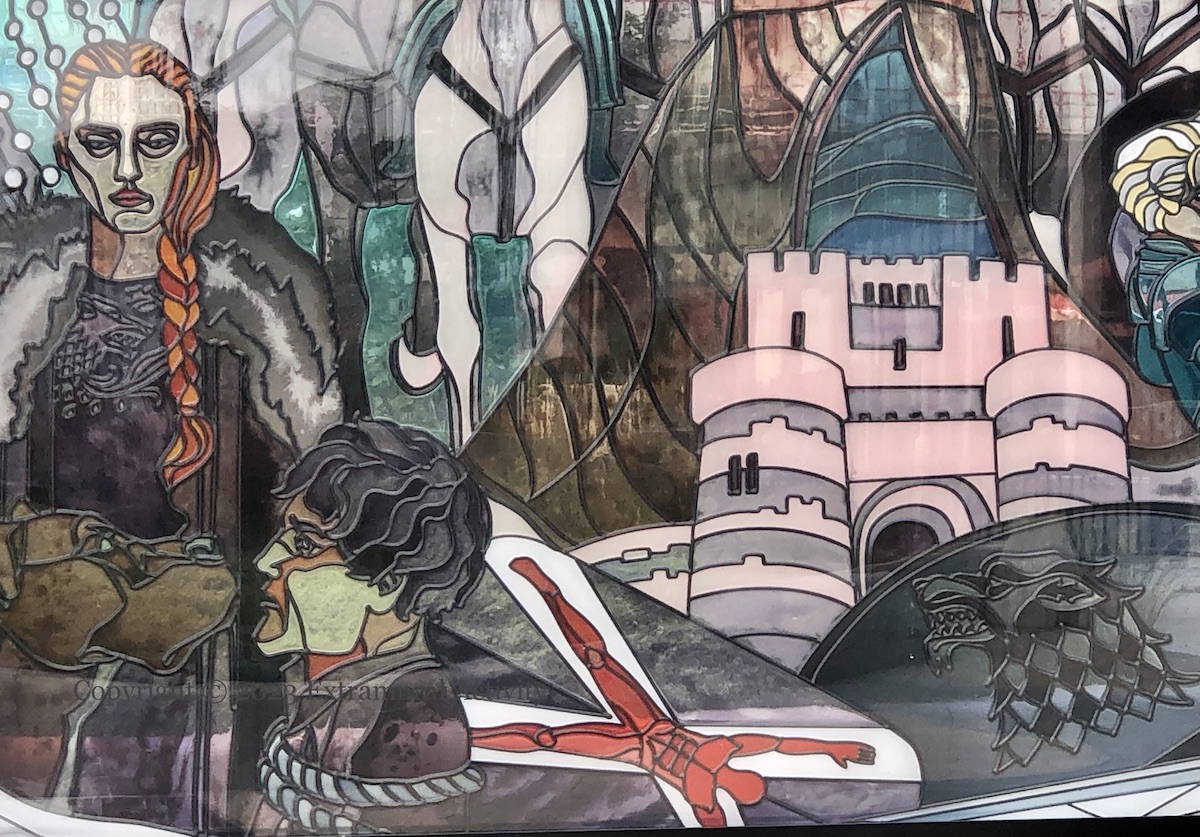
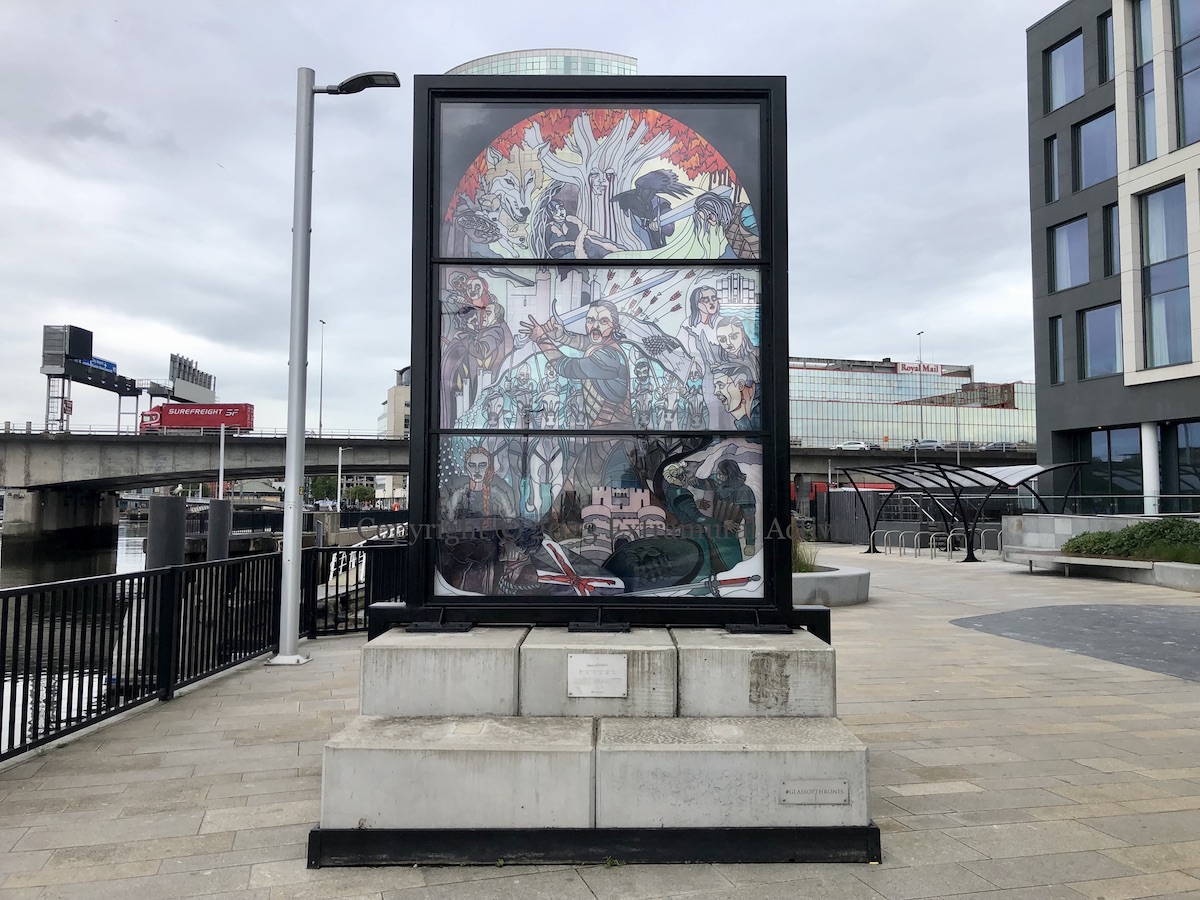
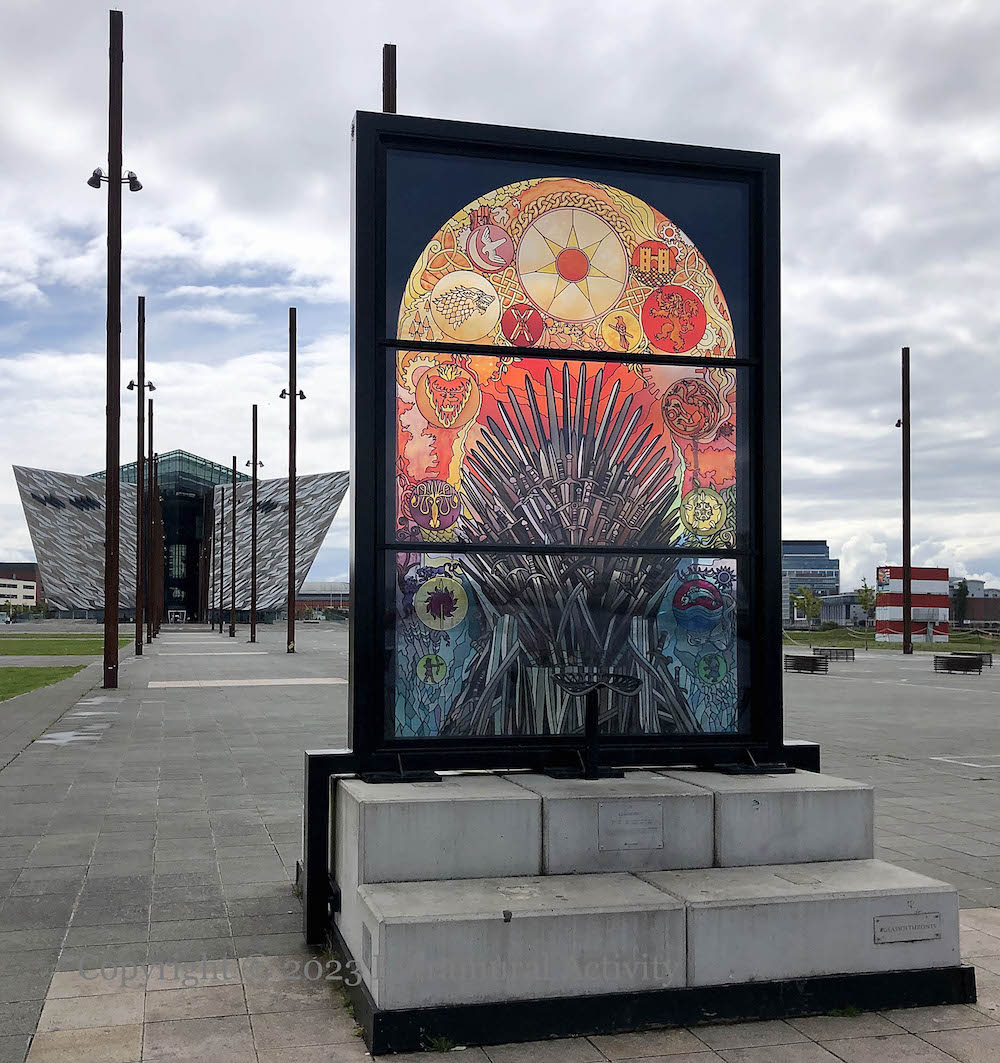
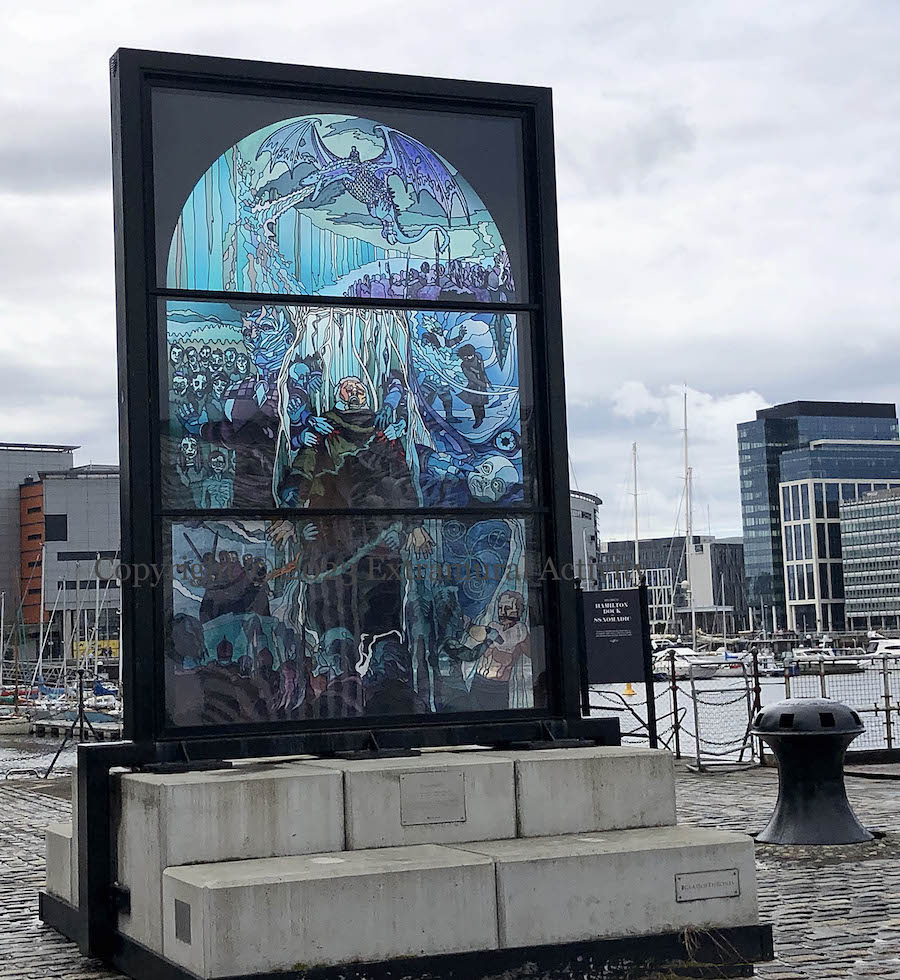
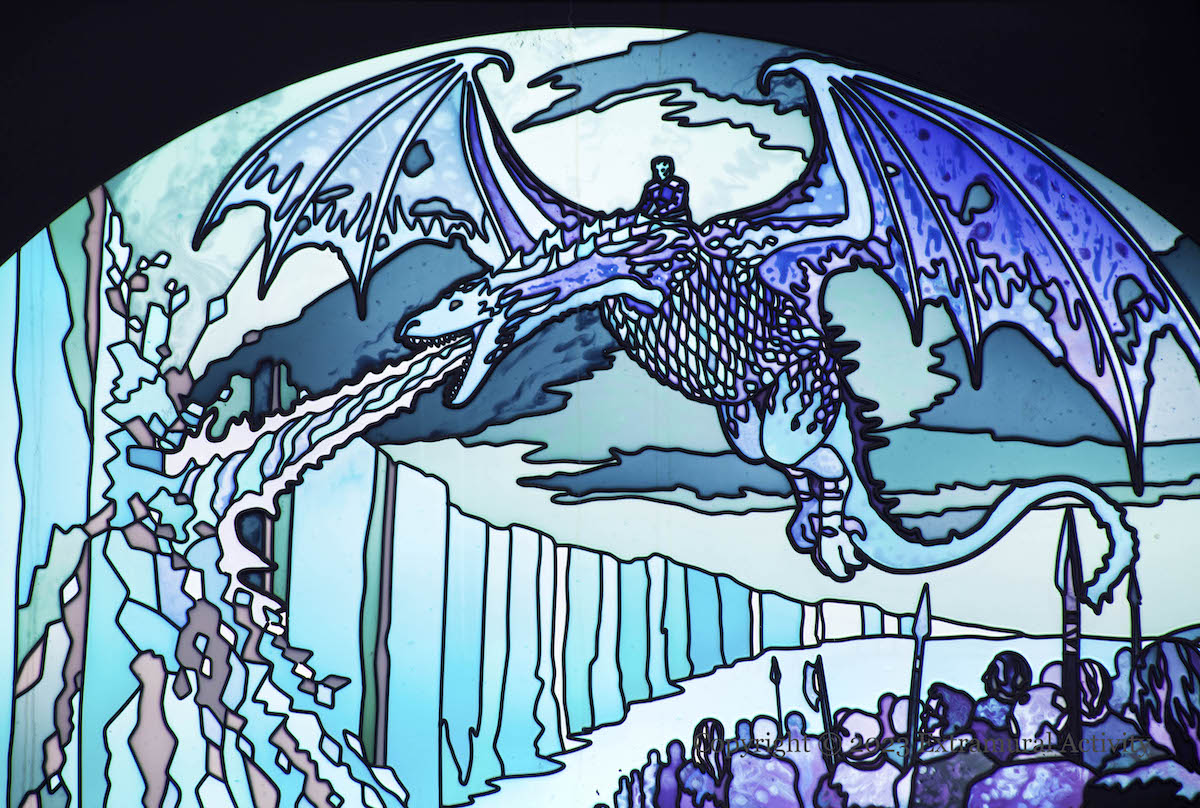
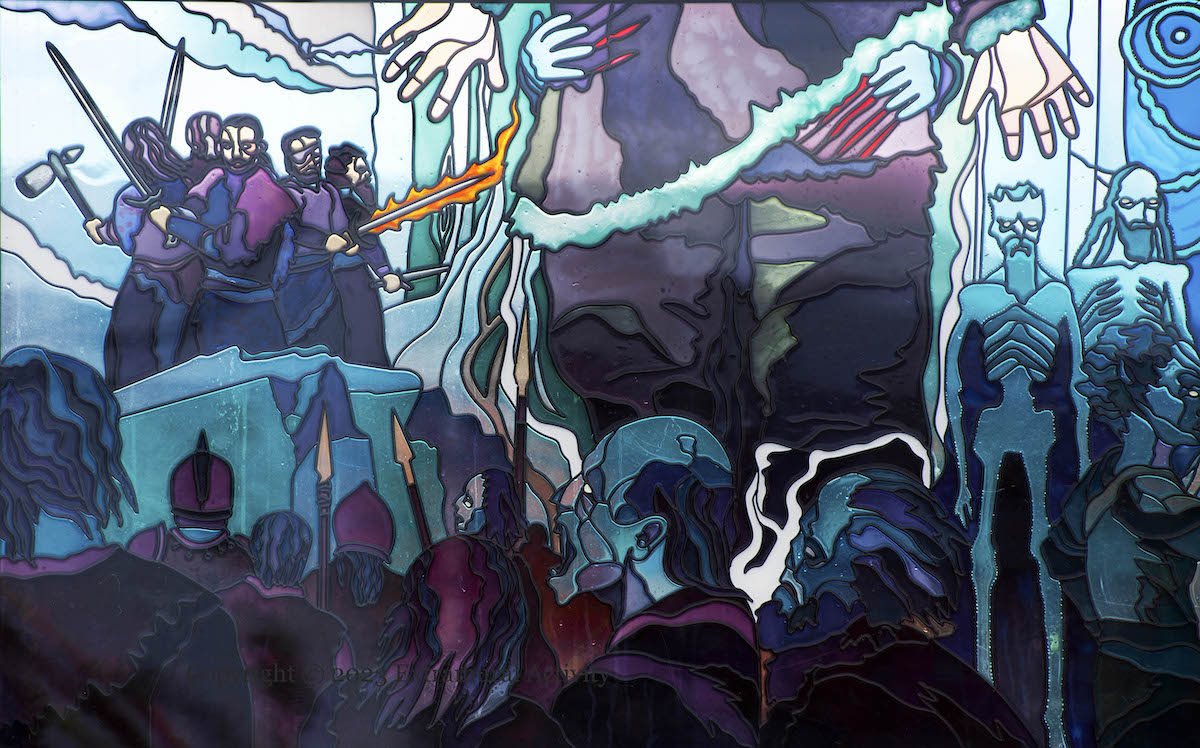
Titanic Studios in the Titanic Quarter of Belfast provided one of the primary filming locations for the hit HBO series Game Of Thrones. The series ended in 2019 but its influence lives on in a series of free-standing stained-glass “windows” on “Maritime Mile” (web), the tourist attractions around the Titanic museum.
Shown in today’s post are (from top to bottom) the Stark, Iron Throne, Targaryen, and White Walkers windows.
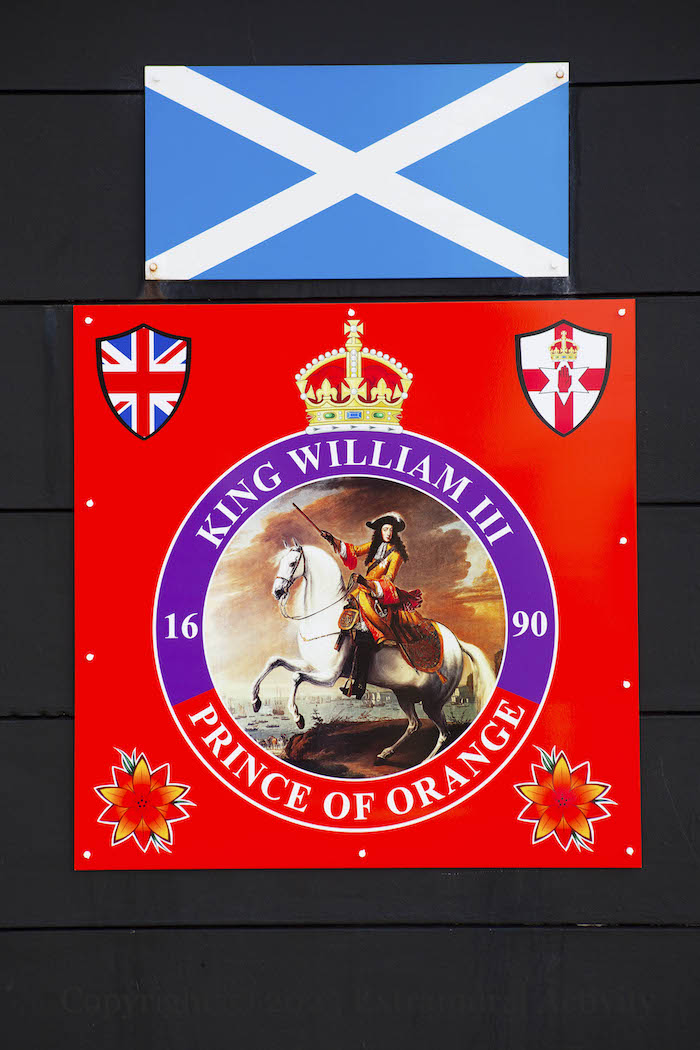
The Ulster Unionist Council organised the signing of the Covenant in September, 1912, and in January 1913 voted to bring together the militias that had been formed in various places into an Ulster Volunteer Force. One of these was a South Belfast battalion that had formed in 1912 (History Ireland). Hence, both “1912” and “1913” are given as dates for the creation of the battalion. When the Volunteers were integrated into the Ulster Division for the Great War, the South Belfast Volunteers joined the 10th battalion of the Royal Irish Rifles.
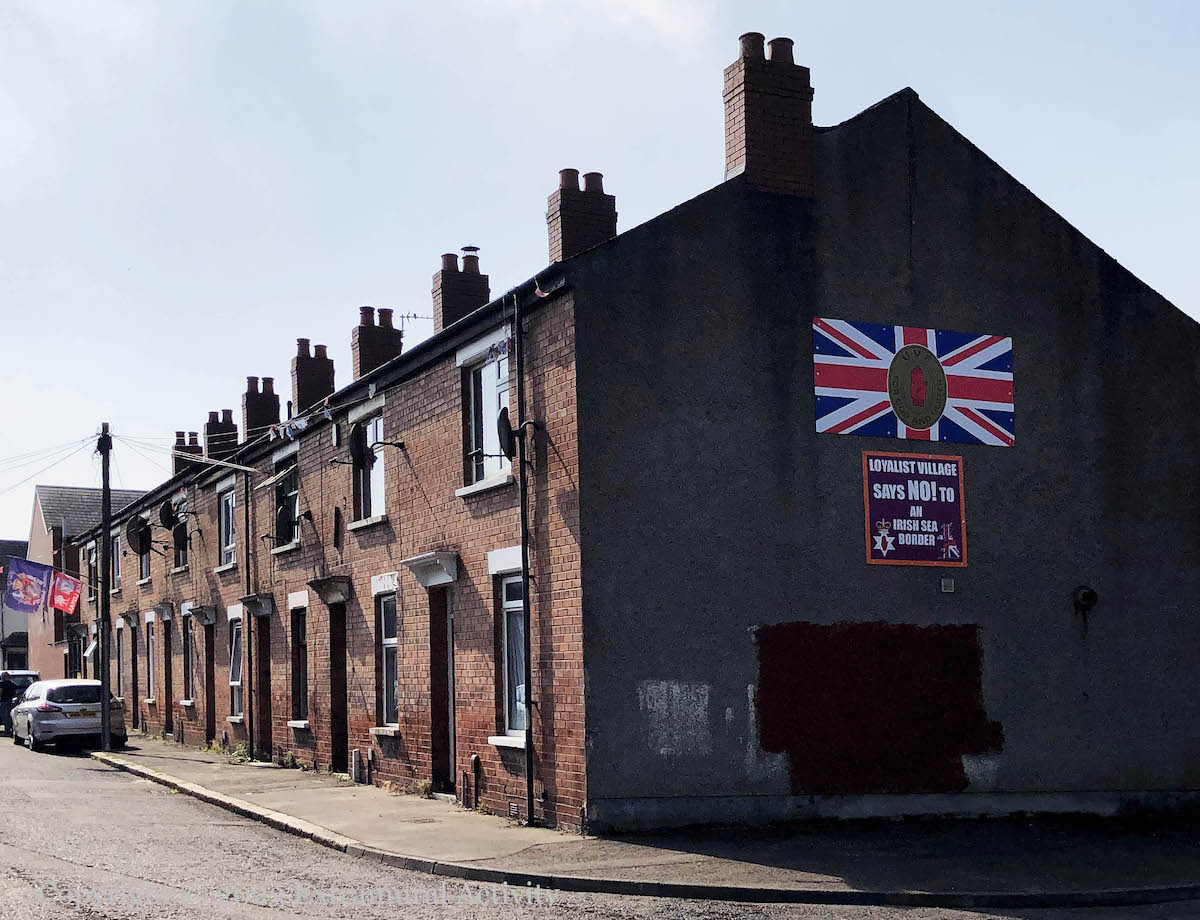
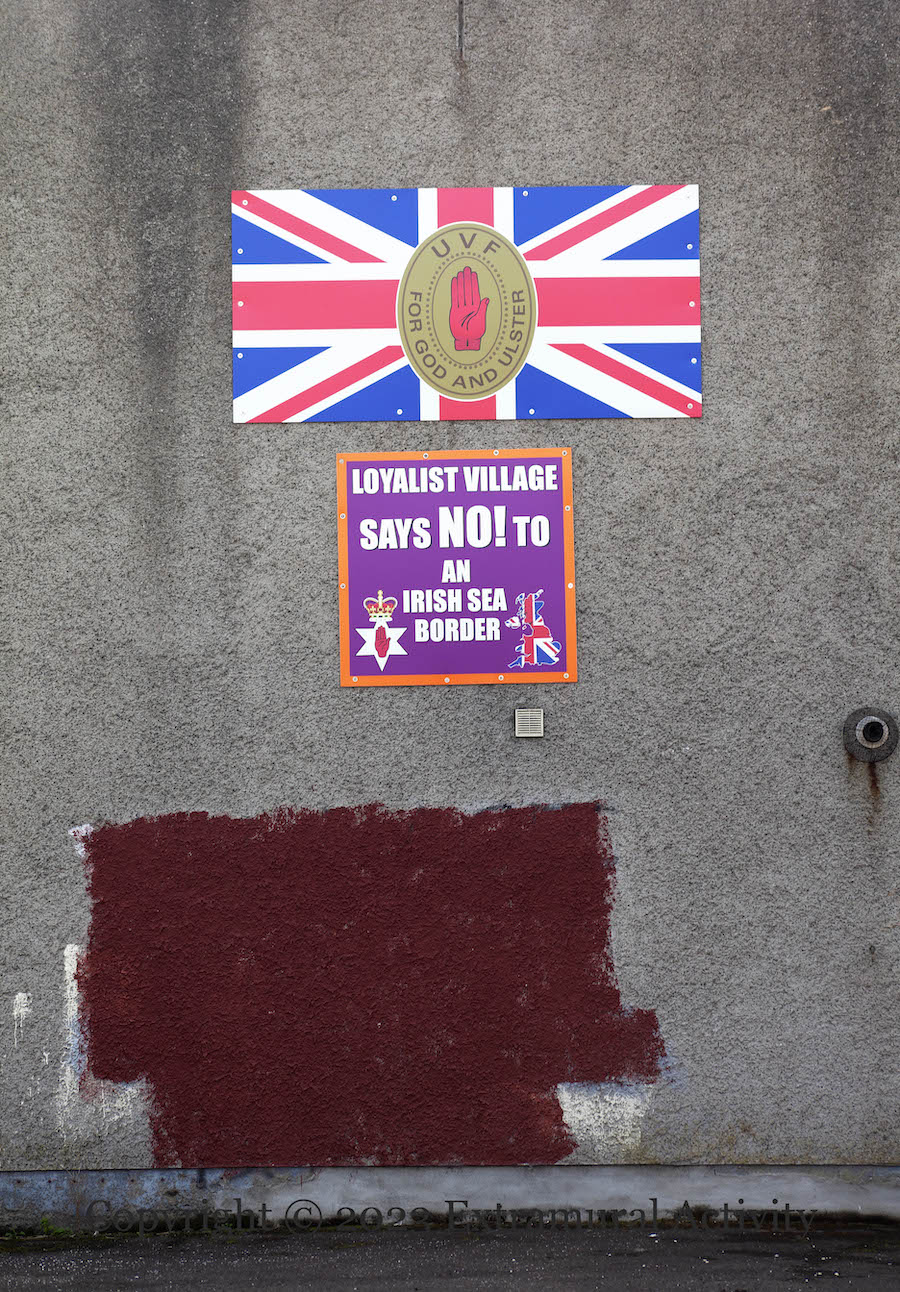
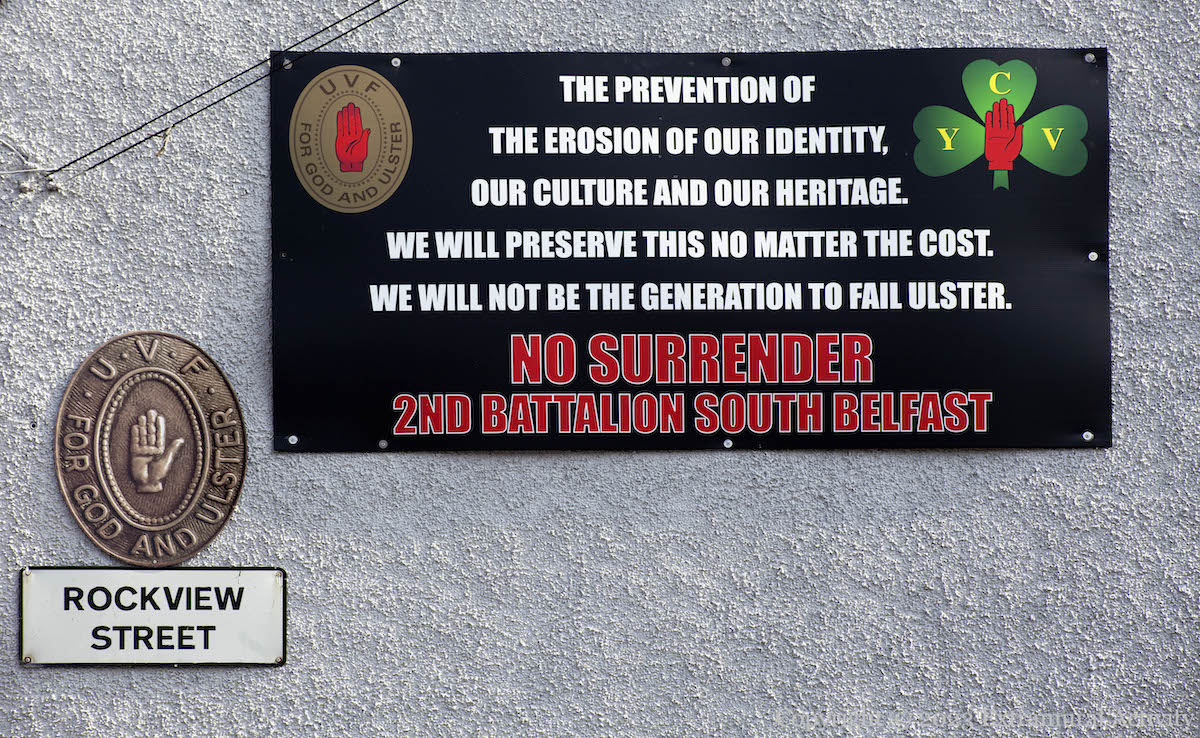
Of course, the boards above and immediately below concerning the 1912/1913 Ulster Volunteers serve double duty alongside the three other boards shown here which concern the modern UVF and the current protests against Brexit/NI Protocol/Windsor Framework.
The advertising hoarding has been informally re-purposed by the UVF for several years, and its de-commercialisation is now complete with the addition of this printed board.
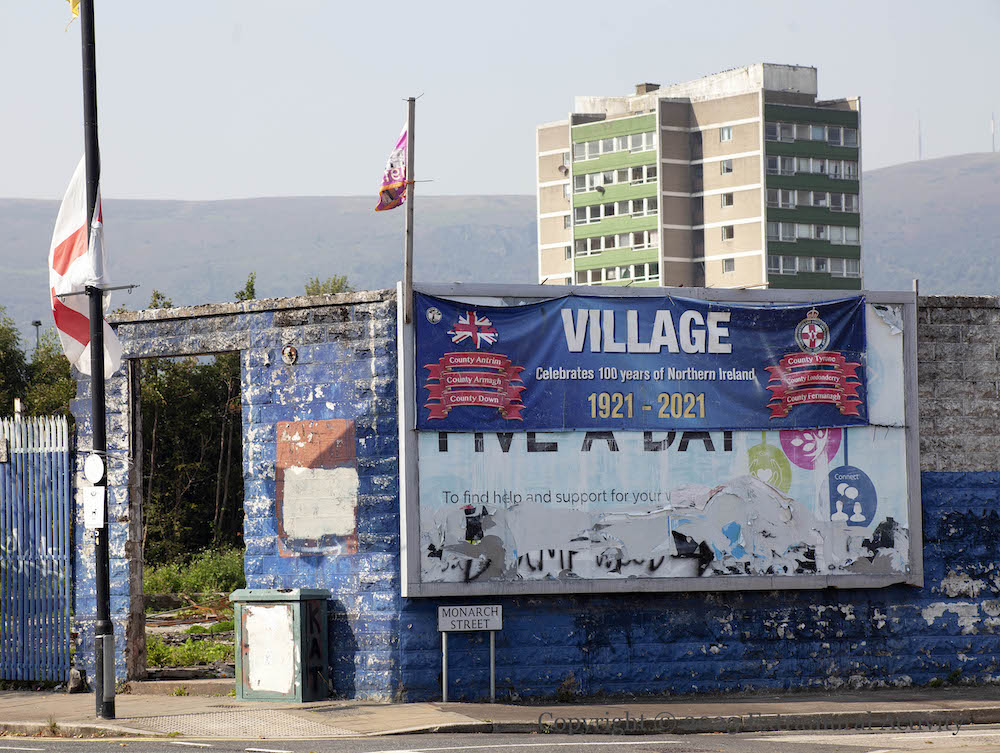
“Loyalist Village says No! to an Irish Sea border.” “The prevention of the erosion of our identity , our culture and our heritage. We will preserve this no matter the cost. We will not be the generation to fail Ulster.”















 Extramural Activity