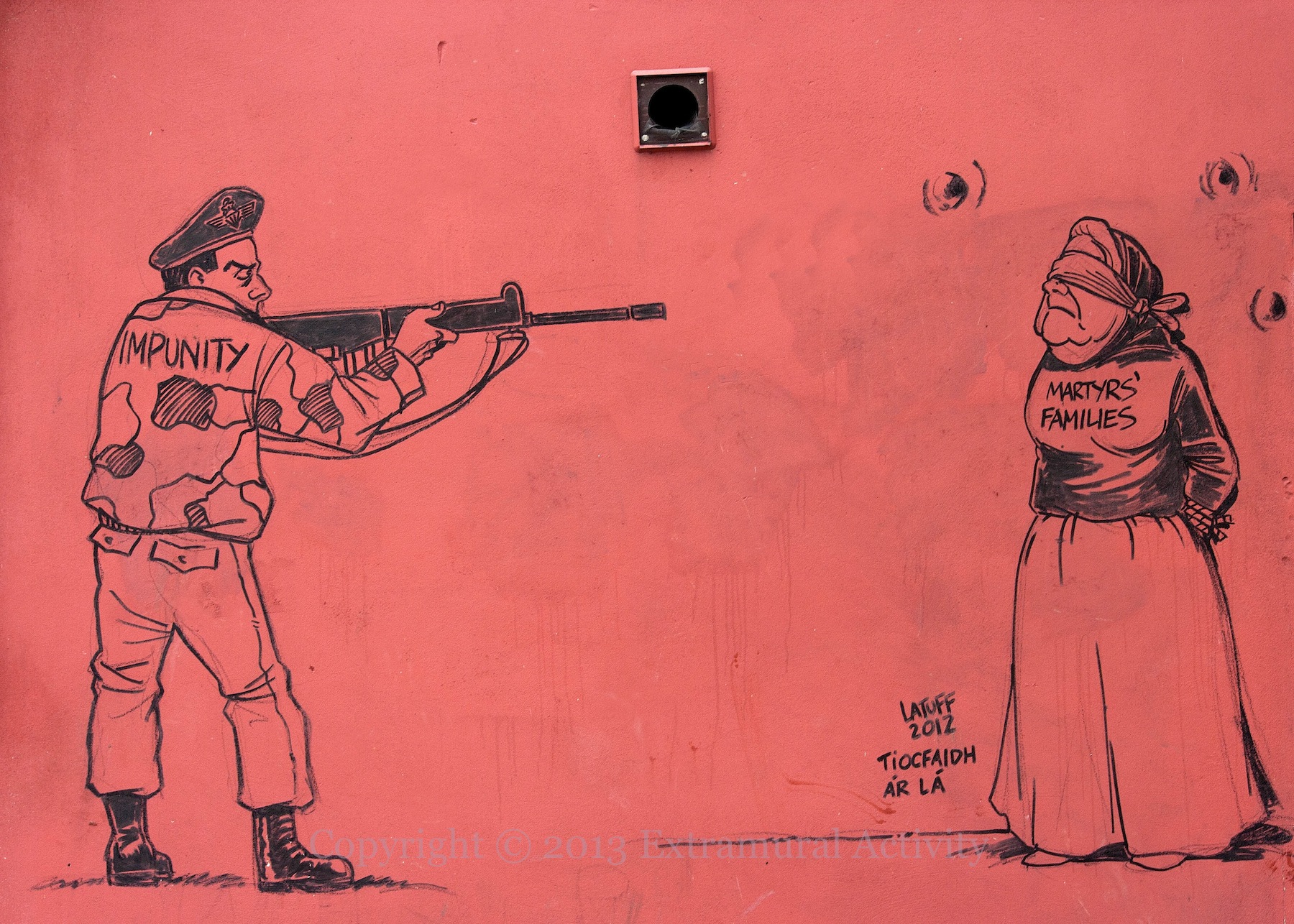
Line drawing in Derry/Doıre by Carlos Latuff showing an army soldier, with “impunity” across his shoulders, taking aim at a blind-folded woman, representing martyrs’ families.
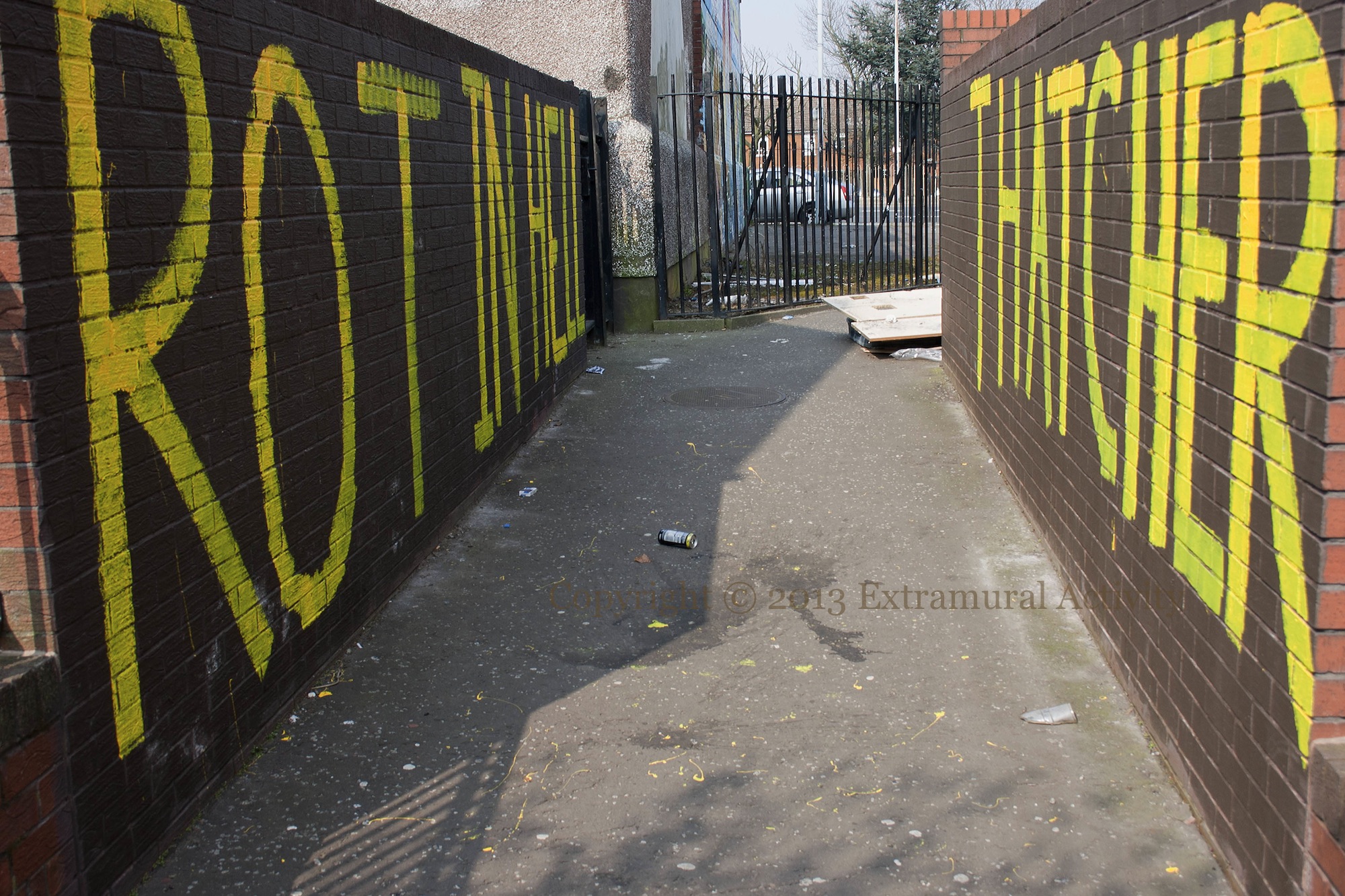
Reaction to the death (on Monday, April 8th) of Margaret Thatcher, U.K. Prime Minister 1979-1990 (WP), in an alley below Divis flats, between Divis Street and Clonfaddan Crescent.
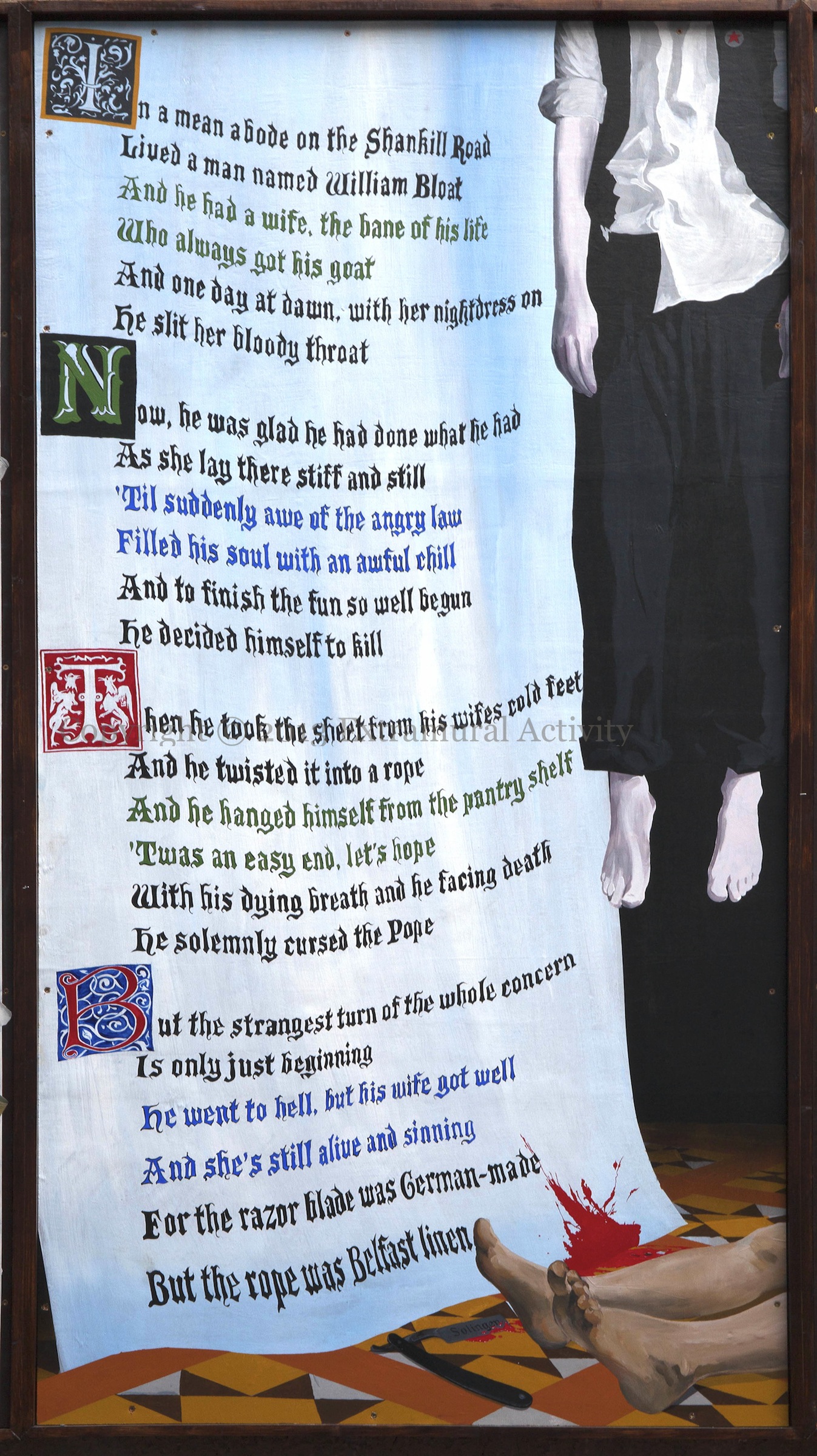
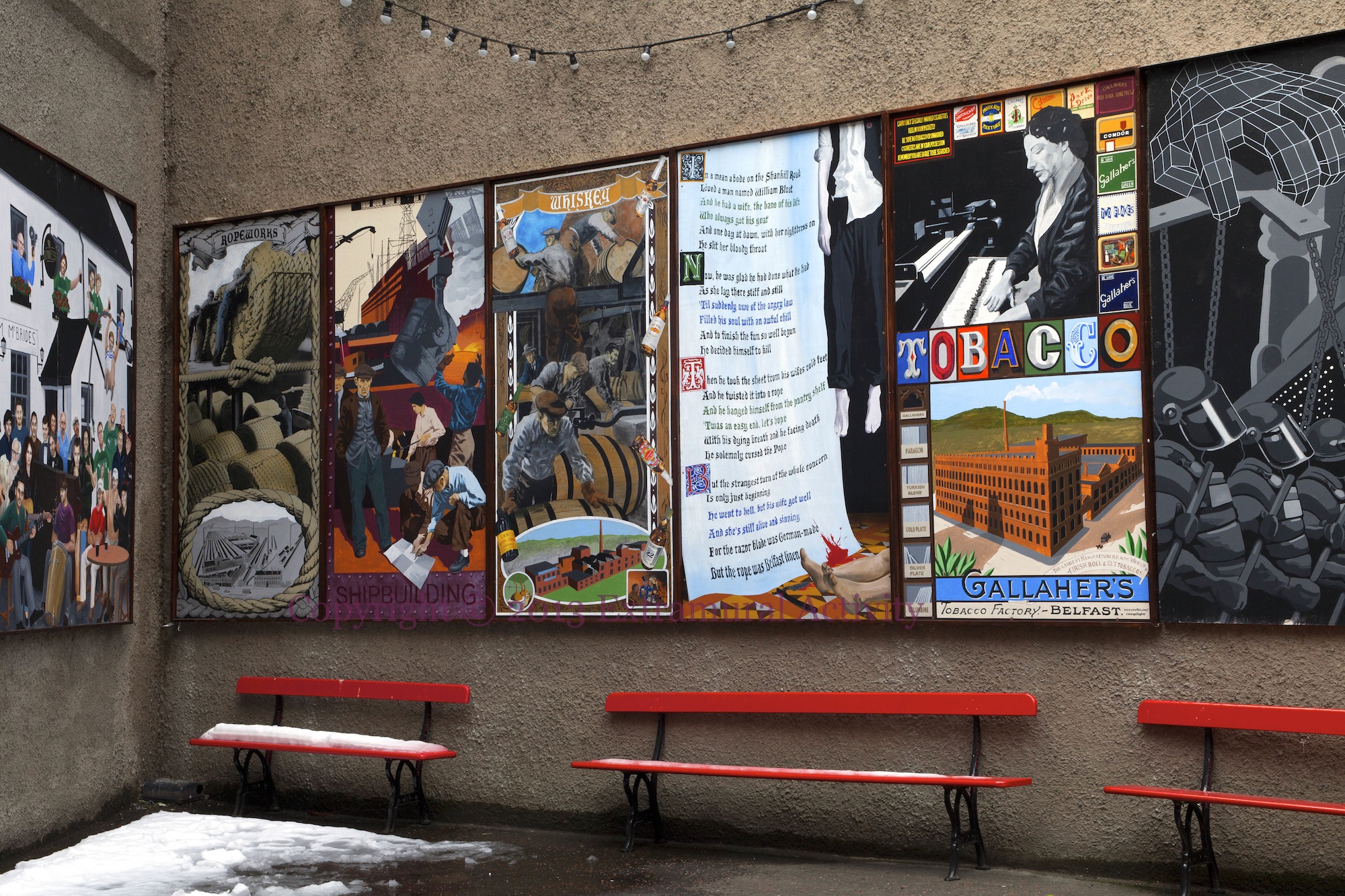
Here is a close-up of the fourth panel of the five-panel piece in the Duke Of York featured yesterday. The four other panels represent the production of rope, ships, whiskey, and tobacco products. The “William Bloat” panel presumably stands for the linen industry, as the star of the tale is the bed sheet that is fashioned into a noose. The words to the song, including an extra verse not shown on the board, can be found below, along with a Tommy Makem performance of the song (from 1973!) in which the blade is Japanese-made.
William Bloat – Raymond Calvert (1926)
In a mean abode on the Shankill Road Lived a man named William Bloat; He had a wife, the bane of his life, Who always got his goat. And one day at dawn, with her nightdress on He slit her bloody throat.
[With a razor gash he settled her hash Never was crime so slick But the drip drip drip on the pillowslip Of her lifeblood made him sick. And the knee-deep gore on the bedroom floor Grew clotted and cold and thick.]
Now, he was glad he had done what he had As she lay there stiff and still ‘Til suddenly awe of the angry law Filled his soul with an icy chill. And to finish the fun so well begun He decided himself to kill.
Then he took the sheet from his wife’s cold feet And he twisted it into a rope And he hanged himself from the pantry shelf, ‘Twas an easy end, let’s hope. With his dying breath and he facing death He solemnly cursed the Pope.
But the strangest turn to the whole concern Is only just beginning. He went to Hell but his wife got well And she’s still alive and sinning, For the razor blade was German made But the rope was Belfast linen.
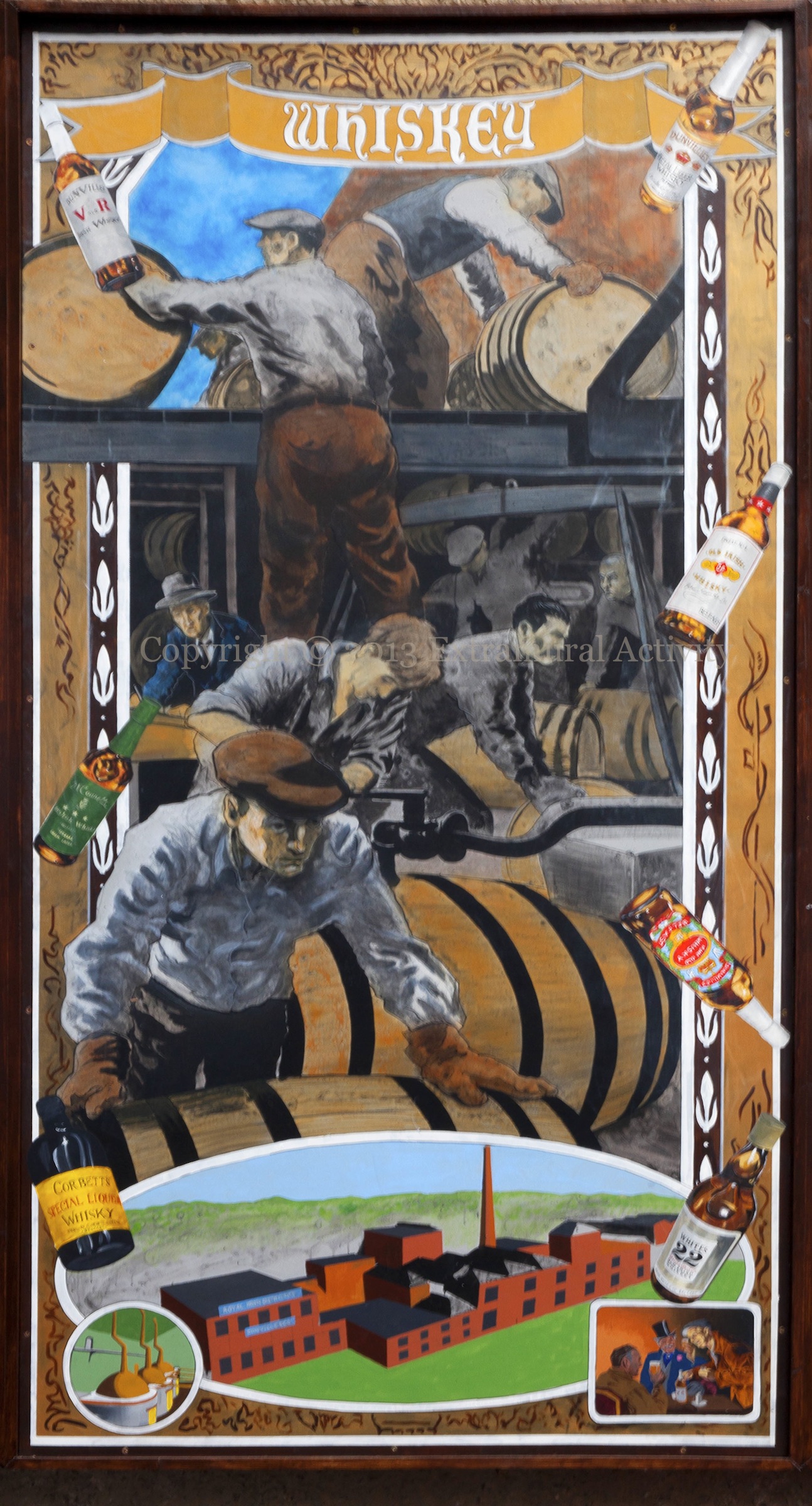
Whiskey, the middle of five panels (see below) in another piece from the Duke Of York pub in the city centre portraying four Northern Irish industries of/in the past – rope, ships, whiskey – the words to the song William Bloat – and tobacco products.
A bilingual board encouraging tourism in CNR west Belfast. The attractions listed are múrphıctúrí [sic], títhe [sic] phobaıl agus reılıgí, ceol agus damhsa, ıarsmalaınn poblachtach, nádúr, ealaín agus cultúr, gaırdíní chuımhneacháın, spóırt Gaelach, ár staır le blıanta beaga [murals, churches and cemeteries, music and dance, republican museums, nature, arts and culture, memorial gardens, Gaelic games, recent history].
By Rısteard Ó Murchú in Nansen Street/Sráıd Nansen, Belfast/Béal Feırste.
With God on our side … The BVM (Blessed Virgin Mary) standing shoulder to shoulder, or at least corner to corner, with republican POWs in the New Lodge.
“Ardoyne, Bone & Ligoniel Easter Re-Union, on Tuesday 2nd April, Crumlin Star social club, 8 til late, with prominent guest speaker, traditional Irish night, followed by disco. Taıle [entrance fee] £5.00”.
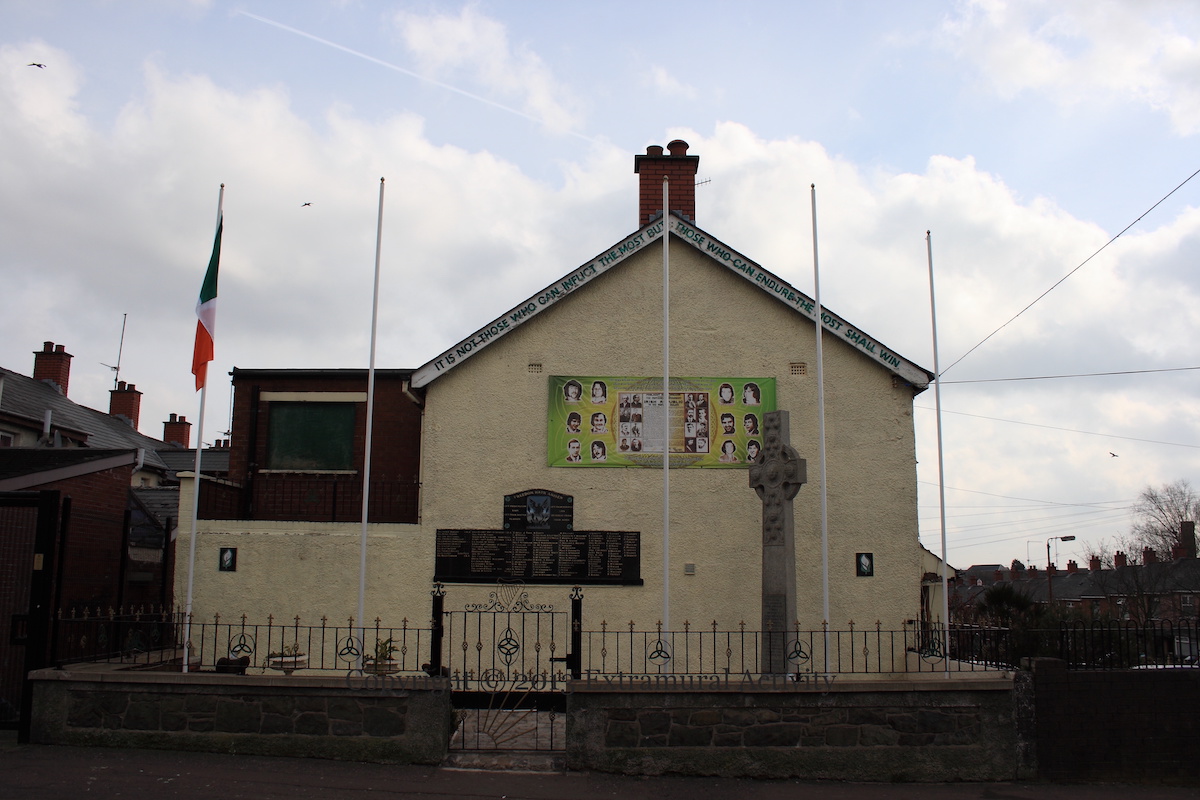
A tarp has been added to the Ardoyne memorial garden (seen previously in 2008) putting the 12 deceased hunger strikers from the modern Troubles alongside those who were executed for their part in the Easter Rising.
An Ulster Freedom Fighters mural in Bangor, to the northeast of Belfast. The mural is at the edge of a Loyalist estate which is on high ground; it (and its companion) overlook and dominate a major junction on a network of roads around the town.



 Extramural Activity