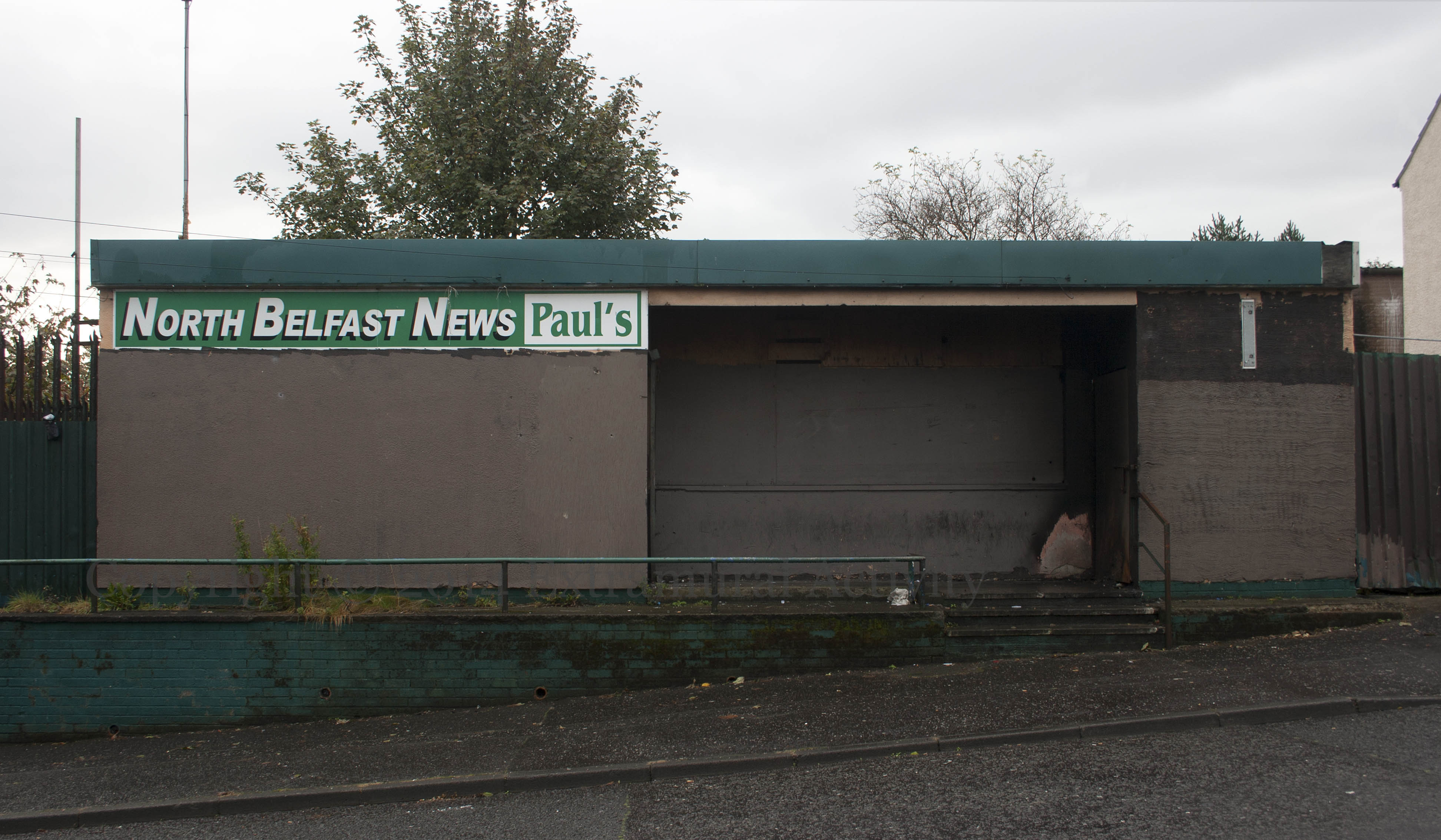
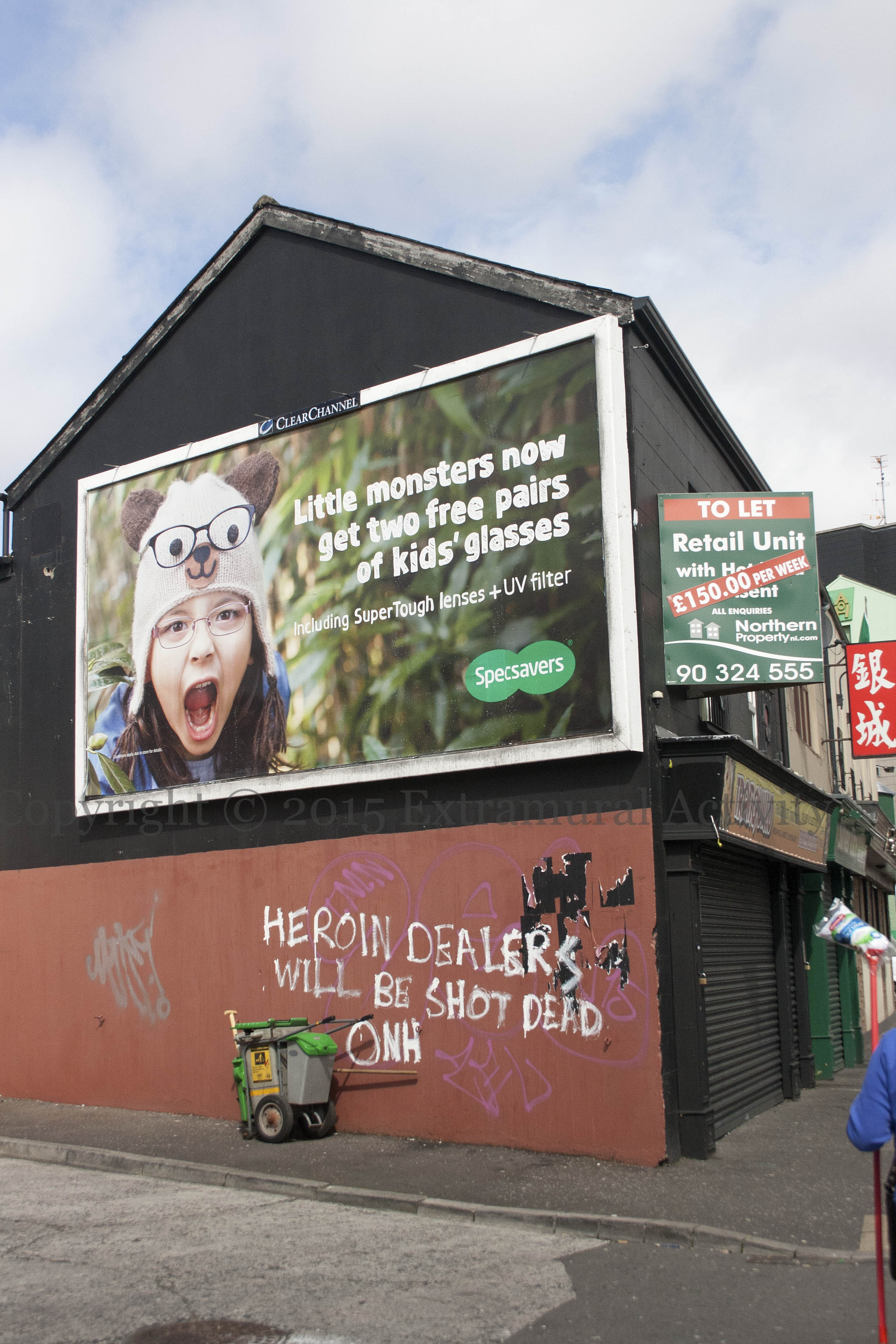
The Bawnmore area lies just beyond the border of Belfast, north of the city council along the Shore Road. While the area has seen many large retail chains erect stores over the last few decades, the local businesses have closed. Above, the Boundary Bar, which was burnt out in 2007, now with fake window dressing; below, Paul’s newsagents around the corner in Mount Street.
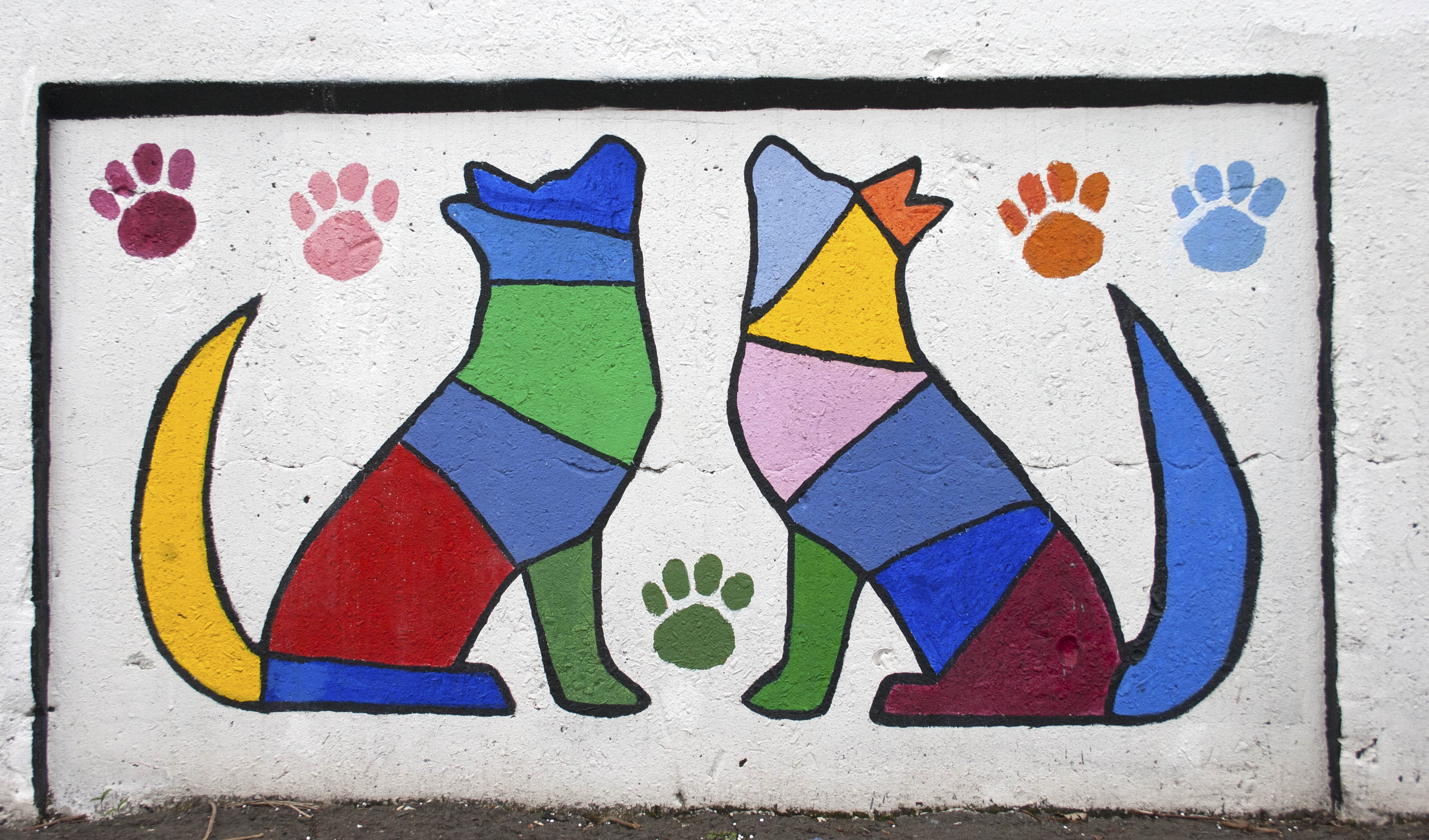
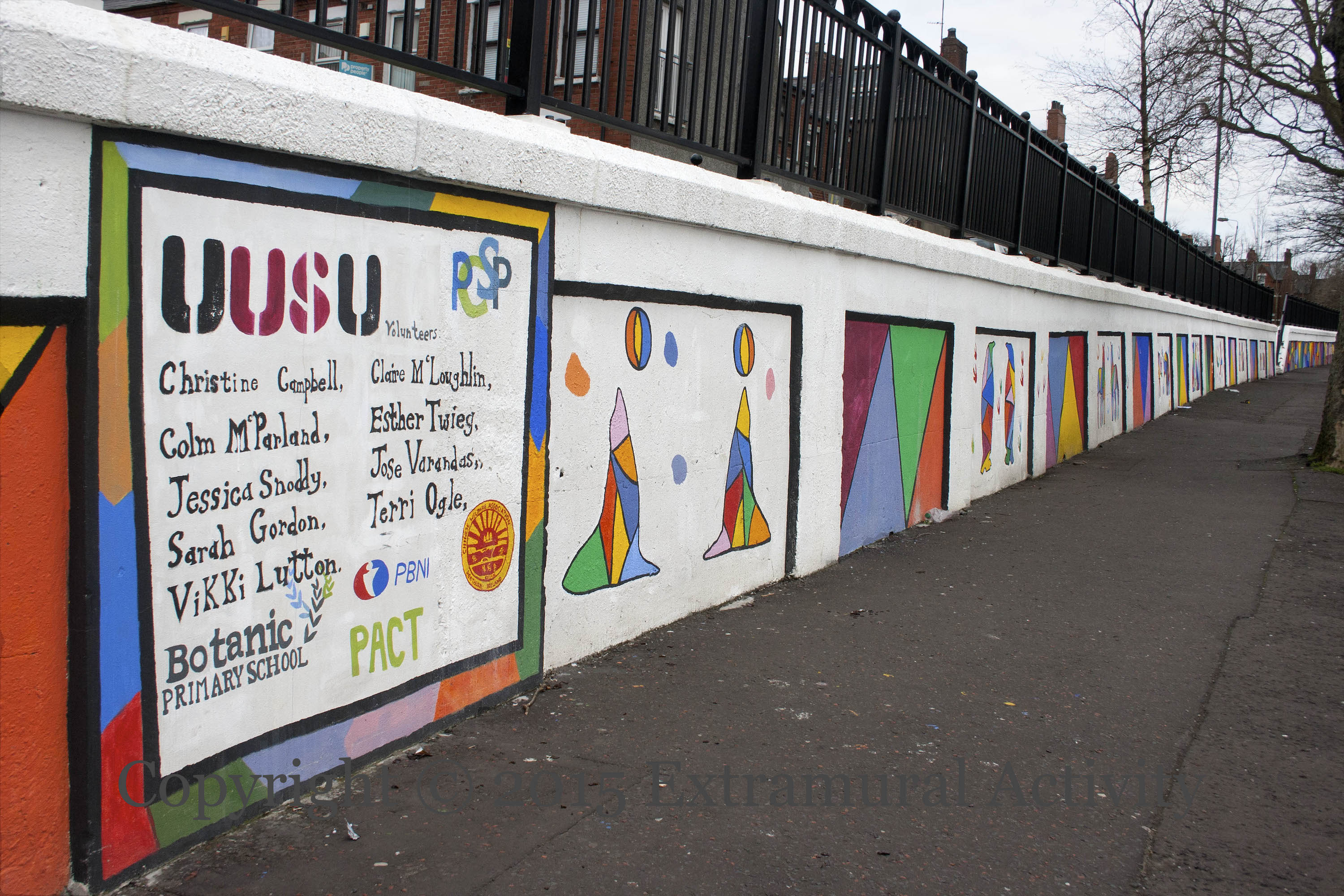
Children from Botanic Primary school and art students from University of Ulster Student Union painted a series of animal pairs (created by Vikki Lutton) and geometric panels on the wall of the Stranmillis embankment. Above we have wolves, below there are elephants, and in the wide shot, sea lions. ‘In progress’ images from UUSU | P4 schoolchildren.
UUSU was also responsible for the Seamus Heaney mural (The Hunting Heart).
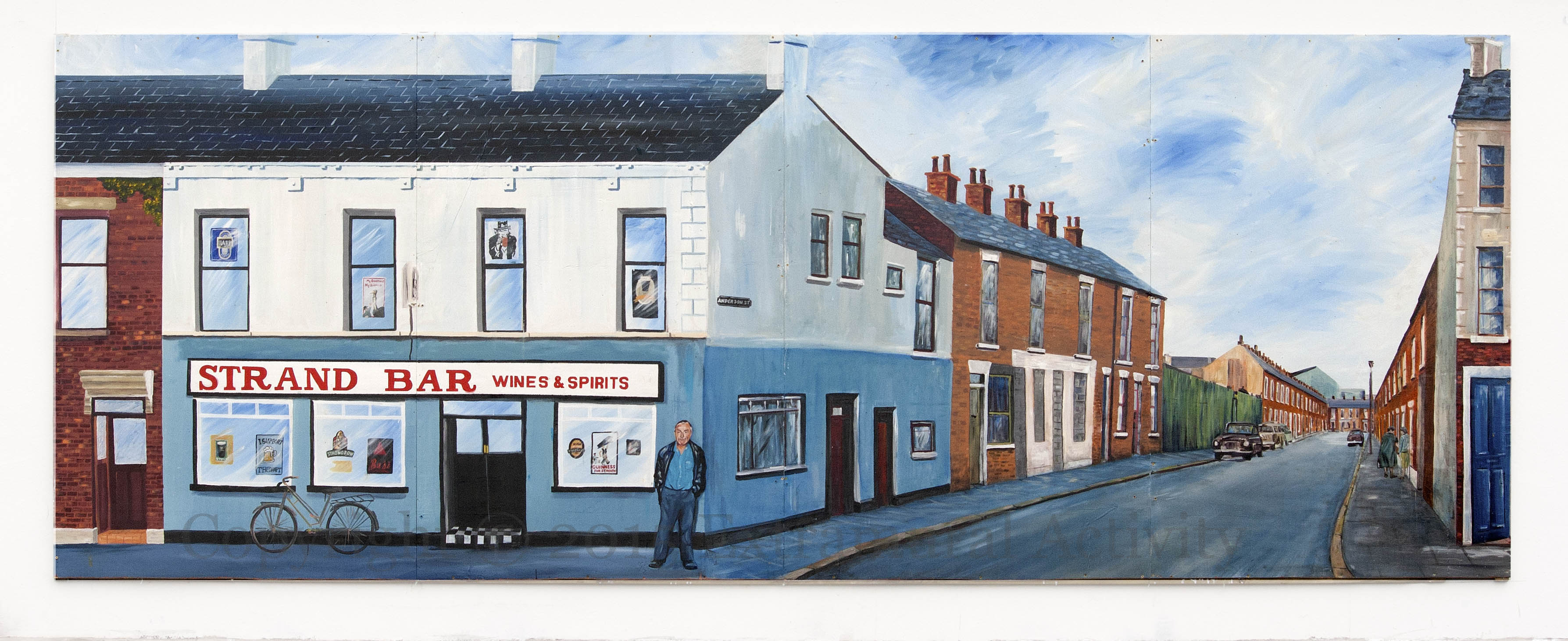
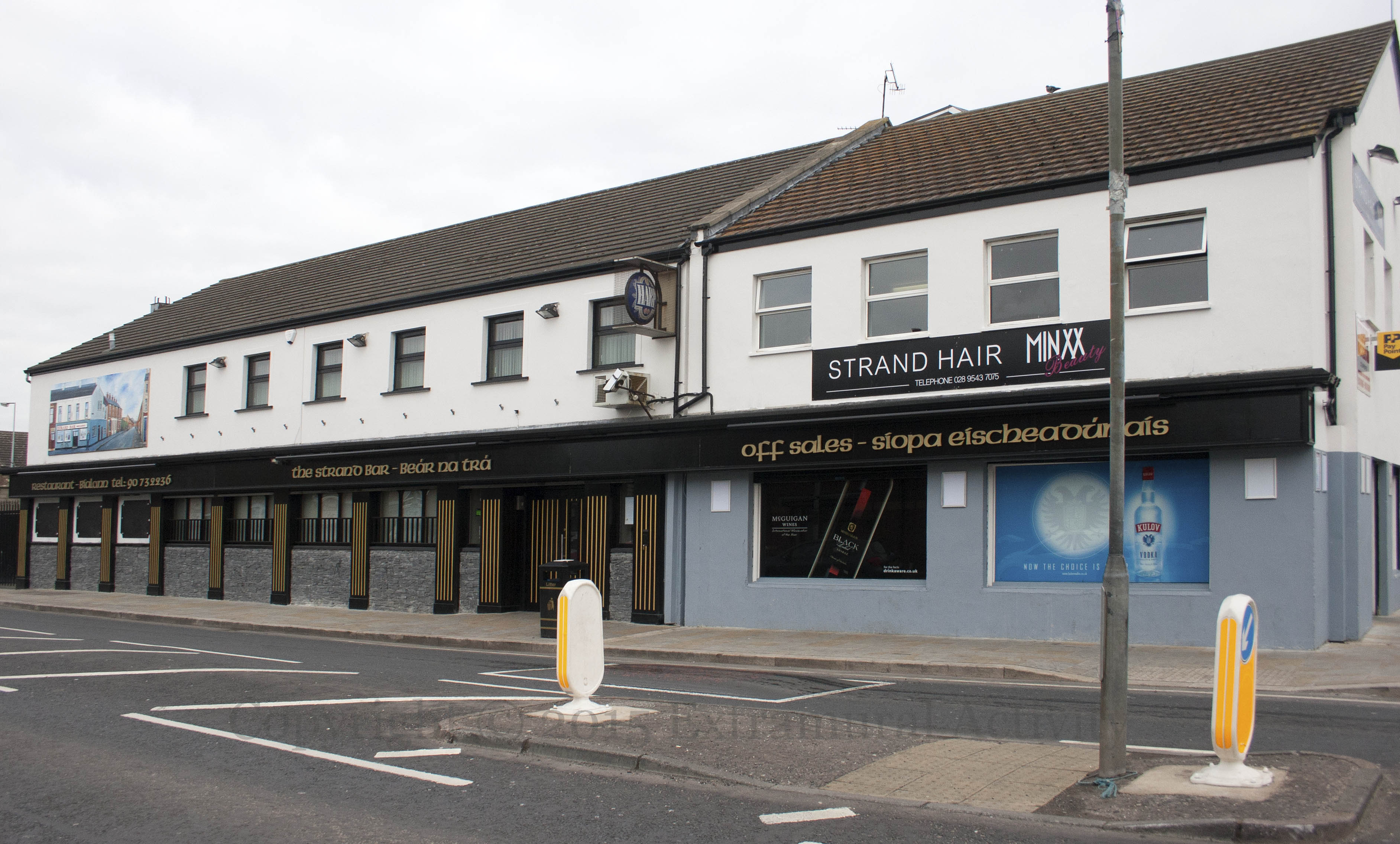
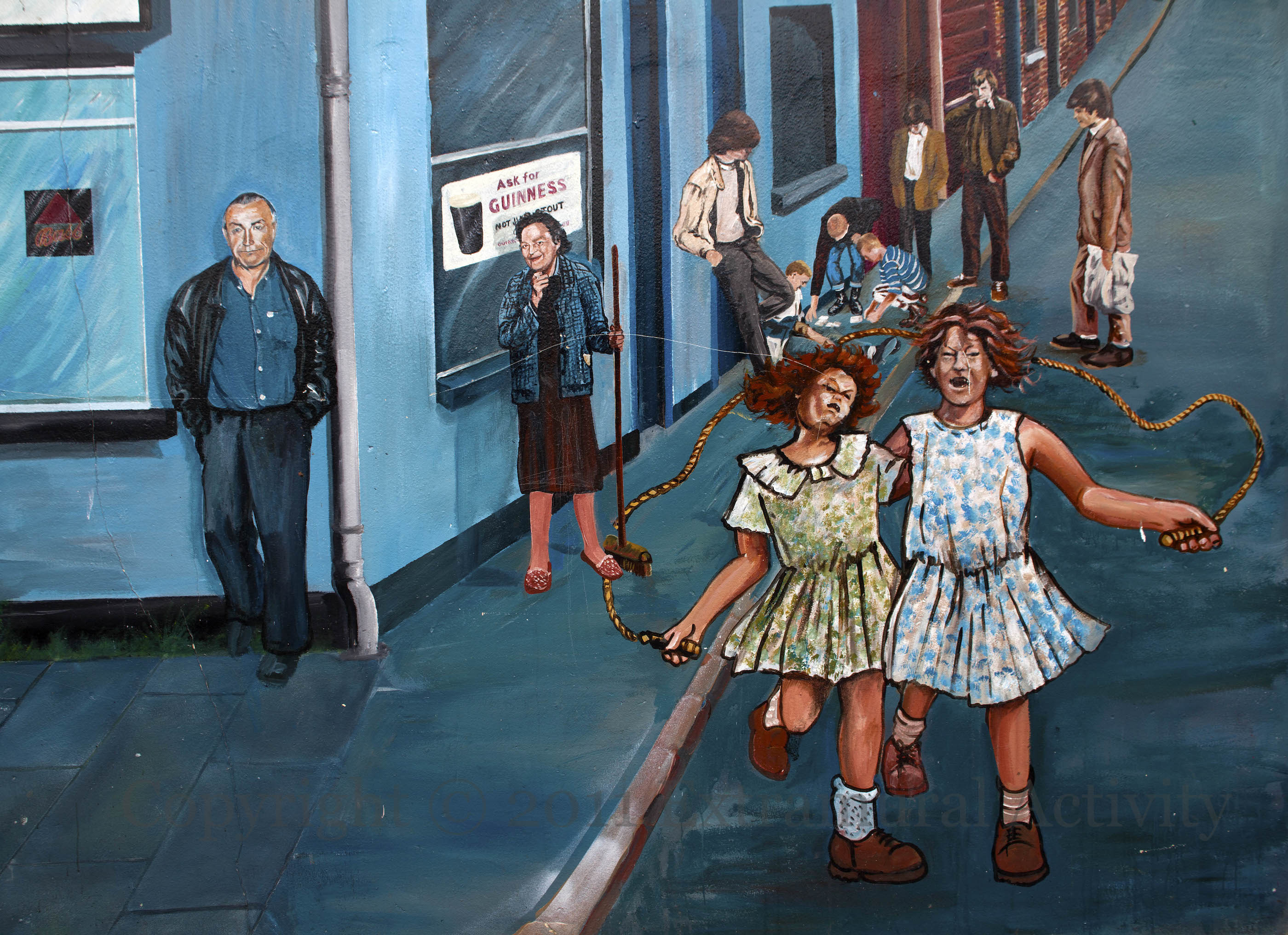
After adding windows to the downstairs, The Strand Bar has reinstated the mural previously at the front in the form of a painted board (above) showing the original bar in Anderson Street (the current Arran Street), which was attacked by the UVF in 1975 with the loss of six lives. The relative size can be gauged from the wide shot, below. The previous mural can be seen in the bottom two images. For photographs of the original bar, see the BelfastForum.
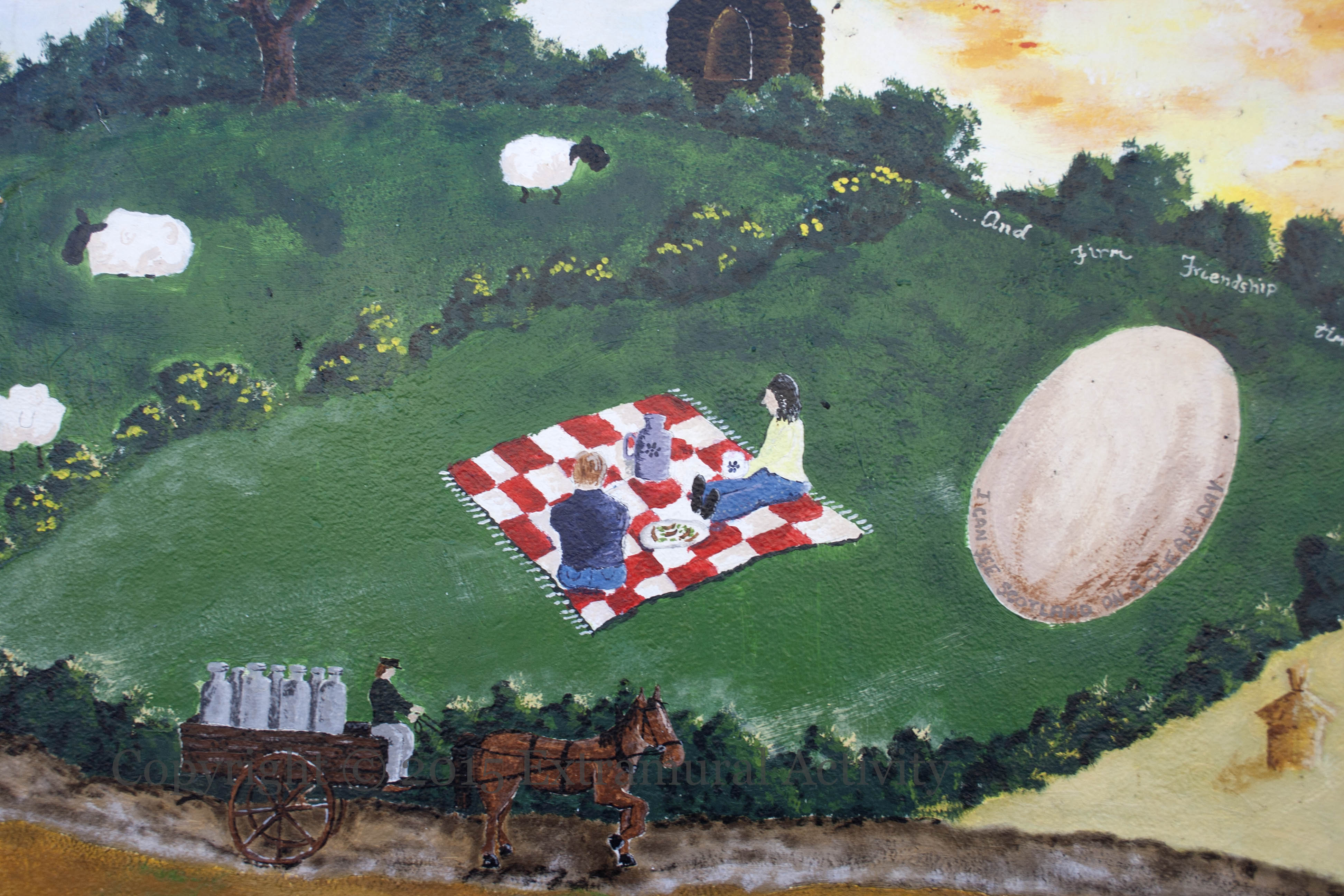
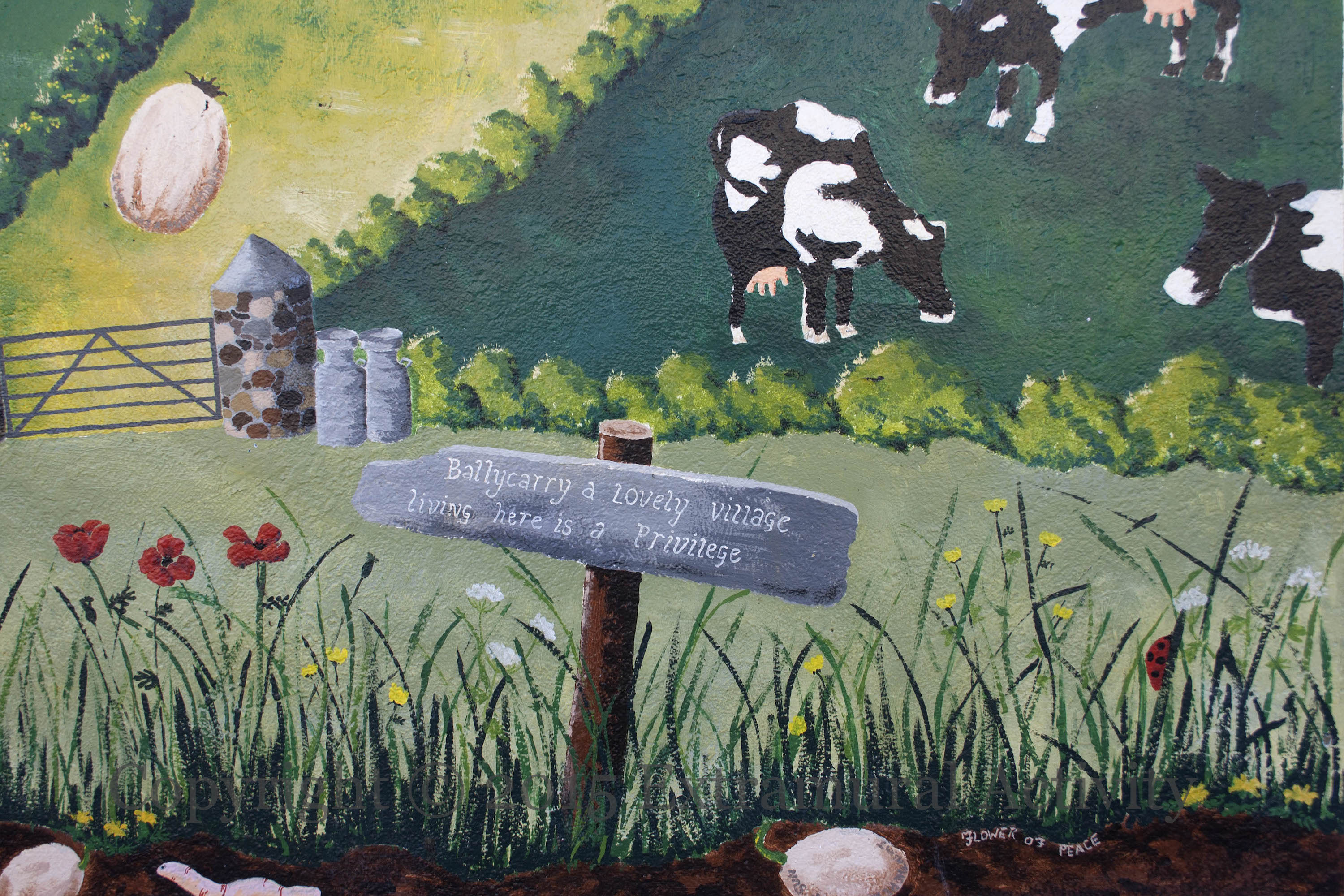
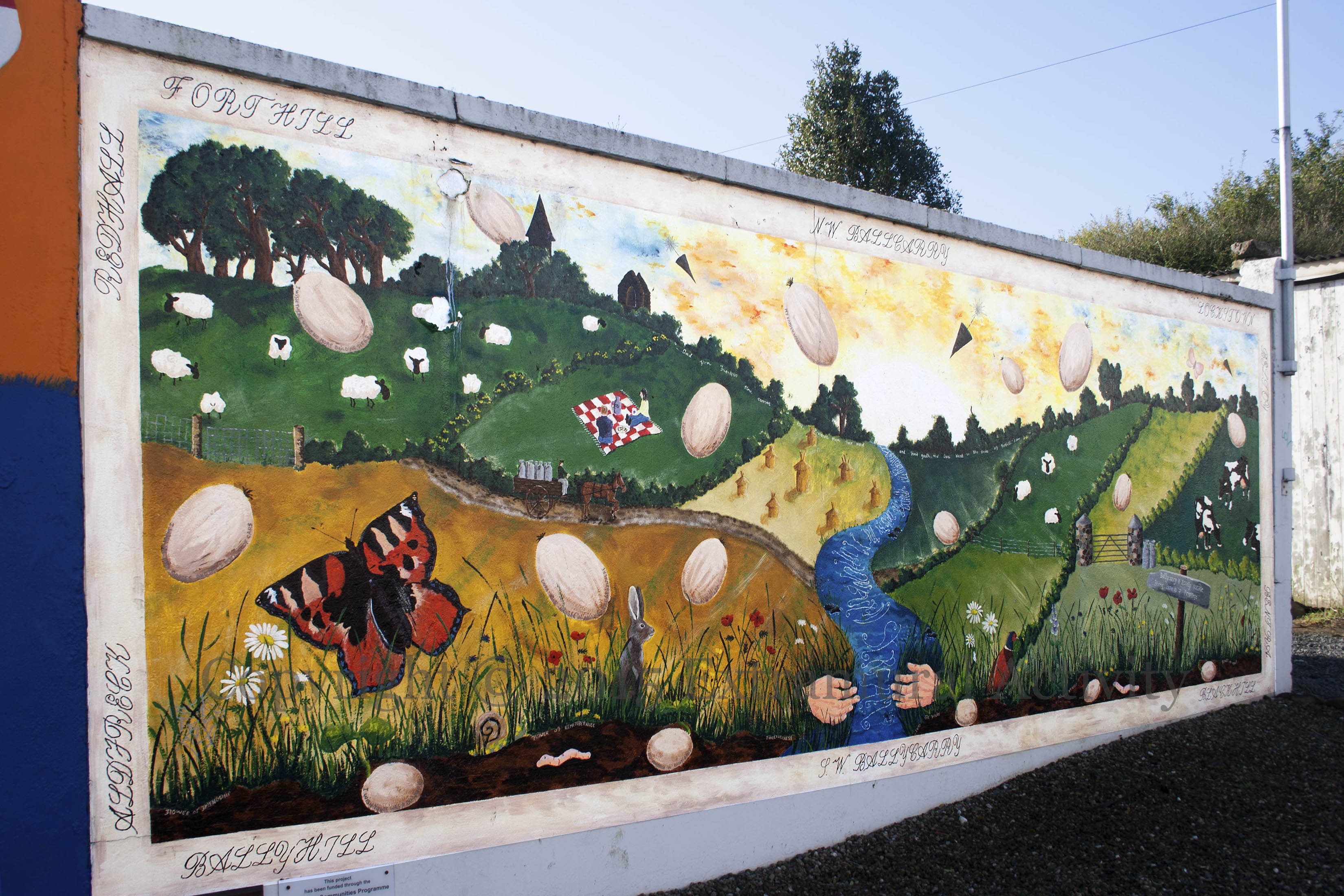
Ballycarry village sits in County Antrim countryside surrounded by the townlands of Ballyhill, Redhall, Forthill, Blackhill, Aldfreck, Lochstown, Beltoy, Bentra. The large pale oval to the right of the picnickers is one of many “seeds” falling from the sky and settling into the earth, which by growing make Ballycarry a pleasant place: “I can see Scotland on a clear day”. The Mutton Burn Stream (lyrics | music from the Ulster-Scots agency) is a song written by Ballycarry resident William Hume (QUB) about the river to the north-west of the village (WP). More about Ballycarry from the BBC’s Ulster-Scots page.
James Connolly was concerned not just with the political independence of Ireland but its economic independence: both political and economic liberty were required in order for the human being to live freely. The quote in the image above comes from Connolly’s 1897 essay “Socialism & Nationalism”. The economic context is clear when we read a little more broadly:
“To the tenant farmer, ground between landlordism on the one hand and American competition on the other, as between the upper and the nether millstone; to the wage-workers in the towns, suffering from the exactions of the slave-driving capitalist to the agricultural labourer, toiling away his life for a wage barely sufficient to keep body and soul together; in fact to every one of the toiling millions upon whose misery the outwardly-splendid fabric of our modern civilisation is reared, the Irish Republic might be made a word to conjure with – a rallying point for the disaffected, a haven for the oppressed, a point of departure for the Socialist, enthusiastic in the cause of human freedom.” (marxists.org)
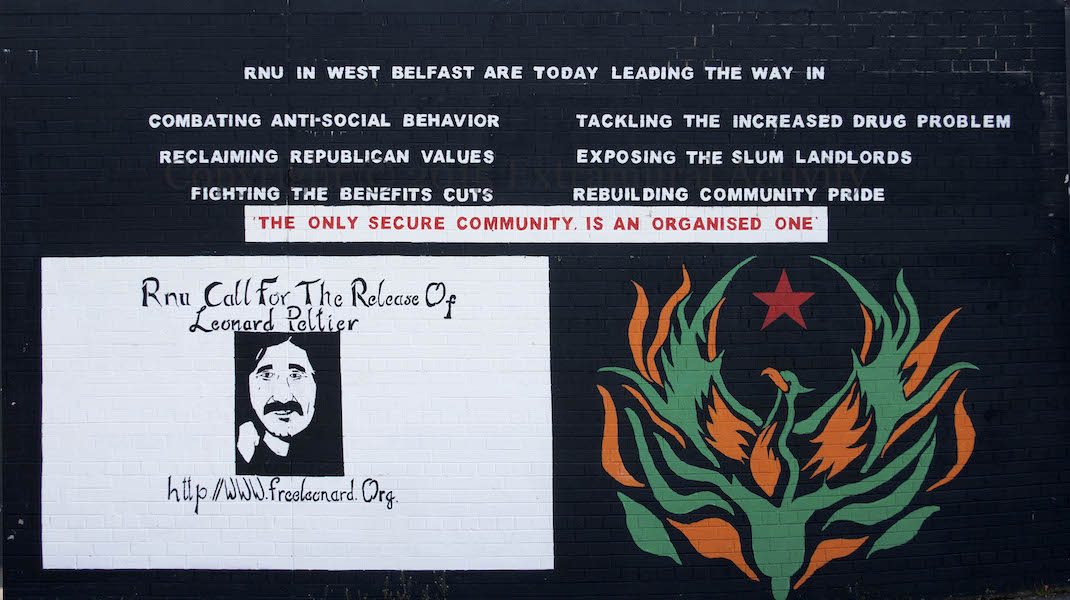
“RNU call for the release of Leonard Peltier – http://www.freeleonard.org“. The lower left-hand panel of the RNU spot on Northumberland Street is serving as a changeable notice-board – it was previously The Popular Front.
Peltier has been in jail since 1977, convicted of killing two FBI agents on the Pine Ridge Reservation in 1975 and sentenced to two life-sentences (WP).
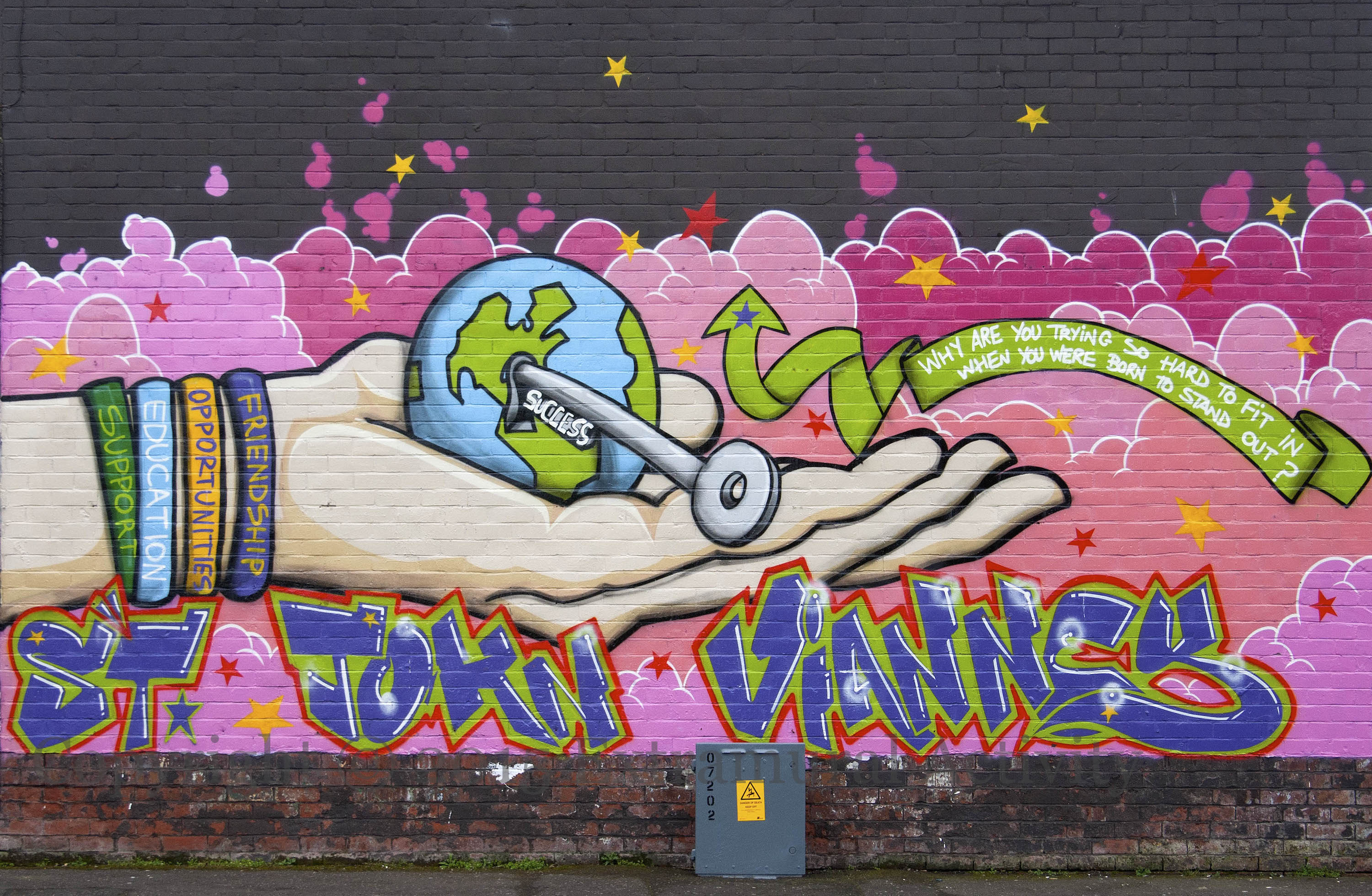
The St. John Vianney youth club board in Cooke Street has been replaced with a mural. The elements are the same – the ‘success’ key still unlocks the world in the palm of a hand and the message is “Why are you trying so hard to fit in when you were born to stand out?” – but the colour-scheme is now various pinks.
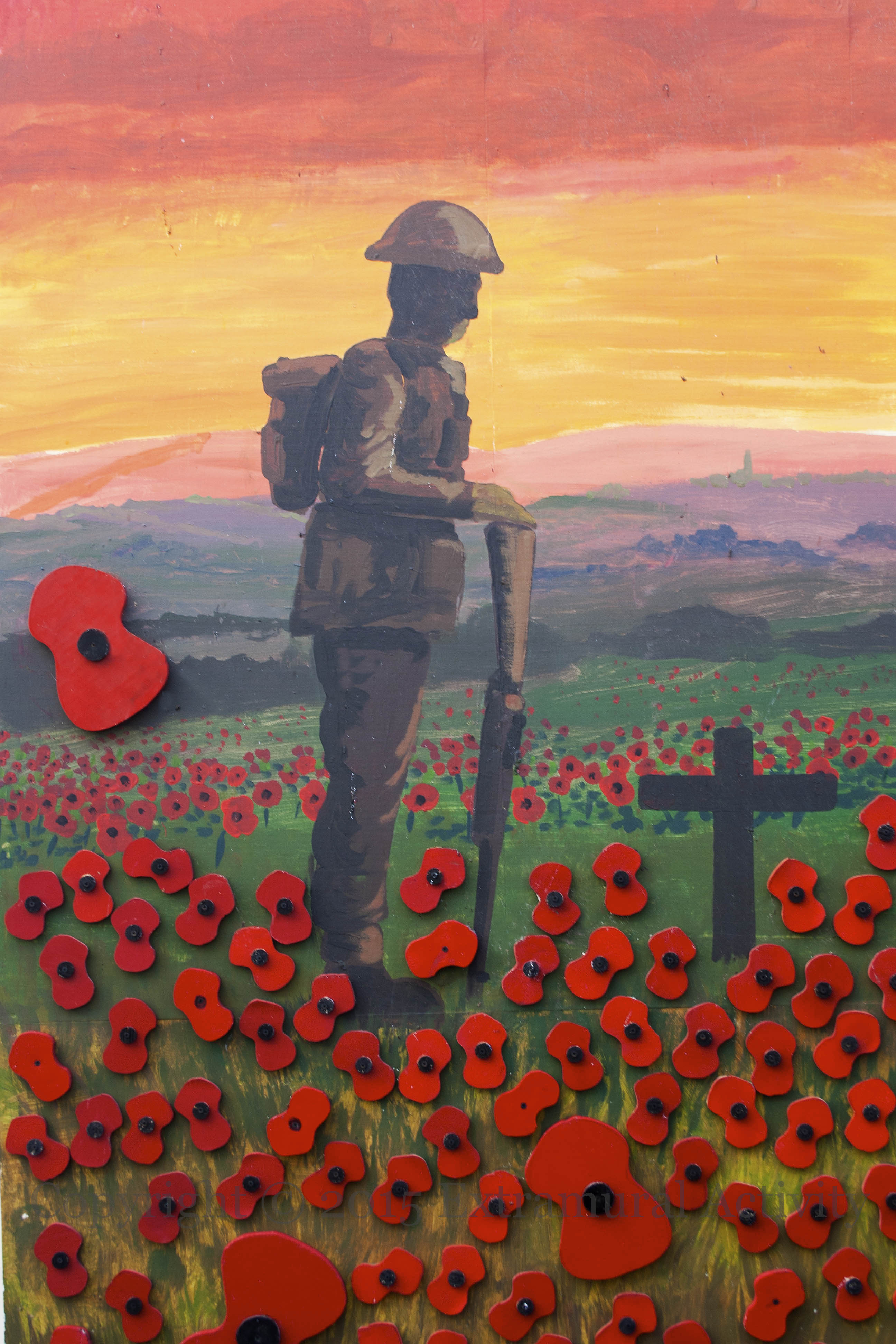
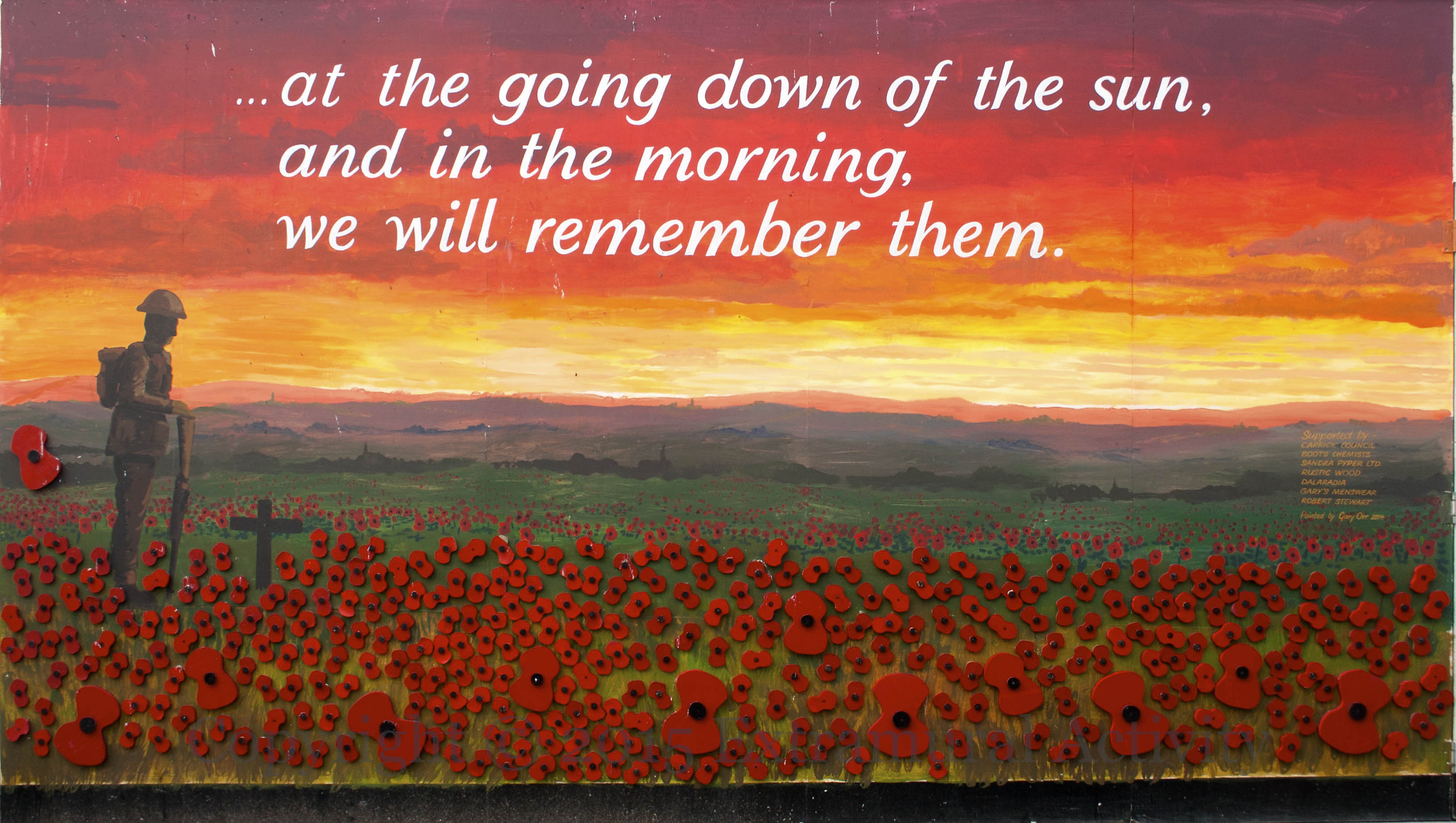
This mural in Carrick has a 3D element: 312 wood poppies were hand-painted and attached to the wall, one for each local man who did not return. By artist Gary Orr. Full shot below.






 Extramural Activity