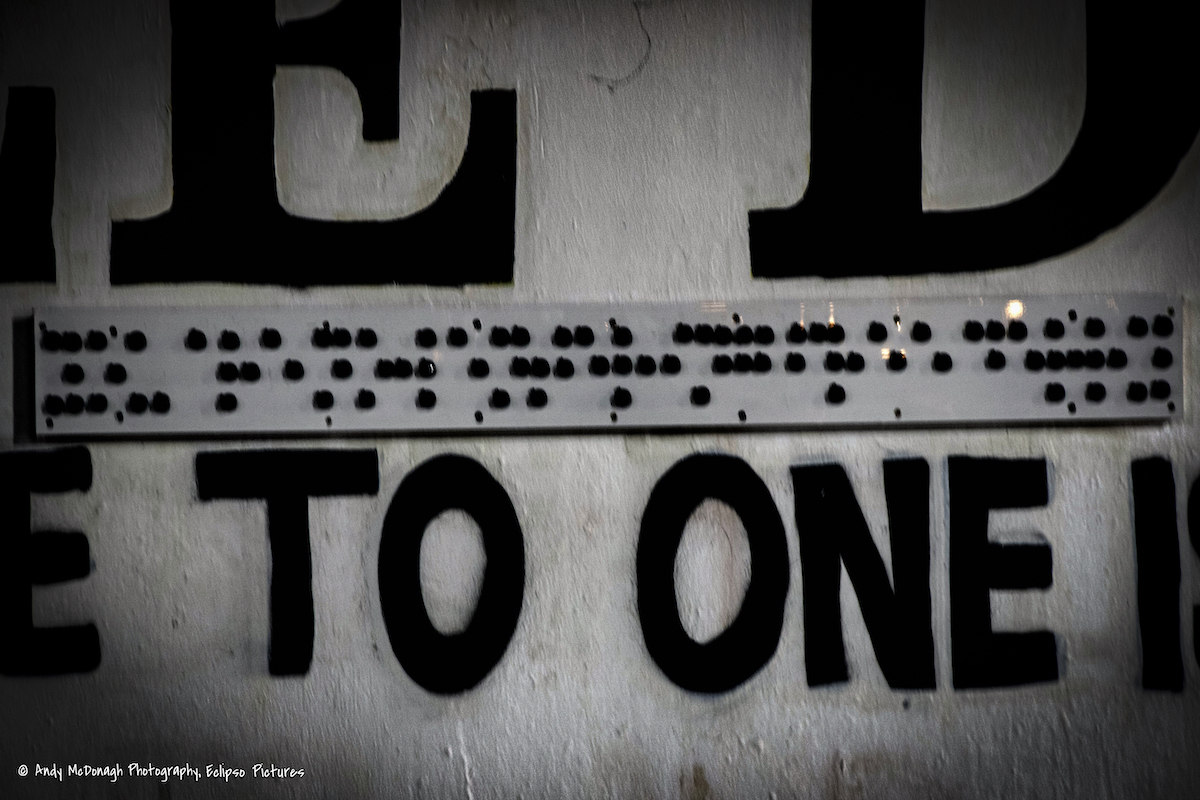
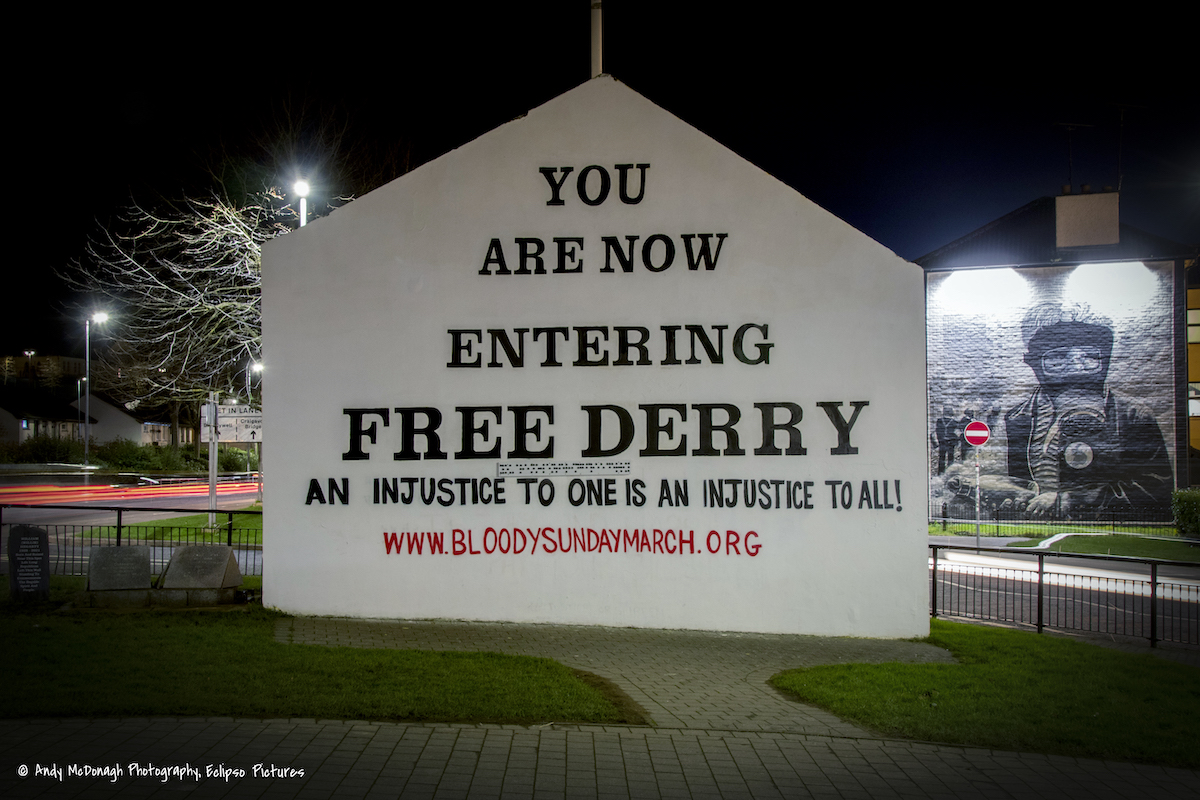
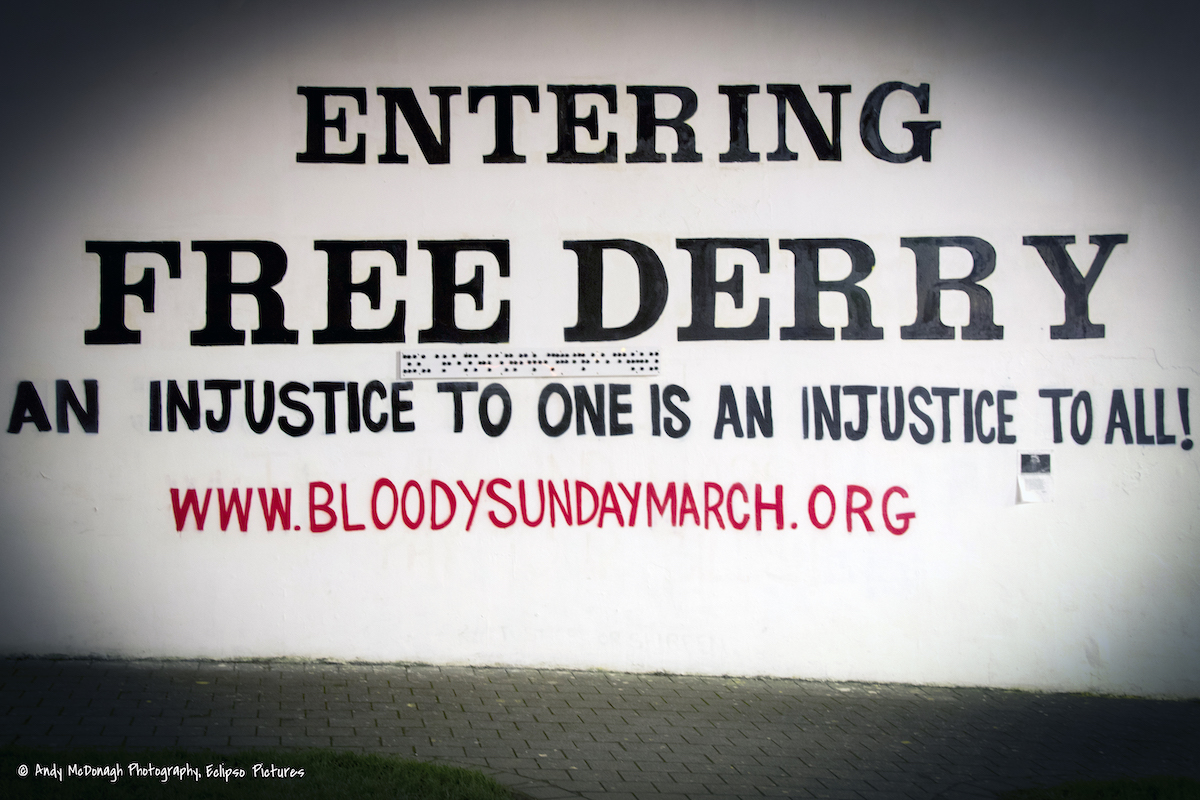
A new braille plaque bearing the now-iconic saying “You are now enterting Free Derry” was unveiled last Tuesday (January 24th) by the founder of Children In Crossfire Richard Moore (featured previously in The Derry Lama) who was blinded in 1972 when he was hit with a rubber bullet.
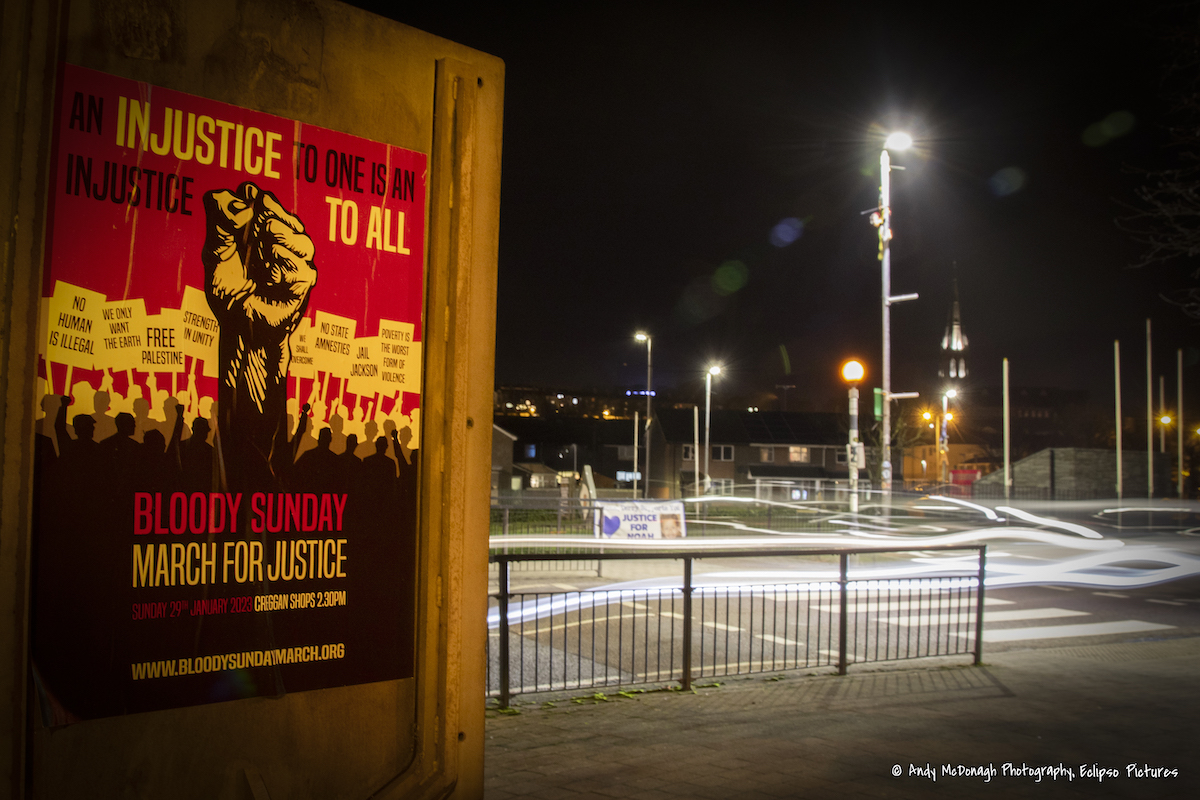
In his Letter From A Birmingham Jail, Martin Luther King Jr wrote, “I am cognizant of the interrelatedness of all communities and states. I cannot sit idly by in Atlanta and not be concerned about what happens in Birmingham. Injustice anywhere is a threat to justice everywhere.” The marchers portrayed in the poster above carry placards supporting immigrants (“No human is illegal”), the poor (“Poverty is the worst form of violence”) and Palestine. The poster calls for participants in the annual march, which retraces the route taken on the fateful day in 1972, beginning at Creggan shops and proceeding to Free Derry Corner. Yesterday’s march concluded a week of talks and other commemorative events. Today – January 30th – is the fifty-first anniversary of Bloody Sunday in Derry.
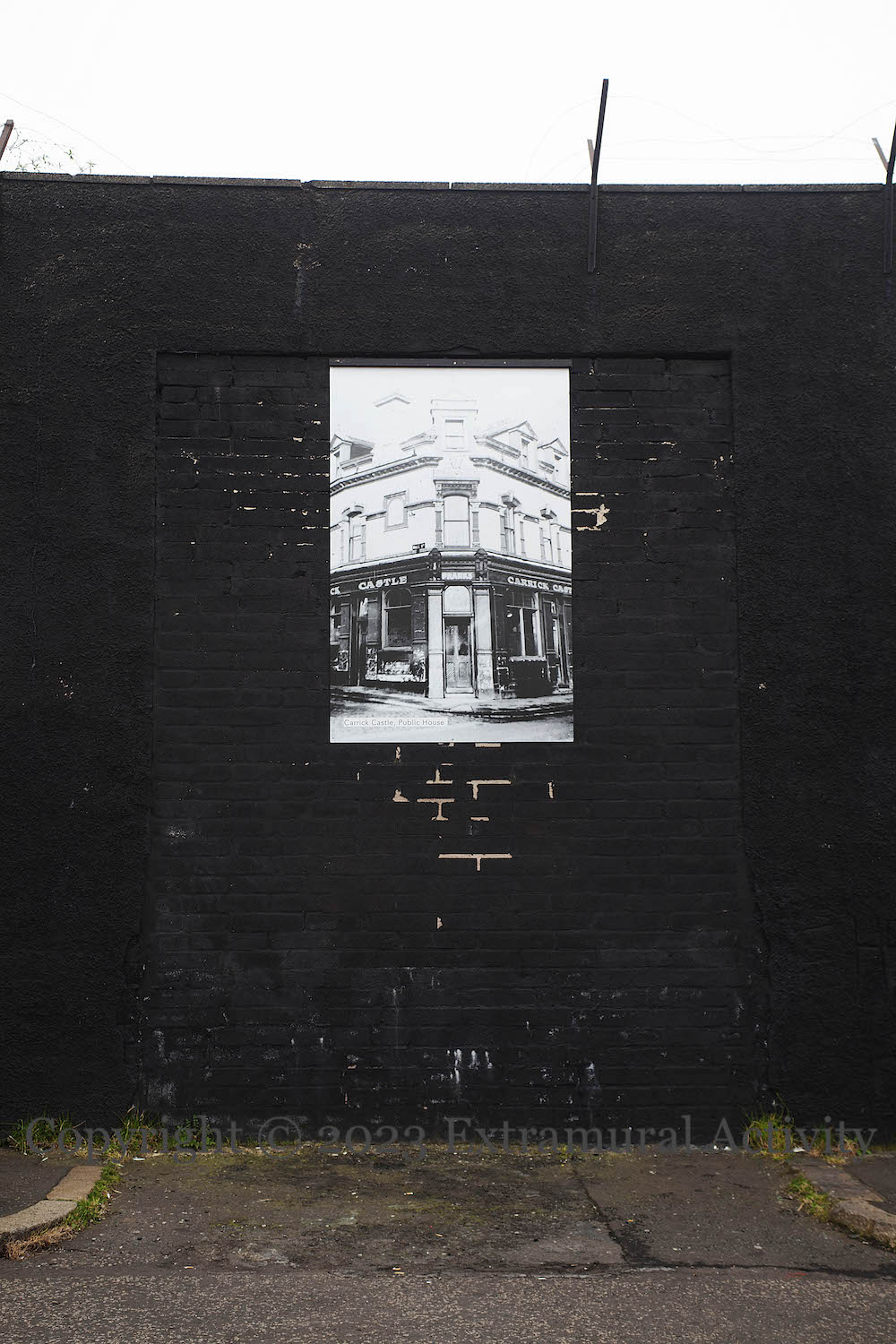
There is now a mural in Stanhope Street of “Carrick Hill in the old days”, of two women talking in the street, to complement the four printed boards.
Below are two of the fifteen boards around the corner in Regent Street, showing the Carrick Castle public house and the old Unity flats.
Other boards in the collection (not shown) show street games, street parties, and Alton United football club, a team founded in 1921 that played in the Falls League and won the 1923 Free State Cup Final (Bohs Sporting Life).
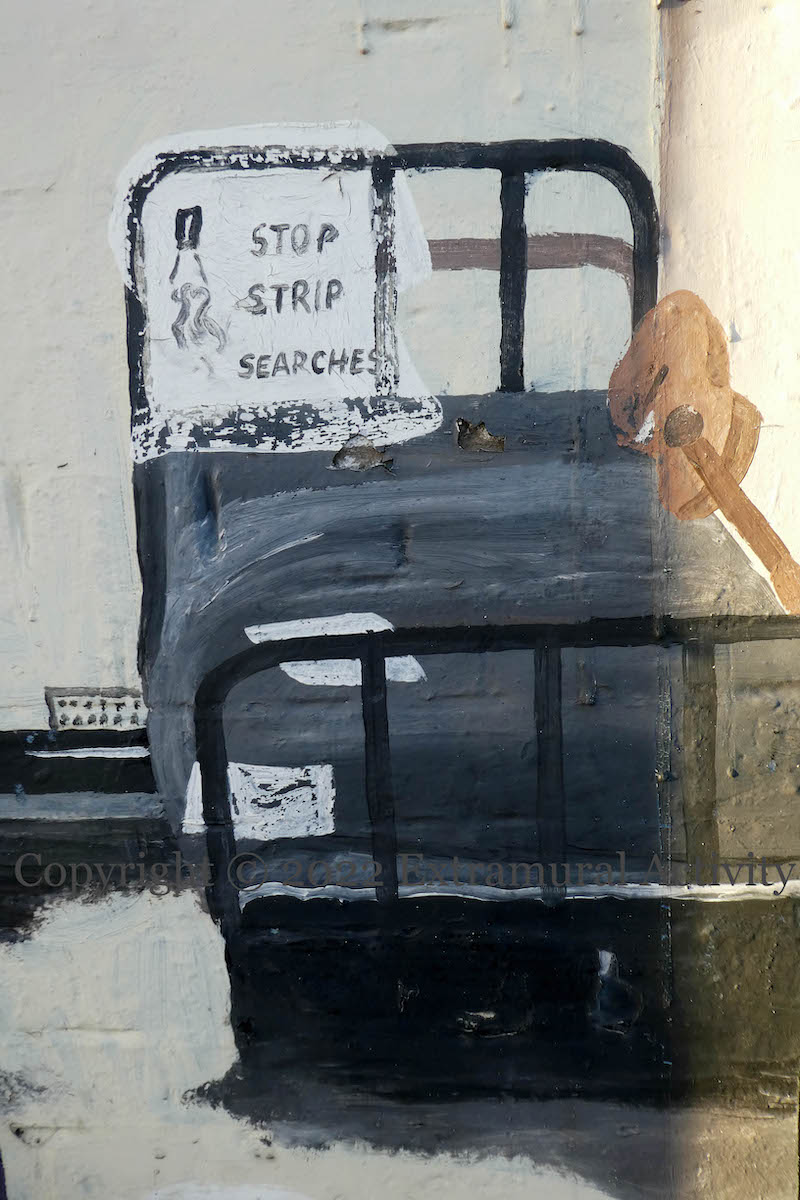
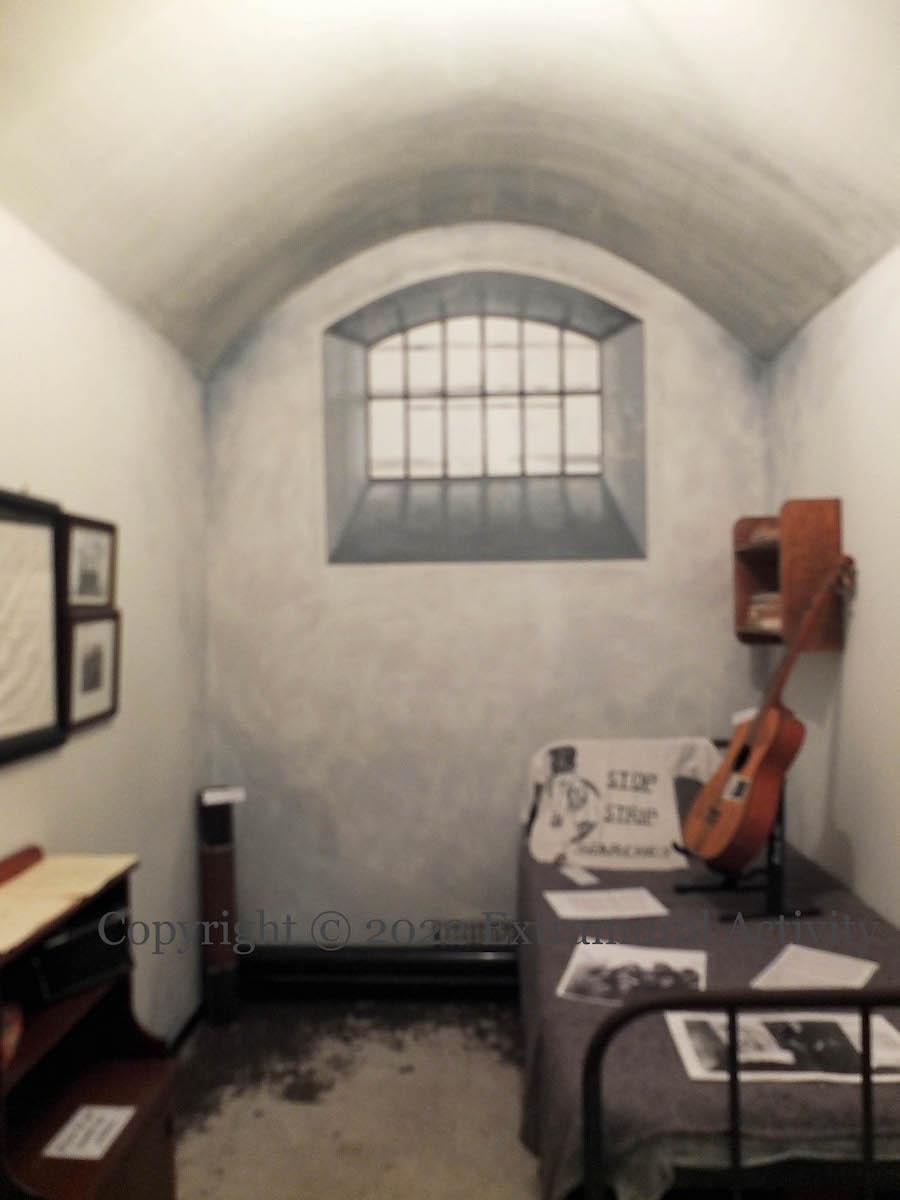
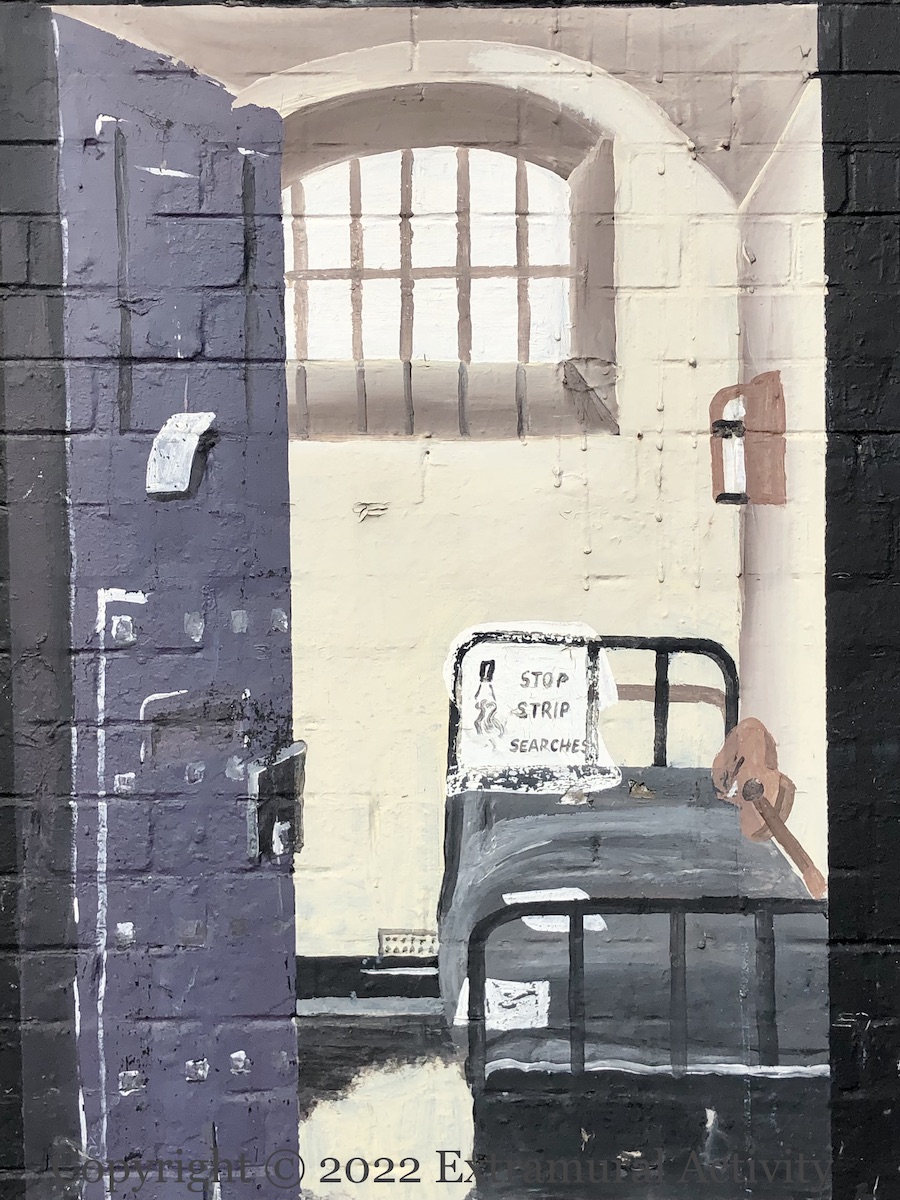
We have featured this ‘bookmark’-dimensioned mural on the so-called “International Wall” before (in 2018) but today include an image (the third one, below) of the replica cell inside the museum itself; a sharper image (and the source for the painting) can be seen on the home page of the Museum’s web site.
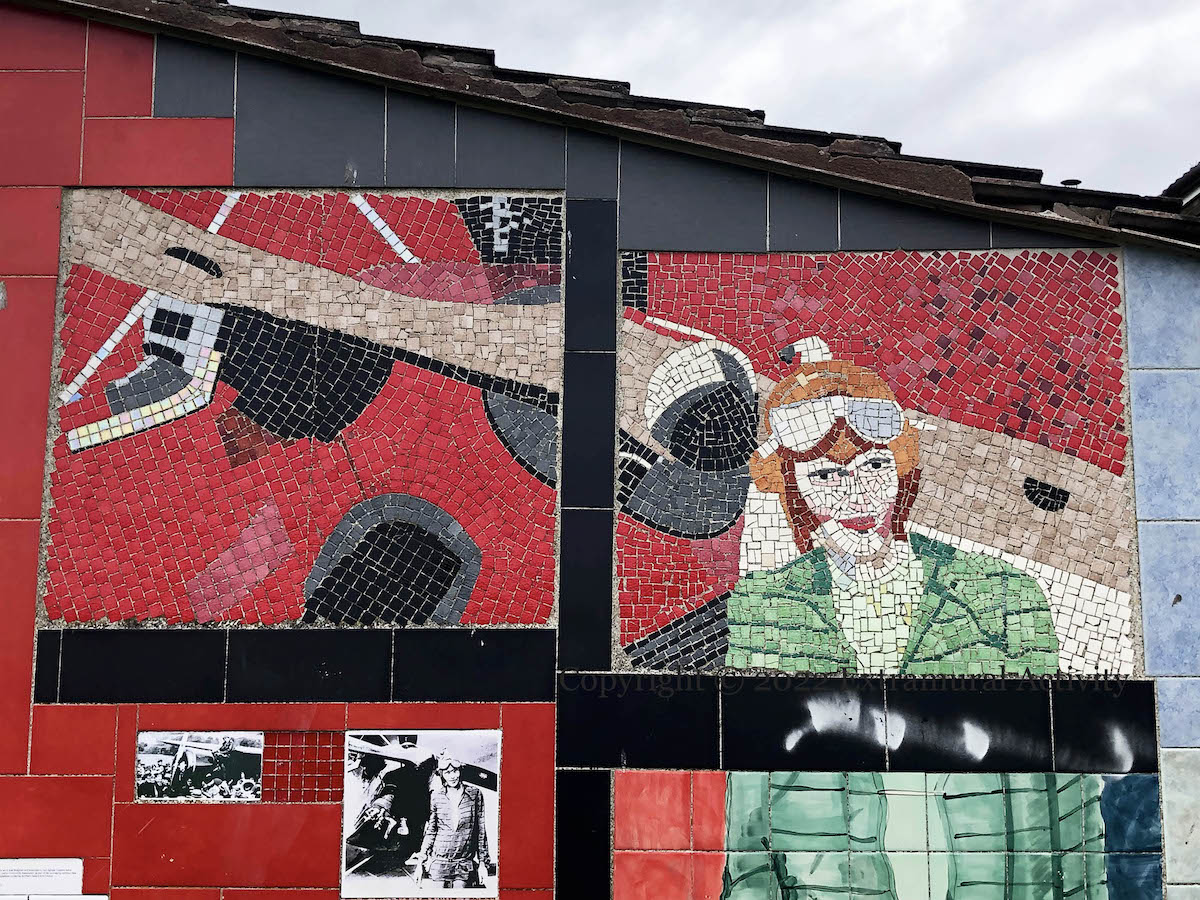
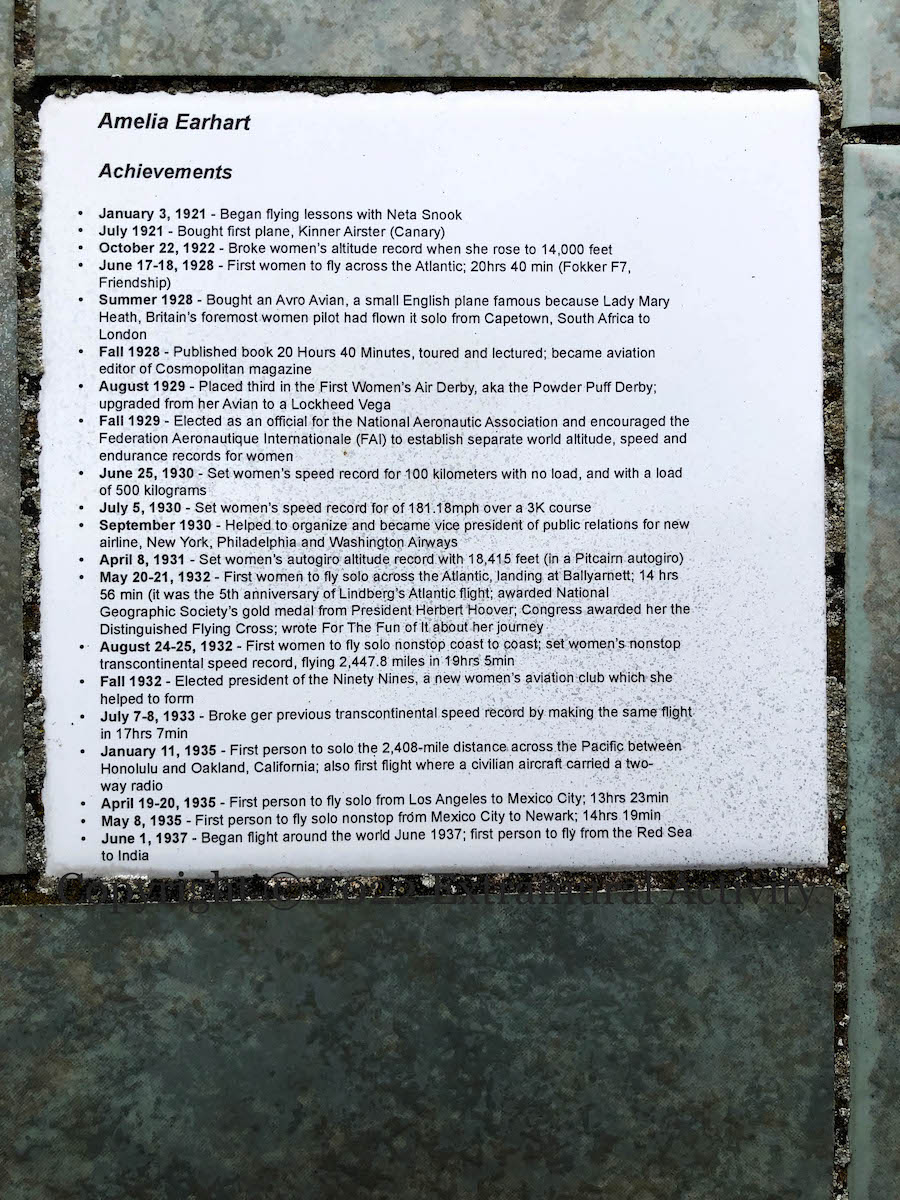
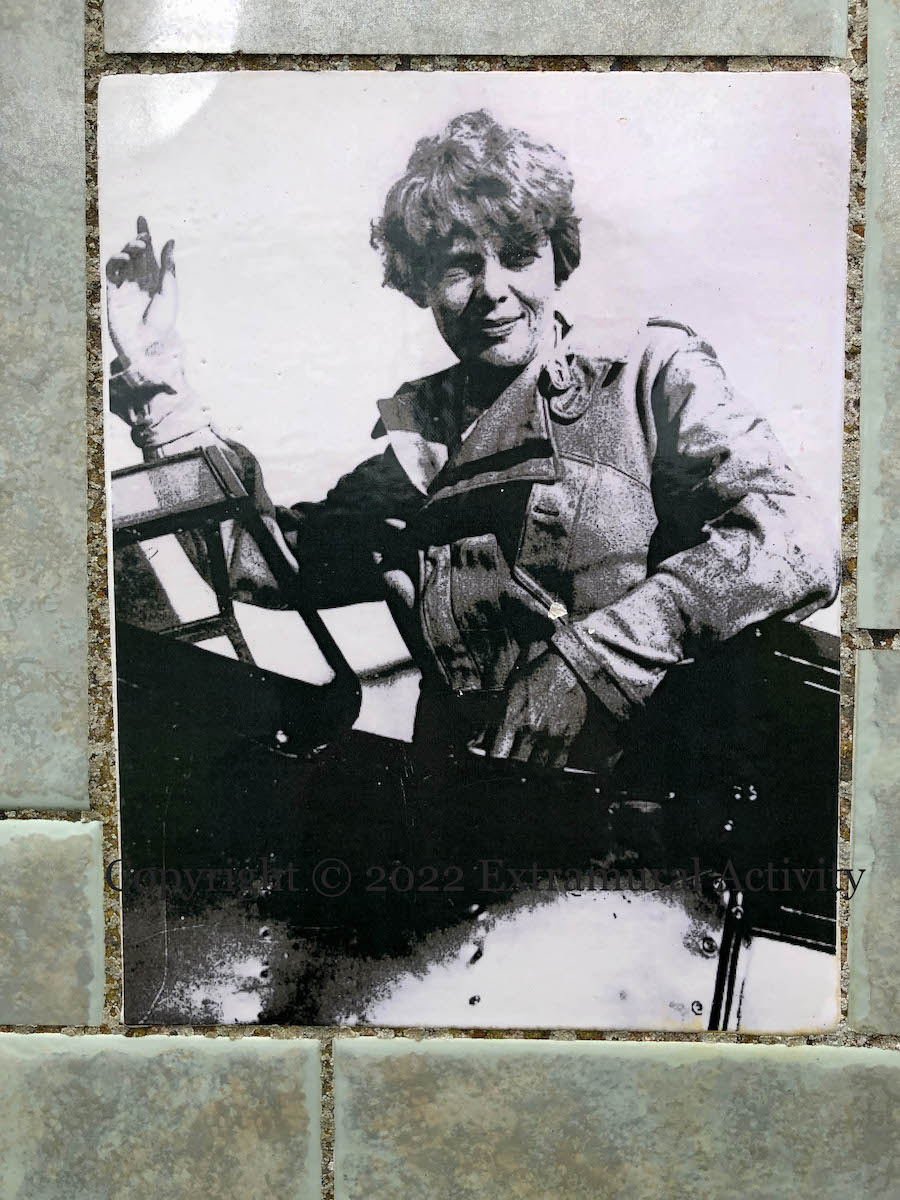
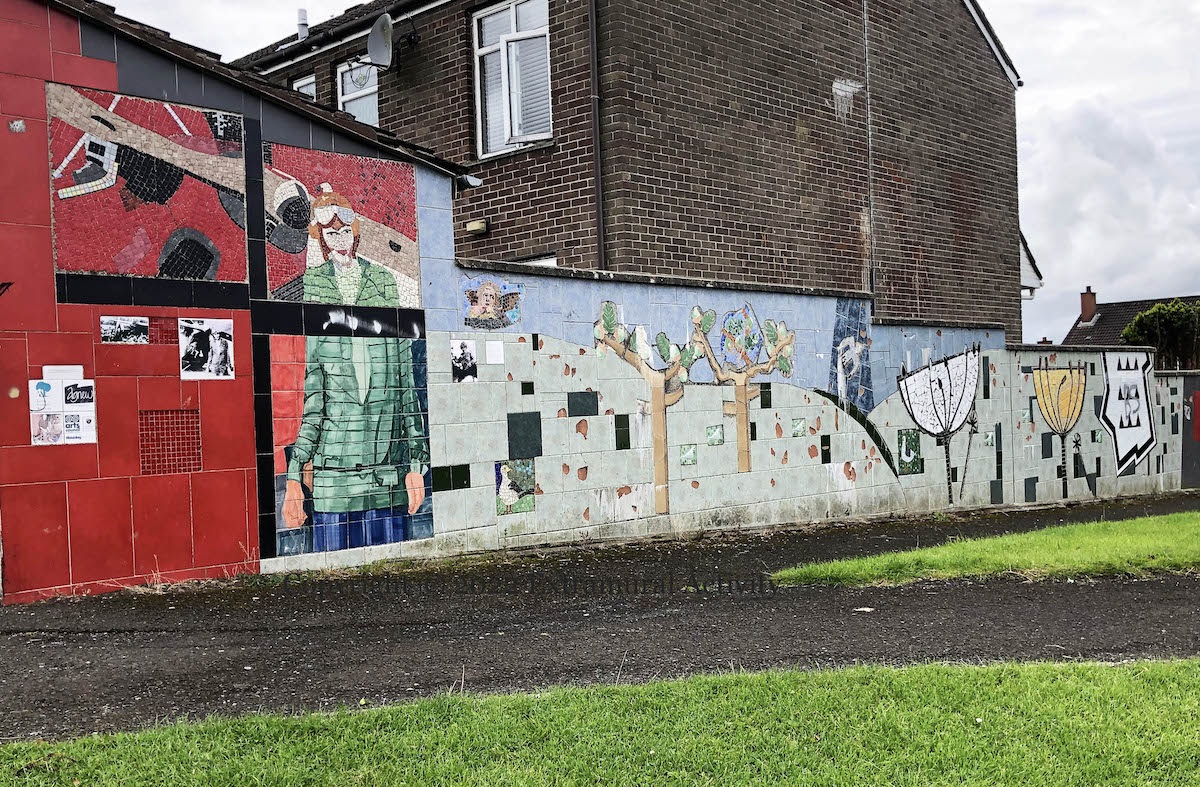
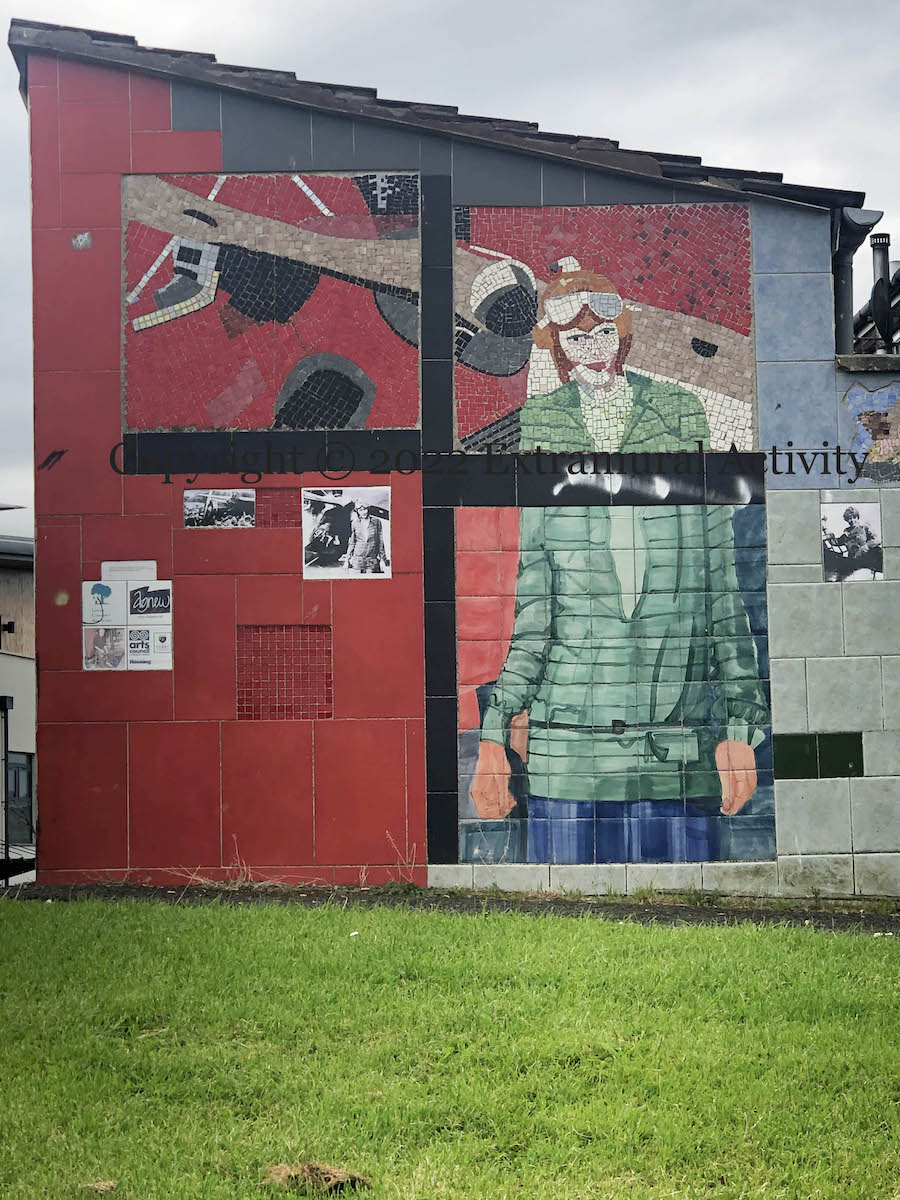
On May 20th, 1932, Amelia Earhart took off from Harbour Grace in Newfoundland hoping to be the first woman to fly single-handedly across the Atlantic and make it to Paris. It didn’t go entirely to plan. Fifteen hours later, however, she landed in Robert Gallagher’s farm in Ballyarnett, forced down by bad weather and technical problems. The farmer’s wife recorded her recollections of the event, three years later (youtube).
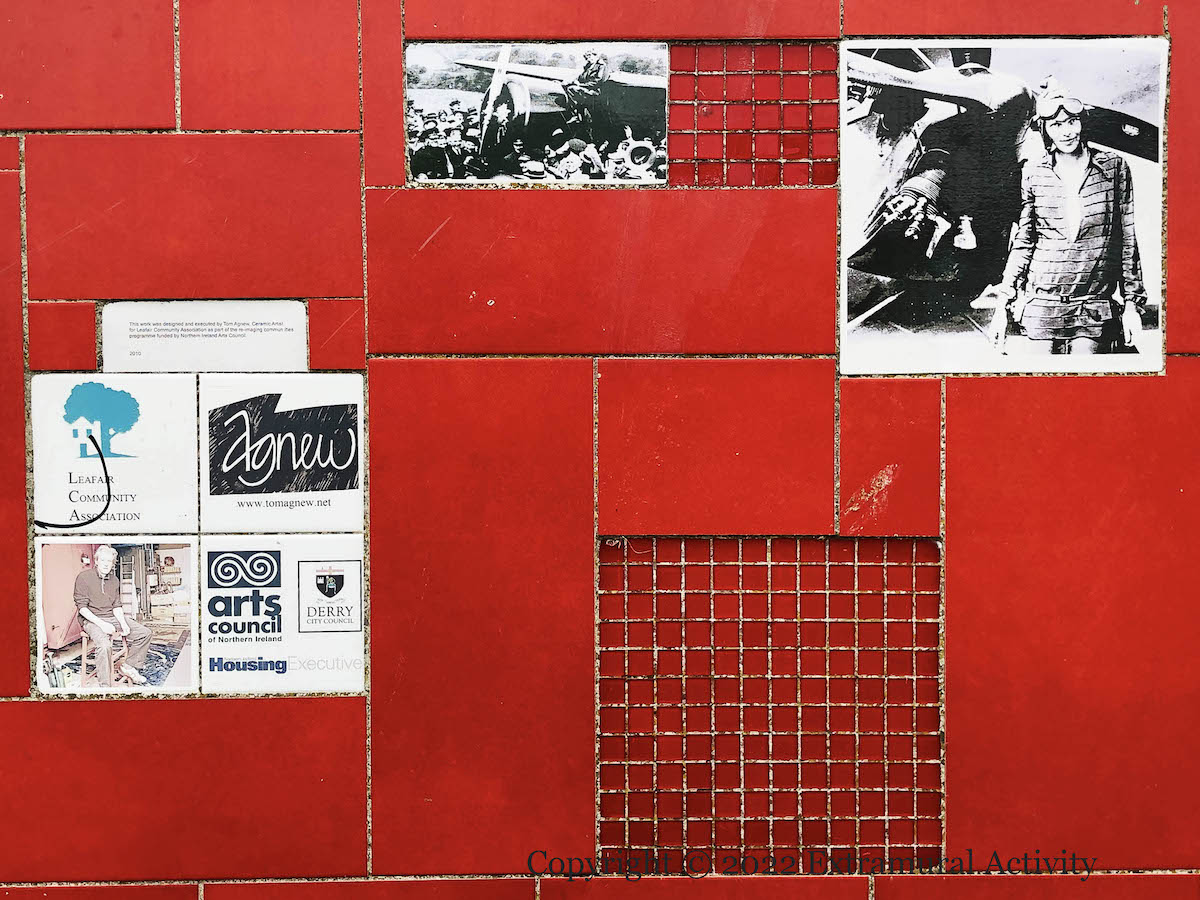
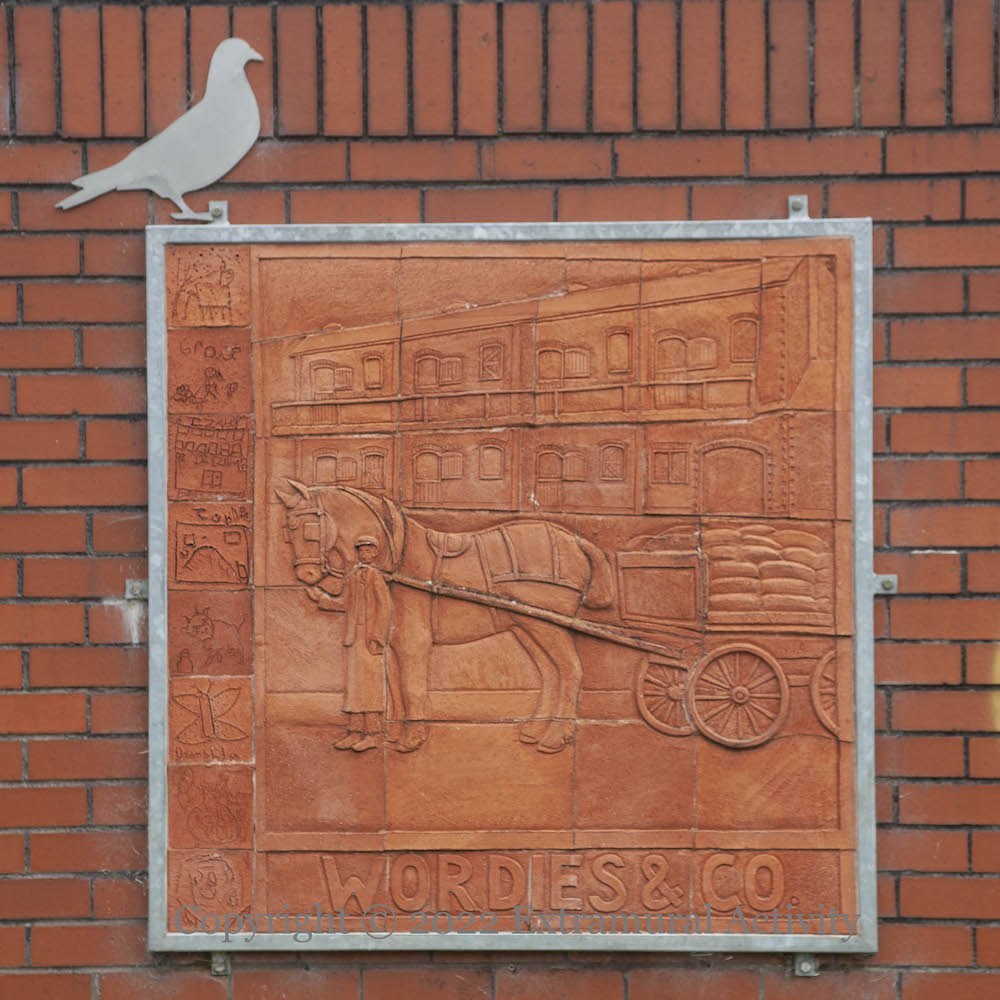
“This work was designed and executed by Tom Agnew, Ceramic Artist, for Leafair Community Association (Fb) as part of the re-imaging communities programme funded by the Northern Ireland Arts Council – 2010.”
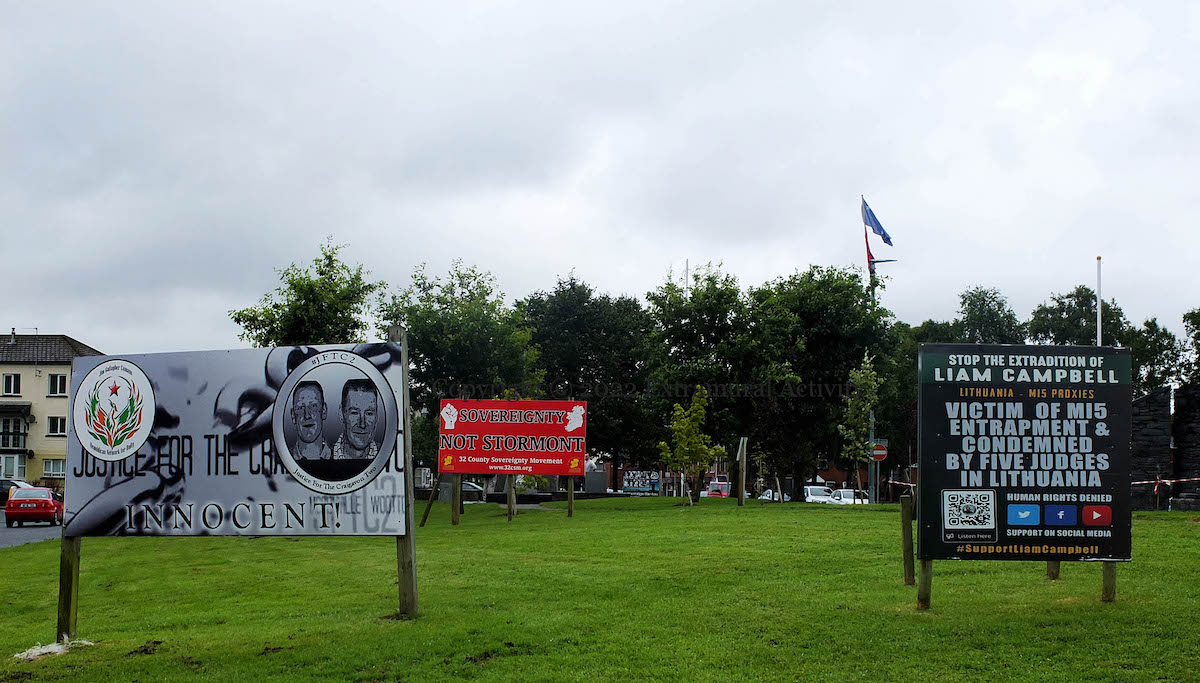
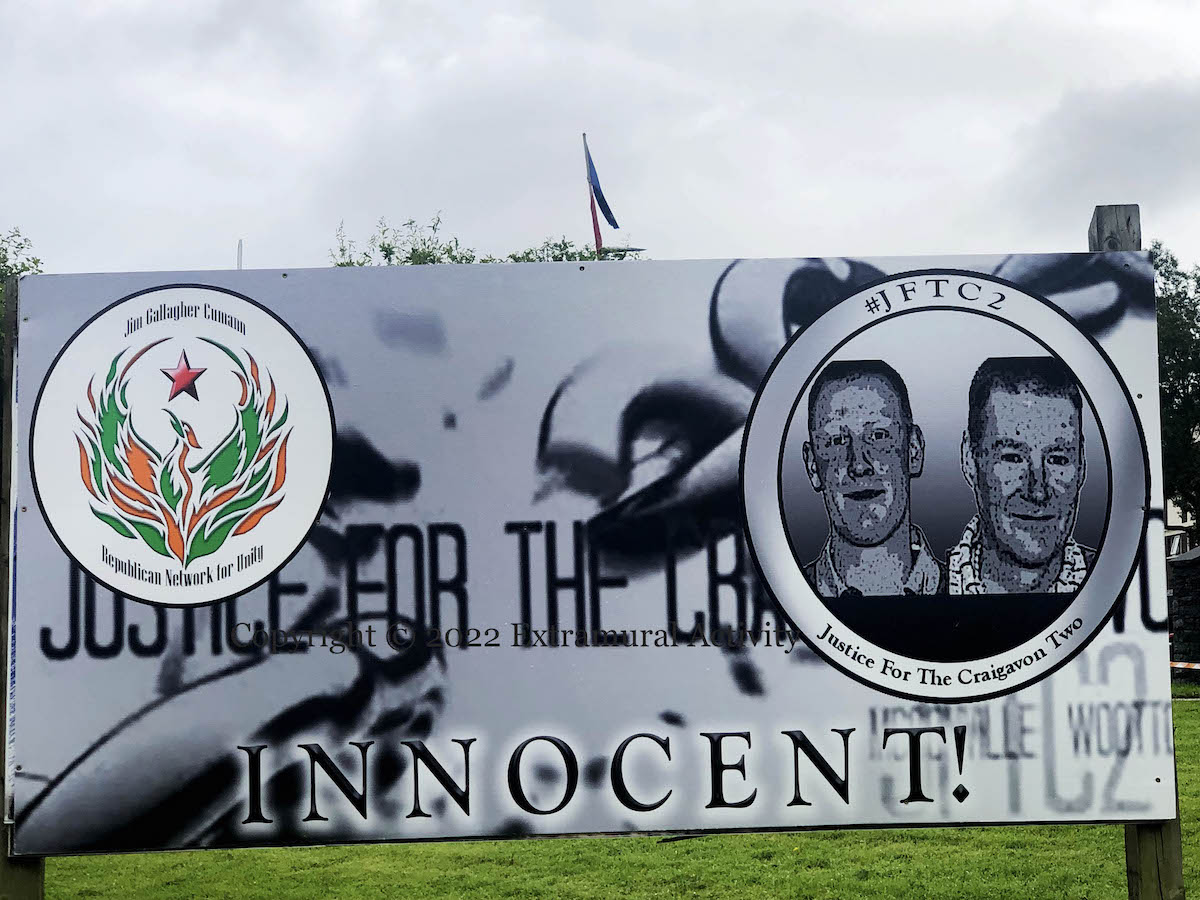
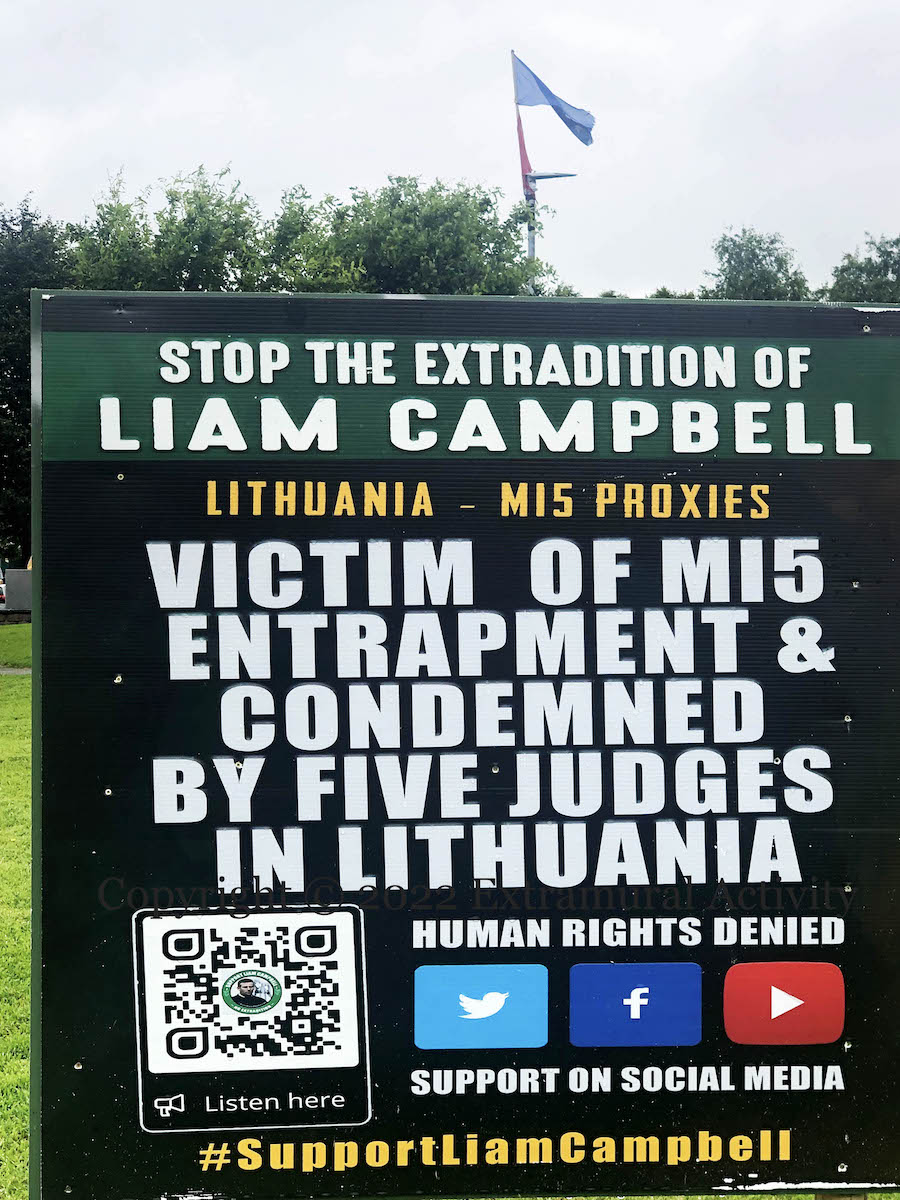
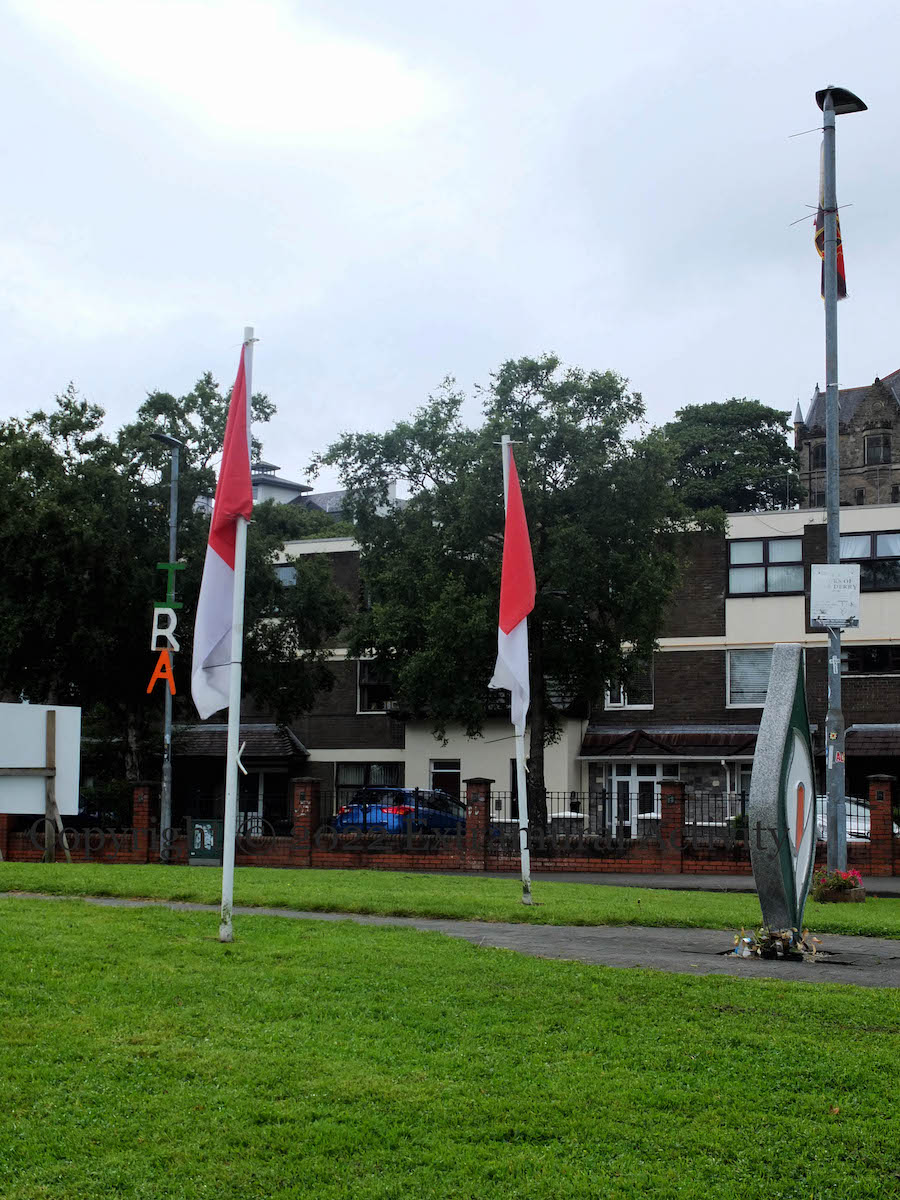
This is the scene on the green-spaces on Lecky Road, Derry. The area is heavily trafficked by tourists visiting around Free Derry Corner (Visual History of the front | rear), the People’s Gallery murals (Visual History), the Hunger Strike Memorial, and the Museum Of Free Derry (web). Anti-Agreement groups thus use the area to get their messages across. In today’s post we see “Sovereignty, not Stormont” from the 32CSM (web); an RNU (Fb) board in support of the “Craigavon 2”; “Stop the extradition of Liam Campbell”, probably from Republican Sin Féin (web) – contrary to the board beneath the one showing, Campbell was extradited to Lithuania but his case was dismissed in October on the grounds that the statute of limitations had passed (Sunday World); an IRA nail-up on a light-pole; a “Remember the ten” 40th anniversary commemoration of the 1918 hunger strike, from IRSP/IRSM (web); and an IRPWA (web) board supporting republican prisoners (previously included in British Gaols In Ireland).
Republican graffiti in Fahan Street, Derry, adjacent to the Che Guevara Lynch mural. Any specific reference is unknown; in 2019 there was controversy over signs threatening informers in relation to the killing of Lyra McKee (e.g. extra).
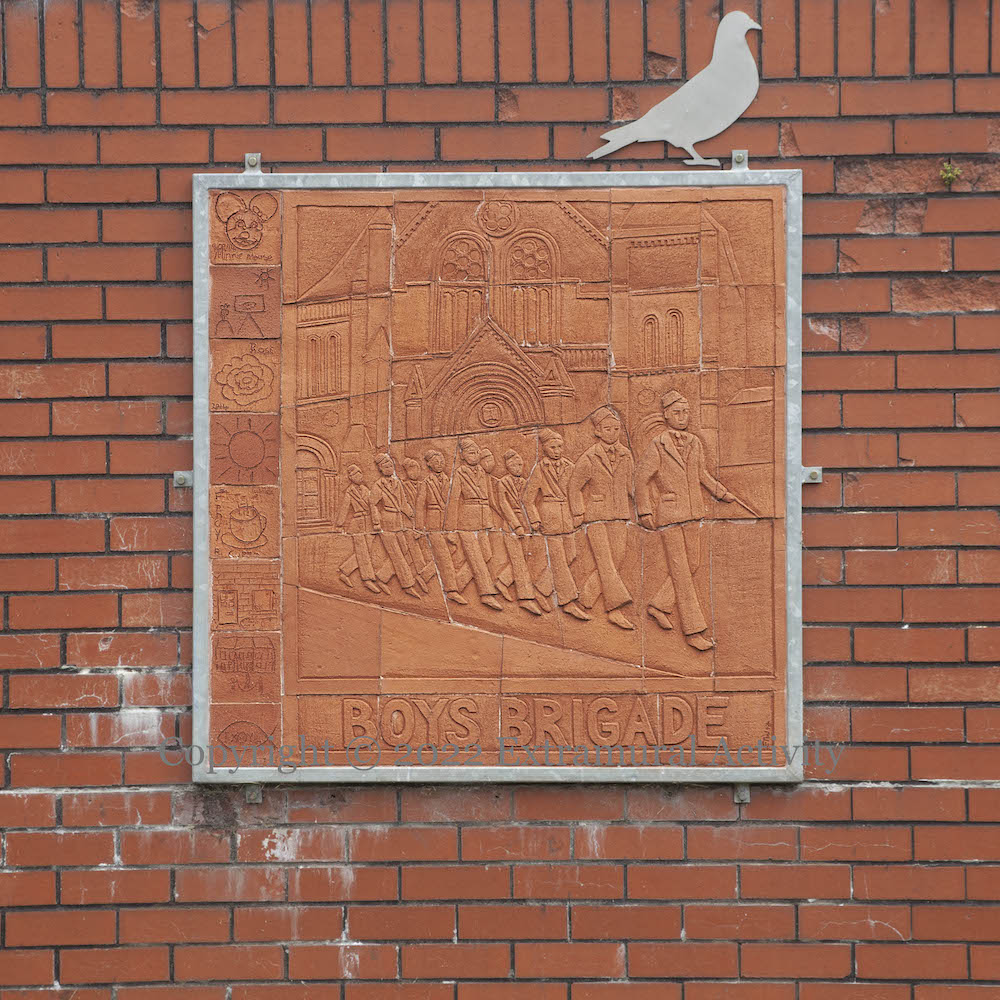
According to a history of Brown’s Square, the area was known as “the oasis” during WWII on account of its 3 dance-halls and 22 pubs (Religion, Riots And Rebels). As with so much publicly-funded art (though we cannot find any provenance for this art) it depicts Belfast in the “good old days” – that is, before the Troubles, which produced the so-called “peace line” dividing west Belfast.
In this case of Brown’s Square, the area was further desolated in anticipation of a planned ring road (formally to be known as the Belfast Urban Motorway). the plan produced only the subterranean “Westlink” that cut Brown’s Square in half. The images in today’s post are in Townsend Street, (these are from below the security gates; there are others above it). Before the construction of the Westlink, which opened in 1981, Townsend Street was considered the western border, and part of Brown’s Square. John Gilbert’s photographs at the Belfast Archive Project show the area in the mid-seventies, when much of it had been abandoned but prior to construction.
The Boys Brigade are shown parading in front of Townsend Presbyterian which held its last service in September and is being handed over to the Ulster Orchestra (Belfast Media) (see previously On The Other Side for stained glass windows inside the church). The Brown’s Square school was at the junction of Brown’s Square (the street) and Melbourne Street.
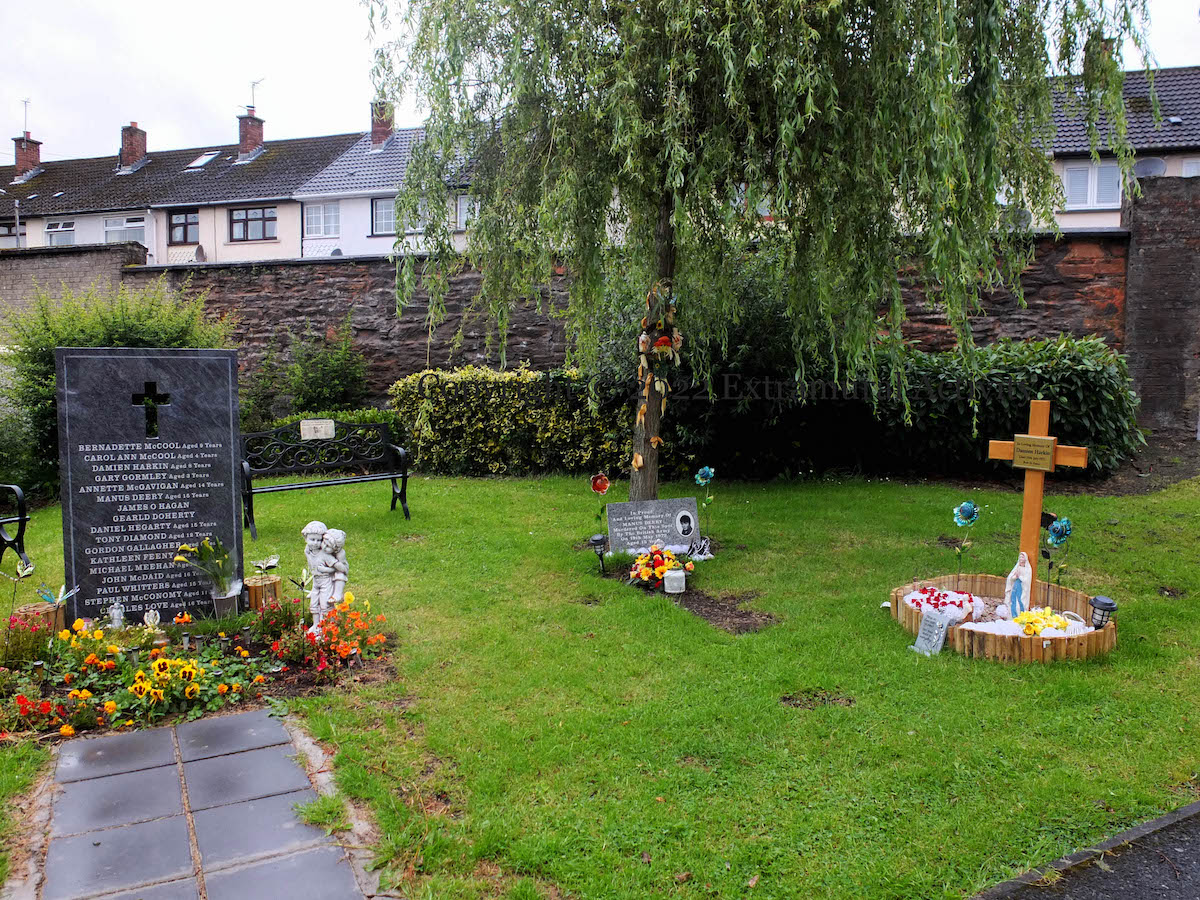
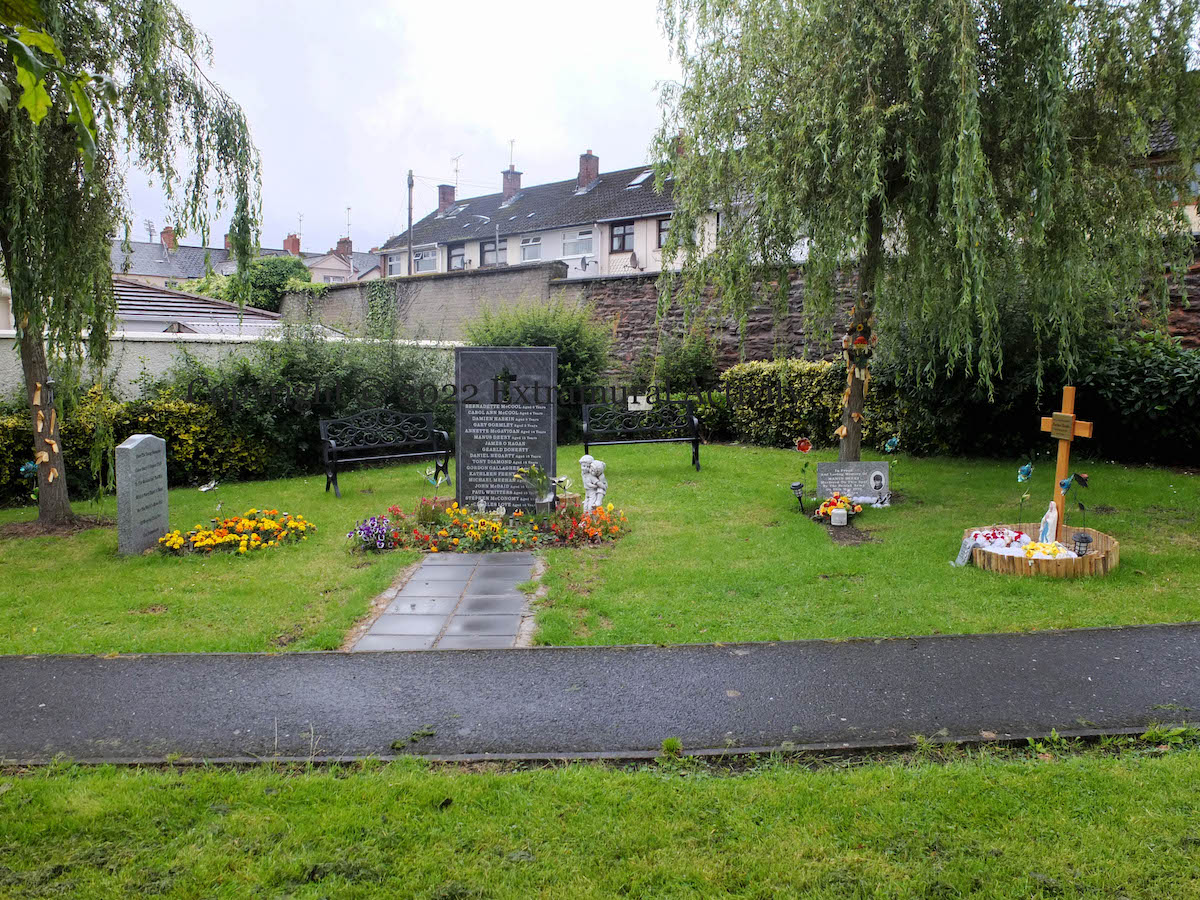
This is a memorial garden in Westland Street, Derry, in remembrance of children who have died during the Troubles.
They are listed in the following order on the main stone: Bernadette McCool, Carol Ann McCool, Damien Harkin, Gary Gormley, Annette McGavigan, Manus Deery, James O’Hagan, Gerald Doherty, Daniel Hegarty, Tony Diamond, Gordon Gallagher, Kathleen Feeny, Michael Meenan, John McDaid, Paul Whitters, Stephen McConomy, Charles Love.
McGavigan was the first to die at the hands of British forces, in September 1971, though the cross on the right is to nine-year-old Damien Harkin, who was crushed in July 1971 by a British Army lorry accident in the Bogside (MFD). Gary Gormley was also crushed by an armoured car (MFD). McGavigan is depicted in one of the murals in the ‘Bogside Gallery‘ series: The Death Of Innocence.
Other deaths were earlier but did not involve British forces: the McCool sisters died in a premature explosion in Creggan in 1970 and James (Jim) O’Hagan was killed in August 1971 by a fellow IRA member.
Gerry Doherty, Kathleen Feeney, Tony Diamond, Gordon Gallagher, Michael Meenan, John McDaid, and Charles Love also died accidentally by their own or IRA actions (MFD profiles, which lists 20 children, adding David Devine, Joseph Connolly, and Kathryn Eakin). Charles Love was killed by flying masonry from an IRA bomb; he is remembered by a plaque in Fahan Street. There is also a plaque to Stephen McConomy in Fahan Street and long ago he was depicted in a mural in Glenfada Park.
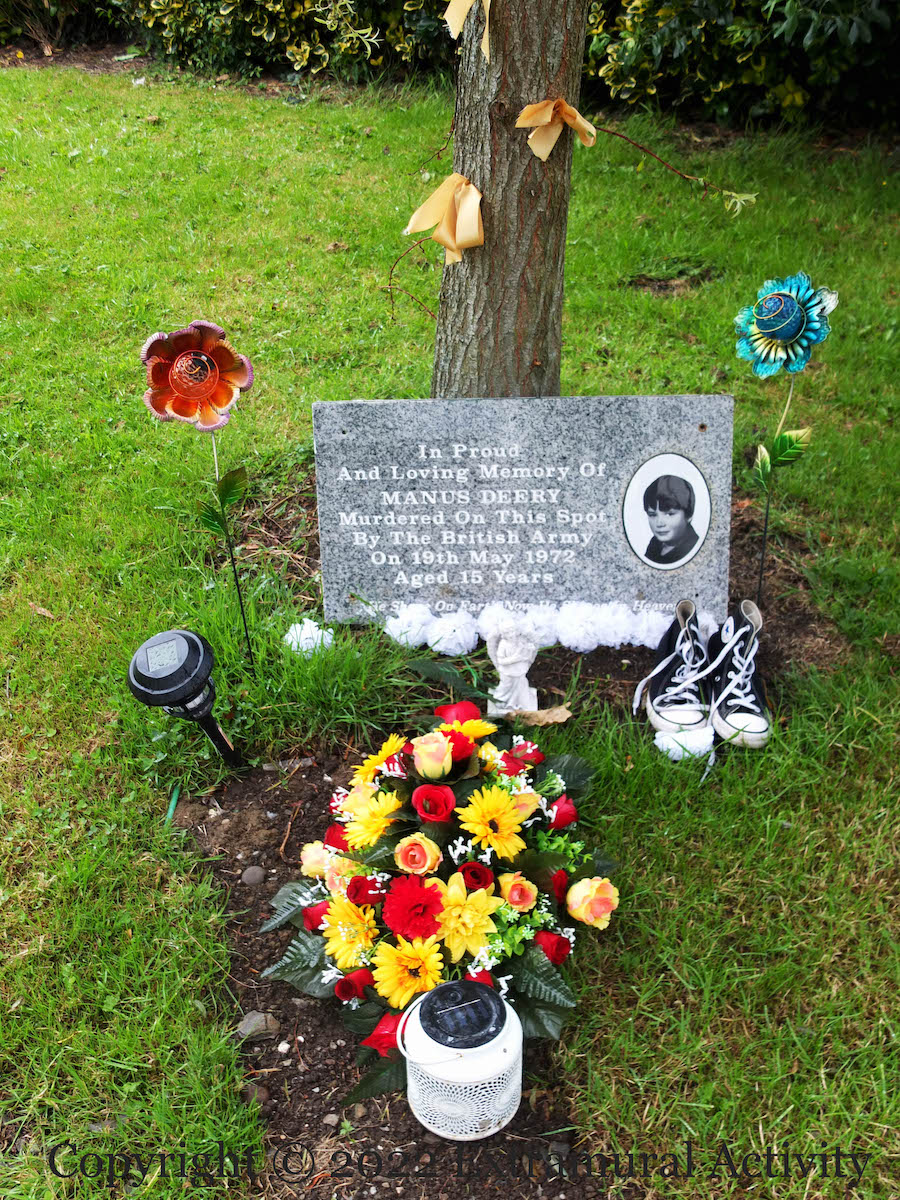
The Manus Deery plaque under the tree to the right was previously on a wall behind the Bogside Inn, before the pub was torn down – see M01919.










 Extramural Activity