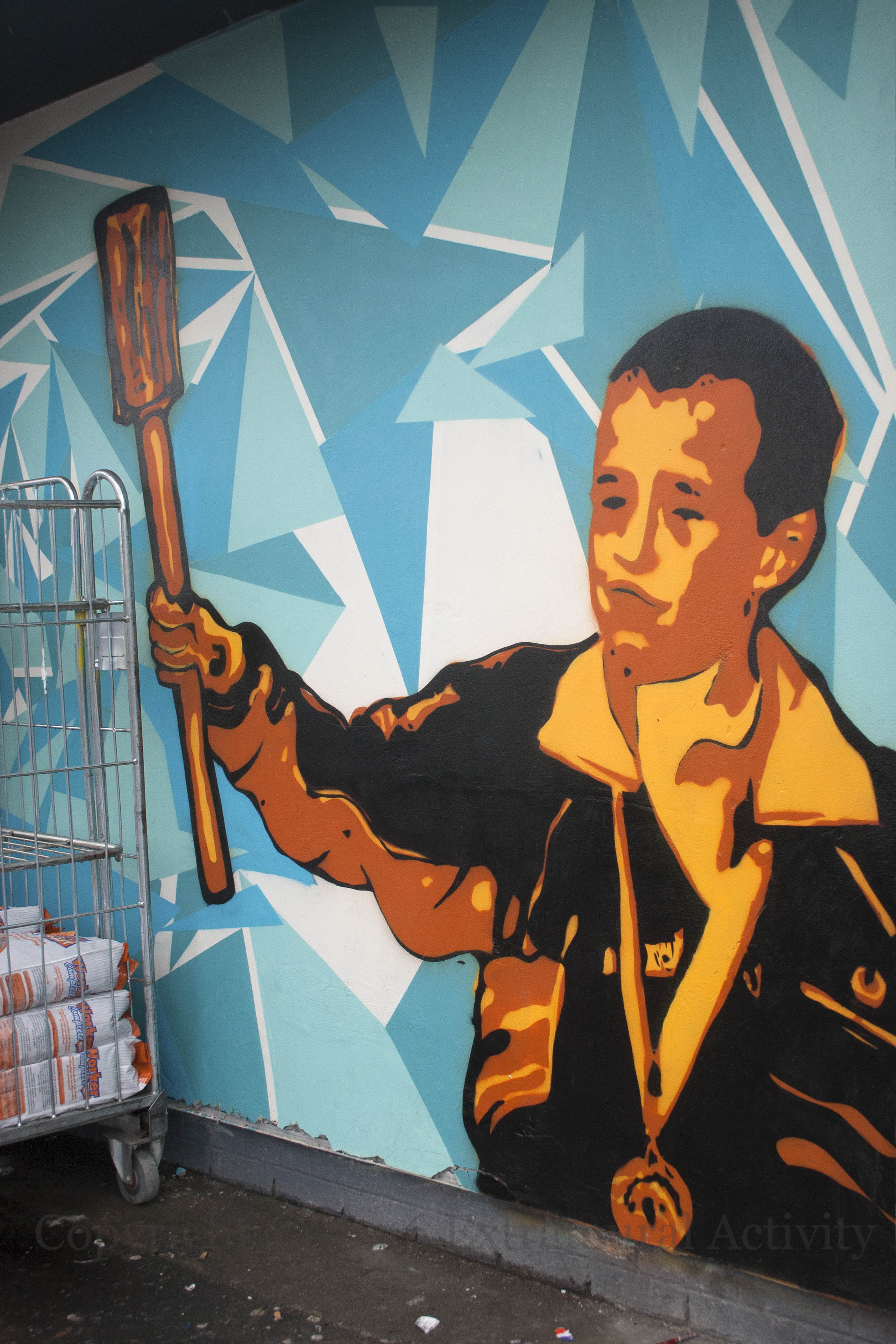
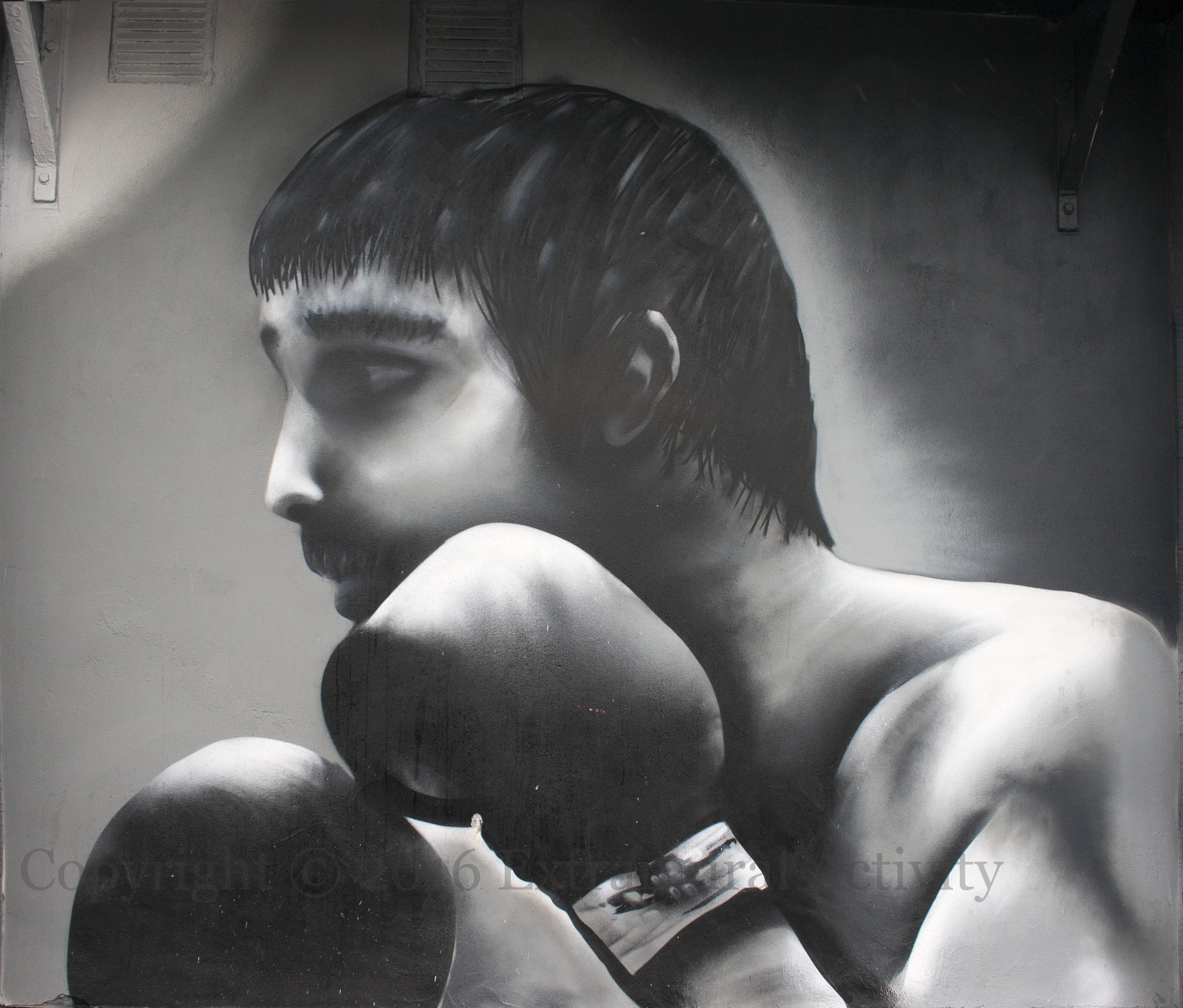
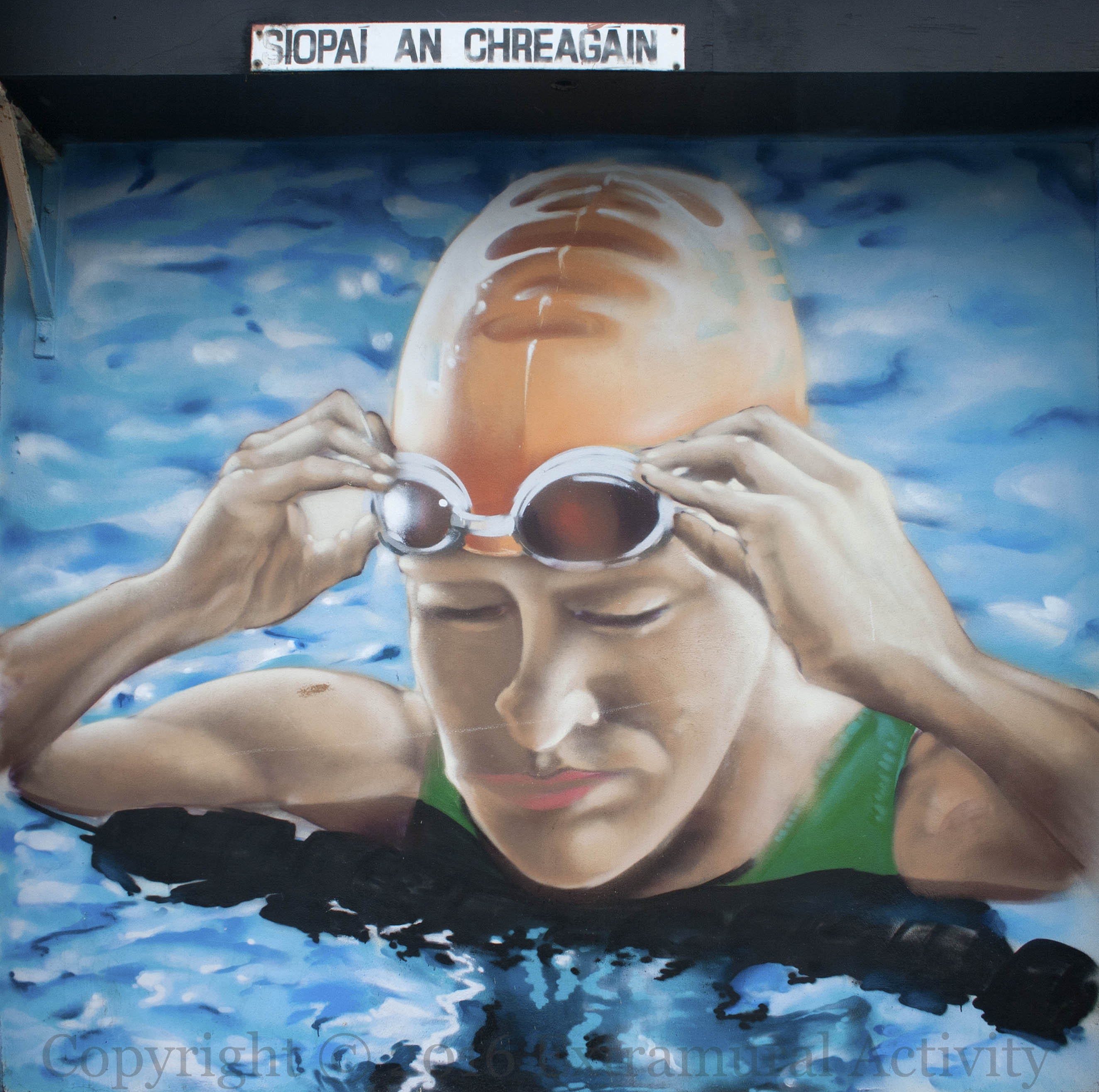
Five images from the Local Heroes at the Creggan shops: James McLean (footballer), Tony O’Doherty (footballer), David McAuley (Special Olympian who lit the flame to open the 2003 games in Dublin), Charlie Nash (boxer), and Aileen Reid (triathlete) (and, in a separate post, swimmer Liam Ball). The murals were painted by Karl Porter and Donal O’Doherty from UV Arts.
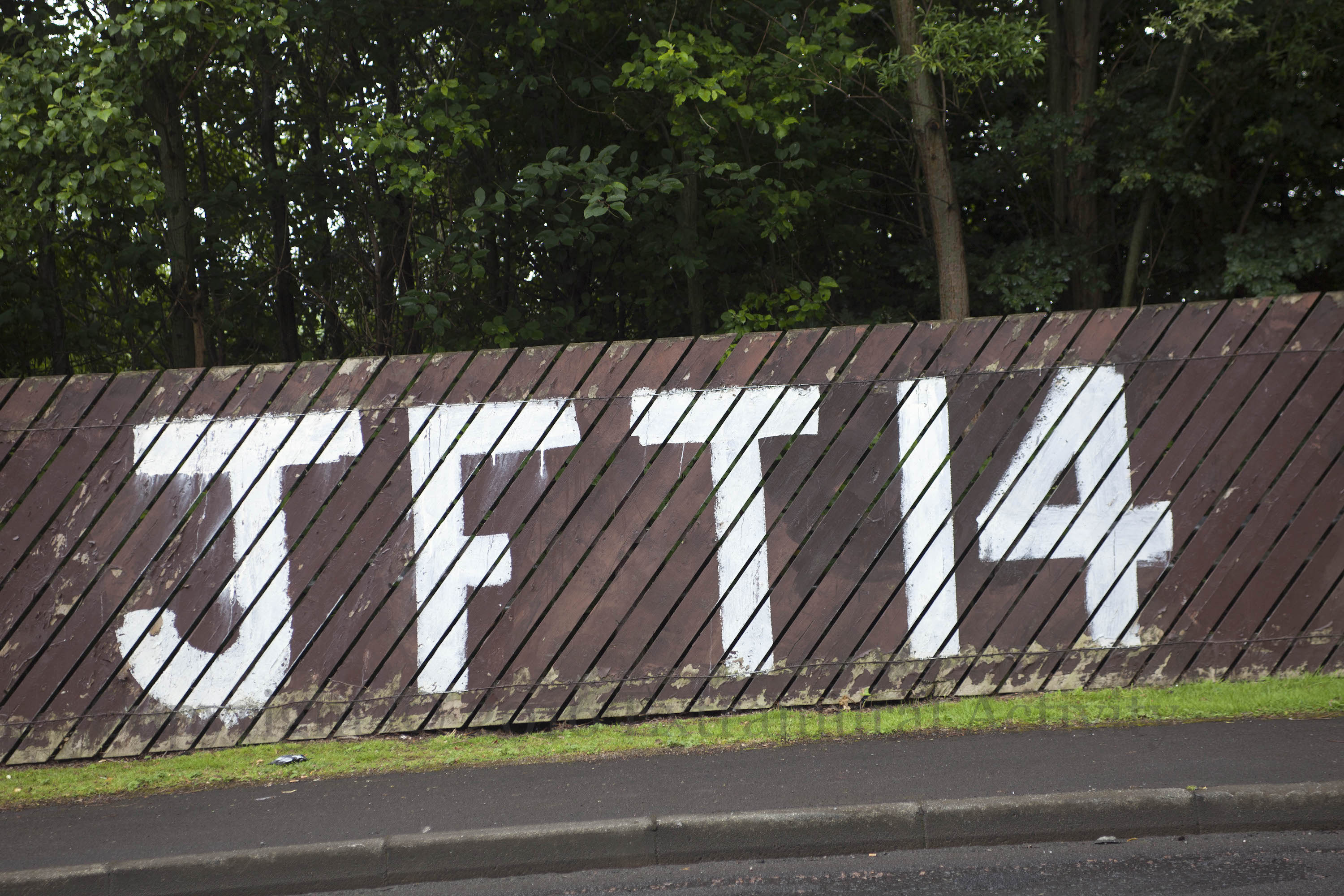
These republican slogans are on the fencing along Southway, Derry. “End internment”, “1916 – 2016 Unfinished business”, “IRA”, “JFT14” = “Justice for the 14 [Bloody Sunday victims]”, and “Brits out”.
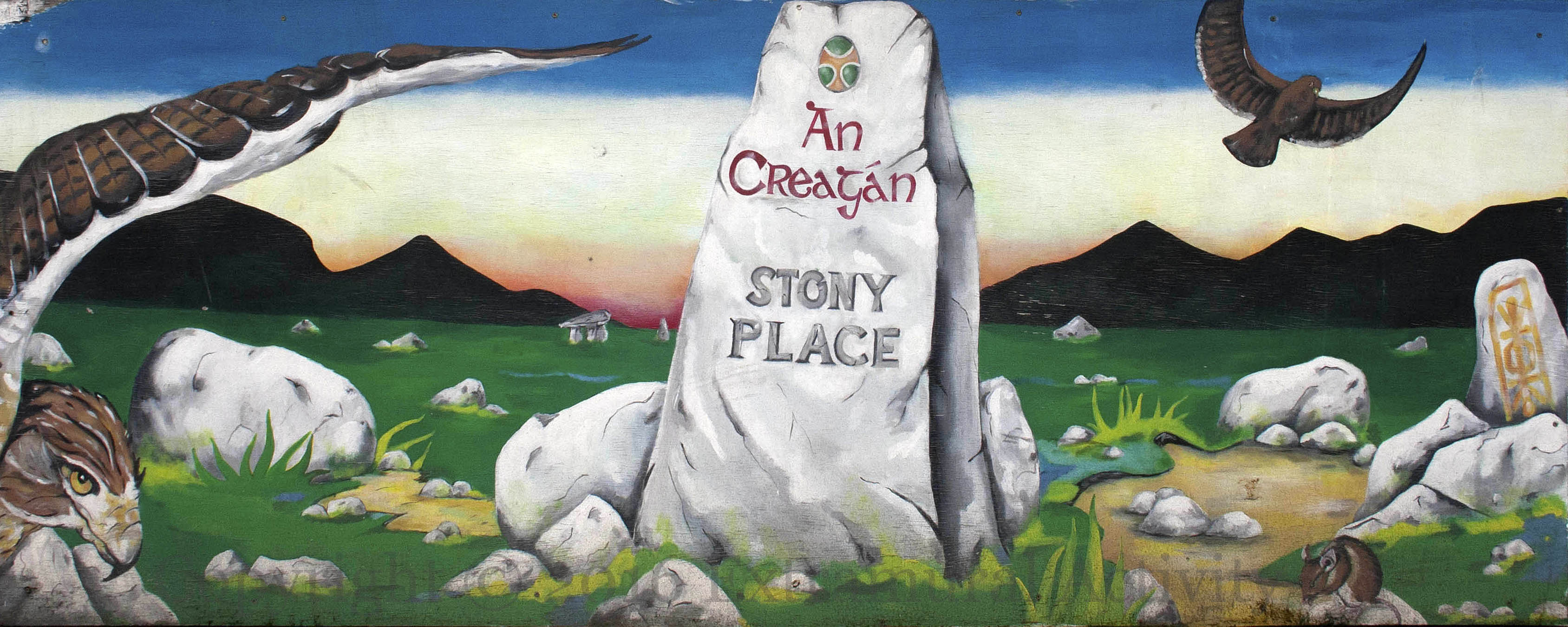
Step-mother Aoıfe resents the bonds between her husband Lear and his children and their love for their lost mother and turns them into singing swans for 900 years, by the end of which time Christianity had come to Ireland. A monk heard their song and recognised them. At his touch, they are restored to human form. Being 900 years old, they die immediately but not before being baptised.
For another ‘baptised before death’ story, see the story of the mermaid Lí Ban in Sea-Born.
This is the third of three Celtic mythology boards in Creggan/An Creagán, Derry. See previously: Tír Na nÓg and Cú Chulaınn.
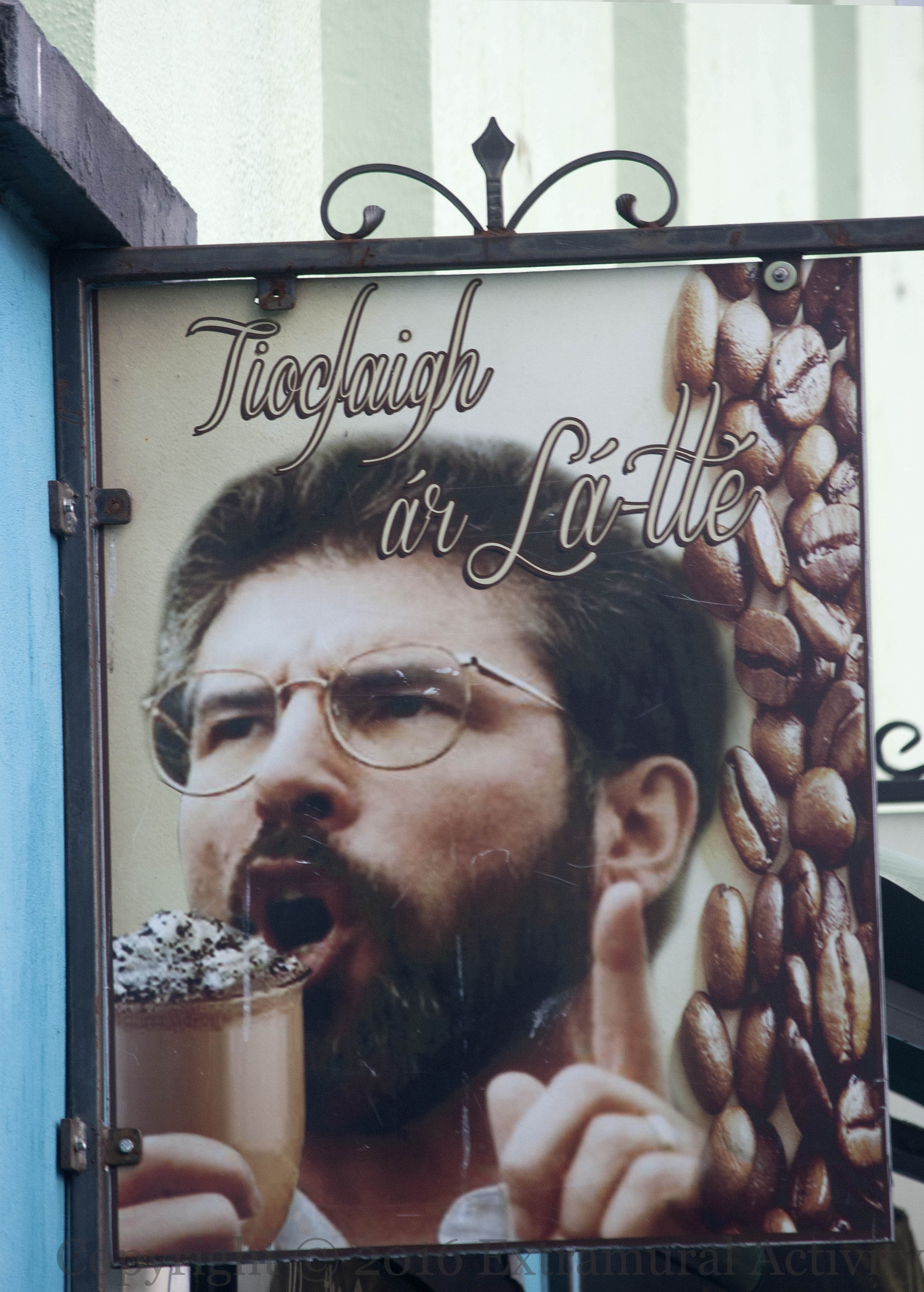
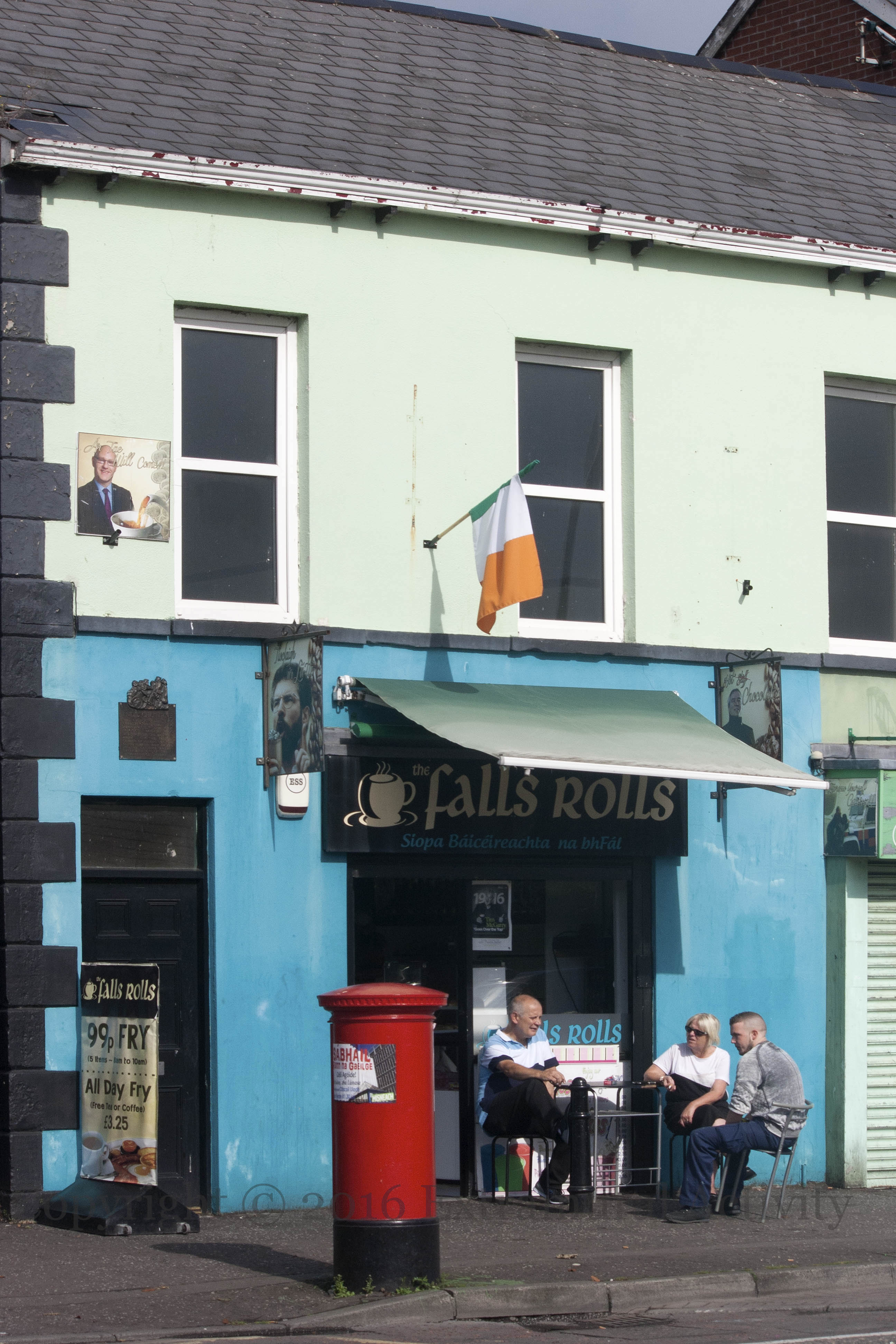
Sınn Féın representatives Paul Maskey (above), Gerry Adams, and Martin McGuinness are photoshopped into these beverage-themed, Irish-language puns outside the ‘Falls Rolls’ bakery: Ár tae will come, Tıocfaıgh [sic] ár látte, and Mocha-ra.
A stencilled phoenix in the Bogside, Derry’s, Meenan Square. The phoenix dies in flames and from its ashes rises another; a symbol of Irish republicanism.
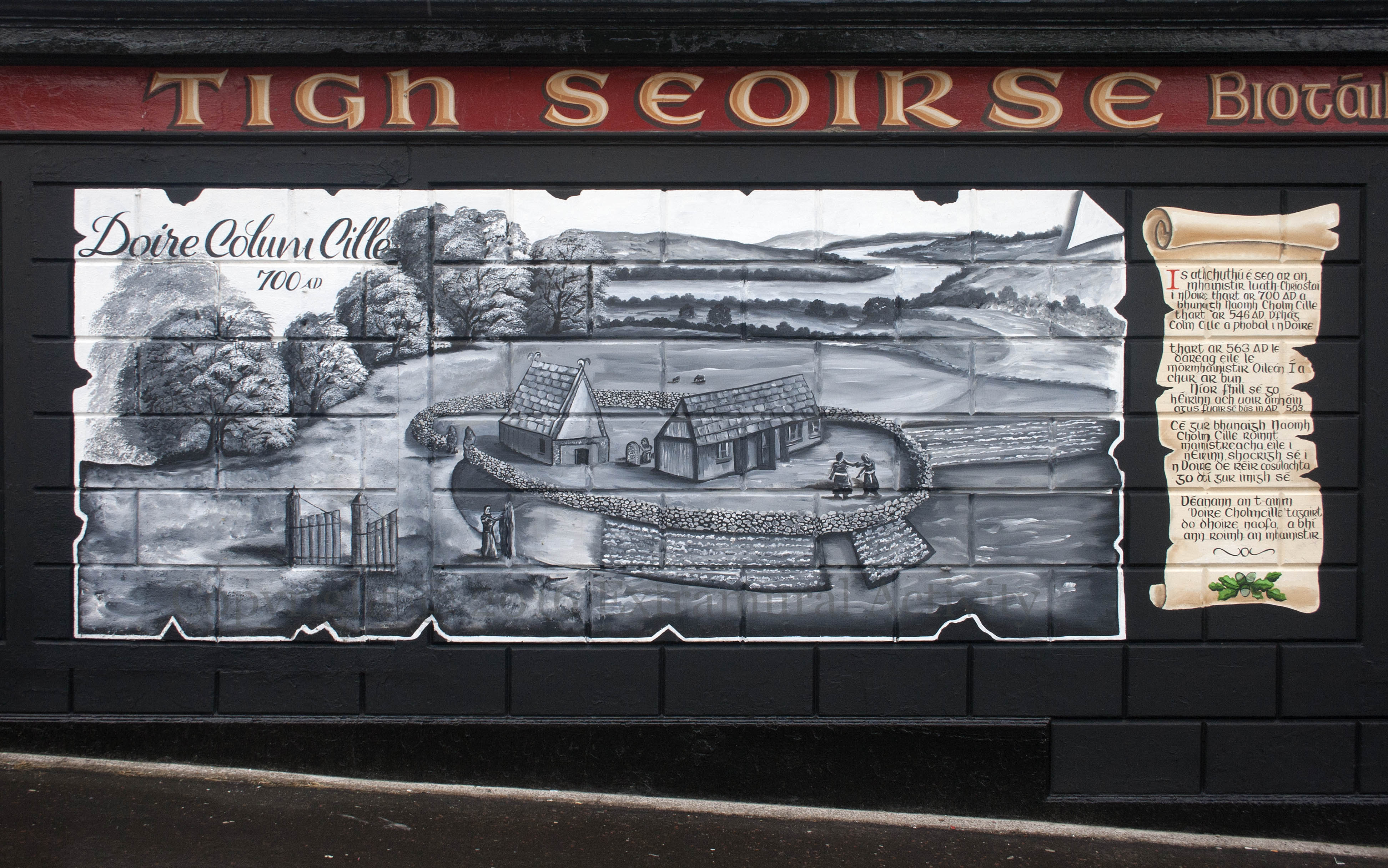
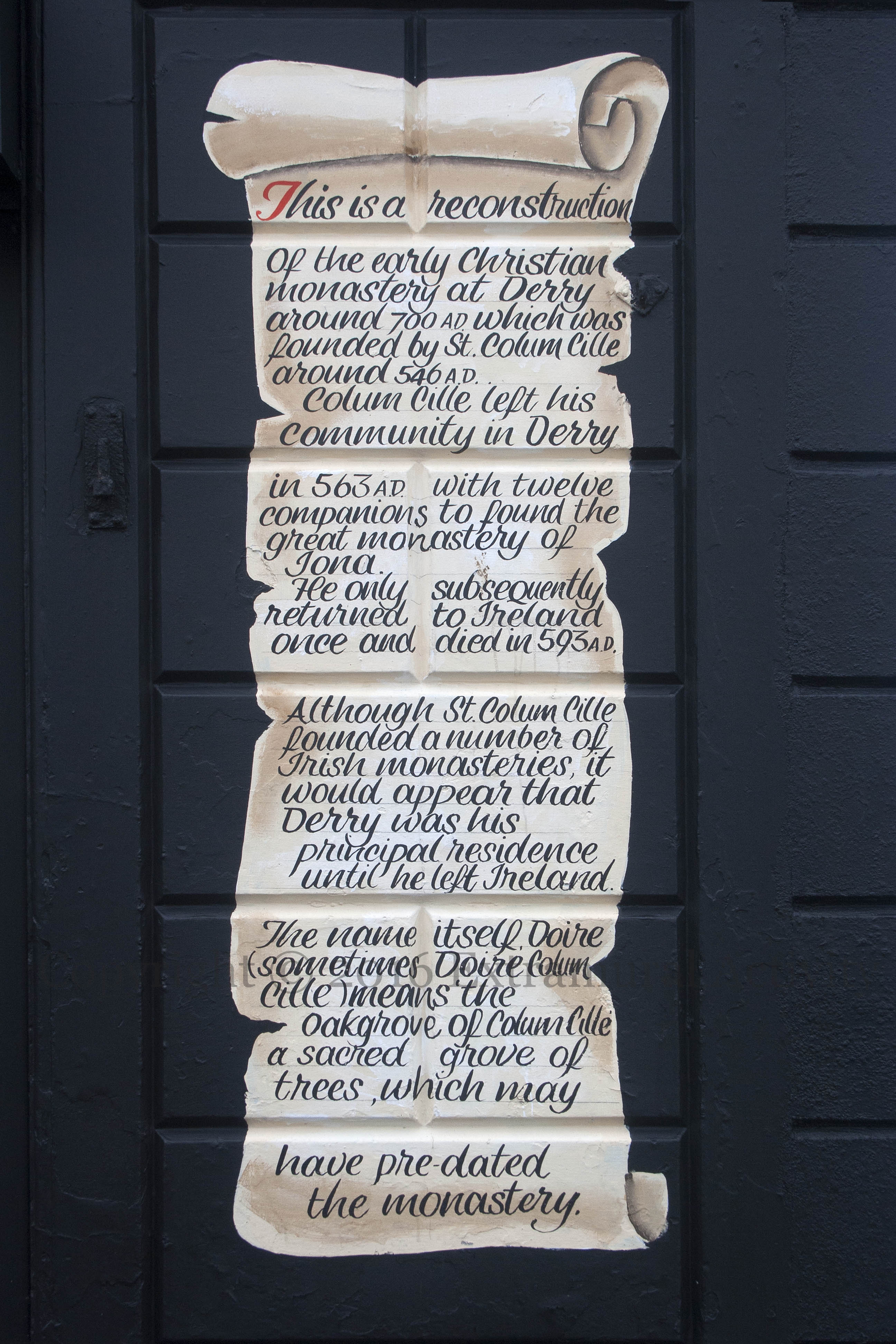
The Christian missionary Colm Cılle (in Latin, Columba), born in Donegal, founded a monastic settlement on the banks of the Foyle (then still part of Donegal) around 540 AD. The “Doıre” part of the name means “oak grove” and perhaps refers (as the information panel suggests) to “a sacred grove of trees, which may have pre-dated the monastery.” The mural above shows a reconstruction of the Derry monastery c. 700 AD. The name “Londonderry” dates to 1662.
Columba moved on to Scotland circa 563 and founded an abbey on the island of Iona. Among his reputed miracles is the banishment of a great water beast from the River Ness in 565.
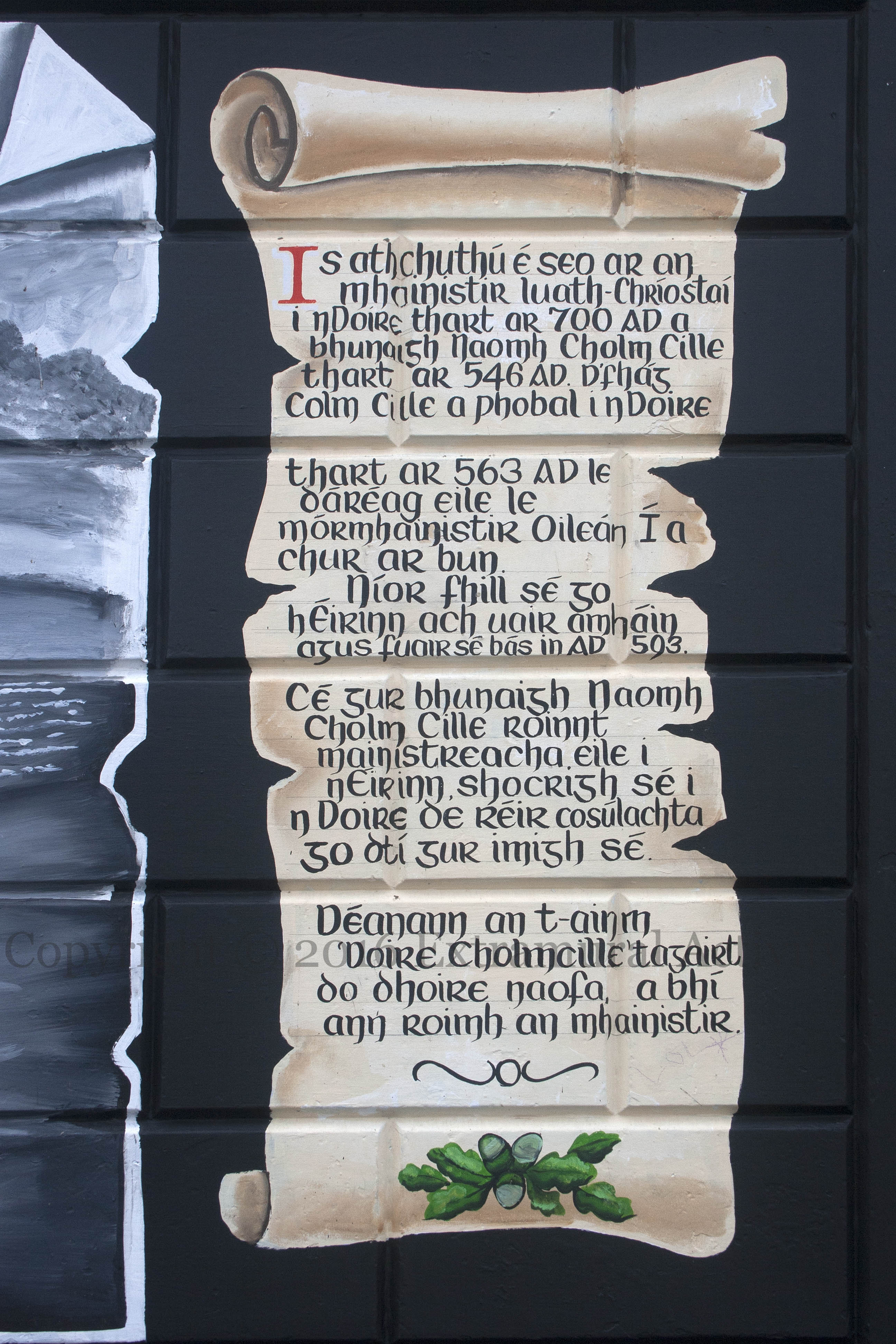
“Is athchuthú é seo ar an mhainistir luath-Chríostaí i nDoıre thart ar 700 AD a bhunaigh Naomh Cholm Cıille thart ar 546 AD. D’fhág Colm Cille a phobal ı nDoıre thart ar 563 AD le dáréag eıle le mómhaınıstır oıleán Í a chur ar bun. Níor fhill sé go hÉıreann ach uaır amháın agus fuaır sé bás in AD 593. Cé gur bhunaigh Naomh Cholm Cille roınnt maınıstreacha eıle ı nÉırınn, shocrıgh sé ı nDoıre de réır cosúlachta go dtí gut ımıgh sé. Déanann an t-aınm ‘Doıre Cholmcılle’ tagaırt do dhoıre naofa, a bhí ann roımh an mhaınıstir.”
Lıú Lúnasa is an Irish language festival, held this year on 24-28 August. The mural above shows rocks taken from the wall separating Palestine and Israel being used to build a gaelscoıl (an Irish-language school). The mural was painted by Jımí Mac Fhlannchadha.
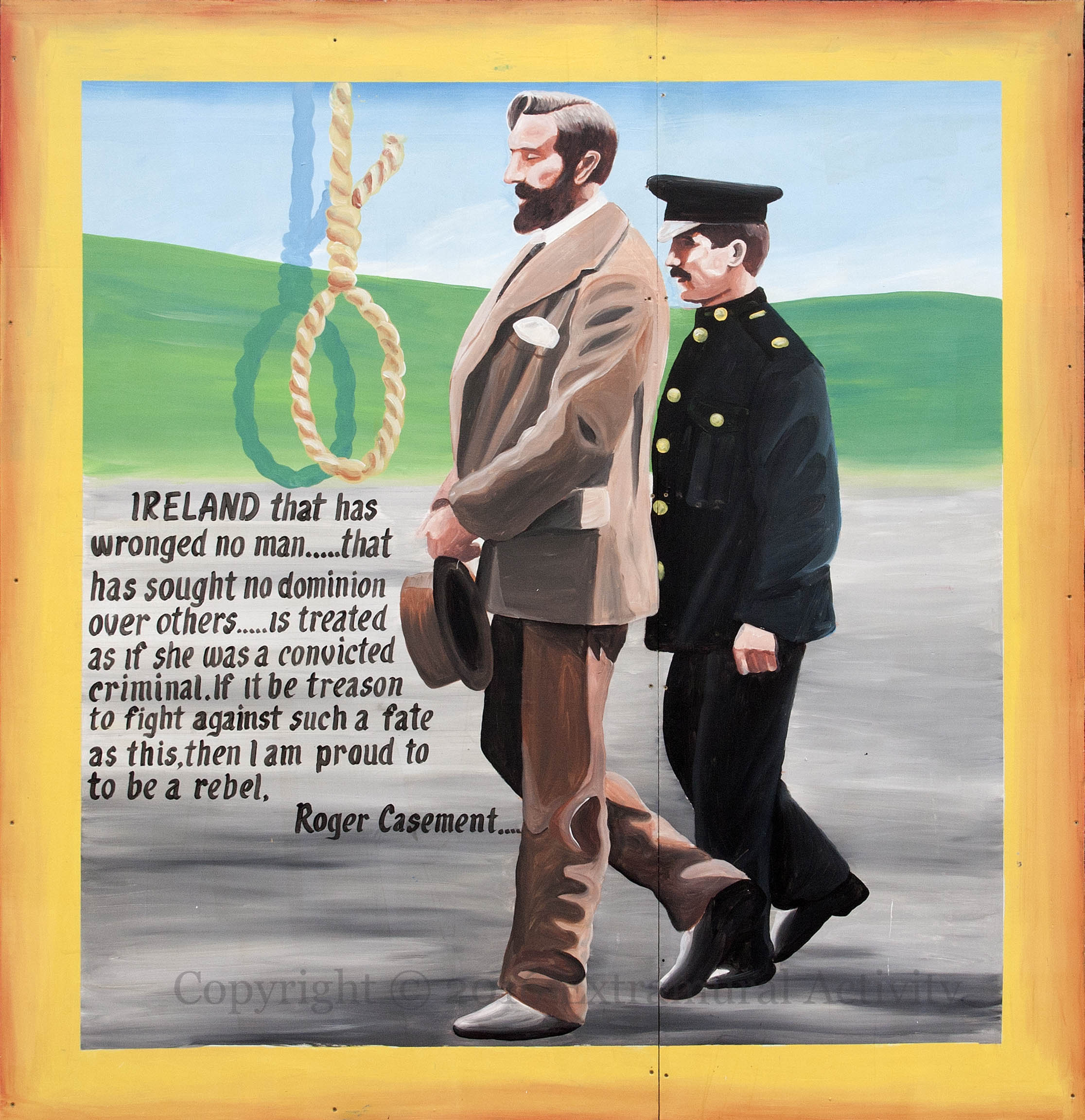
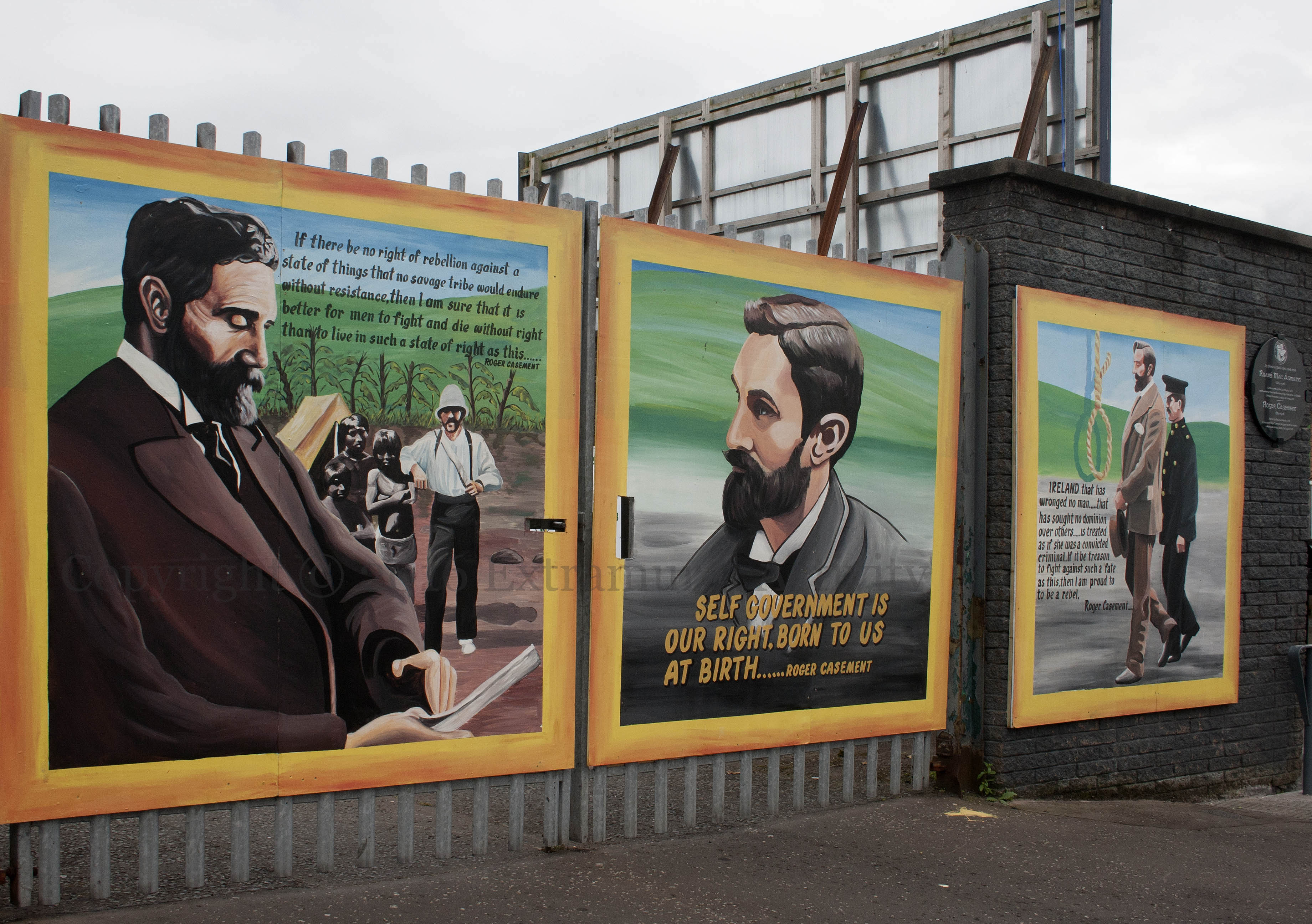
The third panel of three new paintings outside Casement Park continues the quote in the second, both coming from the end of Casement’s speech during his trial on charges of treason against the UK. “It is only from the convict these things [i.e. human rights] are withheld, for crime committed and proven and Ireland, that has wronged no man, has injured no land, that has sought no dominion over others — Ireland is being treated today among the nations of the world as if she were a convicted criminal. If it be treason to fight against such an unnatural fate as this, then I am proud to be a rebel, and shall cling to my “rebellion” with the last drop of my blood.”
The speech was unsuccessful; Casement was hanged in Pentonville prison, England on Augst 3rd, 1916.











 Extramural Activity