Shared Space

03706 2016-08-03 IntWall2016 Public Meeting+

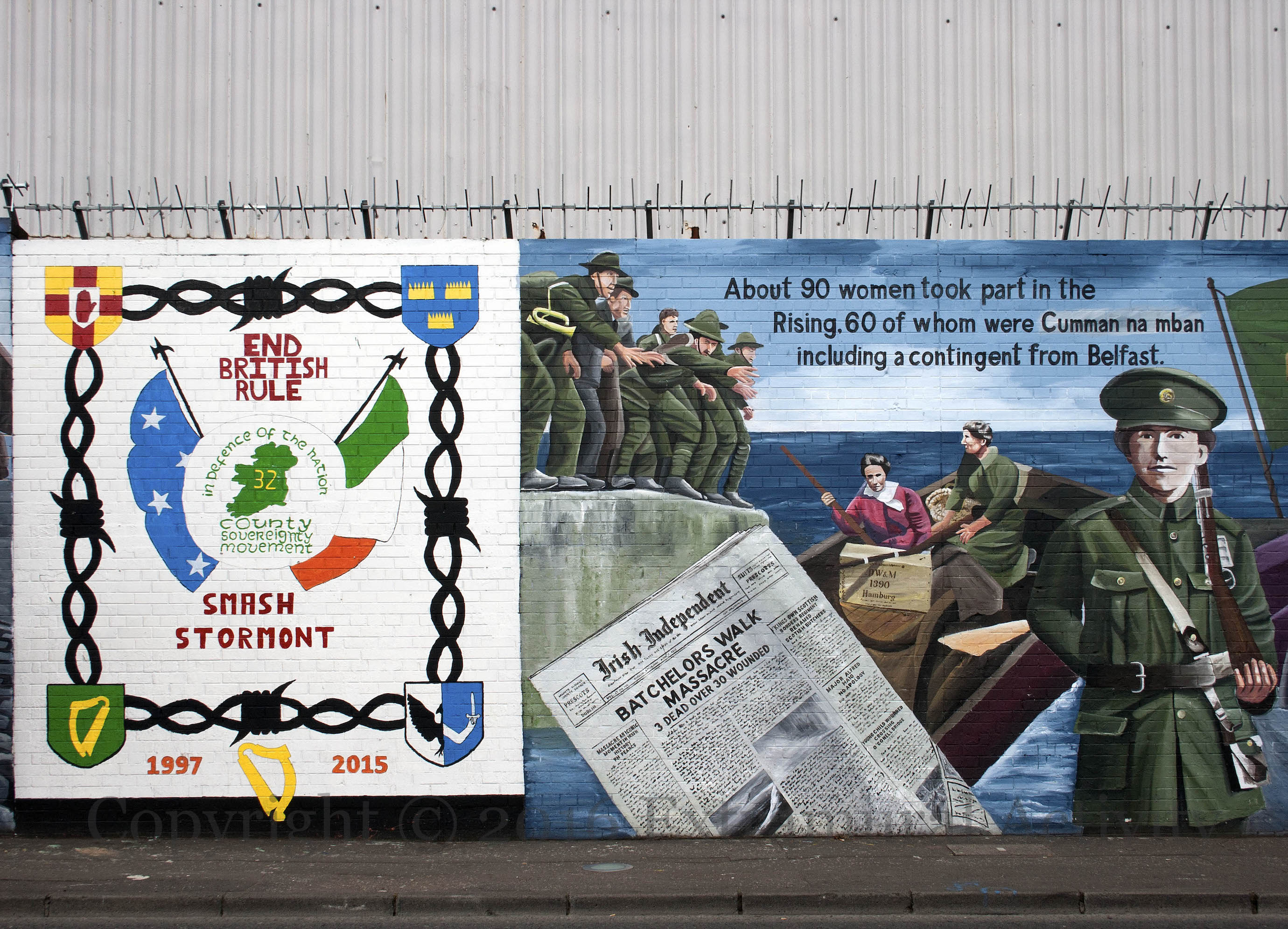
In addition to the defacing of Carson (see We Won’t Have Carson), a 32 County Sovereignty Movement mural remains about a quarter of the way along the newly repainted International Wall on Divis Street. (And as will be covered in a separate post, an IRPWA POW mural was in progress at the far right end of the wall.)

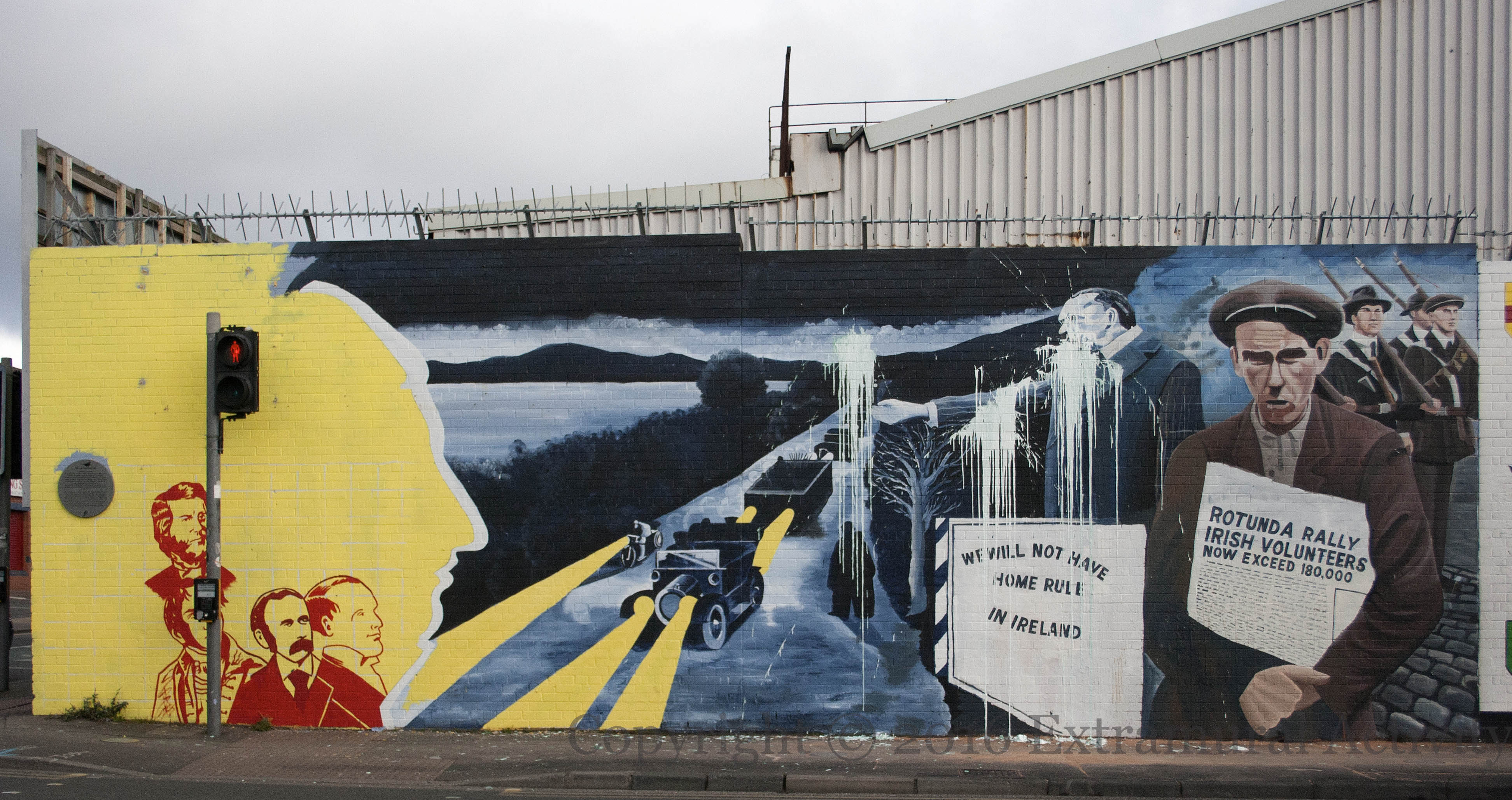
We understand that the painters offered to repaint the 32CSM mural after the historical mural had been in place for six months, but that this offer was turned down. For the purposes of the launch, then, a cloth sign, was hung over the 32CSM mural (as seen in the image above). It reproduces a poster (see the original) advertising “a public meeting for the formation of Irish Volunteers”; Eoin MacNeill, author in November 1913 of ‘The North Began’, presided at the meeting – here is the text of The North Began – and the newspaper carried by the hawker on the left reads “MacNeill successful in call for Irish Volunteers” (whereas it originally read “Rotunda rally – Irish volunteers now exceed 180,000” as can be seen in the Carson post). However, this cloth was removed immediately after the launch, meaning that the wall appears as in the image below.
03693 2016-08-01 IntWall2016 32CSM GunRunning+

Click image to enlarge
Copyright © 2016 Seosamh Mac Coılle
X03706 X02693

An Staılc Ocraıs

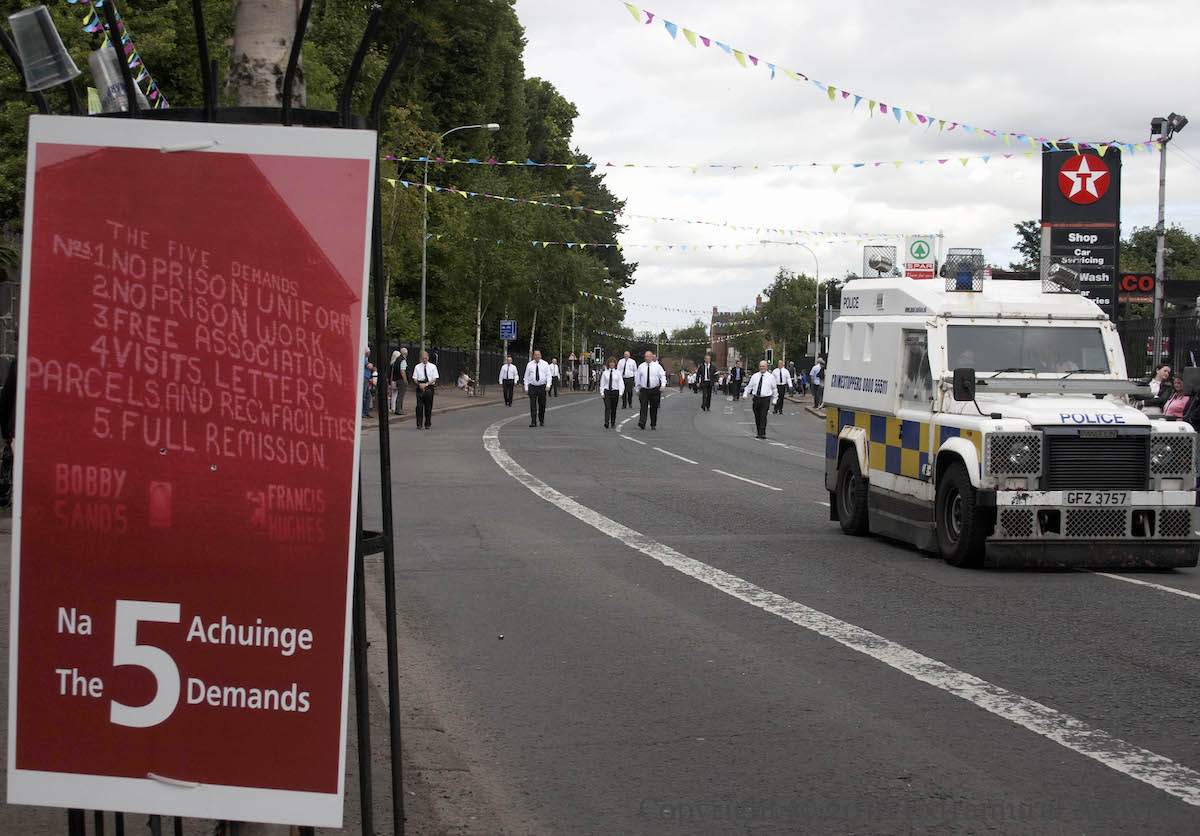
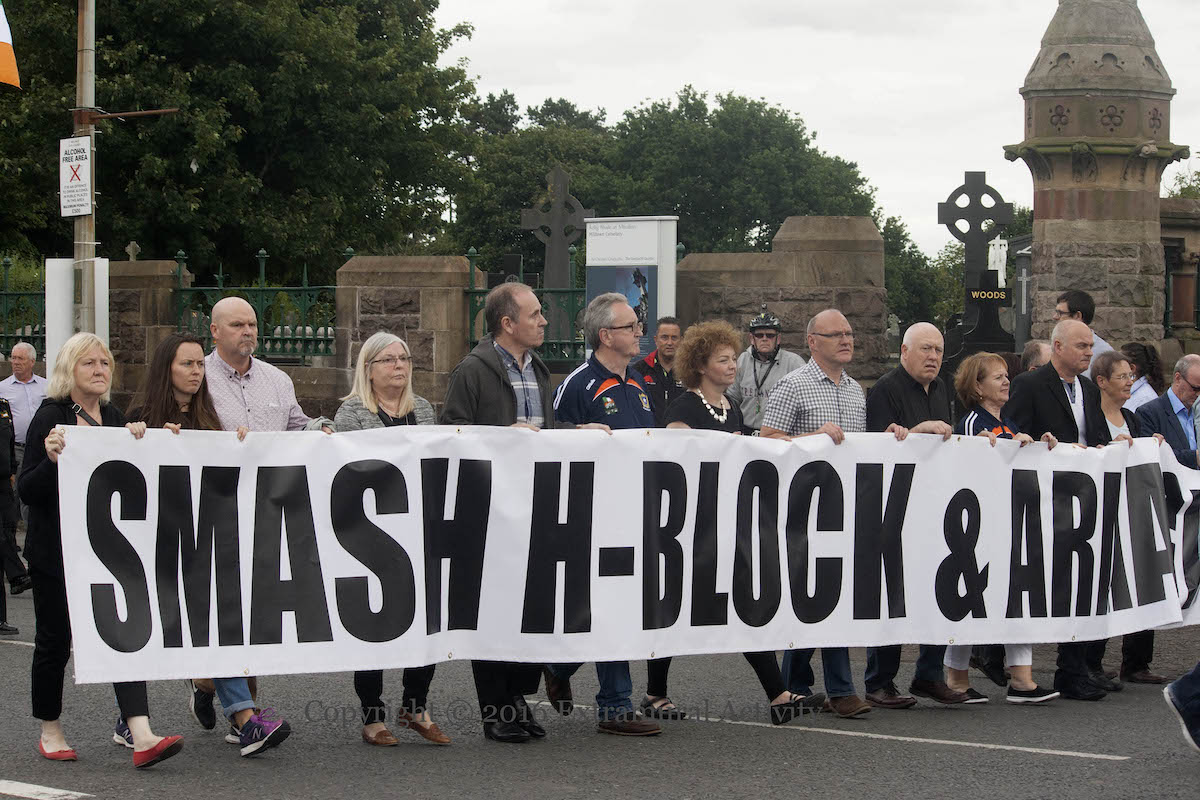
“An staılc ocraıs 1981 hunger strike – 35th anniversary march – Sunday 14th August – Assemble Divis tower 2pm”. With portraits of the deceased 1981 hunger strikers; Frank Stagg and Michael Gaughan are included even though they died in the 1970s.

On the site of the former Andytown RUC barracks, Falls Road/Glen Road, Belfast.

Click image to enlarge
Copyright © 2016 Seosamh Mac Coılle
X03744

An tAos Óg Ag Sıúl

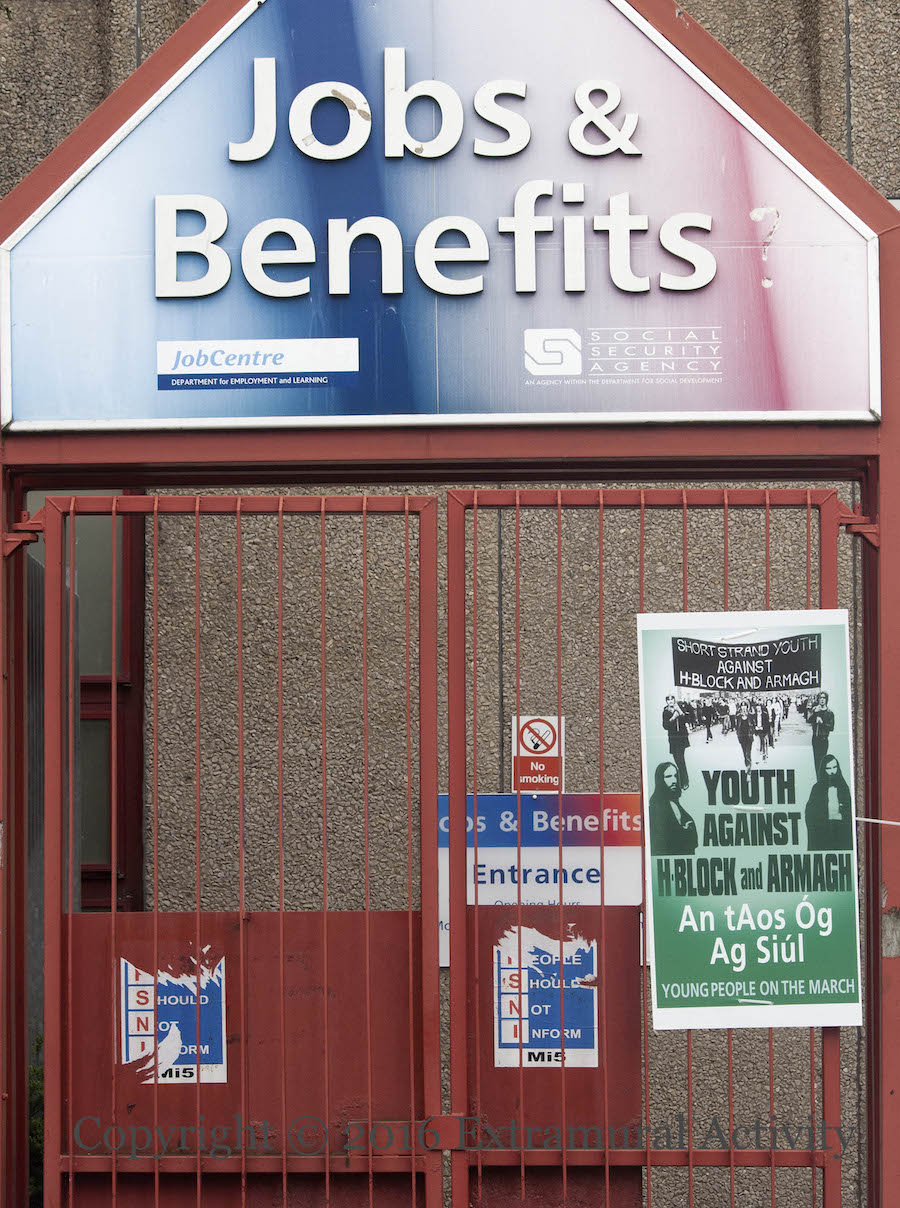
Some of the people on 35th anniversary march were perhaps among the “Short Strand Youth Against H-Block & Armagh” in 1981 but the speakers at the Dunville Park rally were intentionally drawn from the younger Sinn Féin leaders, including Nıall Ó Donnghaıle from the Short Strand (An Phoblacht).

Here’s Michael McVeigh’s contribution to the Guthanna ’81 project; he was a member of the youth group during the blanket and hunger strikes.

Click image to enlarge
Copyright © 2016 Seosamh Mac Coılle
X03748 X03749 X03750 young people on the march na cúıg achuınge the five demands

That The Dawning Years Might Make You Fearless

03654 2016-07-08 Seamus Bradley l+

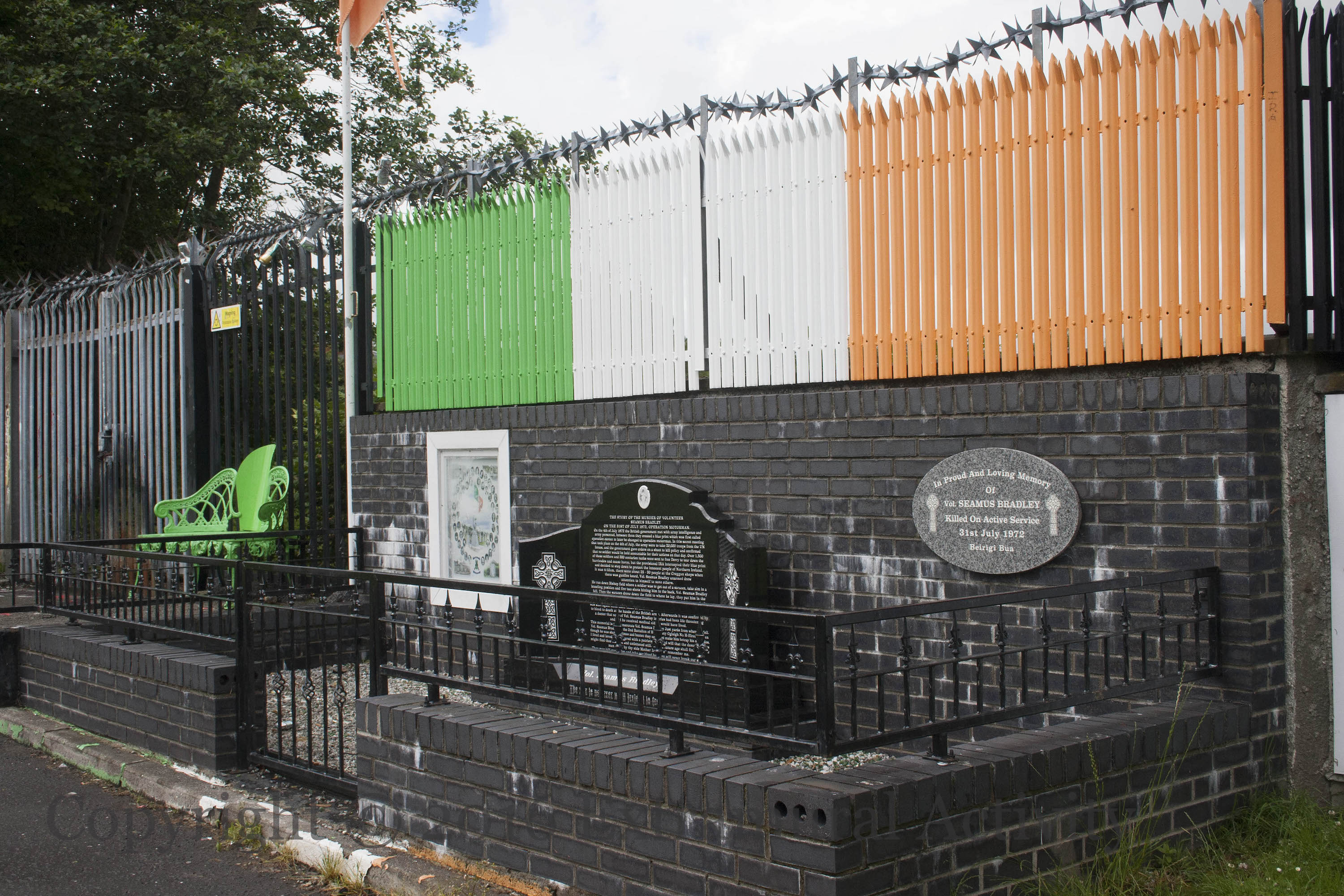
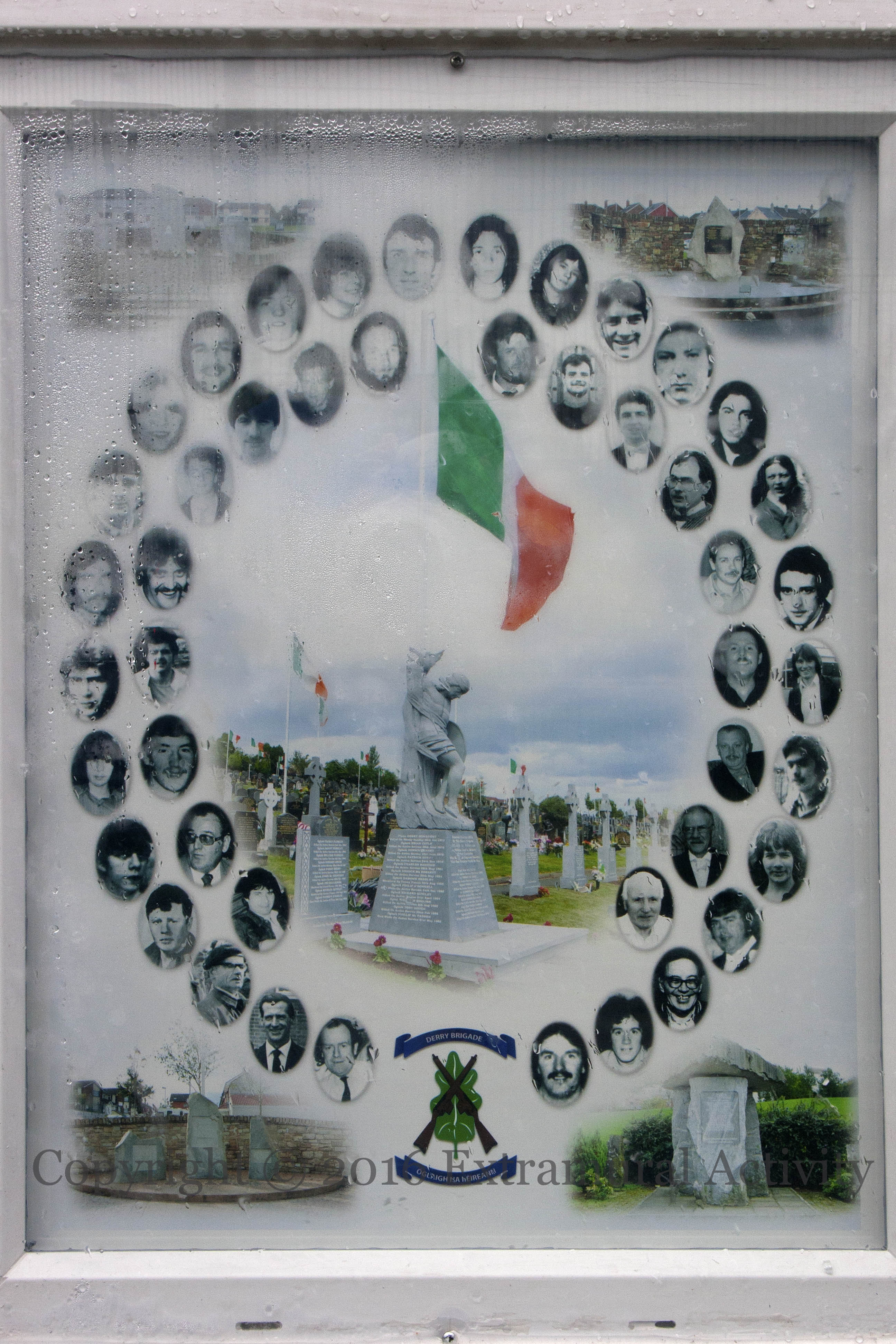
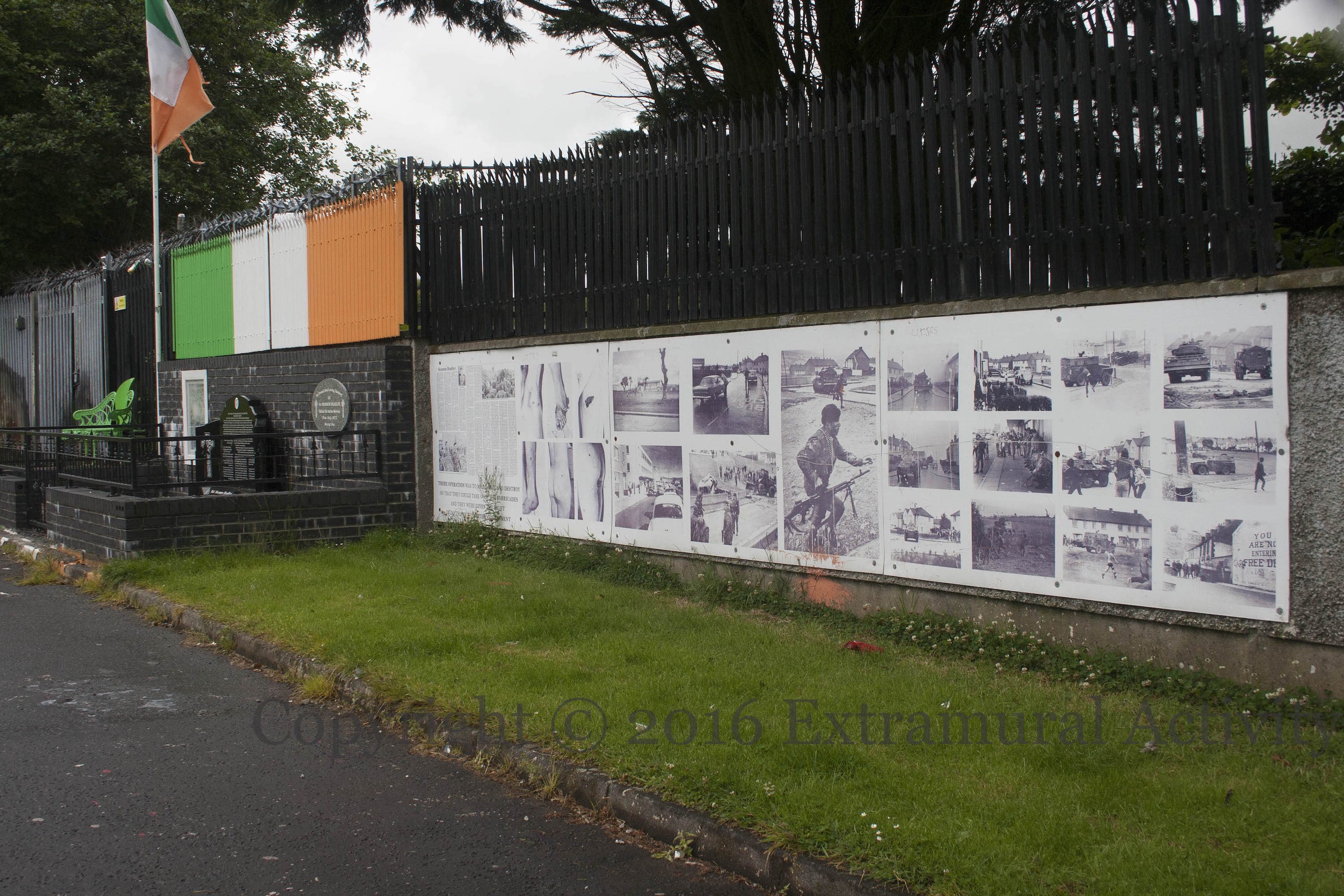
This memorial, which includes two stones, a glassed-in set of portraits of Derry Brigade members (second image), tricoloured railing and flag, commemorates the death of IRA volunteer Seamus Bradley. The stone on the right says that he was killed on active service, but the central headstone (third image) tells the story of an unarmed Bradley trying to distract the attention of British Army soldiers attacking people at the Creggan shops. To the right of the memorial is an extensive board of photographs and information relating to the treatment Bradley received, similar to the collection in front of the Operation Motorman mural in Rossville Street. (The oval plaque was on the wall of the Creggan Neighbourhood Centre – see M01604 – before it was demolished in 2013. (CAIN))

03656 2016-07-08 Seamus Bradley faces+

03657 2016-07-08 Seamus Bradley stone+

03655 2016-07-08 Seamus Bradley w+

Click image to enlarge
Copyright © 2016 Seosamh Mac Coılle
X03654 X03656 X03657 X03655 bishops field

On the 4th of July 1972 the British government met with army intelligence and army personnel, between them they created a blue print which was first called operation carcan to later be changed to operation motorman. In this secret meeting that place on the 4th of July, the army were to take 20,000 troops from the UN forces, and the government gave orders on a shoot to kill policy and confirmed that no soldier would be held accountable for their actions on that day. Over 1,500 of these soldiers and 300 centurion tanks were sent to free Derry to tear down the barricades and cause havoc, but the provisional IRA intercepted their blue print and decided to step down to protect the innocent people of Northern Ireland. It was 4:10am, there were 25 – 30 people at the Creggan shops when there was gunfire heard, Vol. Seamus Bradley unarmed drew attention to himself to save others. He ran down Bishop field where a soldier was to get out of a saracen, take aim in a kneeling position and fire two shots hitting him in the back, Vol. Seamus Bradley fell. Then the saracen drove down the field to where he lay, they put him in the saracen and took him away to St. Peter’s school, no one knew what happened after that. All they know is that he was interrogated, the pictures tell their own story. He was shot again three more times at close range, he was tortured and beaten and left to bleed to death at the hands of the British army. Afterwards it was confirmed by a doctor that none of Seamus Bradley’s injuries have been life threatening and had he received medical aid he would have lived.

This memorial is to commemorate Vol. Seamus Bradley just yards from where he fell. Vol. Seamus Bradley on the 2nd Battalion of B company Oglaıgh Na H-Éıreann, even though he was shot five times and beaten they could not make him betray his comrades. I lived and loved and laboured with a patriot’s heart and will that the dawning years might make you fearless and unfettered still. When a future age shall find thee free men stand by thy side Mother Ireland o” remember me. They may kill our bodies and take our blood but they will never break our spirits. killed on active service beırıgí bua

We Won’t Have Carson

03491 2016-06-03 IntWall2016 Carson+

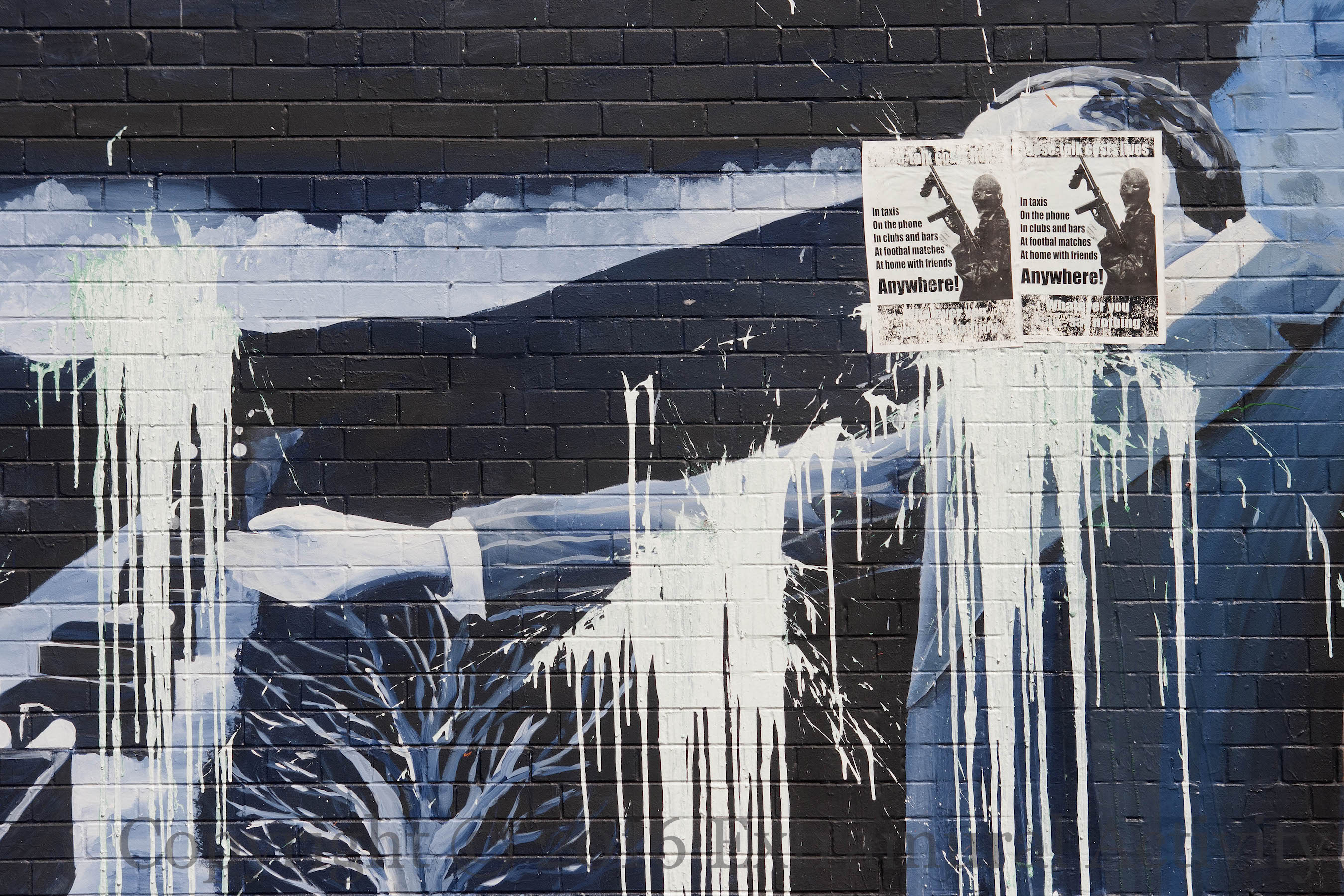
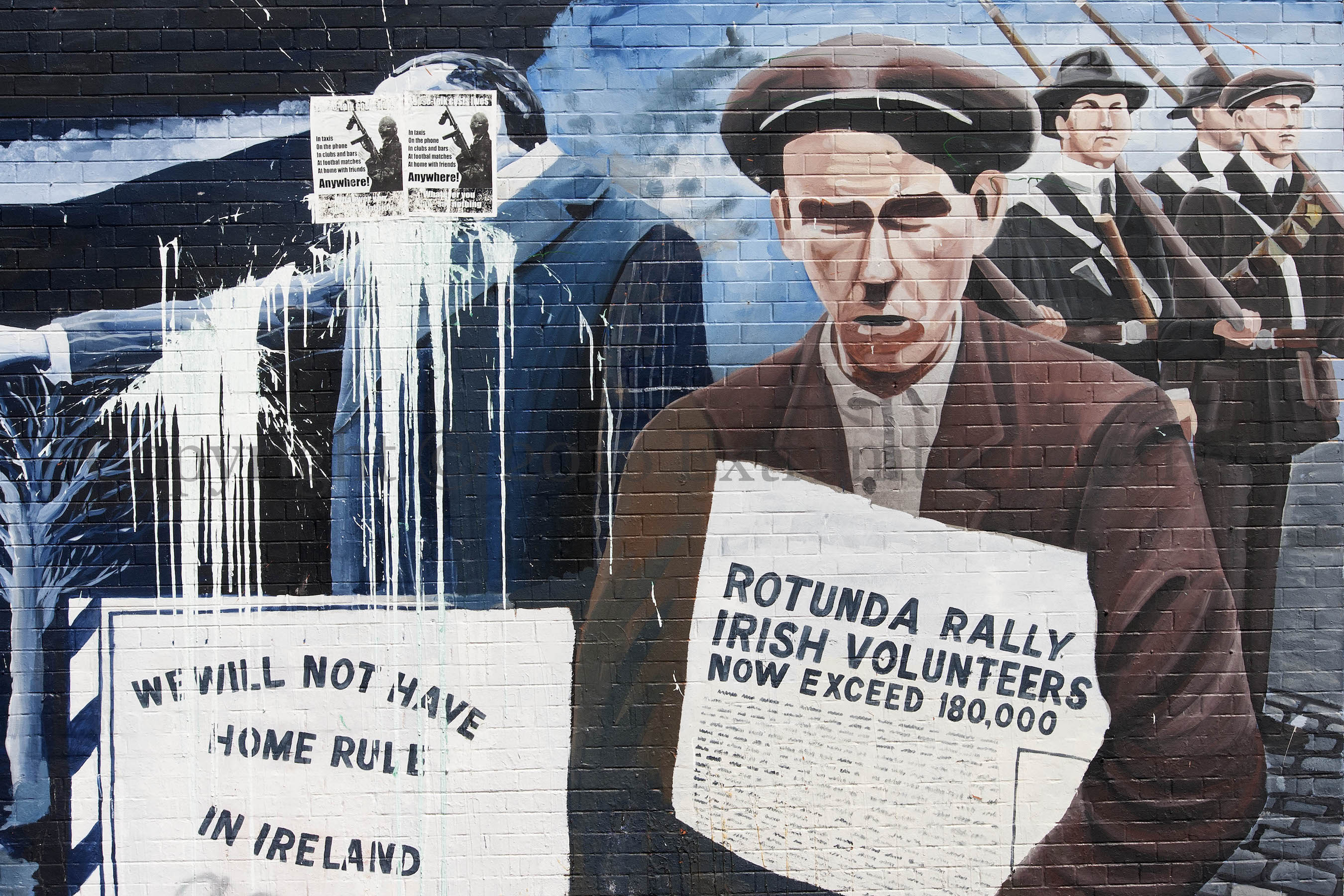
The history-of-republicanism mural now taking up the majority of the International Wall is not without controversy among republicans. One point of contention is the inclusion of Edward Carson’s portrait and the related scene of the Larne gun-running. Carson was leader of the Irish Unionist Alliance, campaigner against Home Rule, and founder of the Ulster Volunteers. 25,000 guns and more than 3 million rounds of ammunition were smuggled ashore at Larne, Donaghadee, and Bangor (see the second image for a sketch and the bottom two images for the completed scene). The formation of the UVF drew a counter-reaction in the formation of the Irish Volunteers, and membership was spurred on by the Larne gun-running. (See the third image.)

Carson’s image was originally paint-bombed in March (BMGBelTel) and then again in April when “loose talk” posters were also added (Irish News). (For Loose Talk posters over the Otegi mural, see Loose-Talk Costs Lives.) For the launch on August 3rd, the posters were removed but the paint-bombing was not fixed. The image above is from June, 2016.

03337 2016-03-16 IntWall2016 Cars Grid+

Grid for the gun-running scene; image from March 2016. It is based on a drawing from the Illustrated London News, which can be seen in this RTÉ article on the gunrunning. About 600 cars were used in the operation, perhaps the first large-scale use of motorised vehicles.

03493 2016-06-03 IntWall2016 CarsonVols+

A newsboy carries a paper announcing the burgeoning Irish Volunteers. The headline portrayed was later changed, as can be seen in one of the images below.

03355 2016-04-01 IntWall2016 Gunrunning Carson+

The first part of wall at the end of March, before the addition of the ‘loose talk’ posters over Carson’s face.

03733 2016-08-09 IntWall2016 Larne Gunrunning Carson+

The panel as it appears in August; the removal of the posters tore away some of the paint around Carson’s face.

A late August repaint makes Carson’s forehead protrude and the fingers of his hand are curled up. A Fáılte Feırste Thıar/Welcome To West Belfast panel has been added. (Presumably this welcome does not extend to the weapons being smuggled in as part of the gun-running.)

03819 2016-09-02 IntWall2016 Carson repaint+

Click image to enlarge
Copyright © 2016 Seosamh Mac Coılle
X03491 X03337 X03493 X03355 X03733 X03819 divis st we will not have home rule in ireland promoting west belfast tourism visitwestbelfast.com

Young Ireland

03732 2016-08-09 IntWall2016 Wolfe Tone+

The new mural on the International Wall is book-ended on the left-hand side by a host of Irish nationalists from the centuries before the 1916 Rising, who continue to watch over the unfolding drama of the nationalist cause. In chronological order, the figures depicted are …

  • Theobold Wolfe Tone (1768-1798), the main figure shown above, leader of the United Irishmen and the 1798 rebellion
  • Betsy Gray, female in green, who died in the 1798 rebellion
  • Henry Joy McCraken (1767-1798) second from the left at bottom, leader of the 1798 rebellion in County Antrim, rising on June 6
  • Mary Anne McCracken (1770-1876) on Tone’s cheekbone, political activist and anti-slavery and poverty reformer
  • Robert Emmett (1778-1803) obscured by pole, leader of a revolt in 1803
  • Anna Wheeler (1780-1848), female in purple, feminist author
  • James Fintan Lalor (1807-1849), bottom left, writer and political activist
  • Thomas Davis (1814-1845) small portrait below Gray, organiser of Young Ireland
  • John Mitchel (1815-1875) top row left of the pole, Young Ireland and the Irish Confederation
  • Michael Davitt (1846-1906) third from left at bottom, founder of the Land League and who took part in the Fenian Rising of 1867
  • John Devoy (1842-1928) fourth from left at bottom, one of the Cuba Five, exiled to the U.S. in 1871, and active in all of the Fenian Rising, the 1916 Rising, and the War of Independence

(There is a twelfth figure, in a bowler hat, top left. If you know who this is, please get in touch.)

Click image to enlarge
Copyright © 2016 Seosamh Mac Coılle
X03732 divis st Ag Fíorú Na Poblachta 1916 2016 cead blıaın

Raising The Flag

03694 2016-08-01 IntWall2016 1916+

For the centenary of the 1916 Easter Rising, the whole of the International Wall on Divis Street (or, almost the whole wall, as will be explained in a subsequent post) has been repainted to depict a history of Irish republicanism, with special attention given to connections to Belfast.

As might be expected, a panel of the new mural depicts the GPO of 1916. A Tricolour is thought to have been raised over the Henry Street corner of the GPO by Liverpudlian Joe Gleeson – he sports a Liver bird badge on his bandolier – though he does not mention this in his statement to the Bureau of Military History: “We started out from Kimmage about 60 strong at about ten o’clock that Easter Monday morning …”. (A flag of the Irish Republic was raised by Harry Walpole (Irish Times) or Eamon Bulfin (Collins 22 Society, which states that Gearóıd O’Sullivan raised the Tricolour; Bulfin’s statement to the BMH says Gleeson did so).) Gleeson was one of 50 fighters from the Liverpool Irish Volunteers. (Caırde Liverpool has the names of 38 volunteers from Merseyside; this BBC article contains photographic portraits of a number.) The image here is a modified version of the 1941 stamp designed by Victor Brown showing an armed volunteer outside the GPO (stampboards).

The Belfast connection in this panel is supplied by Winifred Carney, member of Cumann Na mBan, assistant to James Connolly from 1912 until the Rising, and part of the occupying forces in the GPO during the rising, “armed with a typewriter and a Webley” (according to her WP page). She is seen here (on the right, beneath the flag) typing up communications by candlelight in the GPO.

03675 2016-07-23 IntWall2016 1916 prog+

03667 2016-07-20 IntWall2016 1916 cartoon+

Click image to enlarge
Copyright © 2016 Seosamh Mac Coılle
X03694 X03675 X03667

Take The Hint

03695 2016-08-01 Take The Hint+

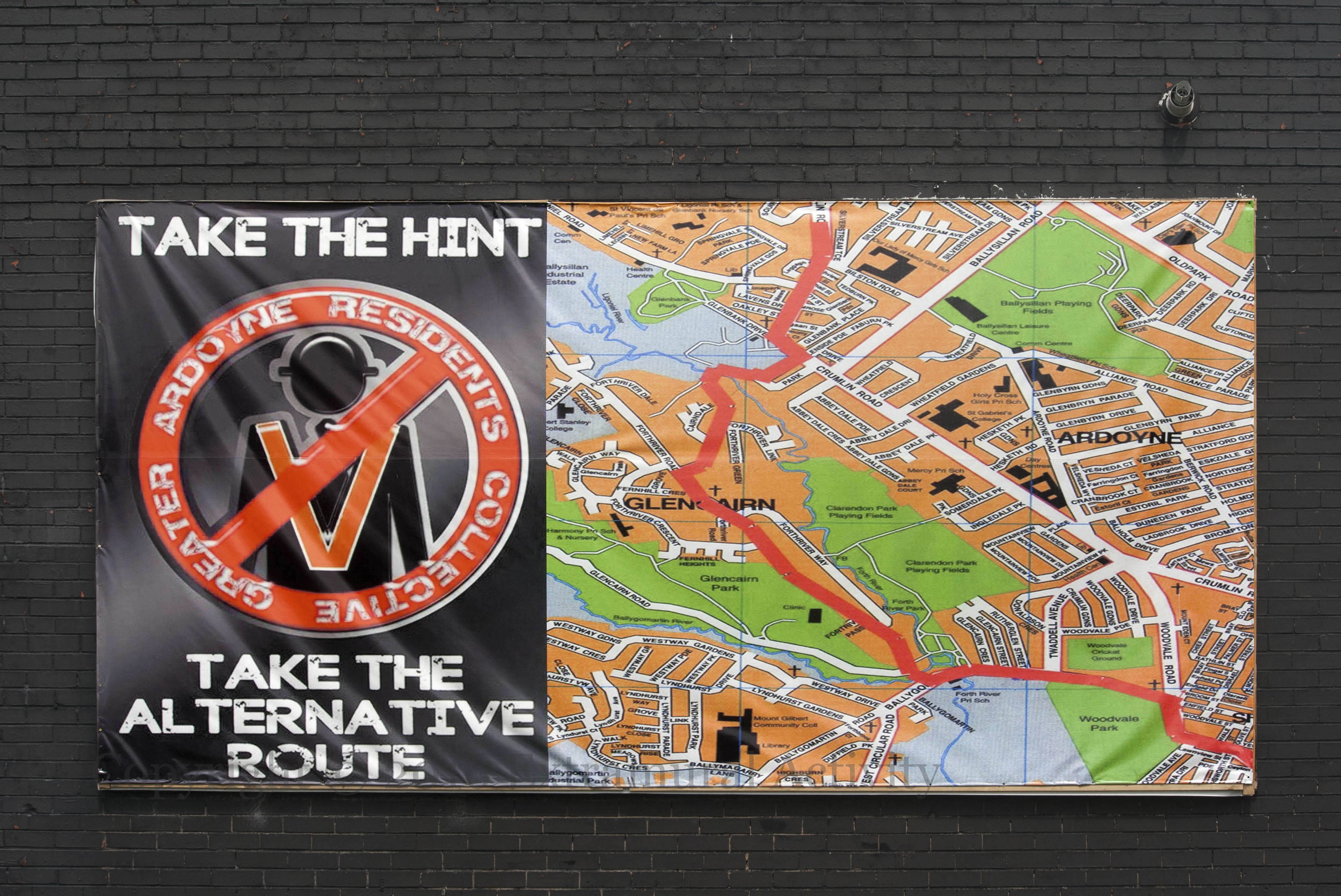
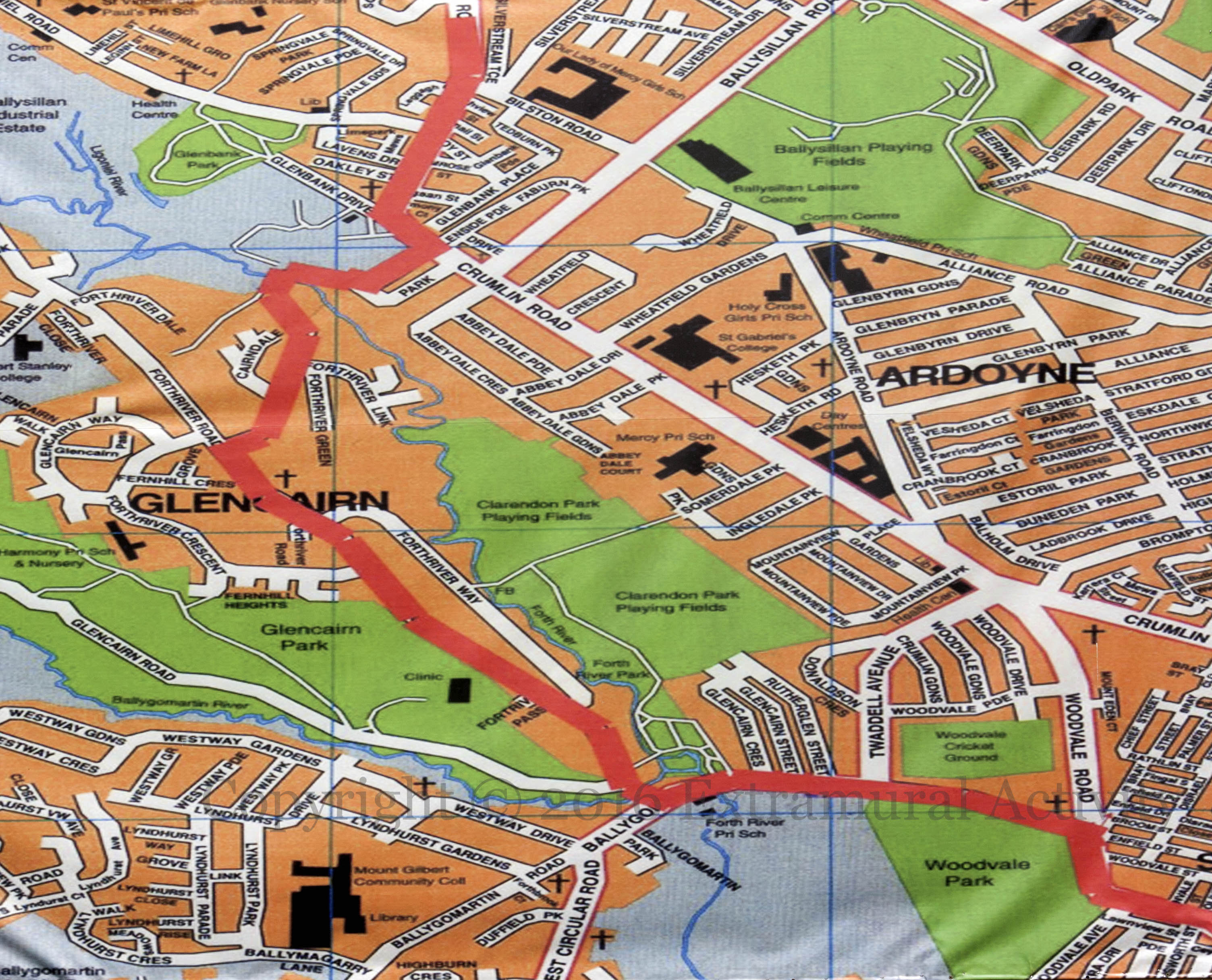
A deal to end the standoff at Twaddell Avenue, where an Orange Order parade was stopped in 2013, fell though a few days before the proposed July 1st march date (BelTel). The GARC (Greater Ardoyne Residents Collective) tarp shown above maps out an alternative route that would bypass the Ardoyne shops.

Replaces Putting The Boot In.

03696 2016-08-01 Take The Hint Map+

Click image to enlarge
Copyright © 2016 Seosamh Mac Coılle
X03695 X03696 Ardoyne Avenue

Justice For Robert

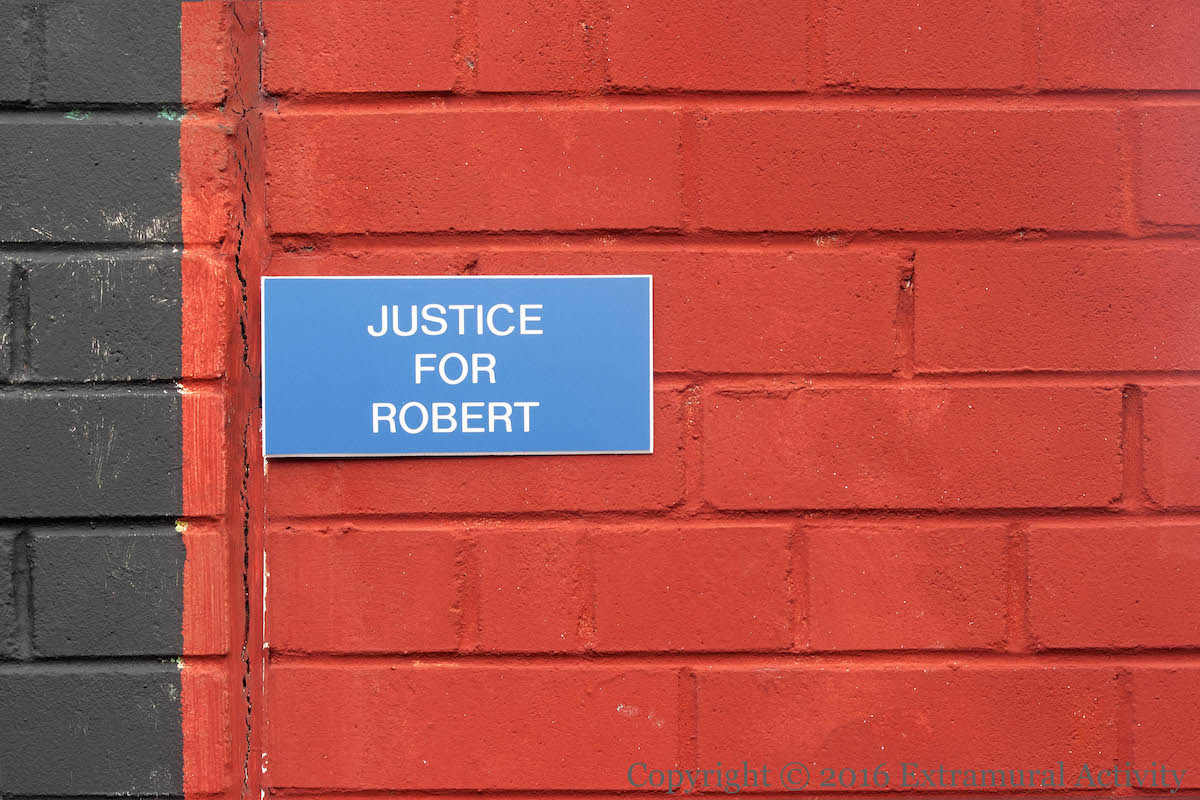
This small plaque is on Northumberland Way, on the ‘Dignity’ panel of the Amnesty mural and to the right of La Historia Es Nuestra. It is presumably a reference to the killing of Robert McCartney (WP) though by the time of this photograph, Jock Davison – whom the family believed had given the order for Robert’s stabbing – had already been shot dead (Bel Tel).

Click image to enlarge
Copyright © 2016 Seosamh Mac Coılle
X03799

Tír Na nÓg

03631 2016-07-05 Tir na nOg+

In the myths of the Tuatha Dé Danann, the Fıan Oısín falls in love with Nıamh from the Land Of Youth, but after three years — which is 300 human years — he yearns to return to Ireland. She gives him a magic horse that will preserve his youth while he remains on it. But he falls from it and dies of old age.

Click image to enlarge
Copyright © 2016 Seosamh Mac Coılle
X03631 central drive, Derry/Doıre