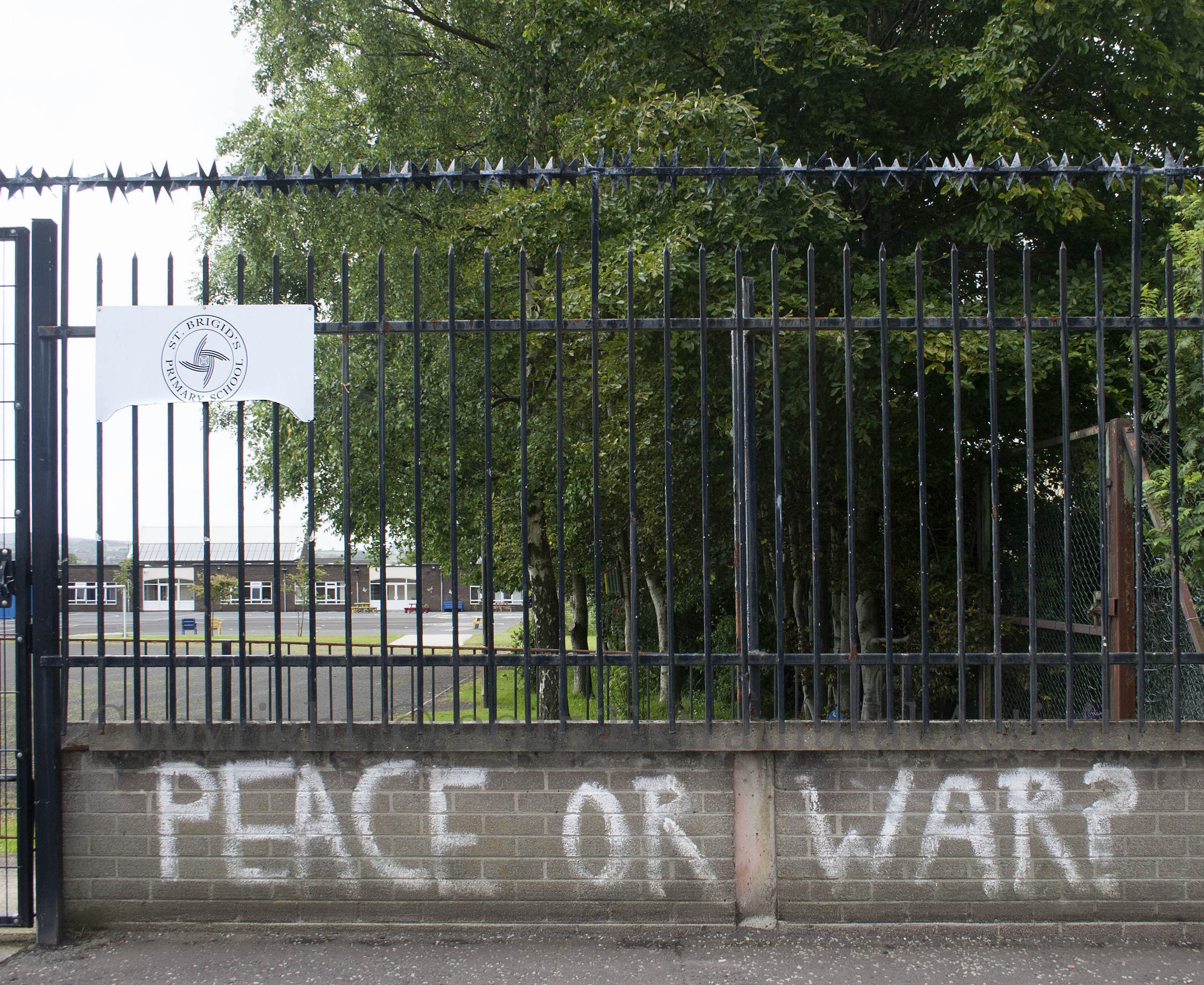
More vintage graffiti, this time in Derry, dating back at least to 2001. It might come from 2001: after the 1998 Good Friday Agreement and its implementation, the IRA moved toward decommissioning its weapons, beginning to do so in October 2001.
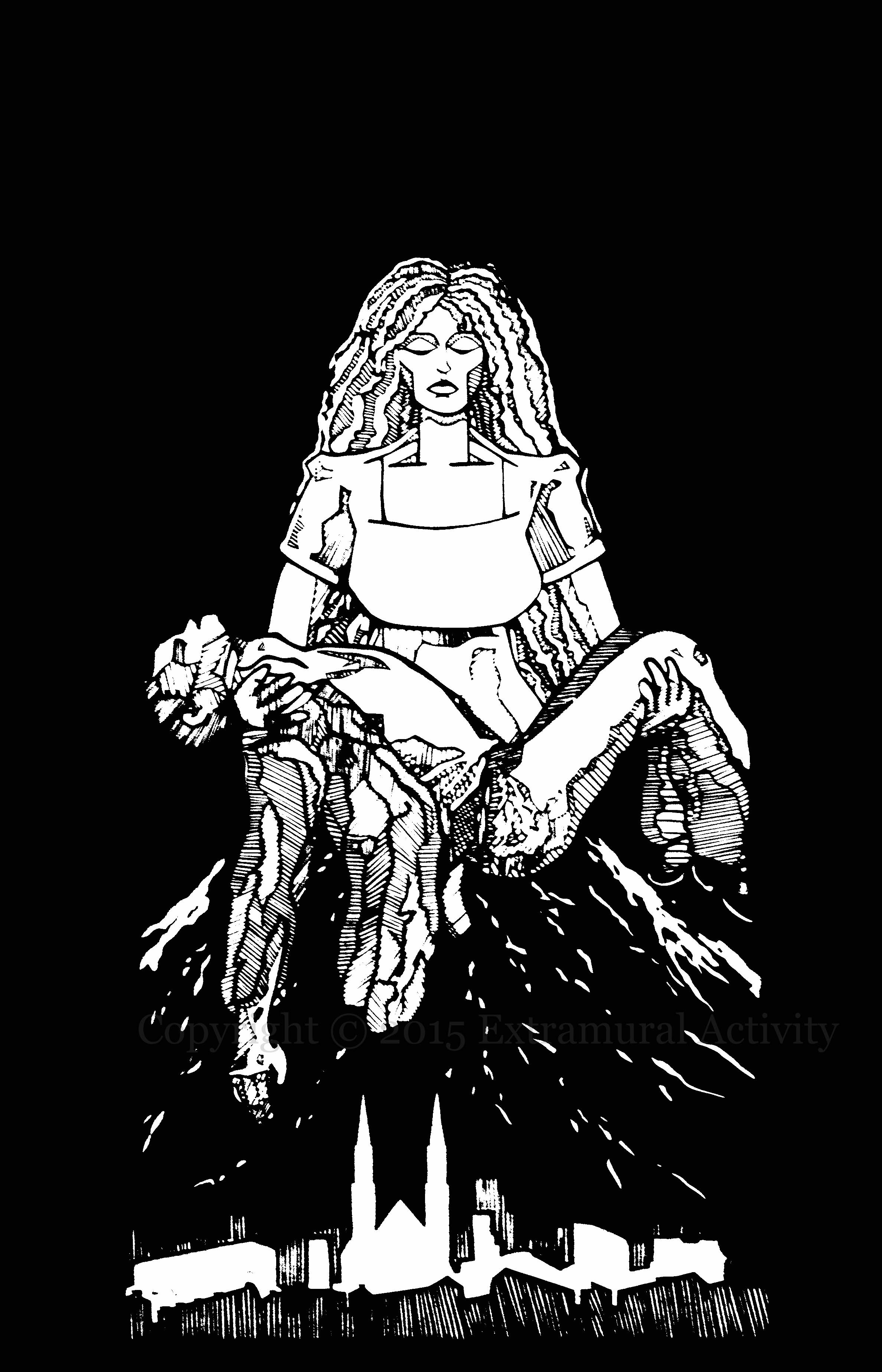
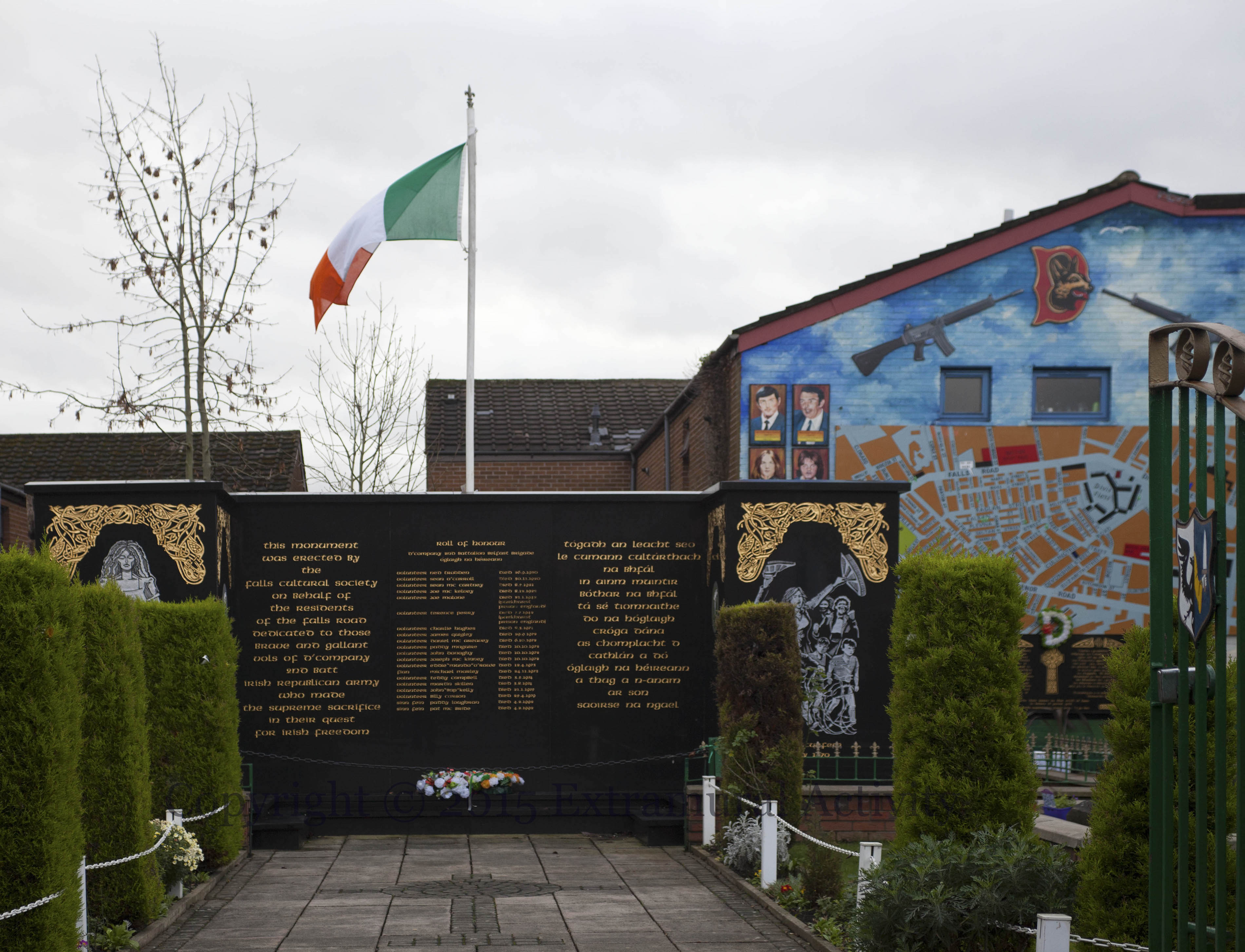
The two images featured today are of carved panels in the Falls Garden Of Remembrance (with the gold-plated surround removed). The garden commemorates fallen members of (IRA) D company but the panels suggest a wider appreciation of lower Falls residents. The same is also true of the mural in the background of the wide shot (third image, below), for which see Cry “Havoc”.
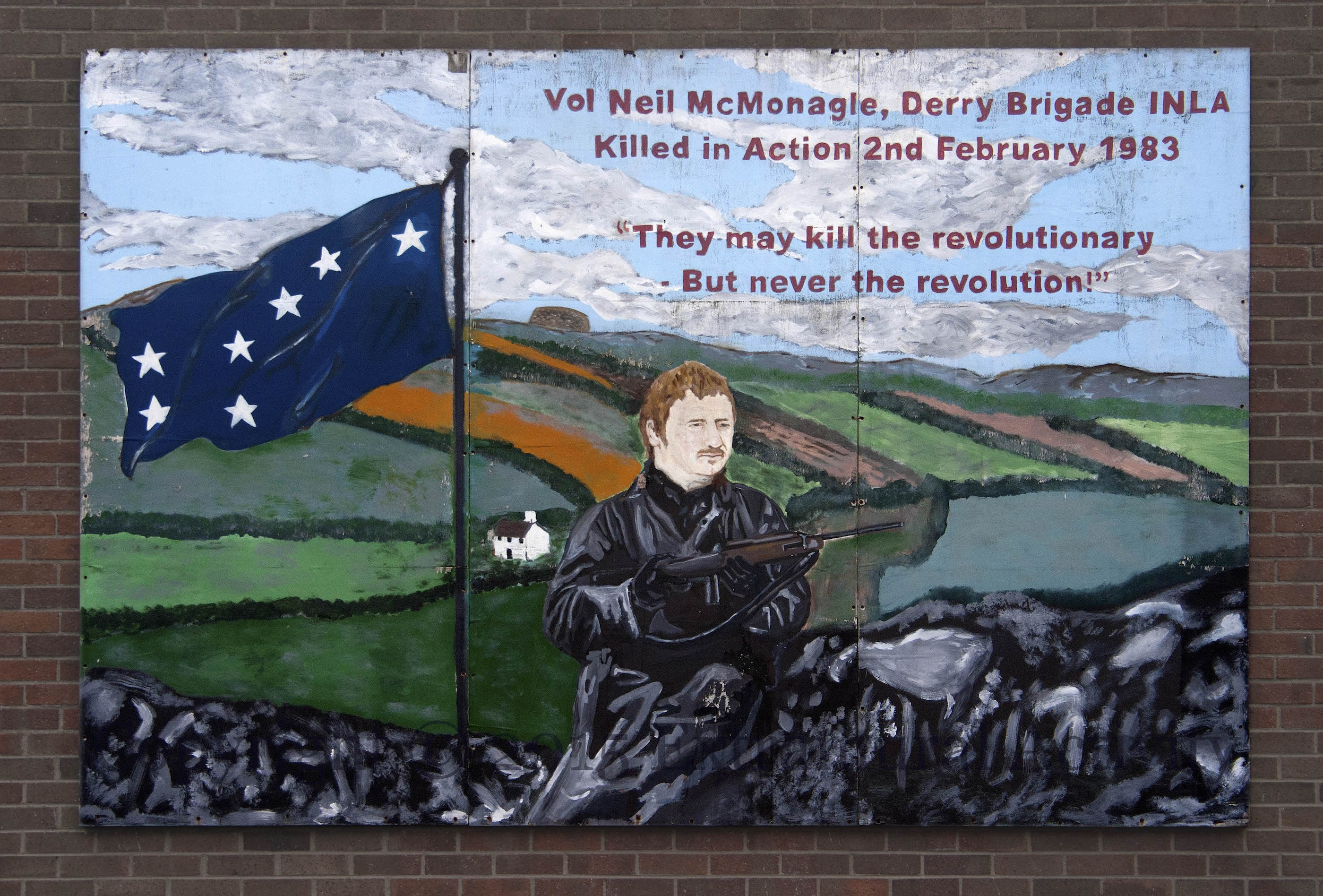
This painted board (shown above) to INLA volunteer Neil McMonagle is in Leafair Park, Derry, close to the spot where McMonagle, aged 23, along with friend Liam Duffy, were shot by undercover British soldiers (specifically Sergeant Paul Oram of 14 Intelligence Company (WP)) on February 2, 1983. McMonagle died instantly while Duffy was wounded but survived. The official account alleged that both McMonagle and Duffy were armed; locals deny this. For an account of the killing and a tribute, see these obituaries from republican publications in 1983.
The board shows an armed McMonagle behind a stone wall with a Plough In The Stars flag with a blue background, with the view towards Buncrana (perhaps).
“Vol Neil McMonagle, Derry Brigade INLA. Killed in action 2nd February 1983. “They may kill the revolutionary but never the revolution.””
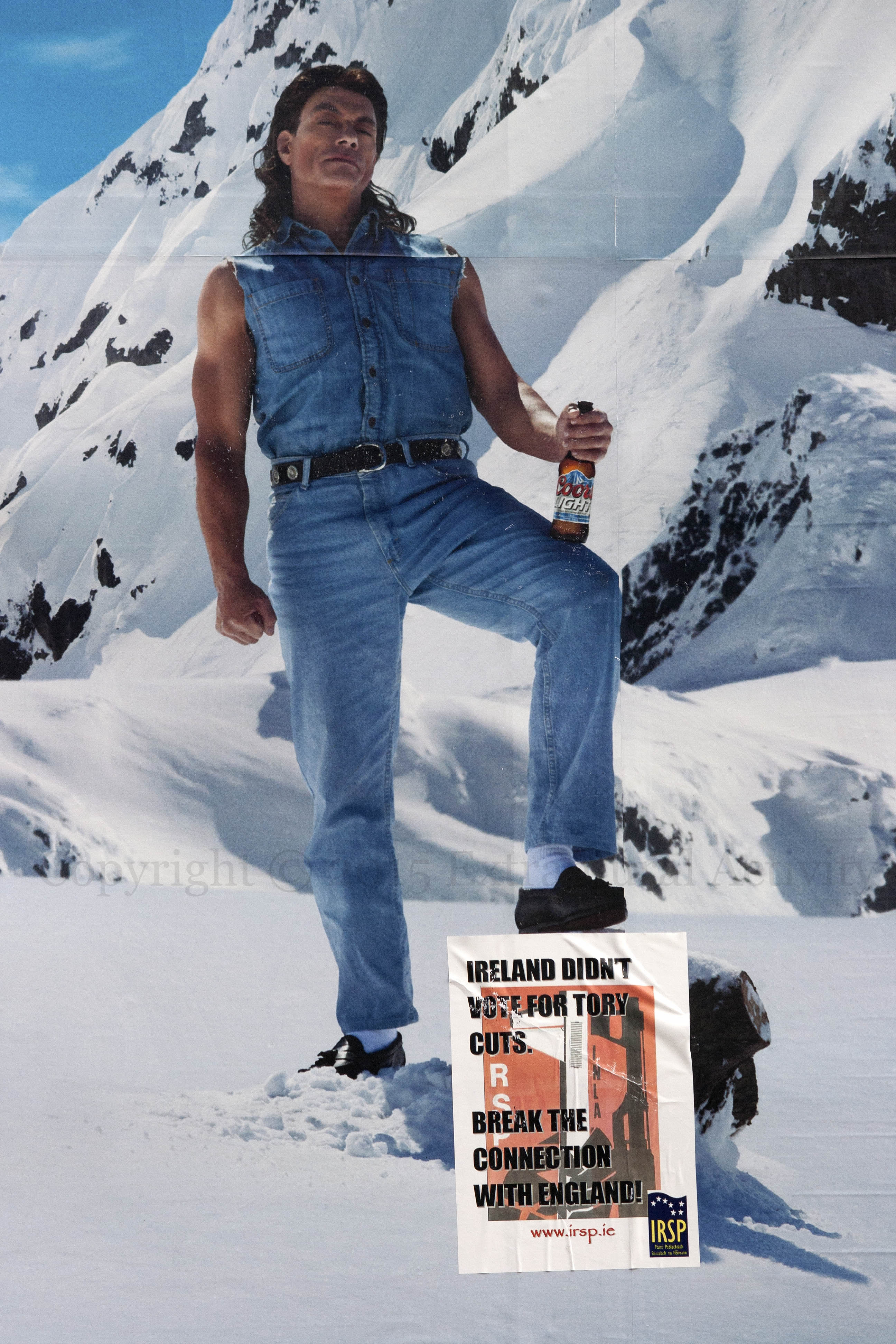
A Coors Light “Closer to Cold” ad, with Jean-Claude Van Damme on a snowy mountain in jeans and loafers with his foot on a snowy tree-stump, is co-opted by the IRSP: “Ireland didn’t vote for Tory cuts — Break the connection with England!”
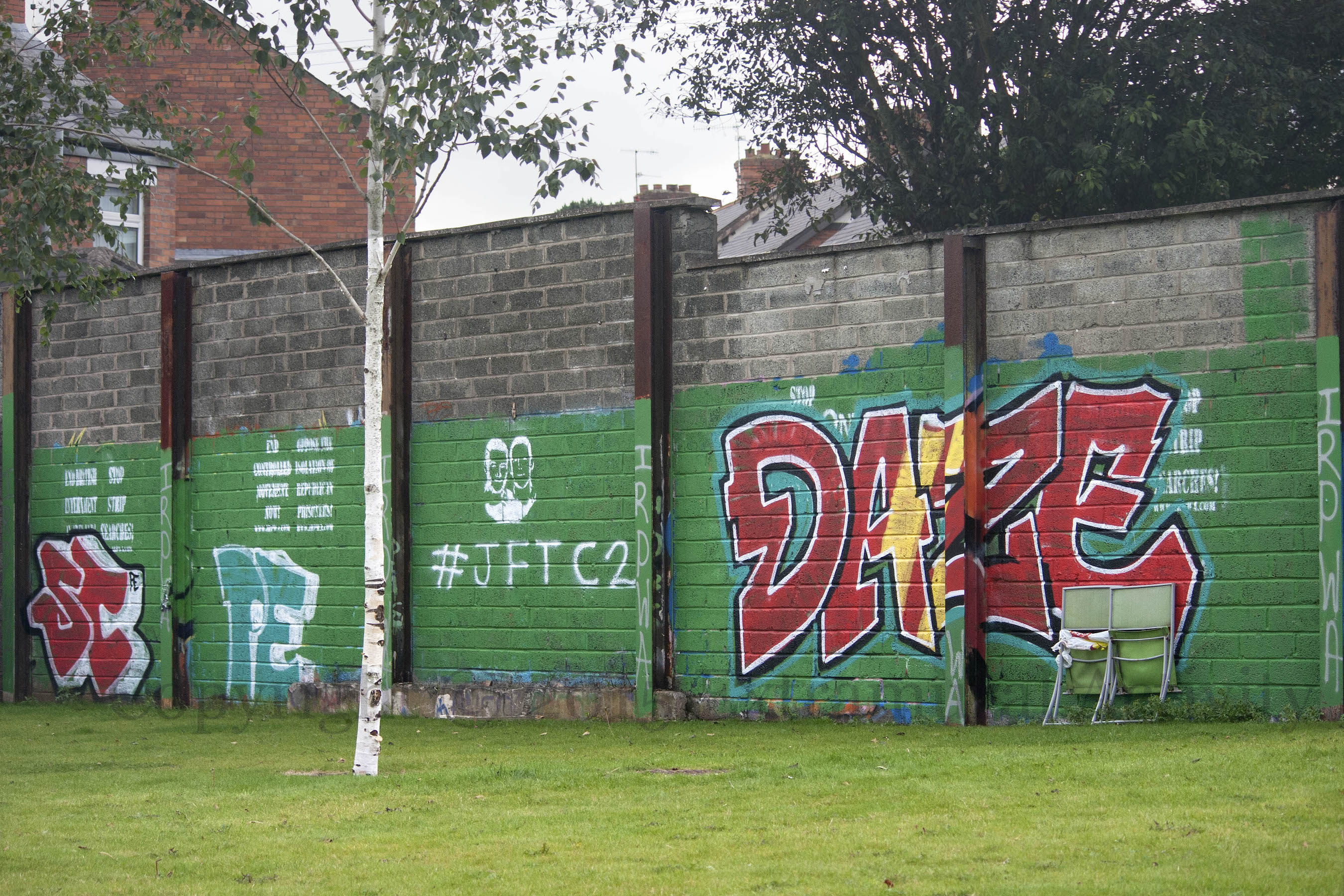
This is the middle wall on the site of the former Andersonstown RUC station, which has undergone three changes in recent months. The longstanding Fıanna sunburst (see X00350) was painted over with IRPWA stencils (Stop strip searches, End Internment, Justice For The Craigavon 2) which in turn were largely covered with writing by DAZE (see the image below). Most recently, a large Fıanna banner, shown above, has been placed over the wall.
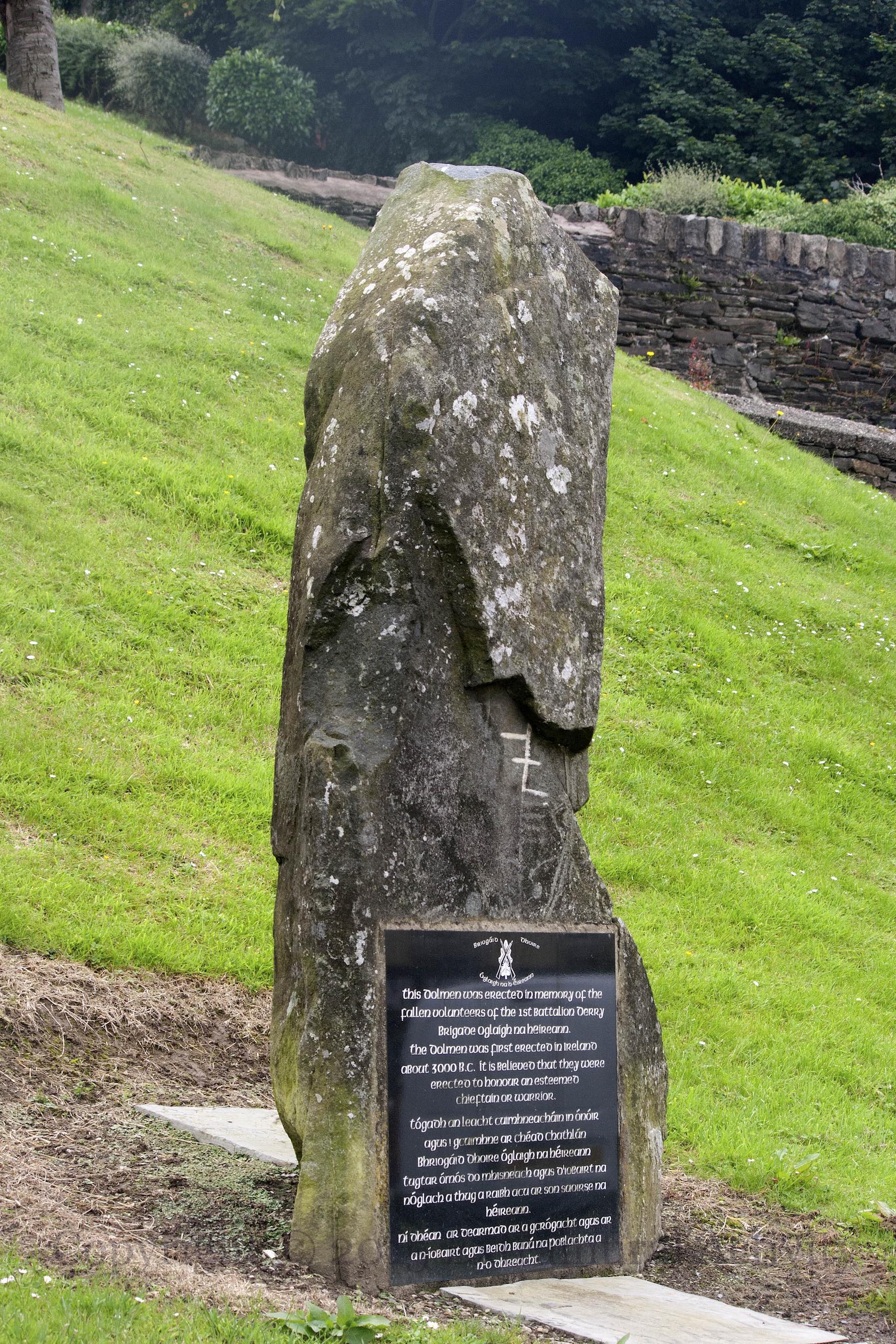
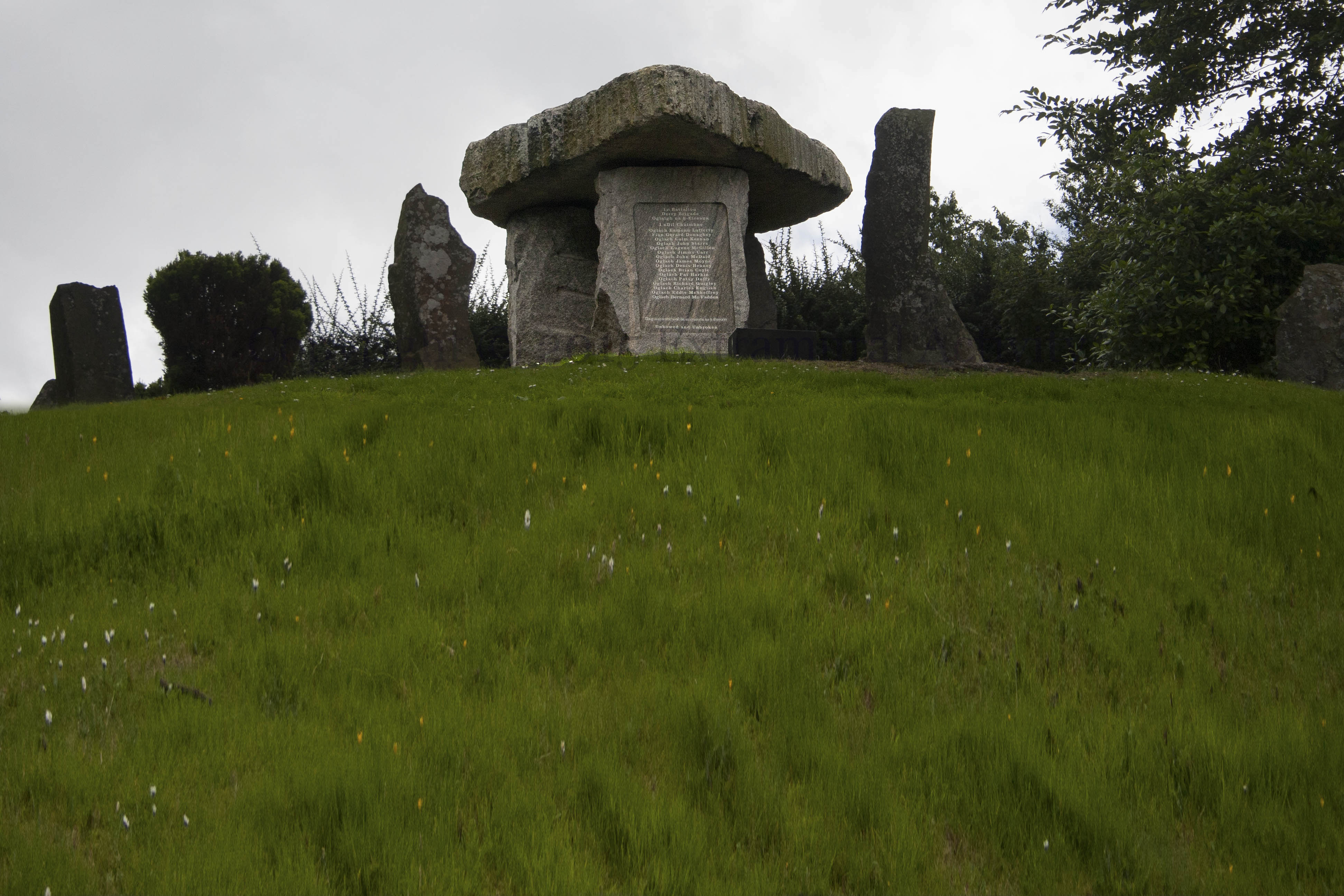
The Provisional IRA emerged from a split in the IRA in the wake of sectarian unrest in 1969. The Derry battalion became the Derry Brigade (An Brıogáıd Dhoıre) in 1972 when the number of people wishing to become volunteers swelled in the aftermath of Bloody Sunday. It is estimated that 1,000 Derry Catholics (2% of the population) were imprisoned for IRA activities in the 70s and 80s. (WP) The image above shows a mural with Cú Chulaınn, an oak leaf with crossed rifles, and a lily. In the centre is a board commemorating volunteers from the 1st battalion — an identical board can be found on Westland Street; see Spirit Of Freedom – and below are a commemorative standing stone and dolmen a short distance away.
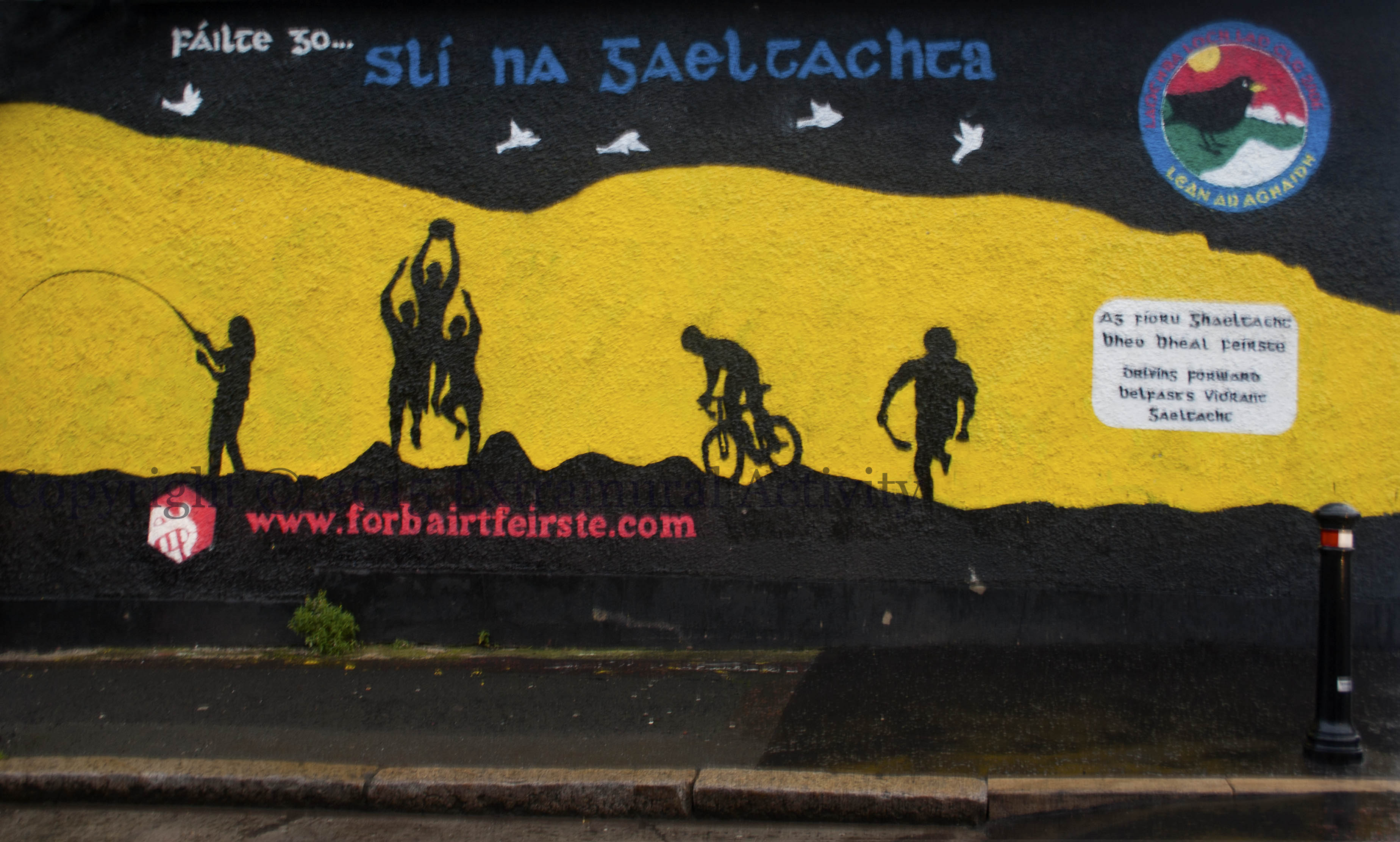
Slí Na Gaeltachta (The Gaeltacht Way) is a 2.5-mile trail of twenty-six “art and heritage” stops from the city centre to the Whiterock Road in west Belfast. A gaeltacht is an Irish-speaking region.
See previously: Onwards – memorial mural to Clive Dutton, author of the Dutton Report calling for the regeneration of west Belfast by (in part) developing its Irish-language identity.
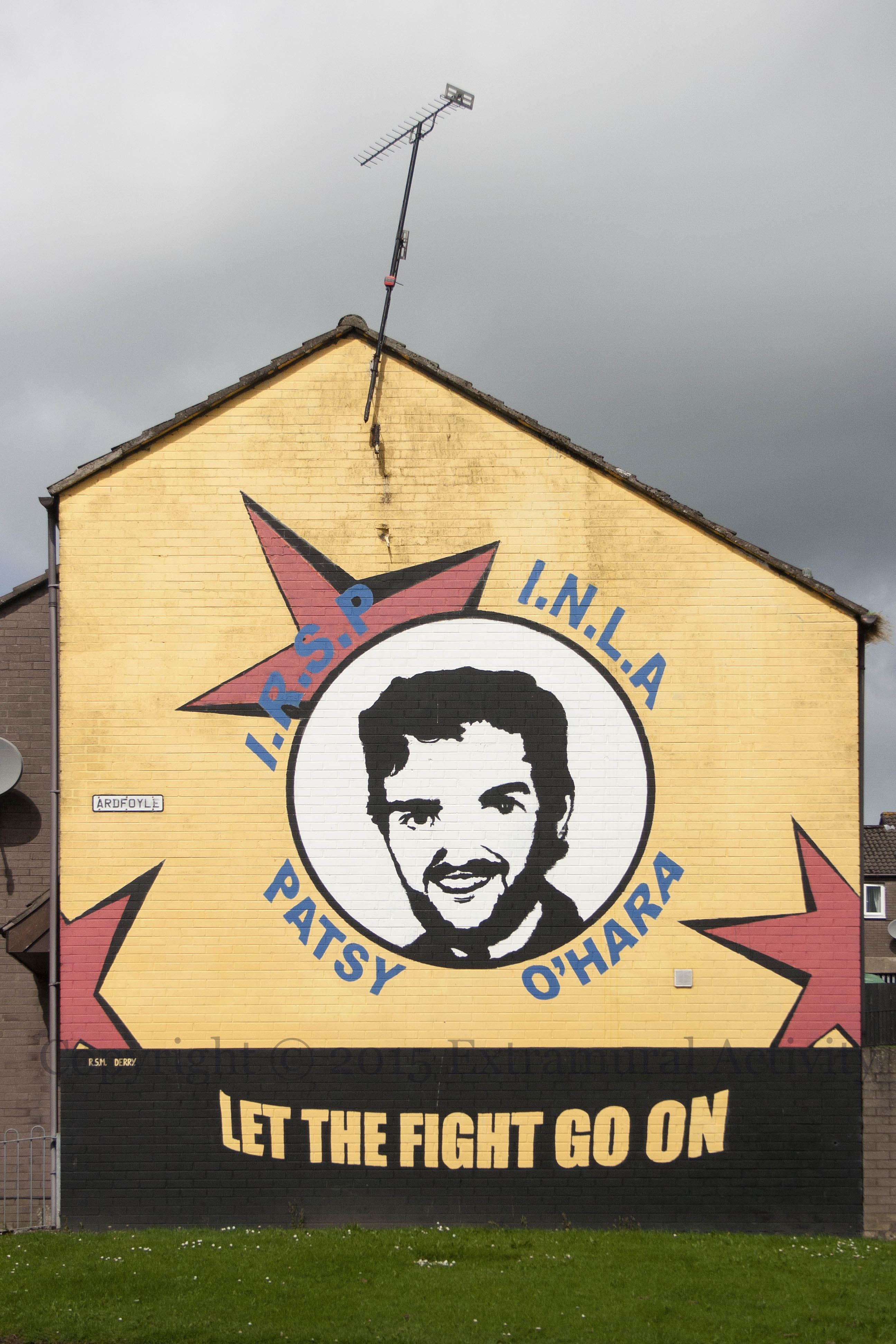
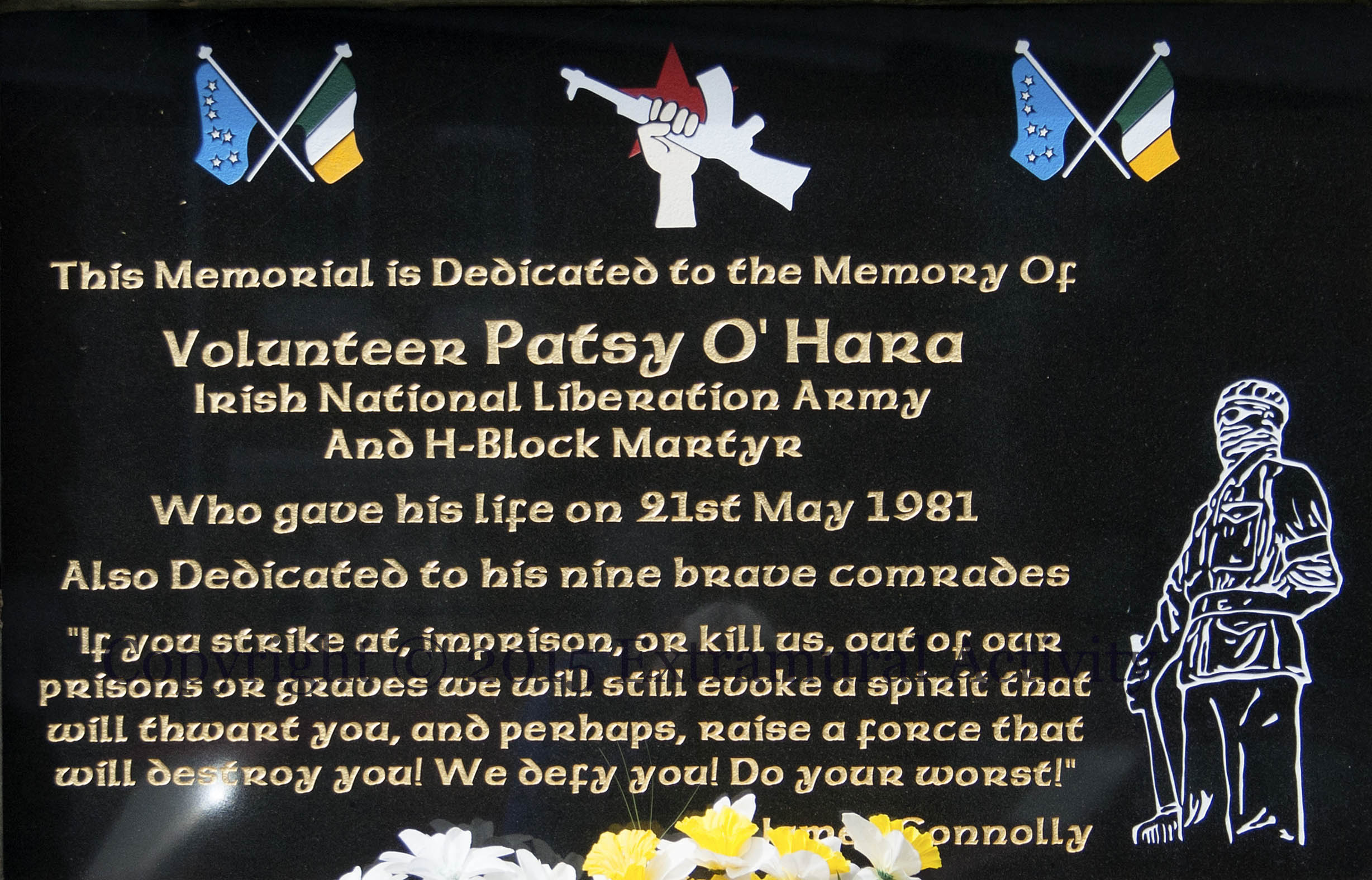
Patsy O’Hara mural and (out of shot to the left but shown in close-up below) memorial stone: This memorial is dedicated to the memory of Volunteer Patsy O’Hara, Irish National Liberation Army and H-Block martyr, who gave his life on 21st May 1981. Also dedicated to his nine brave comrades. “If you strike at, imprison, or kill us, out of our prisons or graves we will still evoke a spirit that will thwart you, and perhaps, raise a force that will destroy you! We defy you! Do your worst!” – James Connolly
The masthead of the 1916 proclamation declaring a “Provisional Government of the Irish Republic” to the “People of Ireland” is faithfully reproduced in this éırígí stencil, along with busts of Padraıg Pearse and Tom Clarke. Pearse, Clarke, and the other signatories will likely be familiar faces in the months leading up to Easter 2016, which is at the end of March, and the anniversary of the date itself, April 24th, 1916.
See also Thursday’s post featuring a fly-paper reproduction of the 1916 Proclamation: Brotherhoods.
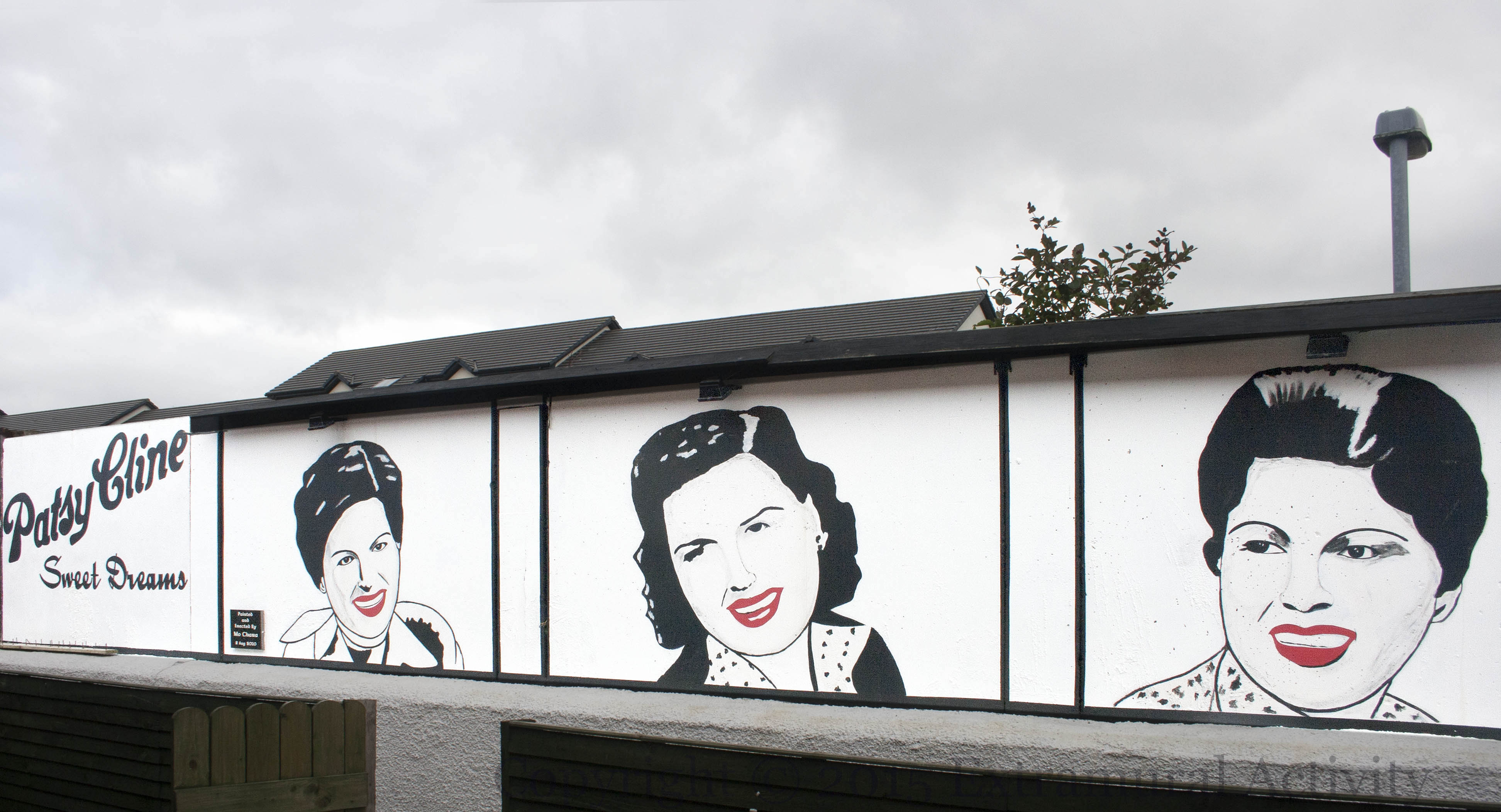
Gerard ‘Mo Chara’ Kelly painted these three images of Patsy Cline in the back garden of a Springhill neighbour. Cline died in 1963 at age 30; the three panels show different stages of her short career: the first shows her in cowboy gear, before turning to pop music, the second is based on a 1957 publicity shot for her new label, Decca, and the third shows her in 1961. Her cover of Don Gibson’s Sweet Dreams was released as a single in the wake of her death.
Here is video of Patsy singing Willie Nelson’s Crazy and, below that, Marsha Thornton doing the song from which today’s title comes:






 Extramural Activity