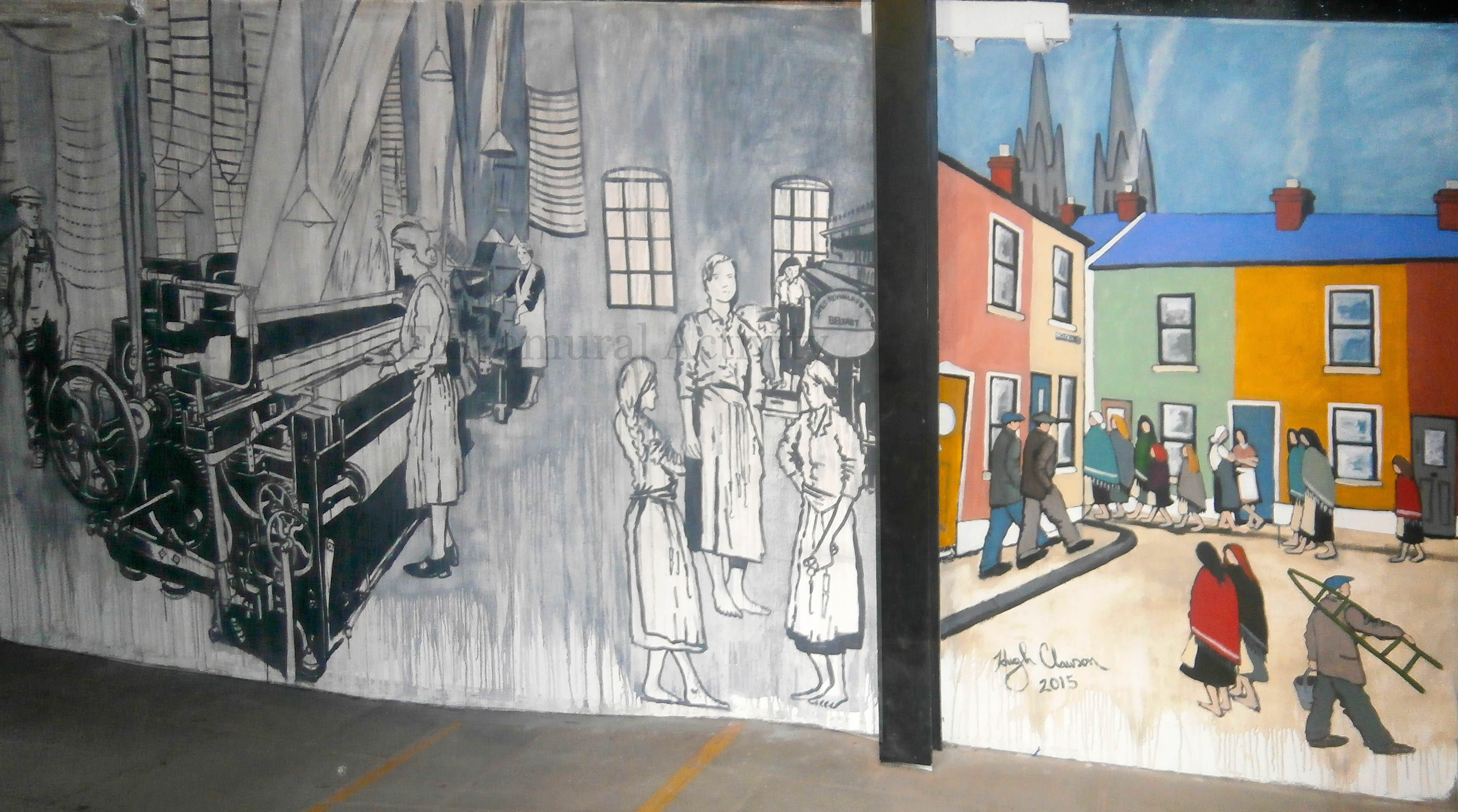
Work by artist Hugh Clawson (whose web presence is extremely modest) inside Conway Mill showing life in the mill and the lower Falls/Clonard area from years gone by. Painted directly onto an interior wall.
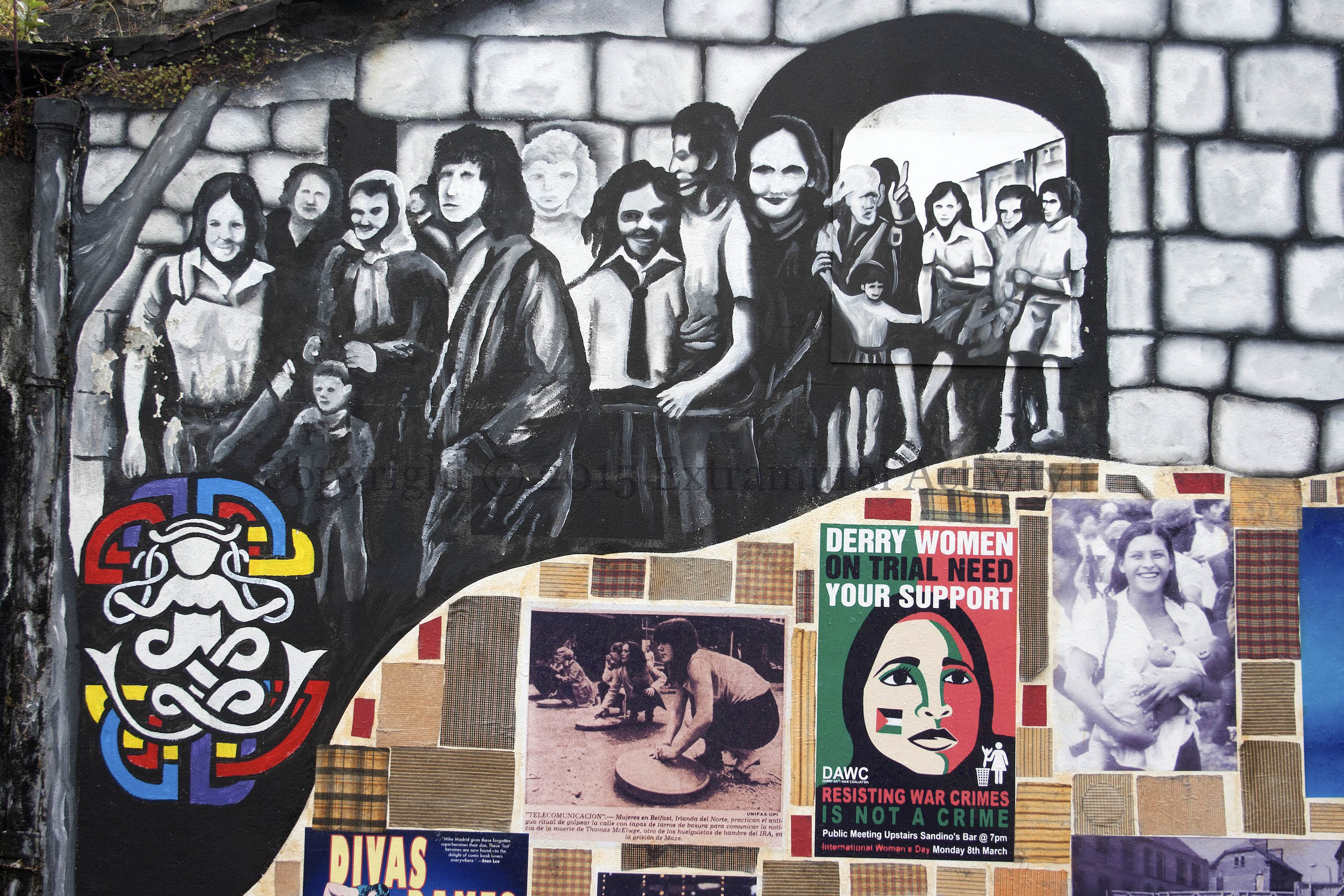
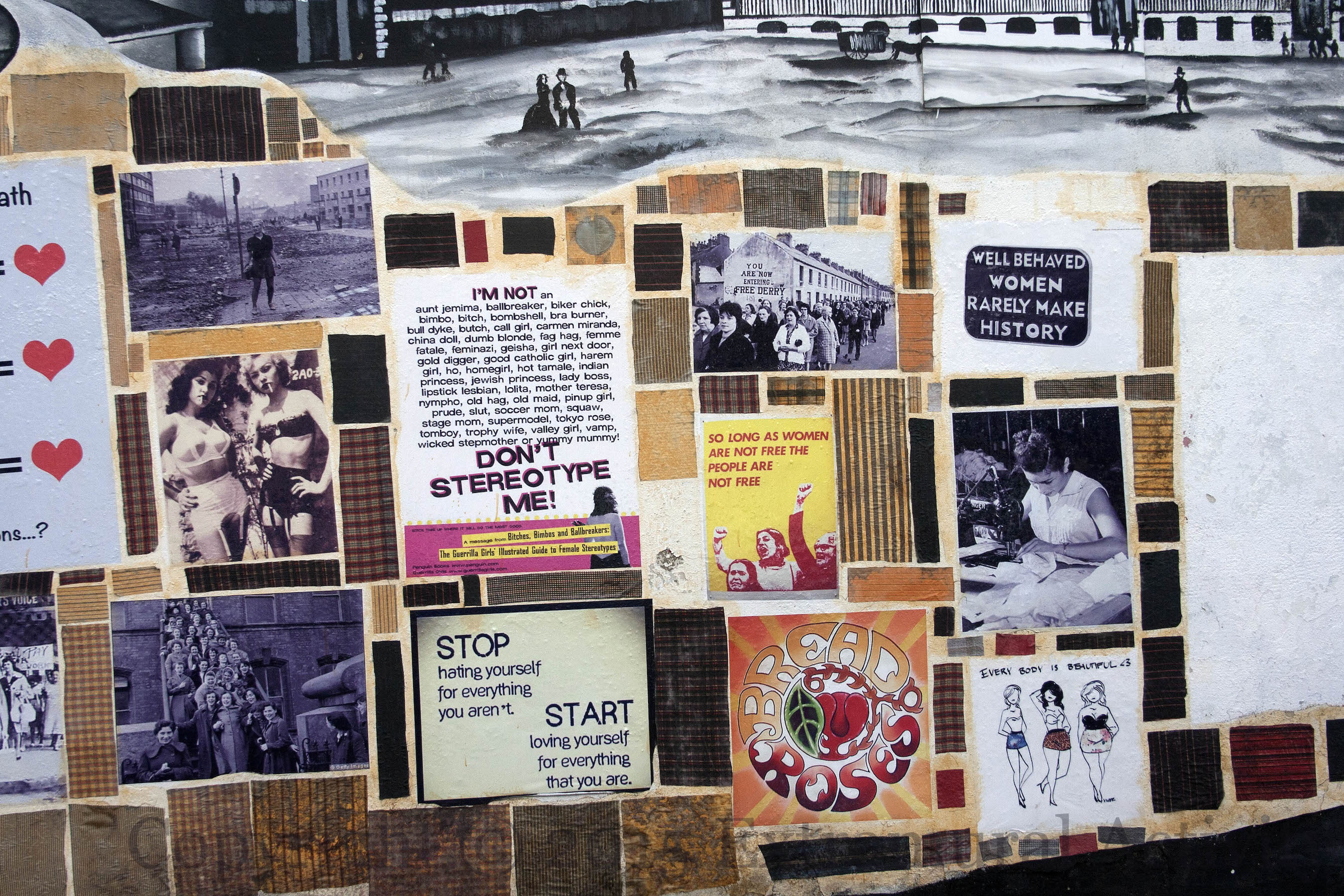
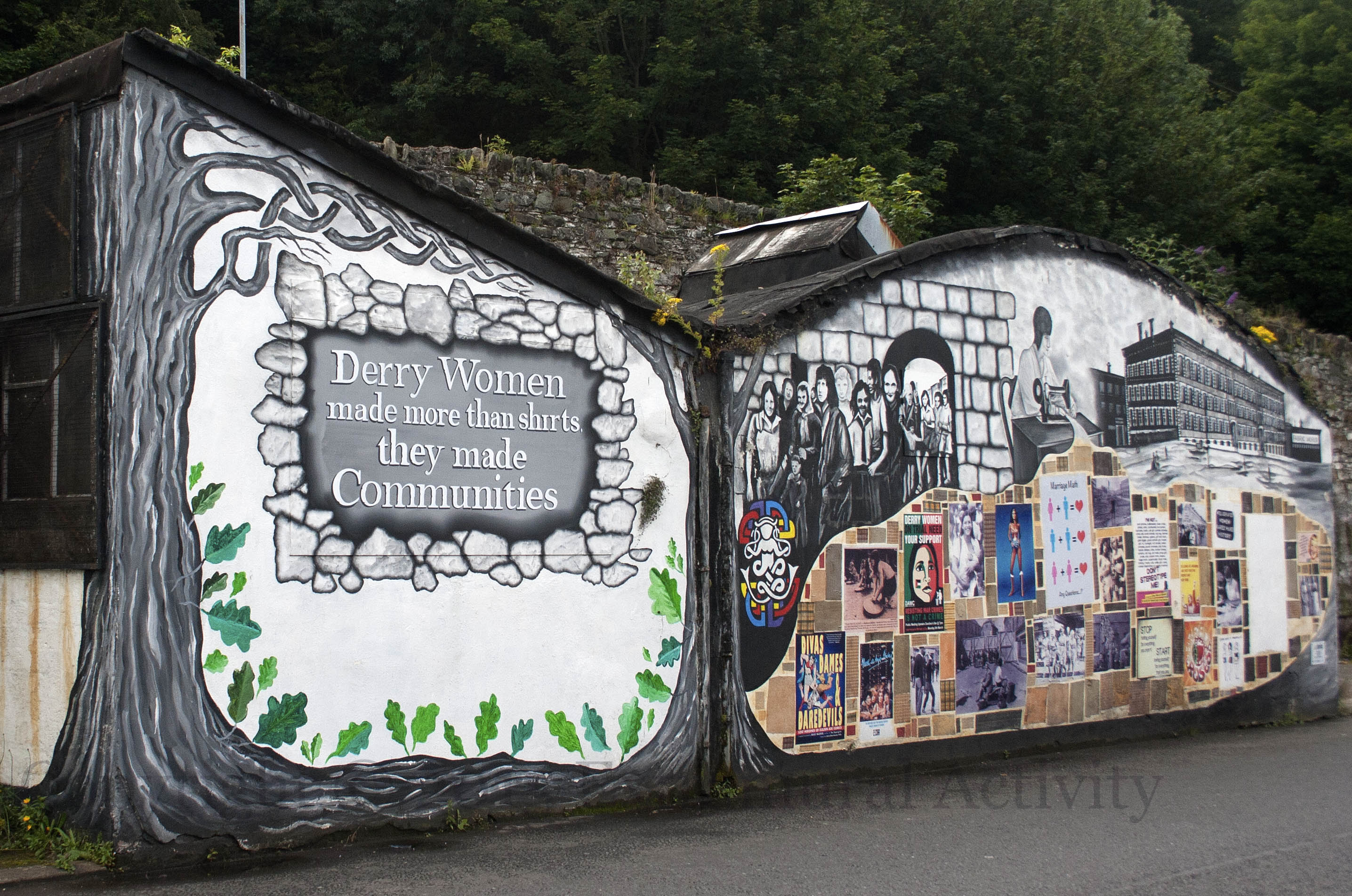
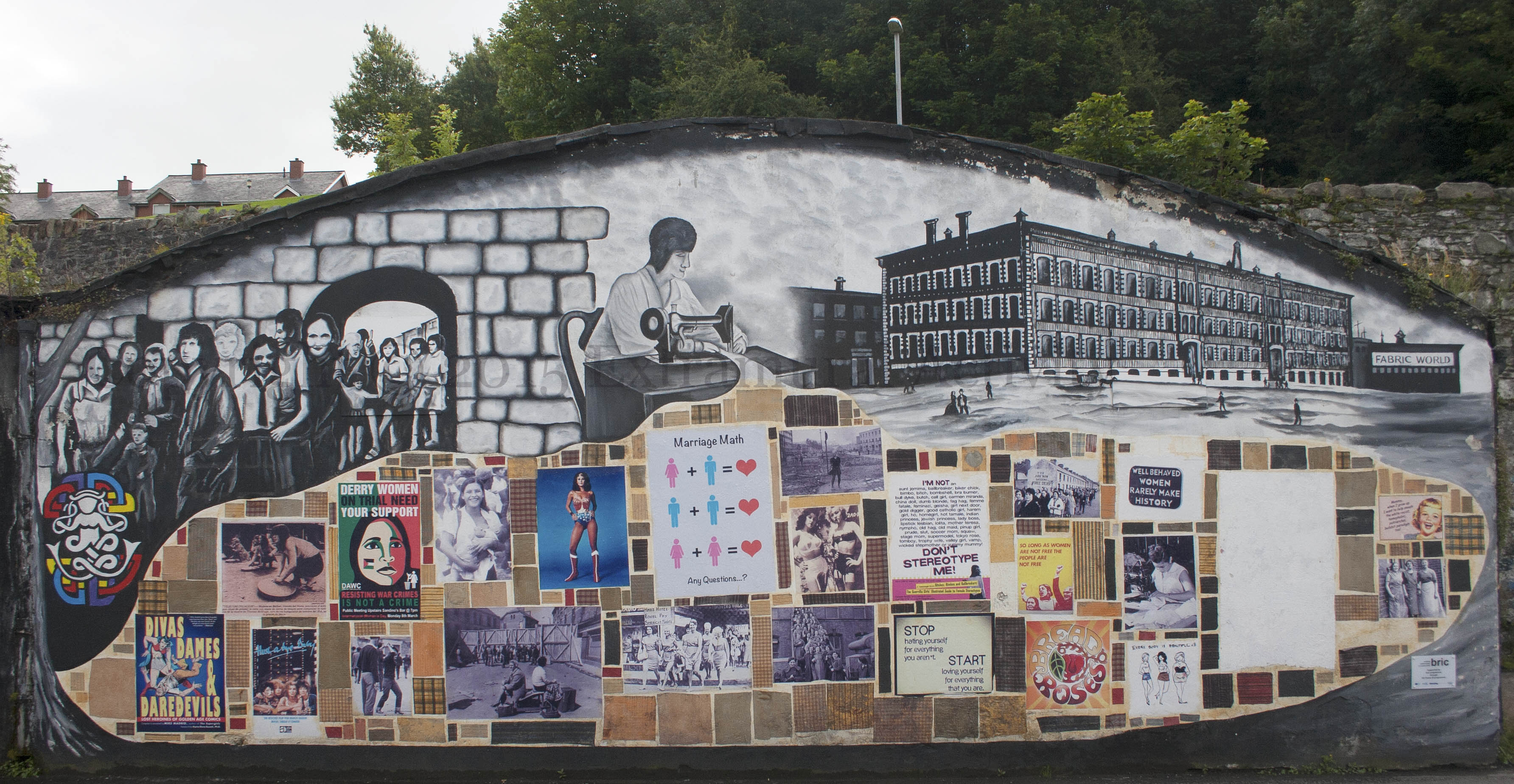
Historian Laurel Ulrich‘s 1976 phrase is one of a variety featured in this Derry mural celebrating the role of women both locally and world-wide. It includes images of local women banging bin lids, marching past the ‘Free Derry’ graffiti on 33 Lecky Road, and rioting; images of women striking and protesting; support for Palestine and gay rights; celebrations of femininity; and Wonder Woman. As the final image, below, shows, the tapestry of images and posters is being sewn by a woman at a sewing-machine in one of Derry’s large shirt- and collar-making factories. (For some history see these Derry Journal articles: one | two.) As the panel on the left-hand side notes, “Derry women made more than shirts; they made communities”.
On the left of the main panel, women march out of one of the city’s gates. The information sheet (which has fallen off) reads as follows: “On International Women’s Day, March 8th [1991, not 1981 as the hand-written addition suggests], the first ever women’s mural in Derry was unveiled on the back of Free Derry Wall. It was designed and painted by Patricia Hegarty and Joe Coyle, and helpers, both men and women. The mural takes its inspiration from a march in November 1968, after Minister for Home Affairs Bill Craig banned all civil rights marches in the walled city. Women factory workers walked out and spent the afternoon marching in and out of every gate in the city, deliberately “breaking the ban”. Men marched in from DuPont to join them, and a rally was held in the Diamond. In the mural you can find the faces of some of those marching on that historic day, as well as other women who played their part in the ongoing struggle for justice. Civil rights workers Bridget Bond and Women’s Aid refuge founder Cathy Harkin march alongside republicans such as Ethel Lynch, Bridget Sheils, Peggy Derry, prisoners’ rights activists Susie Coyle, and many others. You may find images of your granny, sister or aunt. The mural is dedicated to all those women whose energy and determination have changed their lives and the world about them.”
The board on FDC can be seen in Woods’s Seeing Is Believing?, plate 19.
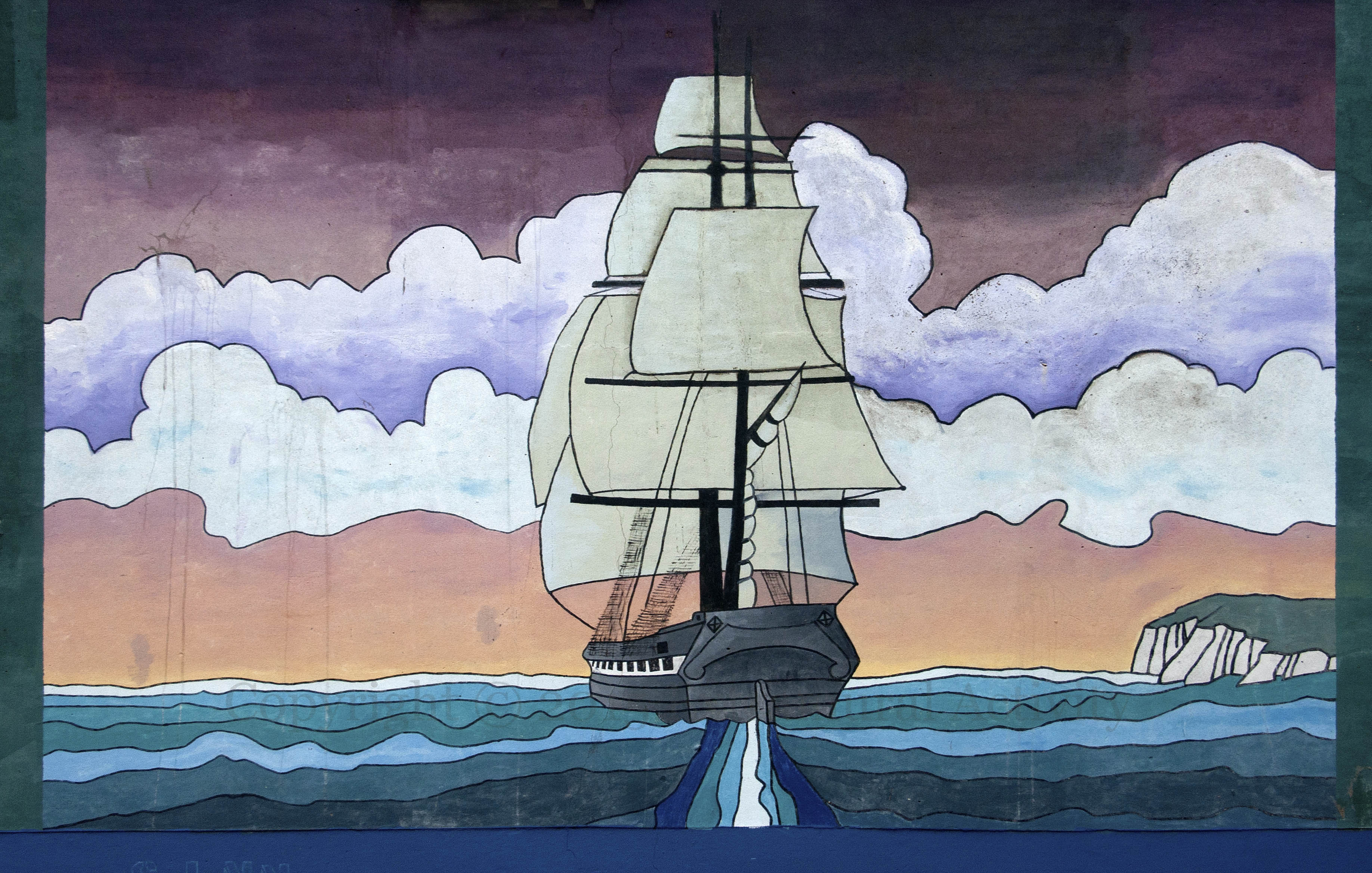
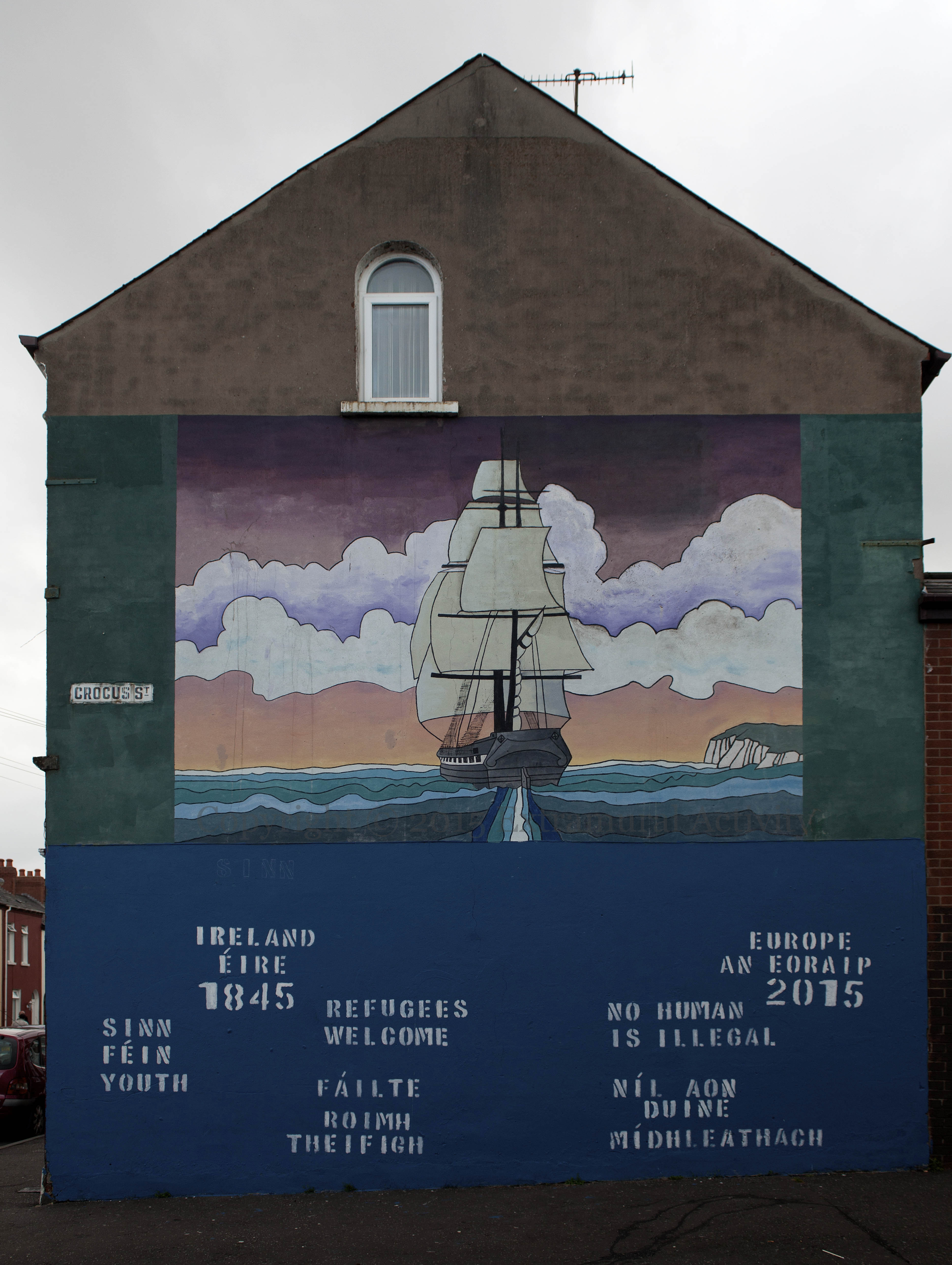
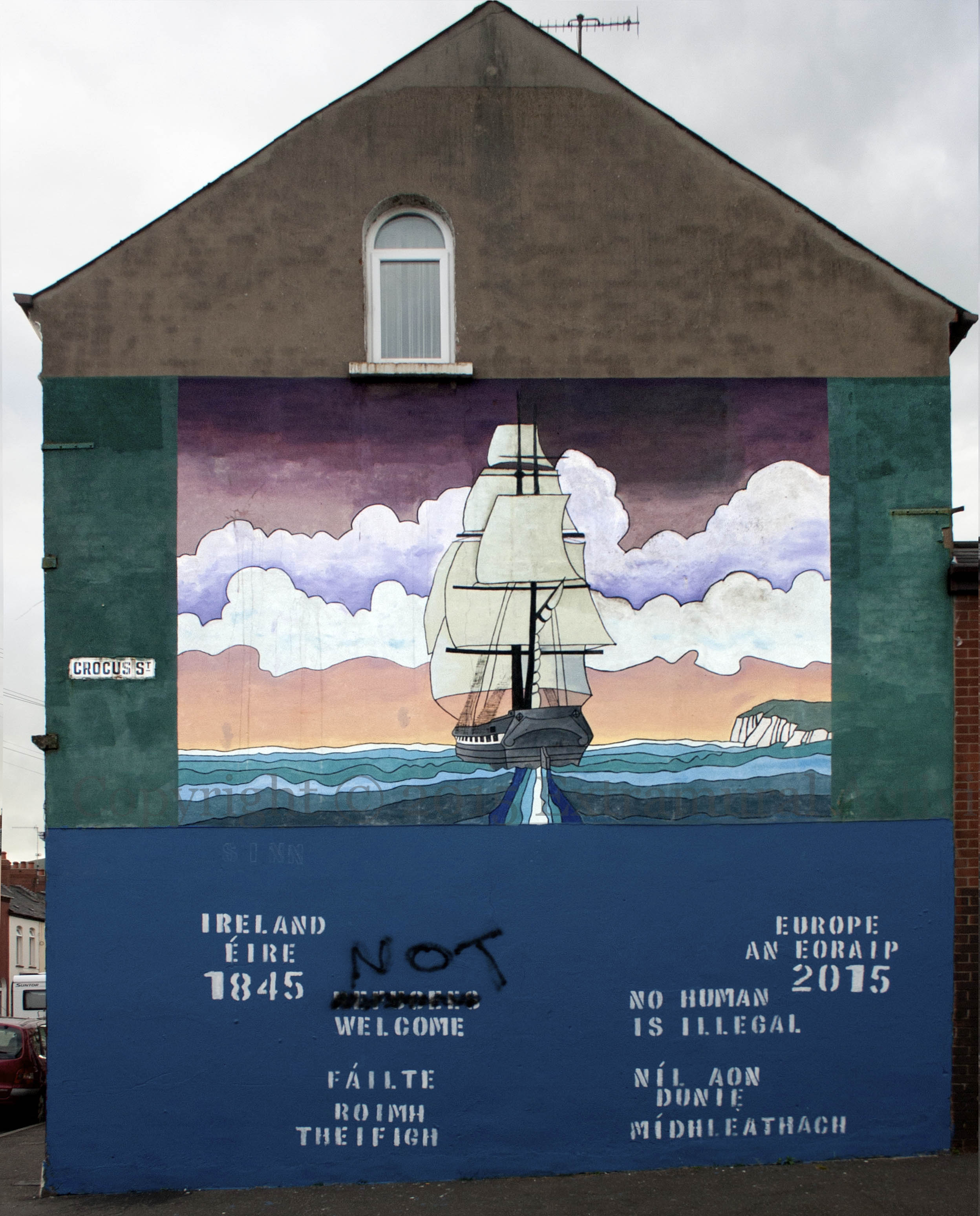
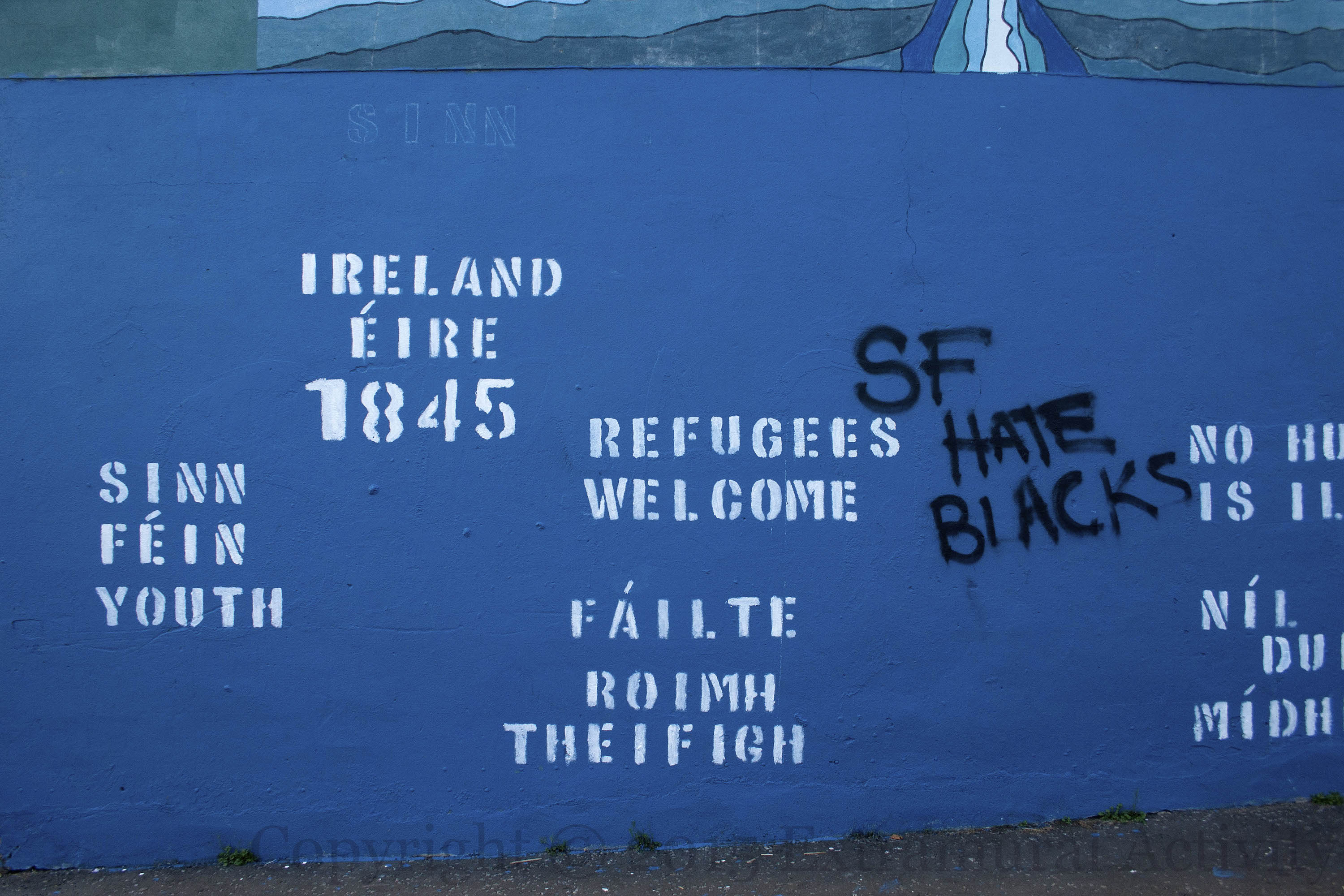
Incidents involving ships of African emigrants seeking refuge in Europe are so many that there is a separate Wikipedia page for them. In response to the crisis, an old mural in Crocus Street (see M01486) remembering the emigration of Irish to North America during the Great Hunger was repainted and the lower part (which had images of the Great Hunger) replaced by stencilling which makes reference to the 2015 situation: “Ireland/Éıre 1845 – Europe/An Eoraıp 2015”, “Refugees welcome – Fáılte roımh theıfıgh”, and “No human is illegal – Níl aon dunıe [duıne] mídhleathach”. It was immediately vandalized with a “not” (see the final image, below; Fb) but has now been repaired, along with the mis-spelling.
Update 2015-10-19: the mural has been graffitied with “SF hate blacks” – see the fourth image, below.
Paul “Maxi” McVeigh scored over 200 goals during his career at Donegal Celtic – “The Wee Hoops” – the team he played his entire career with before retiring at the end of the 2012-2013 season. (Sunday World) The club grounds, and the mural shown above and below, are at the top of the Suffolk Road in west Belfast.
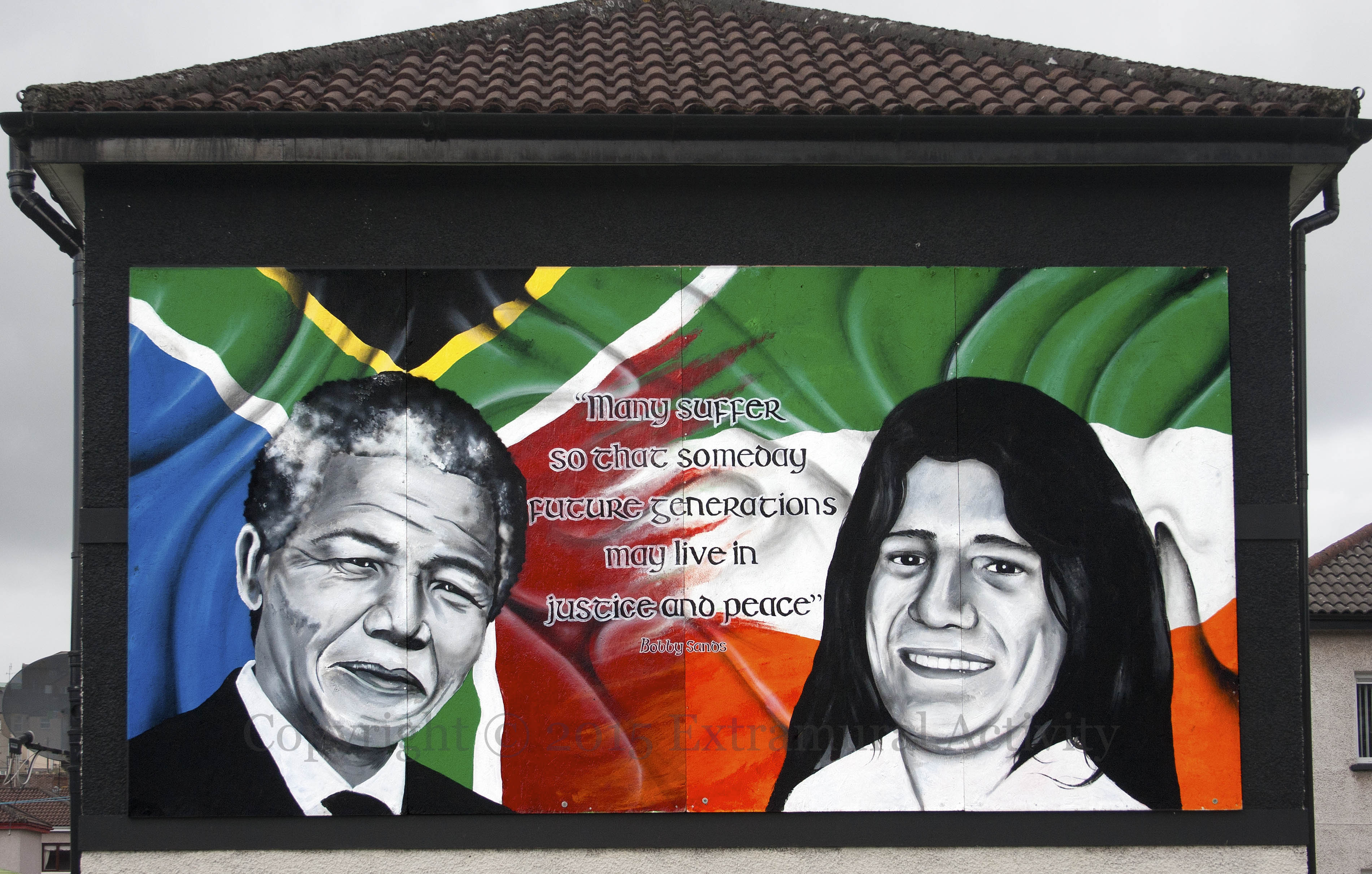
“Many suffer so that someday future generations may live in justice and peace.”
Portraits of Nelson Mandela and Bobby Sands are presented side by side, both smiling, in front of the flags of (post-apartheid) South Africa and the Republic of Ireland.
The wave of people seeking asylum from political strife in Europe continues.”Fáılte romhaıbh a chaırde” is Irish for “Welcome, friends” while “Qaxootiga soo Dhaweyn” is Somali for “Refugees welcome”. Somalis make up about 9% of the current wave of migrants from Africa and Syrians 33%. (Irish Times) 2,000 refugees are to be settled in Northern Ireland. (belfastlive) The yellow-on-black outline of parents and daughter running originates in the United States, used on ‘caution’ signs along highways near the US-Mexico border. For images of the mural’s launch on September 12th, see the WARN twitter feed.
Culture Night Belfast is on tonight (2015-09-18) and will include about 30 pieces of street art under the heading Hit The North. Above is a piece of London-/Derry/Doire street art by artists RTM and TDA representing (we think!) St. Brigid’s ‘Church of the Oak’ (Kildare) and the coming of Spring (after her feast day of February 1st).
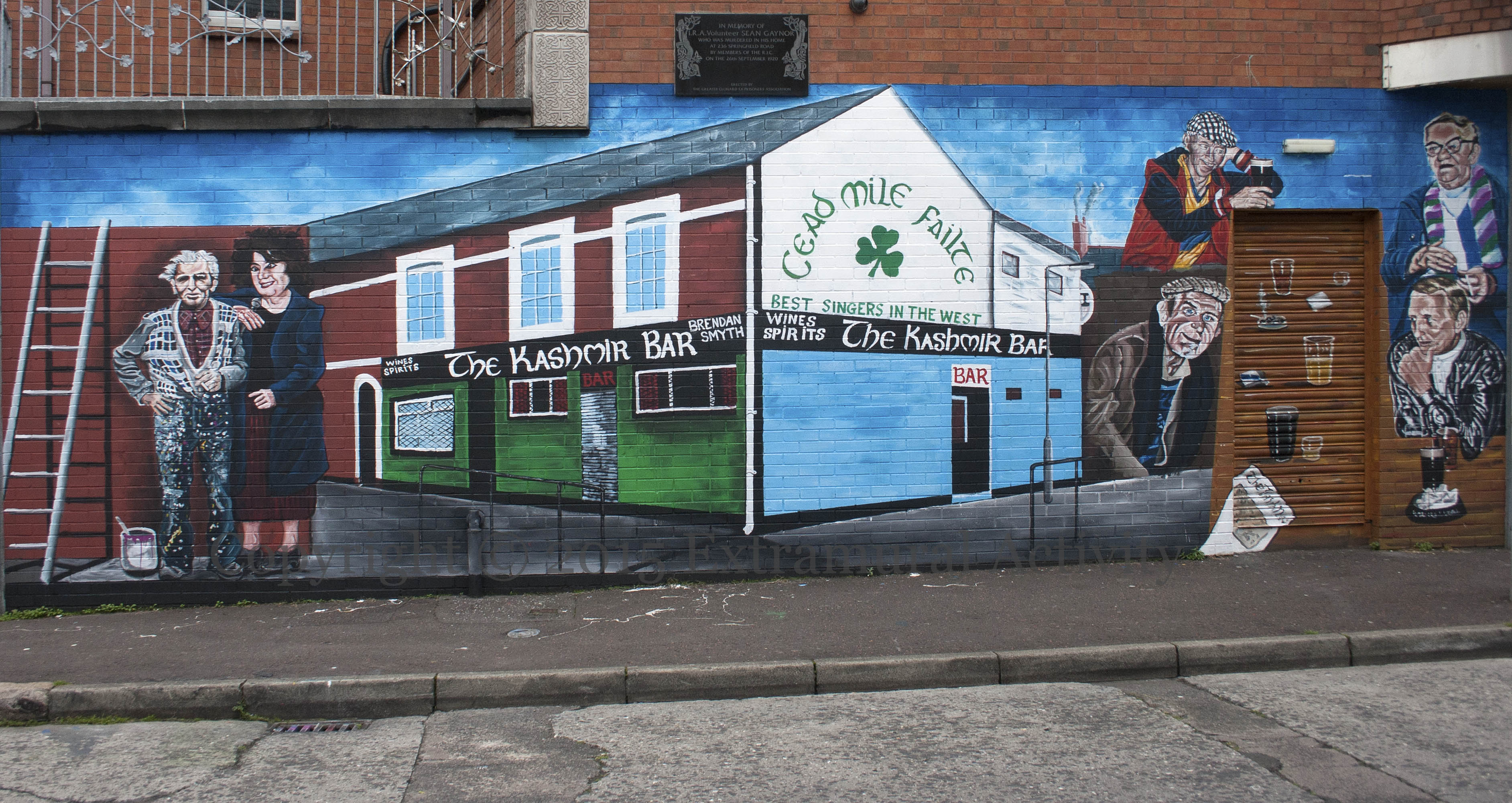
The Kashmir Bar on the Springfield Road gets a face-lift with a mural of the old Kashmir Bar, including the boast that it was home to the best singers in the west. A look at the Kashmir Bar Facebook page reveals that pool seems to be the foremost activity. For a photo of the old (green-fronted) bar, see D00283. (There is also a small image on the Belfast Forum.) If you can identify any of the locals pictured, please comment or e-mail.
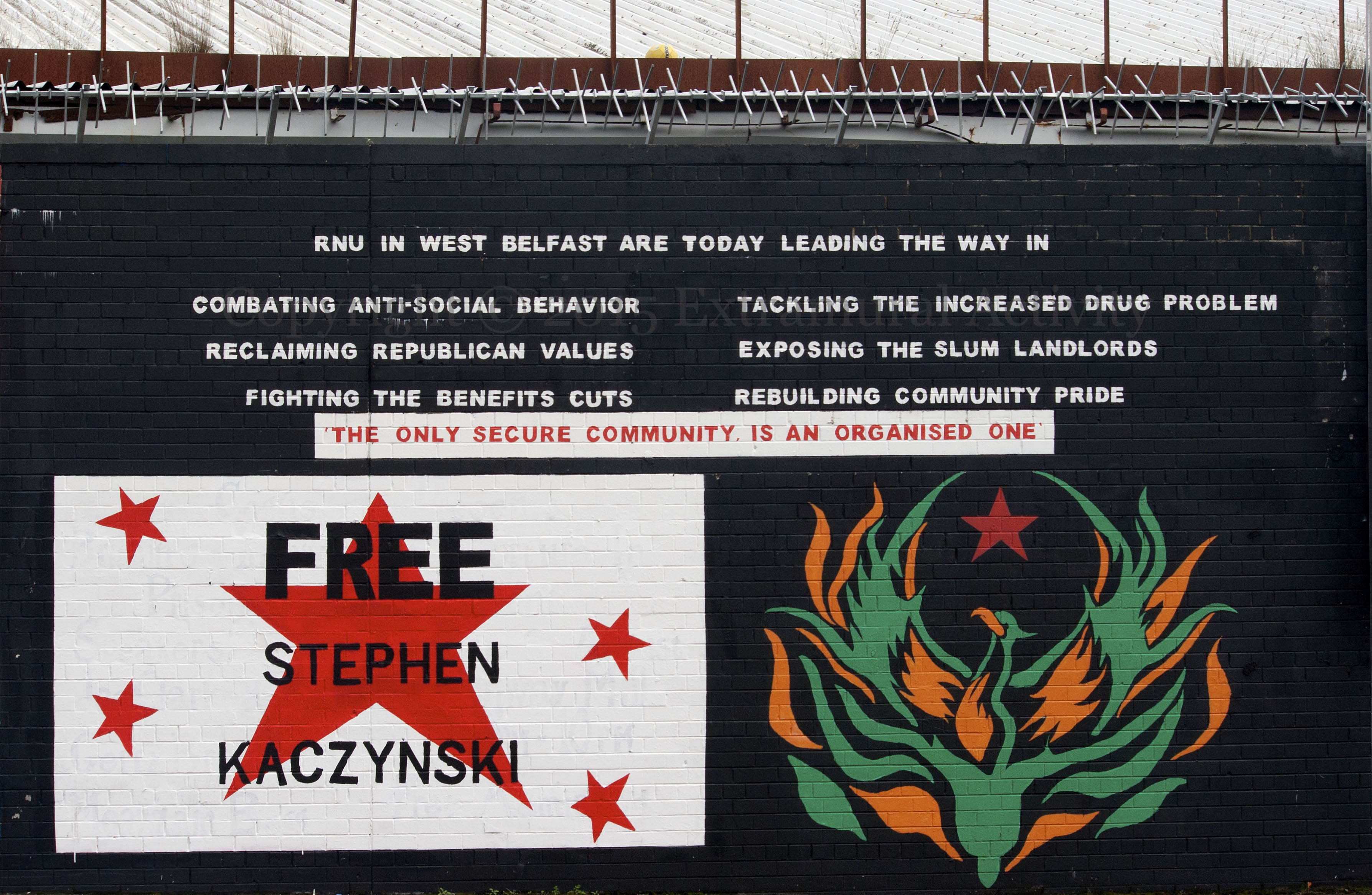
Stephen (or Stephan) “Steve” Kaczynski will go before a Turkish court on September 18th on charges of membership of the Marxist-Leninist ‘Revolutionary People’s Liberation Party-Front’ (DHKP-C). (WP) In April, members of the group took over a courtroom and held a state prosecutor hostage; when special forces stormed the building, the hostage and two of his captors died. (Independent) Kaczynski, a freelance journalist from Scotland, is alleged to be instrumental in financing the group. Alternatively, (according to various newspaper reports) he is an undercover agent of the Germans (Daily Sabah) or the British (Brian Shaw). He was on hunger-strike in protest at the conditions in Maltepe #3 from June 25th to August 12th.
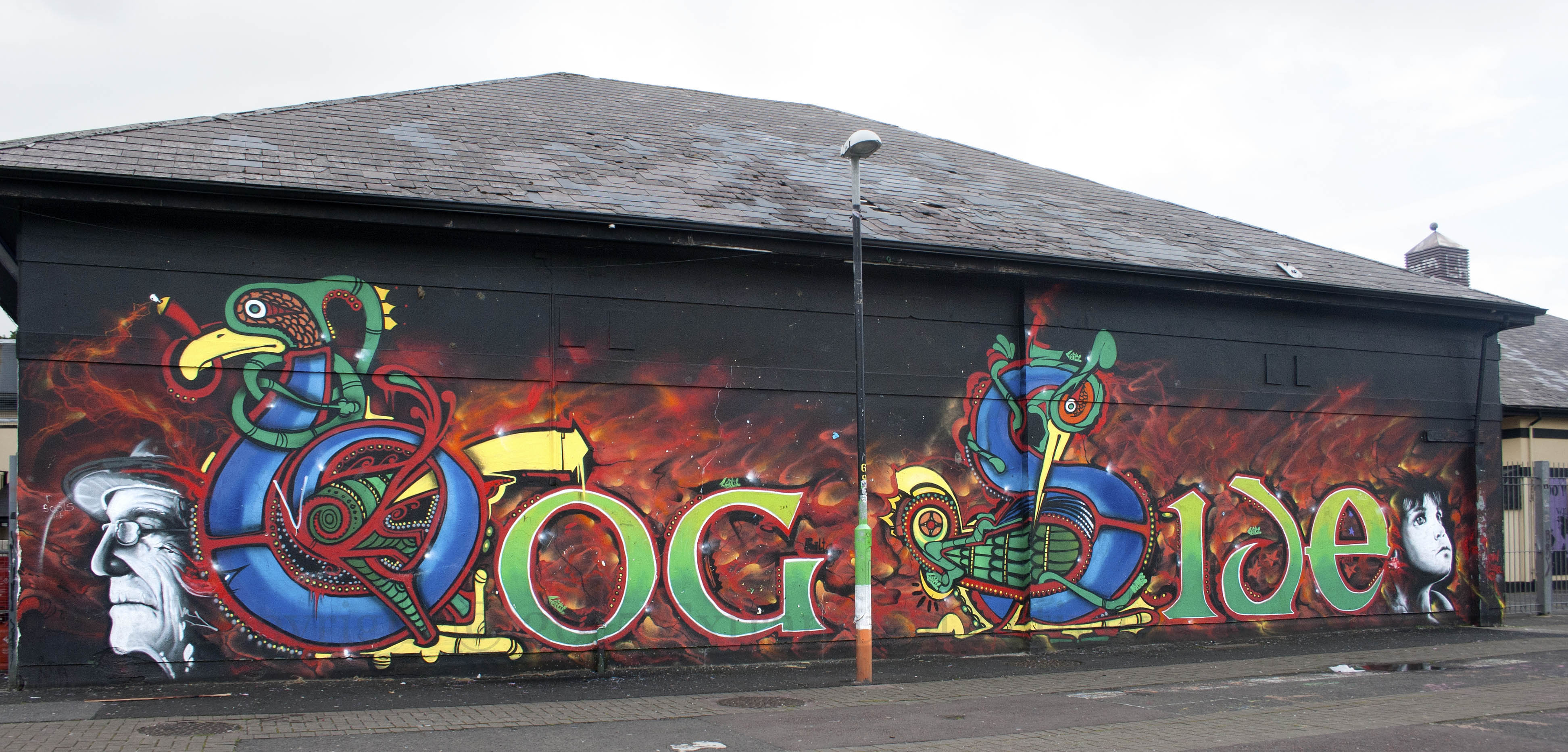
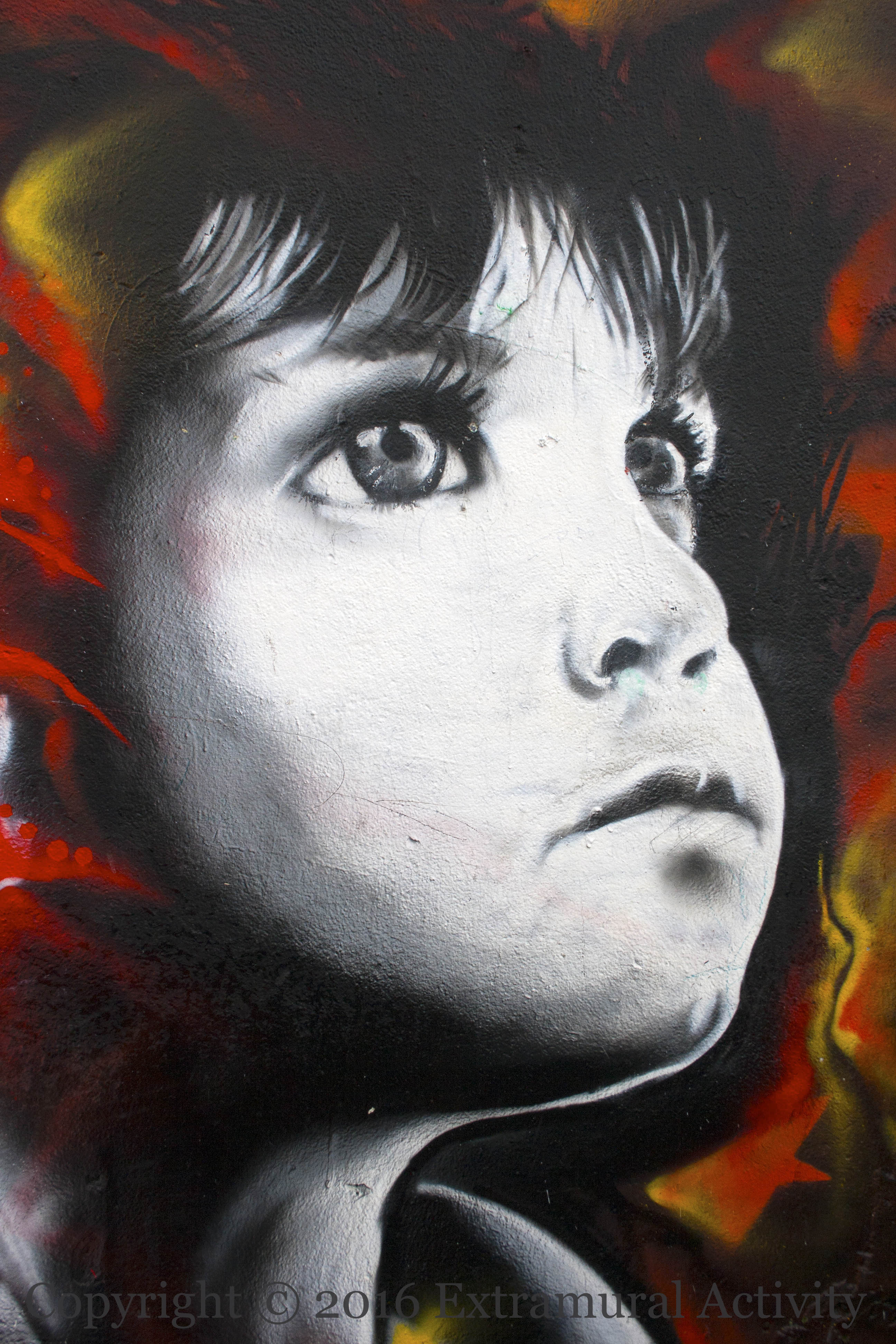
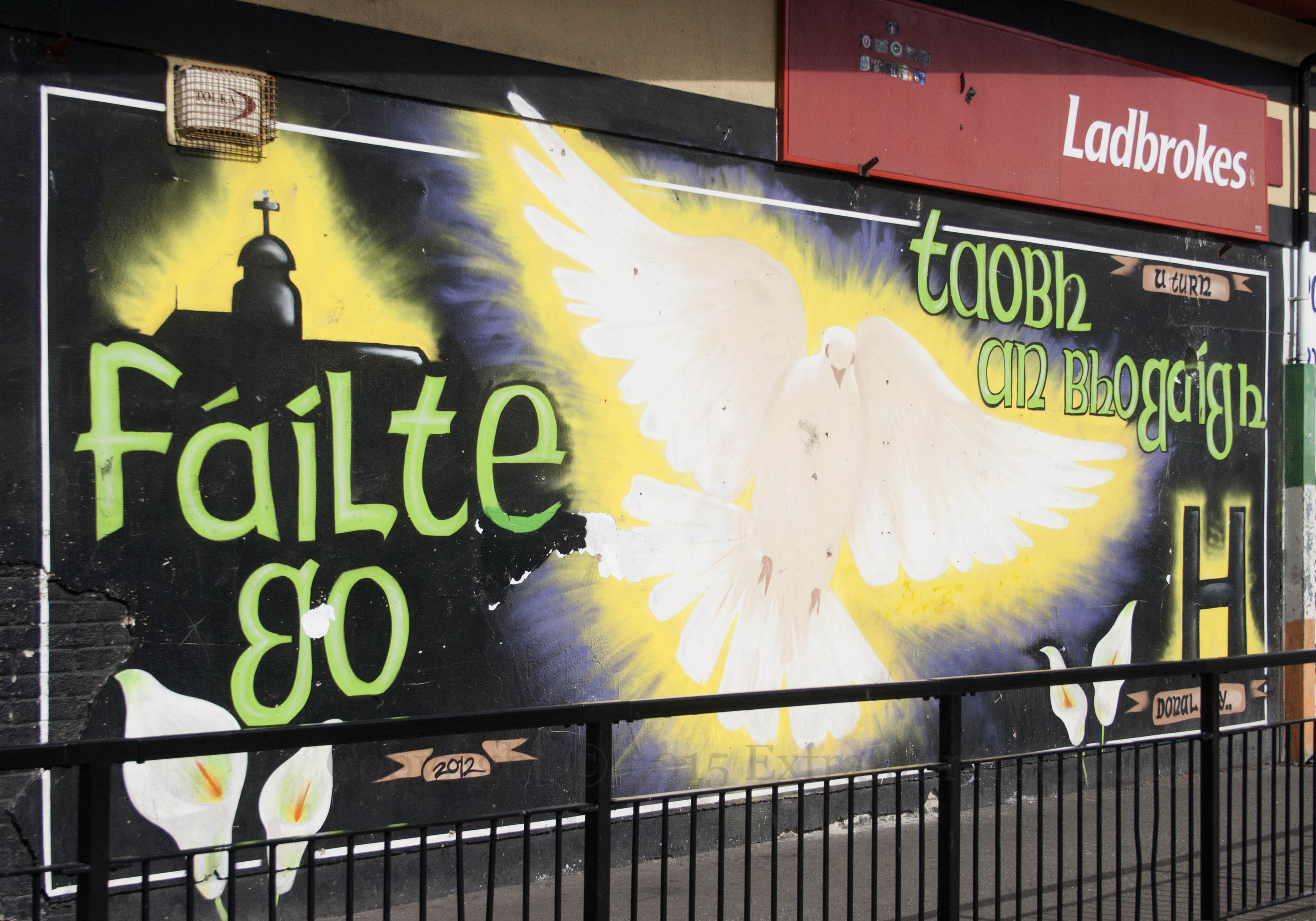
The eastern side of what was the island of Derry is called the Water side and the western side, although originally under water, became the Bog side in about 1600. The two murals shown here are on either side of the shops adjacent to the Bogside Inn. There is an excellent history of the area from 1162 to the construction of Rossville flats in 1966 at the Museum Of Free Derry.





 Extramural Activity