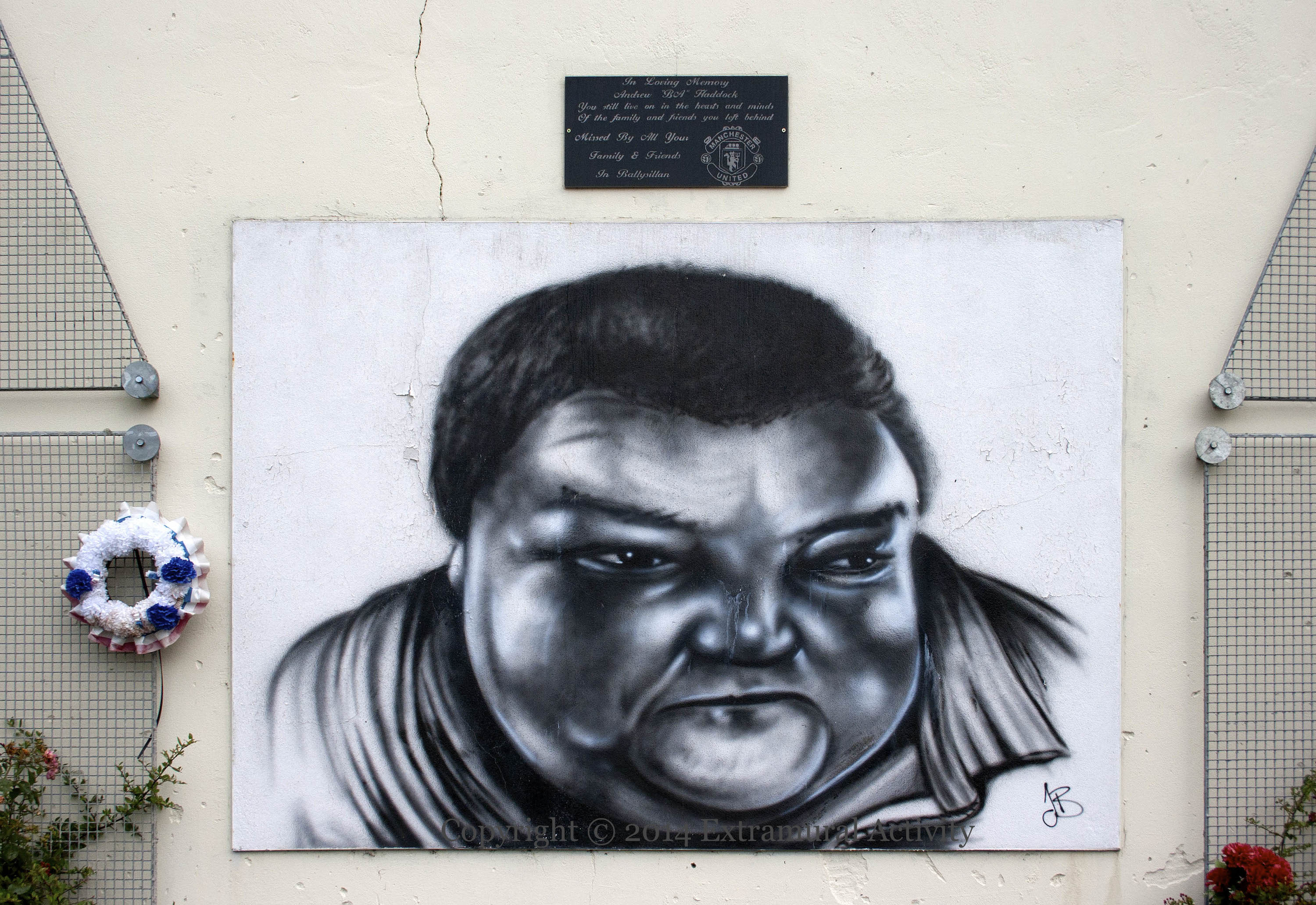
“In loving memory: Andrew “BA” Haddock. You still live on in the hearts and minds of the family and friends you left behind. Missed by all your family and friends in Ballysillan.” The board above to a local lad who died young sits next to rock-wall seating and a sculpture on Tyndale Drive in Ballysillan.
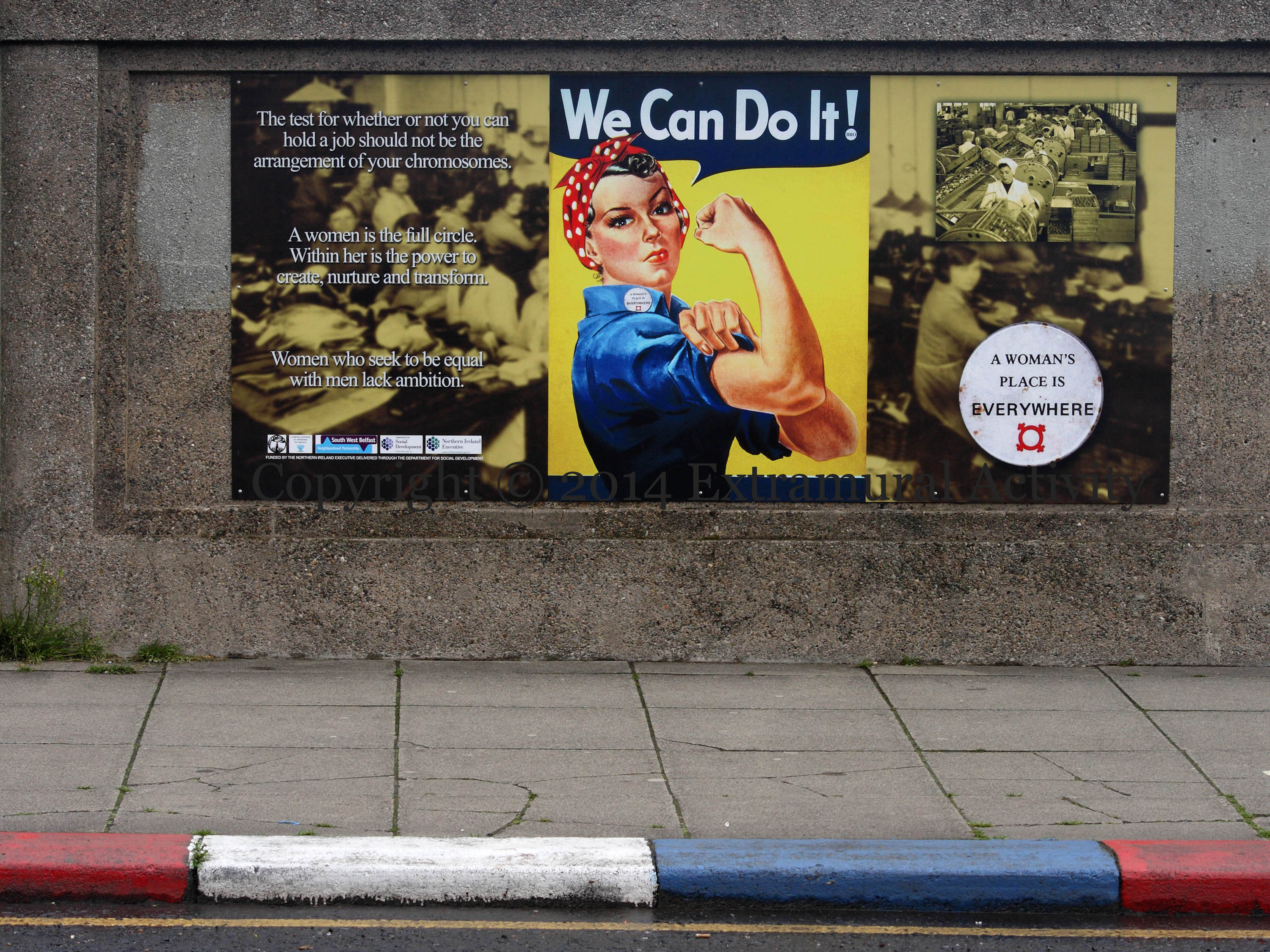
“The test for whether or not you can hold a job should not be the arrangement of your chromosomes. A women is the full circle. Within her is the power to create, nurture and transform. Women who seek to be equal with men lack ambition.” This past Saturday (2015-03-08) was International Women’s Day. The board above (on one of the Donegall Road bridges) features the Westinghouse ‘We Can Do It!’ poster (often mistaken for Rosie The Riveter) (WP) though here with a women’s liberation badge on her collar (shown in large size on the right). She is between images of women at work. See also: The Home Front.
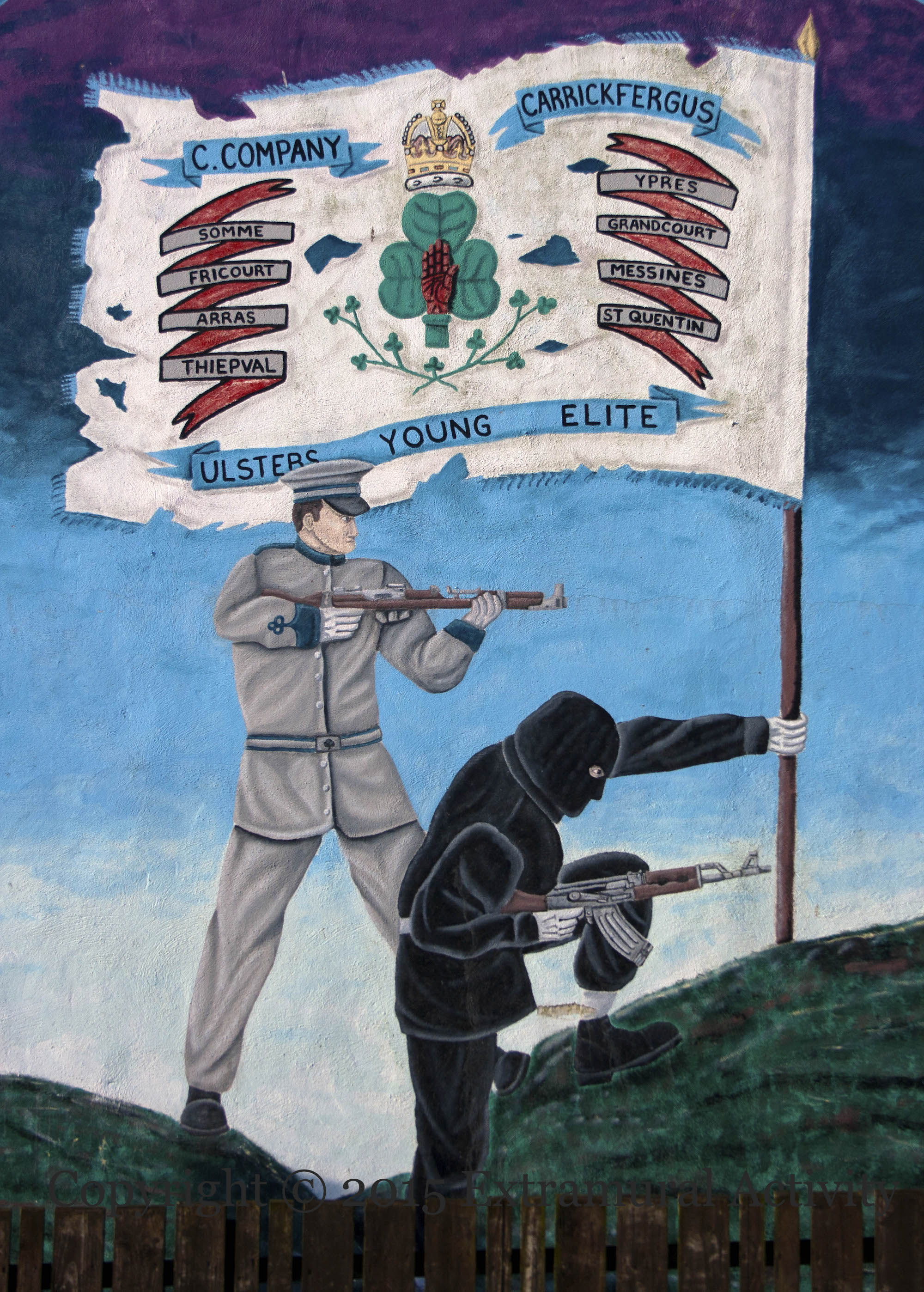
The Young Citizen Volunteers of 1912 eventually joined the Ulster Volunteers (in 1914) as the 14th battalion of the Royal Irish Rifles and part of the 36th (Ulster) Division (WP). In 1972 the name was resurrected for use as the youth wing of the UVF (WP). In the wide shot, below, this history is presented as a continuous movement from left to right; a modern-day hooded gunman climbs out of a WWI trench with one hand on a YCV flag.
“Sgt. Thomas George Wortley , “D Coy” 14th Btn. Royal Irish Rifles, Service No. 14/17063, Died Messines 07-06-1917, Spanbroekmolen British Cemetary Grave C10″. Wortley was born in Carrickfergus, lived in Belfast, died on the first day of the battle at Messines (findagrave), buried in a small cemetery of British soldiers, many from the 36th (Ulster) Division, in Spanbroekmolen on the Ypres Salient in Flanders (WP) – shown in the mural – and is remembered in Carrickfergus with a parade each year on the date of his death (carrickfergusrollofhonour).
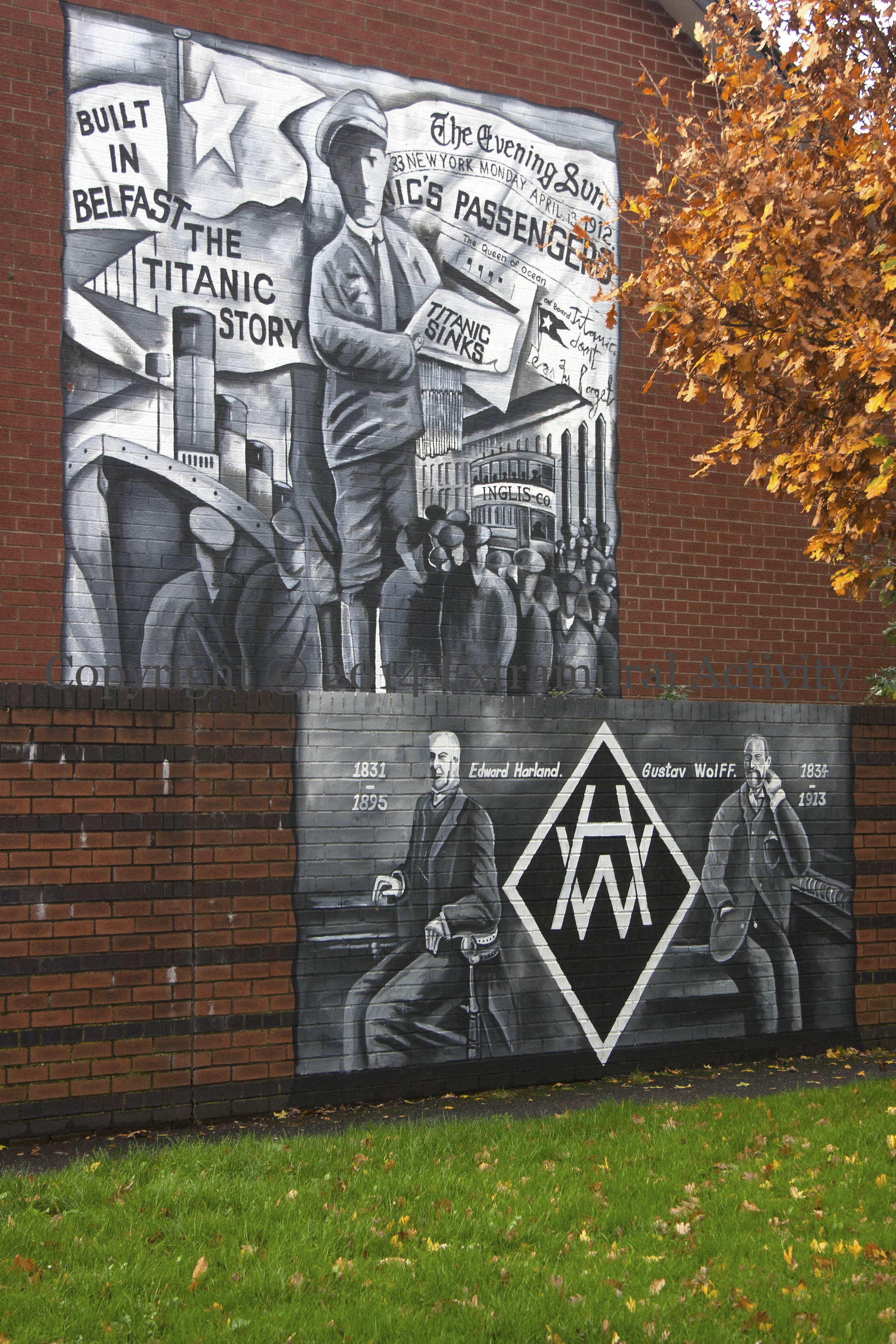
“Titanic Sinks” is the headline of the newspaper in this recent mural in east Belfast. In fact, news was hard to come by in the first few days after the sinking in the early morning of April 15th, 1912, as Titanic sank a thousand miles from New York and wireless was the only means of communication. The Evening Sun’s headline on April 15th (which might be partially reproduced here) announced “All Titanic Passengers Are Safe; Transferred in Lifeboats at Sea” (image at Pratt Library). Here is a NYTimes article about the difficulty in getting reliable news in the days after the sinking. This is new work by John Stewart. (Report on the launch at NIHE.)
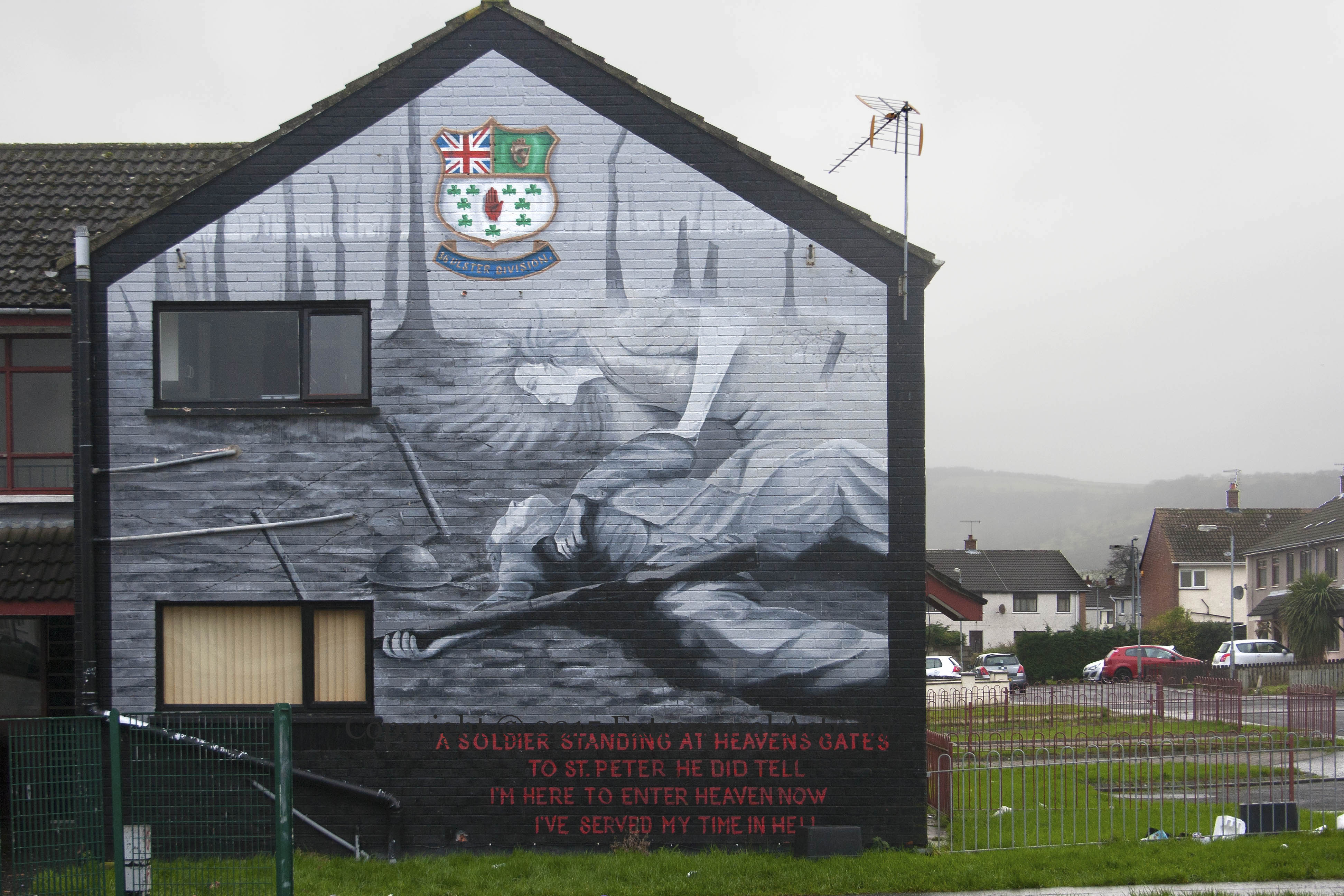
A dead WWI soldier in the scorched Belgian countryside is comforted by an ethereal figure who will convey him to heaven: A soldier standing at heaven’s gate/To St. Peter he did tell/I’m here to enter heaven now/I’ve served my time in hell – a variation on James Donahue’s WWII Soldier’s Poem (WP). The poem was previously used of Republicans in a 1981 mural in Derry (see I Refuse To Change/M00151).
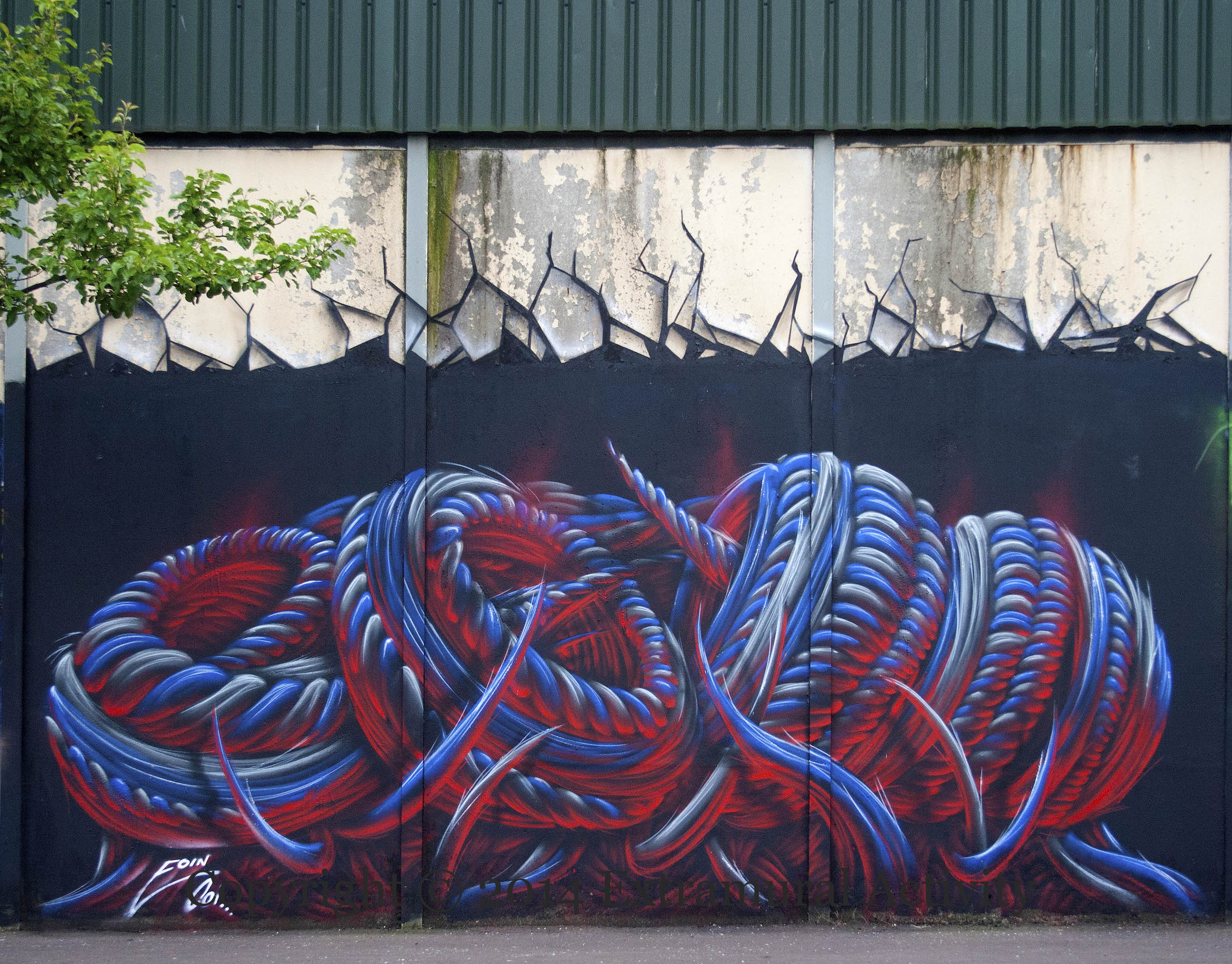
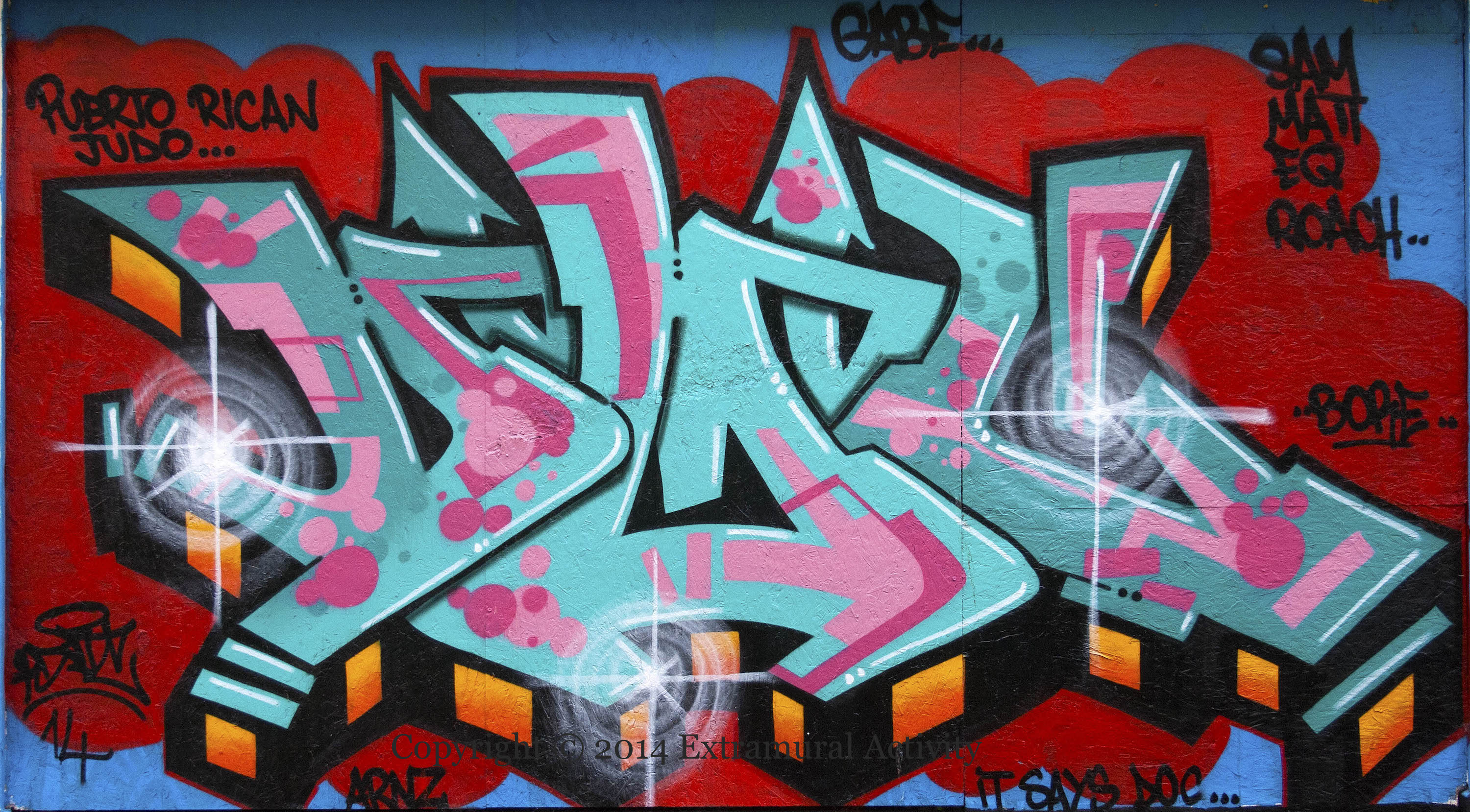
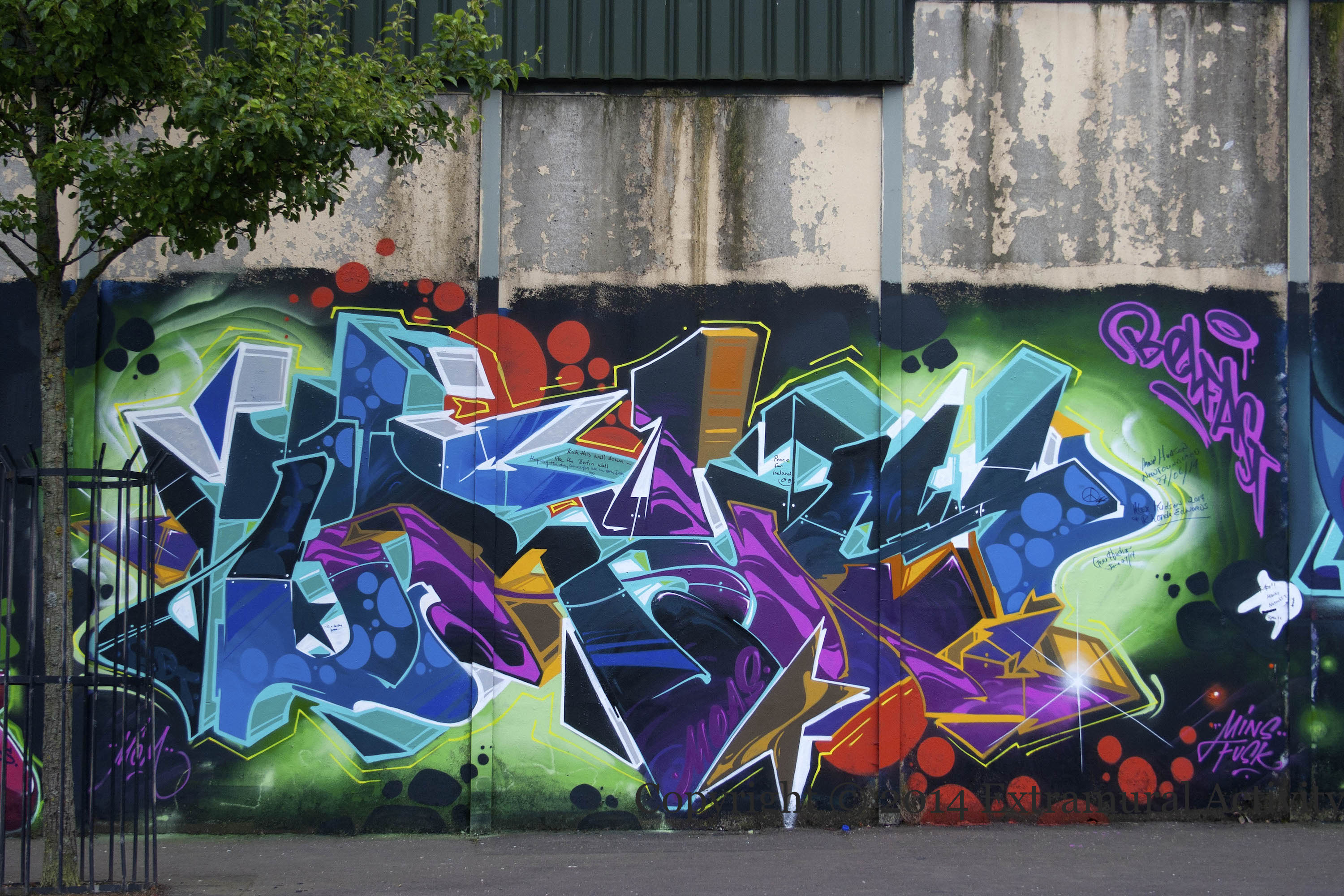
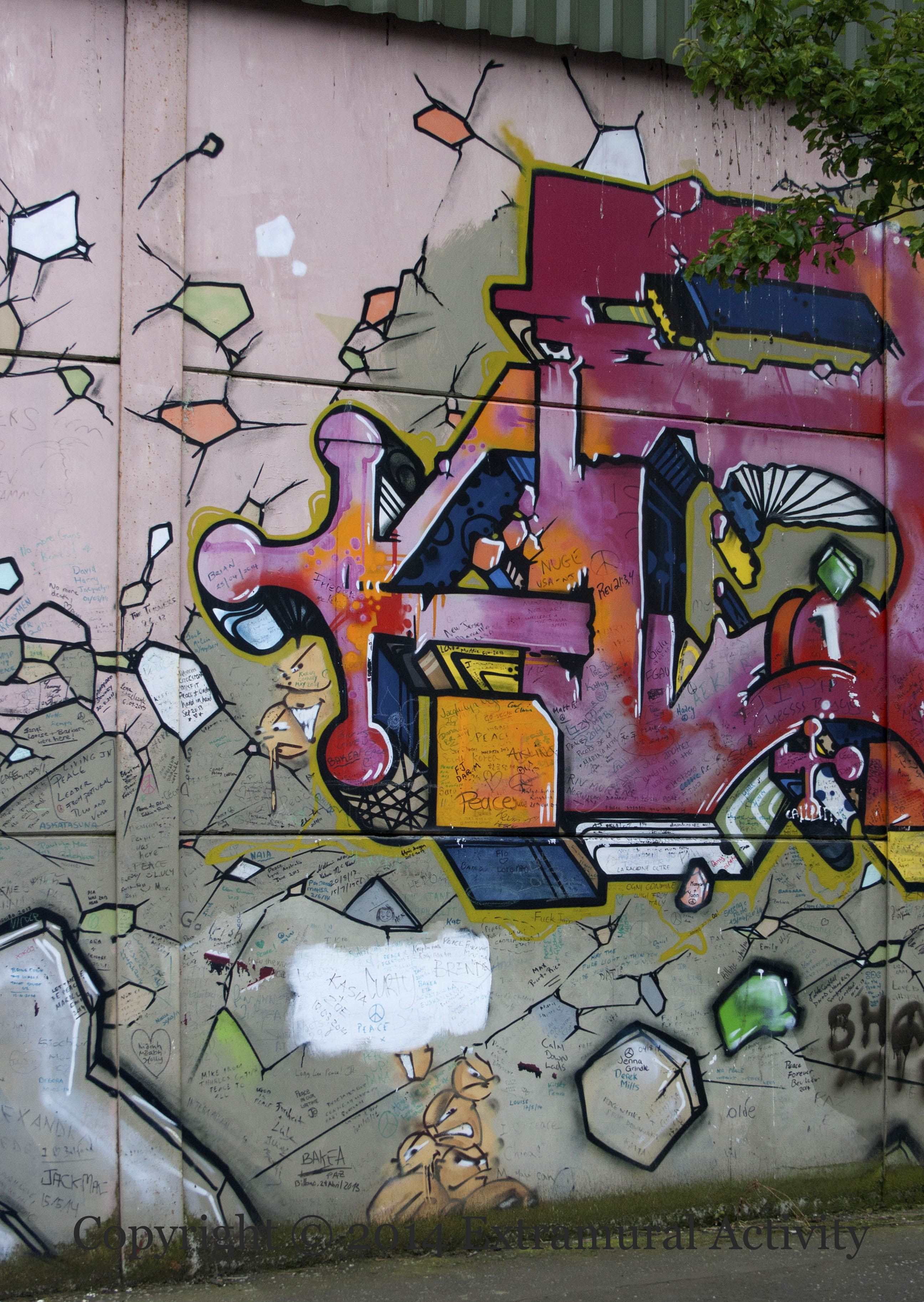
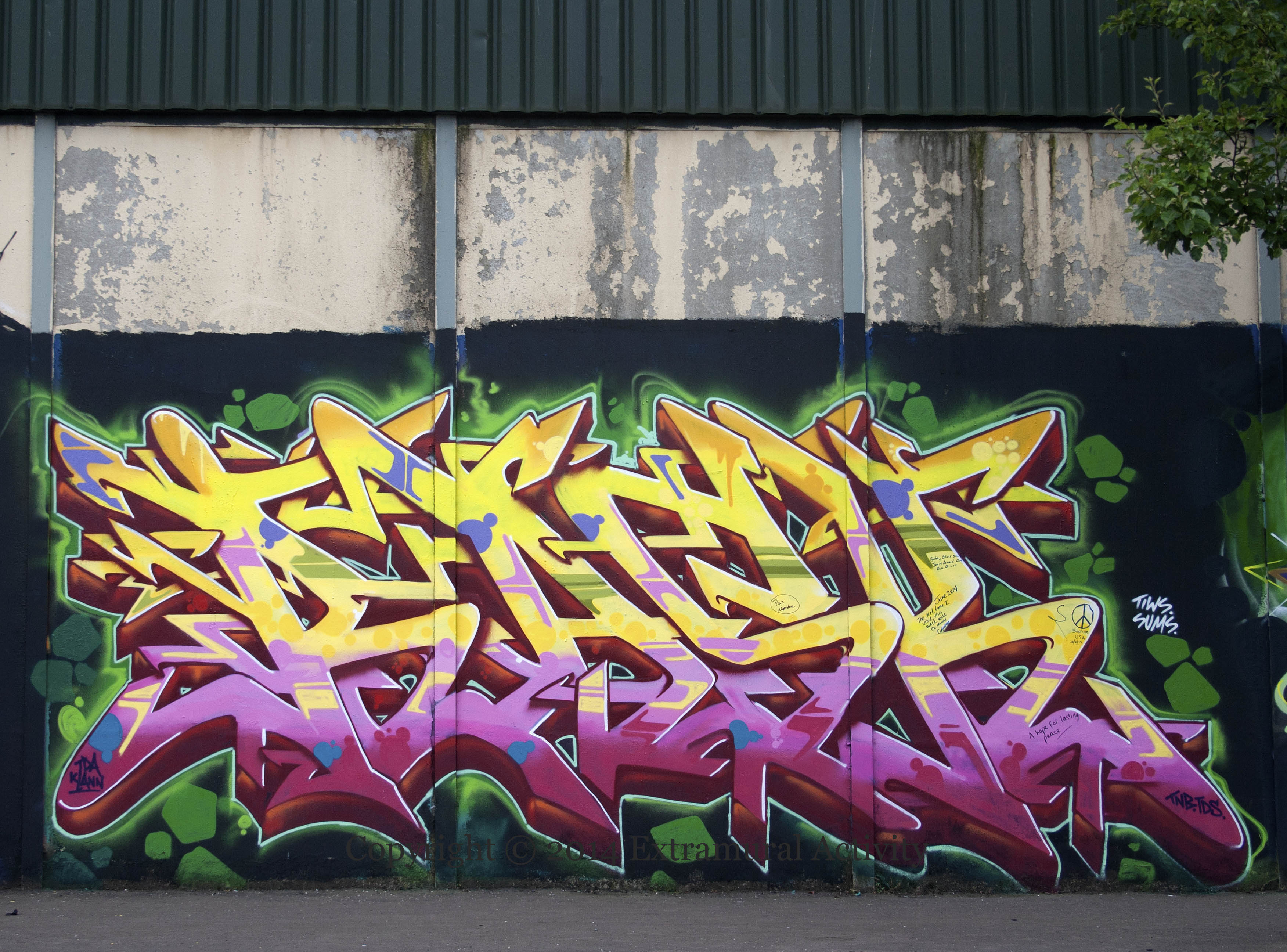
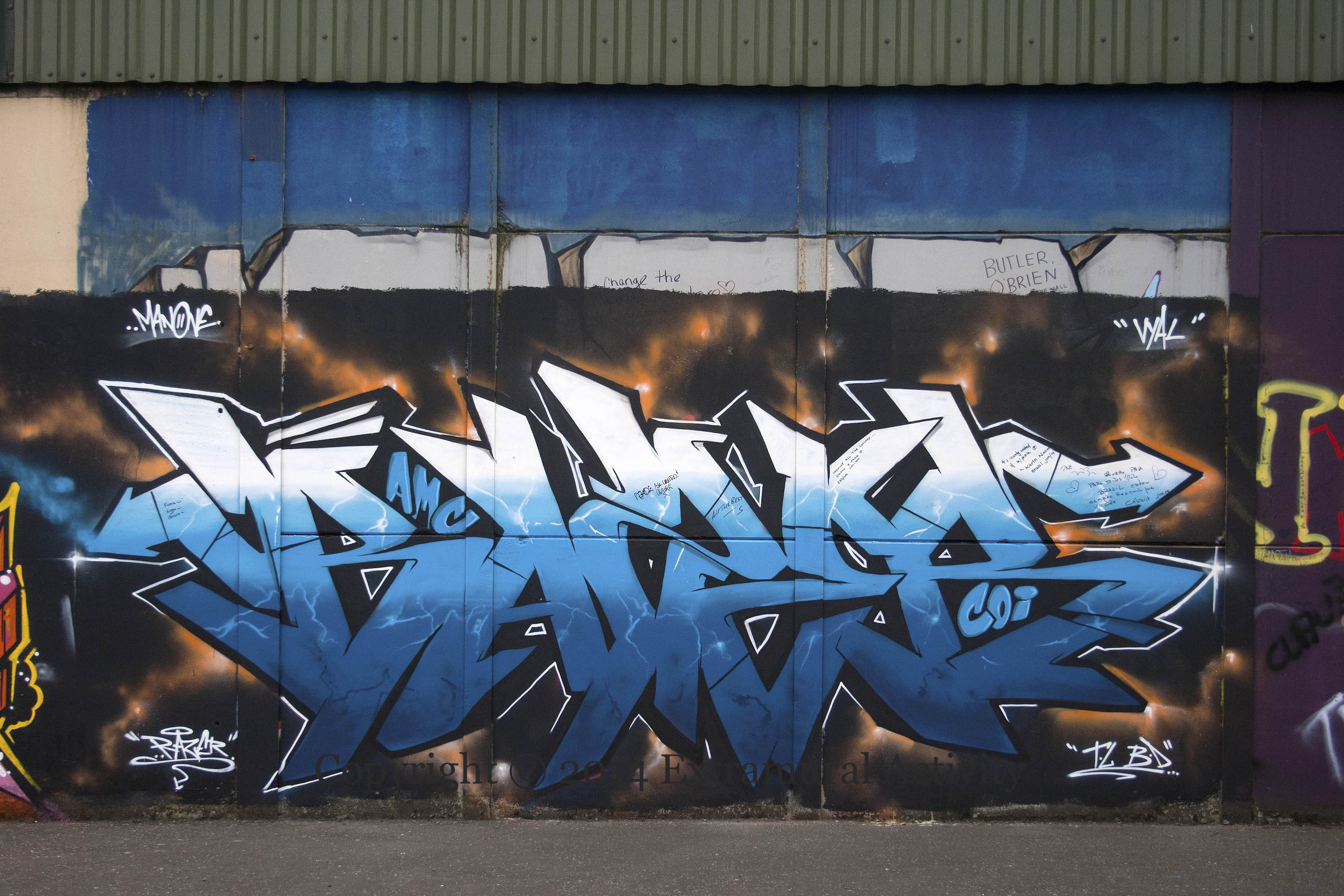
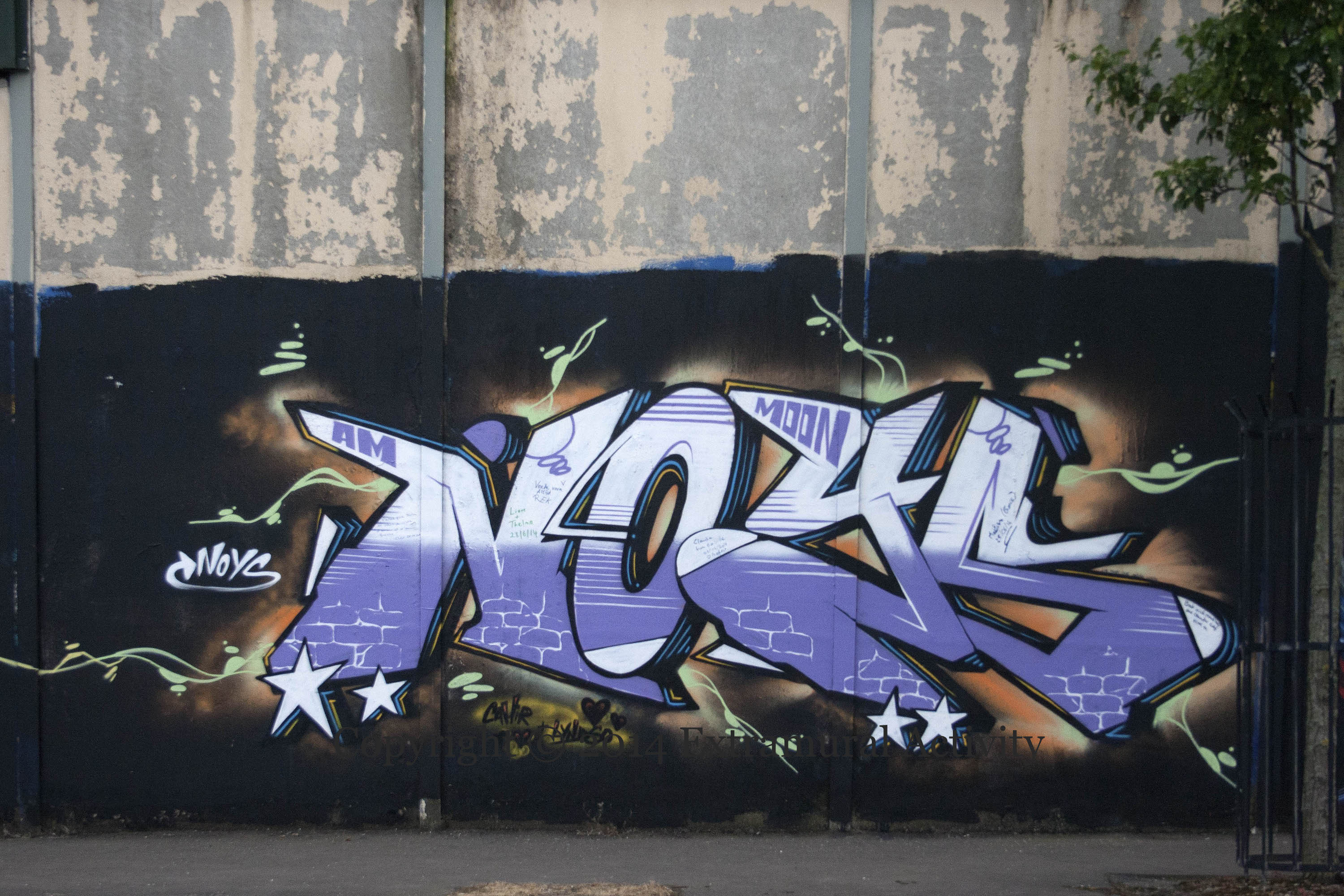
Here is a gallery of seven pieces of street writing from the Cupar Way “peace” line, starting above with Eoin (see previously: Kiss And Make Up) and ending with NOYS. The wall, and the works on it, are covered in the signatures of tourists who come to see the wall and the murals of west Belfast, though these images (taken between June and October of 2014) are mostly of fairly fresh work.
The three-storey mural above is in Ballysillan and replaced a UVF mural when it was added in 2011. The mural is the work of Jim Russell, shown below at Arts For All where he is artist-in-residence. The information below was provided by Arts For All.
The Great War: The first panel commemorates the Great War that ravaged Europe from 1914 to 1918 and shows troops advancing into battle, the Ulster Tower at Thiepval commemorating the sacrifice at the Somme and an image showing one of the war cemeteries and highlighting the true cost of war.
Second World War: The second panel features some of the devastation visited upon Belfast during a series of Luftwaffe raids during the early years of the Second World War. Belfast suffered greatly with over 1,000 people dying in four nights of bombing in April and May of 1941.
The Troubles: In the third panel highlight the dark history known as the Troubles. It features two events from the years of that time – the murder of the three young off-duty Scottish soldiers in 1971 [the monument depicted was featured in The Highland] and the Bloody Friday bombings of July 1972. In the midst of the horror that accompanied the early years of the Troubles these events still caused many to struggle to understand how people could carry out such atrocities.
Present Day Conflict: Panel four brings us up to the present day. Military service is a tradition for many in Northern Ireland and for many their first overseas trip came on the back of an overseas posting whilst serving in one of the Armed Forces. From times past, through the World Wars, the Korean War, to more recent conflicts in Iraq and Afghanistan soldiers and regiments drawn from Norther Ireland continue to play a role.
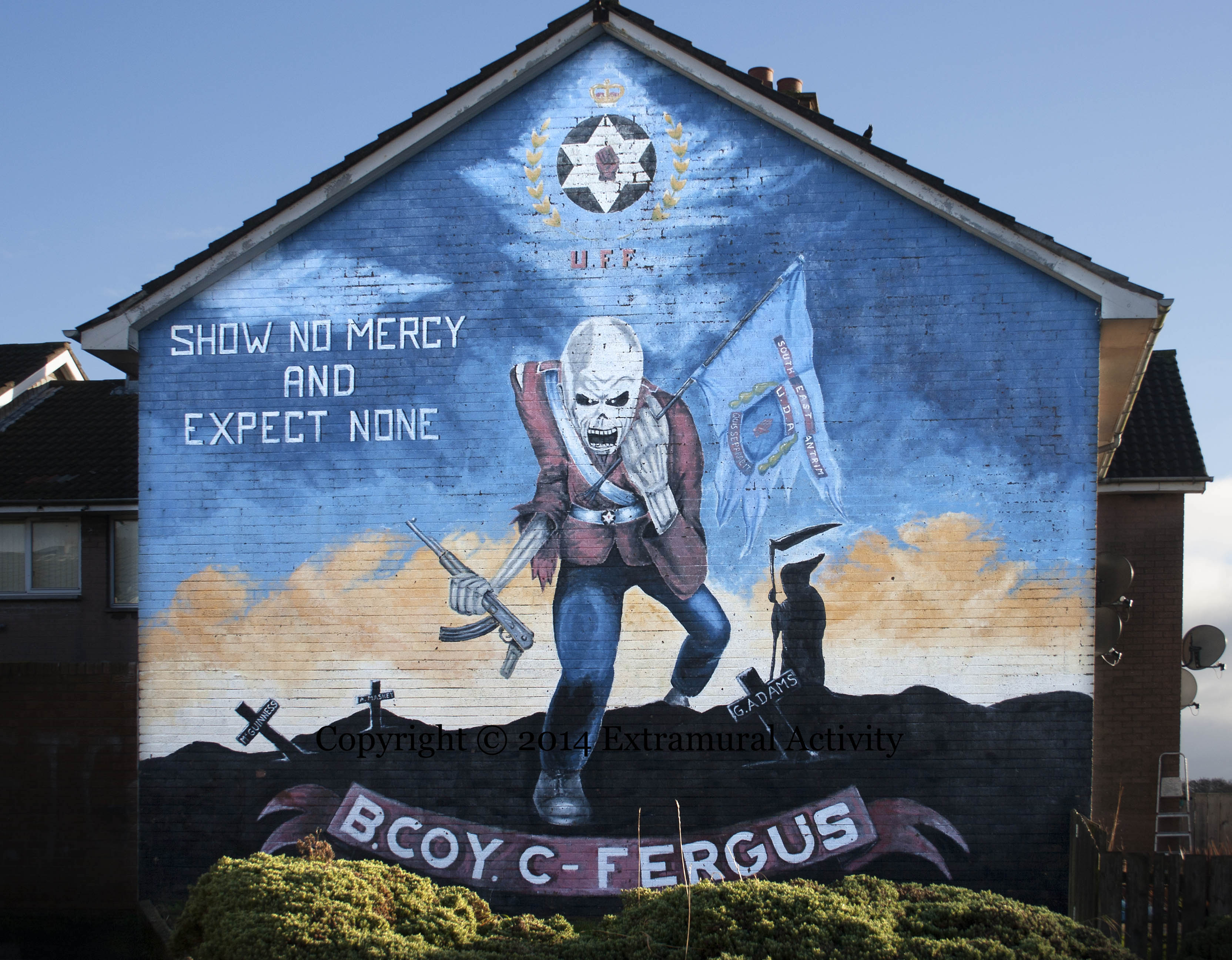
“Show no mercy and expect none”. Iron Maiden’s Eddie the trooper, armed with an assault rifle and carrying a UDA flag, leads the grim reaper over the graves of “G. Adams”, “McGuinness” and “A. Maskey”. UDA/UFF mural in Carrickfergus.
South Belfast Ulster Volunteer Force 2nd Battalion “A” Company Donegall Pass, with the flag of England (St. George’s Cross) in one corner and in the other an orange star with “1912” written below, the year the Ulster Volunteers were founded. The colour-scheme is the reverse of the Orange Order’s: its flag has the purple star of the Williamites on an orange field.





 Extramural Activity