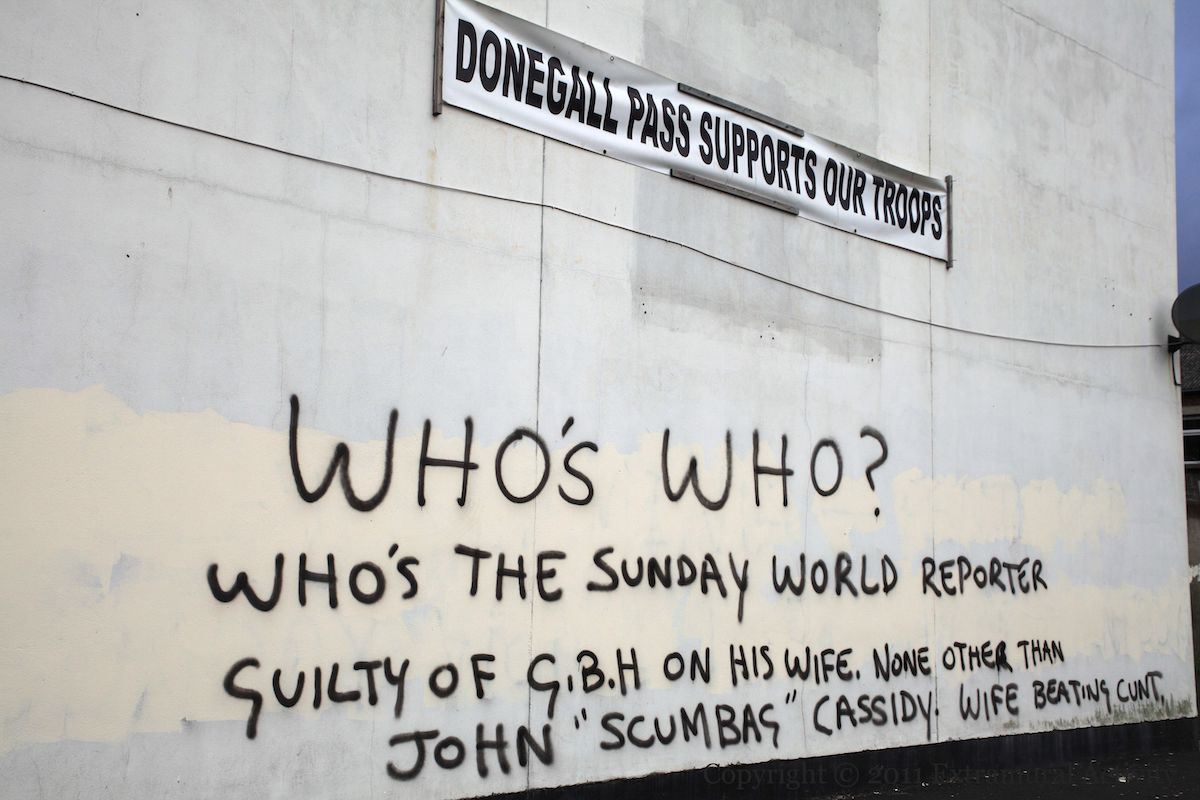
The troops in question are British forces in Afghanistan and Iraq, though the withdrawal of troops from Iraq had just taken place (on May 22) prior to the photographing of the image above (June 26).
“Lay them away on the hill side/along with the brave and the bold/Inscribe their names on the role [sic] of fame/in letters of purest gold.” The Ulster Tower at Thiepval commemorates the WWI dead of the 36th (Ulster) Division. The words, however, come from a song about James Daly, who was executed by firing squad for taking part in a 1920 mutiny of the Connacht Rangers in India in protest of the activities of the Black and Tans. Above (and below – not shown) are the insignia and names of UVF volunteers from UVF South Belfast 2nd battalion – see Lay Them Away On The Hill Side.
South Belfast MP Robert Bradford was assassinated by the Provisional IRA in Finaghy at a meeting with constituents; the caretaker of the community centre, Ken Campbell, was also killed by the fleeing attackers. In late 1981, with the hunger strikes having ended only a month before, the killing was noted around the world and raised fears of broad civil unrest (BBC | NYTimes).
“Vita, veritas, victoria” [life, truth, victory] is the motto of Londonderry. Here we have “vita, veritas, victa” [life, truth, conquered; perhaps the intended meaning was “conquering” rather than the passive]. The crest is also not quite the crest of the Apprentice Boys, with a ship in the bottom right rather than a skeleton. Get in touch if you can resolve either discrepancy.
Rangers Football Club, founded in 1872 (rather than the 1873 shown here – Brittanica), has its home in Glasgow, Scotland, but has a large following among Northern Irish Protestants.
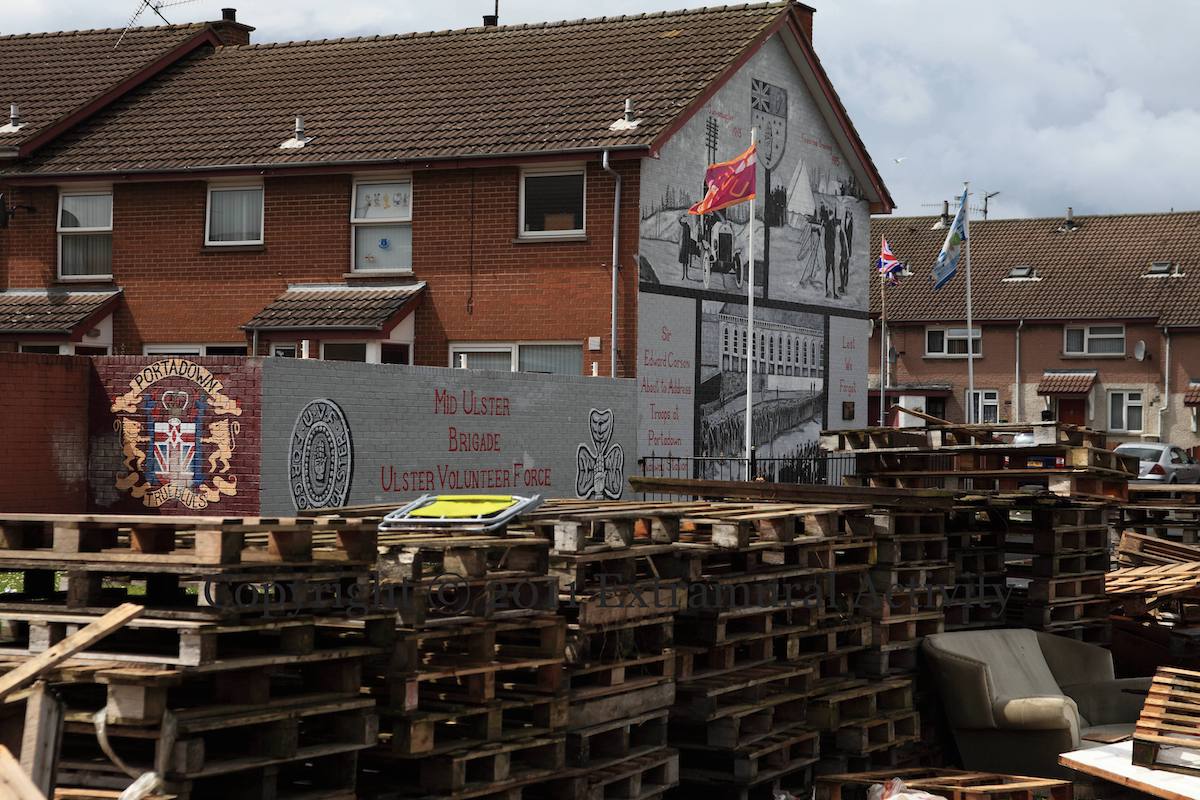
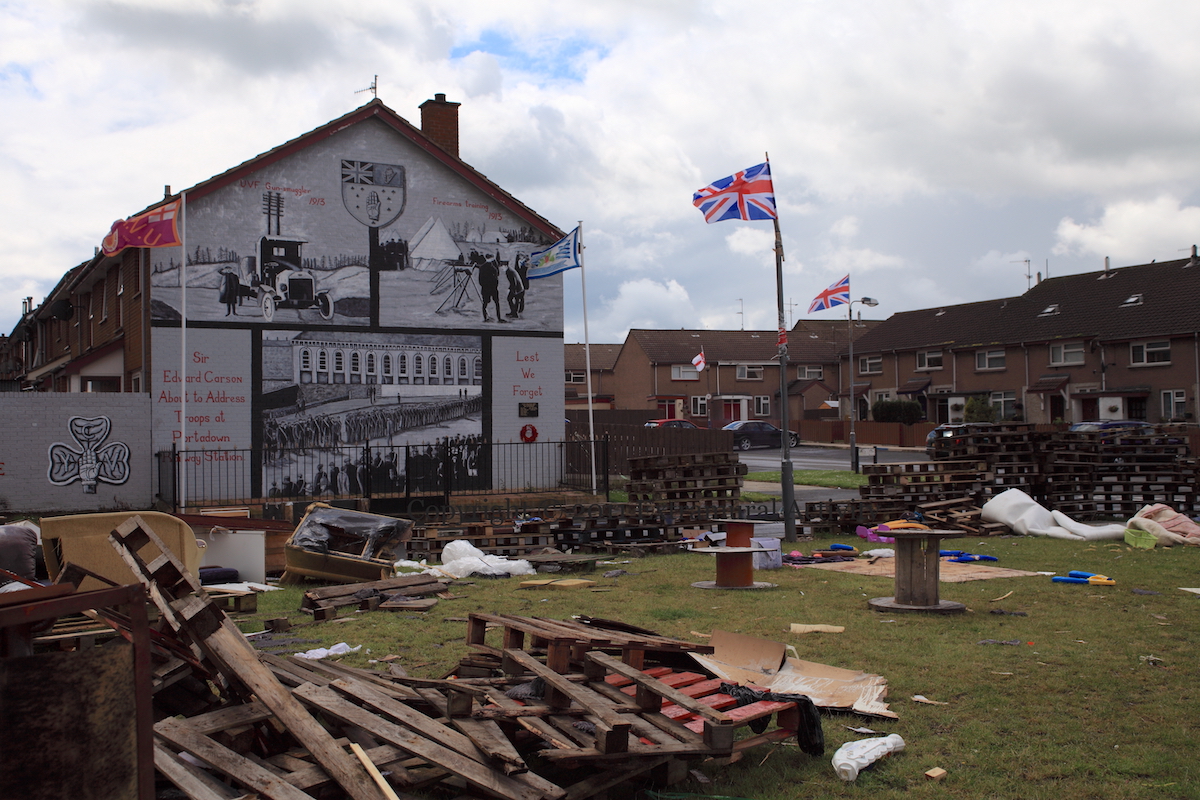
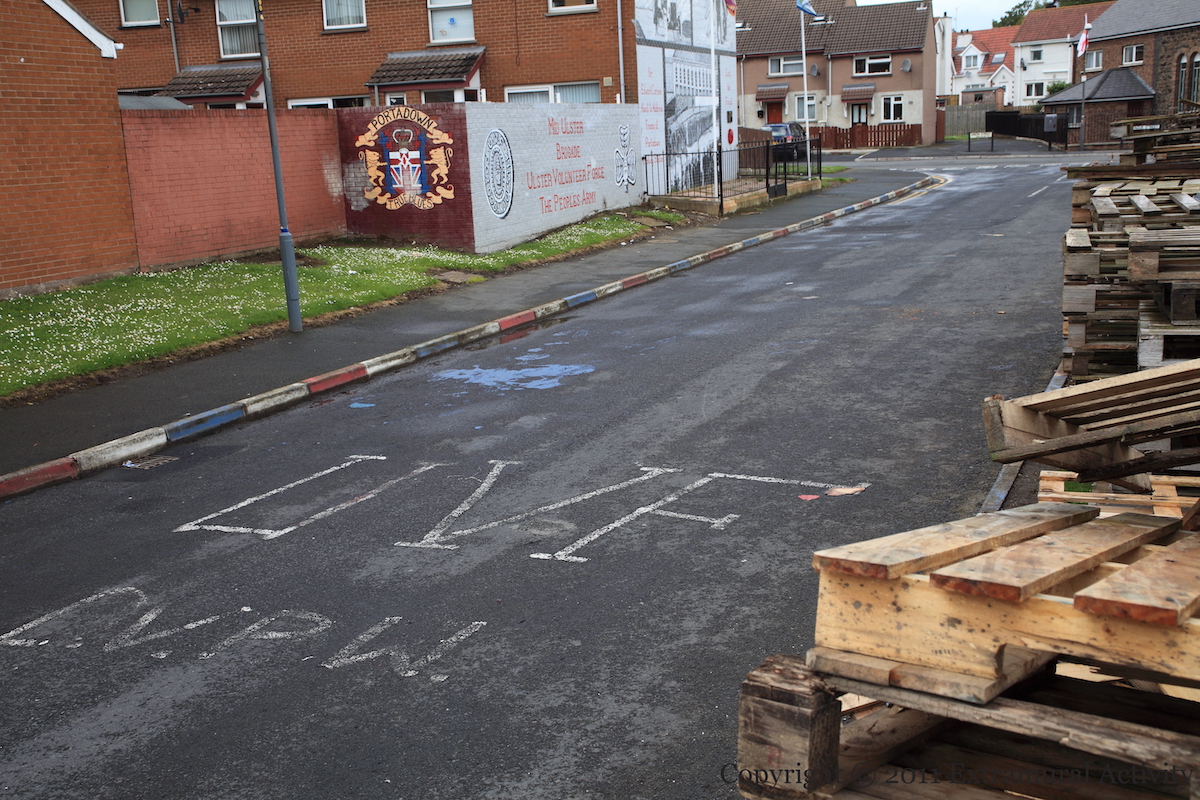
Pallets are collected for Eleventh night in the Edgarstown estate, in front of the murals on Union Street: from left to right: Portadown True Blues, Mid Ulster UVF, and the Ulster Volunteers. In the final image, “LVPW” [Loyalist Volunteer Prisoners’ Welfare] on the tarmac is modified (by the rival UVF) to become “DVPW” – “D” for “drugs”.
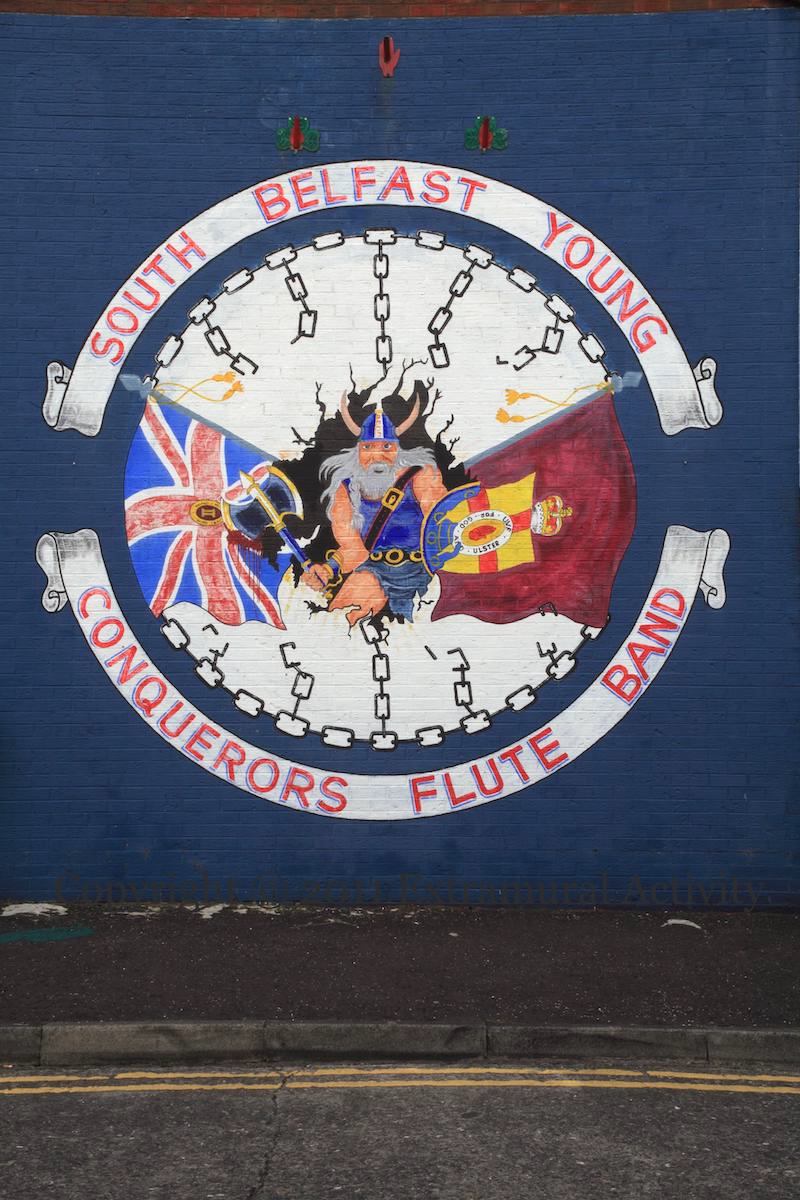
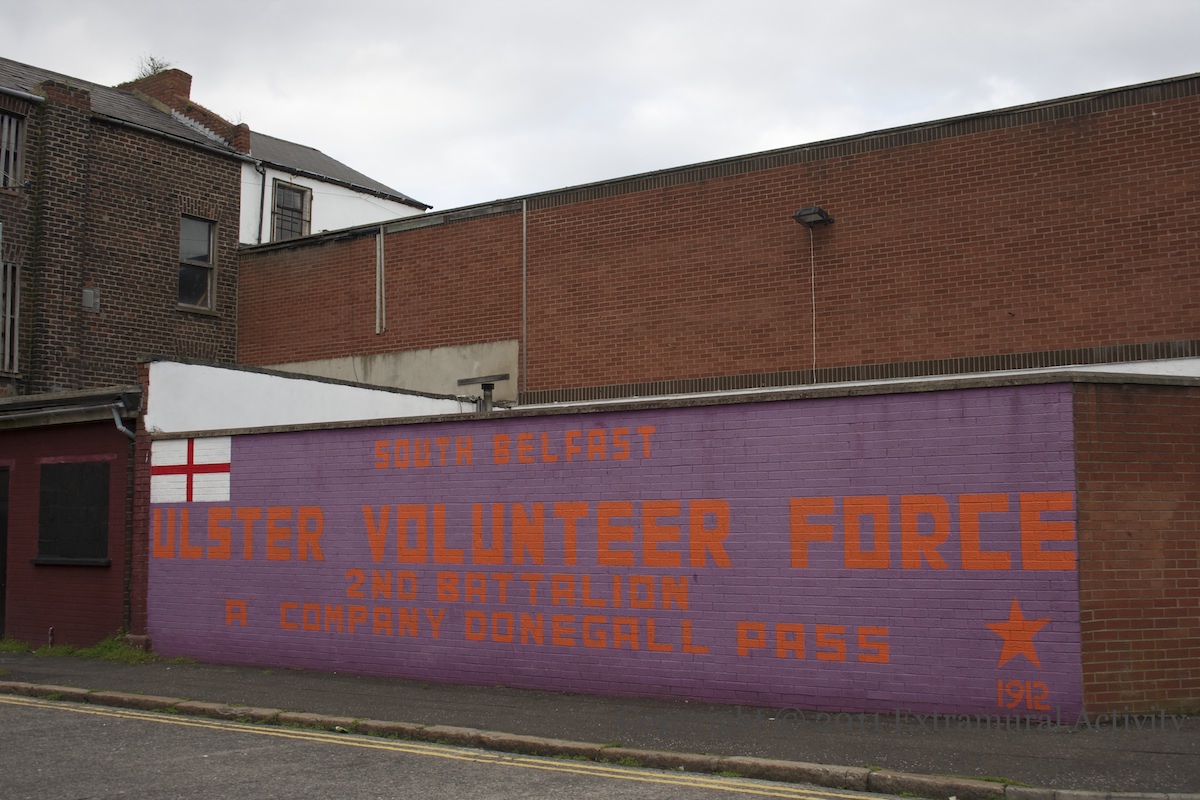
South Belfast Ulster Volunteer Force 2nd Battalion “A” Company Donegall Pass, with the flag of England (St. George’s Cross) in one corner and in the other an orange star with “1912” written below, the year the Ulster Volunteers were founded. The colour-scheme is the reverse of the Orange Order’s: its flag has the purple star of the Williamites on an orange field.
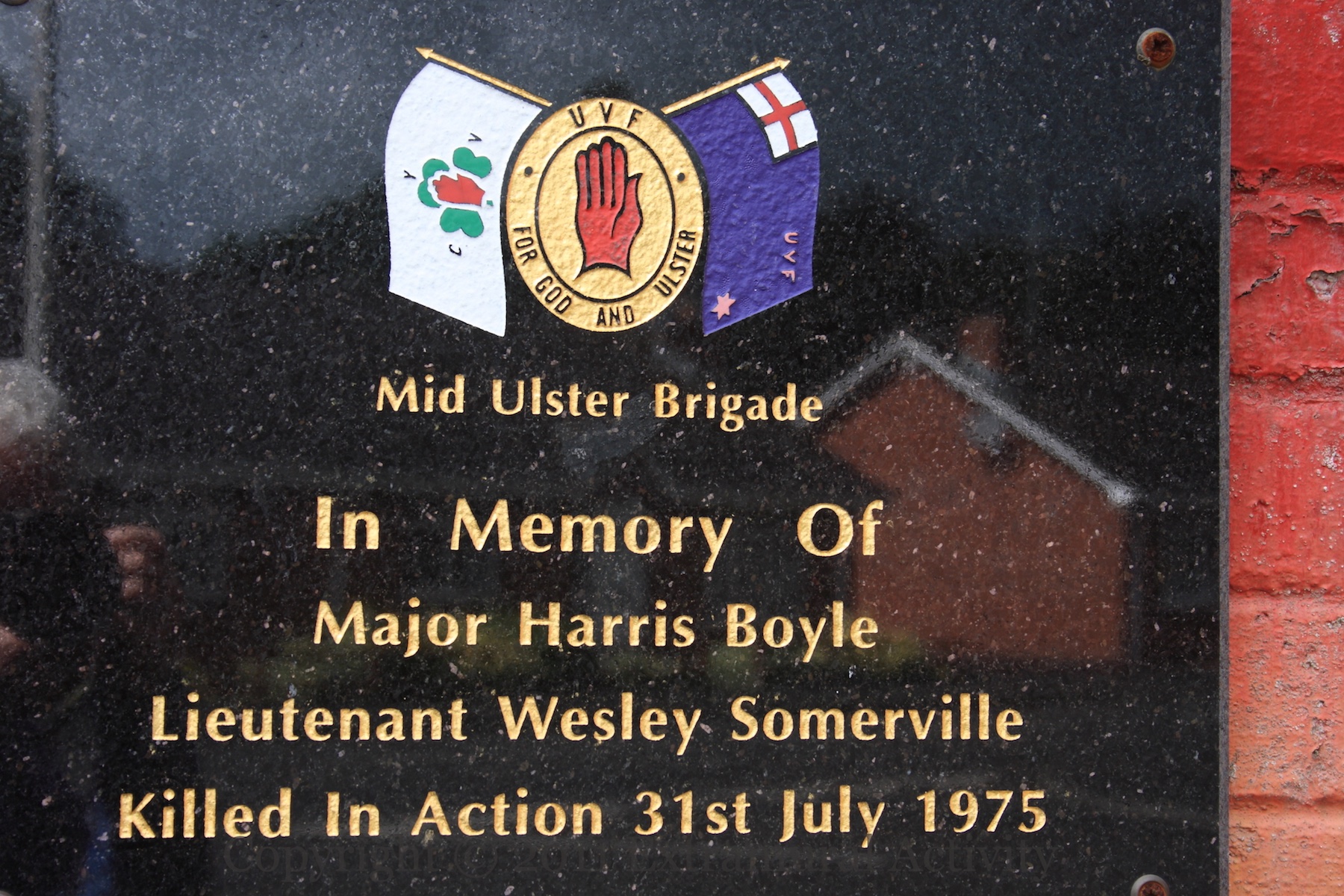
Harris Boyle and Wesley Somerville were UDR soldiers and UVF volunteers. They were “killed in action” when the bomb they were planting on the minibus of the Miami Showband went off prematurely. Of the pair, only Somerville’s arm, with its “UVF Portadown” tattoo remained identifiable (WP). The plaque is in Princess Way/Gloucester Avenue, Portadown.
Since 2014, the poster erected each year in Moygashel to honour Somerville has drawn criticism: 2014, 2015, 2016, 2017, and 2018.
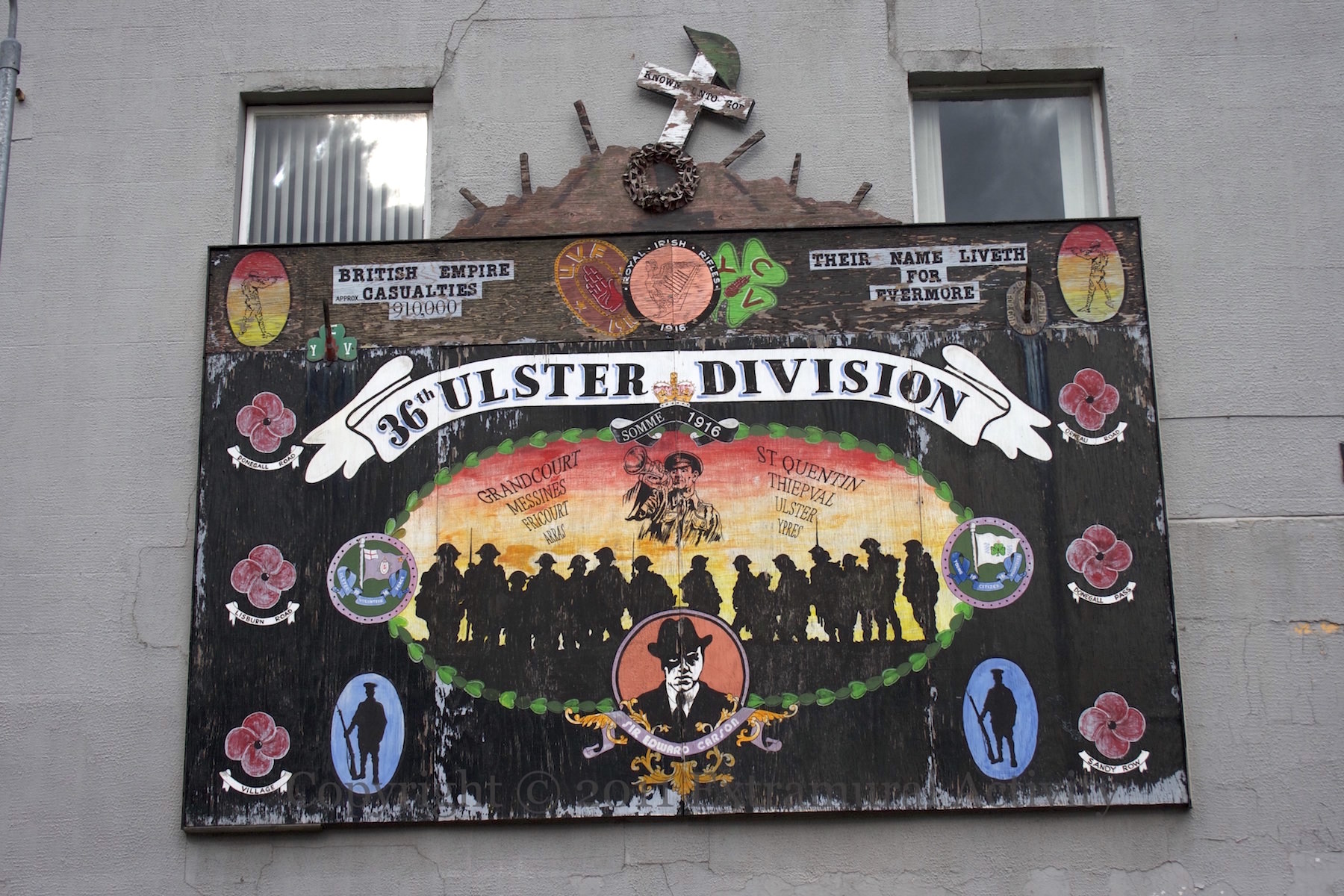
The apocryphal book of the Bible ‘Ecclesiasticus’ reads, “their bodies are buried in peace, but their name liveth for evermore” (44:14). The last clause is here applied to 910,000 “British empire casualties” from the Great War, including the Ulster Volunteers and Young Citizen Volunteers raised by “Sir Edward Carson” (here looking like Al Capone) which became the 36th (Ulster) Division and particularly the Royal Irish Rifles and fought at the Somme 1916.
“2009: Welcome To Loyalist Linfield Road. Celebrating Our Culture 1690.” The central panel is a combination Union Flag, Ulster Banner, and free-floating Northern Ireland.
The banner hung on the railings in Linfield Road from 2009 until it was stolen and placed on a 2013 Republican bonfire (see Bonfire Flags) which then elicited a comment on the wall just east of this location (see They May Have Stole Our Banner).





 Extramural Activity