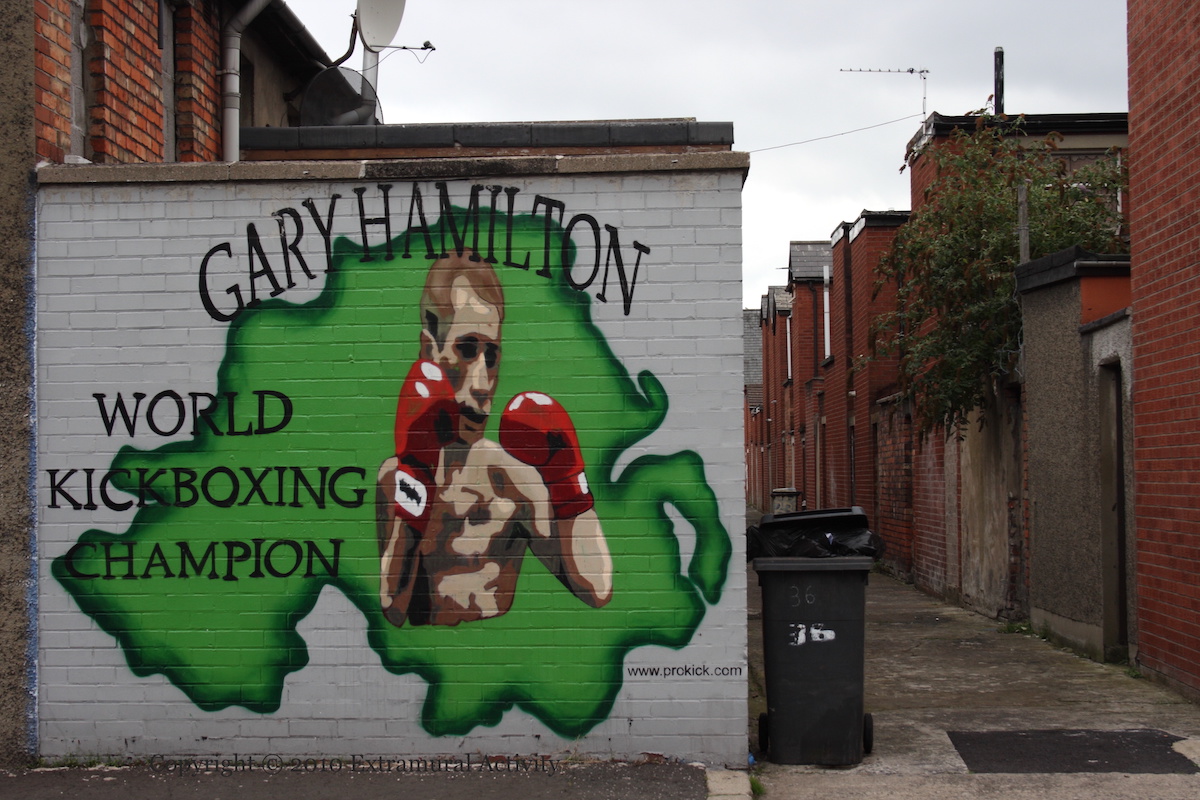
“Gary Hamilton – world kickboxing champion – www.prokick.com“. Hamilton held the featherweight full contact world title from 2002-2009 (WP). The Prokick gym is in east Belfast.
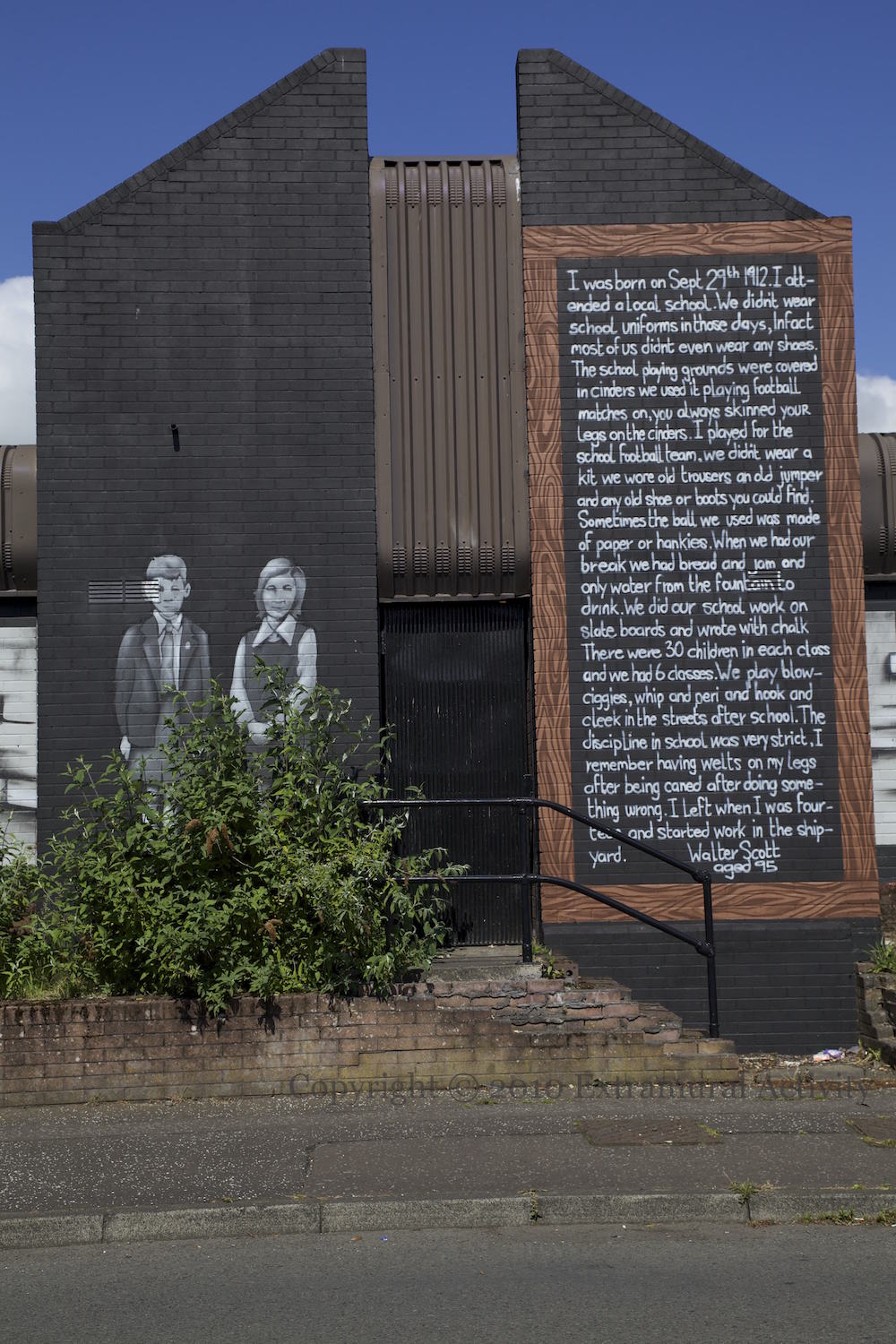
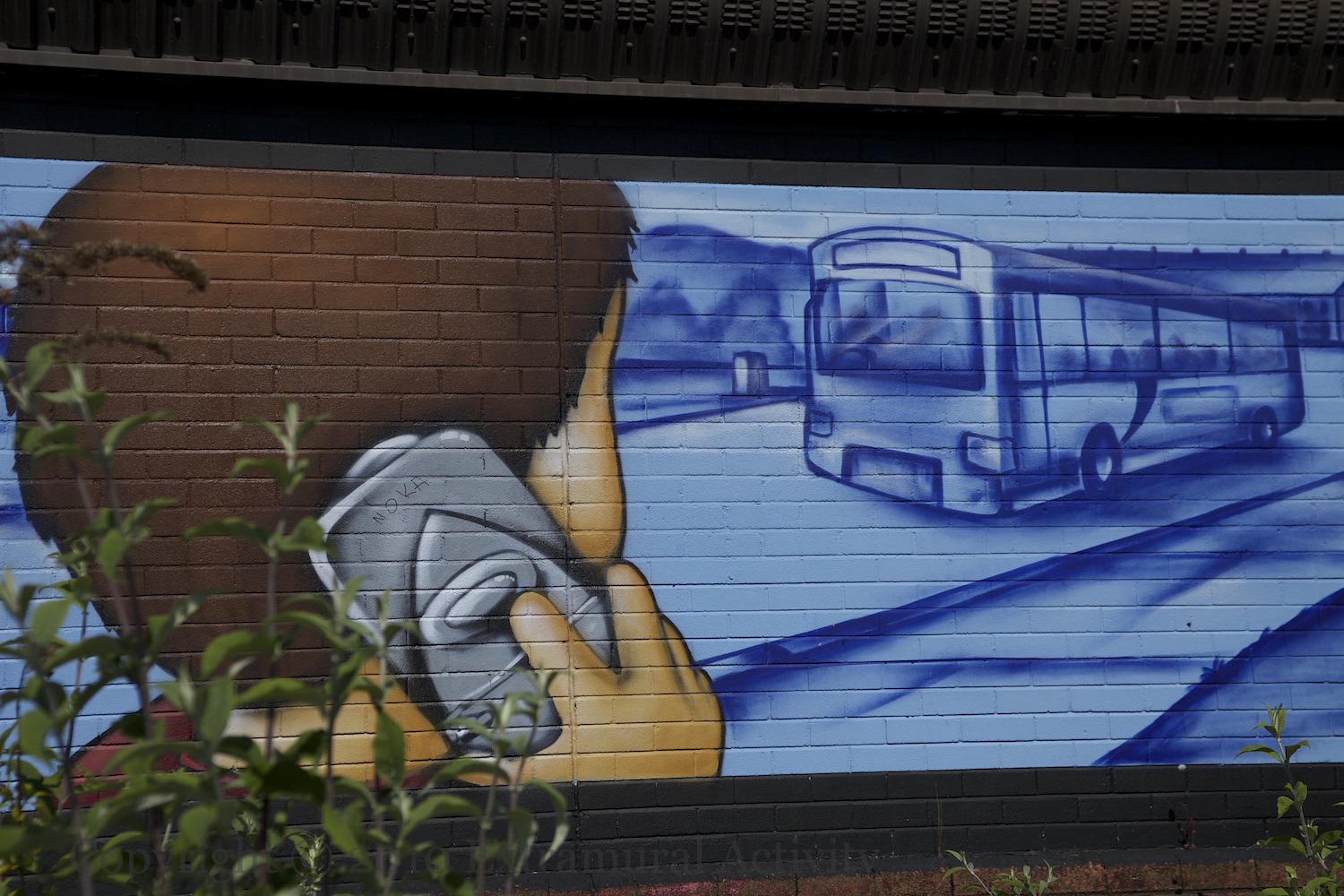
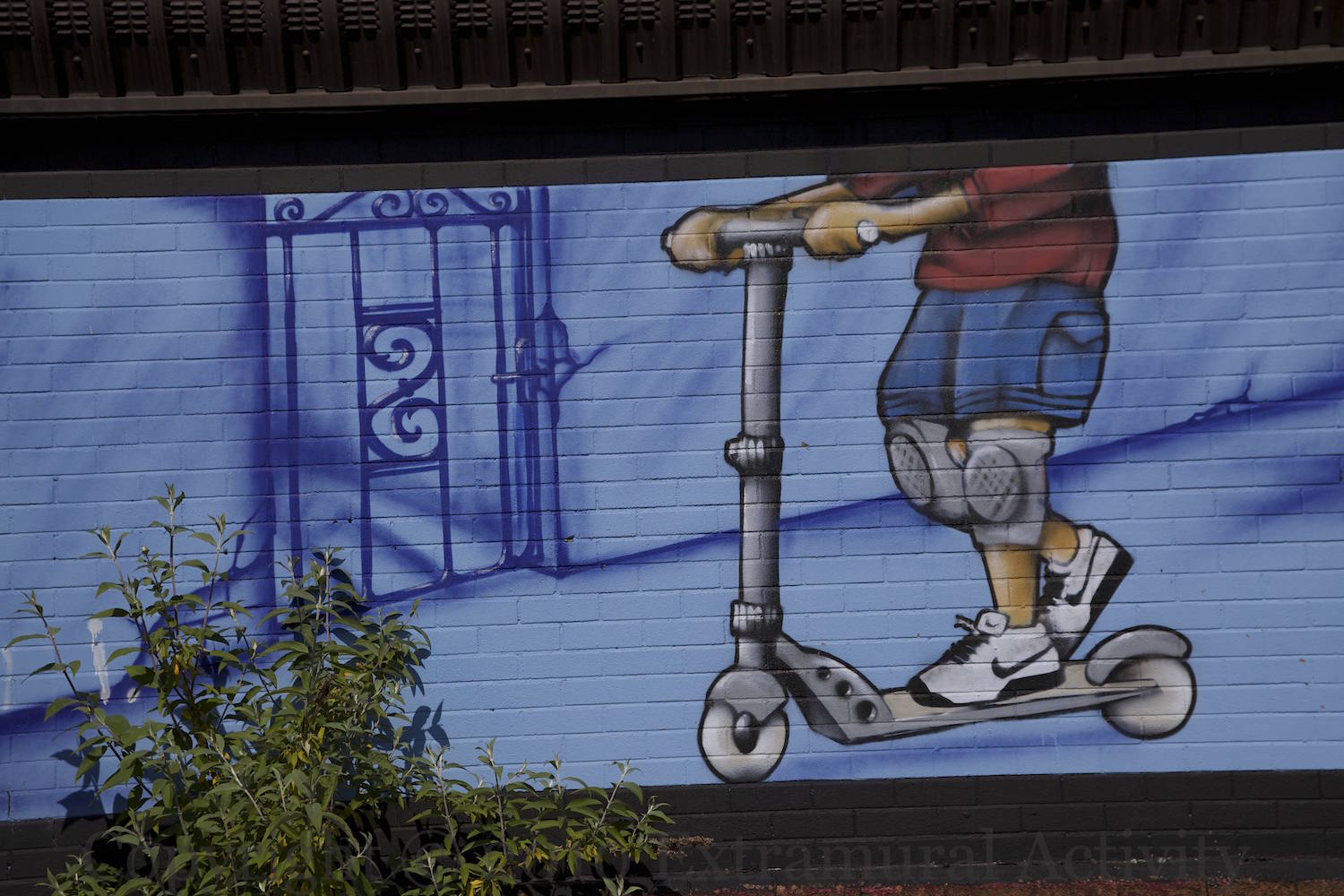
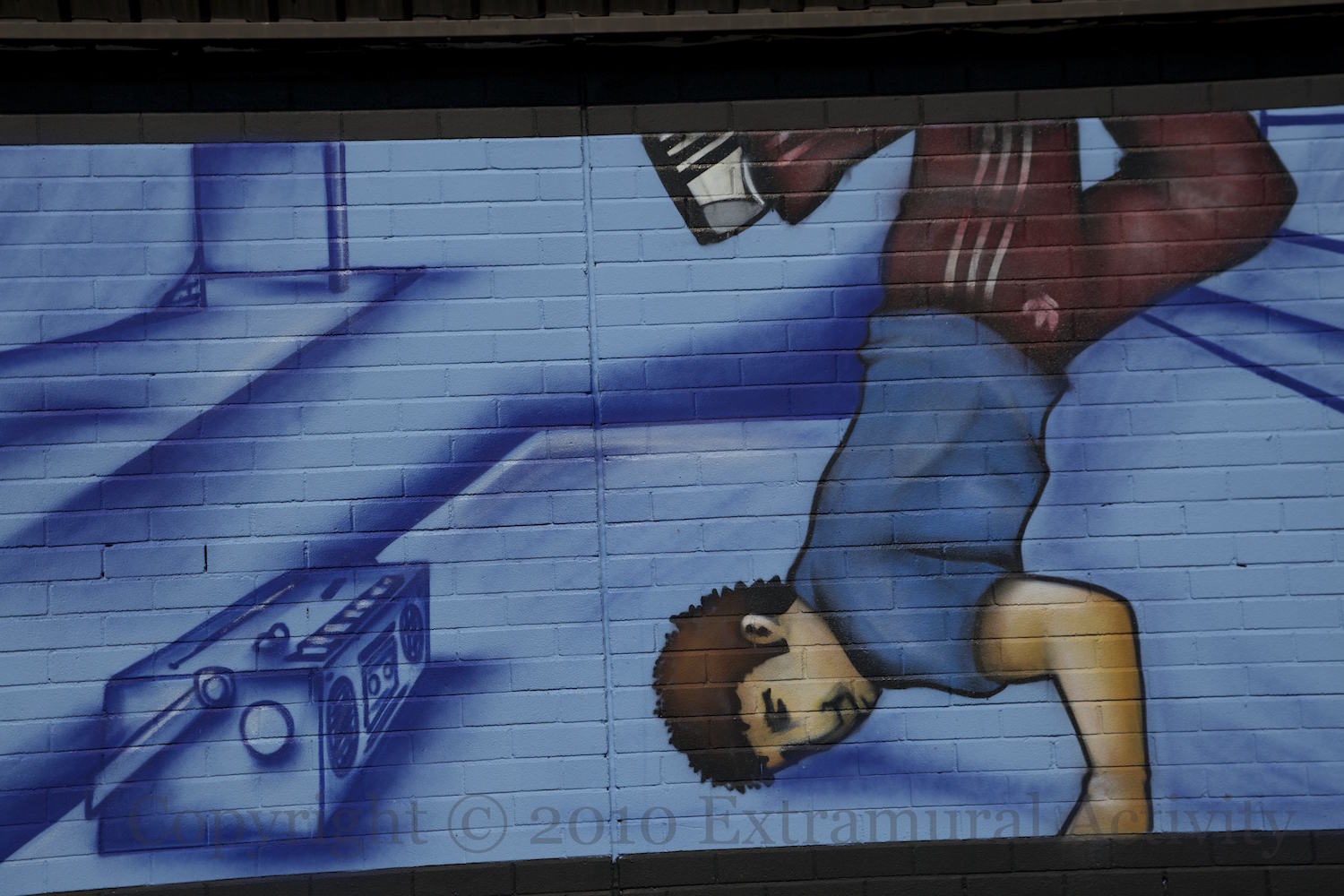
These are panels 1, 2, 6, 7, 8, 9, 12, 16, 17, and 19 (of 19) of the children’s mural in Hopewell Avenue. It shows kids at play across the century, from lamp-post swings and marbles to razor scooters and break-dancing. By Blaze FX.
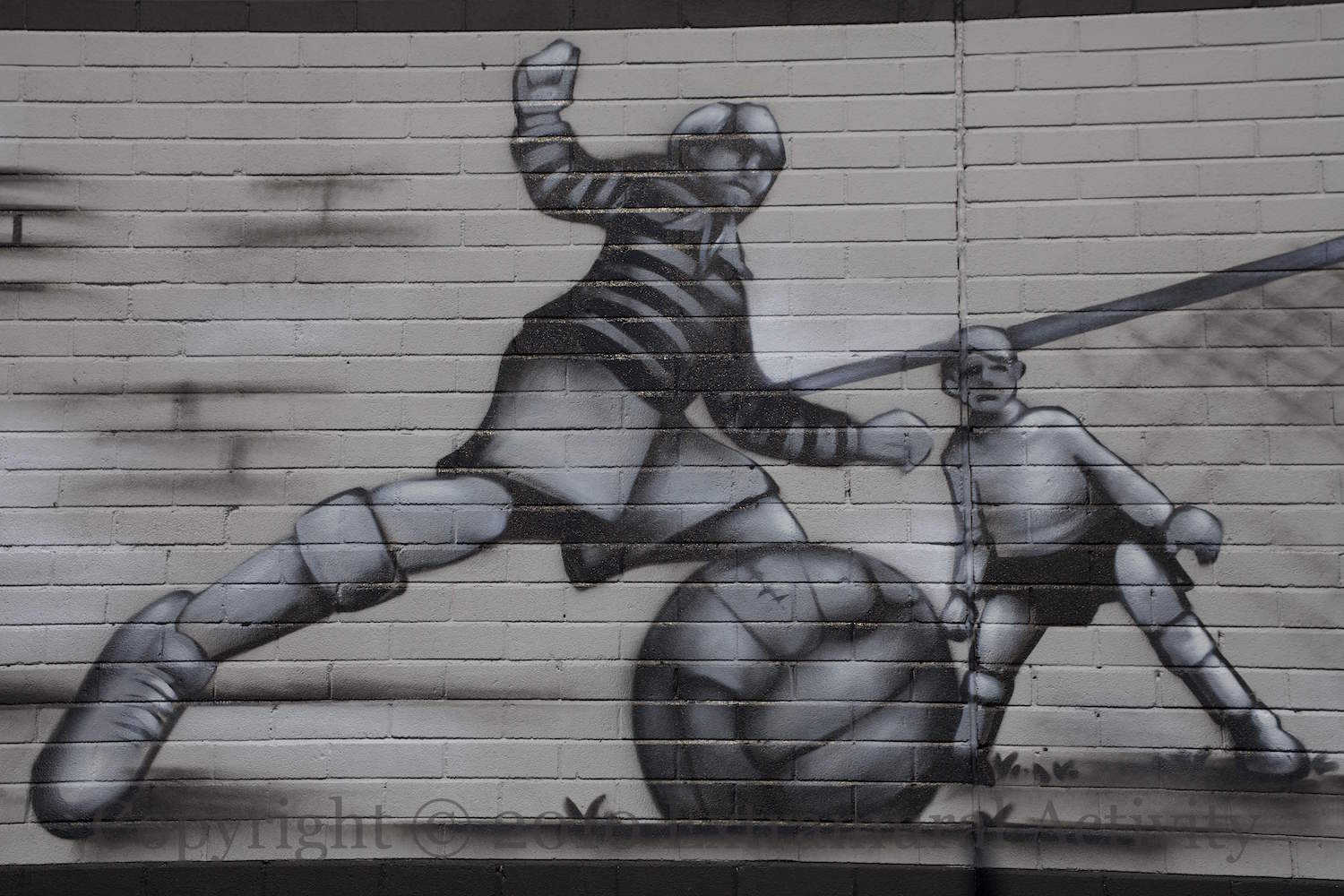
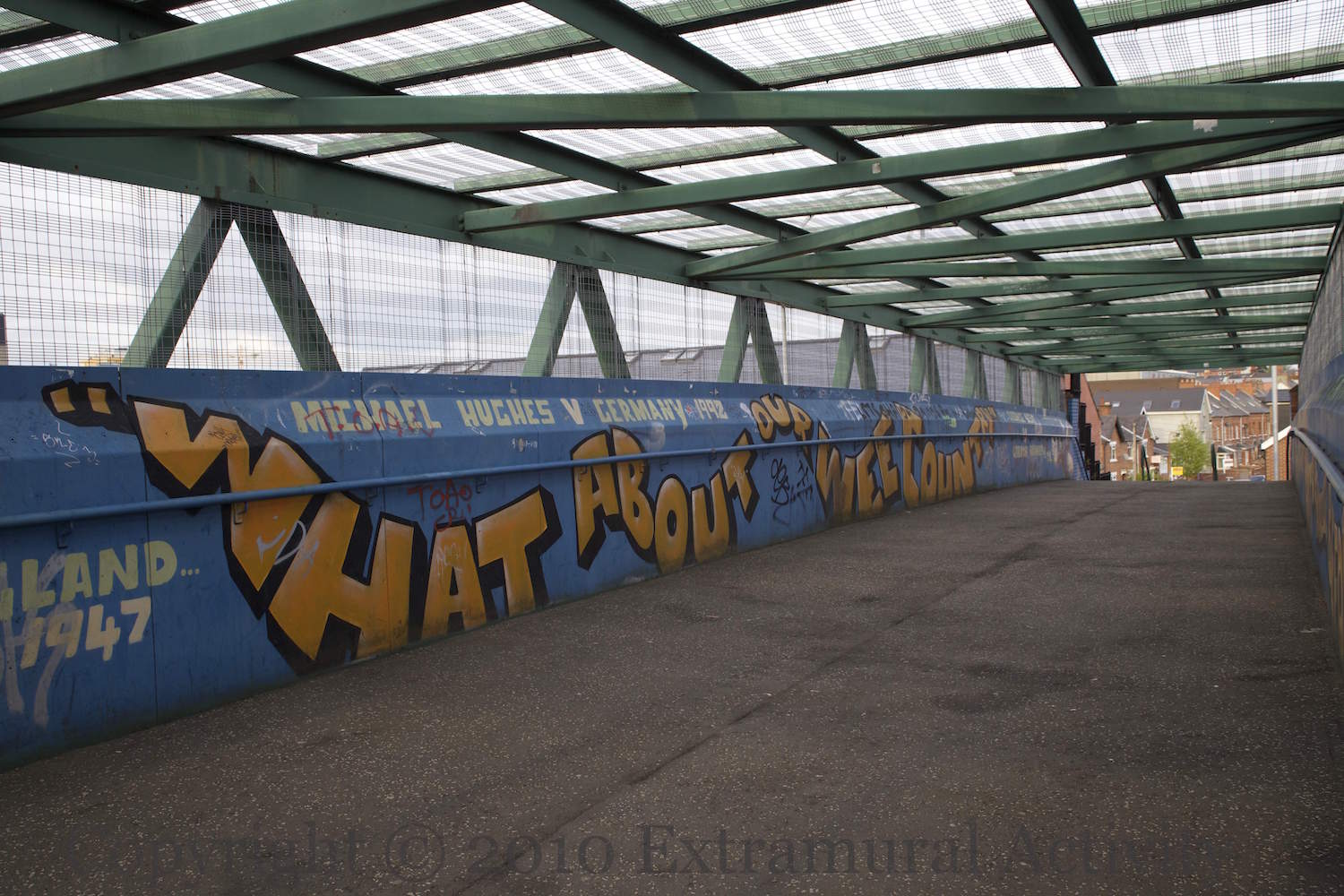
Highlights from Northern Ireland’s (football team) history on the footbridge from Windsor Avenue to Windsor Park (stadium). “N. Ireland v England 1947″,”Michael Hughes v Germany 1992”, and “George Best v Gordon Banks”. By Blaze FX.
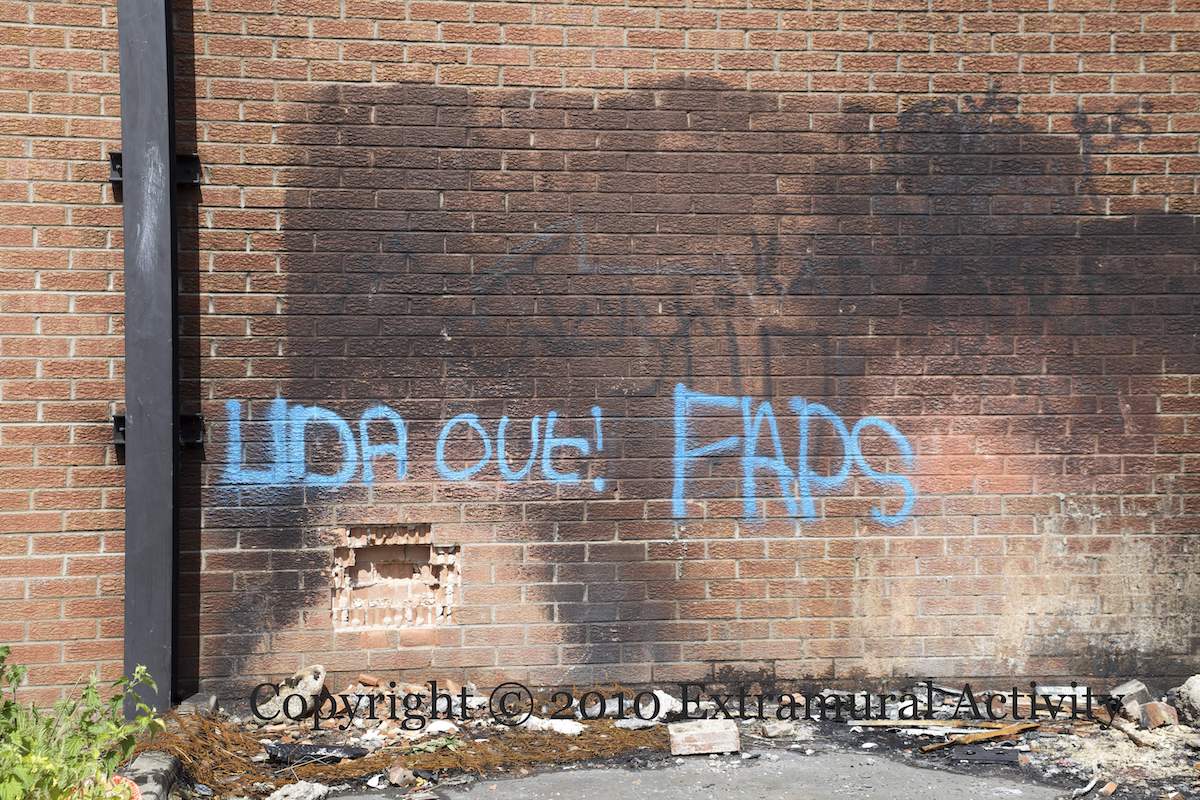
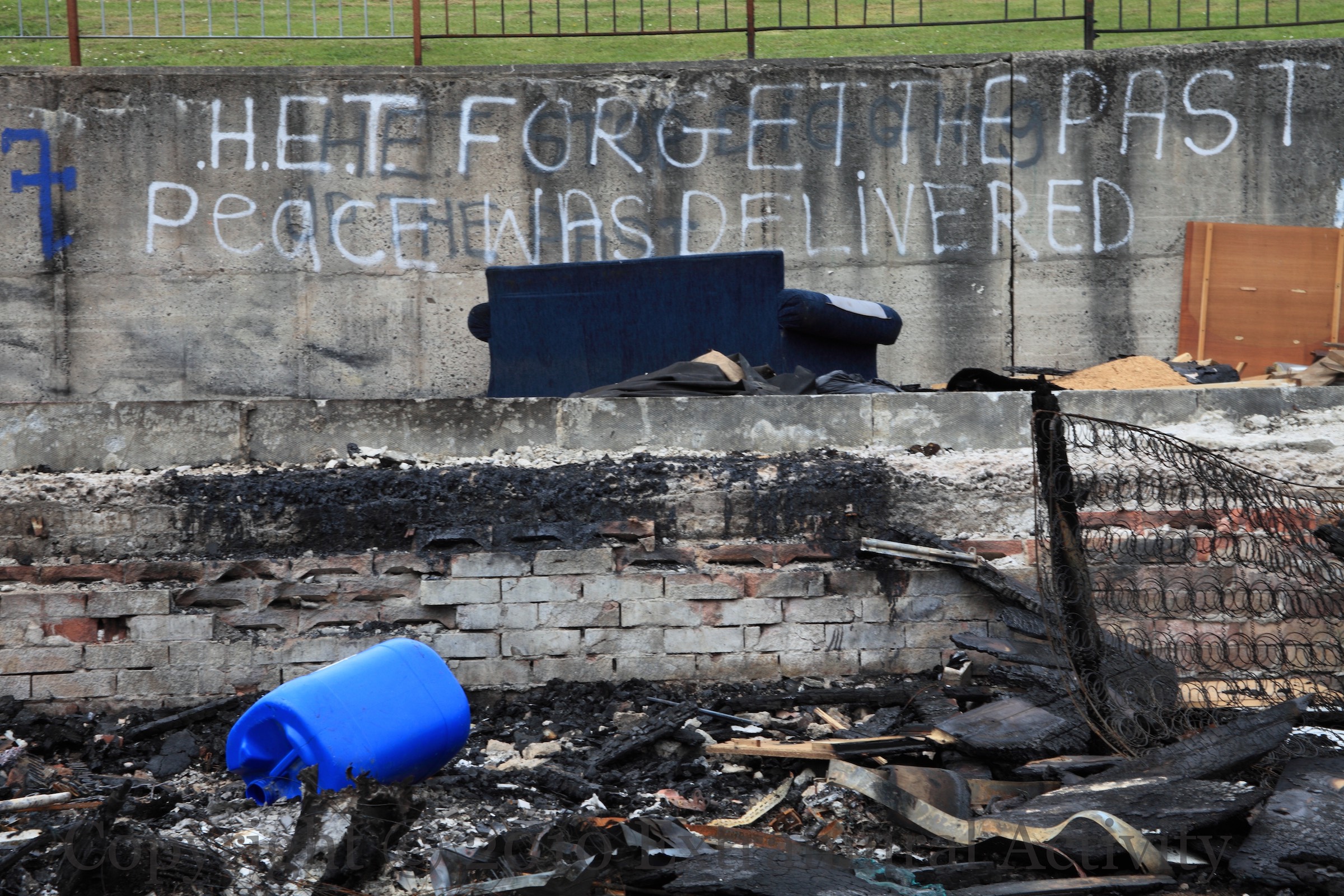
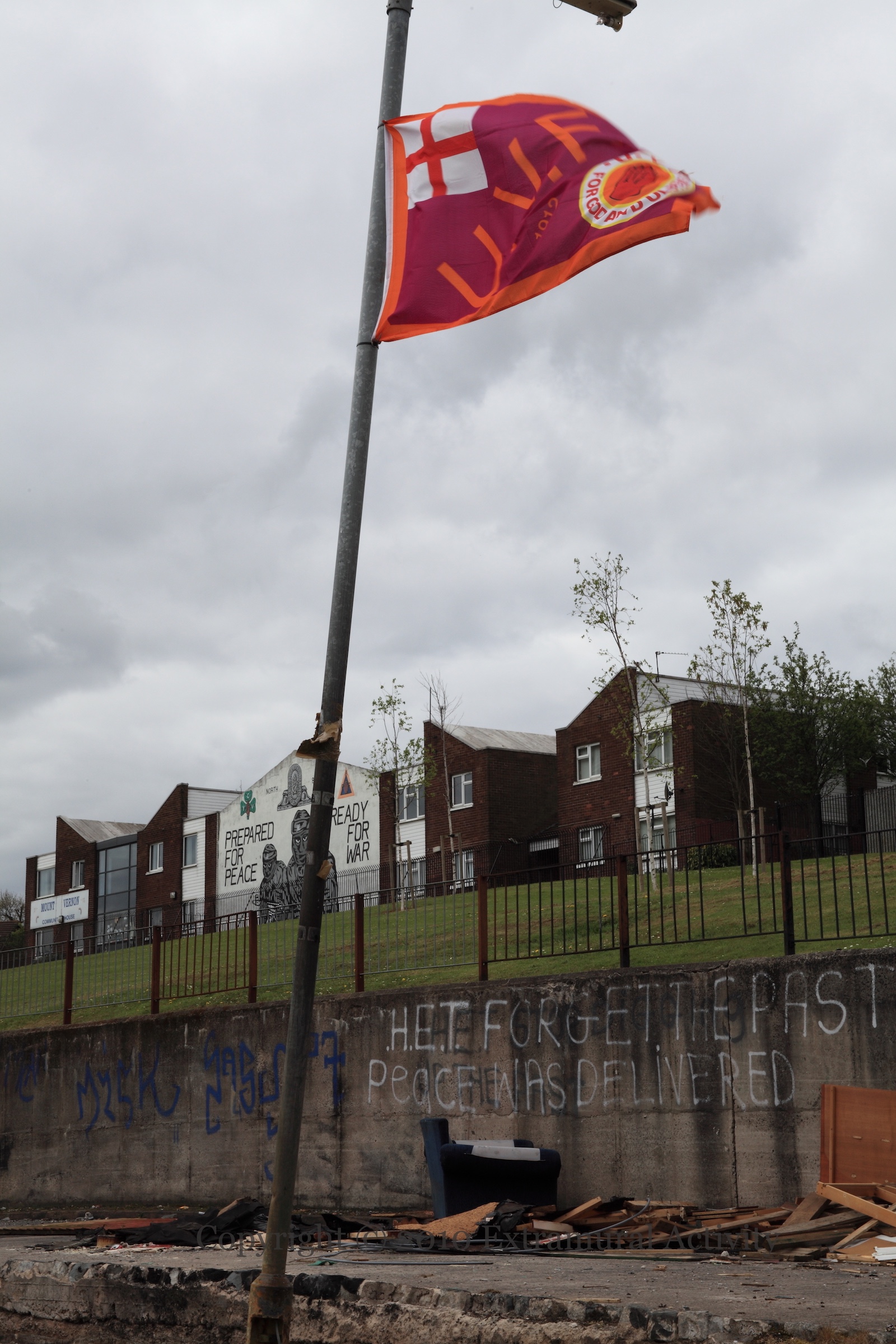
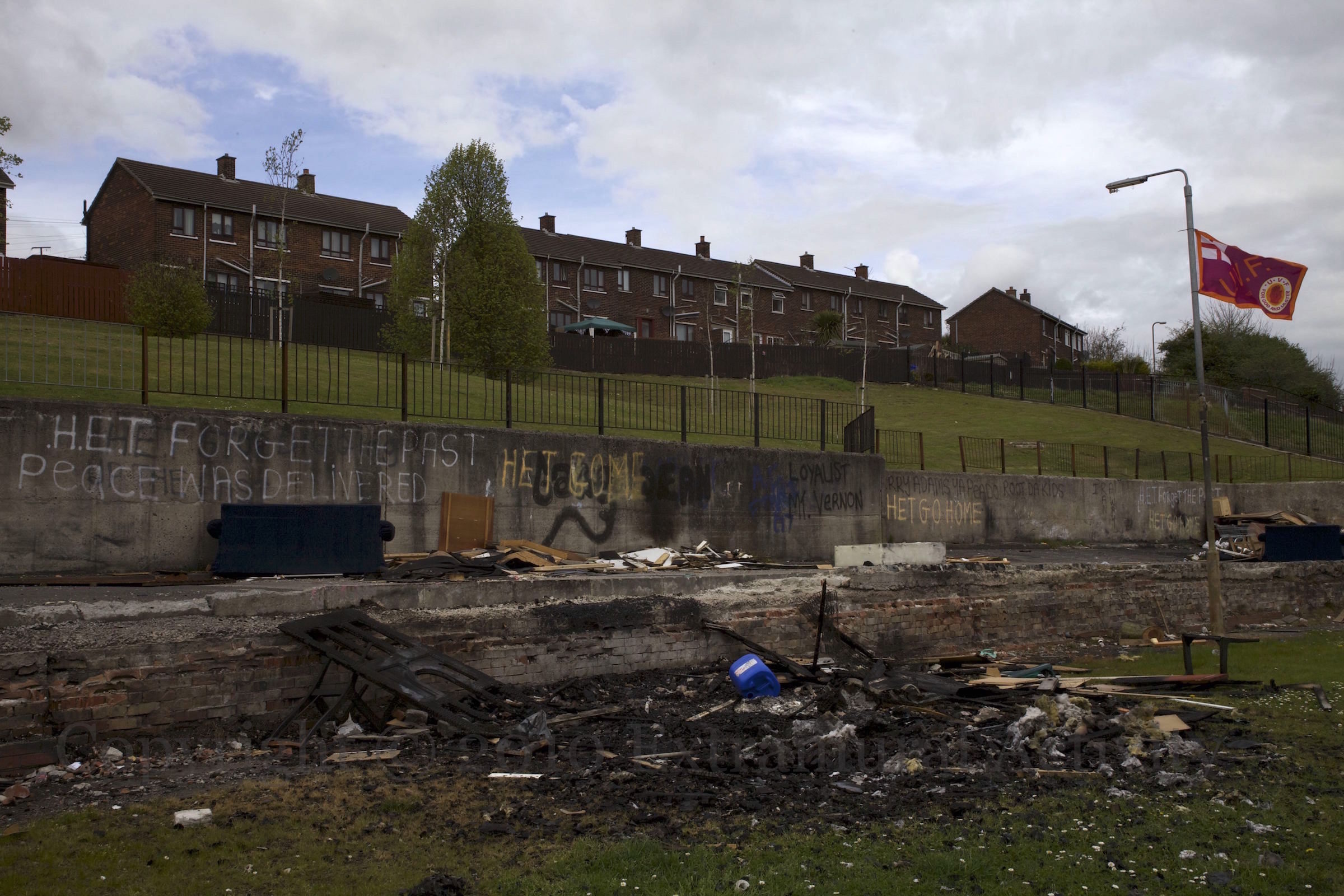
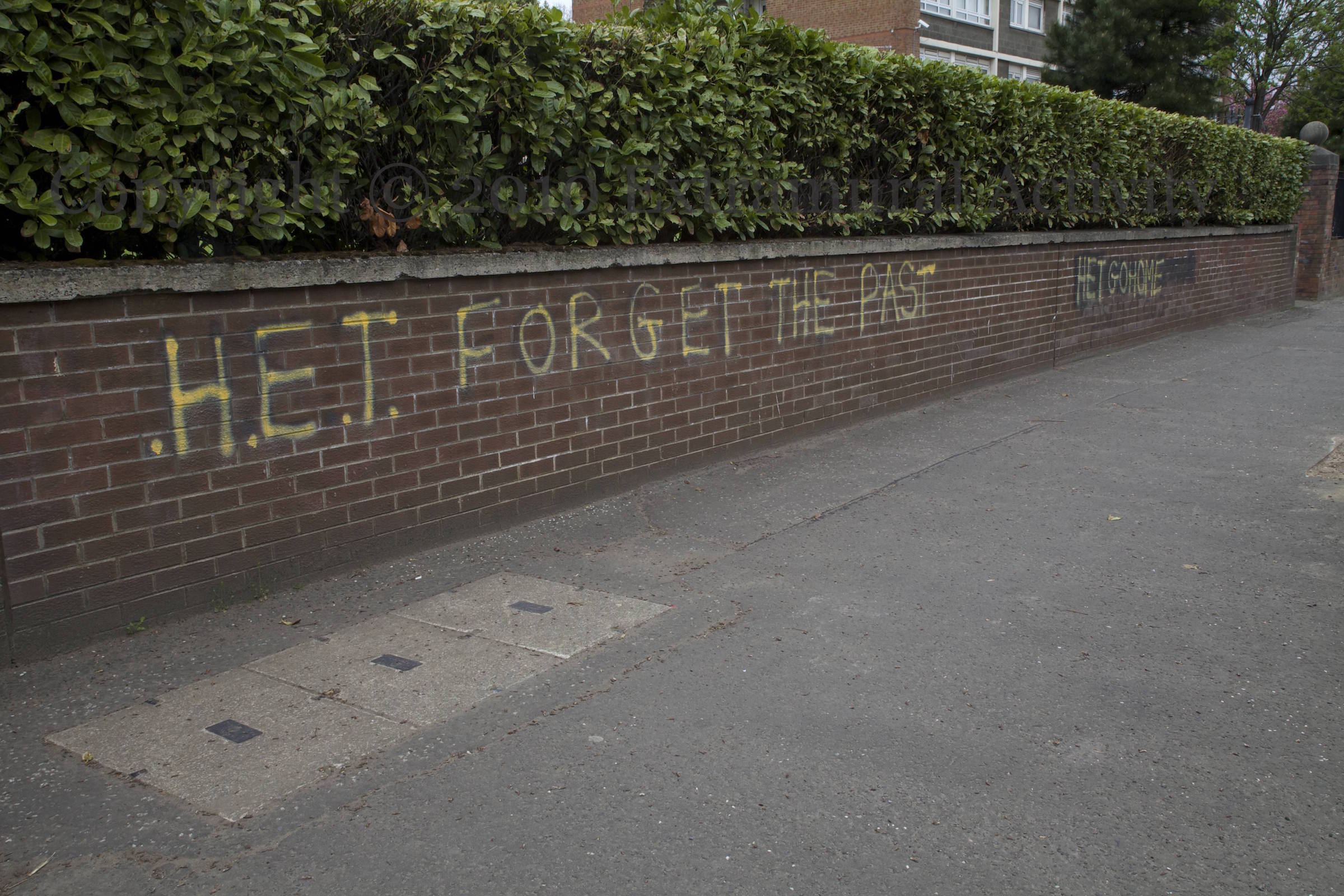
“HET” was the “Historical Enquiries Team”, investigating unsolved killings from the Troubles. It lasted from 2005 to 2014 (WP). The graffiti in these images from Mount Vernon and the Shore Road, are perhaps specifically in connection with the investigation into the UVF unit in the area (BelTel) and the murder of Jim Harbinson (BelTel). “Forget the past – peace was delivered”, “HET go home”, “Gerry Adams ya peado [sic] – root da kids”.
The summer of 1969 is generally taken to be the beginning of the Troubles in Belfast and the most famous symbol of the August riots is the burning of Bombay Street. The street was (and is) just below the old Cupar Street, where many streets drop down from the Shankill (you can see the distribution of PUL and CNR houses in the Visual History page on the west Belfast “peace” line). This event is commemorated in nationalist murals (see e.g. No Mission) but for a statement from the PUL perspective, see Can It Change?
The mural is based on a Frankie Quinn photograph “Belfast 1984”.
This series of boards, painted by Caroline Jeffrey, presents life in Larne from the early 20th century. As part of the 2009 Re-Imaging Project, it is largely non-sectarian, and begins with the derivation of the name “Tullygarley” from the Irish for “Hillock of the Grey Calf”, but includes the emblem of the 36th (Ulster) Division and the gunrunning ship Clyde Valley. It replaces a “God save the queen”/1690 mural, visible here.
Info board: “Tullygarley” means “Hillock of the Grey Calf” – thus the grey calf grazing with the cows.
The 36th Ulster Division – In September 1914 the Ulster Division was formed from the Ulster Volunteer Force which raised thirteen battalions for the three Irish regiments in Ulster.
Bleaching Green – Linen laid out in fields to bleach. The Bleaching Factory interior depicts the Bleaching process. (The building is currently derelict.) Blue Flax Flowers are the national floral emblem of Northern Ireland.
Local Primary School, Inver and Larne, known locally as “the Bridge”, as it looked in the 1930’s with the Inver River running through it. The bridge that the school was named after no longer exists.
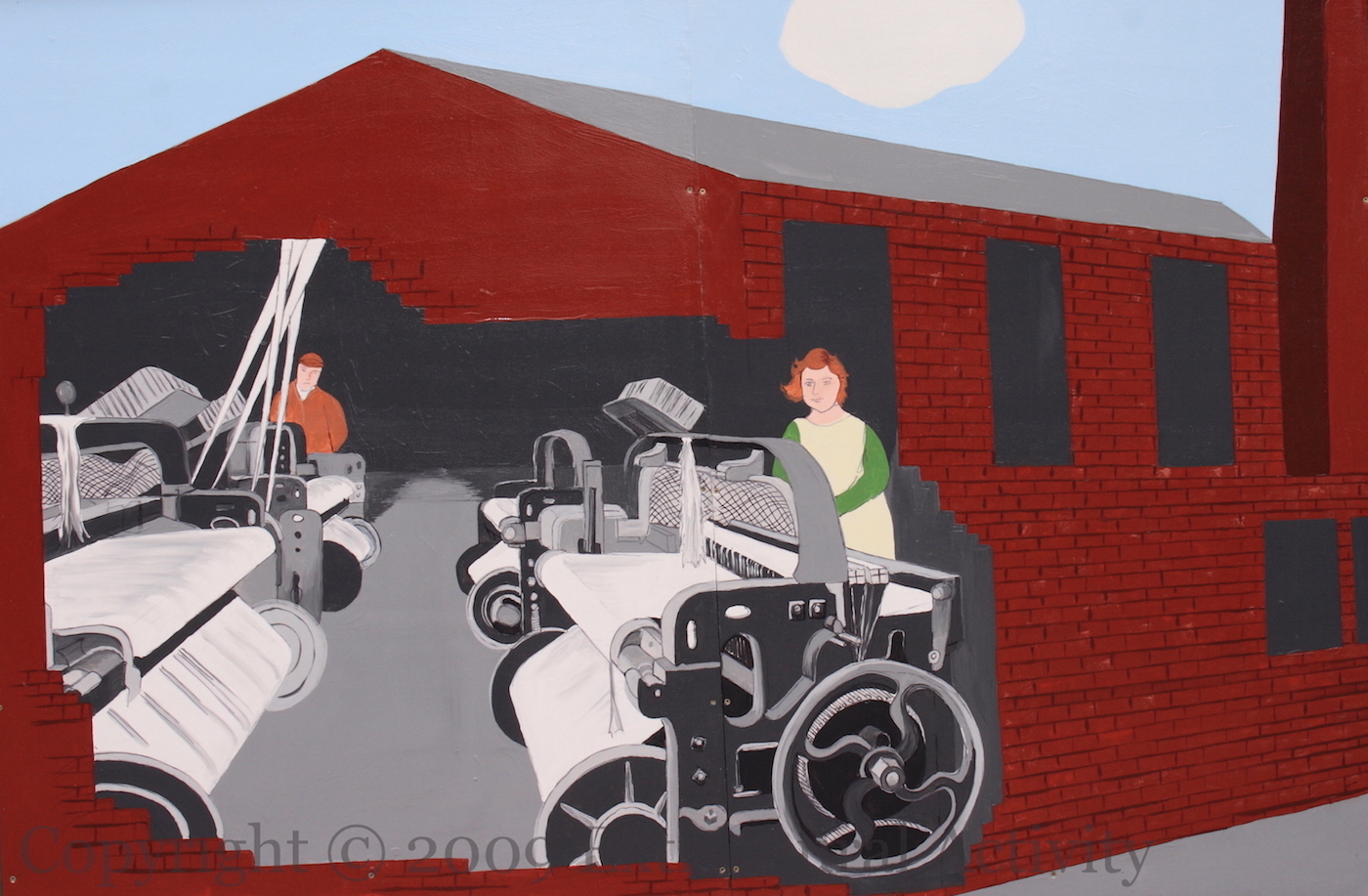
Linen Factory of Glyn [Glynn] Road (no longer exists, site of abandoned garage) with inset depicting workers with weaving machines (circa 1924).
The old Tullygarley playground (mural site) with the Fountain in the foreground, and rows of houses on either side (Glynn Road and South Circular Road).
Sun Laundry Van. Sun Laundry showing people working inside (now Rea’s Furnishings, Bank Road).
Larne Lough – it is an area of special interest, a special protection area and a Ramsar site in order to protect the wetland environment.
SS Clyde Valley – launched in July 1886. Was used in 1914 to transport arms from Hamburg to Larne.
Roseate Tern – Larne Lough is the only breeding colony in Northern Ireland for the Roseate Tern, one of the UK’s rarest birds.











 Extramural Activity