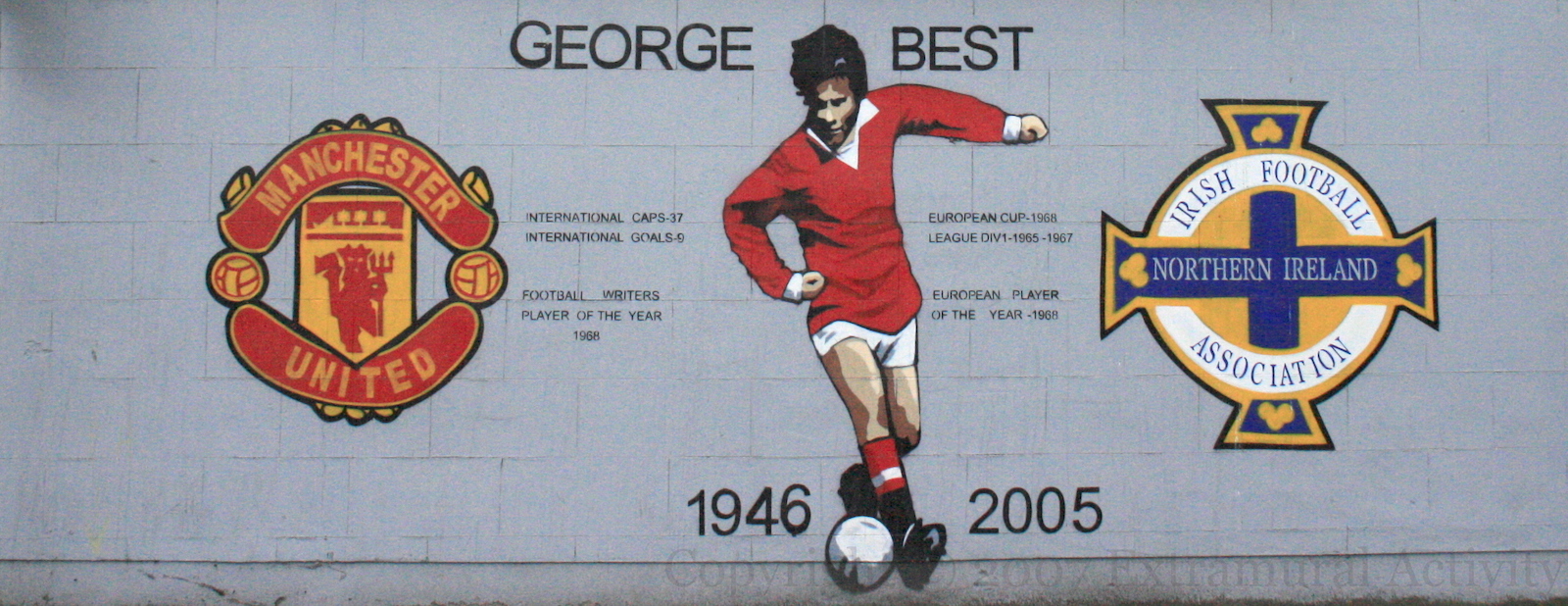
The career – both domestic (Manchester United) and international (Northern Ireland) – of soccer icon George Best is on display in this Sandy Row mural.
“In glorious memory” of King William III of Orange, crossing the Boyne to defeat King James II and secure Ireland for England. North Street, Ballymena.
These two pieces of anti-PSNI graffiti are in Glenvale Street, PUL west Belfast: “PSNI no-go zone – enter at your own risk” and “Providing Support [for] Nationalist Interests”.
This is an in-progress set of images of the original “Wheatfield Project” panels on the Ballysillan Road, depicting the 20th century in loyalism. The crown on the YCV symbol and the tombstones and Ulster tower have not been finished and Carson’s statue will be added to the foreground of Stormont.
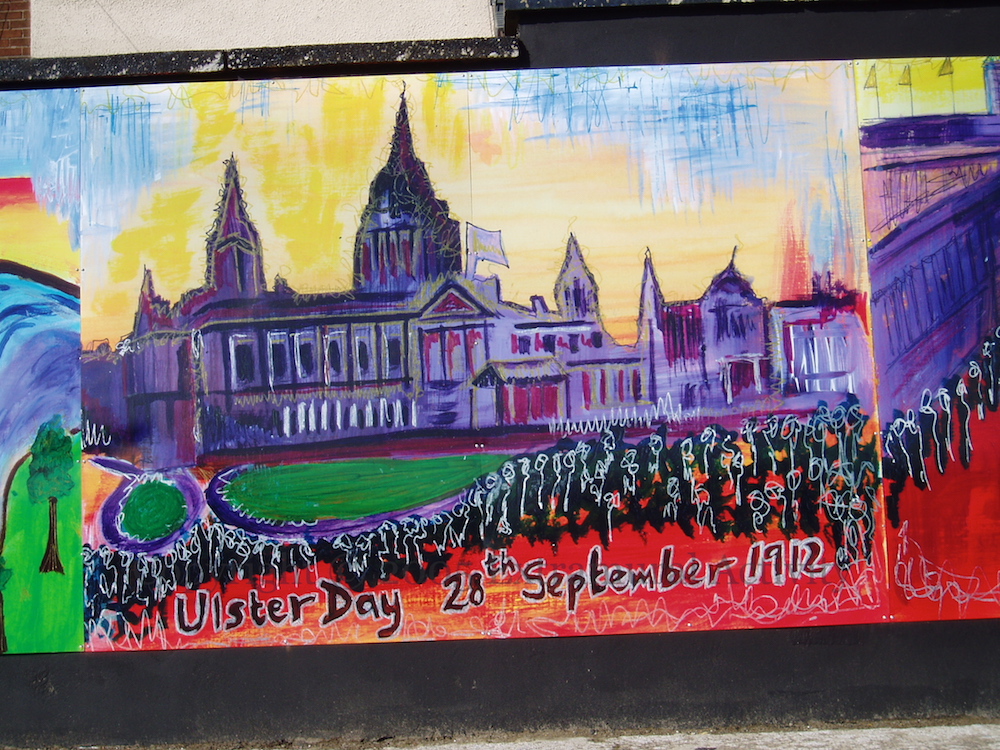
Later on, an info board would replace the first two panels, and the order after it would be Ulster Day, then Carson signing the covenant, then a new double-sized panel of Fernhill House, and then the rest as above, but with the order of the Sunningdale and UWC strike panels reversed.
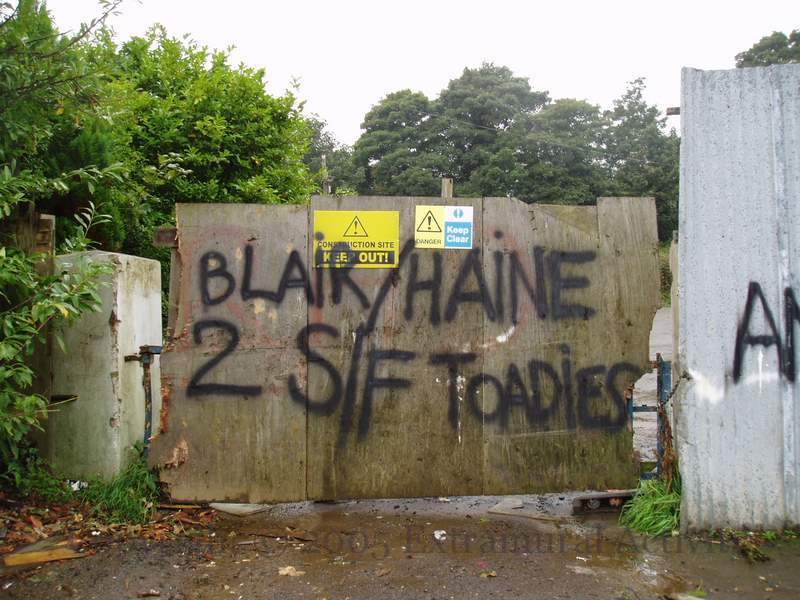
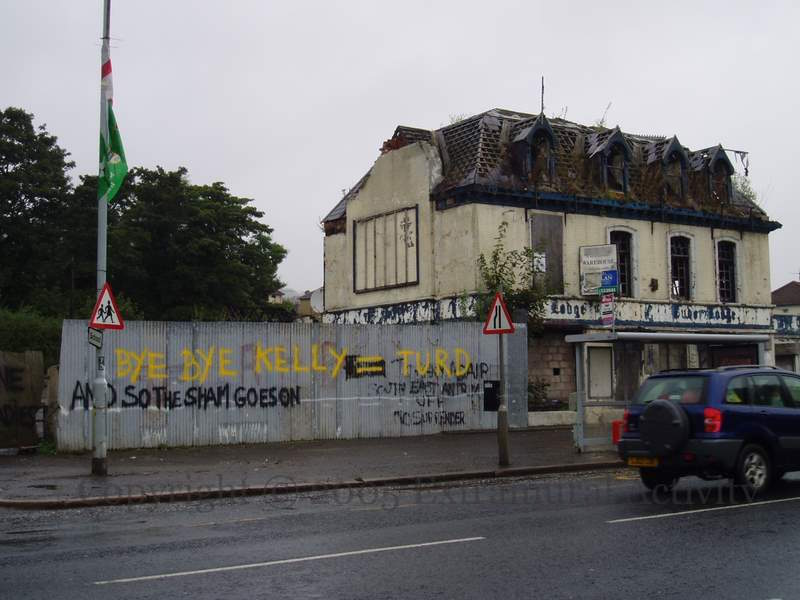
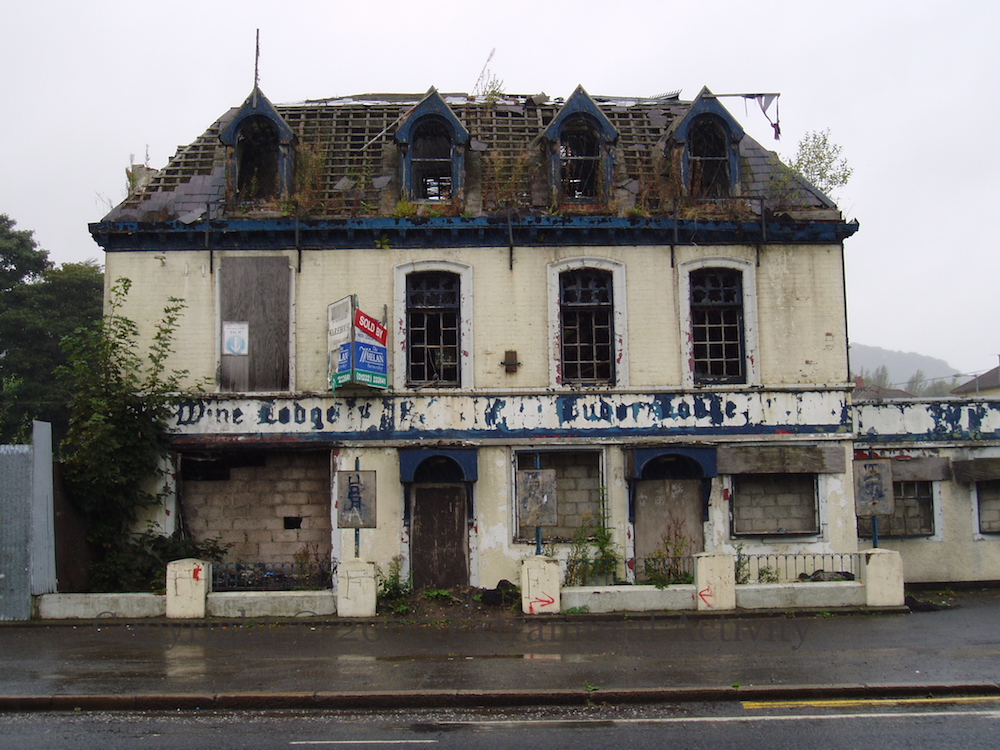
This is the scene on the Shore Road (north Belfast) at Gray’s Lane. From left to right, “[Tony] Blair/Haine [Peter Hain, NI Secretary] – 2 S/F Toadies”; “And so the sham goes on”; “Johnny Adair – South East Antrim UFF – No Surrender”; and below, the remains of the Tudor Lodge (still present in 2017).
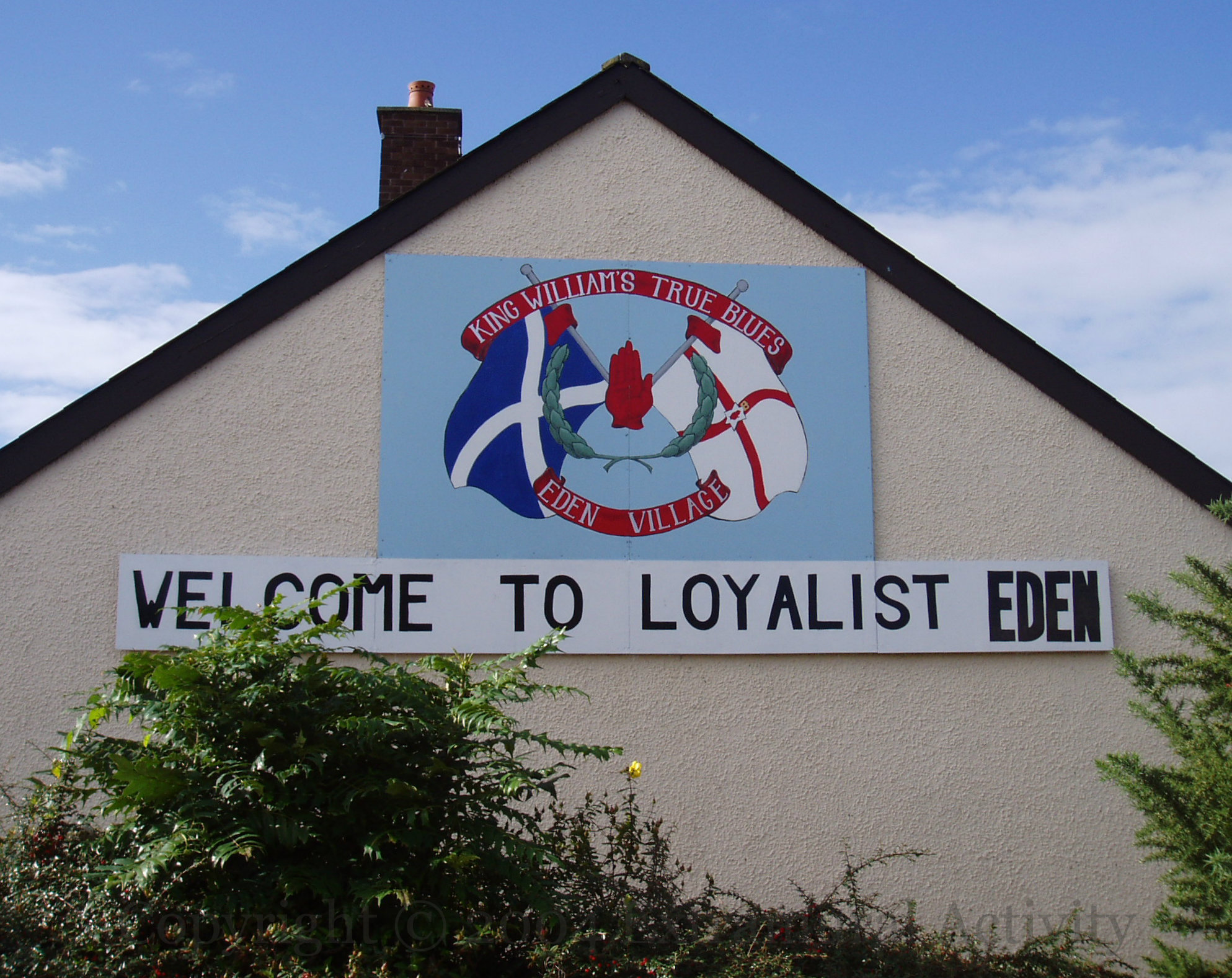
King William’s True Blues flute band from Eden Village (outside Carrickfergus) amalgamated with the South East Antrim Defenders. That group disbanded in 2007 but was re-established in 2010.
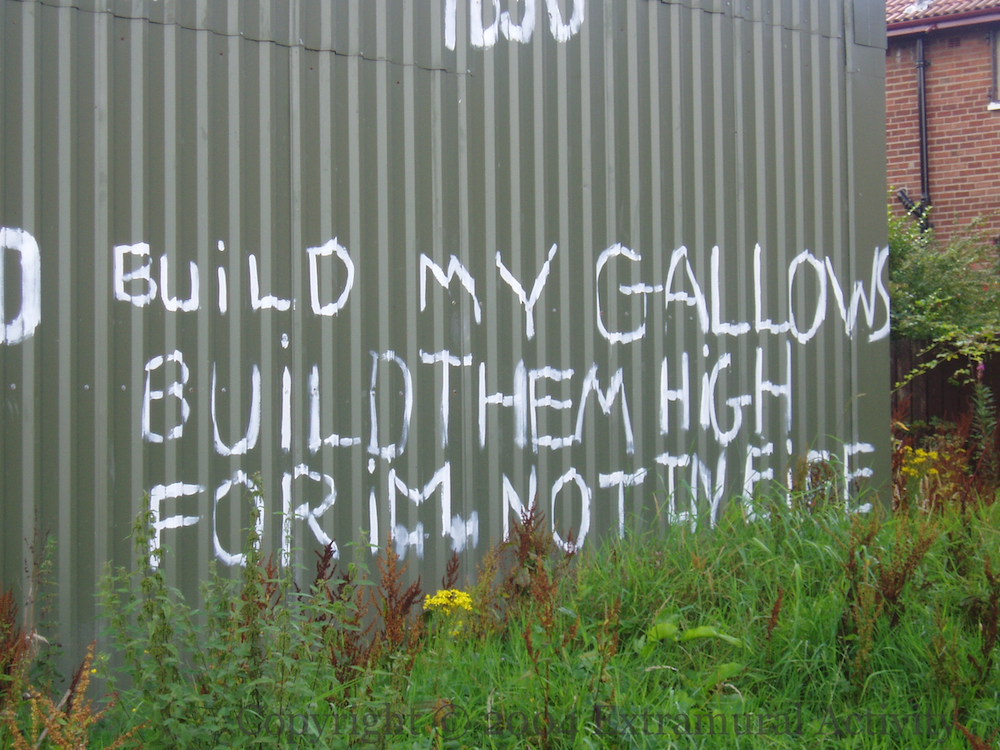
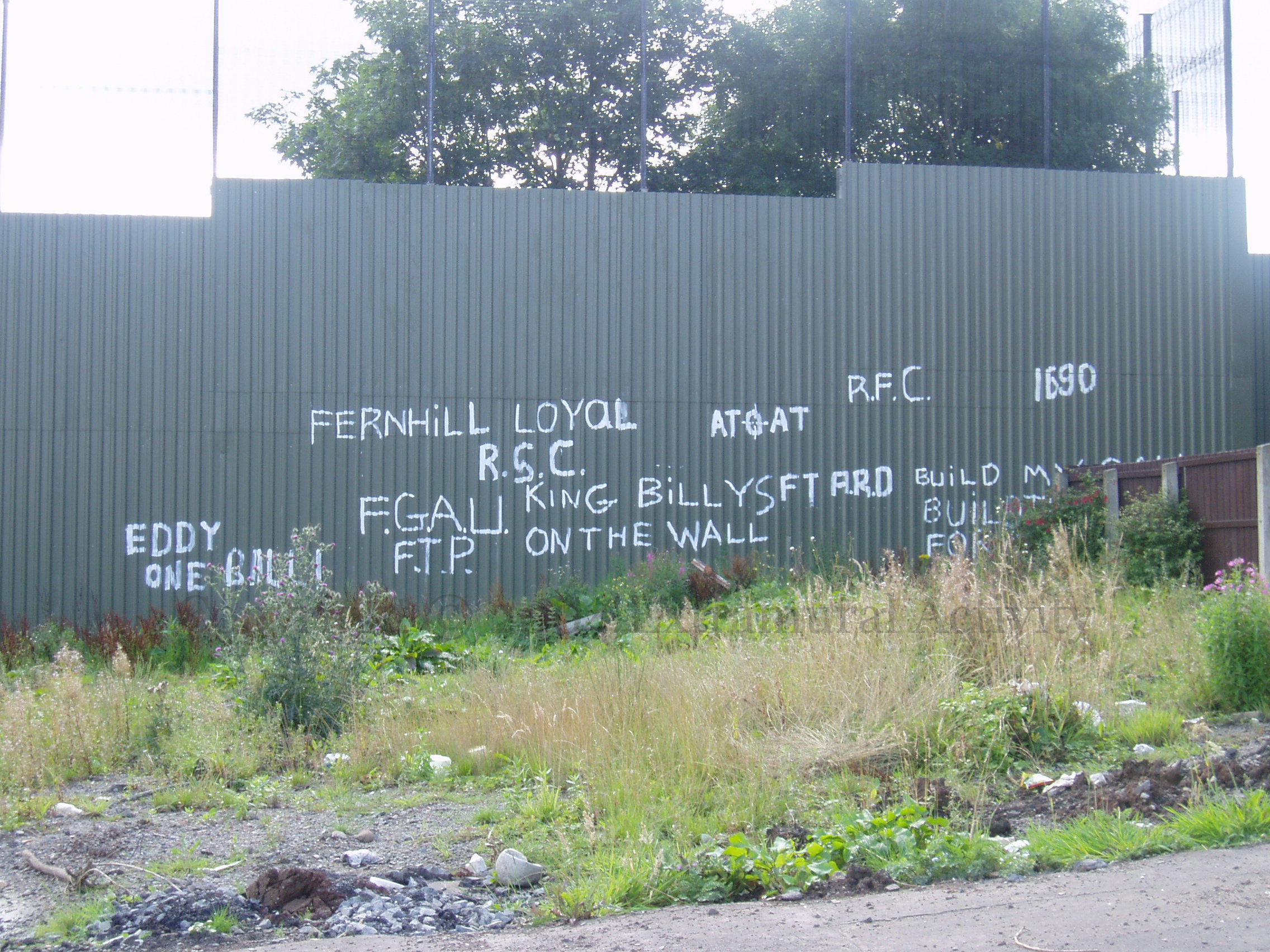
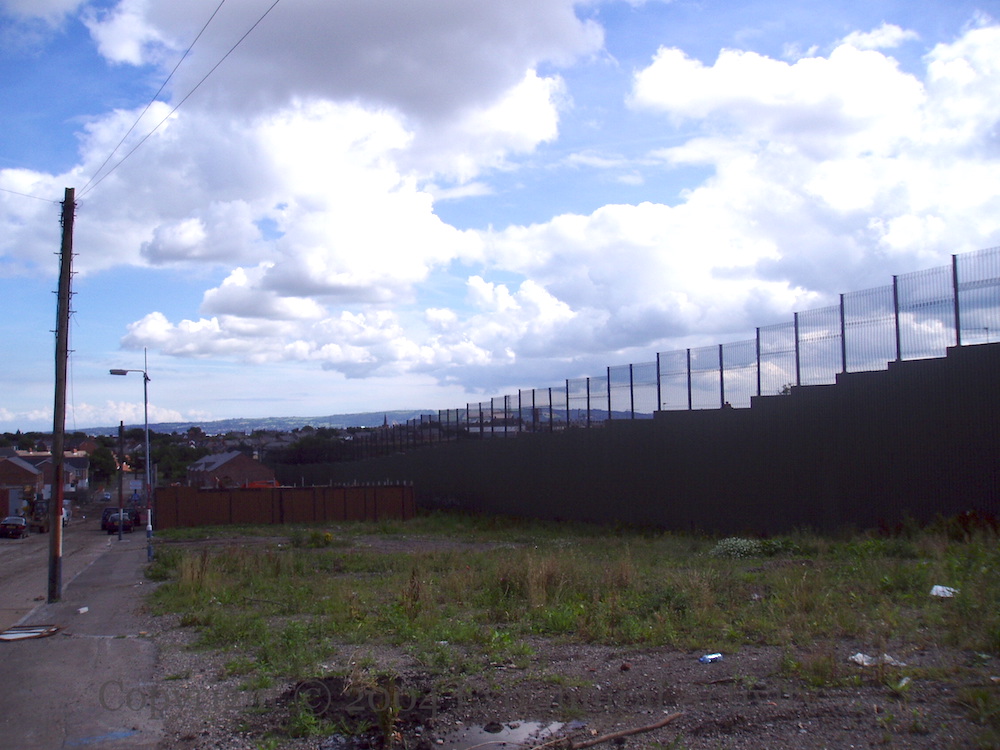
This is the scene as Glenbryn Park was being rebuilt. The “peace” line separates Protestant Glenbryn from Catholic Ardoyne. “Build My Gallows” is a Rangers football song, but the last line here is “Build my gallows, build them high … for I’m not in Eire”.
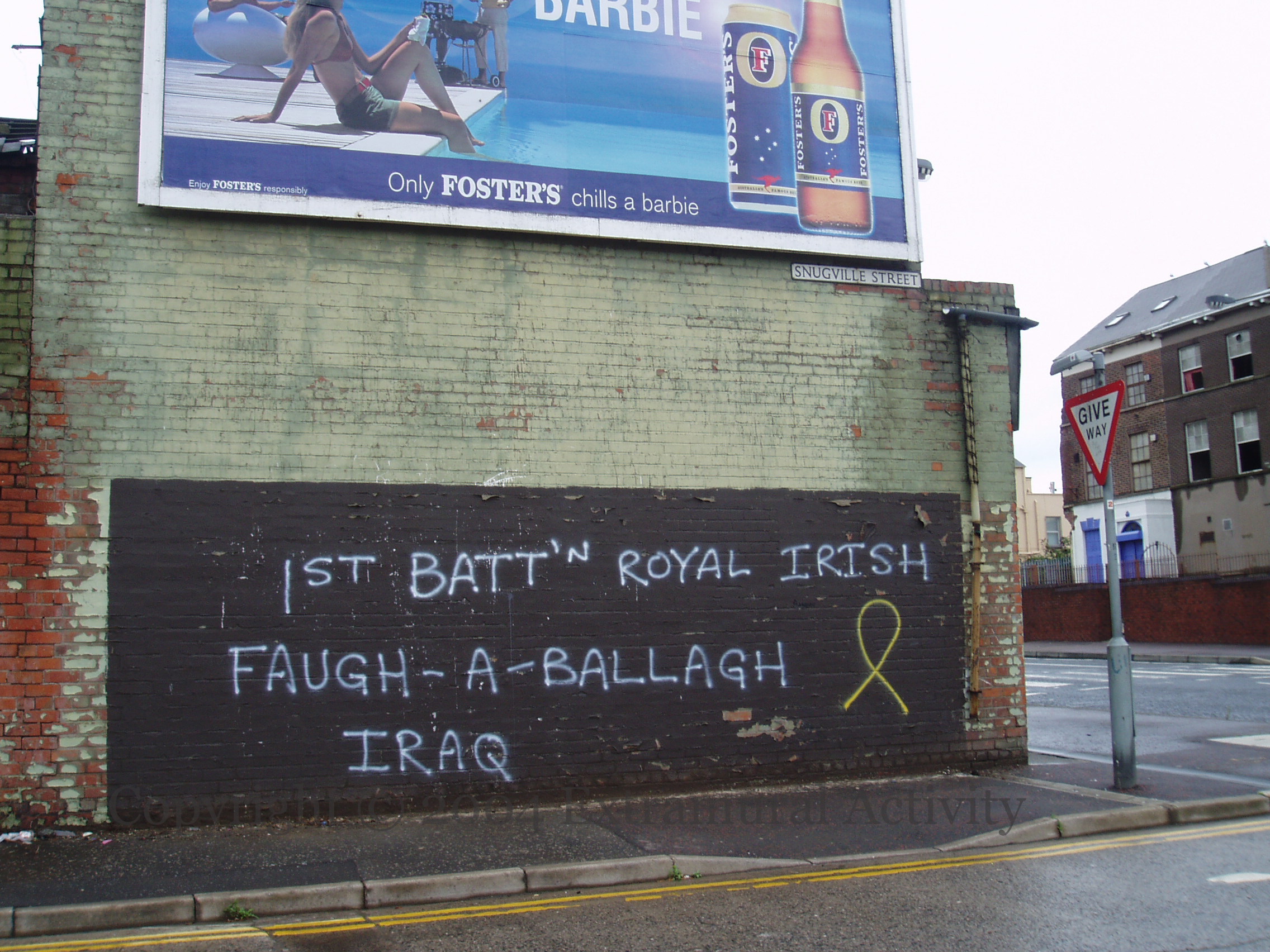
“Faugh-a-ballagh” (from the Irish “Fág an bhealach”, “clear the way”) is the regimental motto of the Royal Irish Regiment. It is said to date back to 1811, when it was used by ensign Edward Keogh of the 87th Prince Of Wales’s Irish regiment. See also: Colonel Tim Collins, commander of the first battalion, who made a famous speech on the eve of the Iraq invasion | Talavera 1809.
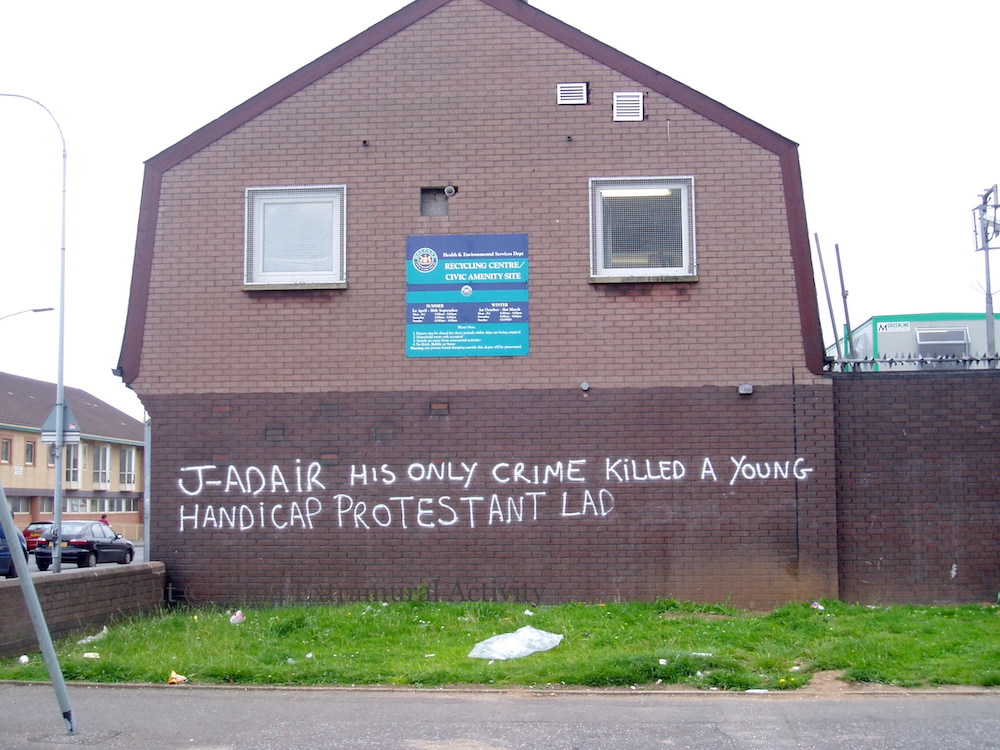
More graffiti referencing Johnny Adair: “J-Adair his only crime killed a young handicap Protestant lad”. The “lad” in question was Noel Cardwell, who had a mental age of 12. His crime was to tell the RUC the names of two men who had spiked his drink; they were UDA and friends of Adair. He was beaten and shot in the head (Sunday Mirror). Adair denied involvement and was not charged with the killing when arrested on charges of directing terrorism.








 Extramural Activity