The Irish Regiments

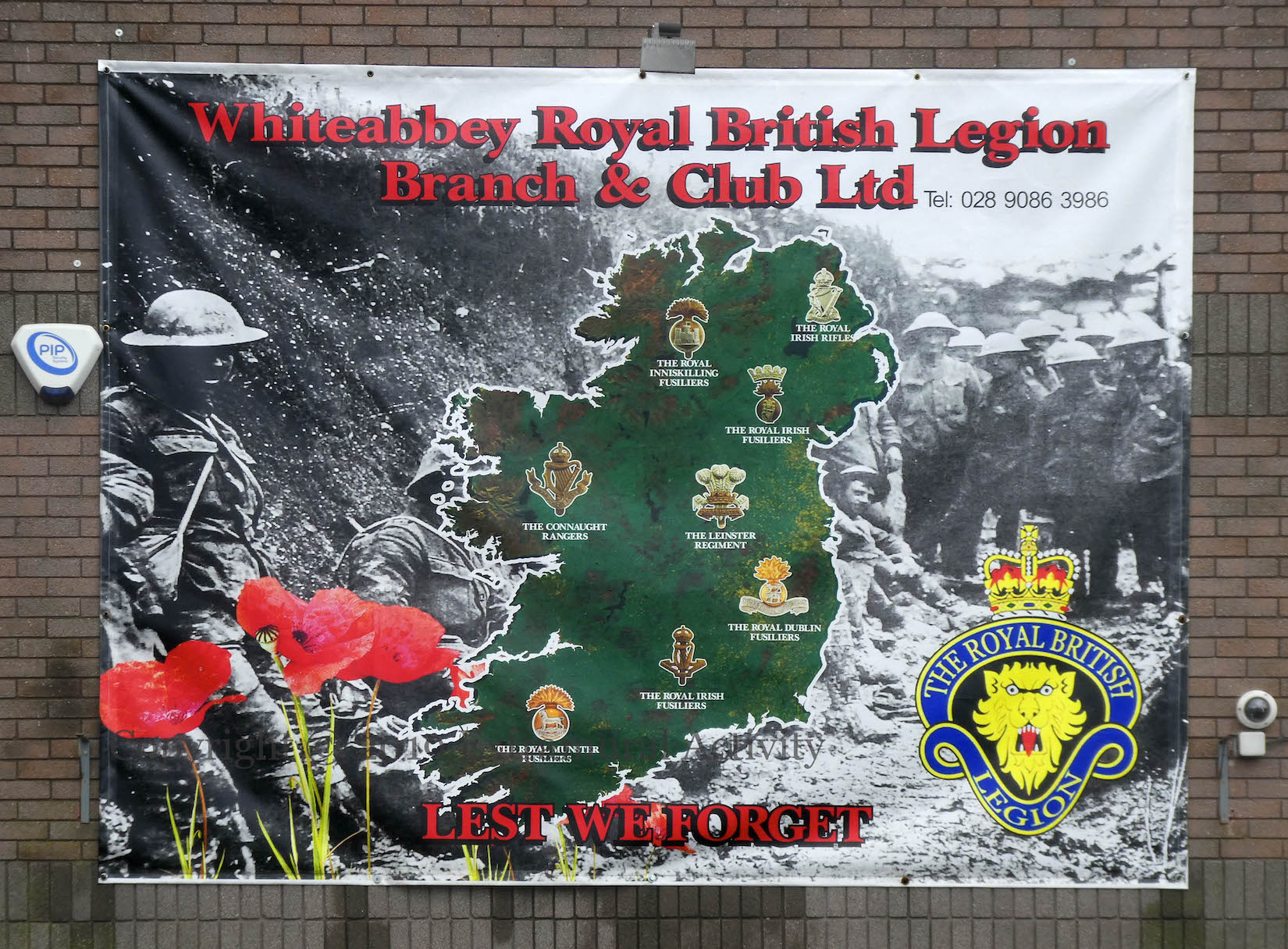
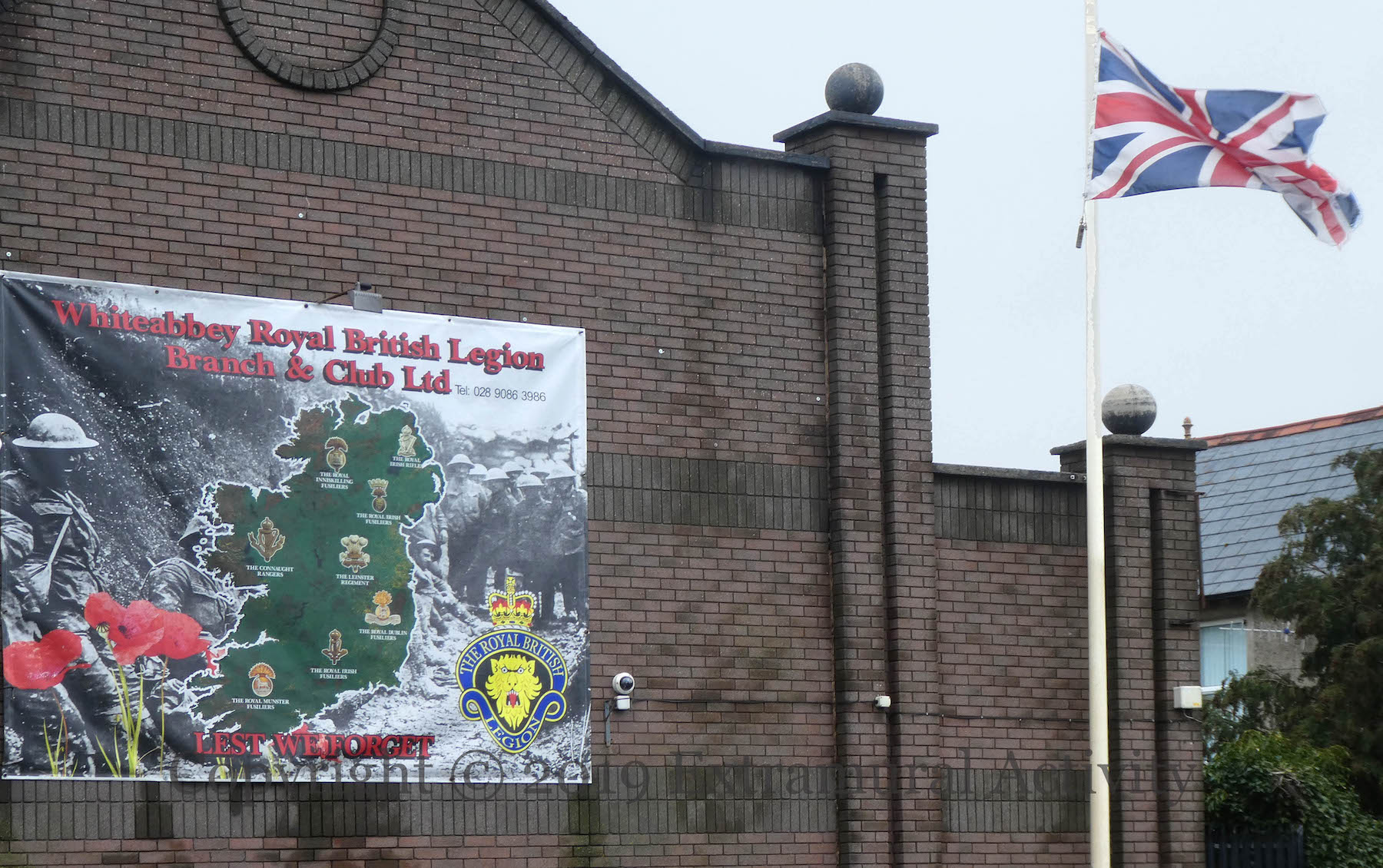
Various other murals pay tribute to the 10th and 16th Irish divisions alongside the 36th division (see, e.g., We Are The DeadBrothers In Arms | Killed Wounded Missing | Their Only Colour Was Khaki) but this tarp outside the Whiteabbey British Legion (Fb) shows instead the eight regiments raised in Ireland, whose battalions served not only these three but many other divisions: Royal Irish Rifles, Royal Inniskilling Fusiliers, Royal Irish Fusiliers, Connaught Rangers, Leinster Regiment, Royal Dublin Fusiliers, Royal Irish Fusiliers [should be Royal Irish Regiment], Royal Munster Fusiliers. The geographical distribution of the regiments (royal-irish.com has a map of the recruiting districts in Ireland; for battalions, divisions served, and regimental headquarters, see WP.) The background image is of the 36th in their trenches at the Battle Of The Somme.
Click image to enlarge
Copyright © 2019 Seosamh Mac Coılle
Shore Road X06480 X06481
Three Scottish Soldiers

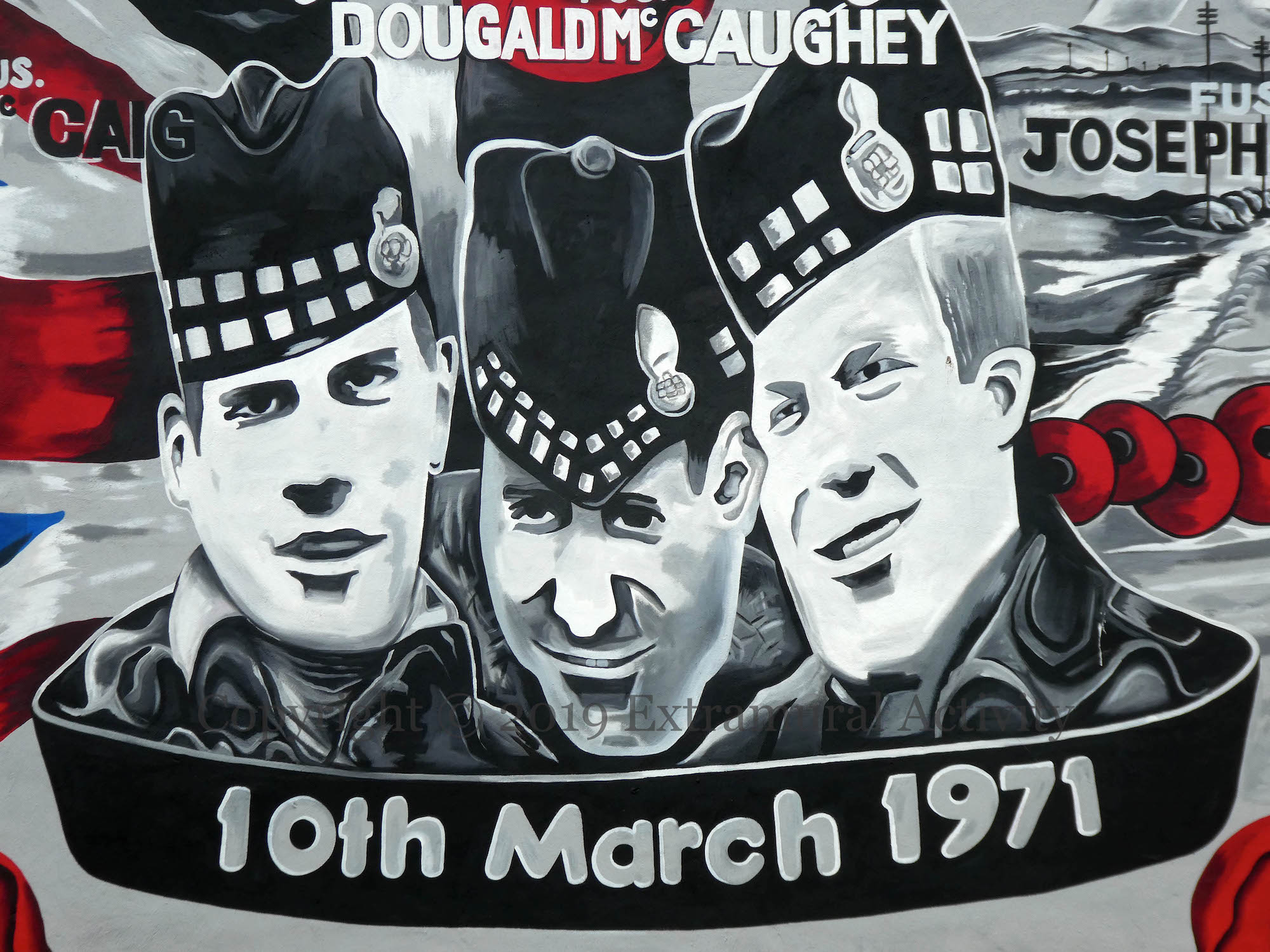
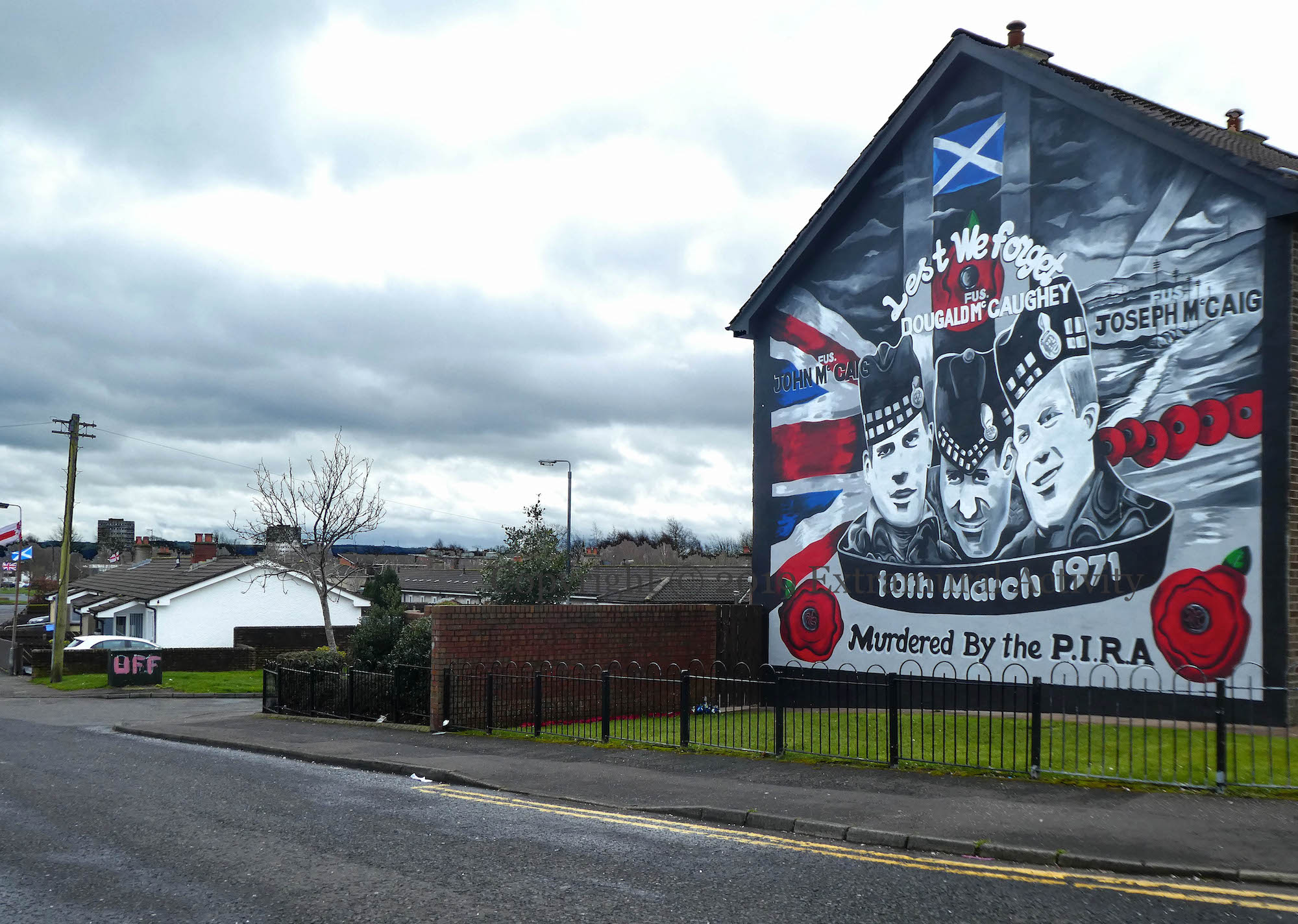
Highland Fusiliers Joseph McCaig (18), (his brother) John McCaig (17), and Dougald McCaughey (23) were lured by members of the (P)IRA from a city-centre pub to their deaths in the fields above Ligoniel in 1971 (WP). Their deaths contributed to the resignation of Chichester-Clark and the introduction of internment in August. There are monuments to the three men in Ballysillan and at the site of their deaths on White Brae depicted on the right of the mural – for images of the monuments see The Highland. This new Rathcoole mural to their memory replaces one to Queen Elizabeth II.

Click image to enlarge
Copyright © 2019 Seosamh Mac Coılle
X06477 X06476 X06478 owenreagh dr

North Down Ulster Young Militants

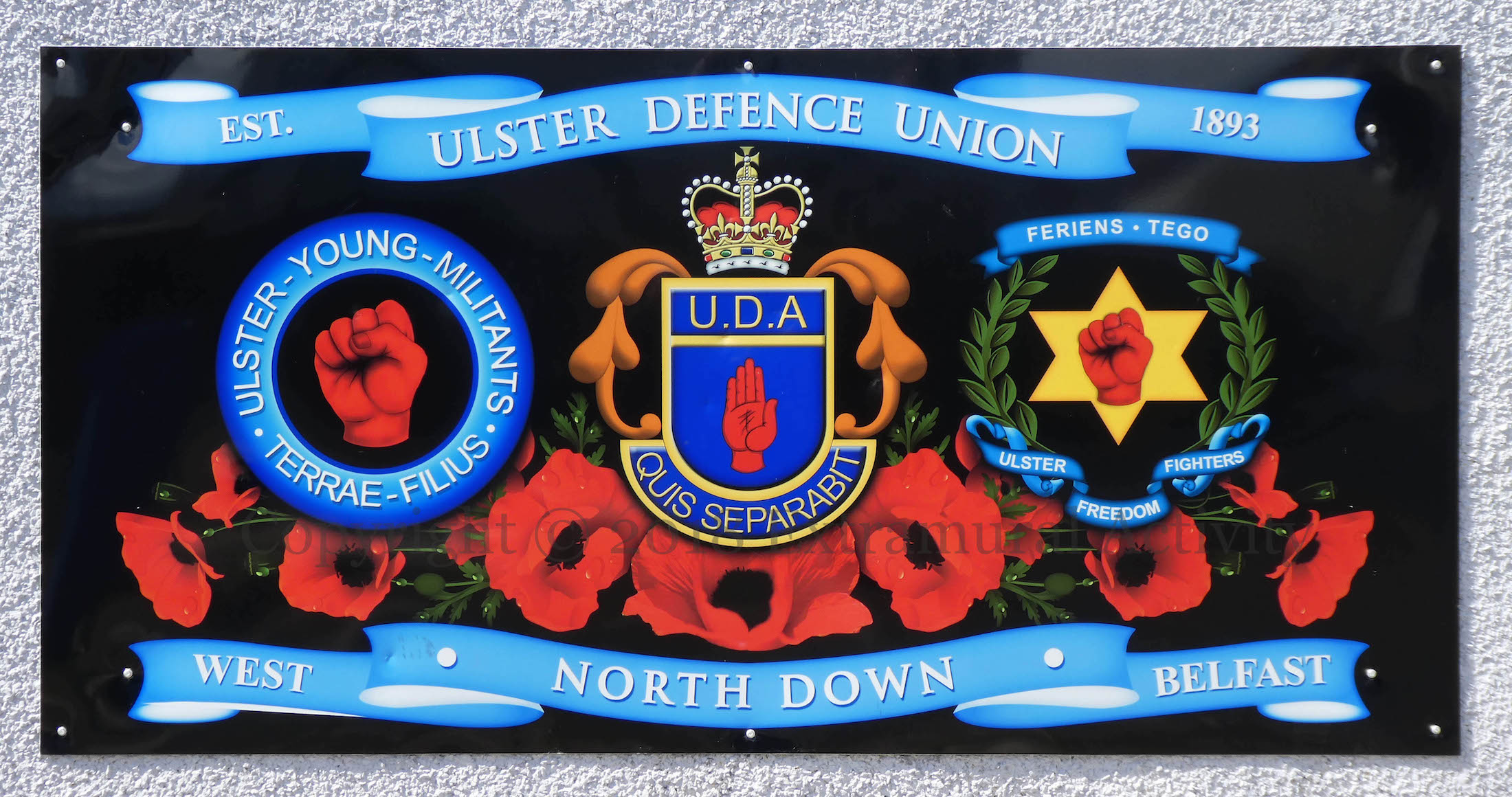
2nd battalion, D company, North Down UDA/UYM board in Inisharoan Court, Newtownards. For other North Down UDA boards, see North Down West Belfast.

Click image to enlarge
Copyright © 2018 Seosamh Mac Coılle
X06130 [X06131]

They Control You

Ending The Harm is a Department Of Justice (Tackling Paramilitarism Programme) campaign of posters, radio ads, and hard-hitting videos (YouTube) aimed at combatting paramilitary-style violence. This hoarding is on Newtownards Road, in competition with the UVF mural in the Iceland car-park (see Please Pay Here).

Click image to enlarge
Copyright © 2019 Seosamh Mac Coılle
X06471 [X06472]

Scotland, England, Wales

After almost fourteen years the long-standing Rising Sons Flute Band mural off Newtownards Road (at the old Bright Street) has been replaced with a mural to the (modern) YCV, the youth division of the UVF. The vine of flowers in yellow includes the shamrock, thistle, and Tudor rose (but not the daffodil of Wales, which is named along with Scotland, England, and the YCV battalions of east Belfast extending to Newtownards and Bangor) .

Click image to enlarge
Copyright © 2019 Seosamh Mac Coılle
X06460

Unknown Soldier

As time passes, volunteers who survived the Troubles are being taken by natural causes. There are thousands of such people and it is not clear on what grounds some will be publicly commemorated and others not – it might as simple as whether surviving friends and family take the pains to do so. See, for example, the plaques of republican ex-prisoners being added to a wall in Ardoyne (Door Into The Dark). The plaques above “In loving memory of Volunteer Dennis/Denis Brine, associated with Glasgow Red Hand Commandos” are in the lower Shankill estate.

Click image to enlarge
Copyright © 2019 Seosamh Mac Coılle
X06451 X06452

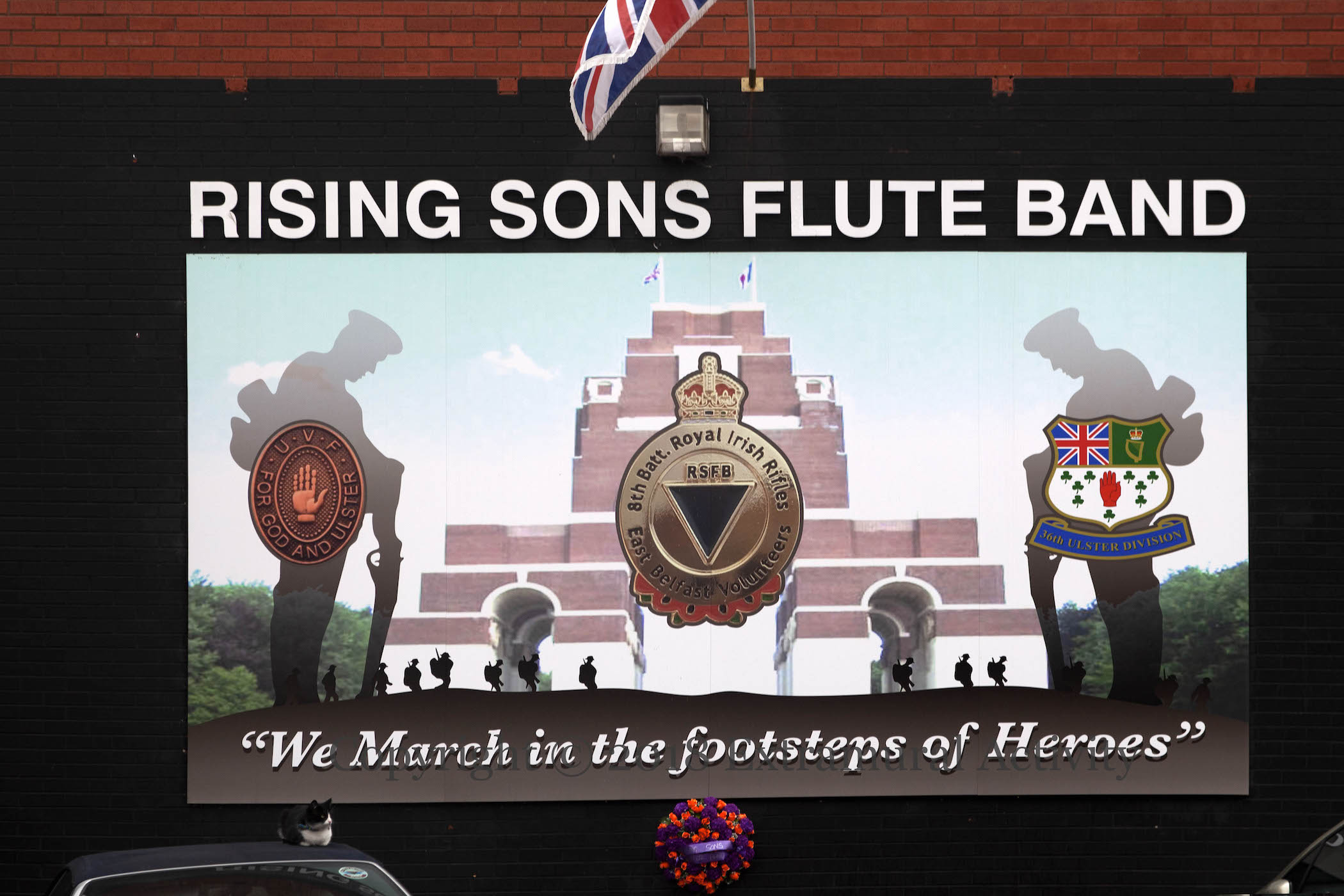
In The Footsteps Of Heroes

The 8th battalion of the RIR was drawn from east Belfast’s Ulster Volunteers in 1914. The board shown above, on the practice hall of Rising Sons Flute Band (Fb), shows the Thiepval Memorial to the missing of the Somme – the heroes that in whose footsteps the band claim to march.

The board replaces the tarp saying “Loyalists welcome“.

Click image to enlarge
Copyright © 2018 Seosamh Mac Coılle
X06398 [X05378]

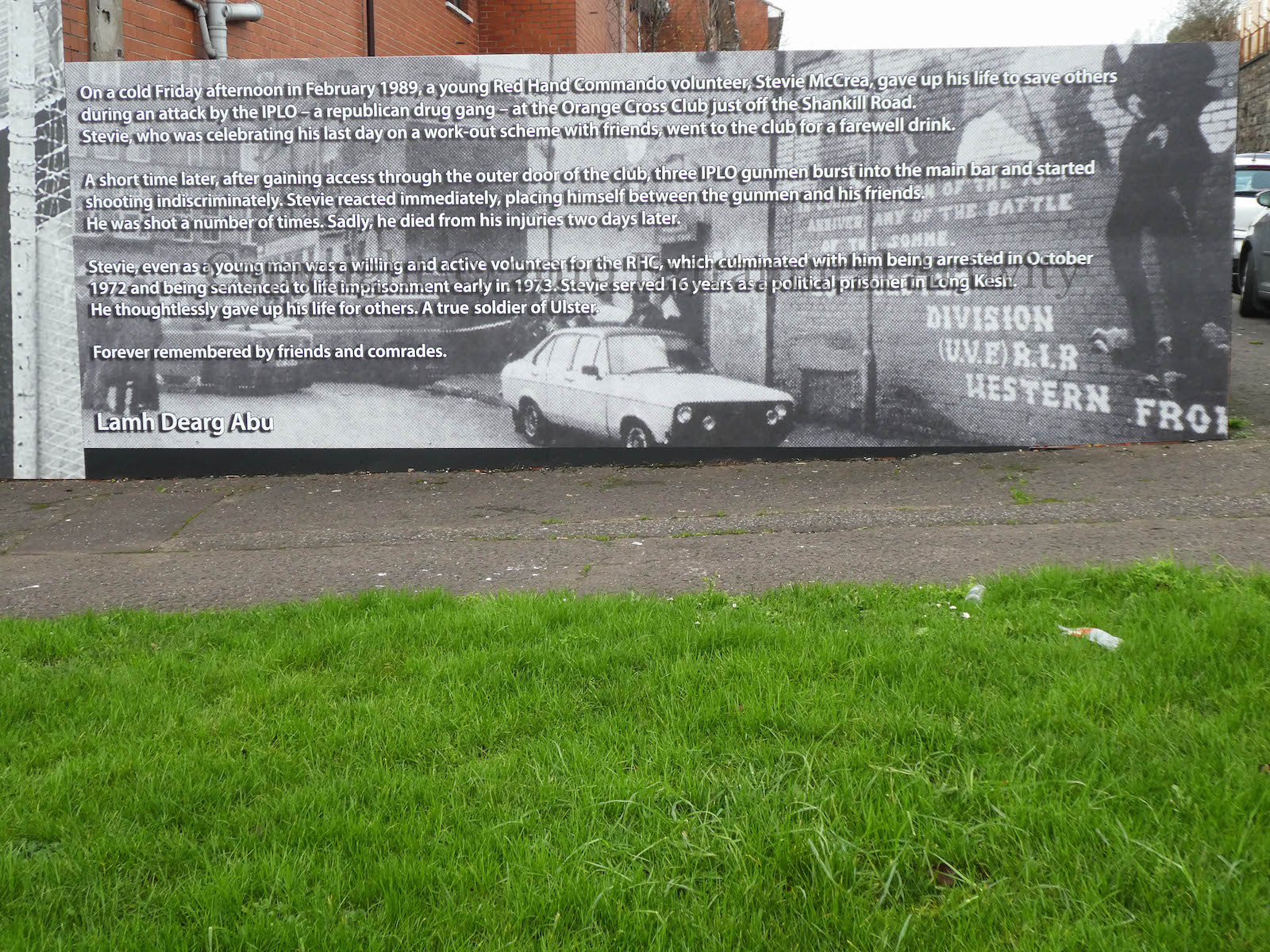
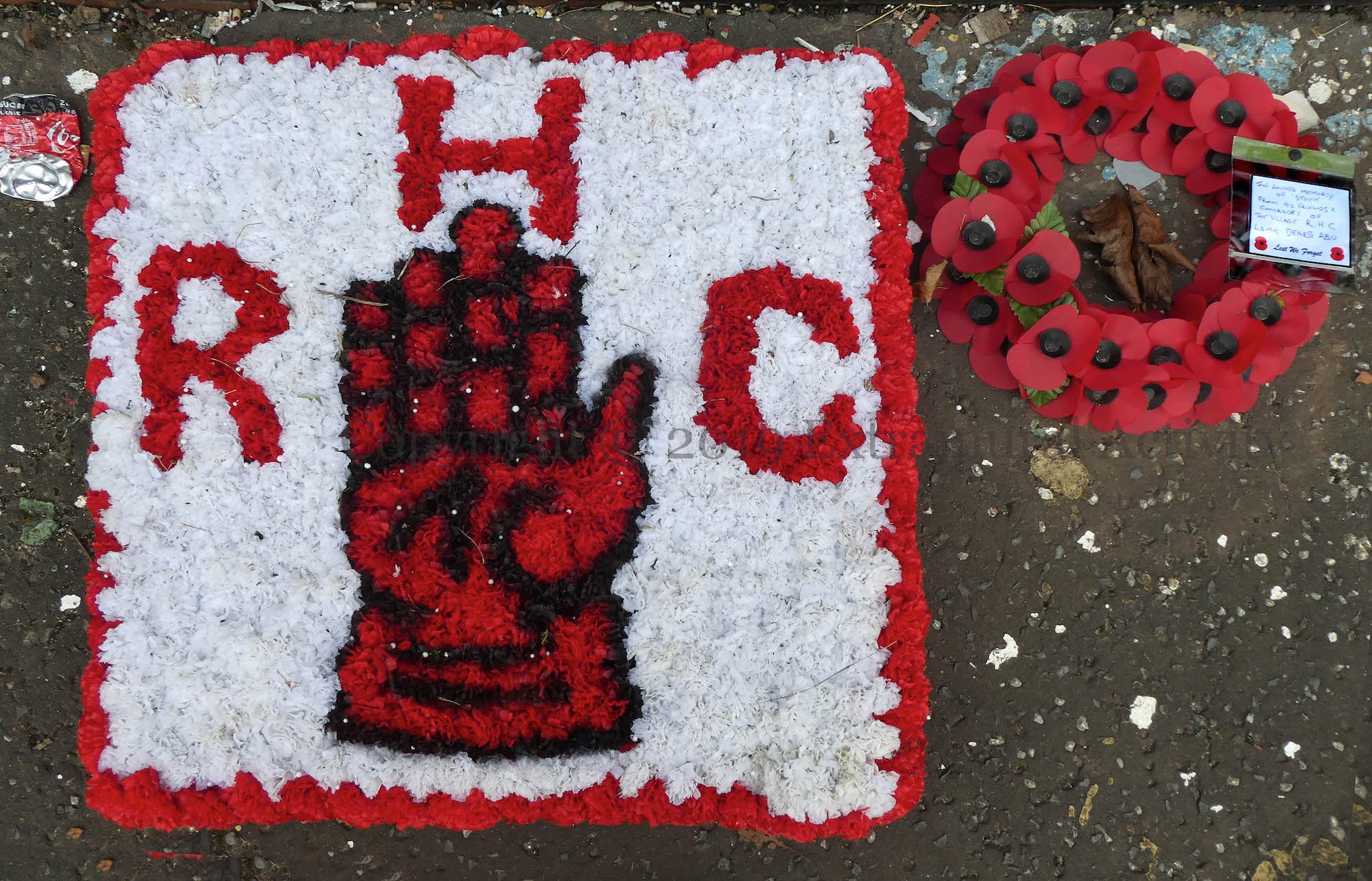
A True Soldier Of Ulster

“On a cold Friday afternoon in February 1989, a young Red Hand Commando volunteer, Stevie McCrea, gave up his life to save others during an attack by the IPLO – a republican drug gang – at the Orange Cross Club just off the Shankill Road. Stevie, who was celebrating his last day on a work-out scheme with friends, went to the club for a farewell drink. A short time later, after gaining access through the outer door of the club, three IPLO gunmen burst into the main bar and started shooting indiscriminately. Stevie reacted immediately, placing himself between the gunmen and his friends. He was shot a number of times. Sadly he died from his injuries two days later. Stevie, even as a young man was a willing and active volunteer for the RHC, which culminated with him being arrested in October 1972 and being sentenced to life imprisonment early in 1973. Stevie served 16 years as a political prisoner in Long Kesh. He thoughtlessly gave up his life for others. A true soldier of Ulster. Forever remembered by friends and comrades. Lamh dearg abu.”

The obituary in the March 1998 issue of Combat states that McCrea was no longer in the RHC after his release from prison.

This new photographic mural, with “Loyalist Compound 21, Long Kesh prison camp” as a background, replaces a painted one to McCrea that had stood since 2000.

Click image to enlarge
Copyright © 2019 Seosamh Mac Coılle
X06447 X06448 X06449

North Down West Belfast

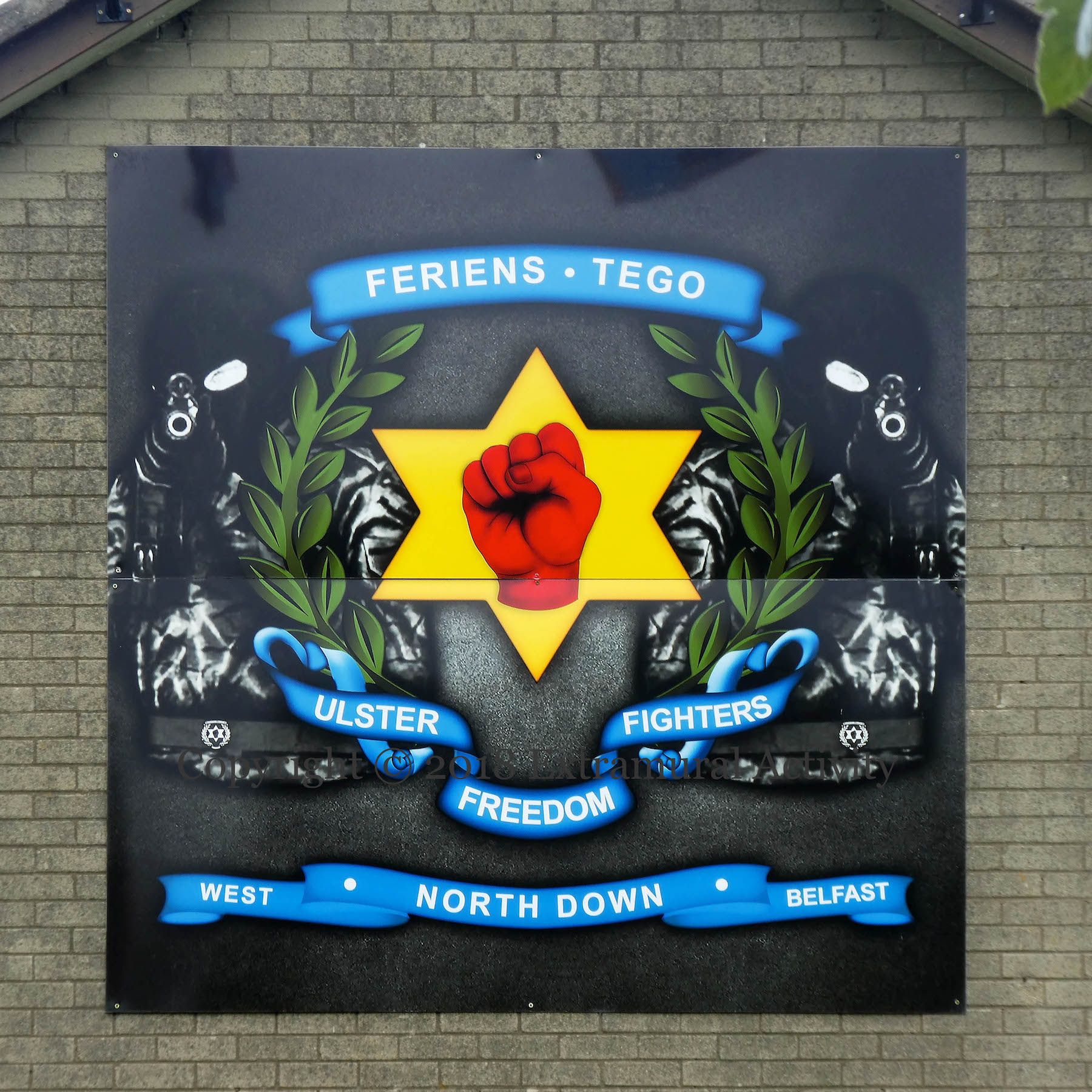
Here are two UDA/UFF “North Down – West Belfast” boards, one in Clandeboye Road, Bangor (above) and the other in Lenamore Park, Newtownards (below). The UDA in North Down is split into two factions, one associated with the Shankill (west Belfast) UDA and the other with the East Belfast UDA. The former is based primarily in Newtownards, but not exclusively, as the board above shows. It is also remarkable for its use of hooded gunmen in “active” poses.

Click image to enlarge
Copyright © 2018 Seosamh Mac Coılle
X06089 [X06090] X06060 

Britain Remembers

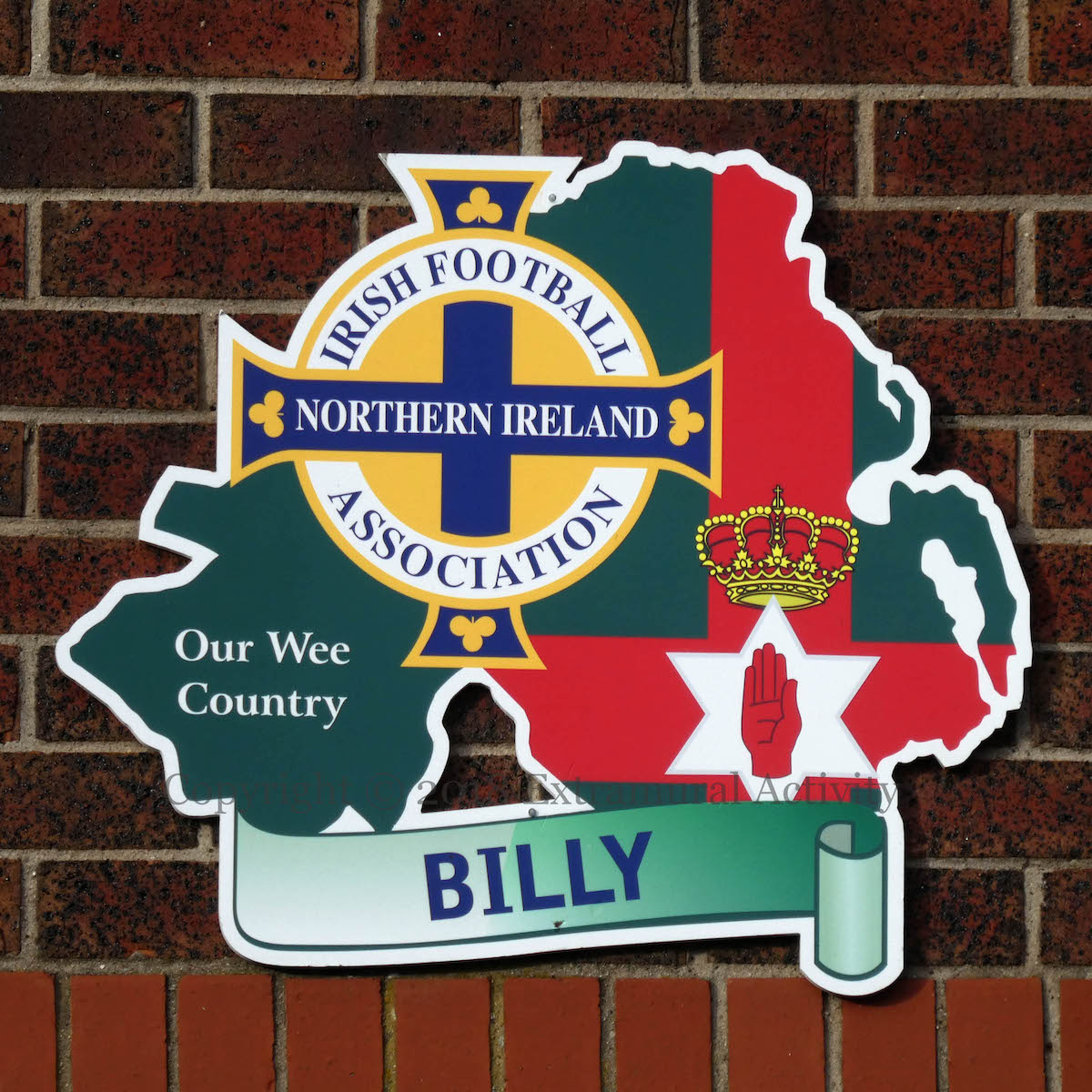
Although not completely visible in the image below, the ‘Britain remembers’ Remembrance Day flag includes the Ulster Banner, the flag of NI parliament until 1972, rather than the St Patrick’s Saltire. This is also the flag used by the Irish Football Association, the governing body of soccer in NI, to represent its teams, as is shown by the personalised supporter’s plaque in Cosgrave Heights. The organisation’s name derives from the fact that the body pre-dates partition and used to govern the whole island and not just “our wee country”.

Click image to enlarge
Copyright © 2018 Seosamh Mac Coılle
X06351 X06352