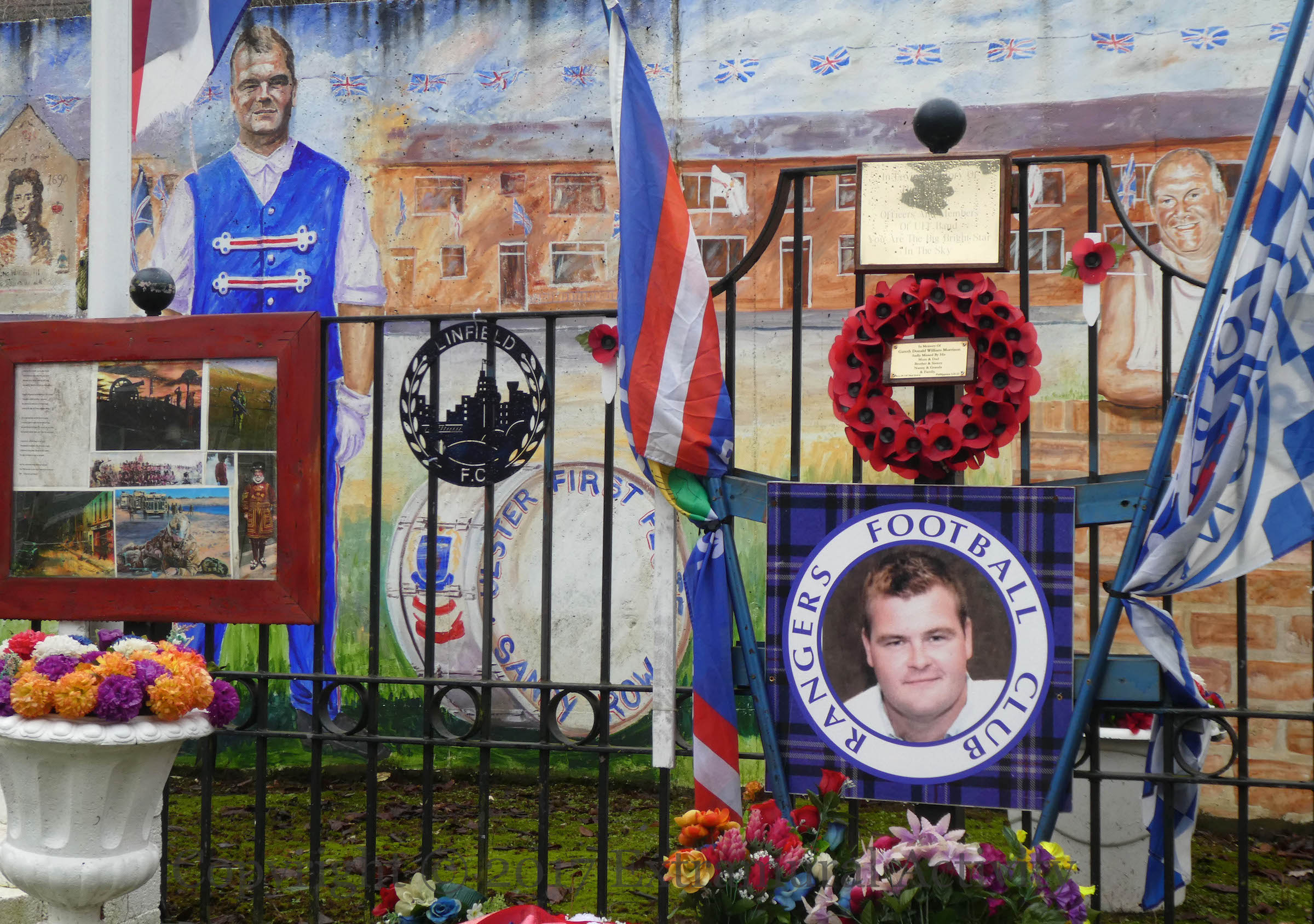
Gareth “Big Henry” Morrison was a drummer in the Ulster First Flute band in Sandy Row and a Rangers supporter. He died at age 26 on June 23rd, 2013 from a dose of PMA (BelTel), one of eight such deaths in Northern Ireland and seven in western Scotland. (1997 image of a UFFB mural in Linfield Road.)
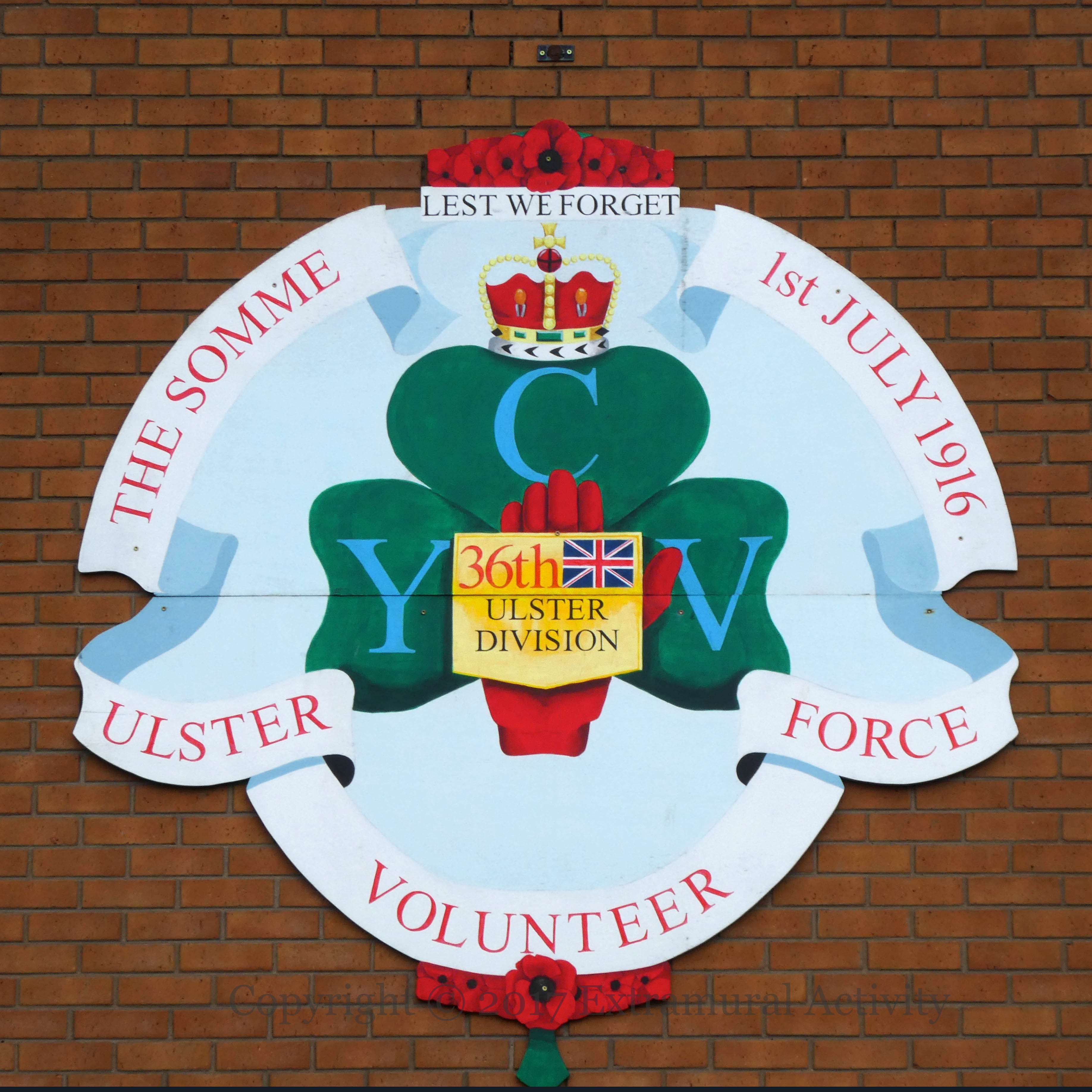
The Young Citizen Volunteers began as a civic organisation and domestic reserve force in 1912 but by the time of the first World War had become a battalion of the Ulster Volunteers and went to the Western Front as the fourteenth battalion of the Royal Irish Rifles, part of the 36th (Ulster) Division, landing at Boulogne in October, 1915. The force was mainly Protestant but History Hub Ulster has a page on the 42 Ulster Catholics who served in the 14th (YCV) RIR.
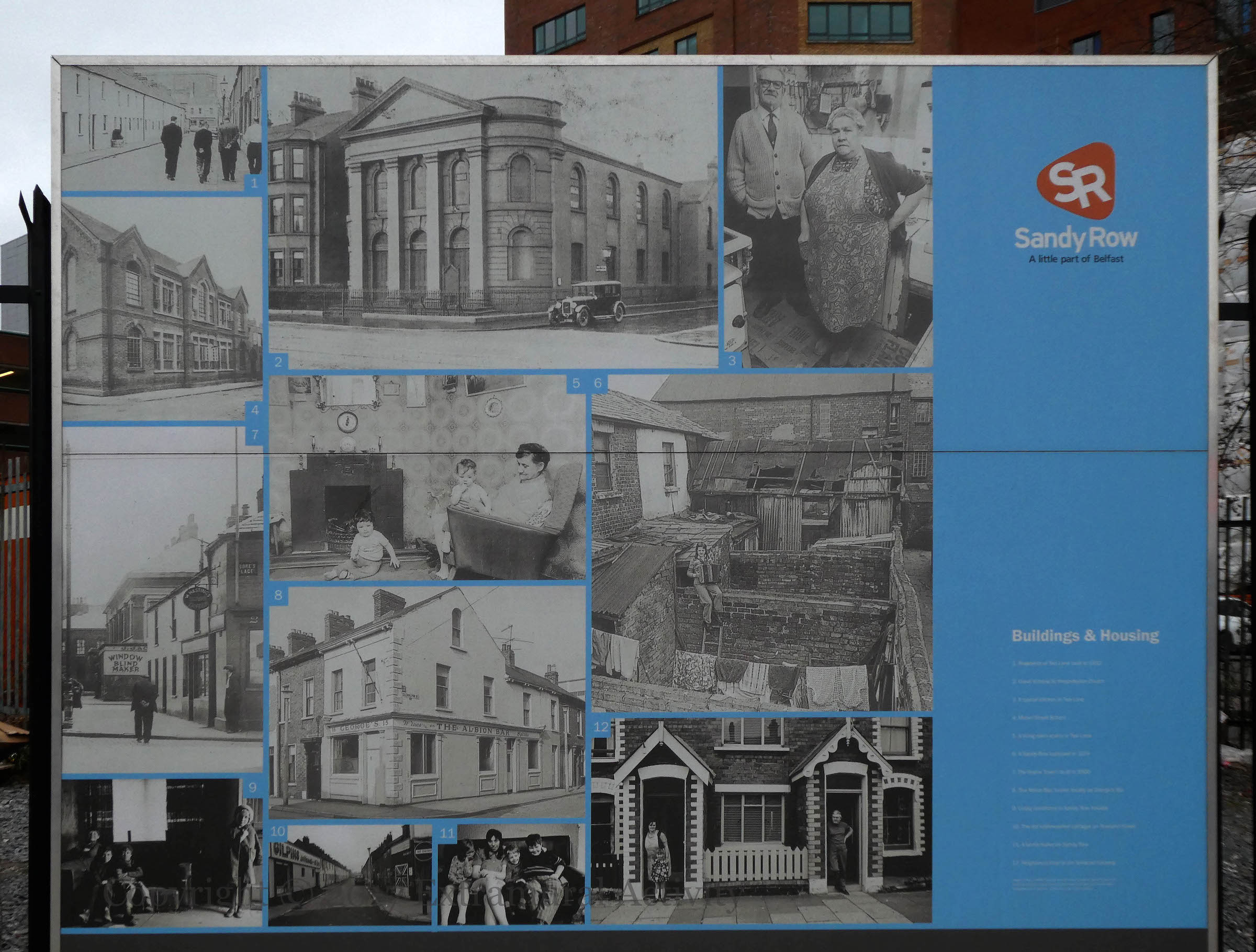
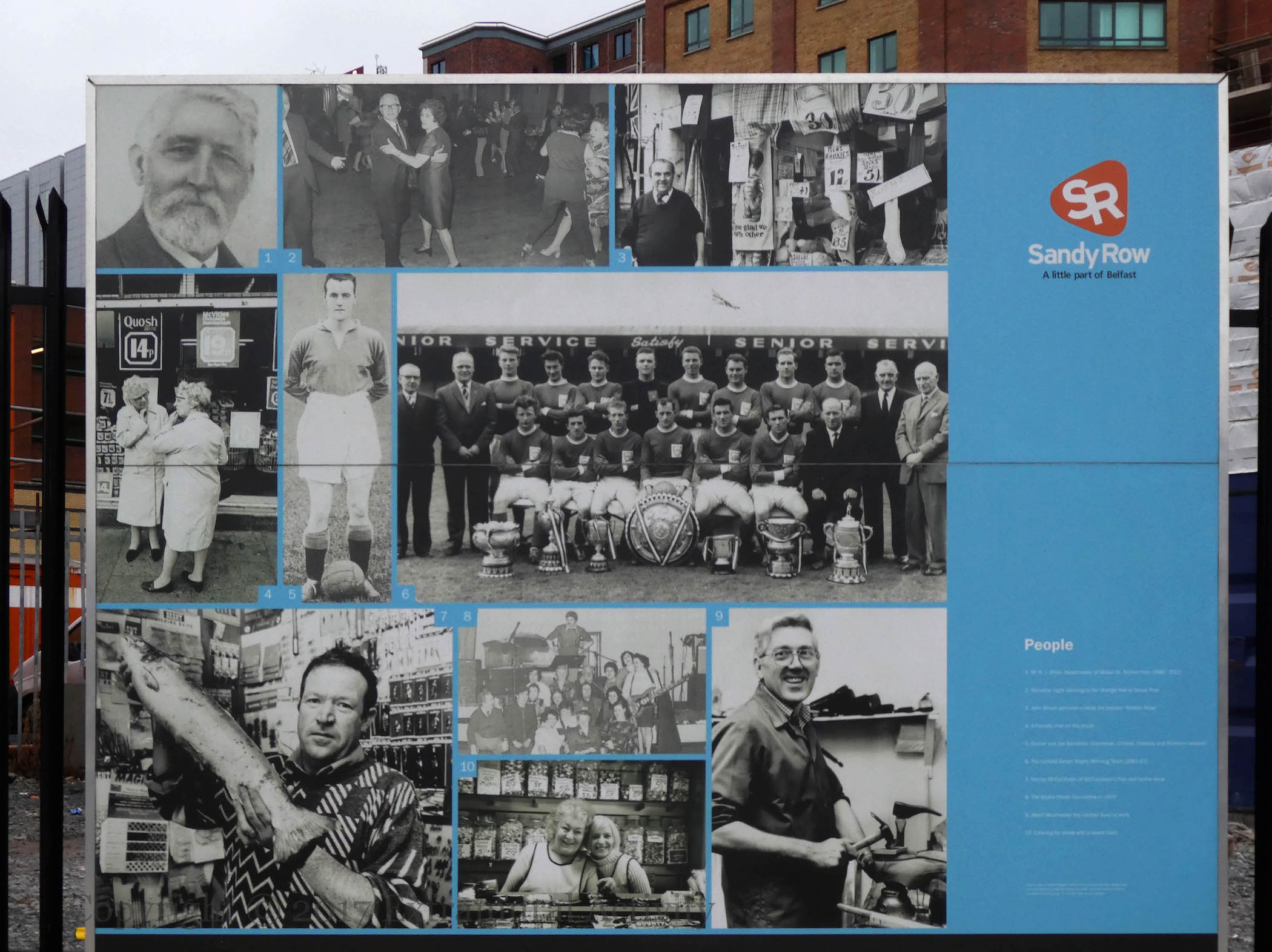
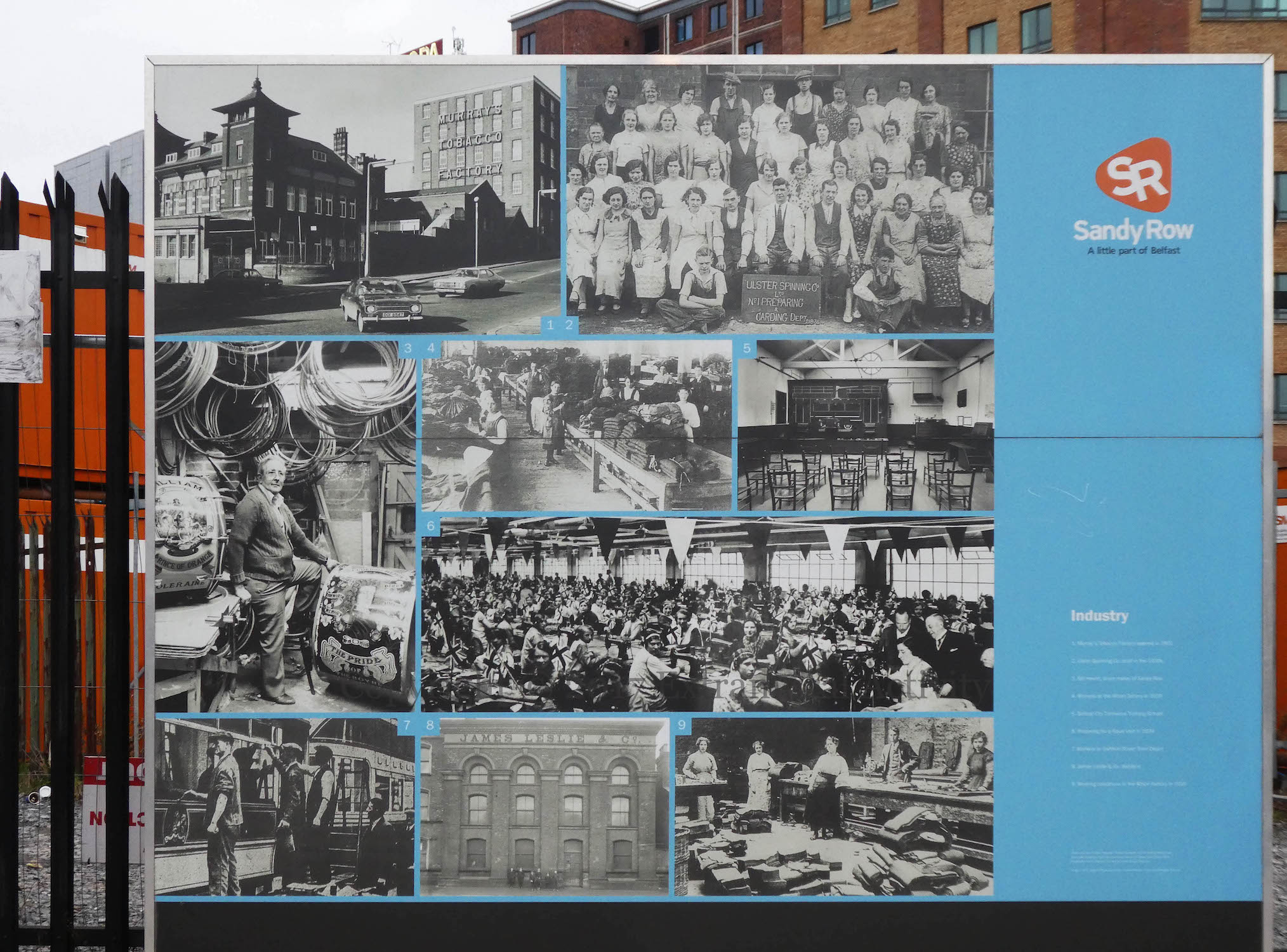
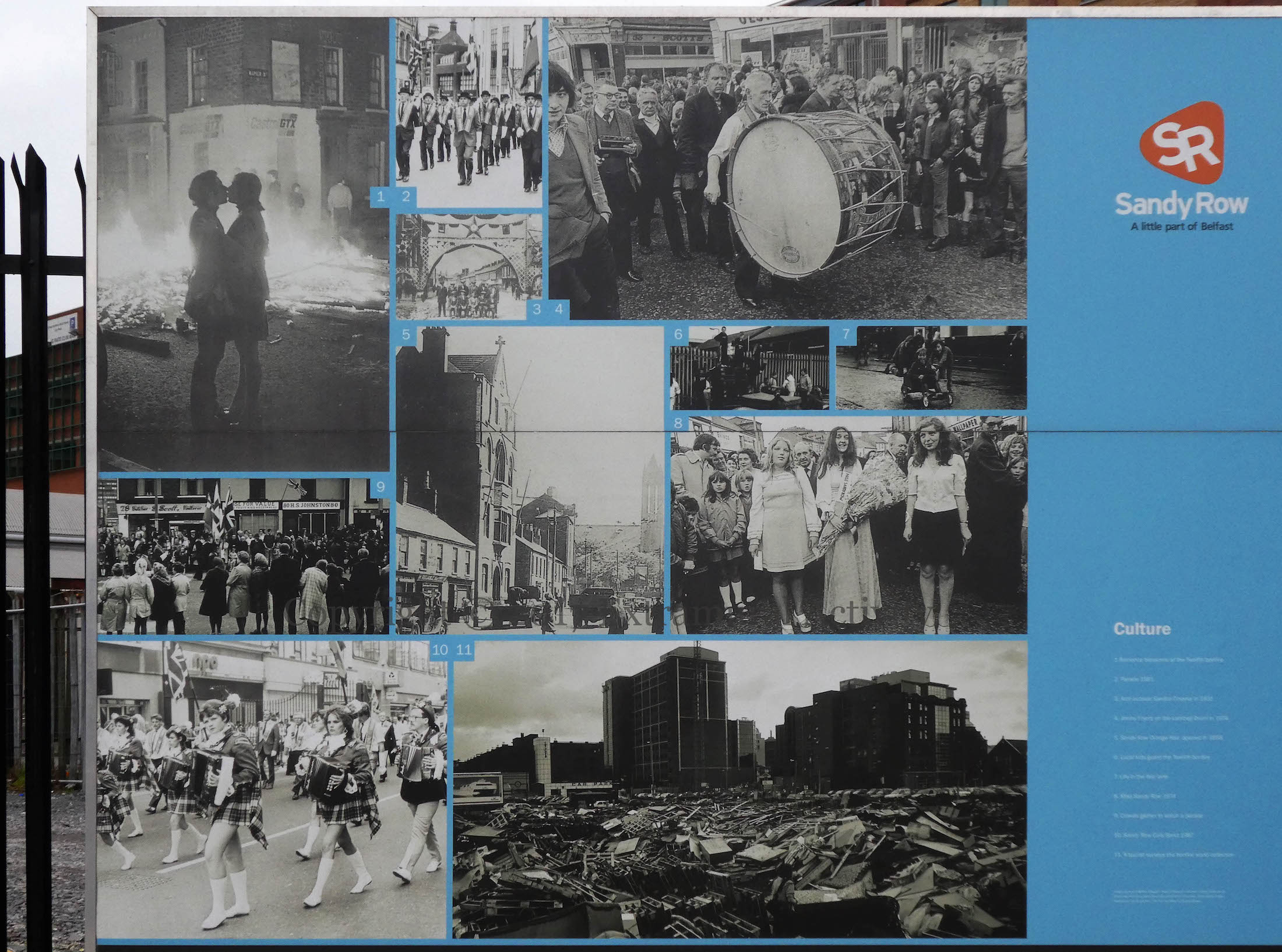
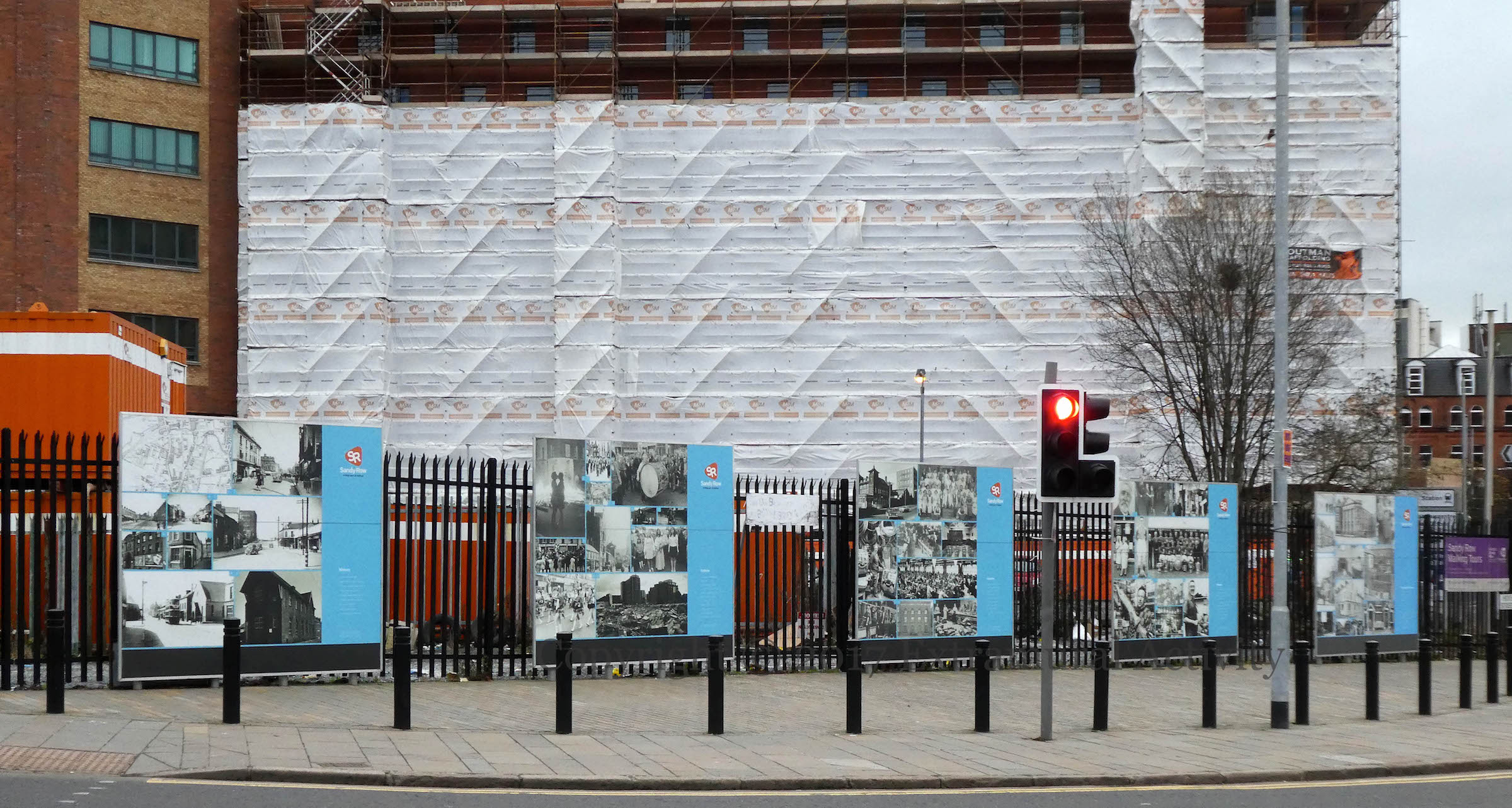
Sandy Row is “steeped in 400 years of tradition”, according to Historic Sandy Row (and sister site Sandy Row Community Forum which has developed a “growth strategy” for the area). Some of that history is presented at the junction with Hope Street, one each for Buildings & Housing, People, Industry, Culture, and History.
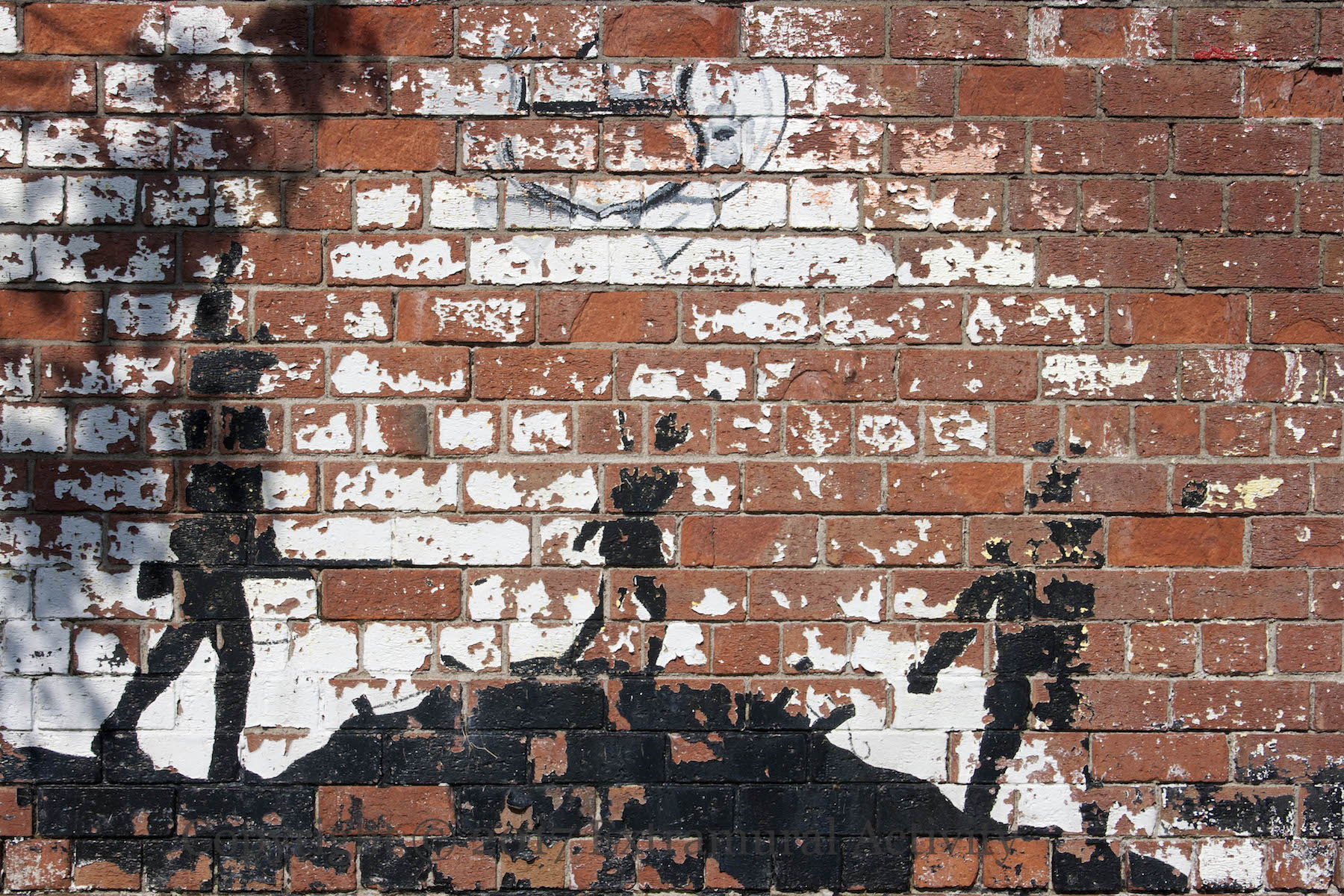
These five images show the remains of an Ulster Special Service Force (USSF) mural in Drumahoe Gardens, Millbrook. In addition to the union flag and emblem of the unit, the mural showed the Covenant and Carson, the gunrunning ship Clyde Valley which landed at Larne (not shown here), the garlanded red hand shown above, a memorial lamp post(?) not shown, soldiers from the 36th Division going over the top(fourth), the Ulster Tower and a helmet on a cross (not shown).
British Army soldiers from four streets are commemorated in a plaque in Barrington Gardens. All four streets – Abingdon, Barrington, Colchester, and Dorchester – have changed their names or disappeared entirely (Dorchester) since 1914. “Erected by 1st Belfast Rangers Friends Of The Somme Society” – the supporters club is right next door.
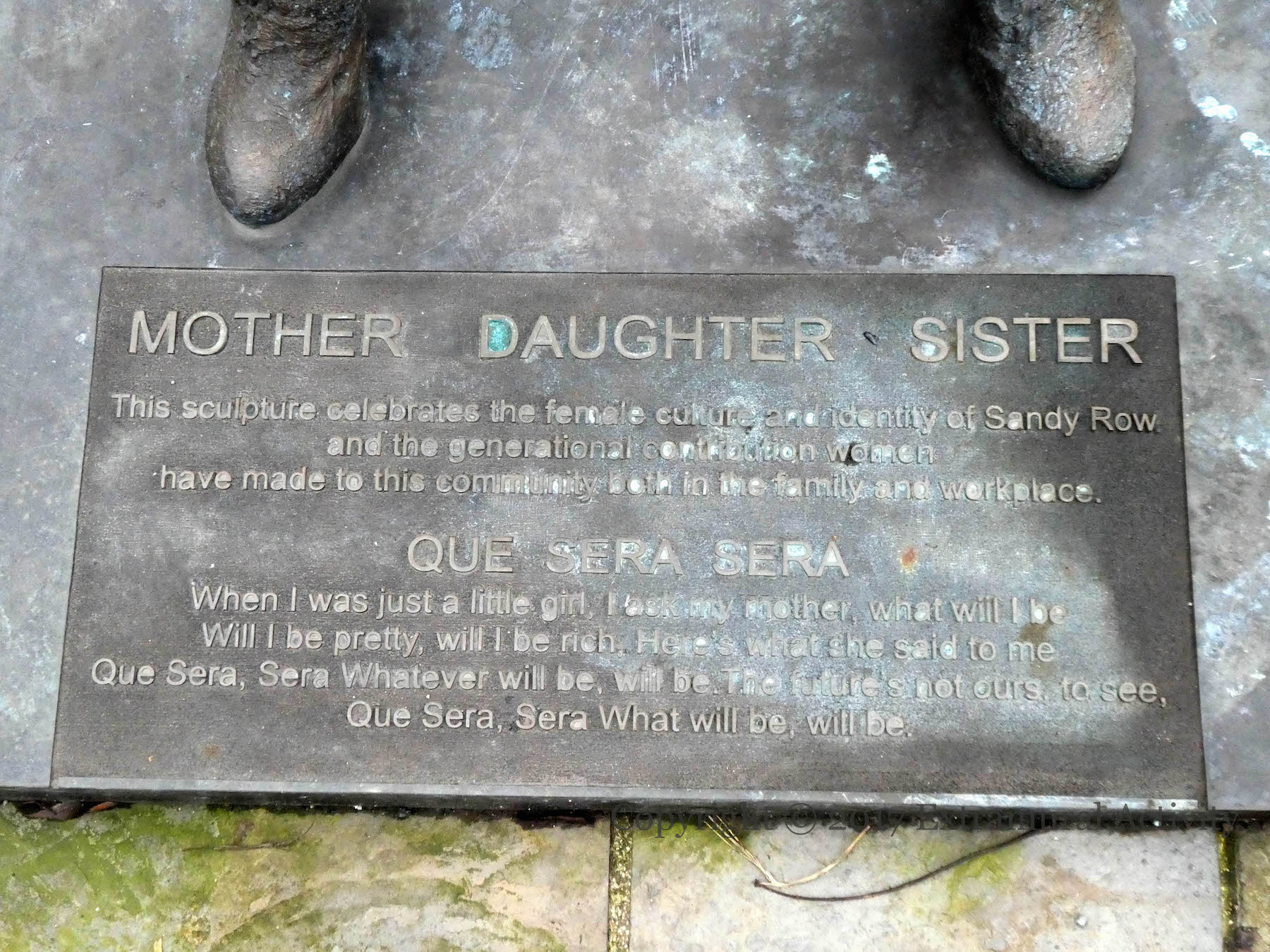
Ross Wilson’s statue ‘Mother – Daughter – Sister’ was launched in 2015 (Art Council NI), two years after his King William mural which towers over it (see final image). “This sculpture celebrates the female cultural identity of Sandy Row and the generational contribution women have made to this community both in the family and workplace.” With a verse from the Doris Day song ‘Que Sera Sera’ from Hitchcock’s The Man Who Knew Too Much.
The HUBB community centre is host to a number of social groups, including those represented in the mosaic above: the Old Comrades group, the Seaview chapter of the Royal British Legion, North Shore and Ladies Somme memorial groups, a spotlight (perhaps in connection with the Civil Defence bowling club? – the HUBB is in what used to be a civil defence building), and the Kingdom of Dalaradia society. According to the eponymous web site, Dalaradia was “was a kingdom of the Cruthin in the north-east of Ireland and parts of Scotland in the first millennium.” Hence, perhaps, the red hand of Ulster together with the Scottish thistle.
The Irish Football Association (web | tw) is the governing body for Northern Irish soccer, overseeing both domestic and international events. The original Our Wee Country (fan organisation Web | tw) mural was in Carnforth Street, east Belfast. For another and one of the emblem with Ulster banner and Union flags, see Irish Football Association and Our Wee Country.
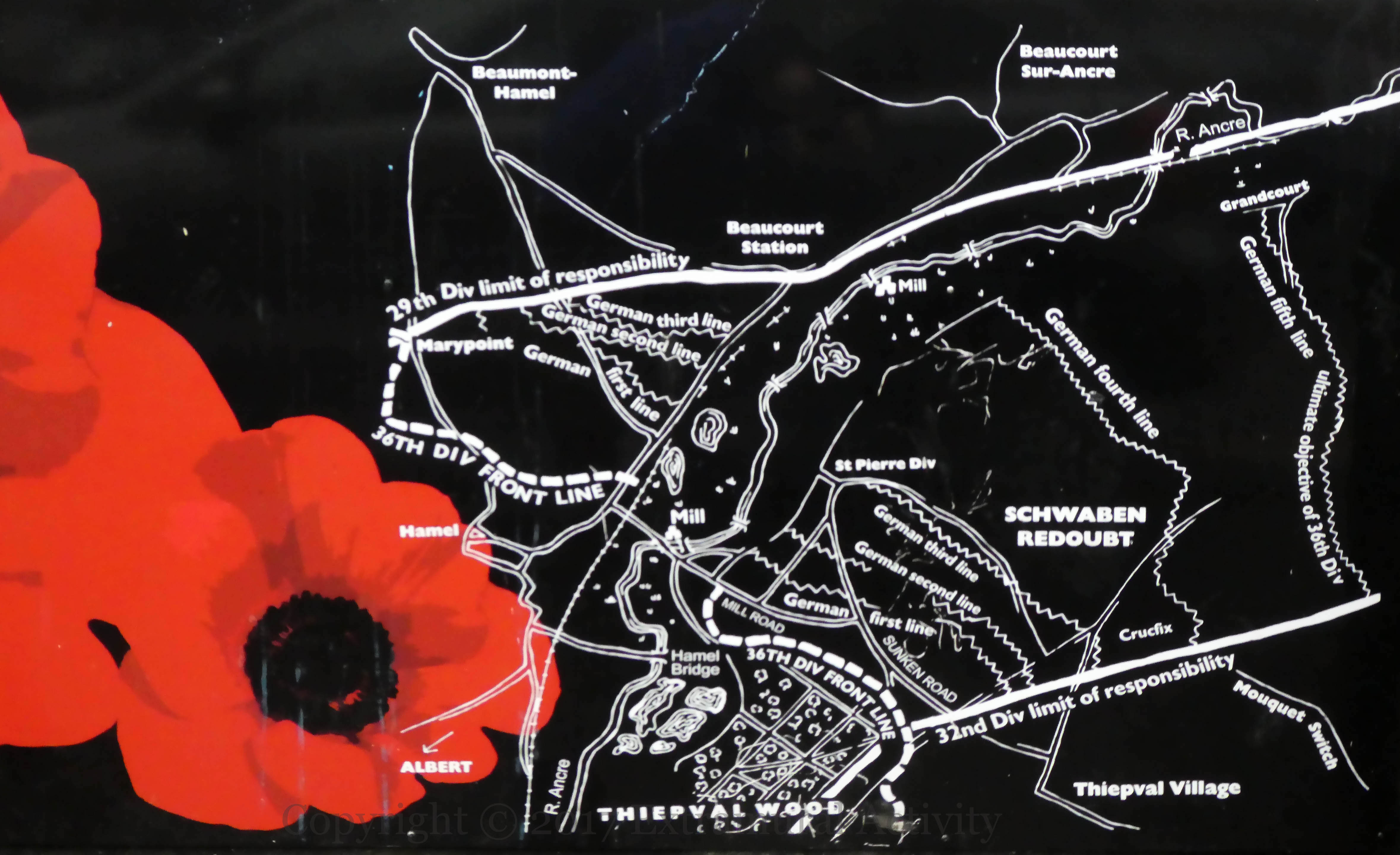
The map in the lower left corner of this WWI commemorative mural shows the defensive lines of both the Allies and the Central Powers. As the inscription on the mural describes, the Ulster Tower is situated close to the Schwaben Redoubt, the primary objective of the 36th Division on the first day of battle.
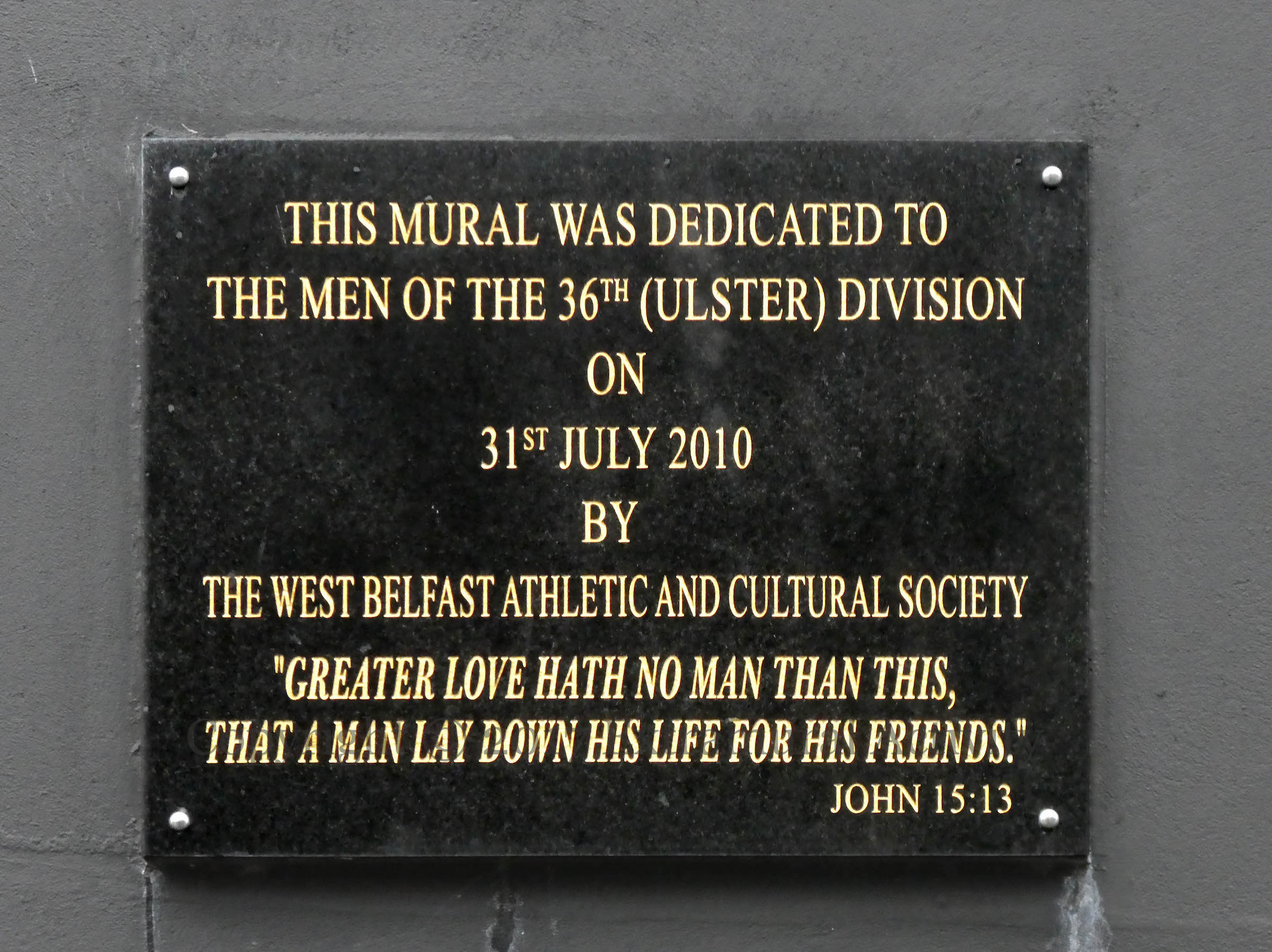
The plaque (shown second, below) refers to a similar mural painted in 2010.








 Extramural Activity