The ‘over the top’ mural in Ballyclare has been refreshed, compared to the faded lettering of 2014: the list of battles has been restored (in the bottom right) but the large scroll in the centre has been painted over.
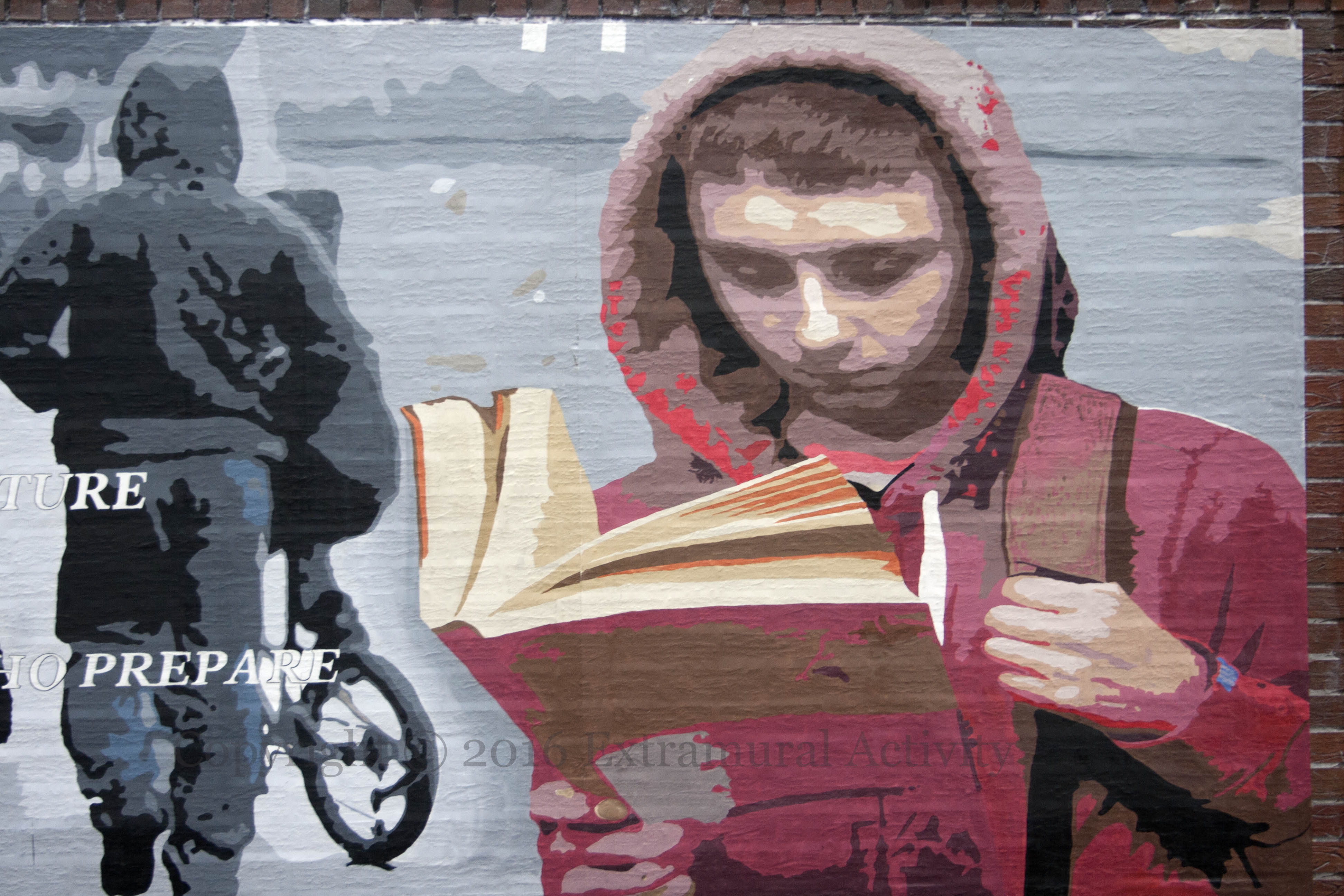
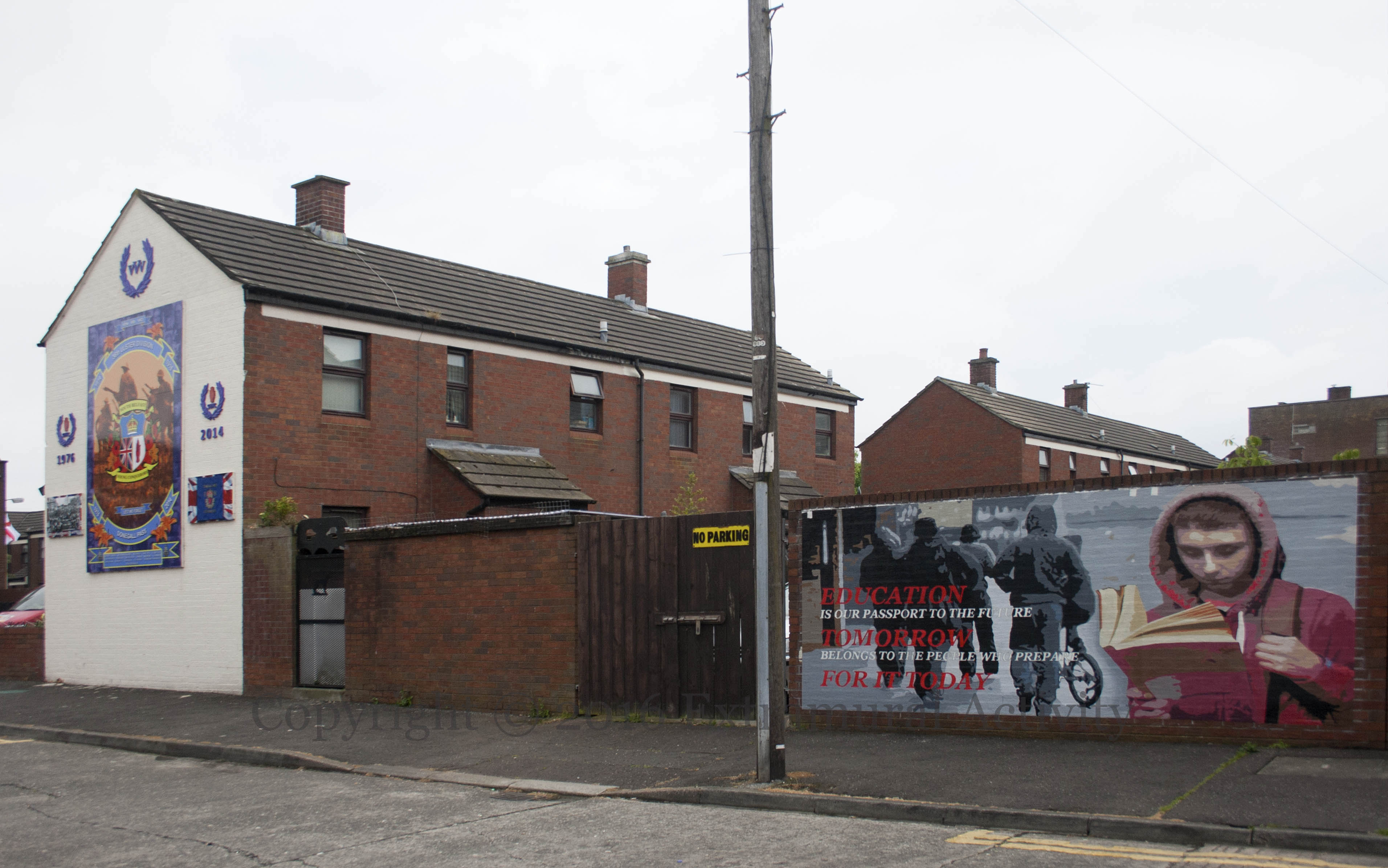
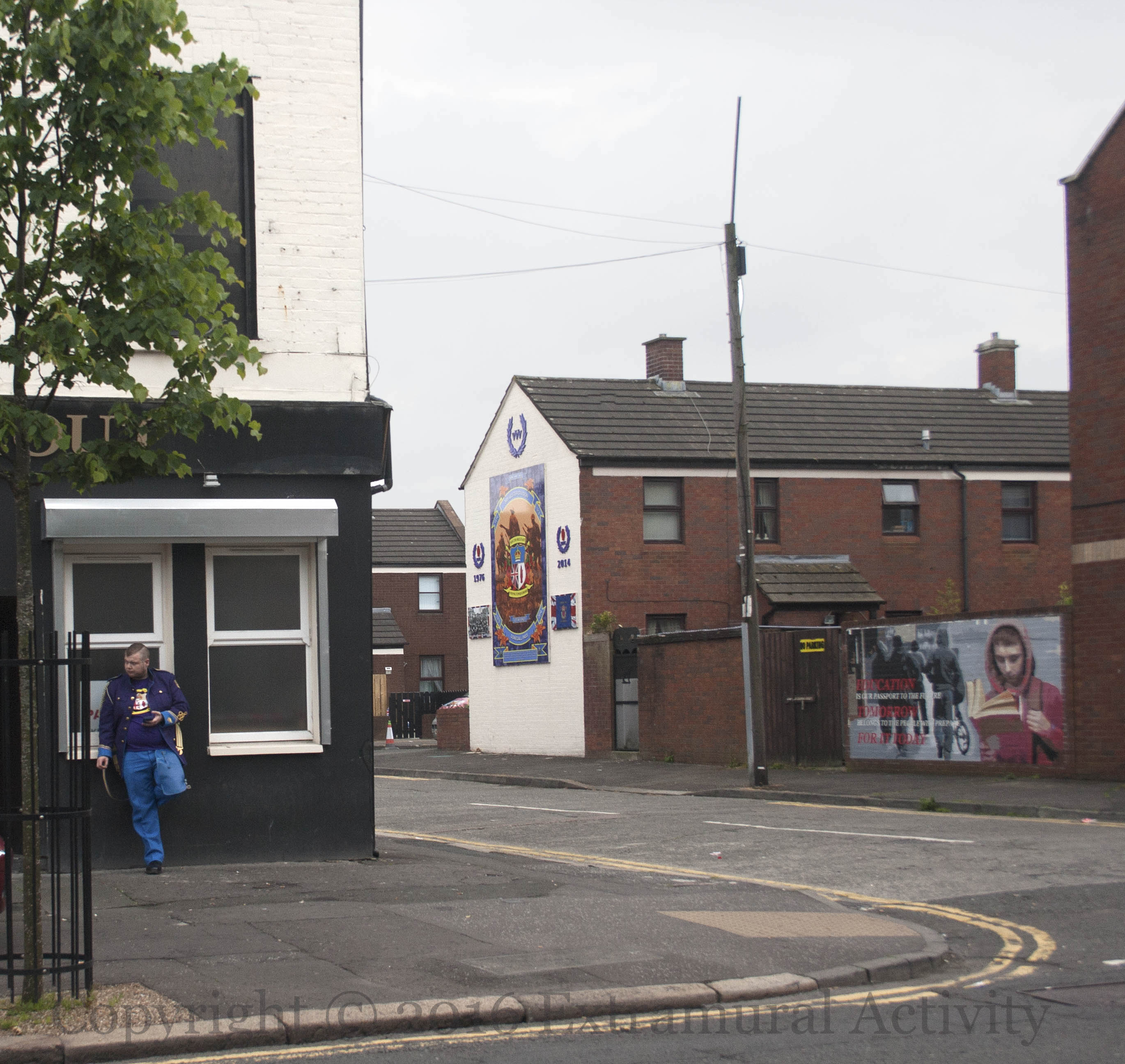
“Education is our passport to the future. Tomorrow belongs to the people who prepare for it today.” This ‘parachute cloth’ mural, which promotes education over gangs, joins three UVF murals in Pine Street, Donegall Pass, south Belfast. (For two of those murals, see Defenders Of The Pass | South Belfast UVF 2nd Batt.)
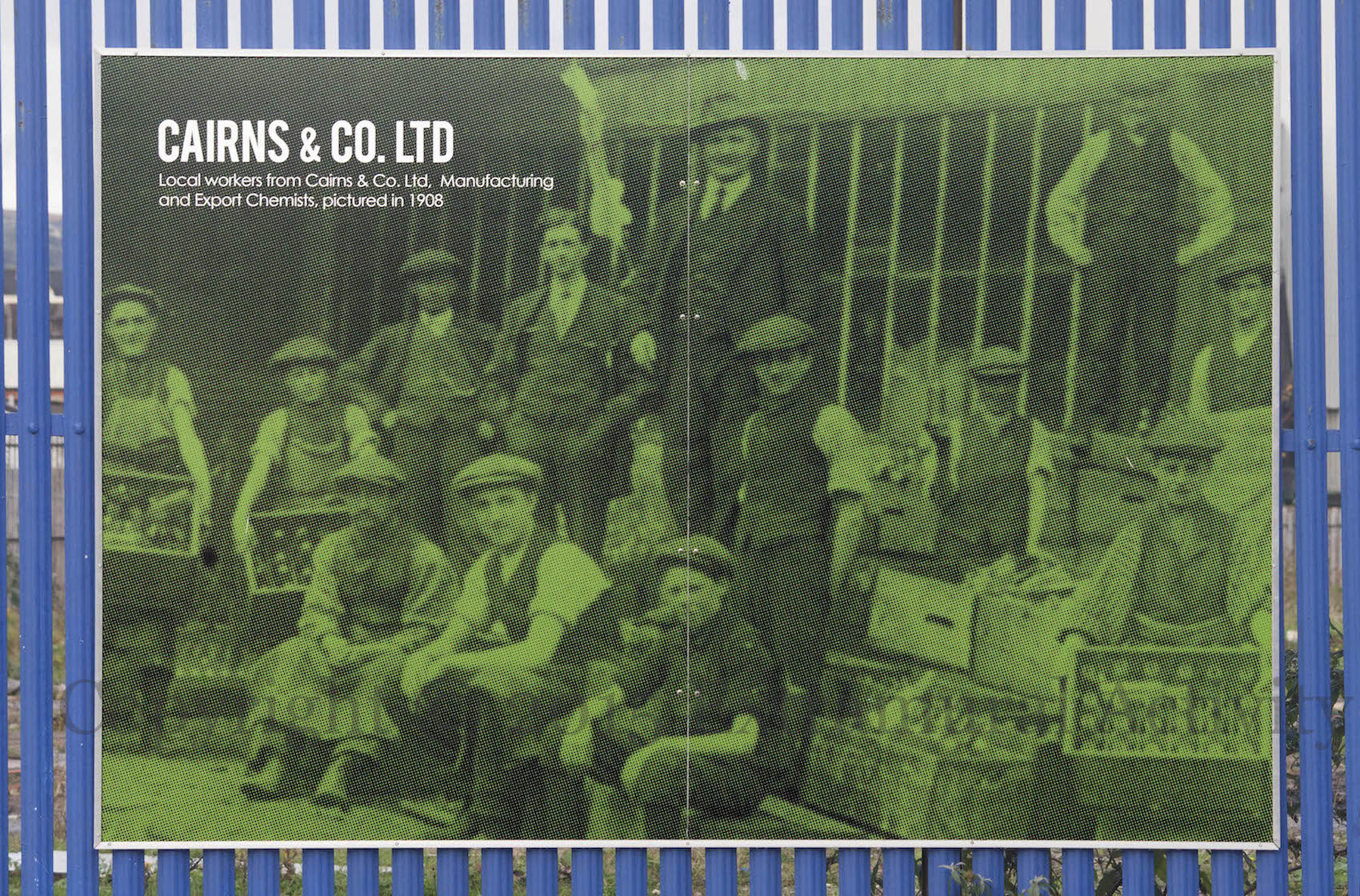
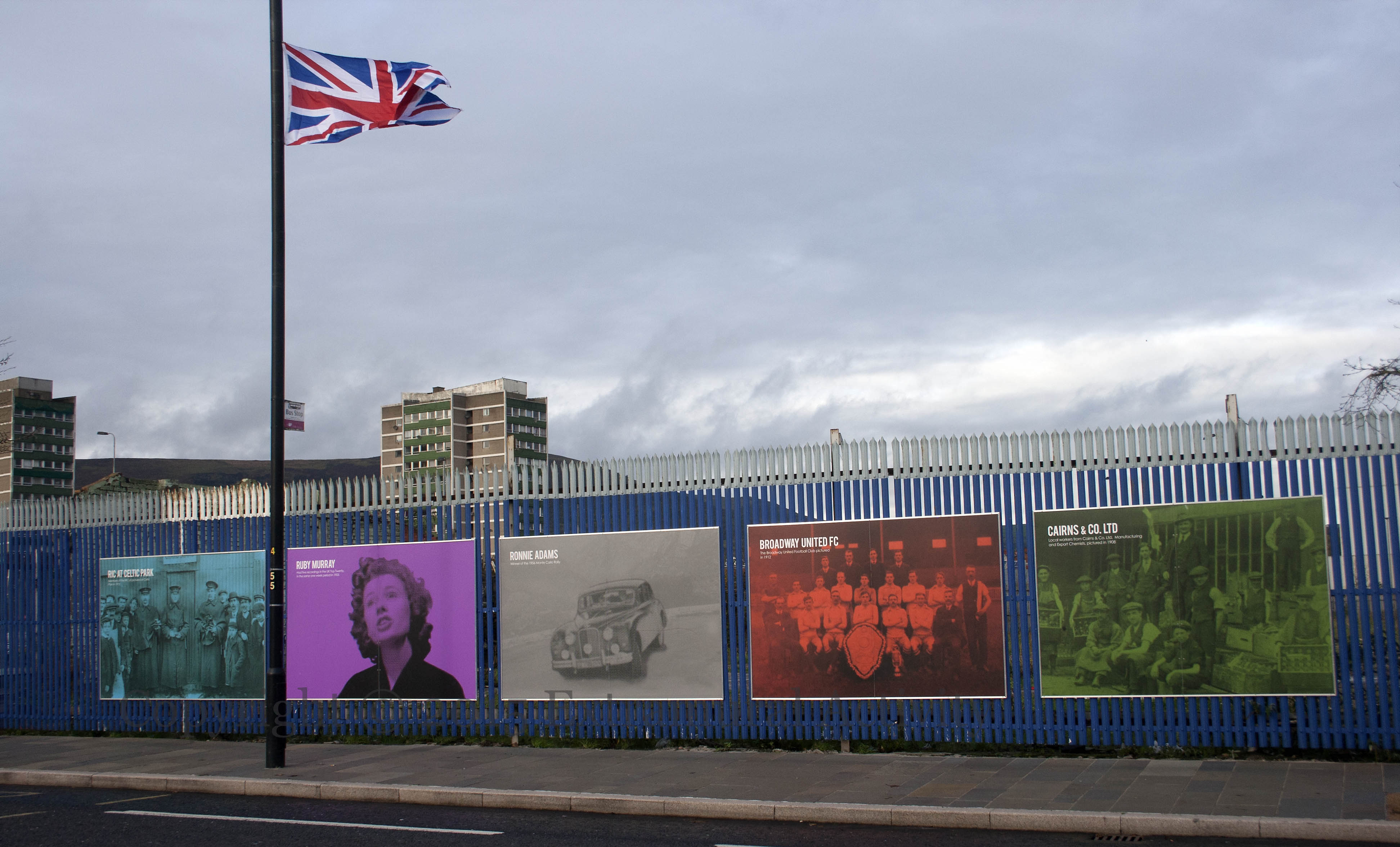
Cairns & Co. Ltd were not only “Manufacturing and export chemists” but (according to the 1908 street directory) “Aerated and mineral water manufacturers” with works at “Balmoral Springs, Lisburn Road”.
Garlands of poppies, one for each of 38 local men “who gave their lives during the Battle of the Somme 1st July 1916 – 18th Nov 1916”, form a circle around a photograph of “Ballyclare Main Streeet 18th September 1914” as the men go off to war. For information about 17 of the men, see this Love Ballyclare page.
A confederate flag (strictly, the battle flag of the Army Of Northern Virginia) with skull (with an eye-patch!) and cross-bones alongside a “King William III Prince of Orange” flag.
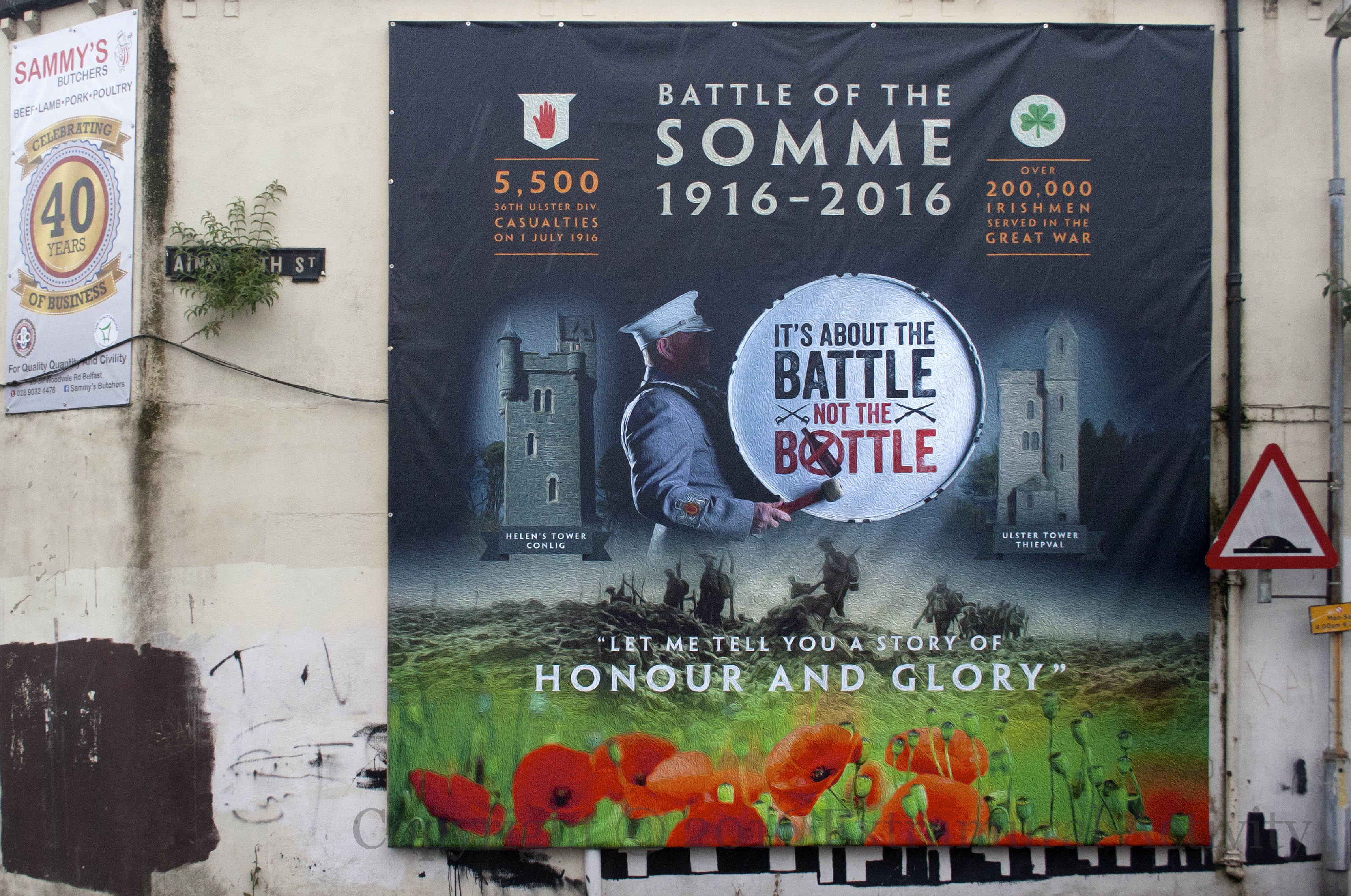
A 2012 Belfast Telegraph opinion piece asked “Is it Orangefest or vodka and Orangefest?” This year sees a campaign to curb alcohol consumption during marching season (including both the centenary of the Somme on July 1st and the traditional Twelfth celebration of the Battle of the Boyne) using the slogan “It’s about the battle not the bottle” and the hashtag #battlenotbottle. Here is a NewsLetter article on the campaign, which includes 25,000 beermats bearing the message.
It also contains (as shown in the wide shot, below) figures for both the number of casualties suffered by the 36th (Ulster) Division on July 1 at the Battle of the Somme (5,500) and the number of Irishmen who served in the Great War (200,000).
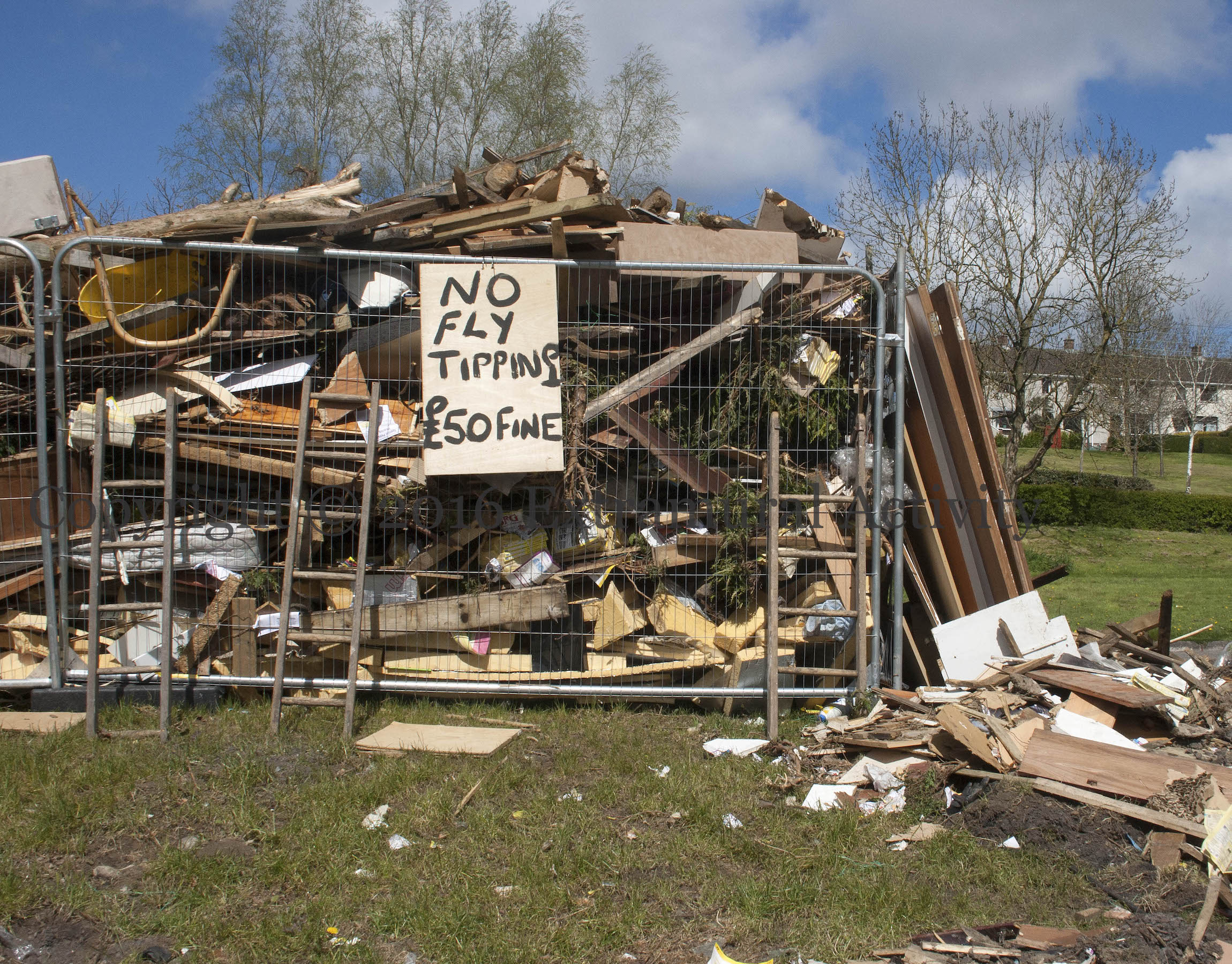
The image below is from a Twelfth bonfire collection point in Belvoir in April, threatening a fifty pound fine for anyone caught dumping unwanted material. The image above of a collection point near Sandy Row articulates what is unwanted: ironing boards, chairs, washing machines, sofas, sinks, fridges, wheels, comfy chairs, toilets, beds, stoves. This Belfast Telegraph article includes a good image of the pallets gathered in the car-park.
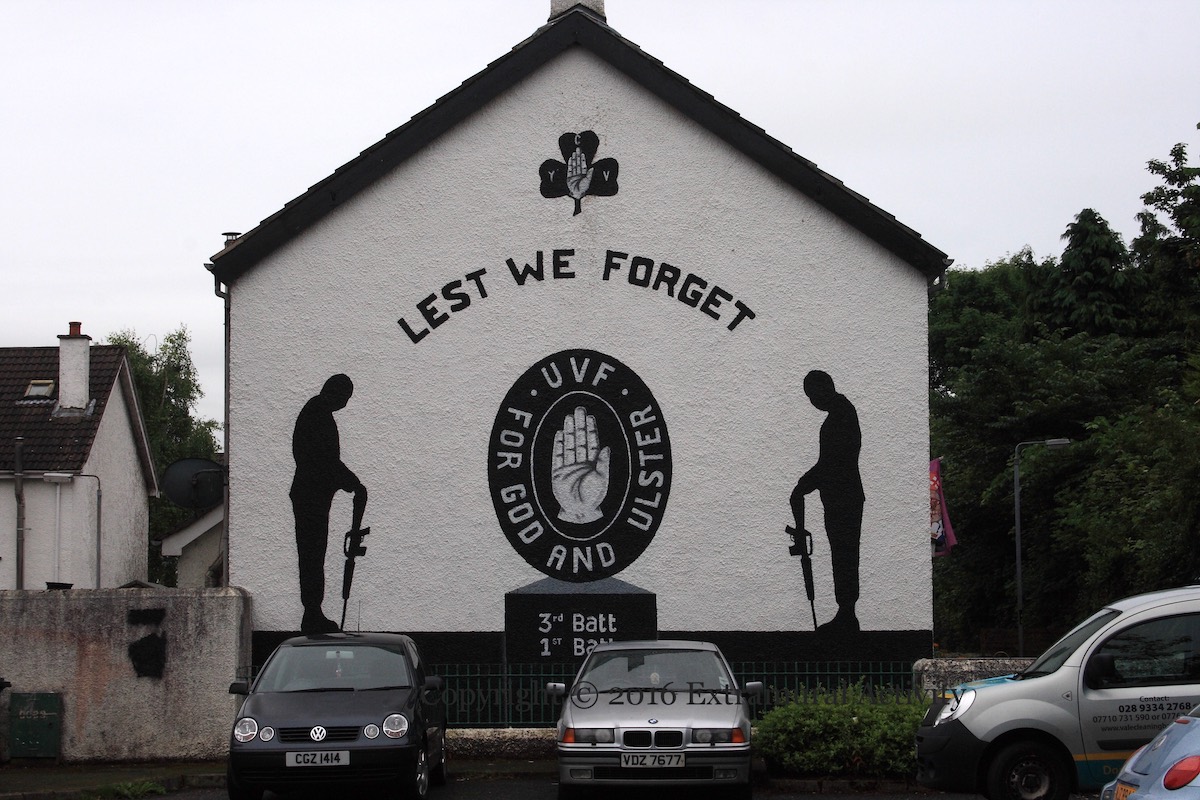
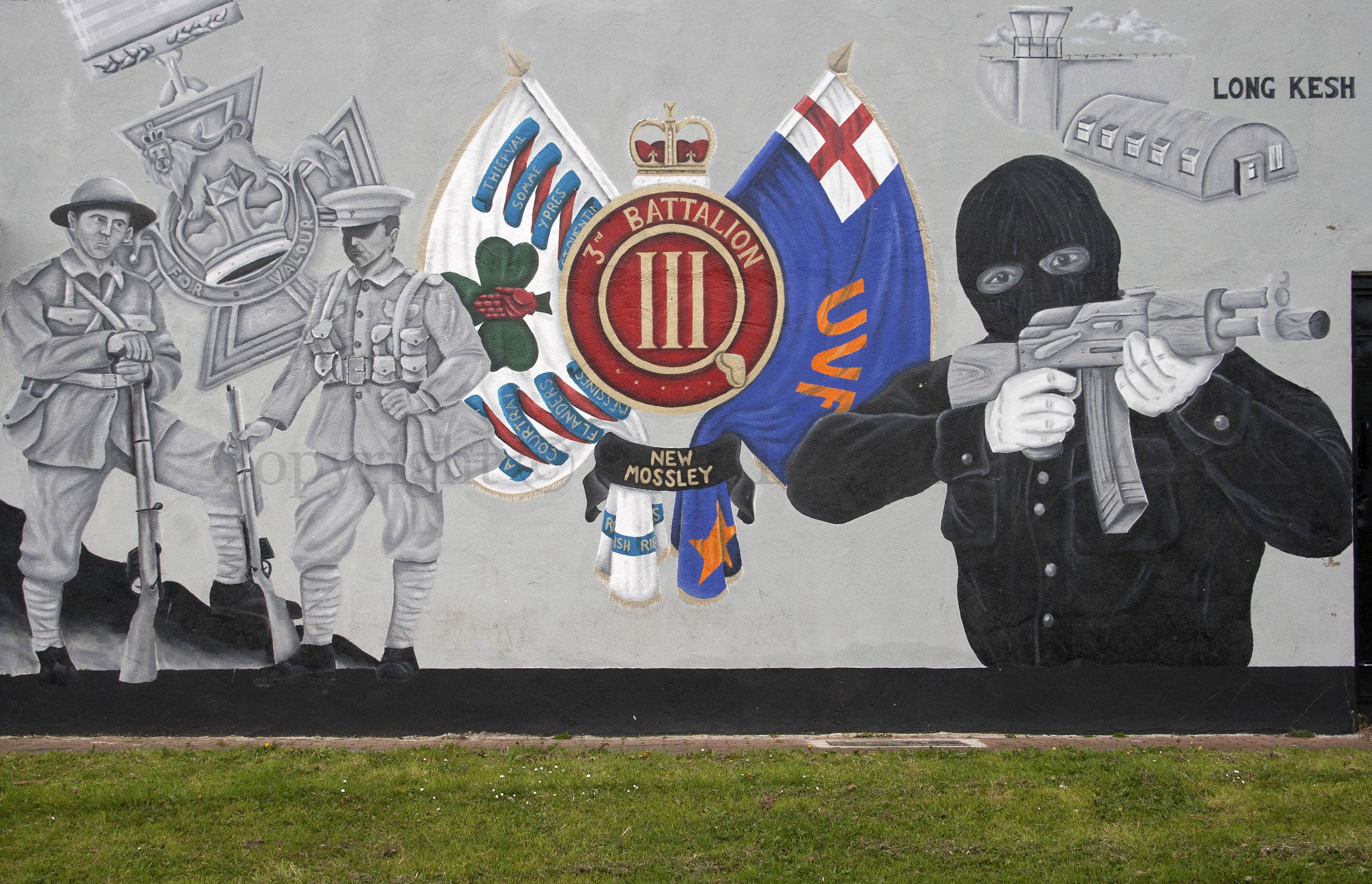
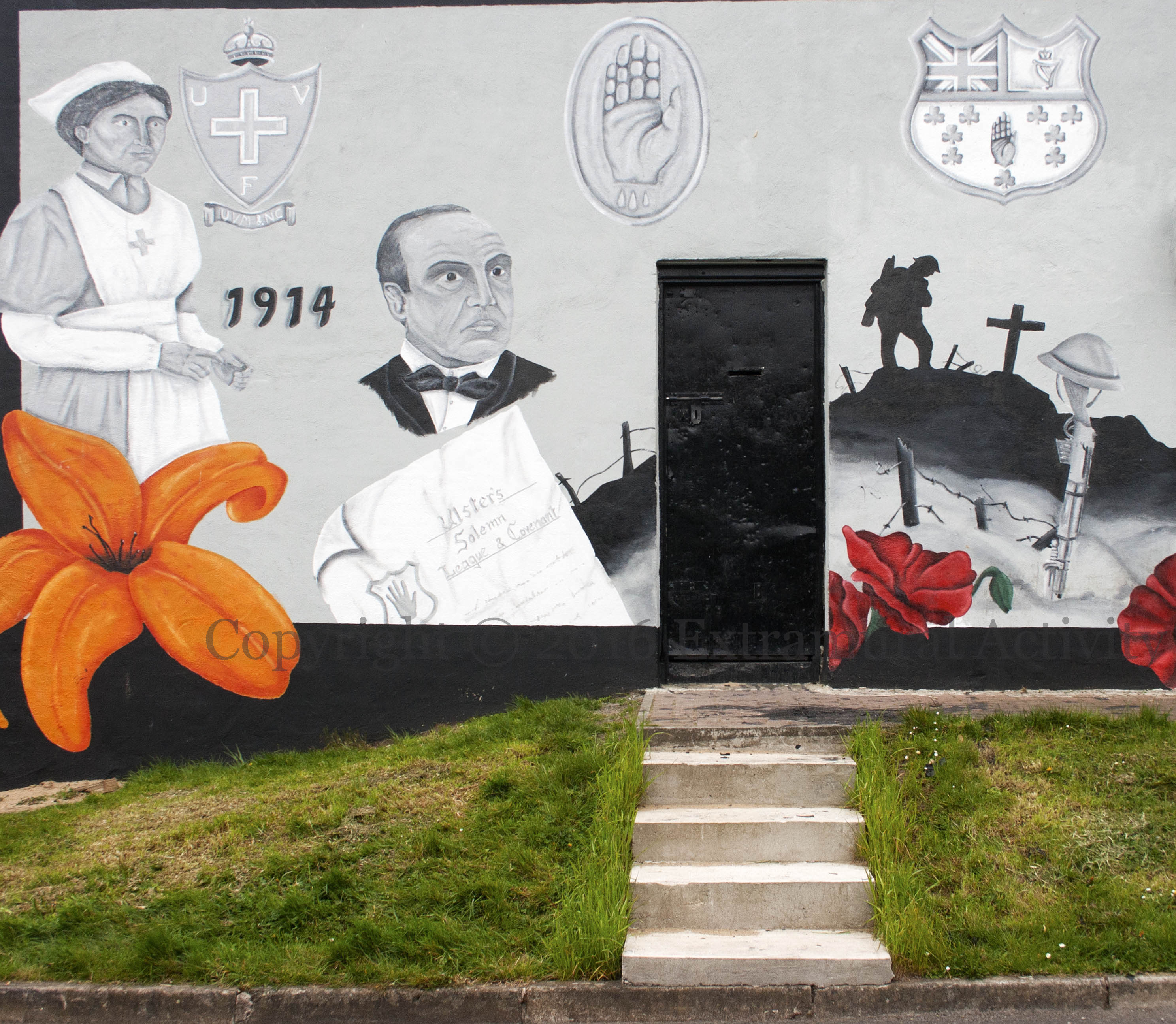
After a year without any change, work appears to have stopped on this UVF mural in Ballyearl. It links together the Ulster Volunteers of the first world war (shown on the left of the wall, with a Victoria Cross, Carson and the covenant, and a cross on the battlefield of Flanders) and the modern UVF (represented by a hooded gunman with rifle brought to bear, and the Nissen huts of Long Kesh. An orange lily and red poppy complete the tableau.
One hundred years ago today, on July 1st, 1916, the Battle of Albert began, the first of many battles in what is known collectively as the Battle of the Somme. Soldiers from the 36th (Ulster) Brigade went “over the top” at 7:28 a.m. By the end of the day, more than nineteen thousand British soldiers were dead, five thousand from the 36th.
The line “We gathered from our towns, our villages and farms, in answer to the echo of alarm” comes from the song “Armagh Brigade”; the alarm is more specifically “Carson’s loud alarm”. Below the main panel, which shows combat at close quarters, are the words of Wilfrid Spender: “I am not an Ulsterman but yesterday, the 1st. July, as I followed their amazing attack, I felt that I would rather be an Ulsterman than anything else in the world … the Ulster Volunteer Force, from which the Division was made, has won a name that equals any in history.”








 Extramural Activity