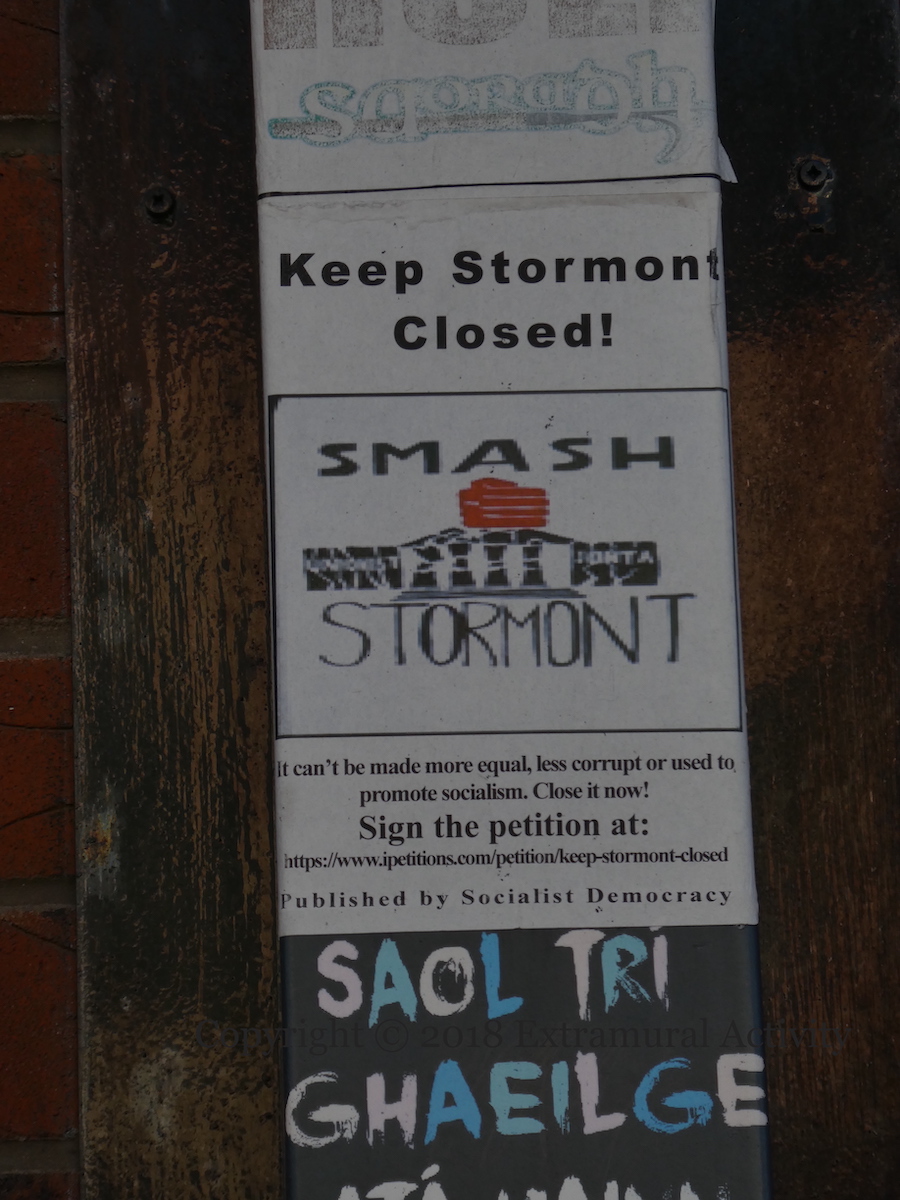
Posters on a drainpipe on the Falls Road next to Gerry Carroll’s constituency office: “Keep Stormont closed. Smash Stormont – It can’t be made more equal, less corrupt or used to promote socialism. Close it now! Sign the petition … Published by Socialist Democracy.”
With “Saol trí Ghaeilge [atá uainn]” below [We want life using Irish].
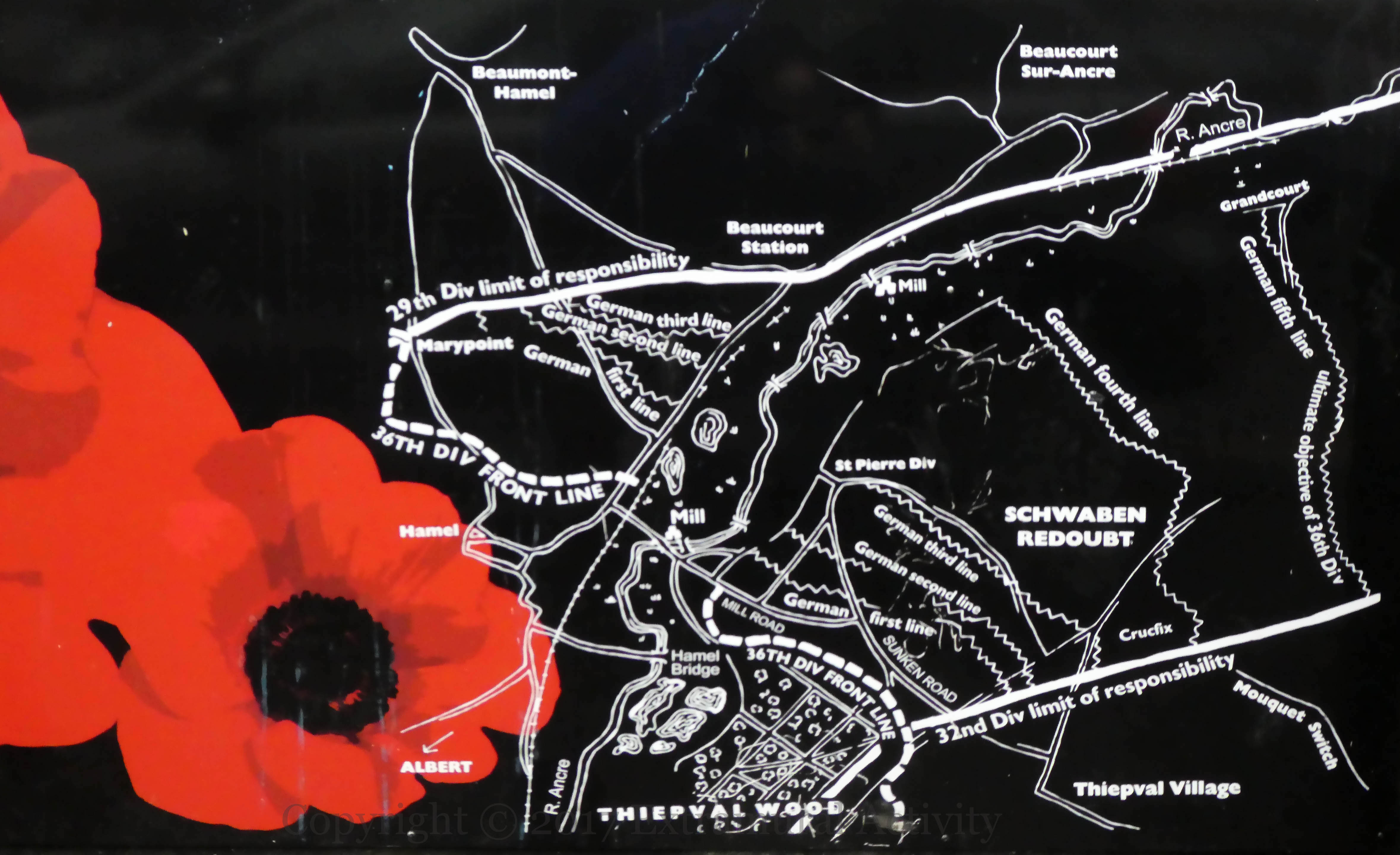
The map in the lower left corner of this WWI commemorative mural shows the defensive lines of both the Allies and the Central Powers. As the inscription on the mural describes, the Ulster Tower is situated close to the Schwaben Redoubt, the primary objective of the 36th Division on the first day of battle.
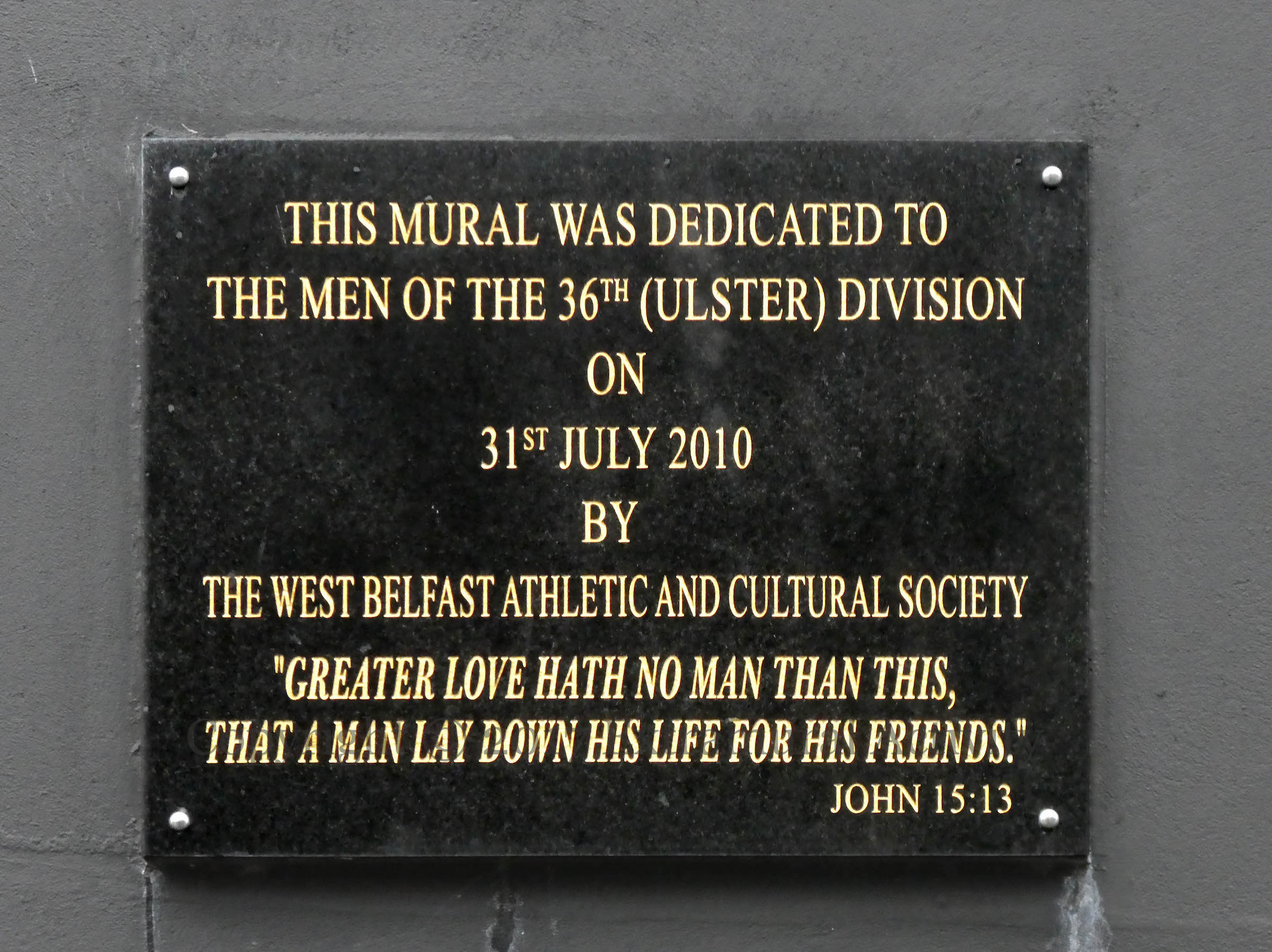
The plaque (shown second, below) refers to a similar mural painted in 2010.
Though the tradition might pre-date Christianity, on the day after Christmas – known also as Boxing day and St Stephen’s day – the wren (the king of winter and symbol of the past year) is hunted by strawboys or mummers who disguise themselves with straw headgear and make a parade and go around the houses asking for money to bury the wren.
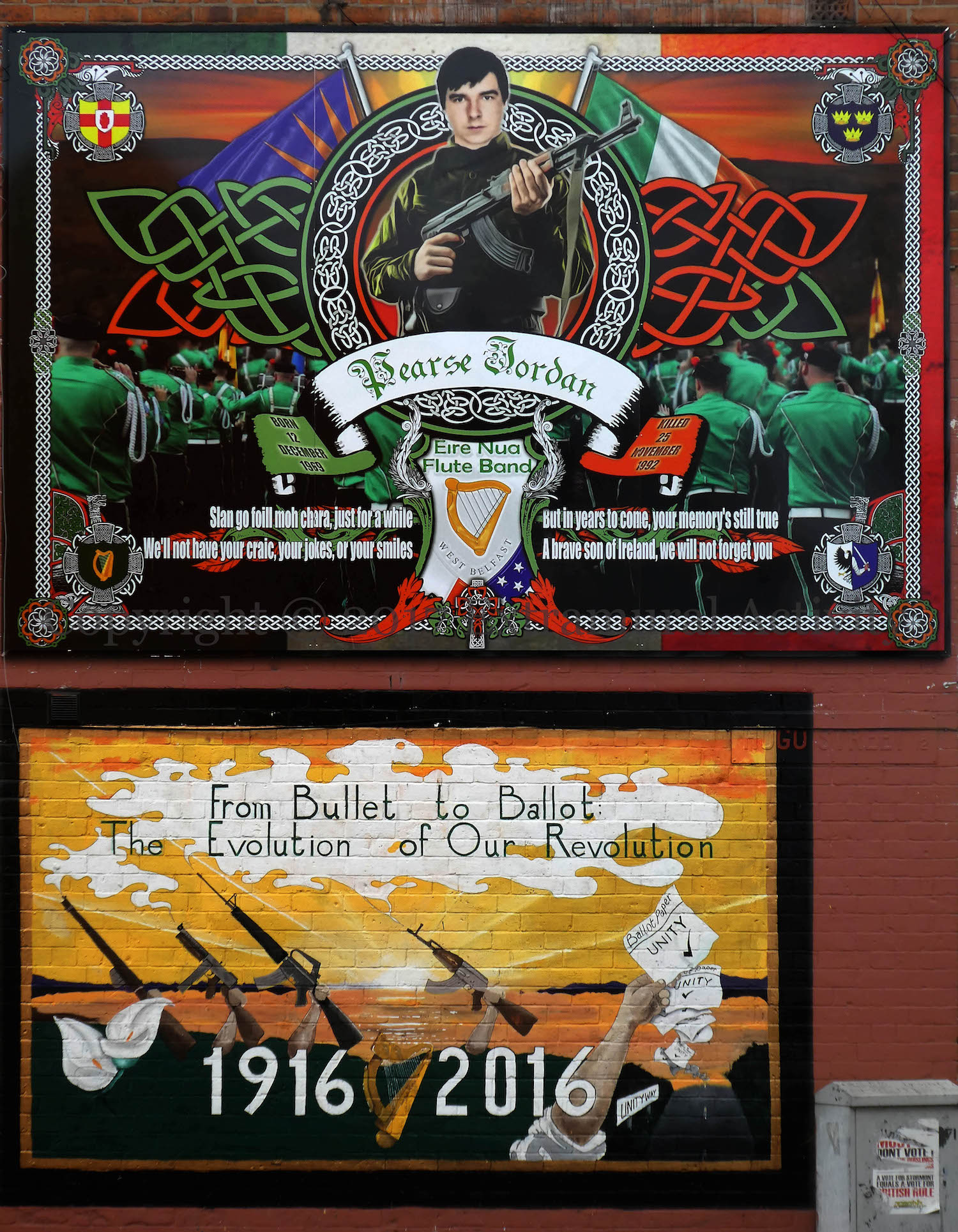
Pearse Jordan was unarmed when he was killed by the RUC on November 25th, 1992 but in this new Éıre Nua Flute Band board he leaves his prints on an assault rifle. (previous Éıre Nua board) His killing was ruled unlawful, and subsequent inquest insufficient, by the European Court Of Human Rights in 2001. The campaign for an inquest continues (An Phoblacht).
The words on the board – “Slan [sic] go foıll [sic] moh [sic] chara, just for a while/We’ll not have your craic, your jokes, or your smiles/But in years to come, your memory’s still true/A brave son of Ireland, we will not forget you” – are the chorus of The Ballad Of Pearse Jordan (words | sung by The Irish Brigade).
The board is in Hugo Street, which is also the site of his memorial plaque, just above the Evolution Of Our Revolution, as seen in the second image, below.
This is a tarp from republican party Saoradh (“liberation” web | tw | Fb), alleging that the “supposed police service in the north of Ireland” is engaged in “the brutal militarised suppression of a civilian population”. “The uniform may be different but the brutal tactics are the same.” “End human rights abuses in Ireland now”. Replaces the Resistance tarp (previously seen in Ardoyne).
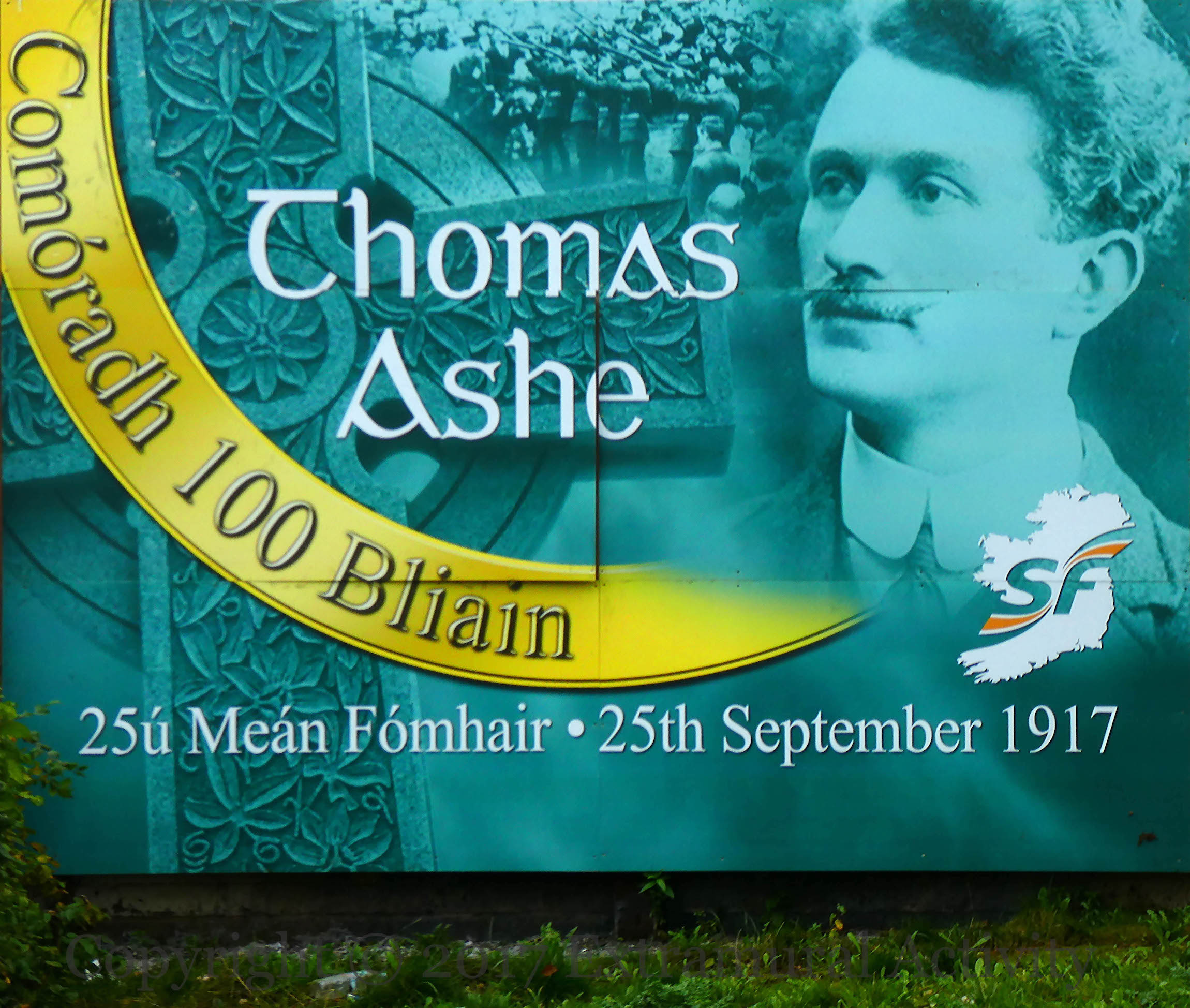
Thomas Ashe was born on January 12th, 1885, in County Kerry, into a bi-lingual household. He became an Irish teacher in Lusk and joined the Gaelic League and the Irish Volunteers, commanding the Fingal battalion during the Easter Rising. His death sentence was commuted to life imprisonment, which in fact lasted only a year. He was released but soon charged and convicted with sedition, and died on hunger strike on September 25th, 1917, after an “inhuman and dangerous” attempt at force-feeding by the authorities (WP). See also Tomás Ághas.
The first blanket man, Kieran Nugent (obituary at An Phoblacht), is back in the first spot of the Divis Street wall, where he has resided, with brief interruptions, since 2005. Most recently, a board with the same image as this one was replaced by part of the 1916 centenary mural (see Young Ireland); before that, he was moved further down the wall to the hunger striker mural (along with Mairéad Farrell) to make way for a pro-Catalan mural.
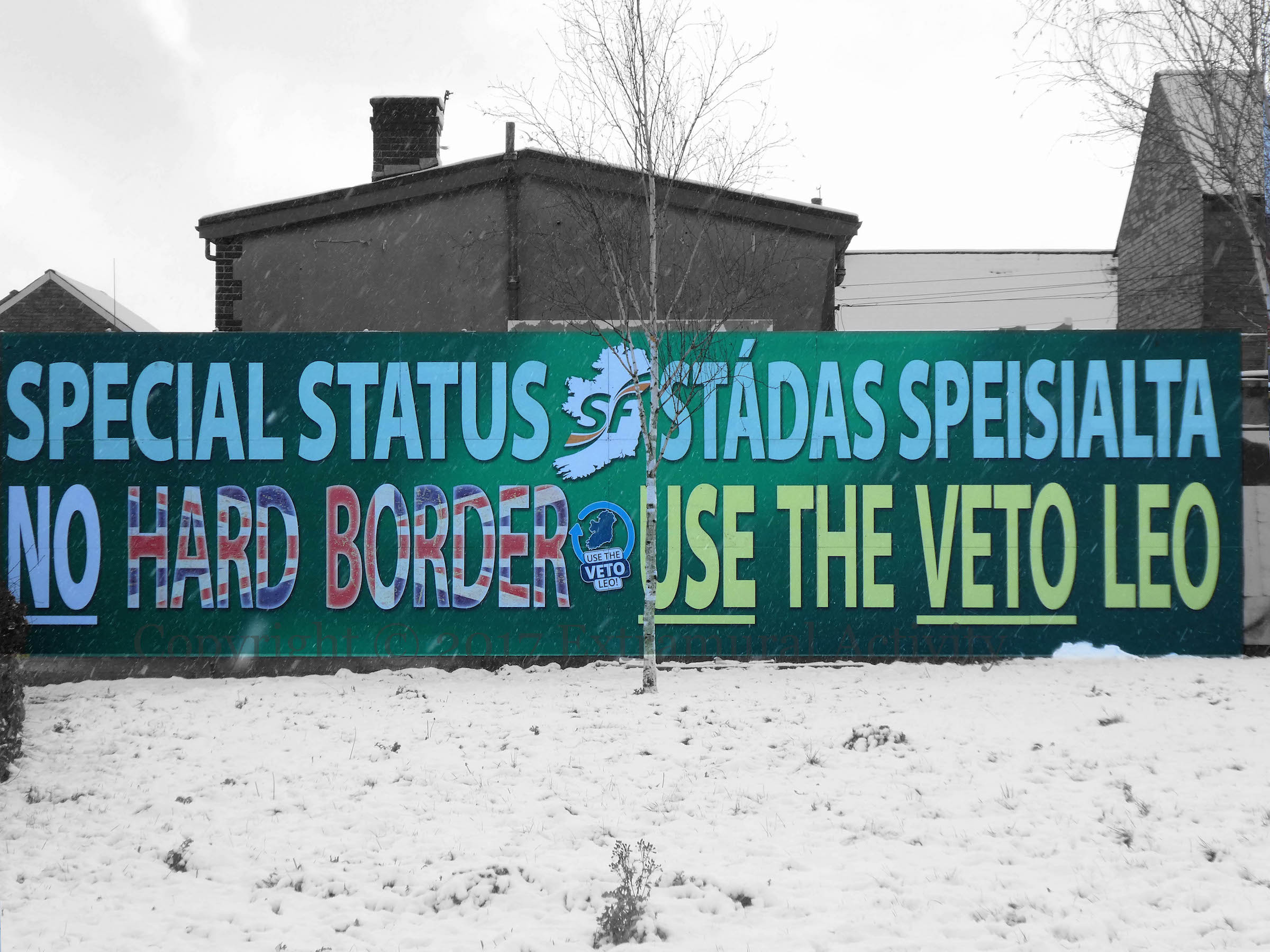
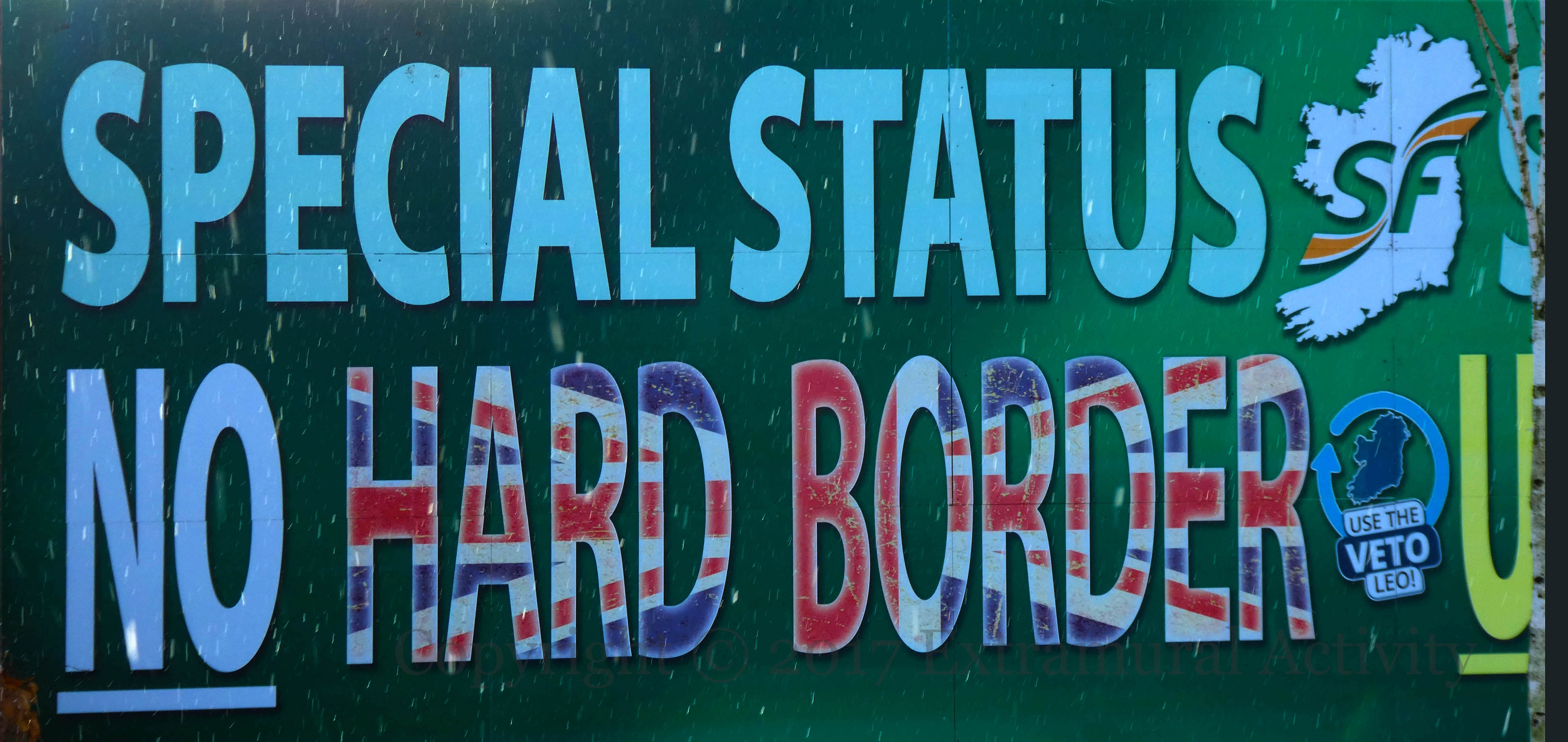
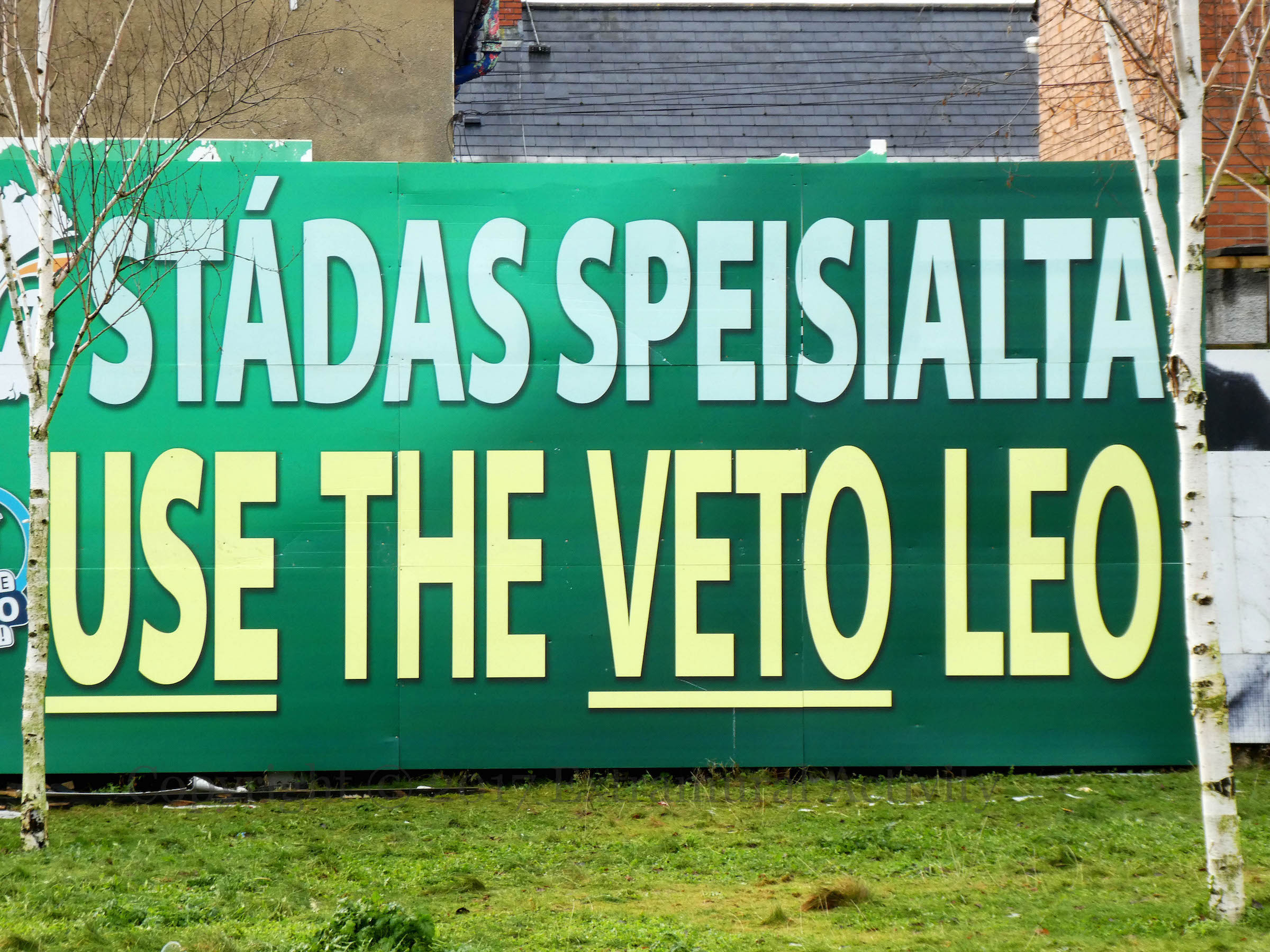
“First round” Brexit negotiations between Europe and the UK required an agreement in principle on the land border between Northern Ireland (part of the UK) and the Republic of Ireland (a member of the EU). President of the European Council Donald Tusk went to Dublin at the beginning of December to declare that as a member Ireland (and prime minister Leo Varadkar) would have a veto over whether “sufficient progress” had been made (Irish Times), which the the Sınn Féın board above urged him to use. The DUP objected to any “special status/stádas speısıalta” for NI, rejecting the wording proposed on December 4th. An agreement was reached on December 8th which would (somehow) both preserve Northern Ireland’s similarity to the rest of the UK without requiring a “hard border” with the Republic.
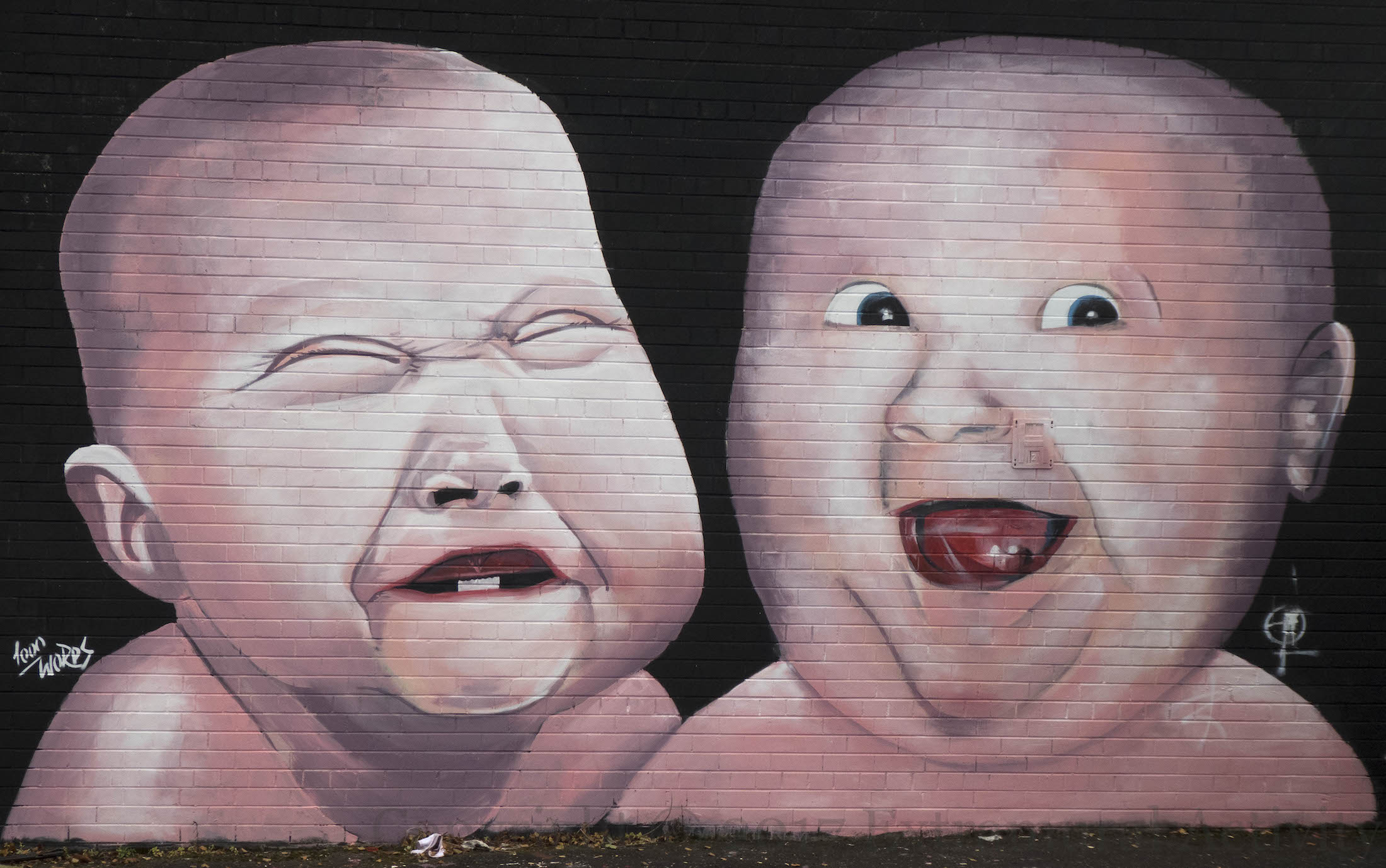
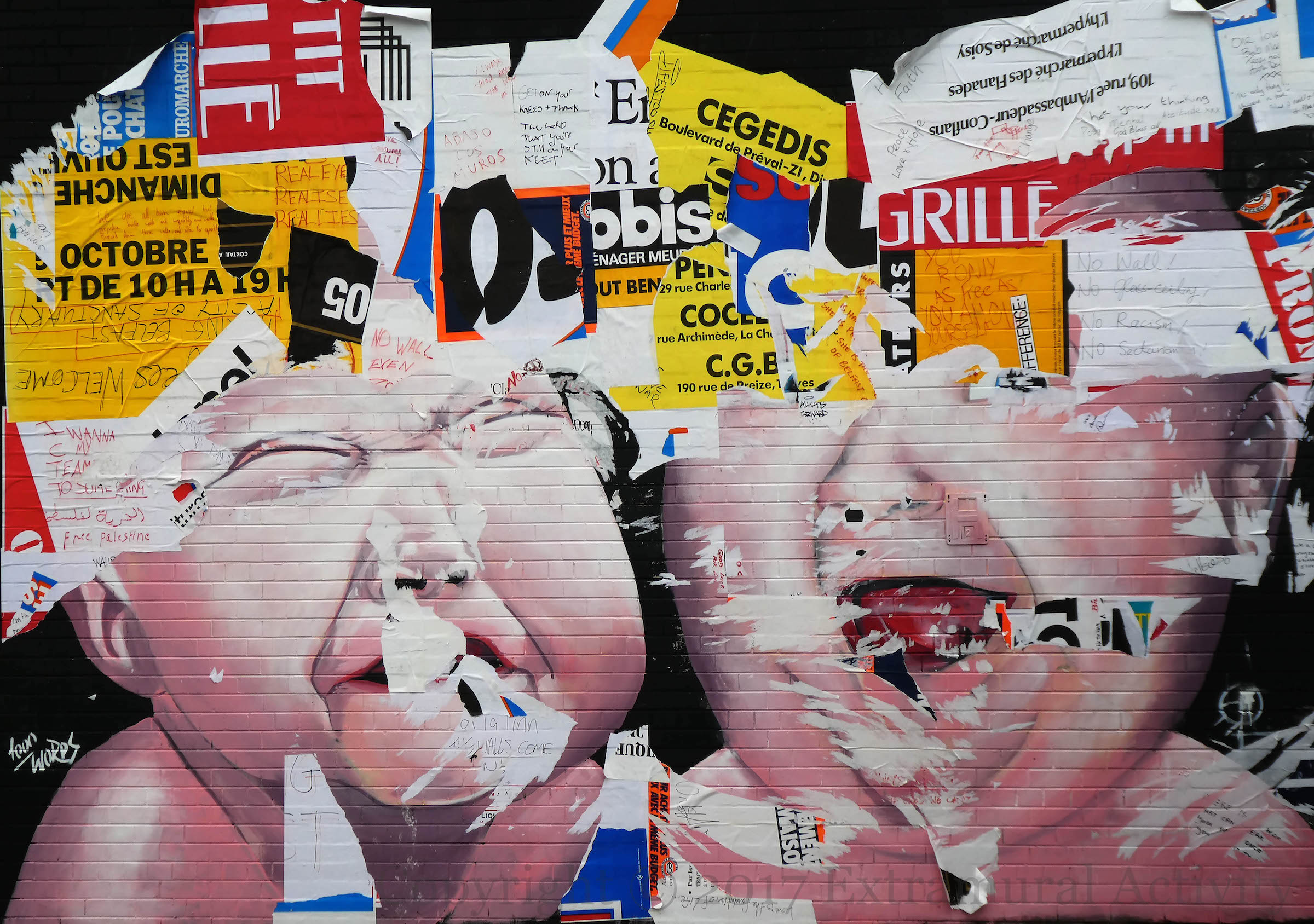
Secondly, the mural is covered in French posters from the 1970s – which visitors were encouraged to sign and leave messages on – as “Act 1” of the No Walls project involving KRM (Cherif and Geza, a couple from France and Germany), Paul Doran, and Londoner John Costi, and which also included an exhibition in the Titanic museum (pdf of the full project).
Some of the posters and writing were ripped off (to be used in Act 2) on the anniversary of the fall of the Berlin wall in 1989 (video at the Irish News) to reveal again the babies (final image).










 Extramural Activity