We Shall Defend Our Island

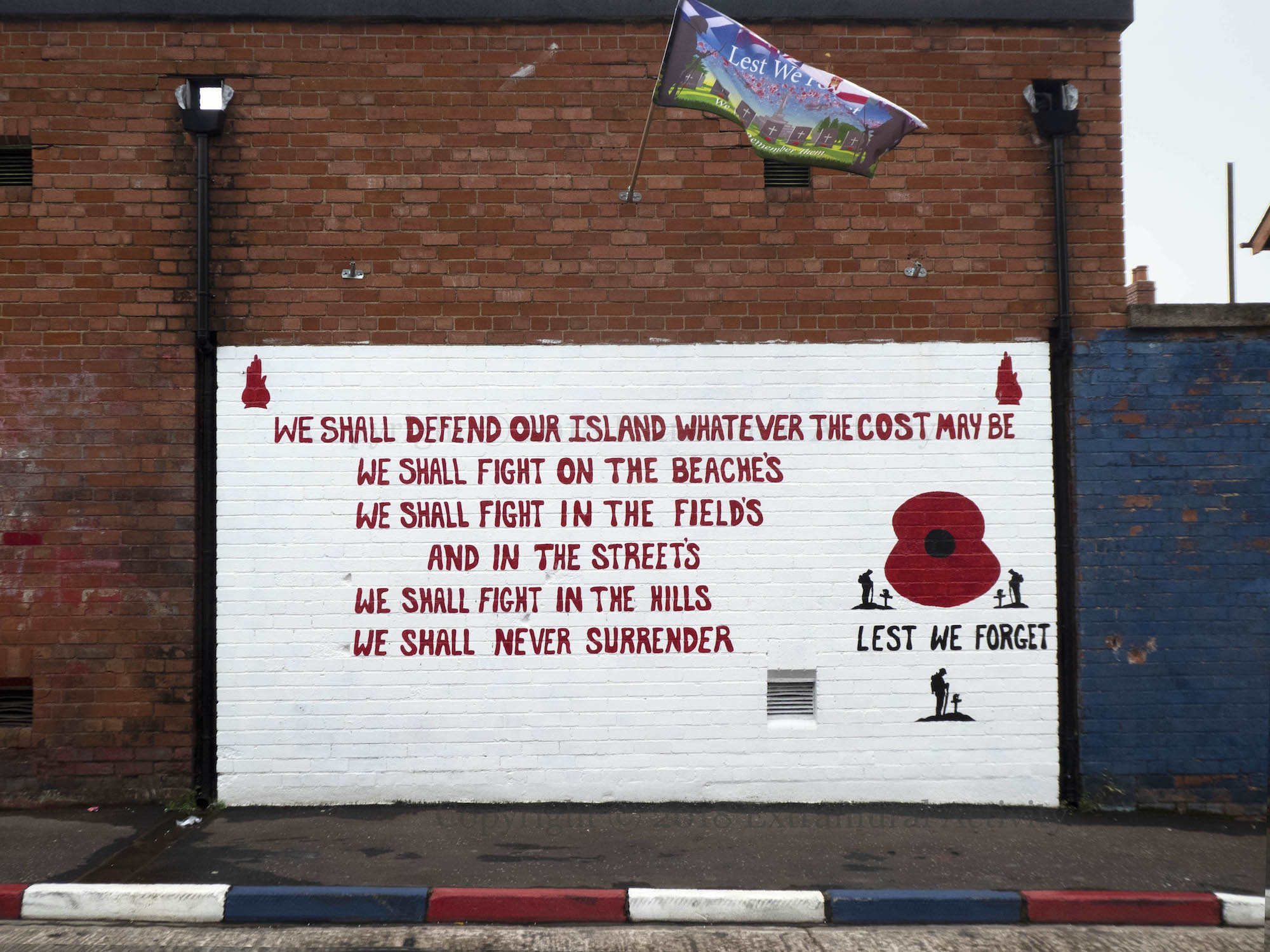
The mural in Castlereagh Parade has been repainted for the centenary of the end of WWI, but with some notable differences. Three flag-holders have been added above. On the right are now a poppy and mourning soldiers. The quote comes from a speech by Winston Churchill on 1940-06-04 – “We shall defend our island whatever the cost may be. We shall fight on the beaches. [We shall fight on the landing grounds.] We shall fight in the fields and in the streets. We shall fight in the hills. We shall never surrender.” – but the current first line was previously omitted in favour of another Churchill quote: “We have nothing to offer but blood, tears, and sweat.” See: Whatever The Cost May Be.

Click image to enlarge
Copyright © 2018 Seosamh Mac Coılle
[X06310] X06311 [X06312]

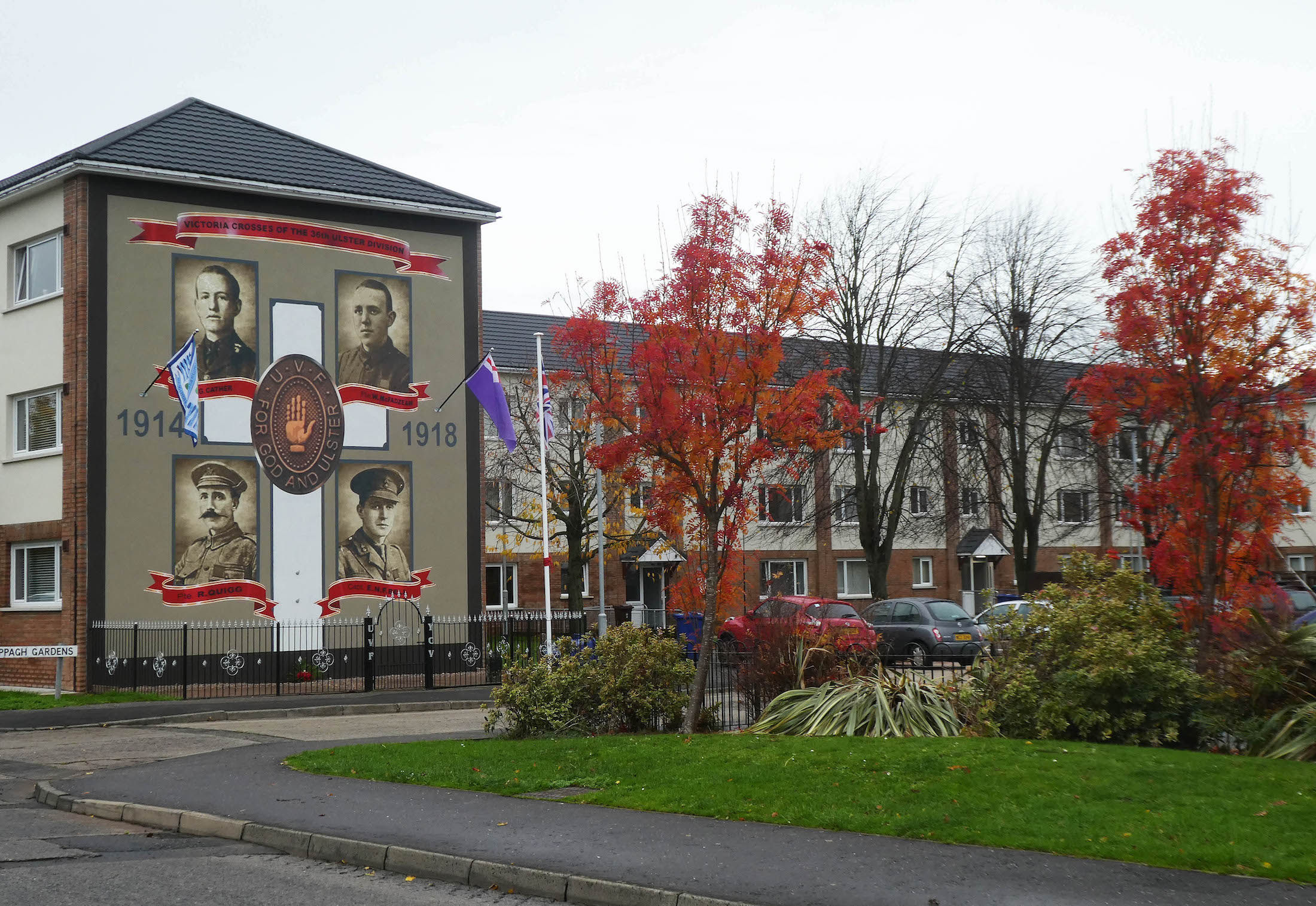
Victoria Crosses Of The 36th (Ulster) Division

Dee Craig has updated the Victoria Crosses mural in Cregagh, honoring G[eoffrey St. George Shillington] CatherW[illiam Frederick] MacFadzeanR[obert] Quigg, and E[ric] N[orman] F[rankland] Bell. Five more were included in a board on the Shankill and another in Willowfield Street. (For the previous Cregagh version, see M03390)

Click image to enlarge
Copyright © 2018 Seosamh Mac Coılle
X06313 [X06314] X06315 cappagh gardens

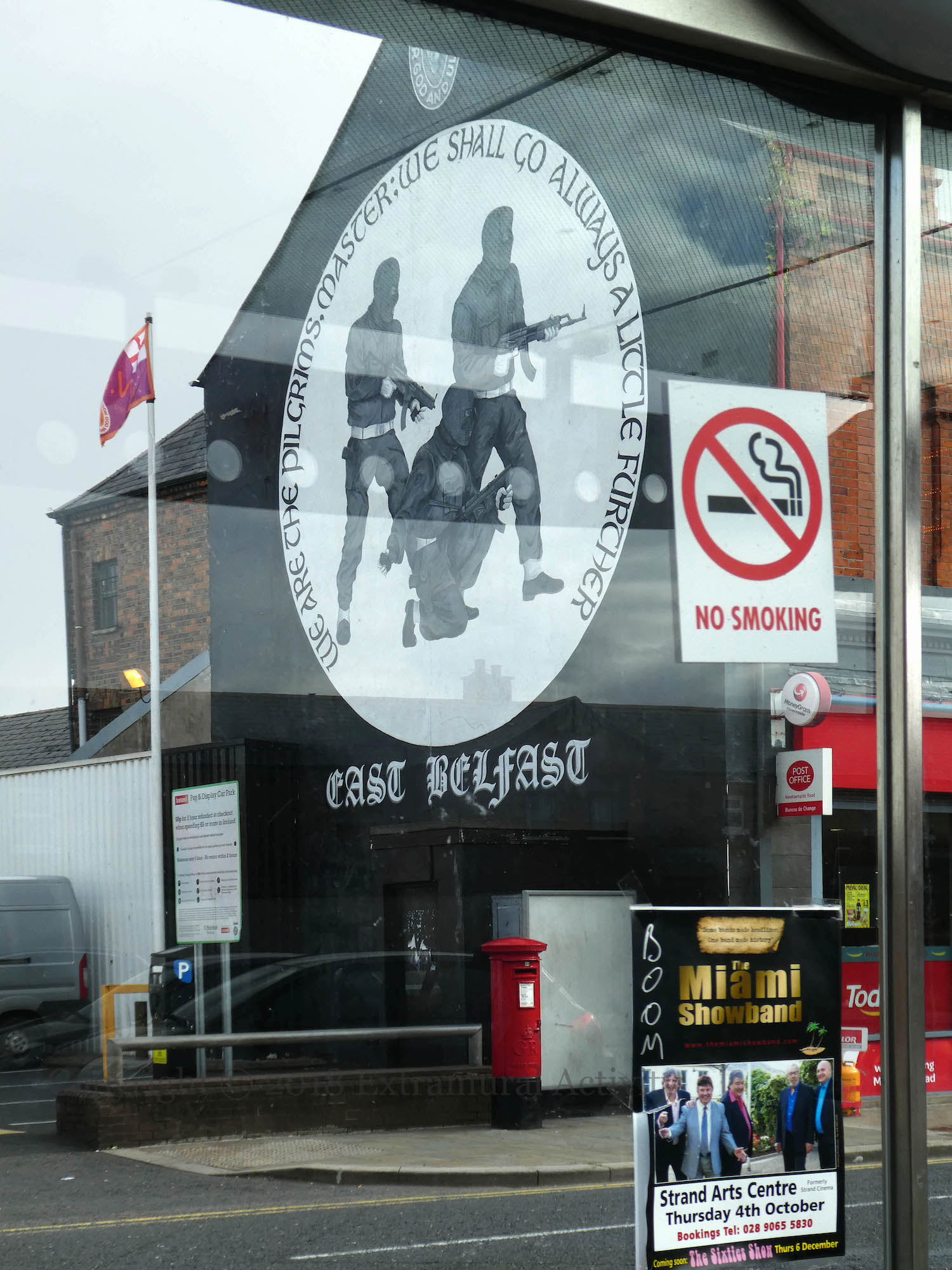
Boom

Three members of the Miami Showband were killed in 1975 at a fake check-point set by members of the UVF’s Glennane Gang. The explosion during the incident did not kill the musicians (as the graffiti on the poster above in loyalist east Belfast suggests); they were shot. Rather, a bomb exploded prematurely as it was being planted on their van, killing two of the attackers – see Boyle & Somerville – prompting the shooting spree (WP) that left three of the five band-members dead.

For the mural in the background, see Please Pay Here.

Click image to enlarge
Copyright © 2018 Seosamh Mac Coılle
X06135

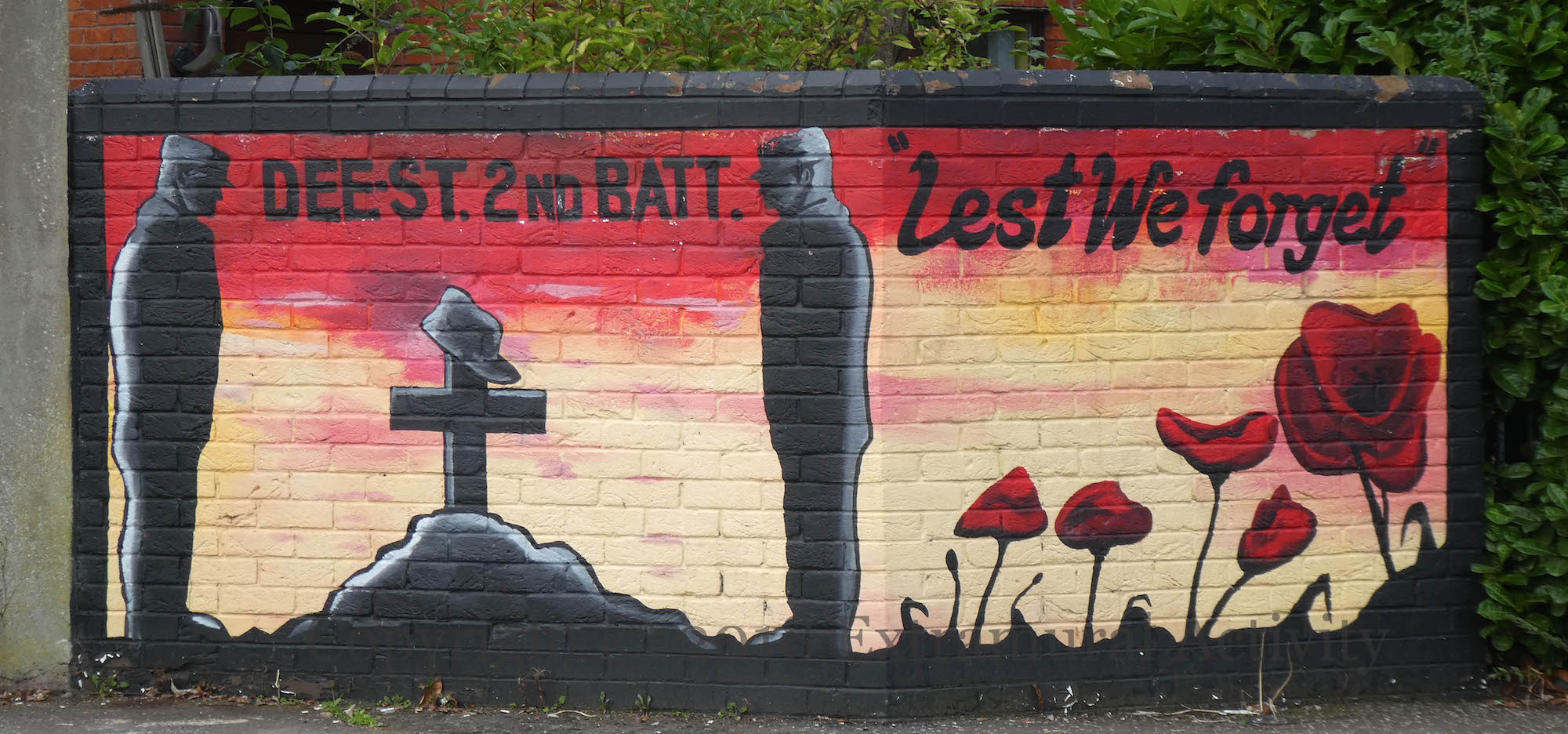
Dee Street Remembers

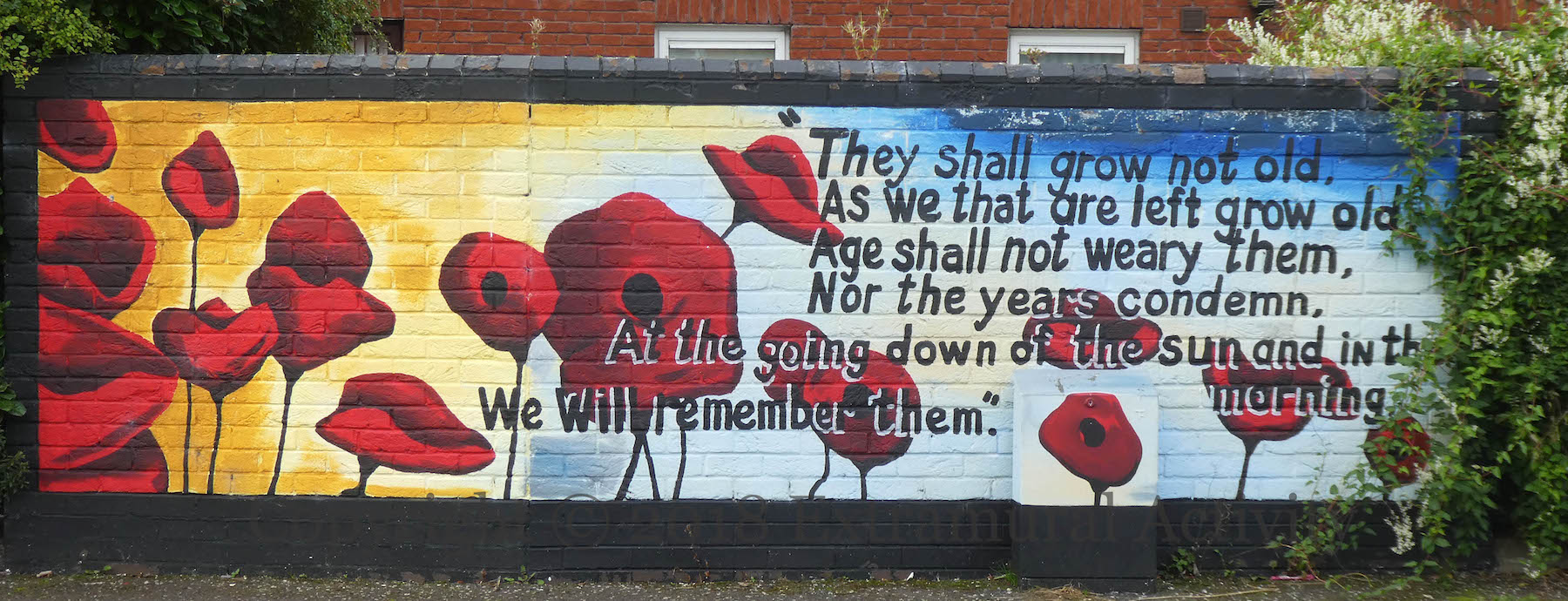
A new series of UDA “memorial” murals has been painted along Island Street, in east Belfast. Poppies are featured throughout, as we have increasingly seen over the last few years. New to this series, however, are the use of Lawrence Binyon’s poem For The Fallen in the third panel (see below) and in the image above – the left-most of the four – modern UDA volunteers stand in reflection upon an above-ground grave, also symbolic of the fallen of World War I.

Click image to enlarge
Copyright © 2018 Seosamh Mac Coılle
X06144 X06145 X06146 X06147 X06143

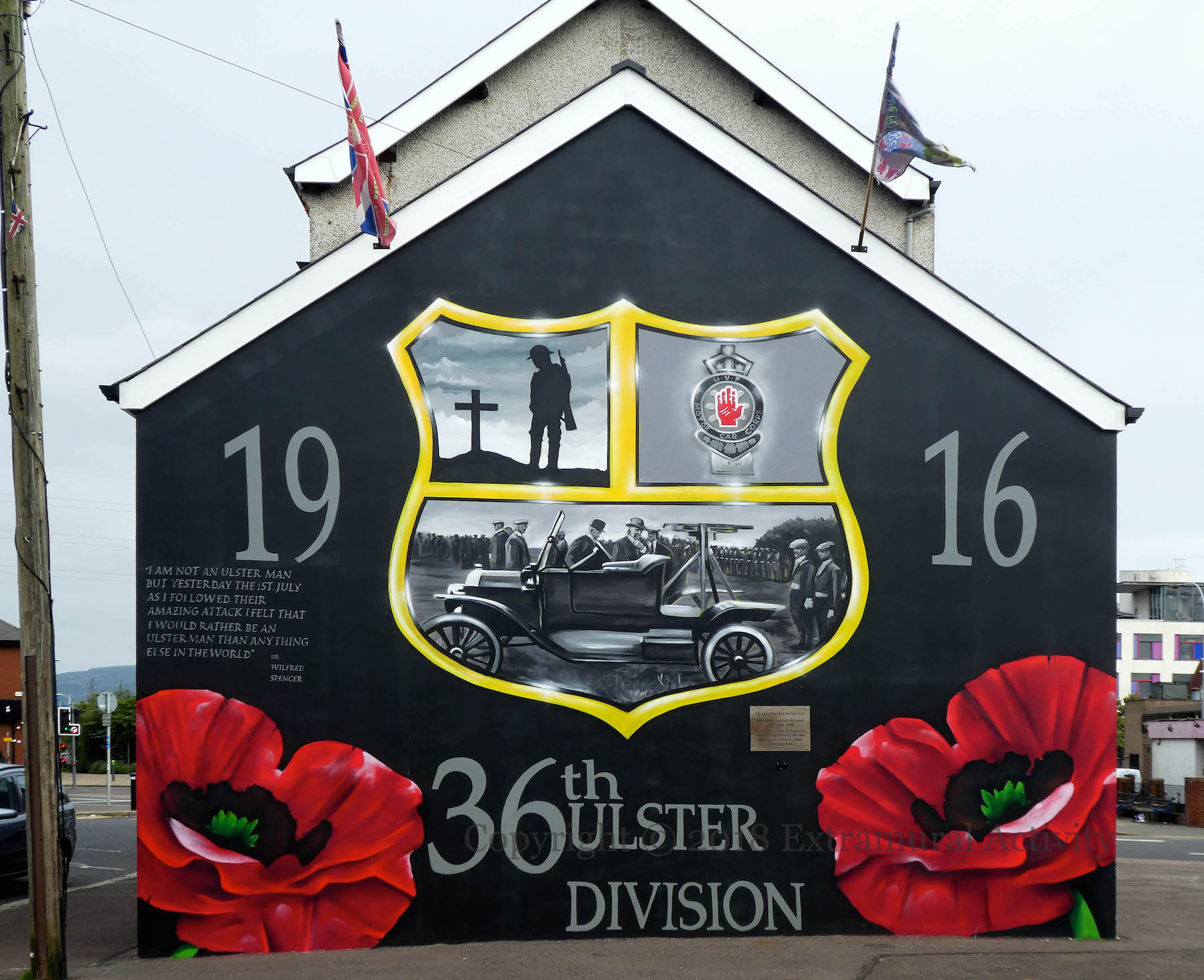
UVF Motor Car Corps

The first time that the horseless carriage was used in a military operation was the Ulster Volunteers’ “Larne Gunrunning” of April 1914. By this time, there are thought to have been 350 vehicles in the Corps (Angelsey). It’s not clear whether the cars were later used by the 36th (Ulster) Division – please comment/get in touch if you can shed light on this. (For Spencer’s quote on the left, see I am not an Ulsterman.) The plaque is to (modern) UVF volunteer ‘Squeak’ Seymour.

Click image to enlarge
Copyright © 2018 Seosamh Mac Coılle
X06142 ravenscroft ave

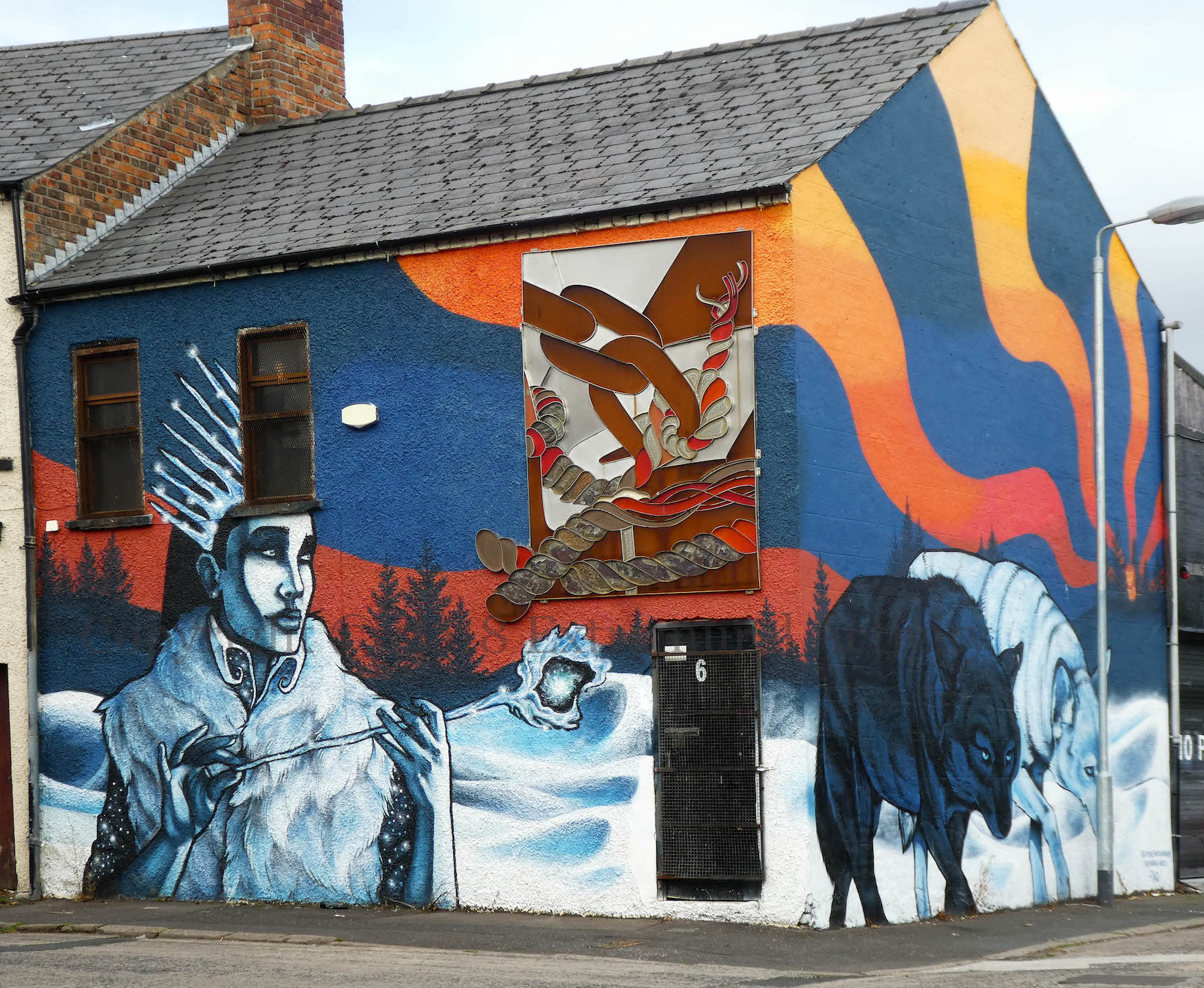
Winter’s End

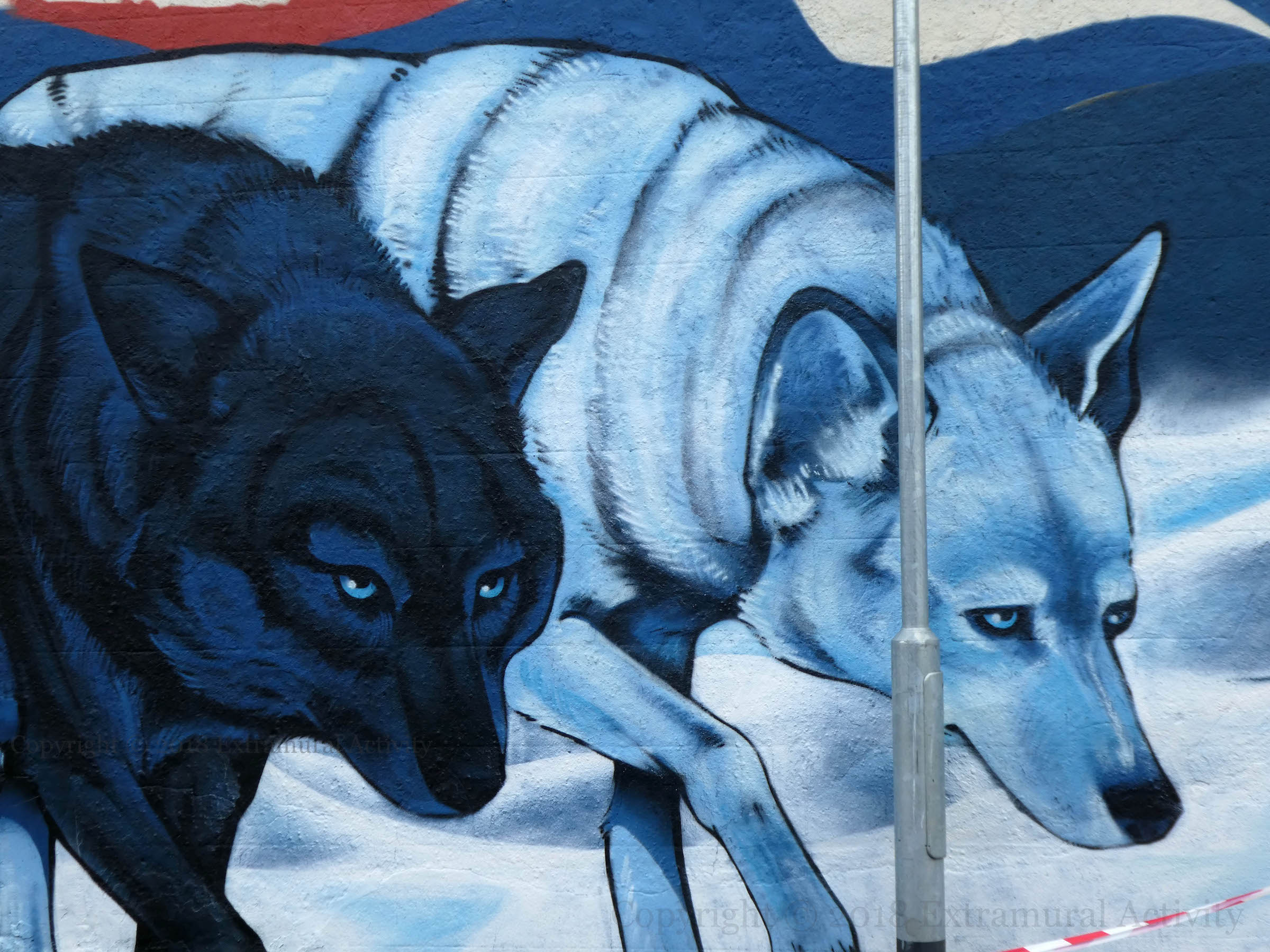
Shown are the White Witch (Jadis) and two wolves, Maugrim – Captain of the Secret Police – and Vardan (from the movie adaptation). The piece is called “Winter’s End” however, because Jadis’s reign over Narnia – the winter of 100 years – is under threat from Aslan the lion.

The piece is by Friz (web | tw). The two images below are in-progress shots from March. For the metalwork in the top right, see Chains & Ropes. The corner – which is typically beset with cars – is in Townsley Street/Manderson Street, Belfast, next to CS Lewis square.

Click image to enlarge
Copyright © 2018 Seosamh Mac Coılle
X06132 [X04835] X04836 X04837

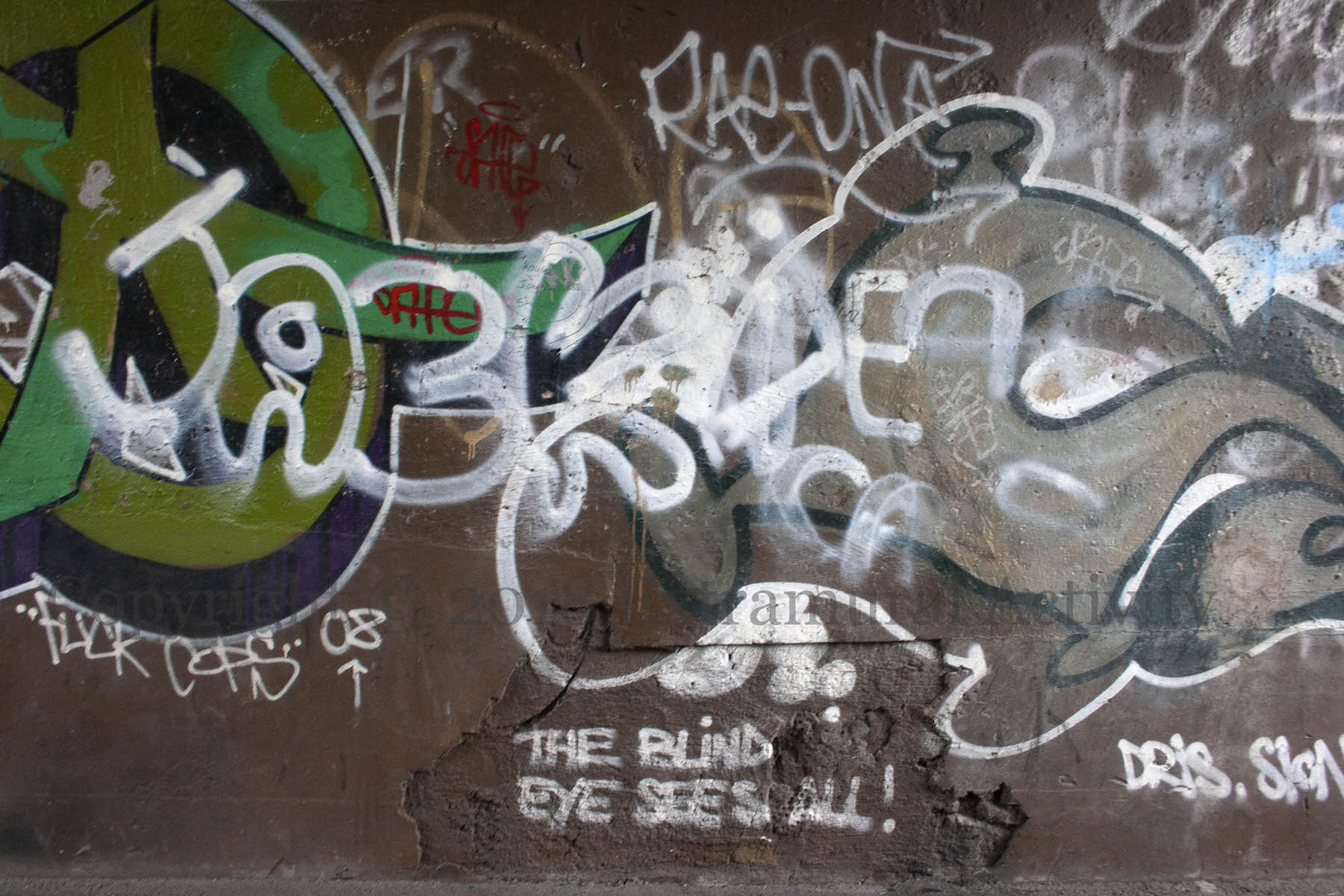
The Blind Eye Sees All!

A poetic allusion to the blind prophet Tiresias (from Oedipus Rex) or to security cameras? This graffiti is in the tunnel under the (recently repainted) Harkness Parade shipyard workers.

Click image to enlarge
Copyright © 2018 Seosamh Mac Coılle
X04909

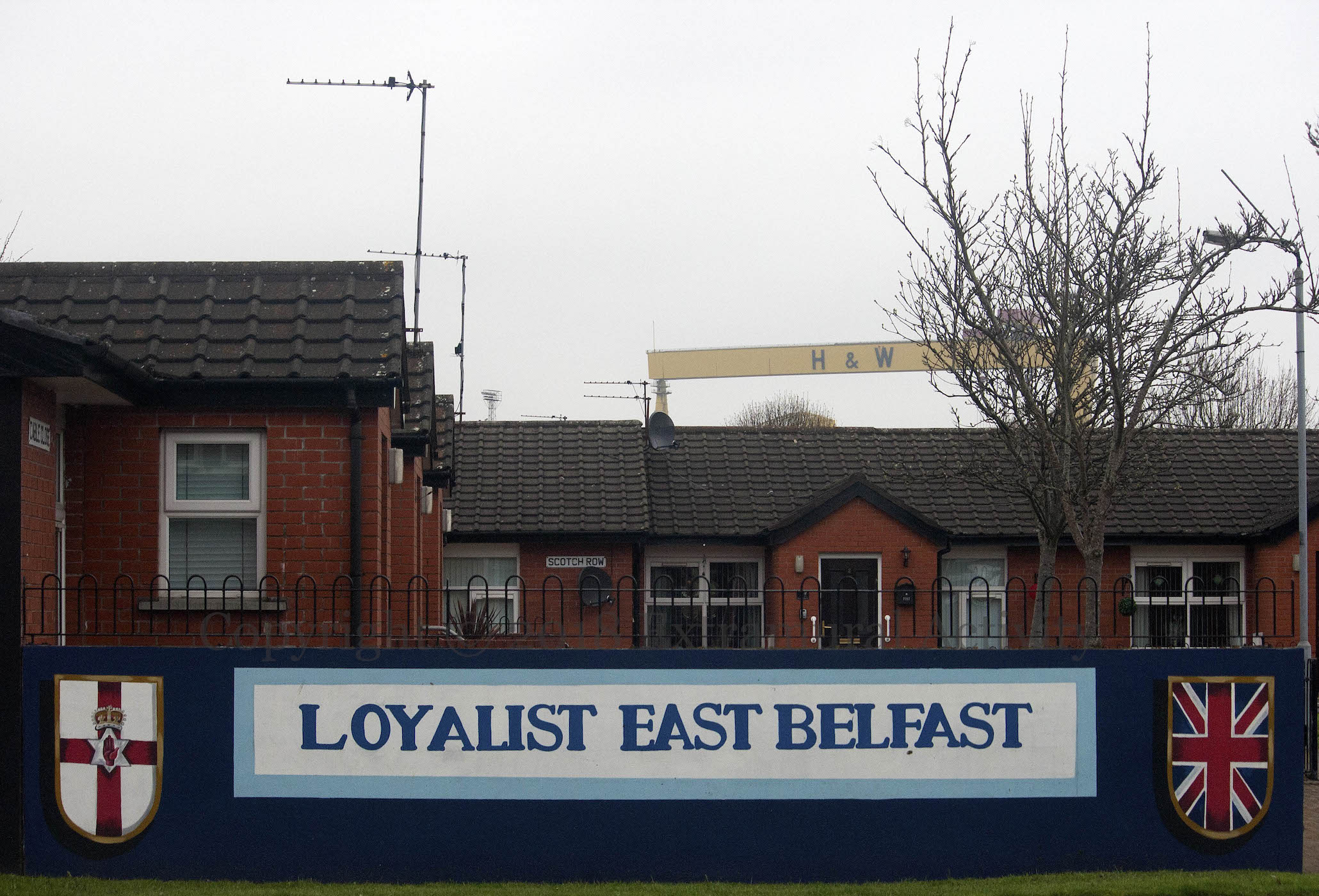
Loyalist East Belfast

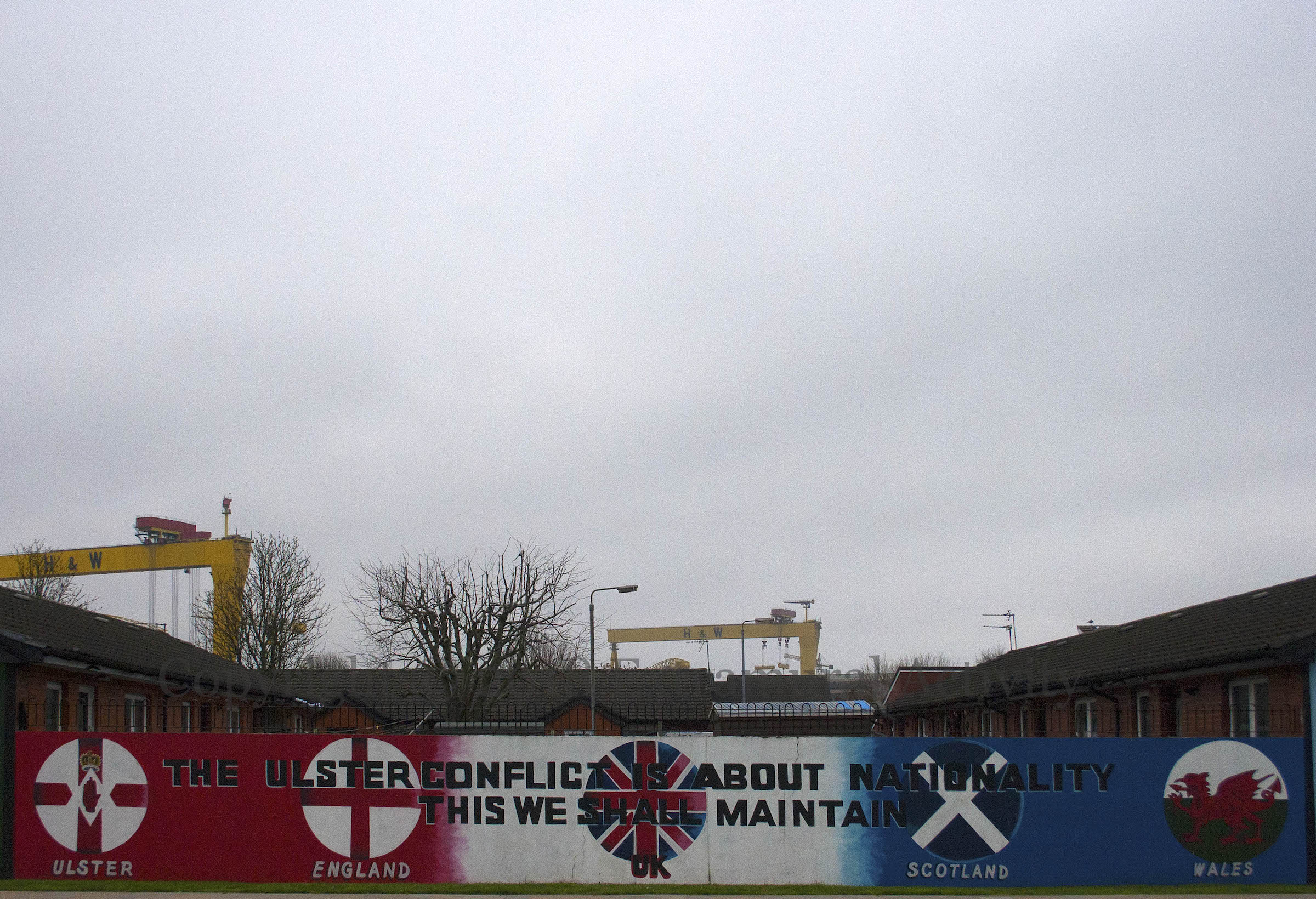
Here are the two low walls along Freedom Corner in east Belfast. Above, “The Ulster conflict is about nationality – this we shall maintain” using flags as identifiers: the Ulster banner for Northern Ireland, the St George Cross for England, the Union Flag for the UK, St Andrew’s Saltire for Scotland, and Baner Cymru for Wales. The previous version used flowers and the red hand – see Daffodil Nation.

Below, “Loyalist east Belfast” between the Ulster Banner and Union Flag.

From left to right: For Freedom Alone | As Long As 100 Of Us Remain Alive | Loyalist East Belfast | The Strangest Victory In All History | Ulster’s Past Defenders | Nationality is included in Loyalist East Belfast | Ulster’s Present Defenders | Freedom Corner

Click image to enlarge
Copyright © 2018 Seosamh Mac Coılle
X04876 X04873

Of The River

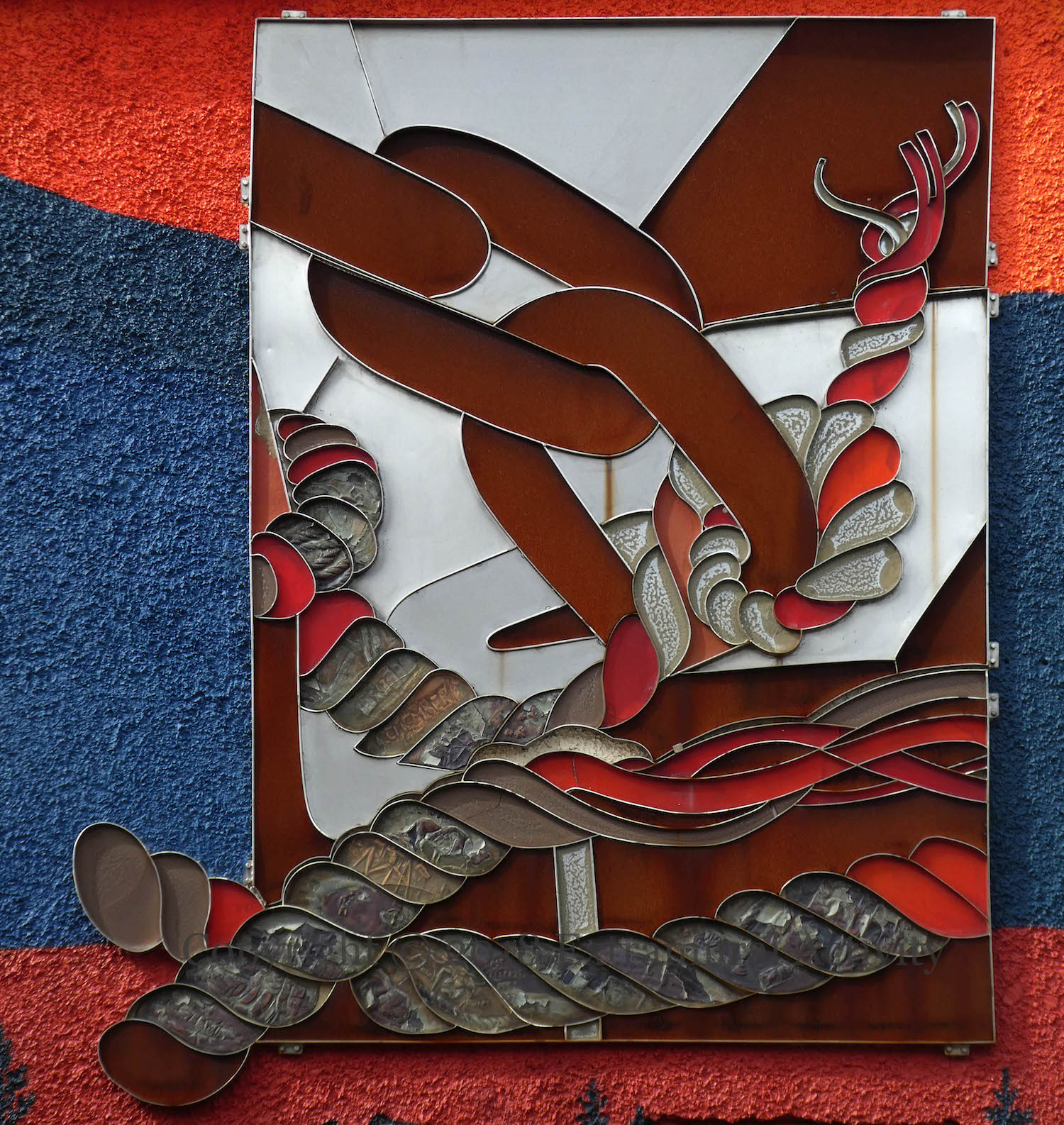
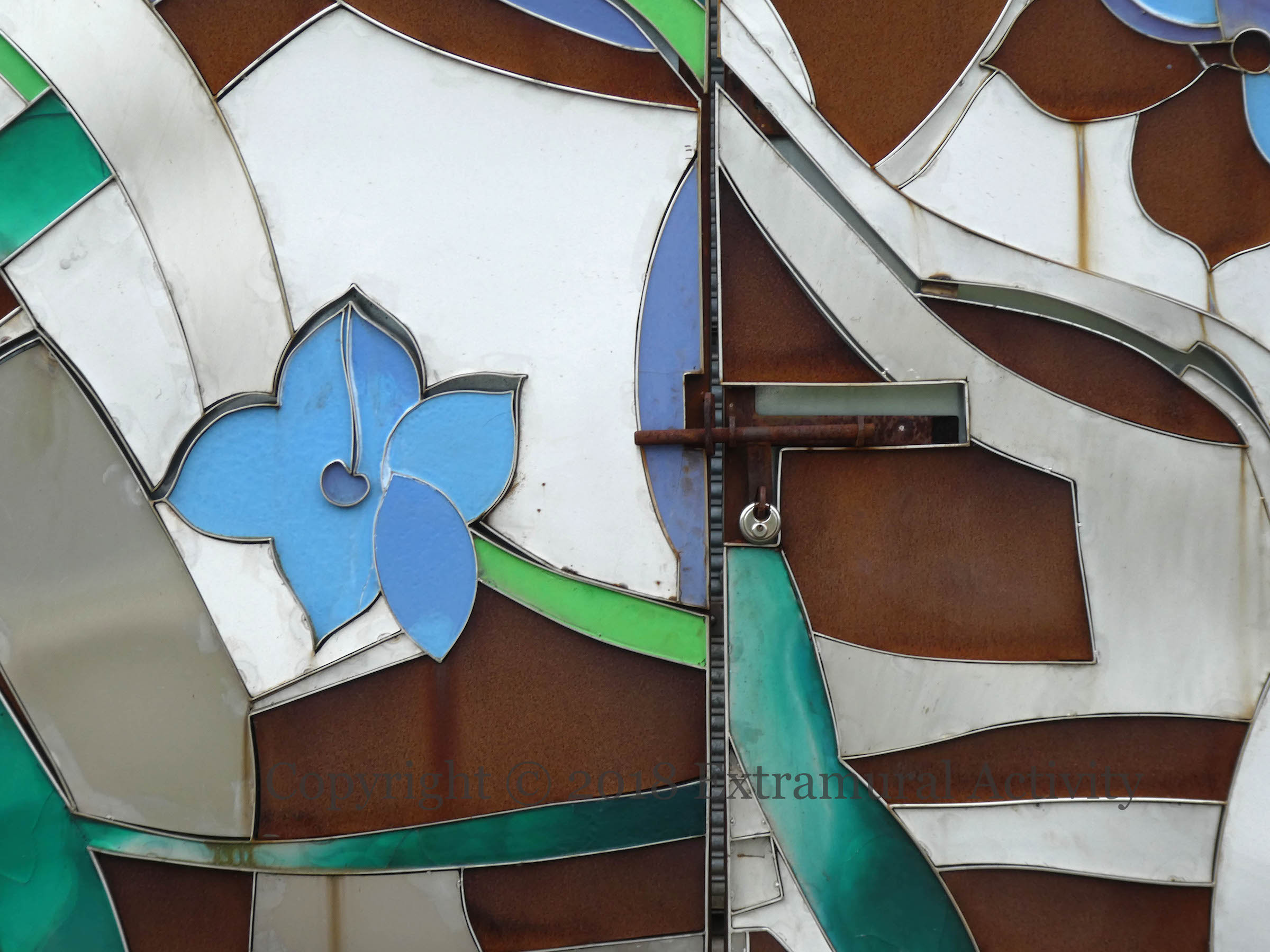
Here are two more of the metalworks created by Alan Burke (see previously Metalwork) reflecting the industrial heritage of east Belfast. Above are the ropes and chains of a ships’ dock; below is the title piece, “Of The River”, named for the nearby Connswater River. Video of the launch.

Click image to enlarge
Copyright © 2018 Seosamh Mac Coılle
X04863 X04865

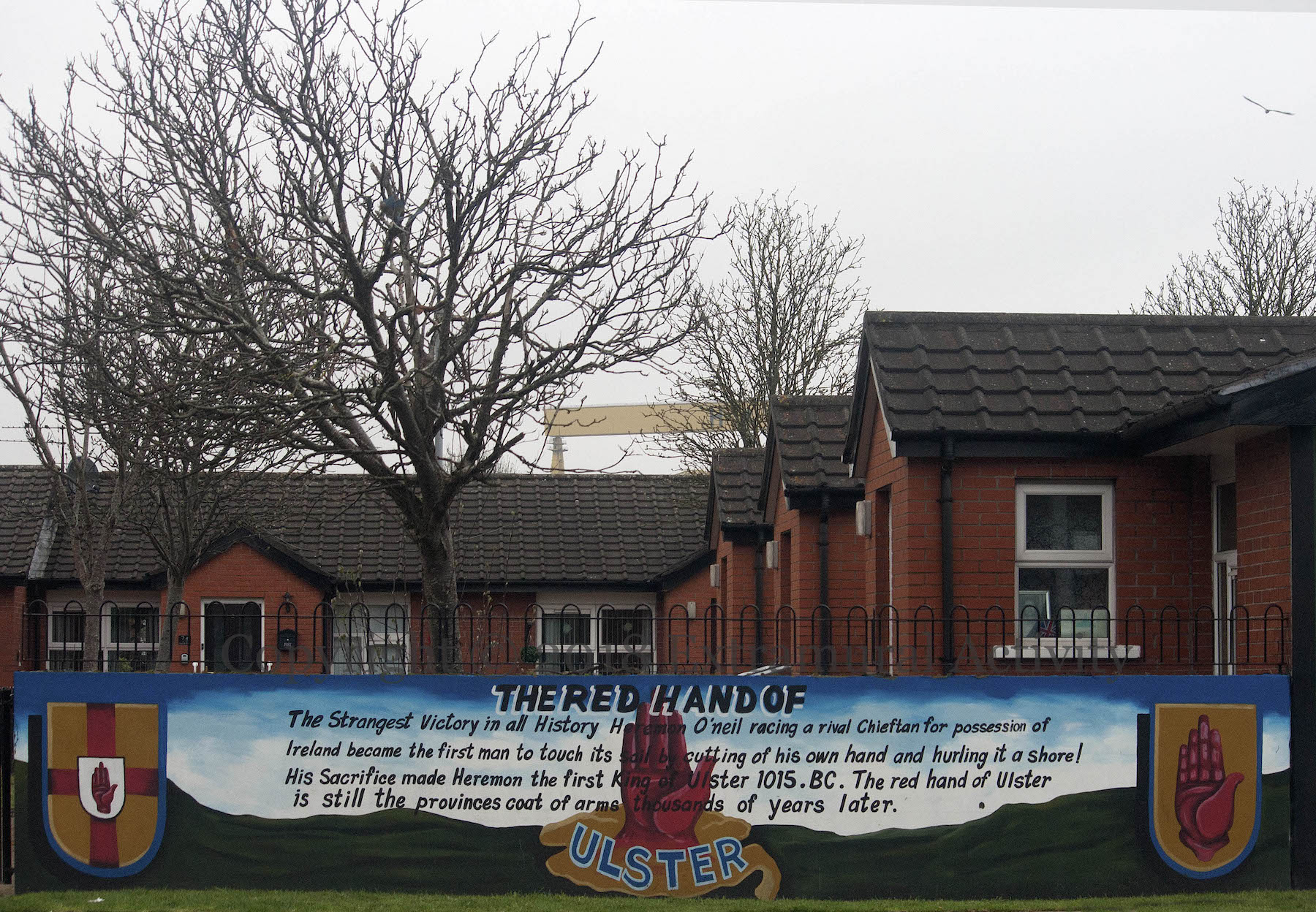
The Strangest Victory In All History

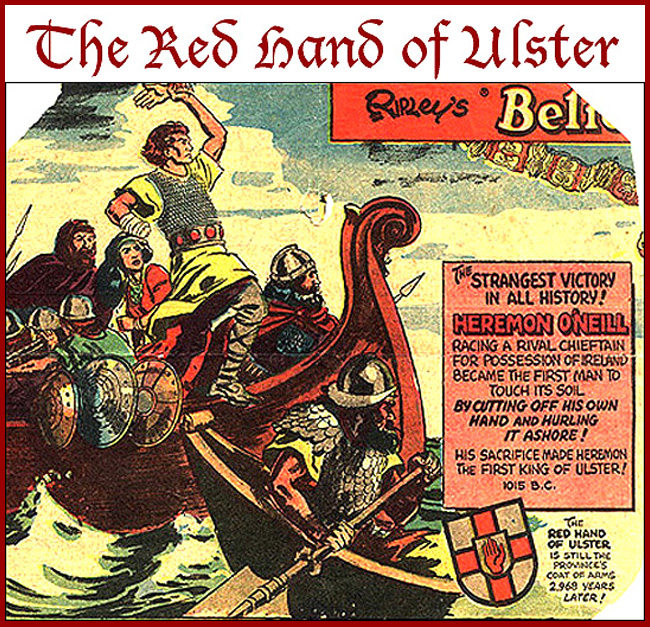
From Ripley’s Believe It Or Not, 1953: “The strangest victory in all history: Heremon [Érimón] O’Neill racing a rival chieftain for possession of Ireland became the first man to touch its soil by cutting off his own hand and hurling it ashore! His sacrifice made Heremon the first king of Ulster, 1015 B.C. The red hand of Ulster is still the provinces coat of arms thousands of years later.” Most people believe it not.

Newtownards Road, east Belfast

From left to right: For Freedom Alone | As Long As 100 Of Us Remain Alive | Loyalist East Belfast | The Strangest Victory In All History | Ulster’s Past Defenders | Nationality is included in Loyalist East Belfast | Ulster’s Present Defenders | Freedom Corner

Click image to enlarge
Copyright © 2018 Seosamh Mac Coılle
X04874

Image result for ripley's believe it or not 1953 red hand of ulster