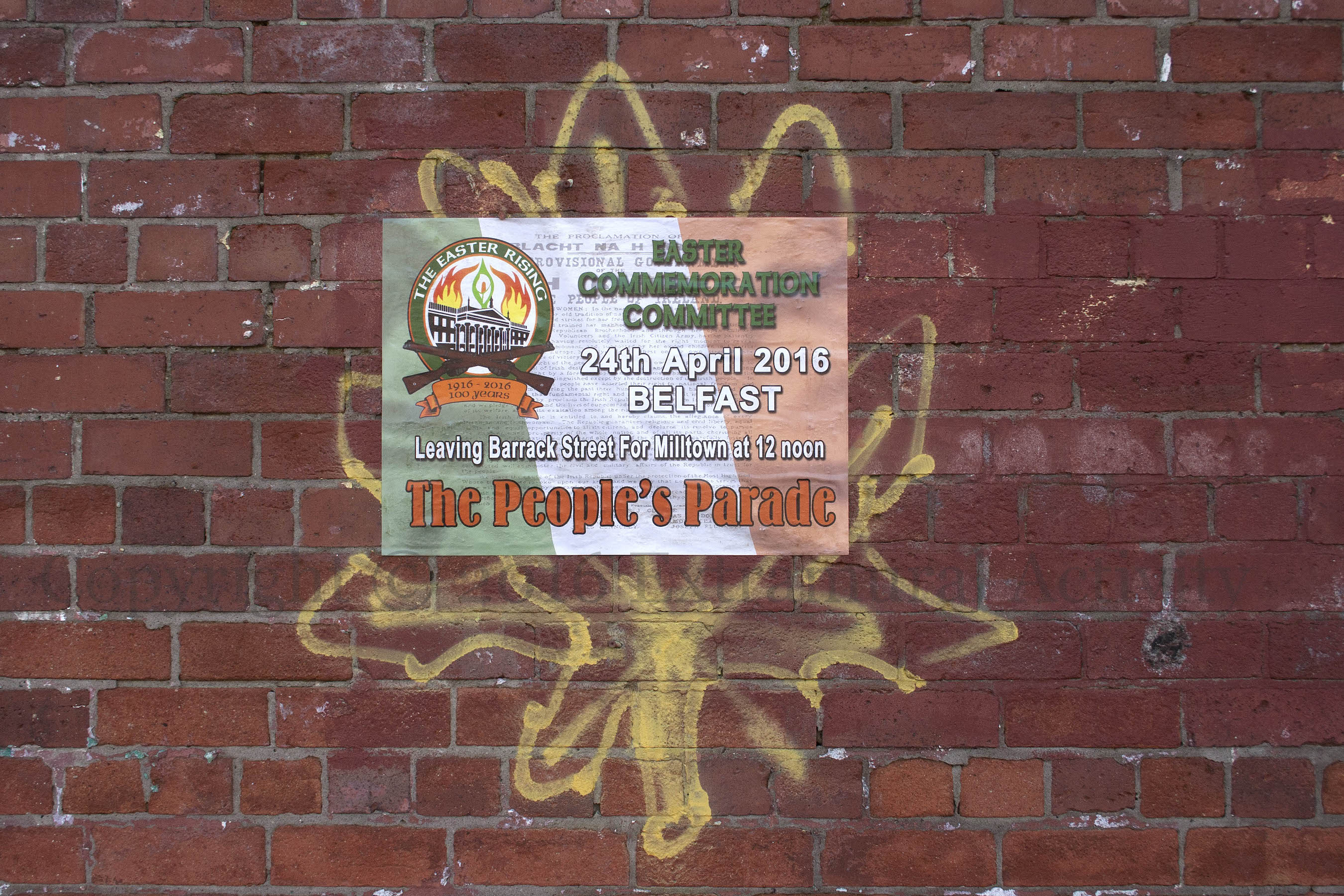
Two competing posters for two competing dates for two (competing?) Easter Rising parades: the People’s Parade (above) was held today, April 24th, the date of the Rising in 1916; the other was held on this year’s Easter Sunday, March 27th, as the parade is annually held on Easter Sunday.
The seven signatories of the 1916 Proclamation of the provisional government of the Irish Republic. From left to right: Joseph Plunkett, Sean MacDiarmada, Thomas Clarke, James Connolly, Padraig Pearse, Éamonn Ceannt, Thomas MacDonagh.
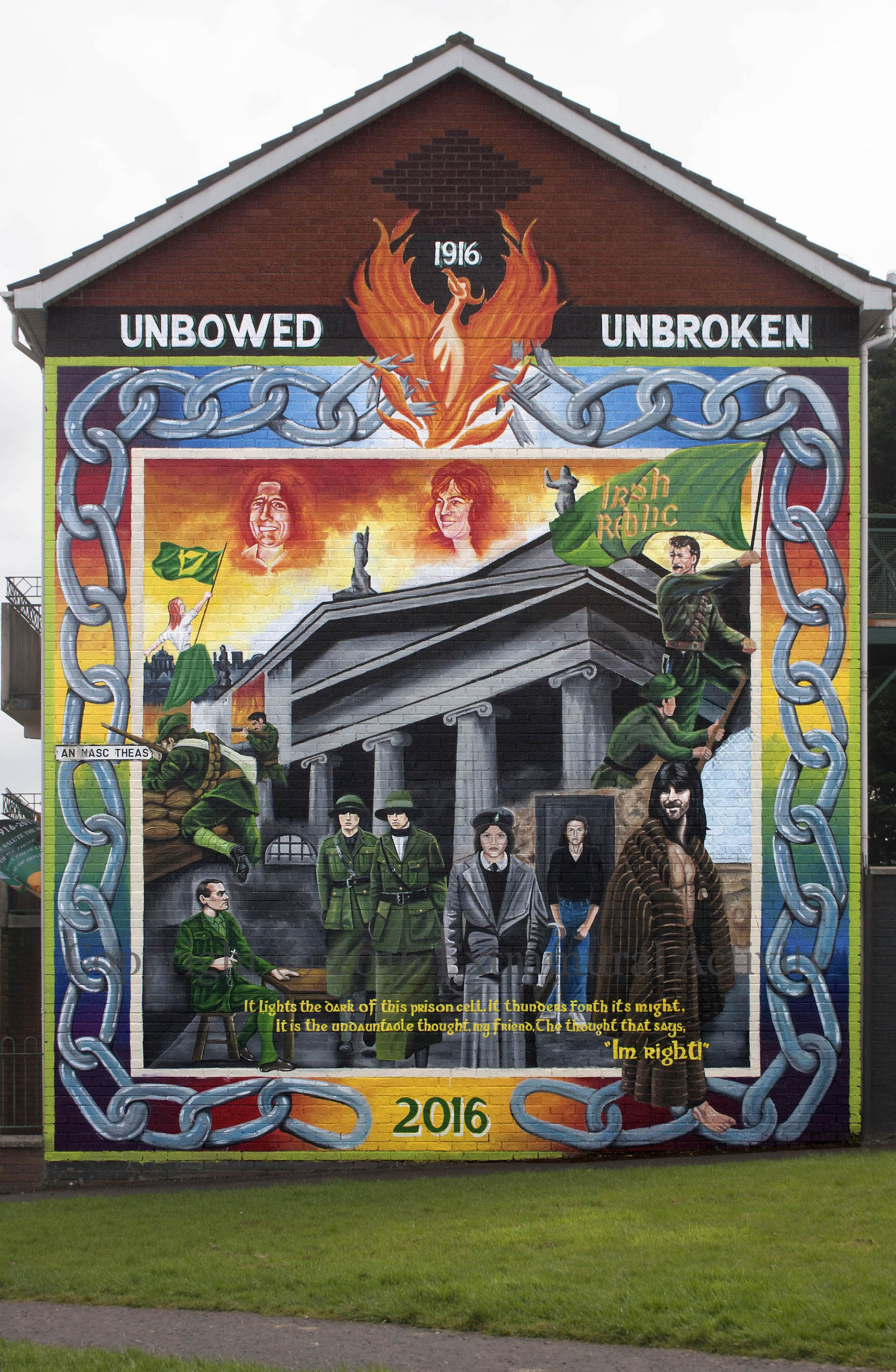
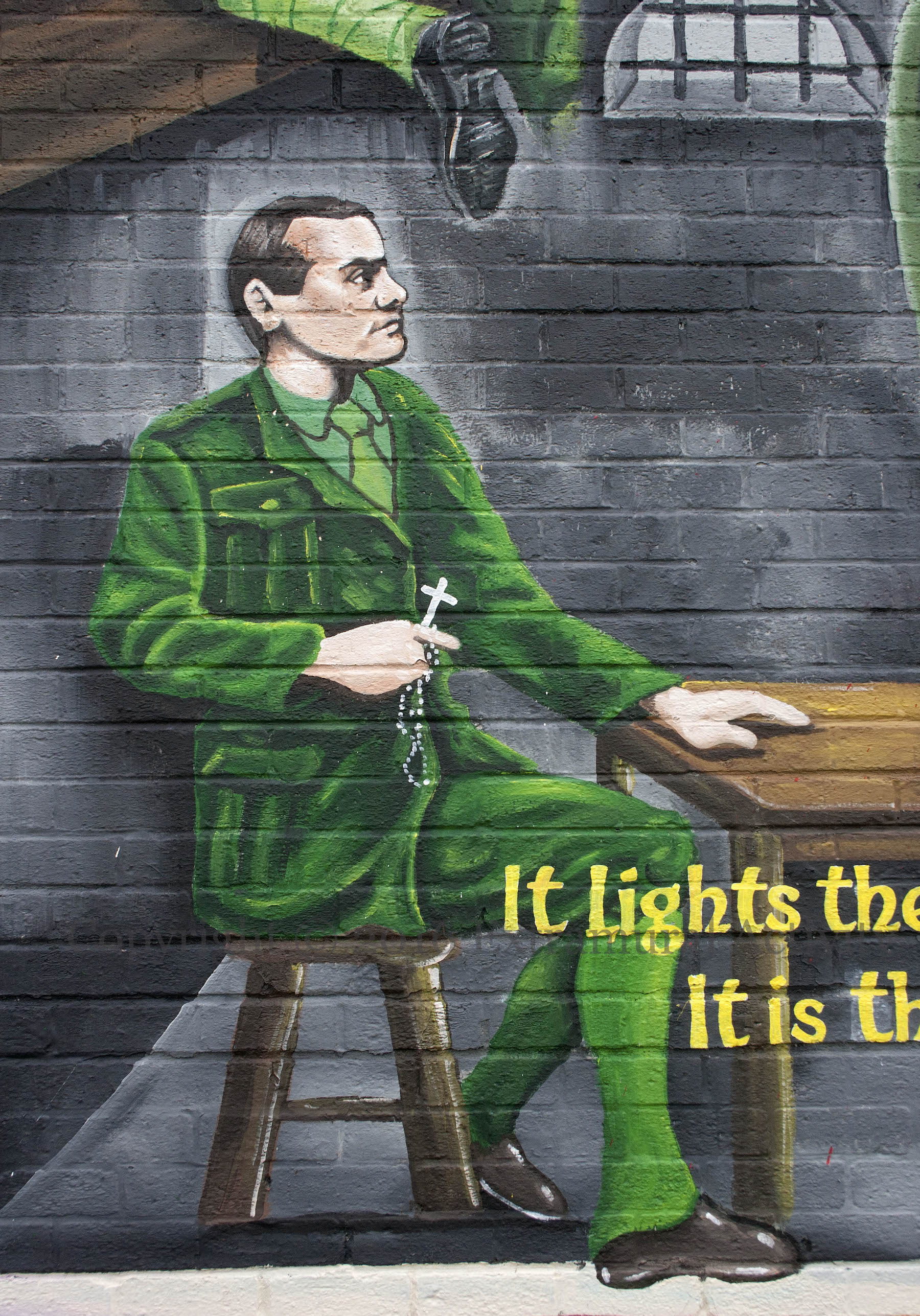
A succession of Irish rebels is shown in this new mural in Andersonstown, west Belfast. It begins (top left) with the rebellion of 1798 and then to the Easter Rising of 1916 at the GPO in Dublin. In the lower left, a pious Padraıg Pearse awaits his execution with rosary beads in hand. There are then shown female figures from Cumann Na mBán and the IRA (see previously: United Irishwomen, Do You Care? and Mothering Sunday In Beechmount), and then Maıréad Farrell in Armagh Women’s Prison (for the original, see Prison Walls). In the bottom right corner there is a blanketman. The busts of Bobby Sands and Joe McDonnell float above the GPO and the last verse of Sands’s The Rhythm Of Timeform the epigraph: “It lights the dark of this prison cell, it thunders forth its might, it is the undauntable thought, my friend, the thought that says, “I’m right”.
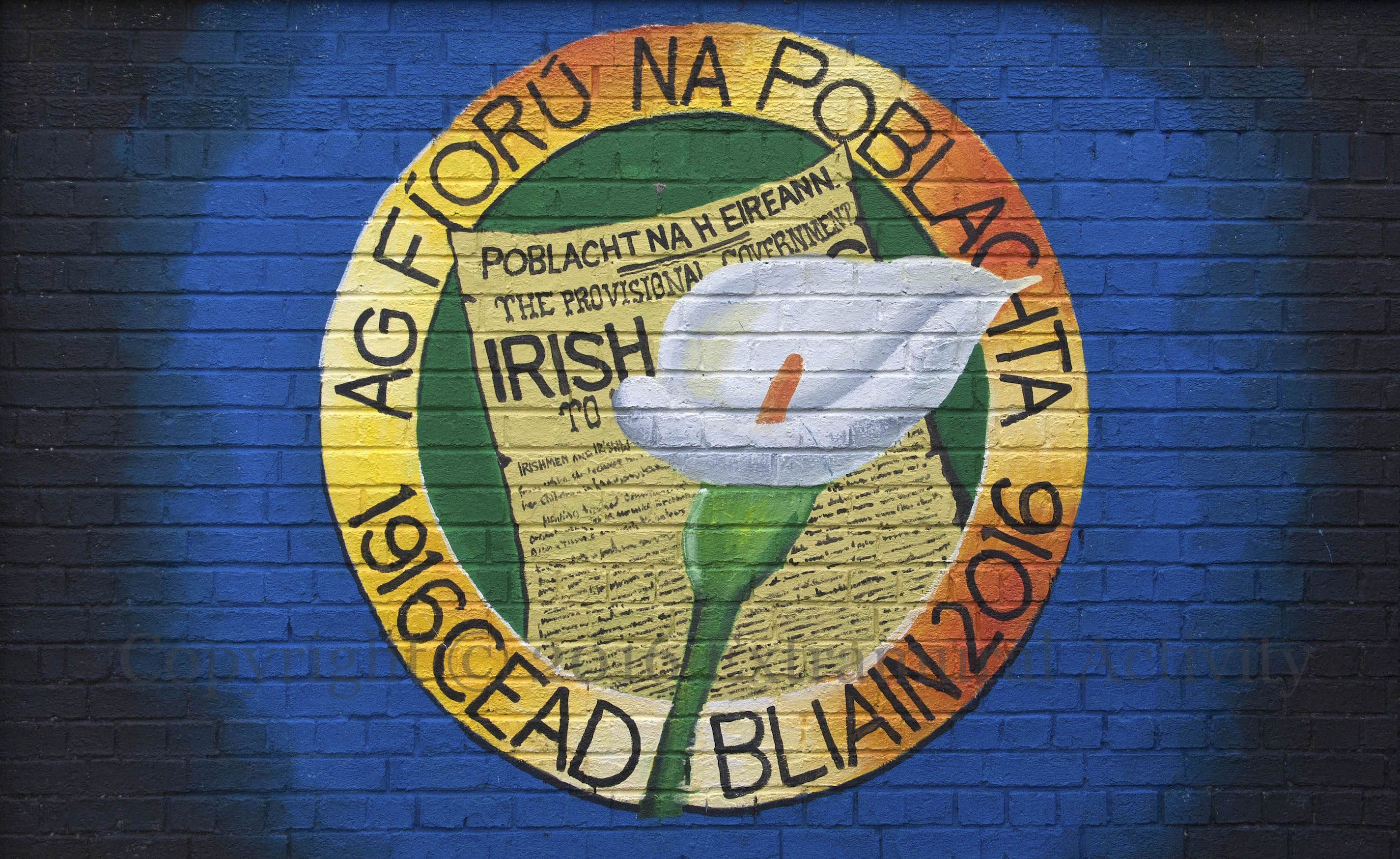
“Realising the Republic”. This is the first of three new murals side-by-side in Andersonstown. It celebrates the centenary (“Céad Blıaın 1916 – 2016”) of the Easter Rising and shows a copy of the proclamation of the republic and an Easter lily.
Here’s a patronising slogan from the Cupar Way “peace” line, complete with peace/anti-nuclear symbol. Also visible: “Be kind; don’t hurt”, “United, all win”, “Praying for peace in Belfast”, “Love one another”, “Trust and compromise” and so on.
While taking part in the Easter Rising centenary parade, members of the James Connolly 1st Republican Flute Band from Glasgow (tw) pause on the Falls Road during a squall. Embroidered on the rear of their shirts are the words “We serve neither king nor kaiser, but Ireland”, the slogan which hung outside the ITGWU’s Liberty Hall during the first world war. Image courtesy of Bronagh Bowerman.
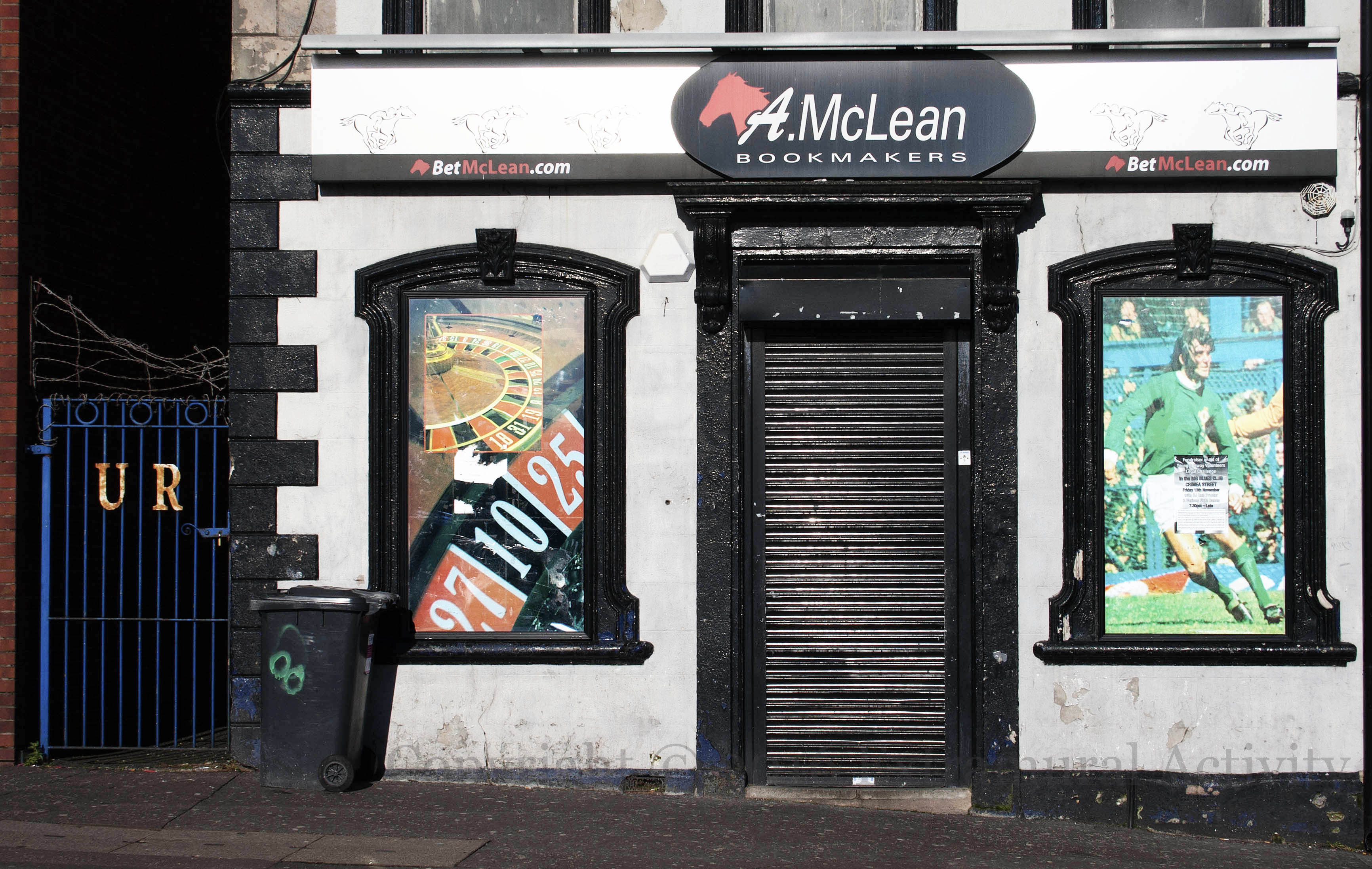
The images in the windows of the McLean’s bookies on the Shankill Road suggest that betting on sports – even on George Best – is like playing roulette. The gate to the left (with barbed wire on top) is marked with the letters “U” and “R” of the nearby Ulster Rangers supporters club. (For two murals there, see previously: Save The Shankill | Doing Her Duty).
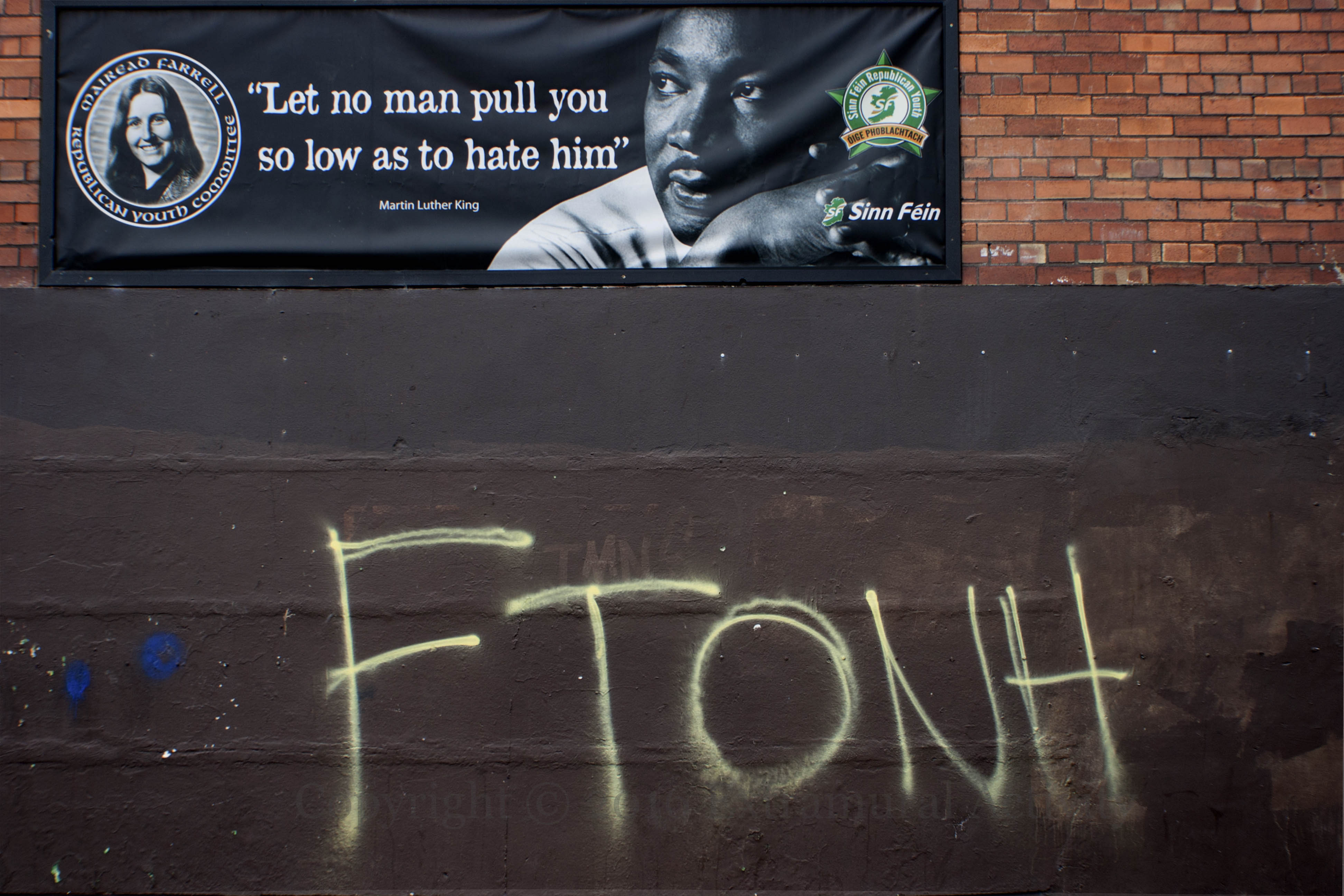
Anti-Óglaıgh Na hÉıreann graffiti in Beechmount Street beneath a Sınn Féın banner using Martin Luther King to advocate for non-violent protest (featured previously in Always Avoid Violence).
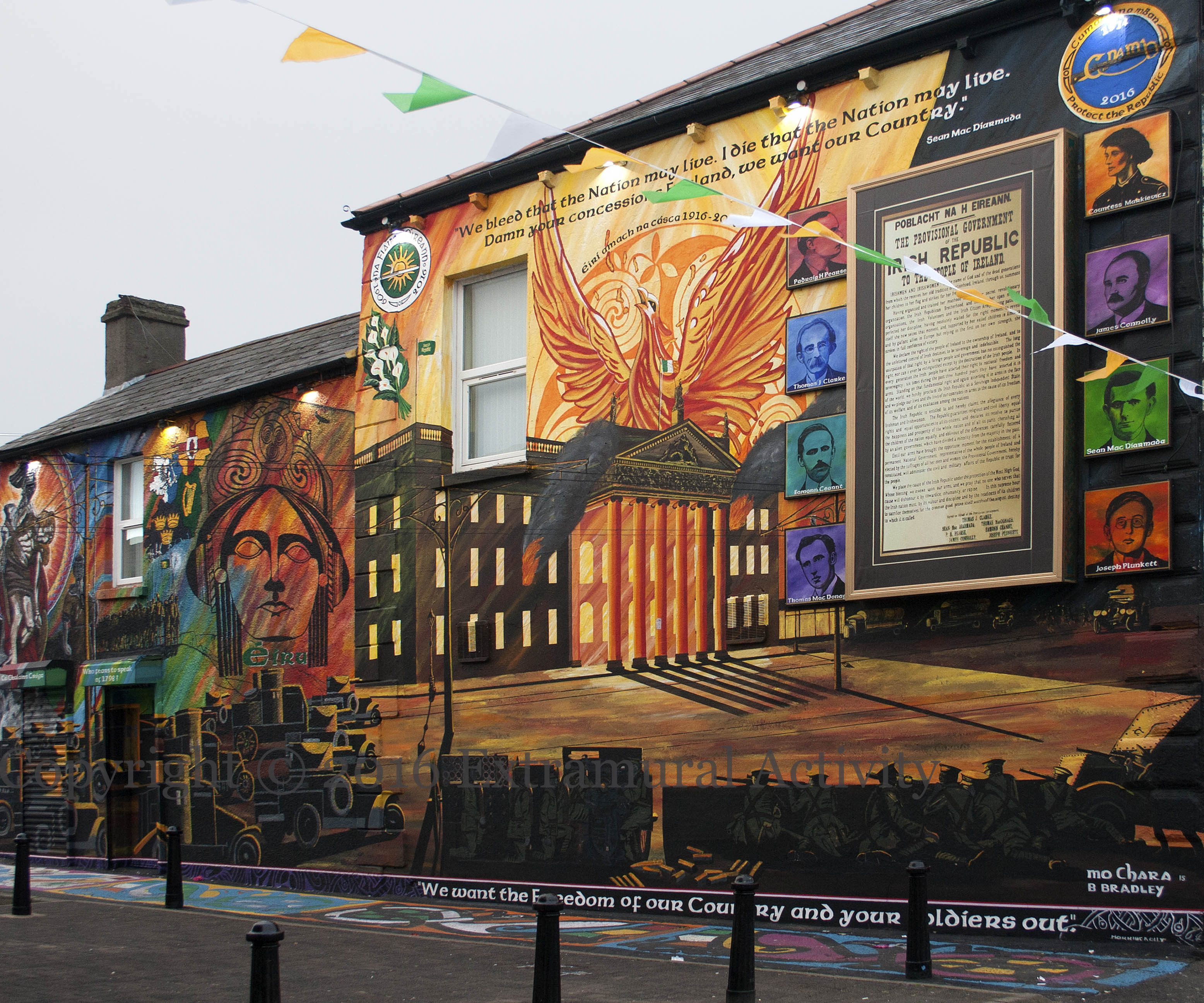
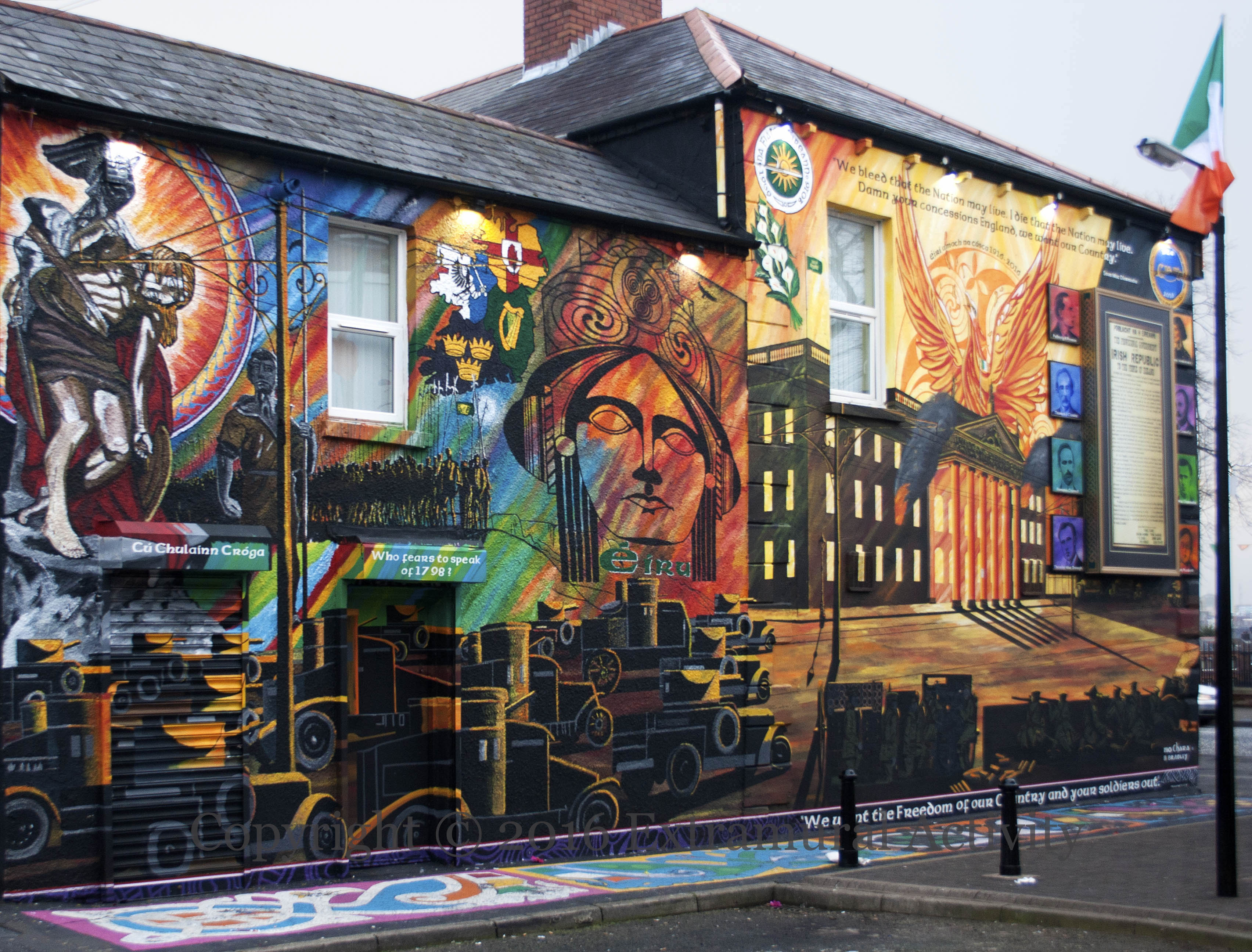
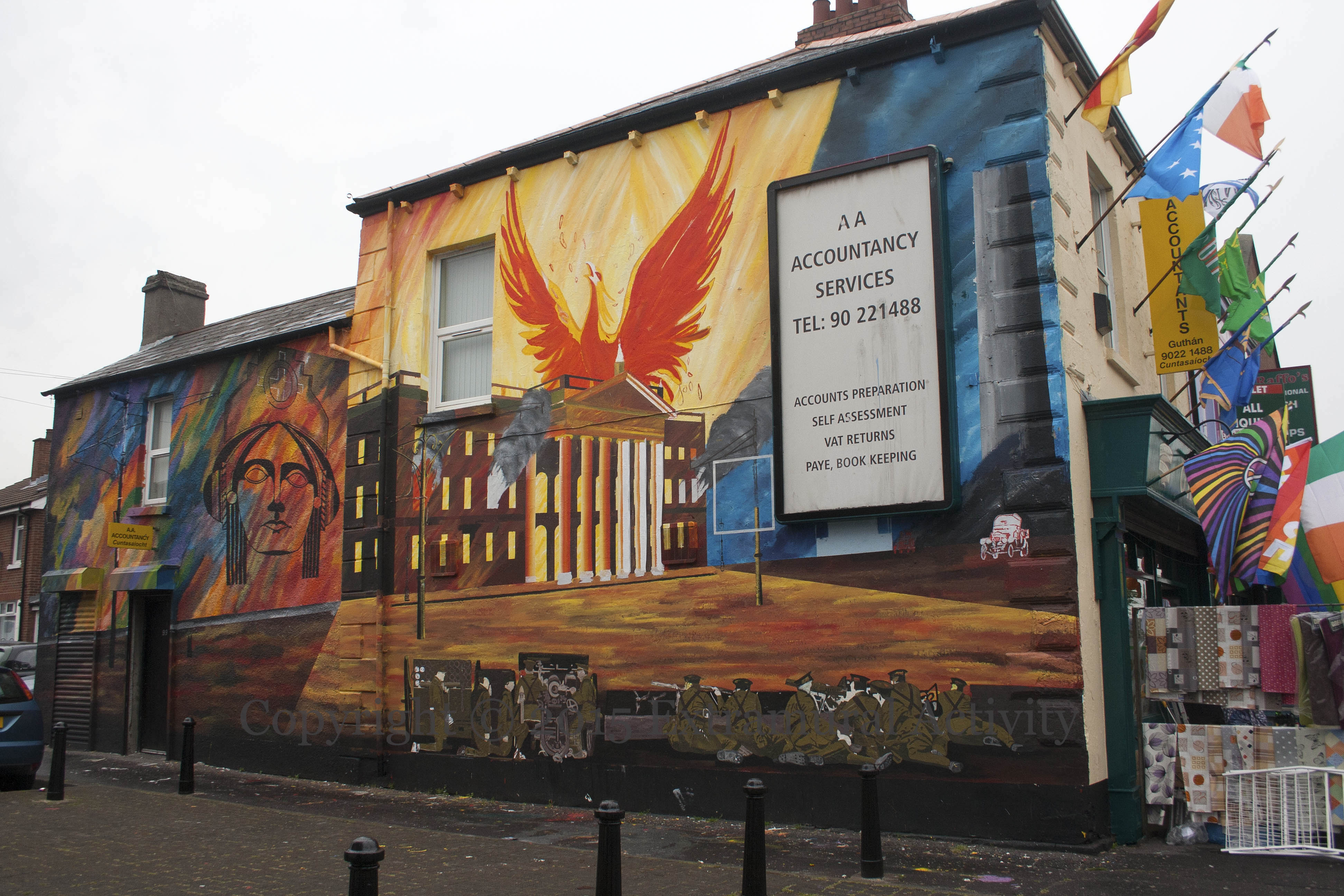
Arrayed against the forces of the British Army (which are shown laying siege to the Dublin GPO during the Easter Rising in armoured cars and in sniping positions in the foreground of the mural, along the whole length of the wall) are various symbols of Irish nationalism:
Oliver Sheppard‘s 1911 statue of Cú Chulaınn dying (see the Visual History page); the pikemen of the 1798 Rebellion (featured in Éırí Amach 1798); the four provinces of Ireland; Érıu the mythological queen of Ireland/Éıre as designed by Richard J King/Rísteard Ó Cíonga; Easter lilies; the emblems of Na Fıanna Éıreann and Cumann Na mBan on either side of a quote from (The Mainspring) Sean MacDiarmada, “We bleed that the nation may live; I die that the nation may live. Damn your concessions, England: we want our country”; a phoenix rising from the flames of the burning Dublin GPO (inspired by Norman Teeling’s 1998 painting The GPO Burns In Dublin); the GPO flying an ‘Irish Republic’ flag and a Tricolour; portraits of signatories and other rebels — (left) Padraig H. Pearse, Thomas J Clarke, Eamonn Ceannt, Thomas MacDonagh, (right) Countess Markievicz, James Connolly, Sean MacDiarmada, Thomas Plunkett; the declaration of independence, placed over the advertising box of AA Accountants – see the in-progress shot below.
For more work-in-progess images, see the previous entry, Éırí Amach 1798. At the very bottom is a quote from the mother of Gerard ‘Mo Chara’ Kelly, Harriet Kelly: “We want the freedom of our country and your soldiers out.”




 Extramural Activity