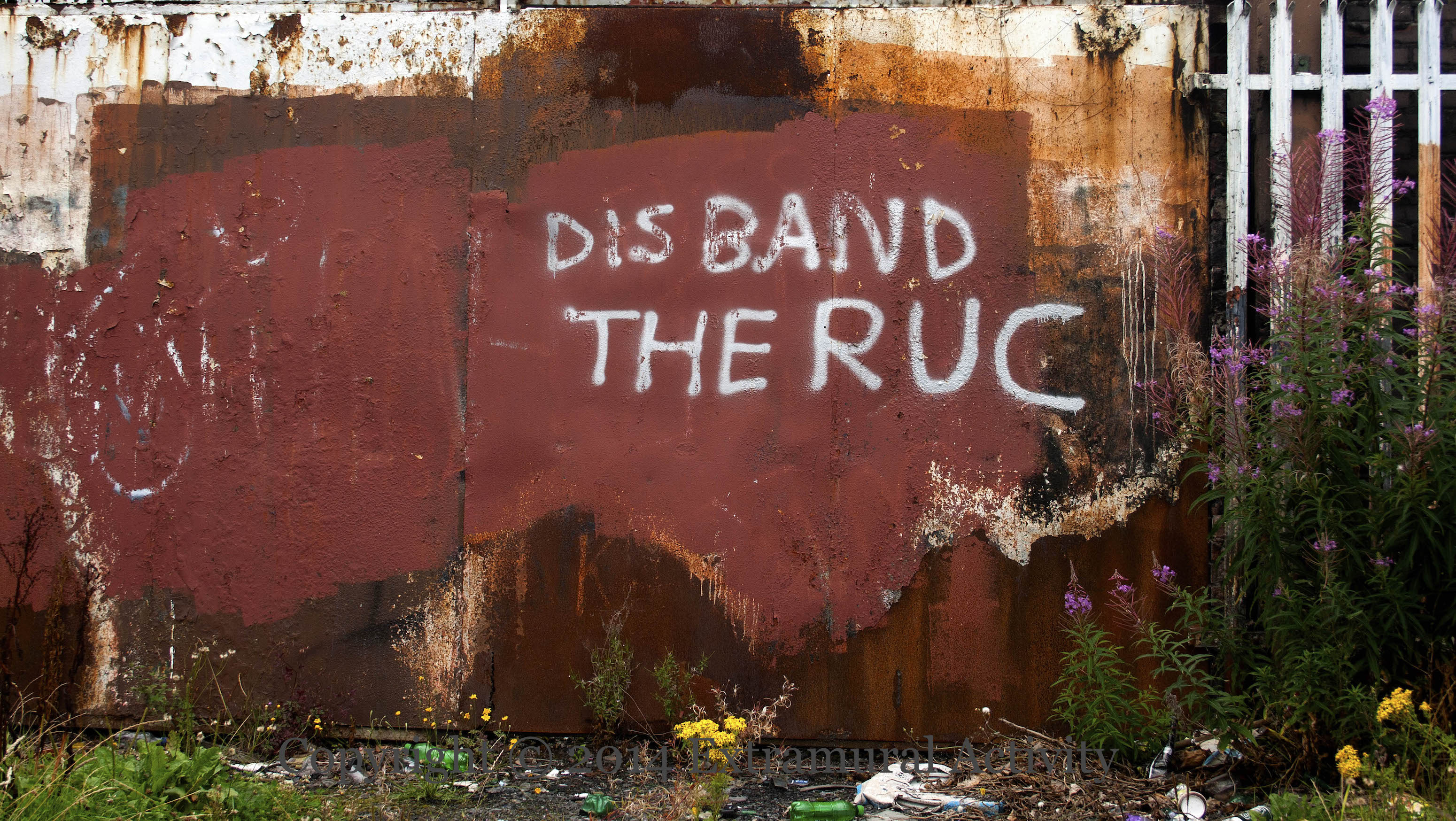
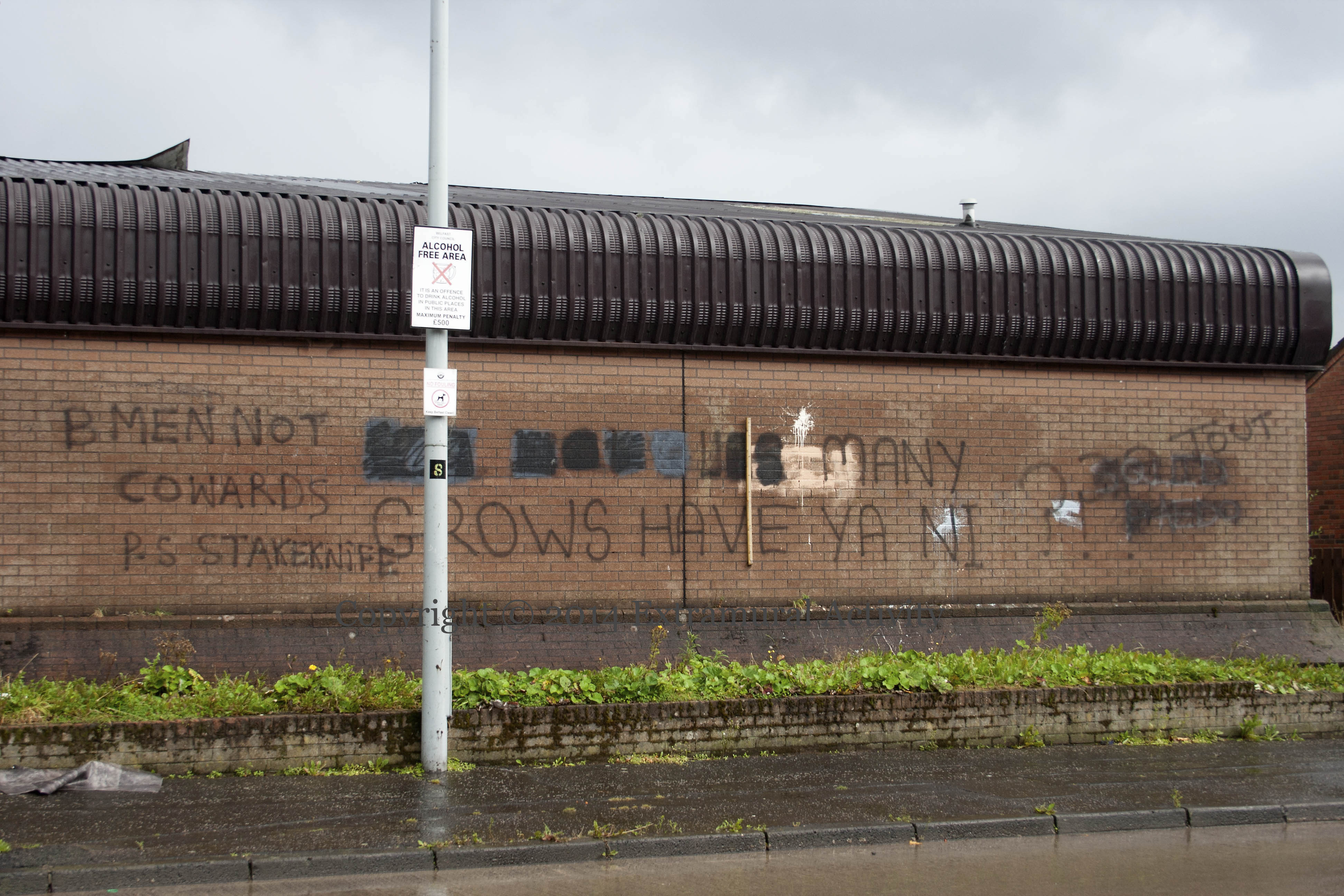
Old graffiti doesn’t go away. It persists, witness to the aspirations and angers of years past.
Above, “Disband the RUC” in Bóthar Chaıtríona/St. Katharine’s, republican west Belfast. Below, “If the leaders are impotent… only the people can rise” – anarchist graffiti in Melrose Street and “B-Men not cowards” in Agnes St, Loyalist west Belfast. These are all late-2014 pictures of graffiti that are at least three years old.
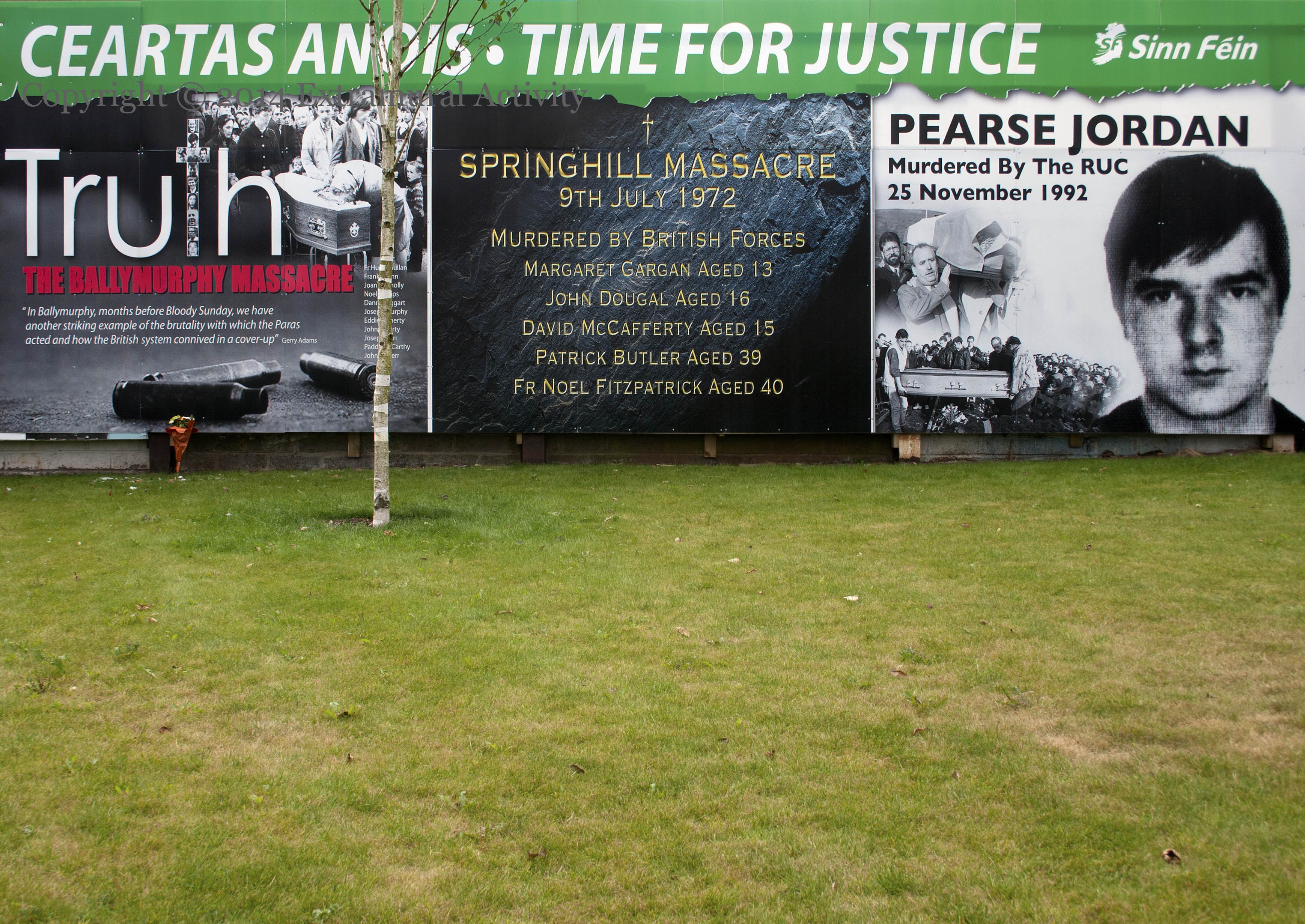
Three different campaigns for inquiries into deaths at the hands of British paratroopers are brought together into a single board on the site of the former Andersonstown RUC station: the Ballymurphy Massacre of August, 1971, in which 11 were killed; the Springhill Massacre of July 1972, in which 5 were killed, and the killing of IRA volunteer Pearse Jordan, who, like the others, lived in the greater Ballymurphy area.
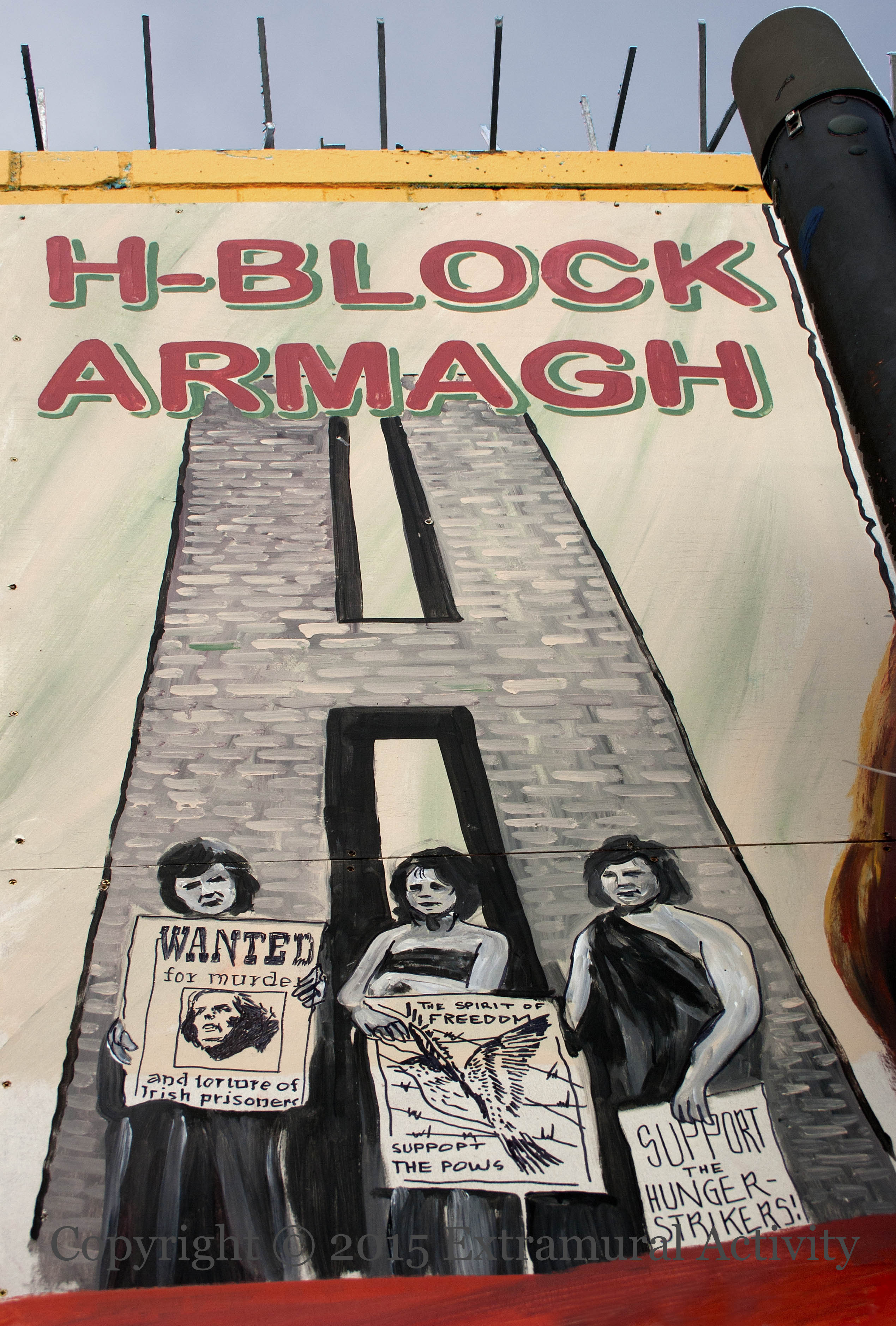
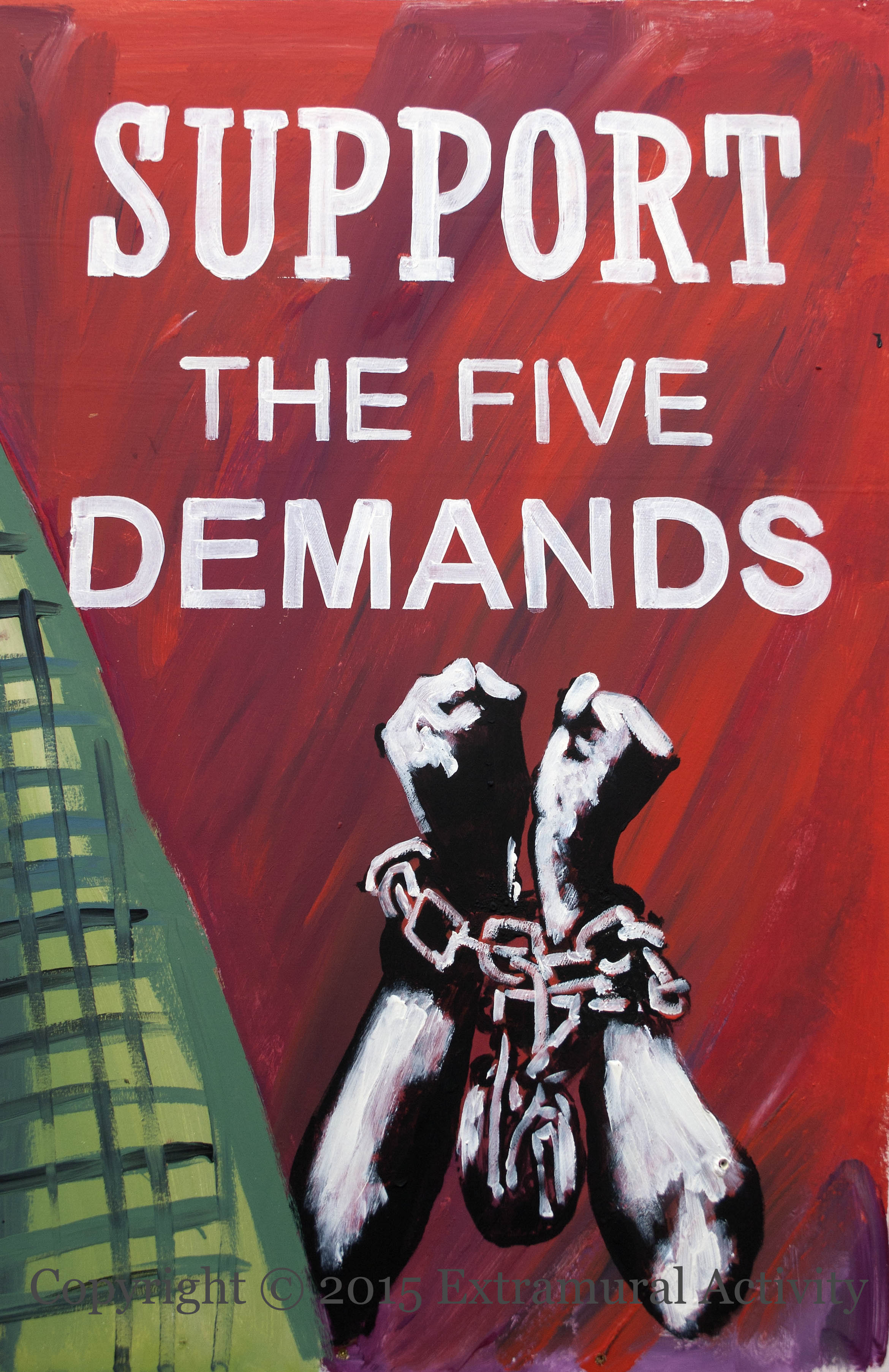
Here are two details from the new Kieran Nugent board along with the “Slí Na Gaeltachta‘ (The Gaeltacht Trail) plaque at its side. The image above shows prisoners “on the blanket” (that is, refusing to wear prison uniforms) in front of a giant brick “H” (for the H-Blocks) which perspective also shapes into an “A” (for Armagh Women’s Prison). They hold placards from the time: Wanted for murder [Margaret Thatcher] and torture of Irish prisoners”; “The spirit of freedom; support the POWs”; “Support the hunger-strikers”. The image below reads “Support the five demands”. These were (1) the right not to wear a prison uniform; (2) the right not to do prison work; (3) the right of free association with other prisoners, and to organise educational and recreational pursuits; (4) the right to one visit, one letter and one parcel per week; (5) restoration of remission lost through the protest.
The text of the Slí Na Gaeltachta plaque can be found at the bottom of this page.
“Slí na Gaeltachta – Abhaınn na Feırste. Cé go bhfuıl sí cludaıthe faoı choıncréıt anoıs agus gan a bheıth le feıceáıl, ıs ag an láthaır seo ar Shráıd Northumberland a chéadtrasnaıonn Abhaınn na Feırste Bóthar na bhFál. Aınmníodh an abhaınn as an fhearsaıd a bhí ag béal na habhann san áıt a dtéann sí ısteach sa Lagán. Baısteadh Béal Feırste ar an lonnaíocht a d’fhás thart ar áth cosanta ag cumar an dá abhaınn. Ba as an lonnaíocht ársa sın a d’eascaır cathaır an lae ınnıu. Here at Northumberland Street the now culverted Farset River first crosses the Falls Road. The river is named from the sandbank (fearsaıd) which was at the mouth (béal) of the river where it joins the Lagan. The settlement that grew up around a defended river ford at this confluence of the two rivers was named Béal Feırste, ‘mouth of the sandbank ford’. It was from this ancient settlement that the present-day city grew.”
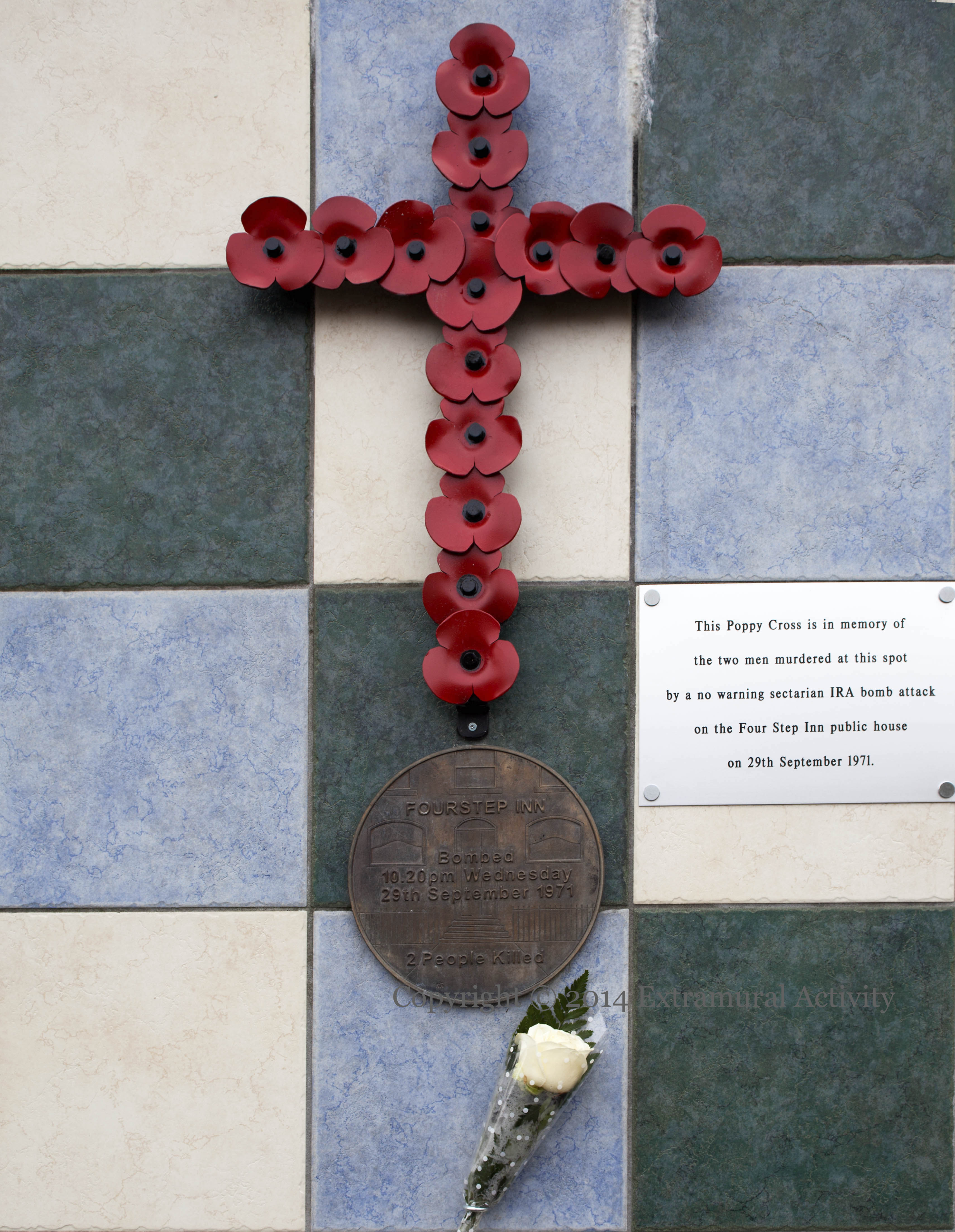
“This poppy cross is in memory of the two men murdered at this spot by a no warning sectarian IRA bomb attack on the Four Step Inn public house on 29th September 1971.” The two men were Alexander Andrews (60) and Ernest Bates (38) (CAIN). A similar cross was also erected further down the Shankill, at the former site of Frizzell’s Fishmongers, bombed in 1993. Both attacks are among the five Shankill bombings commemorated in Where Is Our Truth?
Keiran Nugent (and Brendan Hughes) has been returned to the left-most spot on the International Wall.
This new board is closely based on the mural (shown in Belfast’s Infamous Prison) which was painted over in October in advance of the November 9th non-binding referendum in Catalonia (see Votes About Votes; the yellow background and some of the lettering from the Catalonia mural can still be seen in the image above). Nugent and Maıréad Farrell were then included in the hunger-strikers mural further down the wall: see I’ll Wear No Convict’s Uniform and Peace With Justice.
New in this version is the inclusion of a reference to the women’s protest in Armagh prison; one of the figures standing in front of the H/A holds the ‘Thatcher – Wanted for murder and torture of Irish prisoners’ poster that previously filled the top-left corner.
Under a tricolour flying from the roof of the Rock Bar on the Falls, in green, white, and orange: “Rebel Sunday – The Rock Bar – Every Sunday – From 6 PM”
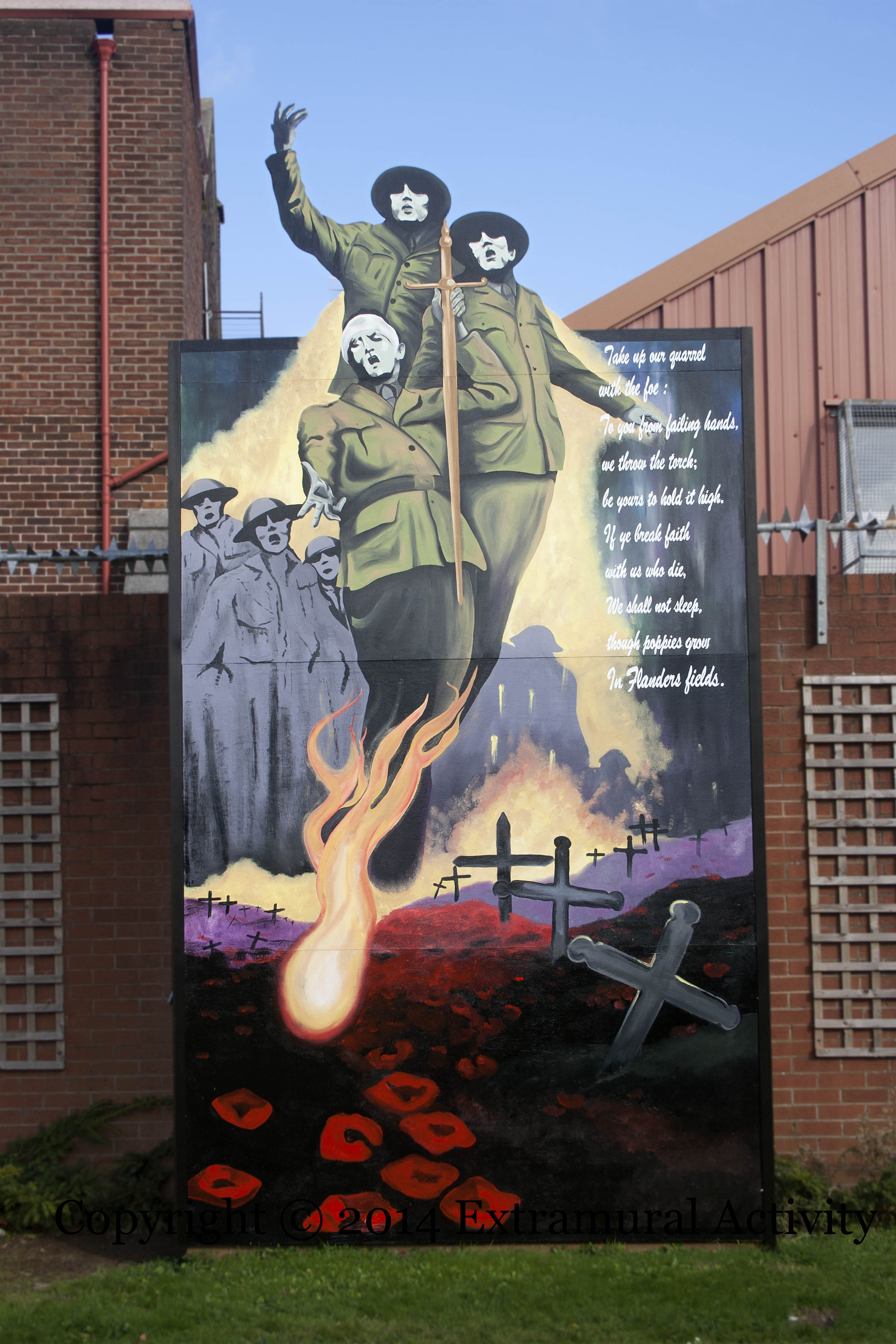
Three wraiths of dead WWI soldiers – one with its head wrapped in a bandage – rise from the grave to issue a final edict: Take up our quarrel with the foe; to you from failing hands we throw the torch; be yours to hold it high. If ye break faith with us who die, we shall not sleep though poppies grow in Flanders’ fields.
For another WWI memorial in Shankill Graveyard see The Great War.
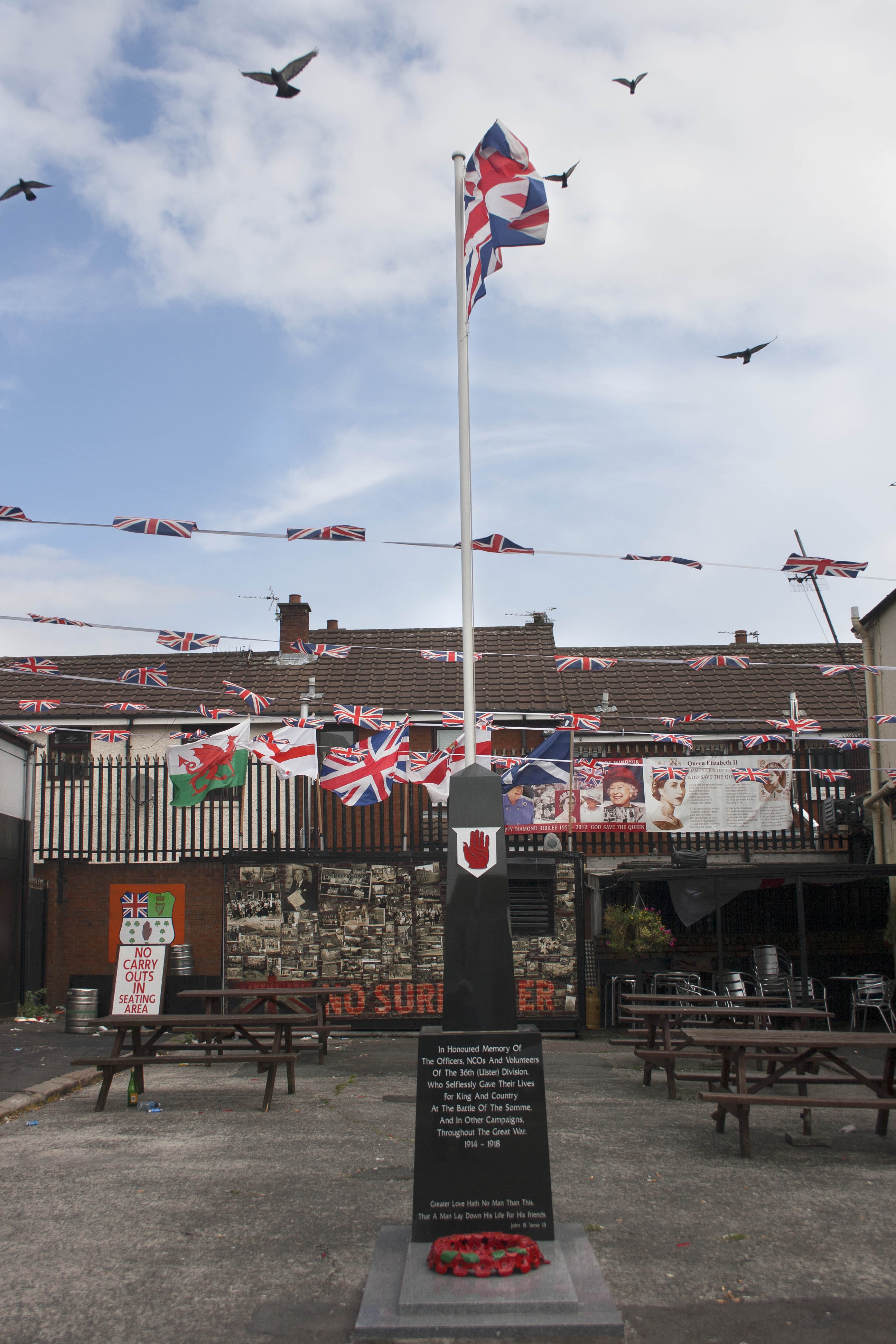
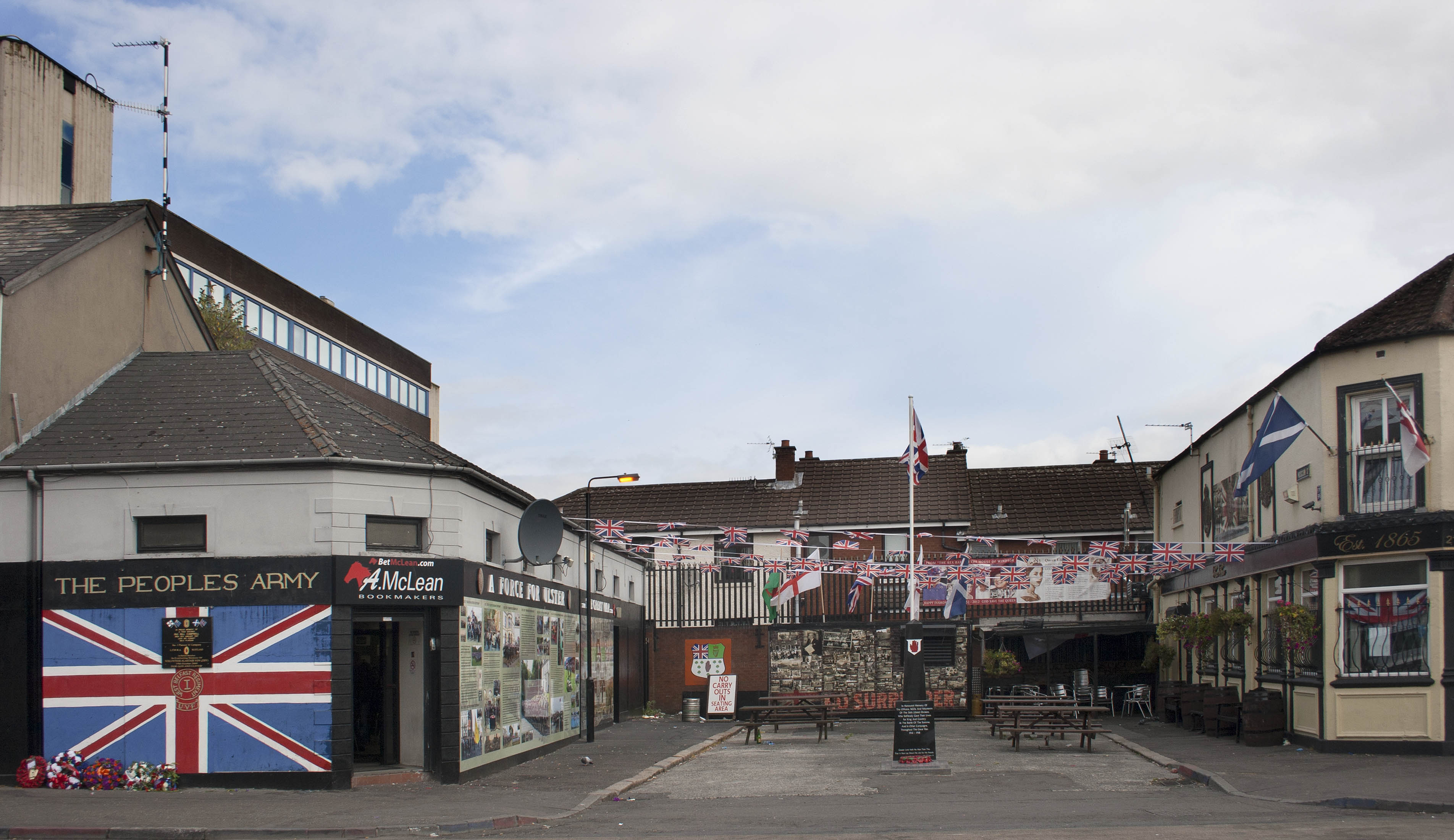
Above and below is the scene at the end of summer in the courtyard of the Rex Bar – bunting and bouquets join the flags of the home nations and various boards celebrating the queen’s diamond jubilee and commemorating the 36th Ulster division “who selflessly gave their lives for King and county at the battle of the Somme”. The new boards (on the left hand side of the wide shot) were featured previously in The Last Post, along with the Union flag of The People’s Army. For the same scene ten years previously, see Betting Office.
Here is a final image from the new wall of Disney characters in the Slıabh Dubh estate. (See previously: Look Behind You | If The Shoe Fits.) On Aladdin‘s magic carpet we have Princess Jasmine, Abu the monkey, and Iago the parrot, while on the stairs is Esmerelda (from The Hunchback of Notre Dame) and between them is The Owl from Sleeping Beauty. At the bottom we have Minnie Mouse, Figaro (from Pinocchio and also Minnie’s pet cat), and Daisy Duck.
Two wide shots can be found below. The first shows the entirety of the wall, the second shows (some of) the adjacent wall of superheroes. All 11 current Disney princesses are included, as well as the sisters Elsa and Anna from Frozen.







 Extramural Activity