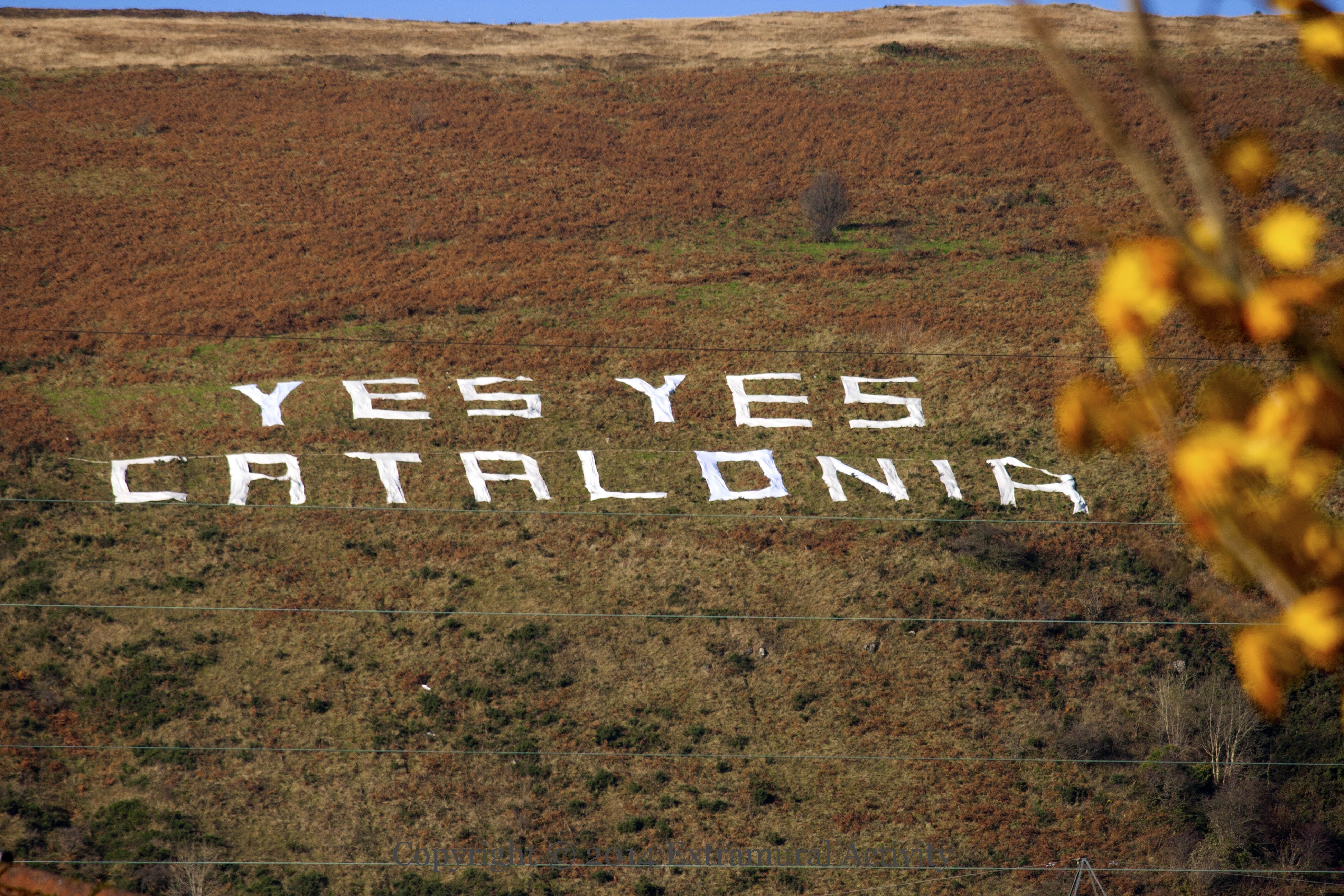
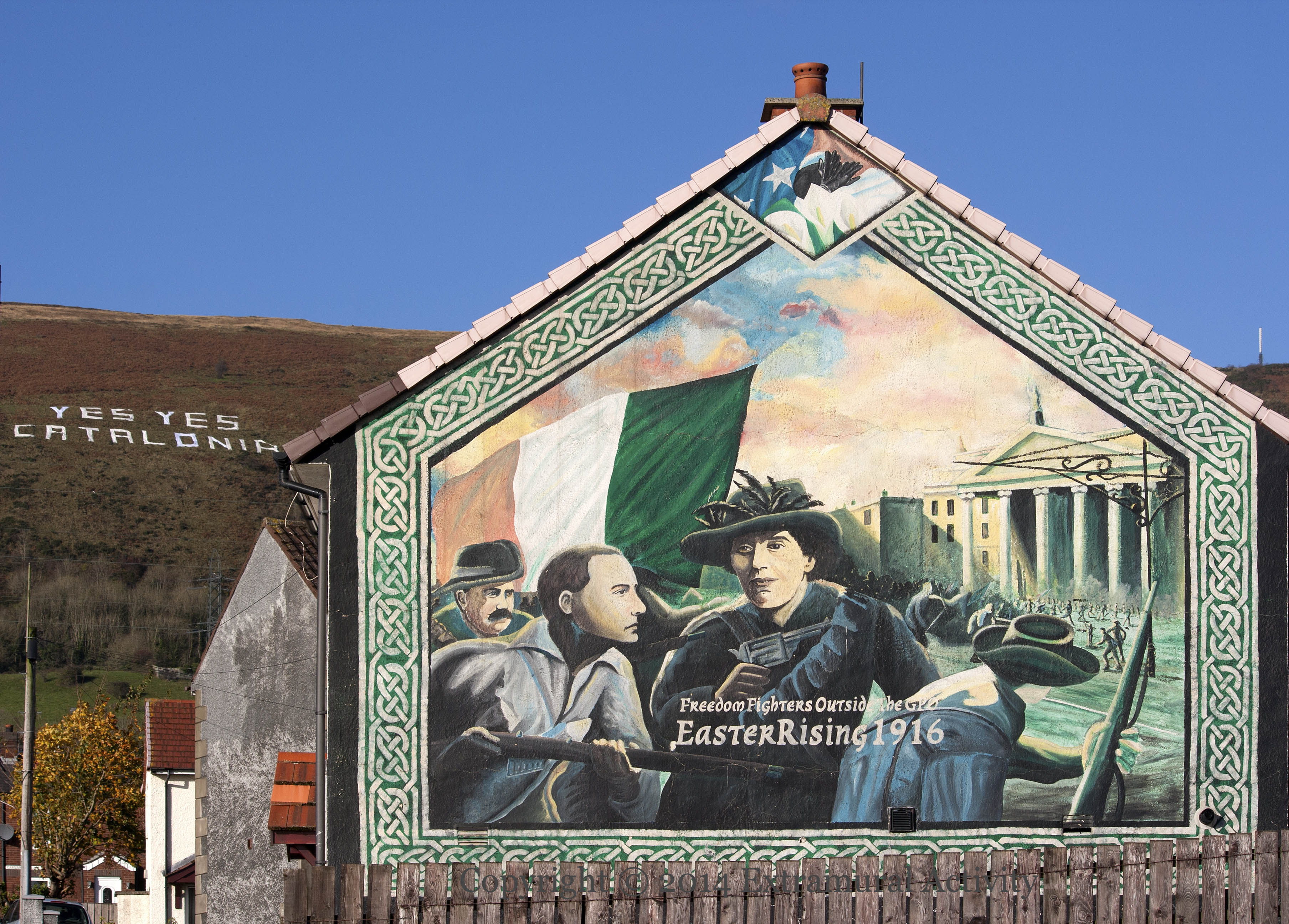
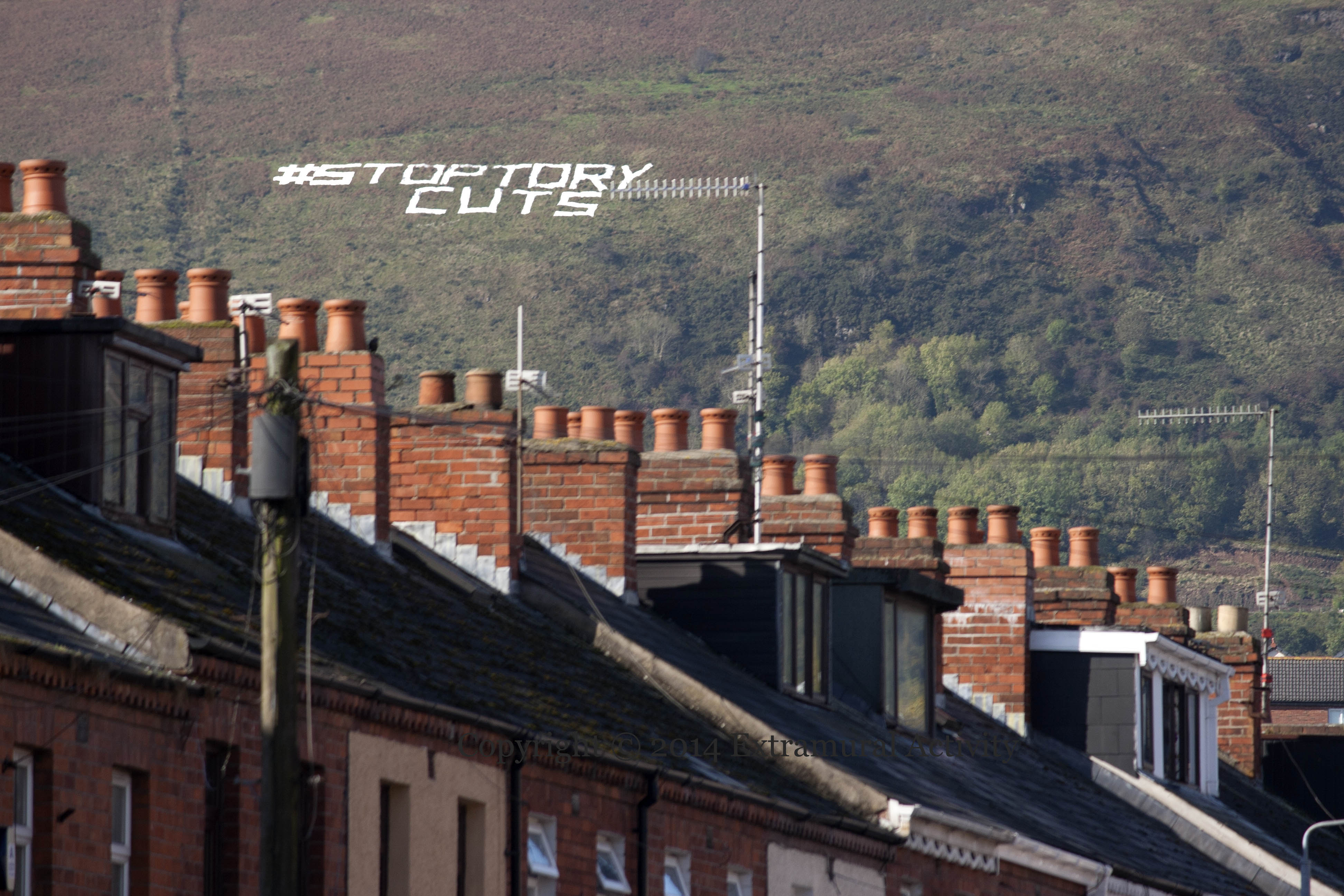
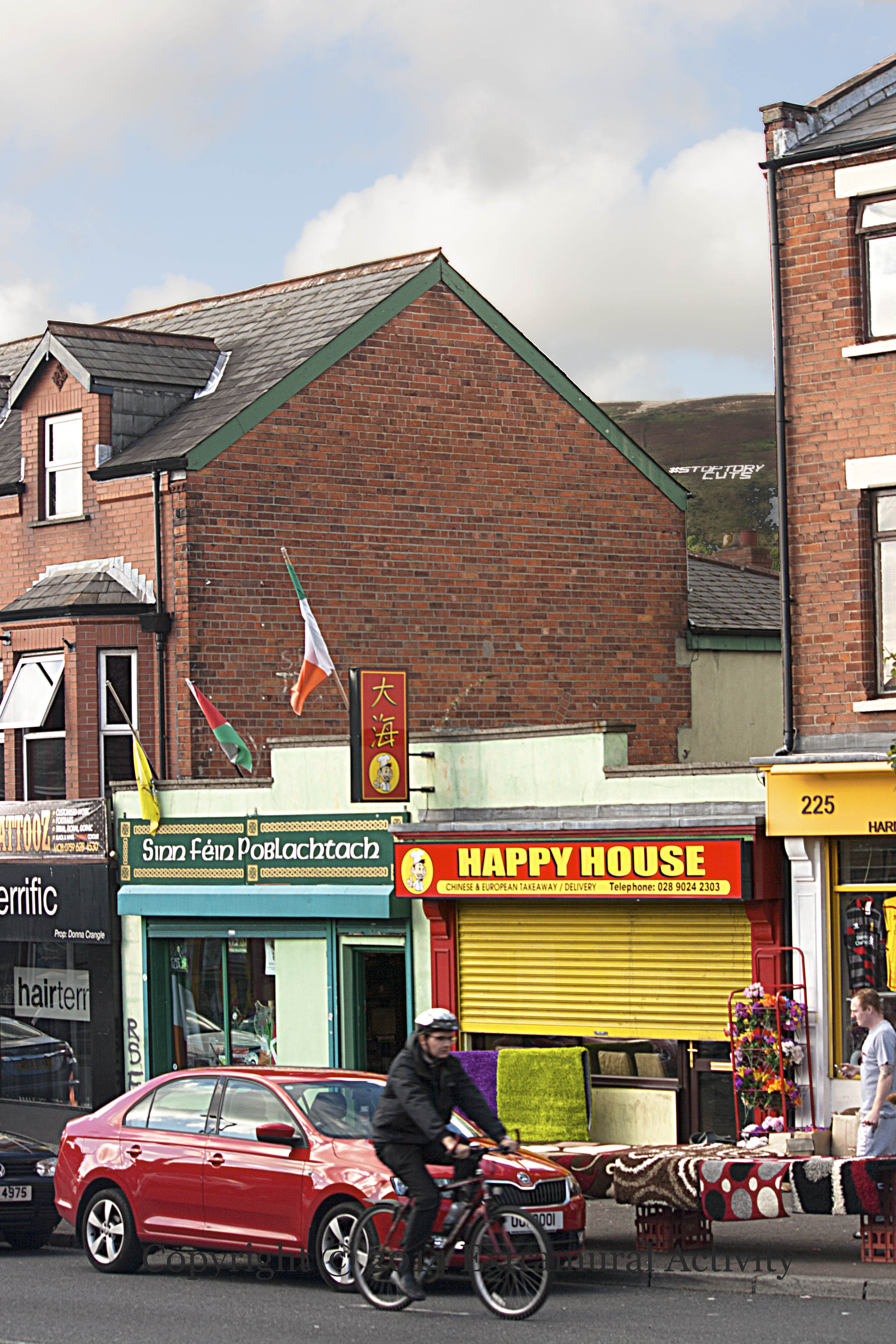
Yesterday’s symbolic vote on Catalonian independence (for more background see Votes About Votes) showed 81% in favour of separation from Spain. Here are three shots of the encouragement on Slıabh Dubh (Black Mountain), the second with the Ballymurphy Easter Rising mural in the foreground, the third with the wall of superheroes in Slıabh Dubh estate (see Wallbusters | The Walls, Unbroken | Red-Eye | Cartoon World).
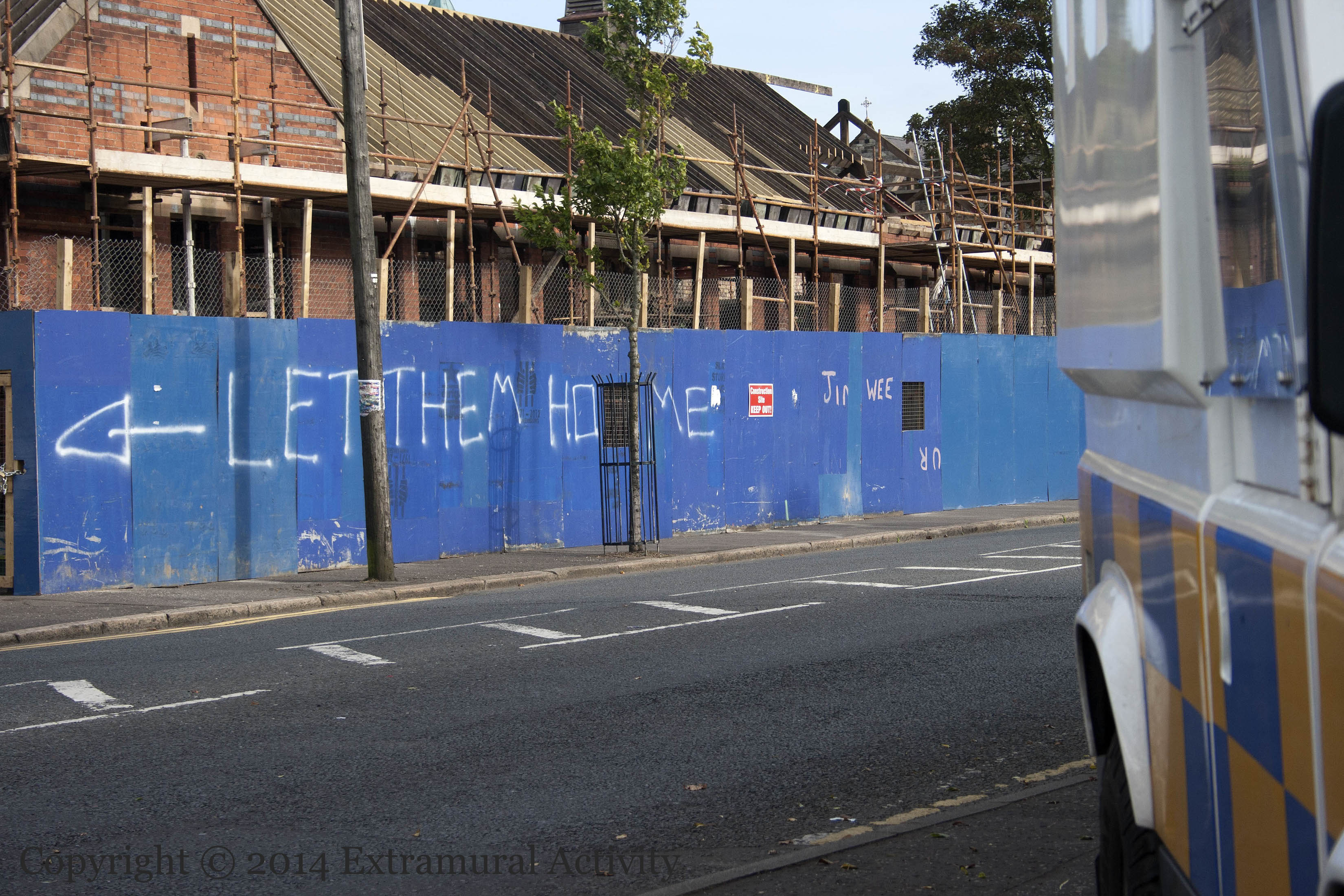
This graffiti on the hoardings around the building-site at the top of Woodvale Road is in reference to the on-going dispute at Twaddell Avenue, which is just to the right of the PSNI land-rover in the right of frame – each night Orange bands march up to the police line, attempting to march past the Ardoyne shops and finish a parade from the Twelfth (of July) 2013.
The 7.5 million people of the Spanish region of Catalonia will go to the polls on November 9th for a vote on independence, though it will no longer be a referendum but a non-binding ‘consultation of the citizens’. Indeed, the Spanish government in the last 24 hours has begun taking steps to block even that vote (Reuters). The “Catalan Countries” are Catalonia, Valenicia, and the Balearic Islands, along with Andorra and the French region of Rousillon – see the WP page on Països Catalans for greater detail.
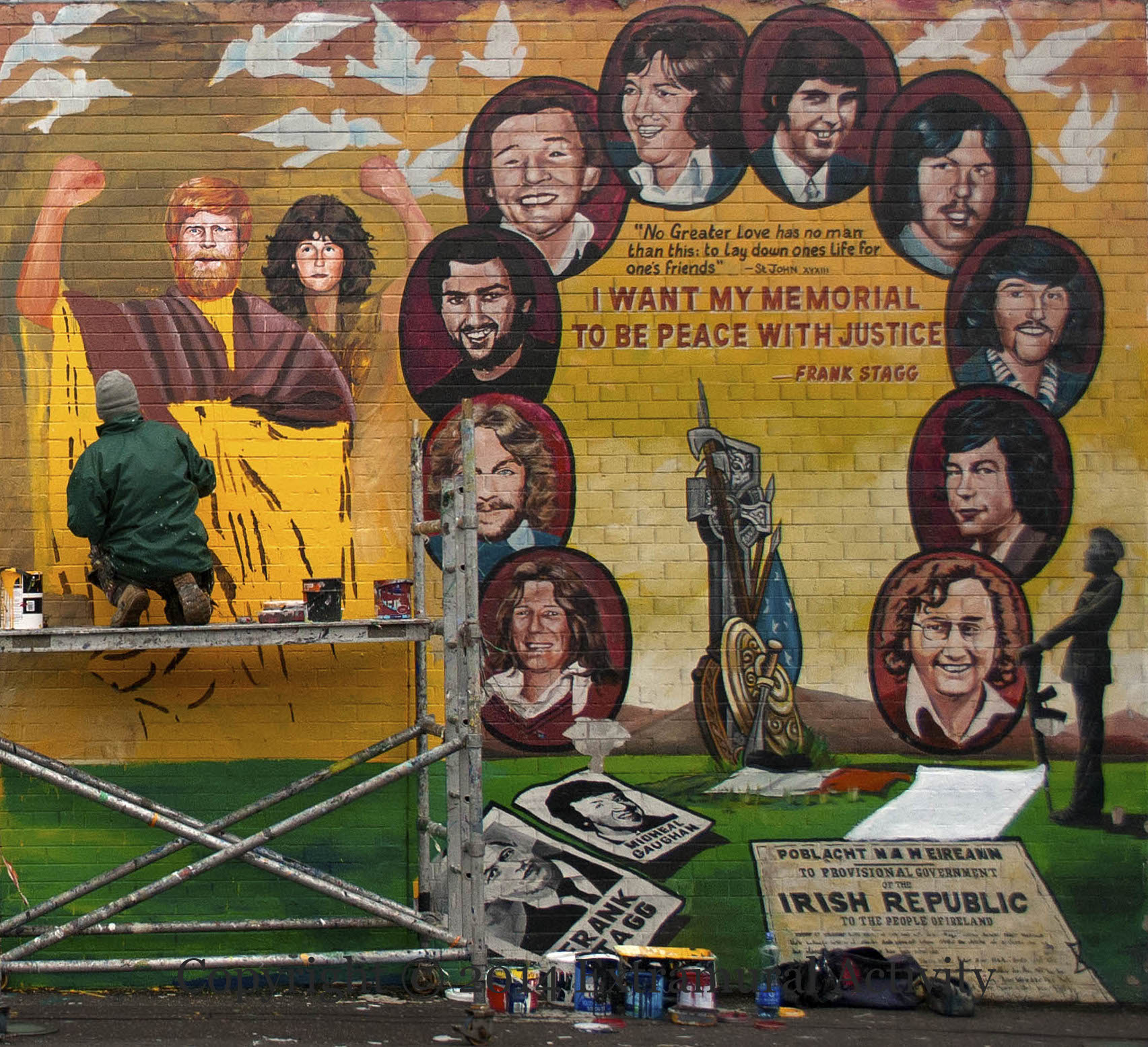
The Catalan mural was painted on top of the mural to blanketman Kieran Nugent (and Brendan Hughes) (seen here in Belfast’s Infamous Prison) which caused some consternation. As can be seen below, Nugent is now being painted into the hunger-strikers mural (Peace With Justice) along with Mairéad Farrell, who led the protest in Armagh Women’s Prison.
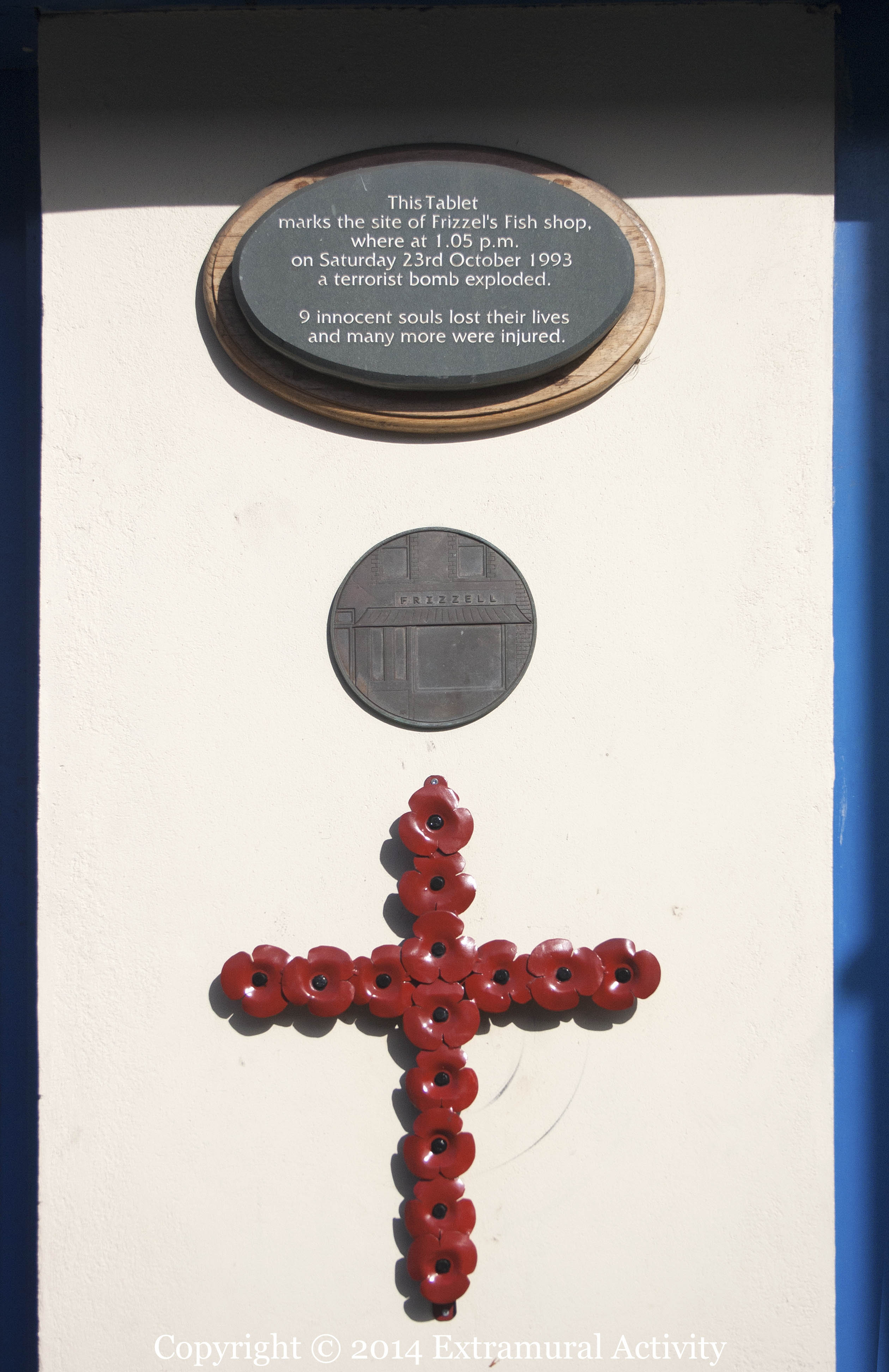
October 23rd marks the anniversary of the bombing of Frizzell’s fishmongers on the Shankill Road, above which the Shankill UDA and LPA had their headquarters. The bomb exploded prematurely, killing nine people, including the owner and three members of his family, and one of the IRA bombers (also memorialized, by a plaque in Ardoyne), and injuring 57 others. The meeting whose attendees were the intended target had ended early. The memorial includes a cross of poppies and an engraving of the (old) exterior – the memorial is on the wall of the new building (shown below), the old one having collapsed as a result of the bomb. (WP)
See previously: Where Is Our Truth? which (in one of its panels) reproduces the scene after the bombing.
For the original (top) plaque by itself, see M07536.
The Maze/Long Kesh was set ablaze by Republican inmates 40 years ago, on the night of October 15th, 1974. Above is a picture by Matt Kelly, who was held in Cage 18. The picture is in the Eileen Hickey Republican Museum on Conway Street.
The (UK) Conservative Party has proposed a series of cuts, including a freeze of child benefit, income support, tax credits, dole, and housing benefit. These are opposed by various parties and advocacy groups in both Great Britain and Northern Ireland. The mural above is on the Divis Street international wall, while Black Mountain/Slıabh Dubh currently carries the same message: #stoptorycuts. Protest rallies were held today (2014-10-11) in both Belfast and Dublin.
Above is a new mural on the Divis Street “International Wall” (Visual History) in support of travellers’ right, featuring horseshoes, musical notation, and a child looking out of a vintage caravan. Sponsored by West Against Racism Network (WARN – web | Fb) and Springfield Charitable Association (SCA – web)
The image that the artists were working from for central portion of the mural – a 2009 photograph by Mark Stedman – can be seen still taped to the wall.
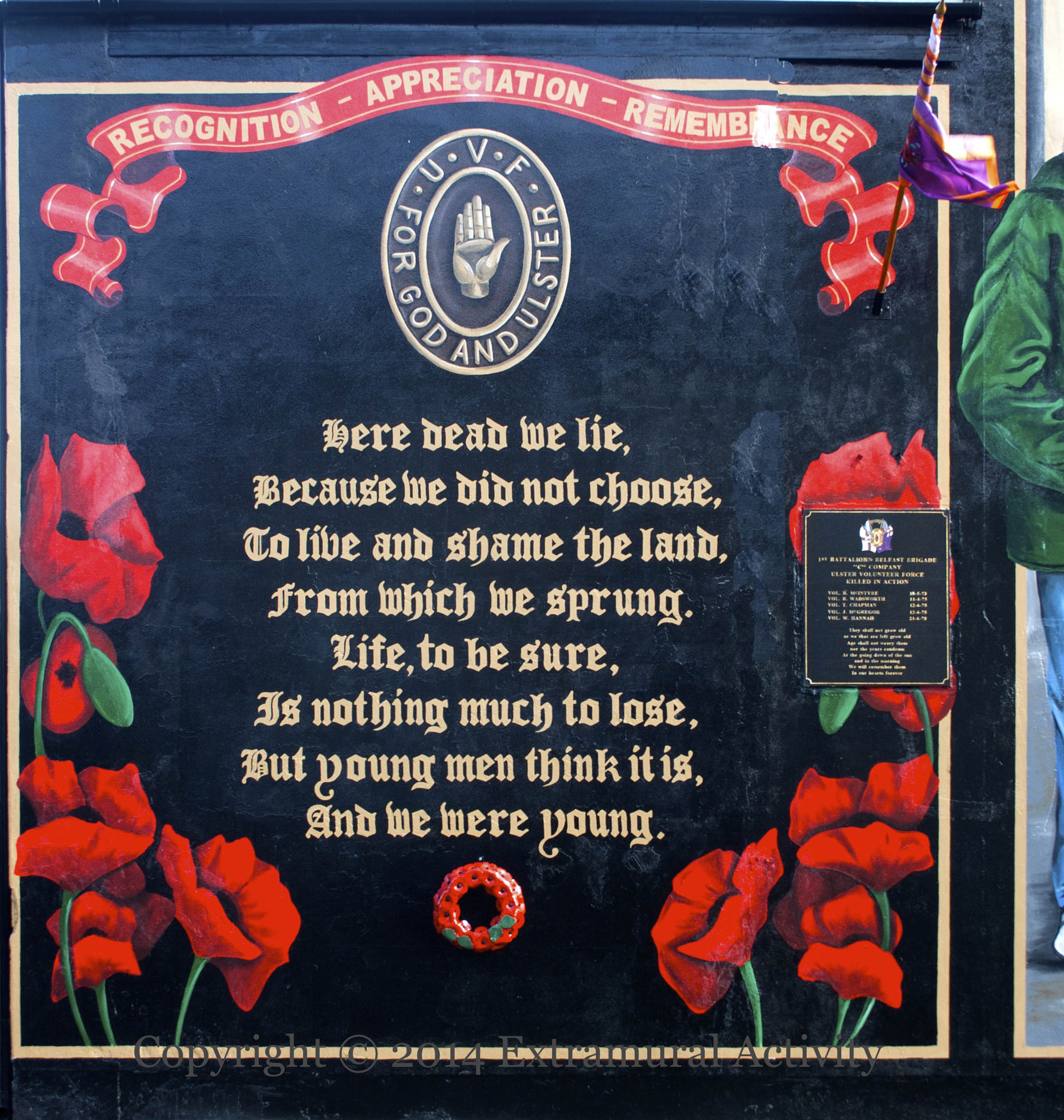
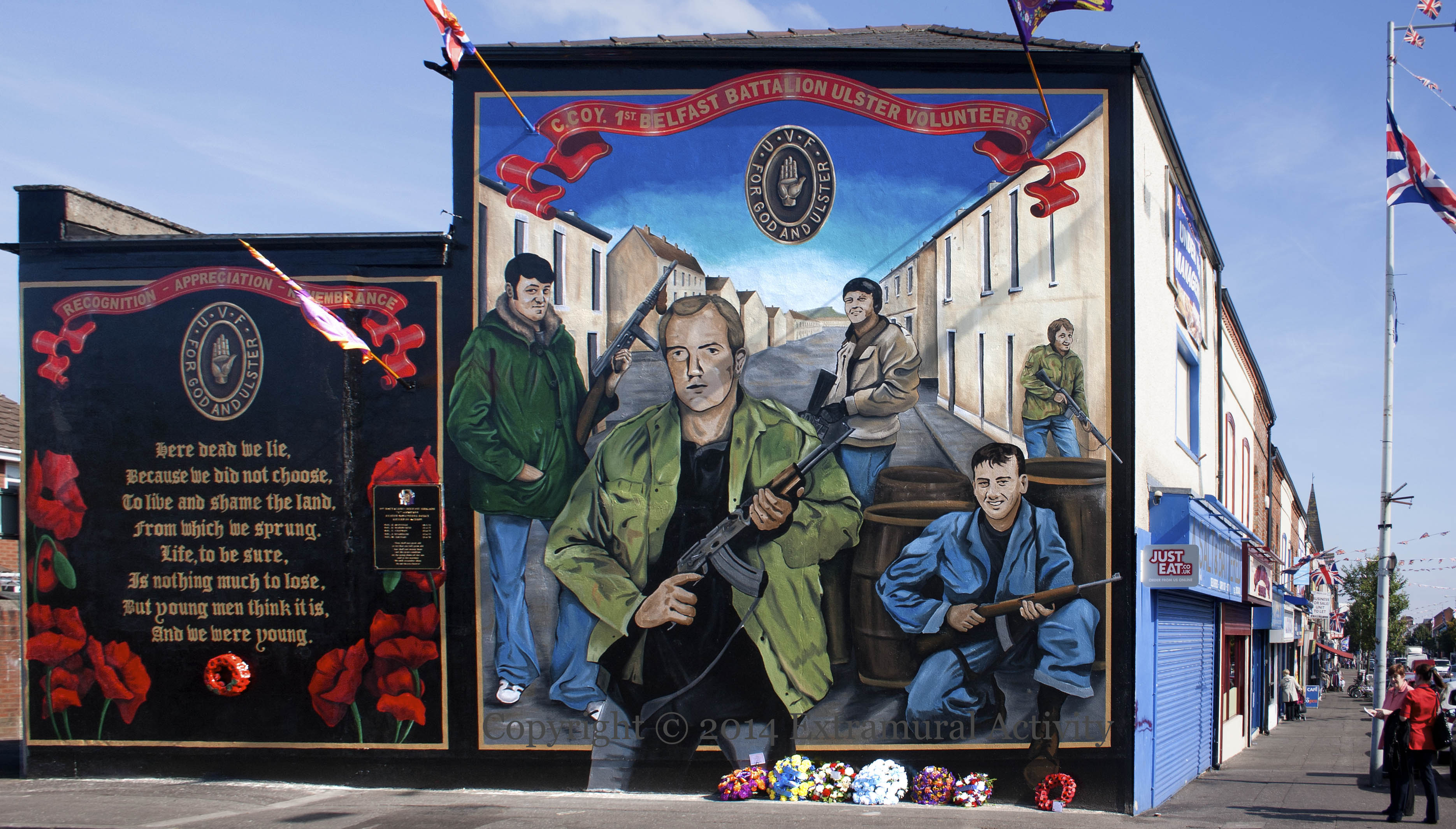
A. E. Housman’s 1919 short poem “Here dead we lie” is featured, together with the poppies that grew on the Western Front in WWI, in this UVF commemorative mural. The 36th (Ulster) Division is not mentioned specifically; the plaque on the right-hand side (which pre-dates the mural) lists the names of five UVF members killed in the 70s who are depicted in the mural just out of picture but seen below in a wide shot of both murals (and by itself in C Coy Street). For a similar connecting of the two Ulster Volunteer Forces, see 100 Years Apart, Armed & Ready, Years Of Sacrifice, and others. Another wide shot is given in C Coy Street, taken from the main road and shows that the fish-and-chip shop on the Shankill is called “A Salt And Battered”.
“Here dead we lie, because we did not choose, to live and shame the land, from which we sprung. Life, to be sure, is nothing much to lose, but young men think it is, and we were young.”
Pro-Gaza mural/stencil on Northumberland Street decrying continued US support of Israel: the bloody bars of the US flag stain the Star of David (in the place where the stars would be) and run down the wall. Sponsored by the IRSP/INLA. The phrase “These colors don’t run” dates to 1942 or 1943 in Iowa (see page 10).
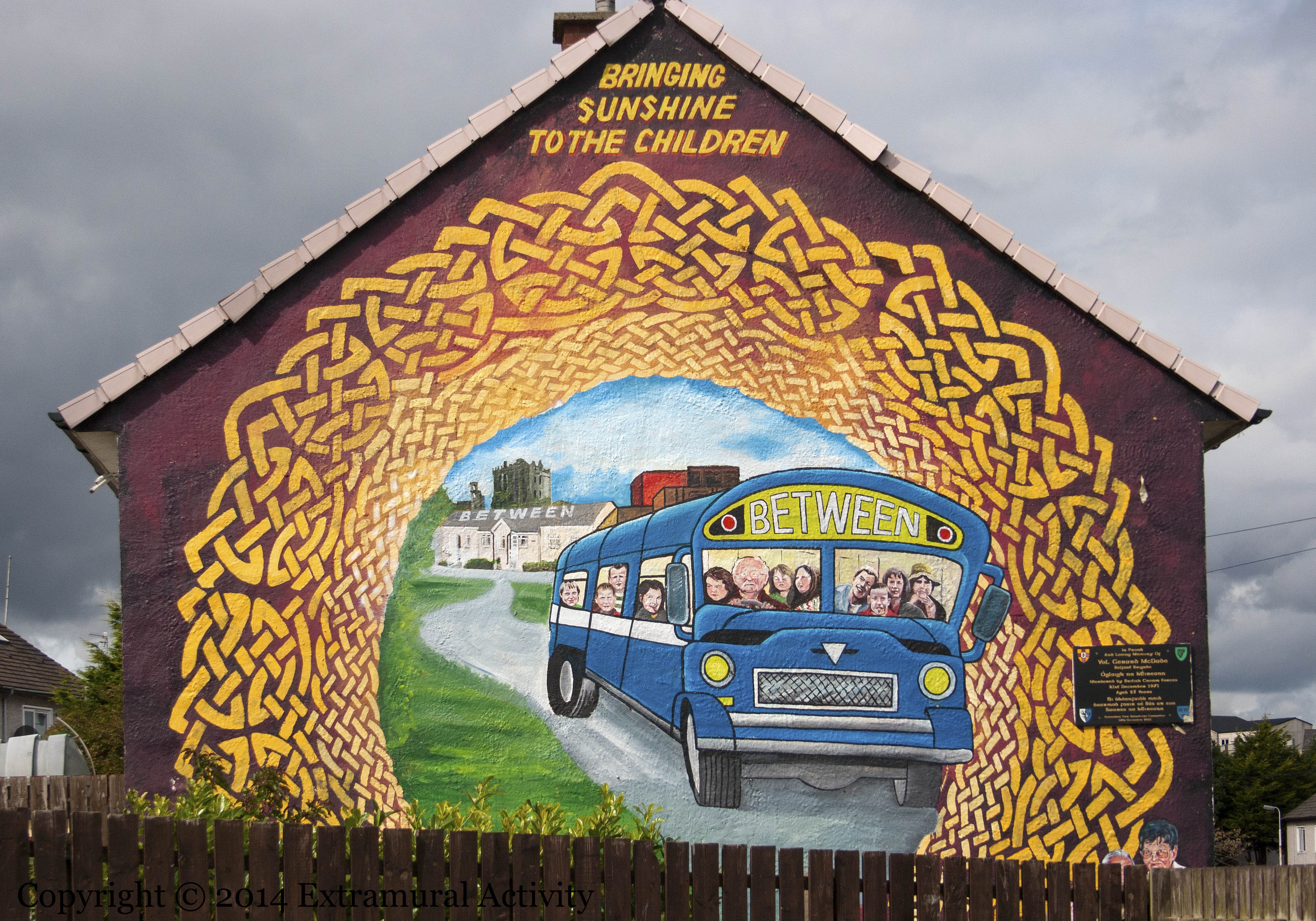
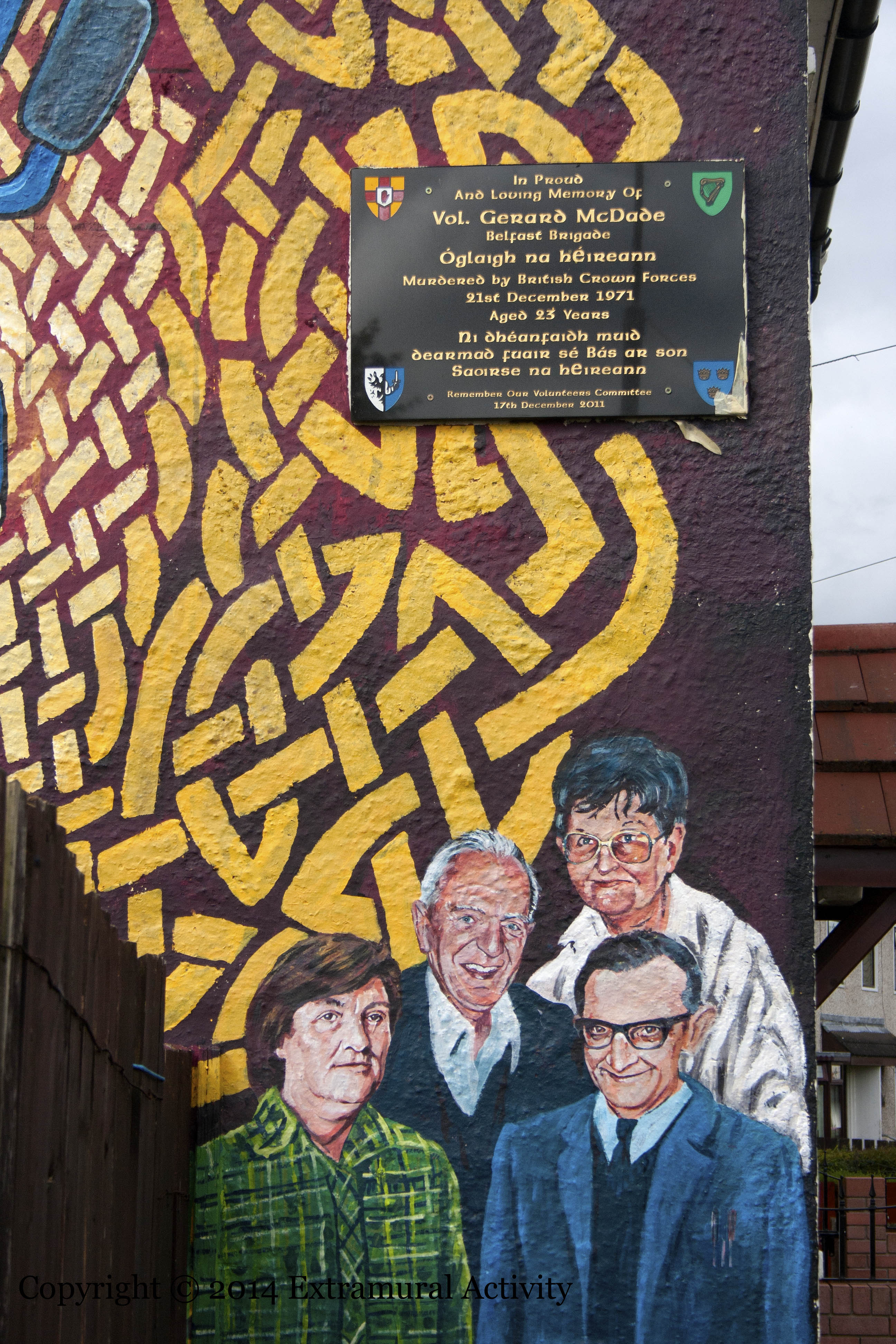
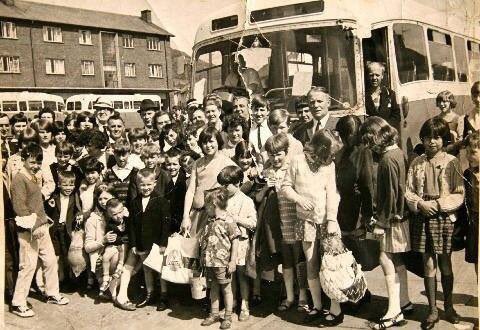
Unlike Ken Kesey’s Further, this bus goes Between, “Bringing sunshine to the children”. ‘Between’ was (and is) a Cork-based group who sponsored trips to Cork (Blarney Castle appears in the background of the mural), Monaghan, Donegal, and elsewhere, for the children of Ballymurphy and the Shankill during the troubles. The figures in the lower-right corner are shown in detail in the image below. The plaque to Gerard McDade remains on the wall. The mural was unveiled on 2014-09-20 – Ciaran Cahill has images from the launch.






 Extramural Activity