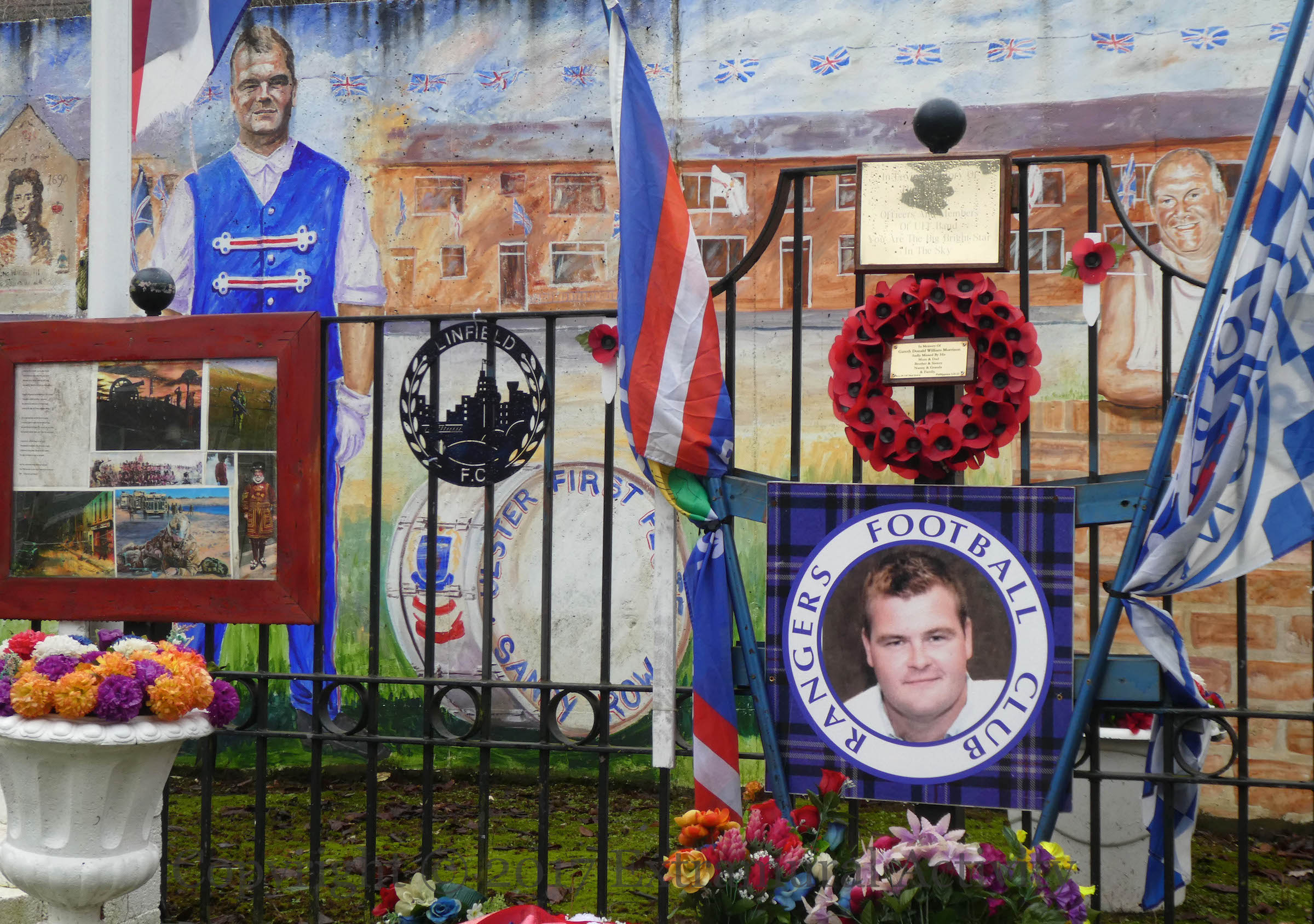
Gareth “Big Henry” Morrison was a drummer in the Ulster First Flute band in Sandy Row and a Rangers supporter. He died at age 26 on June 23rd, 2013 from a dose of PMA (BelTel), one of eight such deaths in Northern Ireland and seven in western Scotland. (1997 image of a UFFB mural in Linfield Road.)
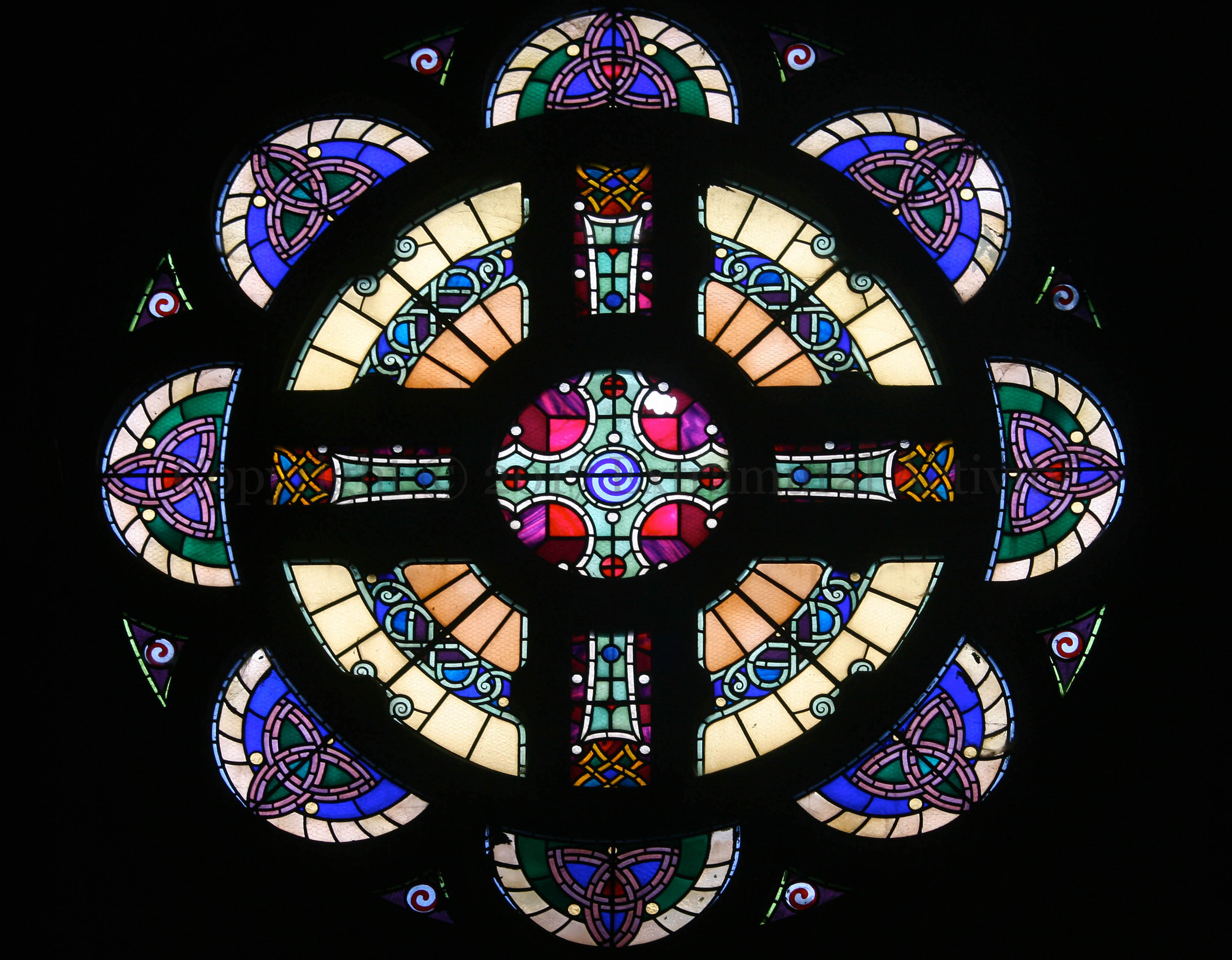
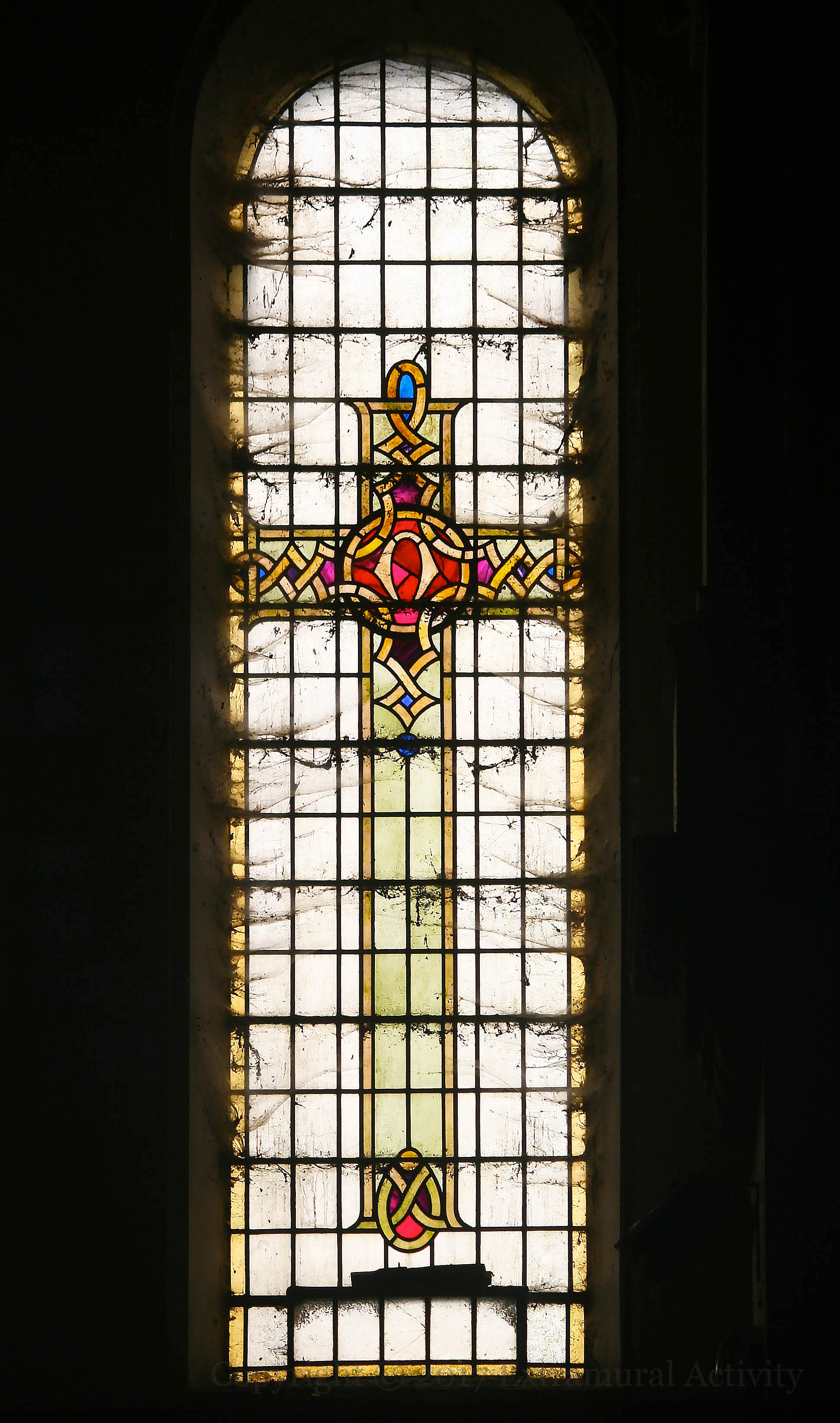
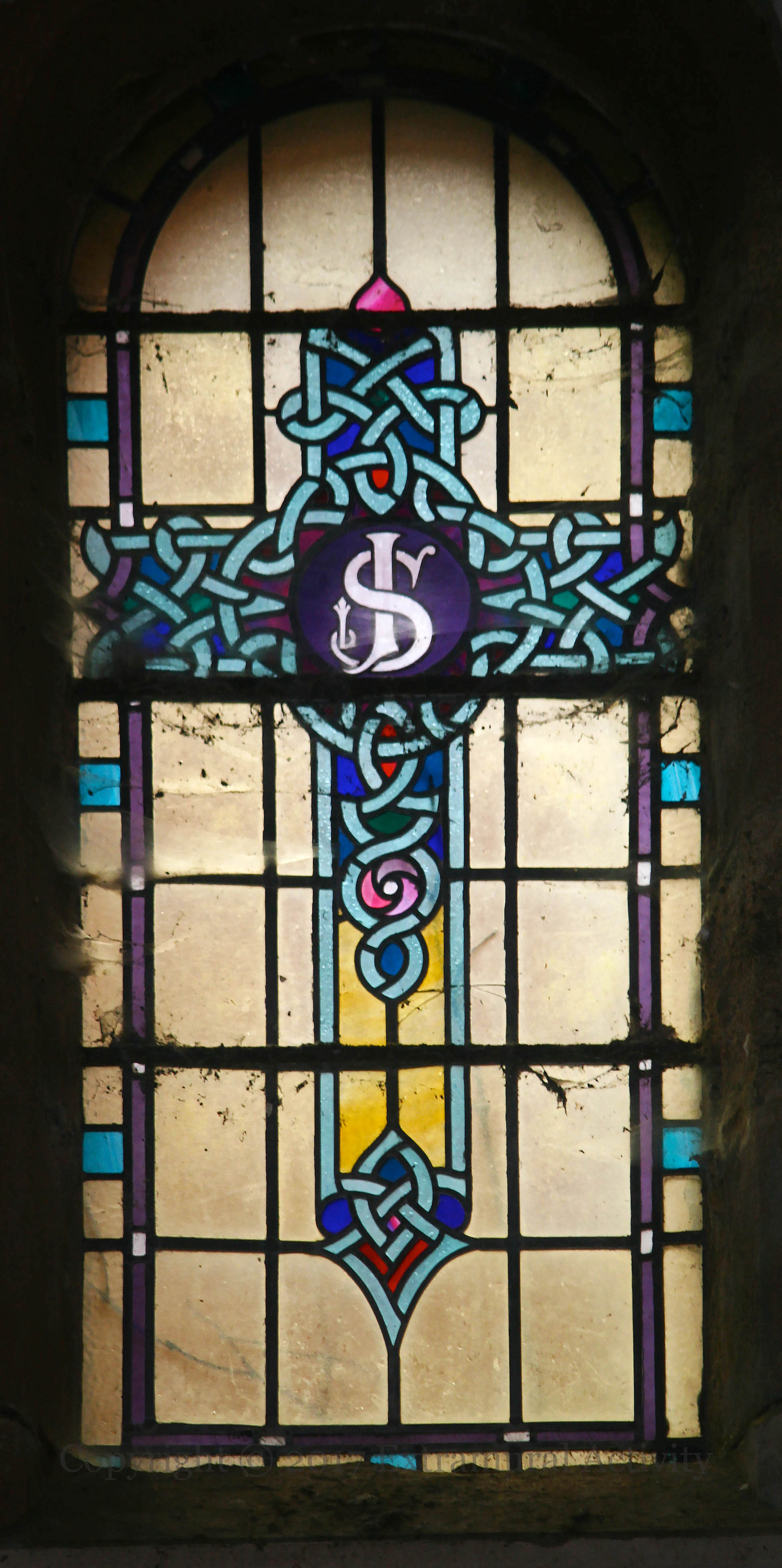
Here are three stained glass windows from St Joseph’s in Sailortown. The designer of the glass is unknown – please get in touch if you know. The church was built in 1880 and has been idle since 2001; both the exterior (which we profiled in November 2017) and interior are in need of restoration. A plan exists to turn the building into a heritage centre (BMG).
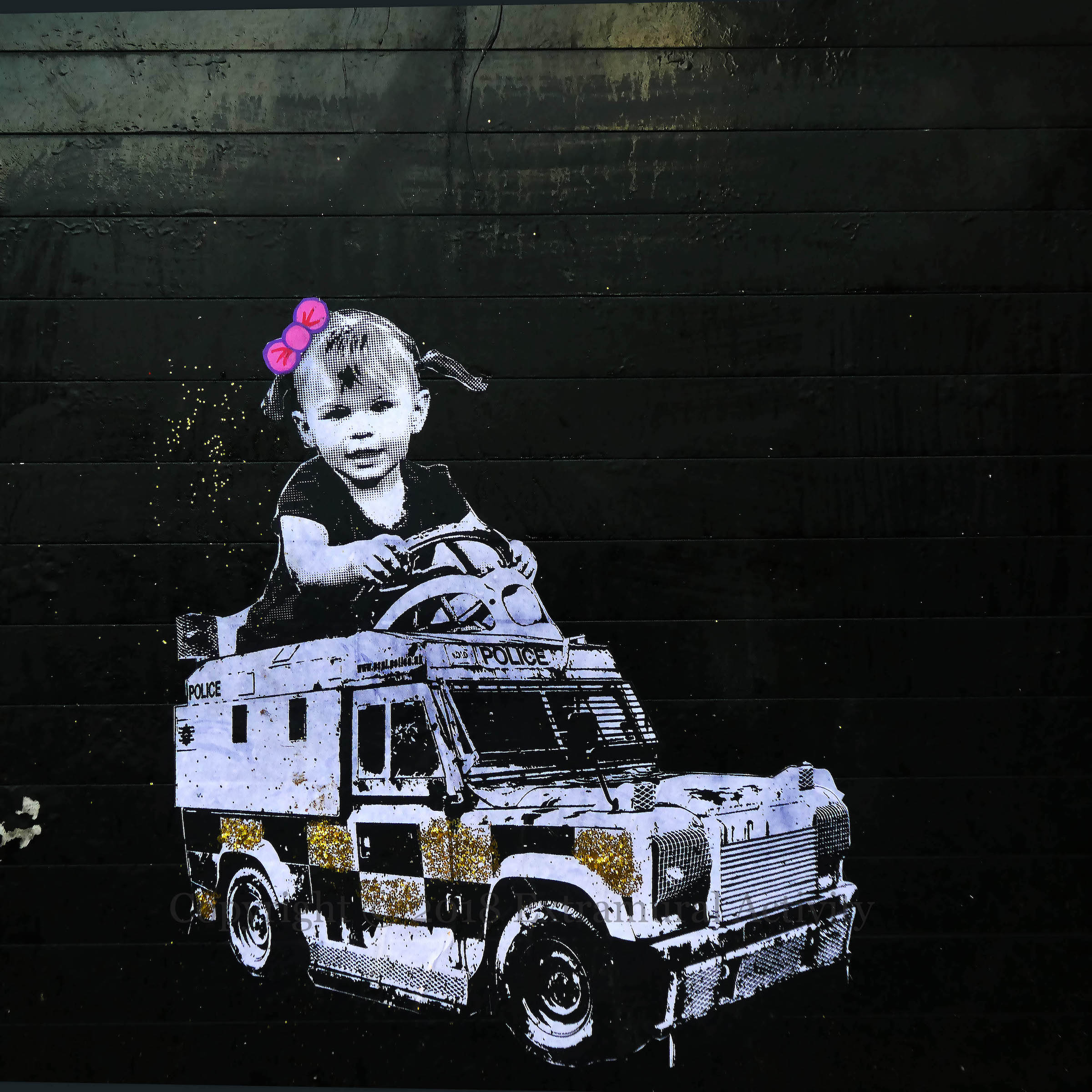
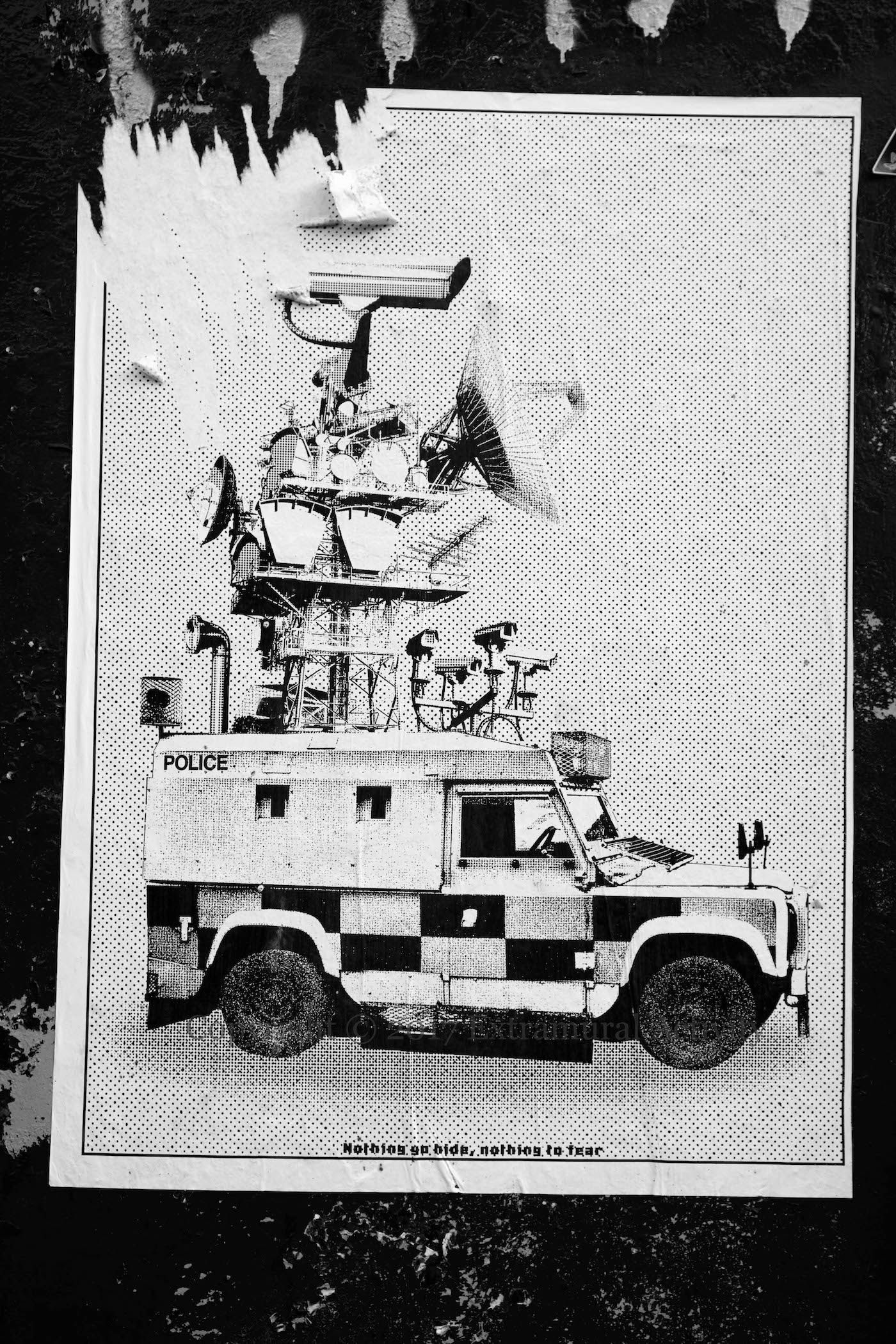
Here is a modified PSNI land rover from Leo Boyd (web | inst): “Nothing to fear, nothing to hide” from the summer of 2017. See also “My first meat wagon“.
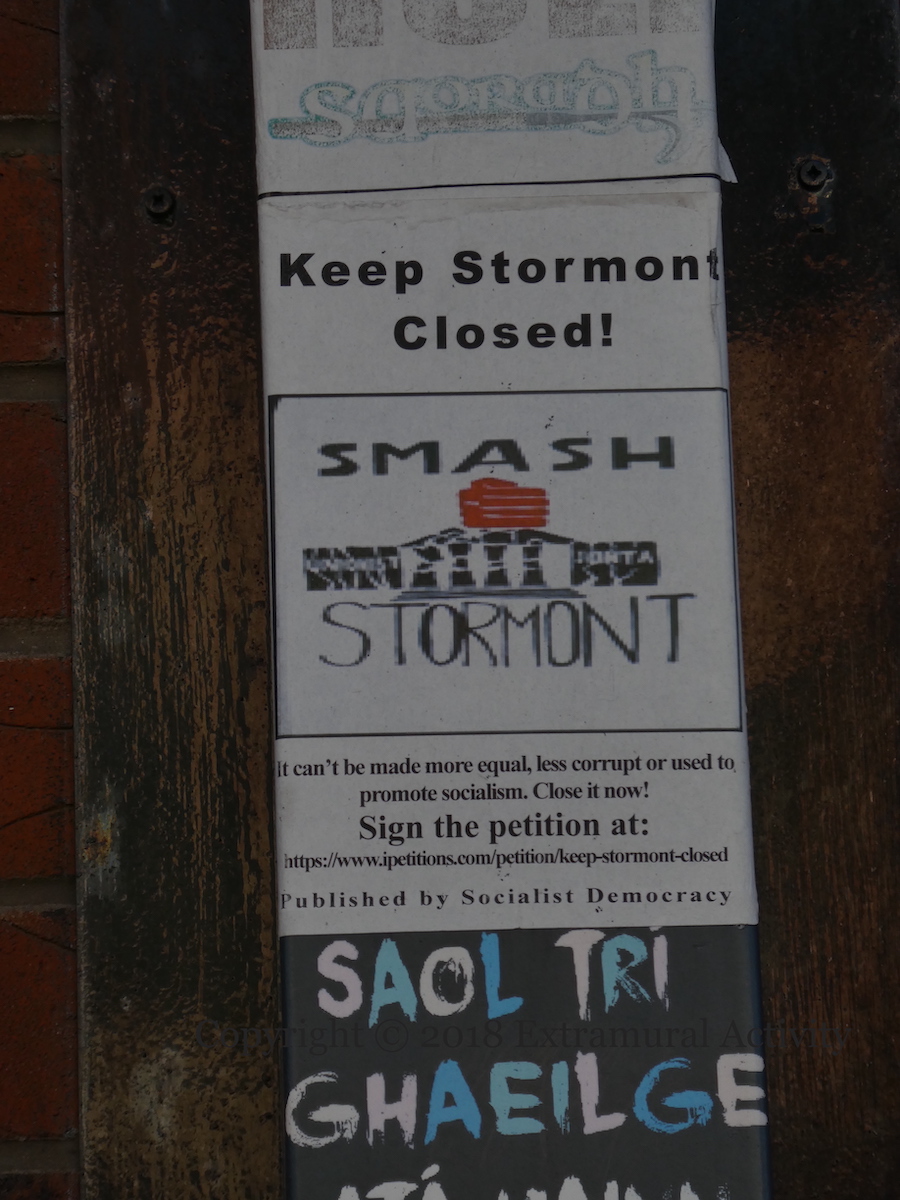
Posters on a drainpipe on the Falls Road next to Gerry Carroll’s constituency office: “Keep Stormont closed. Smash Stormont – It can’t be made more equal, less corrupt or used to promote socialism. Close it now! Sign the petition … Published by Socialist Democracy.”
With “Saol trí Ghaeilge [atá uainn]” below [We want life using Irish].
2017 update on the 2016 #BuildHomesNow stencil in the New Lodge from the PPRProject, detailing the shortage of housing. “Waiting for a home: 2458. Homes built: 112”.
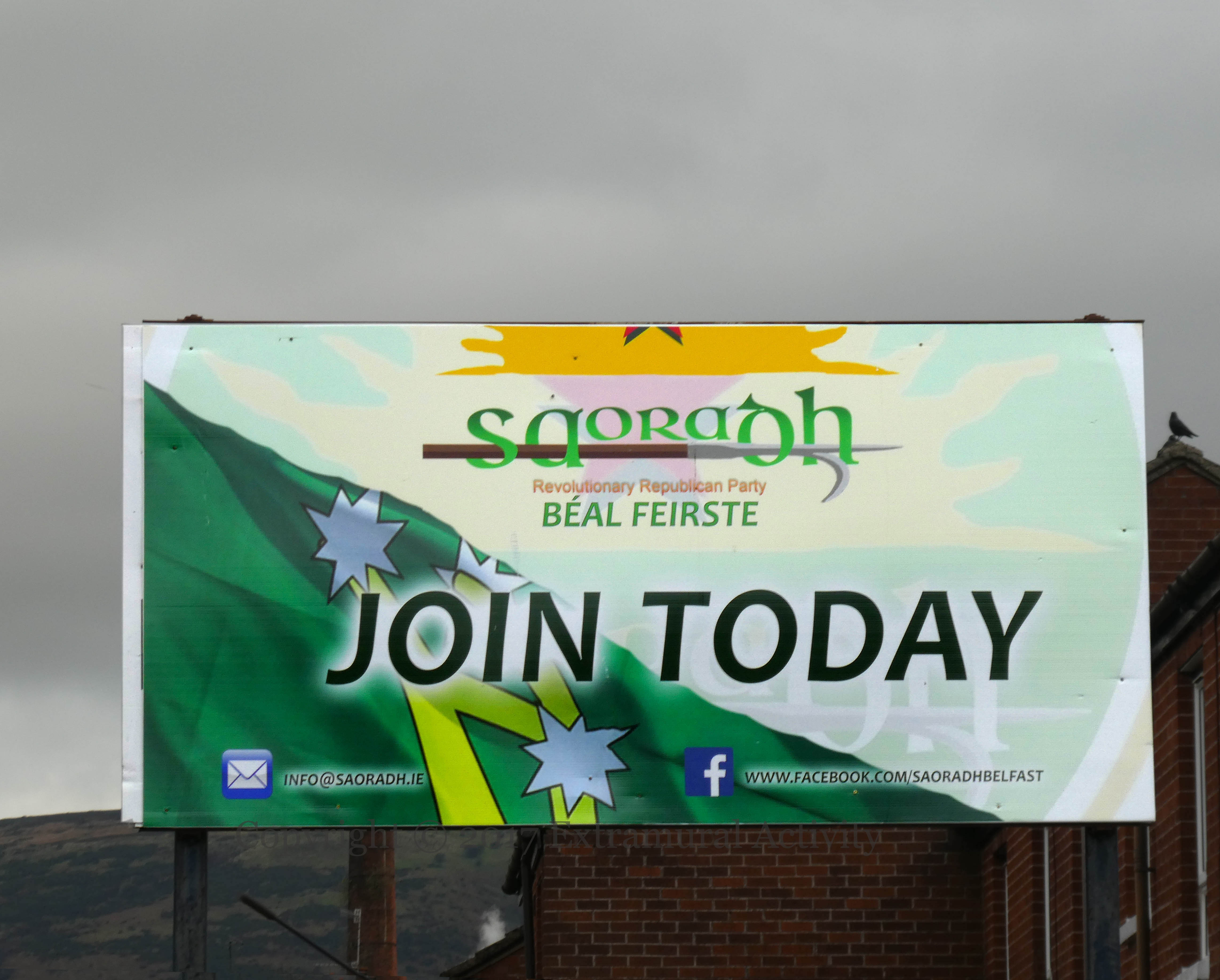
This Ardoyne hoarding for Saoradh the “revolutionary republican party ” (web | fb), uses a pike (for 1798 Rebellion), the Sunburst (traditionally used by Fıanna Éıreann), and the Starry Plough (from the Irish Citizen Army of the Easter Rising). Cut off at the top is a red star of socialism.
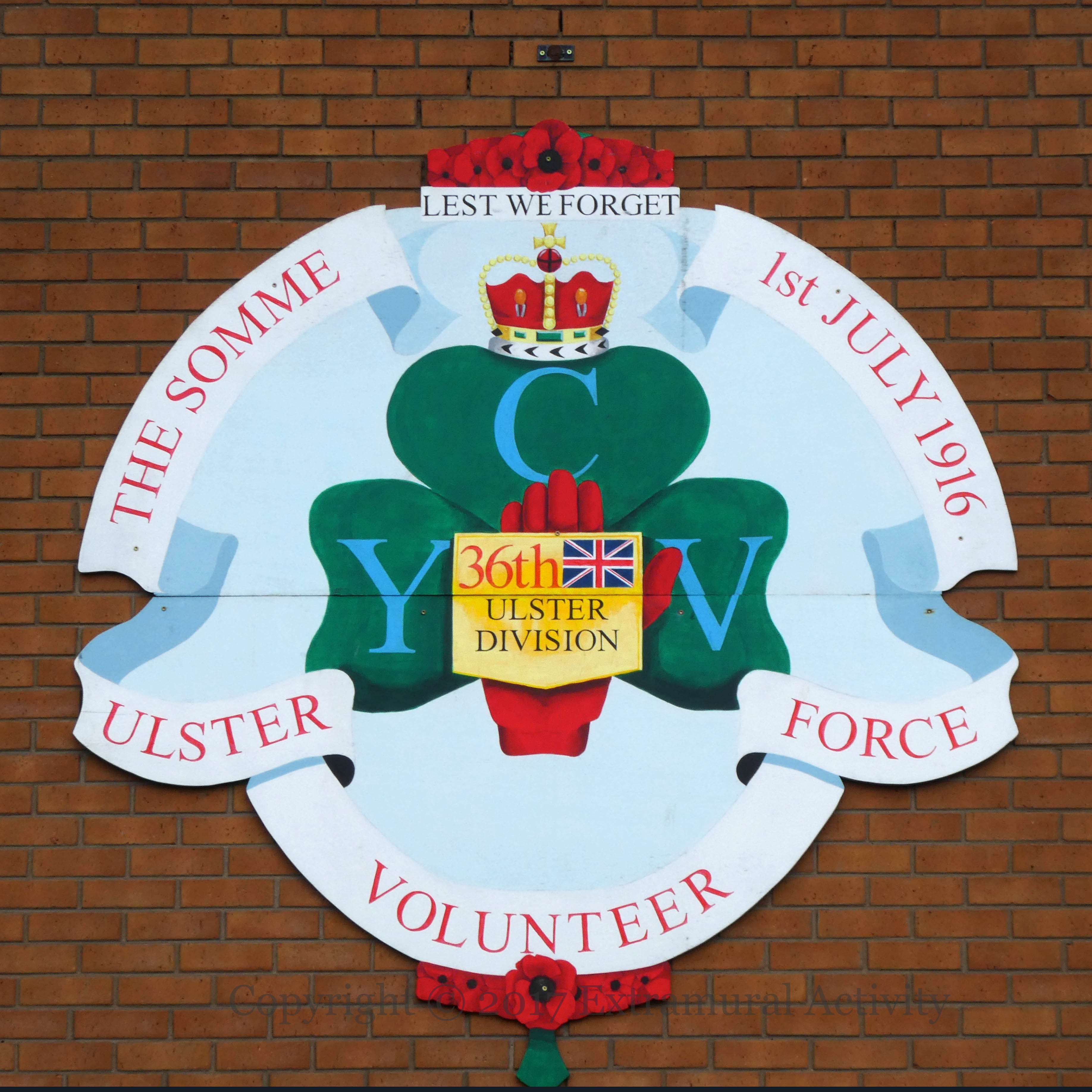
The Young Citizen Volunteers began as a civic organisation and domestic reserve force in 1912 but by the time of the first World War had become a battalion of the Ulster Volunteers and went to the Western Front as the fourteenth battalion of the Royal Irish Rifles, part of the 36th (Ulster) Division, landing at Boulogne in October, 1915. The force was mainly Protestant but History Hub Ulster has a page on the 42 Ulster Catholics who served in the 14th (YCV) RIR.
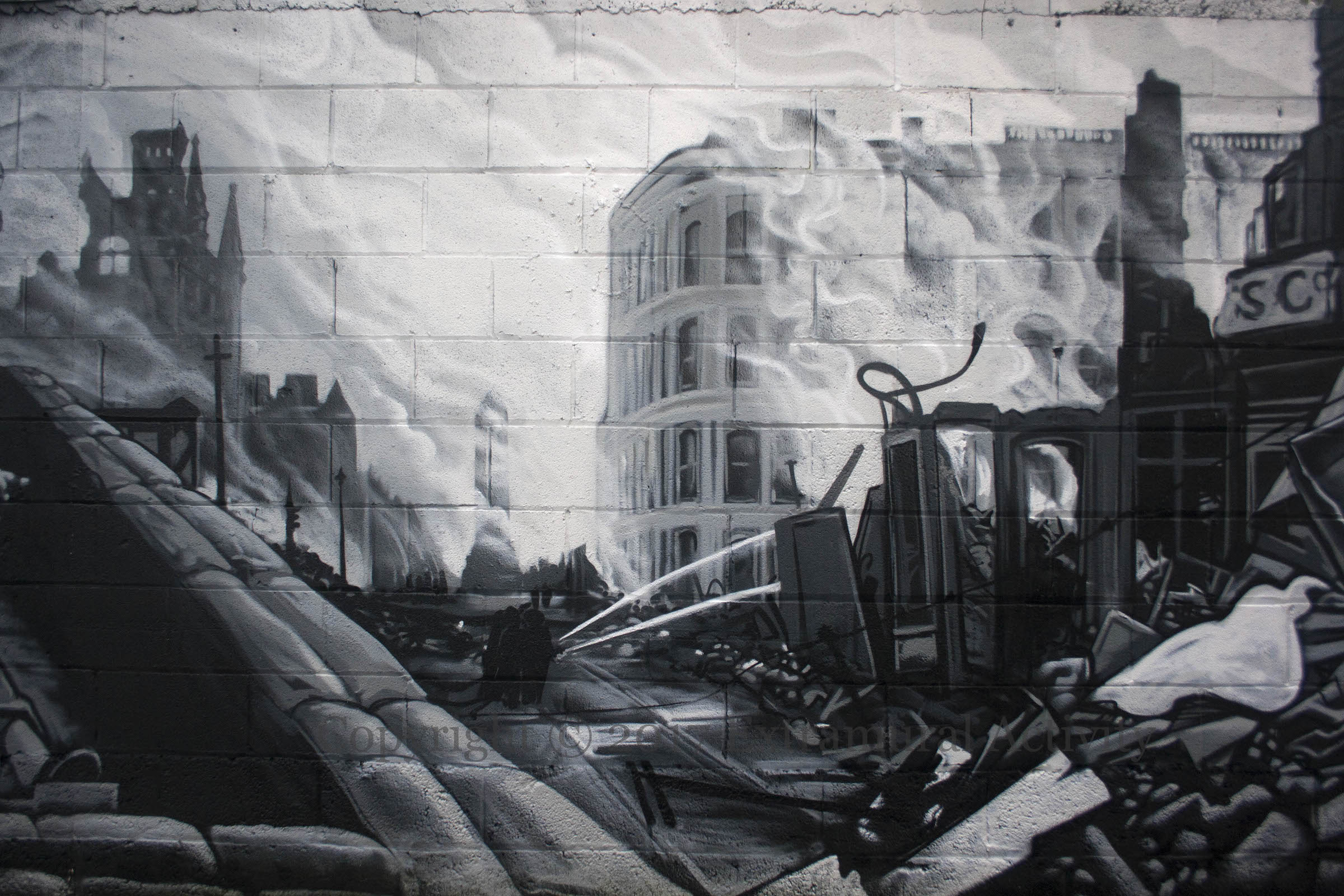
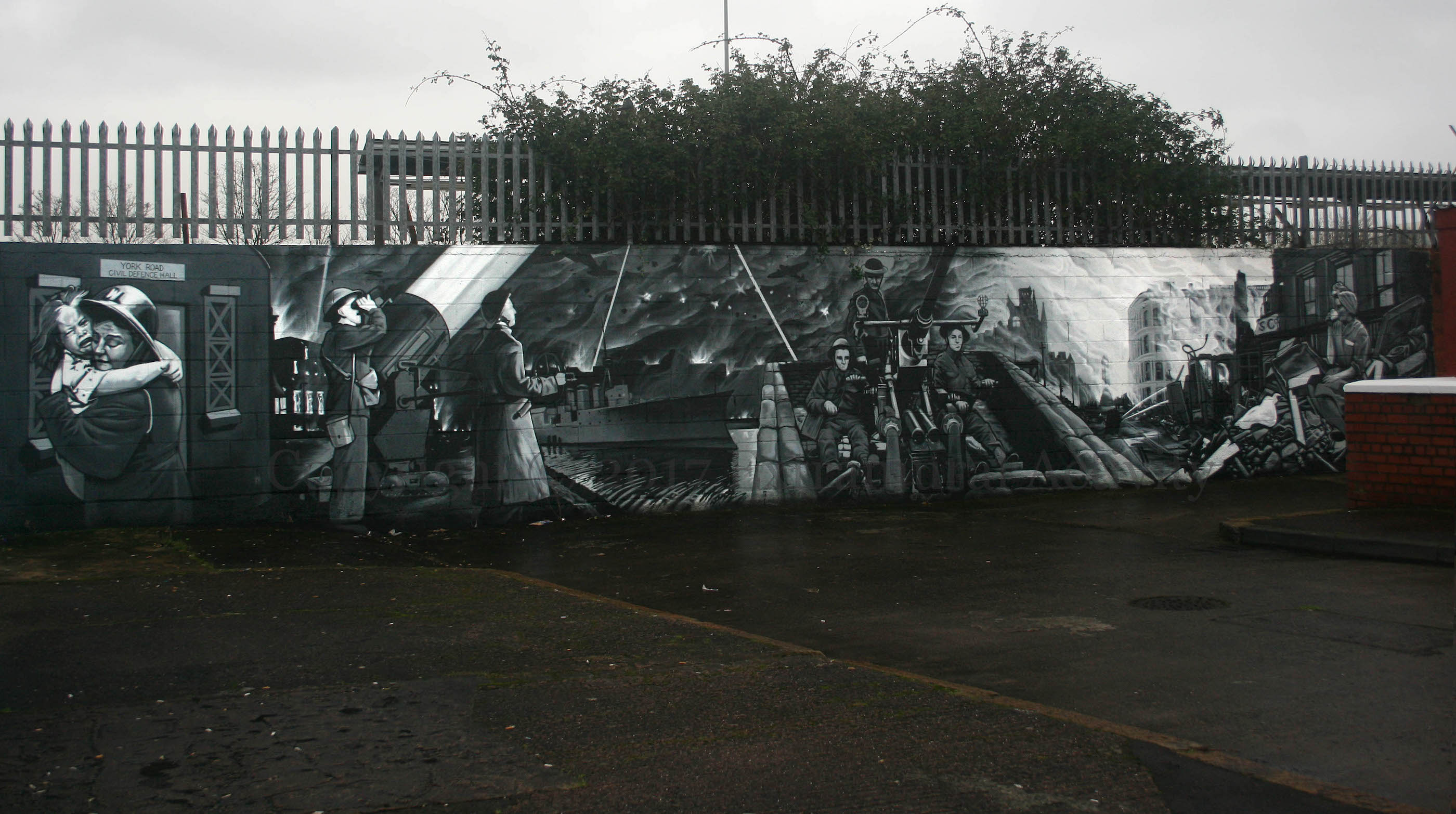
As mentioned in an entry about Dalaradia, the HUBB community centre (web | Fb) in north Belfast has, since 2010, been based in what used to be a World War II Civil Defence air-raid shelter, which it cleaned and renovated (Tele). The original hall is depicted in this mural on the side of the HUBB. Belfast was bombed by the Germans four times in April and May of 1941.
In 1940, Belfast was protected by thirty-eight anti-aircraft guns. The German Luftwaffe flew a reconnaissance flight over Belfast on November 30th, 1940 and a test mission of eight planes on April 7th, 1941 concluded that Belfast’s defences were, “inferior in quality, scanty and insufficient” (Elaine Hogg/Glenravel History). 150 bombers would blitz Belfast the following week, on Easter Tuesday, April 15th, and the seven guns that had been in operation ceased firing, believing, falsely, that RAF planes were also in the sky (WP).
In the blitz of Easter Tuesday, 1941, more than 900 people died, 1,500 were injured, and half the houses in Belfast were damaged (WP). According to Elaine Hogg’s research in the ‘Darker Side Of Belfast’ series, 100,000 people left the city in the remainder of the month, due to shock, fear, and the squalid conditions and unruly behaviour that followed the bombing.
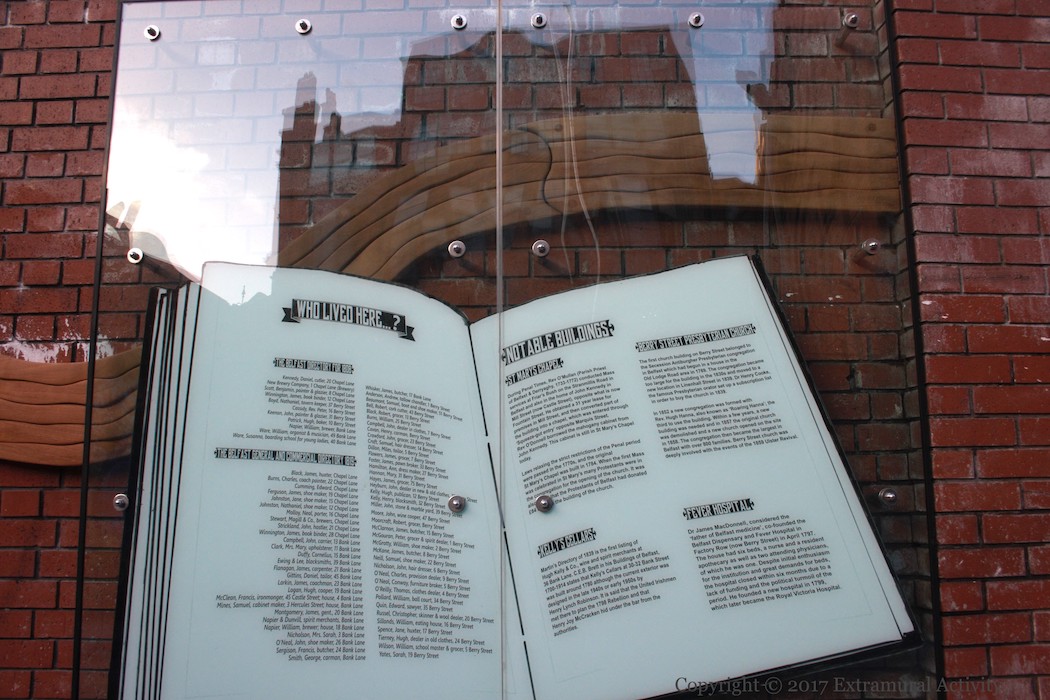
The river in question is the Farset, which in the late 1700s was still open in what was then the Back-Of-The-River area and is now Bank Square. It was all covered over by 1804.
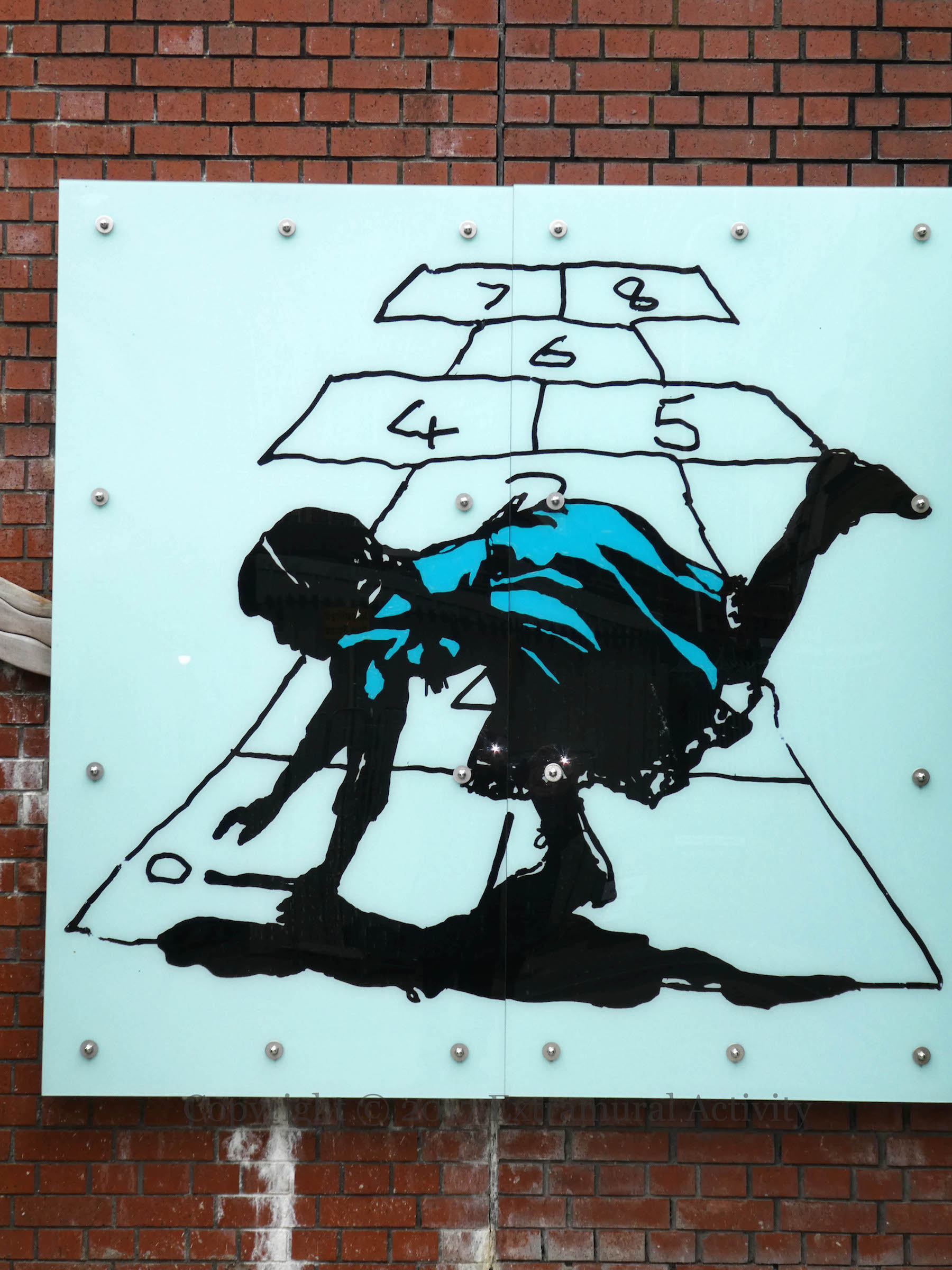
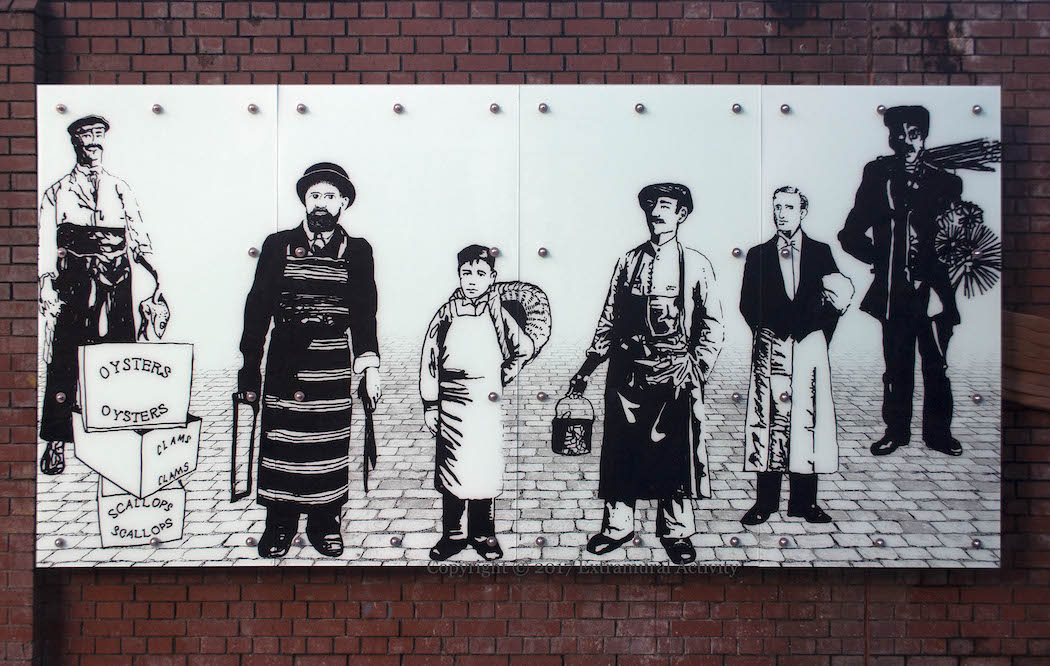
The 2015 installation of ‘life in the old days’ panels is by Annemarie Mullan, Stephen Mackey, and King Street Arts, presenting street scenes inspired by “information from the 1898 census” (CultureNI | Love Belfast).












 Extramural Activity