This Bare And Tortured Land

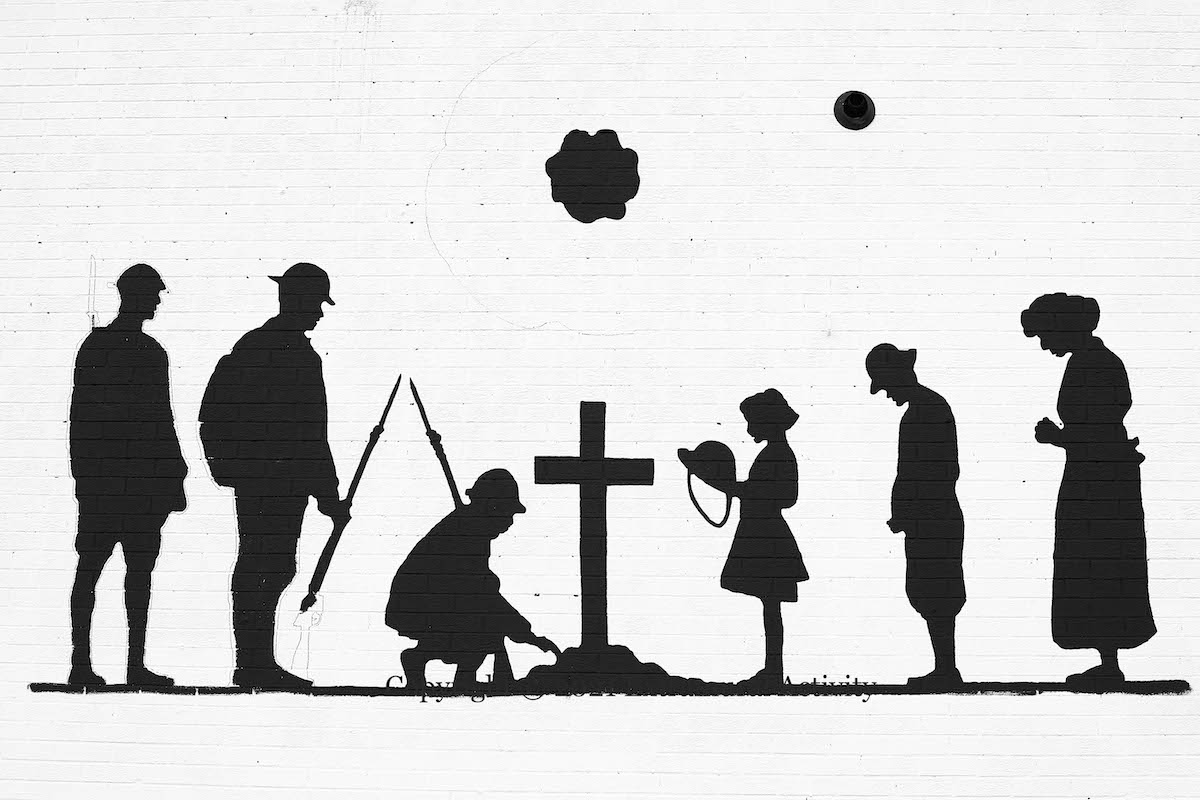
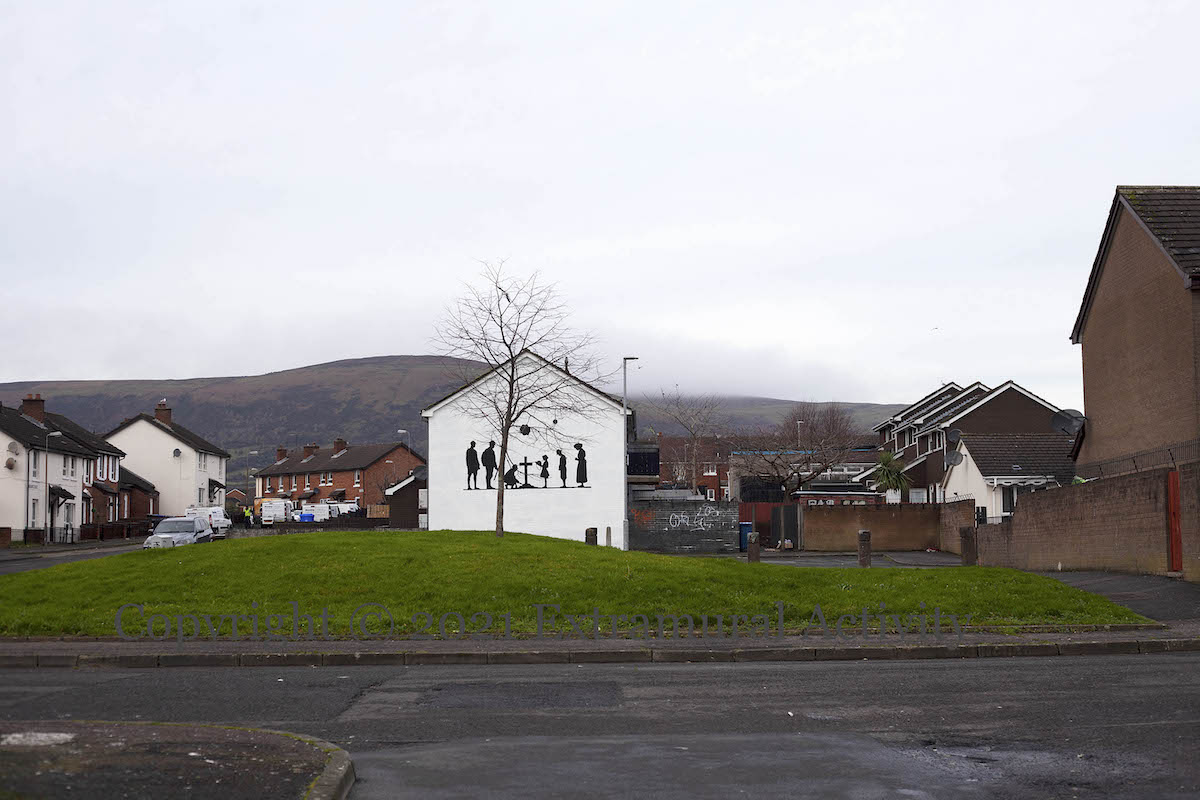
The ‘bare and tortured land’ is Messines (now Mesen) in West Flanders, Belgium, where approximately 25,000 soldiers on both sides were killed or injured at the start of June, 1917, as Allied forces retook the ridge between Messines and Wytschaete.

The central figure is the 1922 bronze statue in Winchester, England, by John Tweed, depicting a soldier from the Kings Royal Rifle Corps, which does not appear to have fought at Messines, though both the 36th (Ulster) and 16th (Irish) divisions were there (WP) and this is the reason for a number of Messines murals that have been painted in recent years: see Messines 1917 and Brothers In Arms in Newtownards | Comrades In Arms in Londonderry. During the battle, Sopwith Pups (biplanes – the triplane was used by naval squadrons (Military History)) were ordered to fly low and strafe enemy targets (Key Aero | FirstWorldWar | Vintage Aviator).

The poetry – “When you and I are buried/With grasses overhead/The memory of our fights will stand/Above this bare and tortured land/We knew ere we were dead.” – appears to be original.

There is a “No ball games allowed” notice on the left-hand side.

By Dee Craig in Wellington Green, Larne

Click image to enlarge
Copyright © 2022 Seosamh Mac Coılle
X09351
Iconostases

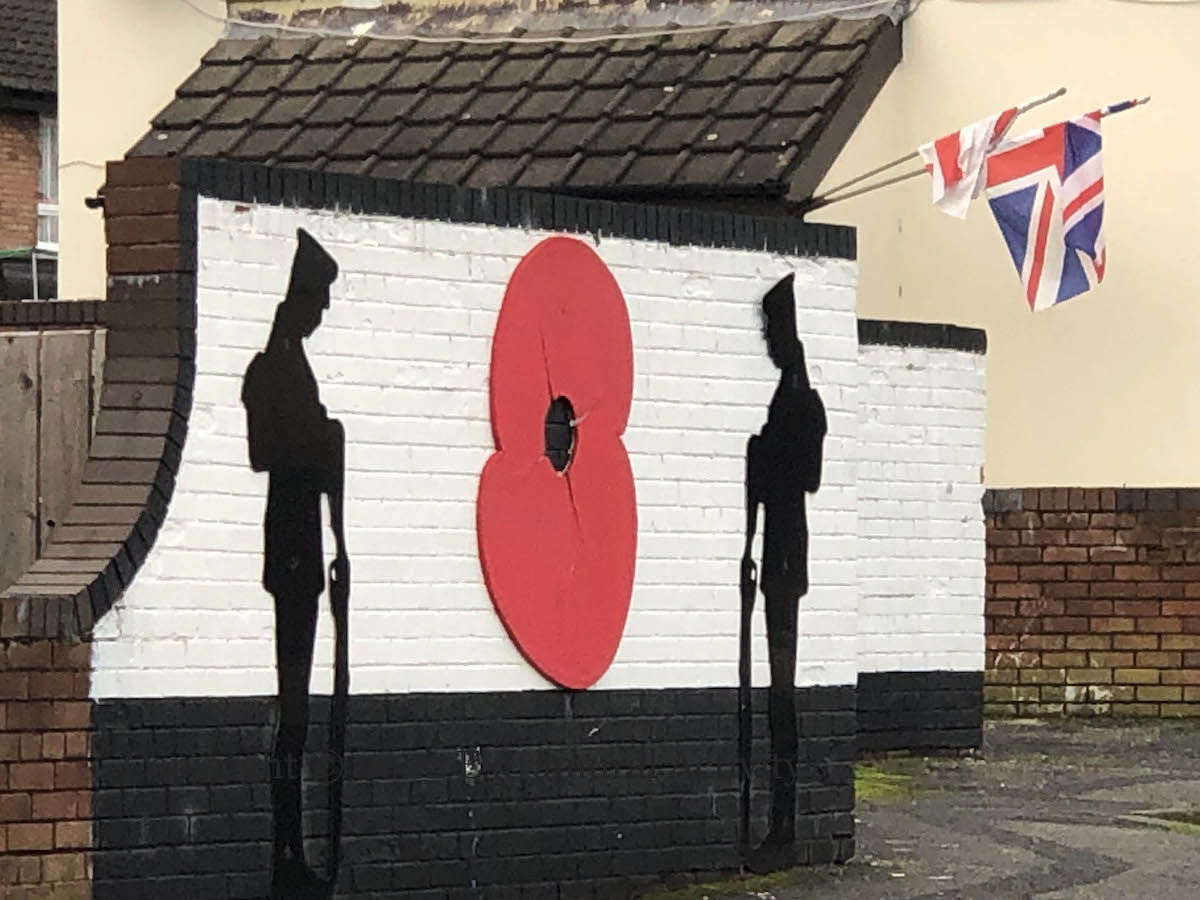
This is a small memorial to the fallen British soldiers tucked away in Ogilvie Street, Belfast, that serves to remind the locals always to keep the sacrifice of the 36th Division always in mind. Below is the board next to it, originally seen in 2013.

Click image to enlarge
Copyright © 2022 Seosamh Mac Coılle
X08883 [X08882] X08881

At Home And Abroad

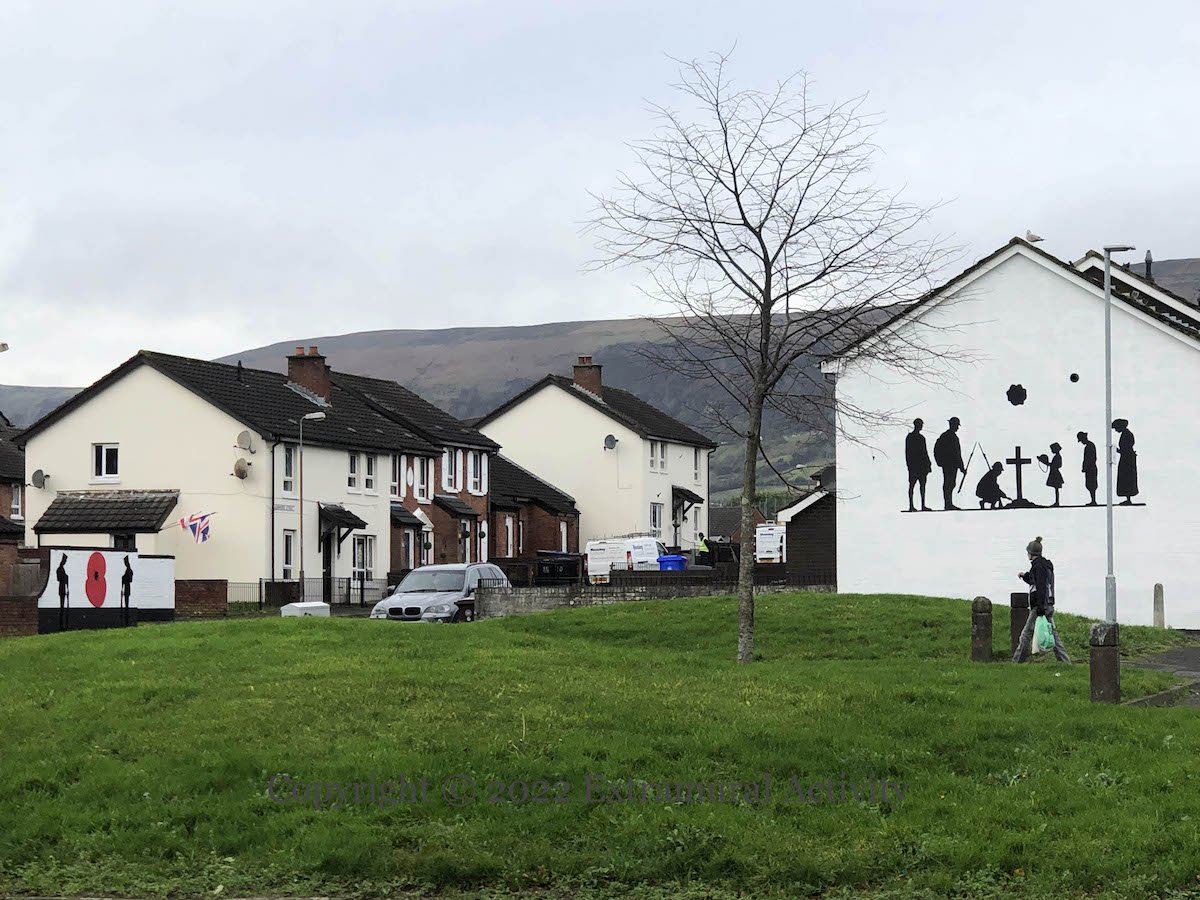
Two types of mourner at the grave of a fallen WWI soldier: on the left, comrades in arms; on the right, members of the family they left behind.

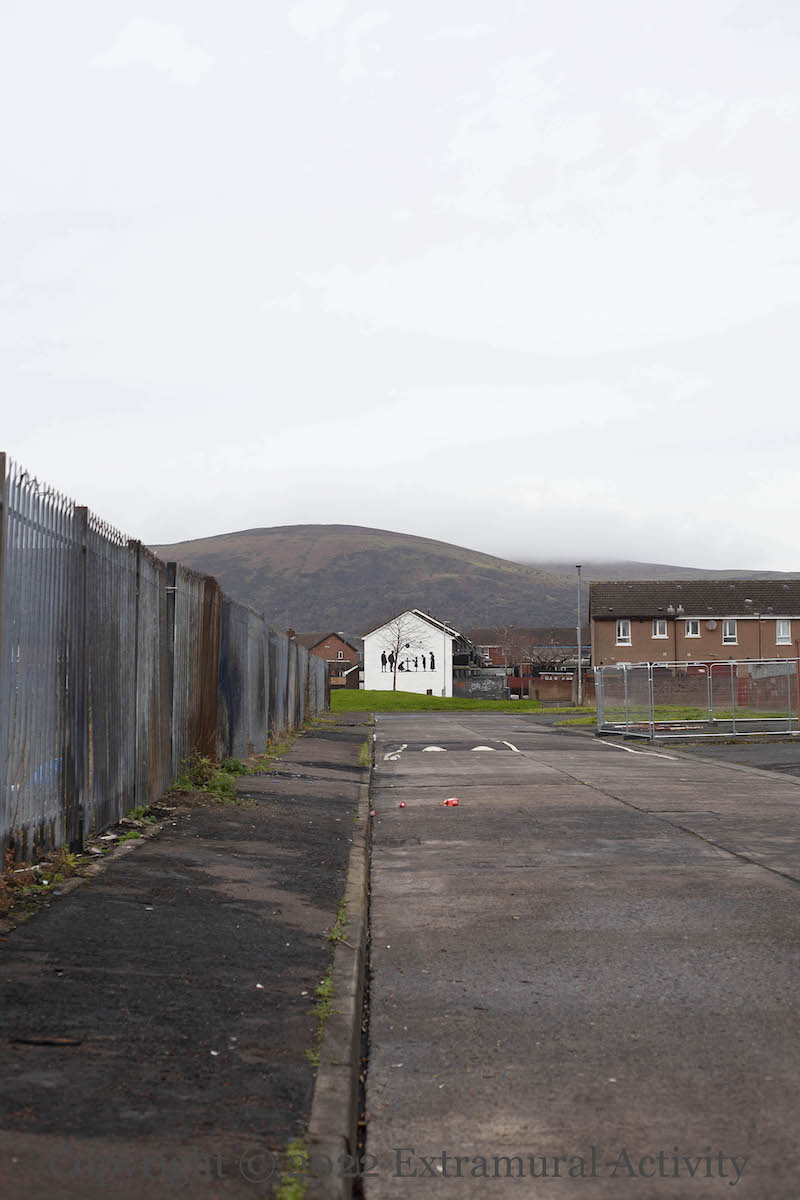
Work on the mural began in December, 2021, but progress seems to have stalled. One of the bayonets is in outline as is the giant poppy overheard. The effect is that the scene seems to be taking place under the stars.

Ashmore Street, west Belfast

Click image to enlarge
Copyright © 2022 Seosamh Mac Coılle
X08872 X08870 X08869 X08871 X08865 [X08866] [X08867] [X08868]

Rifleman Robert King

The Military Medal (“MM”) “for gallantry in the field” was awarded to Rifleman Robert King of the 12th Royal Irish Rifles in the dispatches of July 12th for his actions on July 1st, the first day of the Battle Of The Somme. King was from Ronald Street in Larne (RIR 12th Fb; there is also a 12th batt RIR memorial association).

The reverse of the medal can be seen in the previous version of this mural.

Click image to enlarge
Copyright © 2022 Seosamh Mac Coılle
X09348 X09349 X09350 Wellington Green Dee Craig central antrim regiment newington G Coy

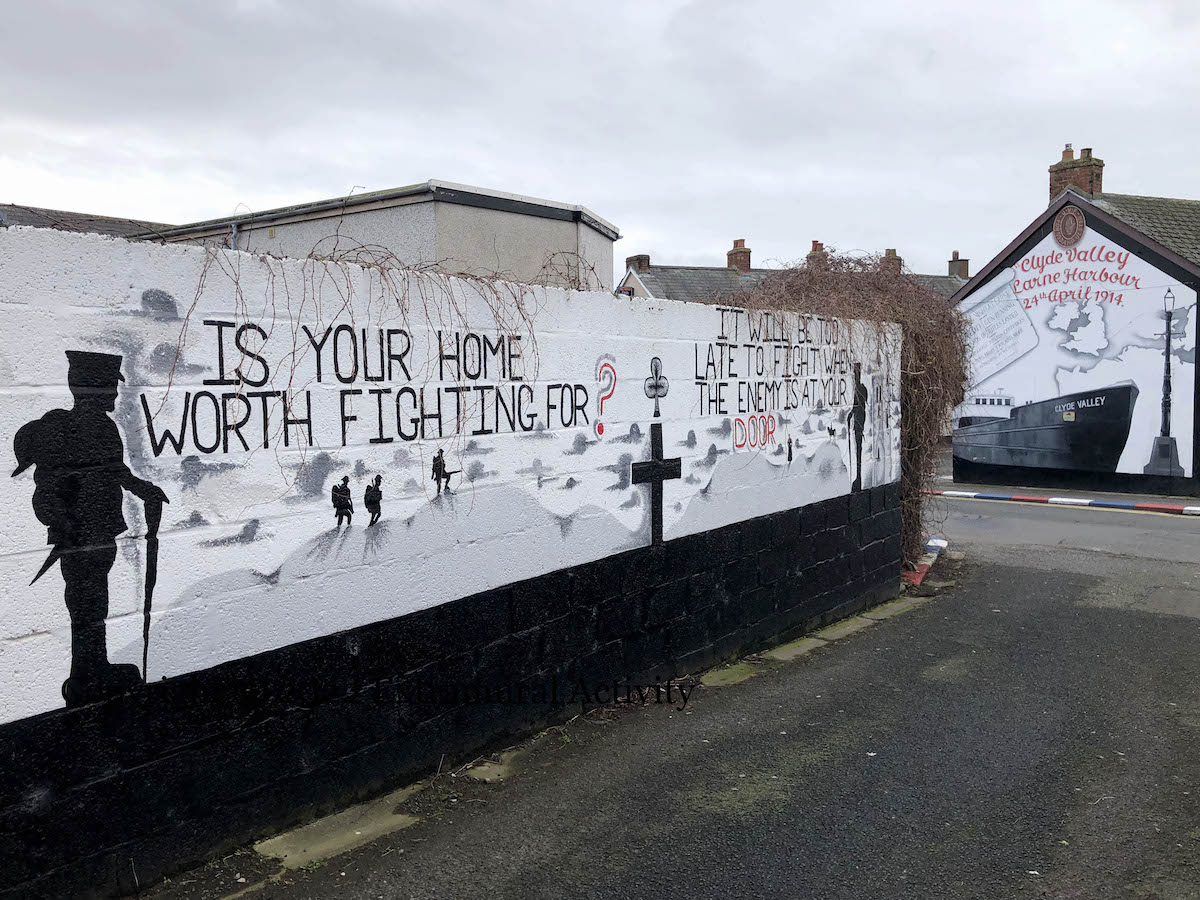
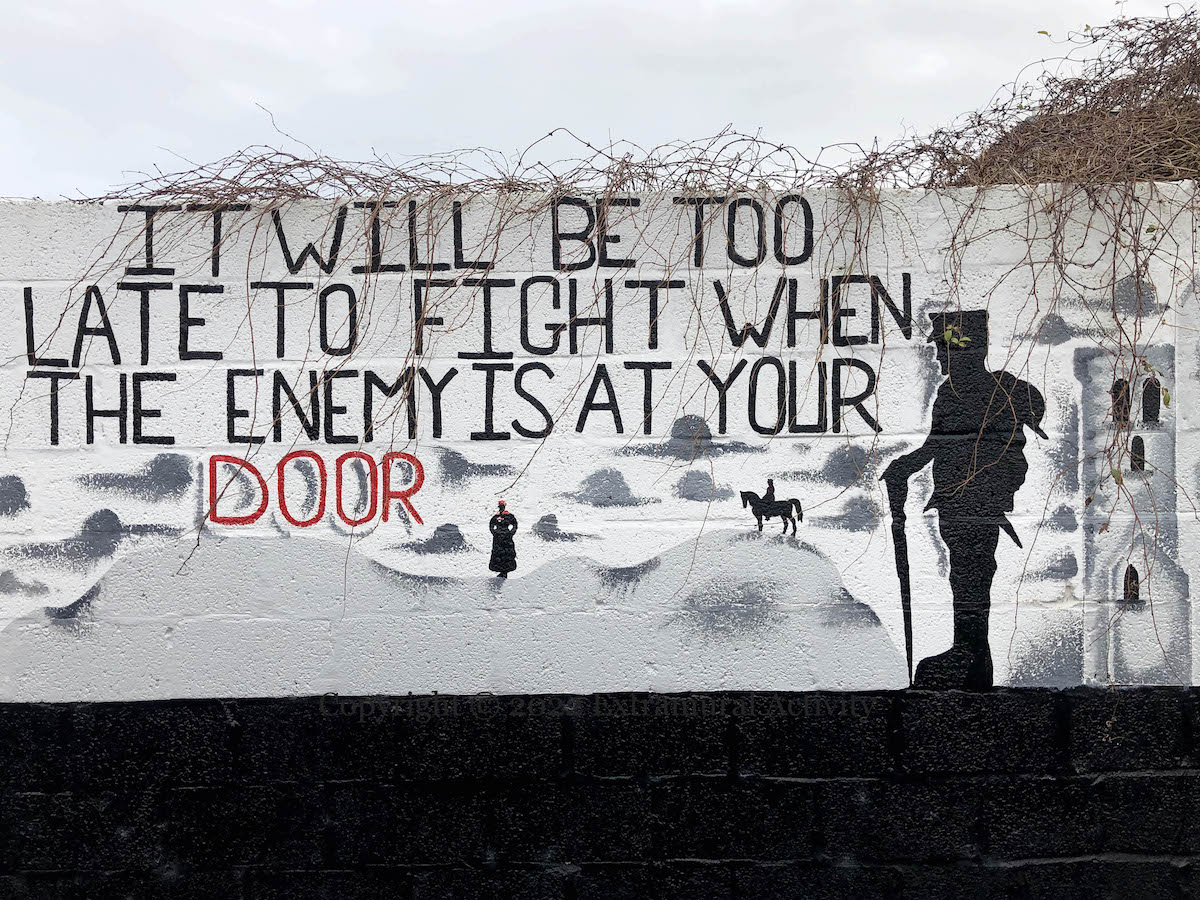
Is Your Home Worth Fighting For?

“… It will be too late to fight when the enemy is at your door.” In 1914, at the time of the Larne gun-running – see the mural in the second image and (previously) Amazing Night At Larne – the enemy was the threat of Home Rule and its enforcement by British Army forces and RIC that would remain under British control for at least three years after the commencement of home rule (Home Rule And Ulster’s Resistance p. 9). A bill to amend home rule by excluding some or all of the Ulster counties was introduced in July, 1914 (WP), but both Home Rule and the amendment were put aside when the Great War began; the enemy of Unionists then became the Central Powers. The contemporary enemy is the NI Protocol and Brexit, with the powers in Westminster again suggesting a separation of Britain and (Northern) Ireland.

Click image to enlarge
Copyright © 2022 Seosamh Mac Coılle
X09336 X09335 X09337 Greenland Drive Larne

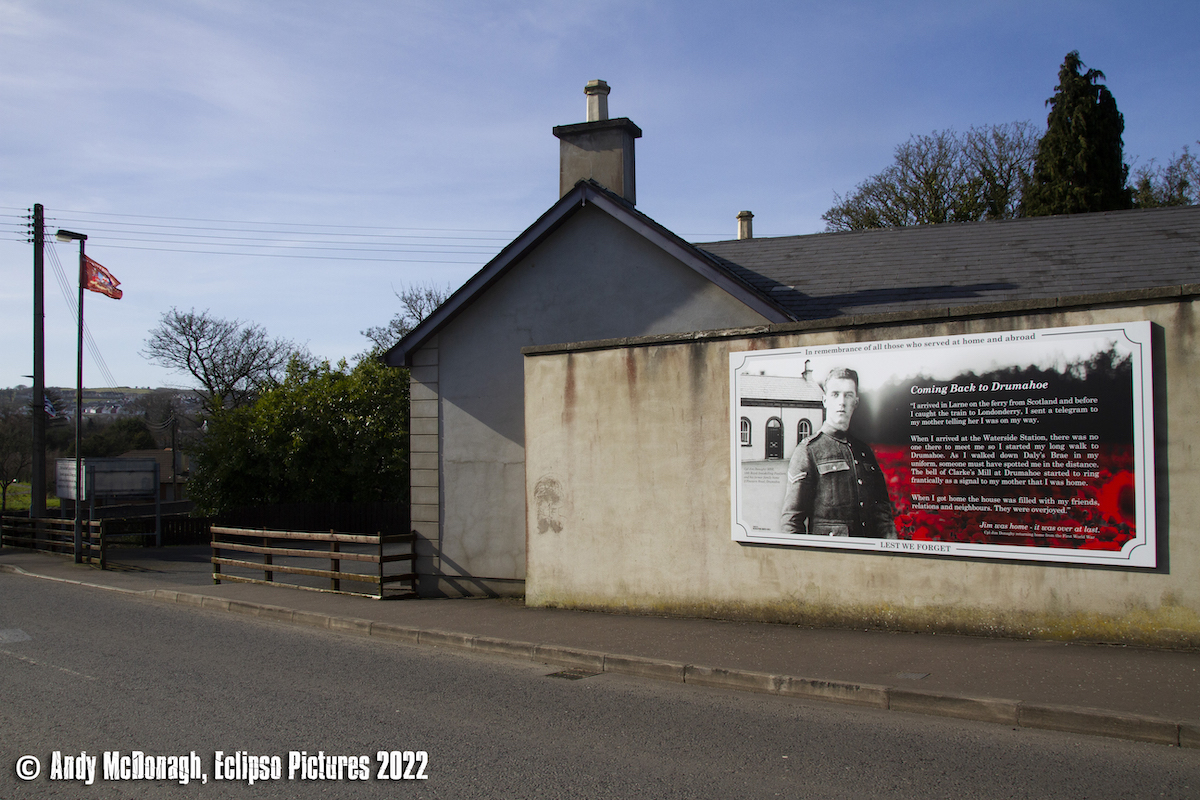
Coming Back To Drumahoe

Jim Donaghy was born in the Bonds area of the Waterside but when he joined the 10th (Derry) Battalion his family was living in Drumahoe. It was to there that he returned after seeing action at The Battle Of Albert in 1916, as well as the Battle of Messines, the Battle of Langemarck, the Cambrai Operations, and the Capture Of Bourlon Wood (Reserves & Cadets | Three Cheers For The Derrys). 

“”I arrived in Larne on the ferry from Scotland and before I caught the train to Londonderry, I sent a telegram to my mother telling her I was on my way. When I arrived in Waterside Station, there was no one there to meet me so I started my long walk to Drumahoe. As I walked down Daly’s Brae in my uniform, someone must have spotted me in the distance. The bell of Clarke’s Mill at Drumahoe started to ring frantically to my mother that I was home. When I got home the house was filled with my friends, relations and neighbours. They were overjoyed.” – Jim was home – it was over at least. Cpl Jim Donaghy returning home from the First World War.”

“Cpl Jim Donaghy MBE, 10th Royal Inniskilling Fusiliers and his former family home 2 Fincairn Road, Drumahoe.” The mural is on the yard wall of the house, which still stands.

“In remembrance of all those who served at home and abroad.”

Click image to enlarge
Copyright © 2022 Andy McDonagh/Eclipso Pictures (ig | Fb)
X09790 X09791

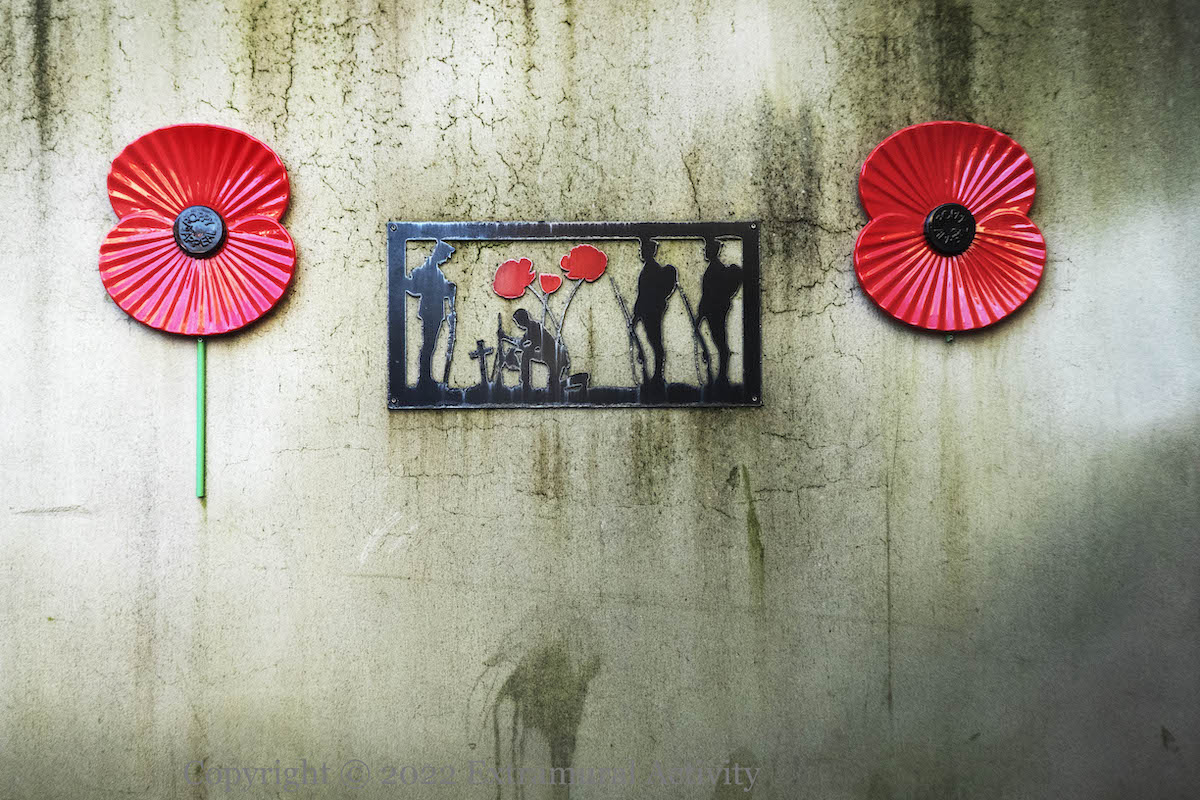
Somme Memorial Cross

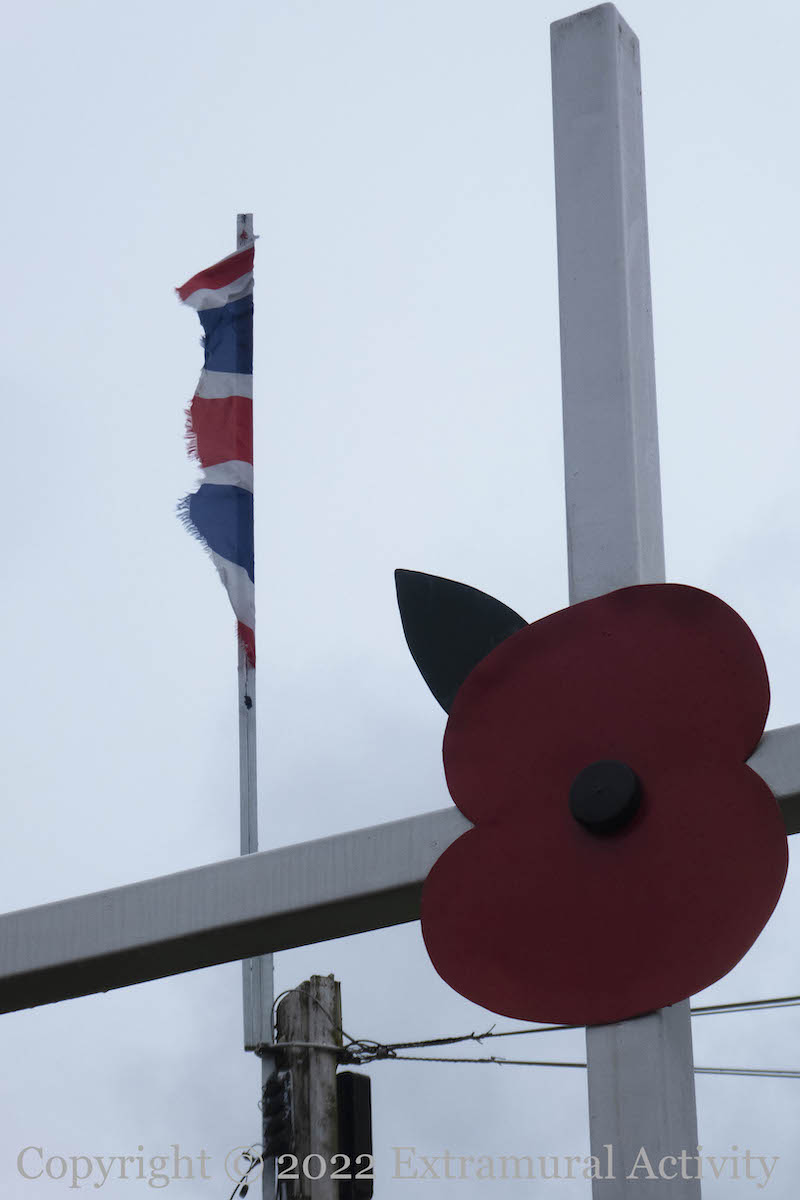
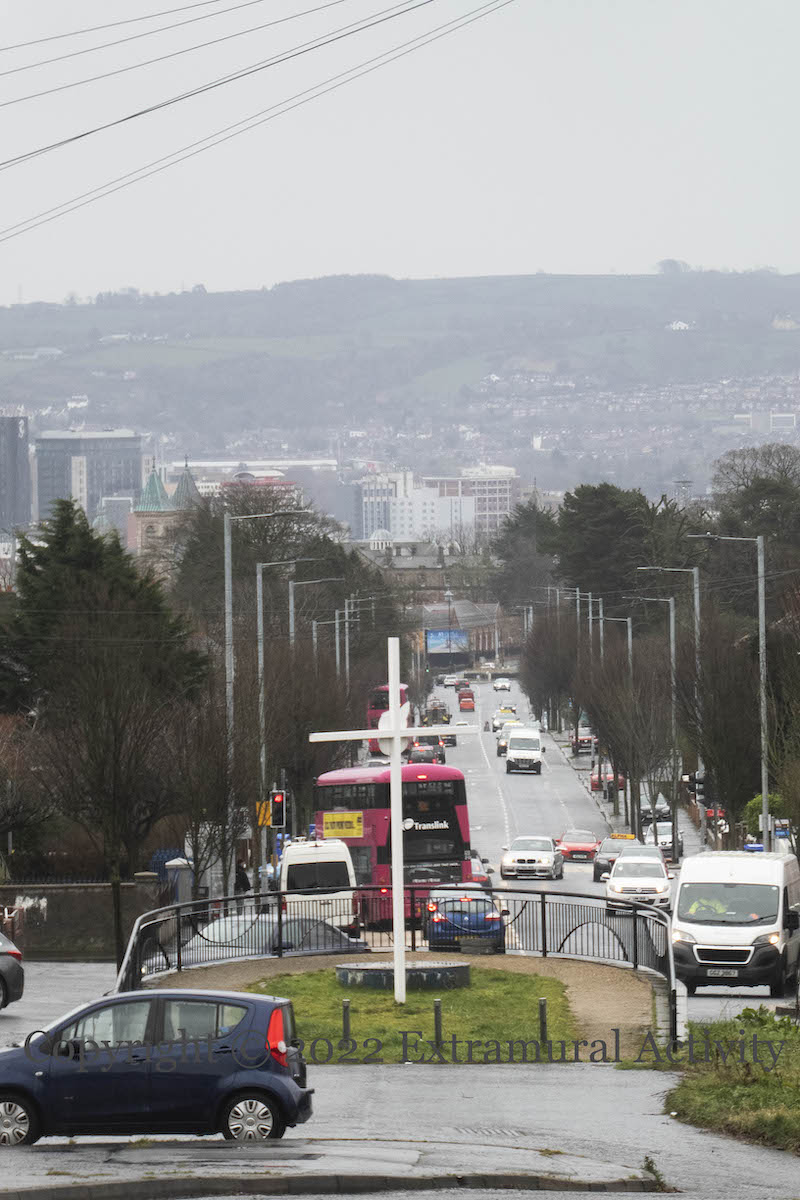
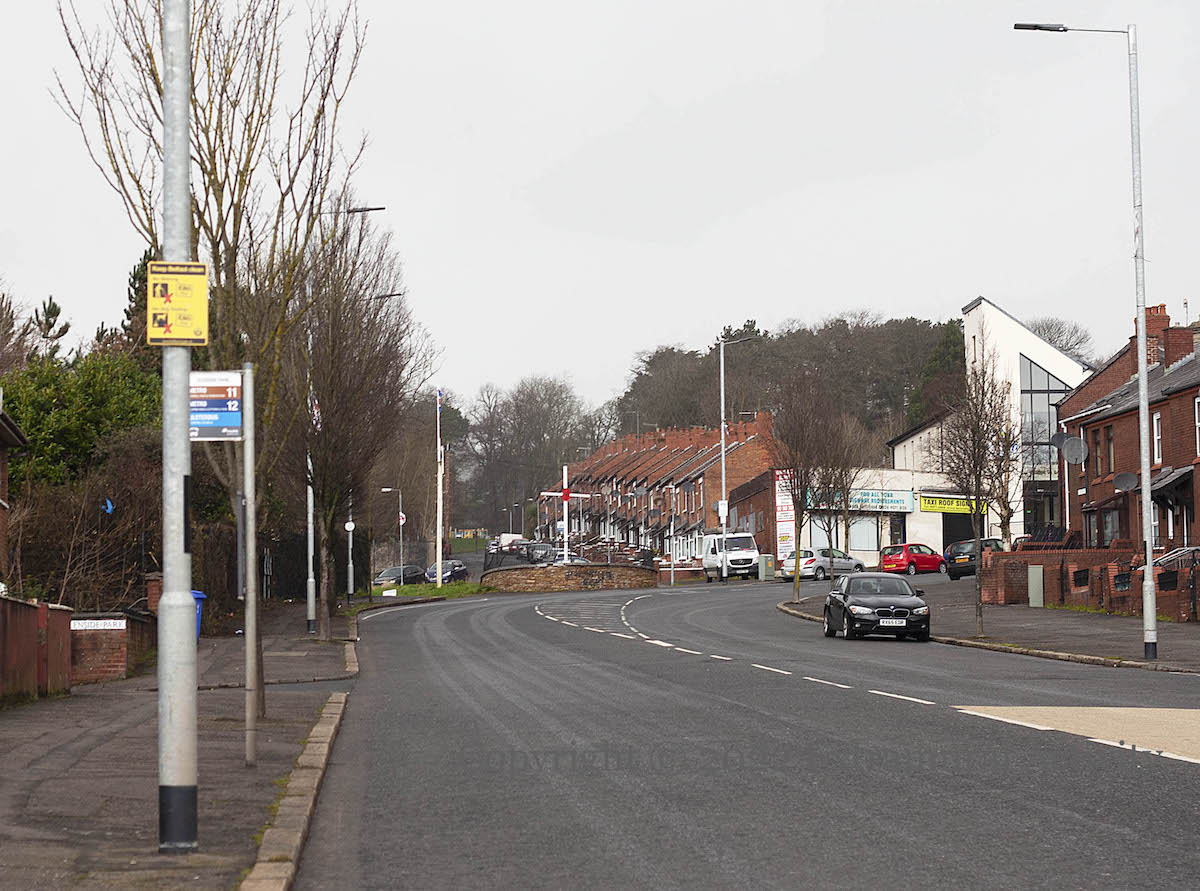
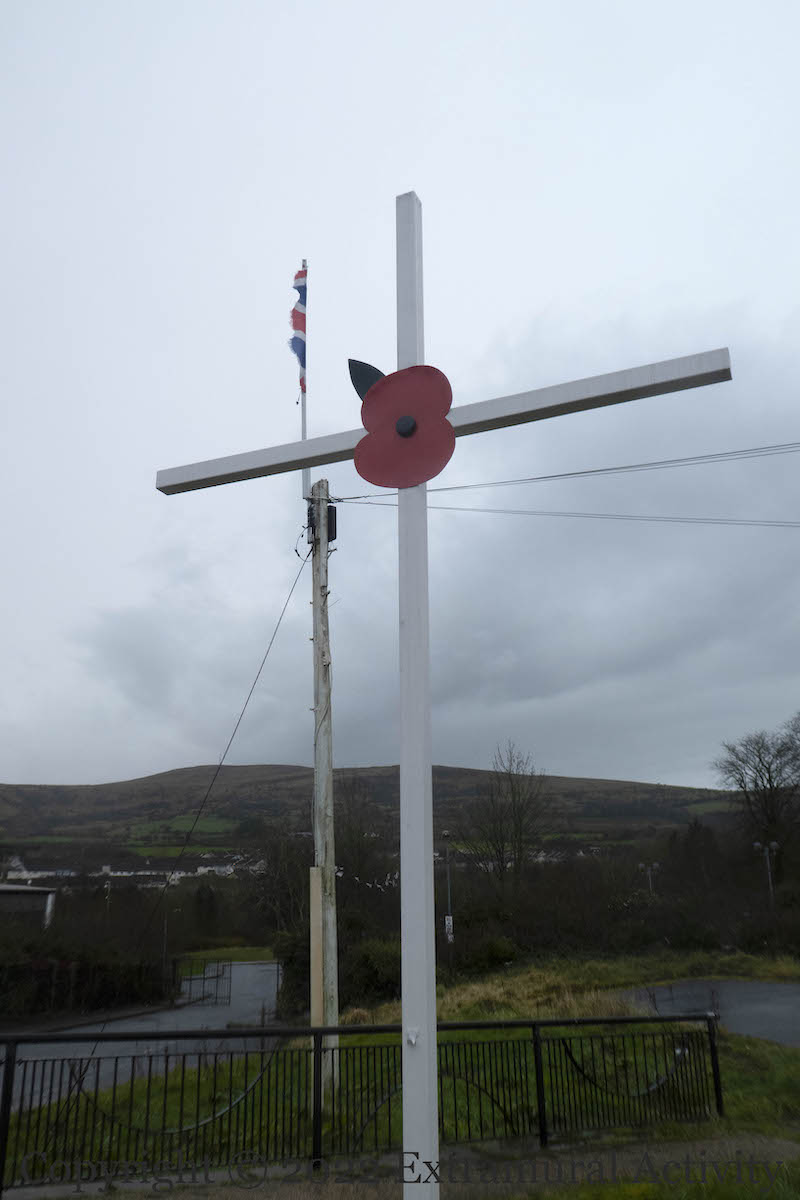
The ‘bend in the road’ (Crumlin Road, just before Ligoniel) is the site of the Somme Memorial Cross. It’s not clear who erected or maintains it and indeed the Union flag flying behind it has been reduced to a stump.

A little further up the road, a new ‘cultural hub’ has been proposed for the site of the old Ligoniel Orange hall (Belfast Live) which was destroyed in a fire in 2000 (BBC).

Click image to enlarge
Copyright © 2022 Seosamh Mac Coılle
X09711 X09709 X09712 [X09713] [X09714] X09710

The Flax And The Lily

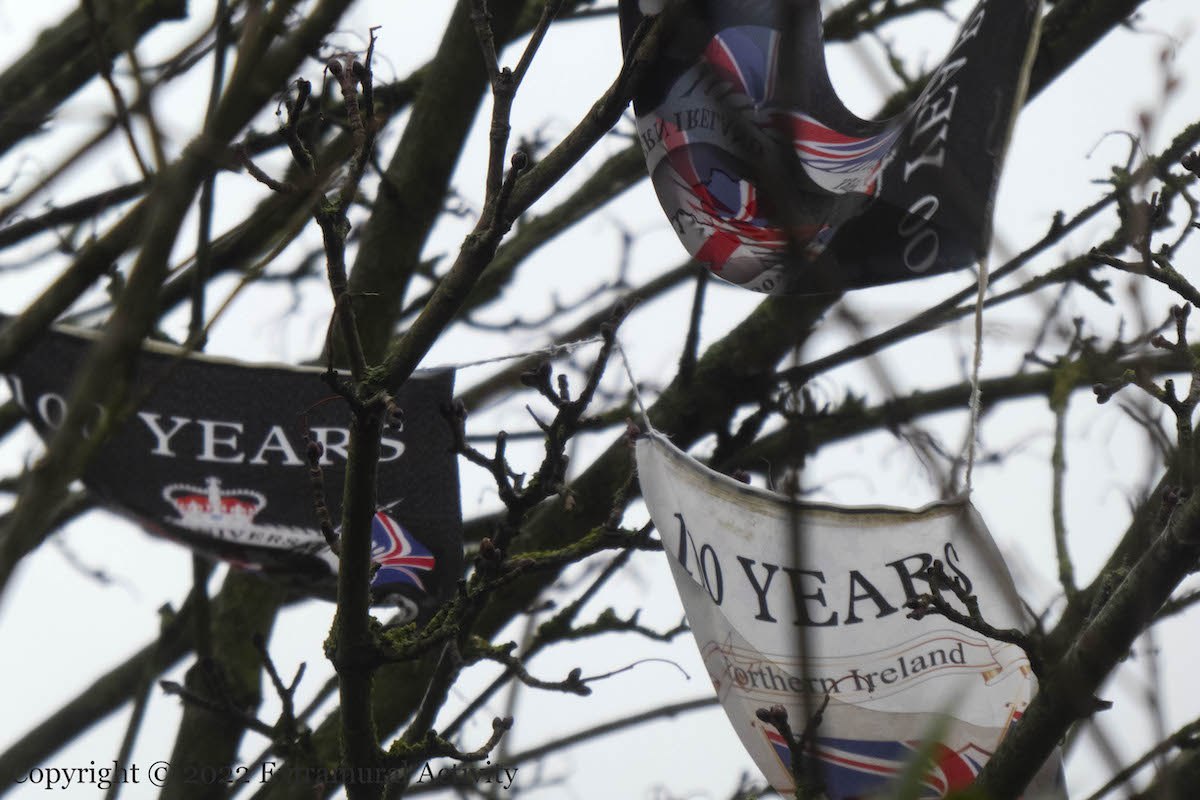
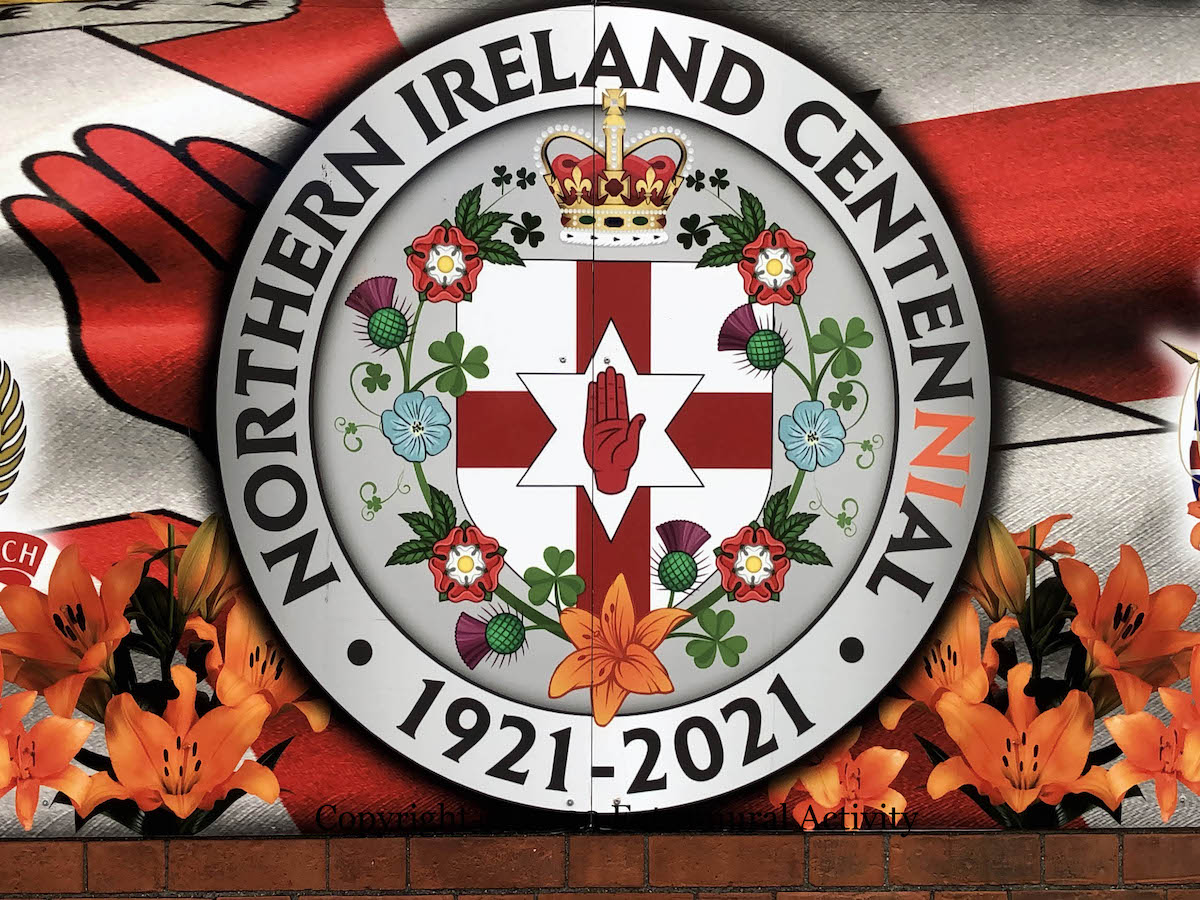
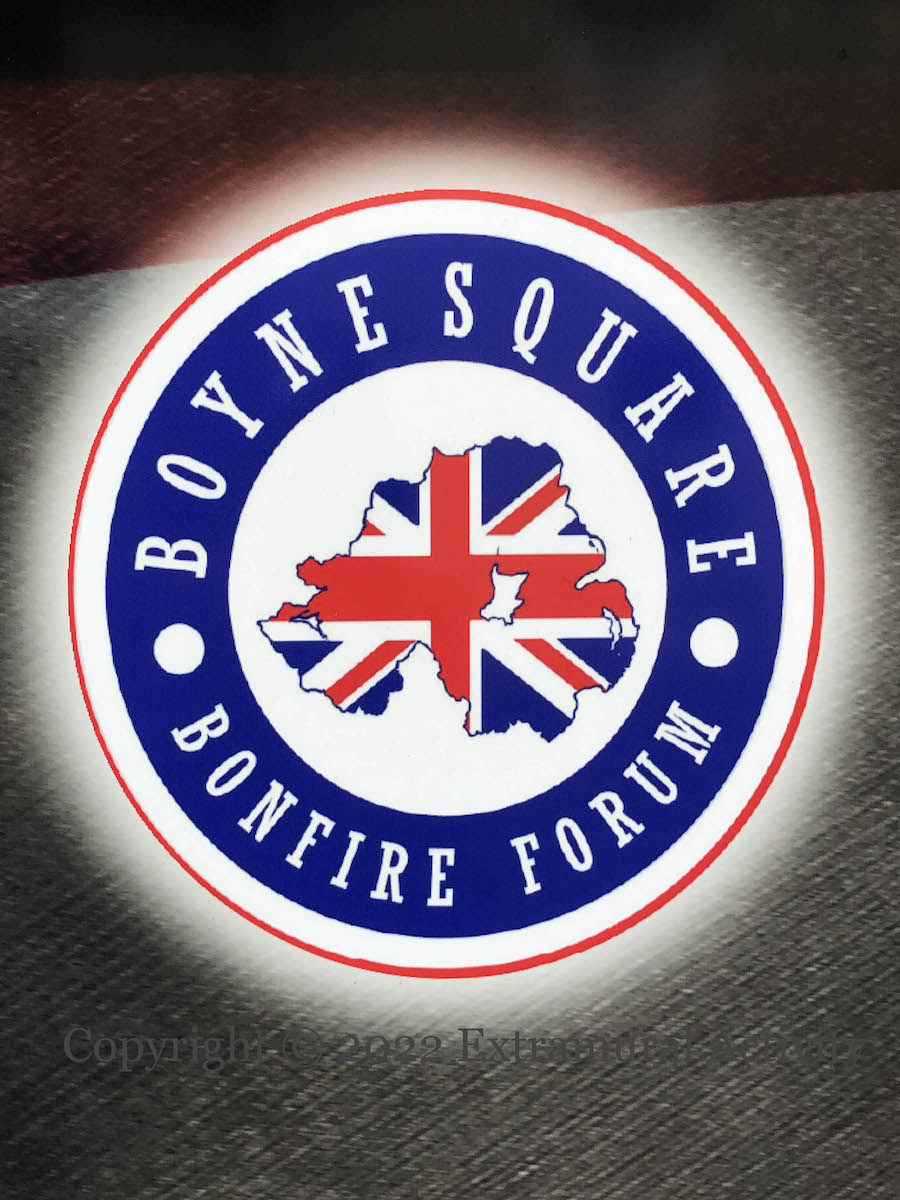
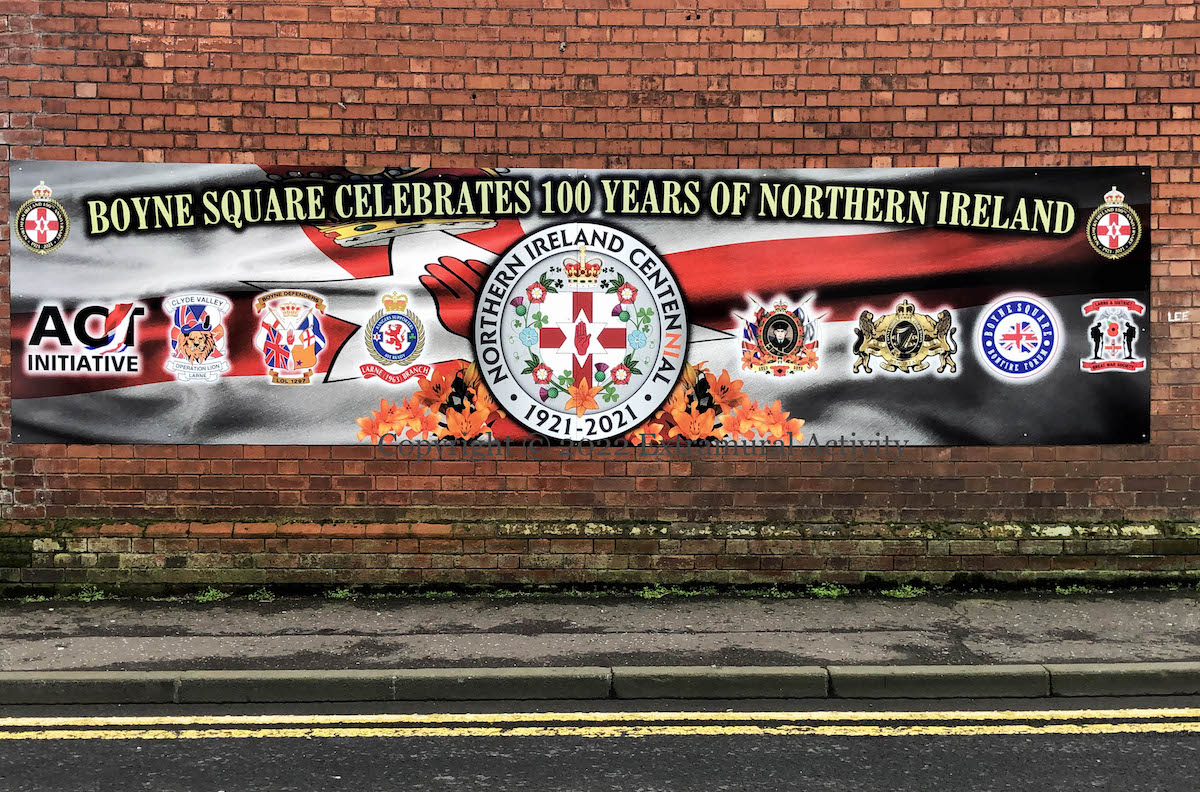
The orange lily and the (pale blue) flax flower take their place around the Ulster Banner alongside the English rose and Scottish thistle, and the Irish shamrock is retained even in the presence of the lily. The flax is perhaps included because we are in the Factory area of Larne, near the site of a (former) linen mill. The Welsh daffodil is excluded. The detail above is part of a wider board “Boyne Square celebrates 100 years of Northern Ireland”; the flanking emblems of the Boyne Defenders (LOL 1297), Rangers Supporters club (Larne Branch) – which also uses the shamrock – Boyne Square Bonfire Forum, and Larne & District Great War Society and included below; the emblems of three flute bands can be seen in Norman Anderson and The Gunrunners.

Click image to enlarge
Copyright © 2022 Extramural Activity
X09325 [X09318] X09319 X09320 [X09321] [X09322] X09323 X09324 X09317

Whitehead Temperance

Benjamin West painted The Battle Of The Boyne in 1778 and his composition – with William moving from left to right on a white horse and Marshal Schomberg dying in the bottom-right corner – has become the standard representation in loyalist culture, perhaps due to versions of it appearing on the covers of songbooks for the Orange Order and the Apprentice Boys soon after (Belinda Loftus 1982 Images In Conflict). It appears here on the wall of Whitehead Orange Hall, along with a board connecting service by Irish soldiers in British forces in WWI and Afghanistan (see previously: Time Changes in east Belfast).

Click image to enlarge
Copyright © 2022 Seosamh Mac Coılle
X08958 X08955 X08956 [X08957]

Rubicon

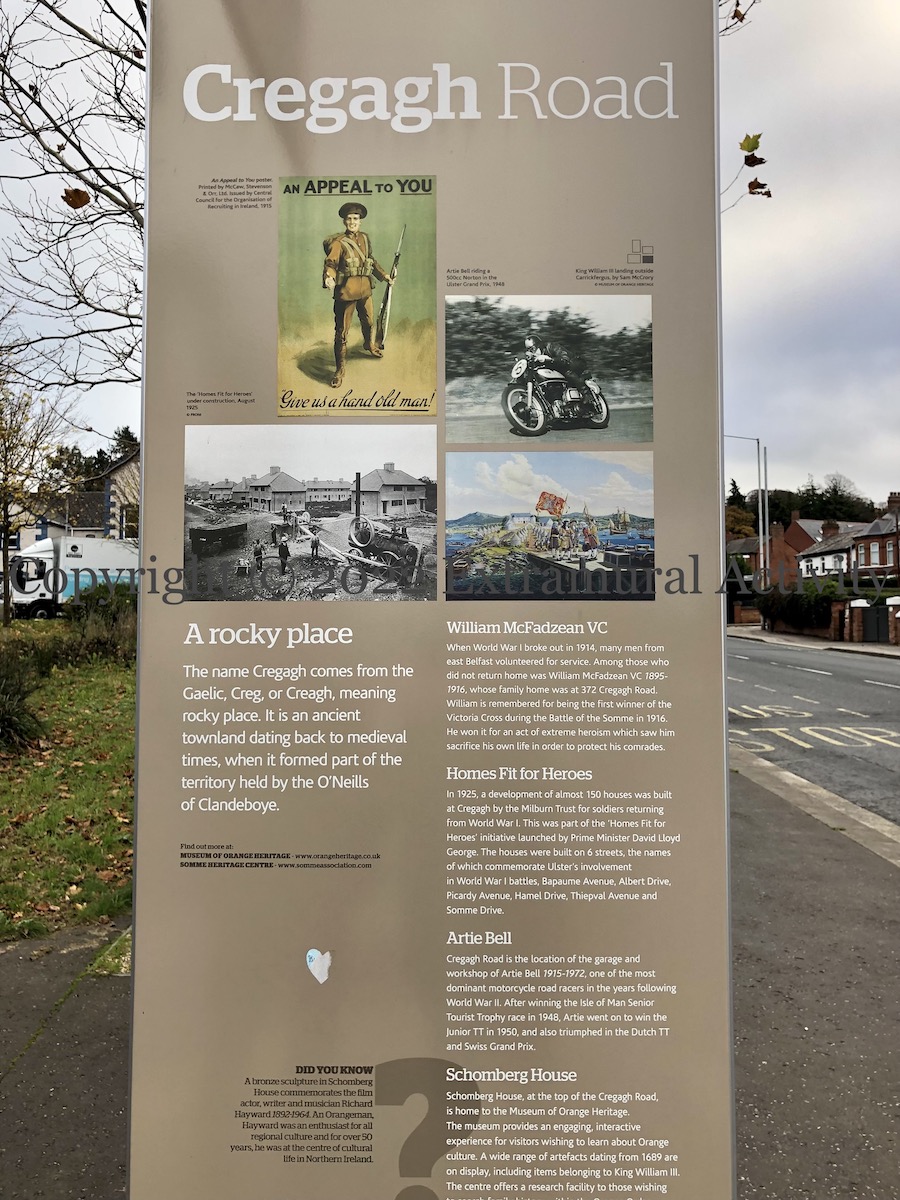
“‘Rubicon’ – the family home of Pte. William F. McFadzean, Victoria Cross, who gave his life to save his comrades at Thiepval Wood on 1st July 1916 immediately prior to the Battle Of The Somme.” McFadzean died when he threw himself on a fallen box of grenades; for this action he was awarded the VC (WP).

The plaque is on Cregagh Road at Cregagh Park. There’s a picture of McFadzean standing outside the house at Royal Irish.

Click image to enlarge
Copyright © 2021 Seosamh Mac Coılle
X08696 X08681