Stop The Witch Hunt

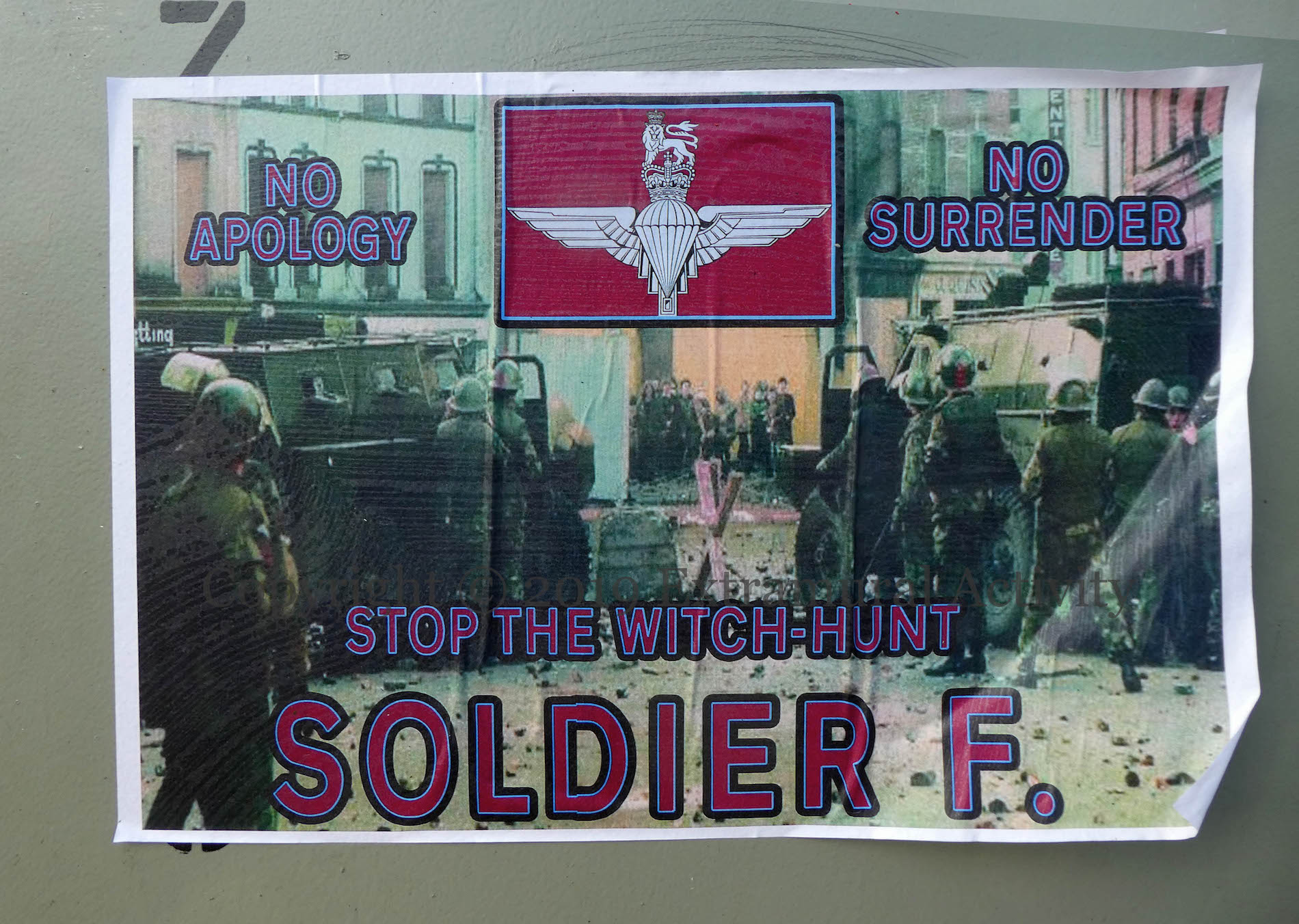
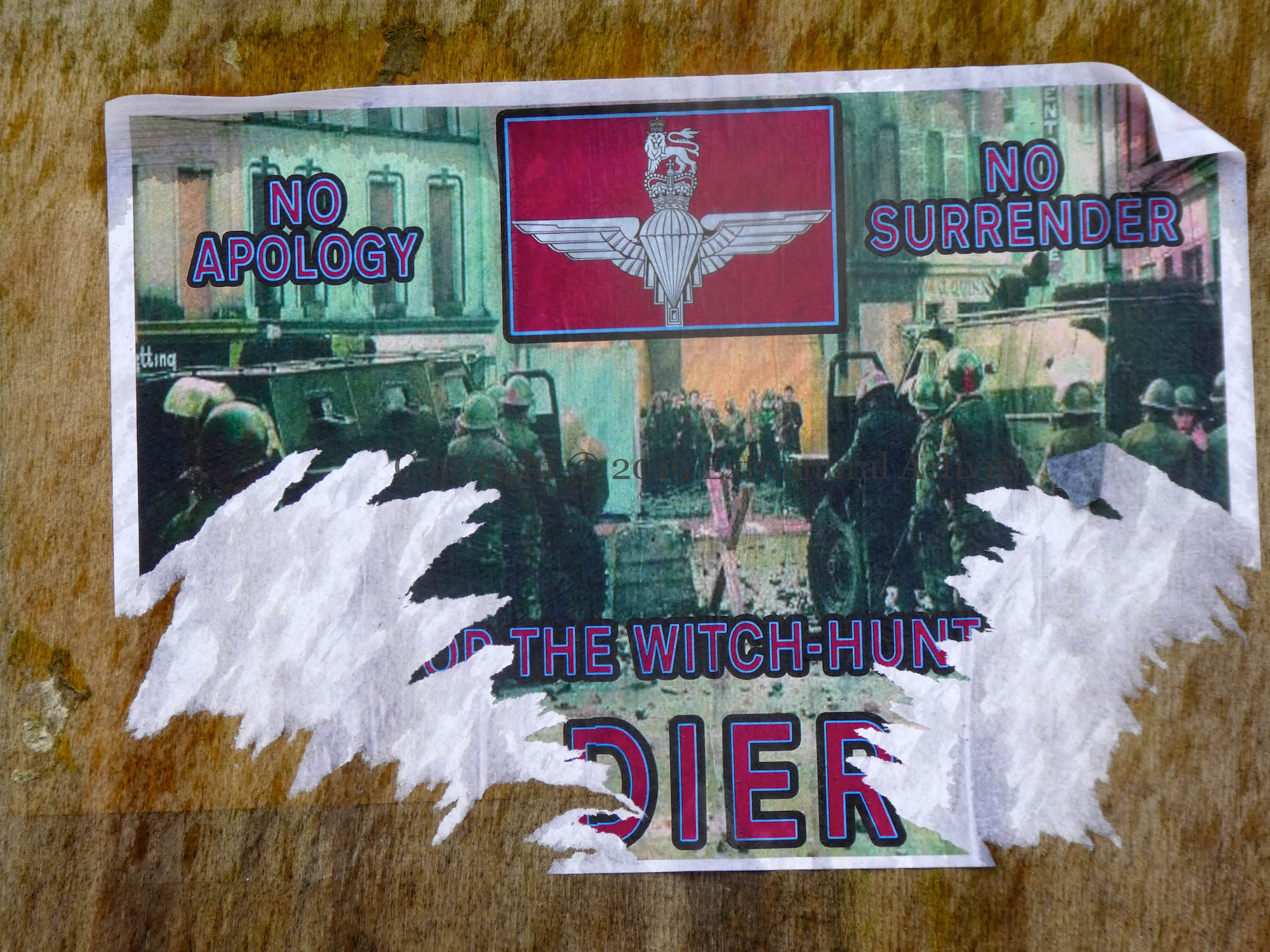
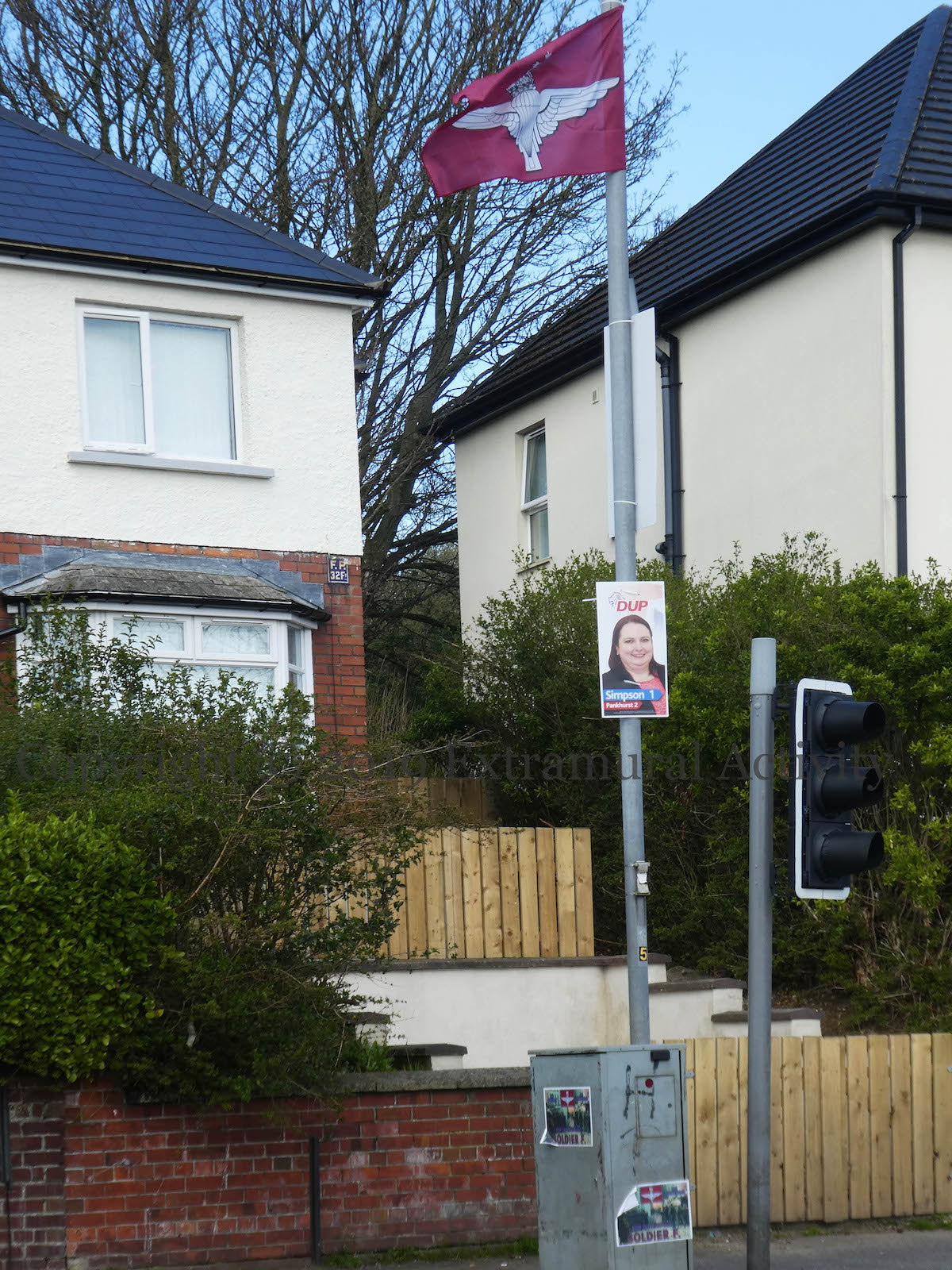
21 soldiers of the Parachute Regiment opened fire on marchers in Derry on January 30th, 1972, killing thirteen people (on the day; one more died later). One of them – codenamed “Soldier F” – was charged last month by the Public Prosecution Service in the deaths of James Wray and William McKinney and wounding of four others. Family members of the deceased reacted with disappointment (e.g. BBC-NI | Kate Nash on Twitter) while others, such as pressure group Justice For NI Veterans decried the PPS decision. The poster above in support of Soldier F is being pasted in north and west Belfast and perhaps beyond. The poster shows protesters facing off against British soldiers in William Street shortly before they opened fire. (See also And The Next Moment …) Posters on the Shankill, however, are being torn down (see second image, below) perhaps (confirmation: BelTel) in sympathy with two locals killed by the Army in 1972 (Irish News | AP video). The Paratroop flag is shown flying on the Ballysillan Road.
Click image to enlarge
Copyright © 2019 Seosamh Mac Coılle
X06494 X06510 X06495

Springhill-Westrock Massacre

The Department For Communities (web) is “re-imaging” the brick wall at the back of St Mary’s University College (along Ascaıll Ard Na bhFeá/Beechmount Avenue) into a fence. It’s not clear what, if anything, was wrong with the wall in physical terms. One possible “community” reason for the wall’s removal is to thereby remove the roughly 20 murals and 18 panels of CNR victims (original 15 + 3 more) on the wall. Whatever the reason, these will no longer have a home and some are being moved to other locations, including the Springhill-Westrock Massacre mural. For more information about the massacre, see the post about the board when it was in Ascaıll Ard Na bhFeá – The Truth Costs Nothing.

See also: the WBTA mural was moved from Beechmount Ave (Alternative Transport) to Clowney Street (Alternative Transport, Alternative Location).

Update: the conversion (from wall to fence) was completed in September (St Mary’s).

Click image to enlarge
Copyright © 2019 Seosamh Mac Coılle
X06511 [X06512] [X06513]

The Irish Regiments

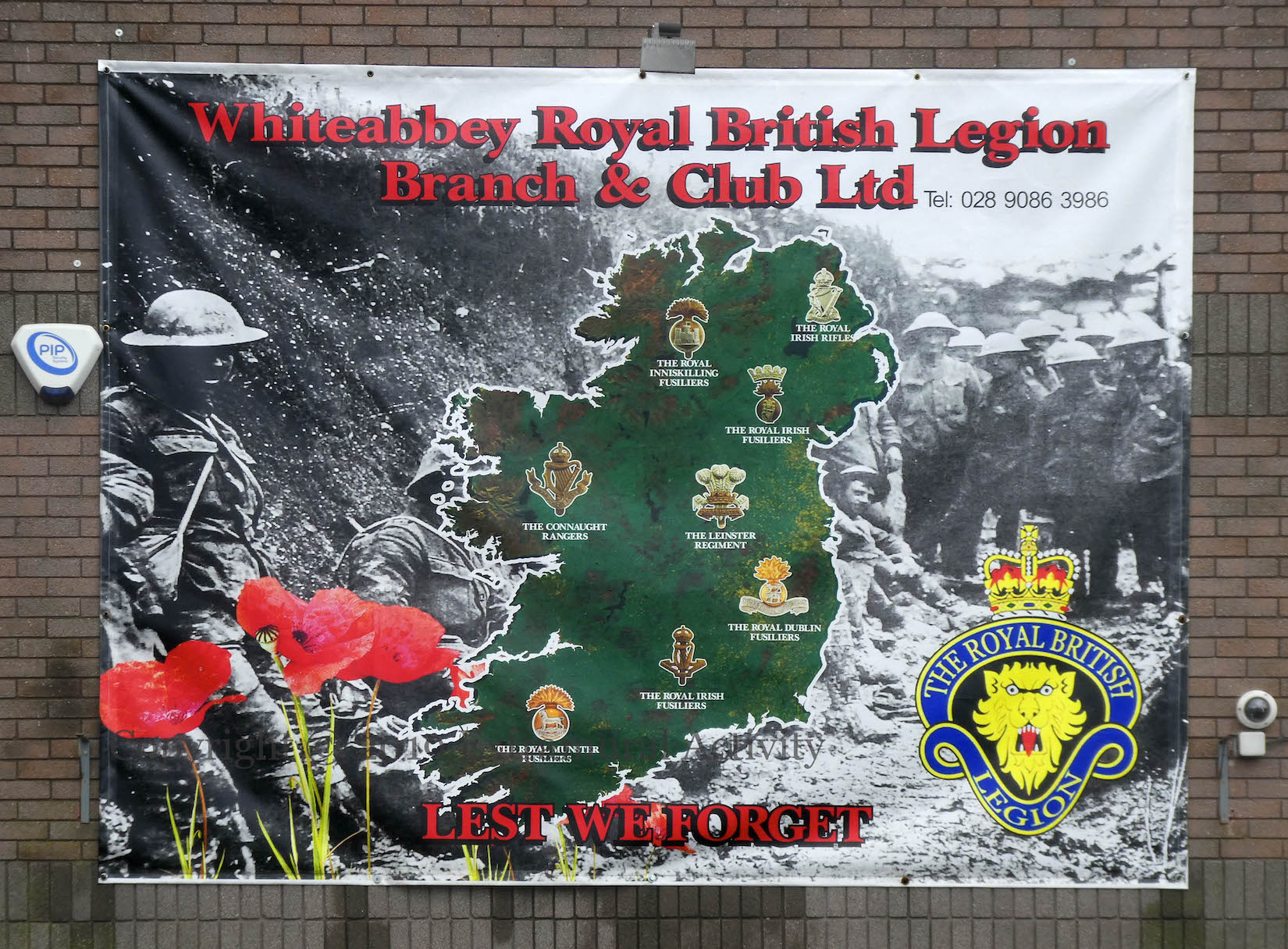
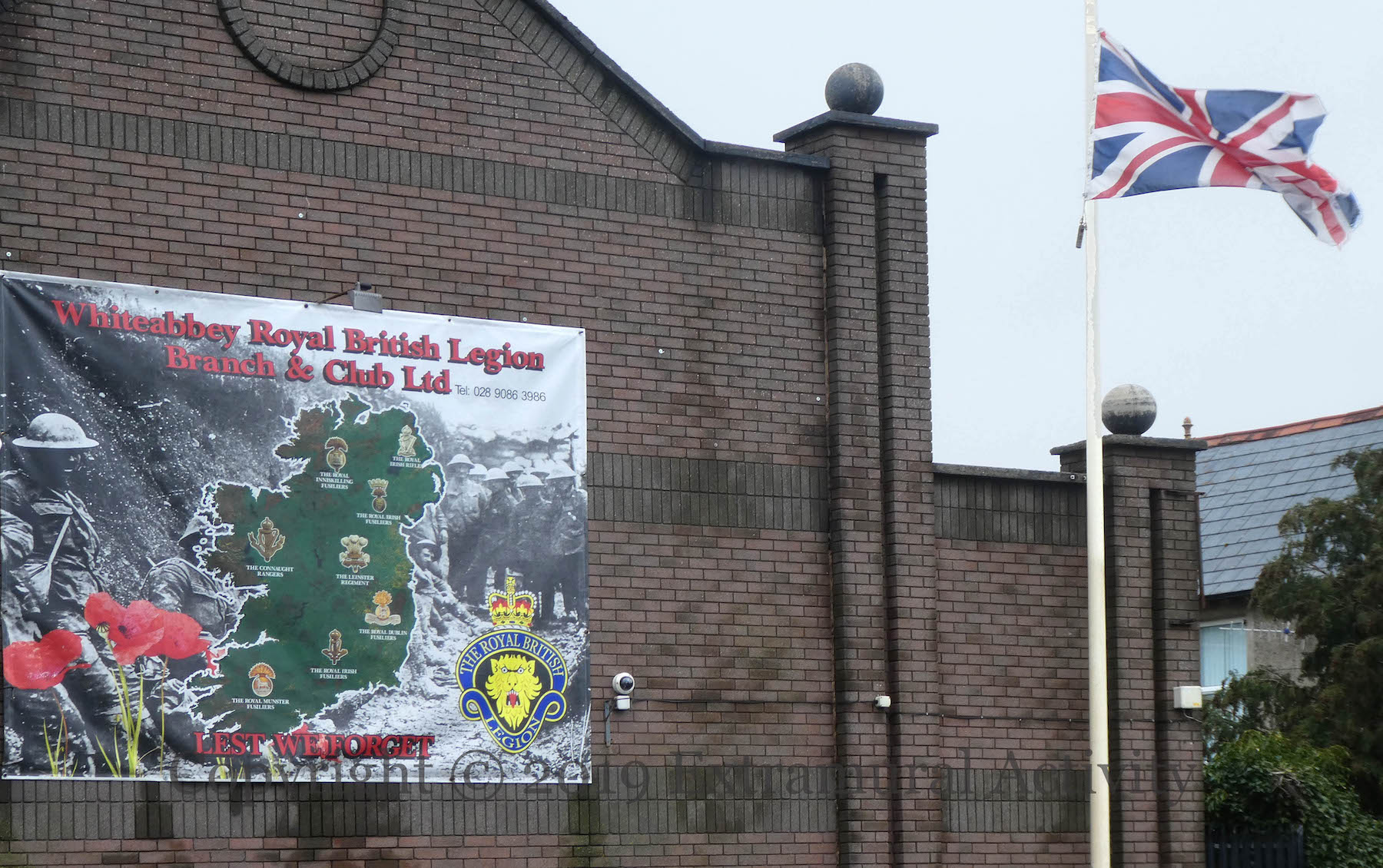
Various other murals pay tribute to the 10th and 16th Irish divisions alongside the 36th division (see, e.g., We Are The DeadBrothers In Arms | Killed Wounded Missing | Their Only Colour Was Khaki) but this tarp outside the Whiteabbey British Legion (Fb) shows instead the eight regiments raised in Ireland, whose battalions served not only these three but many other divisions: Royal Irish Rifles, Royal Inniskilling Fusiliers, Royal Irish Fusiliers, Connaught Rangers, Leinster Regiment, Royal Dublin Fusiliers, Royal Irish Fusiliers [should be Royal Irish Regiment], Royal Munster Fusiliers. The geographical distribution of the regiments (royal-irish.com has a map of the recruiting districts in Ireland; for battalions, divisions served, and regimental headquarters, see WP.) The background image is of the 36th in their trenches at the Battle Of The Somme.

Click image to enlarge
Copyright © 2019 Seosamh Mac Coılle
Shore Road X06480 X06481

Three Scottish Soldiers

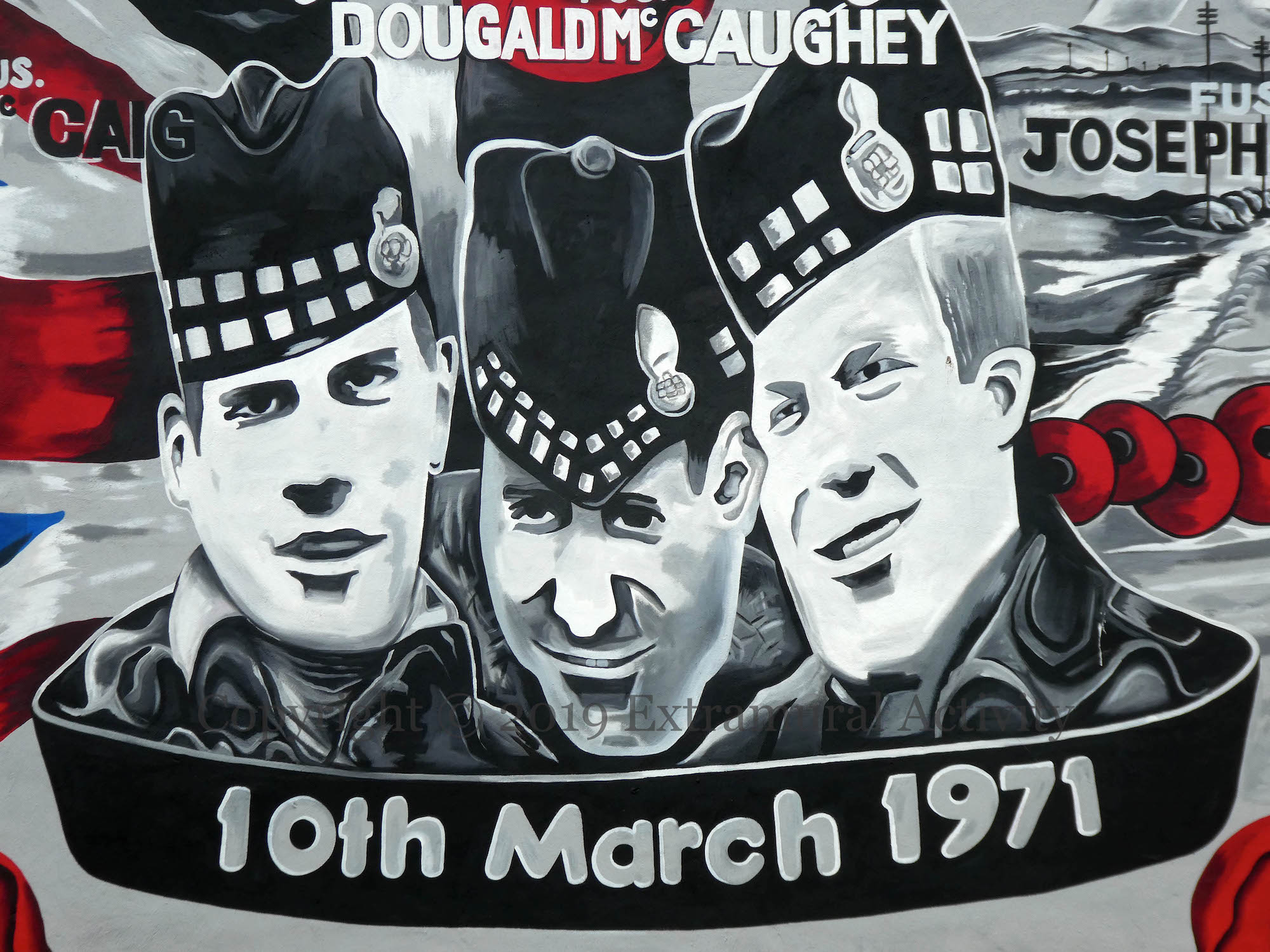
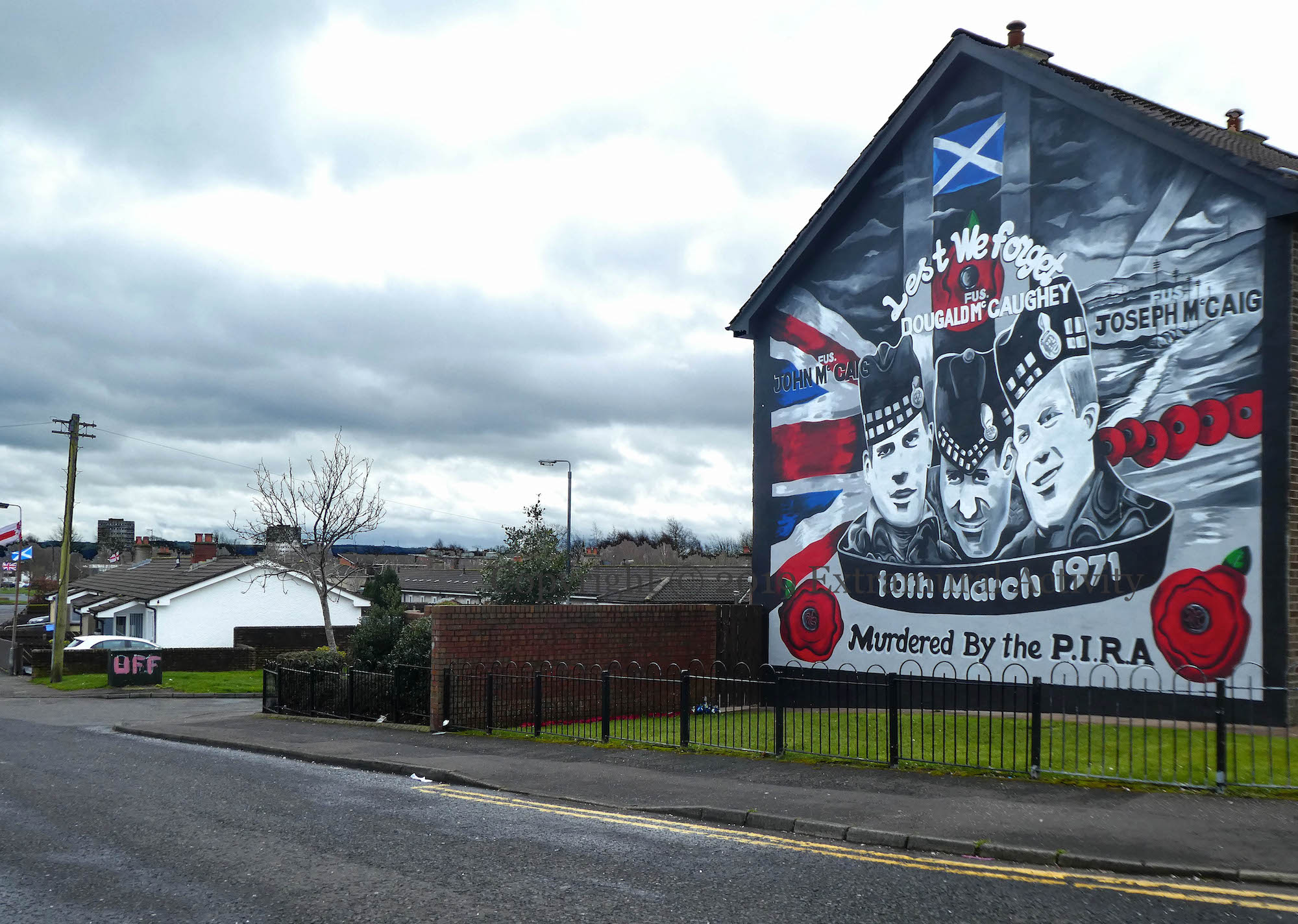
Highland Fusiliers Joseph McCaig (18), (his brother) John McCaig (17), and Dougald McCaughey (23) were lured by members of the (P)IRA from a city-centre pub to their deaths in the fields above Ligoniel in 1971 (WP). Their deaths contributed to the resignation of Chichester-Clark and the introduction of internment in August. There are monuments to the three men in Ballysillan and at the site of their deaths on White Brae depicted on the right of the mural – for images of the monuments see The Highland. This new Rathcoole mural to their memory replaces one to Queen Elizabeth II.

Click image to enlarge
Copyright © 2019 Seosamh Mac Coılle
X06477 X06476 X06478 owenreagh dr

Stand By The Republic

“Stand by the republic – Stormount [sic] has not delivered; no new jobs; wages & benefit cut; massive housing crisis; fight for jobs; resist all cuts; join the IRSP.” The board is from the Irish Republican Socialist Party (Fb); in the background is the repainted version of The Runner, including portraits of Manus Deery and Charles Love and a plaque to Love.

Click image to enlarge
Copyright © 2018 Seosamh Mac Coılle
X06374 fahan st

The Military History Of Ebrington Barracks

Between its construction in 1841 and decommissioning in 2003, Ebrington Barracks served as a home to many military units, including those whose emblems are at the bottom of the mural above (from left to right): the Royal Irish Rifles, Royal Inniskilling Fusiliers, Royal Irish Rangers, UDR, and the Royal Irish Regiment.

HMS Ferret and HMS Sea Eagle are not in fact ships but a part of Ebrington barracks given to the navy to serve as a “stone frigate” during (Ferret) and after (Sea Eagle) WWII. HMS Londonderry was an anti-submarine frigate but does not appear to have a particular connection to Ebrington (please comment if you know otherwise).

The Northern Ireland General Service medal – in the middle of the mural – was awarded to any soldier who served at least 30 days during Operation Banner, the deployment of British troops in Northern Ireland from 1969 onwards.

Click image to enlarge
Copyright © 2018 Seosamh Mac Coılle
X06331 Ebrington st lwr BSCA

Brian Stewart

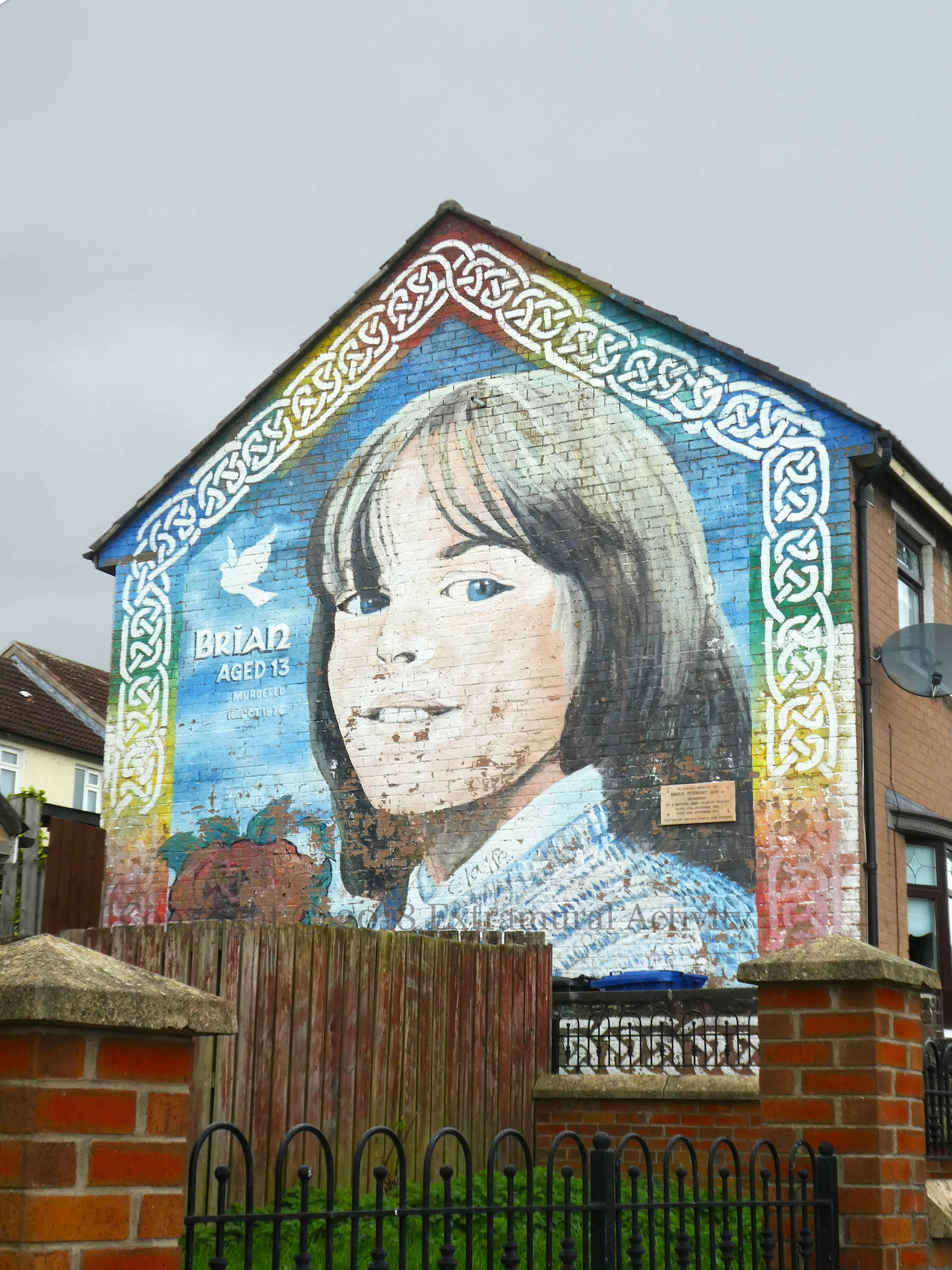
13 year-old Brian Stewart died on October 10th, 1976 – 42 years ago today – six days after being hit by a plastic bullet fired by the King’s Own Scottish Borders near his Turf Lodge Home. He was buried three days later, on October 13th – what would have been his fourteenth birthday. (For the long search for justice, see sister Marie Stewart | sceptic peg | saoirse32).

Click image to enlarge
Copyright © 2018 Seosamh Mac Coılle
X06210 [X06213] X06209 X06212 [X06211]

The Grey Wolf

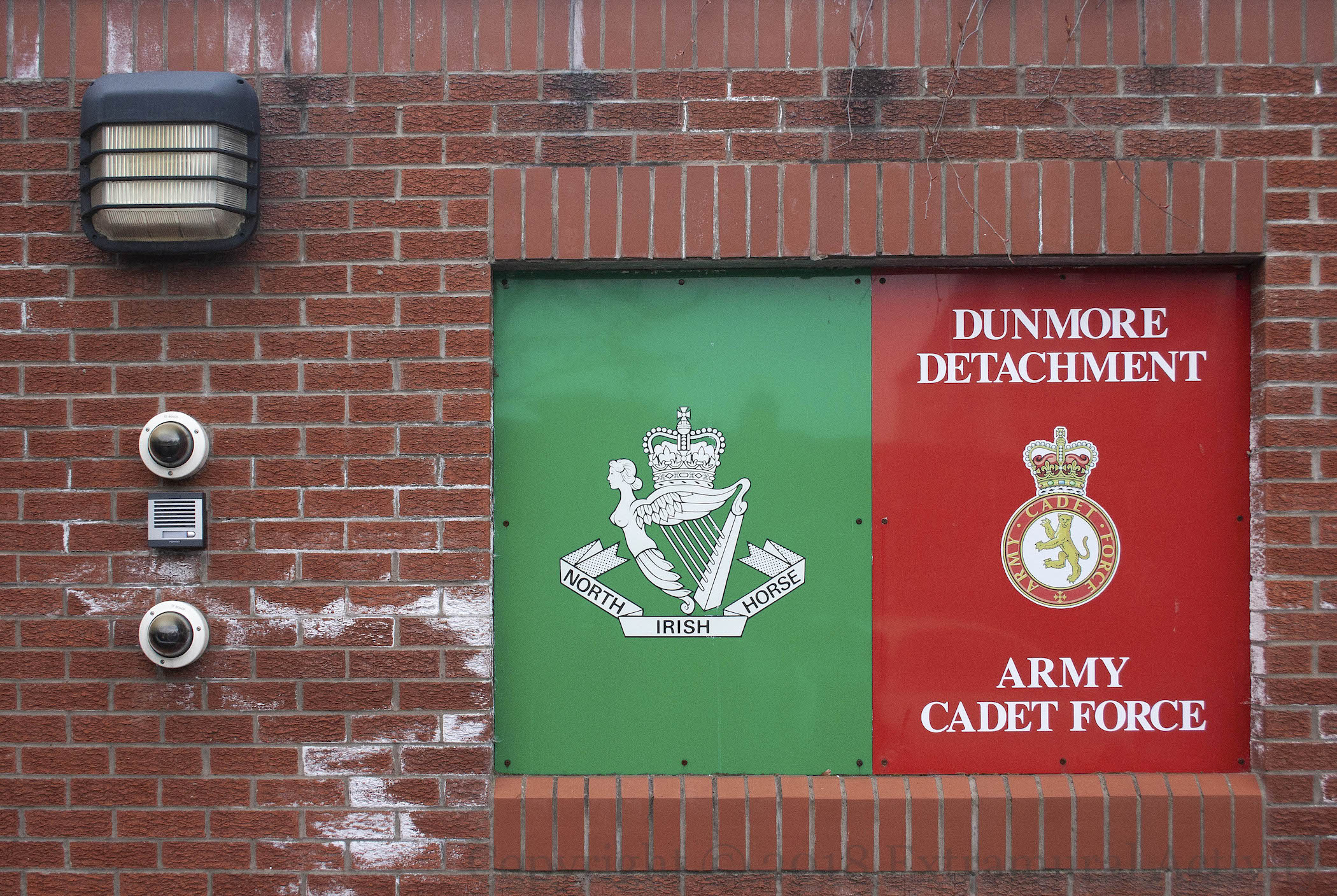
Tucked away at the end of Ashfield Crescent in north Belfast is the Dunmore base – there is another in Coleraine – of the North Irish Horse (web | Fb), a light cavalry reconnaissance unit of the British Army. It was originally created in 1902; after recent restructuring, it comes under the command of the Scottish and North Irish Yeomanry.

Click image to enlarge
Copyright © 2018 Seosamh Mac Coılle
X04943 X04942 X04944

Battle Of Long Kesh

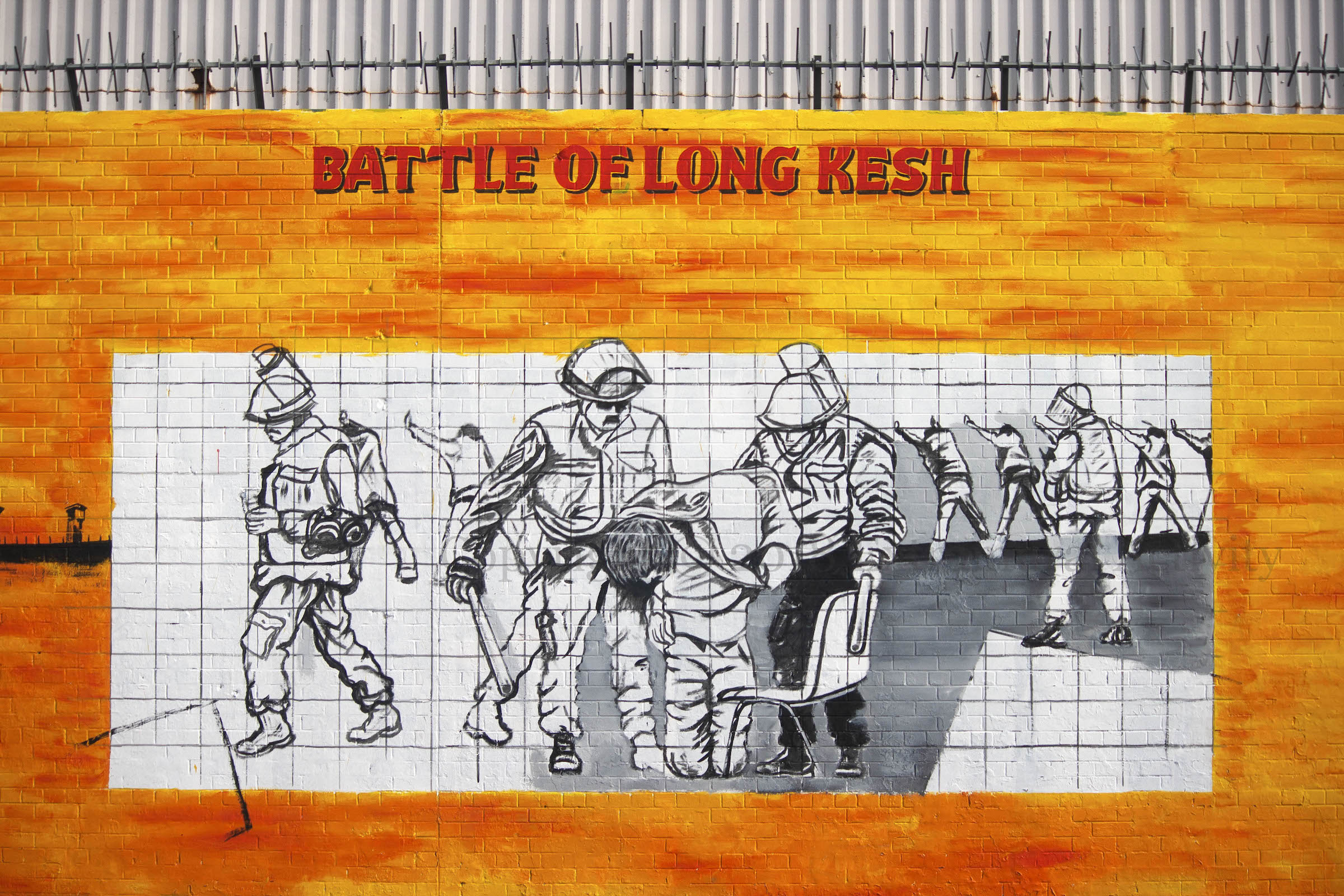
CR gas, along with CS, VX and other chemical agents, was developed at the MoD lab in Porton Down, and authorised and available for use from 1973 onwards against prisoners in Long Kesh (Guardian). Jim McCann was in Long Kesh during the ‘Battle Of Long Kesh’, when republican prisoners attempted to burn down the cages in which they were being kept in protest at conditions in the camp (An Phoblacht). His memoir, And The Gates Flew Open (An Ceathrú Póilí), continues the campaign by him and other prisoners to get the British to admit that the gas was used on inmates during the riot. The book was launched last month in the Cultúrlann.

In the lower left corner is a quoted telegram from Fr. Denis Faul, Fr. Raymond Murray: “To international Red Cross … Visited Long Kesh today with others … Request immediate investigation into use of CR gas … sub-human conditions … SOS … come immediately …” 20 Oct. 1974. These two wrote an 80-page report on the conditions at the camp following the event, entitled The Flames Of Long Kesh.

For more information, see the post on the similar 2014 mural that marked the 40th anniversary of the battle. For in-progress shots, see yesterday’s post.

Click image to enlarge
Copyright © 2018 Seosamh Mac Coılle
X04958 X04961 X04959 X04960 divis st

The Battle Of Long Kesh

Here are two in-progress shots of a new mural depicting the Battle Of Long Kesh in 1974. We will have images of the completed mural, and background, tomorrow.

Click image to enlarge
Copyright © 2018 Seosamh Mac Coılle
X04949 X04950 X04951 X04950 divis st