East Belfast GAA (tw | Fb) was set up at the end of May, with Linda Ervine as club president (video | Irish Times). The ladies football team recorded the club’s first win, on August 16th, with the hurlers winning on September 3rd, and the camógs on September 19th. The emblem (here shown in somewhat blurred stitching) includes a (black) Ulster hand flanked by shamrock and thistle, over Samson and Goliath (the Harland & Wolff cranes) and “together” as Gaeılge, in English, and in Ulstèr-Scots.
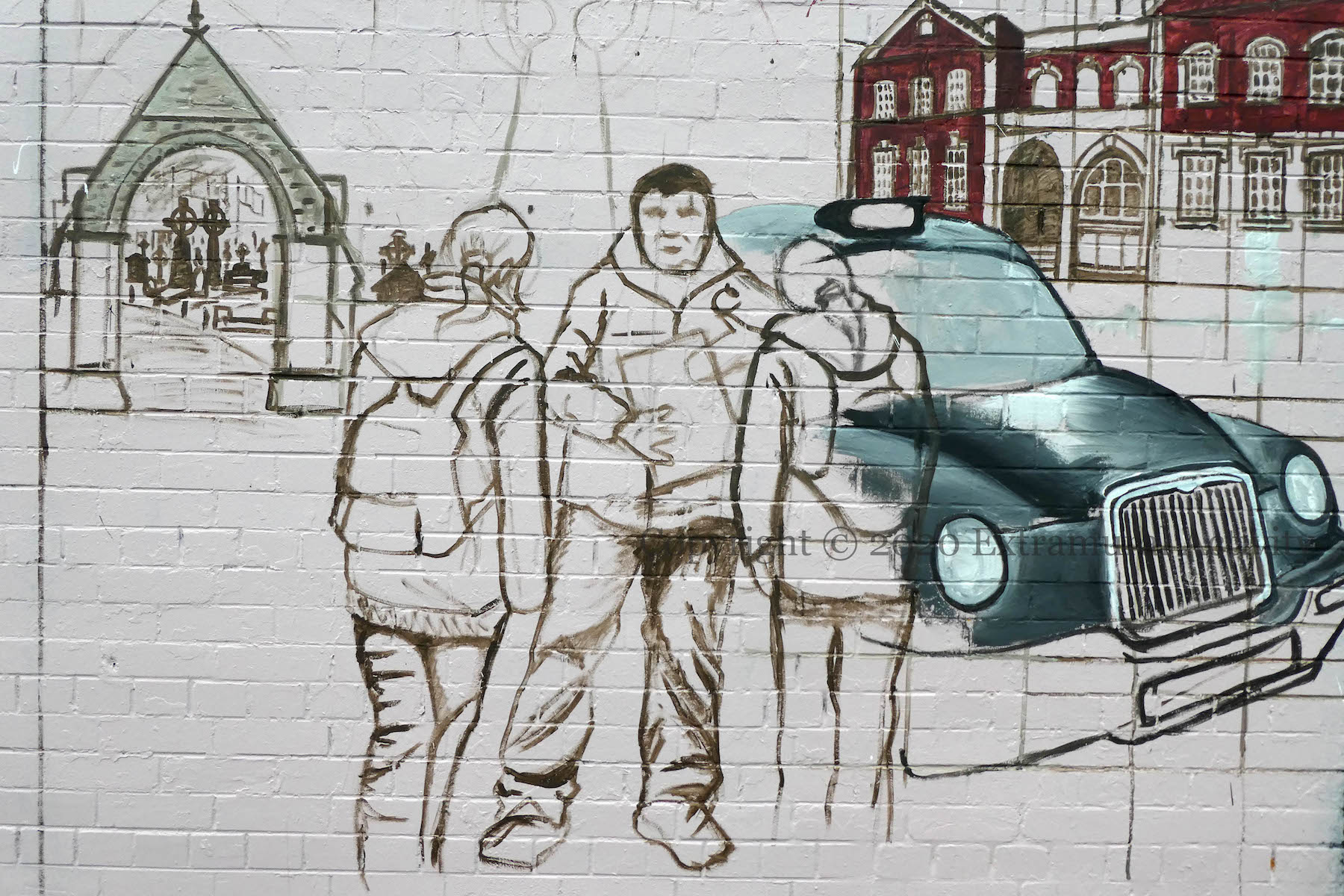
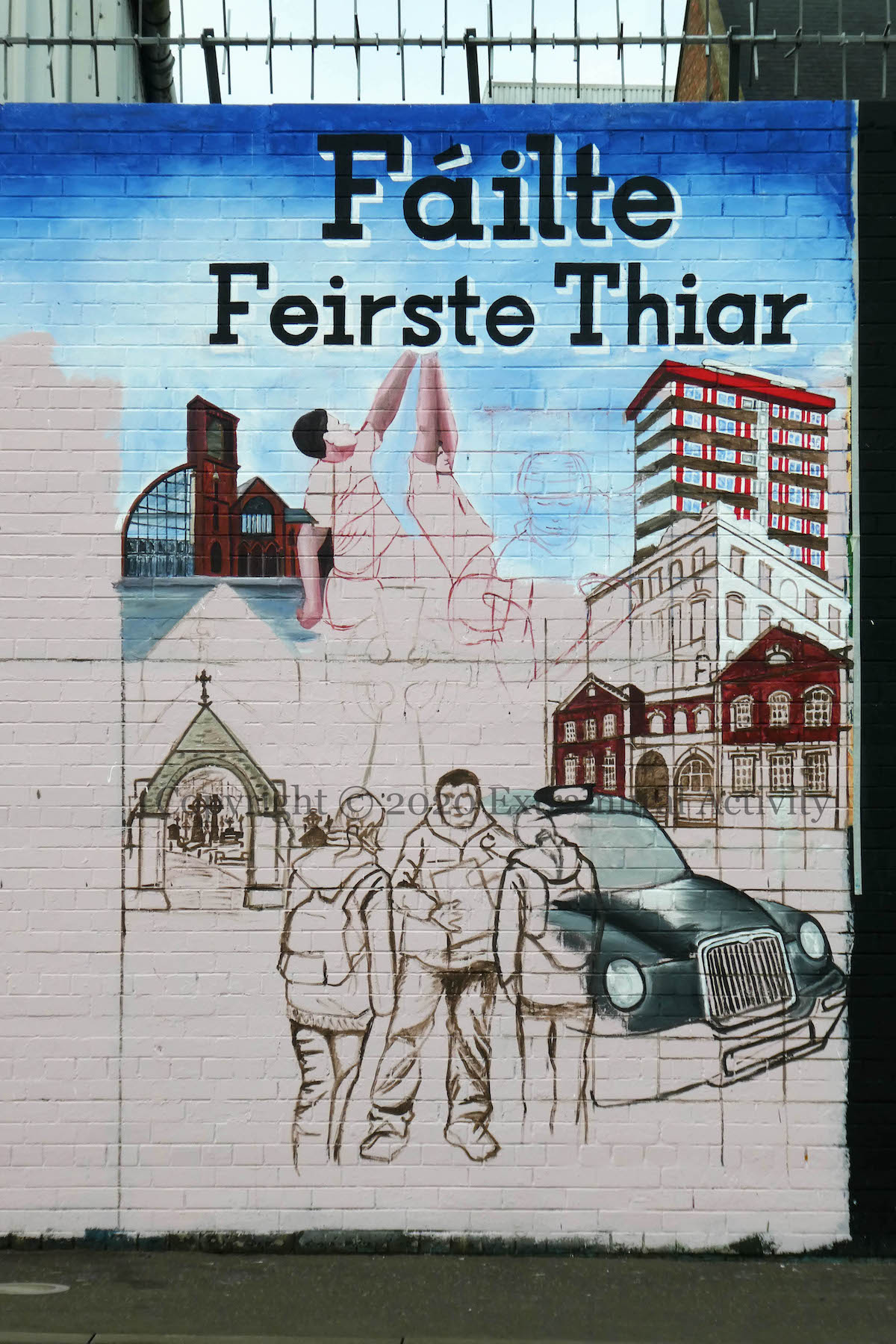
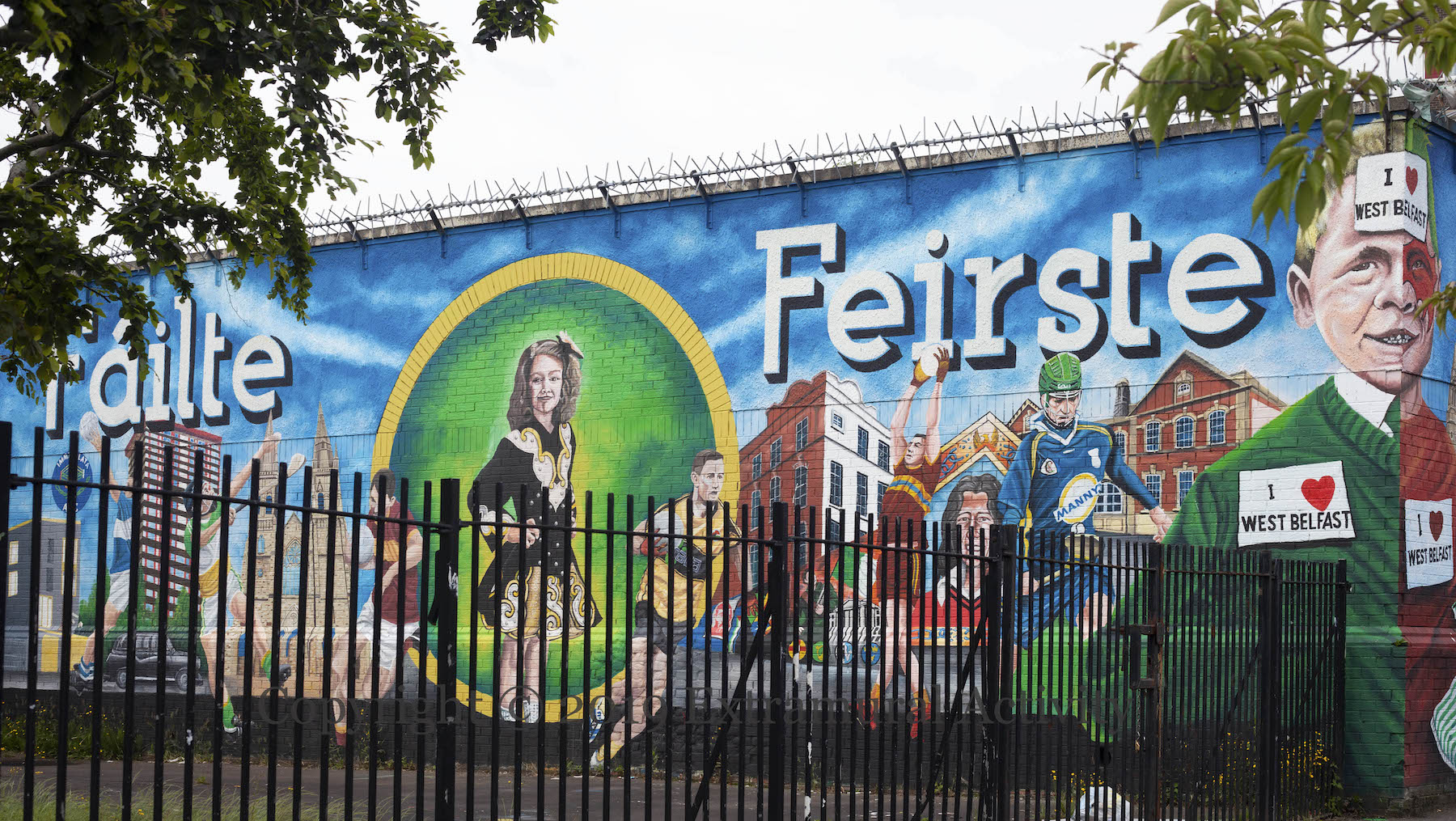
Tourists to West Belfast/Feırste Thıar are given a tour of the sights on a black taxi tour: (clockwise from left) the entrance to Milltown Cemetery at the edge of Andersonstown, a trio of murals (the Bobby Sands mural on the side of the Sınn Féın offices; the Easter Rising mural in Beechmount Ave; the Acht Anoıs fáınne on Divis Street (also in Ardoyne)) with a march taking place, Cultúrlann McAdam-Ó Fıaıch, gaelic football and hurling, Divis tower, Conway mill, and the Falls library. This is the third such tourist mural in the area, after one at Divis tower (Gateway To West Belfast) and one on the offices of Fáılte Feırste Thıar (Go West! | Fáılte Feırste Thıar | The Conlan Revolution).
“Gaeıl Feırste CLG. Ba ıad Gaeıl Feırste (1885-1891) an chéad chumann de chuıd Chumann Lúthcleas Gael (CLG) ı mBéal Feırste. Cumann lán-Ghaeılge a bhí ann. Tháınıg deıreadh leıs de bharr scoılte sa CLG a d’eascaır as conspóıd Charles Stewart Parnell. Rınneadh atheagar ar an GLC in Aontroım in 1898 chun an Céadú Blıaın ó Éırí Amach na nÉıreannach Aontaıthe a chomóradh. Ba é Cumann Iomána na Láımhe Deırge, a bunaíodh an aıce leıs seo, i Sráıd Mılford, an chéad chumann nua le theacht ar an tsaol faoın atheagar seo.
Belfast Gaels (1885-1891), an all-Irish-speaking club, was the first GAA club established in Belfast. It ceased to exist following the rift in the GAA caused by the Charles Stewart Parnell controversy. The GAA was re-organised in Antrim in 1898 to mark the 100th anniversary of the United Irishmen’s Rebellion. The Red Hand Hurling Club was the first new club to be established here on the Falls at nearby Milford Street.”
This plaque is on Divis Street at the Northern Bank building; this Antrim GAA history page gives the club’s location as “Stephen’s Street”, probably intending Stephen Street, though this is in Carrick Hill rather than Divis or the Falls
For another Slí Na Gaeltachta plaque, about the Farset river, see H & A. Tours of Slí Na Gaeltachta are available from Forbaırt Feırste.
Fáılte Feırste Thıar‘s second mural (the first is outside its offices in the middle Falls – see Go West) reinforces the claim that (republican) west Belfast begins as soon as you cross the motorway, five minutes’ walk from the city centre. Coıste’s tour of republican murals begins at Divis Tower and the new mural already seems to be drawing tourists – see the final image, below. The previous Coıste mural (M04900) has been deleted and incorporated into the mural, promising tourists “a unique walking tour by former political prisoners”.
The mural is a mix of landmarks – the new Raıdıó Fáılte building (which is located just below the mural), Divis tower, St Peter’s, Conway Mill, the so-called “international wall” of murals, the Bobby Sands mural, the Falls library, the new James Connolly centre, Cultúrlann, and Milltown cemetery – cultural images (Irish dancing and Féıle An Phobaıl) – and sporting images (clubs include Immaculata ABC, Gort Na Móna GAC, St Paul’s GAC). A gay pride ‘rainbow’ stripe runs below the Divis Street portion. Before the previous mural was painted (M07533), there was a Gateway To Belfast board at this spot.
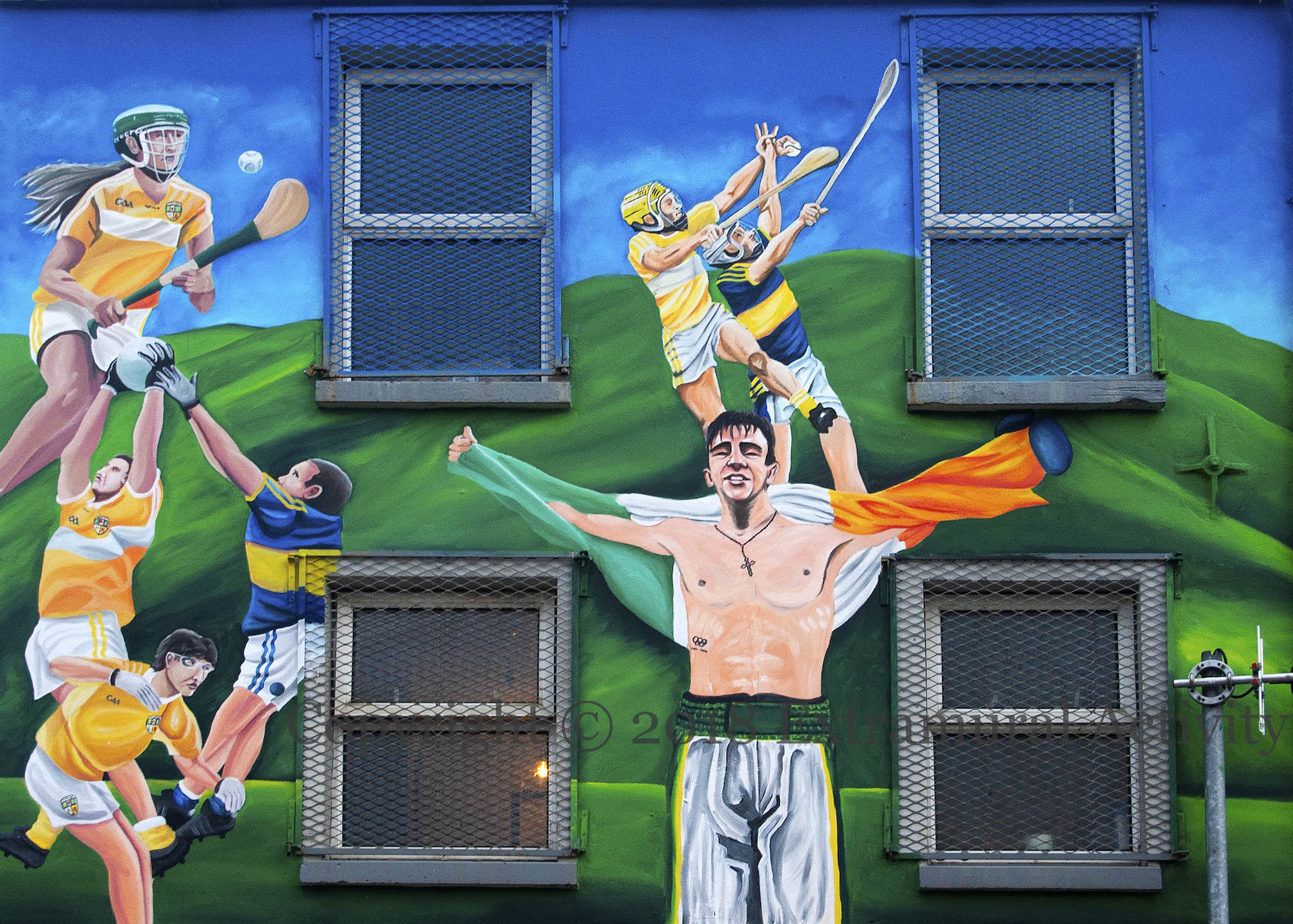
Michael Conlan (tw | ig) won his first title and tenth professional bout on Saturday night (December 22nd), in Manchester, by defeating Englishman Jason Cunningham (BBC). He features here in one of the new murals on the Fáılte Feırste Thıar offices alongside the traditional Gaelic games of hurling, camogie, football, and handball.
Gort Na Móna (tw | Fb) play their home games at Páırc Mhıc Ionnrachtaıgh/Enright Park, named after the local Enright clan and in particular Terry Óg, who was killed by the LVF in January 1998 as he was working as a doorman at Space nightclub (Independent | Irish Times). In addition to football and hurling, he was a boxer, Irish dancer, and – as will be seen in the other mural to his memory – a lover of the outdoors.
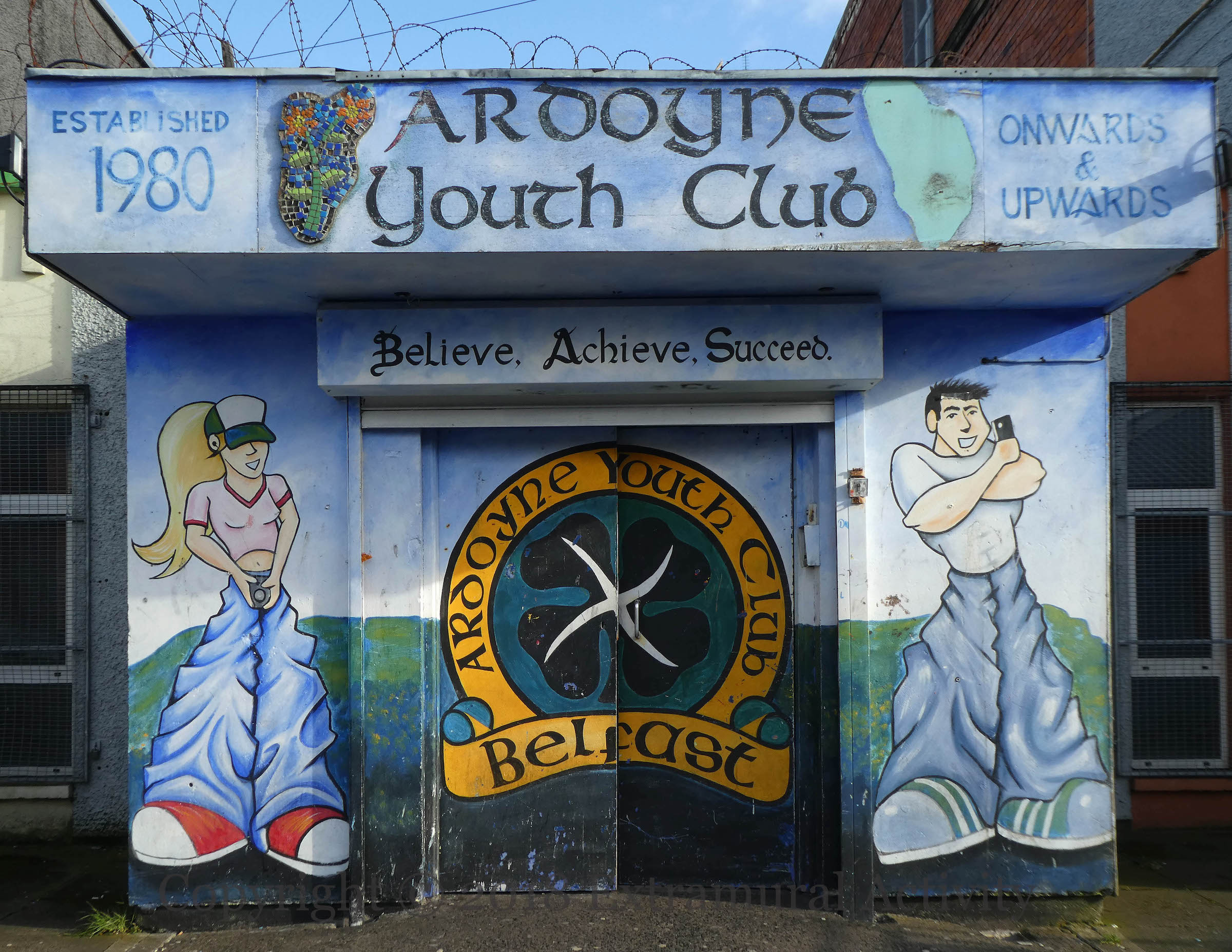
Here are two images of the four-leaf clover used by Ardoyne Youth Club (tw) as their emblem. The image above shows the doors of the club off Havana Way, while the one below is from the recently-completed mural at the top of the road Stronger Together. Compare with the emblem of Celtic FC, as in Just Can’t Get Enough.
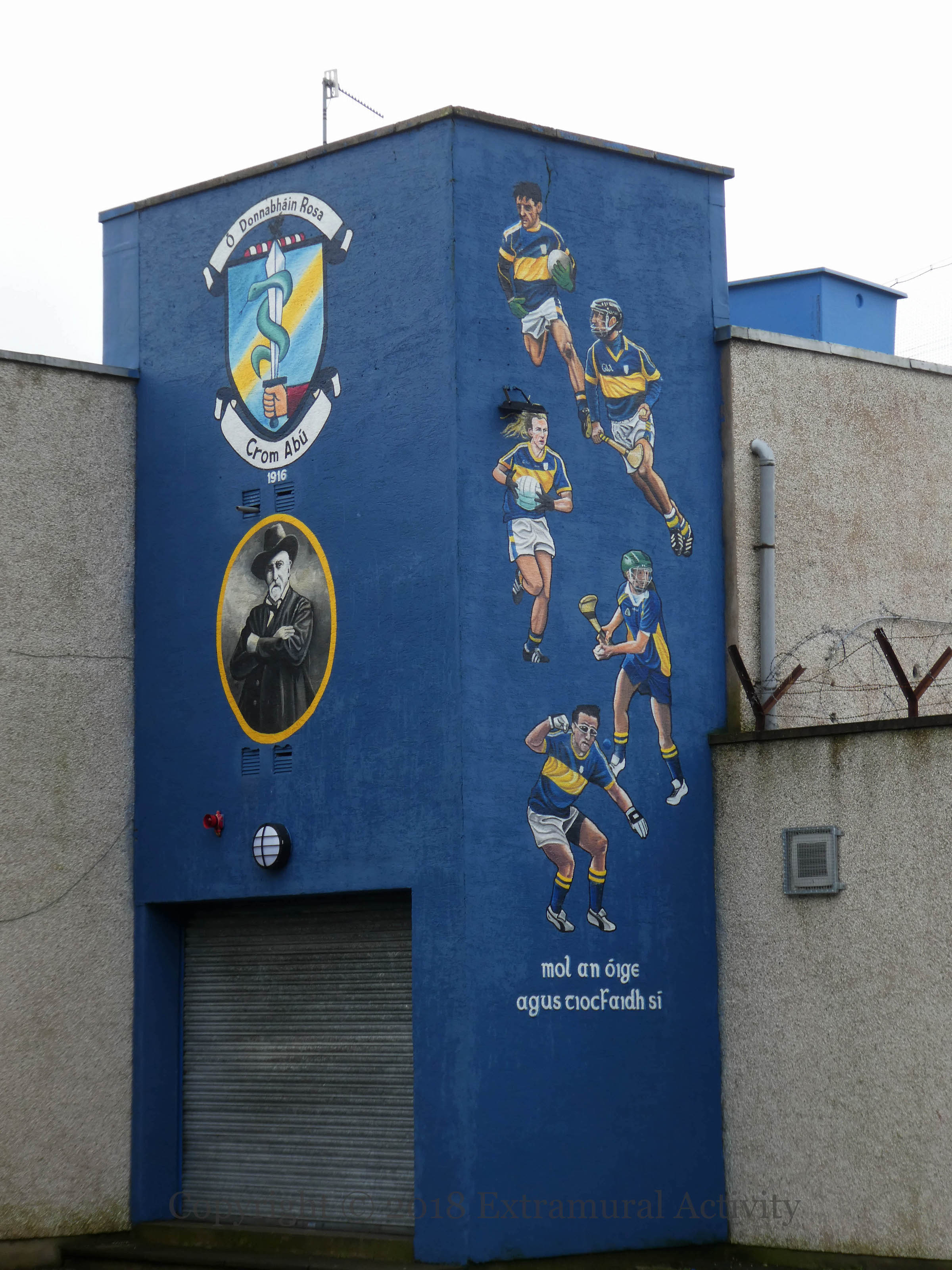
O’Donovan Rossa GAC (web | tw | Fb) dates back to 1916, just one year after the death of republican Jeremiah O’Donovan Rossa (at whose funeral Padraig Pearse gave the oration – “The fools, the fools …”). “Crom abú” is a war-cry of the ancient FitzGeralds as they attacked the O’Donovan fortress at Crom, Co. Limerick. Some of those fleeing eventually settled in Rosscarbery, Co. Cork, which is where Jeremiah was born in 1831. The sword is a symbol of justice, the snake of wisdom.
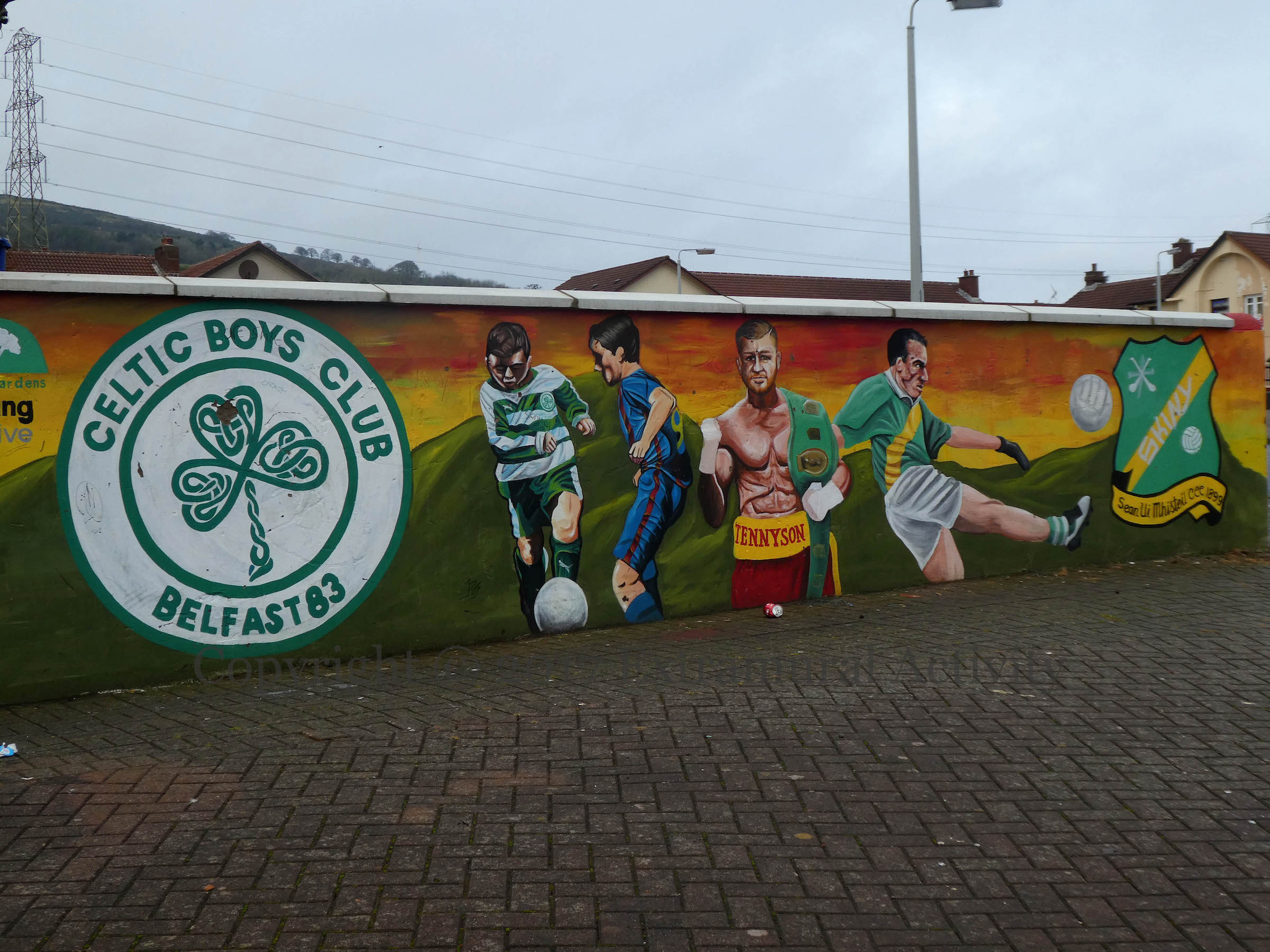
Lisburn boxer James “The Assassin” Tennyson, current Irish super-featherweight champion, (BoxRec | tw) provides the centre-piece between soccer and gaelic games in this Glenbawn mural: on the left, the Celtic Boys Club (tw | web), established 1983) and Gaelic games club Seán Uí Mhistéil (web | Fb) originally formed in the New Lodge in 1899.
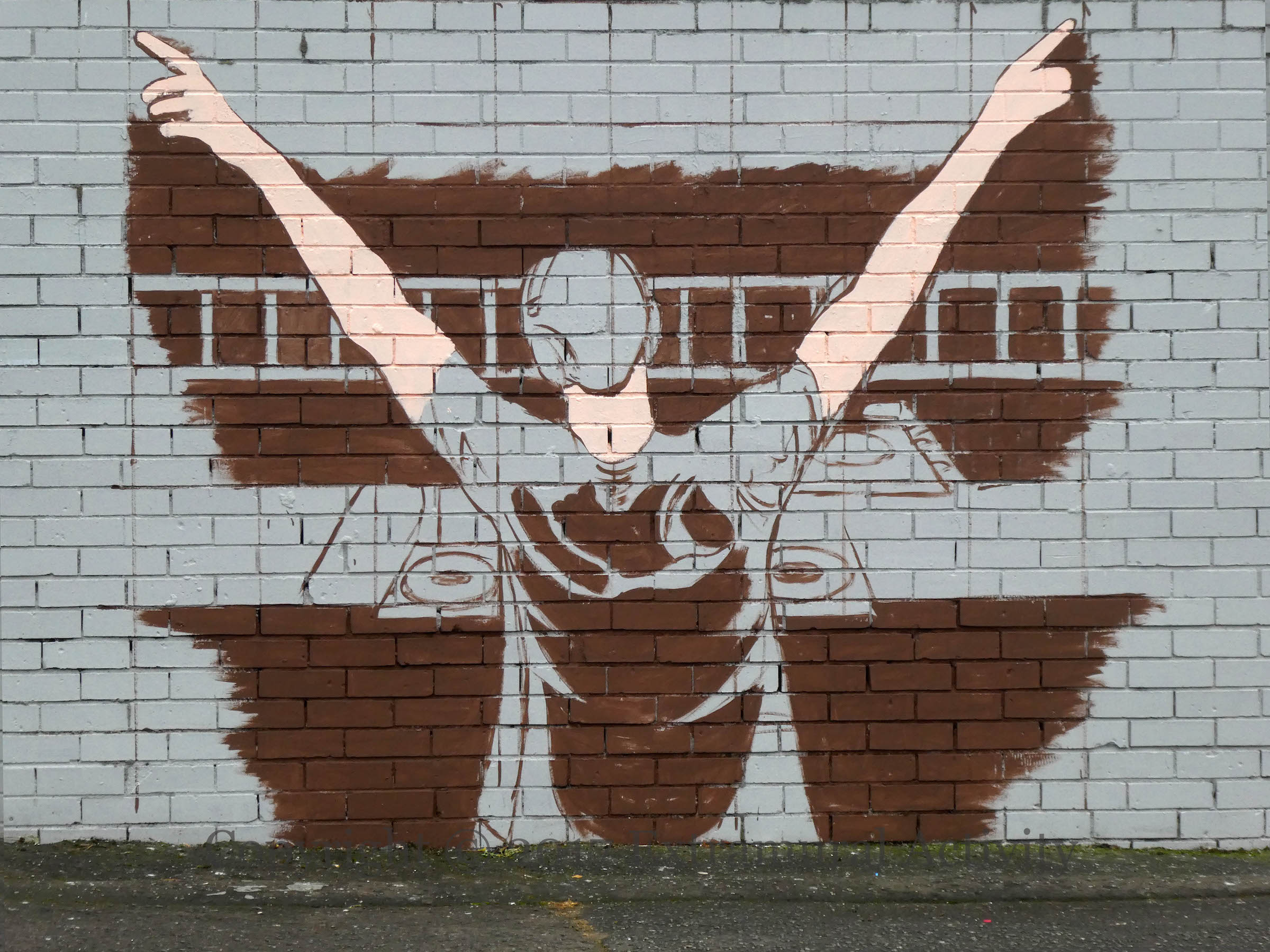
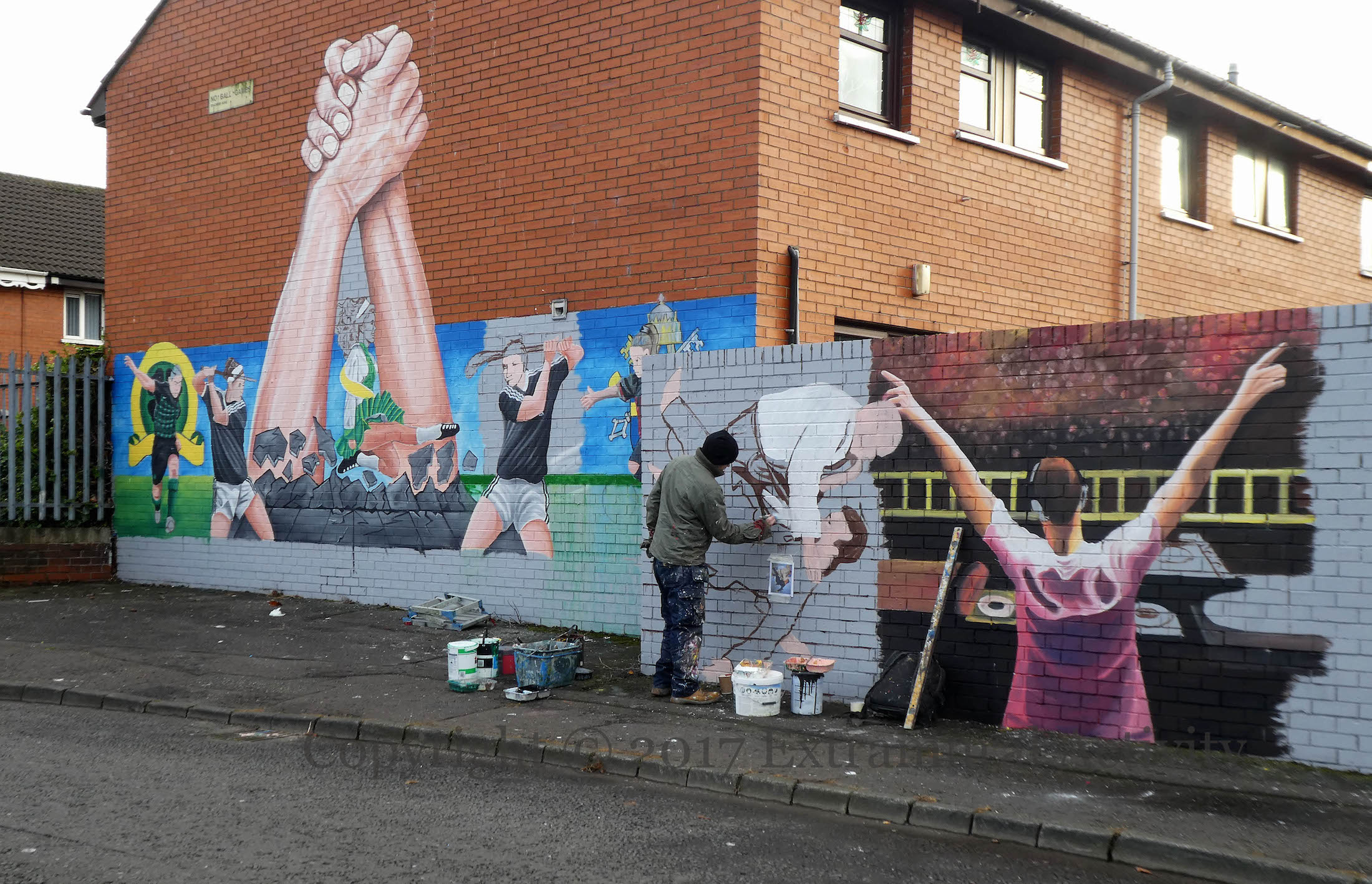
Here are eight images of the new Ardoyne mural featuring (from left to right in the image below) Ardoyne Youth Club, Ard Eoın Kickhams, and the John Paul II Youth Club as alternatives to bullying, racism, homophobia, addiction and other social ills. In addition to Irish dancing, soccer, and Gaelic games, there are also images of young people practicing martial arts, DJing, and boxing.












 Extramural Activity