The seven signatories of the 1916 Proclamation of the provisional government of the Irish Republic. From left to right: Joseph Plunkett, Sean MacDiarmada, Thomas Clarke, James Connolly, Padraig Pearse, Éamonn Ceannt, Thomas MacDonagh.
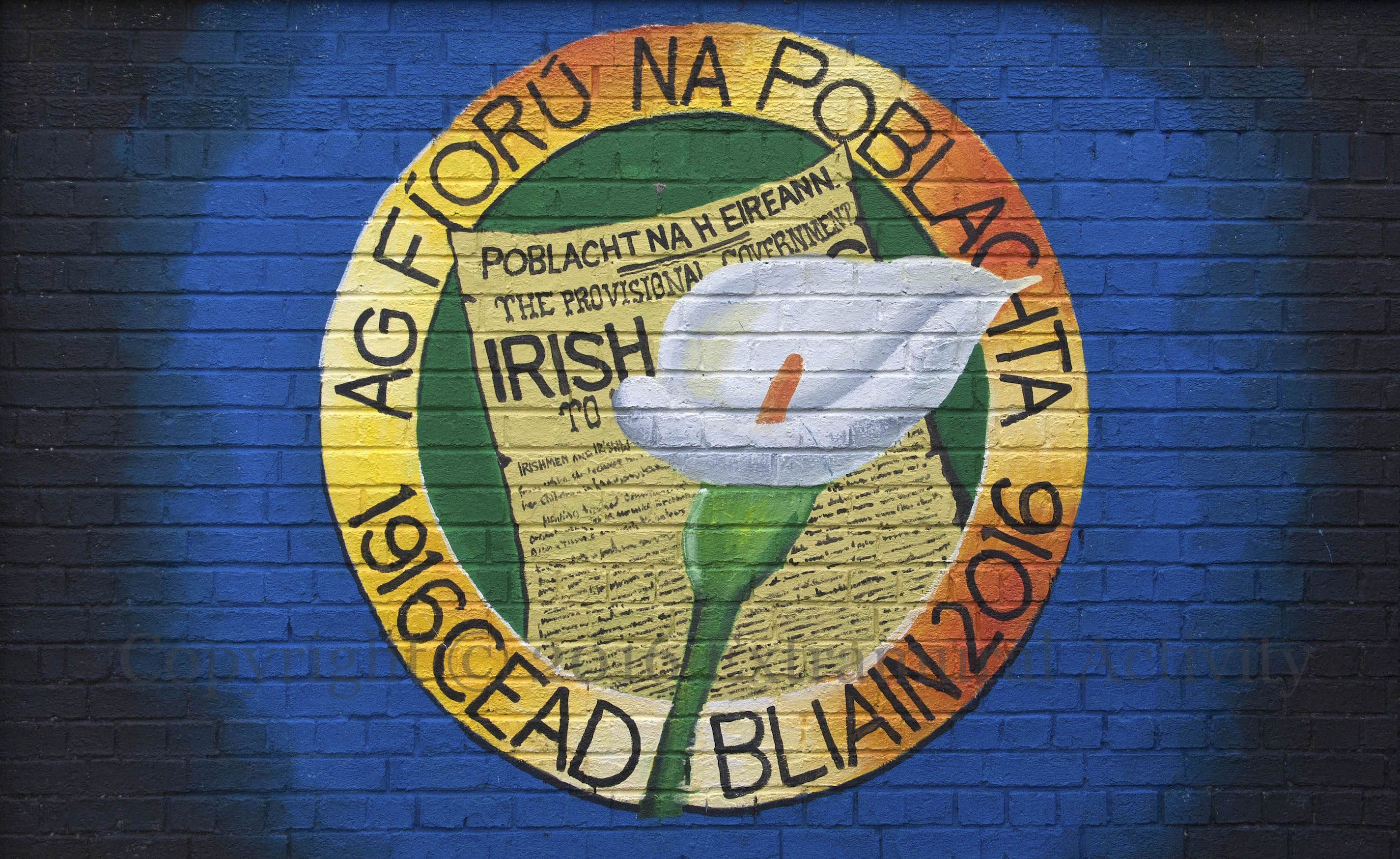
“Realising the Republic”. This is the first of three new murals side-by-side in Andersonstown. It celebrates the centenary (“Céad Blıaın 1916 – 2016”) of the Easter Rising and shows a copy of the proclamation of the republic and an Easter lily.
While taking part in the Easter Rising centenary parade, members of the James Connolly 1st Republican Flute Band from Glasgow (tw) pause on the Falls Road during a squall. Embroidered on the rear of their shirts are the words “We serve neither king nor kaiser, but Ireland”, the slogan which hung outside the ITGWU’s Liberty Hall during the first world war. Image courtesy of Bronagh Bowerman.
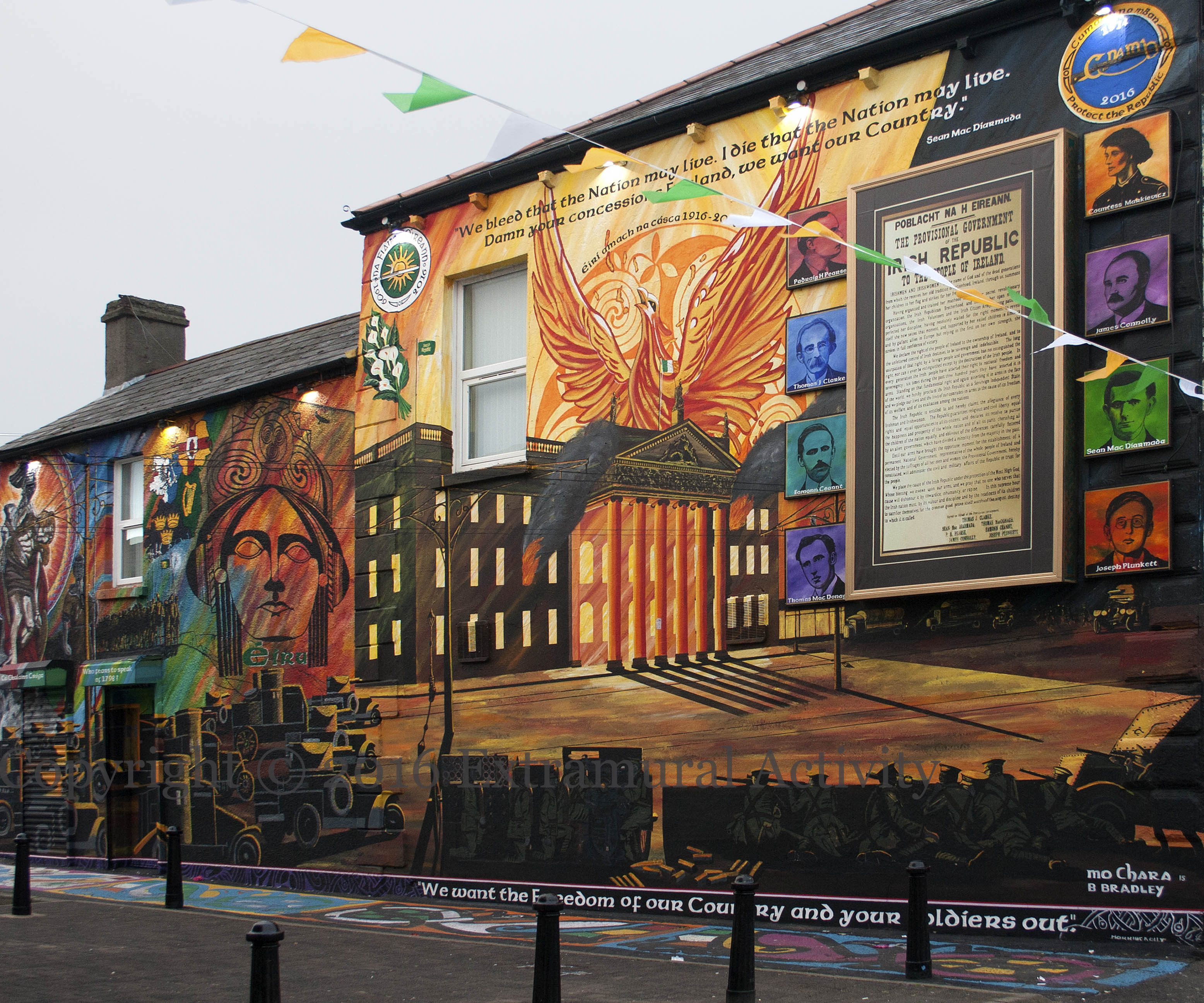
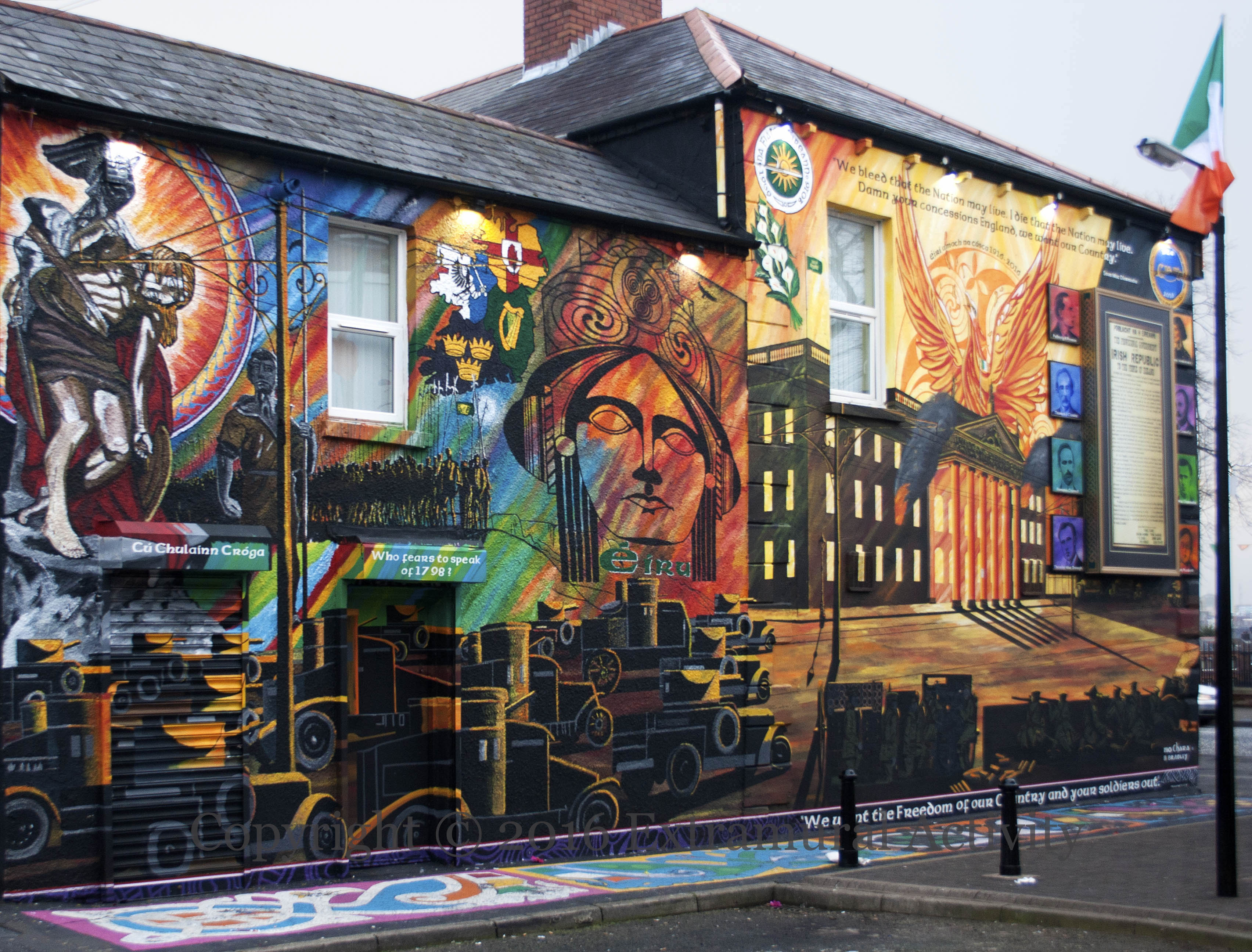
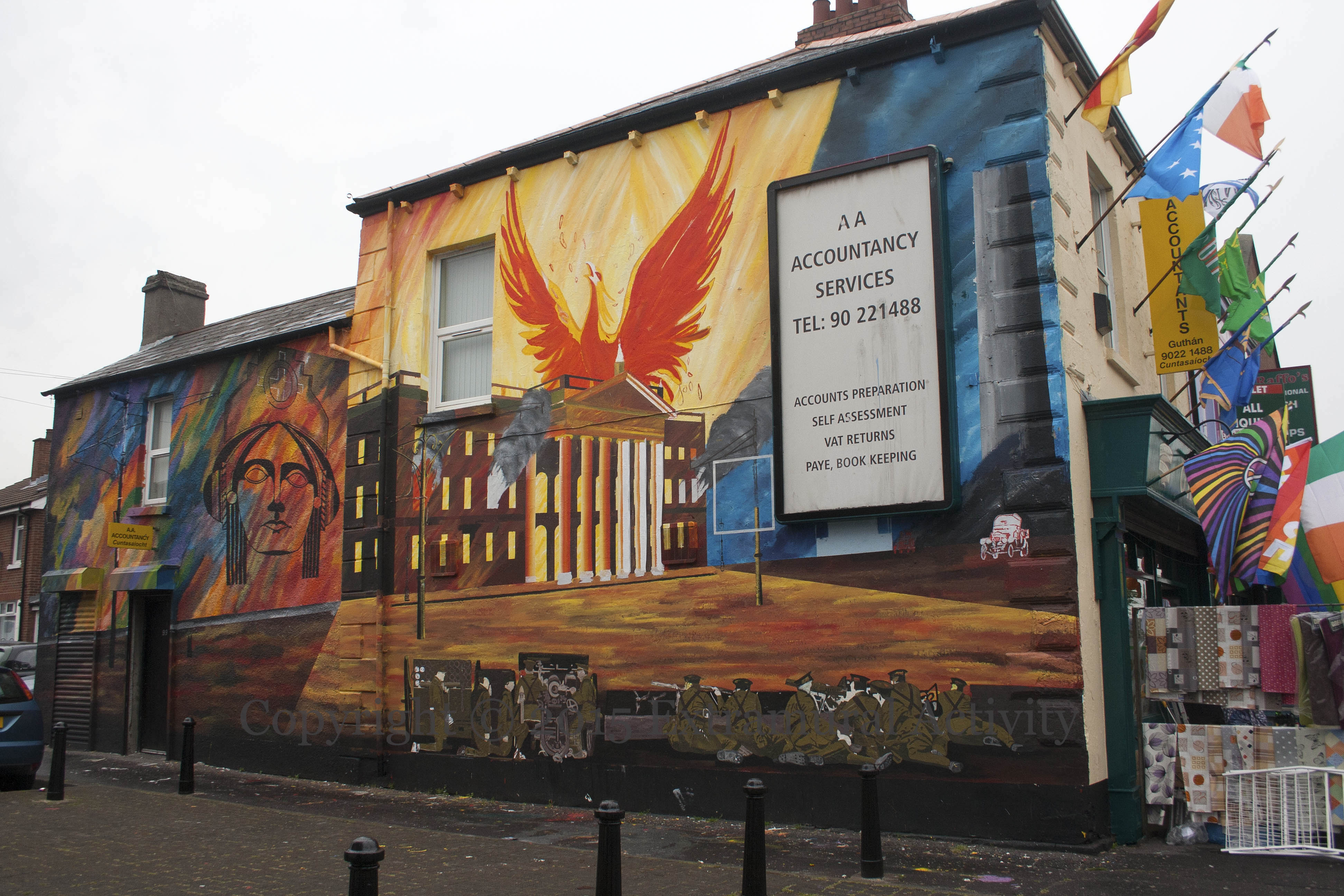
Arrayed against the forces of the British Army (which are shown in armoured cars and in sniping positions in the foreground of the mural, along the whole length of the wall) are various symbols of Irish nationalism: Oliver Sheppard‘s 1911 statue of Cú Chulaınn dying; the pikemen of the 1798 Rebellion (featured yesterday: Éırí Amach 1798); the four provinces of Ireland; Érıu the mythological queen of Ireland/Éıre as designed by Richard J King/Rísteard Ó Cíonga; Easter lilies; the emblems of Na Fıanna Évreann and Cumann Na mBan on either side of a quote from (The Mainspring) Sean MacDiarmada “We bleed that the nation may live; I die that the nation may live. Damn your concessions, England: we want our country”; a phoenix rising from the flames of the burning Dublin GPO (inspired by Norman Teeling’s 1998 painting The GPO Burns In Dublin); the GPO flying an ‘Irish Republic’ flag; portraits of signatories and other rebels — (left) Padraig H. Pearse, Thomas J Clarke, Eamonn Ceannt, Thomas MacDonagh, (right) Countess Markievicz, James Connolly, Sean MacDiarmada, Thomas Plunkett; the declaration of independence, placed over the advertising box of AA Accountants – see the in-progress shot below. For more work-in-progess images, see yesterday’s post, Éırí Amach 1798. At the very bottom is a quote from the mother of Gerard ‘Mo Chara’ Kelly, Harriet Kelly: “We want the freedom of our country and your soldiers out.”
Seán Mac Dıarmada was born in Leitrim, left for Glasgow at age 15, but after two years returned to Belfast in 1905 (working on the trams) and – according to the new mural above – spoke from the back of a coal lorry in Clonard Street, outside the Clonard branch of the Ancient Order Of Hibernians. Mac Dıarmada was for a short time an AOH member, before moving on to the Irish Republican Brotherhood and Irish Volunteers, which led to his participation in the 1916 Easter Rising and execution on May 12th of that year.
The title of today’s post is historian F.X. Martin’s assessment of Mac Dıarmada, quoted in a pamphlet on Mac Dıarmada from the National Library Of Ireland, which includes reproductions of letters from and about Mac Dıarmada. The NLI made more letters available today (2016-02-08). (See also this Irish Times write-up).
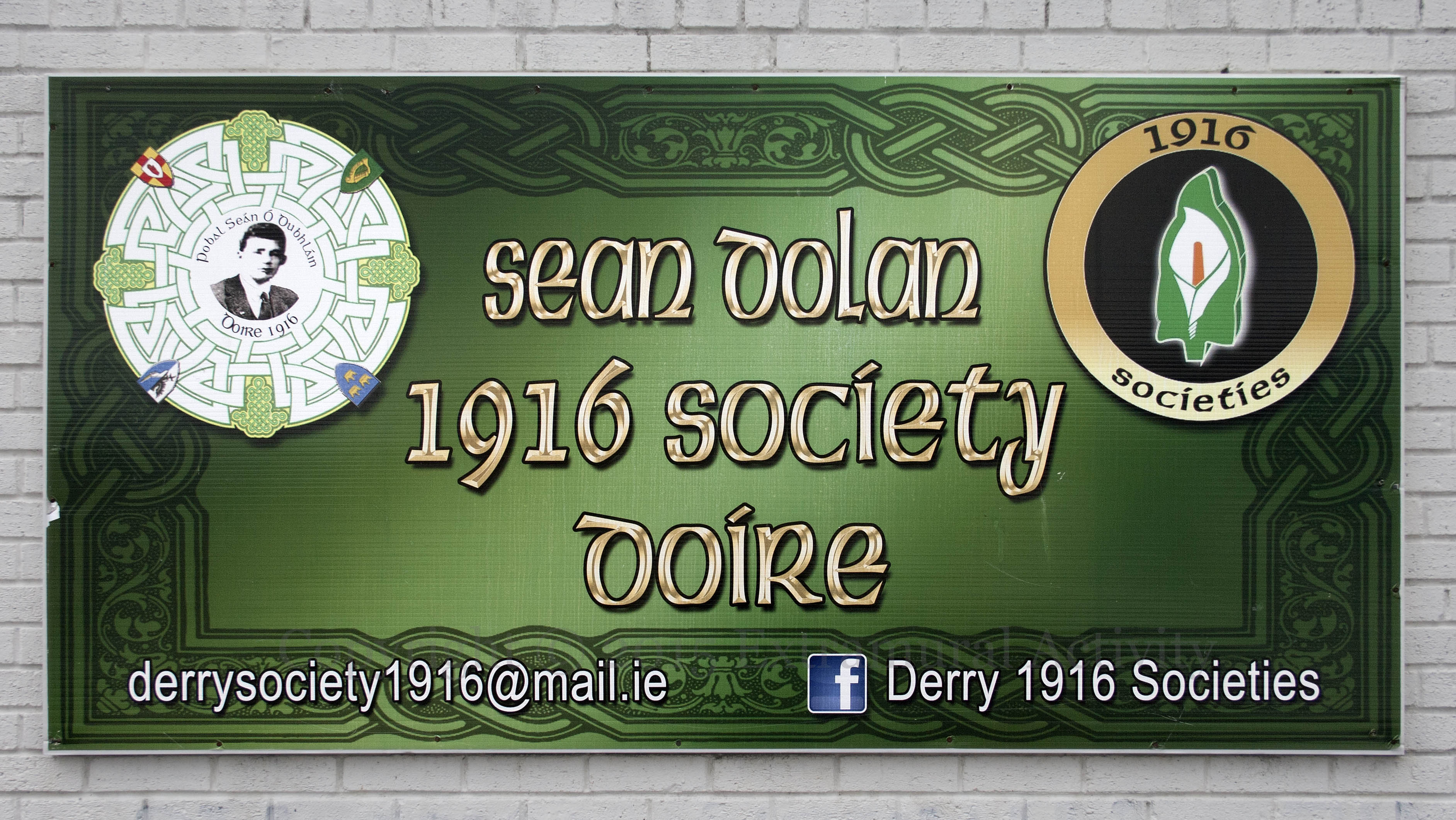
The Derry branch of the 1916 Societies (Fb) is named after Sean Dolan, an IRA volunteer interned at the outbreak of WWII on the prison ship Al Rawdah (WP | saoırse32) before being moved to Crumlin Road gaol. He was released on grounds of ill health shortly before dying in 1941 at age 28 in Derry. The title of today’s post comes from Dolan’s gravestone, which is in Ardmore (findagrave).
It was the 1916 Societies that hoisted an Irish tricolour from the roof of Stormont in June 2015 (BBC).
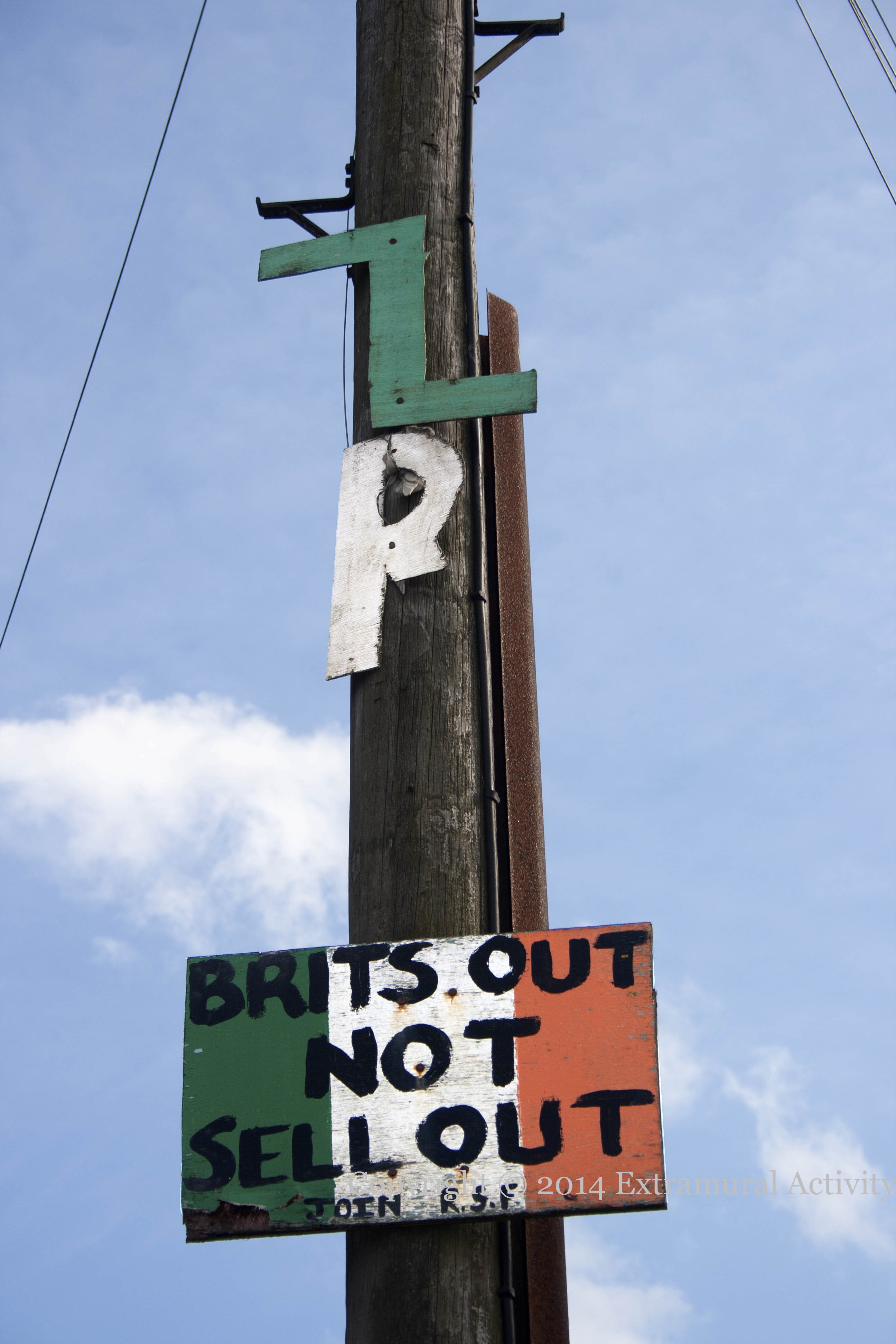
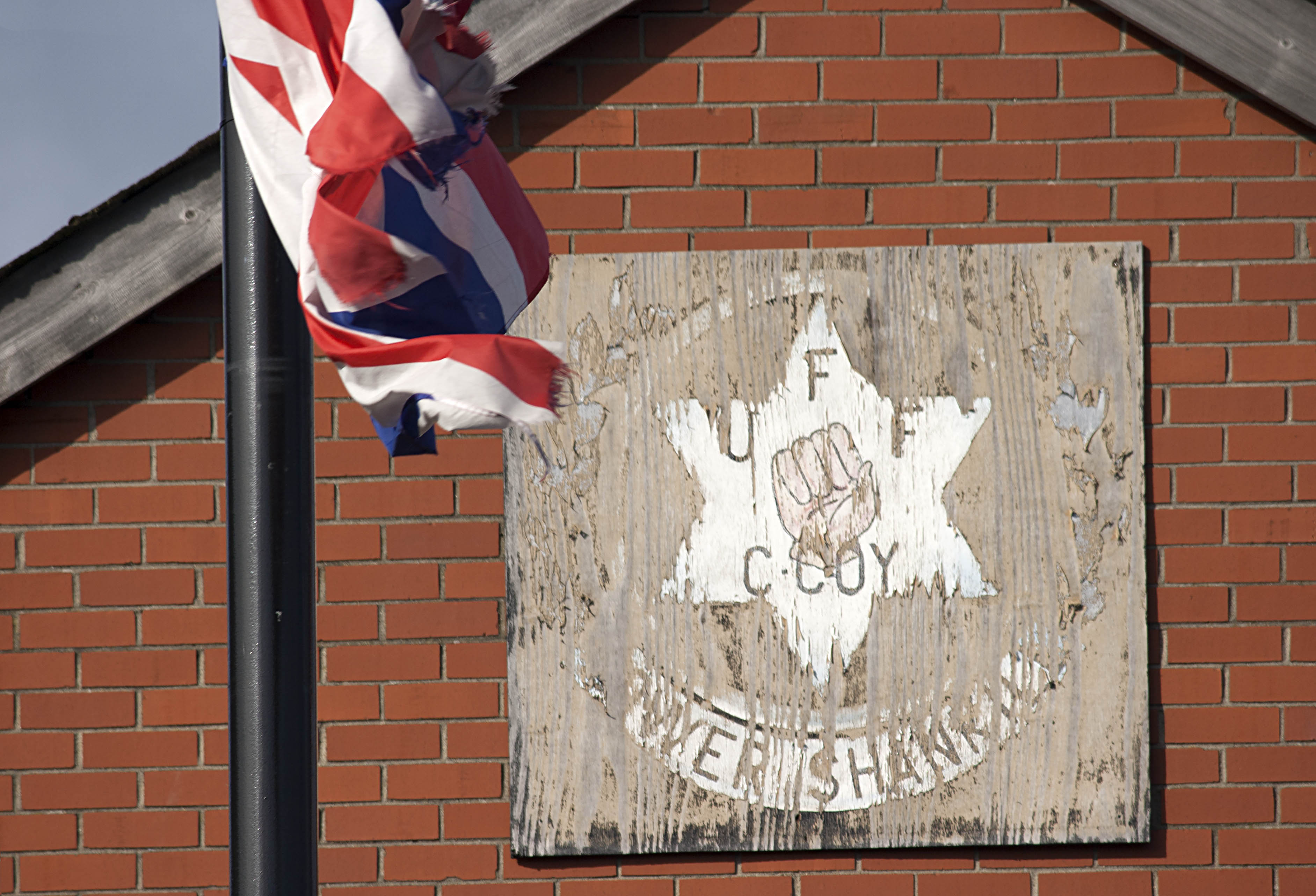
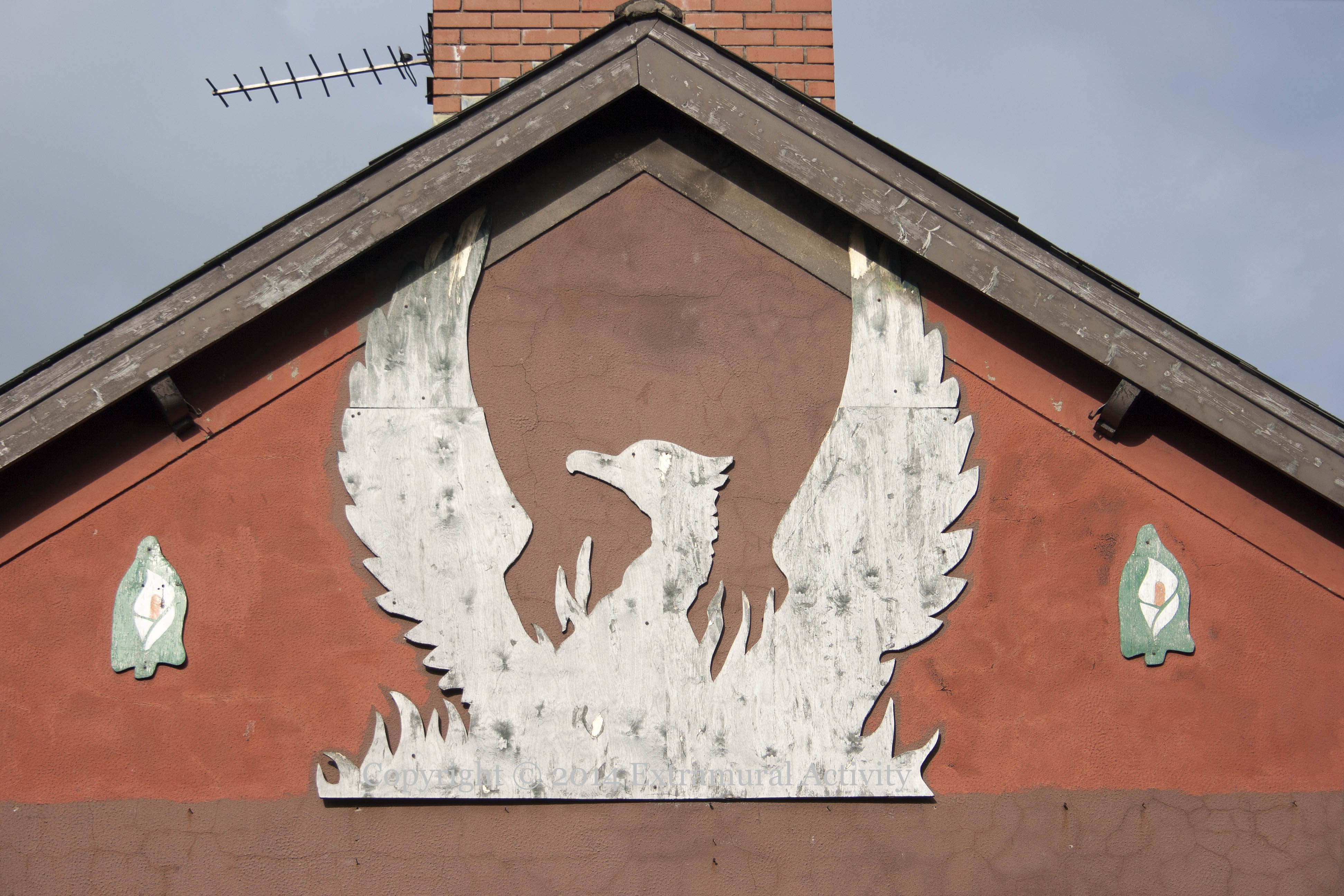
Here are three “nail-ups” from west Belfast, all showing their age.
The first is “IRA – Brits out, not sell out. Join RSF” in Fallswater Street.
The second is a “Lower Shankill UFF C Coy” board high above the “Shankill Protestant Boys UVF” mural at the junction of Northemberland Street and the Shankill.
The third is the phoenix in the apex above the mural in AMCOMRI Street.
The images were taken in late 2014; the phoenix goes back at least to 2003 and the others are at least six years old.
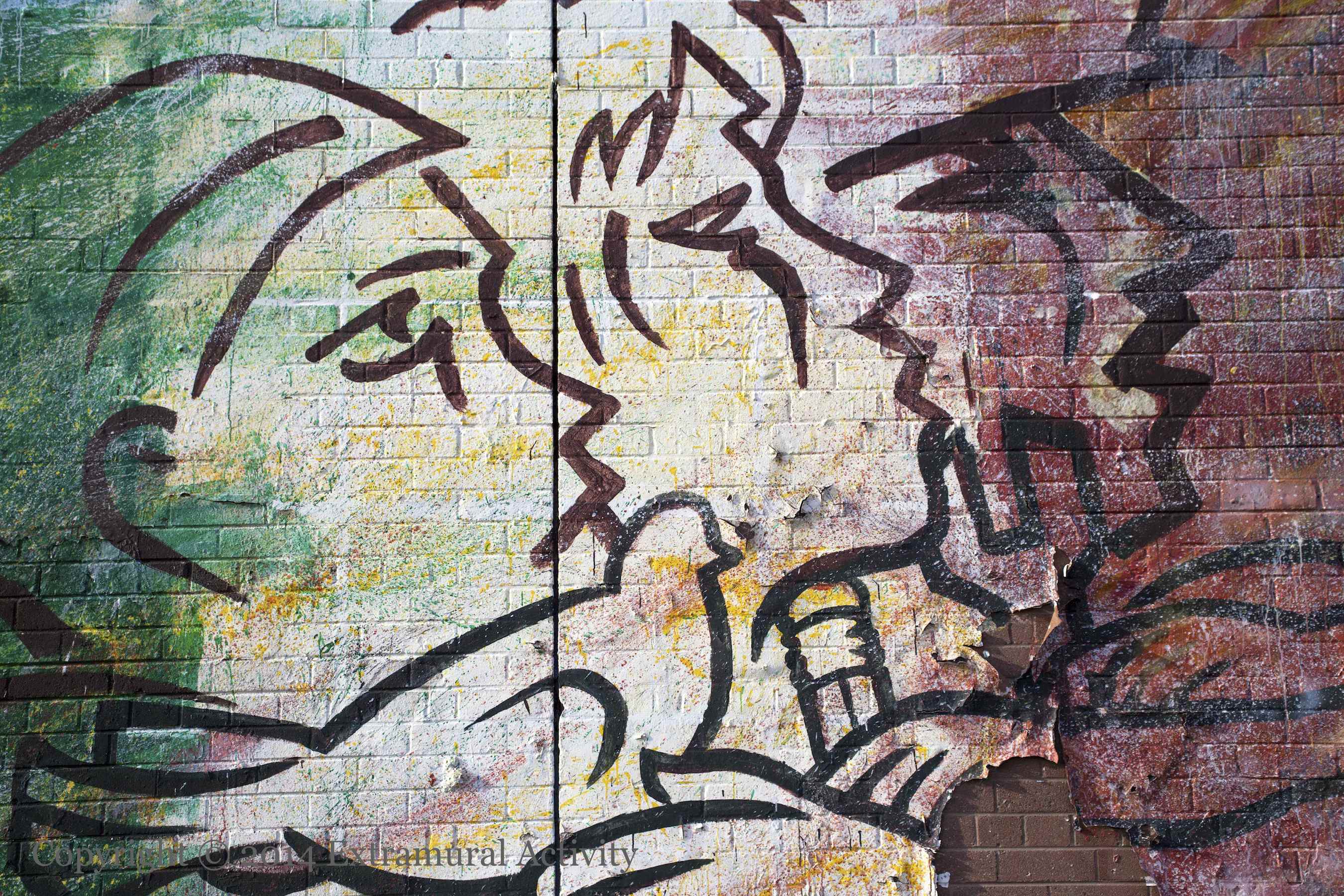
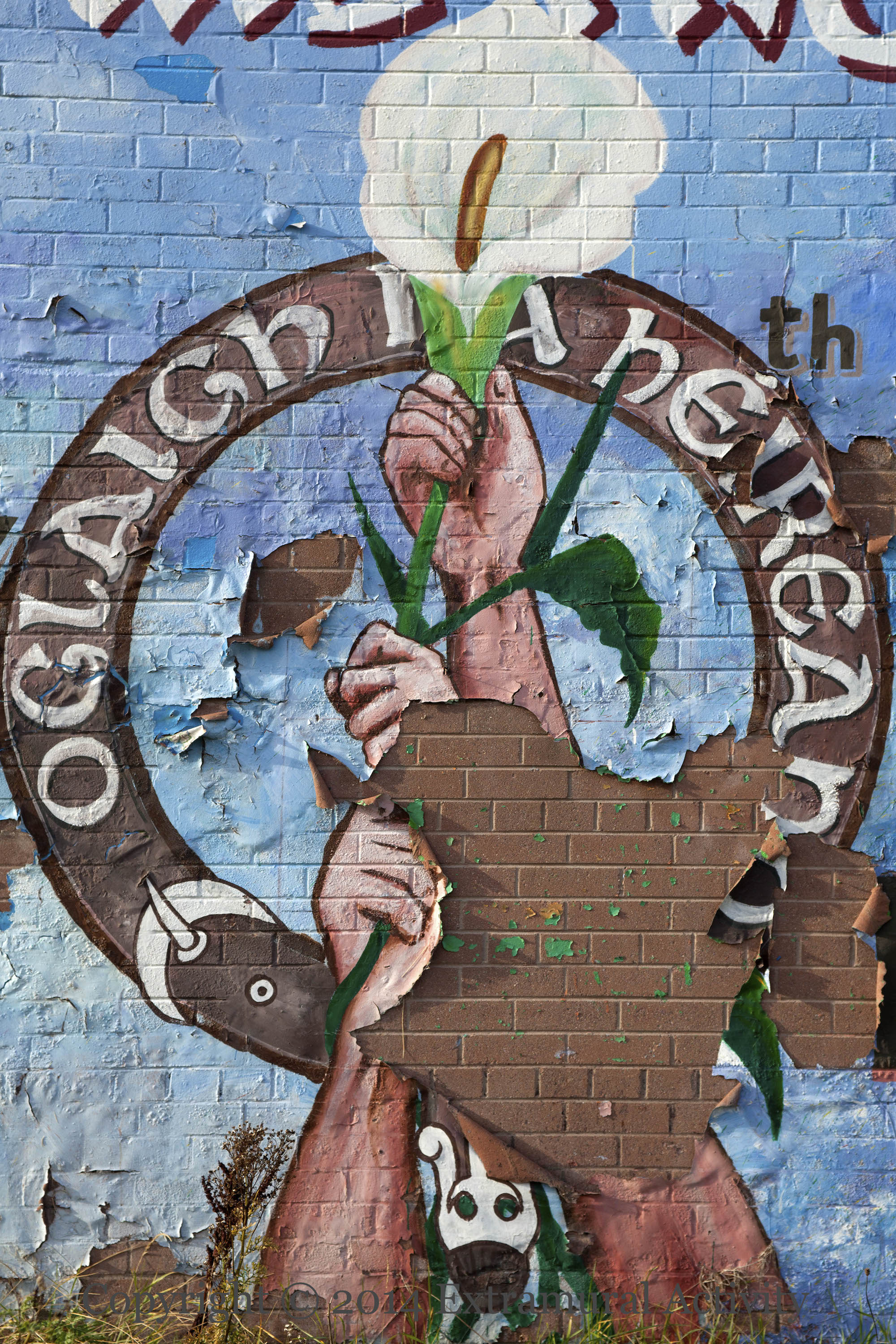
Here are two details from the ‘Understand The Past’ mural in Mountpottinger Road which is gradually peeling away. For the mural in better days, see Understand The Past.
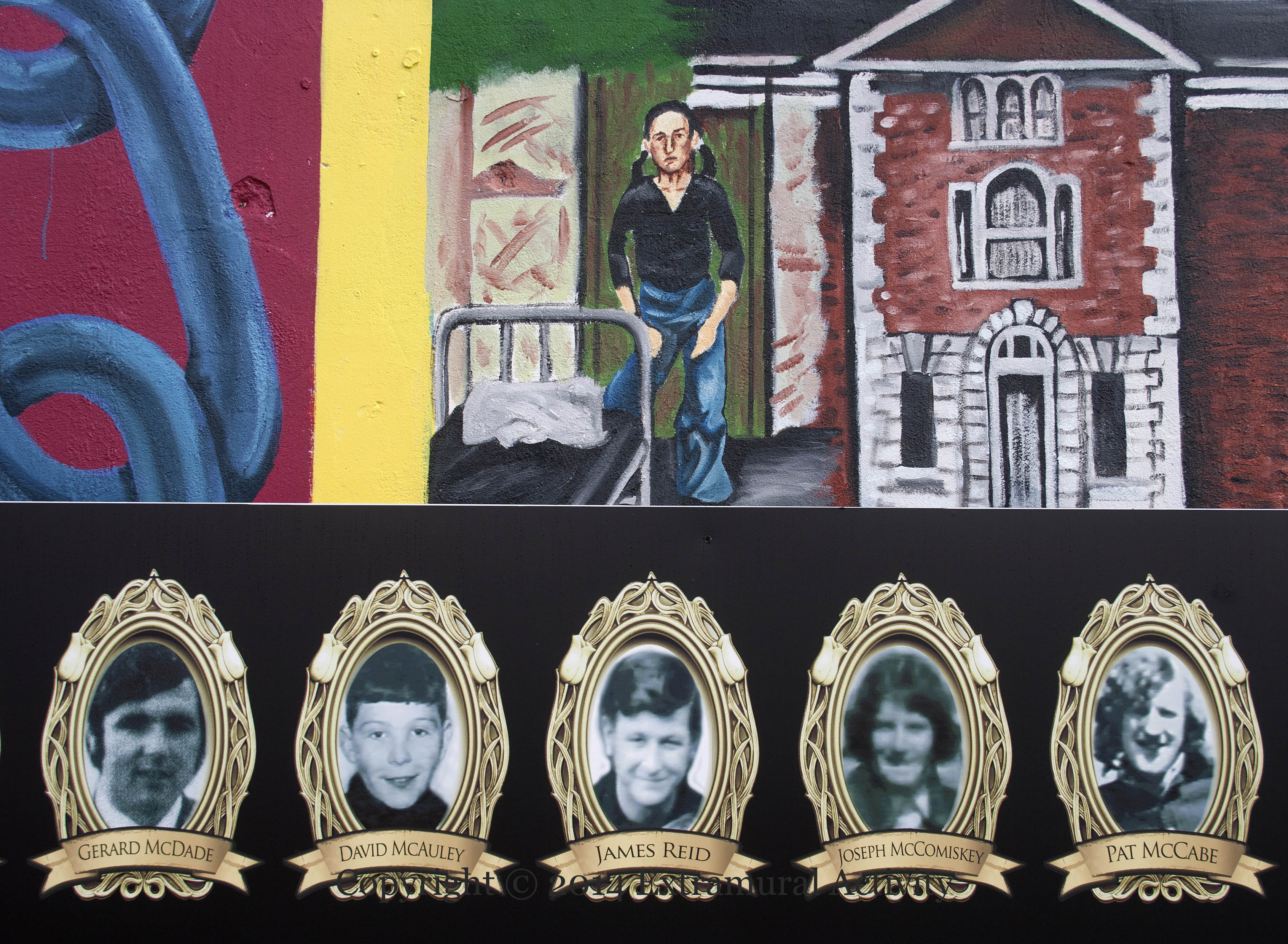
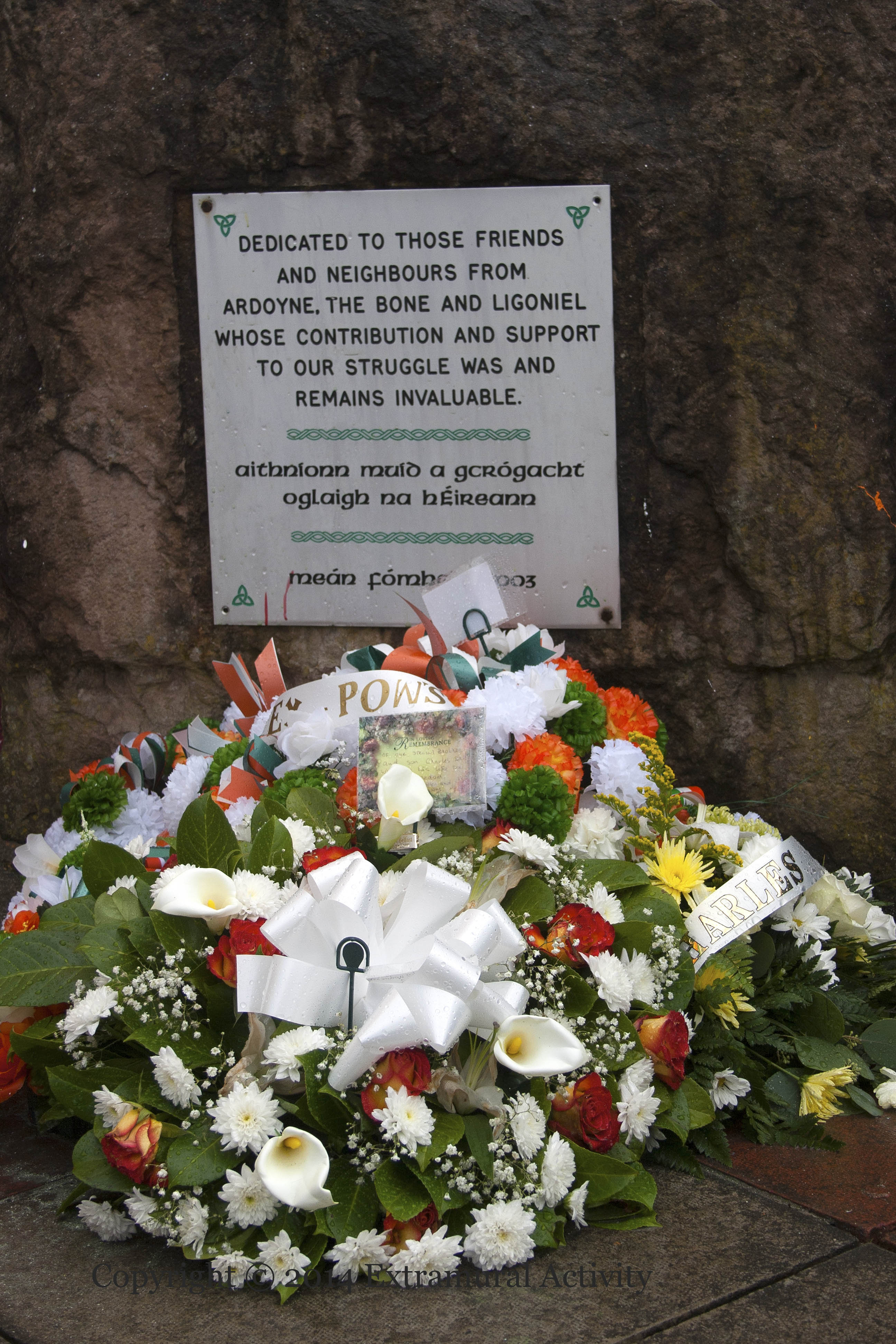
Here are two details from the Ardoyne, Bone, Ligoniel mural featured yesterday, as well as a shot of bouquets of flowers in front of the plaque on the stone put in place in 2003. The first reproduces a photograph of Maıréad Farrell during the “no-wash” or “dirty” protest in Armagh Women’s Prison. (See the middle of this 1989 Frontline documentary.) The second shows the walls and guard-towers of the H-Blocks (featured previously in You Know Where). The frames and photographs of 40 locals are printed, not painted.







 Extramural Activity