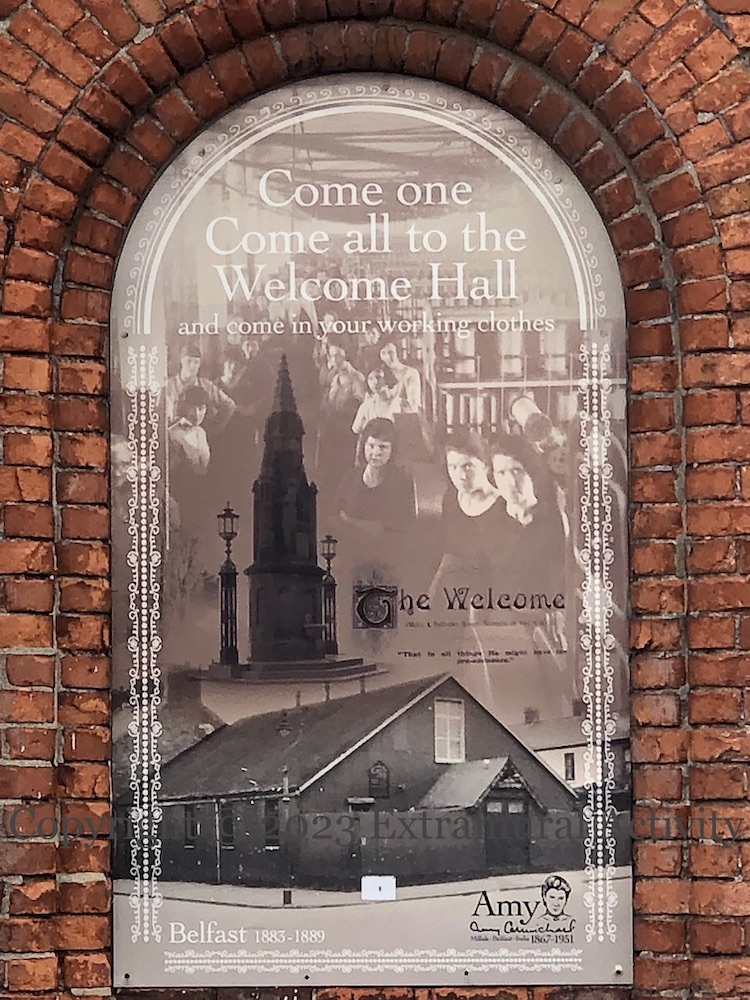
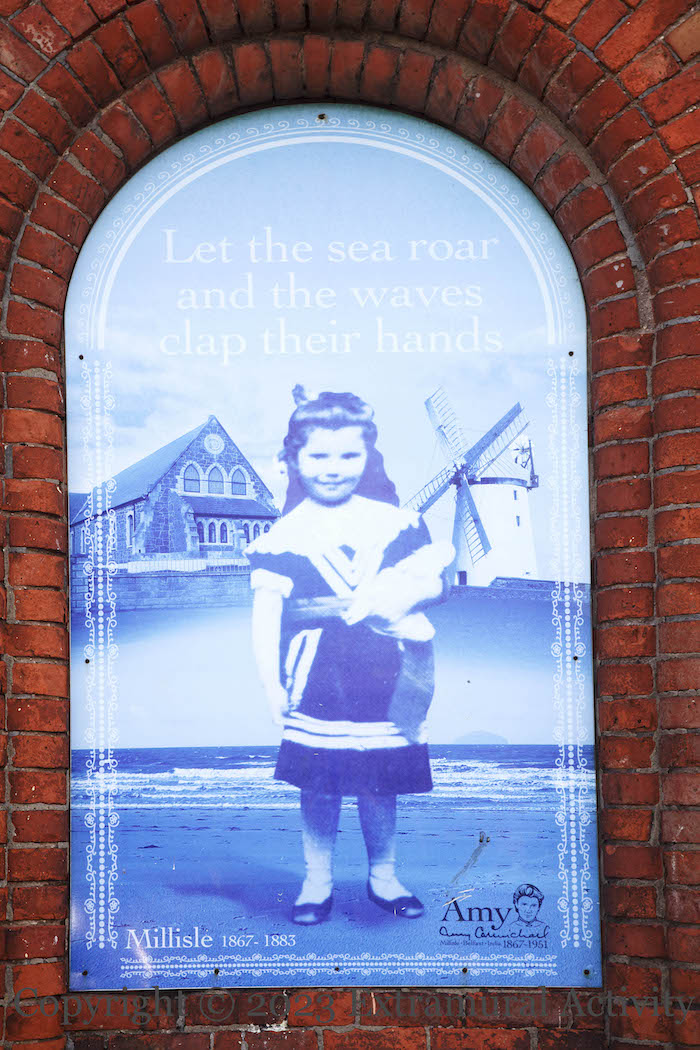
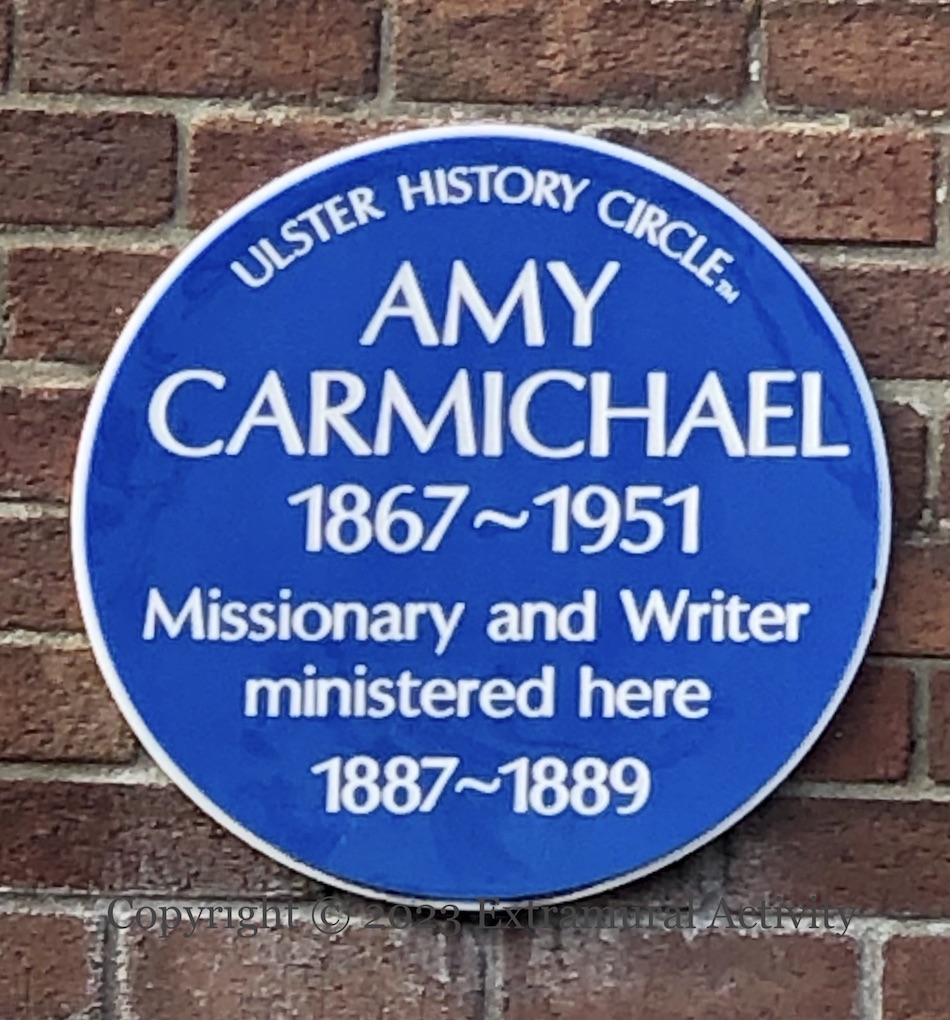
“Come one, come all, to the Welcome Hall, and come in your working clothes.” Amy Carmichael was born in Millisle, Co. Down, in 1867. In 1884 the family moved to Belfast, where Amy started Sunday classes in Rosemary Street Presbyterian for “shawlies” who worked in the mills. These were successful enough that a larger venue was required, and so, in 1887, the Welcome Hall, with seating for 500, opened in Cambrai Street (this subsequently became the Welcome Evangelical Church, where the blue plaque shown below is mounted). Carmichael then went to England (Manchester), Japan, Sri Lanka, and India (Bangalore). (Welcome Church | WP)
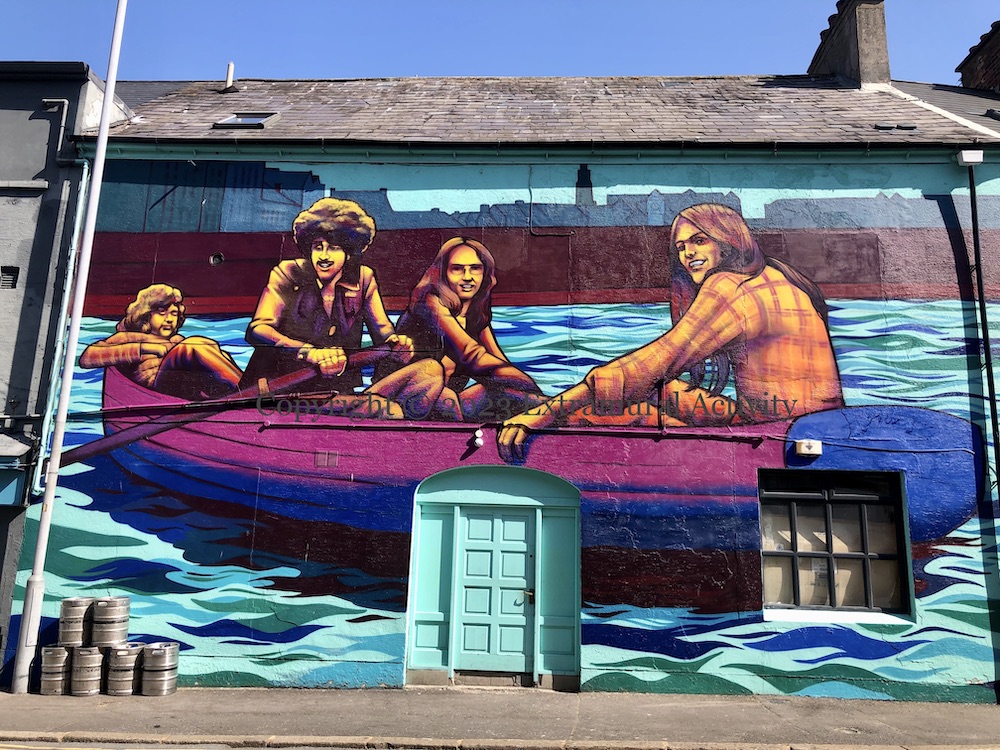
Before rock band Thin Lizzy played the King’s Club at the Queen’s Court hotel in Bangor on July 27th, 1974 (Thin Lizzy Guide), they took to the water in order to take in the town. They were photographed in the act by Dublin photographer Liam Quigley (Indo profile), and the picture (see it at Thin Lizzy Guide) was turned into a mural by Friz (ig) in Crosby Street, Bangor, last year.
Original guitarist Eric Bell (who was also a member of Them) is featured in a mural of famous faces in east Belfast – see Inspiring Belfast.
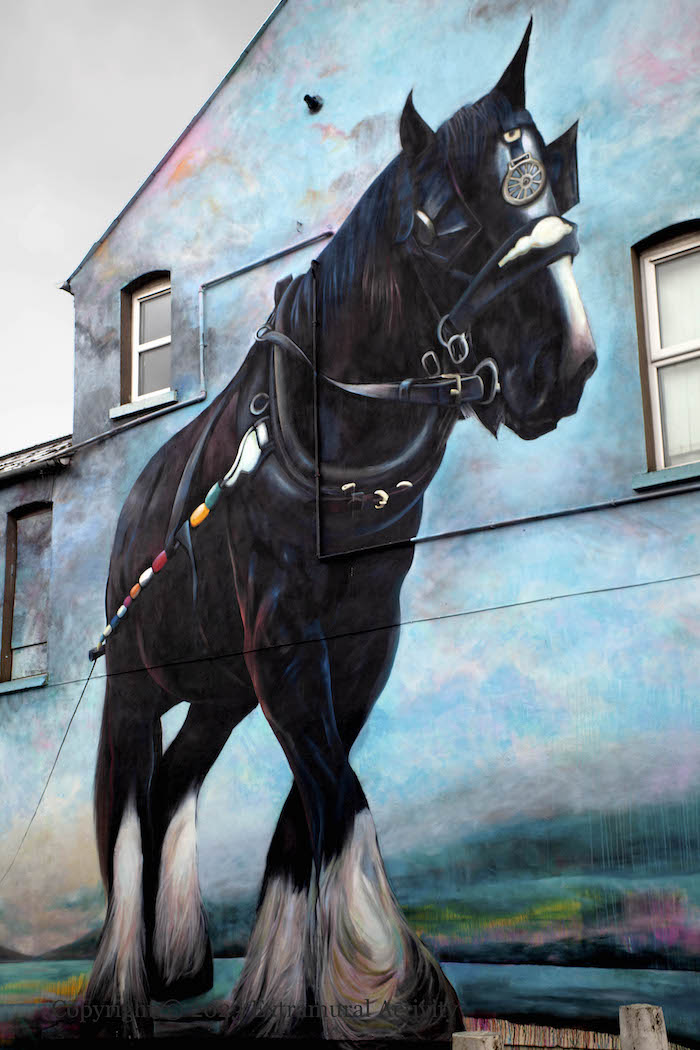
The Lagan river between Belfast and Lisburn was made navigable in 1763 after seven years of work. The remaining distance between there and Lough Neagh (and the coalfields of east Tyrone, which were connected to Lough Neagh and then Portadown and Newry) required a canal, which finally opened on January 1st, 1794. The were 27 locks on the route between Belfast and the lough, and horses walking on the tow-parth would pull the barges up river (WP | Lagan Valley | Lagan Navigation has photographs of horses at work). Horsey Hill was perhaps the site of stables in south Belfast; it is now the name of the alley that continues on towards the river from the Ukraine sunflower mural off Harrow Street in the Holylands.
Forward South Partnership/Connor McKernan’s video about the history of the Holylands, including Horsey Hill, can be seen on youtube.
Painted by Daniela Balmaverde (ig) and DMC. At the bottom of Horsey Hill, along the embankment, are Animals Two By Two.
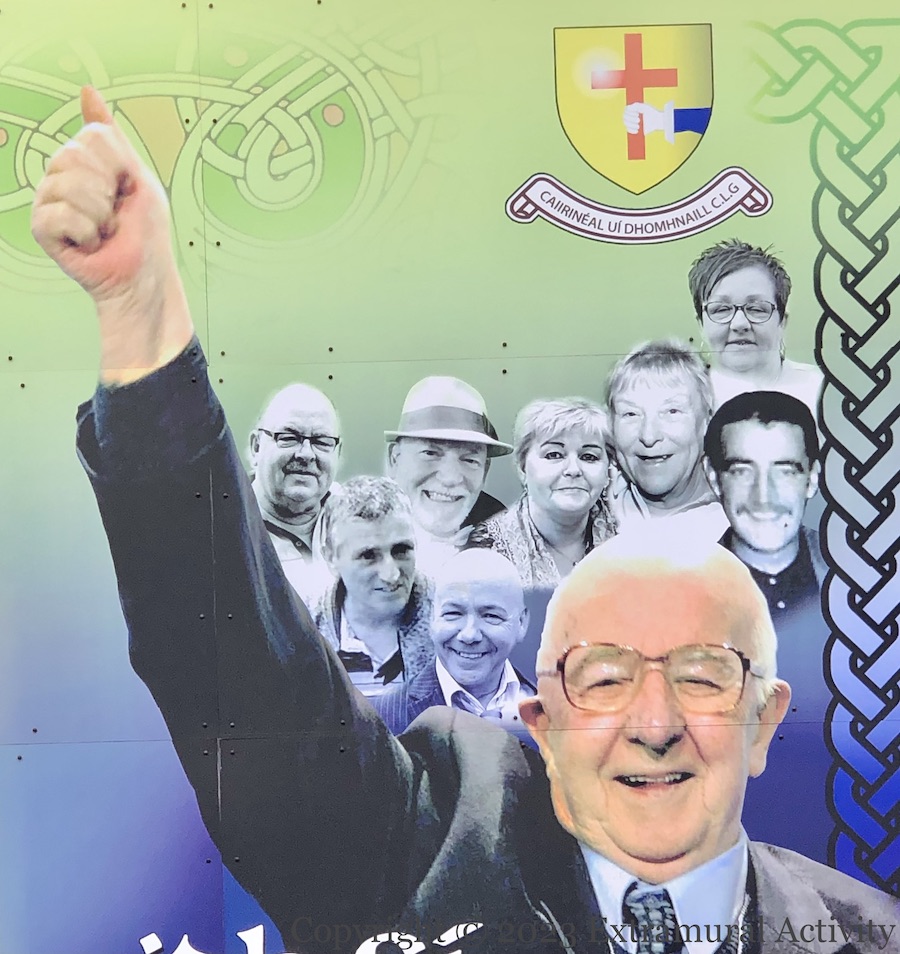
“Mol an óıge agus tıocfaıdh sí [encourage youth and it will flourish, or less literally, youth responds to praise].” The emblems in the corners are of two local GAA clubs “Naomh Eoın” and “Caıırınéal [Caırdınéal] Uí Dhomhnaıll” – the “Joe Cahill Annual Tournament” was held at Easter at their two pitches.
Joe Cahill joined the Fianna in 1937 and was involved in the republican movement from then until his death in 2004, including being in Tom Williams’s company in 1942, and was later a founder member and Chief of Staff of the Provisional IRA.
Here are three new pieces above the security gates on Northumberland Street, coving over the “Deserted! Well, We Can Stand Alone” graffiti in the last remaining spot on the wall without a mural. From left to right:
Arthur Guinness: “Black Protestant Porter” as a description of Guinness stems from Arthur Guinness’s opposition to the 1798 rebellion (Indo). The Union Star (newspaper in Belfast – A Planet Of Light And Heat) called Guinness a spy and advised that “United Irishmen will be cautious of dealing with any publican who sells his drink.” (An Phoblacht).
Gusty Spence, a former commander of the UVF, read out the ceasefire statement of the “Combined Loyalist Military Command” (UVF, RHC, and UDA): “Let us firmly resolve to respect our different views of freedom, culture and aspiration and never again permit our political circumstances to degenerate into bloody warfare – Gusty Spence, loyalist ceasefire [statement in full], 13 October, 1994.”
“Welcome To The Shankill Road – we are proud, resilient, welcoming”: The original ‘three hands’ was on Northumberland Street, just above this spot – see Proud, Defiant, Welcoming – which was then reproduced in reduced form in Gardiner Street – see Welcome To The Shankill Road.
This is the most conciliatory statement ever made by loyalism and the decision to put it on Northumberland Street, especially in the context of the internationally famous and associated-with-Ireland Guinness and the “welcome” mural, suggests that the trio is directed at tourists rather than locals.
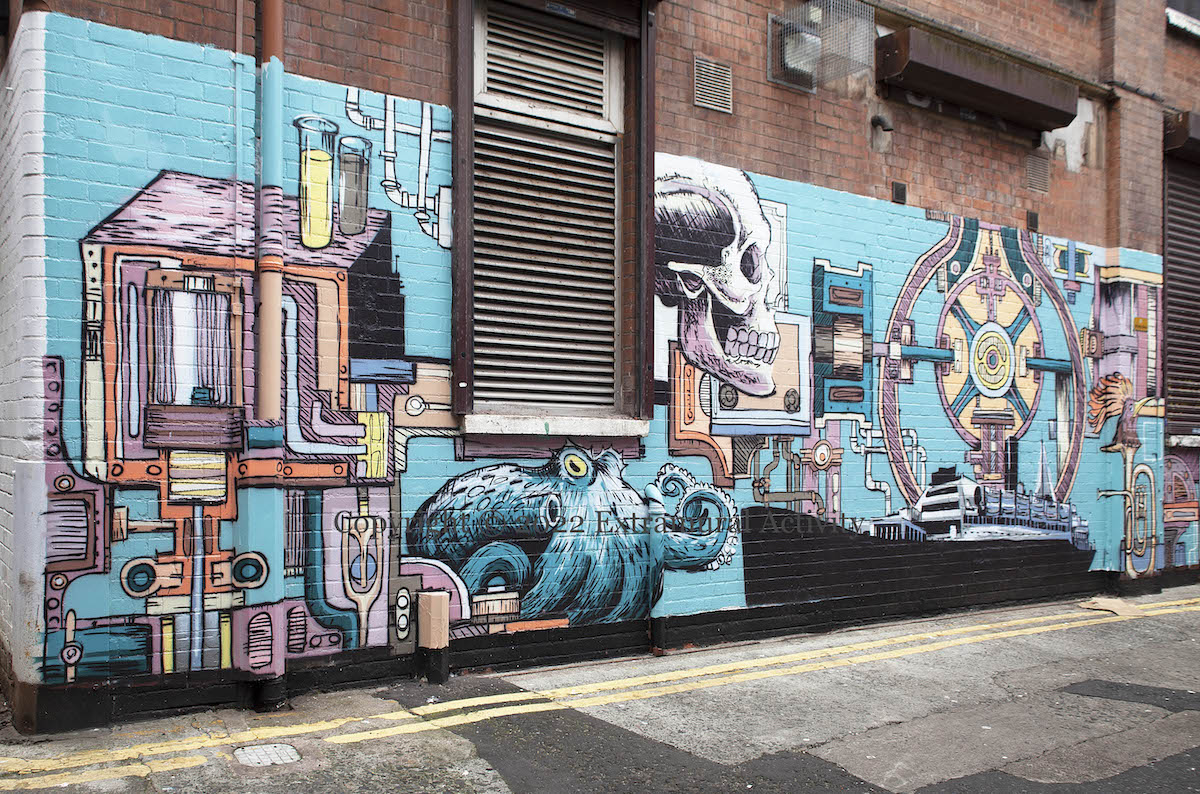
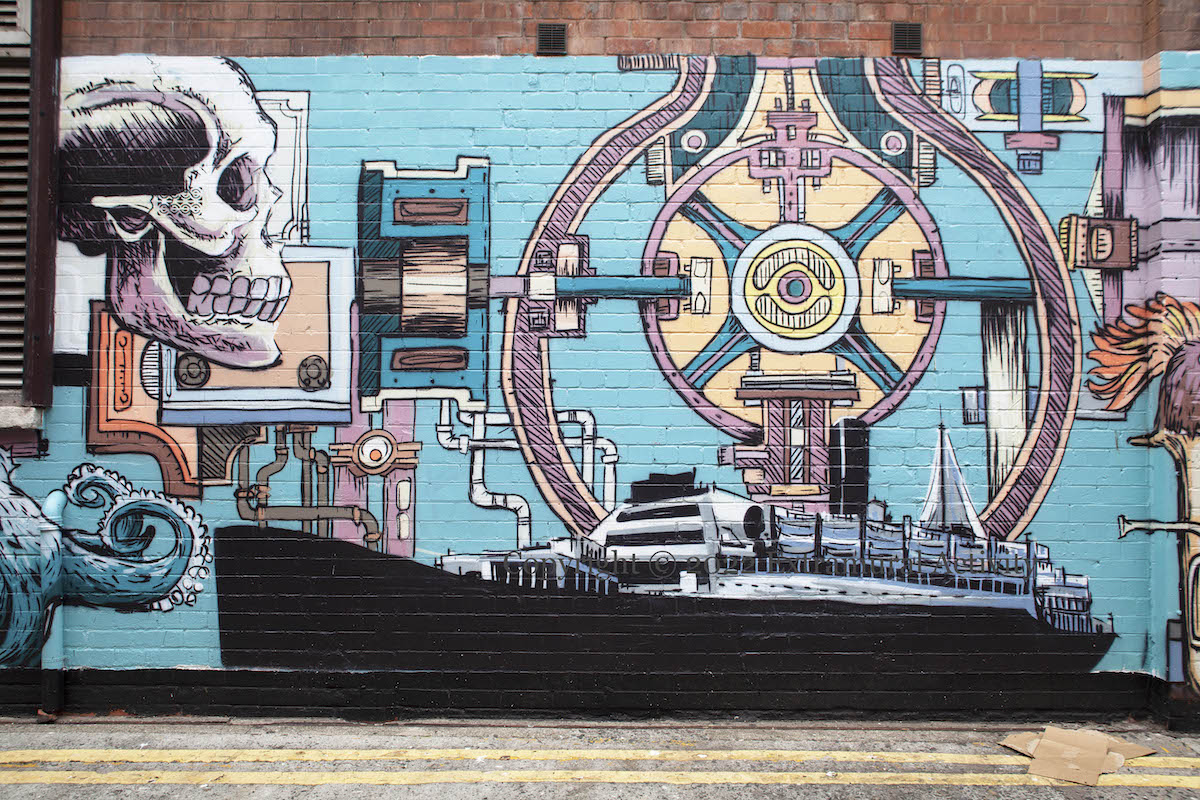
The Royal Victoria Hospital was the first public building in the world to have air conditioning, developed by Sirocco Works. Fans drew in outside air and passed it over mats of wetted coir (Cooling Post | images at HEVAC-Heritage). The qualifier “public” is necessary perhaps because Carrier invented the general process for a printing factory in New York (ASME) in 1902 and the New York Stock Exchange installed a system in 1902 (6sqft)
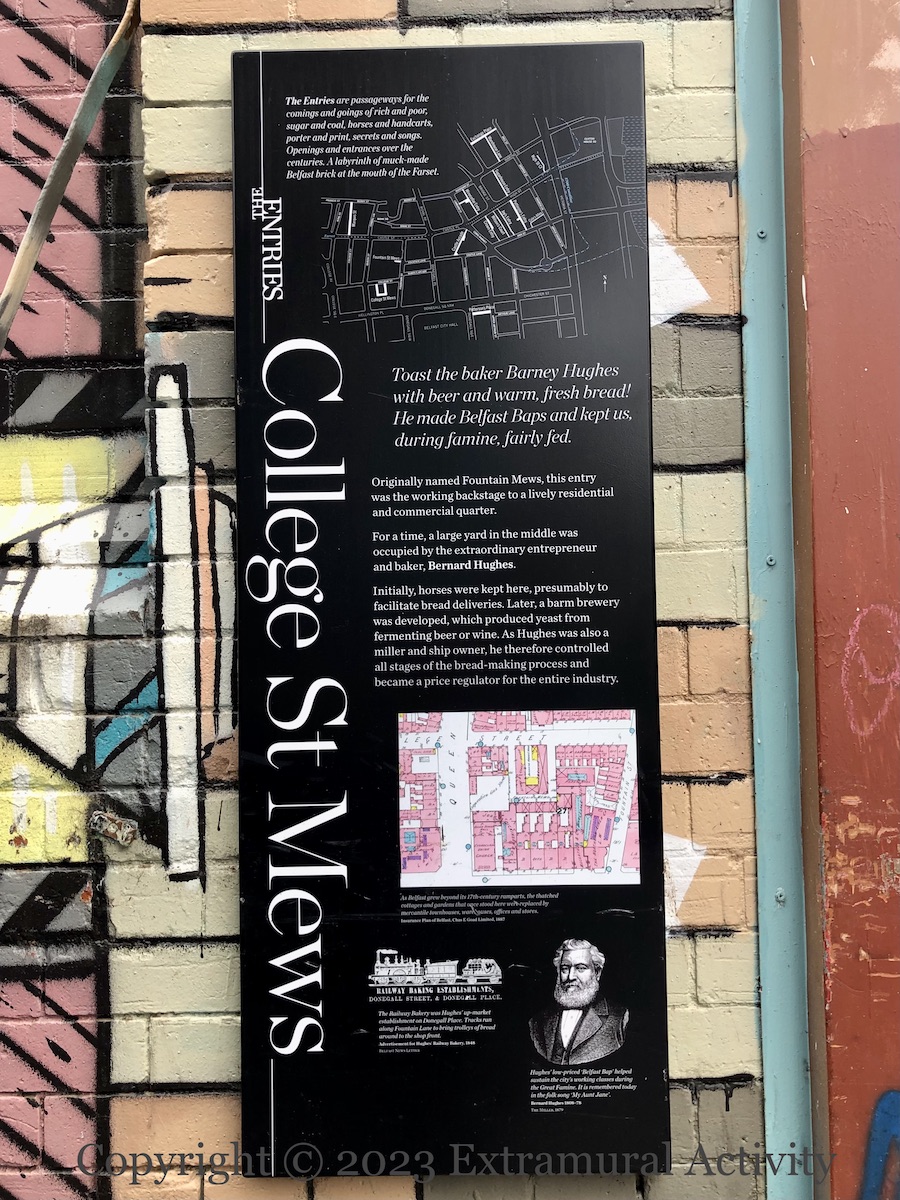
The image above is only one of many panels in College Street Mews by Ed Hicks (ig) on the general theme of Belfast and its industry.
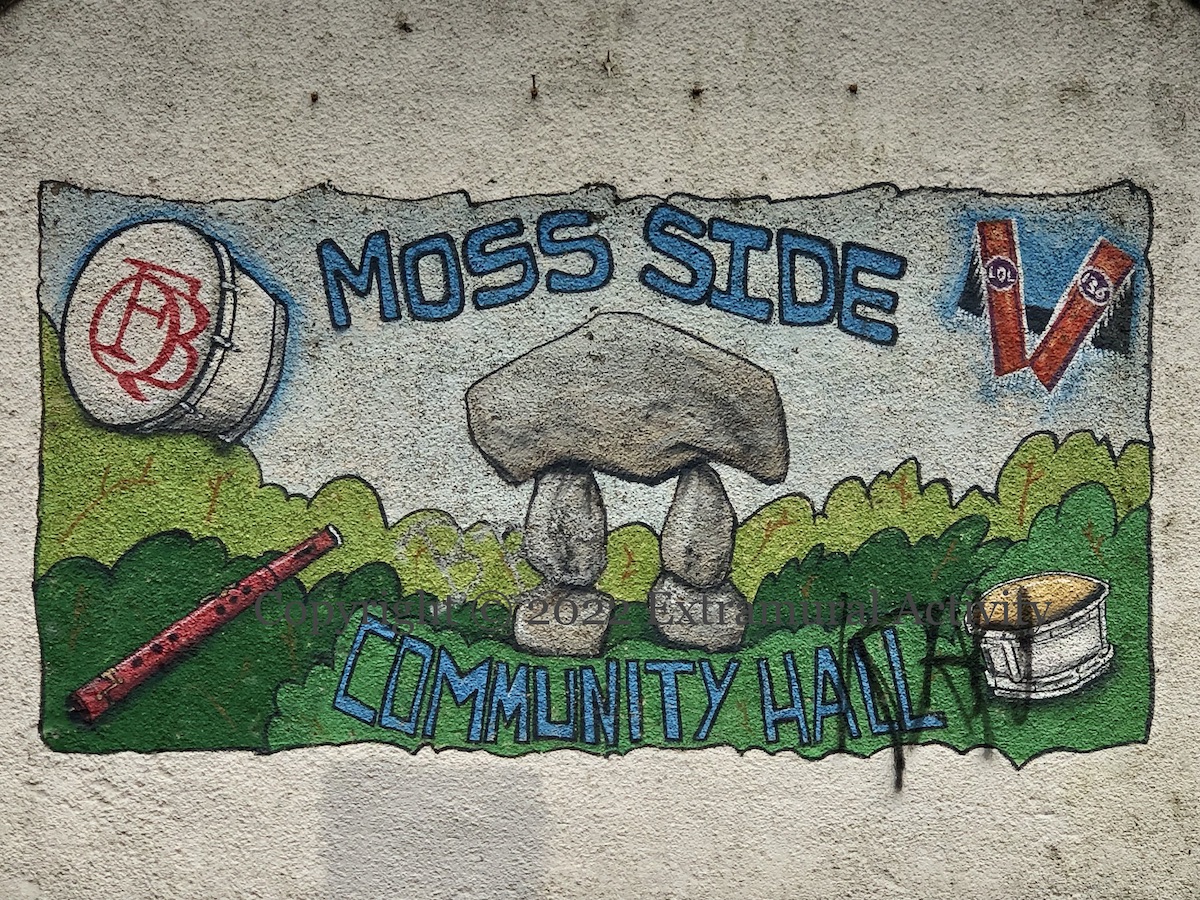
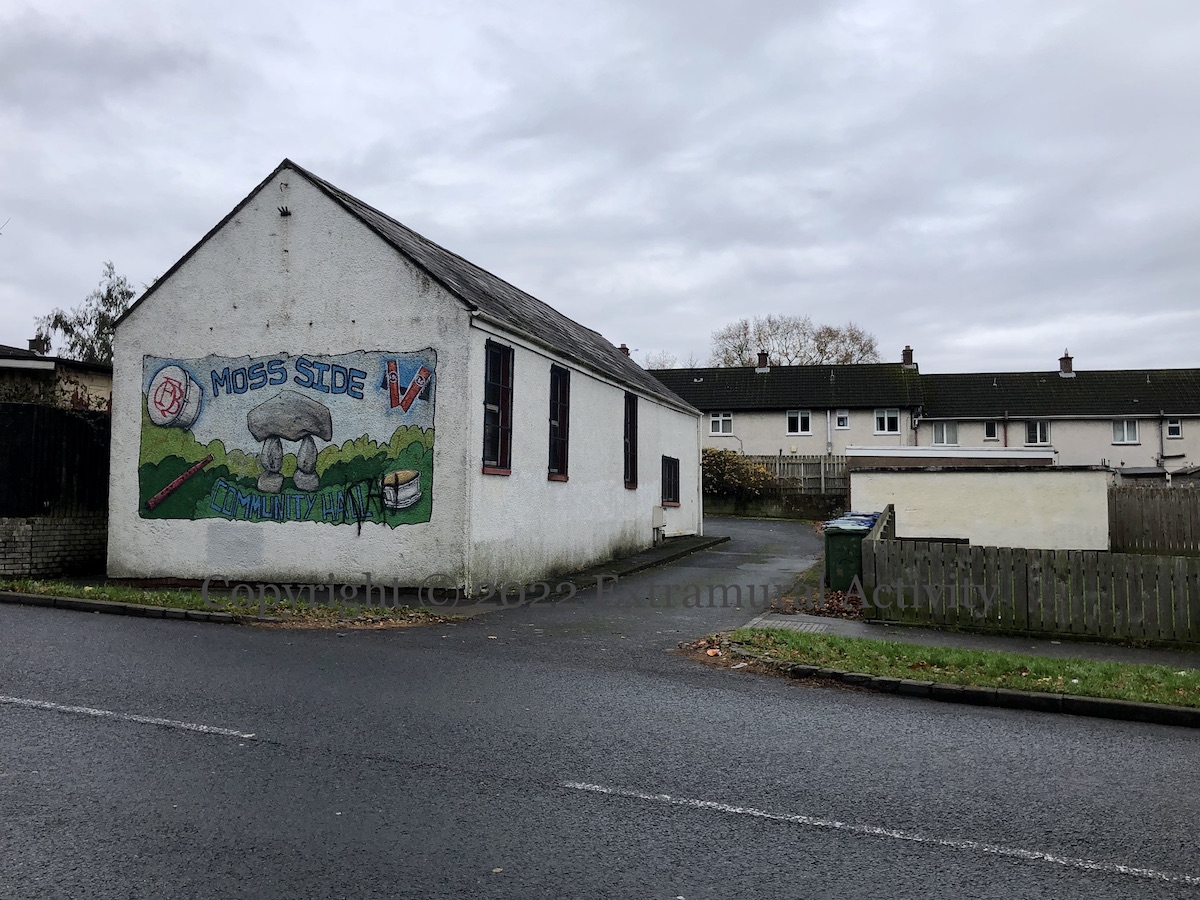
“Moss side” is probably Scots, with “moss” meaning “marsh” or “(peat) bog” (DSL) and this mural is appropriately on Ballybog Road (in Dunmurry), “bog(ach)” in Irish meaning “soft (ground)..
In the mural, “QFB” is Queensway Flute Band – they used to have a mural in Seymour Hill – and “LOL 136” is a lodge in the Derriaghy District (Fb). It’s not clear if there is a specific referent for the dolmen in the centre. The mural is at least 12 years old and it is not clear what functions the hall currently serves; it previously (2017) was home to a men’s shed and in 2018 a Youth Hub opened in the building next to the hall (NIWorld).
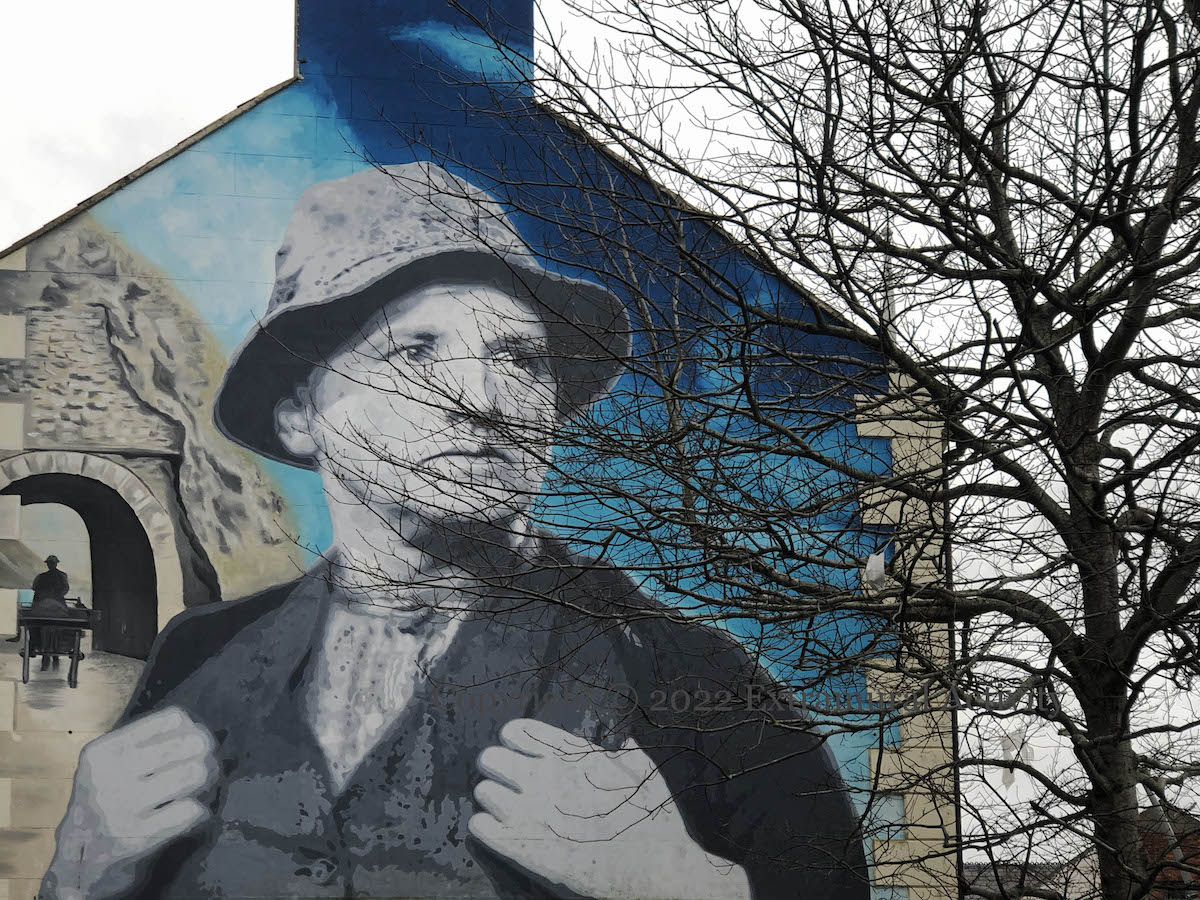
He collected songs, both Orange and traditional Irish, and played the harp. He went on to record 156 records, act in at least eight movies and write 11 travel books, the most popular of which was In Praise Of Ulster, with drawings by the landscape artist James Humbert Craig – some images from the book can be seen here.
The mural, in Larne’s Main Street, was designed by emic (ig) and painted by Dee Craig (Fb). Since 2021 you can also follow a trail around Richard Hayward’s East Antrim .
There is now a mural in Stanhope Street of “Carrick Hill in the old days”, of two women talking in the street, to complement the four printed boards.
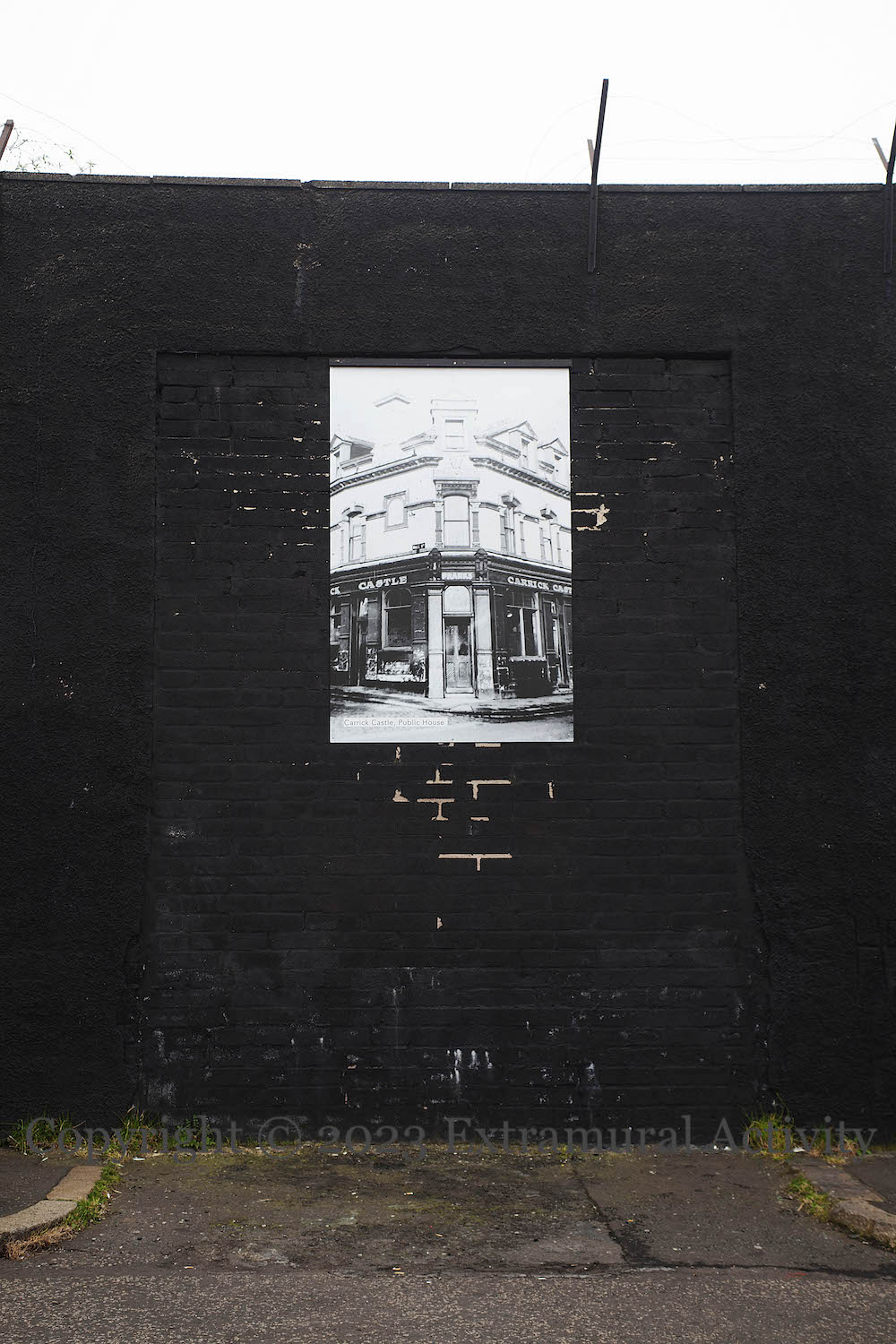
Below are two of the fifteen boards around the corner in Regent Street, showing the Carrick Castle public house and the old Unity flats.
Other boards in the collection (not shown) show street games, street parties, and Alton United football club, a team founded in 1921 that played in the Falls League and won the 1923 Free State Cup Final (Bohs Sporting Life).
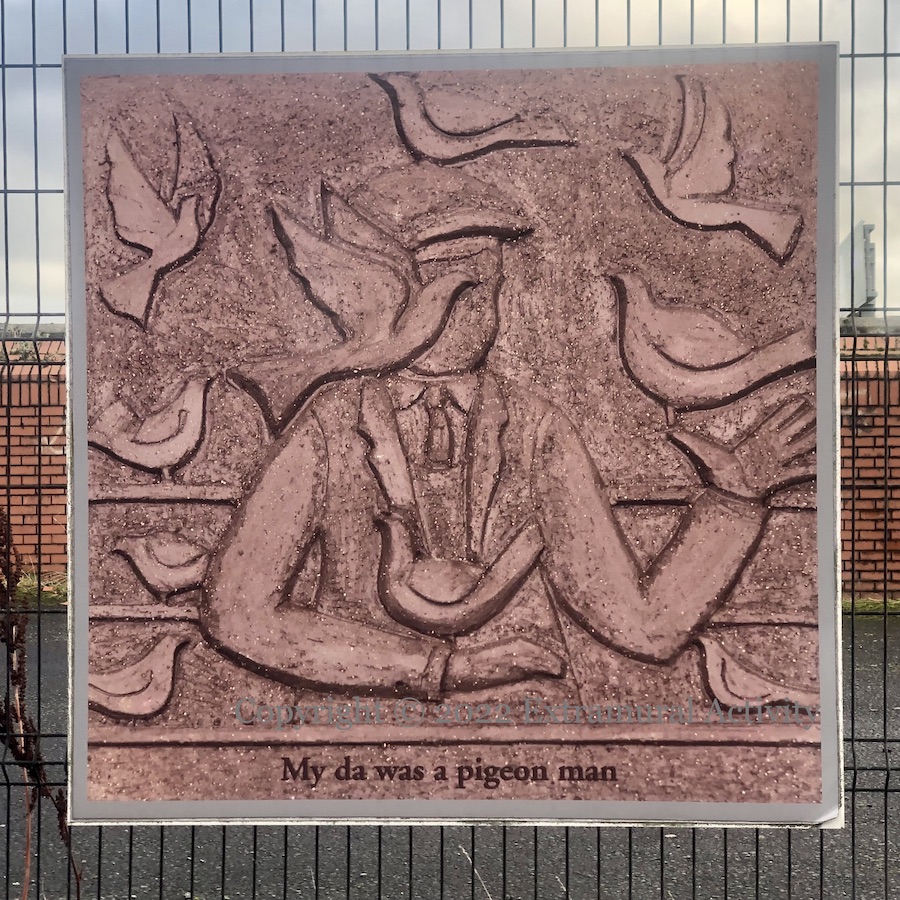
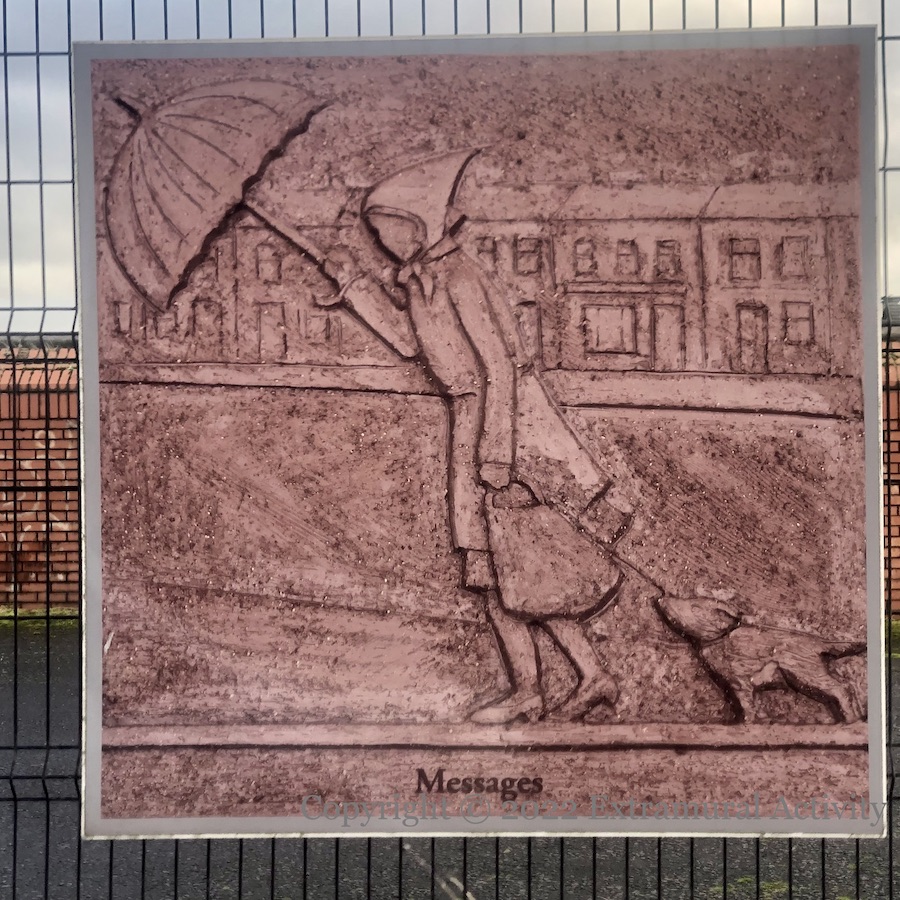
Here are six pieces on the fence above the Townsend Street gates in the west Belfast “peace” line (seen previously Da War Is Not Over Yet and Mickey Marley’s Roundabout) depicting life in years gone by in the Townsend Street/Brown’s Square area. The six are (from left to right on the street/top to bottom on this page):
Messages – “Doing” or “running” “messages” means grocery shopping.
Half Moon – the “half moon” was the semi-circular area on the pavement outside a terraced house that would become shiny with repeated washing. Here are some descriptions and memories from Belfast Forum.
Born, Wed And Buried On Townsend St
Atlas & Soho: The Soho iron foundry in Townsend Street was owned and managed by Robert Shipboy McAdam and his brother James (Ricorso | Grace’s); the Atlas foundry was at 73 Townsend Street and owned by Victor C Taylor (Lennon Wylie).
Dog Walking Man
These appear to be prints or photographs on boards, rather than stone casts as on the CNR side of the gates: see The Oasis.











 Extramural Activity