A Blythe Yuletide Tae Yin An Aa

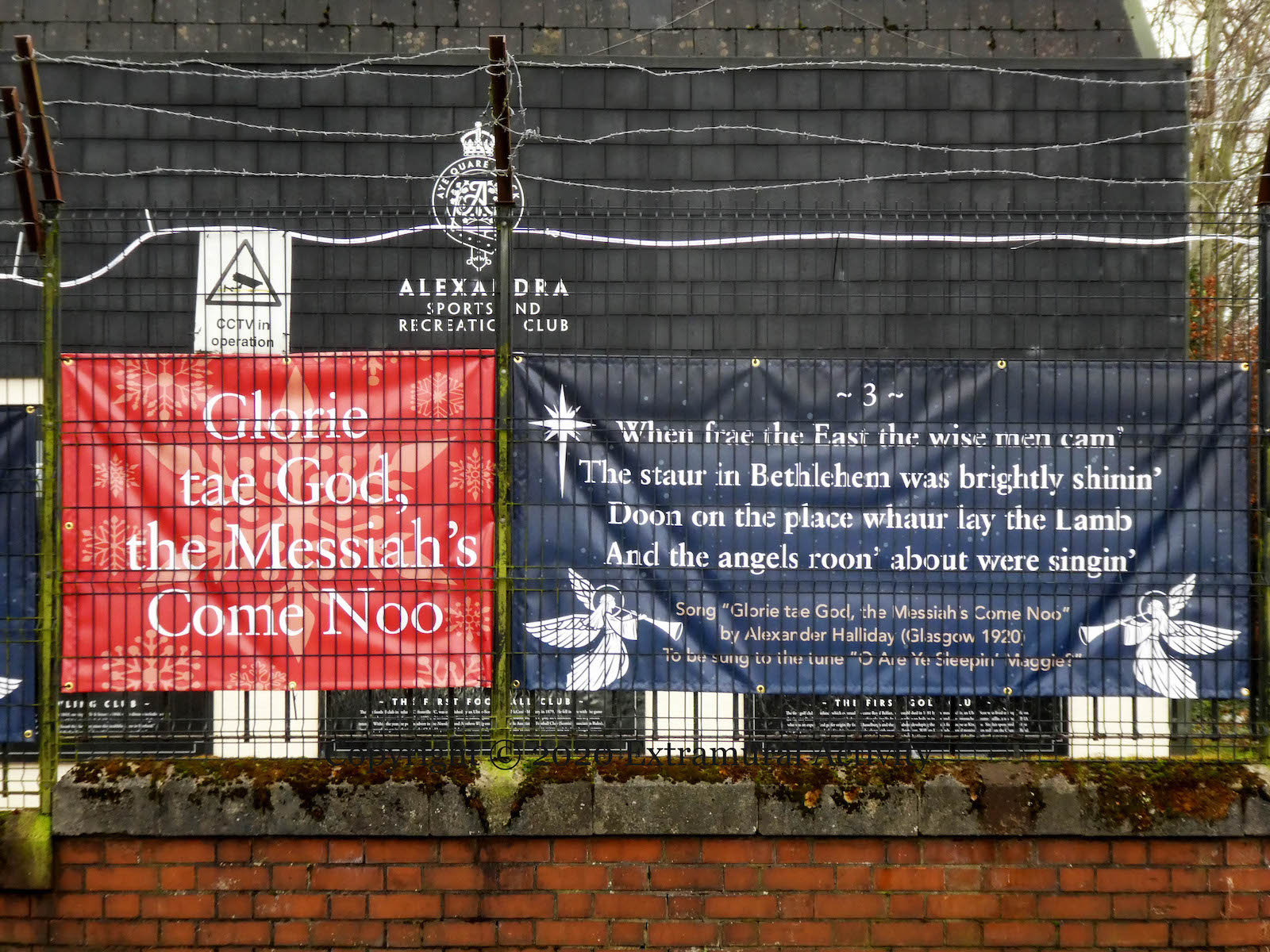
“Glorie tae God, the Messiah’s come noo”. The story of the birth of Jesus is told in Ulstèr-Scotch passages from the Bible and from Alexander Halliday’s song on tarps around the North Belfast Orange Memorial Hall. “A virgin will cairrie a wean … an whan he’s boarn, he’ll be caad Immanuel, mainin “God is wi iz.” (Mattha 1v23)” “When frae the East the wise men cam/The staur in Bethlehem was brightly shinin’/Doon on the place whaur lay the Lamb/And the angels roon’ about were singin’.”

The NHS tarp on the front of the hall was featured in July.

Click image to enlarge
Copyright © 2020 Seosamh Mac Coılle
X07797 X07796 X07798
Bonies

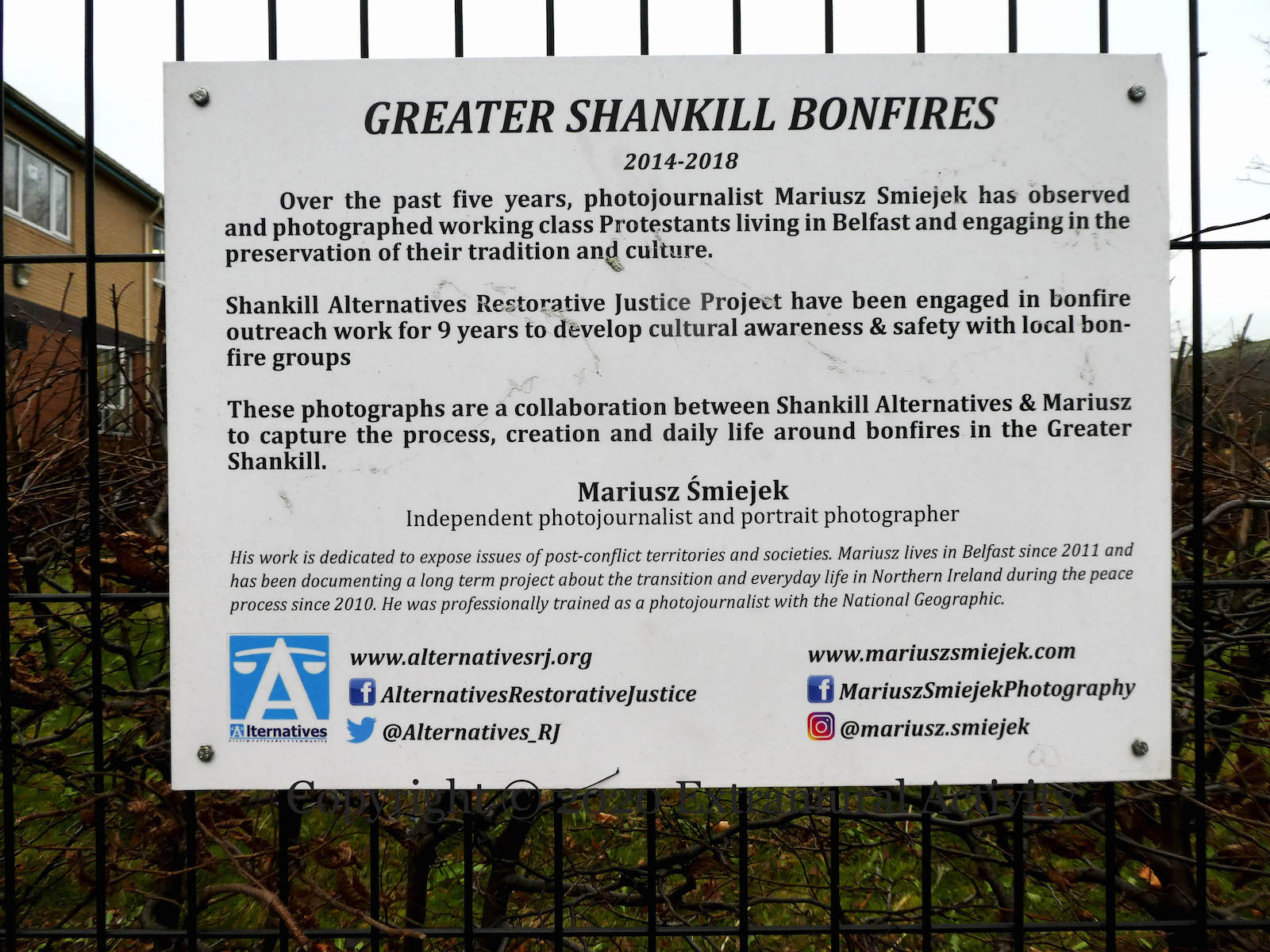
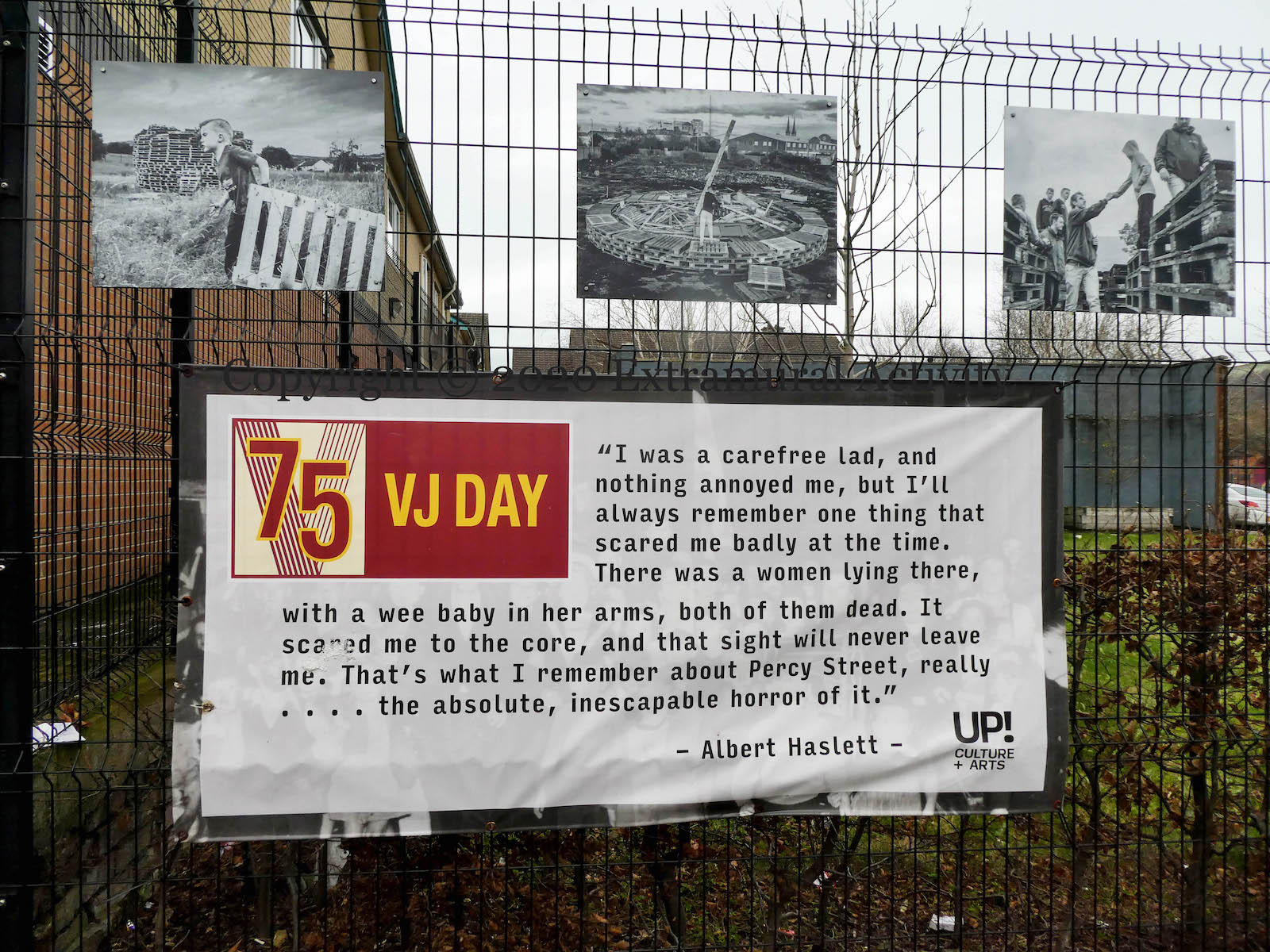
Photographer Mariusz Smiejek (web | ig) was born in Poland in 1978 but moved to Northern Ireland in 2011, which is when he started taking pictures of bonfires – in areas such as Highfield, the Village, and the Shankill – and the people around them. The full gallery for his ‘Bonies’ project is available on his web site.

Click image to enlarge
Copyright © 2020 Seosamh Mac Coılle
X07790 X07791 alternatives

Rock Of Ages

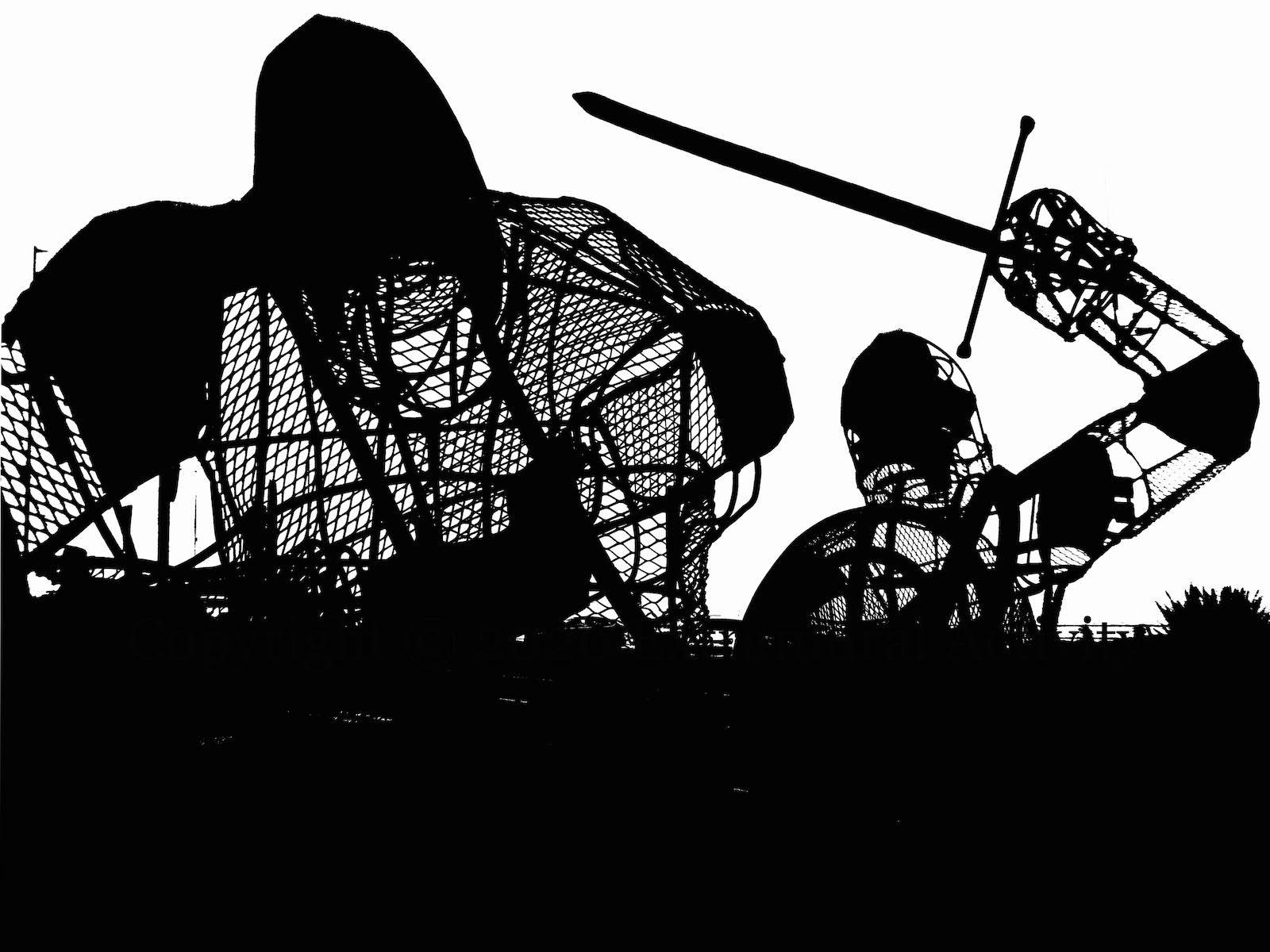
Carrickfergus castle was founded by the Anglo-Norman knight John de Courcy in 1177 and it became the stronghold of power in the north of Ireland, leading to its besiegement over time by a litany of Scots, Irish, English – including under Schomberg in 1689 – and French forces (WP). In the present day, the flag of a Kingdom uniting England, Scotland, and (Northern) Ireland currently flies on Marine Highway next to the sculpture showing three Anglo-Norman knights defending the castle (unsuccessfully) against the forces of Edward Bruce of Scotland in 1315 (info plaque). The sculptor is unknown.

See also The Carrickfergus Knights, a painting of the statues on a shop’s shutters in the town.

Click image to enlarge
Copyright © 2020 Seosamh Mac Coılle
X07412 X07411 [X07413] [X07414]

Portrush Flyer

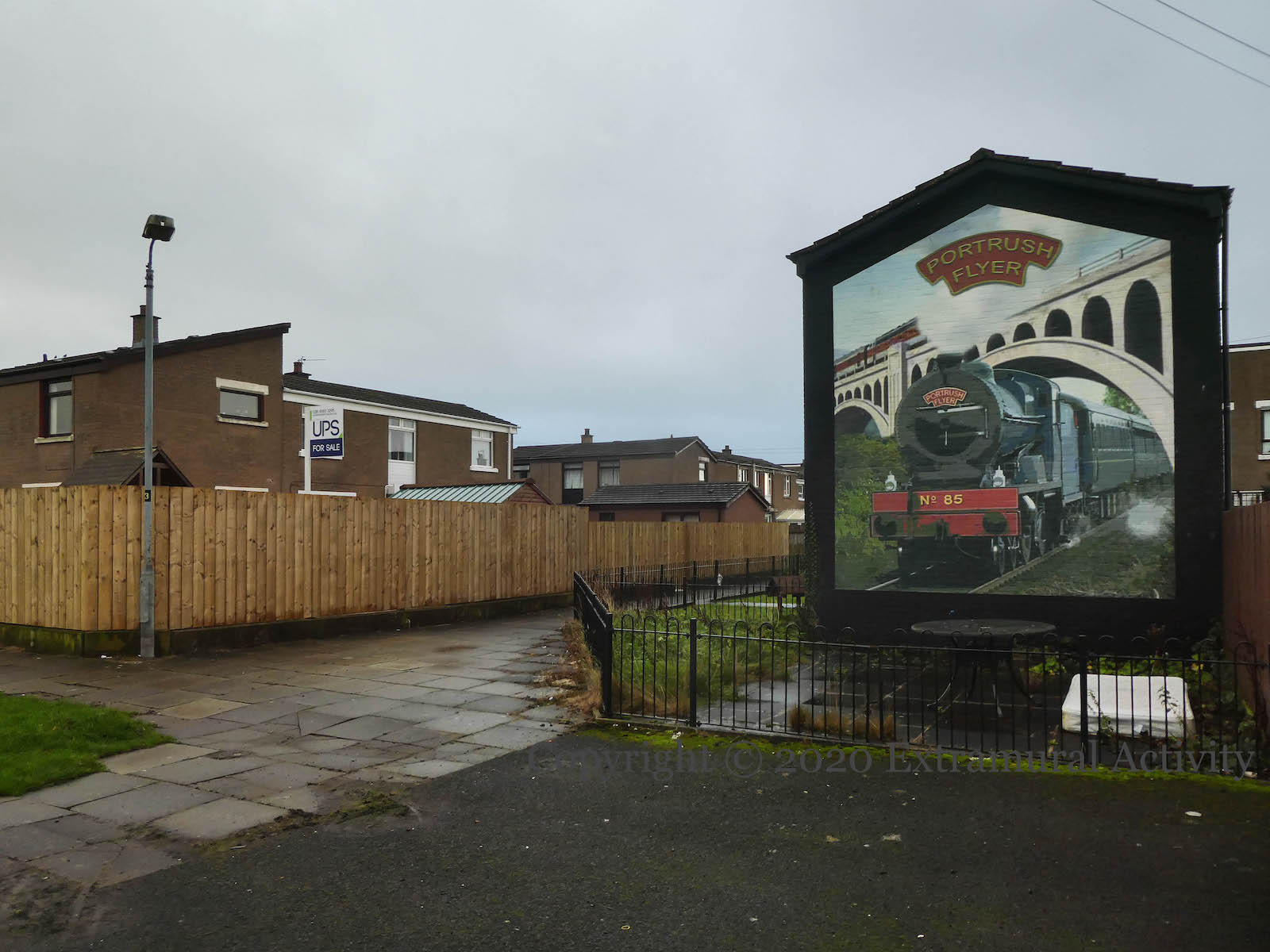
The Portrush Flyer is a steam-engine train service operating (since 1973) between Belfast and Portrush on Sundays during the summer months. The mural, in Ards Park, Monkstown, replaces a UFF mural dating back to 2001. Shown is engine ‘No. 85’ (which is just one of the engines that have been used; for images of ‘No. 171’, ‘No. 4’, ‘No. 85’, and ‘No. 131’ dating back to the 1970s, see SteamTrainsIreland) passing under one of the “new” viaducts (for more info, see Geograph). For an image of the mural’s 2019 launch, see Newtownabbey Times.

Click image to enlarge
Copyright © 2020 Seosamh Mac Coılle
X07739 X07740 Dee Craig Housing Excutive

Old Firm

Glasgow Celtic stickers on Divis Street, Glasgow Rangers sticker on the Shankill. We can’t really improve upon the WP entry‘s introduction: “the rivalry between [the two teams] has become deeply embedded in Scottish culture. It has reflected, and contributed to, political, social, and religious division and sectarianism in Scotland. As a result, the fixture has had an enduring appeal around the world.” – including Northern Ireland.

See previously: Ultras Celtic | Balance Enquiry
A Matter Of Life And Death | Follow, Follow | The Boys In Blue | We Are The People
Also Gegen Rechts

Click image to enlarge
Copyright © 2020 Seosamh Mac Coılle
X07753 X07575

Rathfern Remembers

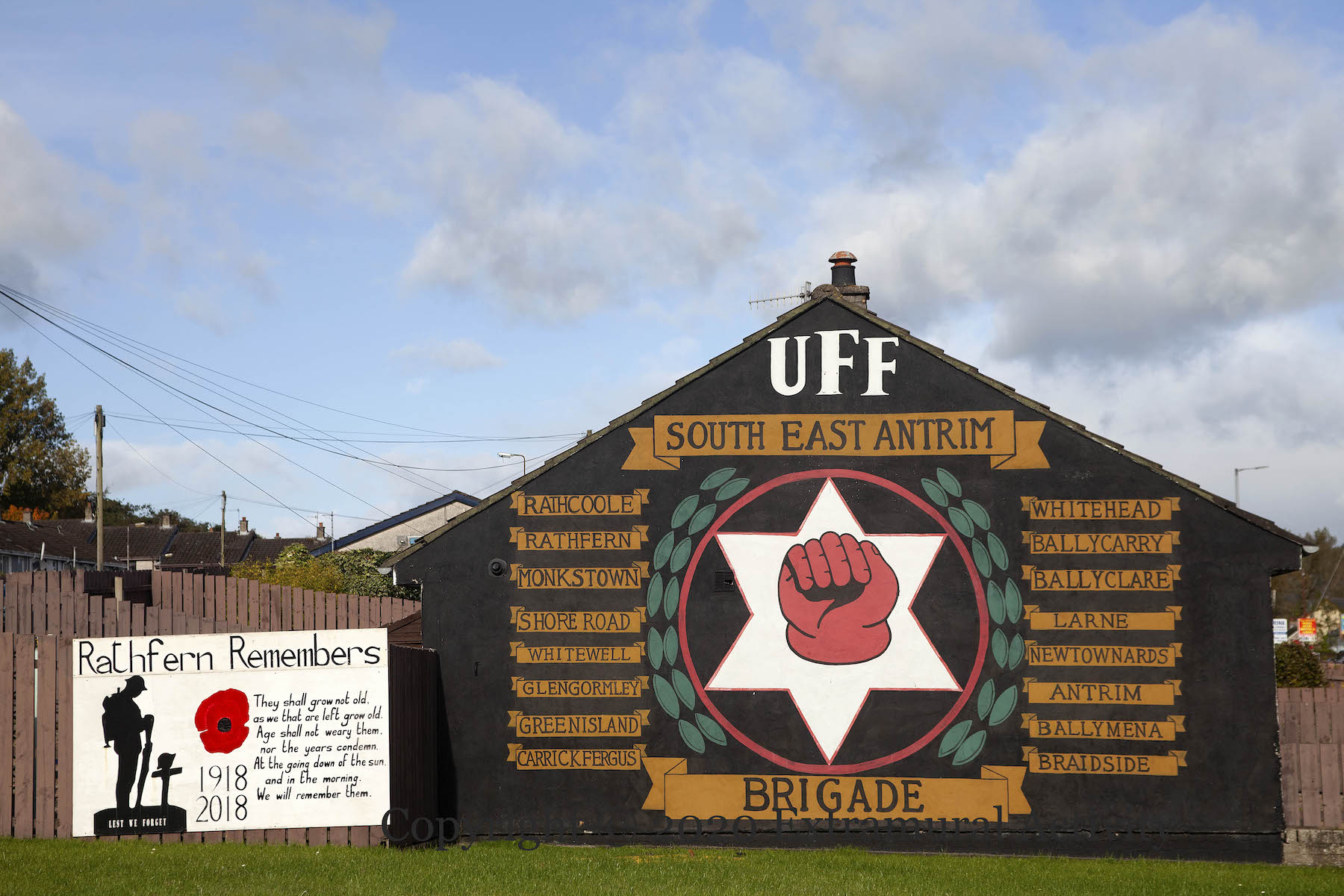
For the centenary of the end of WWI (in November 2018) a small board was added to the UFF’s South East Antrim Brigade mural in Rathfern.

Click image to enlarge
Copyright © 2020 Seosamh Mac Coılle
X07738 Knockenagh Ave

Cultúr, Teanga, Comhphobaıl

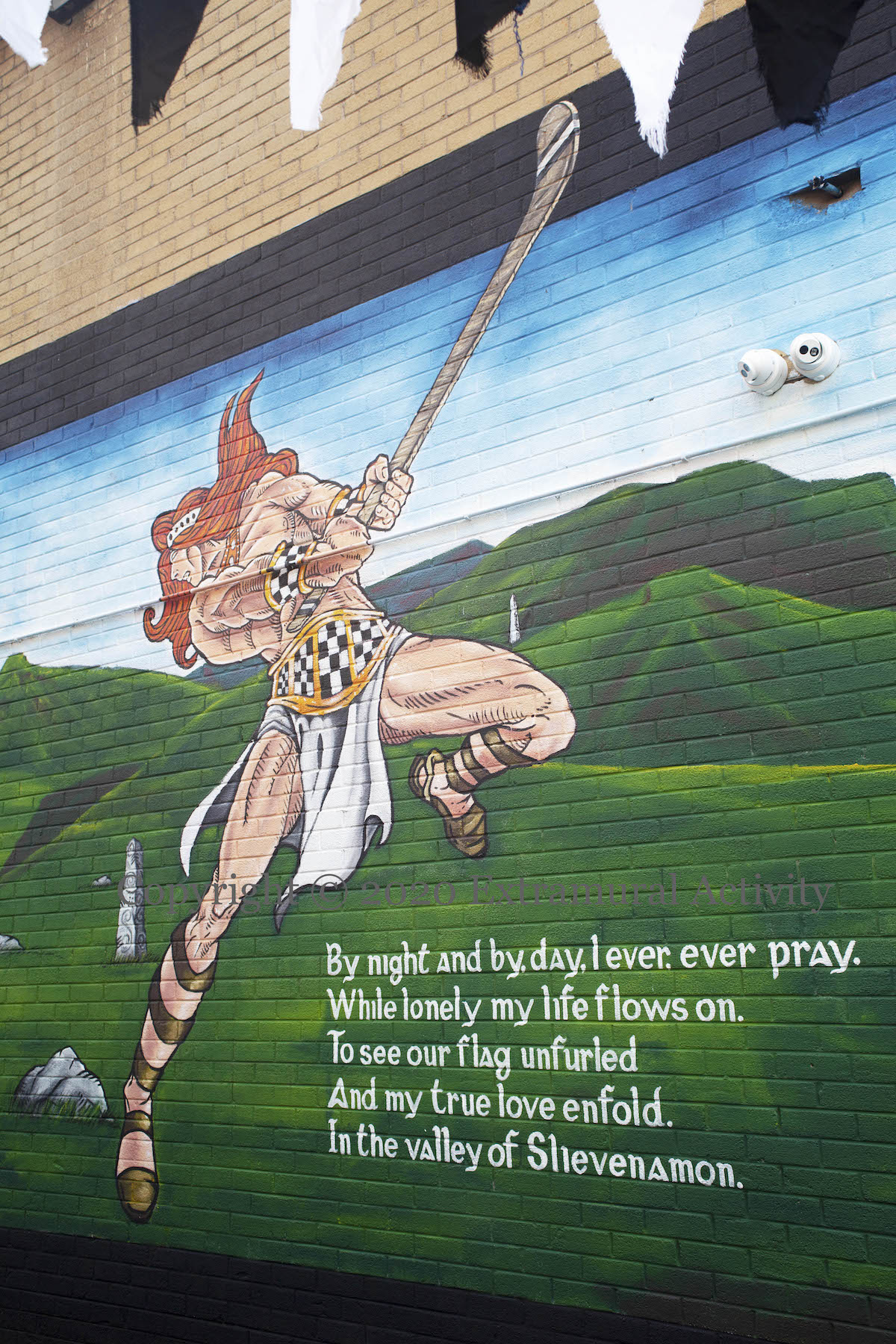
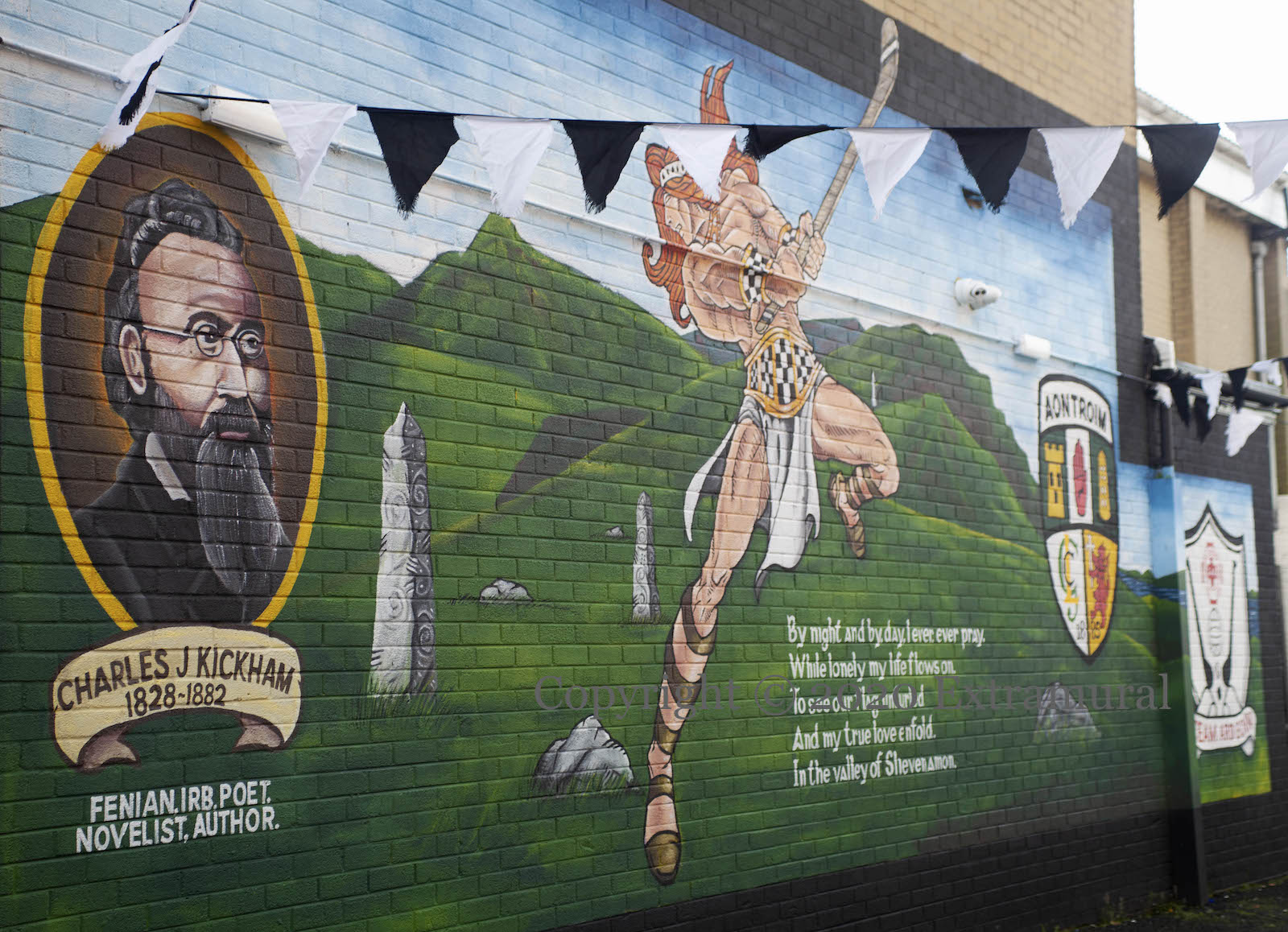
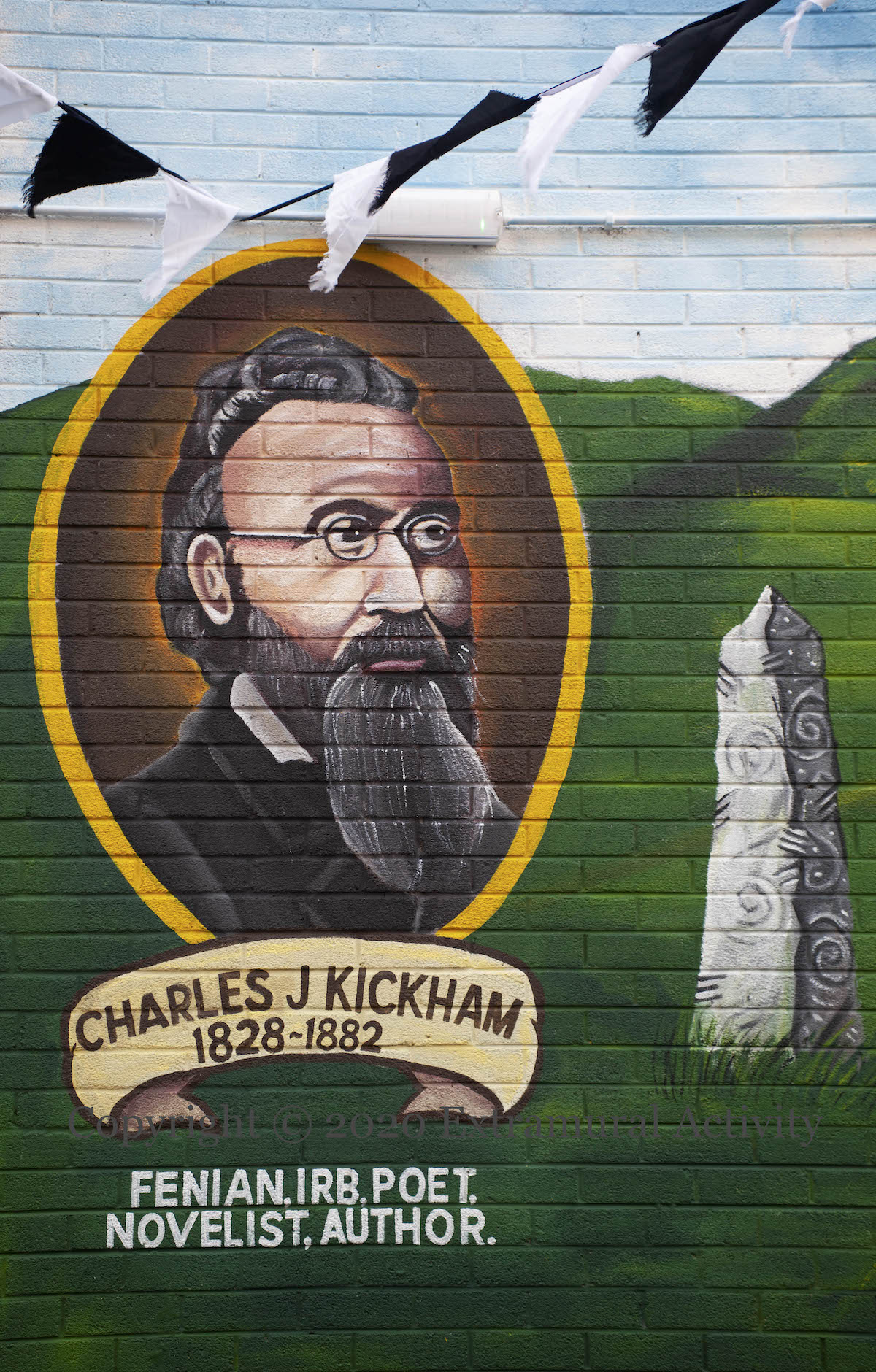
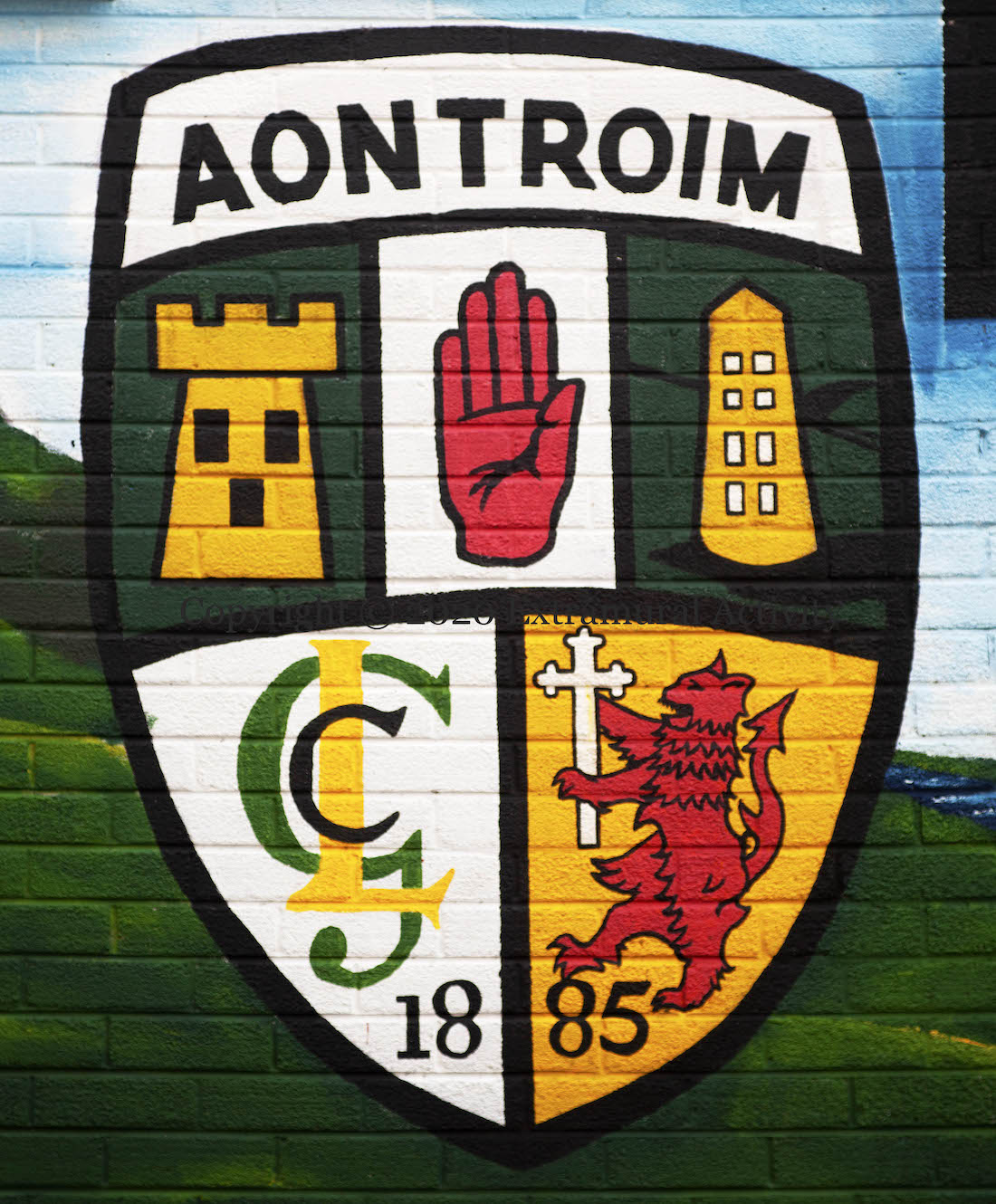
“By night and by day, I ever, ever pray/While lonely my life flows on/To see our flag unfurled/And my true love [to] enfold/In the valley of Slievenamon.” The lyrics are the final lines of The Valley Of Slievenamon, written by Charles J Kickham “fenian, IRB, poet, novelist, author” and much loved in Tipperary. The heroic hurler, however, is Cú Chulainn (rather than the midlands’ Fıonn Mac Cumhaıll). Ardoyne Gaelic games club Cıceam Ard Eoın (tw | Fb) was founded in 1907, 25 years after Kickham’s death.

See previously: (2008) Ard Eoın Kickhams | (2015) The Heart Of Our Community one | two. Also Stronger Together.

Click image to enlarge
Copyright © 2020 Seosamh Mac Coılle
X07644 X07641 X07642 X07643 X07646 X07647 X07645

Below The Castle Walls

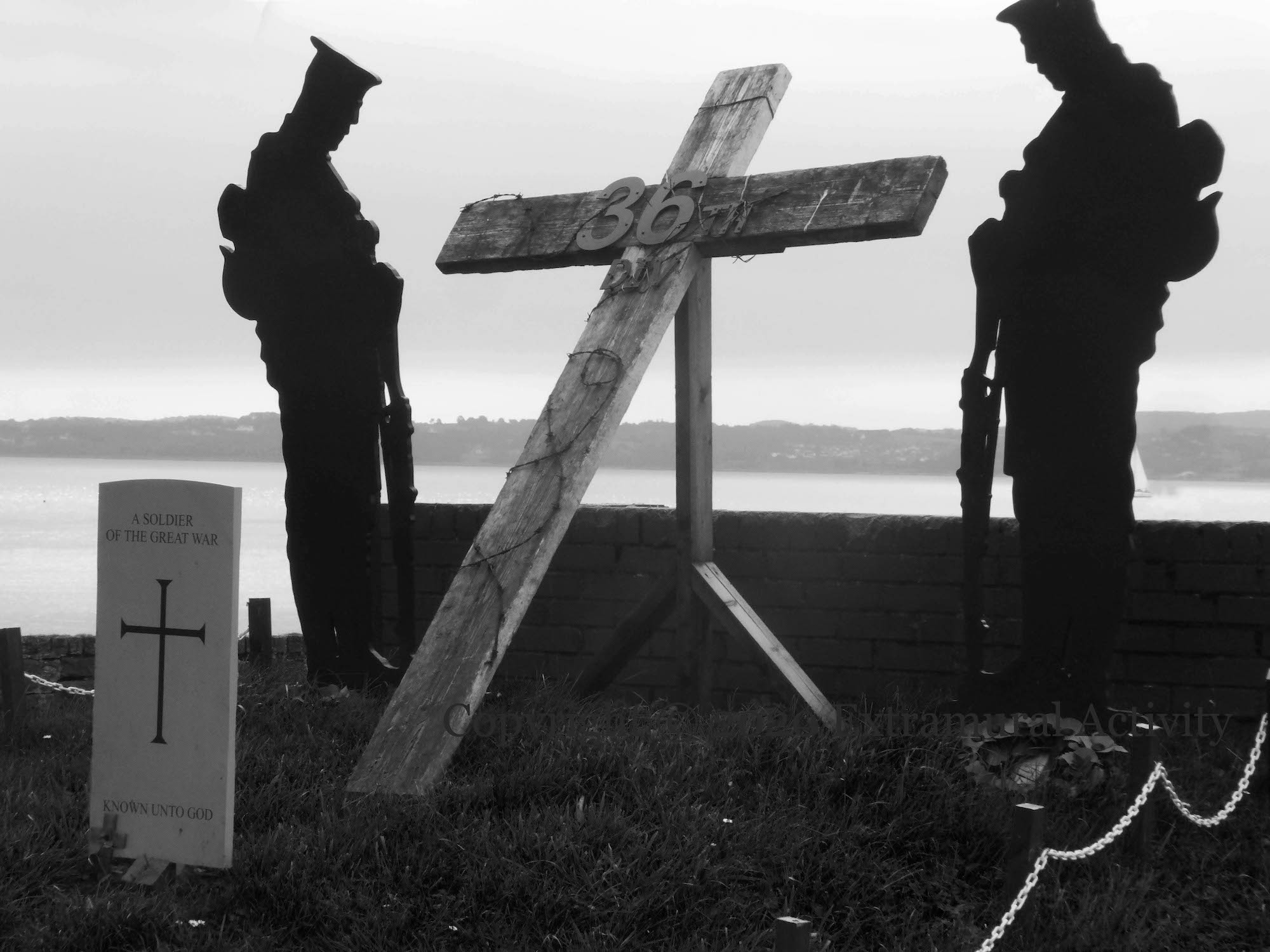
Carrickfergus castle was built in 1177 and has seen multiple battles in the intervening years, including the Battle Of Carrickfergus in 1597 in which the MacDonnells and O’Neills defeated the forces of Elizabeth I (WP). Its military history makes it a fitting spot for a remembrance of the dead of WWI from the 36th Division.

Click image to enlarge
Copyright © 2020 Seosamh Mac Coılle
X07381 [X07380] X07382 [X07383] [X07379] [X07378]

Sandy Row District

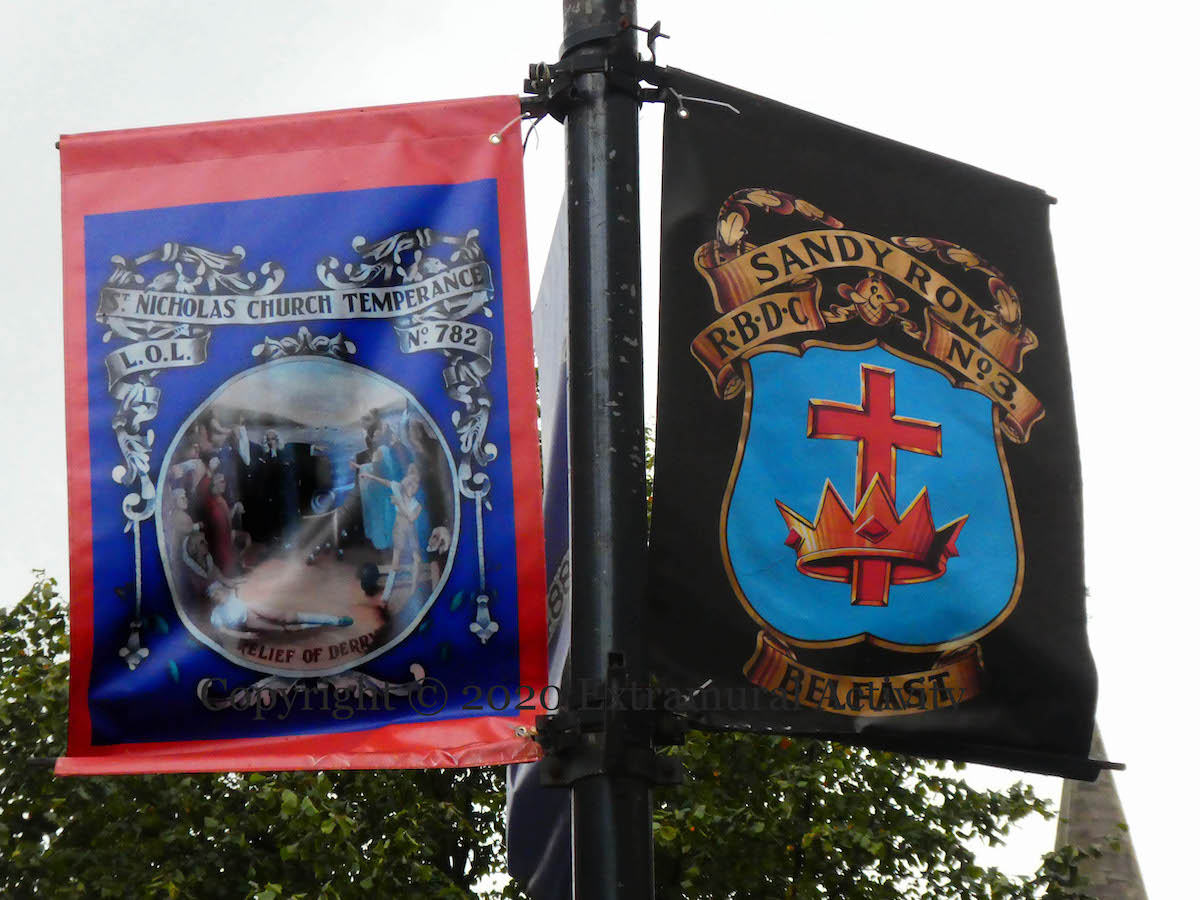
Bannerettes at the top of Sandy Row. On the left, “St Nicholas Church Temperance LOL No 782”. On the right, “Sandy Row RBDC [Royal Black District Chapter] No. 3, Belfast”. The No. 3 chapter was formed in 1885 (Belfast Grand Black Chapter Fb | web). Both groups are based in Sandy Row Orange Hall

Click image to enlarge
Copyright © 2020 Seosamh Mac Coılle
X07468

The Burning Bush

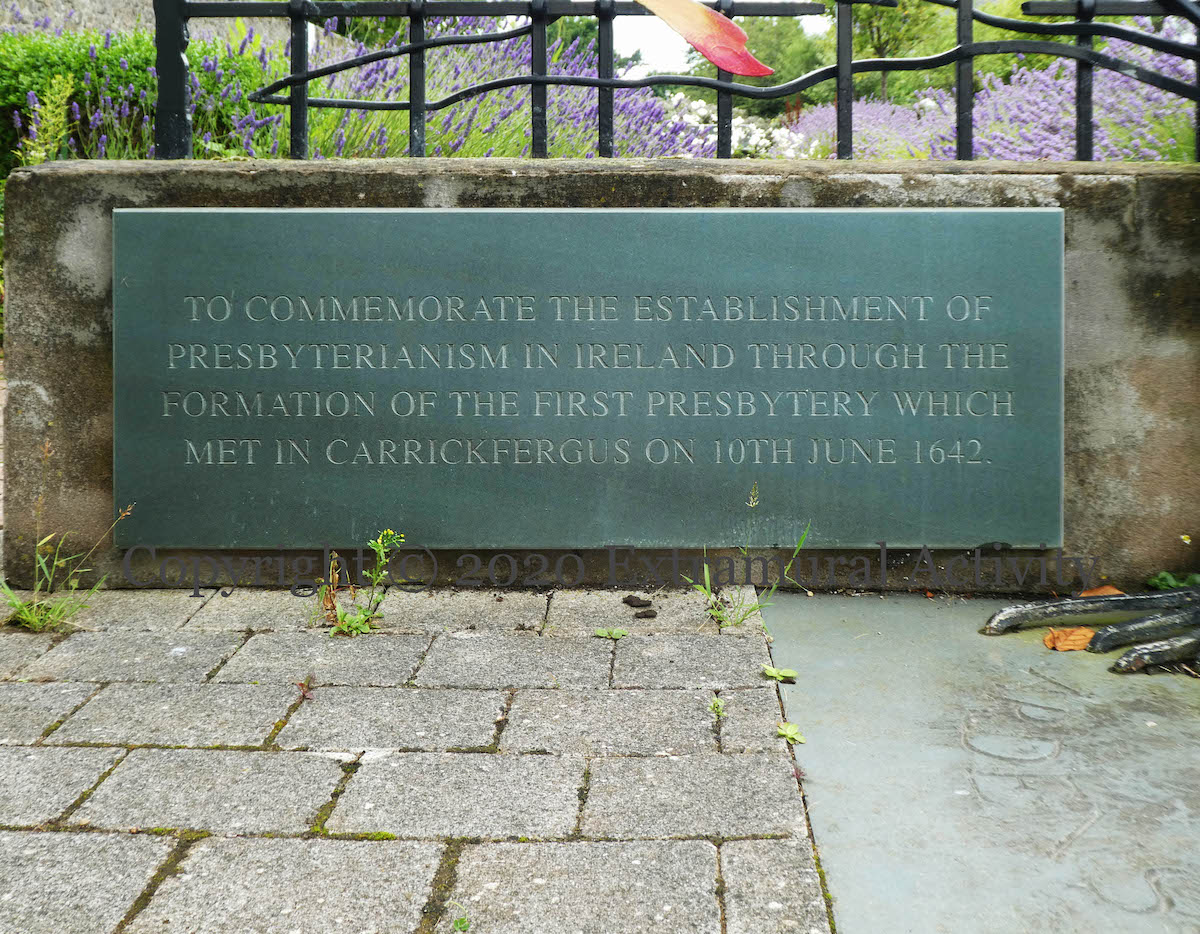
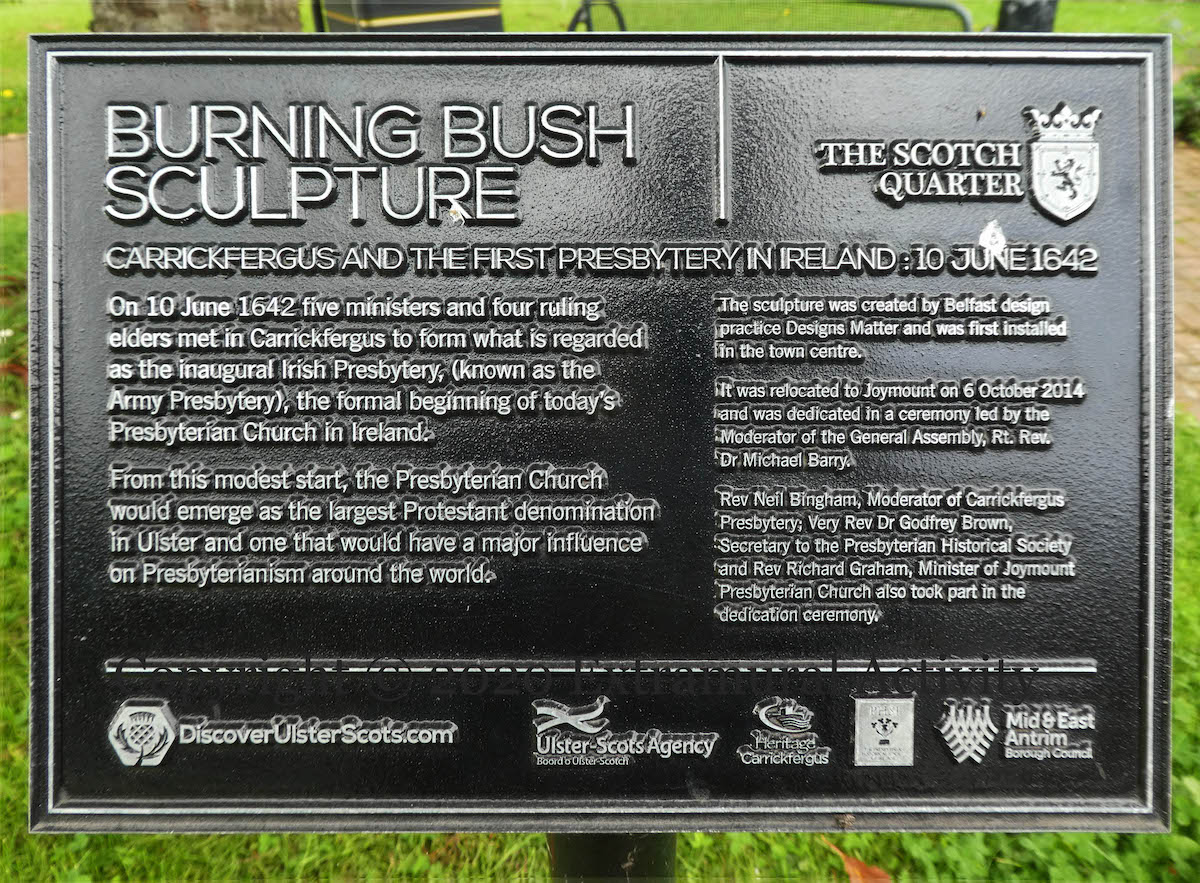
“To commemorate the establishment of Presbyterianism in Ireland through the formation of the first presbytery which met in Carrickfergus on 10th June 1642.” Presbyterianism began in Scotland circa 1560 under John Knox and spread to Ireland with the colonising settlers of the 1600s. (For more on the first presbytery, see Ancestry Ireland.) Although Presbyterians supported the Williamite campaign they were subsequently discriminated against as “dissenters” from Anglicanism.

The sculpture is at Joymount Presbyterian in Carrickfergus.

Click image to enlarge
Copyright © 2020 Seosamh Mac Coılle
X07402 X07403 X07404