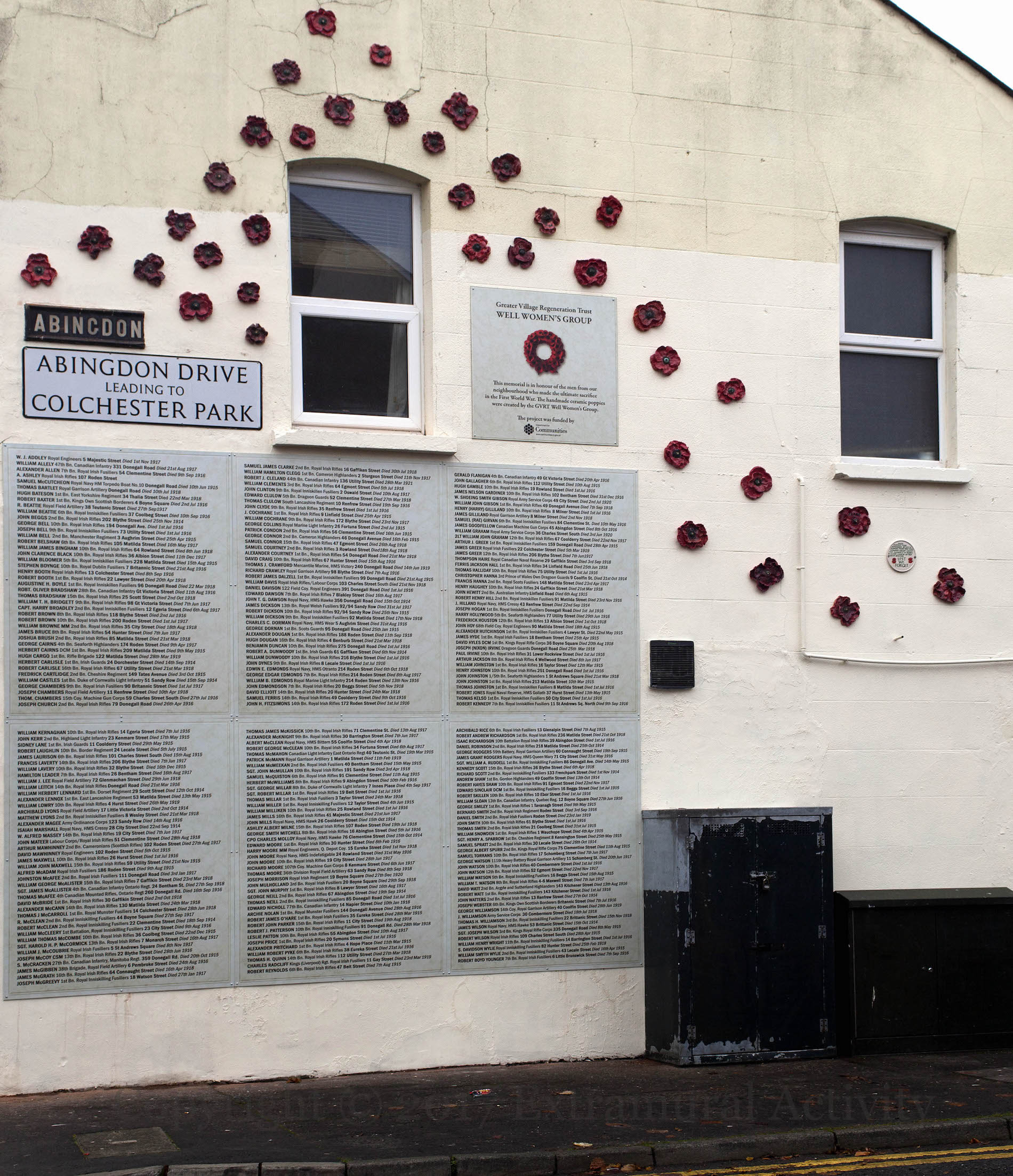
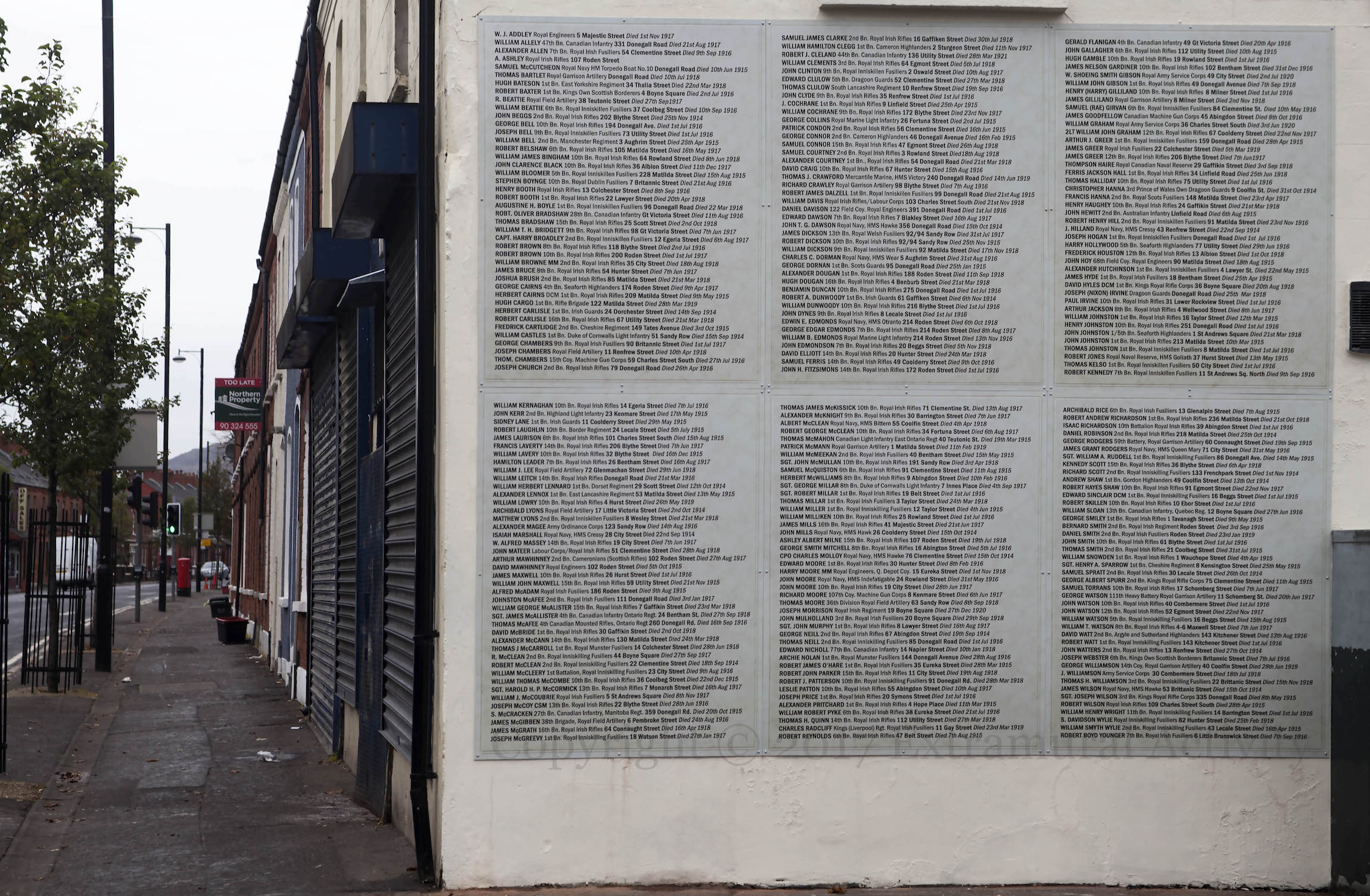
“This memorial is in honour of the men from our neighbourhood who made the ultimate sacrifice in the First World War. The handmade ceramic poppies were created by the GVRT [Greater Village Regeneration Trust] Well Women’s Group.”
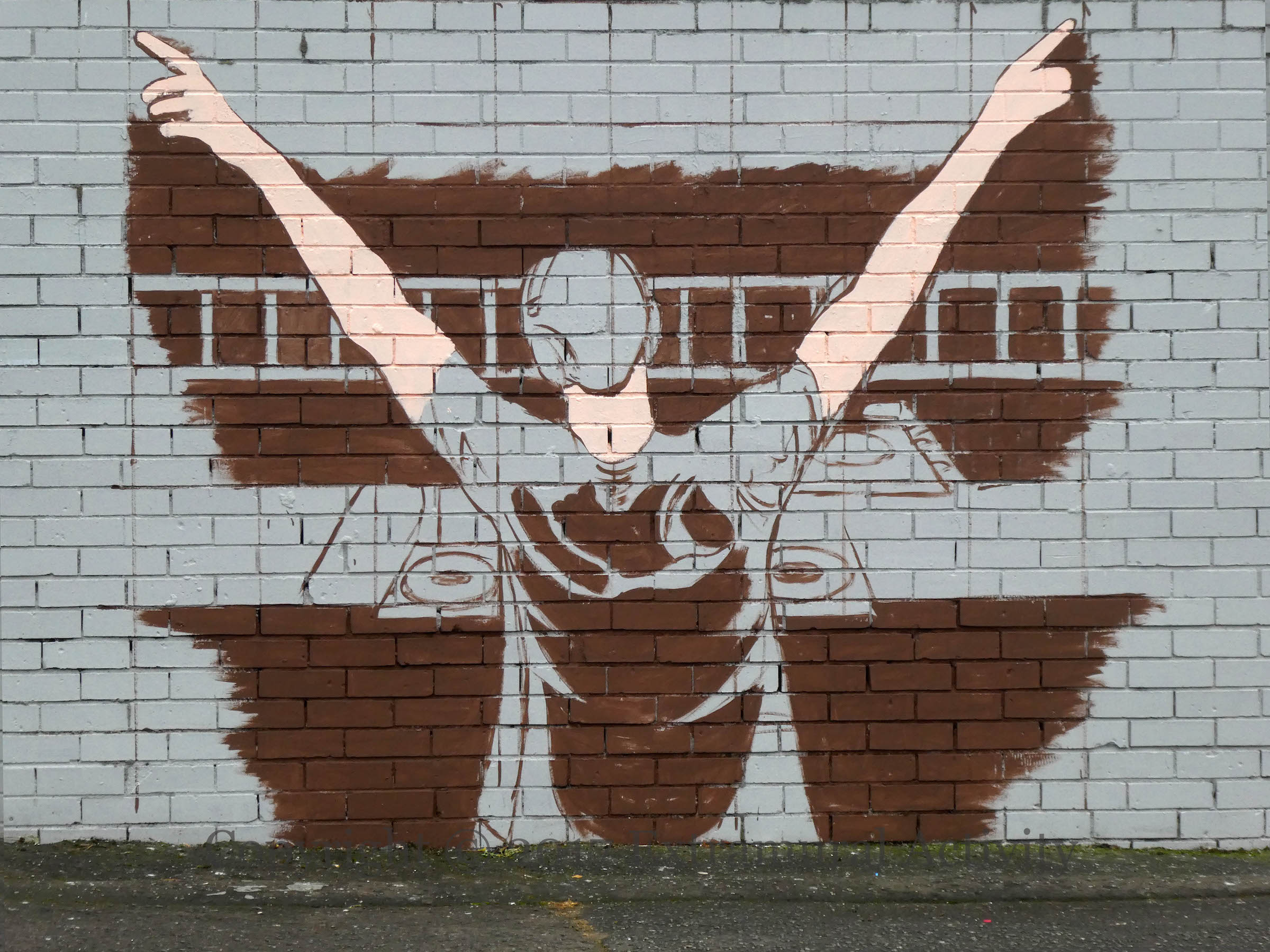
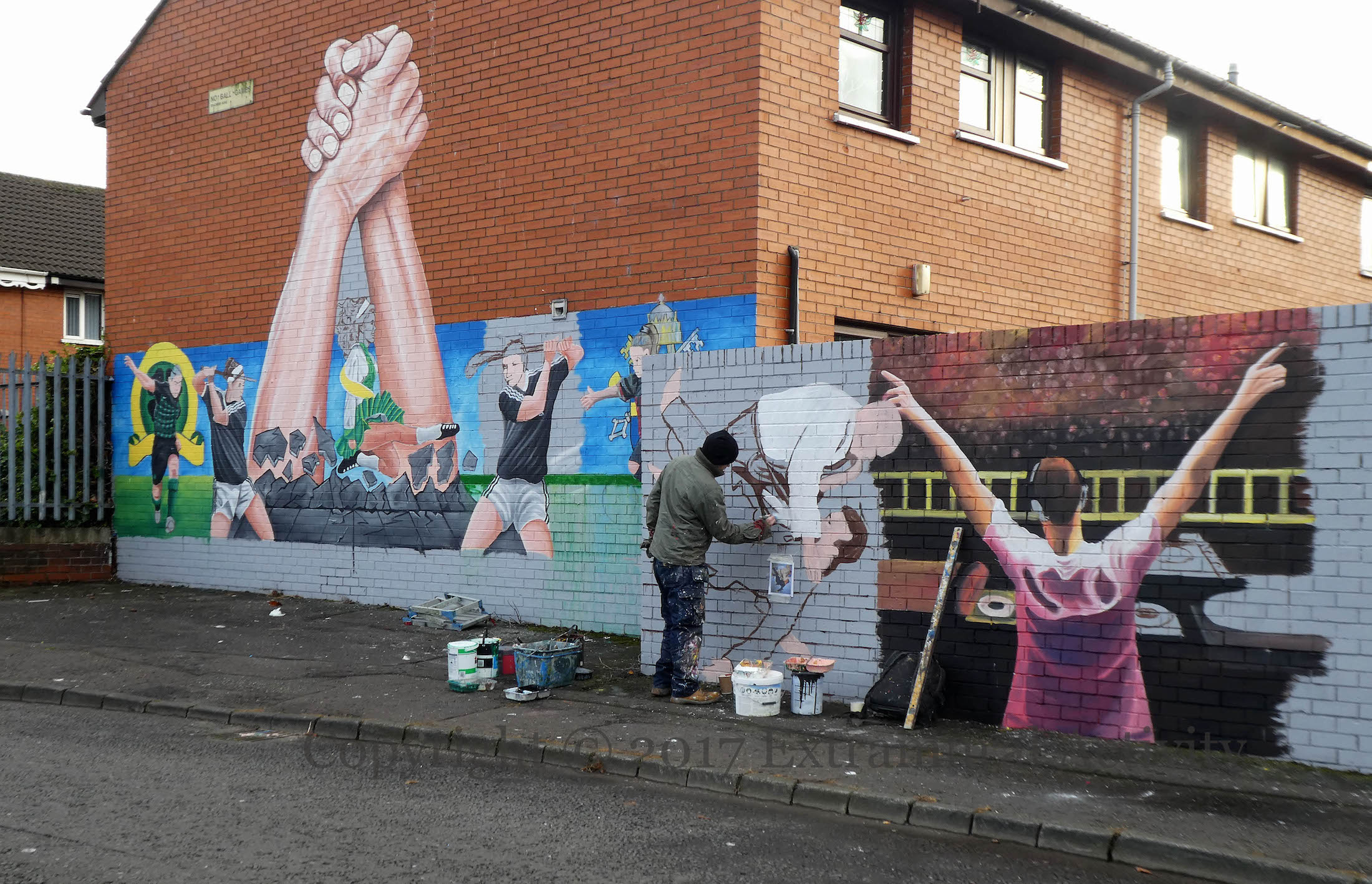
Here are eight images of the new Ardoyne mural featuring (from left to right in the image below) Ardoyne Youth Club, Ard Eoın Kickhams, and the John Paul II Youth Club as alternatives to bullying, racism, homophobia, addiction and other social ills. In addition to Irish dancing, soccer, and Gaelic games, there are also images of young people practicing martial arts, DJing, and boxing.
The Whiterock Flute Band was founded in 1962 by the the local Temperance Lodge and drew on areas near the now nationalist areas of New Barnsley, Moyard, Whiterock, and the upper Springfield for its membership. Over the years has seen the route of its annual parade changed “by the authorities or at the whim of nationalists” (band history pages one | two | three).
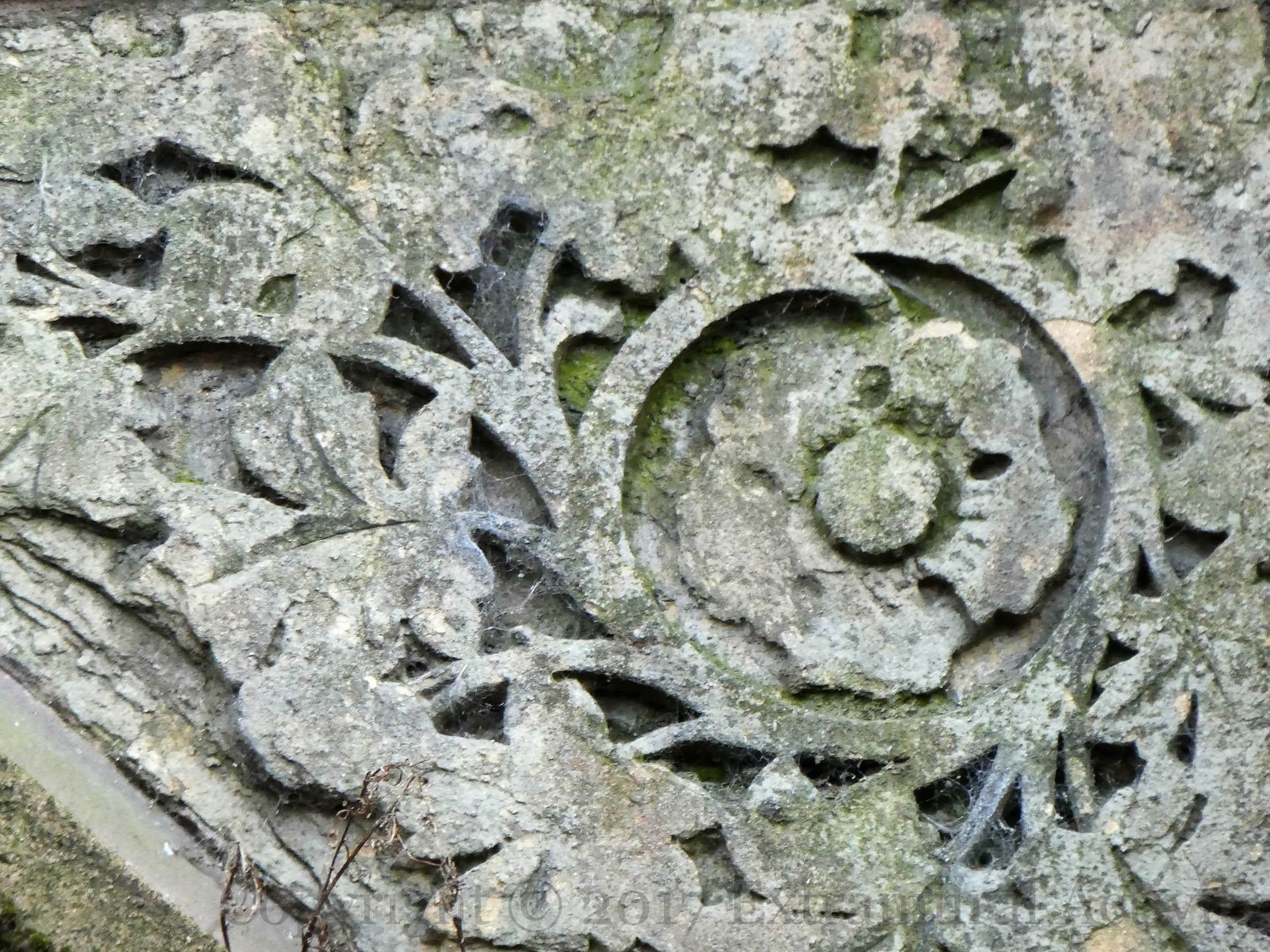
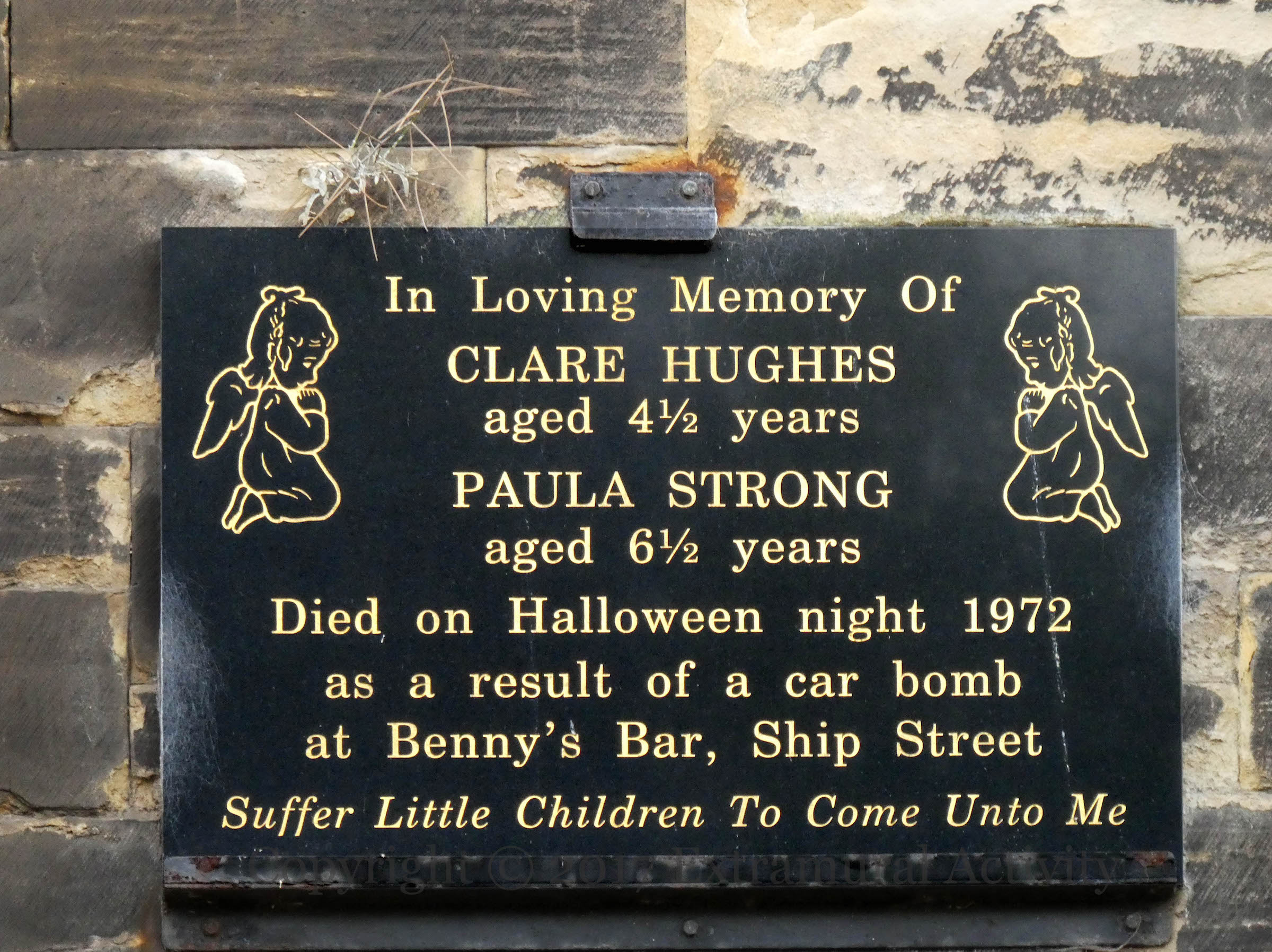
Restoration on the exterior St Joseph’s chapel in Sailortown – a Catholic church decommissioned in 2001 – is set to begin this month (BelTel). The building, originally constructed in 1880, is in such a state that it was declared a dangerous building earlier this year (Irish News). Here are three images from the front: a masonry rose above the door; a plaque to two young girls who were killed by a UDA car bomb in 1972; and a wide shot. BelfastLive has a gallery of the interior, which also needs restoration.
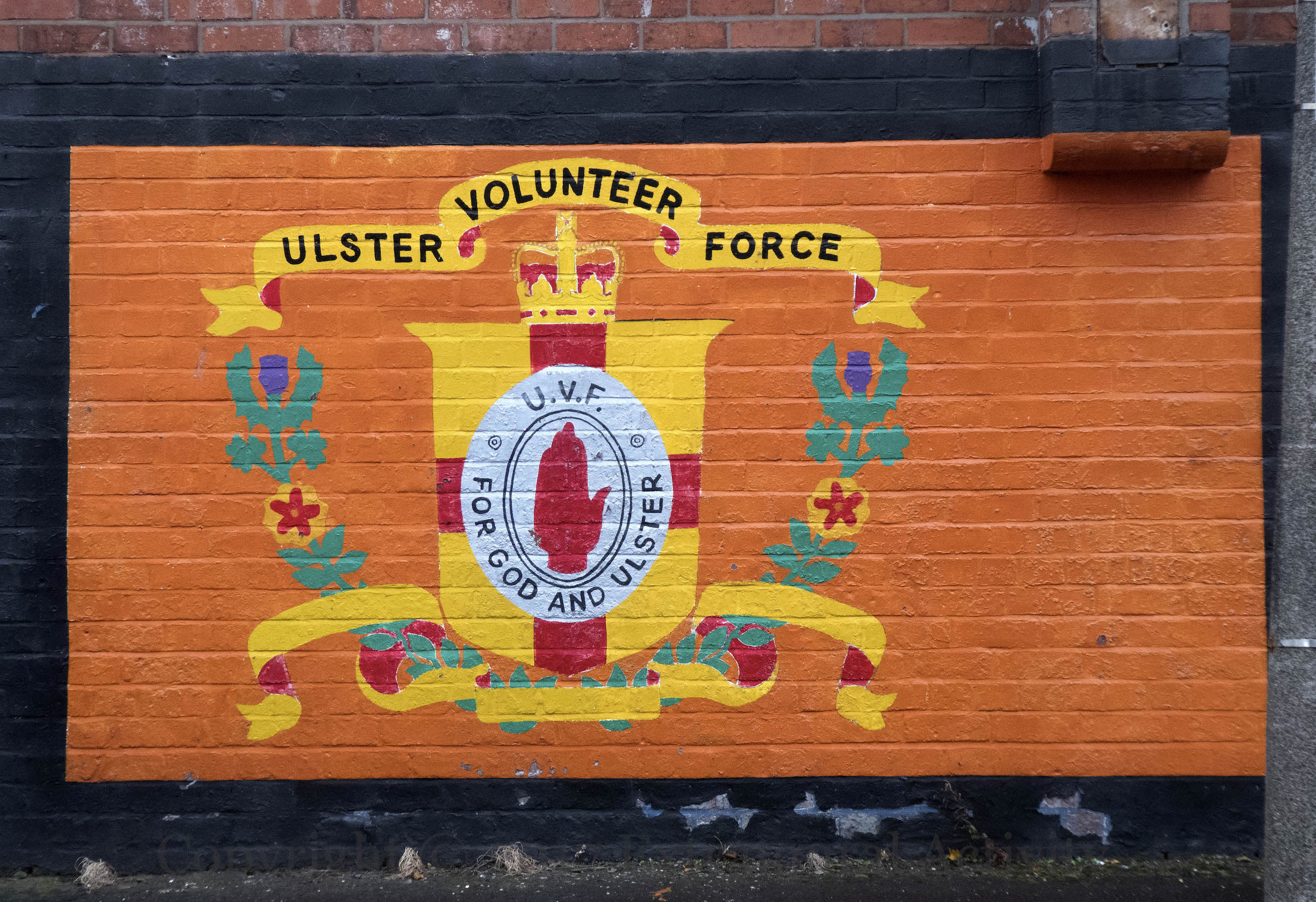
The Ulster Special Service Forces (USSF) was an elite unit of the Ulster Volunteers. Its flag includes the UVF emblem with a garland of thistle, shamrock, and rose. For an earlier (1988) example and more info, see USSF in Belfast; also another in Londonderry (1998).
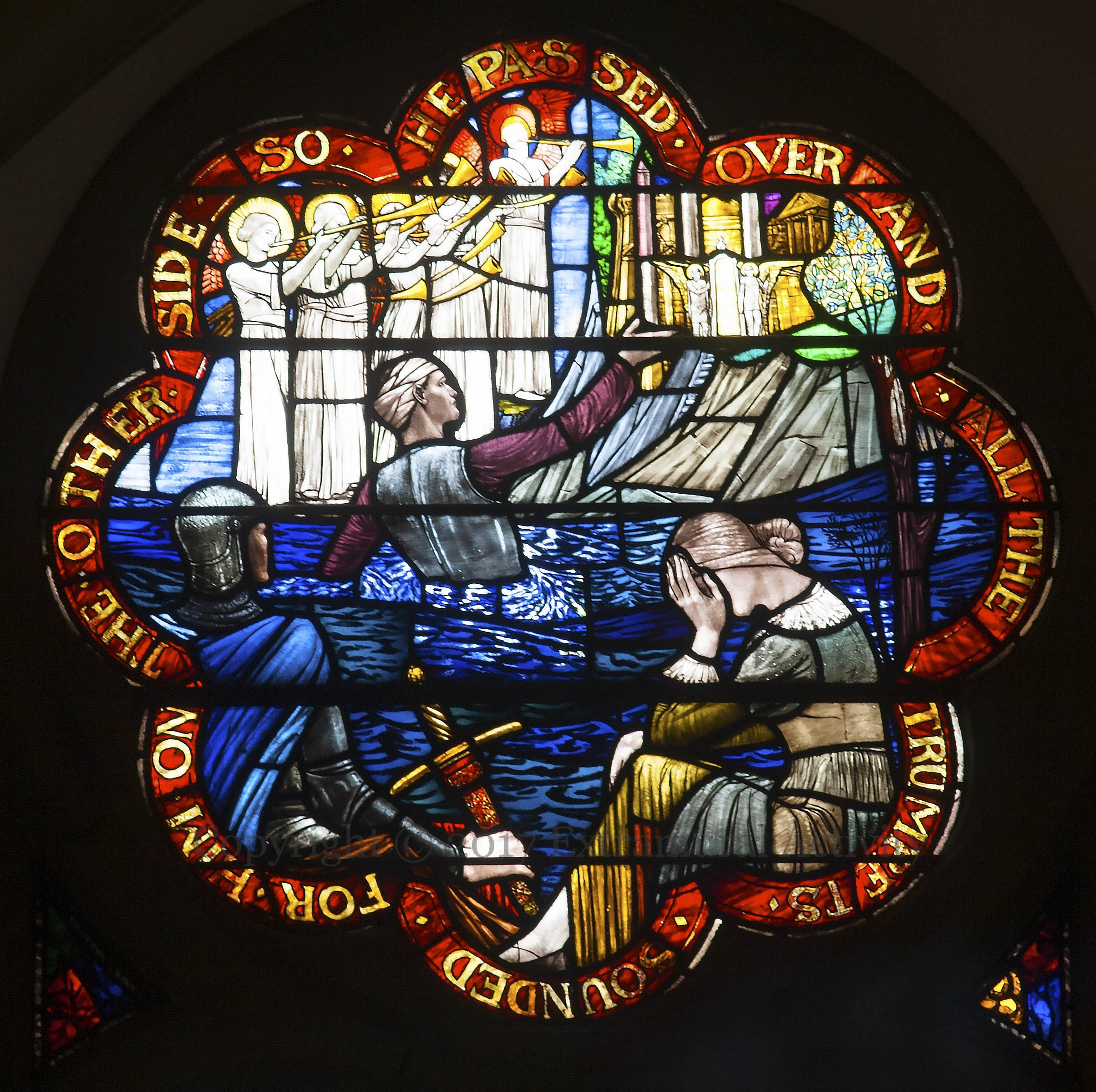
The stained glass from Townsend Street Presbyterian shown above depicts a scene from Bunyan’s Pilgrims Progress, where Valiant-for-truth crosses over to his Father’s house. The glass was unveiled in 1922 in memory of “John Sinclair Martin of the 5th Royal Irish Rifles and his son Robert T Martin” (Beechgarave | History Hub Ulster).
Below is ‘Charity’ from the trio of ‘Faith, Hope, and Charity’ by Wilhelmina Geddes, unveiled 1914-02-08. 2016 saw the publication of a biography of Geddes (BelTel | Irish Times).
This (2017) summer the Irish-language theatre company Aıslıng Ghéar (web | Fb | tw) celebrated its twentieth anniversary “ag cur an dráma sa Ghaeılge le 20 blıaın”.
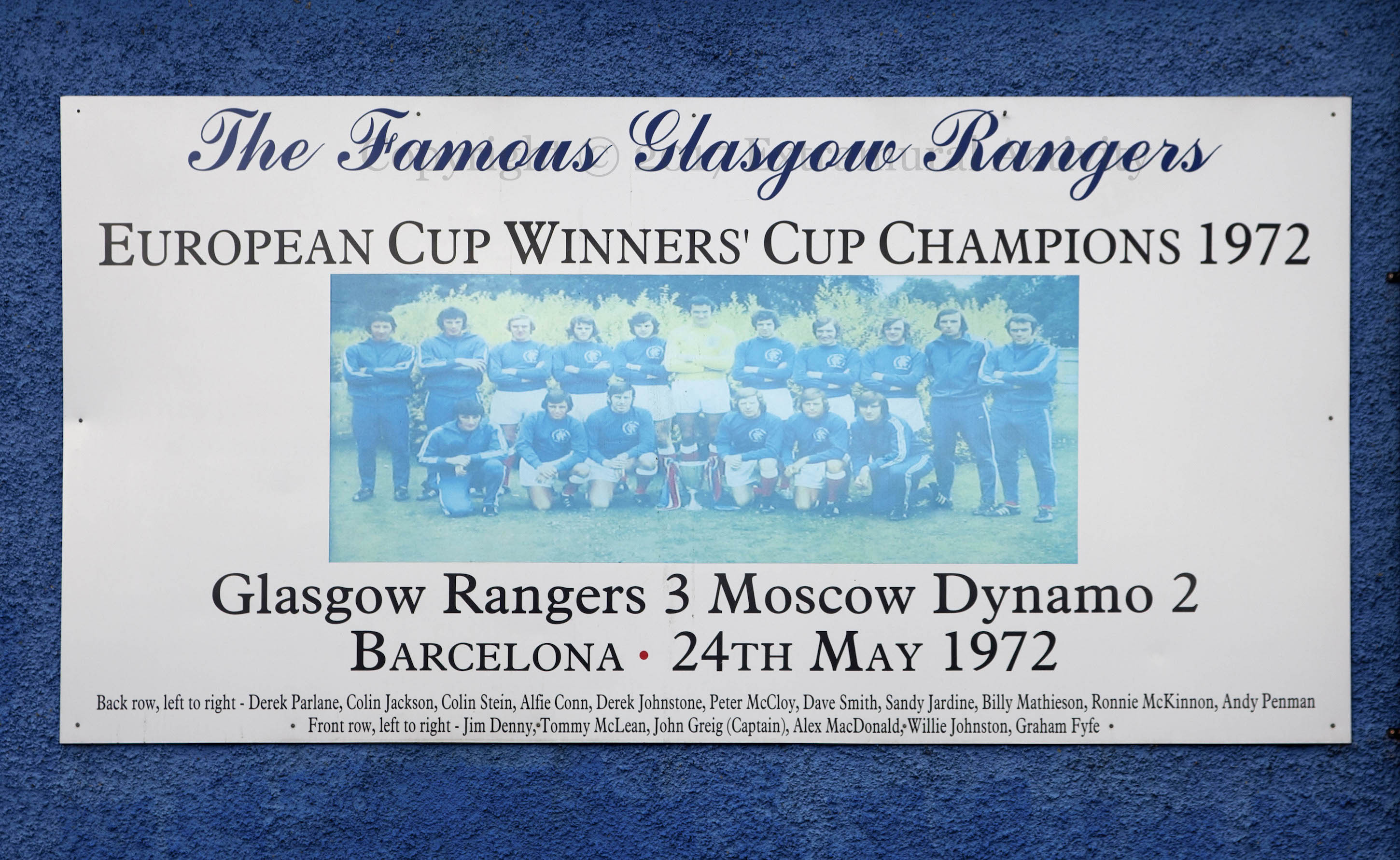
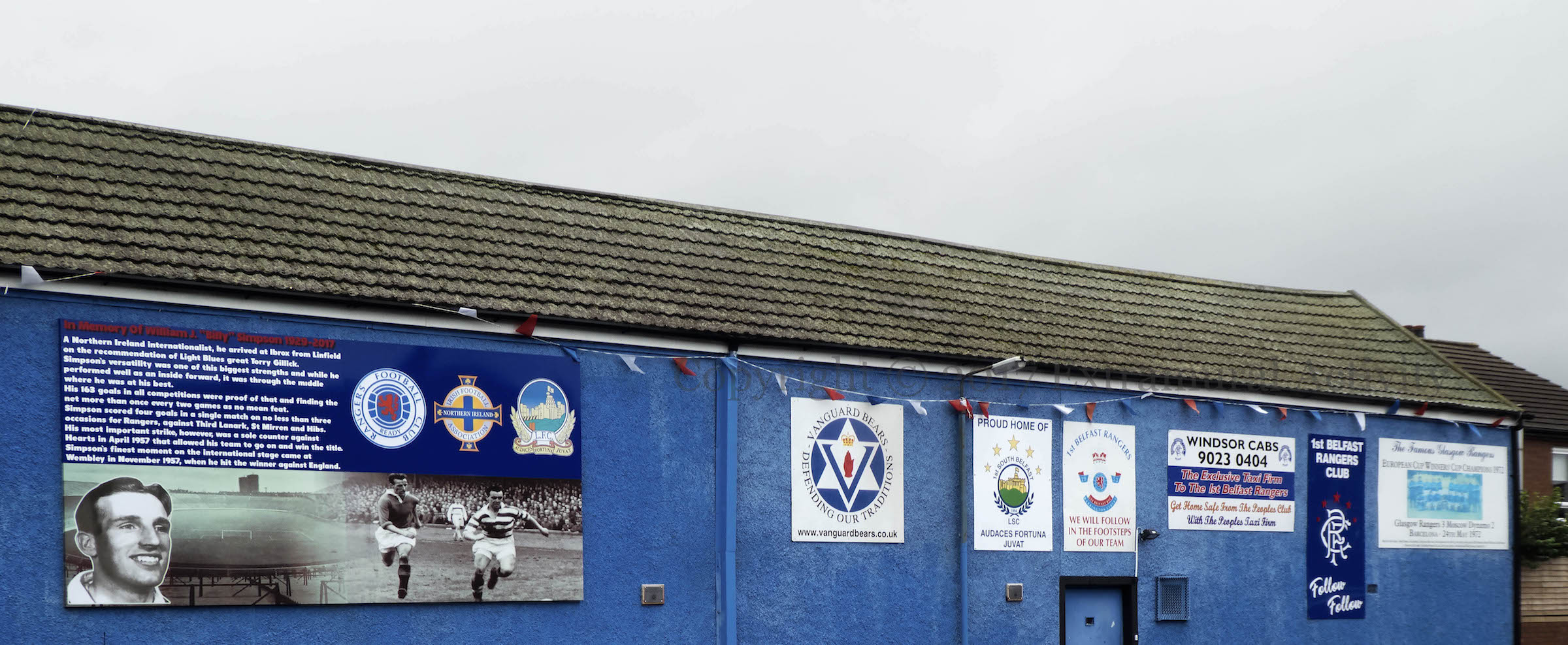
Footballer Billy Simpson moved from Linfield to Rangers in 1950 and over the course of nine years and 239 appearances scored 163 goals. He also scored the winner for Northern Ireland against England in 1957. Simpson died in January of this year (2017) and is remembered by this board outside the Supporters’ Club in Barrington Street, south Belfast. Other boards include a celebration of Rangers’ European Cup Winners’ Cup win in 1972 over Dynamo Moscow in Camp Nou, Barcelona.
“I am not an Ulsterman but yesterday, the First of July, as I followed their amazing attack, I felt that I would rather be an Ulsterman than anything else in the world. My pen cannot describe adequately the hundreds of heroic acts I witnessed, the Ulster Volunteer Force, from which the Division was made, has won a name that equals any in history. Their devotion deserves the gratitude of the British empire.”
The words of Wilfrid Spender, Plymouth-born newspaper manager, quartermaster of the Ulster Volunteers, general staff officer of the 36th (Ulster) Division, winner of the Military Cross for actions at Thiepval, and Cabinet Secretary of the new “Northern Ireland” in 1921.
Kilburn St; later moved to Broadway/Donegall Ave, south Belfast
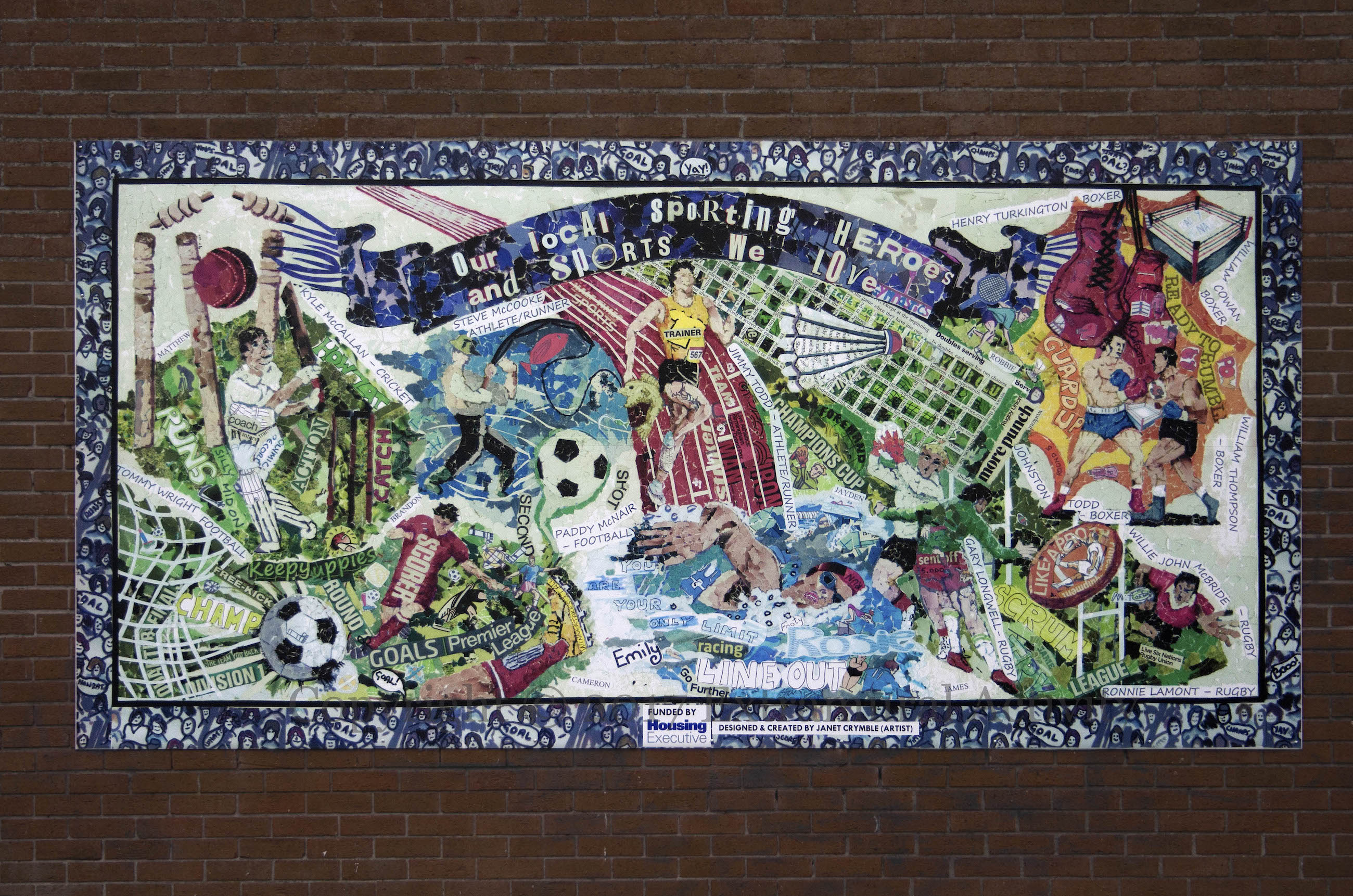
Whitehead artist Janet Crymble “designed & created this new collage in Ballyclare, featuring south Antrim sporting heroes past and present: Kyle McCallan, Steve McCooke, Paddy McNair, Jimmy Todd, Gary Longwell, Ronnie Lamont, Henry Turkington, William Cowan, William Thompson, Johnston Todd, Willie John McBride. John Reid from the NIHE – which sponsored the mural – has an image from the launch of local children posing with the piece.








 Extramural Activity