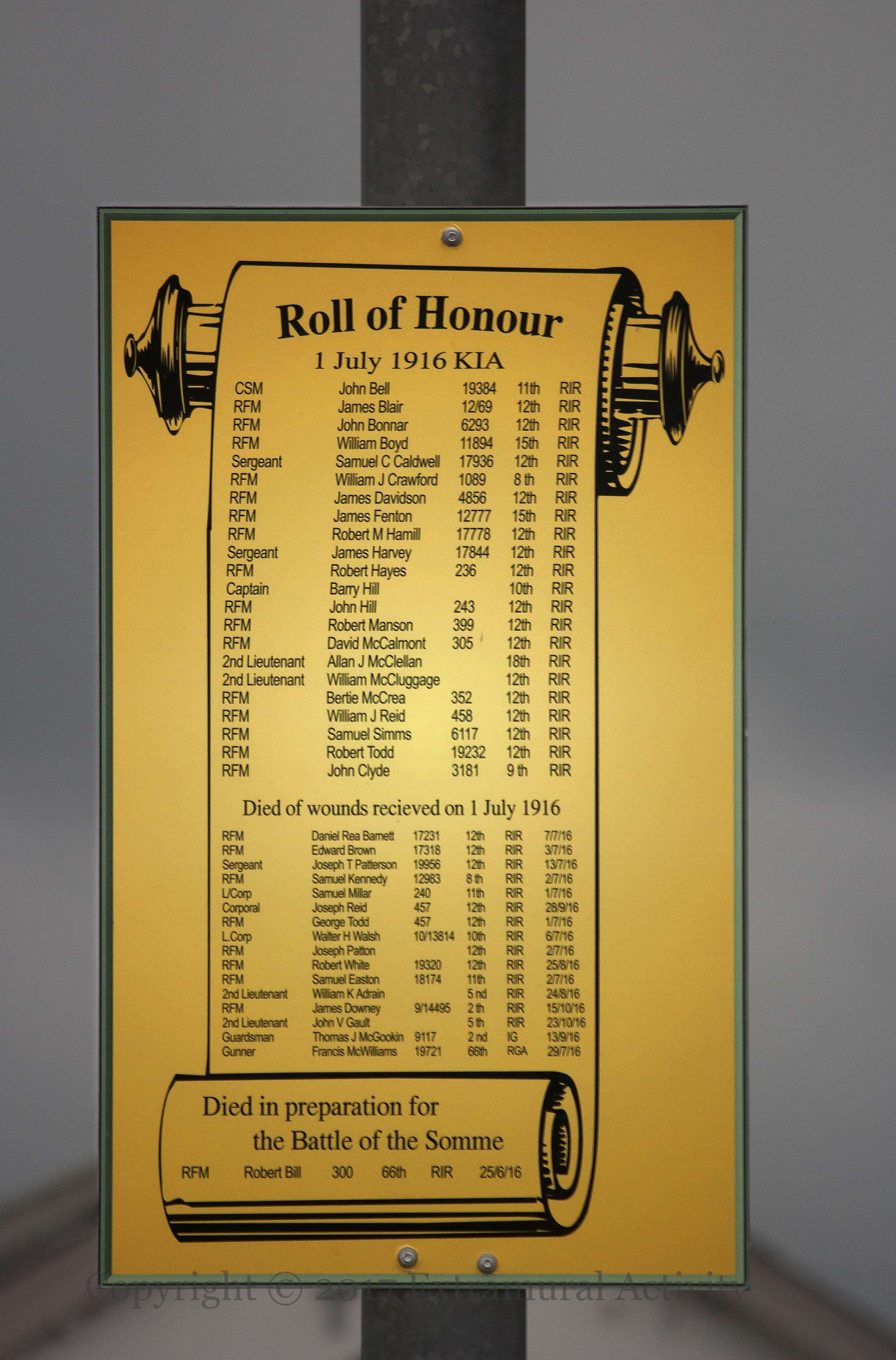
The 12th battalion of the Royal Irish Rifles was drawn from central Antrim towns such as Ballymena and Ballyclare. There is a web site and a Facebook page dedicated to the battalion. For more pictures of the Ballymena arch, see Cross And Crown.
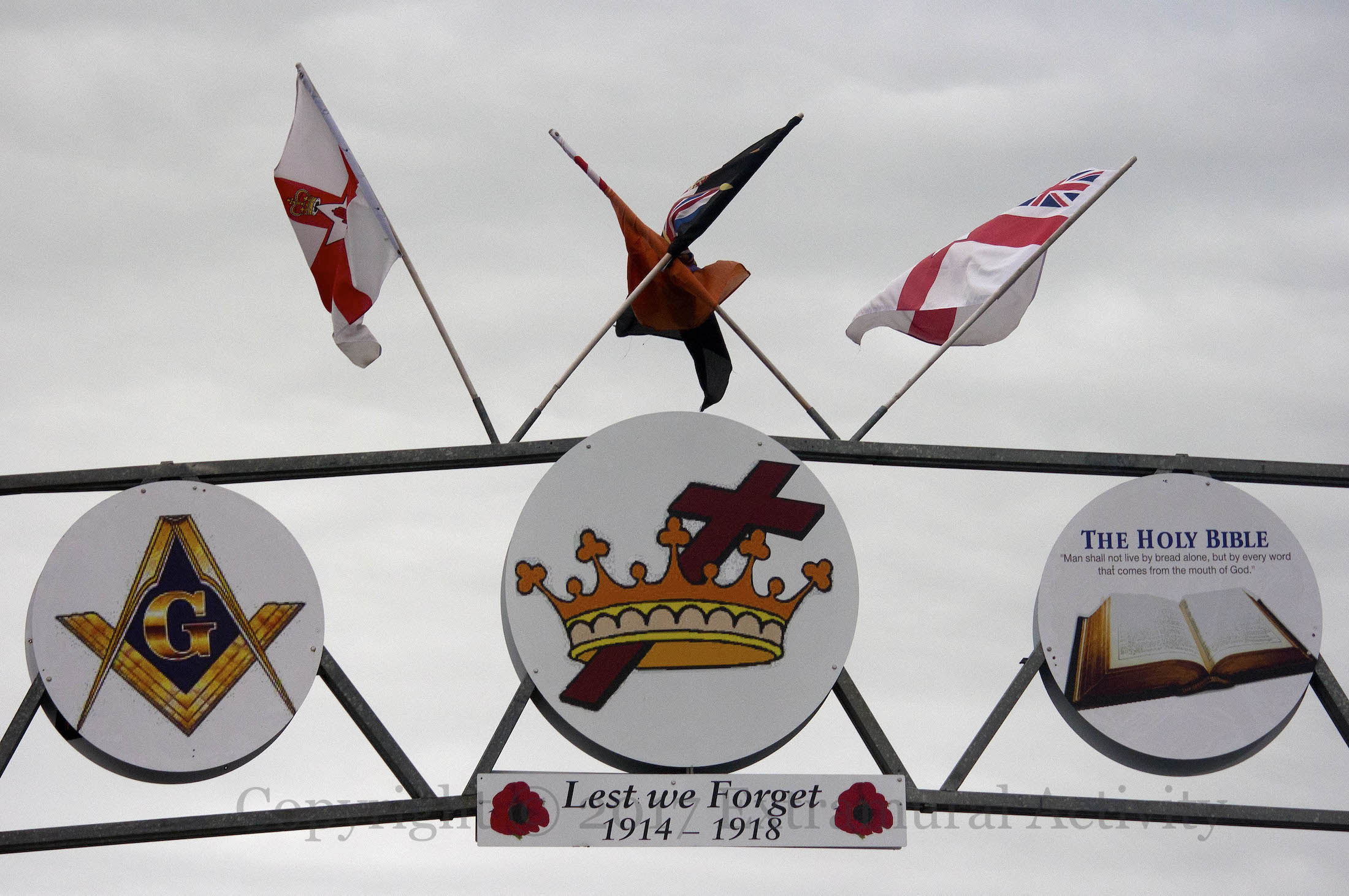
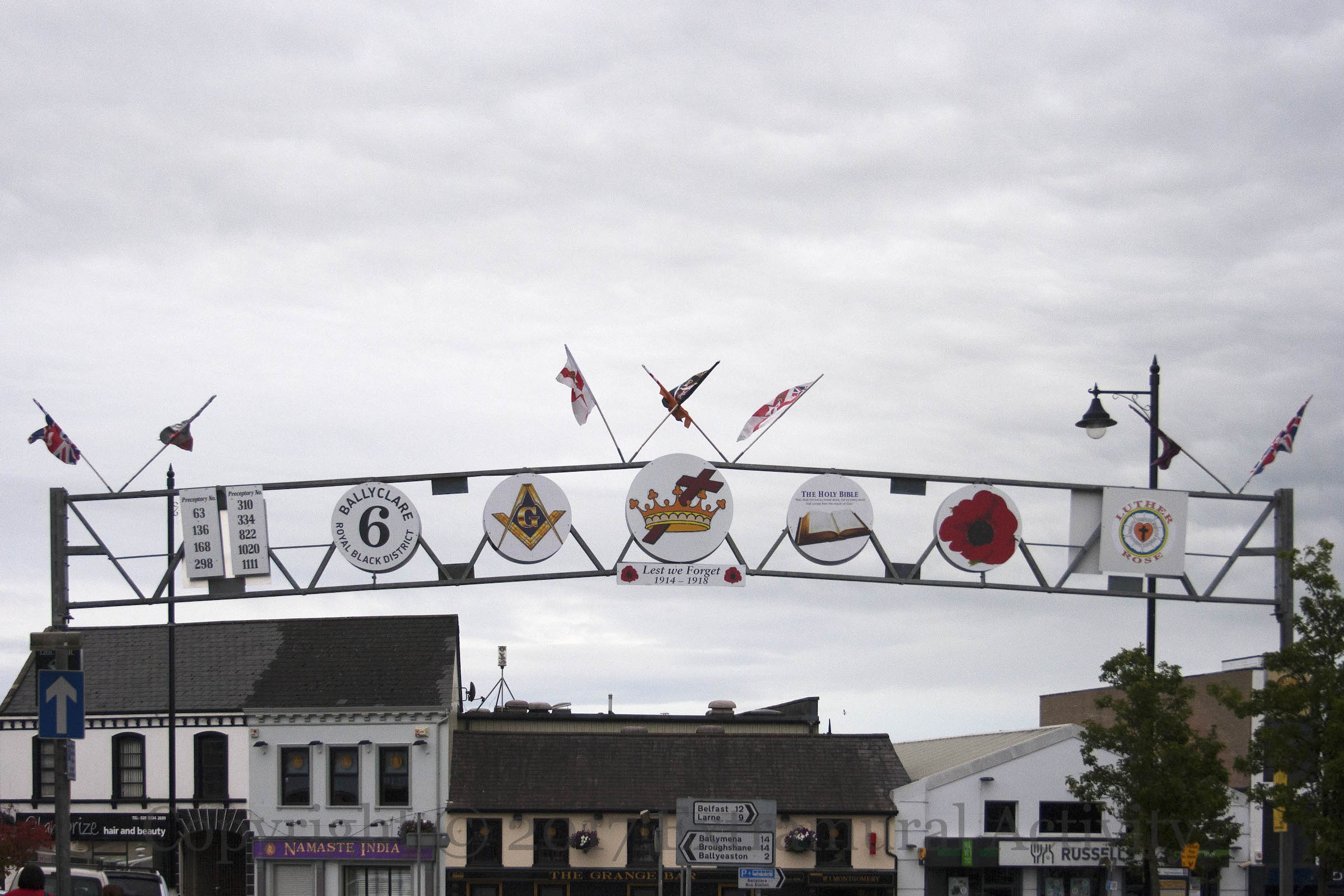
The ‘cross and crown’ is the emblem of the Royal Black Institution, an institution two years younger than the Orange Order; a list of local preceptories in District 6 (Ballyclare) is given in the first image below. To the left (in the image above) is the Square And Compasses, the symbol of the Freemasons. This is a newer arch than seen previously in 2009.
Strandtown and District Unionist Club used to be at 4 Belmont Road (Strandtown Hall) and it erected this memorial to local casualties in the Great War in Portland stone on the adjacent wall,(Lord Belmont in NI) which is now part of a Christian Fellowship church. “Hereon are recorded the names of those men and women who in serving voluntarily their King and country, laid down their lives. Pass not this stone sorrow but in pride and may you live as nobly as they died.” The building currently houses Bennett’s On Belmont, a UUP headquarters, and the Victoria Ulster Unionist Association upstairs.
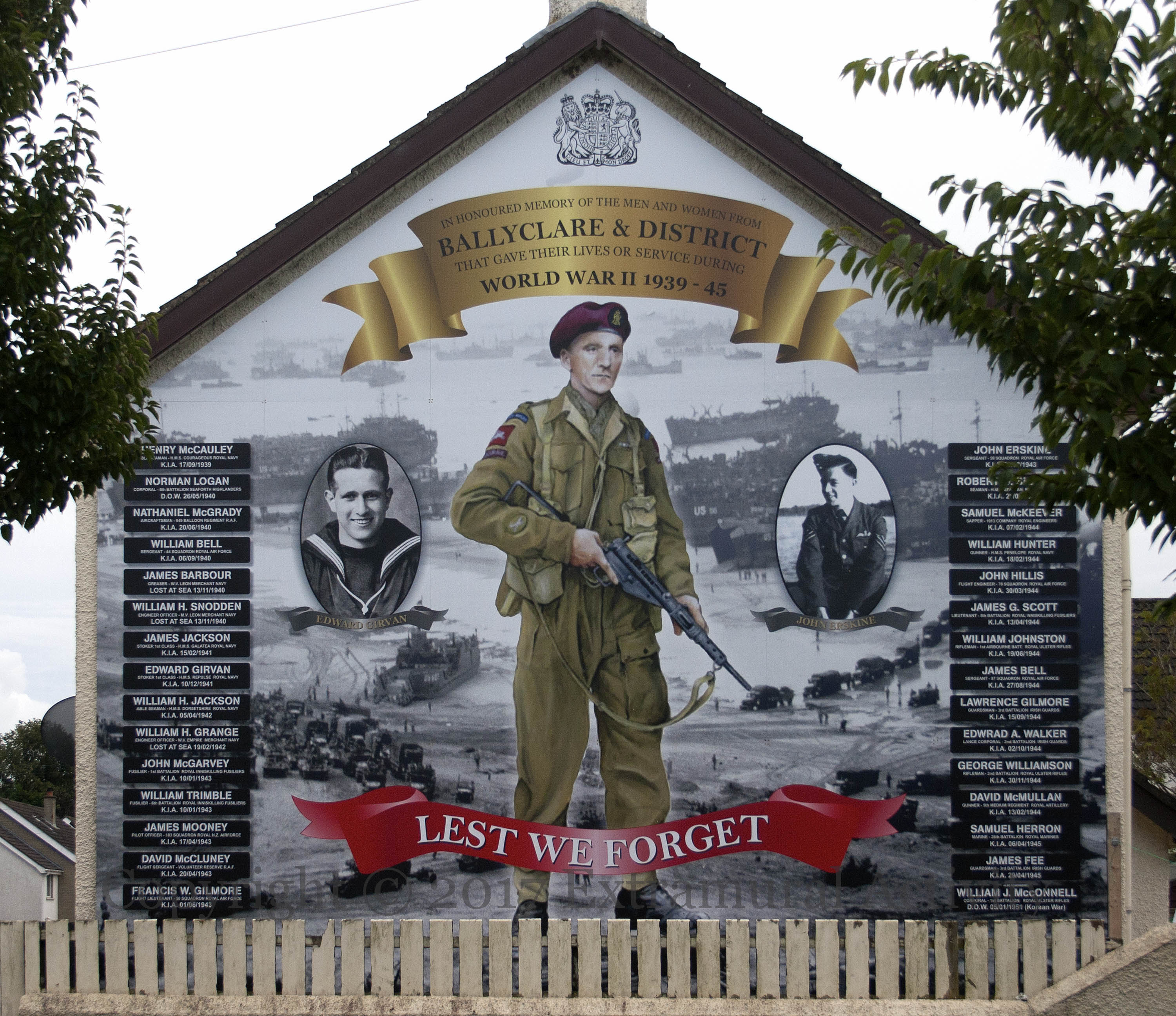
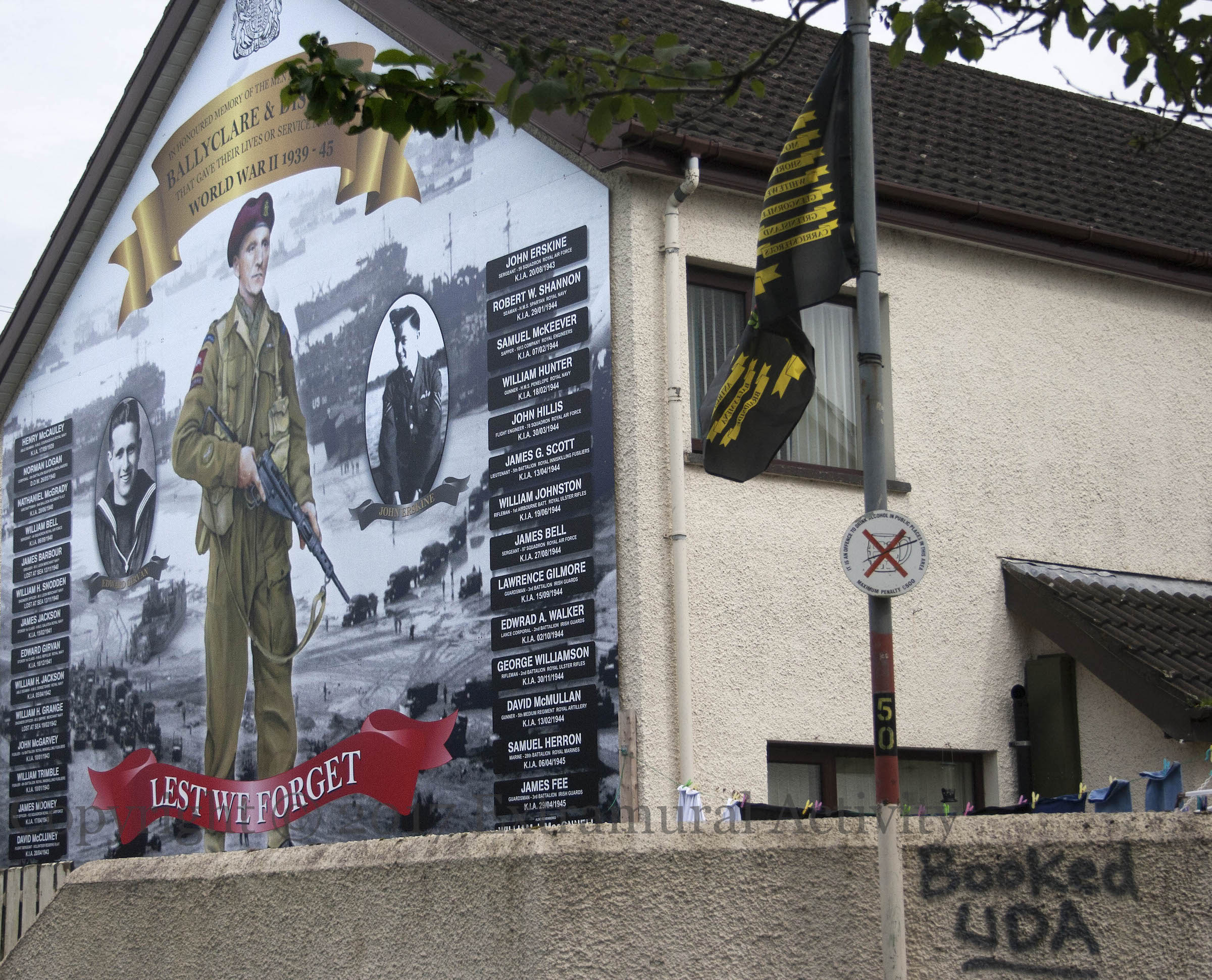
On 20 August 1943, second pilot Sergeant John Erskine and the Liberator crew of seven others failed to return from a convoy patrol of the west of Ireland (59 Squadron). Erksine and 28 others from WWII (and one from the Korean War) are commemorated in a new mural in Erskine Park, Ballyclare. It’s not known if the street name is connected to Sergeant John.
The left-hand portrait is of Edward Girvan, from Ballynure, who was killed on the H.M.S. Repulse, when it was attacked by Japanese aircraft and struck by torpedo bombs in the South China Sea on December 10th, 1941 (WP).
The soldier in the centre of the mural wears the emblem of the Royal Ulster Rifles, Parachute Regiment on his cap. William Johnston 7018189 and George Williamson 7022501 are listed (on the right) as riflemen in airborne battalions of the RUR, but this appears to be a reproduction of an original painting of an RUR major.
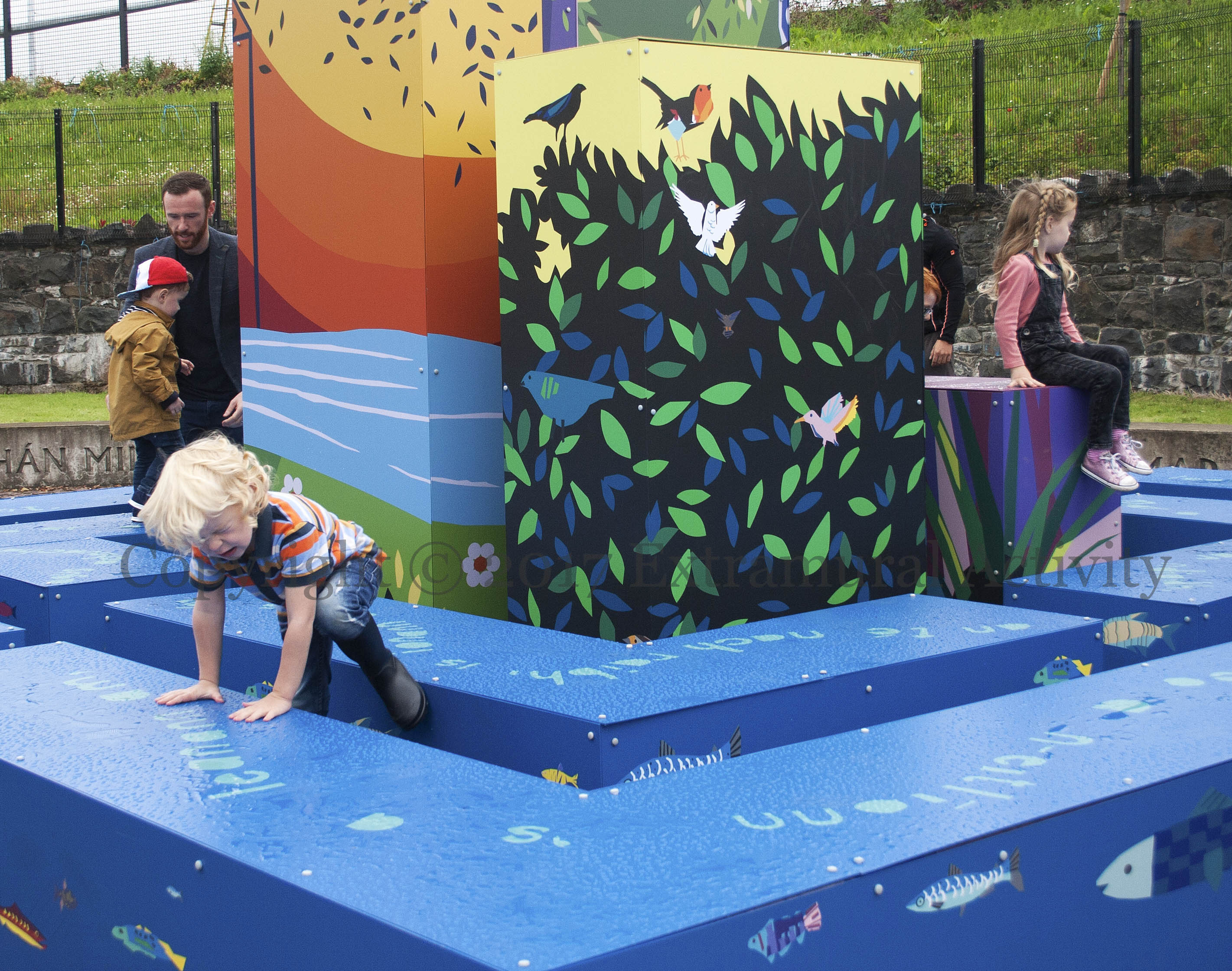
The inspiration for the new installation outside Coláıste Feırste entitled “Athbheochan” (“renewal”) is the area’s previous life as the site of spinning mills, established in the 1800s to take advantage of local rivers (Forbaırt Feırste). The Bog Meadows nature reserve down beside the M1 is the only part of the Blackstaff’s flood plain that remains in an undeveloped state.
The launch was on August 11th during Féıle by Maırtín Ó Muılleoır, but the piece is also part of Irish-language festival Lıú Lúnasa (tw | web) which is going on this week. Artist Aodán Monaghan can be seen on the left in the final image of kids climbing all over the artwork.
Henry VIII had himself declared head of the church in 1531 and the English monarch has retained this title since then (with the exception of Mary I who briefly restored the Pope and Catholicism). England has “no superior under God, but only your Grace” (Act Concerning Peter’s Pence). The current holder of both crown and office is Queen (“R” for “regina”) Elizabeth II. Shown today is another celebration of the 500th anniversary of “Pro-Testant Reformation” in Tiger’s Bay, next to the workers of WWI mural.
Fáılte go dtí bunscoıl Croí Sácráılte (Welcome to Sacred Heart primary school). Three school-children are shown in Cliftonville soccer and Antrim hurling strips, as well as in the school’s black uniform.
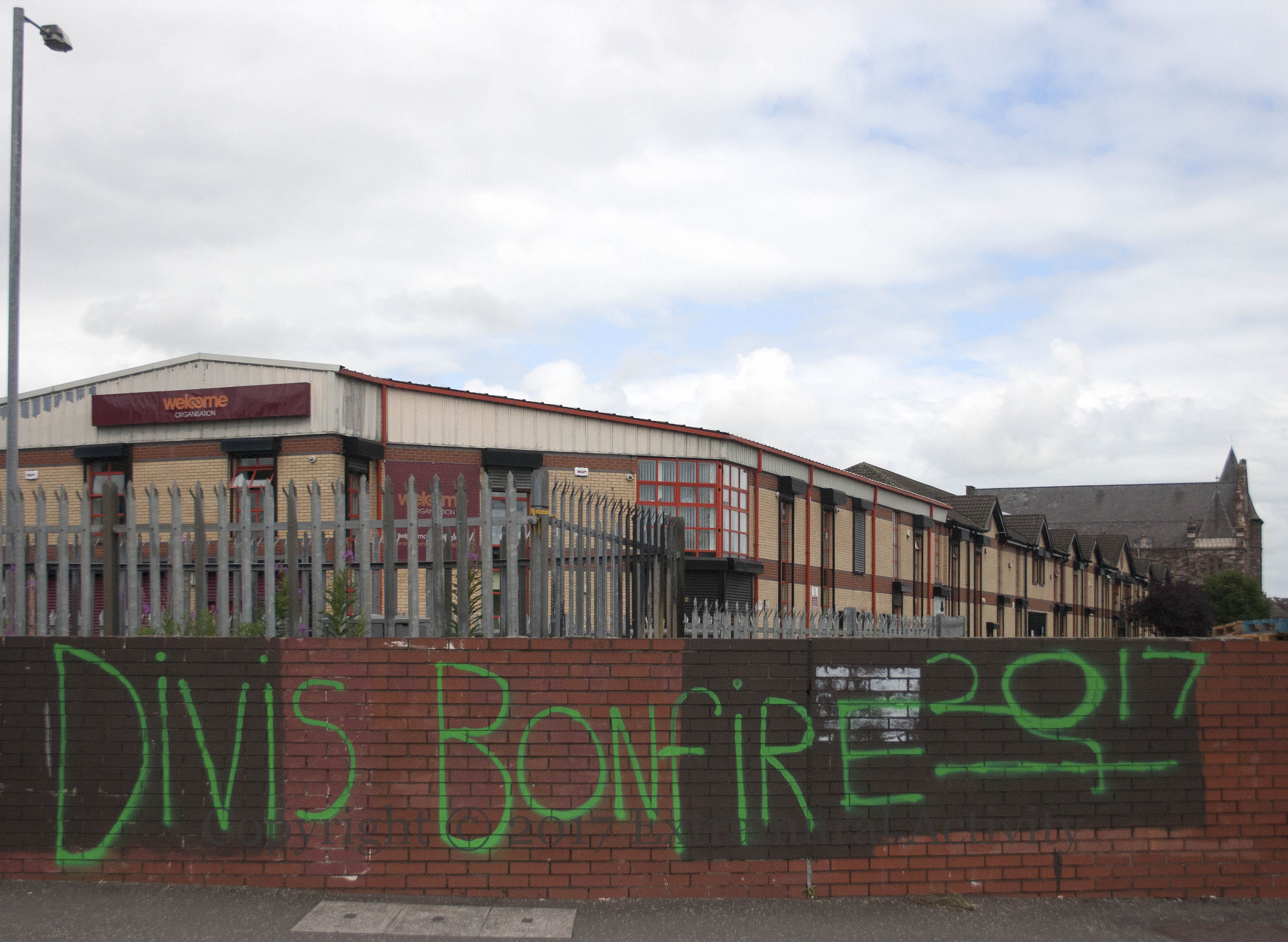
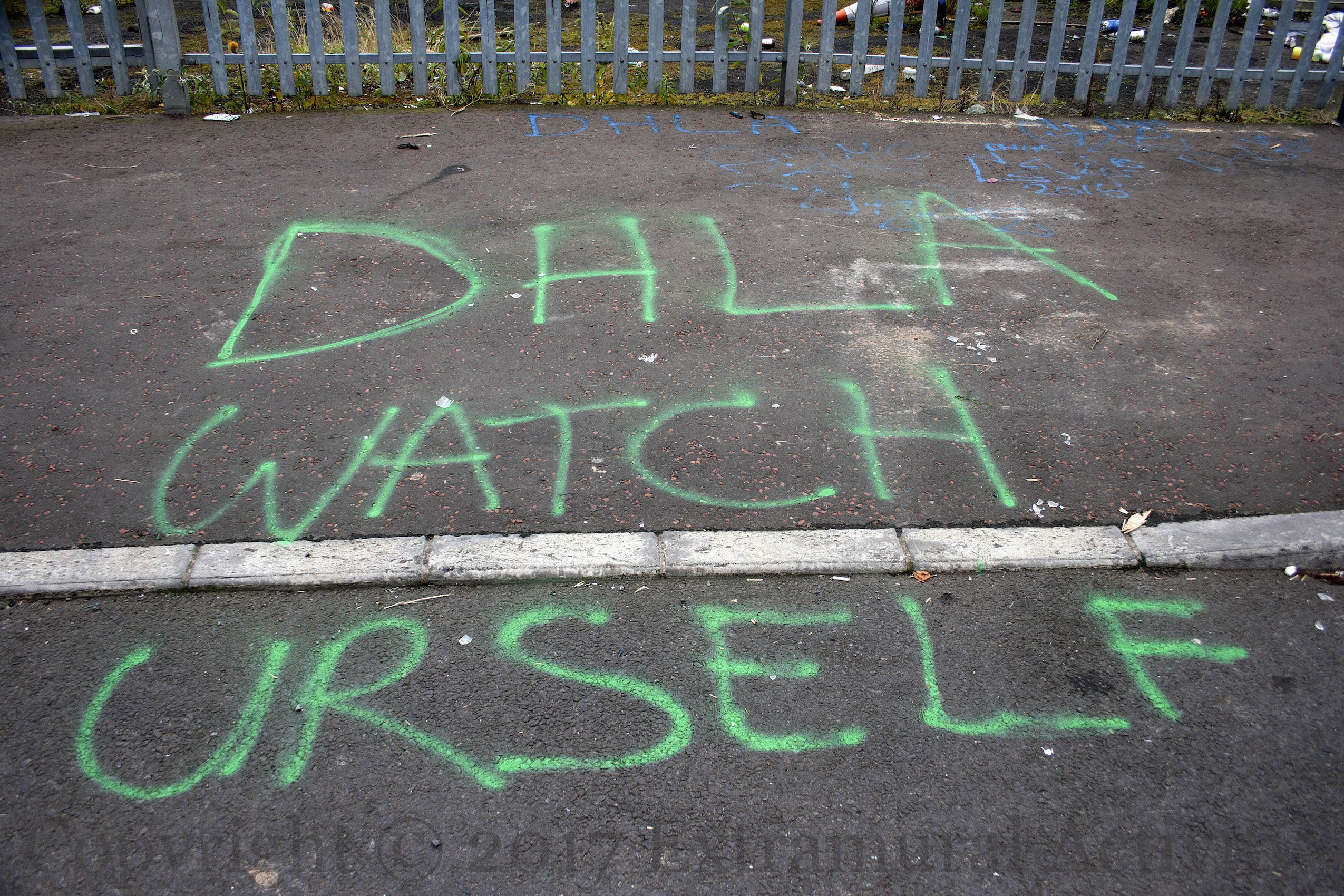
There were riots last night in the Divis and Markets areas of the city, after material for August 9th anti-internment bonfires was removed (Tele). On the lower Falls, the disused Credit Union building on Ross Road was burned down (Belfast Live). Here are three images from last week of graffiti from the Townsend Street side of the Divis Street from the Divis Hoods Liberation Army (DHLA).
October 31st, 1517 is the date given by Philip Melanchthon (there is disagreement – WP) for Martin Luther posting his 95 theses to the door of All Saints’ Church in Wittenberg, thus launching what would later be called the “protestant” reformation of the Catholic church. The word “protestant” comes from two Latin roots, meaning to publicly (pro-) assert or bear witness (testari).
Below the red hands on either side have been added “Genesis 38:28”, which reads “While she was giving birth, one put out a hand, and the midwife took and tied a scarlet thread on his hand, saying, “This one came out first.” But it came about as he drew back his hand, that behold, his brother came out.” The hand thrust forward to claim the birthright (and the reference to a scarlet thread) suggests the myth of the red hand of Ulster. However, it is the younger child (though the first to be completely born) that carries on the house of Judah.










 Extramural Activity