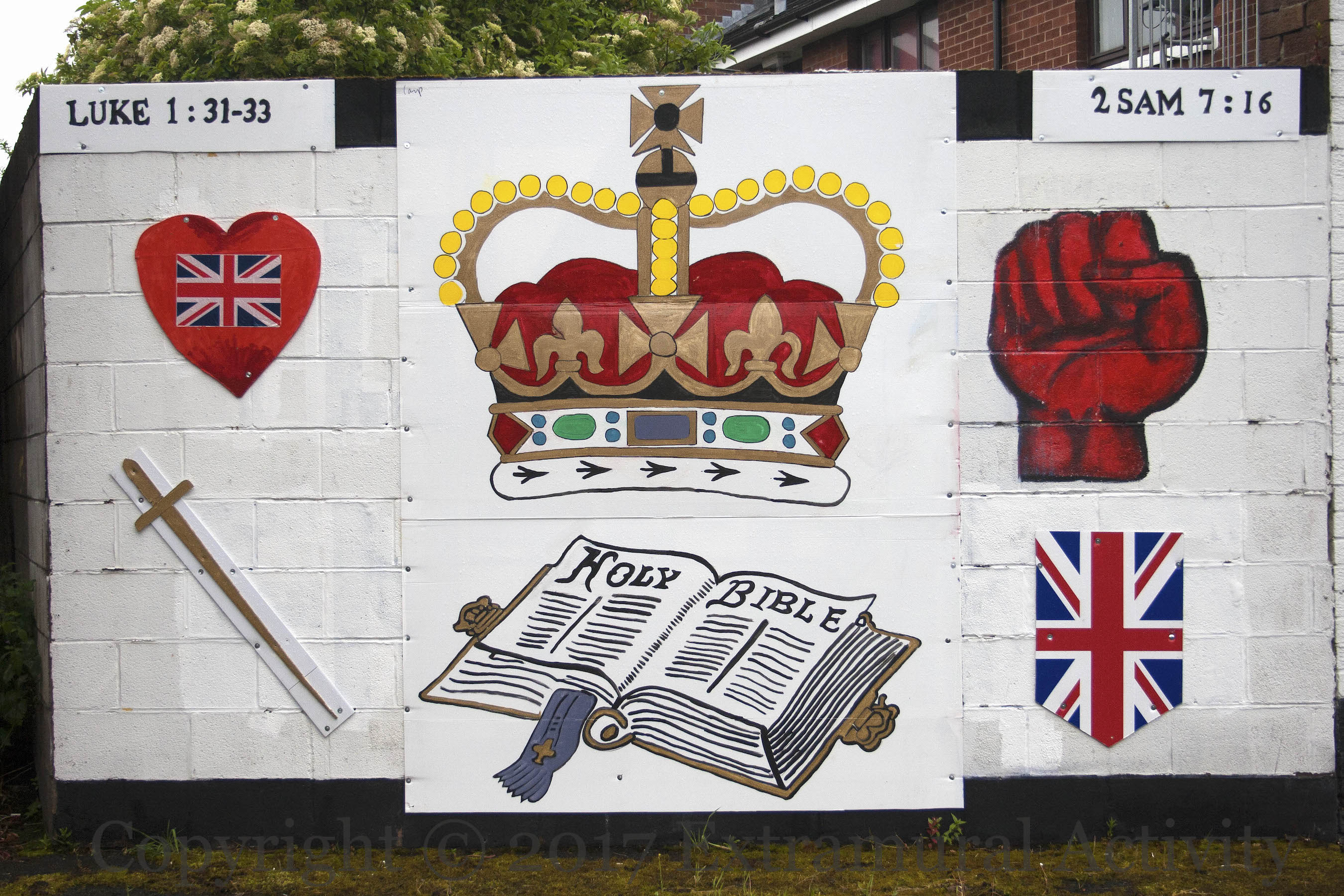
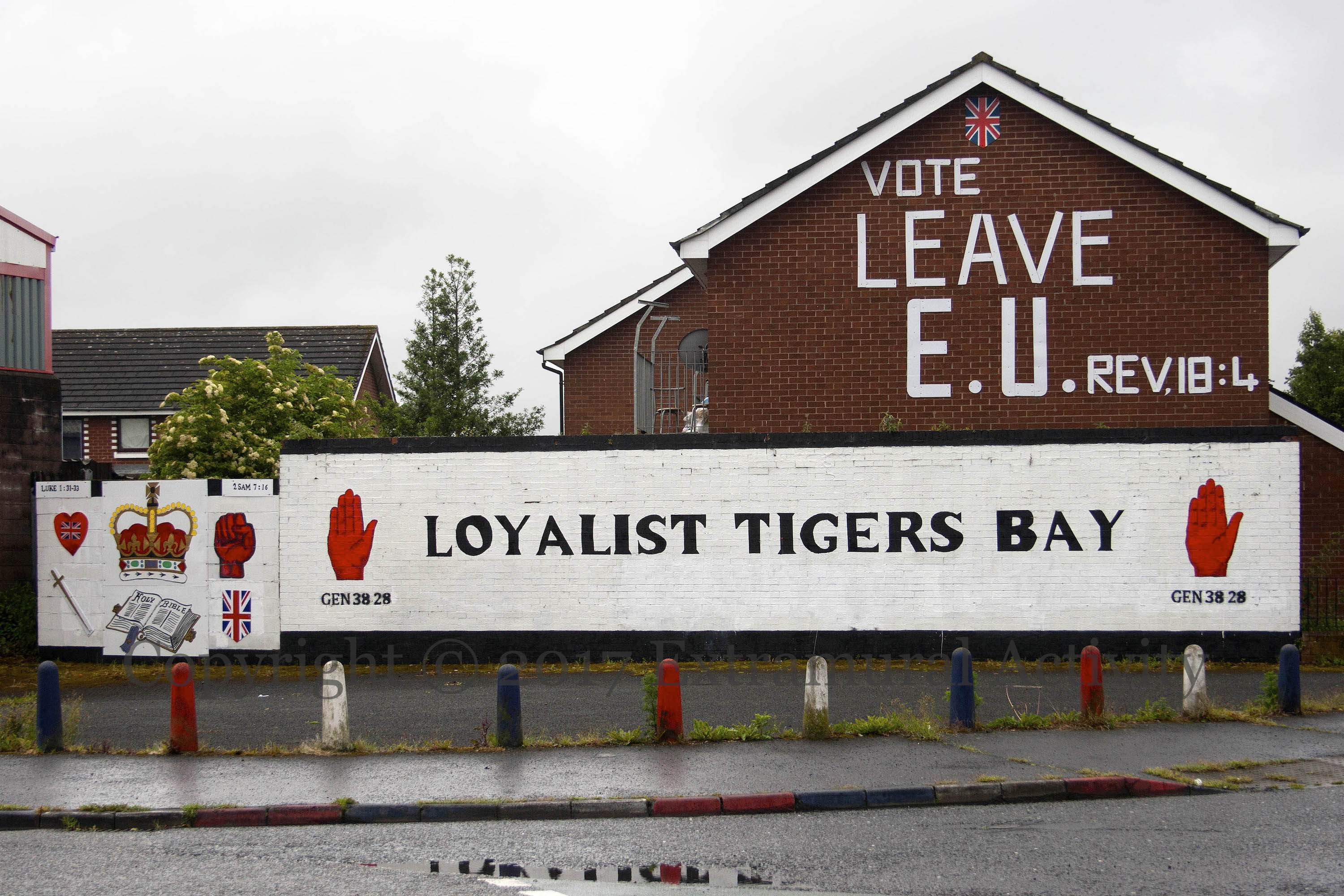
Orange emblems added to the Welcome To Loyalist Tigers Bay mural: the crown and bible, a heart and sword, a red fist and the union flag. Two Bible verses are referenced: “And thine house and thy kingdom shall be established for ever before thee: thy throne shall be established for ever.” (2 Sam 7:16) and “You will conceive and give birth to a son, and you are to call him Jesus. He will be great and will be called the Son of the Most High. The Lord God.” (Luke 1:31-33)
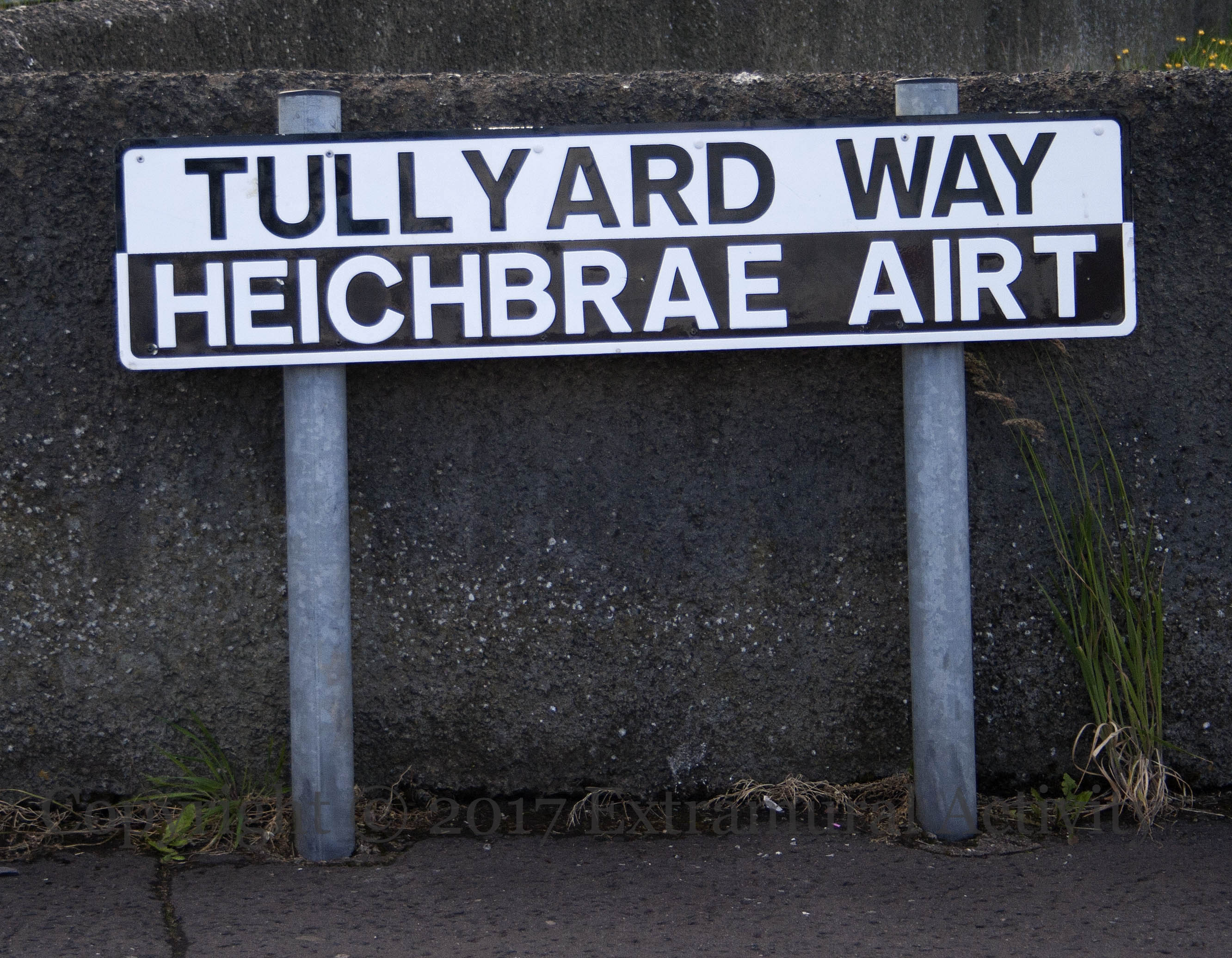
“Clonduff” in English and “Kyefiel” in Ulster Scots, a transliteration and a translation of the Irish “Cluain Daimh”, the meadow of the ox, and thus the sculpture shown above at the entrance to the area. Below are two images of “Tullyard Way”, translated into Ulster Scots as “Heichbrae Airt” from the Irish “tulach ard” (high hillside). The street signs were initially mistaken for Irish and torn down by local residents (Scots Anorak | BBC-NI).
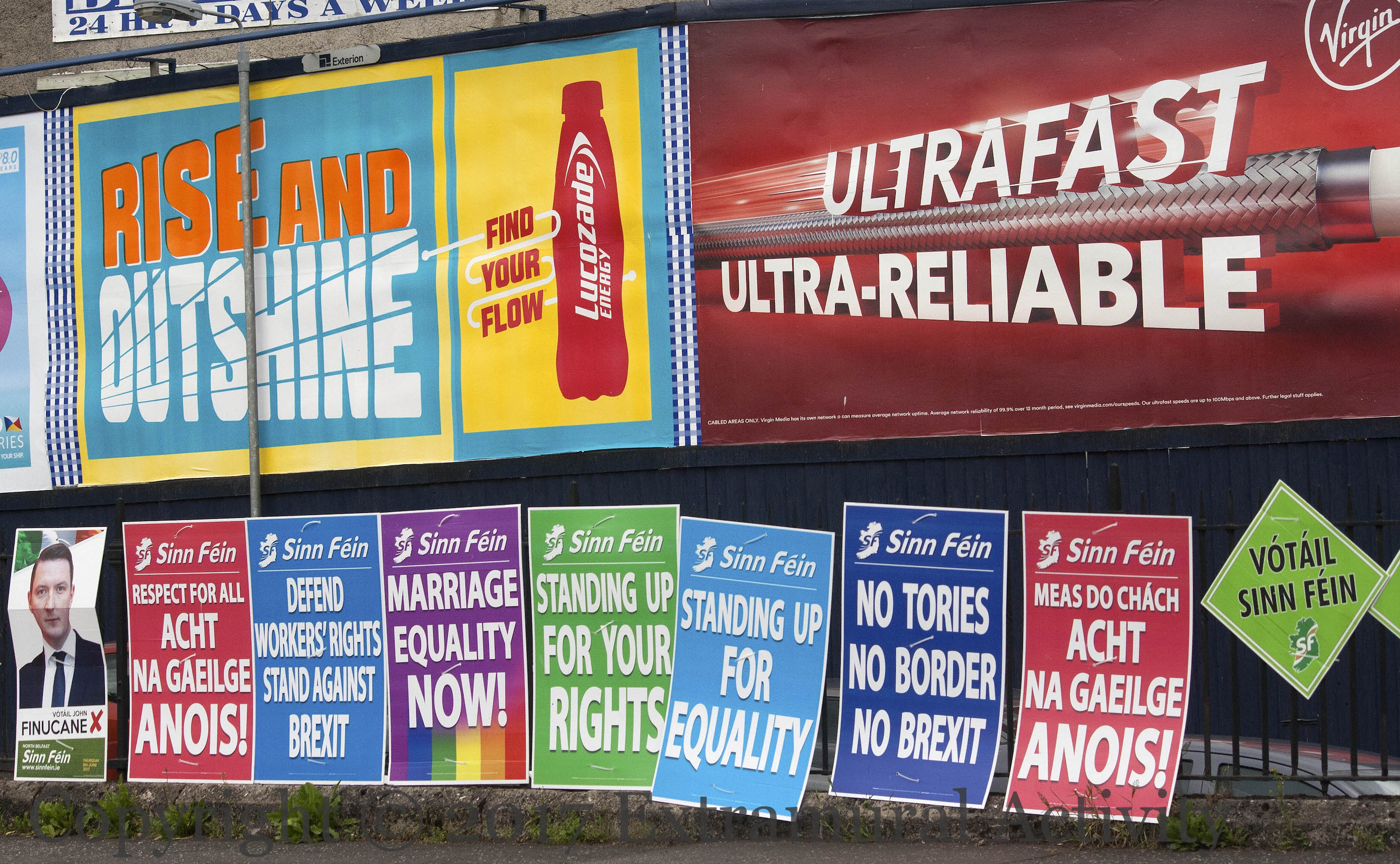
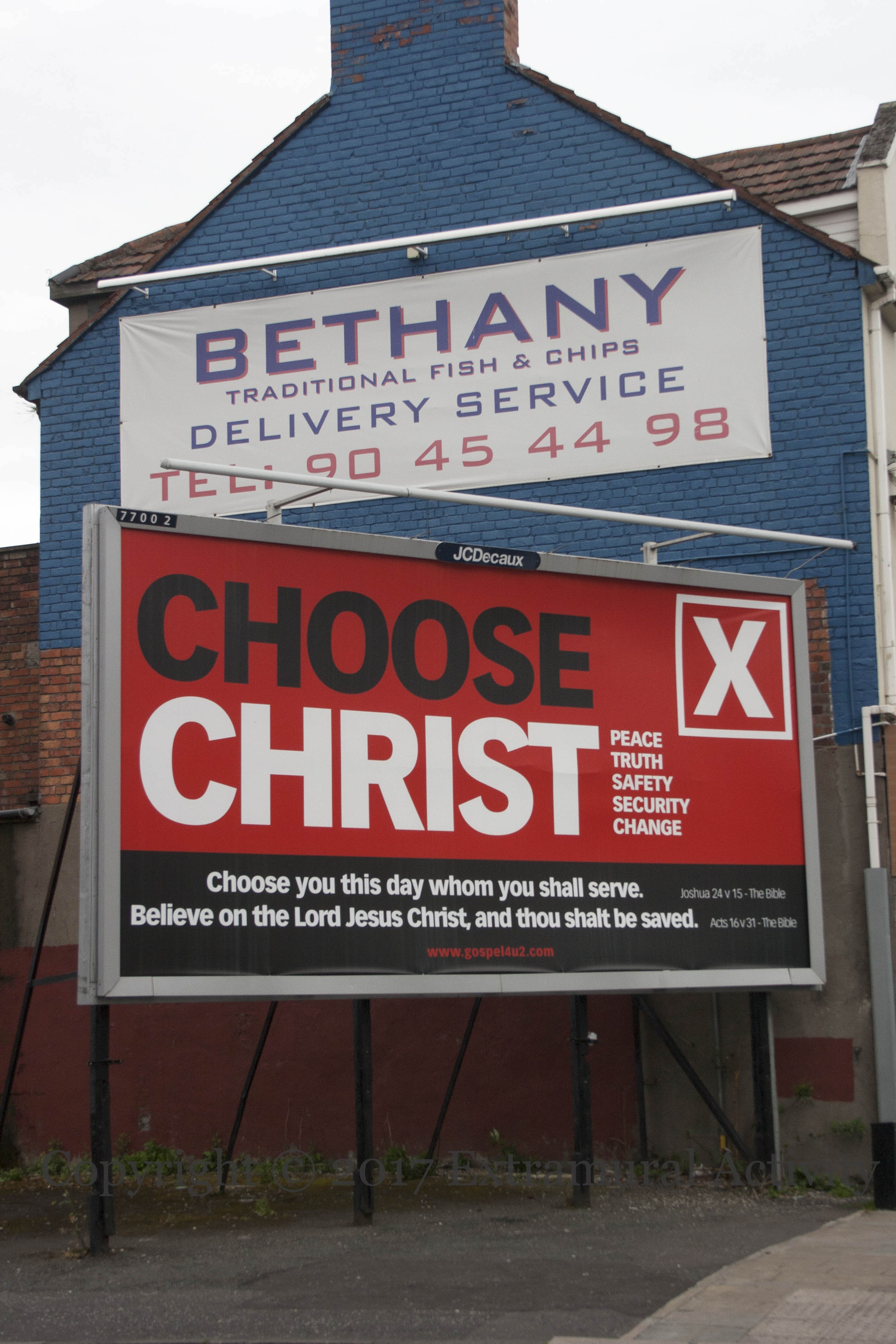
Here are two images from UK GE 2017. Above, Sınn Féın placards in a variety of bright colours (plus one for unsuccessful North Belfast candidate John Finucane). Below, “Choose Christ” and you could find both security and change!
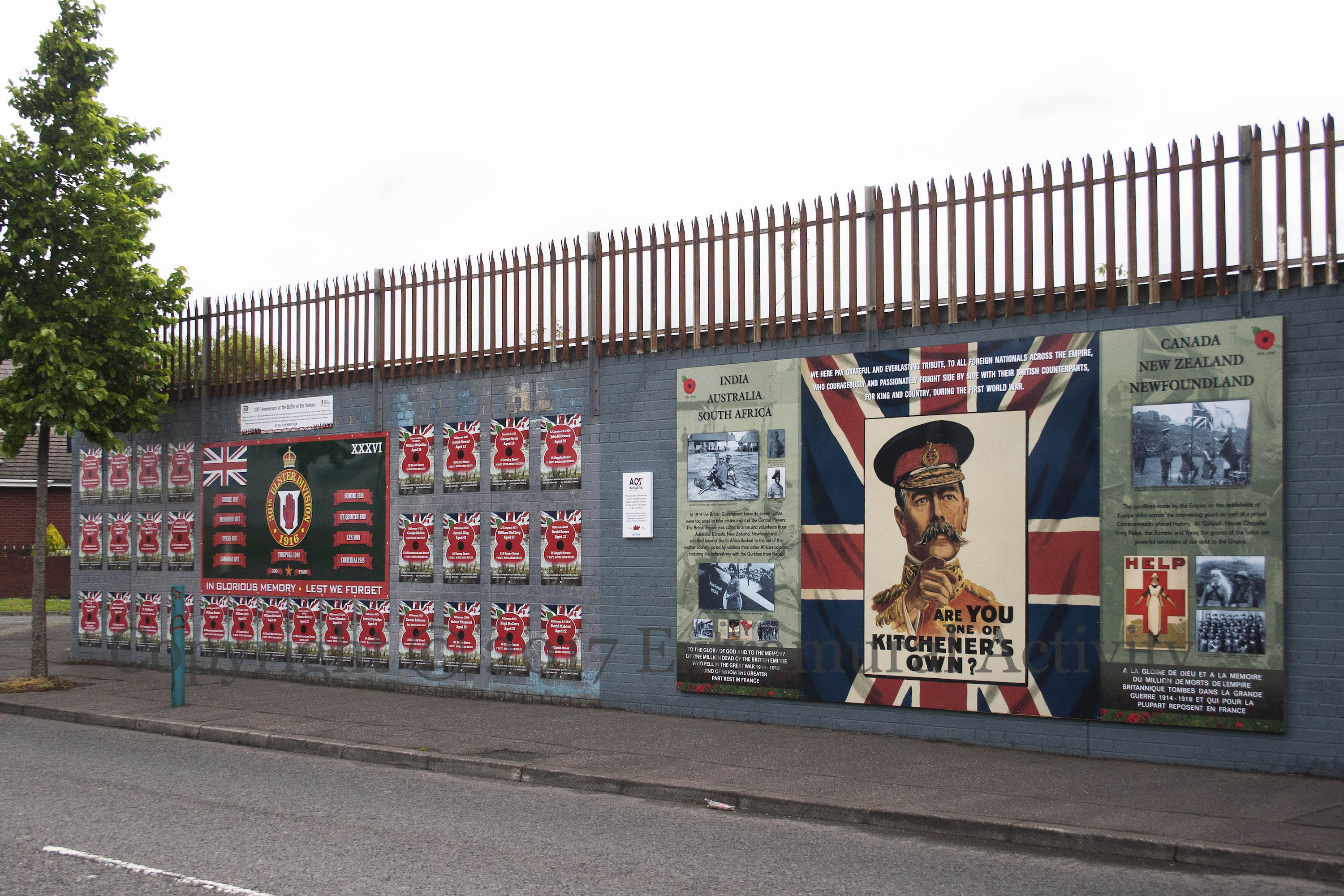
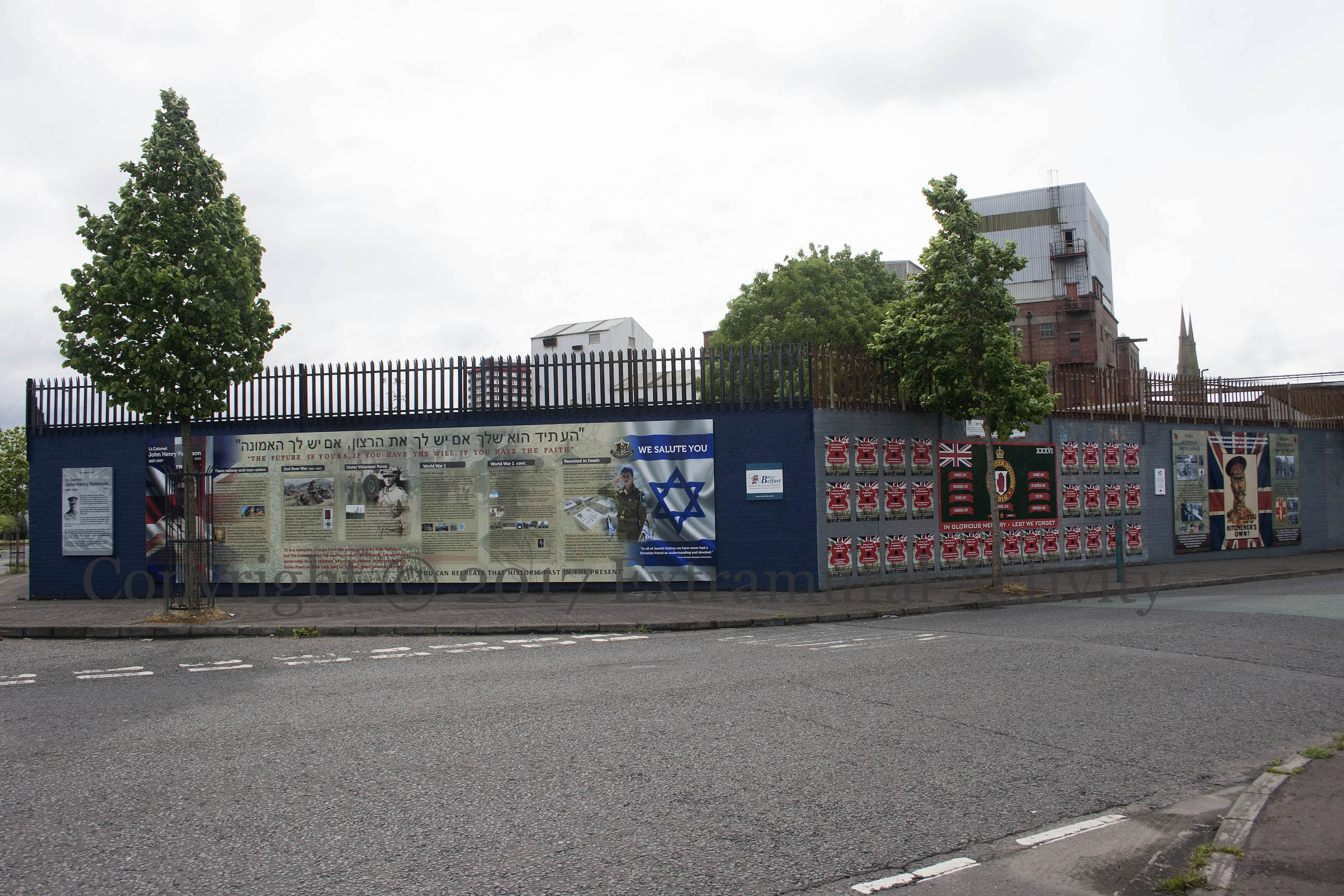
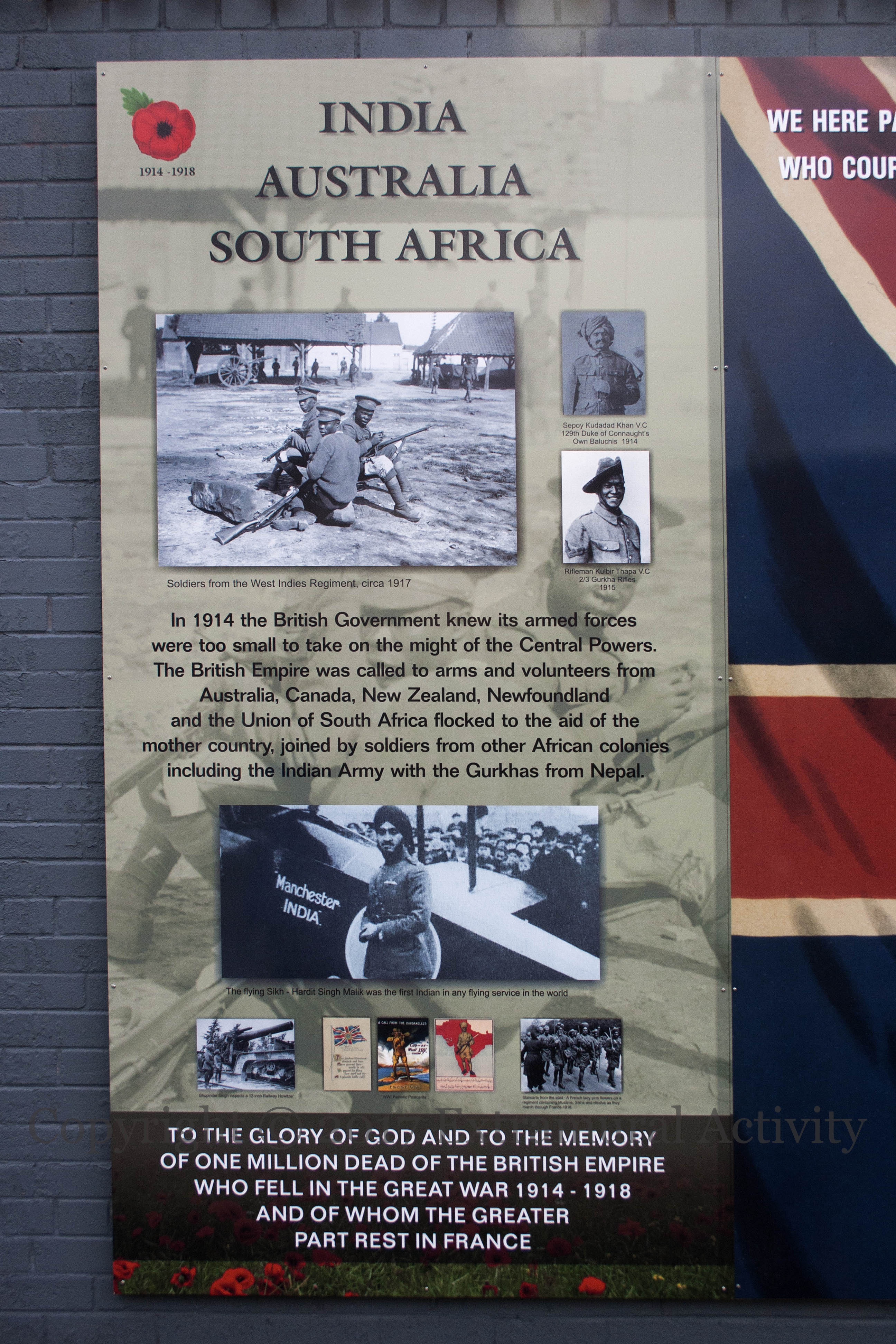
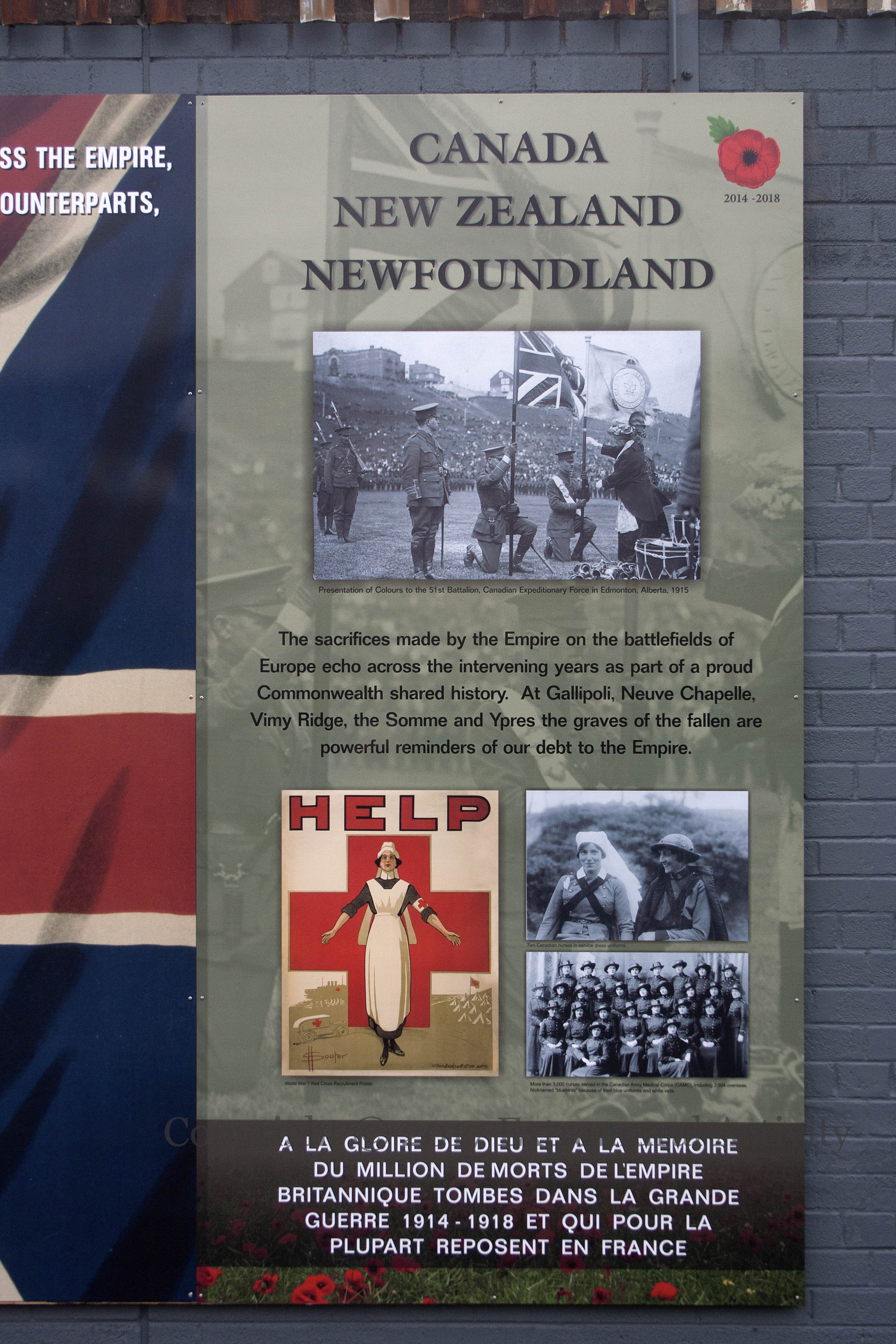
“Are you one of Kitchener’s own?” asks a new mural in Northumberland Street: “We here pay grateful and everlasting tribute, to all foreign nationals across the empire, who courageously and passionately fought side by side with their British counterparts, for King and country, during the First World War.” The left-hand side (second image) features images of soldiers from the West Indies and India, including “The Flying Sikh”, Hardit Singh Malik and a French lady as she “pins flowers on a regiment containing Muslims, Sikhs, and Hindus.” On the right, images of the “presentation of Colours to the 51st Battalion Canadian expeditionary force” and of Canadian “bluebird” nurses in the Canadian Army Medical Corps.
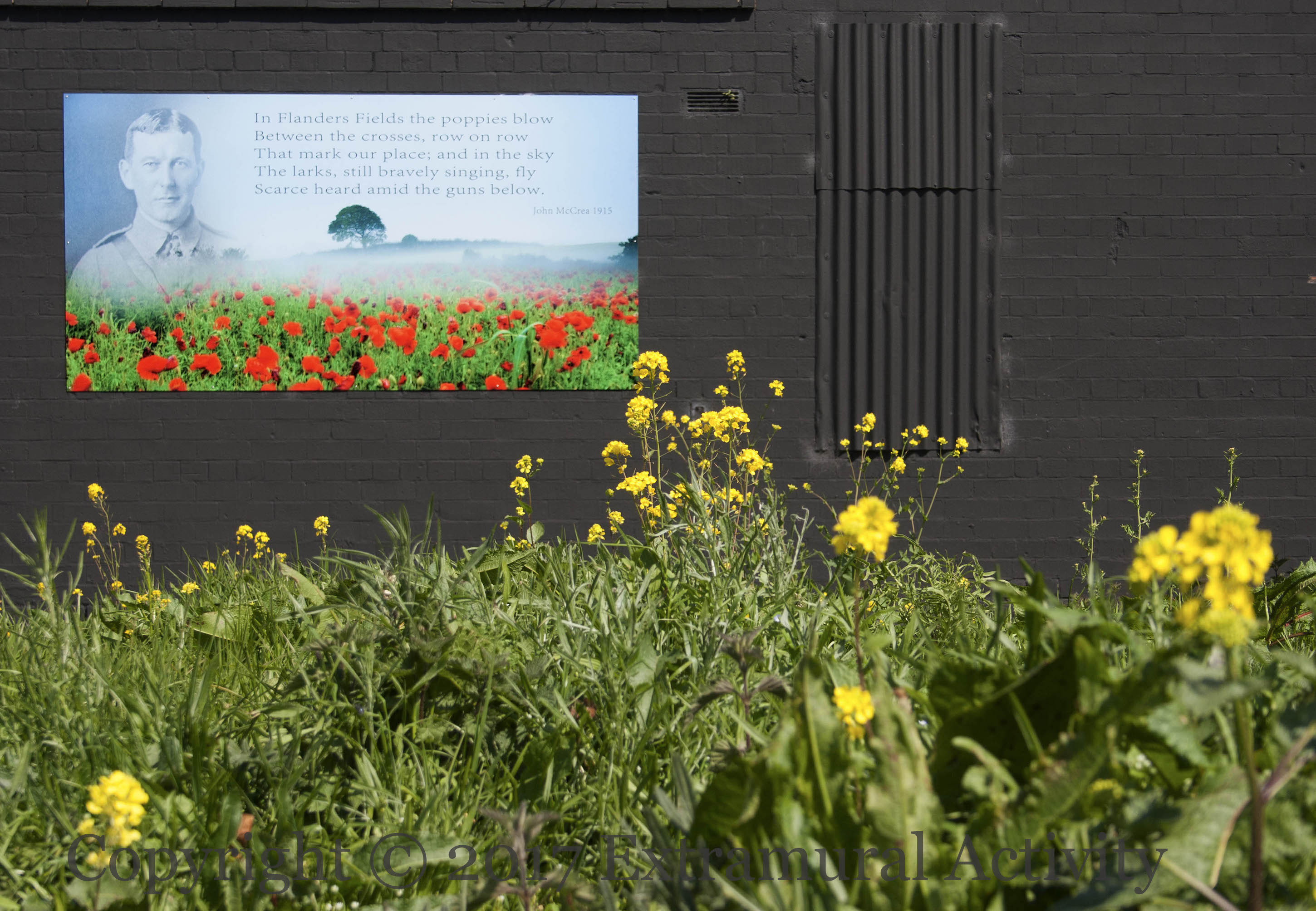
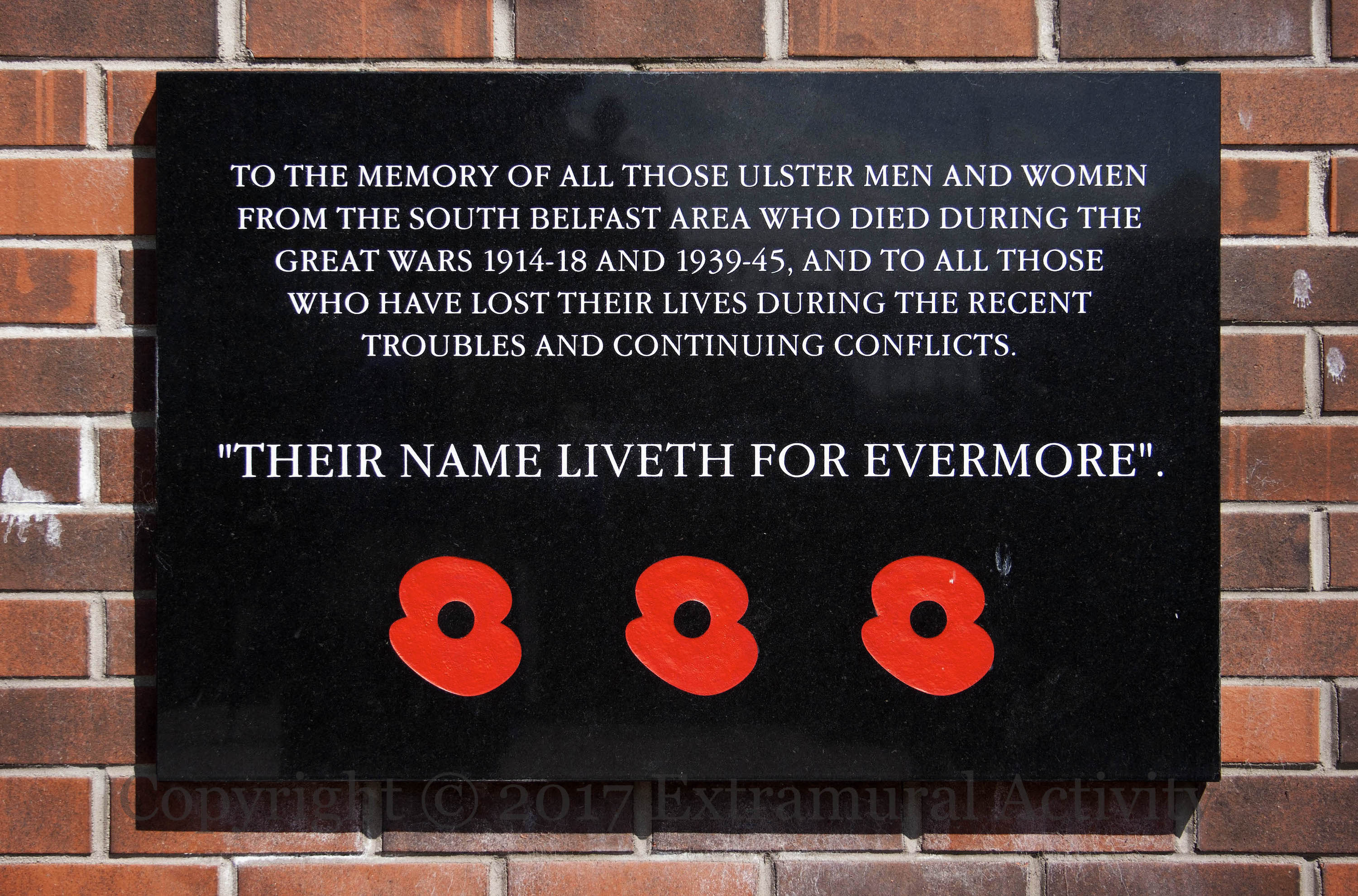
Here are two panels and a wide shot of the memorial garden in Frenchpark Street. Above is a verse from John McCrea’s In Flanders Fields. Below is a plaque “to the memory of all those Ulster men and women from the south Belfast area who died during the great wars 1914-18 and 1939-45, and to all those who have lost their lives during the recent troubles and continuing conflicts.”
Another “Lá Dearg” – organised by An Dream Dearg (Fb) (the red group) takes place next Saturday with a march from An Chultúrlann to the city hall. The image above shows graffiti in Divis Street; the image below shows posters for the event on the Lıú Lúnasa mural.
Here are two final images from the memorial garden in Kilcooley. As mentioned in Tuesday’s post (To Keep Our Ulster Free), it seems that the combination of WWI imagery (today’s post and Across The Wire) and paramilitary memorials was not the plan approved by the Department of Social Development, which contributed funds to the project (Belfast Telegraph). A wide shot of the whole is included below.
According to an article in the Tele last Friday (2017-04-21), the Housing Executive has a list of over 100 memorial on Executive-owned land that it considers illegal. The list itself does not seem to be available and so it is not not known if the Kilcooley garden is one of these.
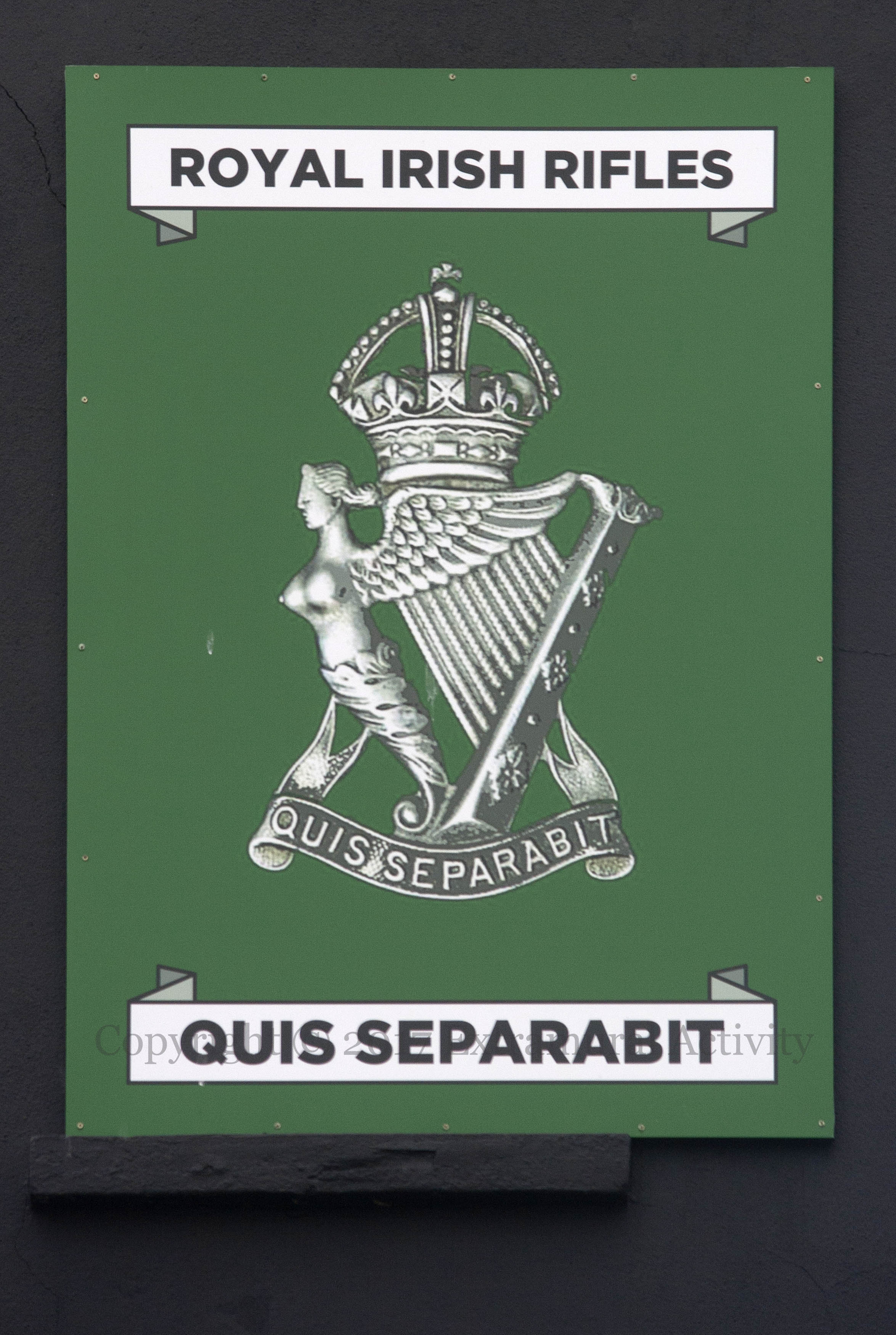
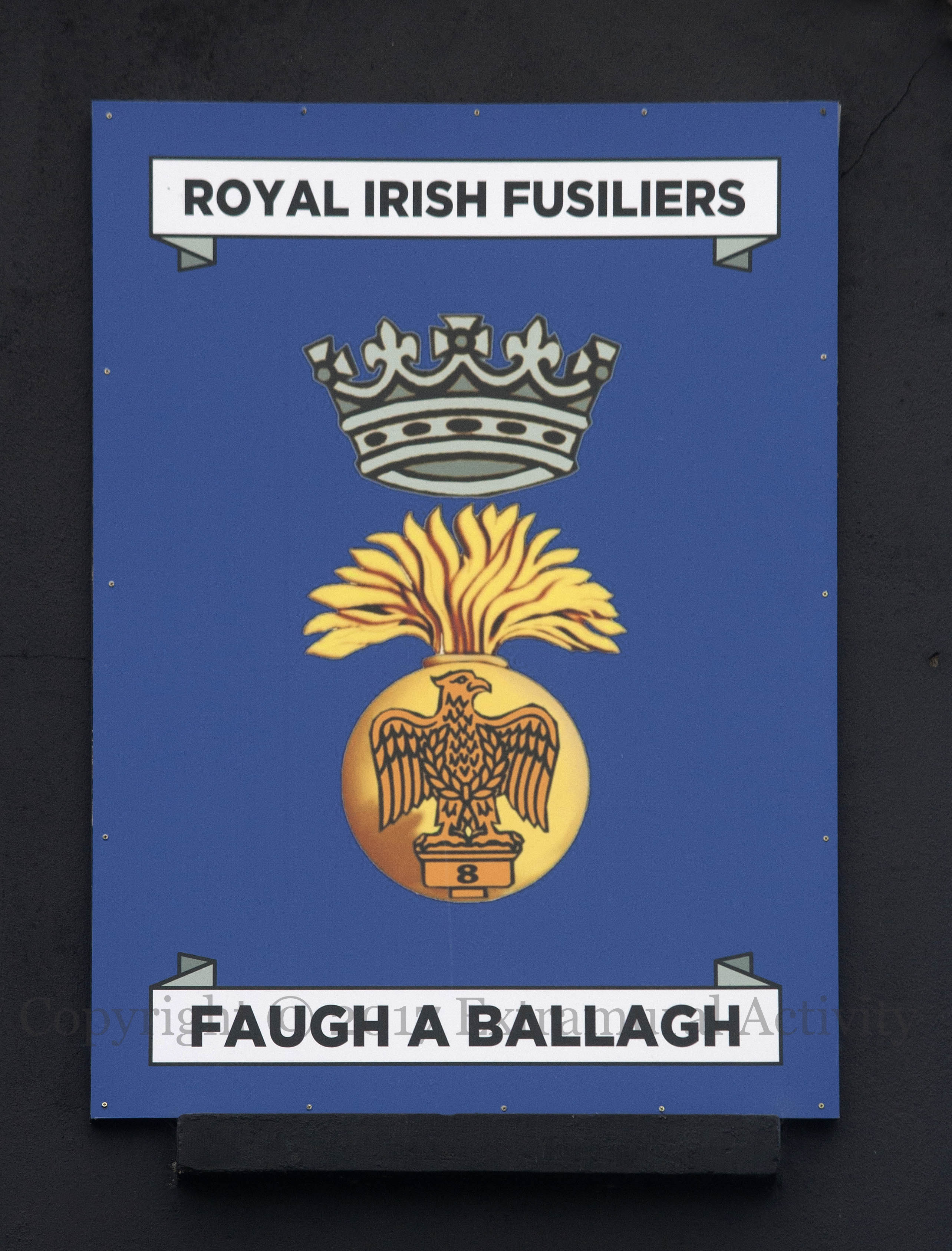
“Faugh a ballagh” (Clear the way) was the motto of the Royal Irish Fusiliers (and then of the Royal Irish Rangers and currently of the Royal Irish Regiment). The Fusiliers served on the western front during WWI – the first and ninth battalions serving in the 36th (Ulster) Division – and the 3rd battalion helped put down the Easter Rising in 1916. Its coat of arm are one of four panels along with the 36th, the Royal Irish Rifles, and the Royal Inniskilling Fusiliers.
The Thiepval Memorial, the Cross of Sacrifice, and the Ulster Tower are pictured in the bottom left.
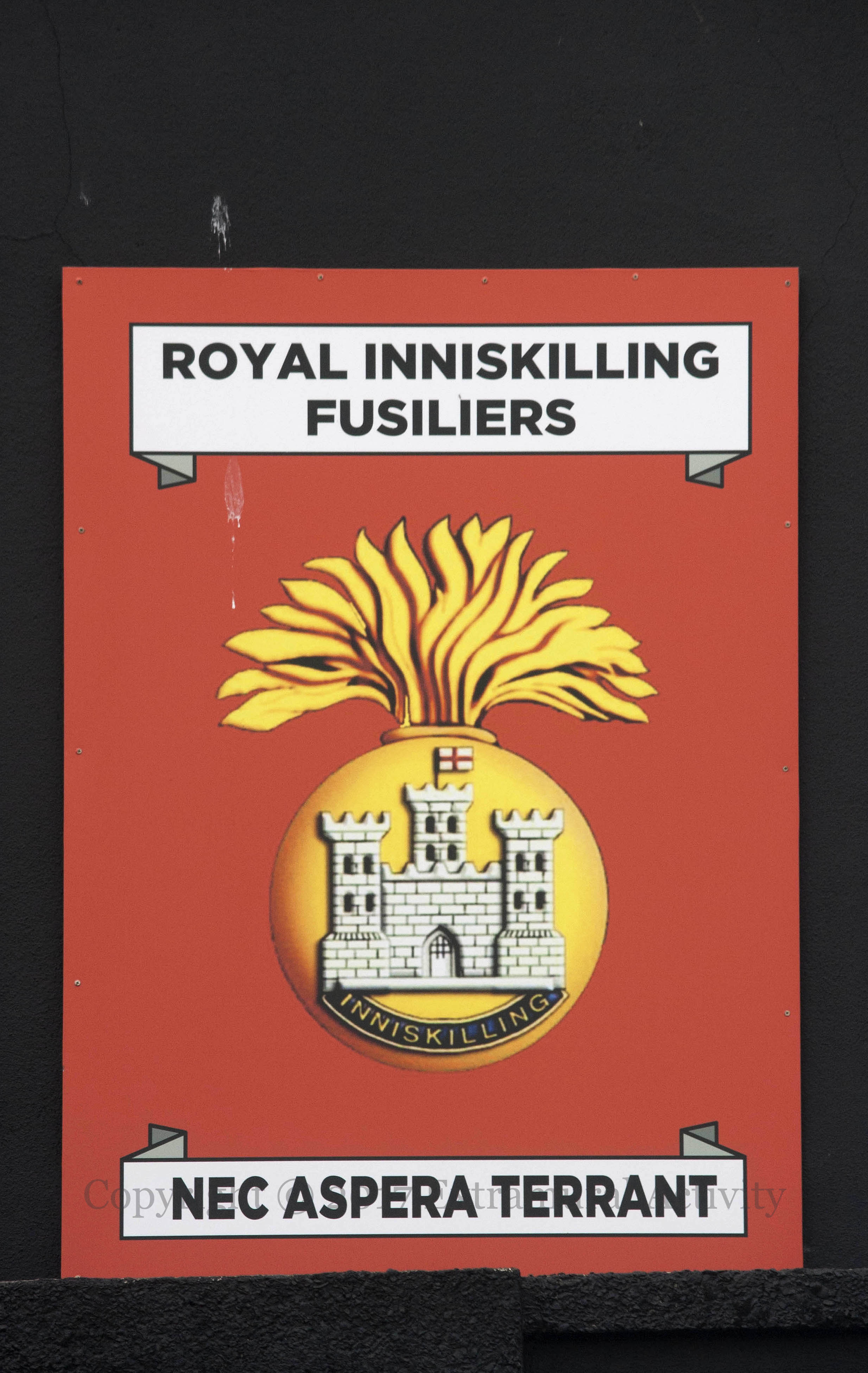
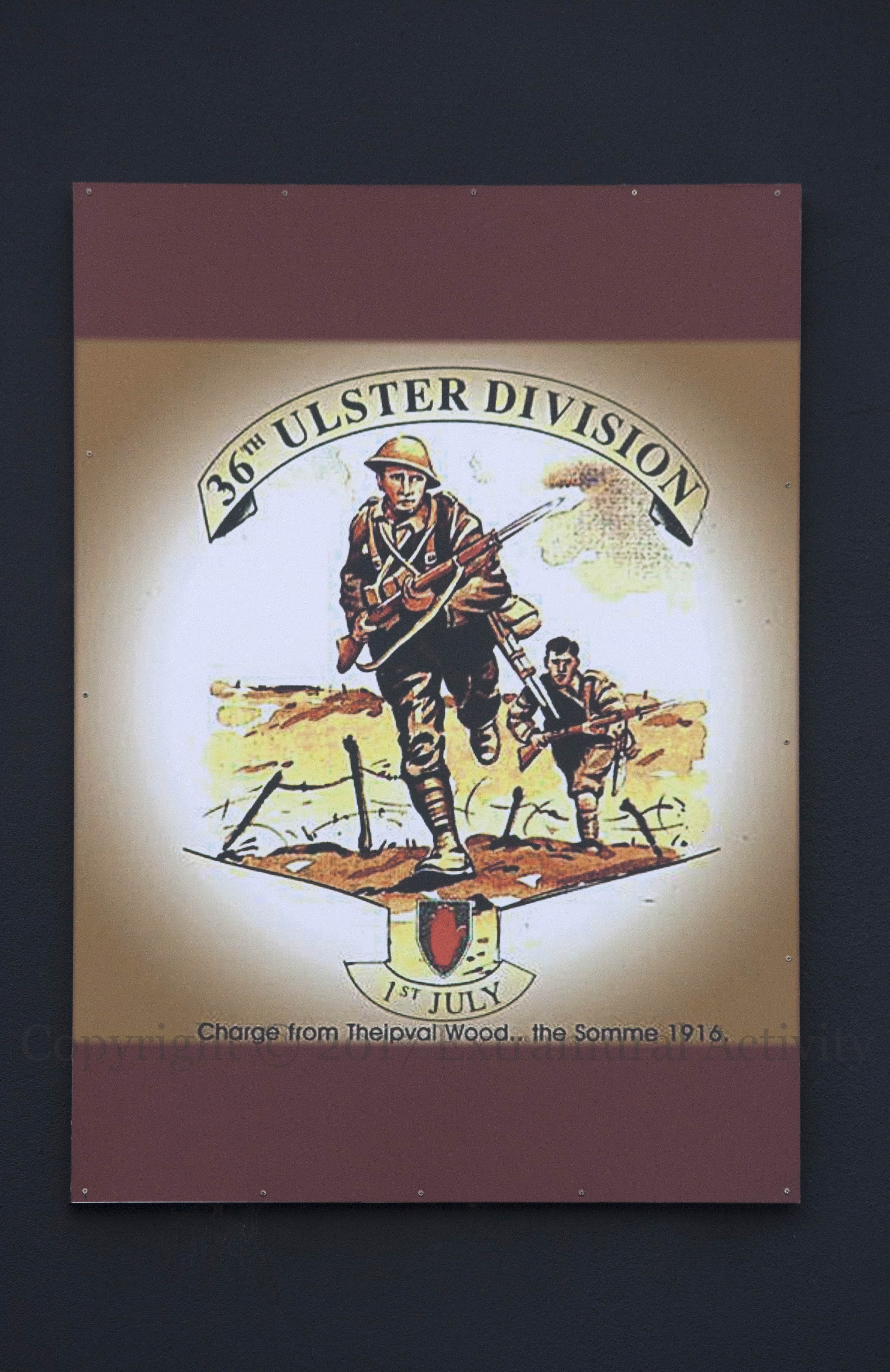
Close-ups of the four regimental insignia are included below. “Nec Aspera Terrant [sic, for “terrent”]”, meaning “frightened by no difficulties”, was the motto of the Inniskilling Fusiliers, who fought in both Boer Wars and both World Wars – its battalions saw action at Gallipoli and on the Western front – before being amalgamated in the Royal Irish Rangers in 1968, along with the Royal Ulster Rifles and the troop featured in the third image, the Royal Irish Fusiliers. Their arms are shown along with those of the Royal Irish Rifles and a board commemorating the charge from Thiepval Wood during the Somme
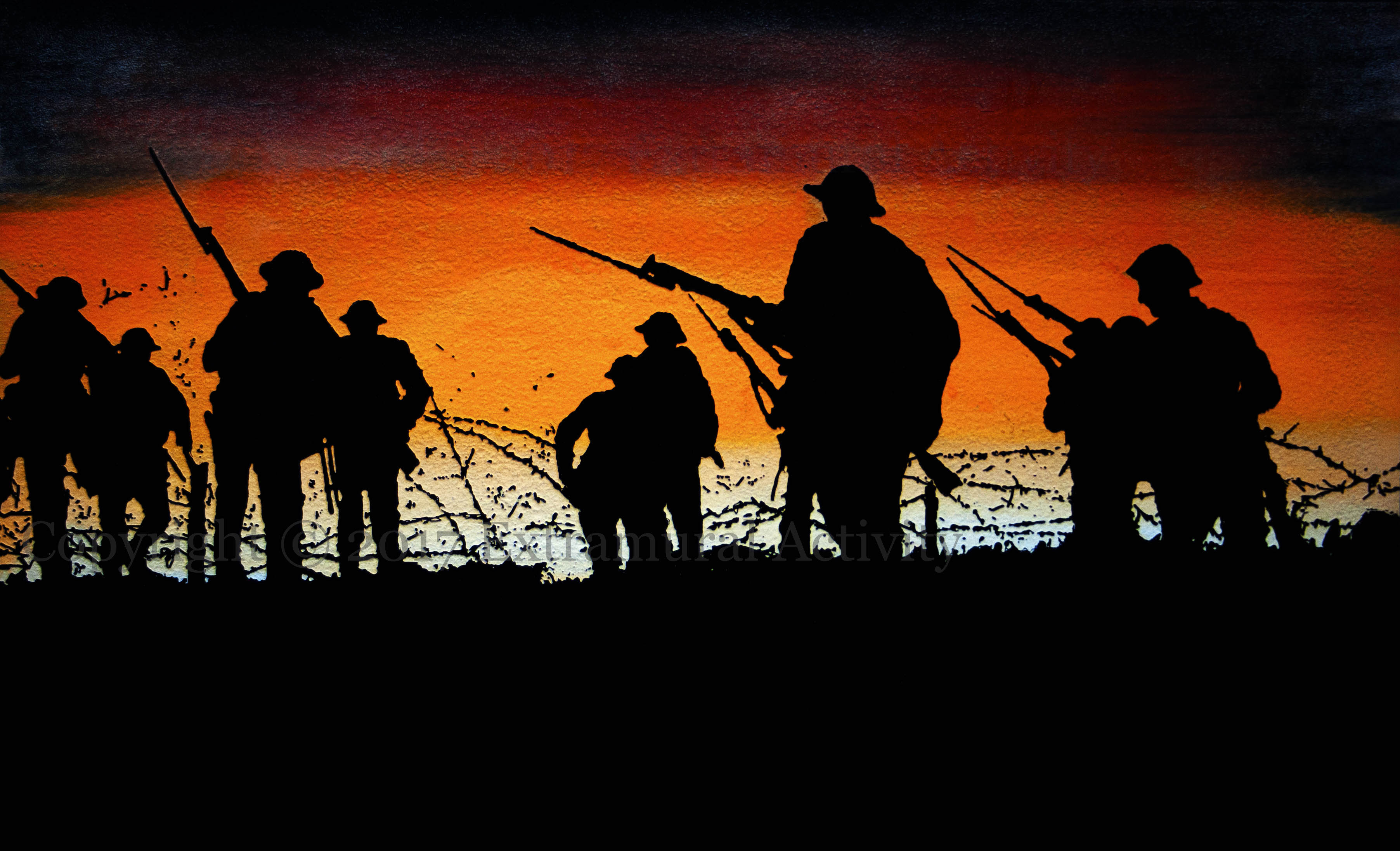
WWI soldiers from the 36th (Ulster) Division go over the top and make their way through the barbed wire. Not a mural but a painted sky on a memorial stone. Part of the Owenroe memorial garden in Bangor.





 Extramural Activity