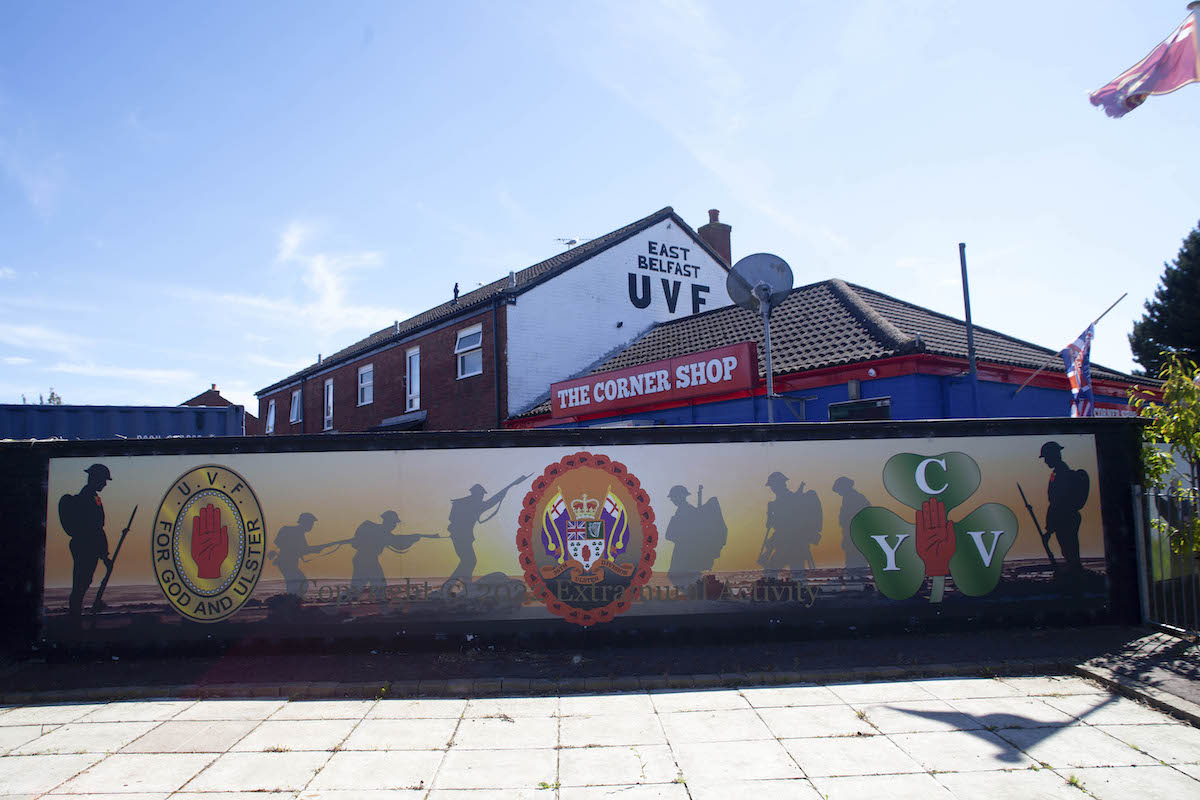
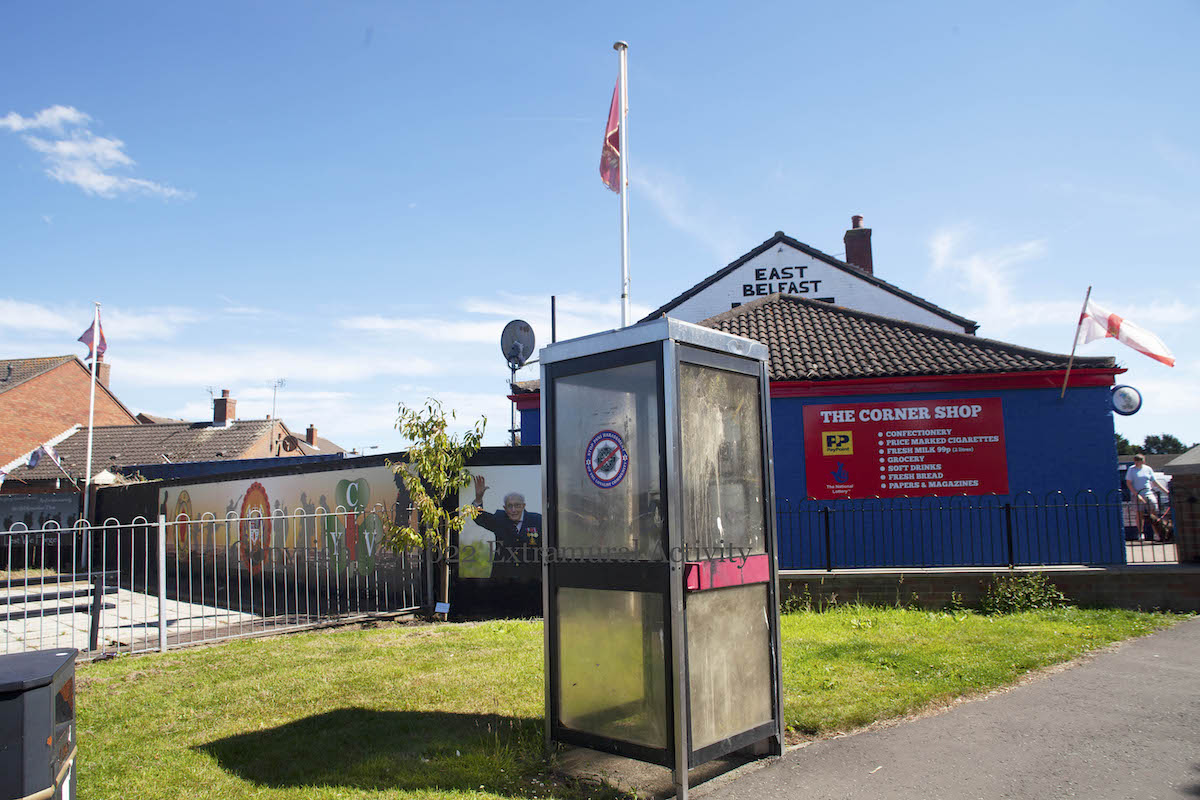
Three-in-a-row at the Bowtown (Newtownards) newsagents: on the left, “Lest we forget” (final image); in the middle, the emblems of the UVF, 36th Division, and YCV against a backdrop of WWI soldiers; on the right-hand, Captain Tom Moore, who raised money for the NHS during lockdown. Above the shop itself can be seen “East Belfast UVF” while the flag is from the North Down UVF. The sticker on the phone box says Stop PSNI Harassment.
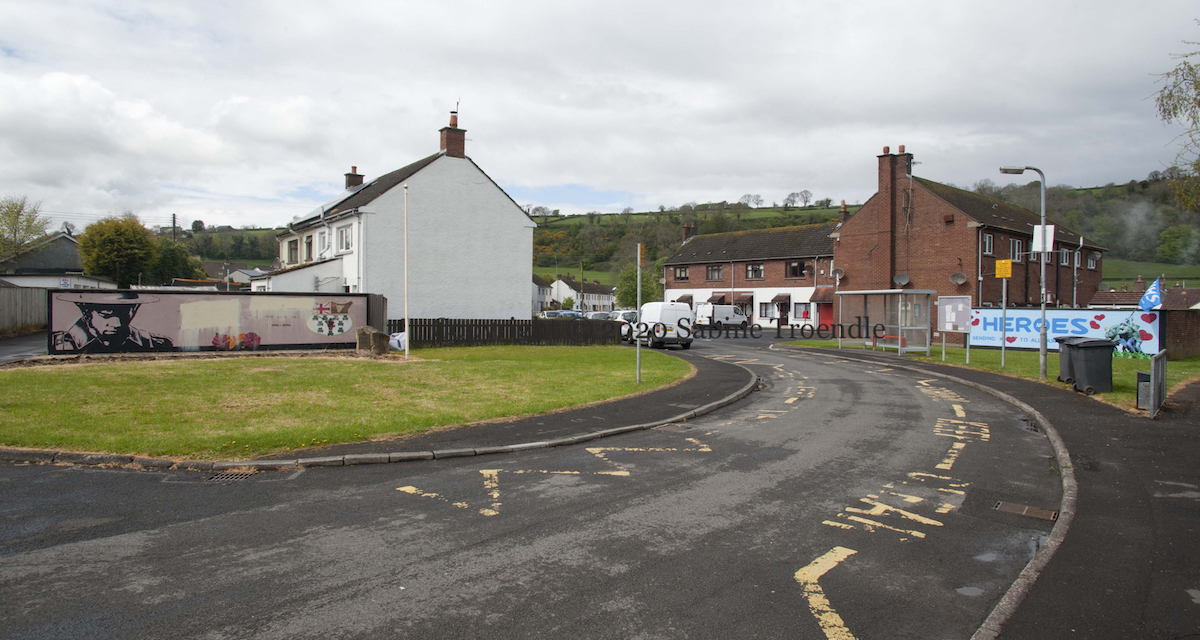
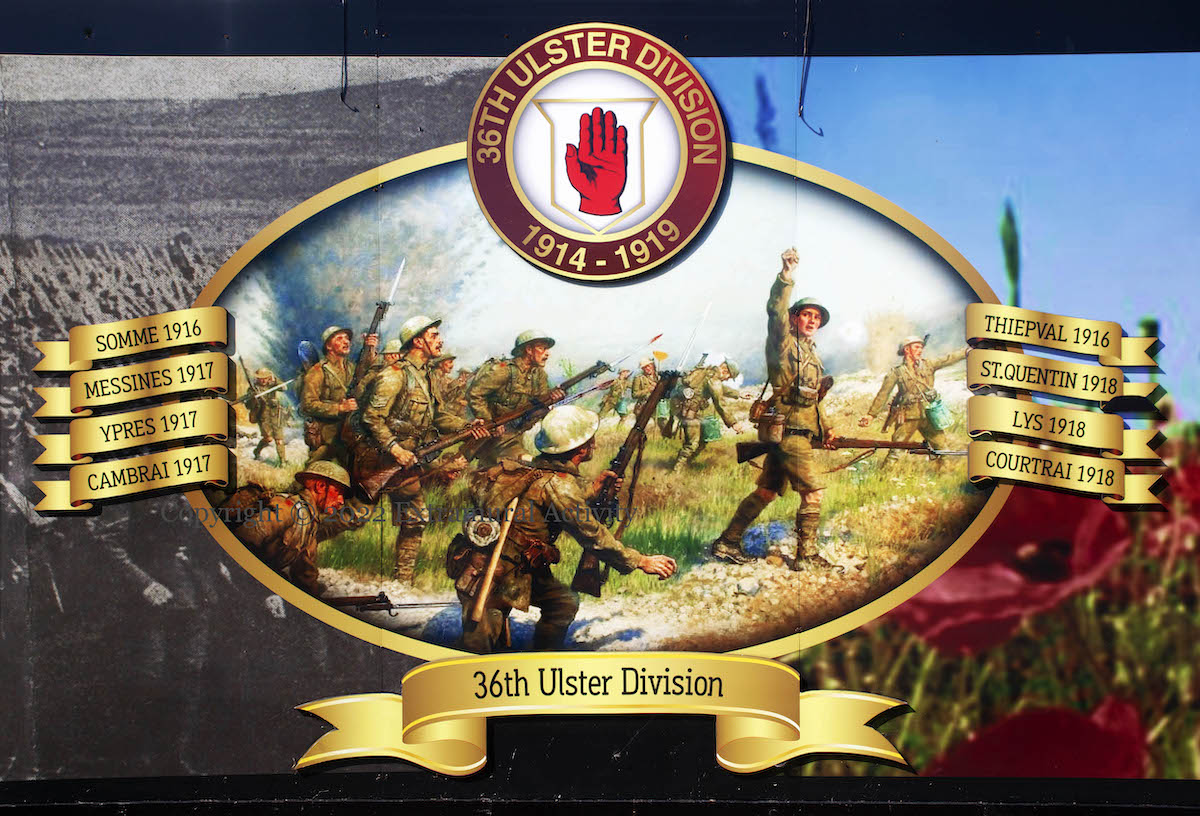
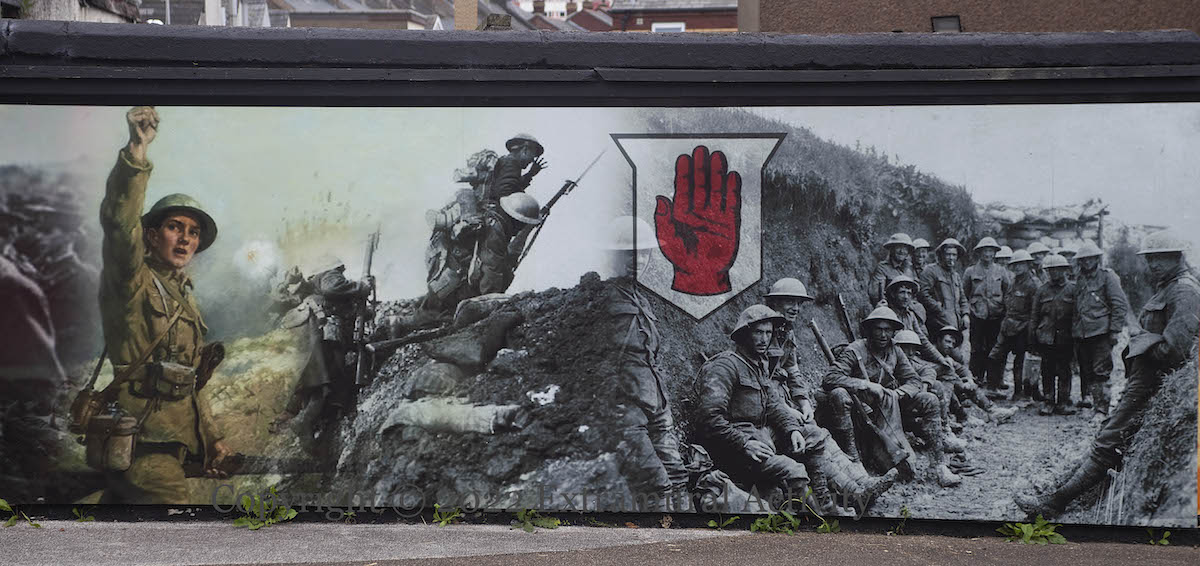
The emblem at the centre of this latest version of the 36th (Ulster) Division mural in Glynn seems to be a novel creation, putting together a crown sitting on a blue ribbon draped over a shield showing a (right-handed) red hand, with a garland of shamrock, thistle, and rose.
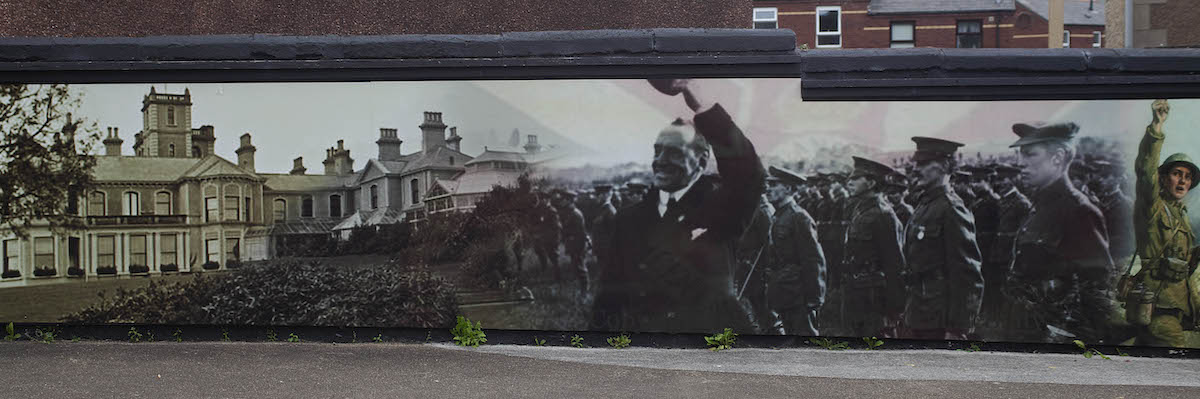
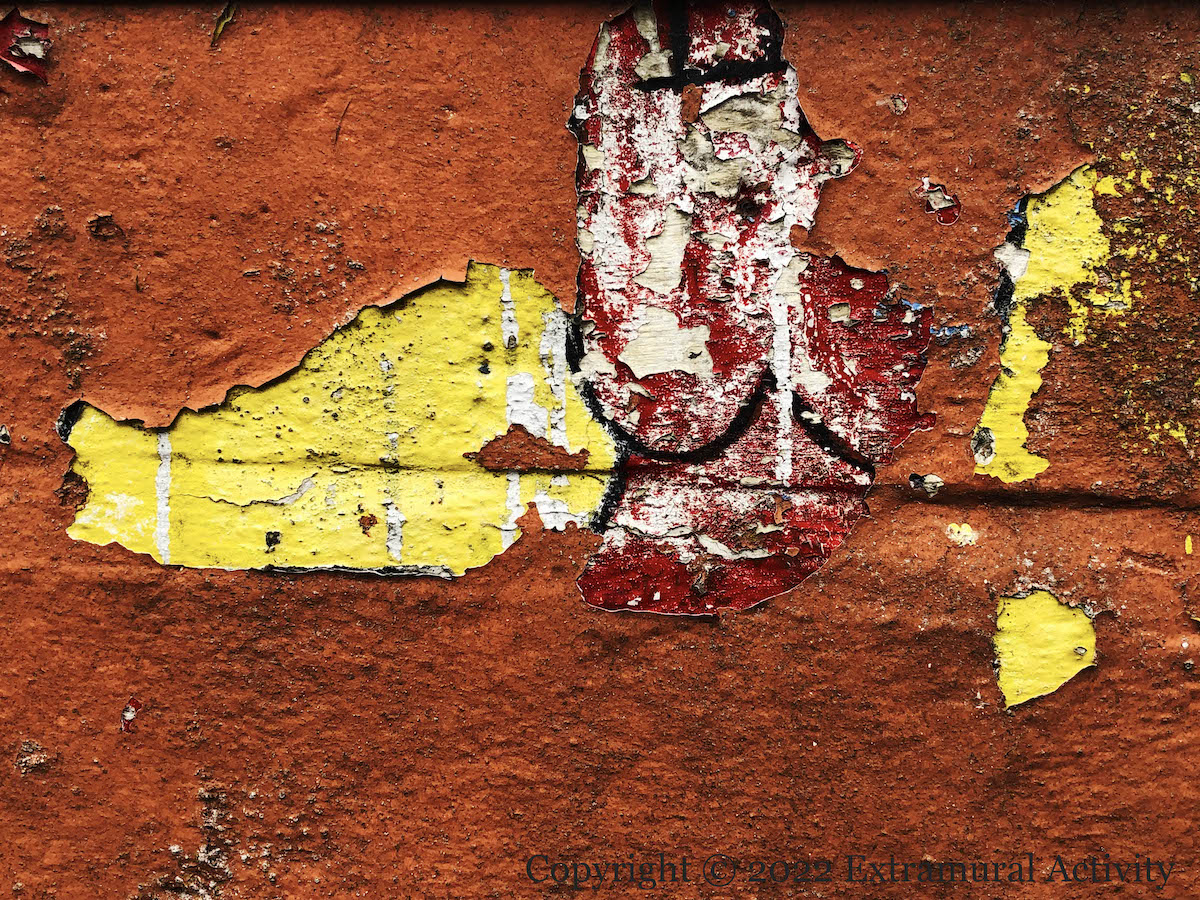
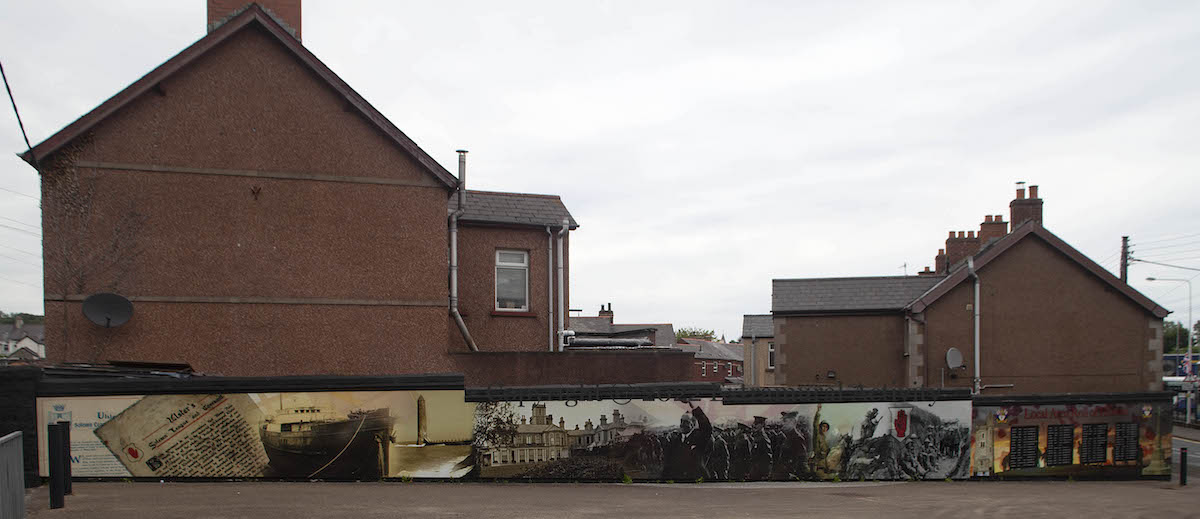
This is the fifth mural (at least) on this wall since 2008. The only images we have of the previous one shows it in a vandalised state (see the images from 2020 below); for earlier, see 2015, 2011 (Street View), and 2008.
The plaque on the stone to the right reads, “When you go home, tell them of us and say for their tomorrow we gave our today”
The new mural has the following to its left: “This mural was erected by the Friends of the Somme Co. Antrim in remembrance of the volunteers of the 36th (Ulster) Division who bravely fought for our freedom. ‘At the going down of the sun and in the morning we will remember them.”
The twelve “Gertrude Street Great War Fatalities” are: Robert Harvey; William Duff; James Fagan; Alexander Leckey; George McCune; Hugh Nabney; William Nabney; Matthew Scott; Robert C. Skillen; James Watson; Samuel Wright; James Burns.
This board was originally next to the To France And Flanders mural on the adjacent wall; the mural also named these twelve but which only lasted a year. That mural depicted the damaged basilica tower in the village of Albert and there is a similar mural in the village itself – a photograph of the mural and the rebuilt tower can be seen in the top right of the board; the mural can be seen in full here.
As the map in the top left shows, Gertrude Street was where Wolff Close now is, running north from the Newtownards Road; the original Gertrude Star mural (circa 1989) was on the first gable of what is now called “Freedom Corner” – see D00388.
“‘The Legacy Of Gertrude Street. Twelve brave young men from Gertrude Street,/Bravely fought in world war one./They tried their best as legends do./But never returned back home.//They dragged through muddy trenches,/In the darkness of the night./But never once would they give up,/As they bravely continued to fight.//Each year these men will be honoured,/As we stand together taking time to reflect./It’s vital to show these heroes the uttermost respect.//For now they lie in Flanders fields,/Between crosses row by row./They lived, they fought for our country,/And gave their lives many years ago.//Forever we will speak of these men,/Who came from Gertrude Street./Their legacy will always live on,/When we think of their marching feet.’ By Angela McCully”
Plants provide symbols of, and metaphors for, rebellion. In America, 1775, Paine wrote of the Liberty Tree which Americans must rise to defend against “Kings, Commons and Lords” and Jefferson would later write (in a 1787 letter) that “The tree of liberty must be refreshed from time to time with the blood of patriots and tyrants.” In Ireland, the tree of liberty was borrowed for the 1798 rebellion (see Where Did The Seeds Fall?“) and although t more familiar symbol of the 1798 Rebellion is the pike, the shamrock is thought to be included as one of the objects in the Wearing Of The Green: Boucicault’s version begins “Oh, Paddy, dear, an’ did you hear the news that’s goin’ round?/The shamrock is forbid by law to grow on Irish ground.” The lily, of course, is a symbol of the 1916 Rising, though it is shown here growing between sunflowers and a rose.
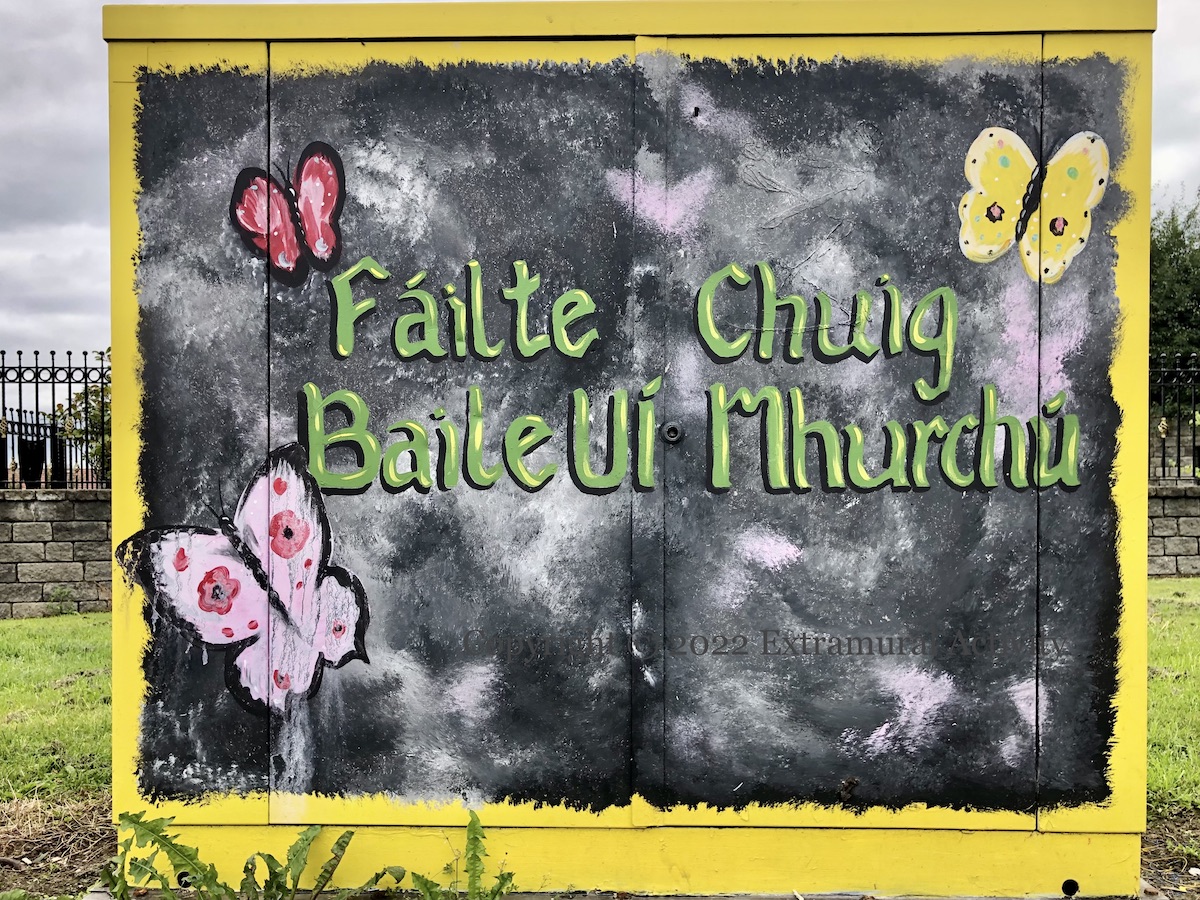
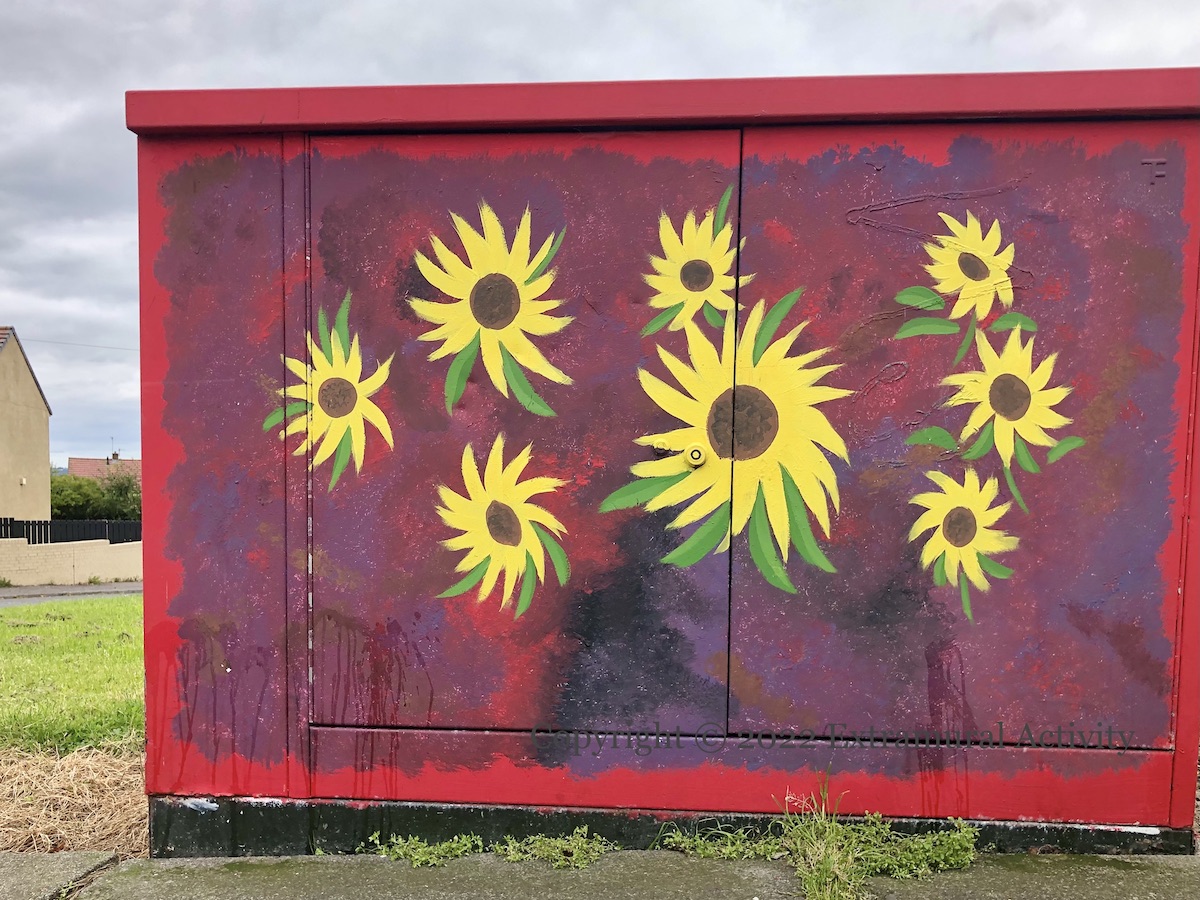
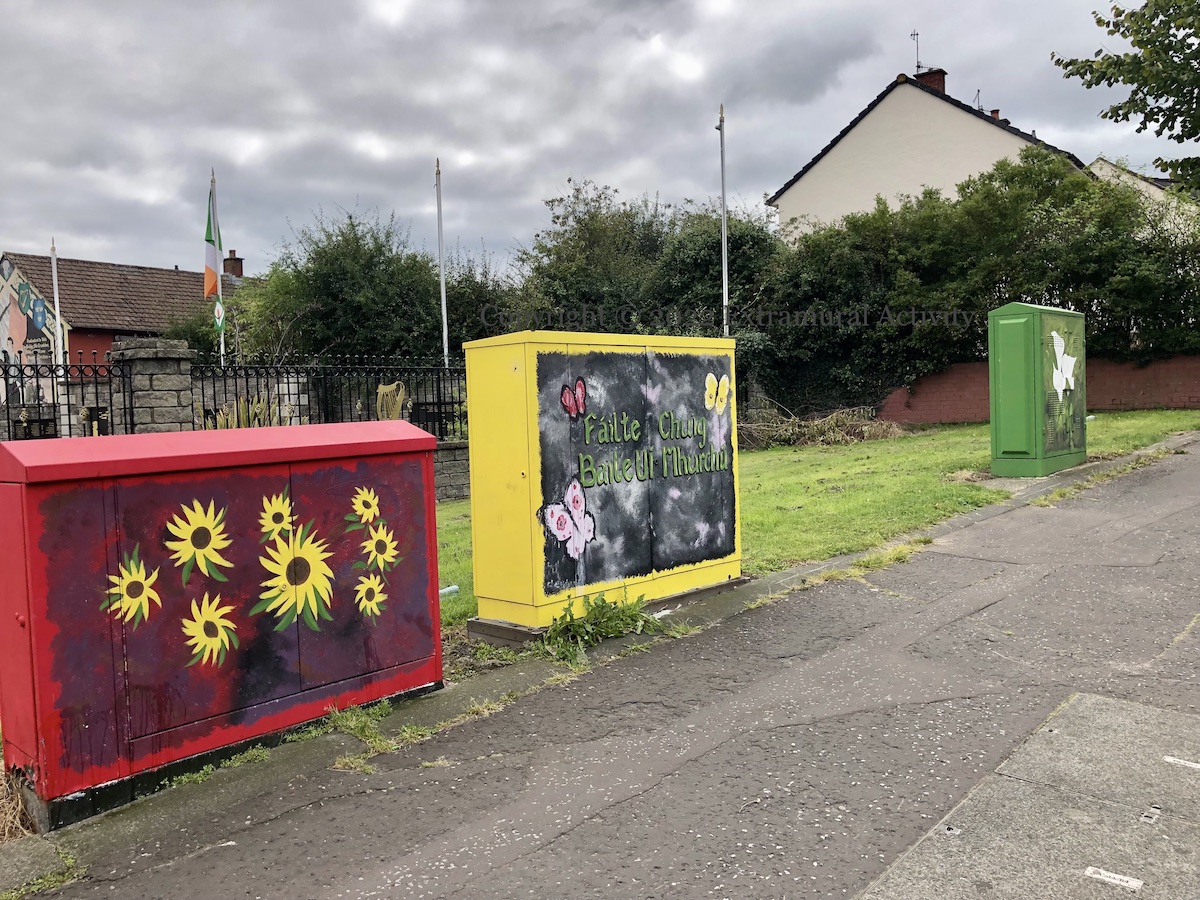
These painted electrical boxes are in Westrock and Ballymurphy (“Fáılte chuıg Baıle Uí Mhurchú”).
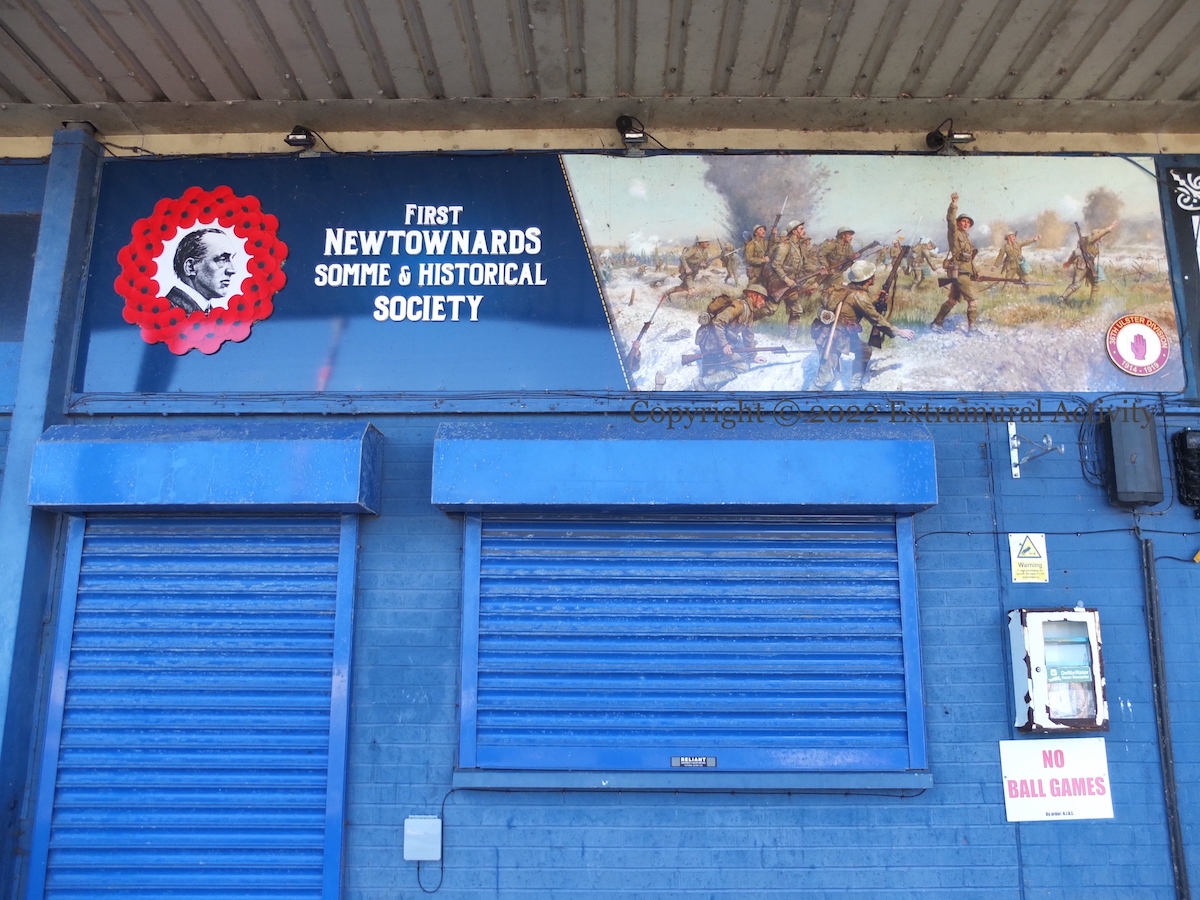
This is new, more extensive display from The First Newtownards Somme & Historical Society (Fb) (replacing The Pride Of Ulster). There are seven panels about the Ulster Volunteers and the 36th Division, plus an eighth panel on the Ulster Special Constabulary. The formation of the Ulster Volunteers (anti-Home Rule poster | anti-Home Rule postcard), formation of the 36th (Ulster) Division, the 13 battalions of the division, the Battle Of The Somme, JP Beadle’s Attack Of The Ulster Division (Royal Irish), the Ulster Tower, the USC (B Specials), the Victoria Cross.
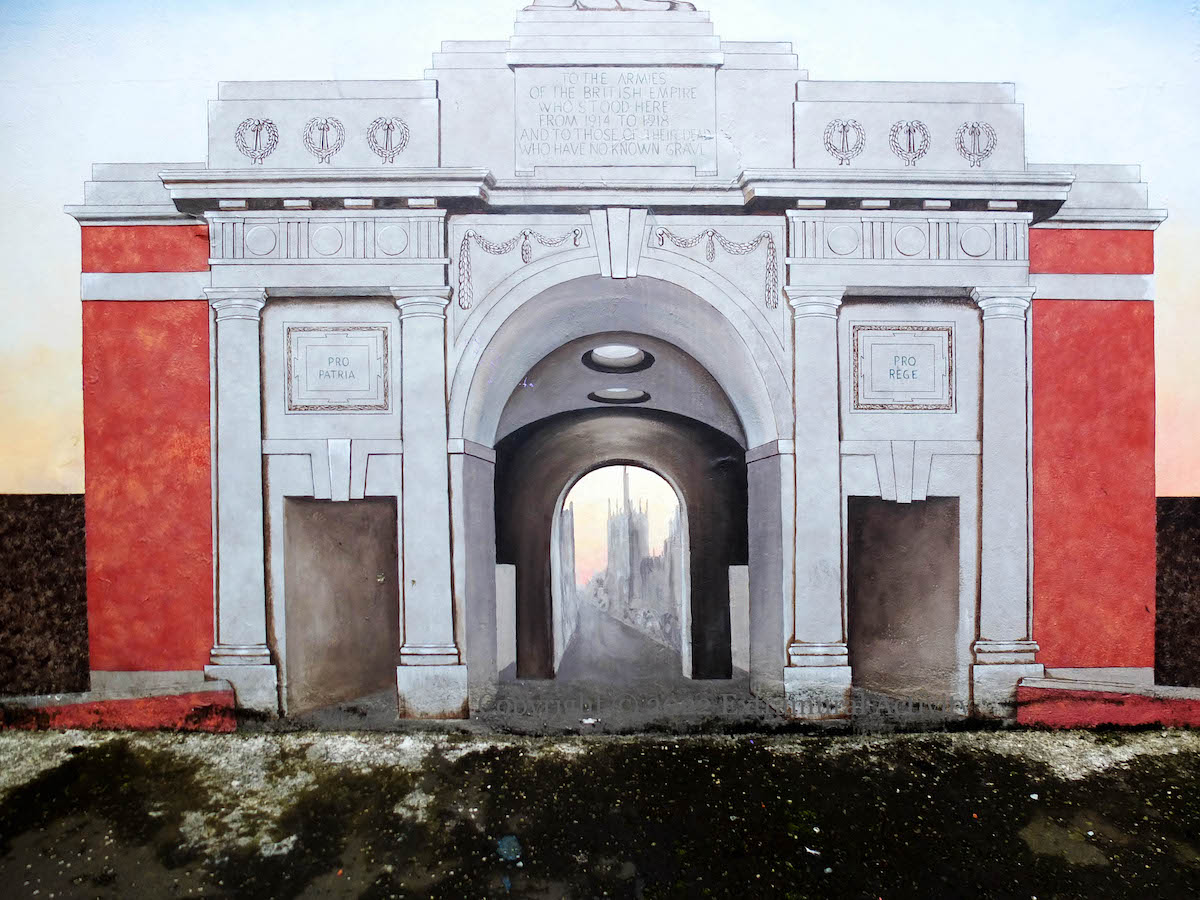
This post updates a 2018 post The Menin Gates with the addition of the side-wall shown above – which is still incomplete – and the two plaques shown in the middle image.
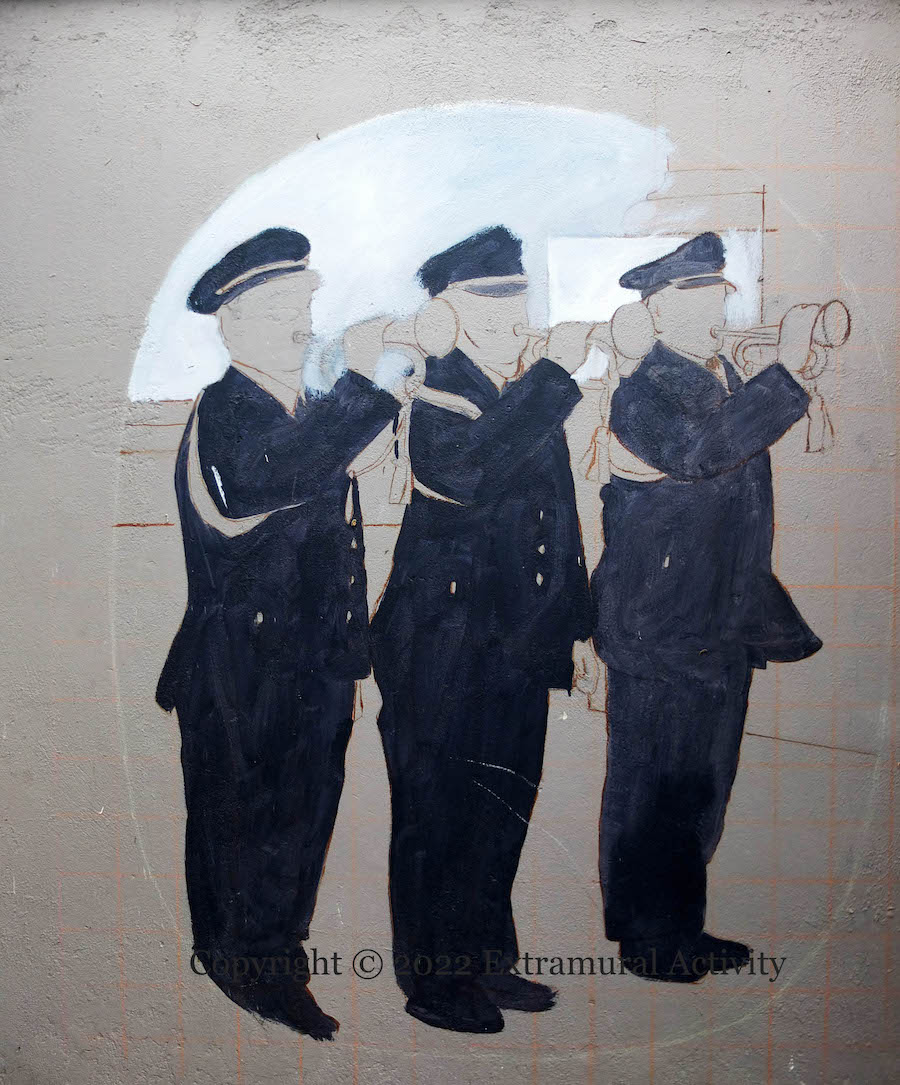
“The Menin Gate And Last Post Ceremony: Every night at 8.00pm (20:00 hours) a moving ceremony takes place under the Menin Gate in Ieper – Ypres. The Last Post Ceremony has become part of the daily life in Ieper (Ypres) and the local people are proud of this simple but moving tribute to the courage and self-sacrifice of those who fell in defence of their town. At 7.30pm the police arrive, and all traffic is stopped from driving through the Menin Gate until 8.30pm. For one hour the noise of traffic echoing around the Menin Gate from the cobbled road ceases. The crowd is hushed. A stillness descends over the memorial. Buglers of the local volunteer Fire Brigade arrive and stand ready at the eastern entrance of the Menin Gate Memorial. At 8.00pm The Last Post is sounded, and a moments [sic] silence is observed. “Réveille” [sic] signifies the end of the ceremony.” “Sponsored by East Bank Rangers Supporters Club“
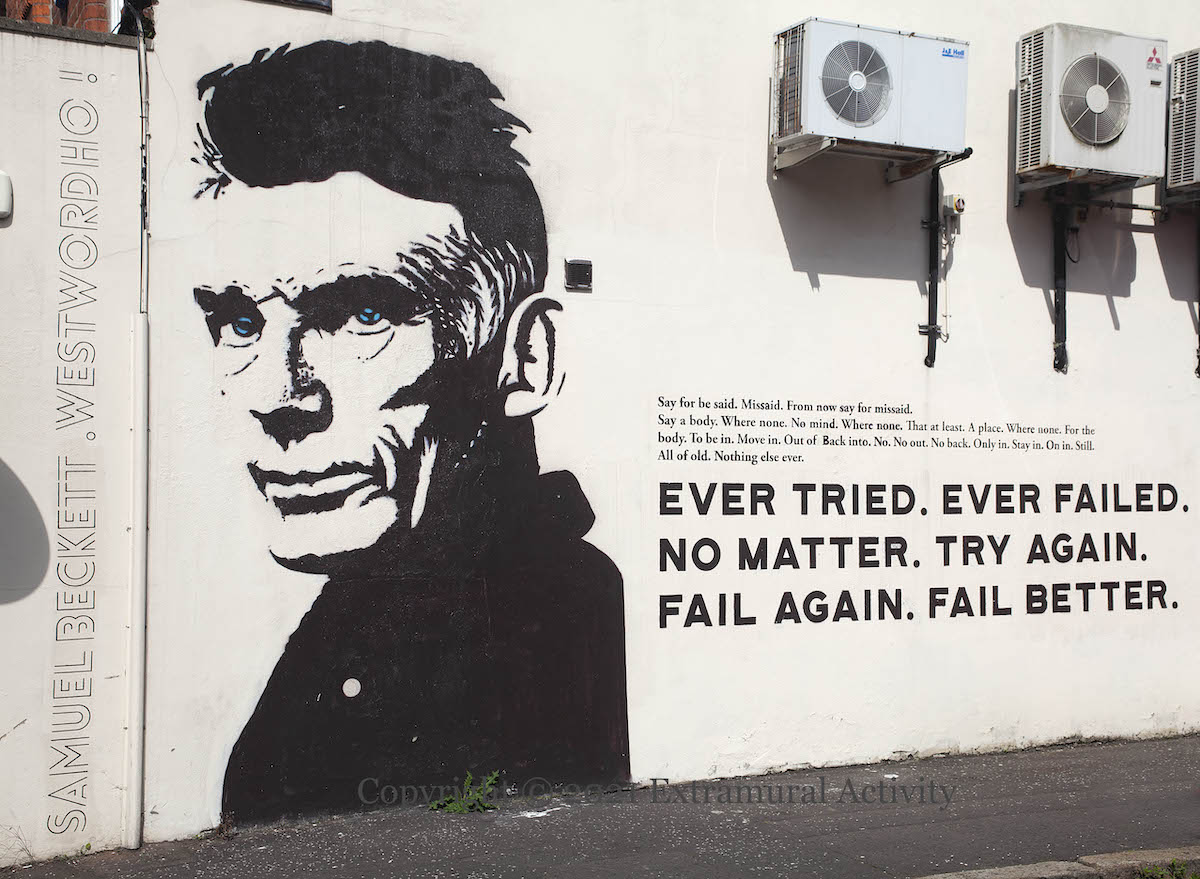
Glen Molloy’s Samuel Beckett mural in the Dundela area of east Belfast was largely whitewashed the day after it was finished – see the second image, below. (This was only a few weeks after the Maya Angelou mural across the street was painted and graffitied.) (Belfast Live) The portrait was restored last year, with blue sparkling blue eyes, and the quotation was added again this summer.
(The Angelou mural was partially repaired at the time, and support for Ukraine added this year – see We May Encounter Many Defeats.)
The quotation is from Worstward Ho! (not “Westword Ho!” as written on the wall): “Say for be said. Missaid. From now say for missaid. Say a body. Where none. No mind. Where none. That at least. A place. Where none. For the body. To be in. Move in. Out of. Back into. No. No out. No back. Only in. Stay in. On in. Still. All of old. Nothing else ever. Ever tried. Ever failed. No matter. Try again. Fail again. Fail better.”
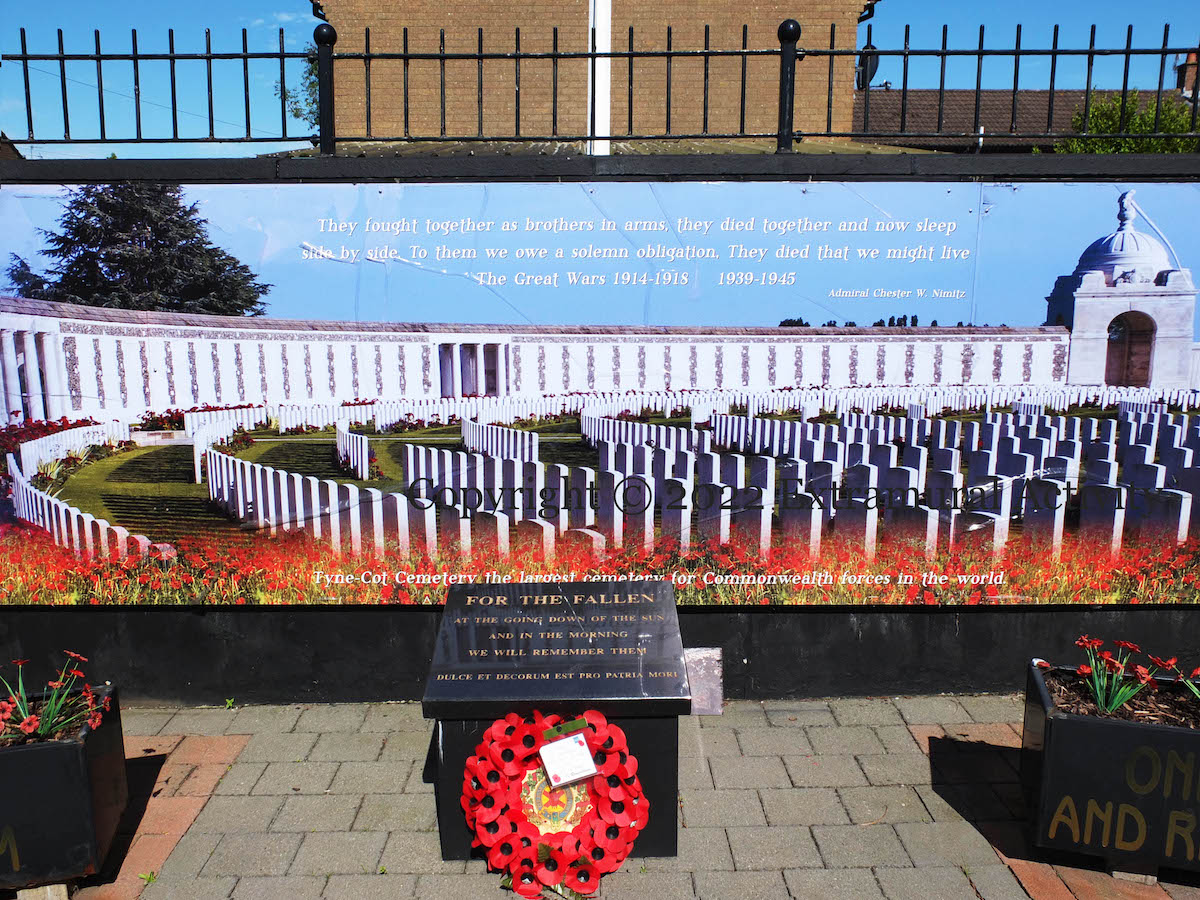
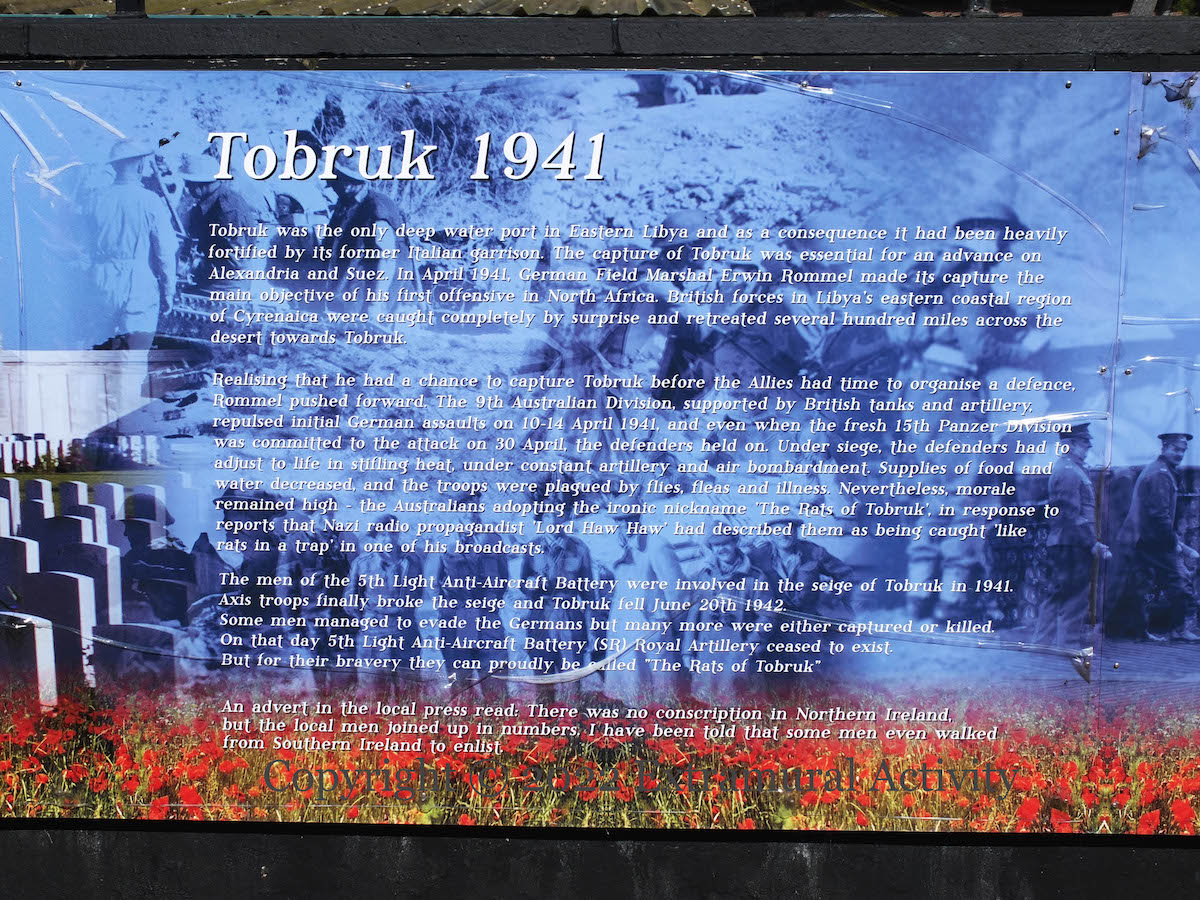
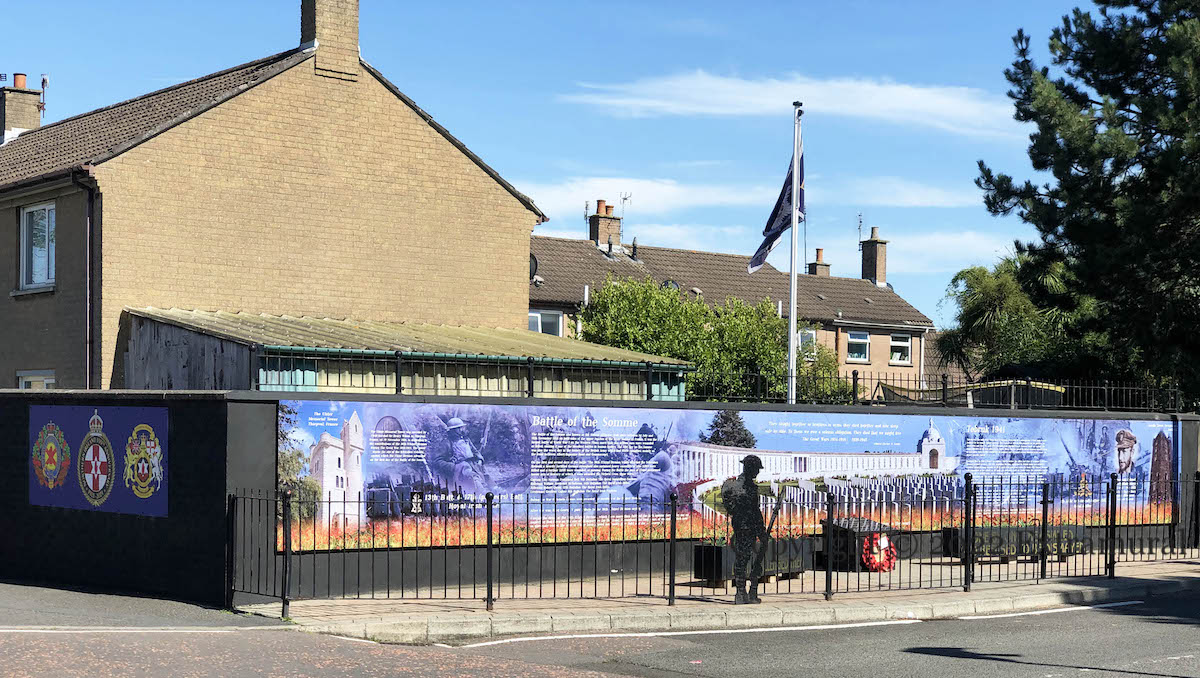
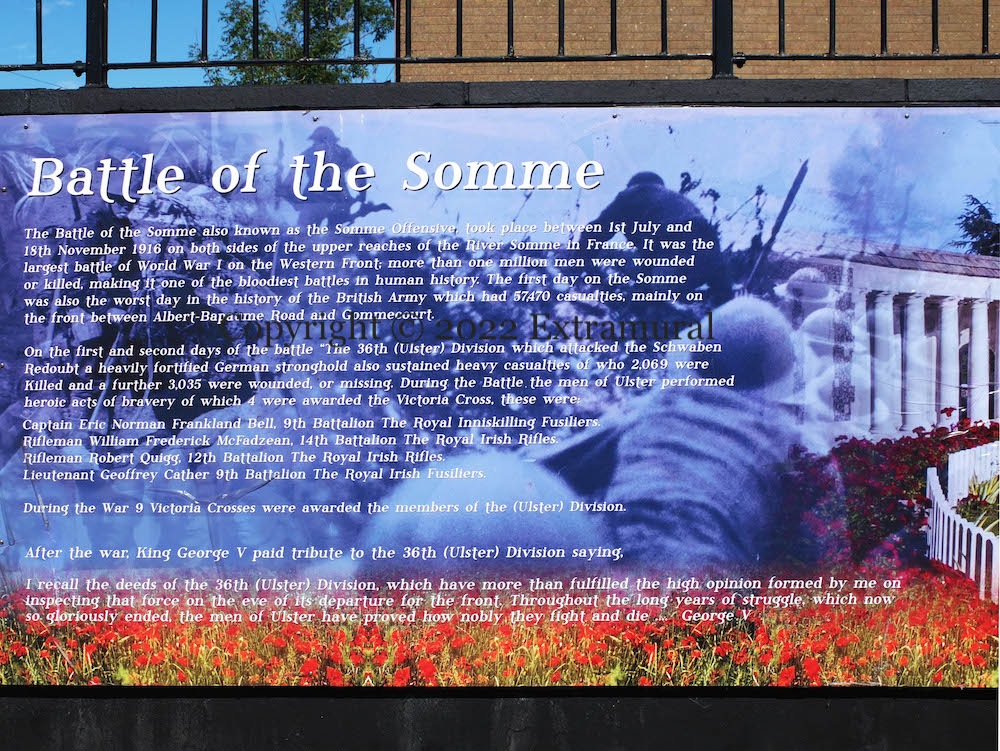
“They fought together as brothers in arms, they died together and now sleep side by side. To them we owe a solemn obligation. They died that we might live. The Great Wars 1914-1918, 1939-1945 – Admiral Chester W Nimitz”. The central image of this Newtownards homage to the men of the 36th (Ulster) Division and the Australian ‘Rats Of Tobruk’ who held that city against Rommel’s forces in north Africa during WWII is the Tyne-Cot cemetery near Passchendaele, Belgium, the biggest Commonwealth cemetery in the world but named ofter the “Tynside cottages” that the German pill-boxes in the area resembled (WP).
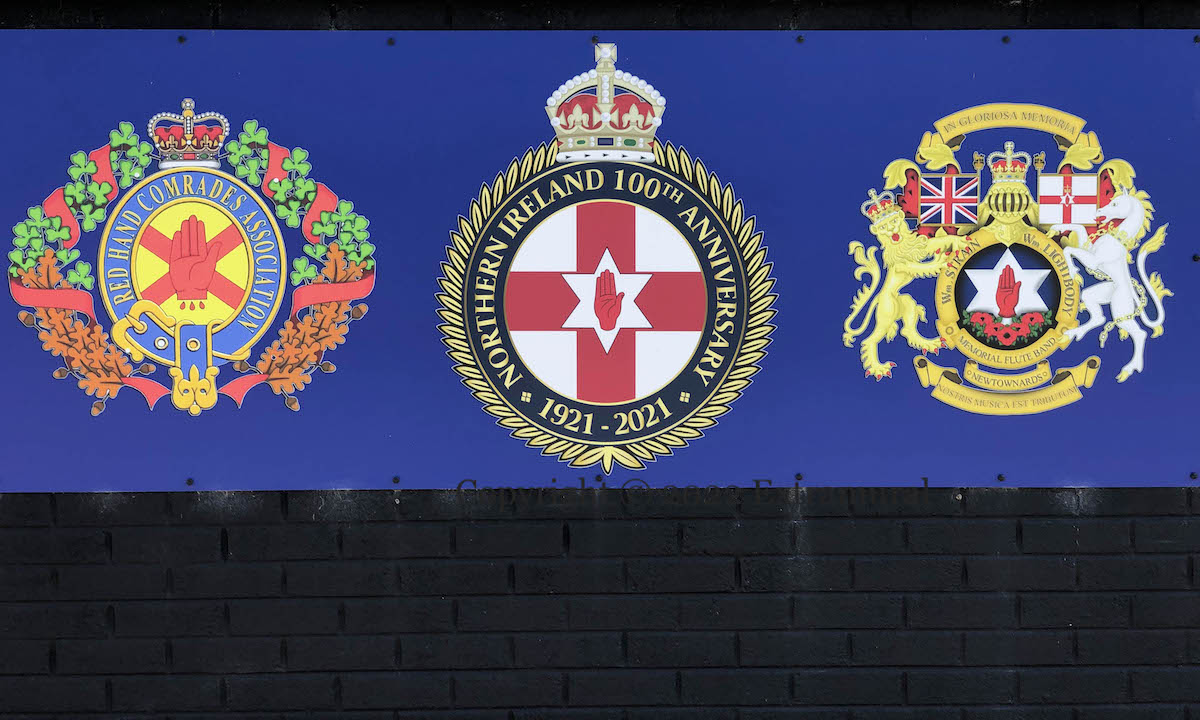
New for the NI centenary are three emblems on the side wall, with (on the left) the Red Hand Comrades Association and (on the right) the Strain-Lightbody Memorial flute band (Fb).
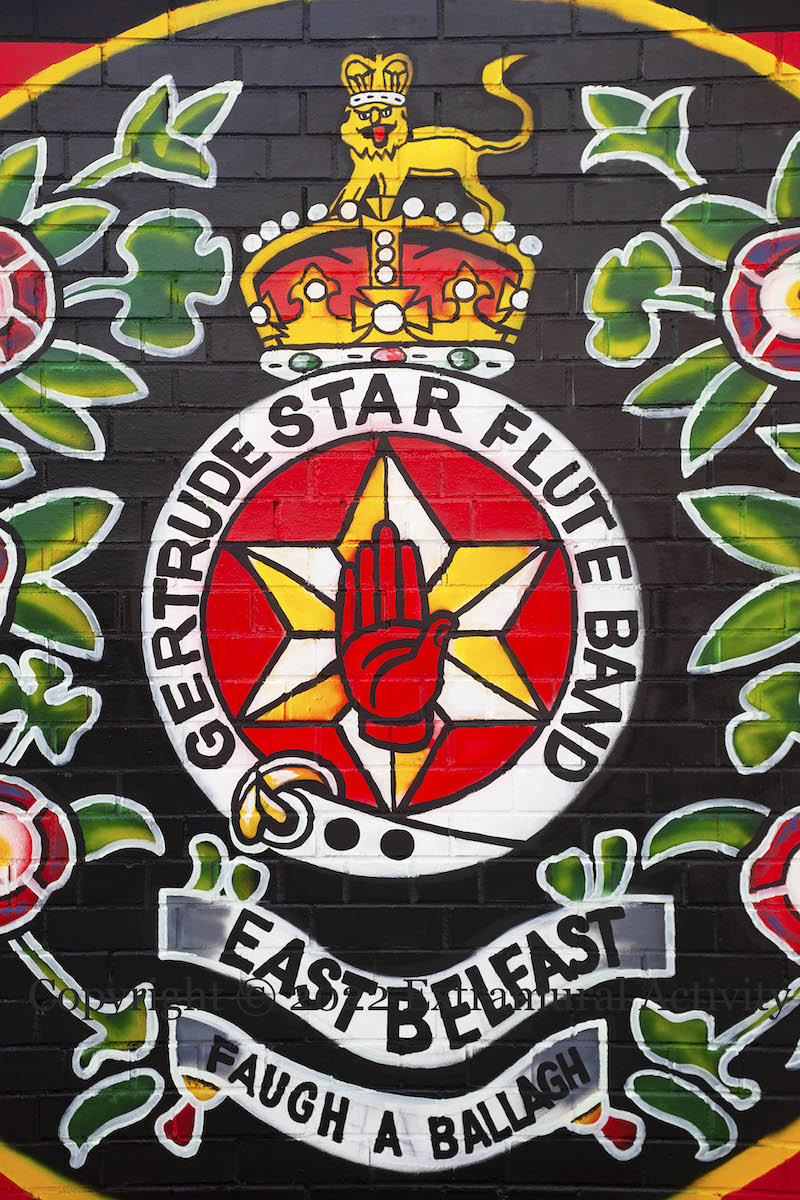
Gertrude Star flute band (Fb) celebrated its 60th anniversary in 2021 and to mark the occasion this (2022) May, the two side-walls were painted with the emblems above and immediately below. For the mural, which was painted for the 50th anniversary in 2011, M08166.


















 Extramural Activity