For the 30th anniversary of the second hunger strike, the mosaic portraits of the ten men to die (plus Michael Gaughan and Frank Stagg) used at the Falls Road end of Beechmount Avenue to commemorate the 25th anniversary, are placed around the blanketmen board above the Clowney Street phoenix.
“HM Queen Elizabeth II 1952-2012”. Elizabeth Alexandra Mary Windsor acceded to the throne of the United Kingdom in 1952 (she was crowned in 1953). 2002 was her golden jubilee year. She is surrounded by the flags of the four constituents of the UK: Northern Ireland, Wales, England, Scotland.
There was previously a “scroll” below the portrait reading “This mural was commissioned by 1st batt A coy South East Antrim UDA UFF UYM.” This has been painted over in black but the UFF and UDA emblems remain.
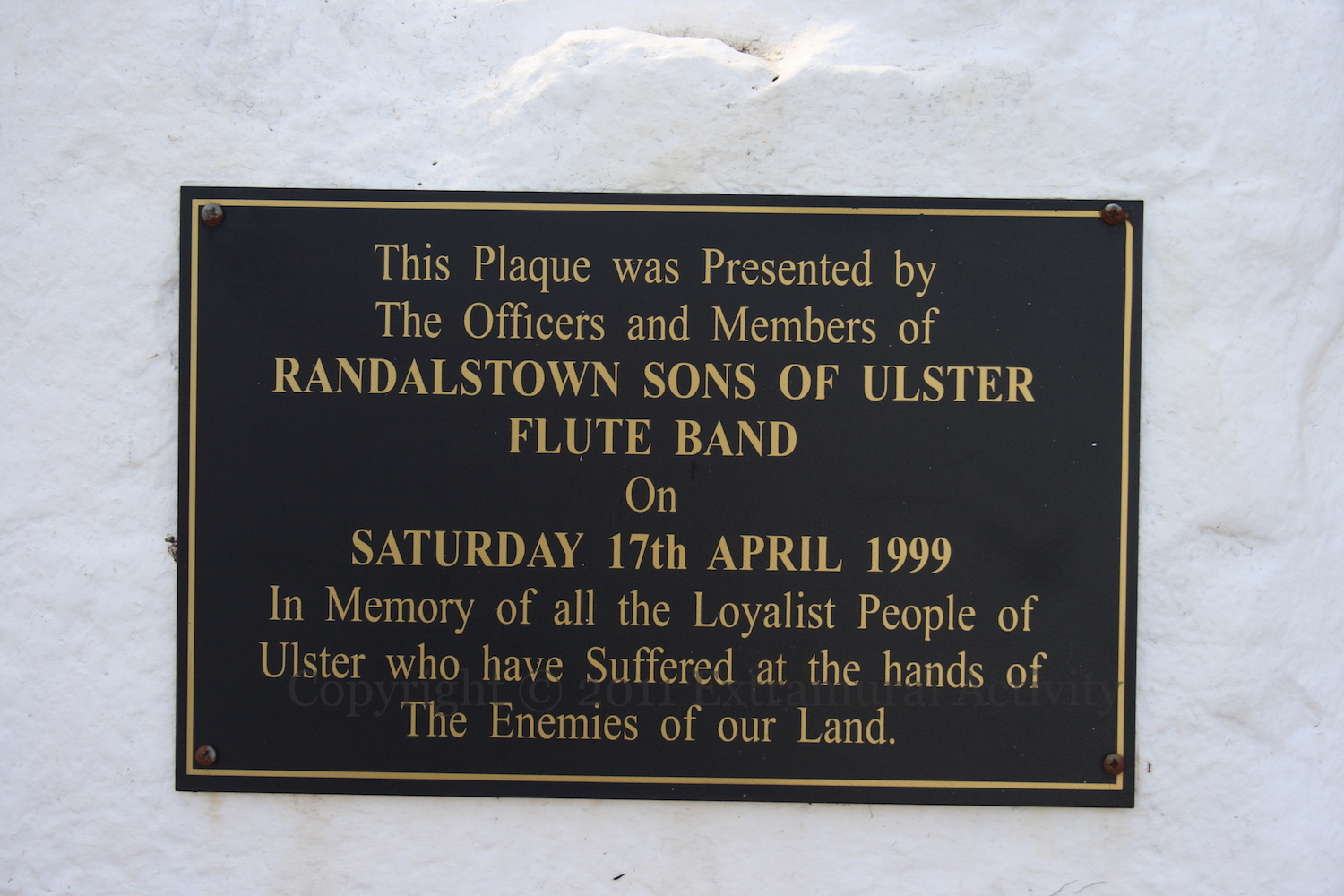
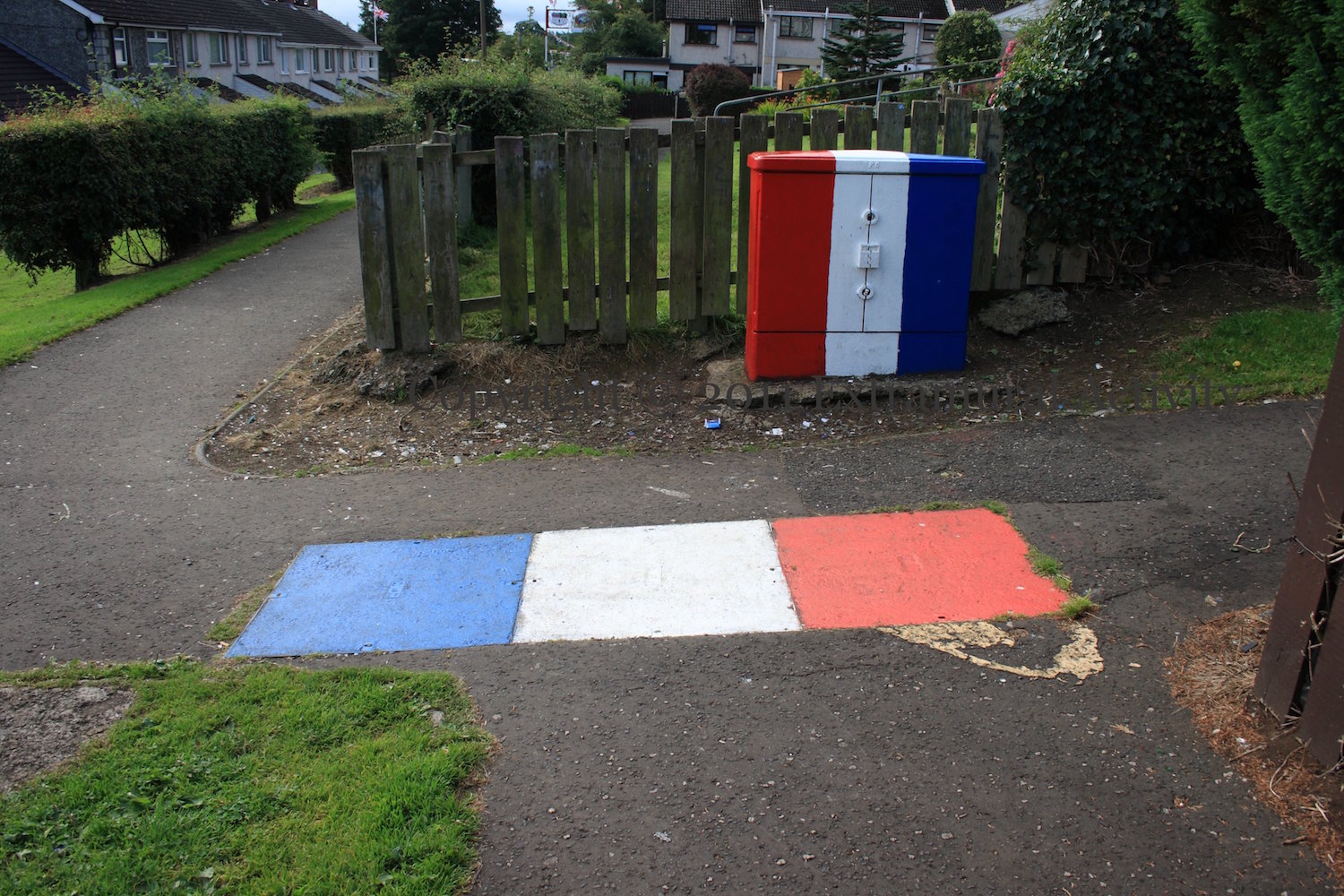
“This plaque was presented by the officers and members of the Randalstown Sons Of Ulster flute band on Saturday 17th April 1999 in memory of all the loyalist people of Ulster who have suffered at the hands of the enemies of our land.” All of the plaque, the arch, the ground painting, and the 36th Division board are sponsored by the Randalstown Sons Of Ulster flute band (tw). Neilsbrook Road, Neilsbrook Park, and Blackthorn Way, Randalstown. For more images from the estate, see Loyalist Neilsbrook.
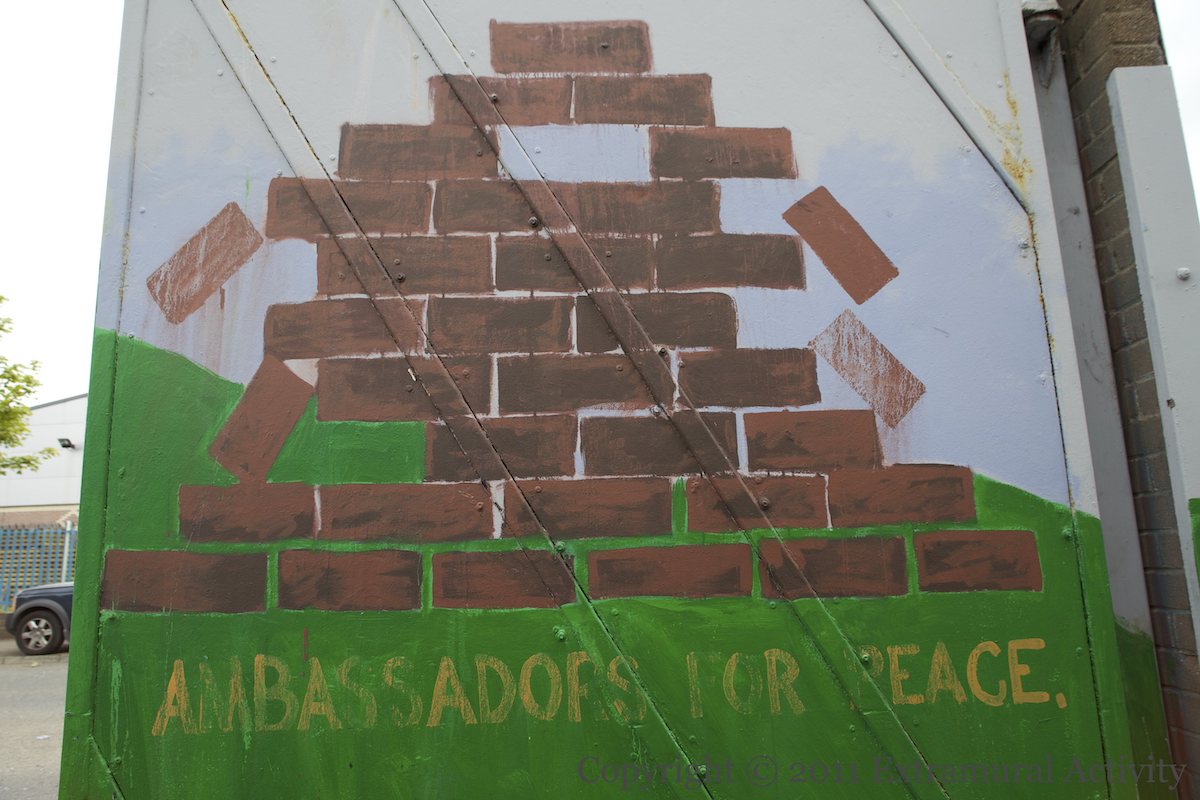
“Ambassadors For Peace” is a programme for young people from the Shankill, Divis, and Newington who, along with students from Susquehanna University, painted both sides of the two security gates on Lanark Way with positive messages in 2010. “Today’s riots are tomorrow’s history”, “There was never a good war or a bad peace” and the two included here “The more we sweat in peace, the less we bleed in war” and “The best way to destroy an enemy is to make them your friend”.
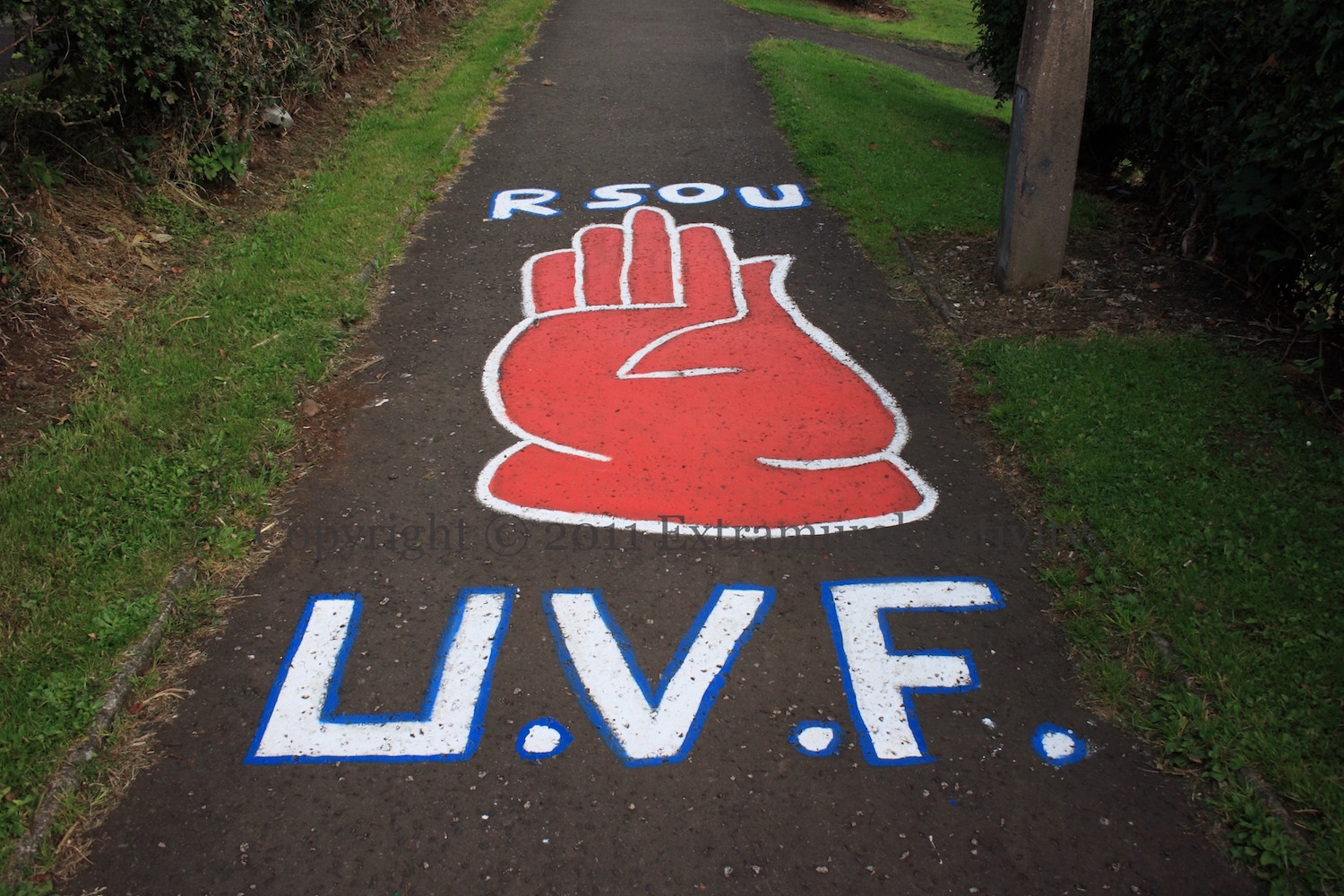
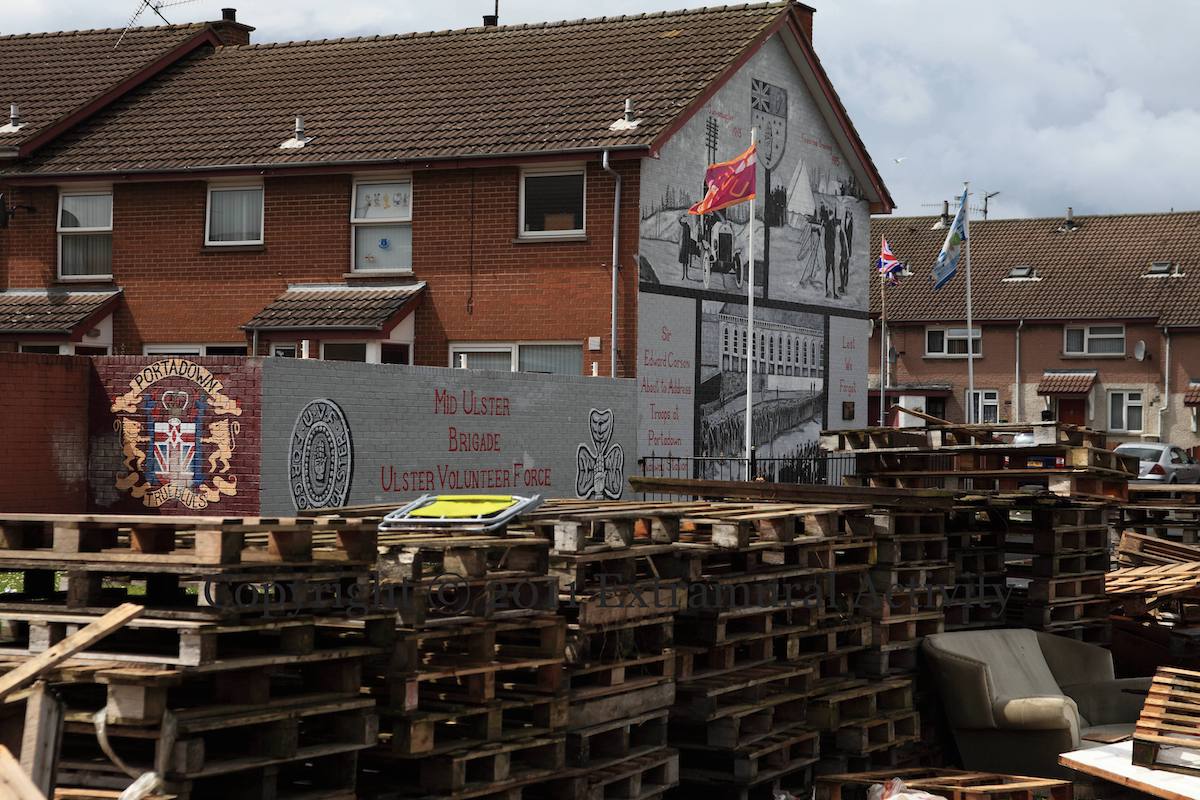
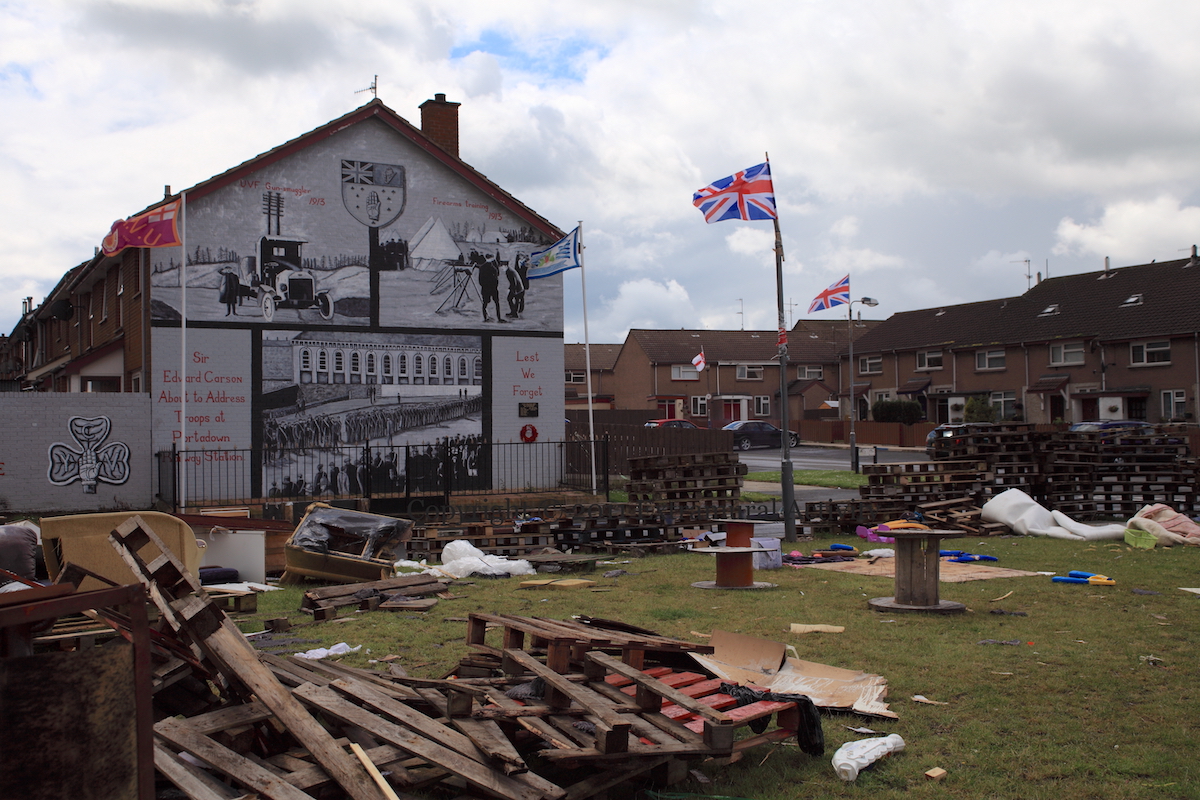
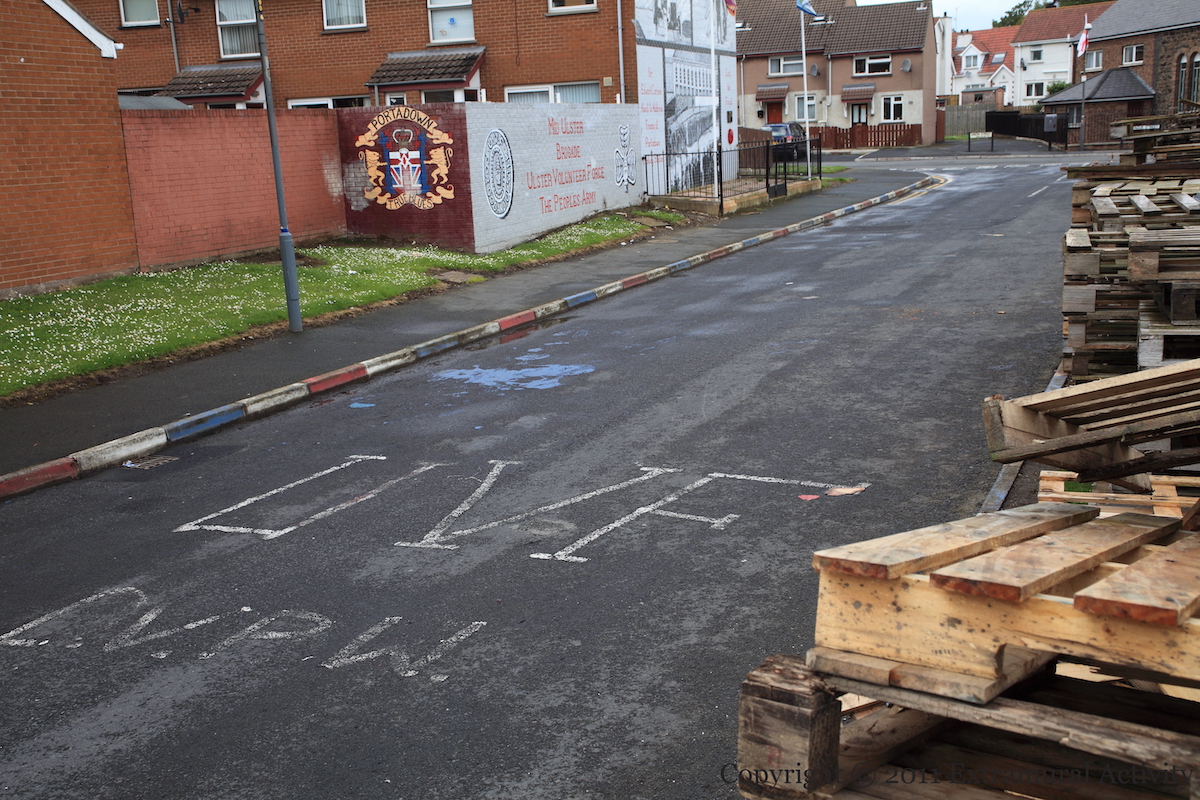
Pallets are collected for Eleventh night in the Edgarstown estate, in front of the murals on Union Street: from left to right: Portadown True Blues, Mid Ulster UVF, and the Ulster Volunteers. In the final image, “LVPW” [Loyalist Volunteer Prisoners’ Welfare] on the tarmac is modified (by the rival UVF) to become “DVPW” – “D” for “drugs”.
“Understand the past – and build a better future, le cheıle, “Catholic, Protestant, and Dissenter” – Wolfe Tone”. The past that is to be understood is the 40th anniversary of the Battle Of St Matthew’s (“Cath Naomh Máıtıú” in the “4” on the left) which took place in June 1970. Two Protestants and a Catholic died; the battle was a founding moment in the history of the Provisional IRA (“Óglaıgh na hÉıreann” in the “0”) (WP). St Matthew’s church is depicted on the right.
In the centre is a Tricolour with a modified version of the ‘raised arms’ illustration of ‘everyone has their part to play’ (e.g. Emancipation Of Women has a paintbrush, hammer, and book in addition to a rifle; one in Derry has paintbrush, spanner, coloured pencils (at the end of a shorter arm), rifle, book, and placard – see The Destructive Talents Of The RUC). Here we have a dove – perhaps in place of the rifle – pencil, and spanner.
For information about the 2010 launch, see Glór Mhıc Aırt.
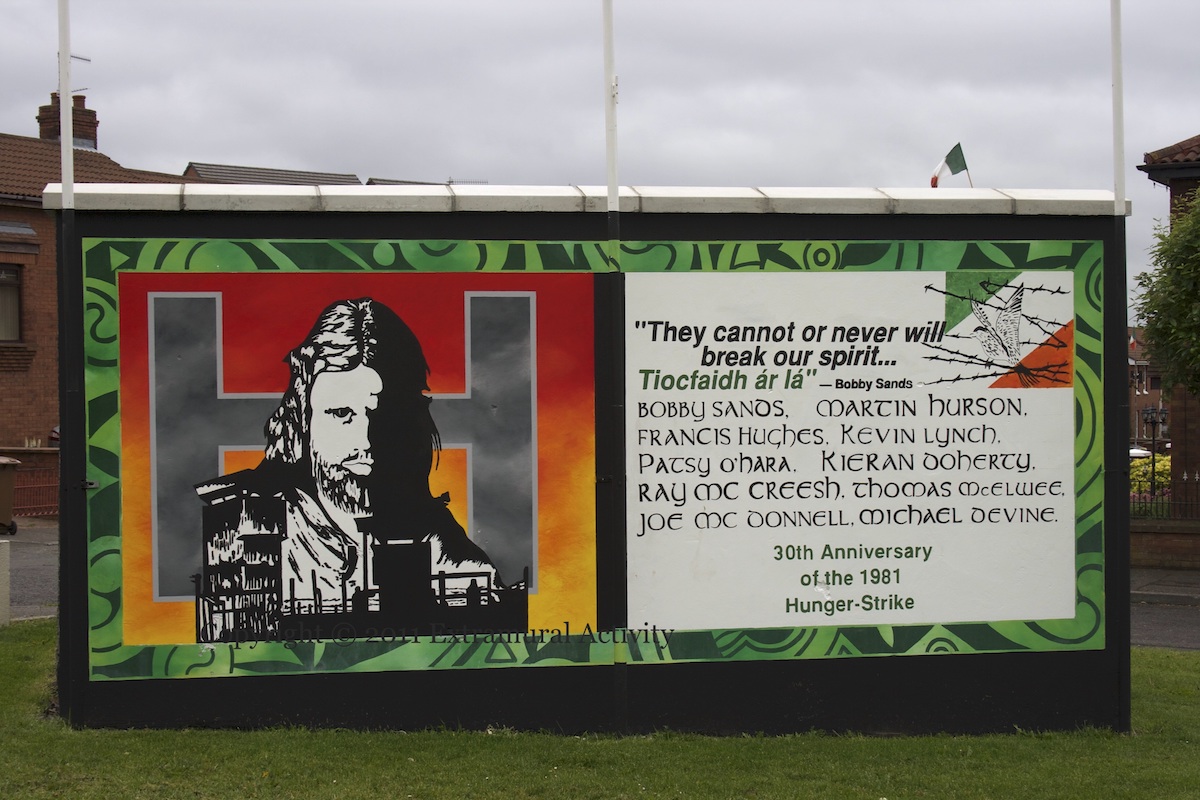
“They cannot or never will break our spirit … Tıocfaıdh ár lá” – Bobby Sands. For the 30th anniversary of the 1981 hunger strike in which ten republican prisoners died in the H Blocks.
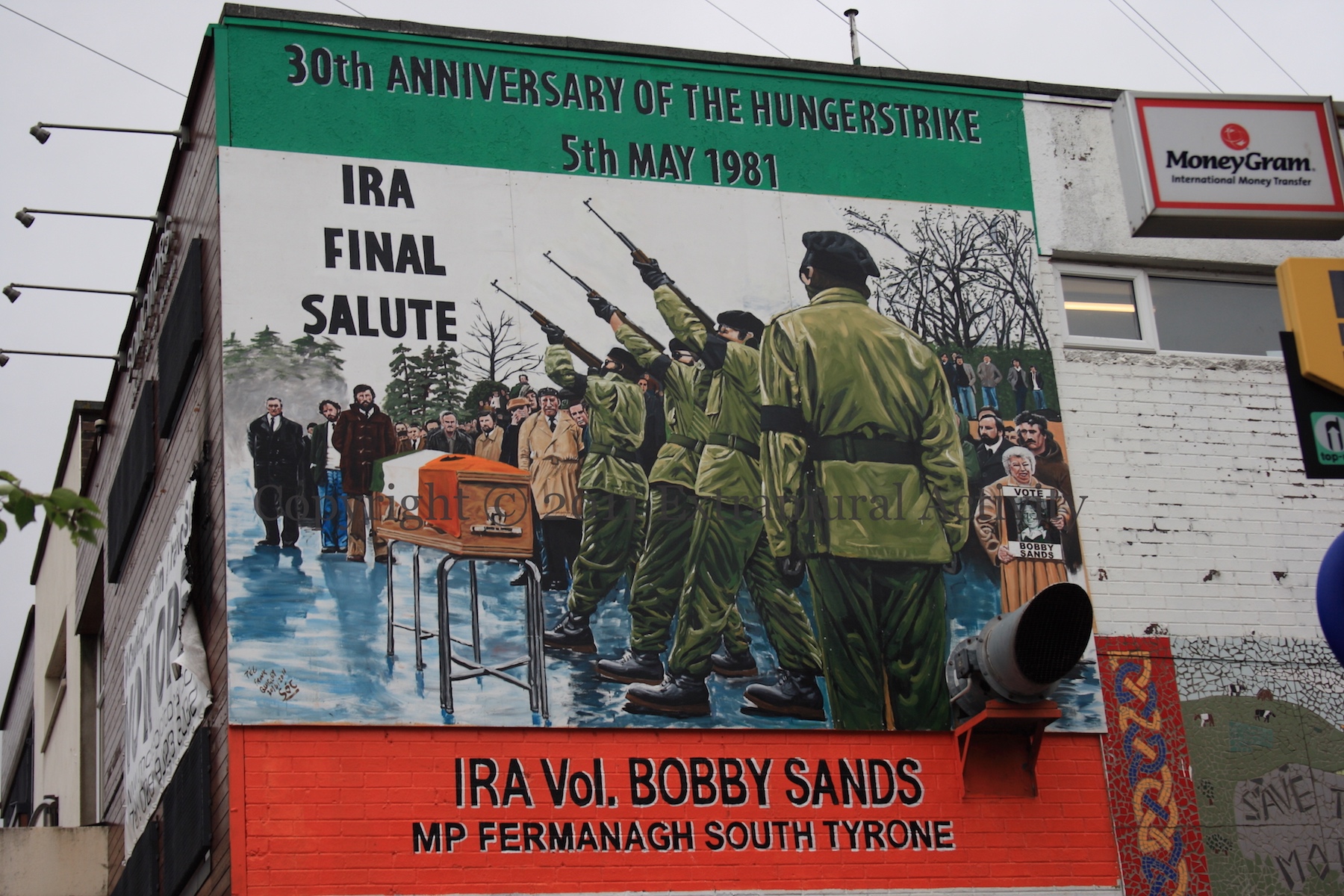
“30th anniversary of the hunger strike. 5th May 1981. IRA final salute. IRA Vol. Bobby Sands, MP Fermanagh South Tyrone.” Gerry Adams watches on as a funeral volley is fired over Sands’s coffin.
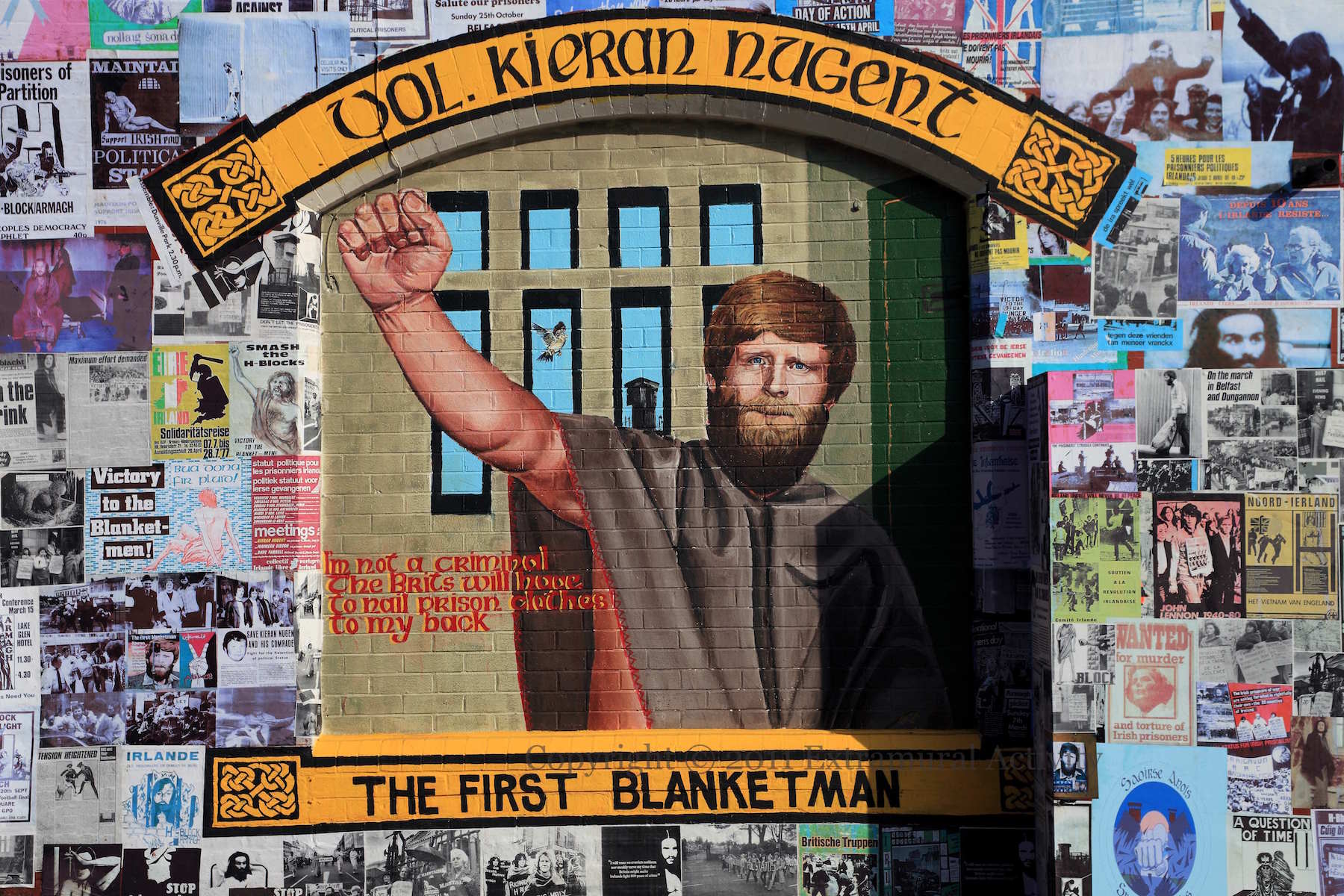
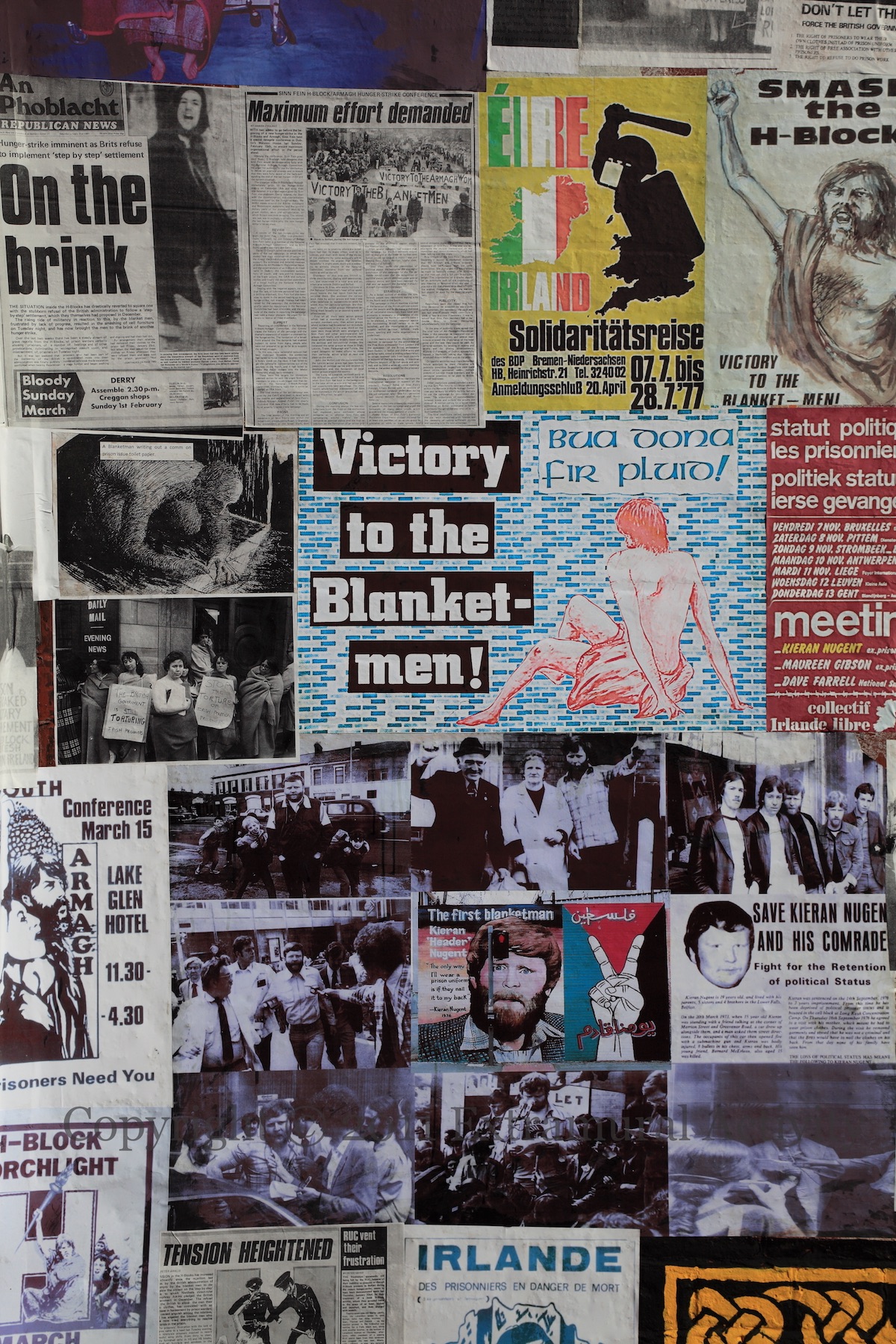
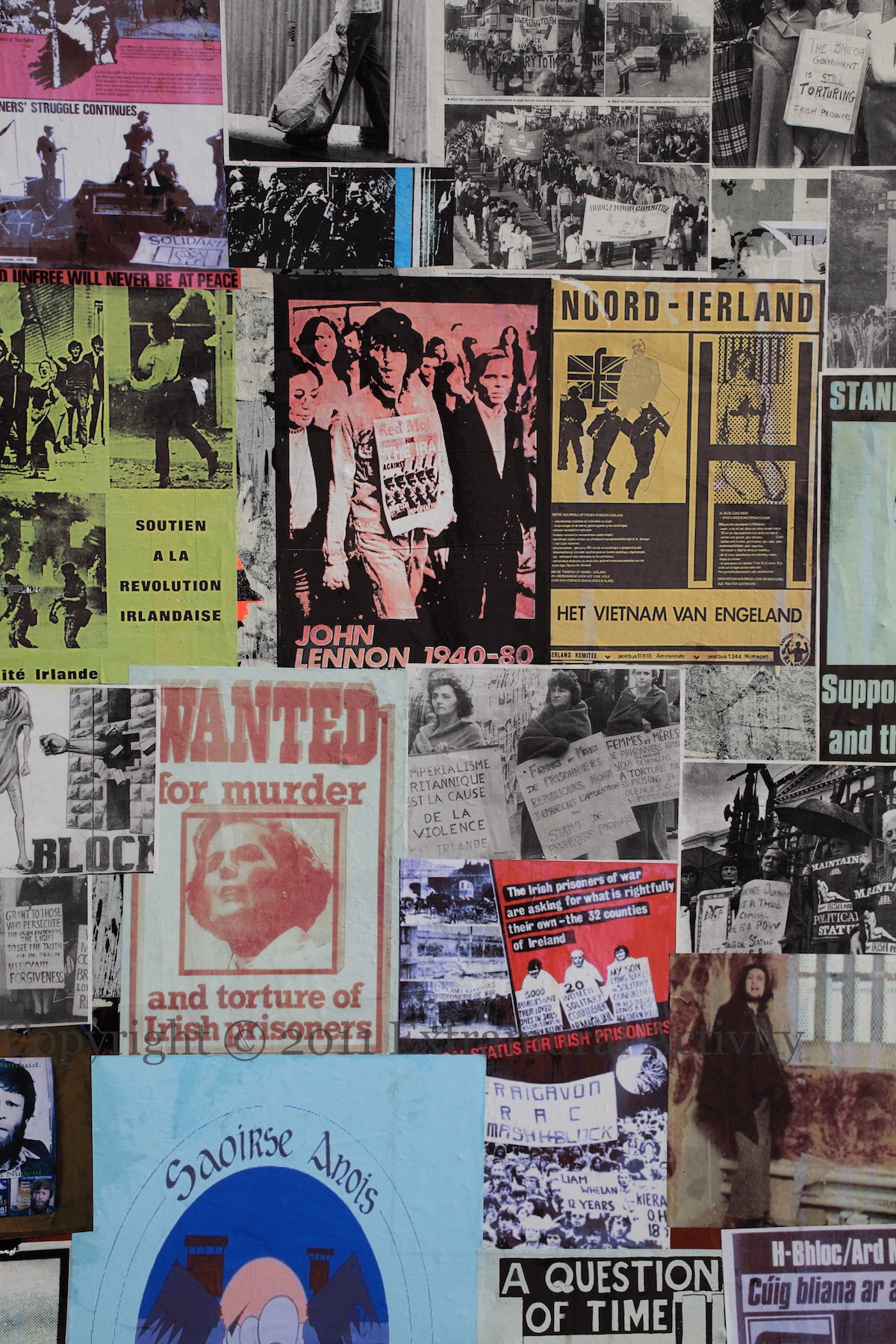
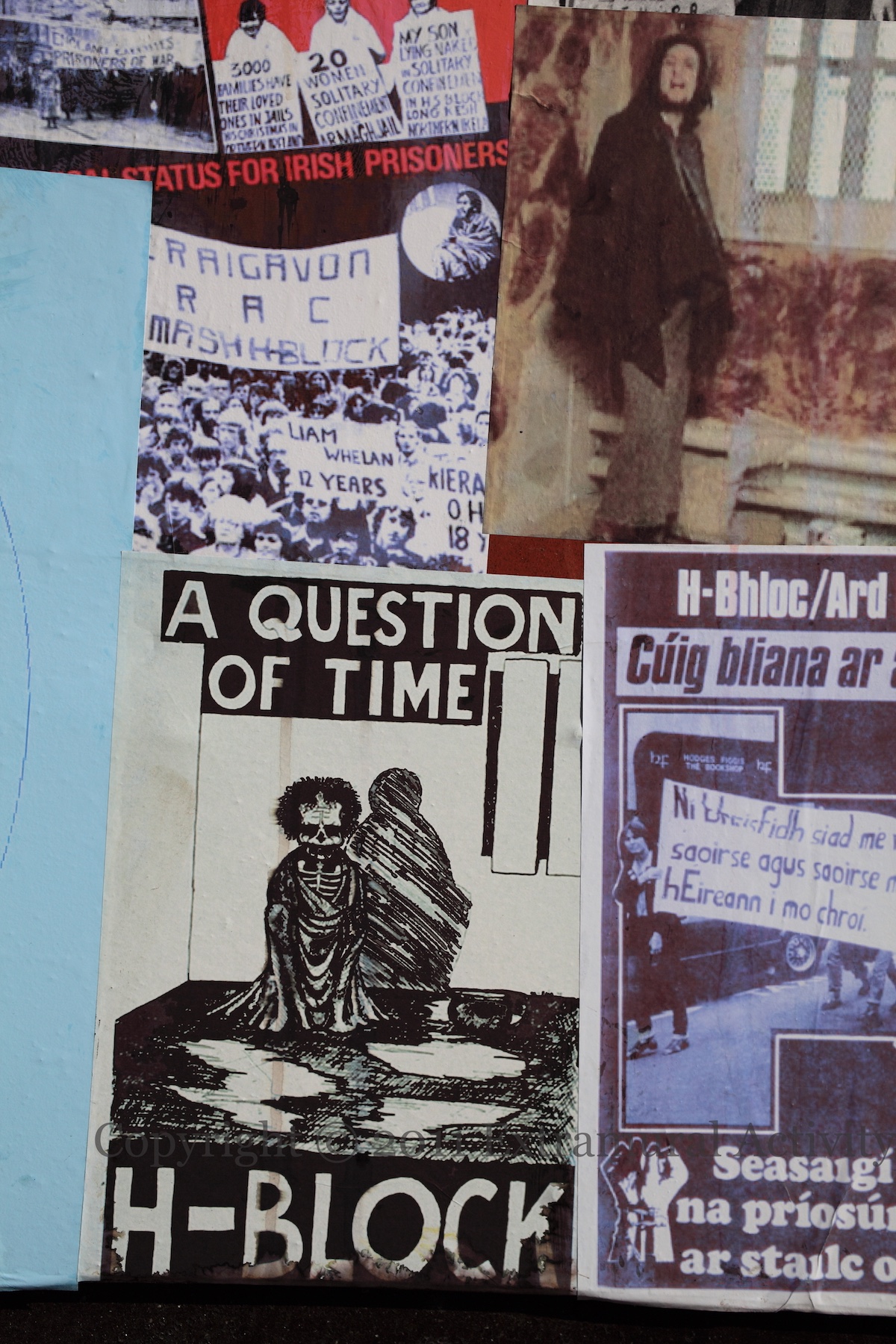
When the mural to “the first blanketman” Kieran Nugent mural (in the Rock streets) was re-done in February 2011, it was initially framed with a terrific selection of posters from the period, many of them from continental Europe, about Kieran, the blanket protest, and hunger striker.
“I’m not a criminal. The Brits will have to nail prison clothes to my back.” For the previous mural, and some background about Nugent going “on the blanket”, see M02550.
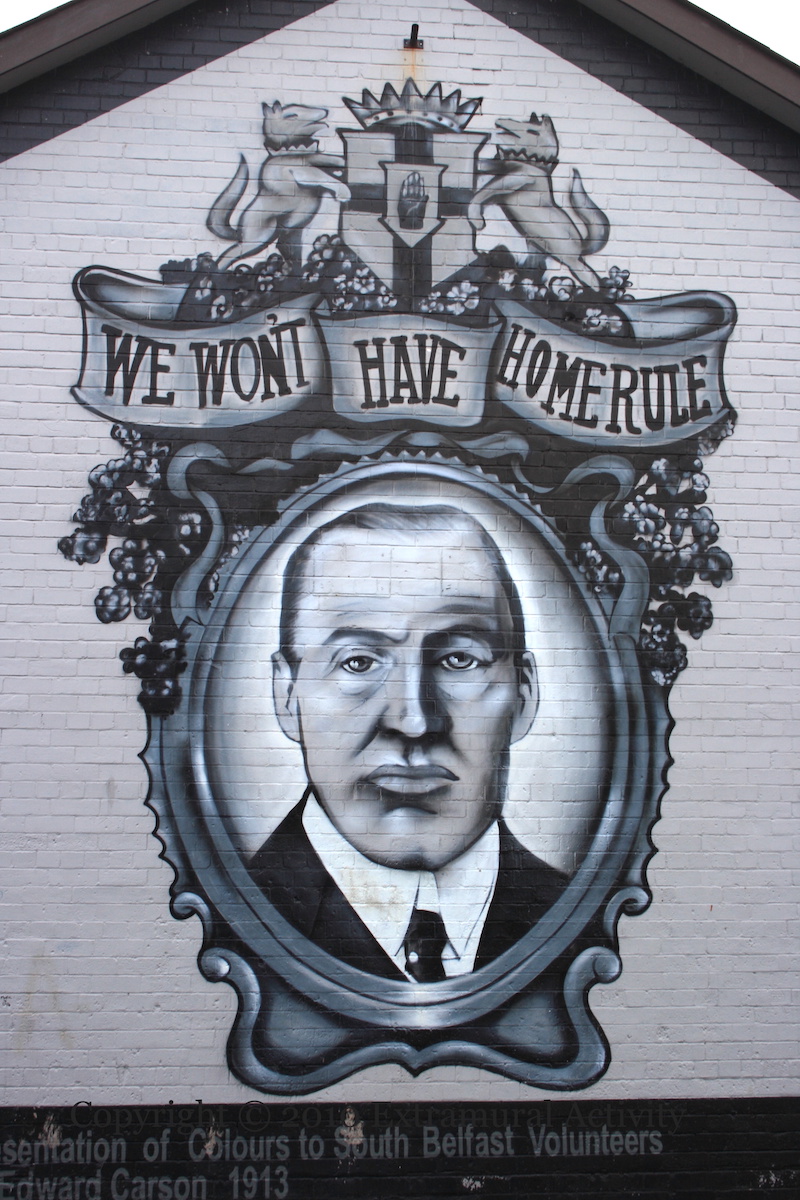
Dublin barrister Sir Edward Carson was the figurehead of Unionism at the time of the Home Rule crisis, overseeing the formation of the Ulster Volunteers and the Covenant in response to the third bill. Carson’s aim was to keep all of Ireland within the UK but advised unionists to accept the six-county Northern Ireland stipulated by the 1920 Bill.
For the side wall out of shot to the left, see M04206.








 Extramural Activity