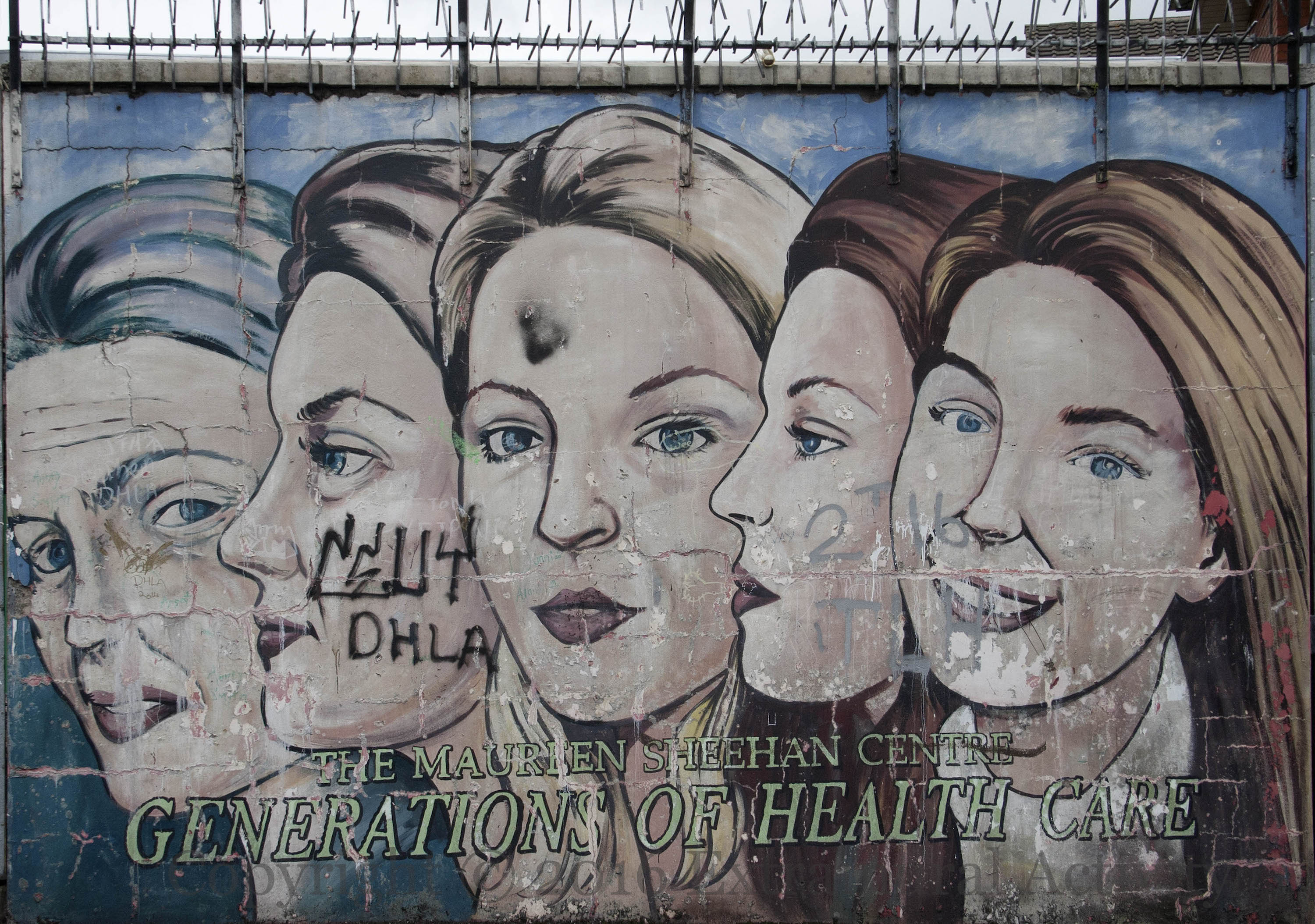
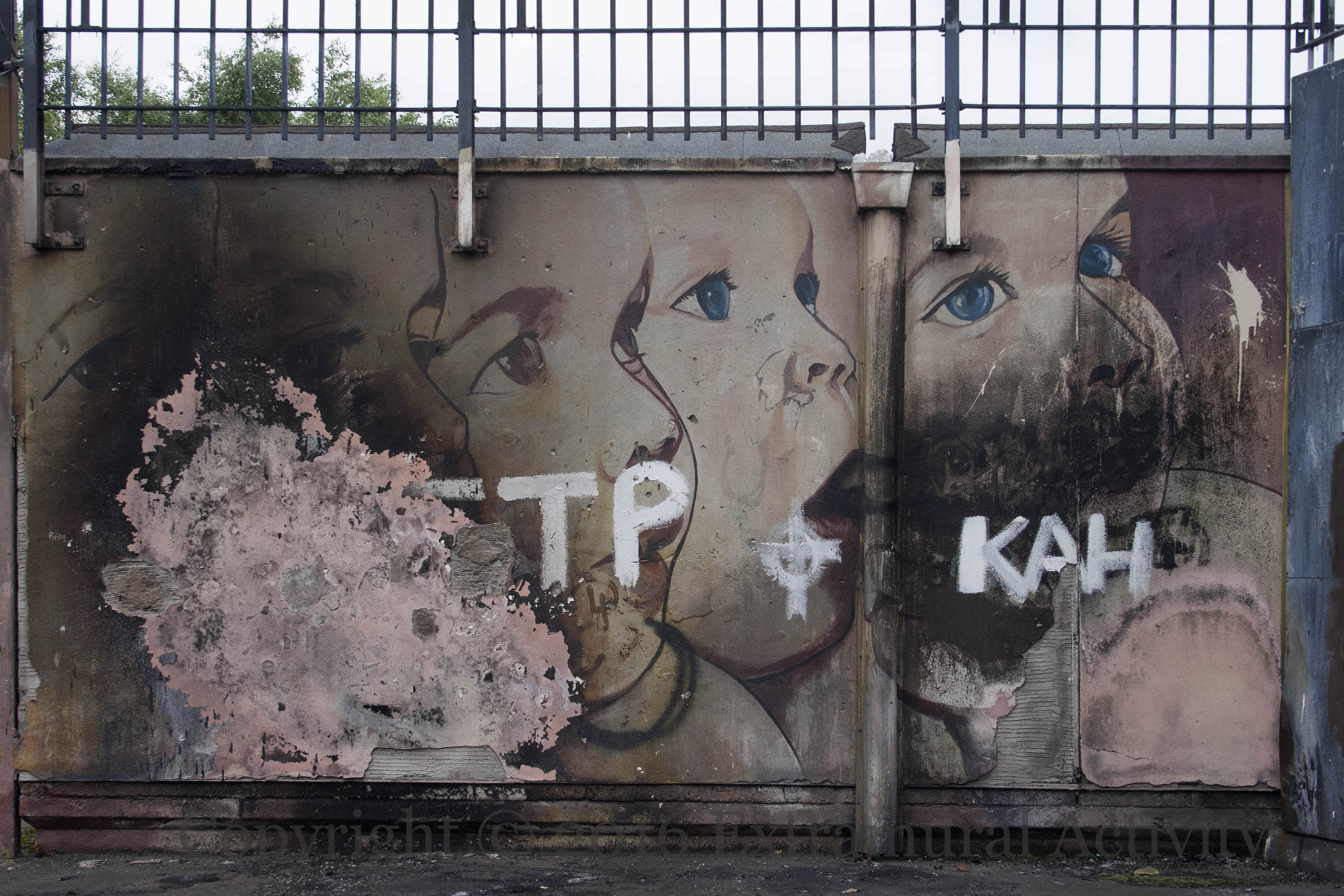
These two murals of five women and five babies at the rear of the Maureen Sheehan health care centre are entering (at least) their eighth year of existence and are showing their wear due to both the natural and human causes, such as graffiti and burning (see previously: A Philosophy of Liberation). For the murals in better condition (in 2010) see M05732 and M05733.
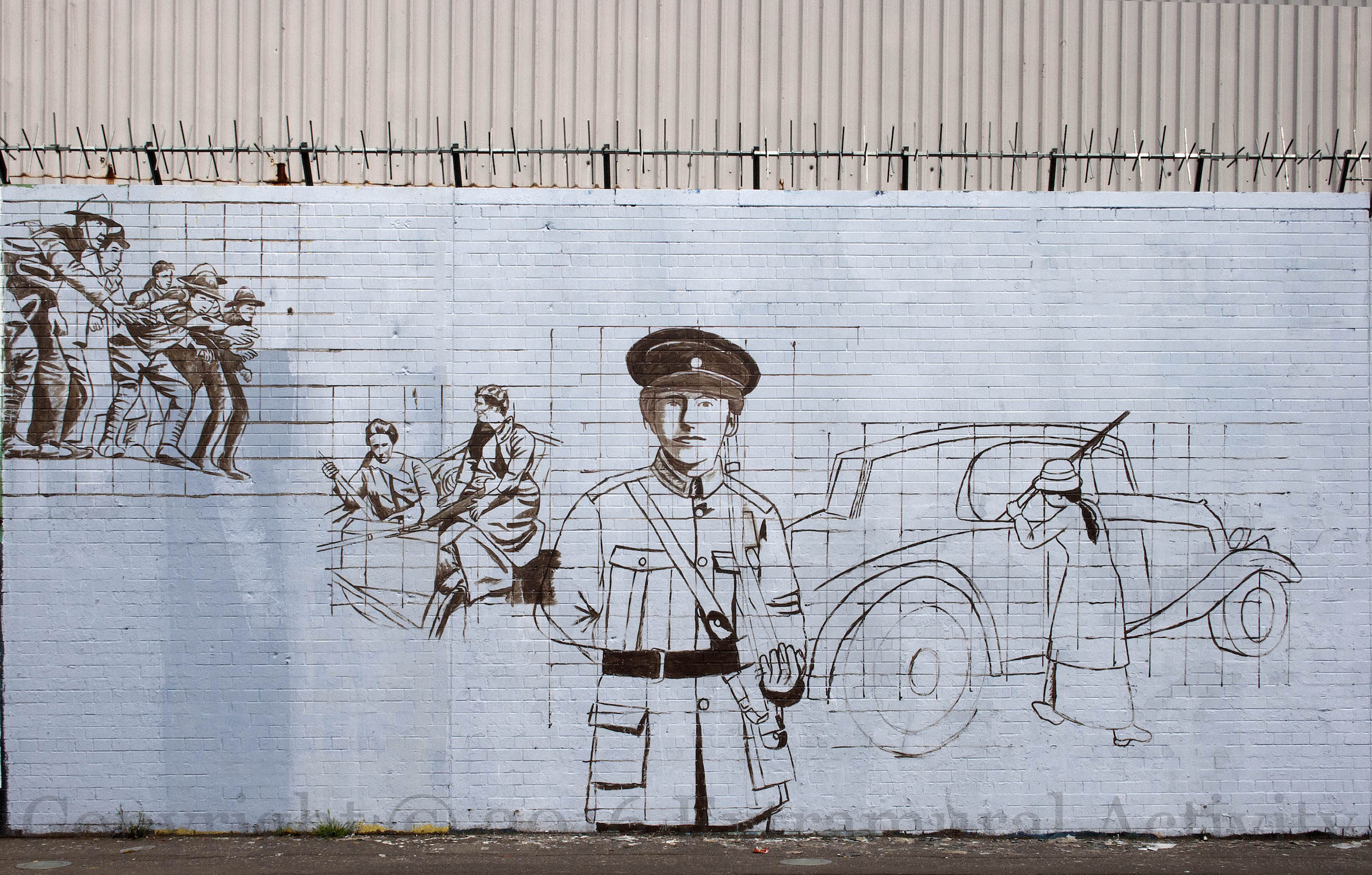
Nora Connolly in her Cumann Na mBan uniform is the centre point of the ‘Howth Gun-Running’ panel in the new mural on the International Wall. Her sister, Ina, is shown to the right, unloading a rifle from a car outside their home in Glenalina Terrace. About 1,500 rifles were smuggled into Ireland on two boats, 900 of them on the yacht, Asgard, shown left-of-centre with Molly Childers and Mary Spring Rice aboard (the latter kept a diary of the trip; extracts are included in this RTÉ History Show video). Asgard docked at Howth on July 26th, 1914. (Here is a tcd.ie collection of images of Asgard’s journey; image #53 is the one reproduced in the mural). The other rifles eventually came ashore two weeks later at Kilcoole. (See this RTÉ article for an account of their tortured journey.)
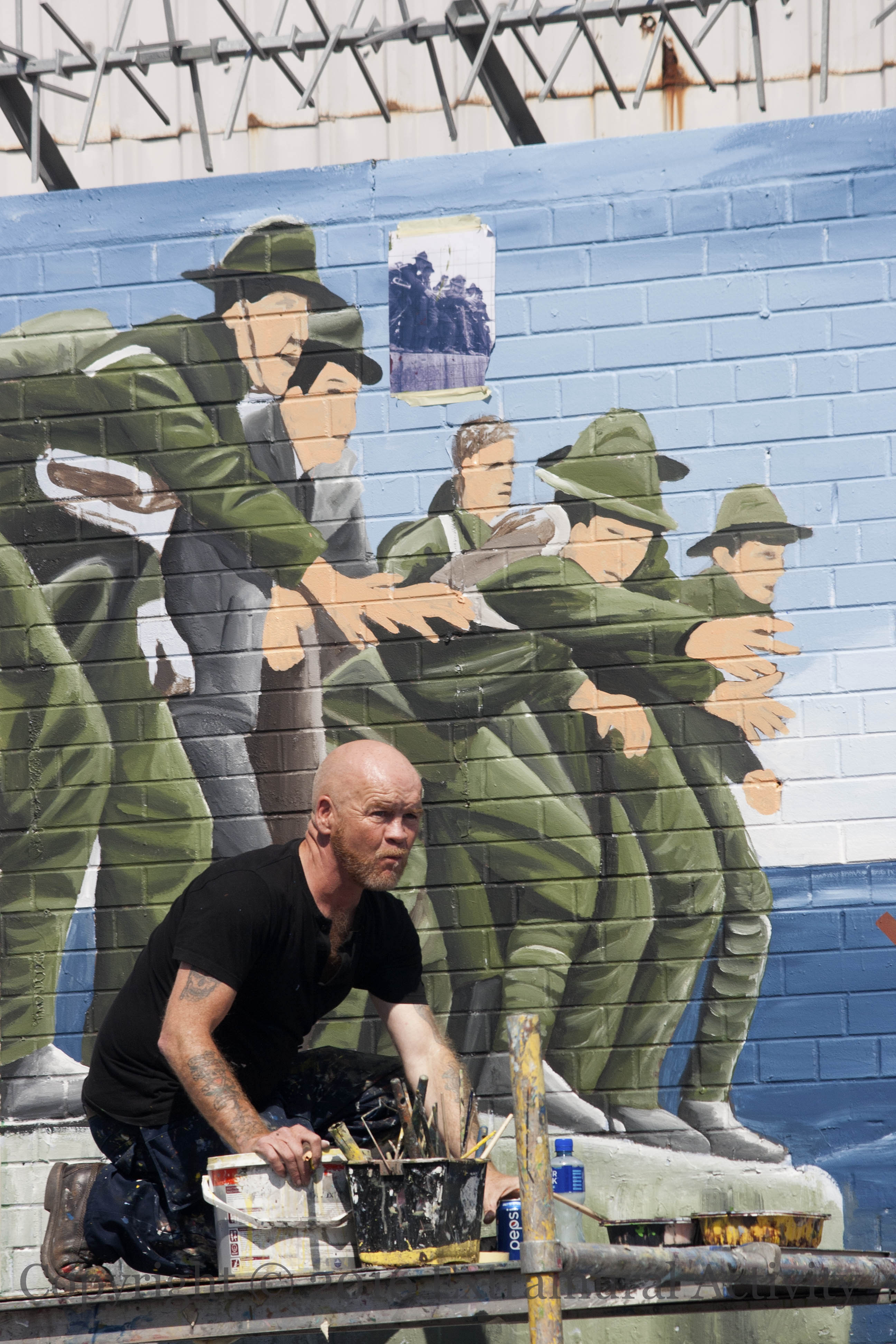
The vintage Mauser rifles were received by members of Óglaıgh Na hÉıreann and Na Fıanna Éıreann (top left of the image above; here is the original photograph). The off-loading took place during the day but when the police and army met the marching volunteers at Clontarf they were able to capture only 19 rifles. As the army regiment involved returned to barracks it was pelted with stones or fruit by a crowd and killed three (with a fourth dying a week later), as recorded on the front page of the Irish Independent in the bottom left.
Below are two in-progress shots, and below those, two shots including the artist, Marty Lyons.
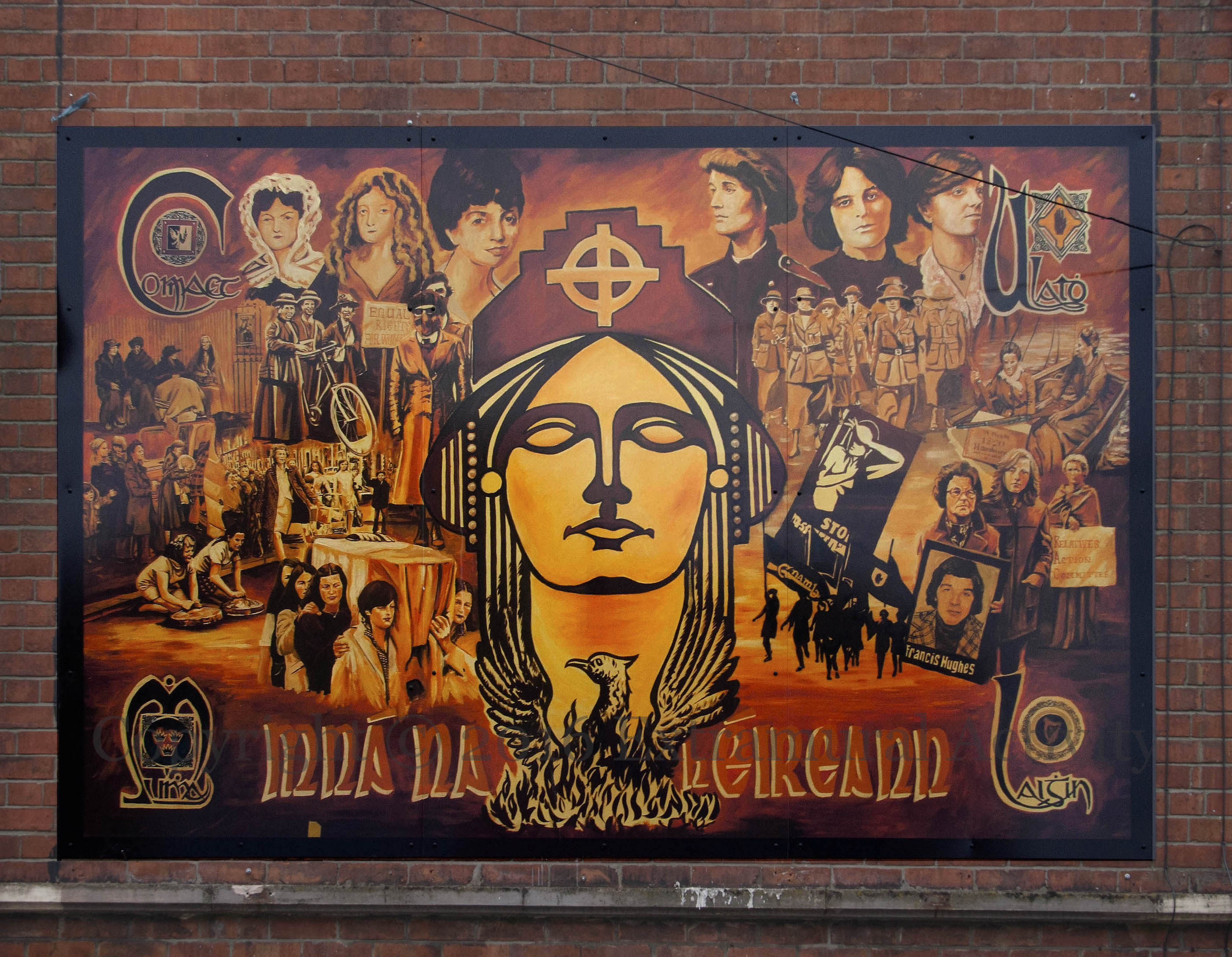
Érıu/Éıre of the Tuatha Dé Danann, queen of Ireland, (as depicted by Richard J King) is at the centre of various representations of republican women. Along the top are Ann Devlin, Betsy Gray, Mary Ann McCracken, Countess Markievicz, Nora Connolly?, and Winifred Carney. Suffragettes, the modern IRA, and Cumman Na mBan are depicted, as are Máıre Drumm at the Falls Curfew, Tom McElwee’s sisters carrying his coffin, and Molly Childers and Mary Spring Rice running guns on the Asgard. There is also an unusual ‘four provinces’ in the corners.
The wide shot (below) shows the James Connolly mural below (seen previously in 2012) and the (recently added) 1916 centenary board – for which see Ag fíorú na poblachta.
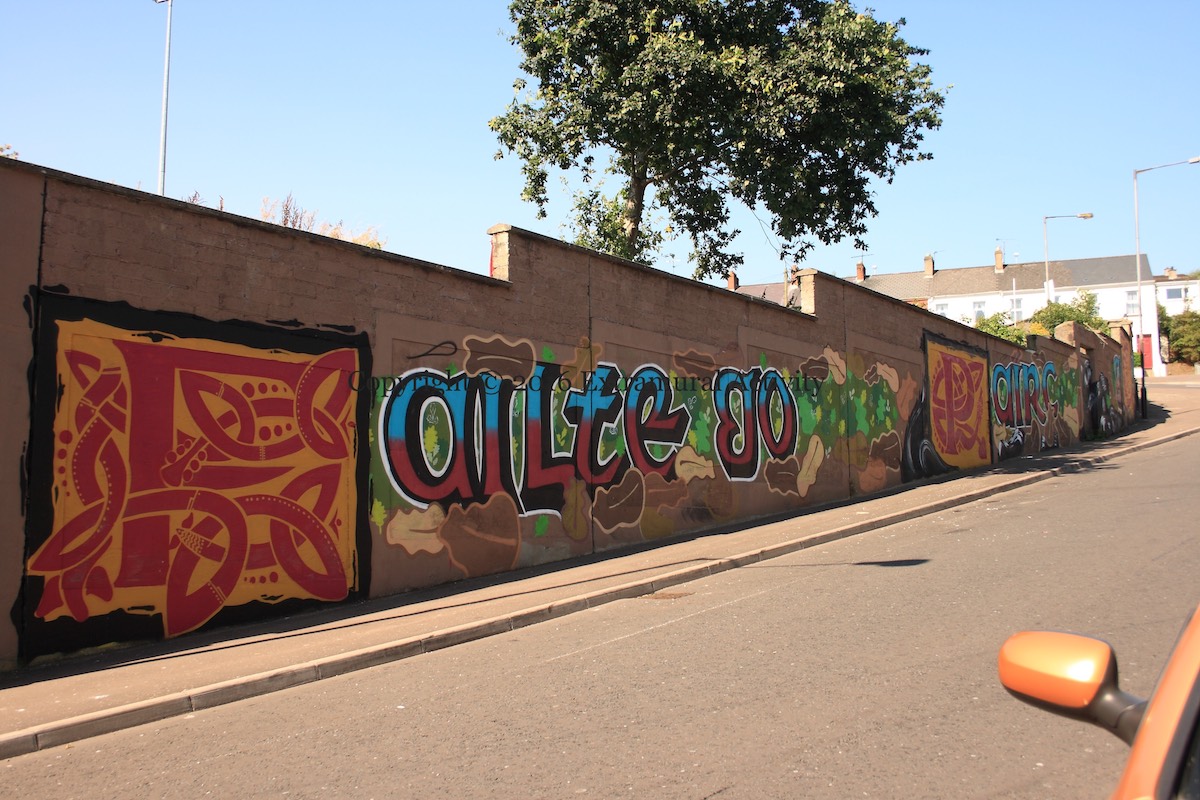
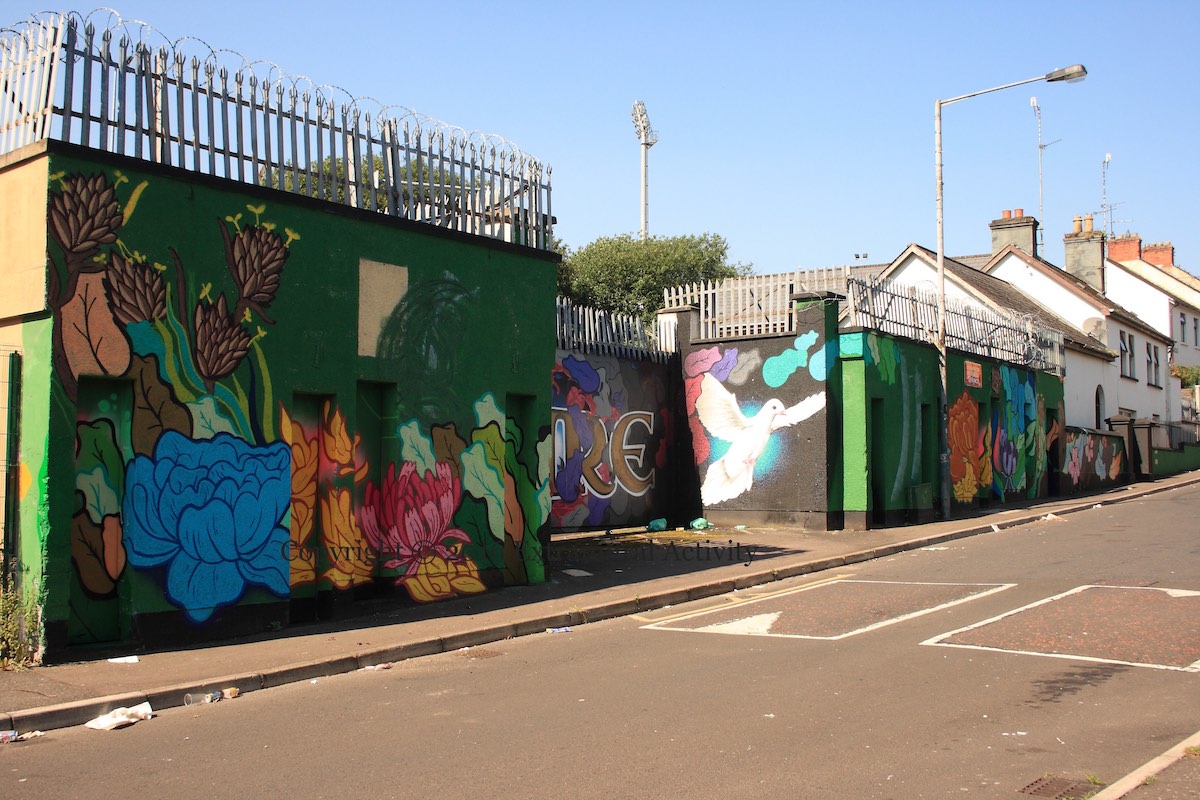
These images all come from Stanley’s Walk, along with eastern side of Celtic Park, which is home to Derry GAA games and has a capacity of 18,000 spectators.
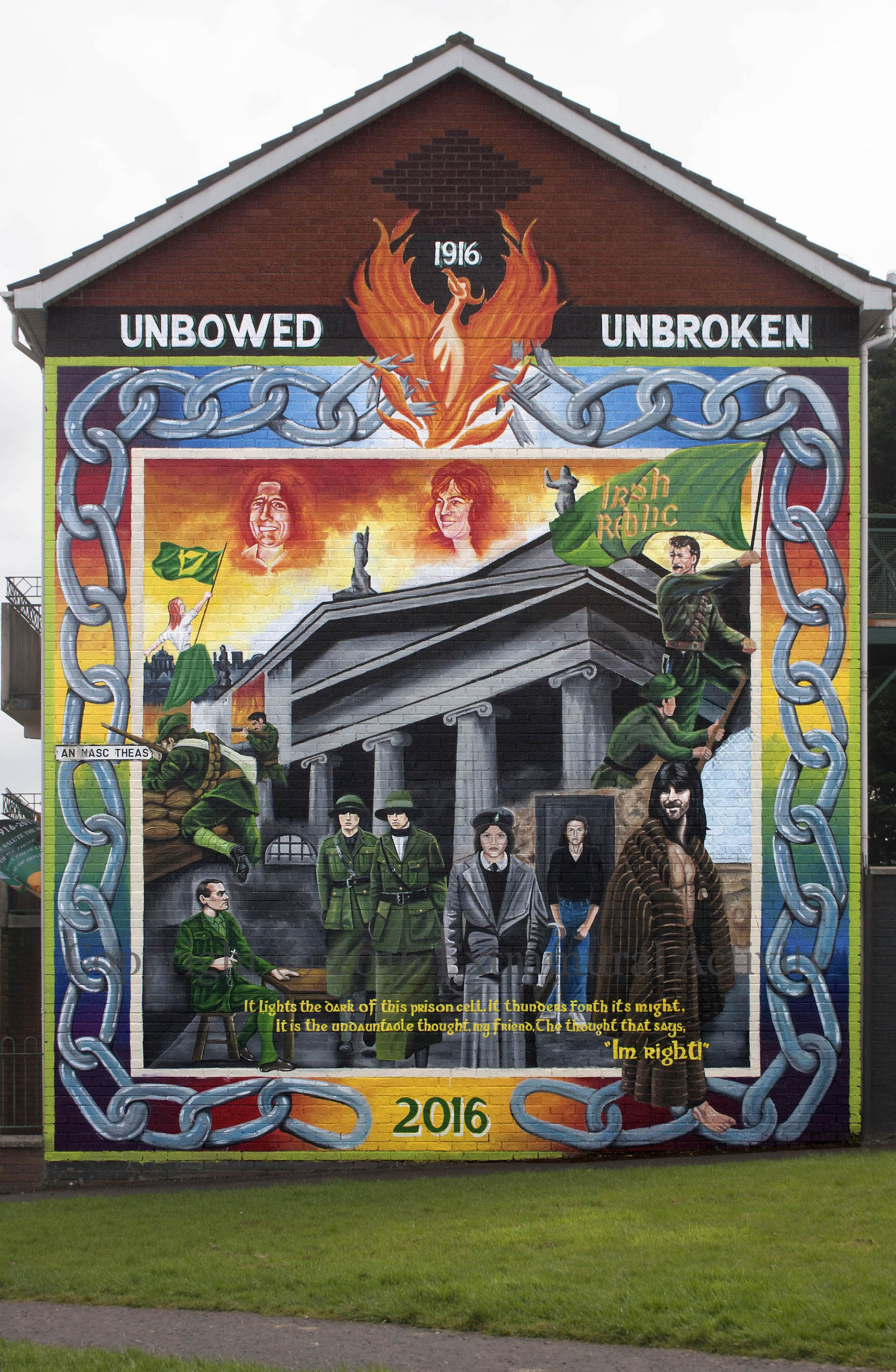
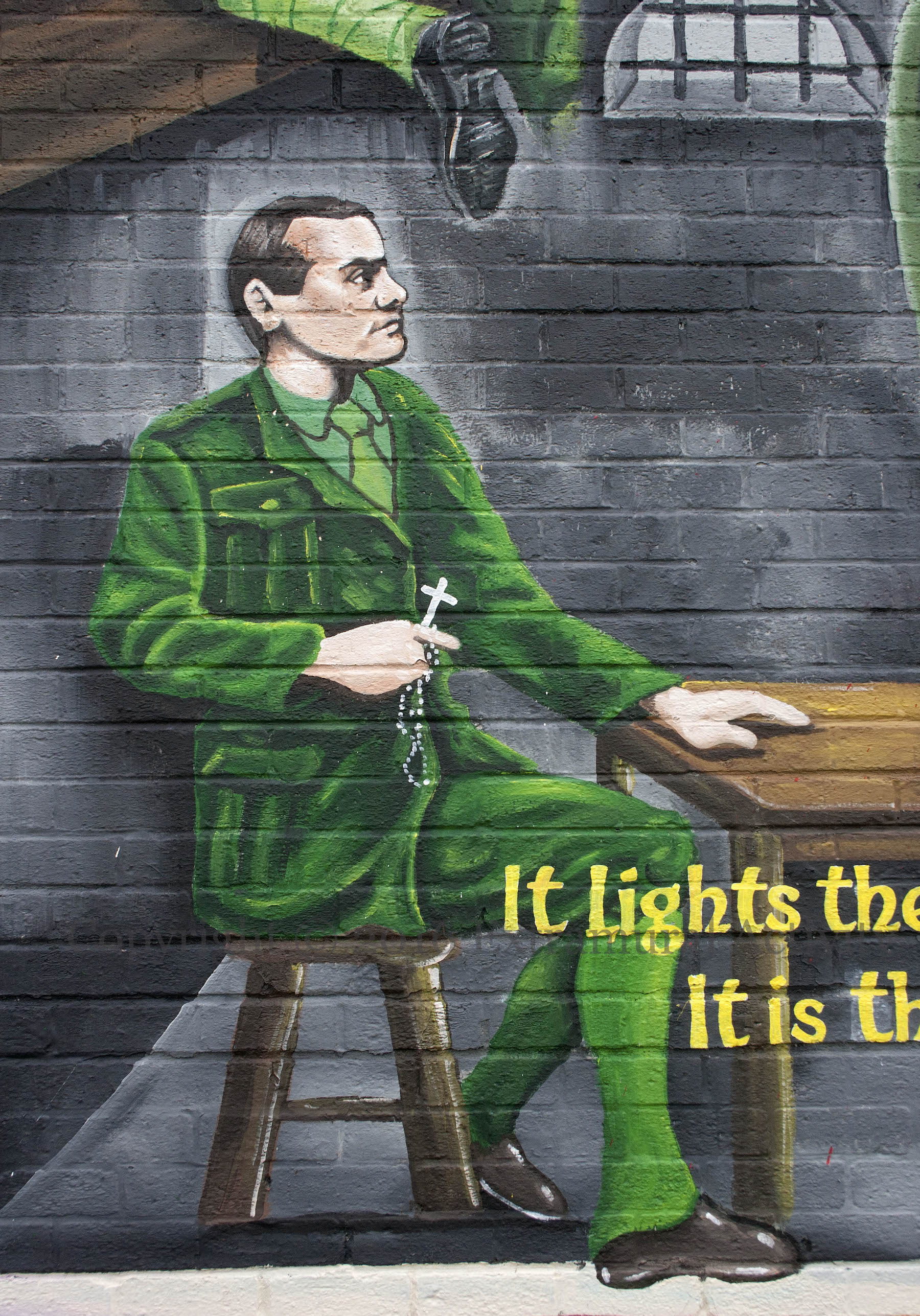
A succession of Irish rebels is shown in this new mural in Andersonstown, west Belfast. It begins (top left) with the rebellion of 1798 and then to the Easter Rising of 1916 at the GPO in Dublin. In the lower left, a pious Padraıg Pearse awaits his execution with rosary beads in hand. There are then shown female figures from Cumann Na mBán and the IRA (see previously: United Irishwomen, Do You Care? and Mothering Sunday In Beechmount), and then Maıréad Farrell in Armagh Women’s Prison (for the original, see Prison Walls). In the bottom right corner there is a blanketman. The busts of Bobby Sands and Joe McDonnell float above the GPO and the last verse of Sands’s The Rhythm Of Timeform the epigraph: “It lights the dark of this prison cell, it thunders forth its might, it is the undauntable thought, my friend, the thought that says, “I’m right”.
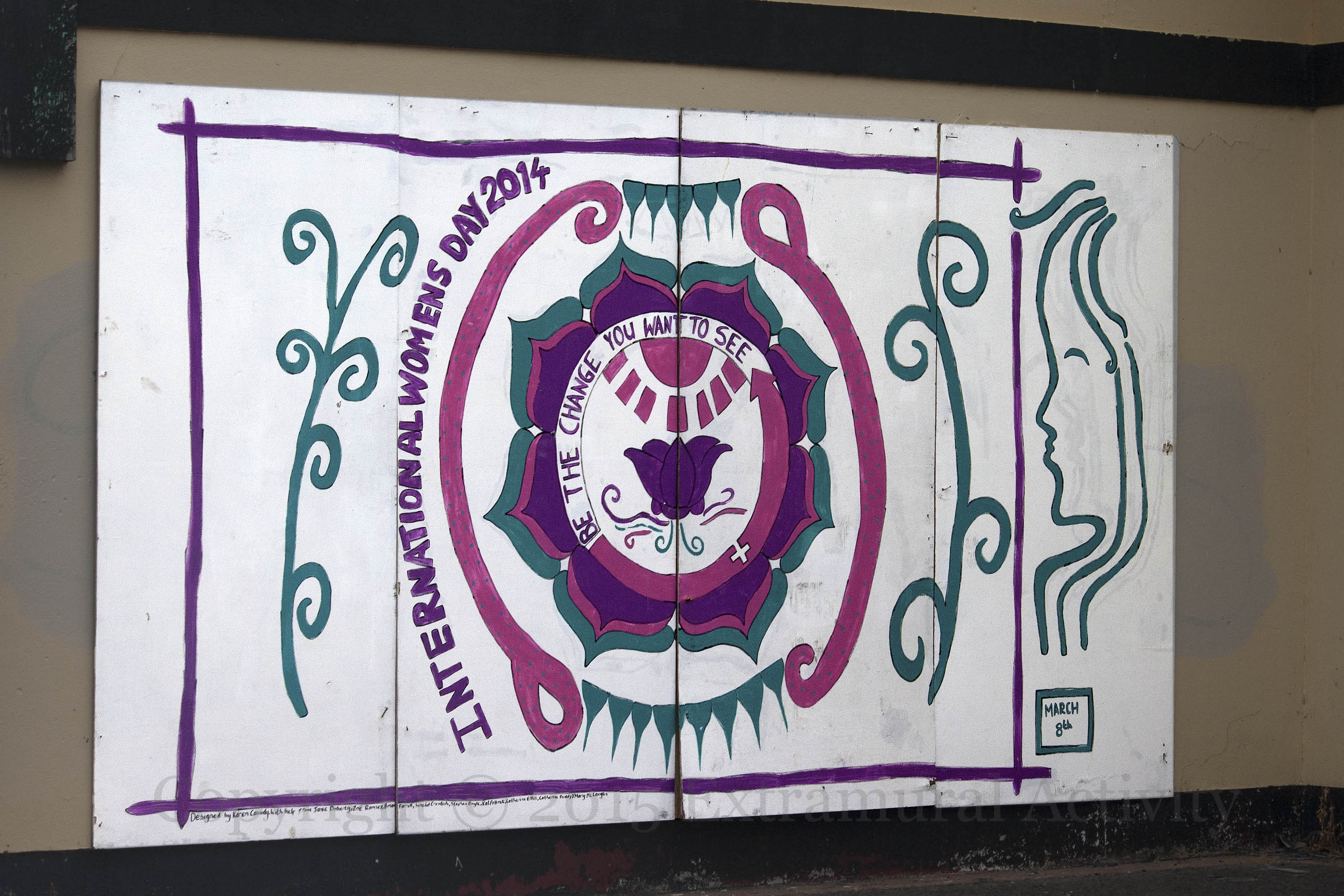
International Women’s Day, which dates as far back as 1909, is today, March 8th, 2016. Above is the 2014 mural celebrating the day in the complex of shops at London-/Derry’s Bogside Inn.
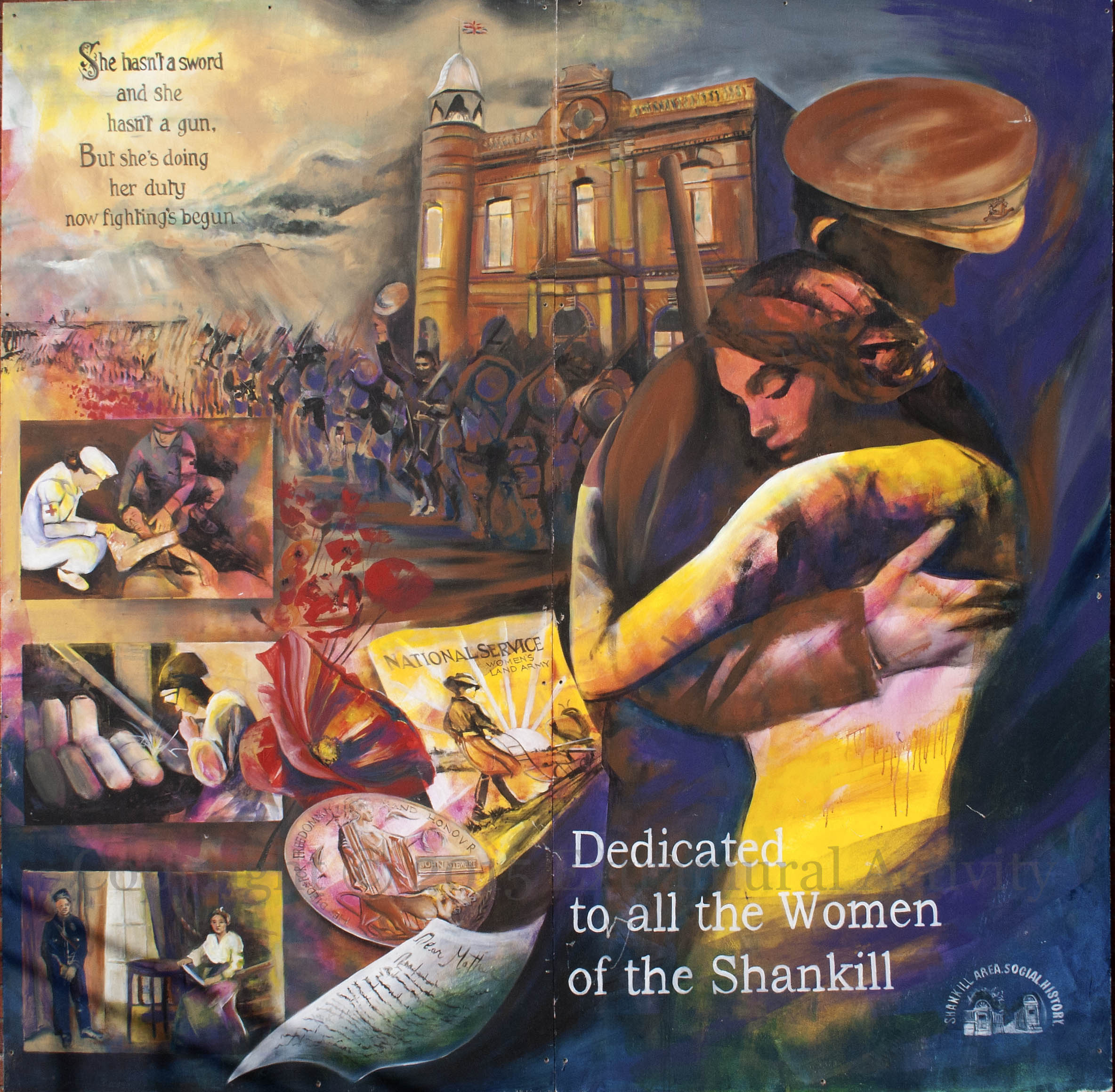
Here is a board from outside the Ulster Rangers Supporters Club (Fb) on the Shankill Road. It highlights the roles played by women during WWI as nurses and welders and in the Land Army. “She hasn’t a sword and she hasn’t a gun. But she’s doing her duty now fighting’s begun.”
The forces are shown gathered outside the West Belfast Orange Hall, on the Shankill at Brookmount Street.
Today’s image is of the final new mural in the recent re-imaging of the Lower Shankill estate. It shows a patchwork quilt of word related to women and the roles they play in families and communities, such as “aunt”, “mother”, “sister”, “granny”, and “caring”, “diverse”, “strong”, and “unheard voices”.
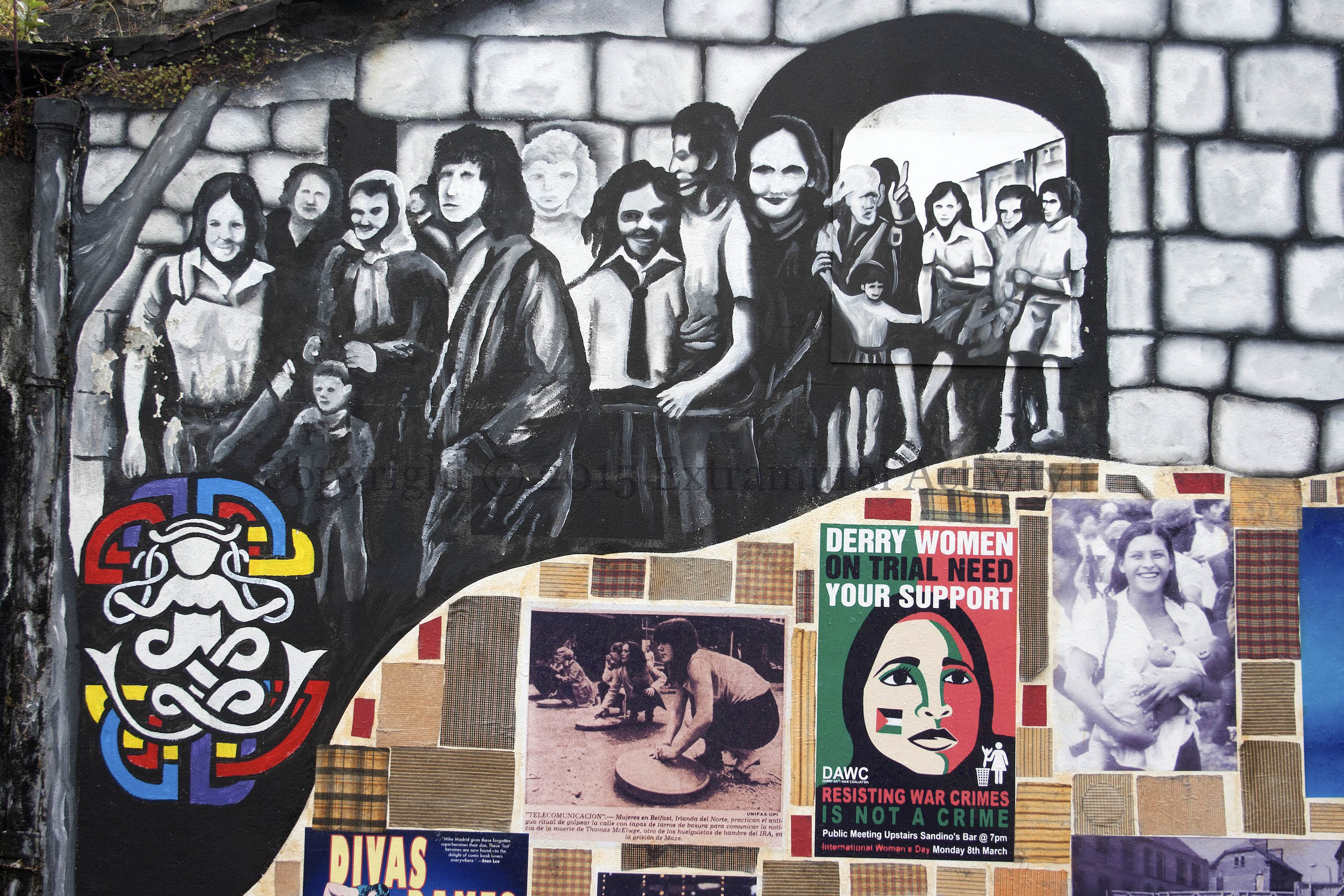
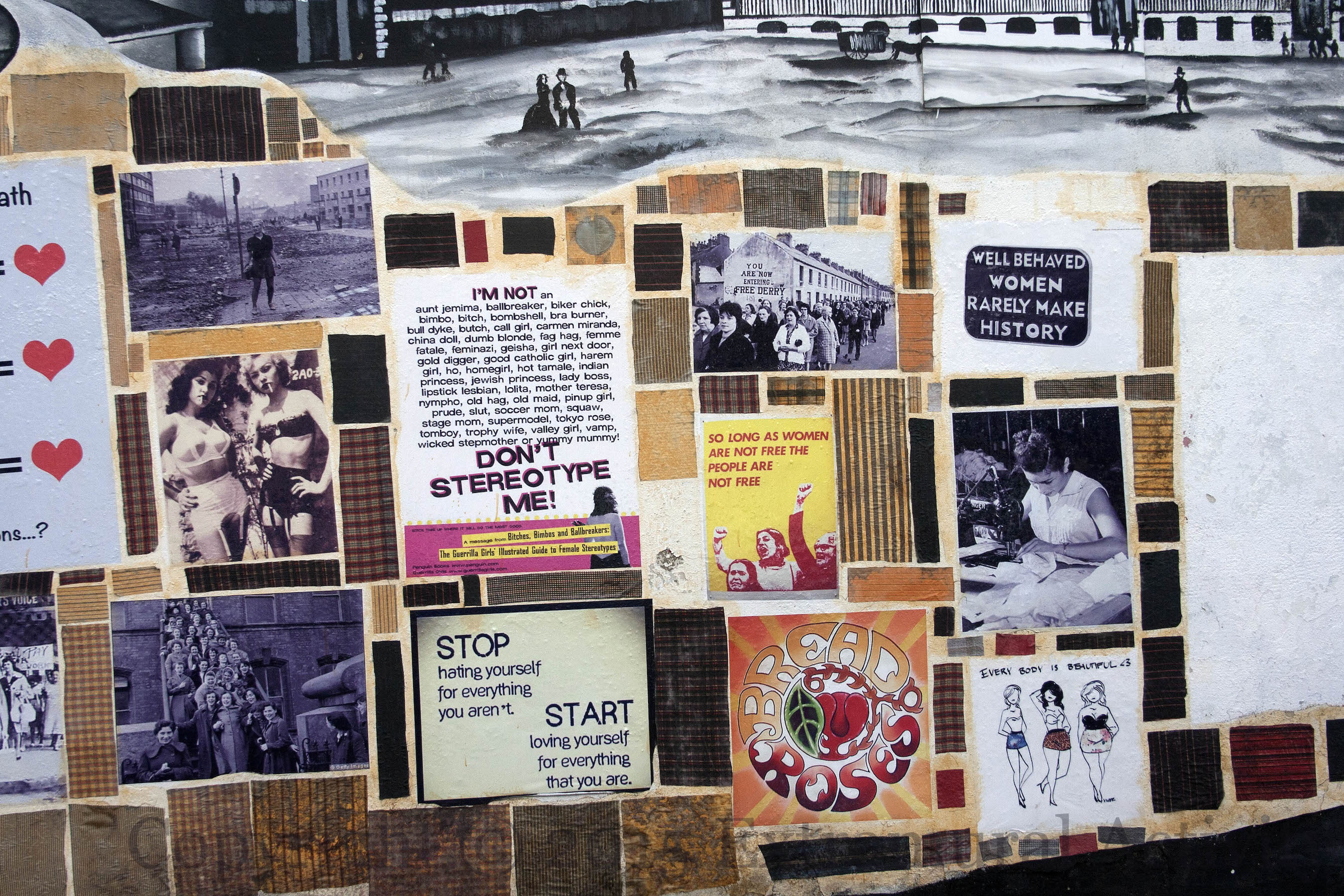
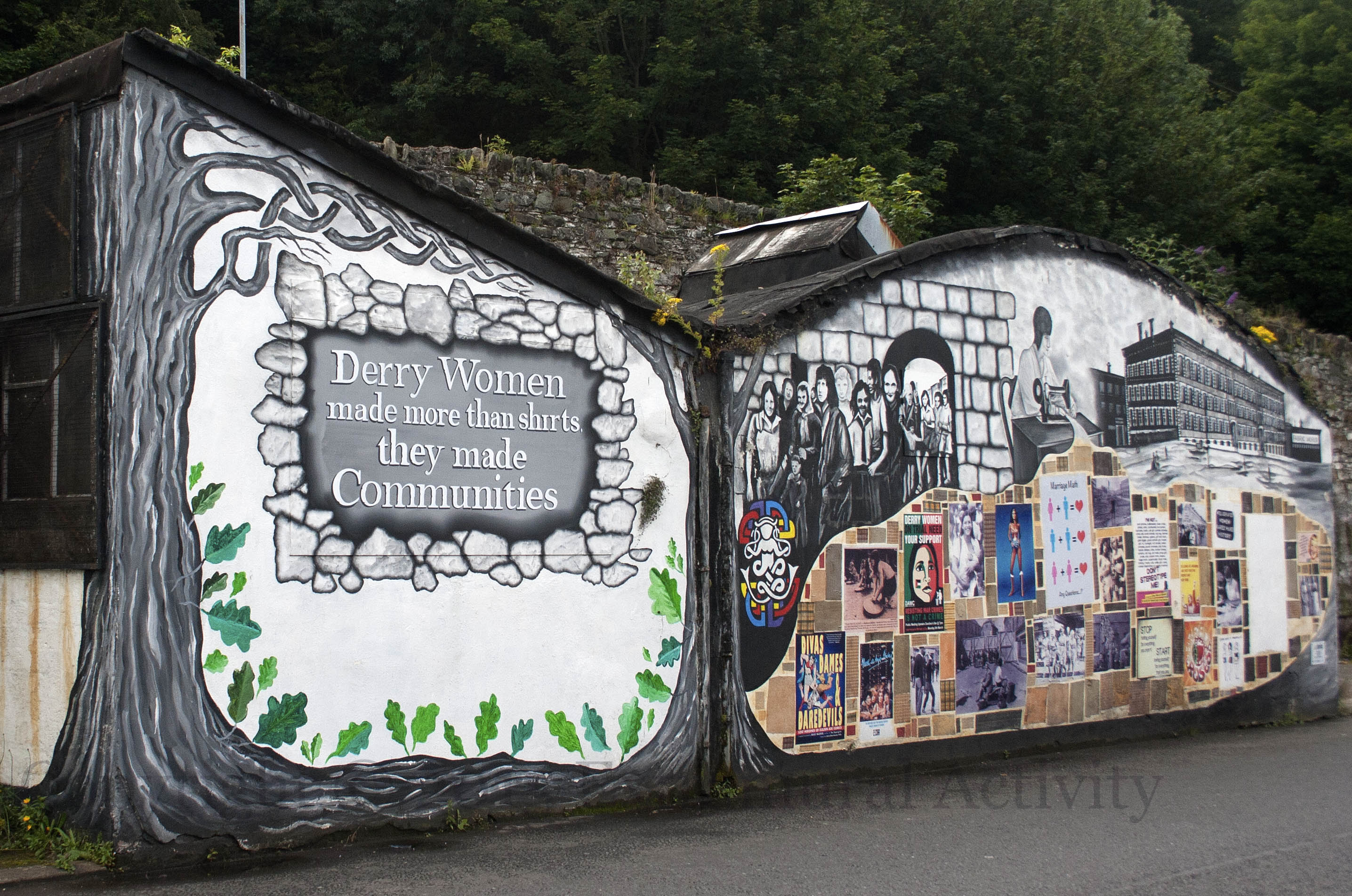
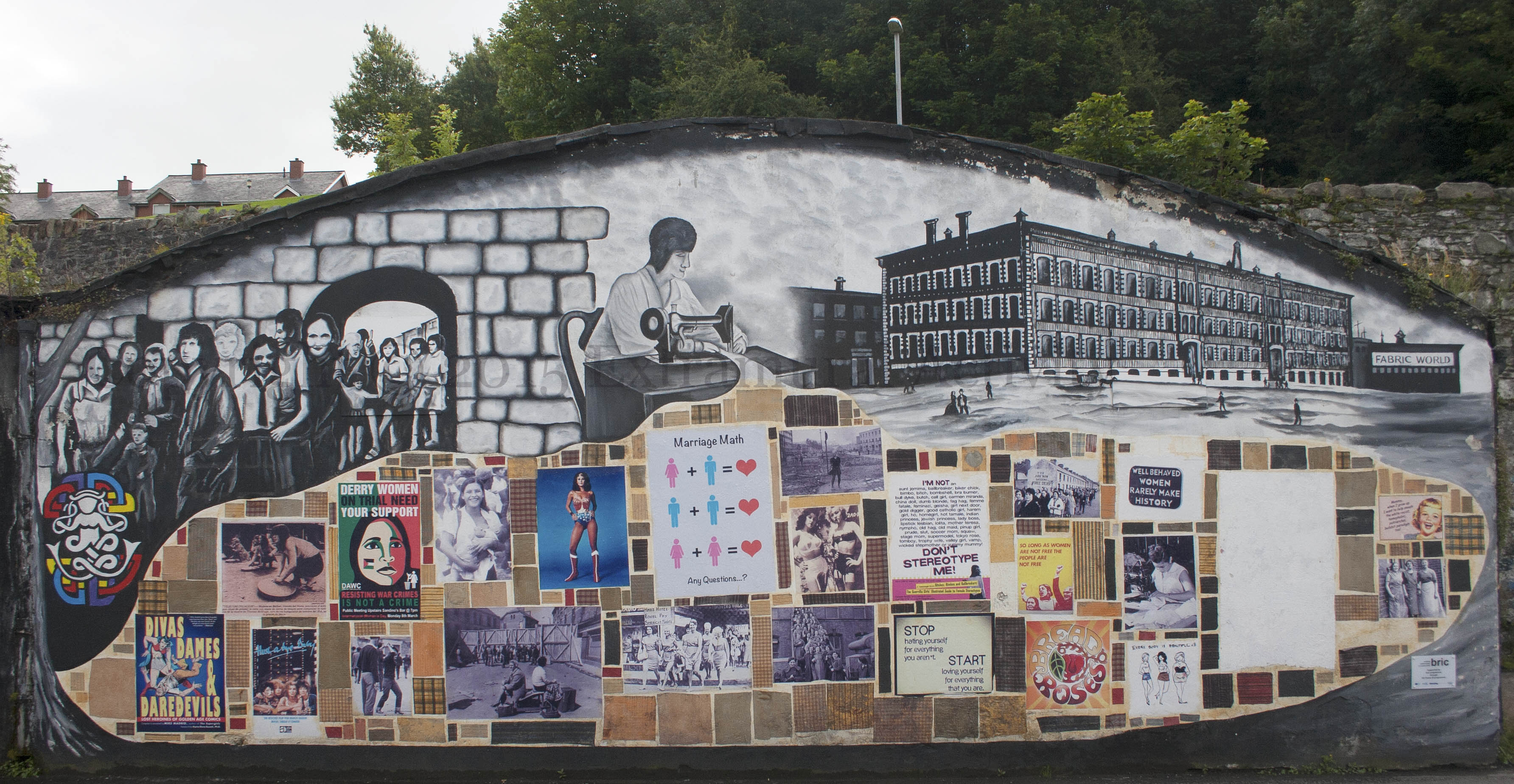
Historian Laurel Ulrich‘s 1976 phrase is one of a variety featured in this Derry mural celebrating the role of women both locally and world-wide. It includes images of local women banging bin lids, marching past the ‘Free Derry’ graffiti on 33 Lecky Road, and rioting; images of women striking and protesting; support for Palestine and gay rights; celebrations of femininity; and Wonder Woman. As the final image, below, shows, the tapestry of images and posters is being sewn by a woman at a sewing-machine in one of Derry’s large shirt- and collar-making factories. (For some history see these Derry Journal articles: one | two.) As the panel on the left-hand side notes, “Derry women made more than shirts; they made communities”.
On the left of the main panel, women march out of one of the city’s gates. The information sheet (which has fallen off) reads as follows: “On International Women’s Day, March 8th [1991, not 1981 as the hand-written addition suggests], the first ever women’s mural in Derry was unveiled on the back of Free Derry Wall. It was designed and painted by Patricia Hegarty and Joe Coyle, and helpers, both men and women. The mural takes its inspiration from a march in November 1968, after Minister for Home Affairs Bill Craig banned all civil rights marches in the walled city. Women factory workers walked out and spent the afternoon marching in and out of every gate in the city, deliberately “breaking the ban”. Men marched in from DuPont to join them, and a rally was held in the Diamond. In the mural you can find the faces of some of those marching on that historic day, as well as other women who played their part in the ongoing struggle for justice. Civil rights workers Bridget Bond and Women’s Aid refuge founder Cathy Harkin march alongside republicans such as Ethel Lynch, Bridget Sheils, Peggy Derry, prisoners’ rights activists Susie Coyle, and many others. You may find images of your granny, sister or aunt. The mural is dedicated to all those women whose energy and determination have changed their lives and the world about them.”
The board on FDC can be seen in Woods’s Seeing Is Believing?, plate 19.









 Extramural Activity