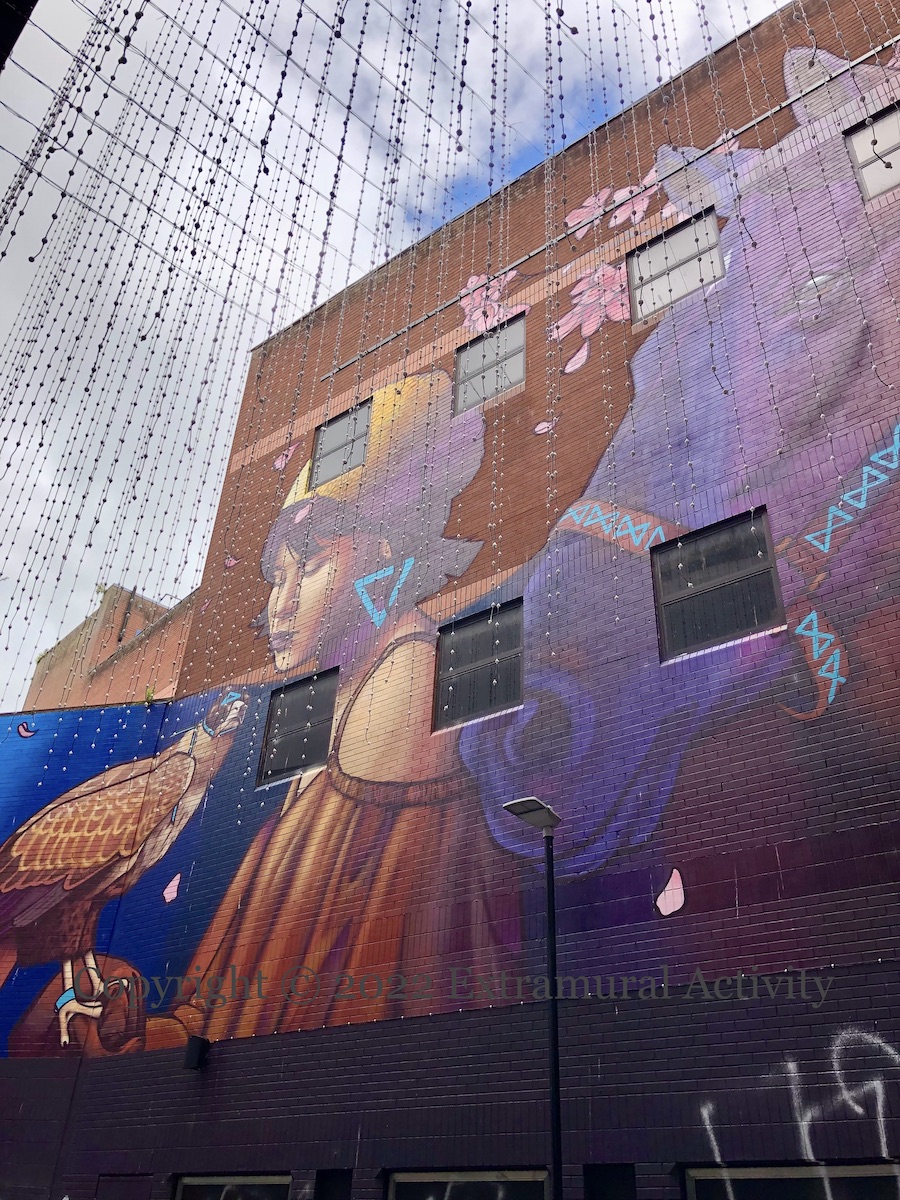
Castle Arcade is so-called because it is the site of the original castle of Belfast, built by the Normans in the late 12th century and then rebuilt by Arthur Chichester in 1611. Chichester’s castle had “spacious gardens which extended from the river along to Cromac Woods and near Stranmillis” with “orchards, bowling greens and cherry gardens … fish ponds,” for “hunting, hawking, and other sports”. It was destroyed by fire in 1708 after which the area became commercialised as a market (ArchiSeek | Mary Lowry | BBC | Belfast Entries).
A candle-lit vigil (youtube | iTV) took place last Friday (February 3rd) to commemorate the 50th anniversary of the “New Lodge Six Massacre”. Shortly before midnight on the night of February 3rd-4th, 1973, Jim Sloan and James McCann were killed by the UDA outside a bar – or so the authorities alleged; the plaque shown below near the spot where they were shot reads “killed by British Forces”; full details of what is currently known about the killings can be found at Paper Trail.
Four more – Tony ‘TC’ Campbell, Ambrose Hardy, Brendan Maguire, John Loughran – were among those who came to the area of the initial shootings and were killed by British Army snipers from their positions on top of the flats, using night-vision sights.
The memorial mural in Donore Court was repainted for the event. From left to right, it shows Hardy, Maguire, Campbell, Loughran, Sloan, and McCann walking down New Lodge Road with (what was) Duncairn Presbyterian and (what was) the RUC station on the Antrim Road behind them. The previous (2011) version of the mural showed a body being carried whereas this new one shows them smiling as they walk, though still in the sights of a sniper’s rifle. Other changes were made: the six portraits in the medallions are now photographs rather than paintings; the background is green rather than pink.
In a 2020 reflection on the tenth anniversary of the Saville report, Eamonn McCann wrote: “Saville pointed the finger of blame at 10 rank and file soldiers and one allegedly undisciplined officer. The top brass and the politicians were, without exception, given a clean bill of health.” (Hot Press)
On the side wall to the new Bloody Sunday mural in Derry, the chain of command is found guilty war crimes in Northern Ireland on January 30th, 1972 – Bloody Sunday: “Guilty; Heath, Wilford, Ford, Kitson, Loden”. From the top down, the five people mentioned are:
Ted Heath, UK Prime Minister, 1970-1974
Frank Kitson, “counterinsurgency theorist” and commander of troops in Belfast 1970-1972 (History Ireland)
Robert Ford, commander of land forces 1971-1973, who wanted to block the march and make arrests in Creggan, and who wrote a January 7th memo suggesting that gaining control of Derry would require the shooting of “young hooligans” in Derry (The Irish Story).
Derek Wilford, commander of the 1st Parachute regiment on Bloody Sunday, who gave the order for soldiers to make arrests
Ted Loden, commander of ‘Support Company’, the soldiers that went into the Bogside.
The main panel shows General Sir Michael Jackson, second-in-command on Bloody Sunday and who acted as spokesperson for the event and provided the inaccurate account of the killings that was used by the media and the Widgery Report of April 1972 (see An Phoblacht and previously Jail Jackson for his connection to the Ballymurphy Massacre).
Update: By February 14th, the mural had been painted out – see final image, below.
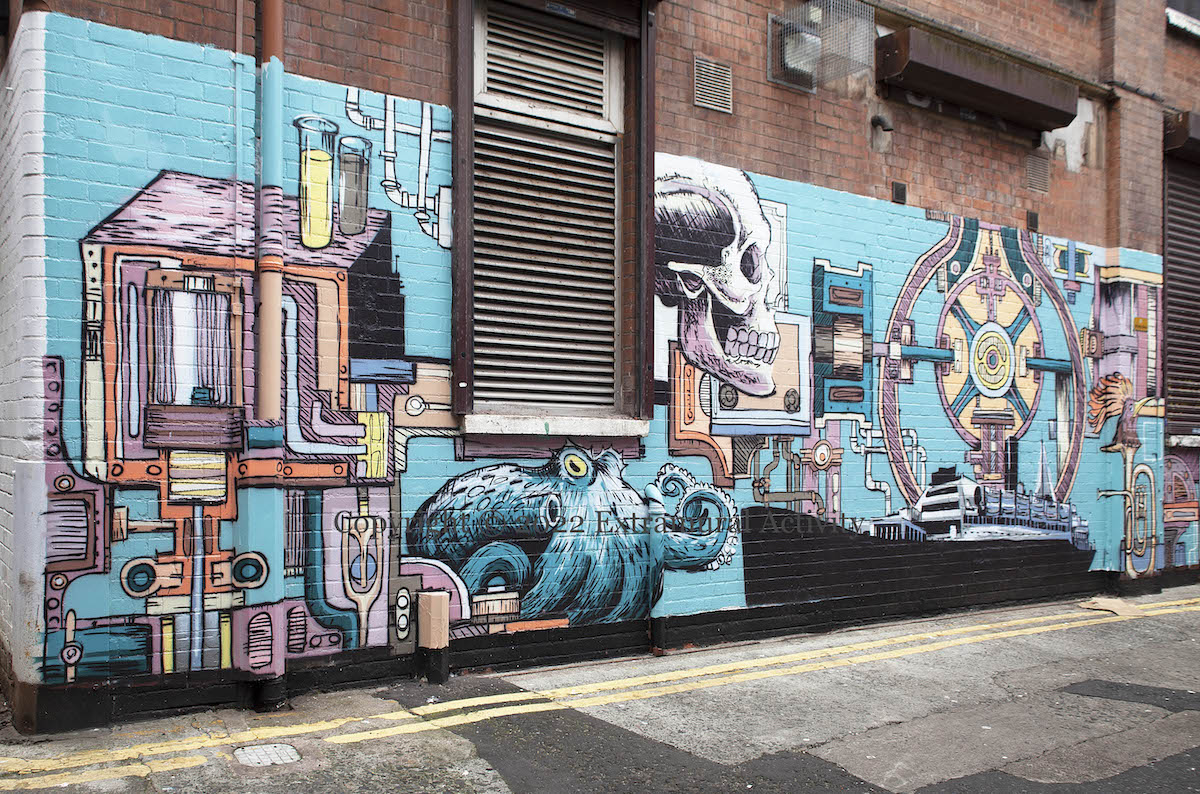
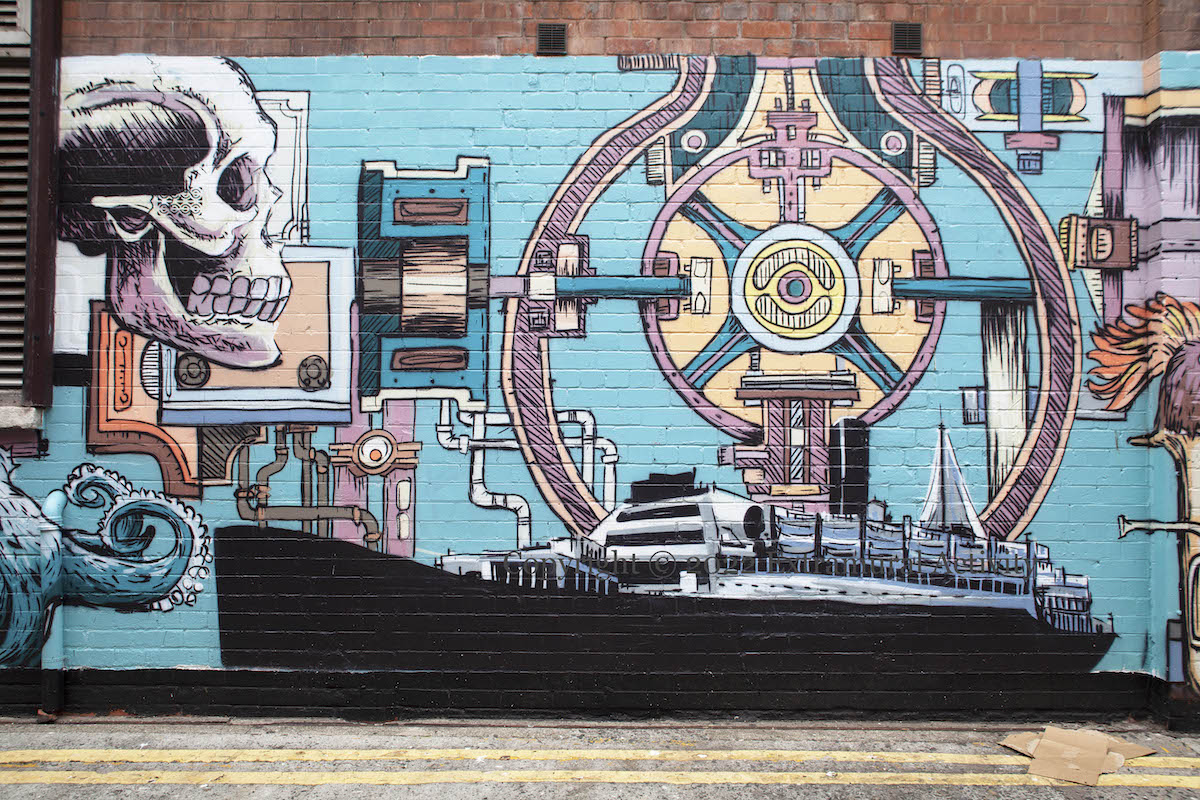
The Royal Victoria Hospital was the first public building in the world to have air conditioning, developed by Sirocco Works. Fans drew in outside air and passed it over mats of wetted coir (Cooling Post | images at HEVAC-Heritage). The qualifier “public” is necessary perhaps because Carrier invented the general process for a printing factory in New York (ASME) in 1902 and the New York Stock Exchange installed a system in 1902 (6sqft)
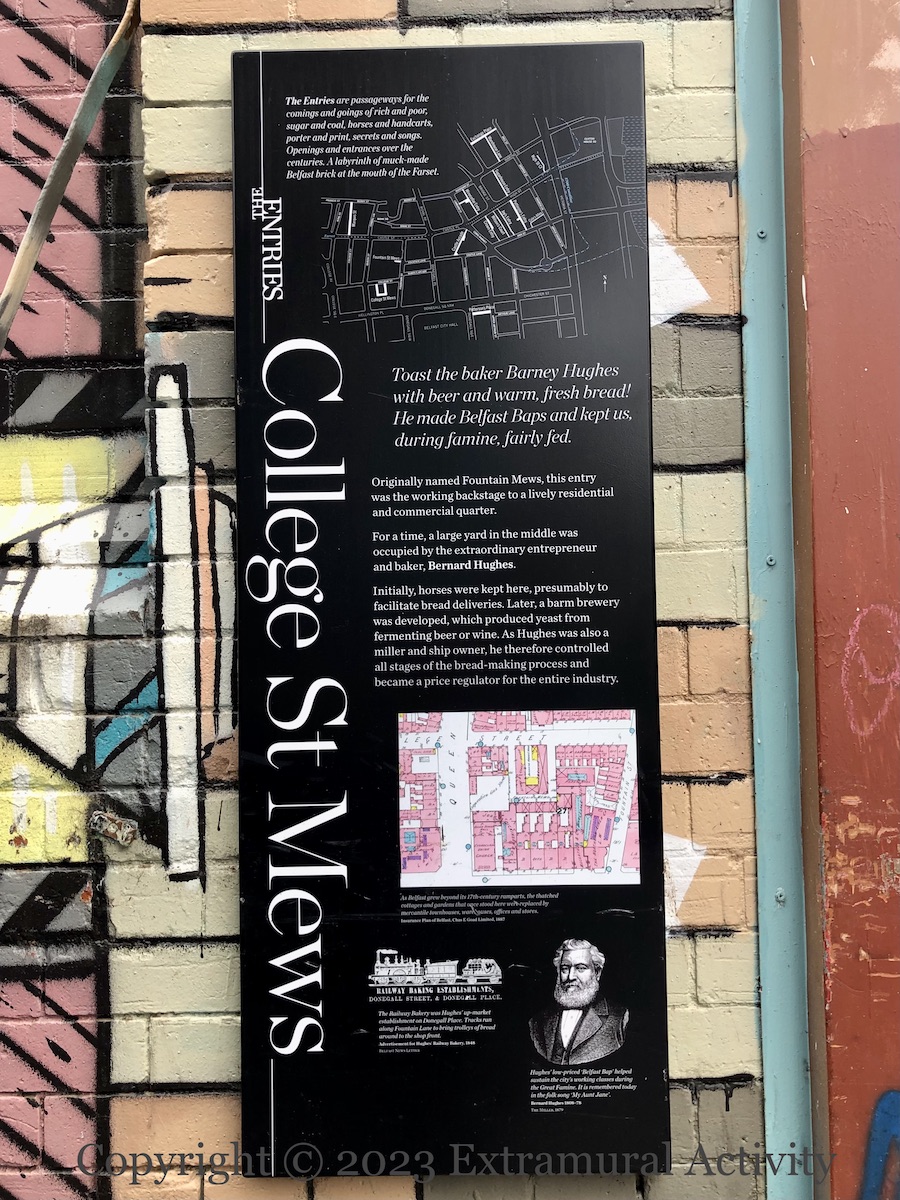
The image above is only one of many panels in College Street Mews by Ed Hicks (ig) on the general theme of Belfast and its industry.
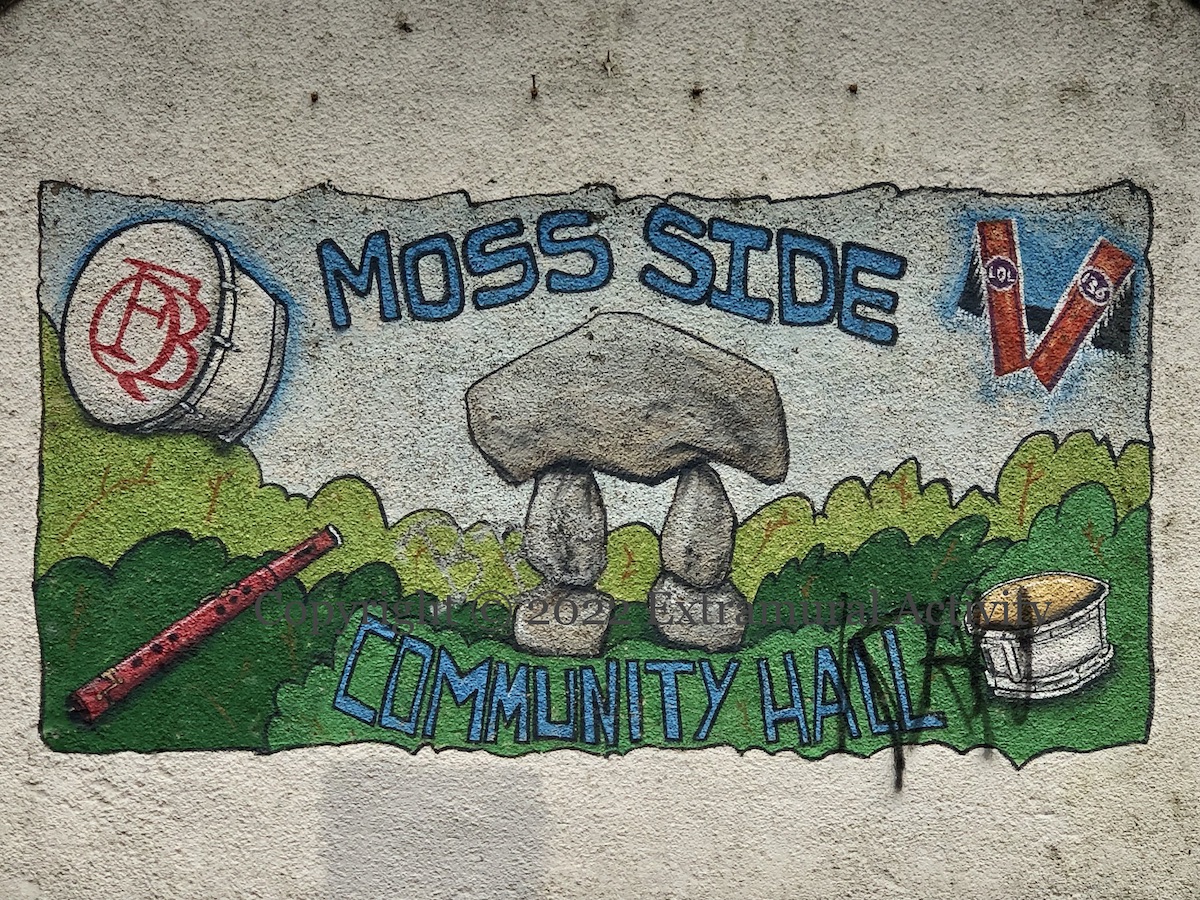
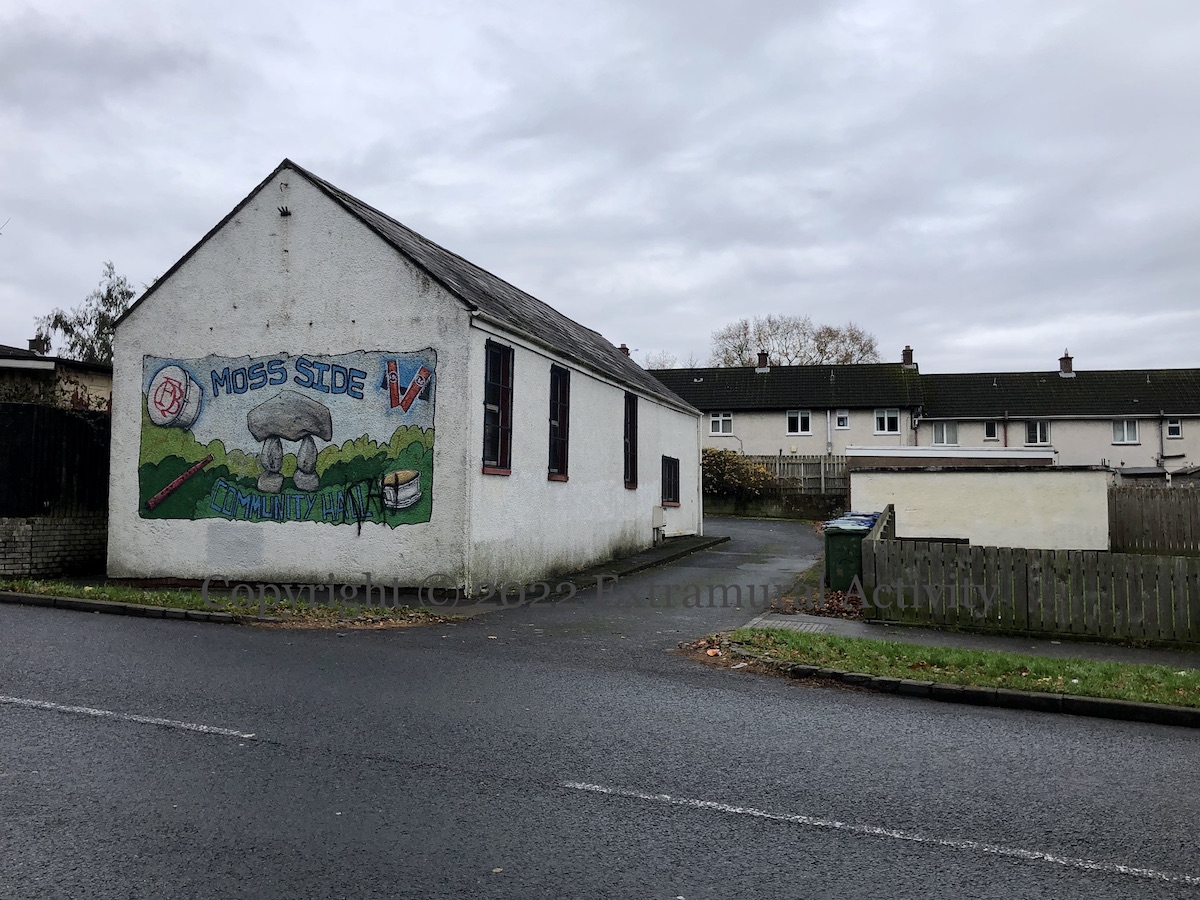
“Moss side” is probably Scots, with “moss” meaning “marsh” or “(peat) bog” (DSL) and this mural is appropriately on Ballybog Road (in Dunmurry), “bog(ach)” in Irish meaning “soft (ground)..
In the mural, “QFB” is Queensway Flute Band – they used to have a mural in Seymour Hill – and “LOL 136” is a lodge in the Derriaghy District (Fb). It’s not clear if there is a specific referent for the dolmen in the centre. The mural is at least 12 years old and it is not clear what functions the hall currently serves; it previously (2017) was home to a men’s shed and in 2018 a Youth Hub opened in the building next to the hall (NIWorld).
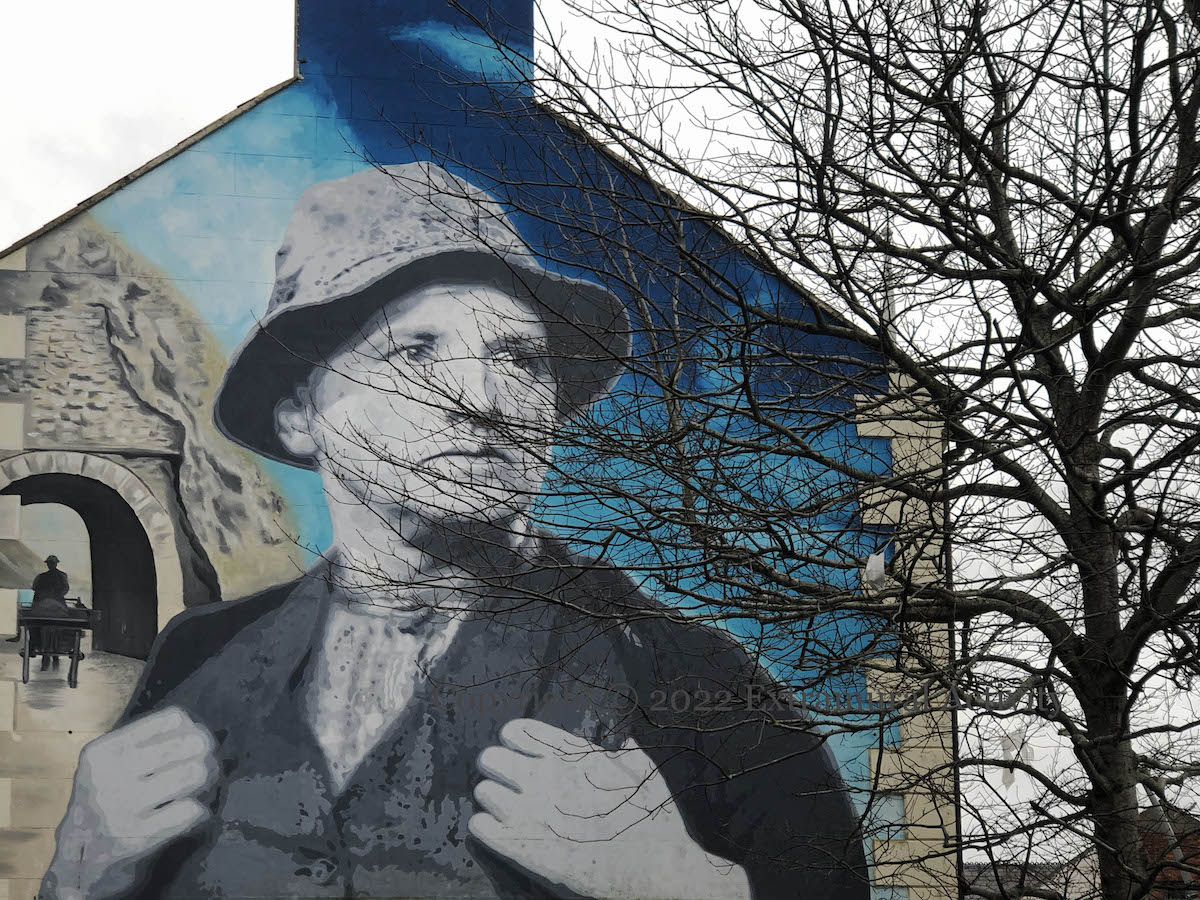
He collected songs, both Orange and traditional Irish, and played the harp. He went on to record 156 records, act in at least eight movies and write 11 travel books, the most popular of which was In Praise Of Ulster, with drawings by the landscape artist James Humbert Craig – some images from the book can be seen here.
The mural, in Larne’s Main Street, was designed by emic (ig) and painted by Dee Craig (Fb). Since 2021 you can also follow a trail around Richard Hayward’s East Antrim .
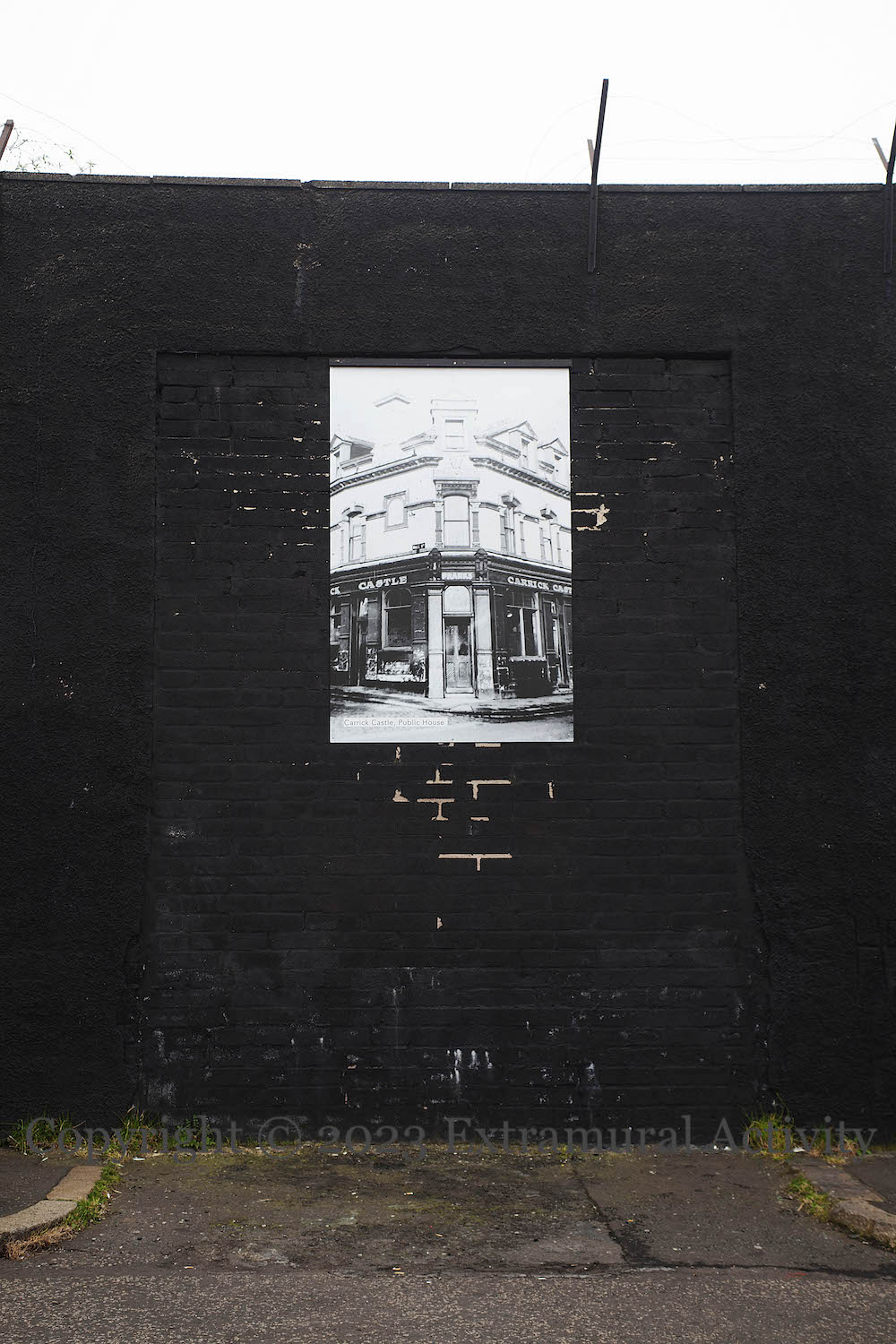
There is now a mural in Stanhope Street of “Carrick Hill in the old days”, of two women talking in the street, to complement the four printed boards.
Below are two of the fifteen boards around the corner in Regent Street, showing the Carrick Castle public house and the old Unity flats.
Other boards in the collection (not shown) show street games, street parties, and Alton United football club, a team founded in 1921 that played in the Falls League and won the 1923 Free State Cup Final (Bohs Sporting Life).
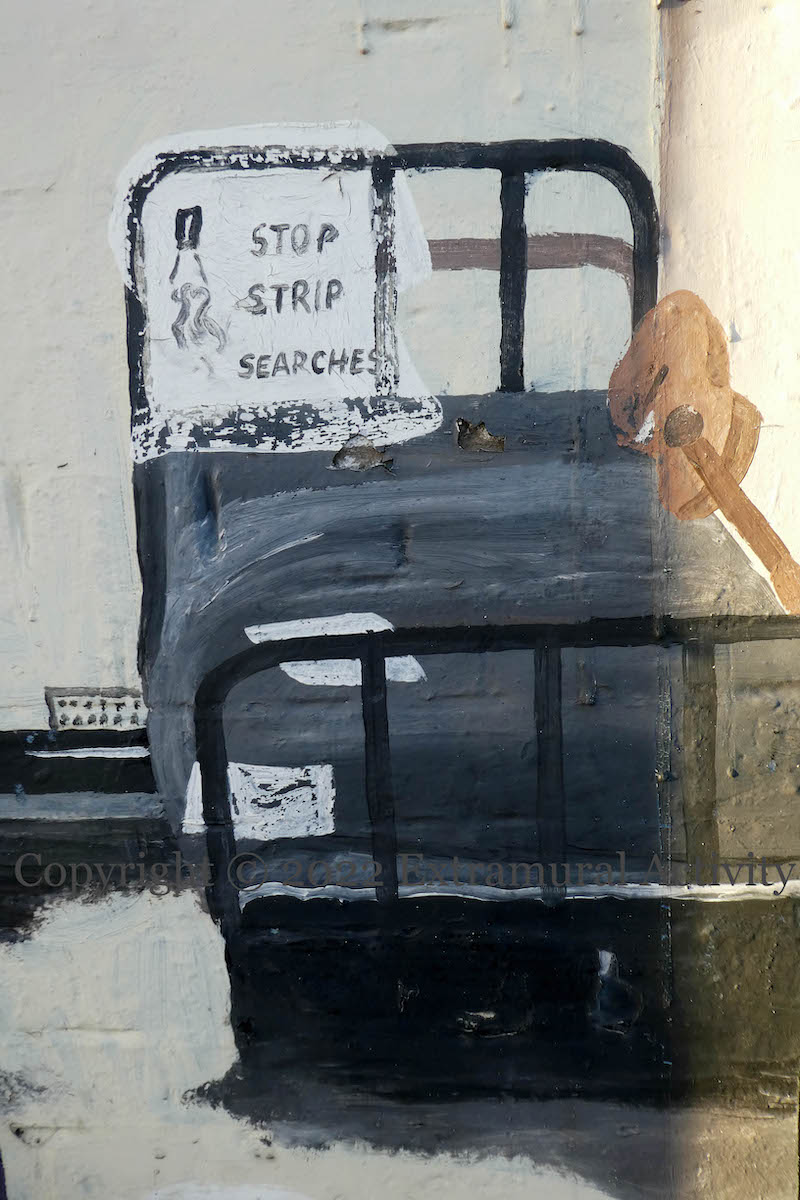
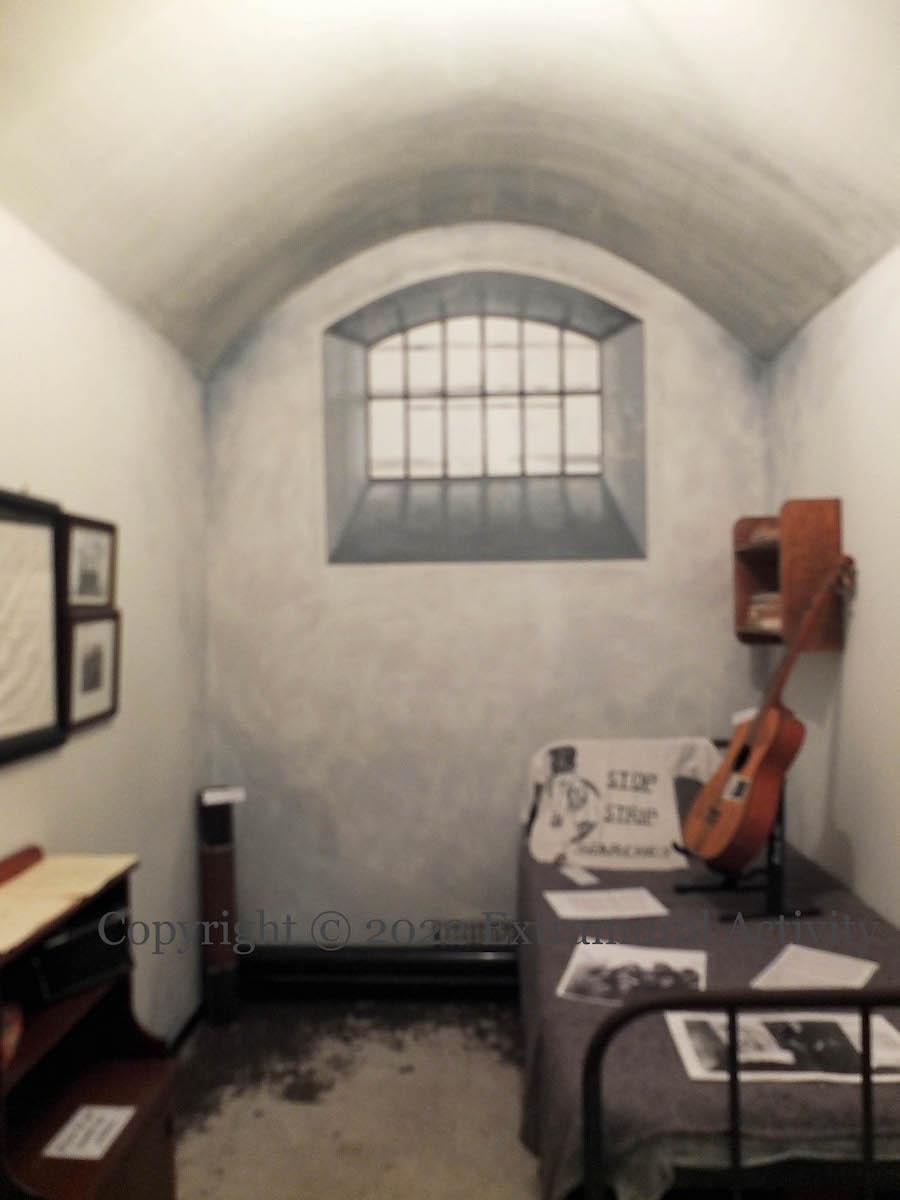
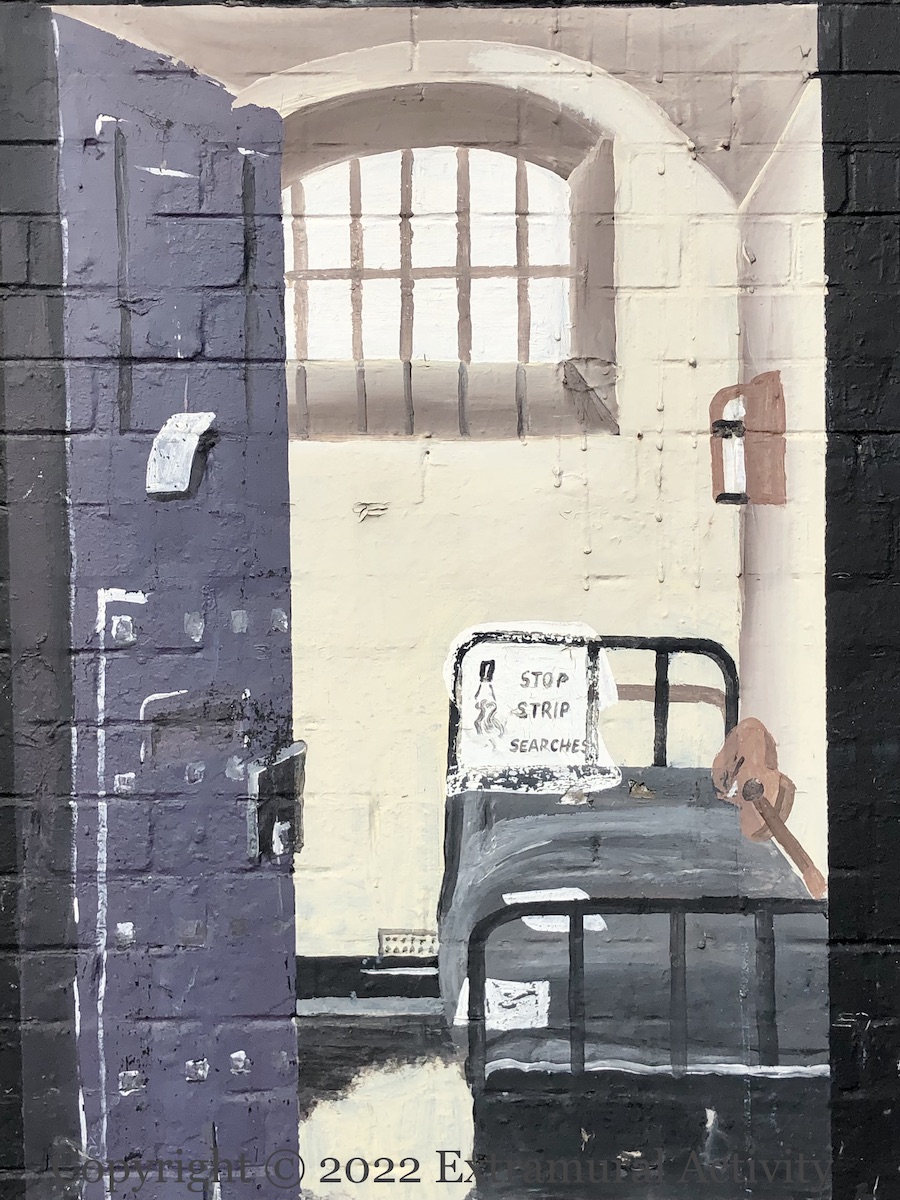
We have featured this ‘bookmark’-dimensioned mural on the so-called “International Wall” before (in 2018) but today include an image (the third one, below) of the replica cell inside the museum itself; a sharper image (and the source for the painting) can be seen on the home page of the Museum’s web site.











 Extramural Activity