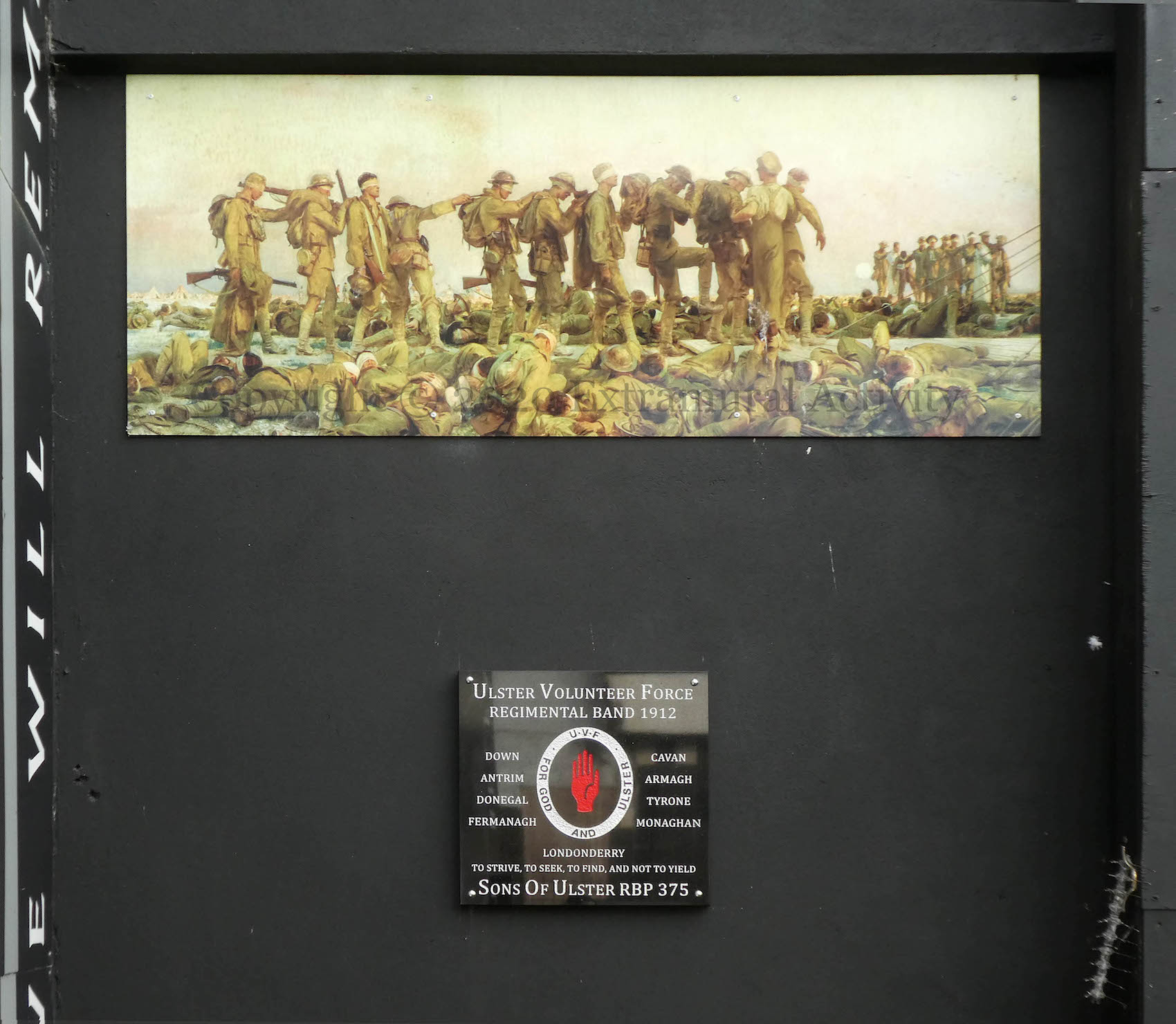
The 62 year-old painter John Singer Sergeant went to the western front in 1918 to find a scene suitable for painting on the theme of Anglo-American co-operation during the war. On the 21st of August, however, he witnessed at Arras British soldiers blinded by a German mustard gas attack, one following behind the other in a human chain, each group being directed by an orderly towards a dressing station. The War Memorials Committee agreed to change its commission and Sergeant received 600 pounds (about 34,000 in today’s money) for his painting, Gassed (WP).
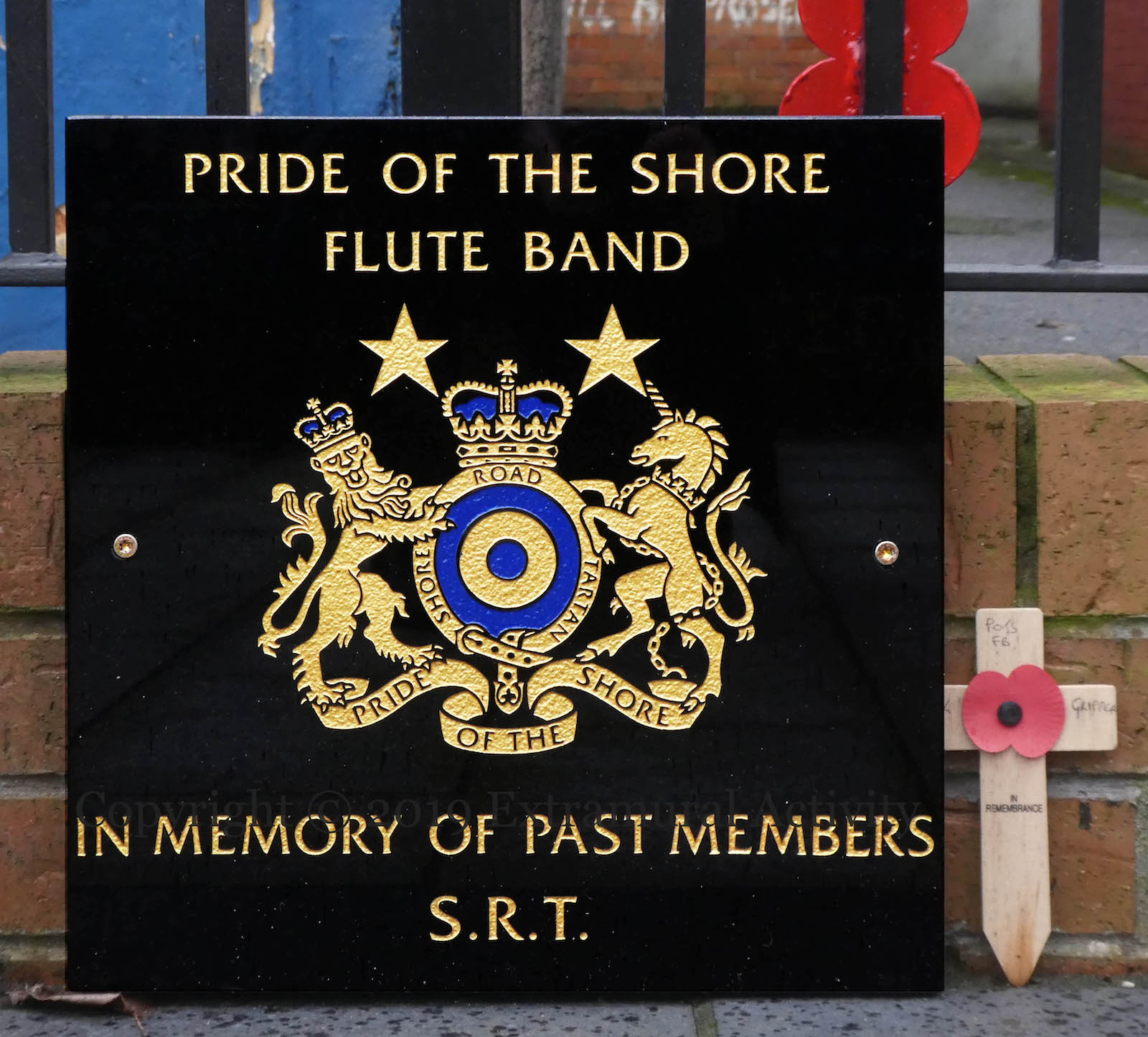
This copy is in St Leonard’s Crescent, part of the 50th anniversary garden and mural for the UVF regimental band and memorial for east Belfast volunteers who joined the 36th Division (which did not fight at Arras as it had been disbanded in May, 1918). The plaque below list the nine counties of Ulster and reads “To strive, to seek, to find and not to yield. Sons Of Ulster RBP 375.”
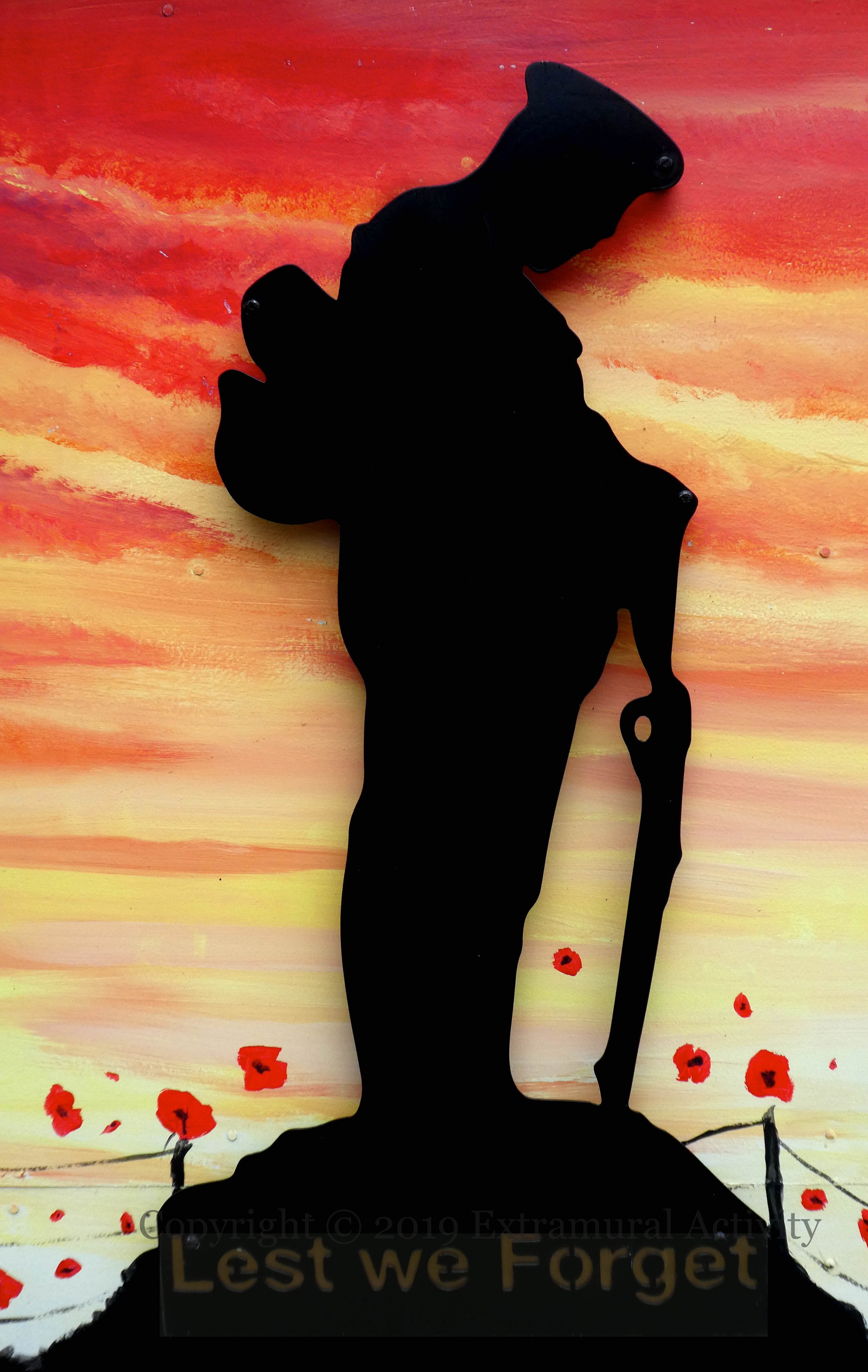
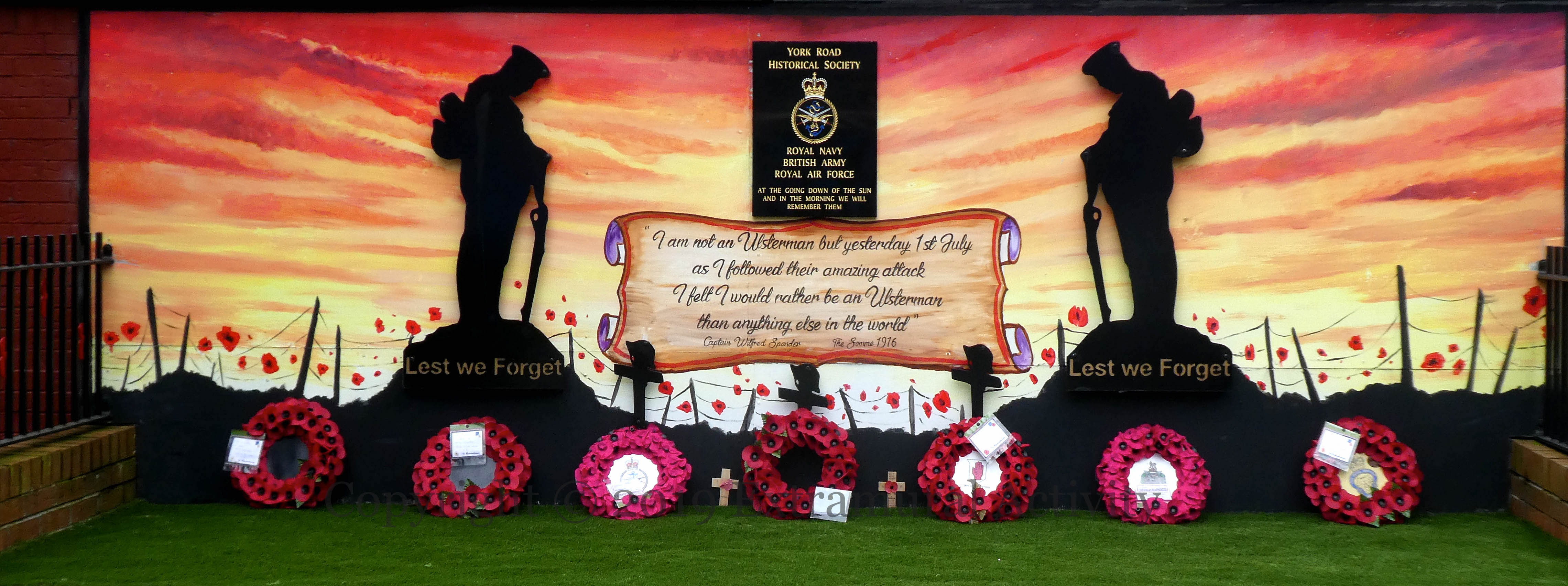
At the end of September, York Road Historical Society (which does not appear to have an on-line presence) launched a new garden of remembrance to British WWI service-members in the “Royal Navy, British Army, and Royal Air Force”, symbolised by the crest of Strategic Command (formerly the Joint Forces Command).
The garden is next to the Times Bar (one | two | three | four | five) and opposite Arts For All/John Luke Gallery (one | two | three).
“Gaeıl Feırste CLG. Ba ıad Gaeıl Feırste (1885-1891) an chéad chumann de chuıd Chumann Lúthcleas Gael (CLG) ı mBéal Feırste. Cumann lán-Ghaeılge a bhí ann. Tháınıg deıreadh leıs de bharr scoılte sa CLG a d’eascaır as conspóıd Charles Stewart Parnell. Rınneadh atheagar ar an GLC in Aontroım in 1898 chun an Céadú Blıaın ó Éırí Amach na nÉıreannach Aontaıthe a chomóradh. Ba é Cumann Iomána na Láımhe Deırge, a bunaíodh an aıce leıs seo, i Sráıd Mılford, an chéad chumann nua le theacht ar an tsaol faoın atheagar seo.
Belfast Gaels (1885-1891), an all-Irish-speaking club, was the first GAA club established in Belfast. It ceased to exist following the rift in the GAA caused by the Charles Stewart Parnell controversy. The GAA was re-organised in Antrim in 1898 to mark the 100th anniversary of the United Irishmen’s Rebellion. The Red Hand Hurling Club was the first new club to be established here on the Falls at nearby Milford Street.”
This plaque is on Divis Street at the Northern Bank building; this Antrim GAA history page gives the club’s location as “Stephen’s Street”, probably intending Stephen Street, though this is in Carrick Hill rather than Divis or the Falls
For another Slí Na Gaeltachta plaque, about the Farset river, see H & A. Tours of Slí Na Gaeltachta are available from Forbaırt Feırste.
Earl Street and Sussex Street used to be sandwiched between wings of the largest tobacco factory in the world, Gallahers, which took up seven acres between York Street and North Queen Street. The factory was partially demolished in 1990 and became Yorkgate shopping centre and the two streets are roughly now the back and front entrances to the Tesco supermarket. These two plaques (both on North Queen Street) are to former residents. William Campbell, a H&W joiner, might have witnessed the construction of Gallahers (in 1897 – Look Again) before dying on Titanic in 1914. Francis Liggett, an IRA volunteer, was shot and killed by British forces during an attempted robbery of the Royal. (He is also remembered in a mural in St James’s near the site of his death and home – see Liggett & Brady.)
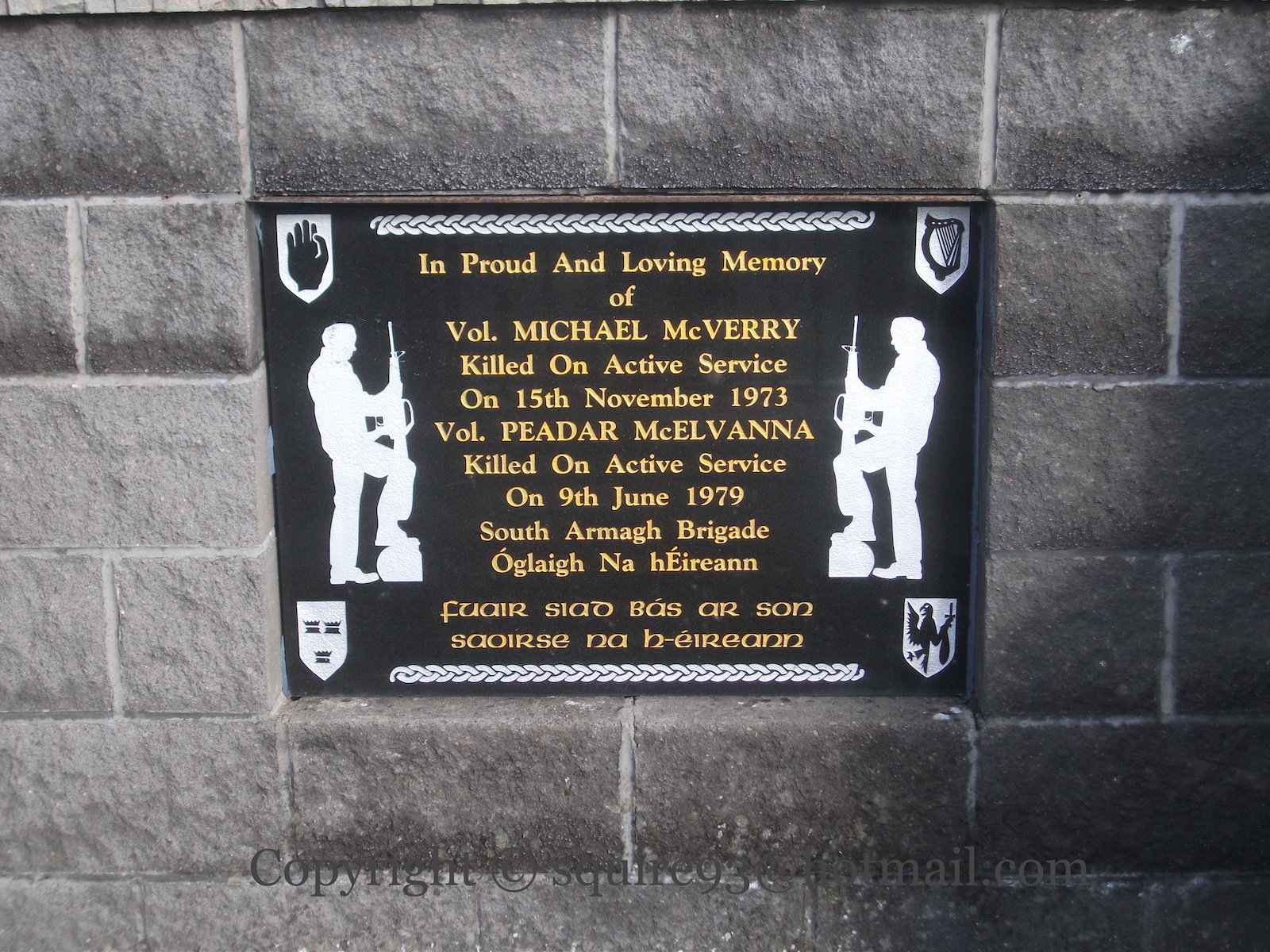
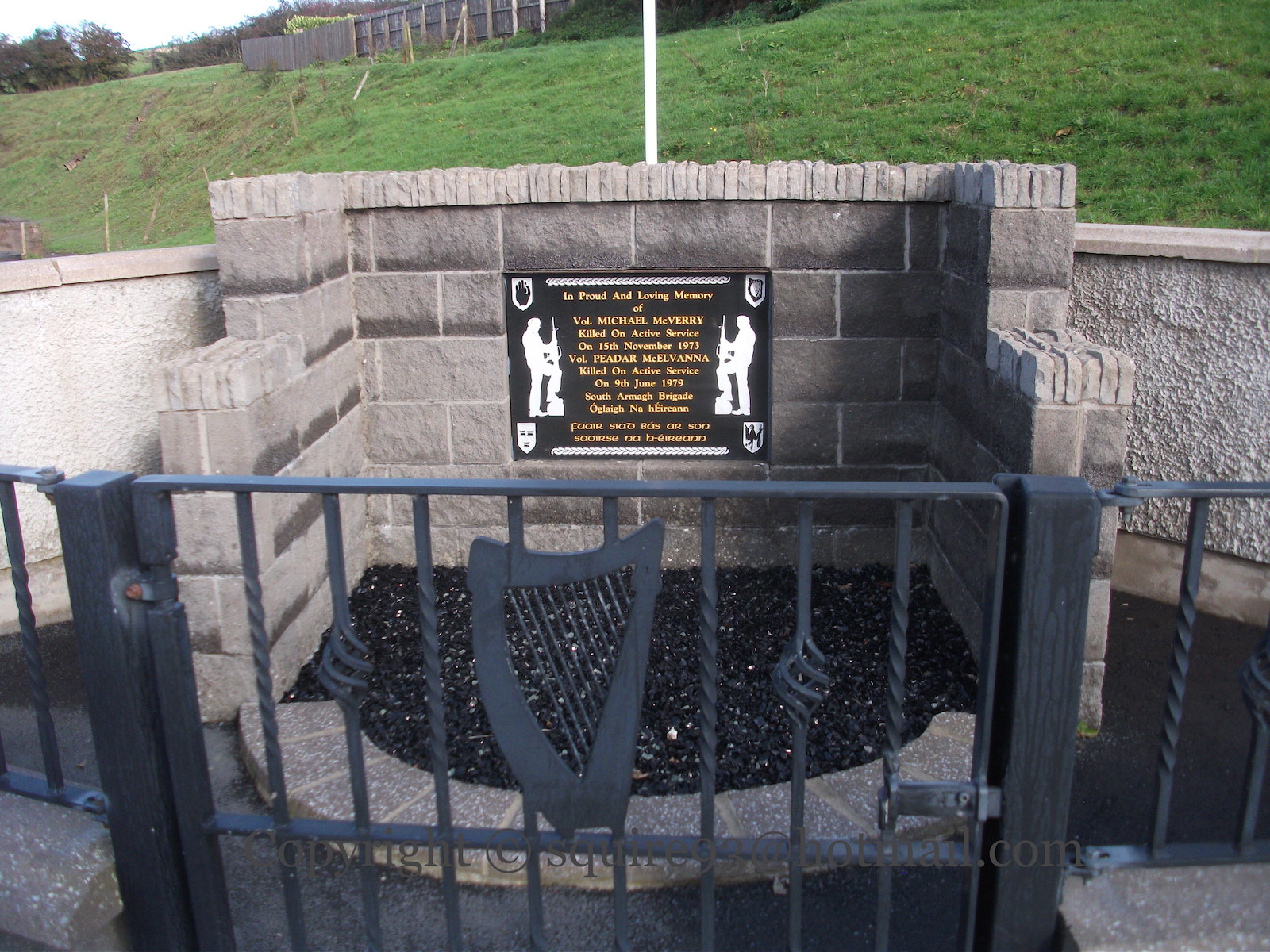
IRA volunteer Mickey McVerry was killed by the British Army during a bomb attack on Keady RUC station in 1973. Peadar McElvanna was killed by the British Army on June 9, 1979, outside Keady, south Armagh. The 40th anniversary commemoration this year drew criticism from the DUP as it was on the same weekend as a ‘time for truth’ rally in Belfast (BelTel). The memorial shown here is in Victoria Street.
“Aye ready they stood, aye ready they fought, through conflict, blood and tears, loyal to the end, every one, the Scottish volunteers.” “Aye ready” was the motto of the 59th Scinde Rifles of the British Indian Army (and later of the Canadian Navy) but is best known from the label of Camp Coffee, in which a Highlander was served a cup of Camp by a Sikh servant (nowadays, they both have a cup of their own). In this new mural and plaque at the newly-christened “Scots Corner” (see final image), a Scottish soldier plays the pipes over a list of the “Battalion Of The Dead”, Scottish volunteers from the (modern) UVF. The list is led by William “Big Bill” Campbell, who has had a small plaque in his memory at this spot since (at least) 2014. Preacher and DUP politician George Seawright (see A Crown Of Life) is also included – he was born in Glasgow in 1951.
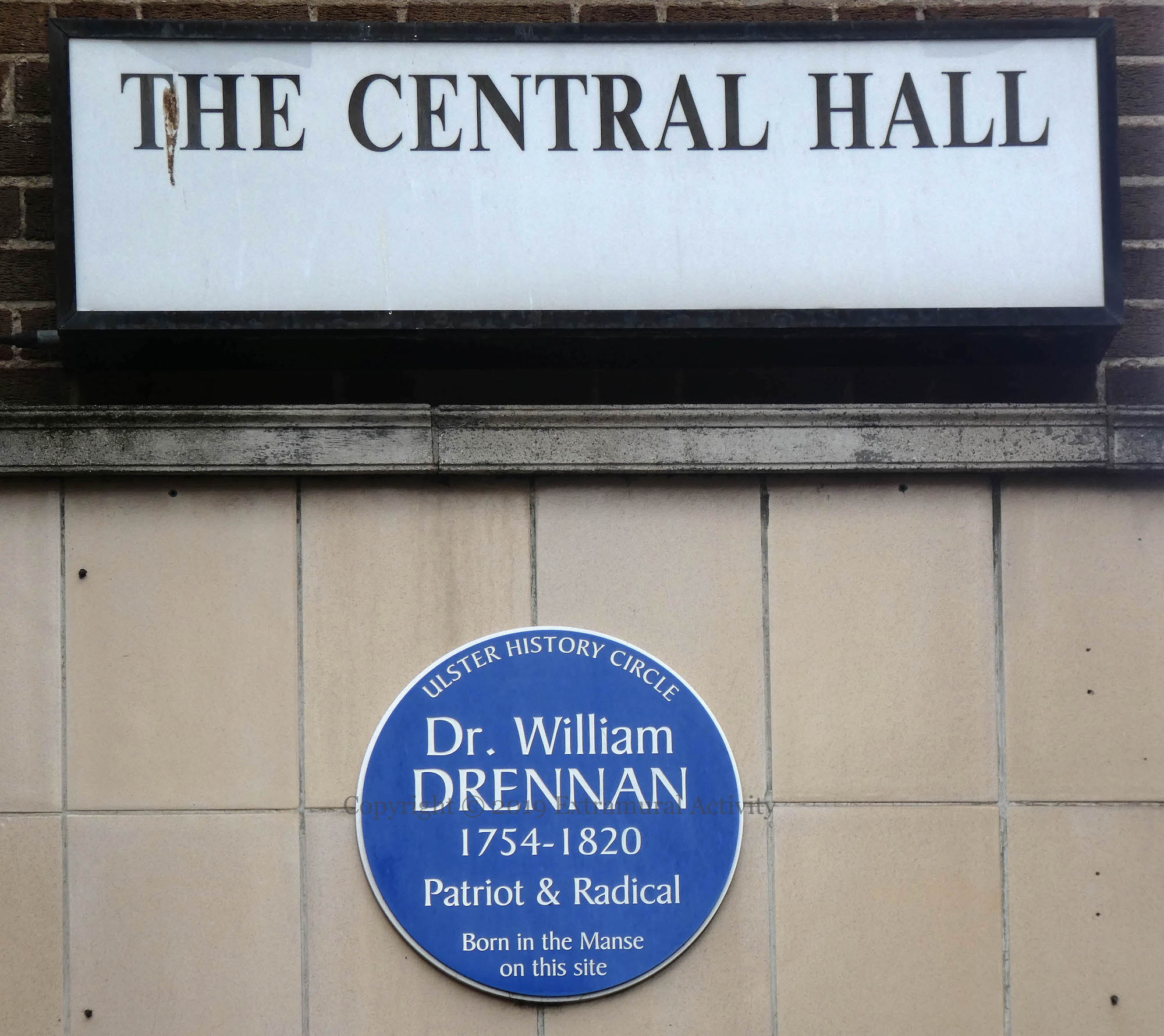
“Dr. William Drennan 1754-1820. Patriot & radical. Born in the manse on this site.” Drennan’s father was the minister at the First Presbyterian Church on Rosemary Street where Drennan was born in 1754. He co-founded the Society of United Irishmen in 1791 (and in 1810, Inst).
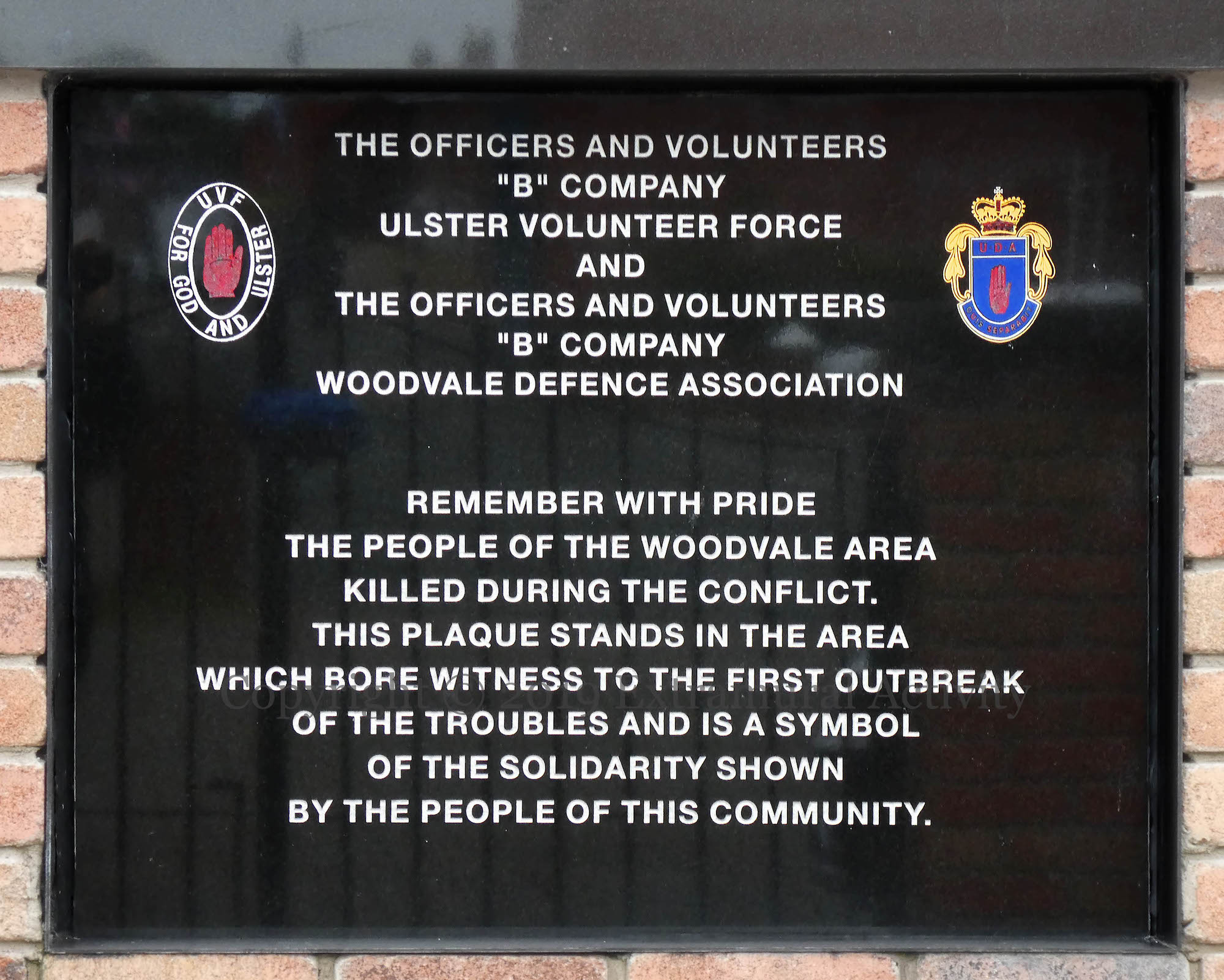
The plaque shown above sits in a memorial garden at the northern end of Disraeli Street, which in 1969 ran out onto the Crumlin Road between Hooker and Brookfield streets on the nationalist side, which saw intense rioting in August 1969 (see 90 Years Of Resistance; also Can It Change? for the lower Shankill). The UVF was founded in 1966 in response to the Civil Rights campaign and an IRA attack on Nelson’s statue in Dublin, and the WDA in June 1970 in response to escalating tensions along the upper Crumlin.
“The officers and volunteers “B” company Ulster Volunteer Force and the officers and volunteers “B” company Woodvale Defence Association remember with pride the people of the Woodvale area killed during the conflict. This plaque stands in the area which bore witness to the first outbreak of the troubles and is a symbol of the solidarity shown by the people of this community.





 Extramural Activity