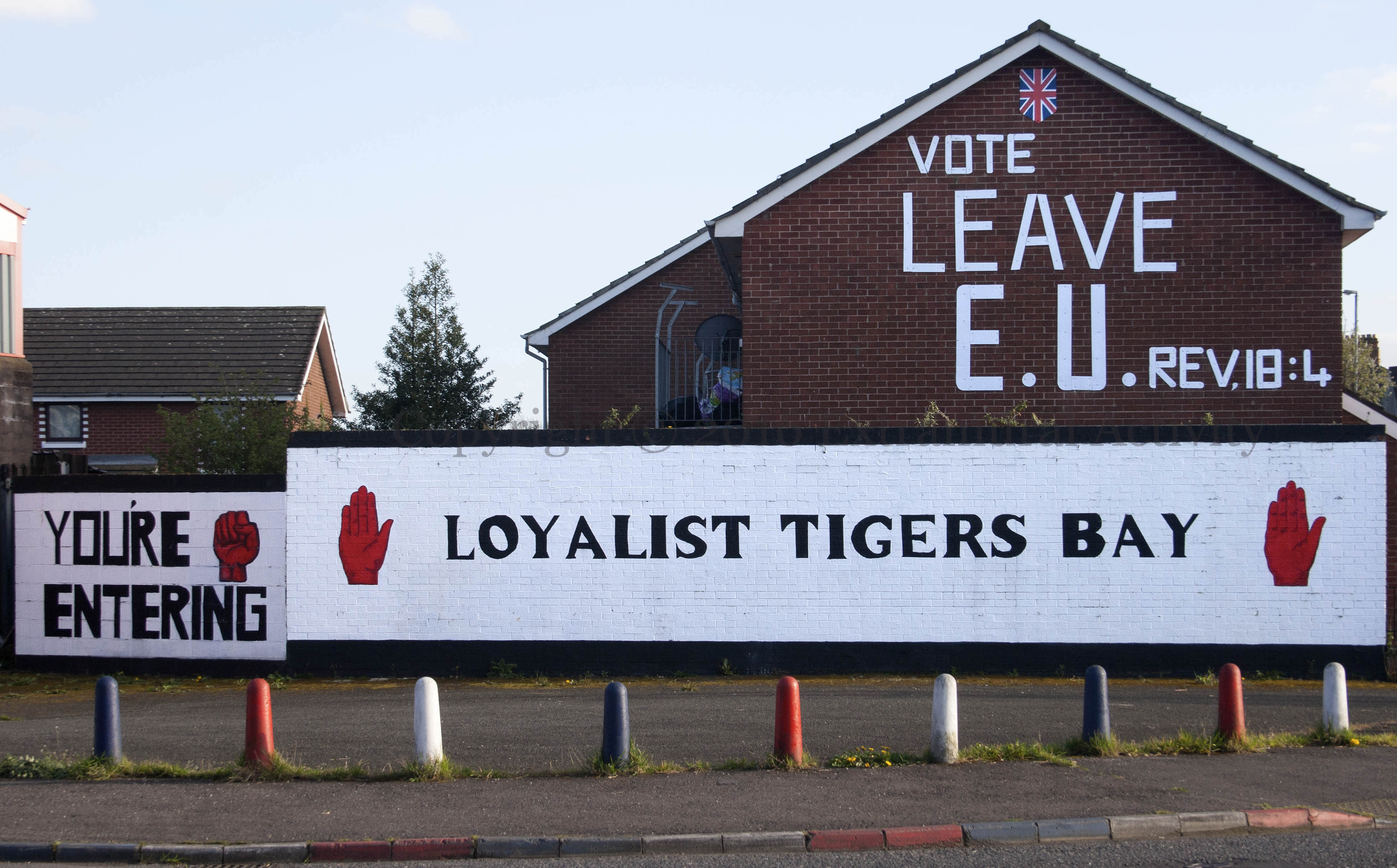
“Come out of her, my people, lest you take part in her sins, lest you share in her plagues” — commentary on the “Brexit” vote, coming up on June 23rd, from the Tiger’s Bay community in north Belfast, likening the EU to Babylon — “Babylon the Great, the Mother of Prostitutes and Abominations of the Earth”, “the habitation of devils, and the hold of every foul spirit, and a cage of every unclean and hateful bird”, “that great city, which reigneth over the kings of the earth” — whose destruction is prophesied in the book of Revelation. Hence: “Vote Leave E.U.”.
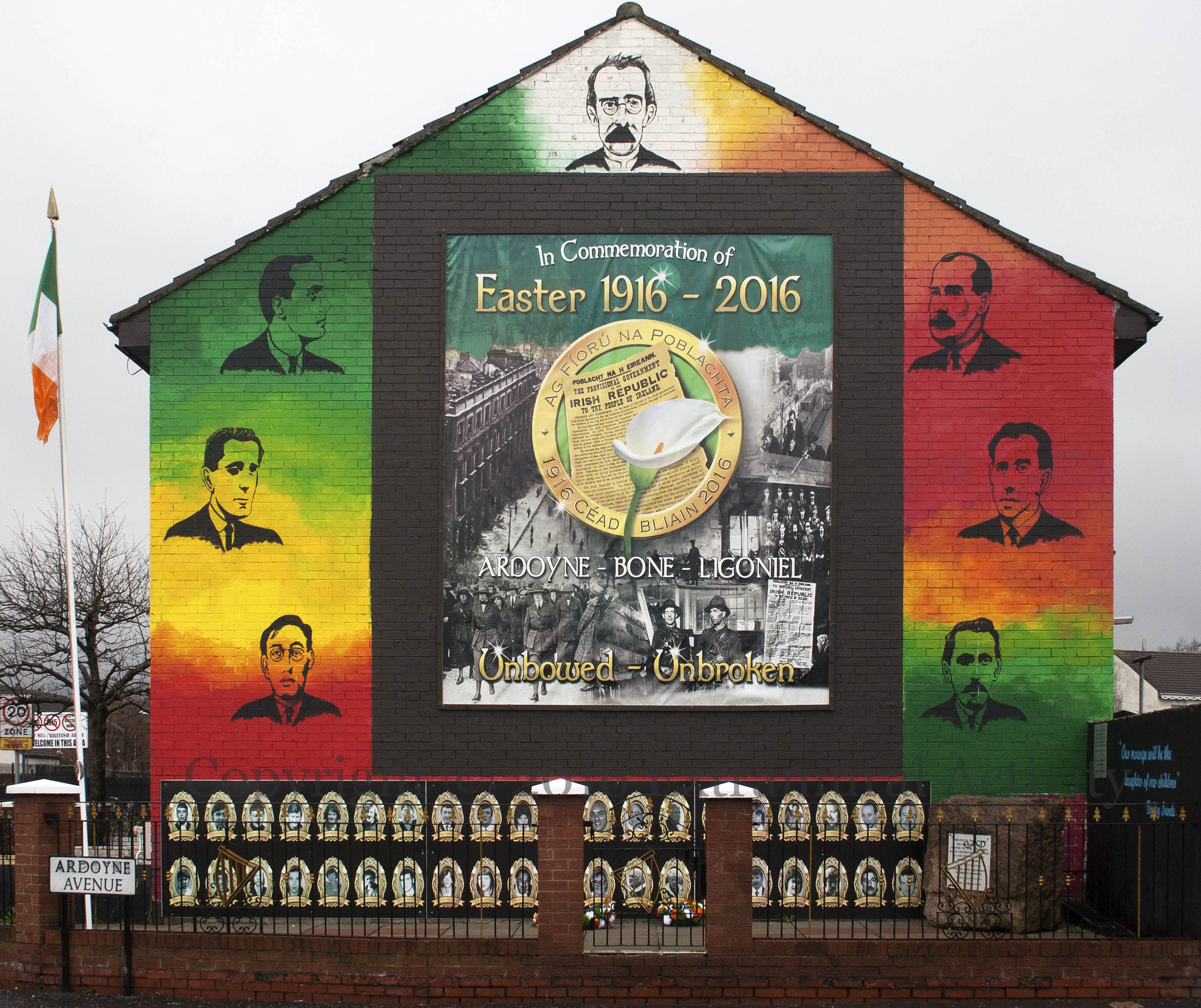
Tom Clarke is at the head of his fellow signatories as he looks down over a printed tarp reproducing photographs of events surrounding the Easter Rising of 1916, including soldiers from the Irish Citizen Army on a rooftop (see the original in this Spectator article) and members of Cumann Na mBan on parade. For the photo of the building in the top left, see this Irish Times article.
The previous Ardoyne – Bone – Ligoniel mural fell down almost as soon as it was completed, leaving only the portraits of locals killed during the troubles
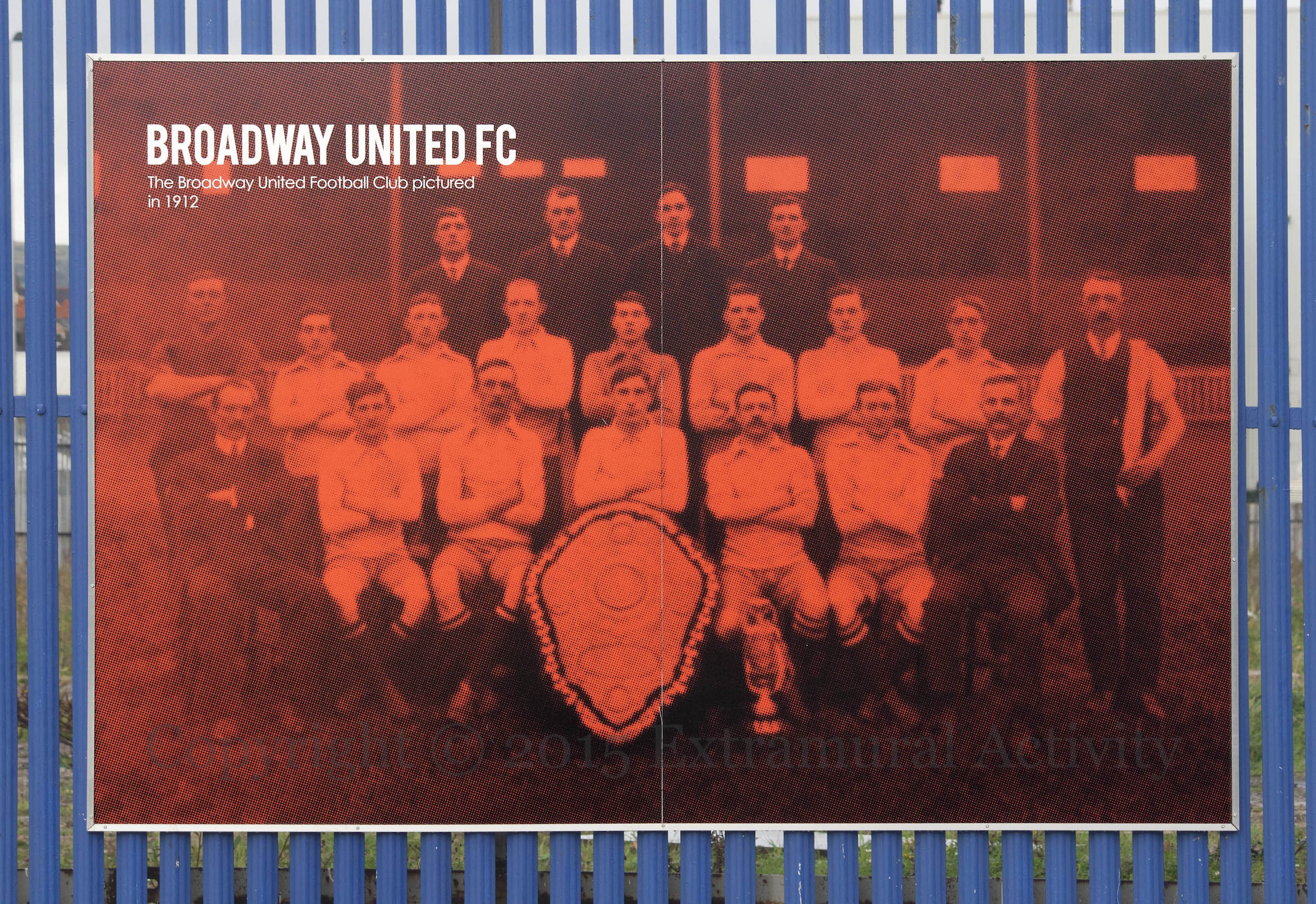
Information on-line is scarce concerning Broadway United FC. They might have been an intermediate team but are said to have won the junior Irish Cup in 1912 — the date of the image above in which the team poses with its trophies — beating Black Watch FC 1–0.
Liverpool’s longest serving player, goalkeeper Elisha Scott (WP), began his career at Broadway United, playing there for two years before making 402 appearances at Anfield and then going to Belfast Celtic as player and manager. The Irish Times has a profile of Elisha and his brother Billy, goalkeeper at Everton. (Thanks to John Duffin for these links.)
Three bandsmen – the first two of which, at least, are members of the UVF Regimental Flute Band, one in a vintage and another in a modern uniform – parade together in a new mural in Pitt Park. The UVF Regimental will be going to France for the centenary commemorations of the Battle of the Somme.
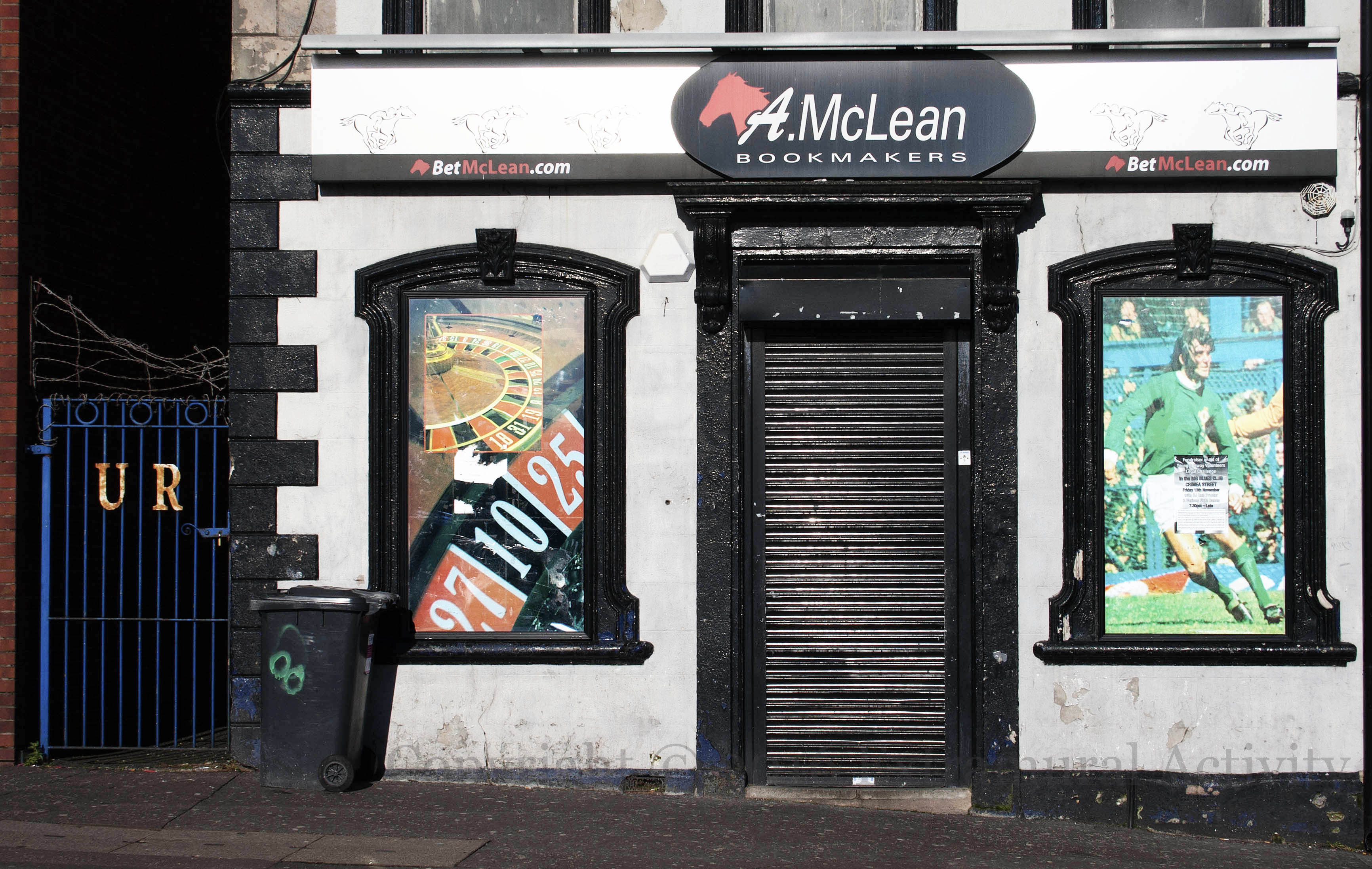
The images in the windows of the McLean’s bookies on the Shankill Road suggest that betting on sports – even on George Best – is like playing roulette. The gate to the left (with barbed wire on top) is marked with the letters “U” and “R” of the nearby Ulster Rangers supporters club. (For two murals there, see previously: Save The Shankill | Doing Her Duty).
You can let your Union flag fly across the rooftops with this “sky lantern”, for sale in the window of a shop on the Newtownards Road. “Ready to light … lift … and launch.”
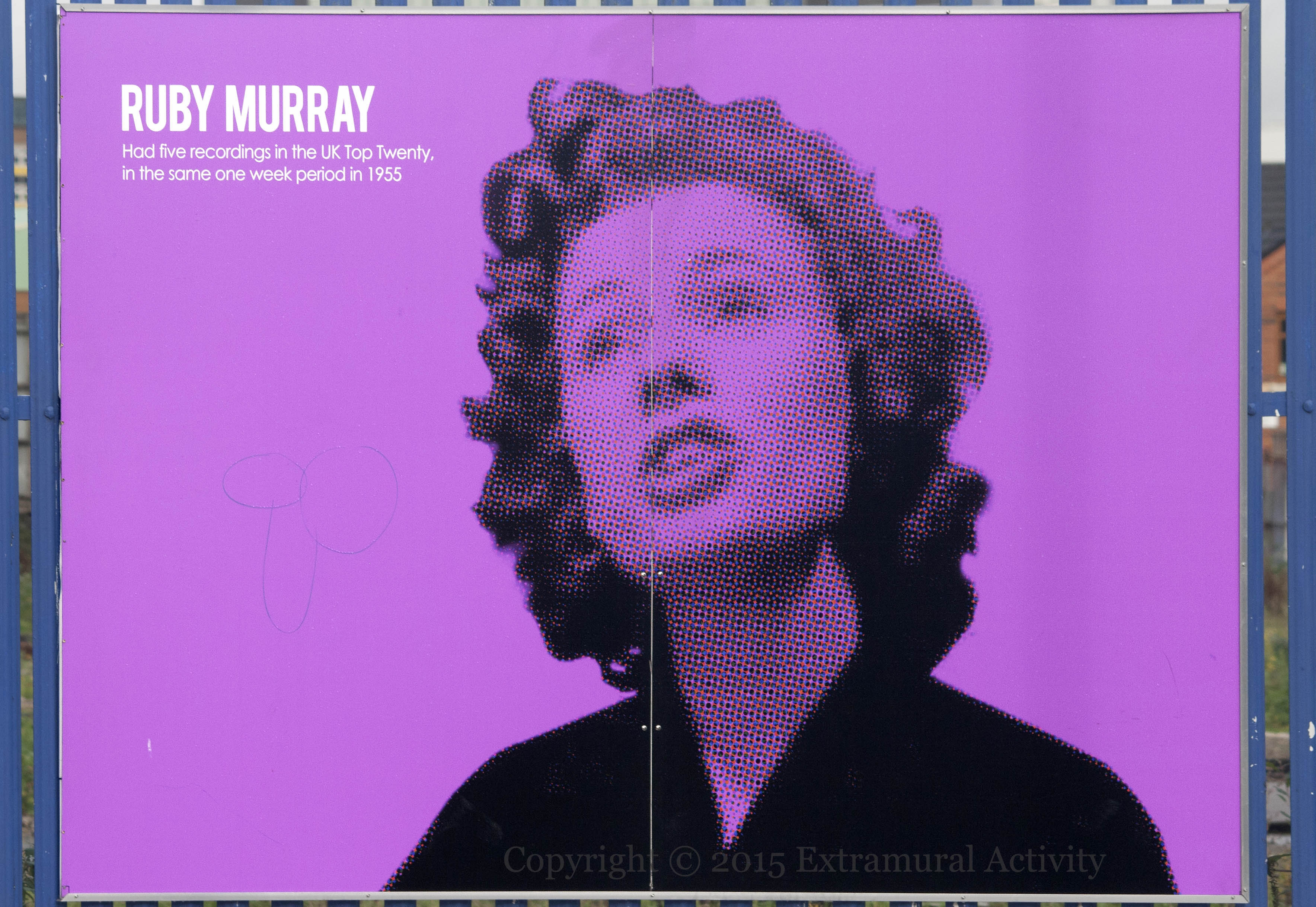
In 1955, Ruby Murray — who was born and raised on Donegall Road — had a #1 hit with Softly, Softly (youtube) and it stayed at the top for three weeks. She went on to have six other top-ten hits that year and in one week five of her songs were in the top twenty.
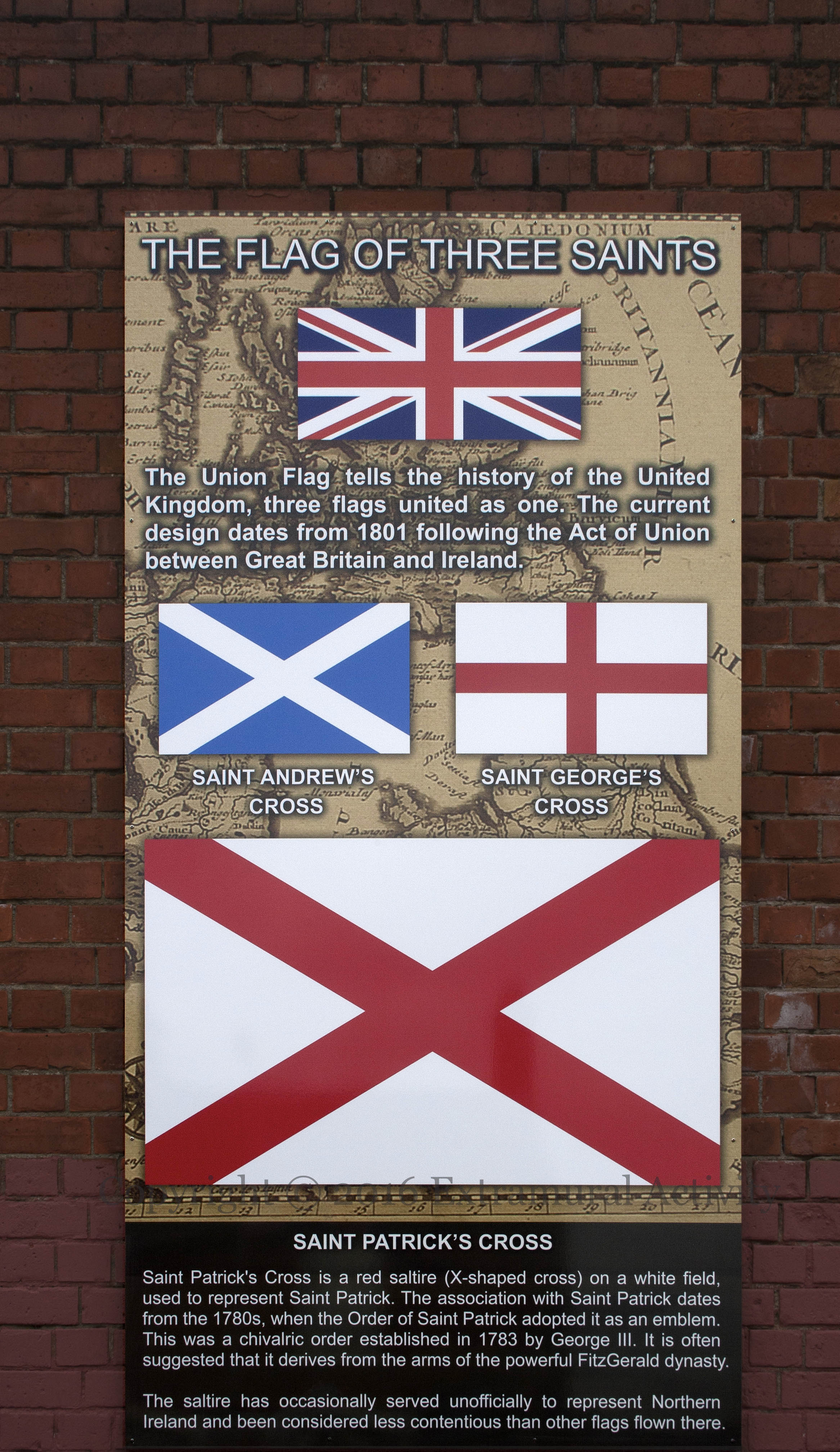
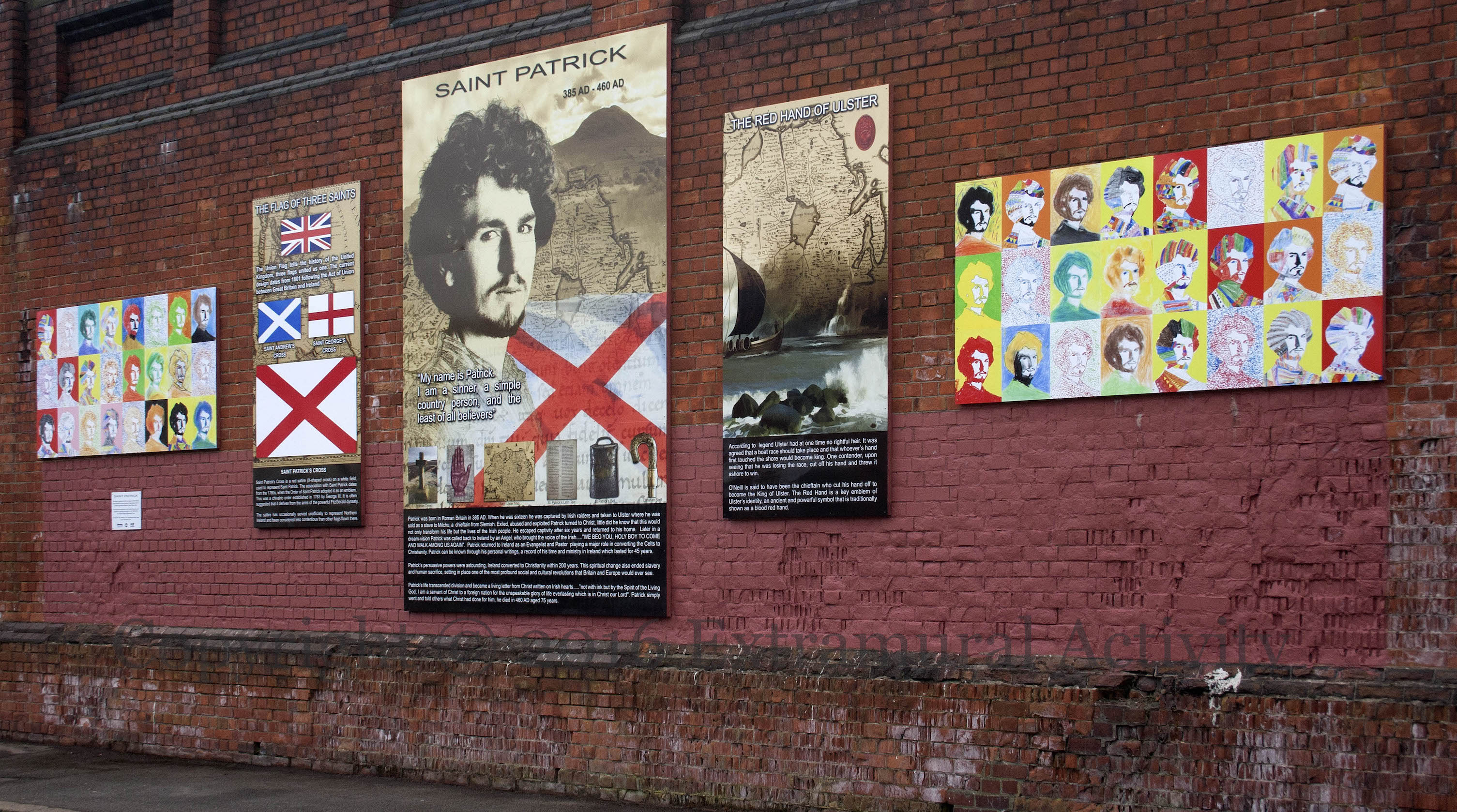
Here is the final board in the new “St Patrick” set on Tates Avenue (and a wide shot of them all, below). This one explains the composition of the Union flag as a combination of the saltire of Saint Andrew of Scotland, the cross of Saint George of England, and the saltire of Saint Patrick of Ireland. As the text notes, the saltire is much later than the saint: “The association with Saint Patrick dates from the 1780s, when the Order of Saint Patrick adopted it as an emblem. This was a chivalric order established in 1783 by George III. It is often suggested that it derives from the arms of the powerful FitzGerald dynasty [which dates to the 12th century].”
The text ends oddly: “The saltire has occasionally served unofficially to represent Northern Ireland and [has] been considered less contentious than other flags flown there.” Similar language is used on the symbols.com page for the Saltire.
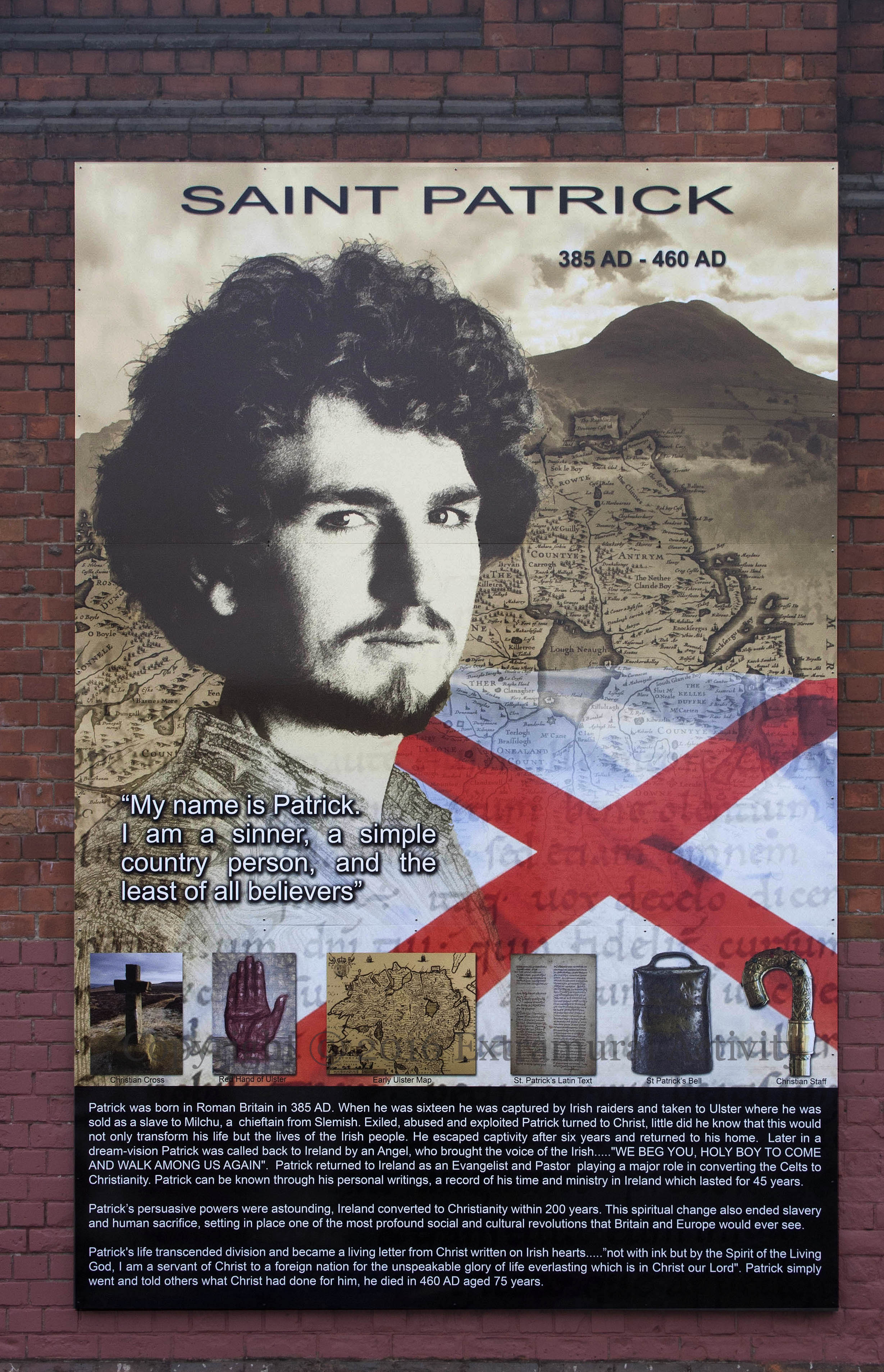
Featured today are two (more) of the boards in a set on Tates Avenue. The central board, shown above, shows a young Patrick (without the clerical garb in which he is often portrayed) against the backdrop of Slemish mountain, where Patrick is thought to have tended sheep as a young slave to a local chieftain, c. 401 AD and developed his Christian faith.
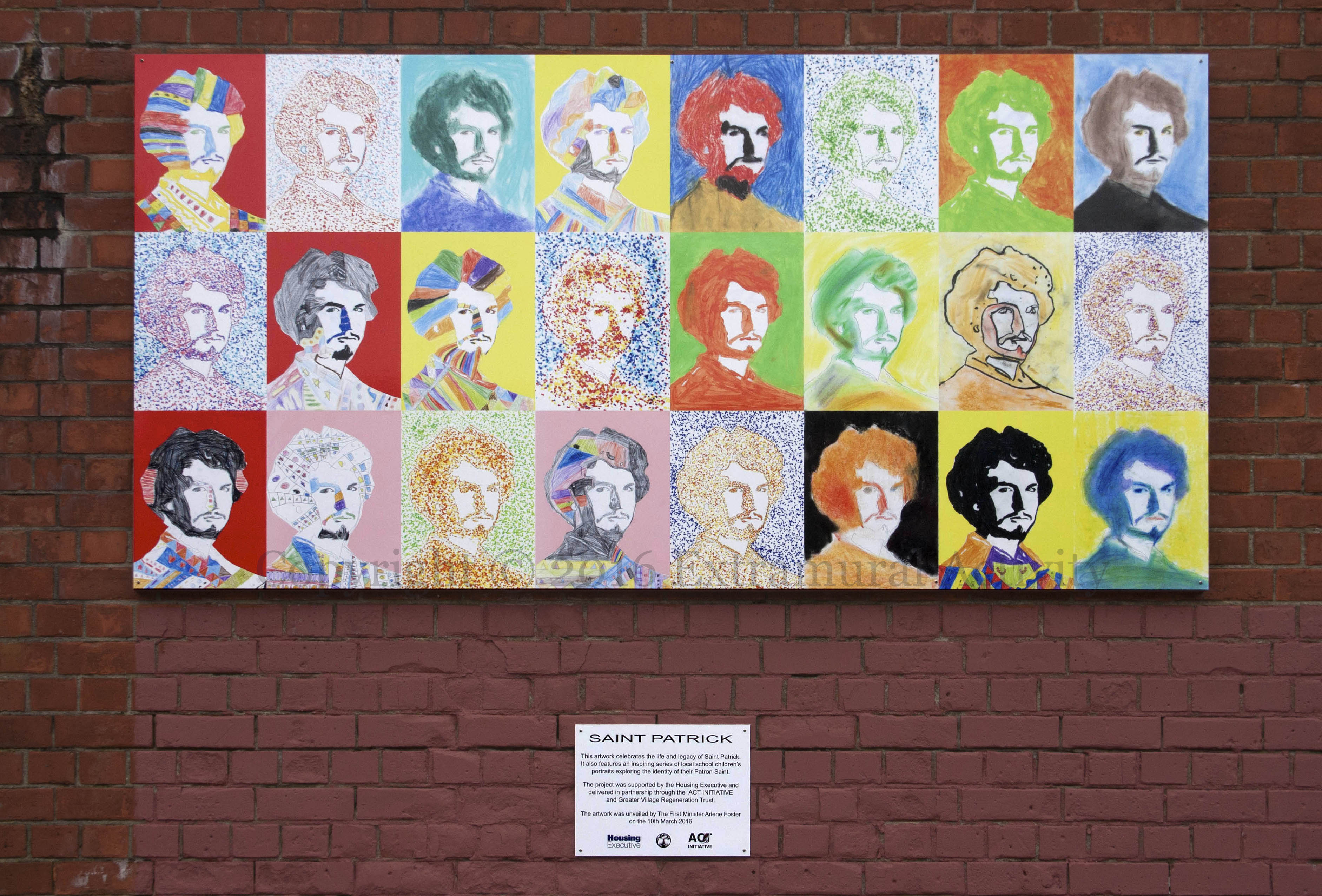
The second image is of colourings of the Saint Patrick profile by children from the nearby Donegall Road Primary School.
The boards were unveiled on March 10th, 2016 by first minister Arlene Foster who remarked that the saint had become “very Gaelicised” and this — and the presence of Irish tricolours at parades — deterred unionists from celebrating “the patron saint of everybody in Northern Ireland” (Belfast Telegraph; also contains video of the launch). Anglicanism venerates saints but Presbyterianism does not, generally taking the “communion of saints” to refer to all members of the church.
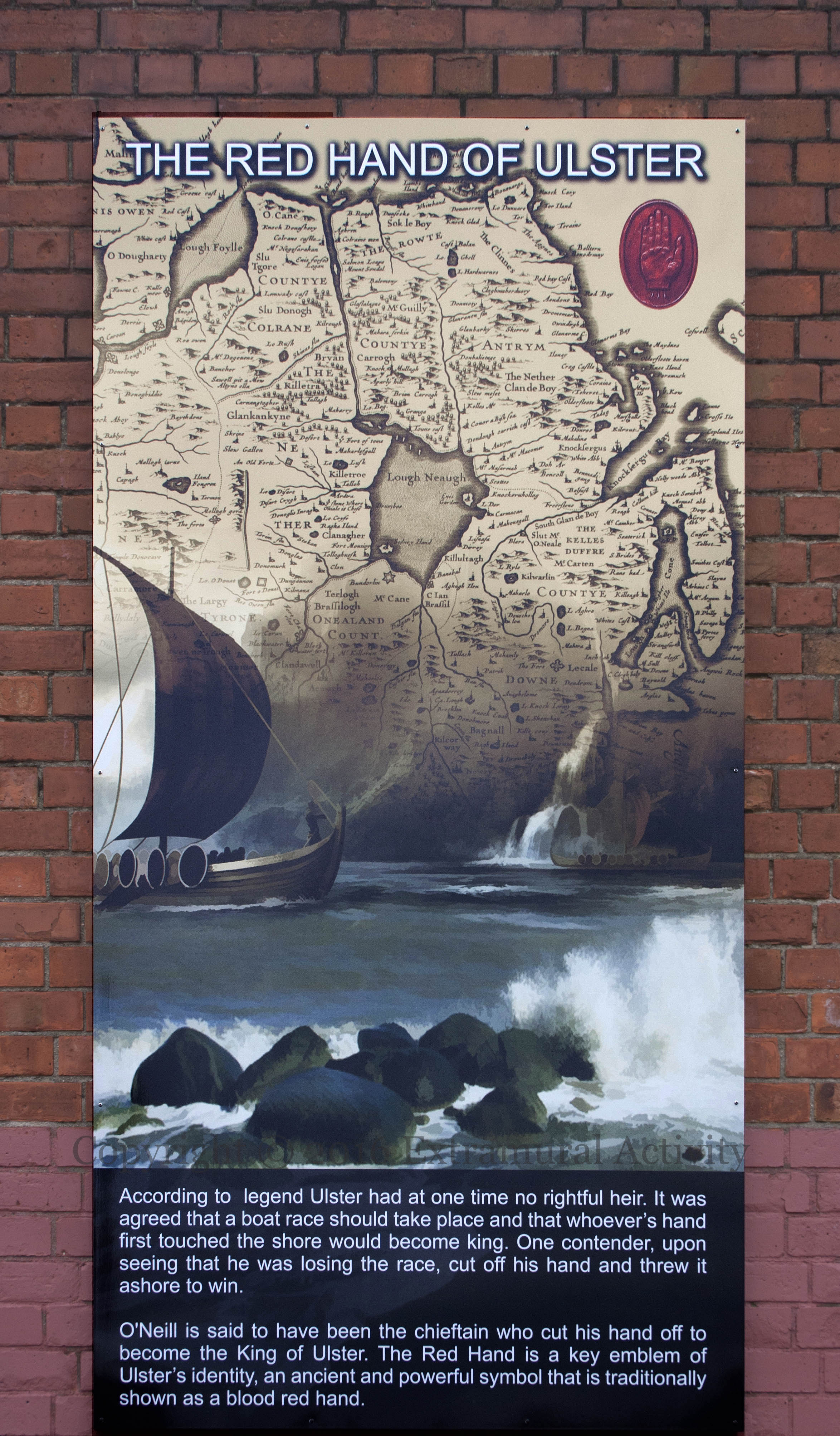
Here is one of the new boards on Tates Avenue (the others will be featured over the next two days). It shows a ship racing towards shore, superimposed over a 1659 map of Ulster by Blaeu.
“The Red Hand Of Ulster: According to legend Ulster had at one time no rightful heir. It was agree that a boat race should take place and that whoever’s hand first touched the shore would become king. One contended, upon seeing that he was losing the race, cut off his hand and threw it ashore to win. O’Neill is said to have been the chieftain who cut his hand off to become the King of Ulster. The Red Hand is a key emblem of Ulster’s identity, an ancient and powerful symbol that is traditionally shown as a blood red hand.”




 Extramural Activity