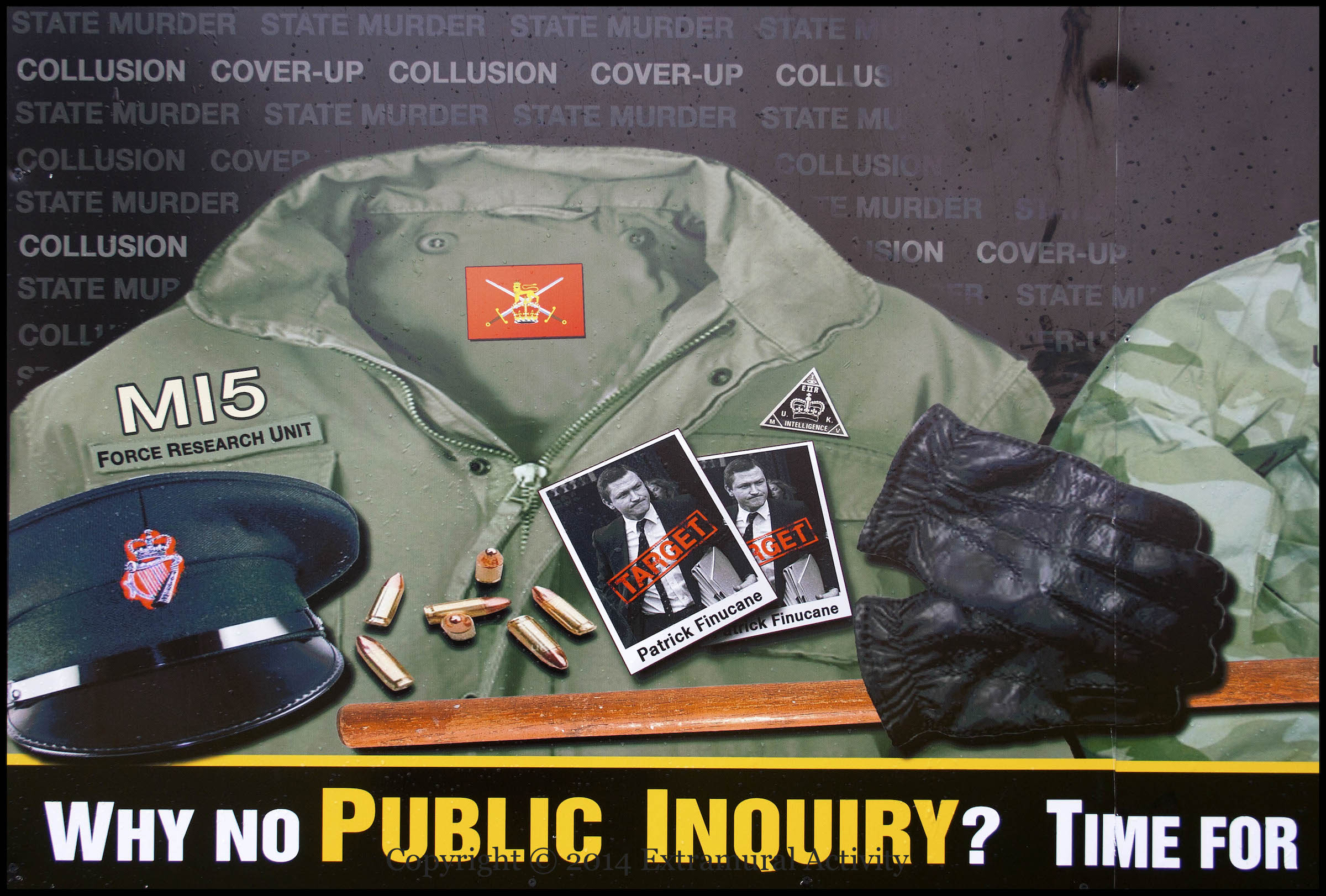
A new board has gone up at the junction of the Falls and Glen roads (on the site of the former Andersonstown RUC station) commemorating the death of Pat Finucane (on February 12th, 1989), alleging collusion between the MI5, the UDA, the UDR, and the RUC, and asking for an inquiry.
Four (of five) panels from Main Street, Ballywalter, commemorating the troops who went to France “on October 15th, 1915” and who died in the Great War (“The Last Post” is played by Ballywalter flute band at Ballywalter War Memorial, perhaps at its unveiling in 1922, though no mention of the flute band is made in the report cited at Ulster War Memorials), and the local fishing industry.
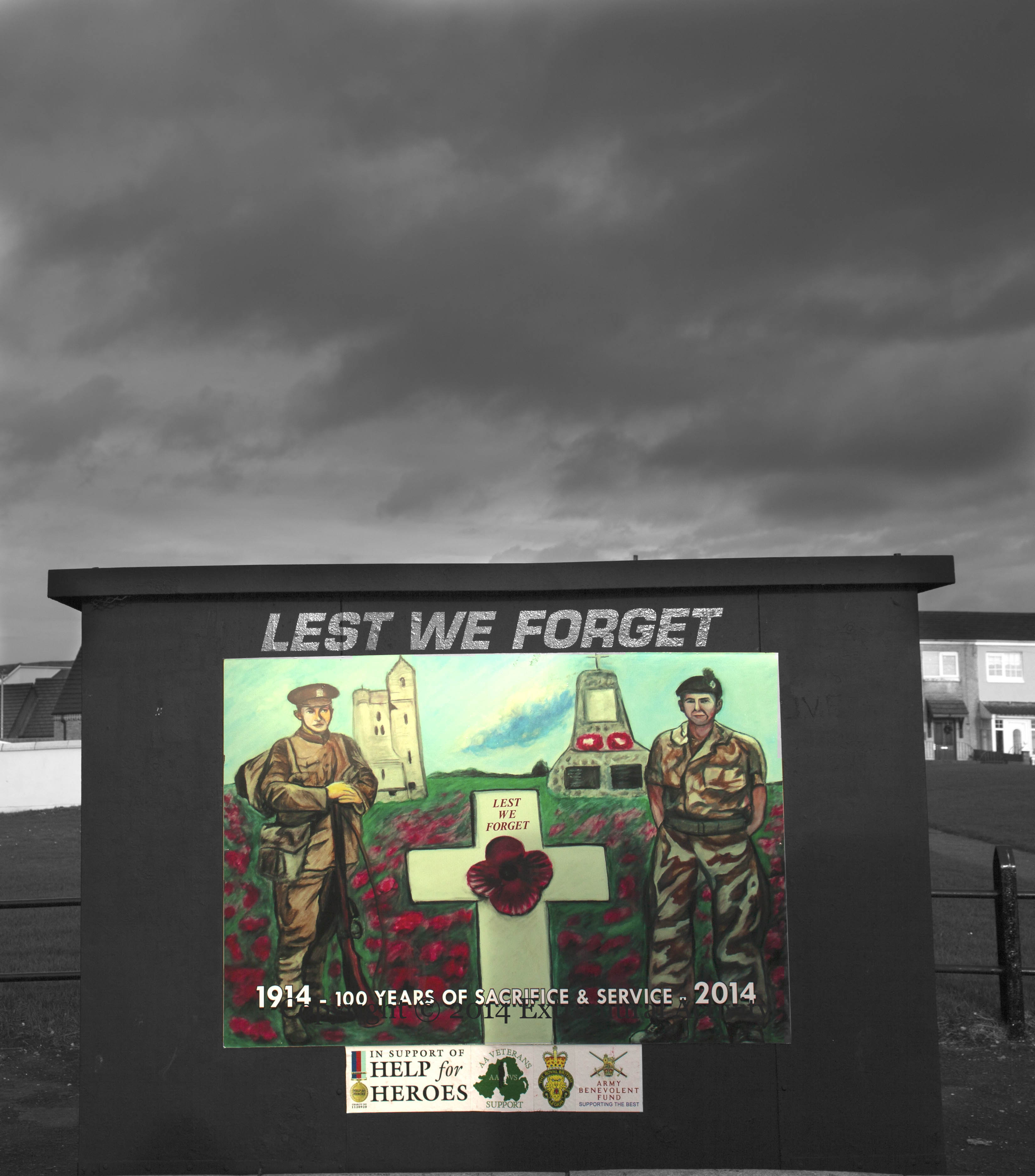
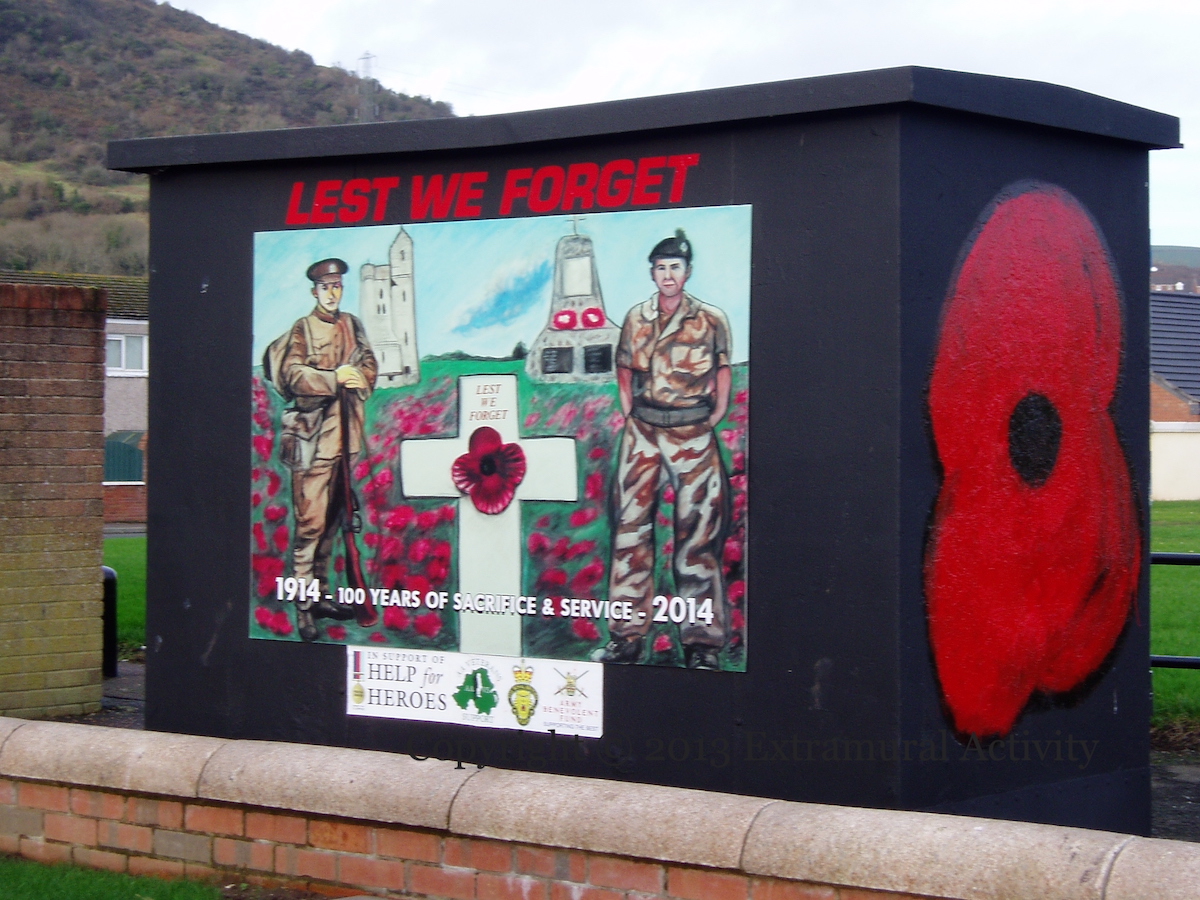
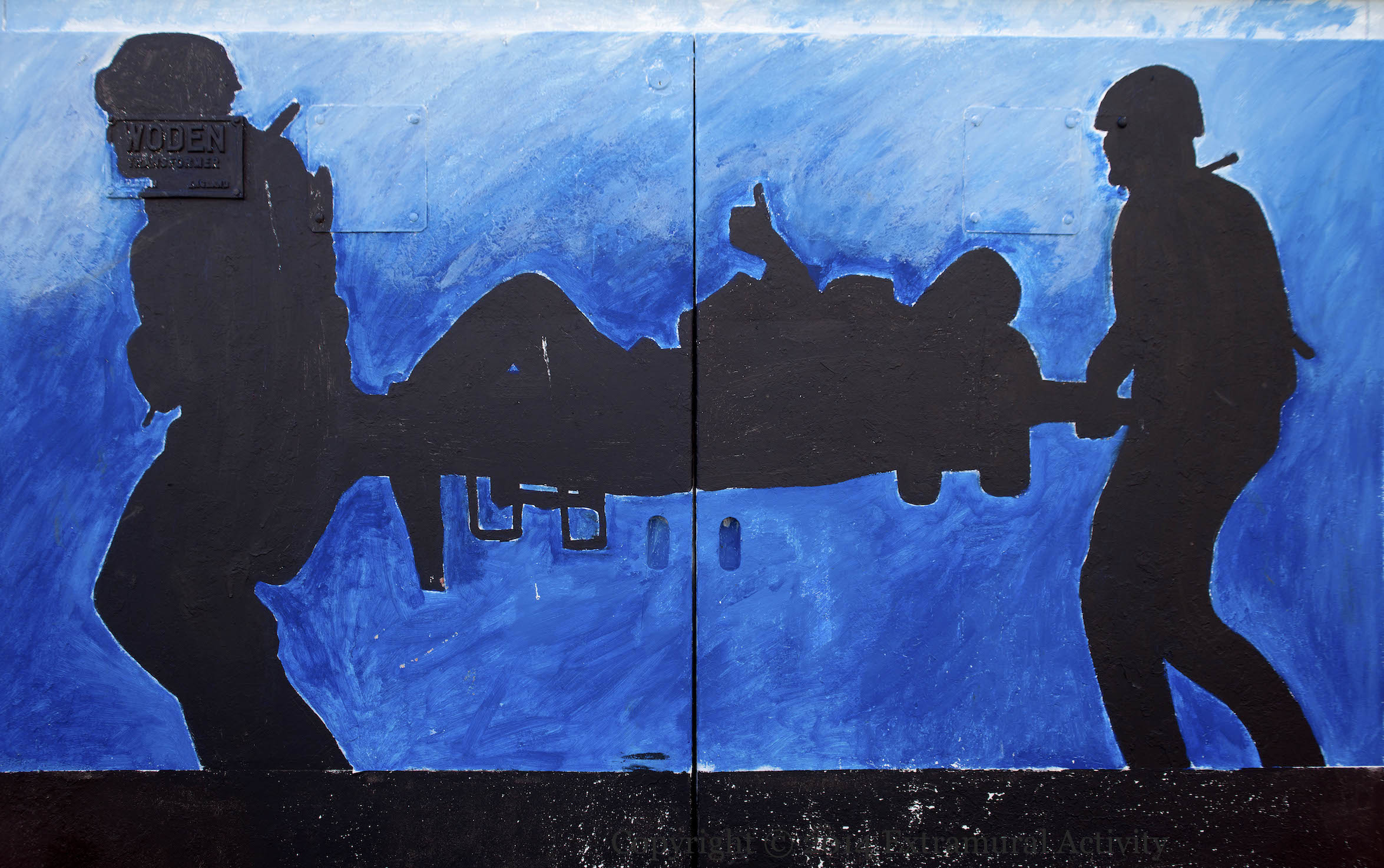
Here are two of the three painted side of a large electrical box in the Highfield estate, adjacent to a new memorial garden. Above is a board commemorating British army service personnel from WWI to the recent/current conflicts in Iraq and Afghanistan. On the other side of the box, and pictured below, the ‘thumbs up’ soldier is painted. For background on the ‘thumbs up’ image below, see the previous post Help For Heroes.
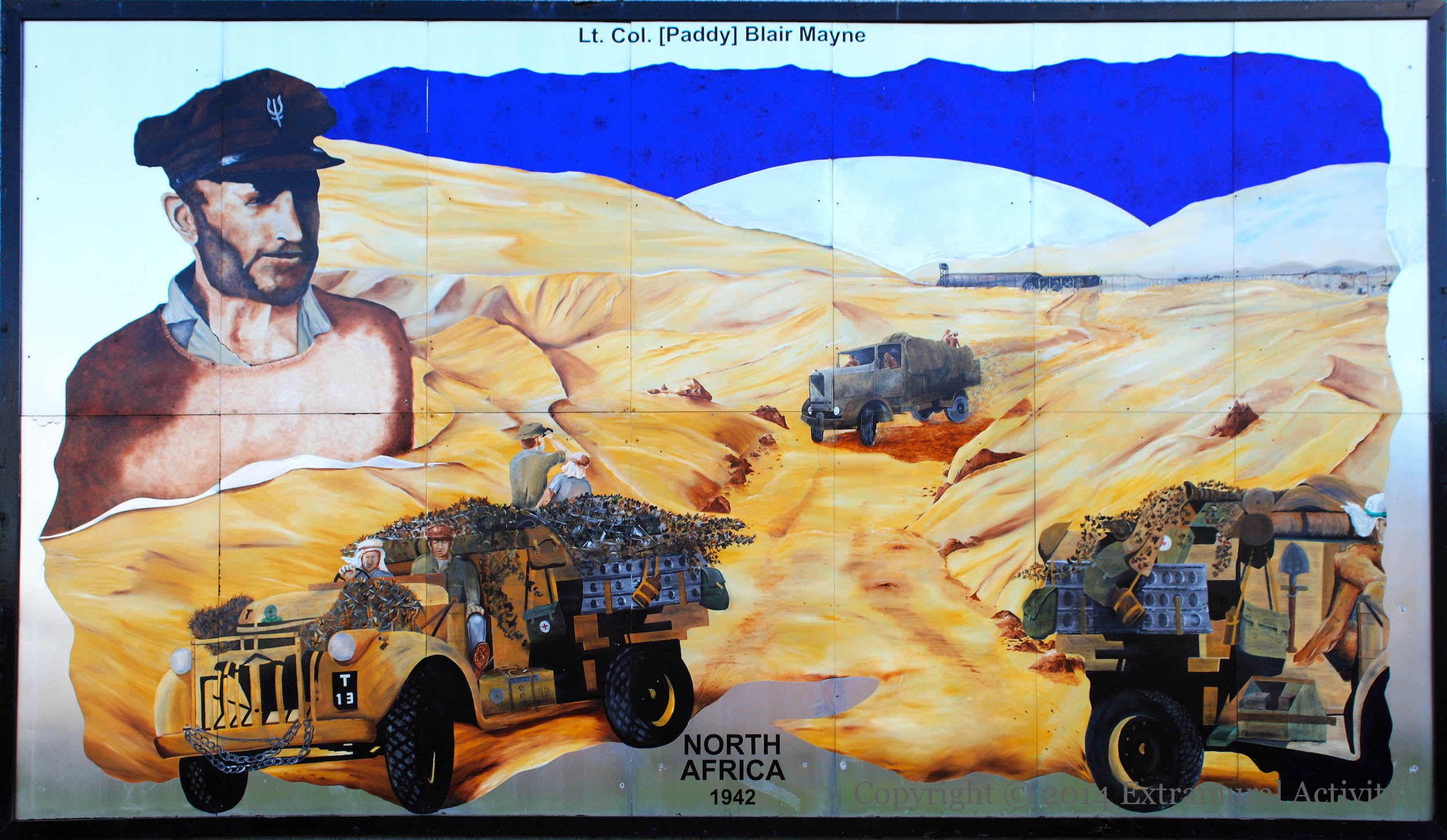
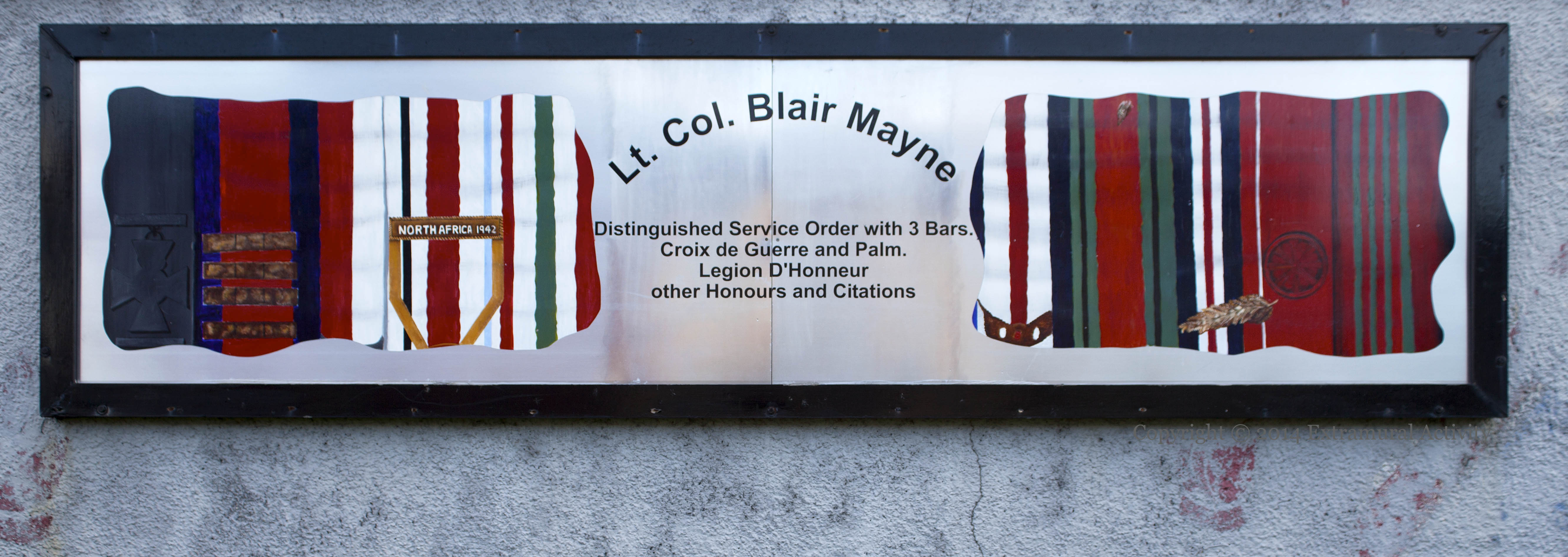
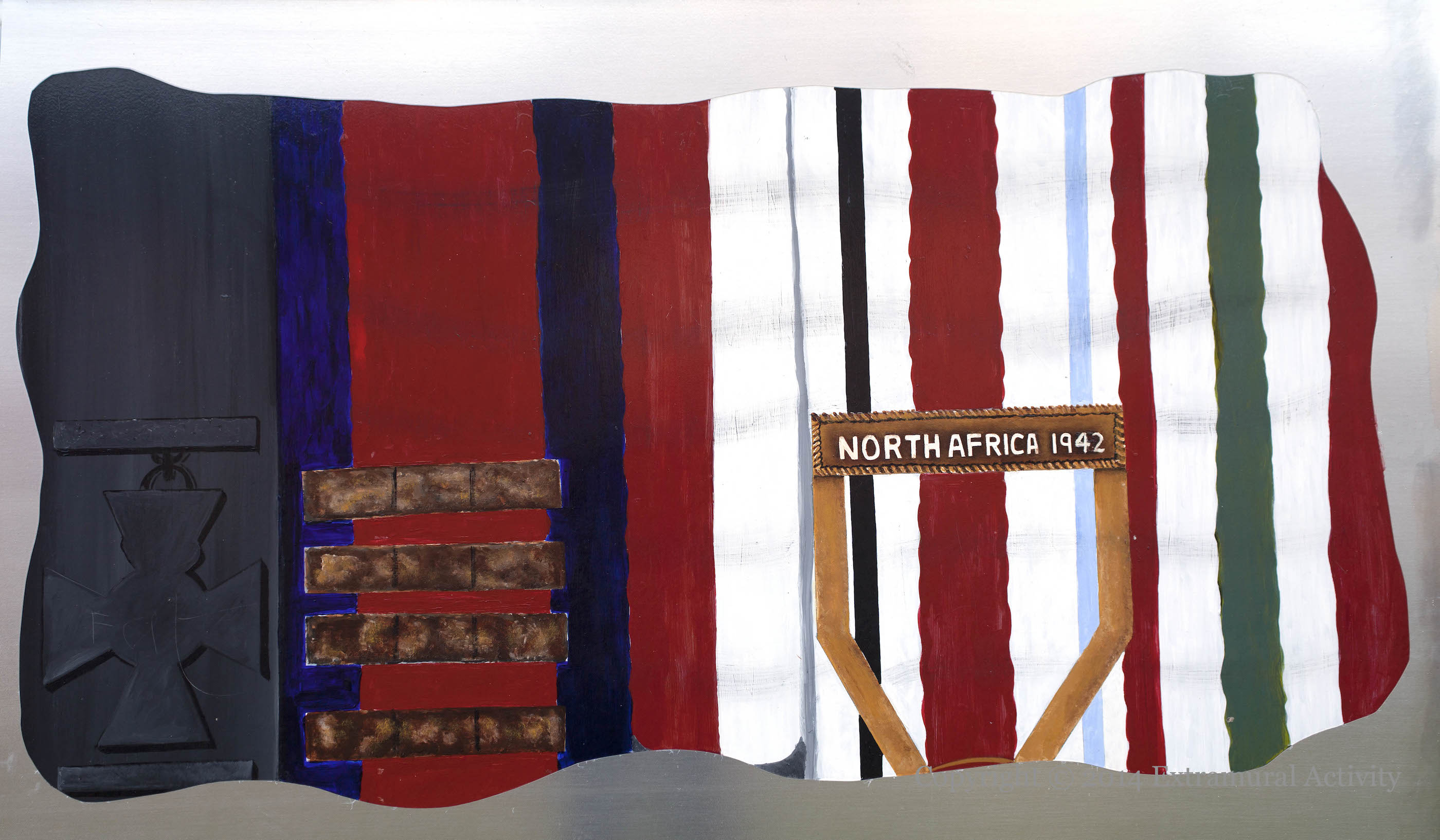
Robert Blair “Paddy” Mayne was a rugby player, boxer, golfer, and solicitor, and in WWII a commando and one of the first members of the SAS (Special Air Service), participating in raids behind enemy lines in Egypt and Libya (depicted in the board above), and later, as SAS commander, in France, Belgium and other countries. His many decorations, including the DSO (four times) and French Croix De Guerre and Legion D’Honneur, are pictured below. (His WP page includes an explanation of the ribbon bars.)
Mayne was born in Newtownards and returned there at the end of the war. His statue stands in the town’s Conway Square and this board can be found in Queen Street.
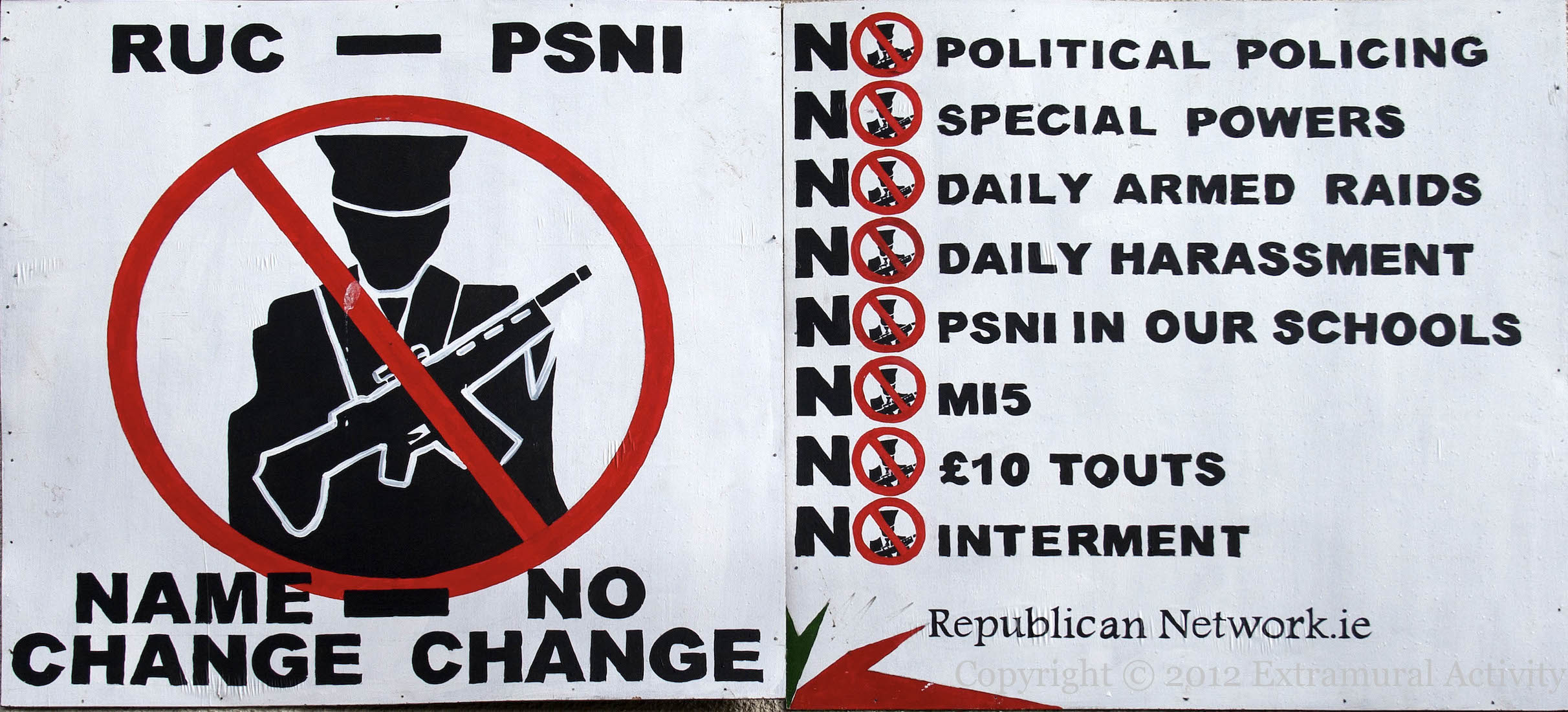
Above is an RNU board from Lenadoon, protesting against the police system and an alleged identity of the PSNI, the Orange Order and loyal paramilitaries. (See previously: Trinity)
“No political policing. No special powers. No daily armed raids. No daily harassment. No PSNI in our schools. No MI5. No £10 tours. No interment [sic].”
The board dates from 2012 (eleven years after the PSNI’s creation and five years after Sinn Féin’s acceptance of the PSNI) but is no longer present.
A metal banner (attached to the two barrels) outside the Bowtown Youth Club in Newtownards shows the classic image of the signing of the Ulster Covenant against the background of a Union flag, and also a rocket taking off, in the children’s mural painted on one side of the club.
“NVF” in the left-hand insignia stands for “Newtownards Volunteer Flute [Band]” (Fb). On the right is the insignia of another flute band, the North Down Defenders (Fb).
The caption below the image of the covenant signing lists a good number of those in the picture:
Sir Edward Carson (later Lord Duncairn) signing the Ulster Covenant in the Belfast City Hall, September 28, 1912.
Left to right, 1st row: Mr. R.J. McMordie, Lord Mayor of Belfast, Lord Charles Beresford, Marquess of Londonderry, Sir Edward Carson, Captain James Craig (later Lord Craigavon), Mr. J.H. Campbell, K.C. (later Lord Glenavy), and Dr. W. Gibson.
2nd row: present Lord Londonderry, and Col. R.H. Wallace, C.B., D.L. Behind the latter, Ronald McNeill, M.P. (later Lord Cushendun).
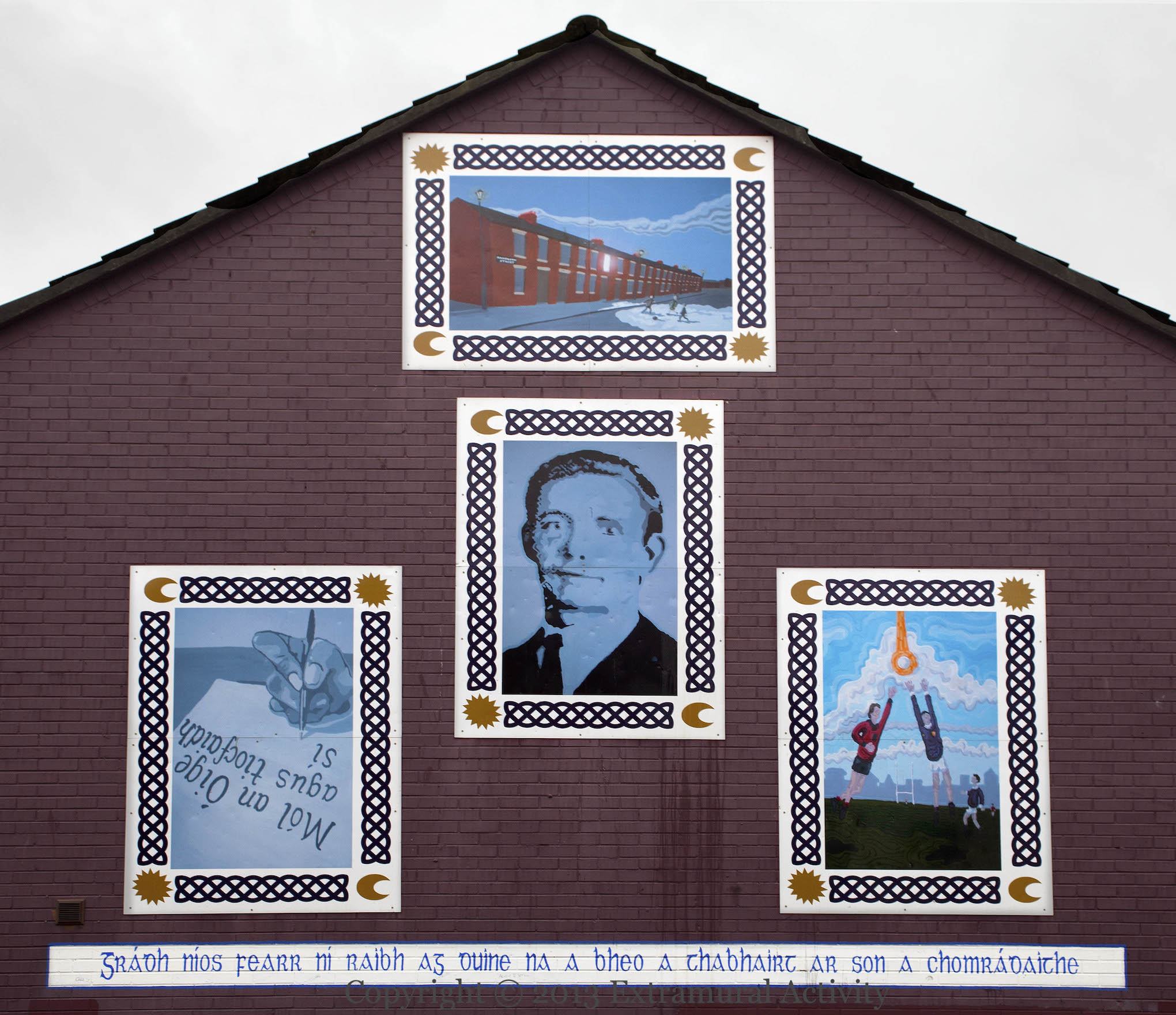
IRA Volunteer Sean Martin is at the centre of these panels in Beechfield Street, in the Short Strand, (CNR) east Belfast. The image in the apex of the house depicts his death in nearby Anderson Street (which no longer exists; roughly where Arran Street is).
milltowncemetery.com (link now dead) reports that Sean Martin “was killed in April 1940 during a lecture on arms and a Millis hand grenade in a small terrace house in Anderson Street. In the course of the lecture Sean, who was giving the instruction, had dismantled the grenade, and was putting it together again. The detonator which he was using was thought to have been a dud one. In demonstrating how to throw the grenade, he pulled out the pin and released the lever. Hearing the hissing sound of the fuse he realised that the detonator was live and that the grenade was about to explode. He rushed to the window with the intention of throwing it out on to the street, but some children were playing outside. In the few seconds left to him, Sean had to make that terrible choice; shouting to the others to get out of the house – he pulled the grenade into himself with his two hands and leaned over the kitchen table with the grenade covered by his whole body. The device exploded and blew him right across the kitchen, killing him instantly. All the others escaped uninjured.”
The Irish at the bottom reads “Grádh níos fearr ní raıbh ag duıne na a bheo a thabhaırt ar son a chomrádaıthe” – “A greater love no person has than to give his life for his comrades” (John 15:13)
Belfast Forum has some pictures of Anderson Street; according to the accompanying conversation, the Martins (might have) lived at no. 29. Sean Martin’s CLG/GAA club was named after Martin.
Scrabo tower (or possibly Helen’s Tower/Thiepval tower) and the Union flag appear alongside a football, a heart, a bird and the handprints of local children in this board in the Bowtown estate in Newtownards. The wide shot, below, shows a Bowtown Youth Club board higher up and in the background the Somme mural featured a few days ago.
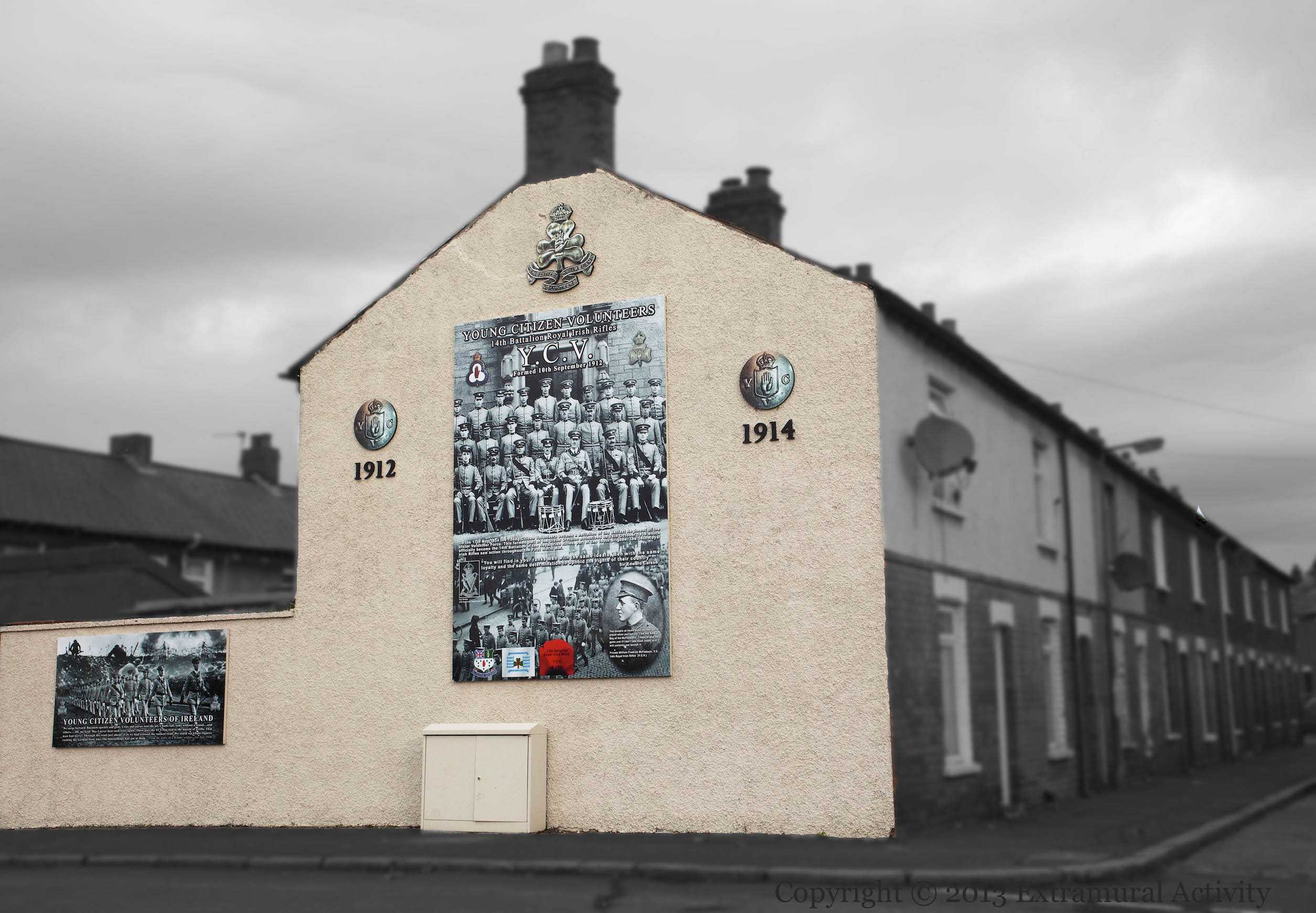
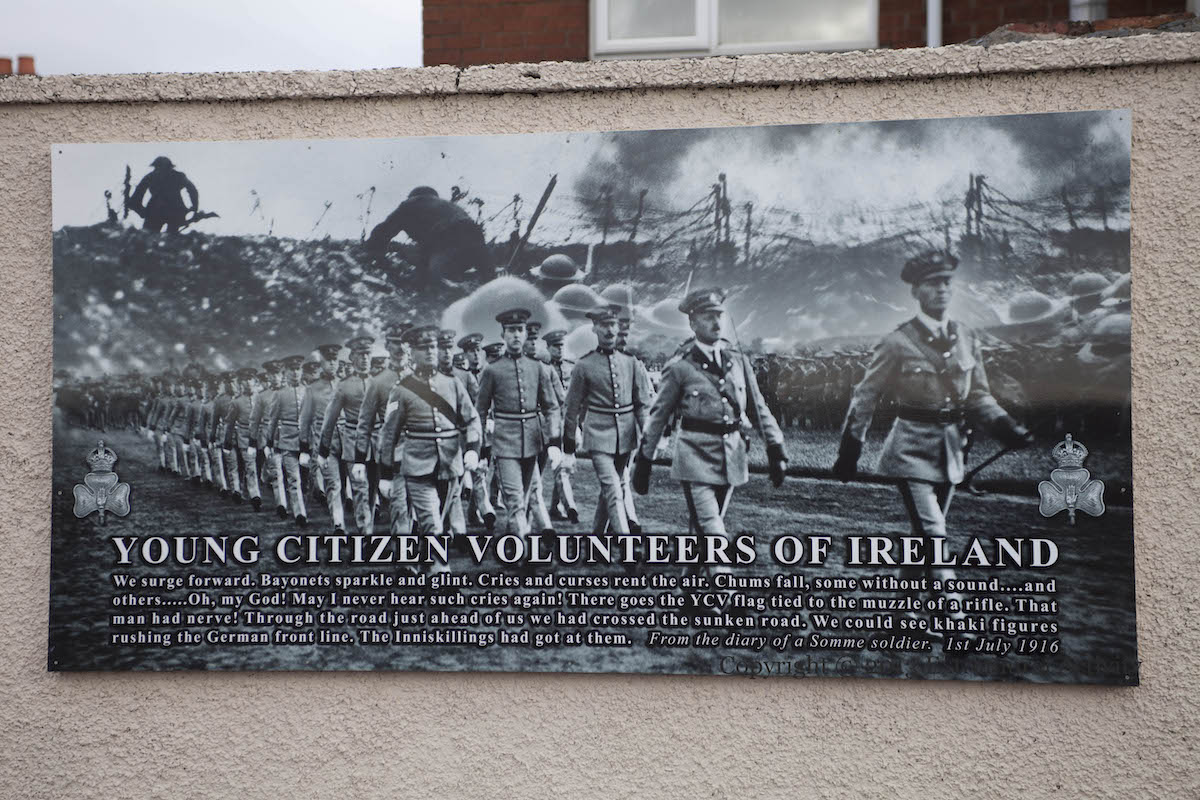
These Kilburn Street boards commemorate the “Young Citizen Volunteers Of Ireland” and the battle of the Somme. The text in the side-wall board (shown below) is from the diary of a Somme soldier: “We surge forward. Bayonets sparkle and glint. Cries and curses rent the air. Chums fall, some without a word … and others … Oh, my God! May I never hear such cries again! There goes the YCV flag tied to the muzzle of a rifle. That man had nerve! Through the road just ahead of us we had crossed the sunken road. We could see khaki figures rushing the German front line. The Inniskillings had got at them.”
The larger board, on the right, describes the transition from rebels to British Army soldiers: “On the 17th May 1914 the Young Citizen Volunteers became a battalion of the Belfast regiment of the Ulster Volunteer Force. This formed part of the Ulster Division authorised on 28th October 1914 which officially became the 14th battalion of the Royal Irish Rifles, part of the 109th brigade. The 14th saw action throughout the First World War.”
It includes a quote from Edward Carson, “You will find in your ranks men with the same ideals, men with the same loyalty and the same determination to uphold the rights of their country”, and a quote from VC winner William Fredrick McFadzean, “You people at home make me feel quite proud when you tell me I am the soldier boy of the McFadzeans. I hope to play the game and if I don’t add much lustre to it I certainly will not tarnish it.”







 Extramural Activity