On a headstone in City Cemetery: Che Guevara, the Virgin Mary, a guitar, a pair of football boots, and an invocation of St. Dympna, “patron saint of the nervous, emotionally disturbed, mentally ill, and those who suffer neurological disorders – and, consequently, of psychologists, psychiatrists, and neurologists” according to her WP page.
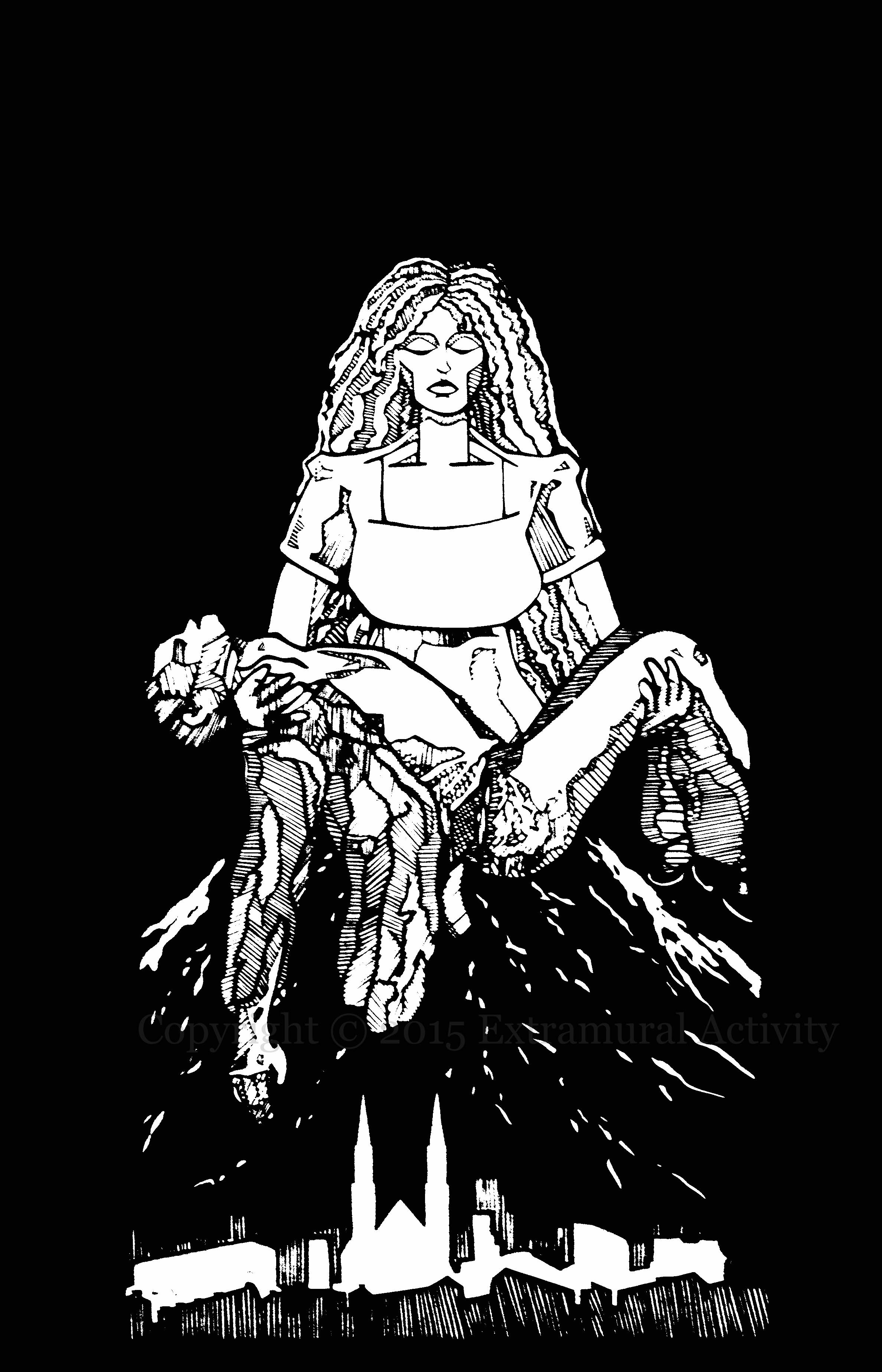
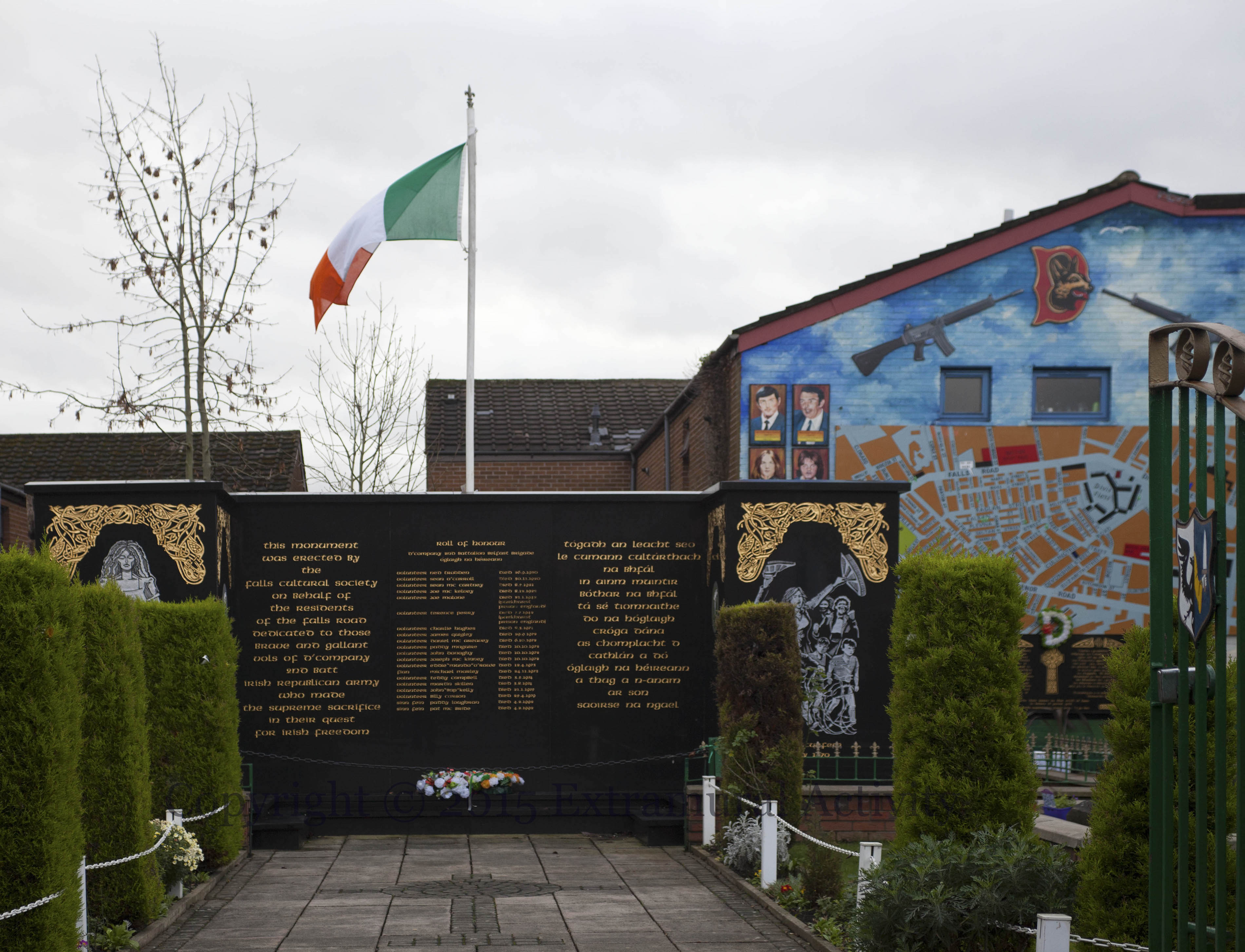
The two images featured today are of carved panels in the Falls Garden Of Remembrance (with the gold-plated surround removed). The garden commemorates fallen members of (IRA) D company but the panels suggest a wider appreciation of lower Falls residents. The same is also true of the mural in the background of the wide shot (third image, below), for which see Cry “Havoc”.
The hunger strikers tarp has been removed from the Ard Eoın memorial garden (see 2013) and the forty portraits have been moved over from the mural on Ardoyne Avenue after the plaster fell off (see one | two).
However, the two long-standing pieces remain the same. As can be seen in the image below, the cross goes back to 1976. “This garden of remembrance was unveiled by Nora Connolly O’Brien, daughter of James Connolly, Easter Tuesday 1976. It is dedicated to the memory of Óglaıgh Na hÉıreann and Fıanna Éıreann volunteers, Sınn Féın, and members of our community who lost lives since 1969. ‘Ireland unfree shall never be at peace.’ In loving memory of all from the Ardoyne, Bone and Ligoniel who died because of Ireland’s troubles.”
Above, the phoenix is used as a symbol of resistance in one of the oldest memorial plaques in Belfast (1993) with the names of deceased IRA volunteers and locals: “Oft from prison bars, oft from battle flashes/Oft from heroes’ lip, oftenest from their ashes.”
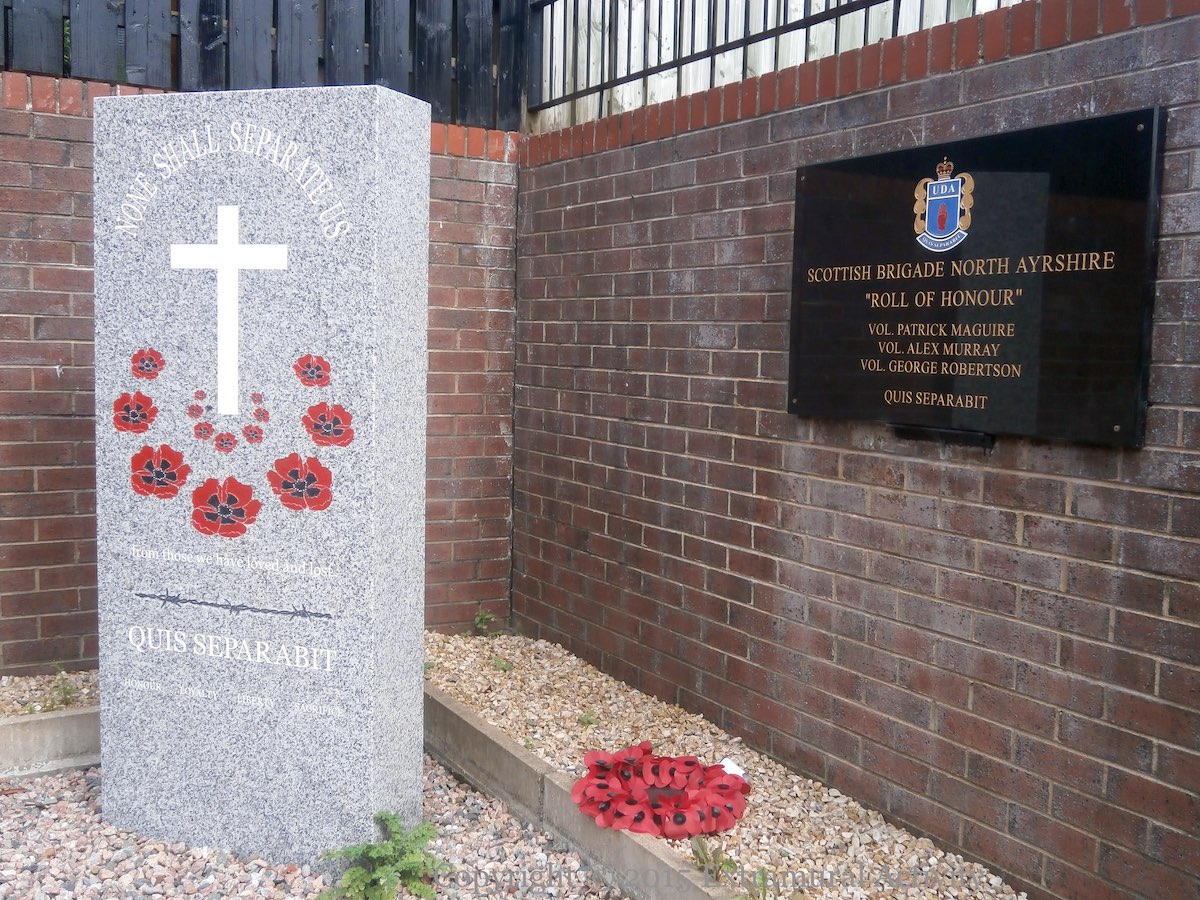
“None shall separate us from those we have loved and lost. Quis separabit. Honour – loyalty – liberty – sacrifice.” A standing stone has been added to the UDA memorial garden in Cosgrave Heights, next to the plaque to the “Scottish Brigade North Ayrshire roll of honour” that was added (circa 2012) to the pair to the North Belfast Brigade that were present in 2008 (see M04397).
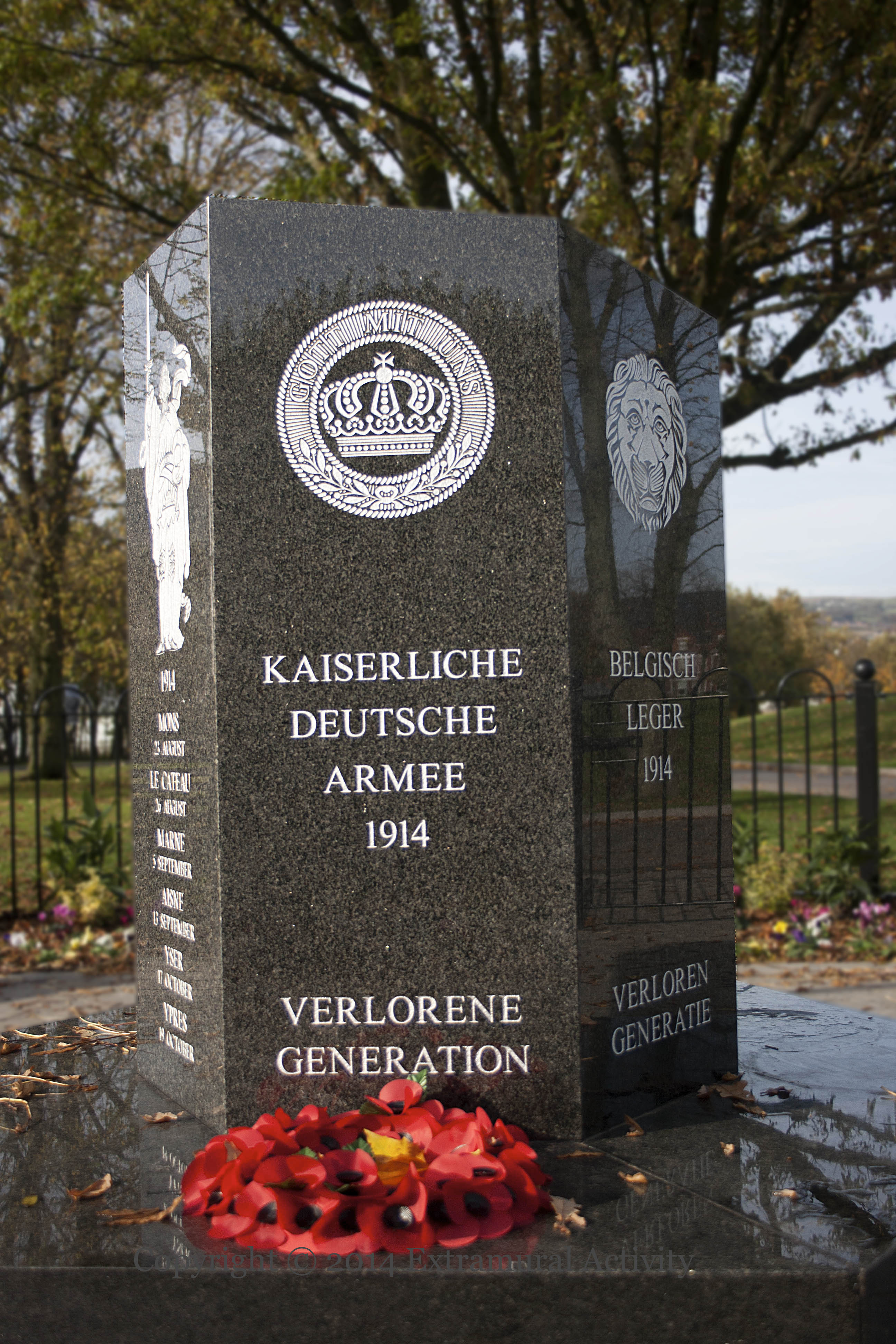
Approximately 10 million military personnel and 7 million civilians died in WWI, with massive losses coming in August-September-October of 1914, as German forces invaded Belgium and northern France, before being stopped at the Marne and entrenching at the Aisne; both sides then attempted to out-flank one another in a “race to the sea” (WP – Invasion | WP – Casualties). The dead of those first months – including German forces (see third image, below) – are commemorated in a new monument, a granite stone with six sides, like a rock from the Giant’s Causeway, in Woodvale Park (BelTel | NewsLetter). A searchable database of 10,000 Irish soldiers who died in Belgium is now available at the In Flanders Fields Project.
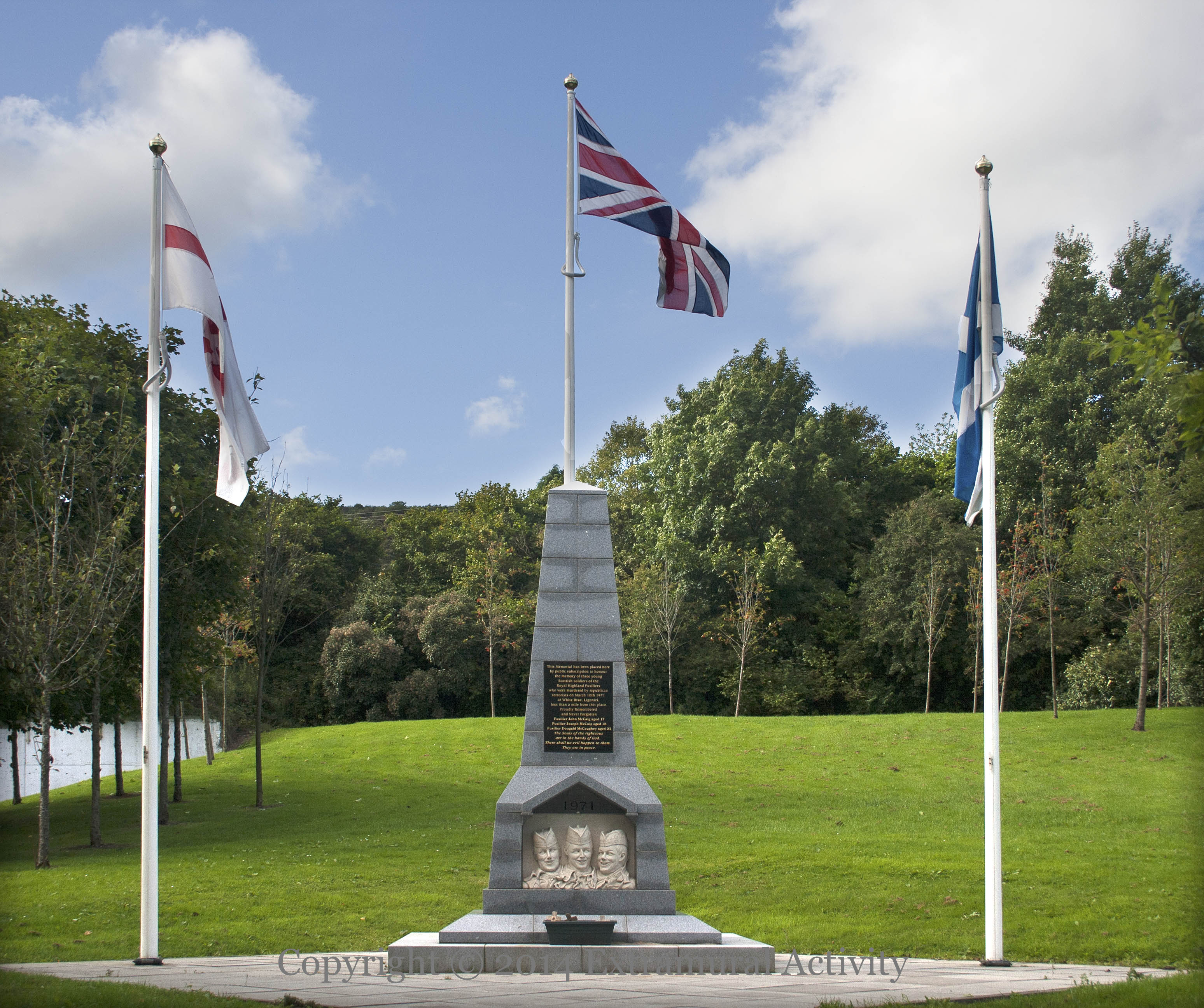
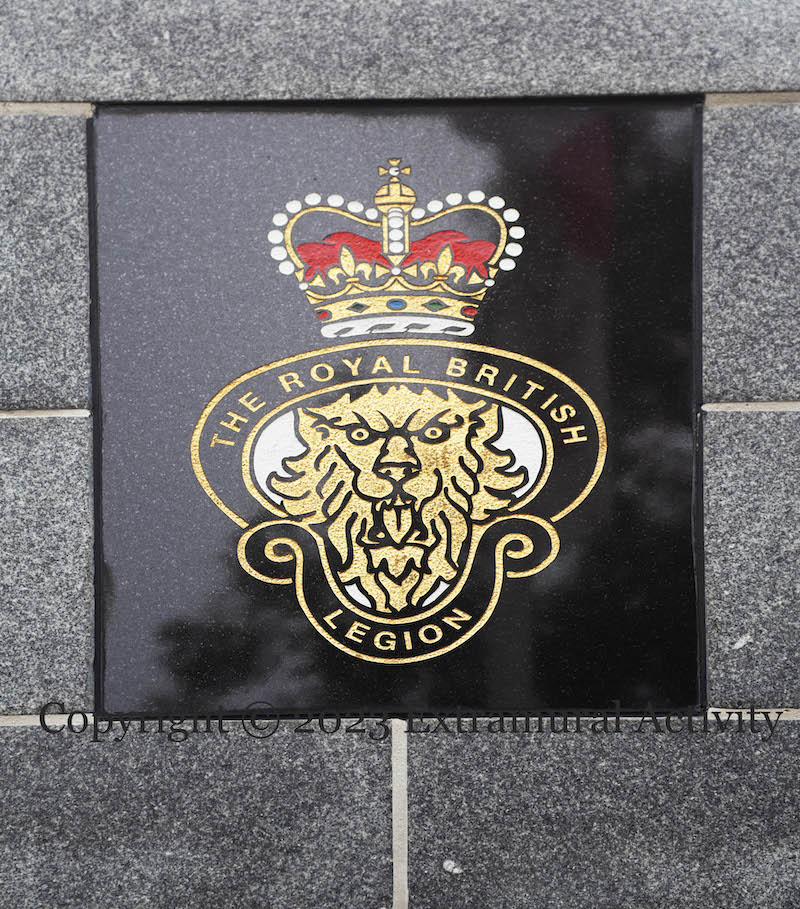
Highland Fusiliers John McCaig (17), Joseph McCaig (18), and Dougald McCaughey (23) were lured by the IRA from a city-centre pub to their deaths in Ligoniel in 1971 (WP). The memorial above is at the top of Ballysillan – a wide shot and close-up of the plaque are shown below.
A smaller stone is at the White Brae/Squire’s Hill site – shown below along with a wide shot of the area. The stone is frequently vandalised (BelTel | BBC | STV | BBC).
Update: 2018 video of a ceremony at the Ballysillan site.
“If stones could speake then London’s prayse should sounde who built this church and cittie from the grounde.” Above is the dedication stone for St. Columb’s Anglican church in Derry and within that is a smaller stone “said to have come from Derry’s mediaeval cathedral” (colmcille.org) which reads “In templo verus deus est vereq[ue] colendus” – In the temple is the true God and truly deserving to be worshipped.
“Ano do 1633” [Anno Domini – In the year of our Lord, 1633], “Car Regis” 9 [Caroli regis – in the ninth year of the reign of King Charles], Vaughan Aed [Vaughan aedificavit – built by Sir John Vaughan, Governor of the City of Londonderry; the builder was in fact William Parrott. Construction began in 1628 and was completed in 1633, at a cost of 4,000 pounds.]
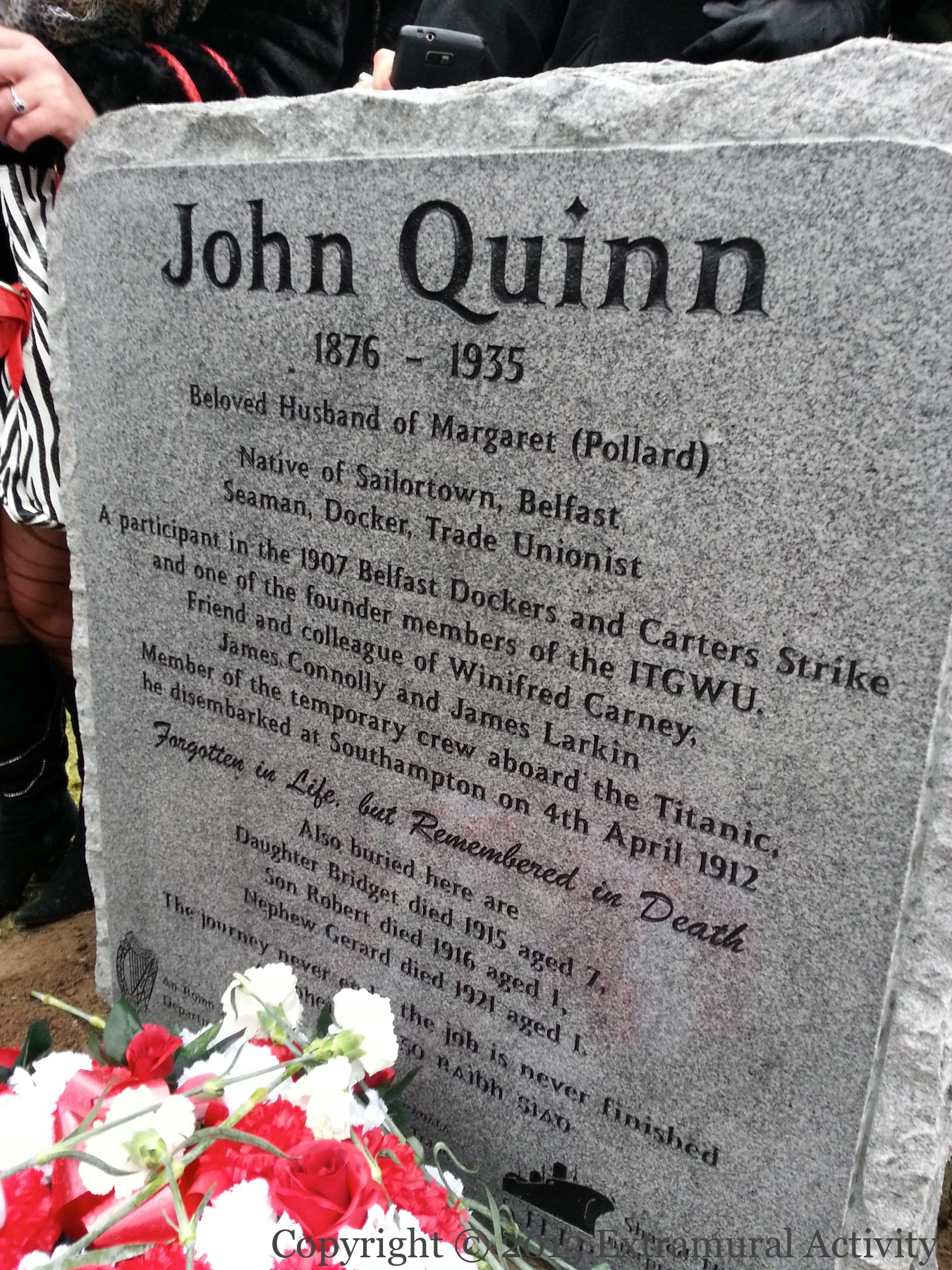
Trade unionist John Quinn, who helped found the ITGWU, died in 1935 and was buried in an unmarked grave in Milltown. Last weekend (December 14th, 2013) a new headstone was unveiled. As can be seen in the image above, Quinn was fortunate to escape the sinking of the Titanic – he boarded as a fireman in the Belfast crew, but a team of firemen had already been hired in Southampton.
There is a detailed account of Quinn’s life and the process that brought about the new headstone at the Belfast Telegraph.
This is the (second) memorial to Paul ‘Topper’ Thompson in Moyard. He was killed by the UDA on April 27th, 1994. Collusion is alleged – see Relatives For Justice.
“In memory of Topper Thompson, murdered by British death squads, 27th April 1994 aged 25. Deeply missed by never forgotten. Erected by his friends.”
The brothers in question are Raymond and Brian McCreesh, from Camlough, Co Armagh. Raymond is third in the list of the ten deceased 1981 hunger strikers. “In memory of the volunteers who died on hunger strike in H-Blocks 1981.” “H-Block is rock that the British monster shall perish upon for we in H-Block stand upon the unconquerable rock of the Irish socialist republic – Bobby Sands”.
The lower stone reads “These men made the supreme sacrifice for their country by dying on hunger strike from 1917 to 1976: 1917 Thomas Ashe; 1920 Michael Fitzgerald, Joseph Murphy, Terence McSwiney; 1923 Joseph Whitty, Denis Barry, Andy Sullivan; 1940 Tony Darcy Sean McNeela; 1946 Sean McCaughey; 1974 Michael Gaughan; 1976 Frank Stagg. “It is not those who can inflict the most but those that can suffer the most who will conquer” – Terence McSwiney.”












 Extramural Activity