Shepard Fairey used Mannie Garcia’s AP photo of Barack Obama for his ‘Hope’ poster of the 2008 US Presidential election (WP). The three-quarter profile, faraway look and four-tone shading have been repurposed for the board, shown above, in east Belfast: a boy gazes beyond Samson and Goliath, backgrounded by a sunburst: “Dream, Seek, Achieve, Educate, Achieve!”
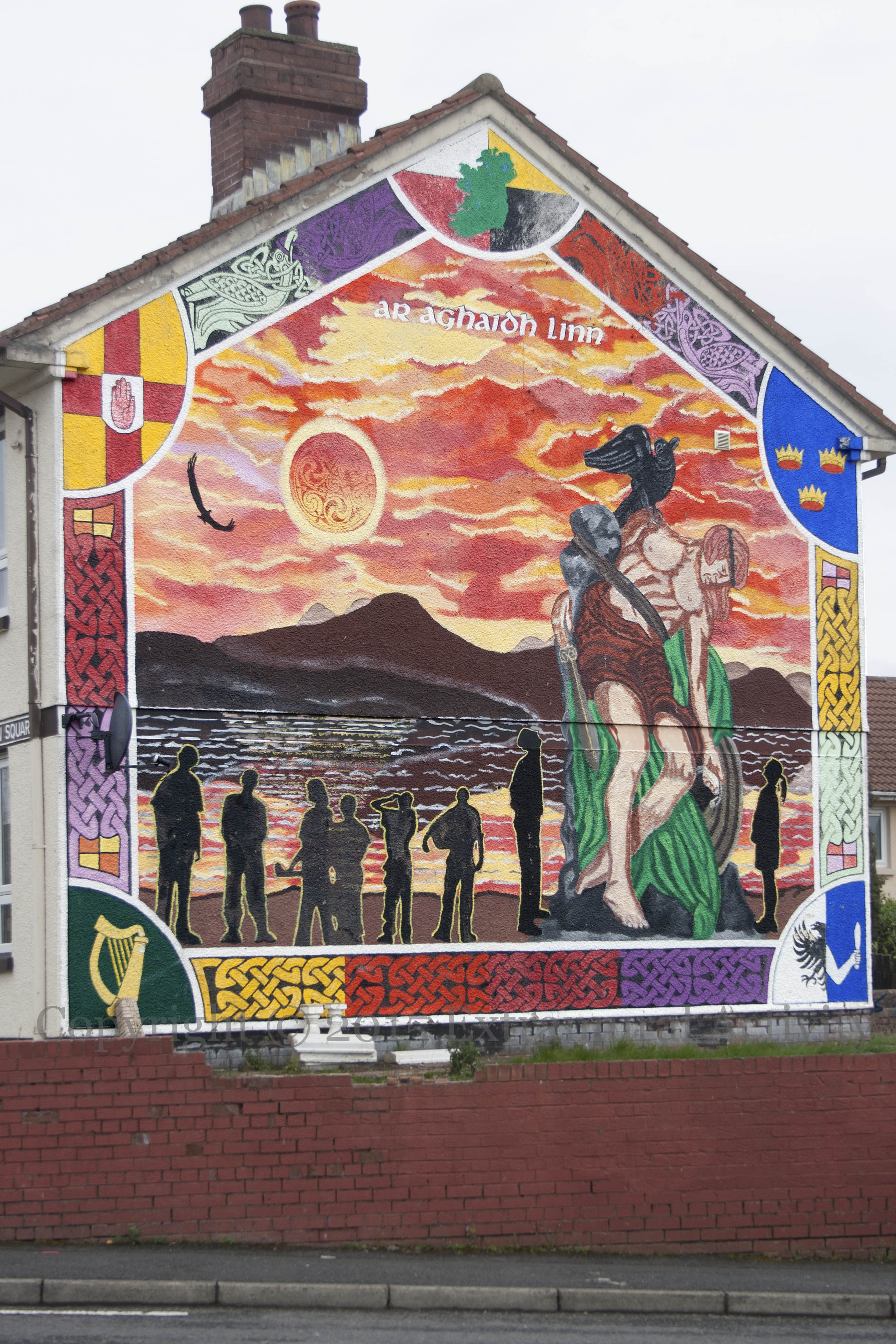
“Ar aghaıdh linn [Onward]” Silhouetted figures, one carrying a hurley, take inspiration from a dying Cú Chulaınn and gaze across a body of water, perhaps Carlingford Lough towards the mountains of Mourne – Cú Chulaınn’s traditional place of death is in County Louth, outside Dundalk. Tuan the hawk historian, who has seen all of the conquests of Ireland, flies overhead.
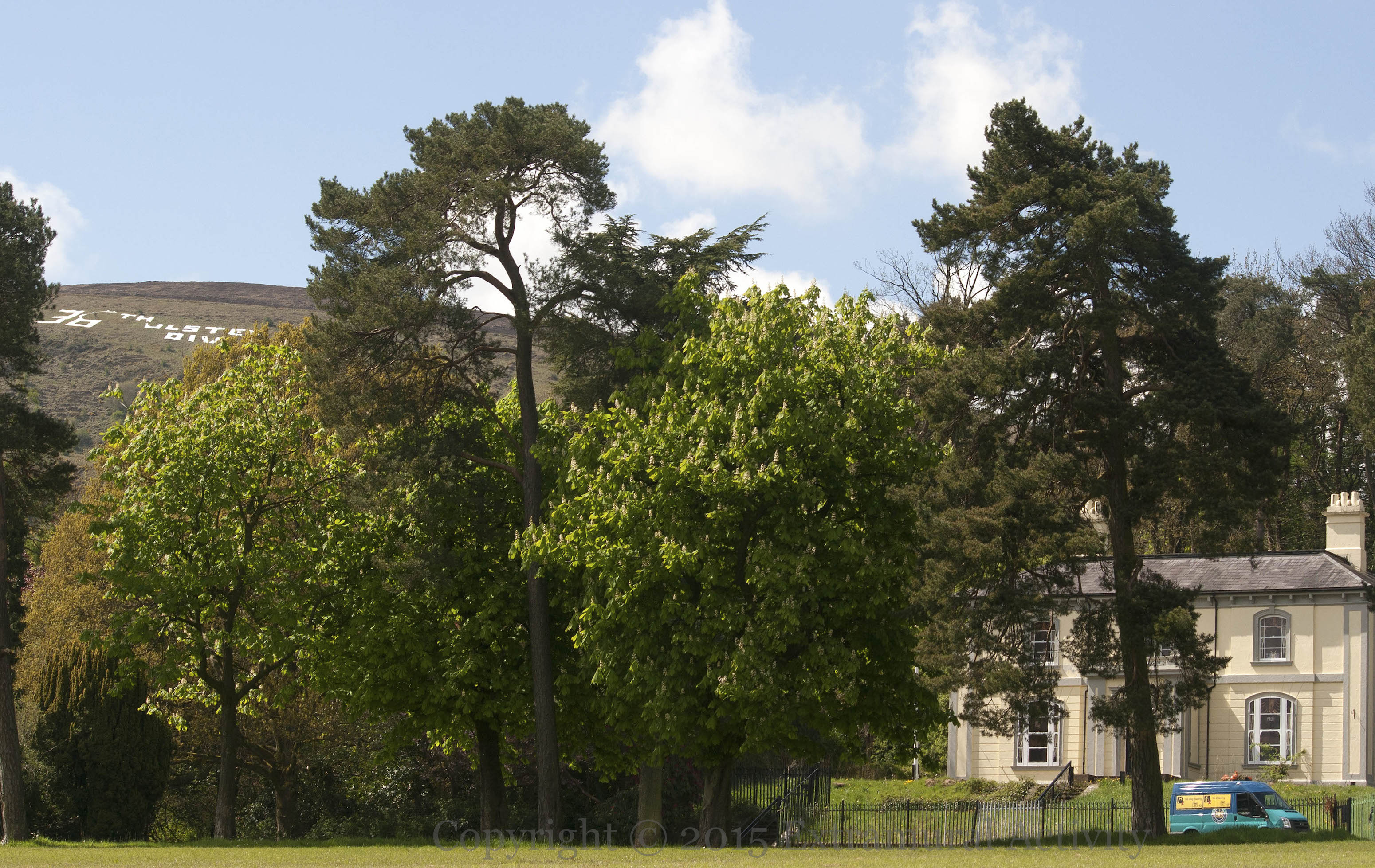
On May 8th, 1915, the various brigades of the 36th (Ulster) Division gathered together from all over the province (including some soldiers from Cavan, Monaghan, and Donegal) to be reviewed by Major General McCalmont in south Belfast; they then paraded to City Hall (South Belfast Friends Of The Somme Association). To commemorate the event the words “36th Ulster Div” have appeared on Black Mountain above Highfield and Ballygomartin (taking a leaf from the Gael Force Art book). The wide shot, below, is taken in front of Fernhill House in the Glencairn estate, where the Ulster Volunteers paraded in 1914. In July 1915 the 36th would leave for Sussex to continue their training and eventually find themselves at the battle of the Somme in 1916.
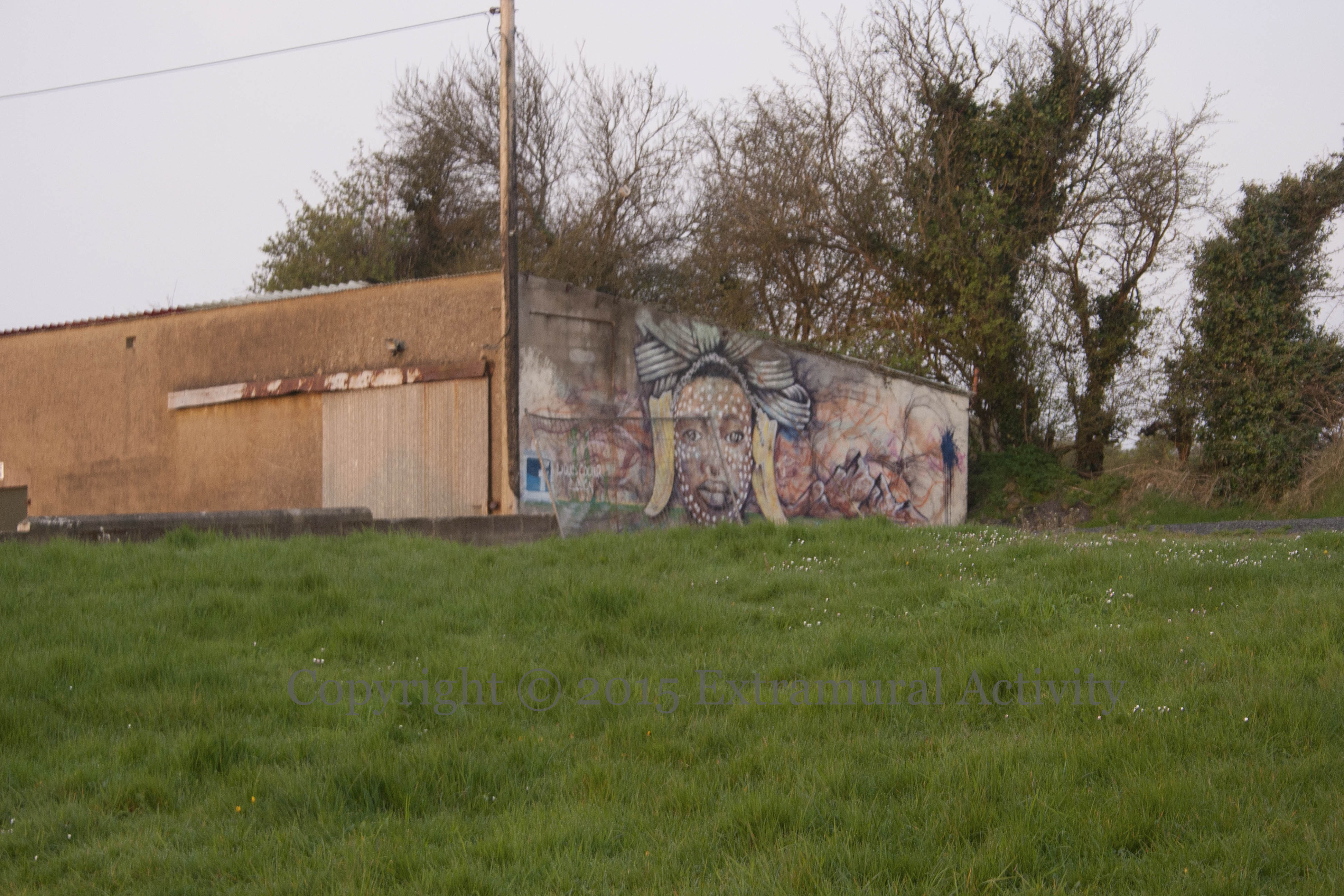
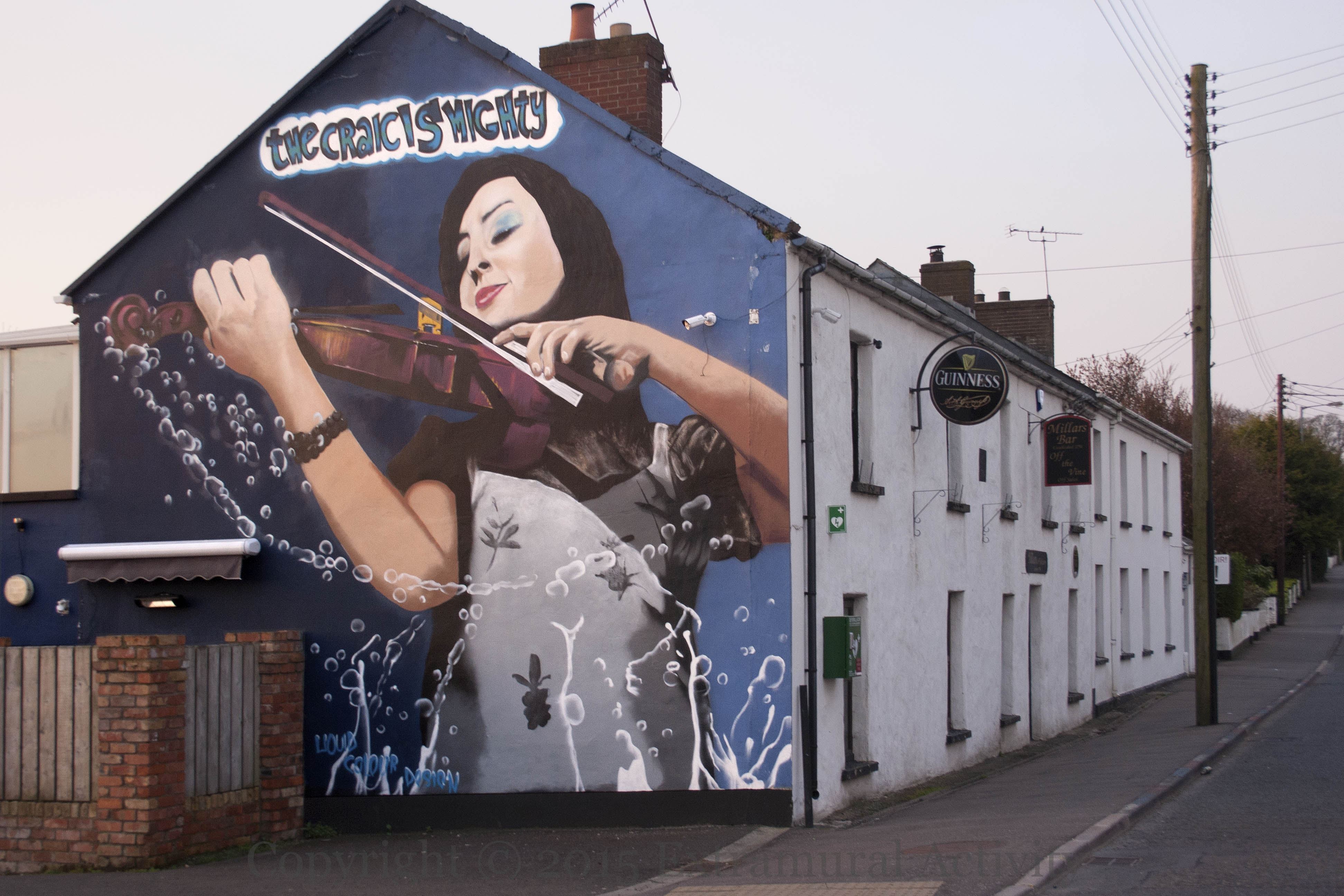
On a barn wall in Ballycarry, County Antrim: a African youth (perhaps Ethiopian Mursi tribe) with painted face and a headdress of warthog tusk and aluminium coils. (By Liquid Colour Design – see also The Craic Is Mighty)
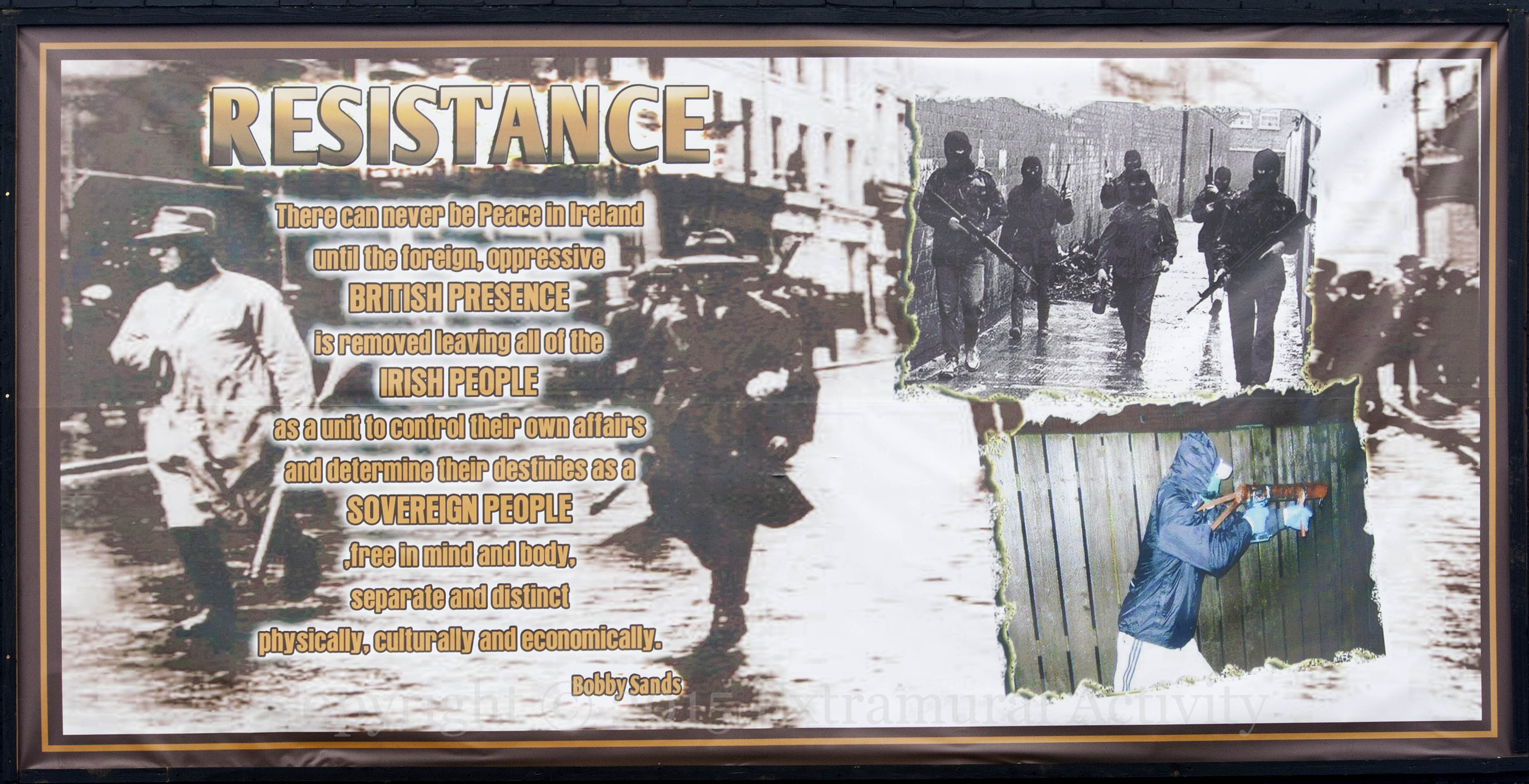
This is a new (2015-04-04) tarp on Ardoyne Avenue showing a scene from Grafton Street in the Battle Of Dublin in the civil war (1922) (irishhistory.blogspot.com), with in-sets featuring PIRA volunteers on patrol in 1987 (BelTel), and a home-made rocket-launcher used in a 2014 attack on police (see, e.g. irishmirror.ie).
“There can never be peace in Ireland until the foreign, oppressive British presence is removed leaving all of the Irish people as a unit to control their own affairs and determine their destinies as a sovereign people, free in mind and body, separate and distinct physically, culturally and economically.” Bobby Sands (Prison Diary May 1st)
Fiddling in the north of Ireland is common to both Nationalist and Unionist communities and the “old Antrim” style is influenced by Scottish playing (USFO).





 Extramural Activity